Categories
CSR Partners In Change

CSR Rules in India Explained: Section 135, the 2% Mandate & 2026 Compliance Guide

CSR Rules in India Summary

India has one of the most structured corporate social responsibility frameworks in the world. Unlike most countries where CSR is voluntary, CSR rules in India are legally mandated, and for eligible companies, non-compliance carries real consequences.

If you are a CSR head, finance leader or corporate decision-maker trying to understand what the law requires and how to meet it strategically in 2026, this guide is for you.

CSR rules in India One page guide

What Are CSR Rules in India?

CSR rules in India are governed primarily by Section 135 of the Companies Act, 2013, read with the Companies (Corporate Social Responsibility Policy) Rules, 2014.

The law requires certain companies to spend a portion of their profits on social development activities every financial year. It also requires them to form a CSR committee, adopt a CSR policy, report their spending publicly and account for any unspent funds.

The intent is straightforward: companies that benefit from India’s markets and resources should contribute meaningfully to its social and environmental challenges.

Who Needs to Comply?

Not every company falls under the CSR mandate. The threshold is based on three financial criteria. A company must comply if it meets any one of the following in the preceding financial year:

  • Net worth of ₹500 crore or more
  • annual turnover of ₹1,000 crore or more
  • net profit of ₹5 crore or more

This applies to Indian companies as well as foreign companies operating in India that meet these thresholds. Once a company crosses any one of these limits, it is obligated to follow the full CSR framework including spend, committee formation and reporting.

The 2% CSR Rule: How It Works

The core of India’s CSR mandate is simple. Eligible companies must spend at least 2% of their average net profit from the preceding three financial years on CSR activities every year.

This is not a tax. It is a directed spend — money that must go toward qualifying social development activities, not into government coffers. Companies have the freedom to choose which qualifying activities they fund, where they operate and through which partners they implement.

What they cannot do is treat it as optional, carry it forward indefinitely without consequence or spend it on activities that do not qualify under the Schedule VII list.

Section 135: What It Requires from Companies

Section 135 places specific structural obligations on eligible companies beyond just spending.

The CSR Committee

Every eligible company must constitute a CSR Committee of the Board. This committee must include at least three directors, one of whom must be an independent director. For smaller companies, those with a CSR obligation below ₹50 lakh, the committee requirement is waived and the Board itself handles CSR decisions.

The committee is responsible for formulating the CSR policy, recommending the annual CSR spend, and monitoring implementation.

Board Responsibilities

The Board must approve the CSR policy, ensure the company spends the required amount and disclose reasons in the annual report if the full amount is not spent. This is not a back-office function. It sits at Board level by design.

What Activities Qualify Under CSR rules in India?

Qualifying CSR activities are listed in Schedule VII of the Companies Act. The list is broad but specific. It includes eradicating hunger, poverty and malnutrition, promoting education and skilling, advancing gender equality and women’s empowerment, ensuring environmental sustainability, supporting healthcare and sanitation, promoting rural development, protecting national heritage and art, contributing to PM relief funds and other government funds and supporting sports training and Paralympic development.

Activities that do not qualify include those that benefit only the company’s employees or their families, political contributions and activities conducted outside India.

The key distinction is that CSR must be directed toward communities, not internal stakeholders. It must also align with the company’s CSR policy, which is approved by the Board.

How to Calculate Your CSR Spend

The calculation is straightforward once you know the inputs.

Step one: Take the net profit of the company for each of the preceding three financial years. Use net profit as per Section 198 of the Companies Act — this excludes certain items like capital gains and prior year losses.

Step two: Calculate the average net profit across those three years.

Step three: Calculate 2% of that average. This is your minimum annual CSR obligation.

A simple example: if a company’s net profits over three years were ₹80 crore, ₹100 crore and ₹120 crore, the average is ₹100 crore, and the CSR obligation is ₹2 crore for the current financial year.

Companies that have not completed three years of operations calculate the average based on the years available.

CSR Reporting and Compliance in 2026

Reporting is not optional, and it has become considerably more structured in recent years.

Every eligible company must file an annual CSR report as part of its Board’s Report. This includes the composition of the CSR committee, the CSR policy, the amount required to be spent, the amount actually spent, a description of the activities funded and an explanation if the full amount was not spent.

The report must also be submitted on the MCA’s CSR portal, which has become the central repository for CSR disclosure in India. The portal allows the government, civil society and the public to track what companies are spending and where.

In 2026, the direction of regulatory expectation is clear: companies are increasingly expected to report on outcomes, not just activities. Simply listing what was funded is giving way to demonstrating what changed as a result. Companies that invest in impact measurement — tracking learning outcomes, health indicators or livelihood improvements rather than just rupees spent — are better positioned both for regulatory scrutiny and for credible stakeholder communication.

What Happens If CSR Is Not Spent?

This is where many companies have faced difficulty, and where the rules have tightened considerably since 2021.

If a company does not spend its full CSR obligation in a given financial year, the unspent amount must be transferred to a special account — the Unspent CSR Account — within 30 days of the end of the financial year. Funds in this account must be spent on ongoing CSR projects within three years. If they are not, they must be transferred to one of the funds specified in Schedule VII, such as the PM National Relief Fund.

For funds not related to ongoing projects, the transfer to a Schedule VII fund must happen within six months of the financial year end.

Non-compliance — including failure to transfer unspent funds, failure to report or deliberate avoidance of the obligation — can result in penalties for both the company and the responsible officers. Penalties can reach up to three times the unspent amount for the company and up to ₹1 crore for individual officers.

The message from regulators is unambiguous: carrying forward unspent CSR funds indefinitely is no longer permissible.

Key Updates and Shifts to Watch in 2026

The CSR landscape in India is not static. Several important shifts are shaping how the framework operates in practice.

Outcome measurement is becoming a regulatory expectation, not just a best practice. The government has been signalling that future reporting requirements may mandate third-party impact assessments for larger CSR spends, moving decisively from activity reporting to verified outcomes.

Multi-year, ongoing projects are increasingly favoured over one-off grants. The rules create a specific mechanism for ongoing projects — allowing unspent funds to be carried forward rather than transferred — which effectively rewards companies that make long-term commitments.

ESG integration is reshaping how companies frame CSR internally. As investors and regulators scrutinise ESG performance, CSR is being pulled into a larger accountability framework — one that demands strategic alignment, not just compliance.

The Role of Implementation Partners

Most companies do not implement CSR programmes directly. They work through implementation partners — registered NGOs, Section 8 companies or government bodies — that have the ground-level presence, expertise and community relationships to deliver programmes effectively.

Choosing the right implementation partner is one of the most consequential CSR decisions a company makes. A strong partner brings programme design capability, community trust, robust monitoring systems and the institutional credibility to produce results that hold up to scrutiny.

Smile Foundation has been a CSR implementation partner for over 400 companies across 27 states, working across education, healthcare, livelihood and women’s empowerment. Our programmes are designed for measurable, long-term impact — and for the kind of transparent reporting that compliance and credibility both require.

For companies looking to move from tick-box CSR to genuine, accountable social investment, the right implementation partnership is where that transition begins.

Compliance Is the Floor, Not the Ceiling

CSR rules in India set a floor — a minimum legal obligation that every eligible company must meet. But the companies whose CSR programmes produce real, lasting change are not the ones that spend exactly 2% and stop there. They are the ones that treat CSR as a strategic function, invest in partnerships that deliver outcomes and build programmes designed to compound over time.

In 2026, with regulatory expectations rising and ESG scrutiny intensifying, the gap between compliance-focused CSR and impact-focused CSR has never been more visible, or more consequential.

Meeting the law is necessary. What you do with that obligation is the real question.

Frequently Asked Questions (FAQs) — CSR Rules In India

What are CSR rules in India?

CSR rules in India are legal requirements under Section 135 of the Companies Act, 2013, that mandate eligible companies to spend at least 2% of their average net profit from the preceding three years on qualifying social development activities. The rules also require companies to form a CSR committee, adopt a CSR policy and report publicly on their spending every year.

What is Section 135 of the Companies Act?

Section 135 is the provision of the Companies Act, 2013 that establishes India’s mandatory CSR framework. It defines which companies must comply, requires the formation of a CSR committee at Board level, mandates minimum annual CSR spend and sets out reporting and accountability requirements.

Who is required to spend on CSR in India?

Any company — Indian or foreign operating in India — that meets at least one of the following thresholds in the preceding financial year: net worth of ₹500 crore or more, annual turnover of ₹1,000 crore or more or net profit of ₹5 crore or more.

How is CSR spending calculated?

Take the net profit (as per Section 198 of the Companies Act) for each of the three preceding financial years, calculate the average and then calculate 2% of that average. The result is the minimum CSR obligation for the current financial year.

What happens if a company does not spend its CSR obligation?

Unspent CSR funds must be transferred to a designated Unspent CSR Account within 30 days of the financial year end. Funds must be spent within three years on ongoing projects or transferred to a Schedule VII fund. Non-compliance can result in penalties of up to three times the unspent amount for the company.

What activities qualify under CSR in India?

Qualifying activities are listed in Schedule VII of the Companies Act and include education, healthcare, hunger and poverty alleviation, environmental sustainability, women’s empowerment, rural development, skilling and contributions to specified government funds. Activities that benefit only company employees or involve political contributions do not qualify.

How do companies report their CSR in India?

Companies must include a CSR report in their annual Board’s Report, covering committee composition, policy, amount required to be spent, amount actually spent and activity descriptions. This must also be filed on the MCA’s CSR portal, which is publicly accessible.

What has changed in CSR rules in India in recent years?

The most significant change in CSR rules in India since 2021 is the tightening of rules around unspent funds — companies can no longer carry forward unspent amounts indefinitely without consequence. There is also a growing regulatory expectation around outcome measurement and third-party impact assessment, moving beyond activity reporting toward verified results.

Can CSR funds be carried forward?

Only in specific circumstances. Funds allocated to ongoing multi-year projects can be held in the Unspent CSR Account and spent over up to three years. Funds not linked to ongoing projects must be transferred to a Schedule VII fund within six months of the financial year end.

How can companies partner with NGOs for CSR implementation?

Companies can work with registered NGOs, Section 8 companies or other eligible implementing agencies that have a proven track record, transparent governance and strong programme delivery. The implementing agency must be registered on the CSR portal and companies must ensure that funds are used for qualifying activities and that outcomes are documented and reported accurately.

Categories
In The Spotlight Insights Smile

Rabindranath Tagore Jayanti 2026: Life, Legacy and His Vision for India

Summary

  • Rabindranath Tagore Jayanti 2026 falls on May 8 or 9 on the Gregorian calendar, corresponding to the 25th of Baishakh in the Bengali calendar — the birth anniversary of Rabindranath Tagore, born May 7, 1861
  • Tagore was a poet, philosopher, educationist, composer and social reformer — the first non-European to receive the Nobel Prize in Literature, awarded in 1913 for Gitanjali
  • He composed over 2,000 songs collectively known as Rabindra Sangeet, and wrote Jana Gana Mana, which became India’s national anthem
  • His establishment of Santiniketan, later Visva-Bharati University, was a direct expression of his revolutionary vision of education rooted in nature, creativity and critical thinking rather than rote learning
  • Tagore renounced his knighthood in 1919 in protest against the Jallianwala Bagh massacre, one of the most powerful acts of moral courage in India’s independence movement
  • He warned consistently against narrow, aggressive nationalism advocating instead for a humanism that transcended borders and was grounded in ethical responsibility and mutual respect
  • His literary work addressed caste discrimination, gender inequality and social injustice — not through direct polemic, but through narrative that made readers feel and question
  • In 2026, as India navigates contested questions of identity, nationalism and education, Tagore’s ideas carry an urgency that makes Rabindranath Tagore Jayanti 2026 a moment of reflection as much as celebration
Rabindranath Tagore Life and Legacy

Rabindranath Tagore Jayanti 2026: Life, Legacy and His Vision for India

Rabindranath Tagore Jayanti 2026 arrives at a moment when the questions Tagore spent his life asking feel more pressing than ever. Who are we as a nation? What should education produce? How do we hold onto our roots without closing ourselves to the world? These were not rhetorical questions for Tagore. They were the animating concerns of a lifetime of thought, work and creative output that continues to resonate more than eight decades after his death.

Celebrated annually in early May, Rabindranath Tagore Jayanti — more commonly known as Rabindra Jayanti — marks the birth anniversary of one of India’s most consequential cultural figures. In Bengal, it is observed as Poncheeshe Boishakh, the 25th day of the Baishakh month in the Bengali calendar, which corresponds to either May 8 or May 9 in the Gregorian calendar each year. Rabindranath Tagore Jayanti 2026 falls on May 9, and the occasion invites not just celebration but genuine engagement with the ideas of a man who was, in every sense, ahead of his time.

From a Curious Child to a Literary Genius

Born on May 7, 1861 — or the 25th of Baishakh, 1268, in the Bengali calendar — into a prominent family associated with the Brahmo Samaj reform movement, Tagore was shaped from the beginning by an environment that valued intellectual and spiritual inquiry. His father, Debendranath Tagore, was a religious reformer of considerable influence, and the household Tagore grew up in was one where ideas circulated freely and convention was routinely interrogated.

His formal education was fitful and largely unsuccessful by conventional measures. Schools bored him. Classrooms felt constraining. What educated him, ultimately, was a childhood spent in immersion — in literature, music, philosophy, nature and the rich intellectual culture of his family home. This early, unconventional formation would later become the direct inspiration for his most lasting institutional contribution.

By eight, he was writing poetry. By sixteen, he had published his first collection. The beginning of what would become one of the most prolific literary careers in modern Indian history was already underway.

Tagore’s literary output over the decades that followed was staggering in both volume and range. Poetry, novels, short stories, plays, essays and songs — he worked across every form with equal fluency. His most celebrated work, Gitanjali, a collection of devotional poems, earned him the Nobel Prize in Literature in 1913, making him the first non-European to receive that honour. The award did not arrive as a surprise to those who had followed his work closely. What it did was introduce Tagore to the world, and introduce the world to the possibility of an Indian literary voice that was universal in its reach.

His themes — nature, spirituality, love, freedom, the dignity of the individual — were rendered not in the language of doctrine but in the language of feeling. Through poems like Where the Mind is Without Fear, he articulated a vision of India that was not merely free from colonial rule but free from the internal tyrannies of ignorance, fear and narrow thinking.

And then there was the music. Tagore composed over 2,000 songs, collectively known as Rabindra Sangeet, which remain inseparable from Bengali cultural identity to this day. Among those compositions was Jana Gana Mana — adopted as India’s national anthem — a fact that, on Rabindranath Tagore Jayanti 2026, carries particular weight as a reminder of how deeply one person’s creative imagination can become embedded in a nation’s sense of itself.

Not a Conventional Political Leader

Tagore’s relationship with India’s independence movement was significant, but it was never straightforward. He was not a political organiser or a mass mobiliser in the way that some of his contemporaries were. His contribution to the freedom struggle operated on a different register — moral, philosophical and cultural rather than organisational.

His opposition to British colonial rule was unambiguous. But his approach to nationalism was more complicated, and more prescient, than many of those around him recognised at the time. He warned repeatedly against the kind of aggressive, exclusionary nationalism that he saw taking root not just in India but across the world — a nationalism that defined itself by what it was against rather than what it stood for, that elevated group identity above individual conscience, and that was capable, he believed, of producing violence and fragmentation rather than freedom and cohesion.

His most powerful single political act came in 1919, when he renounced his knighthood in protest against the Jallianwala Bagh massacre. It was a deliberate, principled withdrawal from an honour that could no longer be held without complicity. In the letter he wrote to the Viceroy, he stated simply that he wanted to stand unencumbered beside his countrymen. The words, and the act, carried a moral weight that no speech could have matched.

For Tagore, freedom was never only political. It demanded social reform, intellectual awakening and a transformation of the values that structured everyday life. Political independence was necessary. It was not sufficient.

Reimagining Education: Santiniketan

If there is a single institution that embodies Tagore’s ideas most completely, it is Santiniketan — the experimental school he established in rural Bengal that later became Visva-Bharati University, now a central university of India.

Tagore founded Santiniketan as a direct repudiation of the colonial education system he had experienced and rejected in his own childhood. That system, he believed, produced obedient clerks rather than thinking human beings. It prioritised memorisation over understanding, compliance over creativity and examination performance over genuine learning.

At Santiniketan, classes were held outdoors wherever possible. Students learned through engagement with nature, through art, music and storytelling, through conversation and exploration rather than passive reception. The curriculum brought together Indian classical traditions and global influences, reflecting Tagore’s conviction that India must remain rooted in its own culture while remaining genuinely open to the world.

The model Tagore developed at Santiniketan anticipated ideas that modern pedagogy has only recently begun to take seriously — experiential learning, child-centred education, the importance of emotional and creative development alongside intellectual development. On Rabindranath Tagore Jayanti 2026, as India continues to grapple with questions of educational quality and reform under NEP 2020, his vision feels not like history but like an unfinished instruction.

Imagining India Beyond Borders

At the heart of Tagore’s thought was a commitment to humanism that refused to be contained by national borders. He believed that India’s strength lay not in rigid definitions of identity — religious, linguistic or political — but in its historical capacity to absorb, adapt and synthesise.

He was deeply suspicious of the idea that belonging required exclusion. Patriotism, for him, was an ethical commitment to the well-being of one’s community — not a licence for hostility toward others. He saw the nation-state as a useful but limited framework, and he worried, with considerable foresight, about what would happen when national feeling became the dominant moral language of public life.

His attention to rural India was equally important. He insisted, consistently and practically, that genuine development could not be centred in cities and institutions alone. Through his work in rural Bengal, through projects aimed at improving the lives of farmers and village communities, he demonstrated that his humanism was grounded rather than merely idealistic.

Tagore never saw India in isolation. For him, the country was part of a larger human community — one that must be built on dialogue, peace and shared values rather than competition and domination.

A Voice for Social Change

Tagore’s humanism was grounded in the social realities of a society structured by caste, gender inequality and entrenched hierarchy. Influenced by the reformist tradition of the Brahmo Samaj, he spoke against caste discrimination and the social exclusions that constrained the lives of millions.

His literary work addressed gender inequality and injustice with a subtlety that made it more, not less, powerful. He did not preach. He told stories — and in those stories, he created characters whose dignity, intelligence and inner lives challenged the social arrangements that confined them.

What makes Tagore’s social criticism enduring is precisely this quality of indirection. He trusted his readers to feel the injustice rather than simply being told about it. That trust was itself a form of respect, and it is one reason his work continues to find new readers in new contexts.

Why Tagore Continues to Matter: A Living Cultural Legacy

Rabindranath Tagore Jayanti 2026 is marked, as it is every year, by cultural programmes, music, poetry readings and academic events across schools, universities, and communities in Bengal and beyond. Rabindra Sangeet fills classrooms and concert halls. His poems are recited by children who may not fully understand them yet but who are absorbing something, a way of seeing the world, that will stay with them.

Globally, Tagore stands as a symbol of intellectual and artistic excellence that transcends the specifics of any one culture. His ideas on education, cultural exchange and humanism continue to find resonance in academic and policy discussions that would not immediately seem connected to nineteenth-century Bengal.

In today’s India, where questions of identity, nationalism and education are deeply contested, Tagore’s voice carries an urgency that is sometimes uncomfortable and always necessary. His caution against narrow nationalism is not a historical footnote. It is a living warning. His insistence on the importance of creativity and critical thinking in education is not a romantic ideal. It is a pedagogical argument with substantial evidence behind it. His commitment to the dignity and freedom of every individual, regardless of caste, gender or community, is not a legacy to be admired from a distance. It is a standard to be met.

Rabindranath Tagore Jayanti 2026, then, is more than a commemoration. It is an invitation to revisit a thinker who challenged easy answers and asked deeper questions and to carry forward a vision of freedom, compassion and shared humanity that remains, even now, unfinished.

Frequently Asked Questions (FAQs): Rabindranath Tagore Jayanti 2026

When is Rabindranath Tagore Jayanti 2026?

Rabindranath Tagore Jayanti 2026 falls on May 9, corresponding to the 25th of Baishakh in the Bengali calendar — the birth anniversary of Rabindranath Tagore, who was born on May 7, 1861. The celebration is also known as Rabindra Jayanti or Poncheeshe Boishakh in Bengal.

Why is Rabindranath Tagore Jayanti celebrated?

Rabindranath Tagore Jayanti celebrates the life and legacy of Rabindranath Tagore — poet, philosopher, educationist, composer and social reformer. The occasion honours his extraordinary contributions to Indian literature, music, education and culture, and is marked by cultural programmes, poetry readings and performances of Rabindra Sangeet across India and the Bengali diaspora worldwide.

What is Rabindranath Tagore best known for?

Tagore is best known for Gitanjali, the collection of devotional poems that earned him the Nobel Prize in Literature in 1913 — making him the first non-European to receive the honour. He is also known for composing Jana Gana Mana, India’s national anthem and for creating Rabindra Sangeet, a body of over 2,000 songs that remain central to Bengali cultural identity.

What was Tagore’s contribution to India’s independence movement?

Tagore was a strong opponent of British colonial rule, though his approach to nationalism differed from many of his contemporaries. His most powerful single act was renouncing his knighthood in 1919 following the Jallianwala Bagh massacre. He consistently warned against narrow, aggressive nationalism, advocating instead for a vision of freedom that included social reform, intellectual awakening and genuine human dignity.

What was Tagore’s philosophy of education?

Tagore believed that education should foster creativity, critical thinking and a deep connection with nature — not produce mechanical minds trained for compliance. He put this philosophy into practice through Santiniketan, the experimental school he established in rural Bengal that later became Visva-Bharati University. His ideas anticipated many of the principles that modern progressive and experiential education are built on.

What is Santiniketan and why is it significant?

Santiniketan is the institution Tagore founded in rural Bengal as an alternative to the colonial education system he rejected. Classes were held outdoors, learning was experiential and creative, and the curriculum integrated Indian classical traditions with global influences. It later became Visva-Bharati University, now a central university of India. On Rabindranath Tagore Jayanti 2026, Santiniketan remains a symbol of what education can look like when it prioritises the whole human being.

Why is Tagore’s vision relevant in 2026? What is the importance of Rabindranath Tagore Jayanti 2026?

In 2026, as India navigates contested questions of identity, nationalism and educational reform, Tagore’s ideas carry remarkable contemporary relevance. His warnings against narrow nationalism, his insistence on creativity and critical thinking in education and his commitment to social justice and human dignity all speak directly to ongoing debates. Rabindranath Tagore Jayanti 2026 is as much an occasion for reflection as it is for celebration.

What is Rabindra Sangeet and why does it matter?

Rabindra Sangeet refers to the body of over 2,000 songs composed by Tagore, spanning devotional, romantic, patriotic and seasonal themes. The songs are an integral and living part of Bengali cultural identity — sung at celebrations, in classrooms, at community gatherings and in homes across generations. India’s national anthem, Jana Gana Mana, is itself a Rabindra Sangeet composition, underscoring the depth of Tagore’s imprint on the nation’s sense of itself.

Categories
Education In The Spotlight Insights Smile

School Infrastructure Shapes Learning

Summary

School infrastructure — water, sanitation, classrooms — directly determines whether children can attend, stay and learn. In India, millions of students attend schools where basic facilities remain inadequate, creating invisible but consequential barriers to participation. Smile Foundation’s work with Branch International in schools in and around Mumbai addresses these foundational gaps as a systemic investment in the conditions that make learning possible. The evidence is consistent: when schools become healthier, safer and more welcoming environments, children come more often, stay longer and engage more fully.

education infrastructure final

What a Glass of Water Has to Do With Education

Picture a classroom in the late morning. The teacher is mid-lesson. Half the children are paying attention. The others are restless — not because the lesson is uninteresting, but because they are thirsty, or because they have been holding off a toilet visit since early morning or because the heat in the room has become difficult to bear.

This is not an unusual scene in many government and low-cost private schools across India. It is, in fact, a routine one. And it illustrates something that education policy has been slow to fully reckon with: that the quality of learning inside a classroom is inseparable from the quality of the environment that surrounds it.

Infrastructure — water, sanitation, ventilation, functional classrooms — tends to be discussed in the language of logistics. It is treated as a precondition to be ticked off before the real work of education begins. But this framing misses something important. Infrastructure is not separate from learning. It shapes it, constrains it or enables it, every single day.

When Basics Become Barriers

India has made genuine progress on school enrolment over the past two decades. Getting children into school is no longer the primary challenge it once was. The harder, less visible challenge is keeping them there, and ensuring that being there actually results in learning.

Infrastructure deficits are among the most consistent contributors to both dropout and disengagement. The links are not complicated, but they are worth tracing carefully.

Clean drinking water is the most fundamental. A child who does not have access to safe water during the school day faces a straightforward physiological problem: dehydration impairs concentration, recall and the capacity to sustain attention. Research on cognitive function consistently shows that even mild dehydration — the kind produced by a few hours without adequate fluid intake — measurably reduces performance on tasks requiring focus and short-term memory. For a child already navigating the challenges of a crowded classroom, an undertrained teacher or a curriculum delivered in a language that is not their first, this is not a marginal disadvantage. It compounds everything else.

Sanitation is the second critical variable and one that carries particular weight for girls. Schools without functional, private toilet facilities see higher rates of absenteeism among adolescent girls — a pattern so well-documented that it has become a standard consideration in school infrastructure planning. The decision to stay home rather than navigate an inadequate or unsafe sanitation environment is not irrational. It is a reasonable response to a real problem. And it accumulates, absence by absence, into gaps in learning that are difficult to recover.

Beyond water and sanitation, the physical condition of the classroom itself matters more than it is given credit for. A room that is structurally unsound, poorly ventilated or simply overcrowded produces a learning environment in which sustained engagement is physiologically difficult. Children are not failing to pay attention because they lack motivation. They are struggling to learn in conditions that make learning hard.

The Invisible Architecture of Education

The relationship between physical environment and cognitive performance is well-established in the literature, even if it remains underweighted in education policy conversations. Studies across low- and middle-income countries have consistently found that improvements in school infrastructure — particularly water and sanitation — correlate with measurable improvements in attendance, particularly for girls, and with reductions in school-related illness that further drive absenteeism.

There is also a dimension of dignity that deserves more direct attention. A school that communicates, through its physical state, that the children who attend it are not worth basic investment, sends a message that children receive and internalise. The relationship between a student and their school is partly emotional — a sense of belonging, of being valued, of occupying a space that was designed with their needs in mind. When that relationship is undermined by an environment that is neglected or inadequate, the effects on engagement and motivation are real, even if they are harder to quantify than attendance rates.

Conversely, when a school environment is improved — when children have access to clean water, functional sanitation and classrooms that are safe and reasonably comfortable — something shifts in how they relate to the act of attending. School becomes a place worth coming to. And that shift has consequences that ripple through learning outcomes over time.

Smile Foundation and Branch International

In schools in and around Mumbai, Smile Foundation’s education initiative — supported by Branch International — has been addressing these foundational gaps through need-based infrastructural improvements. The focus has been deliberate: clean drinking water access, improved sanitation facilities and classroom environments that create the basic conditions for engagement.

The approach is grounded in a straightforward but important insight. Educational interventions that focus exclusively on curriculum, pedagogy or teacher training, however well-designed, operate at a disadvantage when the physical environment they are being delivered in is working against them. Strengthening infrastructure is not a distraction from the work of improving education. It is part of that work.

Branch International’s support has enabled Smile Foundation to address the specific gaps identified in partner schools — moving from assessment of need to implementation with the kind of focus and accountability that distinguishes infrastructure investment from cosmetic improvement.

What Changes When the Basics Like School Infrastructure Work

The changes produced by improved school infrastructure are not dramatic in the way that educational interventions are sometimes portrayed. There is no single transformative moment. What there is, instead, is a gradual and cumulative shift in how children experience school.

Attendance improves as the practical and dignity-related barriers to coming to school are reduced. Children who previously stayed home due to illness related to contaminated water, or girls who avoided school during certain periods due to inadequate facilities, find fewer reasons to be absent.

Classroom engagement follows. A child who is physically comfortable, adequately hydrated and present in a space that feels safe and functional is a child who is better positioned to learn. Teachers, too, operate differently in environments that are functional — the energy spent managing the consequences of poor infrastructure is energy that can be redirected toward instruction.

Over time, these changes compound. Improved attendance means fewer gaps in learning. Better engagement means more of what is taught is retained. And the cumulative effect — children spending more time in better conditions, with more capacity to absorb what they are being taught — is what educational outcomes are actually built from.

The CSR Lens: From Charity to Systems Strengthening

Partnerships like the one between Smile Foundation and Branch International represent a particular and important model of CSR engagement — one that is worth distinguishing from more transactional forms of corporate giving.

The investment here is not in a visible, singular output. There is no building with a plaque. What there is, instead, is a set of conditions — water that is safe to drink, toilets that function, classrooms that are sound — that enable an entire educational environment to work better. The beneficiary is not one child or one cohort. It is every child who attends that school and every child who will attend it in the years to come.

This is what systems strengthening looks like in practice. It is less photogenic than handing over a cheque and harder to capture in a single impact metric. But it is also more durable, more honest about what actually drives educational outcomes and more aligned with what the evidence says about how change in education happens.

For CSR investment to produce genuine impact in education, it needs to be willing to fund the unglamorous, foundational work — the water points, the toilet blocks, the structural repairs — that makes everything else possible. Branch International’s support for this work reflects exactly that understanding.

The Foundation Beneath the Foundation

Education reform in India tends to generate the most energy around things that are visible and measurable in the short term — learning levels, digital tools, teacher training programmes, curriculum redesign. These matter. But they rest on a foundation that is more literal than it is often acknowledged to be.

A child cannot learn well if she is unwell, uncomfortable, or absent. A school cannot function as a learning environment if its most basic physical requirements are unmet. The relationship between infrastructure and educational quality is not a footnote. It is a first principle.

Getting this right — consistently, at scale, across the schools that serve India’s most underserved children — requires the kind of committed, unglamorous, sustained investment that partnerships like Smile Foundation and Branch International represent. It is not the whole answer to the challenge of education quality in India. But without it, the rest of the answers struggle to take hold.

Frequently Asked Questions (FAQs)

Why does school infrastructure matter for learning outcomes?

School infrastructure directly shapes the conditions in which learning takes place. Access to clean water affects concentration and health. Functional sanitation reduces absenteeism, particularly among girls. Safe, well-maintained classrooms support sustained engagement. When these basics are absent, even well-designed educational interventions face significant headwinds.

How does clean drinking water affect student performance?

Research on cognitive function shows that even mild dehydration measurably impairs concentration, short-term memory and the ability to sustain attention — all of which are essential to classroom learning. For children already navigating challenging learning environments, this is a compounding disadvantage rather than a minor inconvenience.

Why are girls disproportionately affected by poor sanitation in schools?

Inadequate or unsafe toilet facilities are consistently associated with higher rates of absenteeism among adolescent girls, particularly during menstruation. The decision to stay home rather than attend a school without private, functional facilities is a rational response to a real barrier — one that accumulates into significant gaps in learning over time.

What is Smile Foundation’s approach to school infrastructure?

Smile Foundation conducts need-based assessments of partner schools and addresses identified gaps in a focused, accountable way. The work is grounded in the understanding that infrastructure improvement is not separate from educational improvement — it is a precondition for it. Support from corporate partners like Branch International enables this work to be implemented at meaningful scale.

What role does CSR play in addressing school infrastructure gaps?

Government investment in school infrastructure, while significant, has not been sufficient to address the scale of need — particularly in schools serving low-income urban and peri-urban communities. CSR partnerships fill critical gaps, but their impact depends on being directed toward foundational, systemic needs rather than visible, one-off outputs. The most effective CSR investments in education are those that strengthen the conditions in which learning happens, not just the content of what is taught.

How does improved infrastructure reduce absenteeism?

By removing the practical and dignity-related barriers that lead children and their families to choose absence over attendance. When schools have clean water, functional sanitation and safe learning environments, the reasons to stay home diminish. The result is not just better attendance data, but more continuous learning and stronger outcomes over time.

Categories
Education Insights Smile

Exposure Visits for School Children Are a Necessity

Key Insights at a Glance

  • Experiential learning, which includes structured exposure visits for school children, improves knowledge retention by up to 75% compared to passive instruction, according to research on learning models
  • David Kolb’s Experiential Learning Theory establishes that learning is most effective when it moves through a cycle of concrete experience, reflection, conceptualisation and active experimentation — a cycle that classroom instruction alone rarely completes
  • Children from underserved communities are significantly less likely to have access to museums, science centres, industries, or professional environments outside of school-organised visits, widening the aspiration gap between private and government school students
  • Neuroscience research shows that novel, real-world experiences activate the brain’s dopaminergic system, triggering curiosity and deepening memory consolidation — the same mechanism that makes wonder such a powerful driver of learning
  • Digital overload and reduced attention spans are making real-world, embodied experiences more important, not less — screen-based learning cannot replicate the cognitive and emotional engagement of physical presence
  • Exposure visits for school children build more than knowledge — they build empathy, contextual awareness and expanded aspiration, particularly for children whose worlds have been constrained by geography or circumstance
  • Smile Foundation’s exposure visit initiatives, conducted as part of its Mission Education programme, have consistently demonstrated measurable impact on student confidence, career awareness and engagement with learning
  • CSR partnerships and public-private collaboration represent the most viable route to scaling exposure-based learning equitably — making it a right rather than a privilege

The First Time the World Became Real

There is a moment that many teachers describe, and that many adults, if they reach far enough back, can remember. It is not the moment a fact was memorised or a sum was solved. It is the moment something outside the classroom cracked the world open.

For one child, it might be the first time she stood inside a working laboratory and understood, viscerally, that science is not a set of answers in a textbook but a process of asking questions. For another, it might be the first time he walked through a newspaper printing press and realised that the words he was learning to read were being produced by people — people whose work he could one day do.

These are the moments that exposure visits for school children are designed to create. Not entertainment. Not a break from learning. A deepening of it.

creative workshop in film and art

In India, where millions of children attend schools with limited infrastructure, undertrained teachers and curricula that often feel disconnected from daily life, the question of what learning actually means, and where it happens, is more urgent than it has ever been.

What Are Exposure Visits For School Children and Why Do They Matter?

An exposure visit, in its simplest form, is a structured visit that takes students outside the classroom and into an environment where learning can be experienced rather than simply received. Science museums, hospitals, farms, factories, courts, heritage sites, research institutions, fire stations, media houses — the range of destinations is as wide as the range of things worth understanding about the world.

But exposure visits for school children are more than a field trip. The distinction matters. A field trip can be passive — students observe, teachers explain, children return to school largely unchanged. A well-designed exposure visit is intentional. It connects directly to curriculum concepts, is accompanied by facilitated reflection and asks students to engage rather than simply watch.

The difference between a child watching someone operate a piece of agricultural machinery and a child being asked to consider why that machine was designed the way it was — and what problem it was solving — is the difference between observation and inquiry. Exposure visits for school children, at their best, cultivate the second.

They also do something that no classroom can fully replicate: they show children what the world actually contains. For a child from a remote village or an urban slum, the physical experience of standing inside a working institution — a hospital, a science centre, a university — is not merely educational. It is revelatory. It says: this exists, and you are allowed to be here.

Children learning in a tech workshop

Beyond the Classroom — Why Experiential Learning Works

The case for experiential learning is not new, but it is increasingly well-evidenced.

David Kolb’s Experiential Learning Theory, first articulated in 1984 and since validated across decades of educational research, proposes that learning is not a passive transfer of information but an active cycle. Concrete experience leads to reflective observation, which generates abstract conceptualisation, which drives active experimentation — and then the cycle begins again. Each stage deepens understanding in a way that reading or listening alone cannot.

The implications for classroom instruction are significant. A student who reads about the water cycle can pass a test. A student who visits a water treatment facility, observes the process, discusses it with an engineer and then reflects on what they saw — that student understands the water cycle in a way that is embedded, transferable and genuinely useful.

Research consistently supports this. Studies on learning retention show that passive methods — reading, listening to lectures — produce retention rates of around 10 to 20 percent. Active learning methods, including field-based and experiential approaches, can push retention to 75 percent or higher. The brain simply holds on to what it has experienced more reliably than what it has been told.

There is also the question of cognitive engagement. Passive learning asks students to receive. Active, experiential learning asks them to notice, question, connect and apply. These are higher-order cognitive functions — the ones that education systems universally claim to prioritise and that traditional classroom instruction often struggles to activate consistently.

Exposure visits for school children are, in this framework, not supplementary to learning. They are among the most direct ways to produce the kind of learning that lasts.

The Role of Wonder in Learning: Exposure Visits For School Children

There is a quality that the best teachers share and that the best learning environments consistently produce, which is difficult to quantify but impossible to miss. It is wonder — the particular alertness that comes when something surprises the mind into attention.

Wonder is not merely an emotional response. Neuroscience research has increasingly shown that the experience of novelty and awe activates the brain’s dopaminergic reward system, which is directly linked to motivation, curiosity and memory consolidation. When a child encounters something genuinely unexpected, something that does not fit neatly into what they already know, the brain responds by paying closer attention and working harder to integrate the new information. Wonder, in other words, is a learning mechanism.

Classrooms, by their nature, tend to work against wonder. They are predictable environments. The same chairs, the same faces, the same sequence of subjects at the same time each day. Predictability has pedagogical value — routine reduces cognitive load and allows students to focus on content. But it also, over time, dulls the sense of possibility that makes learning feel alive.

Astronomy class in action

Exposure visits for school children interrupt that predictability. They place children in environments that are novel, sensory and often overwhelming in the best possible way. A child who has never left her district standing in front of a functioning telescope or watching a surgeon explain what they do, or tracing the journey of a newspaper from raw material to printed page — that child is experiencing wonder. And in that moment of wonder, she is learning in ways that no lesson plan can fully engineer.

This is not a romantic notion. It is a neurological one. The philosopher and educational theorist John Dewey argued nearly a century ago that education must begin with experience — that genuine learning is inseparable from the felt quality of engagement with the world. Contemporary research in cognitive science has largely borne him out.

The question, then, is not whether wonder matters in education. It is whether we are designing learning environments that make room for it.

Why Exposure Visits For School Children Are Even More Critical Today

There is a case to be made that exposure visits for school children have always been important. There is a stronger case to be made that they are more important now than they have ever been.

Children today are growing up in an environment of digital saturation. Screens are the dominant medium of information, entertainment and increasingly, instruction. The shift to online and hybrid learning accelerated by the pandemic has deepened this dependence. And while digital tools offer genuine educational value, they come with well-documented costs: reduced attention spans, diminished tolerance for slow or complex thinking and a flattening of experience into the two-dimensional.

A child who spends hours each day consuming information through a screen is a child whose engagement with the physical world — its textures, its sounds, its unpredictability — is being systematically narrowed. The embodied, sensory dimension of learning, which cannot be replicated on a screen, is precisely what exposure visits for school children restore.

There are also deeper developmental stakes. Empathy, for instance, the capacity to understand another person’s experience, is built through encounter, not through information. A child who visits a rehabilitation centre or a community health worker’s clinic, or a farm during harvest season, is developing a relationship with the complexity of other people’s lives that no video can produce.

Similarly, problem-solving. Research on creative thinking consistently shows that broad environmental exposure — diverse experiences, novel contexts, encounters with different kinds of knowledge and work — is among the strongest predictors of creative problem-solving capacity. Children who have seen more of the world think more flexibly about it.

And then there is aspiration. For children from underserved communities, aspiration is not simply a matter of motivation. It is a matter of information. You cannot want to become something you have never seen. Exposure visits expand the field of what children believe is possible, and in doing so, they expand the trajectories of children’s lives.

Equity in Learning — Why Every Child Deserves This

Here is a fact worth sitting with. Children who attend well-resourced private schools in Indian cities are likely to have exposure visits for school children built into their annual calendar. They visit science museums, historical monuments, corporate offices and cultural institutions as a matter of routine. These visits are understood, in those contexts, as a normal part of a rounded education.

Young girl in recording studio session

Children who attend government schools in rural districts, or low-cost private schools in urban slums, are far less likely to have the same access. Their learning is more likely to be confined to the classroom, and a classroom that is itself under-resourced.

This is not a minor inequality. It is a compounding one. The children who most need their horizons expanded, who have the least access to diverse experiences outside school, are precisely the children who are least likely to receive structured exposure to the wider world through their education. The aspiration gap, the confidence gap, the career-awareness gap between children from different socioeconomic backgrounds is not only a product of what happens inside the classroom. It is a product of what children have been allowed to see and experience outside it.

Exposure visits for school children should not be a privilege that accrues to those who can already afford it. They should be a guaranteed component of every child’s education, regardless of geography, income or the type of school they attend.

This is ultimately a policy argument. NEP 2020 gestures toward experiential learning as a value, but the structural investment required to make exposure visits a genuine norm in government schools — transportation, facilitation, curriculum integration, partnerships with institutions — has not yet materialised at scale. That gap is where CSR, civil society and public commitment need to converge.

Smile Foundation’s Exposure Visits For School Children — Learning in Action

Smile Foundation’s Mission Education programme has long recognised that learning does not begin and end at the school gate. Across its network of learning centres and partner schools, the organisation integrates structured exposure visits as a deliberate component of its educational approach.

The visits span a wide range of environments — science exhibitions, local government institutions, hospitals and healthcare facilities, farms, small industries and cultural sites. Each visit is connected to broader learning objectives and followed by facilitated reflection sessions that help children process what they have experienced and connect it to their classroom learning.

The impact, observed consistently across programme sites, goes beyond knowledge acquisition. Children who participate in exposure visits show measurable increases in classroom confidence and participation. Many, for the first time, articulate career aspirations that extend beyond the occupations immediately visible in their communities. Girls, in particular, benefit significantly — encountering women working in professional and technical roles has a direct and documented effect on how they perceive their own possibilities.

One of the more striking outcomes that Smile Foundation’s field teams report is the shift in how children engage with their studies in the weeks following a visit. Questions become more specific. Connections are drawn between what was seen and what is being taught. The classroom, for a while at least, feels more relevant because the world it is supposed to be preparing children for has been made briefly, tangibly real.

This is not incidental. It is the point.

Making Experiential Learning Scalable

The argument for exposure visits is well-established. The challenge is scale, and scale requires a different kind of thinking than a single well-run programme can provide.

Making exposure visits for school children a structural feature of education, rather than an occasional supplement, requires action on several fronts.

At the policy level, experiential learning needs to move from aspiration to mandate. NEP 2020 provides the philosophical foundation. What is missing is a operational framework — clear guidelines on frequency, facilitation, curriculum integration and documentation of outcomes — that gives schools the structure and accountability to implement visits consistently.

At the school level, visits need to be embedded in the academic calendar rather than treated as extras. This requires teacher training in facilitation and reflection methodologies, partnerships with local institutions and administrative systems that can handle logistics without placing undue burden on already stretched school staff.

CSR partnerships represent one of the most promising routes to filling the gaps that policy and public funding leave open. Corporate partners can support transportation costs, facilitate access to their own facilities as visit destinations, fund trained facilitators and help build the documentation systems needed to track outcomes. Companies with operations in rural or underserved areas are particularly well-positioned to create exposure opportunities for children in those communities connecting their business environments directly to the educational ecosystem around them.
Public-private collaboration, when structured thoughtfully, can move exposure visits from a privilege to a norm. The model exists. What is needed is the commitment to build it at scale.

Give Children the World

Industrial machinery in textile education

There is a line attributed to the naturalist Rachel Carson — that the most important gift an adult can give a child is the sense that the world is worth exploring. Not just the parts of it that appear in textbooks, but the full, complicated, surprising thing.

Exposure visits for school children are, at their core, an act of that gift-giving. They say: here is something worth seeing. Here is a person whose work matters. Here is a place where knowledge is used, where problems are solved, where your future might one day live.

Learning is not only about knowing. It is about seeing. It is about the felt experience of encountering the world with all its complexity, its possibility and its invitation to participate. Every child deserves that encounter. Not as a reward for academic performance, not as an occasional treat, but as a fundamental right — as essential to education as any textbook, any teacher, any classroom wall.

The world is the best school there is. We just need to take children there.

Frequently Asked Questions (FAQs)

What are exposure visits for school children?

Exposure visits are structured, purposeful visits that take students outside the classroom and into real-world environments — science centres, hospitals, farms, industries, courts, heritage sites — where learning can be experienced directly. Unlike casual field trips, well-designed exposure visits are connected to curriculum objectives and include facilitated reflection to deepen understanding.

How do exposure visits improve learning outcomes?

Exposure visits activate experiential learning — a process that research consistently shows produces significantly higher retention and comprehension than passive instruction. By grounding abstract concepts in physical, real-world experience, visits help students build durable understanding, improve problem-solving ability and develop stronger connections between classroom learning and the world outside it.

Are exposure visits suitable for rural schools?

Not only suitable — they are arguably more important for rural schools than for any other context. Children in rural and underserved communities have fewer opportunities to encounter diverse professional and institutional environments outside of school. Structured exposure visits can directly address the aspiration and awareness gap that geography and socioeconomic circumstance create.

What role can CSR play in enabling exposure visits?

CSR partnerships can address the practical barriers that prevent schools, particularly government and low-cost private schools, from conducting regular exposure visits. This includes funding transportation, facilitating access to corporate facilities as visit destinations, supporting trained facilitators and building the documentation systems needed to measure and communicate impact.

How often should schools conduct exposure visits?

There is no single answer, but the general principle is that exposure visits should be regular enough to be meaningful and infrequent enough to retain their novelty. For most school contexts, two to four well-designed visits per academic year, directly linked to curriculum themes, tends to produce stronger outcomes than either rare one-off visits or frequent but superficial ones.

Are exposure visits part of experiential learning?

Yes — they are one of the most direct applications of experiential learning theory in a school setting. David Kolb’s framework, which underpins much of modern educational thinking about active learning, positions concrete experience as the starting point of the learning cycle. Exposure visits provide exactly that: a concrete, real-world experience that initiates the deeper cognitive work of reflection, conceptualisation and application.

What are low-cost models for exposure visits?

Low-cost models include visits to local government institutions, community health centres, small industries, farms and markets — all of which provide rich learning environments without requiring significant travel or expenditure. Virtual or hybrid formats, where a physical visit is complemented by video documentation and expert Q&A sessions, can extend access further. CSR partnerships and community collaborations can also absorb costs that schools cannot bear independently.

How does Smile Foundation implement exposure visits?

Smile Foundation integrates exposure visits as a structured component of its Mission Education programme. Visits are connected to learning objectives, facilitated by trained staff and followed by reflection sessions that help children process and apply what they have experienced. Destinations range from science exhibitions and healthcare facilities to local industries and cultural institutions. The programme consistently reports improvements in student confidence, classroom engagement and aspiration following these visits.

Categories
CSR Education Girl Child In The Spotlight Insights Smile

Why STEM Role Models Matter: Seeing Is Believing

Summary

  • Girls in India remain significantly underrepresented in STEM, with only 28.1% of rural female youth engaged in STEM fields compared to 36.3% of males
  • Access to STEM infrastructure like labs, devices or curricula has expanded, but access alone does not translate into aspiration or participation
  • STEM role models are among the most evidence-backed interventions for closing the gender gap in STEM, with even brief exposure to female scientists shown to meaningfully increase girls’ enrolment in STEM programmes
  • Hands-on, project-based learning builds confidence and retention, but its effectiveness depends heavily on the presence of trained, engaged facilitators
  • Smile Foundation’s sessions with BT Group and British Asian Trust brought adolescent girls from underserved communities into direct conversation with women working in tech, shifting hesitation into curiosity
  • Global models from Finland and the UK offer useful lessons: prioritising curiosity over performance and embedding STEM early and consistently
  • The next frontier in India’s STEM push is not infrastructure but ensuring every girl feels she genuinely belongs in a science classroom
  • Measuring outcomes must go beyond enrolment figures to include confidence, participation and whether students can connect STEM learning to a vision of their own future

There is a moment that many women in science and technology can point to — a conversation, an encounter or a face that looked like theirs in a room they had been told, implicitly or explicitly, was not for them. That moment did not hand them a career. But it cracked something open. It made the path feel real. Thanks to the presence of STEM role models in their lives.
This is the underdiscussed engine behind STEM participation: not just access to tools, but access to possibility. And for girls in India, particularly those growing up in underserved communities, that engine is often missing entirely.

At a recent session hosted at BT Group’s offices as part of Smile Foundation’s STEM initiative, a group of teenage girls sat with women who work in tech and digital fields. The conversation moved quickly from introductions to something more honest — what does a career in AI actually look like? What does a typical day involve? For many of these students, it was the first time STEM had felt like something they could personally inhabit, rather than a distant, abstract world belonging to someone else.

The Numbers Behind the Gap and the Importance of STEM Role Models

Before exploring what changes things, it is worth understanding the scale of what we are dealing with.

Globally, women represent only 35% of STEM graduates, a figure that has remained stubbornly resistant to improvement despite decades of policy attention. In India, the picture is similarly uneven. Women make up only 42.5% of STEM students in higher education and the gap widens significantly as you move into professional and research roles.

A nationwide survey focusing on the educational landscape of youth aged 14 to 18 in rural India found a notable gender gap in STEM enrolment, with only 28.1% of females compared to 36.3% of males engaged in STEM fields.

The reasons are layered and well-documented. Family expectations, limited encouragement, early marriage pressures and the absence of female role models in science and technology all play a role. But perhaps the most insidious factor is one that operates below the surface: the cumulative message that girls receive, in classrooms and communities alike, that science is not really for them. Girls’ confidence in their facility with skills like mathematics tends to fall in secondary school, precisely when they are making decisions about higher education.

By the time a girl from a rural or underserved community reaches the point of choosing a career path, many of the deciding factors have already been set in motion — not by any single event, but by an accumulation of signals about where she belongs.

What Access Alone Cannot Do

India’s investment in STEM infrastructure has been significant. Atal Tinkering Labs, robotics kits in schools, the vision laid out by NEP 2020, and a growing ecosystem of CSR and edtech initiatives have opened up access to tools and infrastructure in ways that would have been unimaginable a generation ago. The intent is genuine, and the reach is real.

But access, on its own, does not automatically spark ambition.

Labs are set up. Devices are handed out. Curricula are updated. And yet, for many girls, especially those who have never seen a woman in a STEM profession, never had a conversation with a female engineer or data scientist, never encountered anyone whose life trajectory pointed toward science — the equipment in that lab can feel like it belongs to someone else’s story.

This is a failure of imagination, and it is one that infrastructure alone cannot fix.

STEM role models and mentors have been found to be particularly effective in tackling gender bias. They offer girls an authentic understanding of STEM studies and careers and show them that they too can become who they dream of being.

The evidence for this is not merely anecdotal. It is rigorous and consistent across geographies.

A girls STEM journey from dreamer to mentor

The Science of Seeing Yourself: Power of STEM Role Models

Research from the Abdul Latif Jameel Poverty Action Lab, drawing on randomised evaluations across multiple countries, found that exposure to women STEM role models can positively impact women students’ participation and educational performance in STEM fields, improving girls’ and women’s perceptions and aspirations of having STEM careers.

The effects are striking even from brief encounters. In France, a one-hour in-class talk by women scientists who provided information about science-related careers, addressed gender stereotypes and shared their own experiences increased the likelihood of girls in grade 12 enrolling in male-dominated STEM programmes by 3.4 percentage points, representing a 20% increase over the comparison group.

A single hour. A real conversation. A measurable, lasting shift.

Structured exposure to women in engineering has been shown to boost student motivation and broaden career aspirations, with effects that are especially strong when role models reflect students’ gender or cultural backgrounds, shaping STEM identity and encouraging persistence.

What this research points to is something intuitive but often underinvested: girls need to see women who look like them, sound like them and have come from circumstances recognisable to them succeeding in STEM. Honest, human accounts of how a career actually develops.

This is exactly what the BT–Smile Foundation sessions were designed to create. Professionals talked about doubts, wrong turns and the non-linear reality of building a career in tech. That honesty, the admission that the path is complicated, and that you can still walk it, made the girls more curious, more willing to ask questions and more open to imagining themselves in these roles. Some began talking about artificial intelligence and data science for the first time. Hesitation, slowly, became curiosity.

The Hands-On Dimension: Why Doing Matters as Much as Seeing

STEM role models open a door. Hands-on learning helps girls walk through it.

There is a well-established body of evidence showing that experiential, project-based STEM learning produces stronger outcomes than passive instruction in retention, confidence and long-term engagement with the subject. When students use real tools to solve real problems, the abstract becomes concrete and the concrete becomes personal.

Consider something as grounded as sustainable agriculture: students could explore how different soil types affect plant growth, use sensors and apps to monitor moisture and sunlight levels, design an efficient irrigation system and analyse yield data to determine the most effective setup. In a single project, science, technology, engineering and mathematics are no longer separate subjects, they are instruments being used together to understand and address something real.

This kind of integrated learning does more than teach content. It teaches students that they are capable of contributing to complex problems. For a girl who has absorbed the message through school, family or simply the absence of visible examples that science is not her domain, this can be transformative.

What Current Initiatives Reveal and Where the Gaps Are

India’s STEM landscape is a study in contrasts. Programmes like SWAYAM and DIKSHA are improving the quality of teacher training and instruction at scale. Atal Tinkering Labs have given thousands of students their first encounter with hands-on experimentation. IBM’s STEM for Girls and Intel’s AI for Youth have combined technical training with mentorship and career exposure. Major tech companies, including Microsoft, Google and Infosys, continue to back these efforts through CSR.

But the results vary enormously. The variable that consistently determines whether an initiative succeeds is not the quality of the equipment or the ambition of the curriculum but the presence of a trained, engaged facilitator or mentor. In communities where guidance is present, tinkering labs transform into vibrant spaces for exploration. Without it, the equipment gathers dust and the opportunity is lost.

This points to a systemic truth: infrastructure is necessary, but human presence is what activates it. Agastya International Foundation’s mobile science labs reach underserved areas precisely because they are built around instructor-led engagement, with demonstrations that are hands-on and an explicit culture of encouraging questions. The model works because it treats the facilitator as the core of the intervention, not an add-on.

Female STEM teachers have a positive influence on girls’ performance and engagement with further STEM studies and careers. Girls also appear to perform better when teaching strategies take into consideration their learning needs, and when teachers have high expectations of them in STEM subjects and treat them equally.

The inverse is also true. When teachers hold stereotypical beliefs about who is suited to science, girls feel it, and it compounds every other barrier they are already navigating.

Global Lessons Worth Borrowing

Two international models offer useful perspectives for India’s STEM ambitions.

In the United Kingdom, the shift has been toward integrating STEM earlier and more consistently. STEM subjects are now embedded in the national curriculum from age five to sixteen, with updated lesson plans and coding activities designed to build familiarity and confidence long before students face consequential choices about their future.

Finland’s approach is philosophically distinct. Rather than emphasising facts and performance, the Finnish model prioritises curiosity, exploration and discovery. Students undertake hands-on experiments, collaborative group projects and tasks connected to everyday life. Teachers function as guides rather than instructors, supporting students as they work through open-ended problems. The outcome is not just scientific knowledge but a relationship with learning itself that tends to last.

Both models share something that India’s system is still building toward: the idea that STEM education is not primarily about producing engineers but about cultivating a particular way of thinking — curious, iterative, confident in the face of complexity — that serves students regardless of where they eventually land.

Moving From Access to Aspiration

The infrastructure debate in Indian STEM education has, in many ways, been won. Labs are being built. Devices are being distributed. Curricula are being updated. The next frontier is more human, and in some ways more difficult: ensuring that every girl who enters a STEM classroom feels, genuinely and without reservation, that she belongs there.

This requires attention to what gets measured. Too often, the metrics of STEM programmes focus on enrolment and resource allocation — inputs that are visible and easy to count. What is harder to measure, but ultimately more important, is whether students feel confident attempting complex problems, whether girls participate as actively as boys, and whether the knowledge students gain connects to a vision of their own future.

UNESCO has identified role model and mentorship initiatives as among the most effective tools for tackling gender bias in STEM, offering girls an authentic understanding of science careers and demonstrating concretely that they too can become who they dream of being.

Smile Foundation’s work with BT Group and British Asian Trust is built on exactly this understanding. Bringing professionals into conversation with adolescent girls from underserved communities is not a supplementary activity but the intervention. It is the moment when a career that existed only in the abstract becomes something a girl can picture herself inside.

The Path Forward

India has the ambition, the infrastructure and an increasingly broad coalition of partners committed to STEM education. What remains, and what the evidence consistently points toward, is the need to invest as seriously in people as in equipment.

That means training and supporting facilitators who can bring STEM to life in the classroom. It means creating consistent, sustained mentorship programmes that connect girls with women STEM role models. It means measuring not just who has access to a lab, but who feels confident enough to use it. And it means recognising that the most powerful intervention in a girl’s STEM journey is often not a device or a curriculum but a conversation with someone who has been where she is, and made it somewhere she wants to go.

Seeing is believing. But only if there is someone worth seeing.

Frequently Asked Questions (FAQs)

Why do girls drop out of STEM in India?

The reasons are layered — family expectations, limited encouragement, early marriage pressures and the absence of visible female role models in science and technology all play a role. Critically, girls’ confidence in subjects like mathematics tends to decline during secondary school, precisely when they are making decisions about higher education and career paths.

Does access to STEM infrastructure solve the problem?

Not on its own. While India has made significant progress in building labs, distributing devices and updating curricula, the evidence consistently shows that infrastructure without human engagement has limited impact. The presence of a trained facilitator or mentor is often the deciding factor in whether a STEM programme genuinely changes outcomes for girls.

What does the research say about STEM role models?

The evidence is strong and consistent. Studies across multiple countries show that even a single hour of exposure to a female scientist or engineer can meaningfully increase girls’ likelihood of pursuing STEM subjects. The effects are strongest when STEM role models share the students’ gender or cultural background and speak honestly about their experiences rather than presenting polished success narratives.

What is Smile Foundation doing to address this?

Through its STEM initiative, supported by BT Group and British Asian Trust, Smile Foundation brings adolescent girls from underserved communities into direct conversation with women working in tech and digital fields or STEM role models. These sessions are designed to make STEM feel personal and attainable, moving it from an abstract concept to a path girls can genuinely picture themselves on.

What is hands-on STEM learning, and why does it matter?

Hands-on learning involves using real tools and projects like coding, robotics, sensors, simulations to solve real problems. It builds confidence and retention more effectively than passive instruction, and helps students see how science, technology, engineering and mathematics work together in practice. For girls who have absorbed messages that STEM is not for them, experiencing their own competence in a hands-on setting can be genuinely transformative.

What can India learn from STEM education models elsewhere?

Finland’s emphasis on curiosity, exploration and teacher-as-guide rather than instructor offers a useful counterpoint to performance-focused approaches. The UK’s integration of STEM into the national curriculum from age five demonstrates the value of building familiarity early, before students face high-stakes choices. Both models prioritise the relationship students develop with learning itself, not just the content they absorb.

How should STEM programmes measure success?

Beyond enrolment figures and resource allocation, programmes should track whether students feel confident tackling complex problems, whether girls participate as actively as boys, and whether students can connect what they are learning to a vision of their own future. These are harder to measure but far more meaningful as indicators of lasting impact.

What is the single most important shift needed in India’s STEM education approach?

Investing as seriously in people as in equipment. The most transformative moments in a girl’s STEM journey are often not technological, they are human. A conversation with a woman who has navigated the same doubts and made it somewhere worth going can do more than any lab or device. The infrastructure debate has largely been won. The people debate is just beginning.

Categories
Livelihood Skill Development

Skill Development Program in India

Summary

  • The future of skilling lies in industry alignment, placements and long-term career pathways
  • India’s skilling ecosystem has expanded rapidly, but employment outcomes remain inconsistent
  • A major gap exists between training and actual job placement
  • Many programs prioritise certification over industry relevance and employability
  • Rural youth face additional barriers: limited exposure, mobility and access to opportunities
  • The focus must shift from training numbers to employment outcomes
  • CSR and NGOs can play a critical role in enabling job-linked skilling models

From Training to Employment: Why India’s Skill Development Programs Are Falling Short

Over the past decade, India has invested heavily in building a skilling ecosystem at scale. Training centres have proliferated across districts, certification frameworks have expanded and enrolment numbers have steadily increased. On paper, this expansion reflects a country preparing its workforce for the demands of a changing economy.

But the lived reality of many young people tells a different story.

For a significant proportion of those who complete training programs, the journey does not culminate in employment. Instead, it often ends in uncertainty — marked by short-term work, informal jobs or, in many cases, a return to the same economic conditions they had hoped to move beyond.

This disconnect between training and employment is not incidental. It is structural.

Clear gap in skill development program

The Limits of Measuring Success Through Training

One of the reasons this gap persists is the way success has been defined within the skilling ecosystem. Much of the focus has been on inputs — how many individuals have been trained, how many certificates have been issued, how many centres have been established.

These metrics are easy to measure, easy to report and useful for tracking scale. But they offer limited insight into whether training has actually improved livelihoods.

Employers, on the other hand, operate on a different set of expectations. What matters to them is not whether a candidate has completed a course, but whether they can perform effectively in a real work environment. This includes not only technical skills, but also the ability to communicate, adapt and navigate workplace dynamics.

The result is a persistent mismatch. Candidates leave training programs with certificates, but not always with the competencies that employers require. Employers continue to report shortages of job-ready talent, even as the number of trained individuals increases.

The gap in skill development program 1

Why Skills Do Not Automatically Translate into Jobs

It is tempting to assume that once a person acquires a skill, employment will follow. In practice, the pathway from training to work is far more complex, particularly for young people from rural and low-income backgrounds.

Access to employment is shaped by factors that extend beyond skill acquisition. Awareness of job opportunities, access to networks and familiarity with workplace expectations all play a role. For many first-generation learners, these elements are not readily available.

A young person trained in a technical skill may still struggle to secure employment if they do not know where to apply, how to present themselves, or what employers expect. In such cases, training becomes necessary, but not sufficient.

This is especially true in rural India, where the physical and social distance between training centres and employment opportunities can be significant.

The Rural Context: An Opportunity Gap

In rural and semi-urban regions, the challenge is often less about skill and more about access.

Many young people complete training programs without ever having been exposed to formal workplaces. Their understanding of employment is shaped by local realities, where opportunities are limited and often informal. When training programs prepare them for roles that exist primarily in urban centres, an additional layer of complexity emerges.

Migration becomes a requirement, not a choice.

For some, this transition is possible. For many others, it is not. Financial constraints, family responsibilities and social norms, particularly for women, can make relocation difficult. Without support systems such as placement assistance, accommodation or counselling, the pathway from training to employment remains uncertain.

This is why the problem cannot be understood as a simple skills gap. It is, more accurately, an opportunity gap.

Rethinking Skilling: From Courses to Pathways

If the objective of skilling is to improve livelihoods, then the design of programs must reflect the realities of how employment is accessed and sustained.

This requires a shift from viewing training as a standalone intervention to seeing it as part of a broader pathway that includes exposure, transition and continuity.

Skill development programs that have demonstrated stronger outcomes tend to be those that begin with an understanding of labour market demand. Training is aligned not just with what can be taught, but with what is actually required in specific sectors and geographies. This alignment is then reinforced through practical exposure whether through internships, simulations or on-the-job training.

Equally important is the presence of employer linkages. When companies are involved in programme design or recruitment, the likelihood of placement increases significantly. Training, in these cases, becomes directly connected to opportunity.

Finally, sustained support after training through mentoring, follow-ups and career guidance helps ensure that employment is not just secured, but retained.

Where the System Continues to Struggle

Despite these insights, many programs continue to operate within fragmented structures.

Training providers often function independently of employers. Placement mechanisms, where they exist, are not always robust. Soft skills — communication, confidence, workplace behaviour — are treated as secondary, even though they are often decisive in hiring decisions.

There is also a tendency to treat training as a one-time event. Once a course is completed, the system moves on, even if the individual has not secured employment. This short-term approach limits the ability of programs to create lasting impact.

The cumulative effect of these gaps is a system that produces trained individuals, but not always employable ones.

The Role of CSR and Implementation Partners

This is where CSR-led initiatives and implementation partners can play a critical role.

Unlike large-scale public programs, CSR interventions have the flexibility to focus on depth rather than breadth. They can invest in models that prioritise outcomes over outputs, and in doing so, address some of the structural gaps within the ecosystem.

Organisations like Smile Foundation, for instance, have worked to design skill development programs that integrate training with employability and placement support. Rather than viewing training as an endpoint, these models treat it as one stage in a longer journey towards stable income.

By building partnerships with industry, incorporating practical training elements and maintaining engagement beyond course completion, such programs are able to improve both placement rates and job retention.

At the core of this approach is the understanding that employability is cumulative. It is shaped as much by confidence, communication and familiarity with workplace expectations as it is by technical proficiency.

From Classrooms to Careers

Smile Foundation’s skilling initiatives, including its structured training programs and mobile models, are designed to address this gap between learning and employment. Across its network of training centres, young people are not only introduced to sector-specific skills, but are also supported through modules in English communication, digital literacy and workplace readiness.

This layered approach is reflected in outcomes. With a network of over 400 employment partners, a significant proportion of trainees are able to transition into the workforce, with many securing entry-level roles across sectors.

But what is equally important is what happens beyond placement. Increasingly, skill development programs are incorporating post-placement tracking and mentoring — acknowledging that job retention, not just job access, is what ultimately determines livelihood stability.

Industry Partnerships: Aligning Skills with Demand

A key differentiator in Smile Foundation’s work has been its emphasis on partnerships with industry.

Take its collaboration with the Flipkart Foundation. Rather than offering generic training, the program is designed around specific sectors such as Banking, Financial Services and Insurance (BFSI), where demand for entry-level talent continues to grow.

In its latest phase, the initiative aims to train hundreds of underserved youth, many of them women and connect them directly to employment opportunities. The curriculum goes beyond technical content to include communication, financial literacy and workplace readiness, ensuring that participants are prepared not just to get jobs, but to sustain them.

What emerges from this model is a shift in thinking:
training is not the outcome — employment is.

Smile Foundation skill development program impact

Skilling at the Last Mile: Reaching Where Jobs Begin

While many skill development programs operate from fixed centres, Smile Foundation has also experimented with mobility as a way to bridge access gaps.

One of the most notable examples is its partnership with Berger Paints India Limited through the iTrain on Wheels initiative. Instead of expecting workers to come to training centres, the programme takes training directly to them through mobile units that travel across districts.

These units provide hands-on, practical training to painters, many of whom are part of the informal workforce. The focus is on improving technical skills and also on introducing modern techniques, safety practices and basic entrepreneurial capabilities.

Since its launch, the initiative has reached lakhs of painters across multiple states, significantly enhancing their employability and income potential.

What this model demonstrates is that access is not just about opportunity, it is also about proximity. When training meets people where they are, participation and impact expand.

Upskilling as a Continuous Process

Skilling is often treated as a one-time intervention. But in practice, the nature of work is constantly evolving, and so must the skills that support it.

Smile Foundation’s programs increasingly recognise this by incorporating upskilling pathways, particularly for workers who are already part of the informal economy. In sectors such as construction, services and trades, incremental improvements in skill levels can translate into tangible gains in income.

This approach is evident in initiatives like Plumber Saathi, supported by Ashirvad Pipes, which focuses on enhancing the capabilities of plumbers through structured training.

Rather than replacing existing livelihoods, such skill development programs strengthen them, helping workers move from low-value tasks to more specialised, higher-paying opportunities.

The Larger Lesson

If there is one insight that emerges from these models, it is this:

The success of skill development programs cannot be measured by how many people are trained, but by how many are able to build stable, dignified livelihoods.

This requires moving beyond the idea of skilling as a standalone solution, and towards a more connected understanding of employability — one that brings together training, opportunity and sustained support.

In that sense, the work being done across these partnerships is in many ways, redefining what effective skilling looks like in practice.

Skilling Women: Navigating Additional Barriers

For young women, the transition from training to employment is shaped by an additional set of constraints.

Mobility remains a significant factor. In many contexts, travelling long distances for work is not feasible. Social expectations around caregiving and household responsibilities further limit the range of opportunities available.

As a result, skill development programs that do not account for these realities risk excluding a large segment of potential participants.

More effective models are those that are designed with these constraints in mind. This may involve creating localised employment opportunities, integrating skilling with entrepreneurship, or providing flexible training formats.

In these contexts, the distinction between skilling and livelihoods becomes less rigid. The goal is not simply to place individuals in jobs, but to enable them to generate income in ways that are sustainable within their environments.

Women facing barriers in joining skill development program

Measuring What Matters

If the purpose of skilling is to improve economic outcomes, then the way success is measured must evolve accordingly.

Placement rates, income levels and job retention provide a more meaningful understanding of impact than training numbers alone. They reflect whether programs are actually achieving their intended objectives.

Shifting towards these metrics also changes how programs are designed. It encourages a focus on quality, relevance and continuity — factors that are essential for long-term success.

Effective skill development program

The Way Forward

India’s demographic profile presents a significant opportunity. A young workforce, if equipped with the right skills and opportunities, can drive sustained economic growth.

But this potential cannot be realised through training alone.

What is required is a more integrated approach — one that connects skills to markets, training to employment and individuals to opportunities. This involves aligning multiple actors: government, industry, NGOs and CSR initiatives.

The challenge, in essence, is not just to skill the workforce, but to ensure that these skills translate into meaningful, sustained livelihoods.

Because the true measure of a skilling system is not how many people pass through it, but how many are able to move forward.

Explore how job-linked skill development programs can create meaningful employment opportunities for youth across India. Partner with Smile Foundation to design CSR initiatives that focus on employability, placement and long-term impact.

FAQs

1. Why do many skill development programs fail to lead to jobs?

Because they often focus on training delivery rather than employability. Without alignment to industry demand, placement support and practical exposure, training alone does not guarantee employment.

2. What is meant by the training–employment gap?

It refers to the disconnect between the skills people acquire through training programmes and the skills employers actually require in the workplace.

3. How can skill development programs improve employment outcomes?

By aligning training with industry needs, incorporating hands-on learning, building employer partnerships and providing post-training support such as placement and mentoring.

4. Why is rural youth unemployment still high despite skilling efforts?

Because access to jobs is limited, exposure to formal employment is low and training programmes are not always aligned with local or accessible opportunities.

5. What role does CSR play in skill development programs?

CSR can support more focused, outcome-driven programs that prioritise employability, build industry linkages and invest in long-term career pathways.

6. How can NGOs improve skill development programs?

NGOs bring ground-level understanding, community engagement and implementation capacity, enabling programmes to be more context-specific and effective.

7. Why are soft skills important in employment?

Because employers value communication, adaptability and workplace behaviour as much as technical skills, especially in entry-level roles.

8. How can skill development programs support women better?

By addressing mobility constraints, offering local opportunities and integrating skilling with entrepreneurship and livelihood models.

Categories
CSR Gender Women Empowerment

Women Entrepreneurship in Rural India: Solving the Market Access Gap

Summary

  • India has successfully mobilised millions of women into SHGs, improving access to credit and livelihoods
  • However, most women-led enterprises remain small due to limited market access
  • The core challenge is not production, but the “missing market” gap
  • Initiatives like SHE-Marts aim to create structured, scalable market linkages
  • Schemes like MUDRA Yojana enable entrepreneurship but need ecosystem support to succeed
  • CSR programmes can play a key role in building market linkages, value chains and enterprise capabilities
  • The future of women entrepreneurship lies in income generation, enterprise ownership and economic participation
women entrepreneurship missing market

For over a decade, India’s approach to women’s livelihoods has followed a clear arc. First came mobilisation, bringing women together into self-help groups. Then came financial inclusion, ensuring access to savings and credit. And now, increasingly, the conversation is shifting towards enterprise.

But somewhere along this journey, a contradiction has taken shape.

Millions of women today are part of structured economic collectives. They have access to loans, basic training, and in many cases, the beginnings of small enterprises. And yet, a large proportion of these enterprises remain small, informal and unable to grow.

The question is no longer whether women can become entrepreneurs. It is why so many of them cannot scale.

The Limits of a Credit-Led Model For Women Entrepreneurship in Rural India

India’s flagship livelihood architecture, anchored in the National Rural Livelihoods Mission (NRLM), has achieved something few programmes globally have managed at scale: it has organised millions of rural women into self-help groups (SHGs), enabling access to credit and building collective agency.

Complementing this ecosystem are financial instruments such as the Pradhan Mantri MUDRA Yojana, which provides collateral-free loans to micro and small enterprises. For many women, these loans, often used to start tailoring units, small retail shops, beauty services or repair businesses, represent the first step towards economic independence. With relatively flexible repayment tenures and low interest rates, MUDRA has lowered entry barriers that once kept women out of entrepreneurship altogether.

women entrepreneurship mudra

Promoting women entrepreneurship is vital for economic growth and community development.

But access to credit, while necessary, has proven insufficient.

A growing body of evidence suggests that while women are able to start enterprises, sustaining and scaling them is far more difficult. Many businesses remain confined to subsistence levels, generating irregular or low incomes. The constraint is not the ability to produce, it is the ability to sell.

The “Missing Market” Problem For Women Entrepreneurship

This is where the idea of the “missing market” becomes critical.

Over the years, policy interventions have focused heavily on the supply side — training, credit and production support. What has received far less attention is the demand side: who will buy, at what scale and through which channels?

As a result, rural India today has:

  • A growing base of women entrepreneurs
  • Limited access to structured markets

In practice, this means that many women-led enterprises rely on:

  • Local village markets
  • Periodic fairs and exhibitions
  • Informal, low-value transactions

These channels are inherently constrained. Demand is intermittent, pricing power is weak and opportunities for scale are limited.

The outcome is predictable: enterprises survive, but rarely grow.

women entrepreneurship ecosystem

A Structural Shift: From Livelihoods to Women Entrepreneurship

Recognising this gap, recent policy moves signal a shift in thinking.

The introduction of Self-Help Entrepreneur (SHE) Marts in the Union Budget 2026–27 reflects an attempt to move beyond credit-led livelihoods towards market-linked enterprise development.

At their core, SHE-Marts are designed to function as:

  • Cluster-level retail platforms
  • Community-owned market spaces
  • Aggregation points for SHG products

The ambition is not just to create more women entrepreneurship, but to create viable businesses.

This is a subtle but important distinction.

Earlier models asked: How can women produce more?
The emerging model asks: How can women sell better, and at scale?

Why Market Access Changes Everything For Women Entrepreneurship

The difference between a livelihood and an enterprise often comes down to one factor: predictable demand.

When market access improves:

  • Income becomes more stable
  • Production decisions become more strategic
  • Businesses can reinvest and grow

Without it:

  • Enterprises remain reactive
  • Earnings fluctuate
  • Growth stalls

This is why market linkages, long treated as a secondary concern, are now central to the conversation.

women entrepreneurship human

What We Are Learning from Existing Models

India’s experience with market access initiatives offers a mixed picture.

Digital platforms, for instance, have expanded reach for some women entrepreneurs. Programmes that support onboarding to e-commerce platforms have demonstrated measurable income gains for participants. However, these benefits are unevenly distributed.

For many rural entrepreneurs, barriers such as digital literacy, compliance requirements and logistical dependencies limit participation. Digital marketplaces, while powerful, often sit at the far end of the value chain — accessible only after foundational constraints have been addressed.

On the other hand, community-driven models such as Kudumbashree in Kerala highlight the importance of local ecosystems. By combining strong institutional support with community networks and integration into public procurement systems, these models have enabled more stable enterprise outcomes.

The lesson here is not that one model works and another does not, but that market access is not a single intervention. It is an ecosystem.
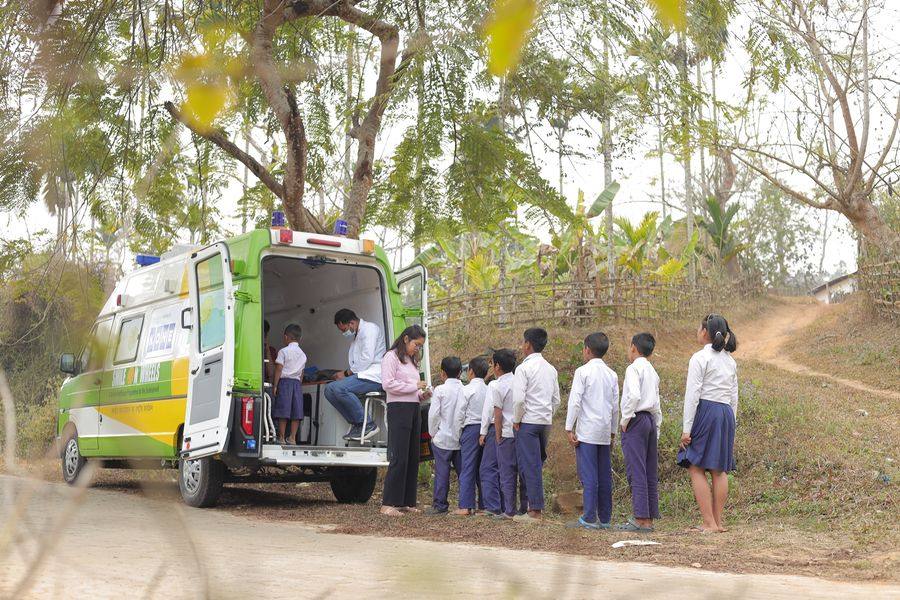
The Role of Schemes Like MUDRA And Their Limits

Schemes such as MUDRA have played a critical role in democratising women entrepreneurship. By removing collateral requirements and simplifying access to credit, they have enabled millions of first-time entrepreneurs to enter the market.
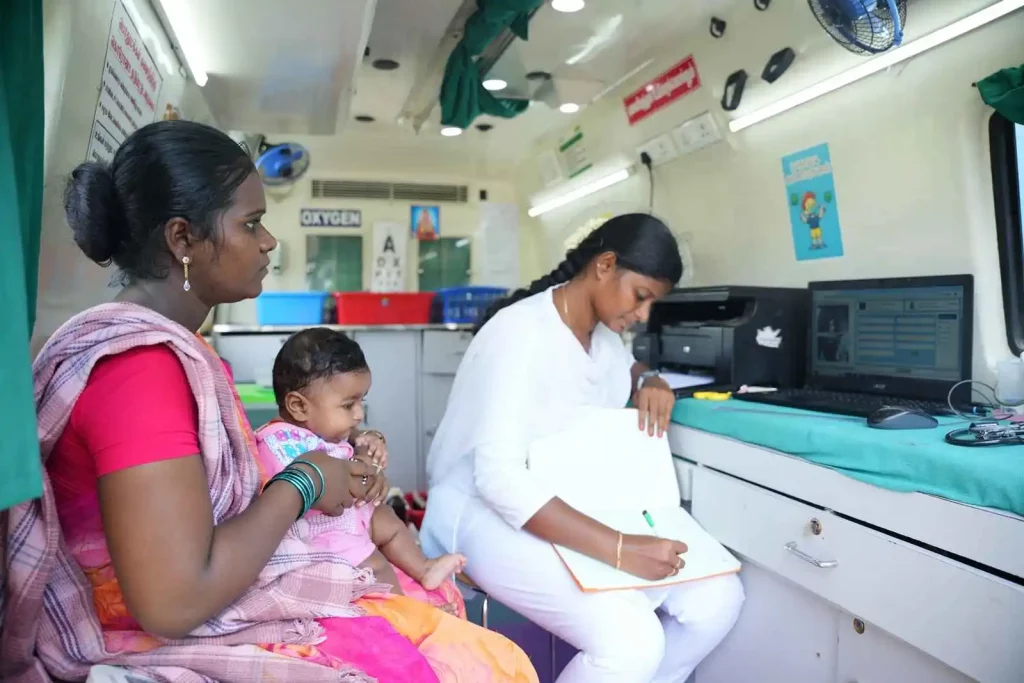
But credit alone does not create markets.

A woman who takes a loan to start a tailoring business still needs:

  • Customers
  • Distribution channels
  • Competitive pricing
  • Consistent demand

Without these, even well-intentioned credit can lead to cycles of low returns and repayment stress.

This is not a failure of the scheme — it is a reflection of a broader structural gap.

Where CSR Can Make the Difference

This is where CSR partnerships for women entrepreneurship can play a transformative role.

Unlike large-scale government programmes, CSR initiatives can focus on closing critical gaps in the value chain, particularly around market access and enterprise development.

women entrepreneurship csr

Organisations like Smile Foundation have increasingly worked at this intersection supporting skilling, entrepreneurship and livelihood initiatives that go beyond training to focus on outcomes such as income generation and employability.

Through CSR partnerships, programmes can:

  • Enable women to access structured markets
  • Support enterprise incubation and mentoring
  • Strengthen value chains and distribution networks
  • Build sustainable, scalable livelihood models

By aligning corporate resources with grassroots implementation, such partnerships can help move women entrepreneurs from informal participation to formal economic contribution.

Rethinking “Empowerment”

The language of empowerment has been central to development discourse. But in practice, empowerment is most meaningful when it translates into economic agency.

When women:

  • Earn consistent income
  • Control financial decisions
  • Own and grow enterprises

Empowerment moves from abstraction to reality.

This shift, from participation to ownership, is what current policy and practice must enable.

The Road Ahead For Women Entrepreneurship

India has already achieved scale in mobilisation. The next phase is about depth and sustainability.

This requires:

  • Building markets alongside skills
  • Strengthening value chains alongside production
  • Supporting enterprises alongside livelihoods

Initiatives like SHE-Marts represent an important step forward. But their success will depend on how effectively they integrate demand, capabilities and ecosystems.

Because ultimately, the question is not whether women can produce.

It is whether the system allows them to grow, compete and thrive. and ecosystems.

women entrepreneurship shemart

Explore how integrated livelihood and market linkage programmes can create sustainable income opportunities for women across rural India.

Partner with Smile Foundation to design CSR initiatives that move beyond training, towards enterprise growth and market access.

FAQs

1. What is women entrepreneurship in rural India?

It refers to women in rural areas starting and managing small businesses such as tailoring units, food processing, retail shops and handicrafts enterprises, often supported by SHGs and livelihood programmes.

2. What is the “missing market” problem?

It refers to the gap between production and market access, where women can produce goods but lack structured channels to sell them at scale and generate sustainable income.

3. What are SHE-Marts?

SHE-Marts are proposed community-owned retail platforms that aim to aggregate SHG products and connect rural women entrepreneurs to structured markets.

4. How does MUDRA Yojana support women entrepreneurs?

MUDRA provides collateral-free loans for micro and small businesses, enabling women to start enterprises such as tailoring, beauty services and retail businesses.

5. Why do many women-led enterprises remain small?

Key challenges include limited market access, lack of value chain integration, financial constraints and social barriers such as mobility restrictions.

6. What role do SHGs play in entrepreneurship?

SHGs provide a platform for savings, credit access, peer support and initial livelihood activities, forming the foundation for enterprise development.

7. How can CSR support women entrepreneurship?

CSR can fund skill development, market linkage initiatives, enterprise incubation and value chain development to help women scale businesses.

8. What is the difference between livelihood and enterprise?

Livelihoods often focus on income generation at a basic level, while enterprises involve scalable, market-oriented businesses with growth potential.

9. Why is market access important for women entrepreneurs?

Without access to markets, businesses cannot grow, income remains unstable and enterprises fail to scale beyond local demand.

10. How can NGOs help women entrepreneurs?

NGOs provide training, mentorship, financial linkages and market access support, helping women transition from subsistence activities to sustainable enterprises.

Sources

  • Ministry of Rural Development, Government of India (NRLM documents)
  • Union Budget 2026–27 announcements
  • World Bank studies on women-owned enterprises
  • MicroSave Consulting (2022 report on entrepreneurship programmes)
  • Government e-Marketplace (GeM)
  • Kudumbashree Mission reports
  • Amazon Saheli programme data
  • Pradhan Mantri MUDRA Yojana official data
Categories
In The Spotlight Insights Smile

Your Birthday Is the Best Reason to Give Back: The Power of a Birthday Donation

Summary

A birthday is one of the few moments in a year that belongs entirely to you. But across the world, more and more people are choosing to mark that day not just by receiving, but by giving. Birthday donations and birthday fundraisers have become one of the most personal and powerful ways to support causes that matter. From children running classroom fundraisers to global celebrities redirecting their celebrations toward communities in need, the idea is simple: your special day can create change far beyond your own life. This blog explores why birthday giving matters, how it works, who is doing it and how you can start — including through Smile Foundation’s birthday donation programme.

ChatGPT Image Apr 15 2026 07 50 55 PM

The Birthday Paradox: A Day of Receiving That Can Change Lives

There is something uniquely human about birthdays. Across cultures, religions and geographies, the anniversary of someone’s arrival in the world is marked with warmth, cake, candles, songs and gifts. It is a day that says: you matter and we are glad you are here.

But birthdays also carry a tension. As we grow older, many of us begin to feel that the accumulation of things — gifts we may not need, parties that leave little memory — does not quite capture what the day should mean. The older the birthday, often, the stronger the pull toward something more purposeful.

This is where the idea of a birthday donation enters and it enters naturally. Because if a birthday is about gratitude for your own life, then directing some of that gratitude outward, toward someone who has far less, is perhaps the most honest way to celebrate.

496980841 1175975507886923 6196384606634866236 n

What Is a Birthday Donation or Birthday Fundraiser?

A birthday donation is simply the act of donating to a cause on or around your birthday, either personally or by inviting others to contribute in lieu of gifts. A birthday fundraiser takes this a step further — it involves creating a dedicated fundraising campaign where friends, family and colleagues can pool their contributions toward a specific cause or organisation.

Both are straightforward in practice. The impact, however, is anything but small.

When you ask twenty people to donate even a modest amount in your honour, you have transformed a birthday into a collective act of generosity. You have turned well-wishers into contributors. And you have made your celebration mean something to people who were never at the party.

Why Birthdays Are the Perfect Moment for Giving

Psychologists have long noted that birthdays trigger a specific kind of emotional reflection. They mark the passage of time in a way that ordinary days do not. They invite us to ask: what have I done? What do I value? Who am I becoming?

These are precisely the conditions in which generosity flourishes.

There is also a social dimension. Birthdays are moments of heightened connection — people reach out, check in, wish you well. A birthday fundraiser rides that wave of goodwill. When you invite people to give to a cause as part of your celebration, you are not asking a cold audience. You are asking people who are already thinking about you warmly. The response rate and the emotional resonance, tends to be far higher than a standard donation appeal.

And there is the question of legacy. What do you want your birthday to represent? A dinner that will be forgotten by next week or a contribution to a child’s education that may shape the course of their life?

ChatGPT Image Apr 15 2026 07 52 46 PM

How Prominent People Around the World Do It

The idea of giving on your birthday is not new, and some of the world’s most recognised figures have shown how powerfully it can be done.

Leonardo DiCaprio turned his 39th birthday celebration into a major fundraising event for his environmental charity, the Leonardo DiCaprio Foundation, generating significant donations for conservation causes.

On his 60th birthday, musician Sting held a special charity concert at New York City’s Beacon Theatre, joined by performers including Lady Gaga, Bruce Springsteen and Stevie Wonder. The proceeds went to the Robin Hood Foundation, an organisation working to address poverty.

Actress Mindy Kaling marked her 40th birthday by donating to charitable causes, reflecting publicly on her gratitude and her awareness of inequality — particularly for children who share her heritage but not her advantages.

Zendaya celebrated her 20th birthday by raising $50,000 from friends and admirers for Convoy of Hope, an organisation supporting impoverished women across Kenya, El Salvador, Nicaragua, Tanzania and the Philippines.

South African actress Lillian Dube celebrated her 70th birthday by launching the Celebrities for Good Causes Foundation and asking guests for an entrance fee in the form of four pairs of school shoes. Her foundation went on to donate 70,000 pairs of school shoes to children across all nine provinces of South Africa.

Closer to home, when Rajinikanth turned 65 in December 2015, he requested his fans not to celebrate his birthday and instead urged them to donate to relief efforts for families affected by the devastating Chennai floods.

Each of these examples shares a common thread: the birthday became a platform, not for personal celebration alone, but for collective action.

Children Who Give Back on Their Birthdays

Perhaps the most moving dimension of birthday giving is when it comes from children themselves — young people who choose, often unprompted, to redirect their birthday moment toward others.

ChatGPT Image Apr 15 2026 07 54 57 PM

Around the world, children are running birthday fundraisers for causes they care about: animal shelters, clean water campaigns, school supplies for peers in underserved communities. Many do this through social media platforms, raising awareness and funds simultaneously.

In India, this culture is quietly growing. Children in urban schools are increasingly organising birthday collections for classmates in need, or channelling their celebrations toward NGOs working in education and child health. Teachers and parents who encourage this are not just raising funds, they are raising children who understand that empathy is not passive.

At Smile Foundation, this spirit of giving is something we see reflected in the families and communities we work with. When a child chooses to give on their birthday, they are not simply donating. They are learning, perhaps for the first time, that their life has the power to improve someone else’s.

The Psychology of Giving: Why It Feels Good

There is a growing body of research that confirms what many people already sense intuitively: giving makes us happier. Studies in positive psychology have consistently shown that spending money on others produces a greater boost to well-being than spending it on ourselves.

Birthdays amplify this effect. When giving is tied to a personal milestone, a day already freighted with meaning and emotion, the act carries more weight. It feels intentional rather than automatic. It becomes part of how we define the year and ourselves.

ChatGPT Image Apr 15 2026 07 53 53 PM

There is also the ripple effect. A birthday fundraiser is visible. Friends and family who contribute often share the campaign. They tell others why they gave. The cause gains exposure it would never have found through a conventional appeal. And sometimes, a simple birthday post inspires someone who has been looking for exactly this kind of cause to give to.

Birthday Donations in India: A Growing Culture

India has a long tradition of giving during moments of personal significance at weddings, religious occasions and family milestones. The birthday donation is a natural extension of this impulse, adapted for a generation that wants to act on its values in visible, connected ways.

Social media has accelerated the trend significantly. Facebook’s birthday fundraiser feature alone has enabled people to raise substantial sums simply by adding a donation link to their birthday post. Instagram stories, WhatsApp forwards and personal crowdfunding pages have made it easier than ever to turn a birthday into a giving moment.

What is changing is not just the mechanics but also the mindset. Increasingly, people in India, across age groups and income levels, are asking whether their celebrations can carry more meaning. Whether the money spent on a party, a dinner or a gift might go further if directed toward a child who needs a school uniform, a family that needs healthcare access or a young woman who needs vocational training.

How Smile Foundation Makes Birthday Donation Easy

Smile Foundation invites people to celebrate their birthdays meaningfully by donating online, with contributions going directly toward supporting underprivileged children across India.

Smile Foundation directly benefits over 15 lakh children and their families every year through more than 400 welfare projects in education, healthcare, livelihood and women’s empowerment, spanning over 2,000 remote villages and urban slums across 25 states of India.

When you make a birthday donation to Smile Foundation, your contribution can support a child’s education through Mission Education, provide healthcare access through mobile medical units, support a young woman’s vocational training or fund community health interventions in underserved areas.

Smile Foundation ensures that birthday gifts are effectively utilised to bring positive change in the lives of underserved children and contributions are eligible for up to 50% tax benefit under Section 80G of the Income Tax Act.

You can also set up a birthday fundraiser in your name, sharing the link with friends and family and inviting them to contribute in lieu of gifts. It is a straightforward process and every contribution, however small, moves the needle.

How to Set Up Your Birthday Donation/Fundraiser: A Simple Guide

Starting a birthday fundraiser does not require technical expertise or a large following. It requires only the decision to try.

Begin by choosing a cause that feels personal to you — education, healthcare, women’s empowerment, child nutrition. Then visit Smile Foundation’s website and explore the donation page dedicated to birthday giving. Set a fundraising goal that feels achievable but meaningful and write a short, honest note about why this cause matters to you. Share it with your network over WhatsApp, Instagram, email or wherever your people are and let the momentum build.

Do not wait for the day itself. Send the link a week before your birthday, giving people time to contribute. Thank each donor personally. And at the end of it, take a moment to reflect on what you have built — not a party that will be forgotten, but a contribution that will last.

A Different Kind of Birthday Memory

There is a particular kind of memory that stays with us longer than most. It is not the memory of what we received, but of what we did — the moments when we acted in alignment with our values, when we chose something larger than ourselves.

A birthday donation creates that kind of memory. It is the year you raised enough to put a child through a term of school. The year your friends came together not just for you, but for someone they had never met. The year your birthday became something more than a day.

That is the power of birthday giving. It does not diminish the celebration but deepens it.

If this resonates with you, visit Smile Foundation’s birthday donation page and take the first step. Your birthday is coming. So is the opportunity to make it count.

Frequently Asked Questions (FAQs)

What is a birthday donation?

A birthday donation is the act of donating to a cause on or around your birthday, either personally or by creating a fundraiser and inviting friends and family to contribute in lieu of gifts. It is a way of marking a personal milestone with a gesture that extends beyond yourself.

What is a birthday fundraiser and how is it different from a direct donation?

A direct donation is a personal contribution you make on your birthday. A birthday fundraiser involves creating a dedicated campaign, often shared via social media or messaging apps, where your network can collectively contribute to a cause in your honour. Fundraisers tend to amplify the impact significantly, as they mobilise multiple contributors around a single goal.

How do I set up a birthday fundraiser with Smile Foundation?

You can visit Smile Foundation’s birthday donation page, choose a cause you care about and make a donation or set up a personalised fundraising link to share with your network. The process is simple, secure and takes only a few minutes.

Is my birthday donation to Smile Foundation tax-deductible?

Yes. Donations to Smile Foundation are eligible for up to 50% tax benefit under Section 80G of the Income Tax Act, making birthday giving financially sensible as well as personally meaningful.

What causes can my birthday donation support at Smile Foundation?

Your contribution can go toward child education through the Mission Education programme, healthcare access through mobile medical units, women’s empowerment and vocational training, nutrition support or community development initiatives across India.

Is there a minimum amount required for a birthday donation?

No. Every contribution, regardless of size, makes a meaningful difference. A small donation from one person, multiplied across a birthday fundraiser’s network of contributors, can add up to something substantial.

Can children run birthday fundraisers too?

Absolutely, and many do. A child who chooses to fundraise on their birthday is developing empathy, social awareness and the understanding that their actions have consequences beyond their immediate world. It is one of the most valuable lessons a birthday can teach.

Why are birthdays a particularly good time to fundraise?

Birthdays create a natural moment of connection — people are already thinking about you warmly and are inclined to engage. A birthday fundraiser channels that goodwill into collective action, making it one of the most effective and emotionally resonant moments to ask for support.

Will Smile Foundation keep me updated on how my donation is used?

Yes. Smile Foundation provides regular updates through newsletters, impact stories and progress reports, so donors can see the real-world difference their contributions have made.

Can I donate in someone else’s name as a birthday gift?

Yes. Making a donation in someone’s name on their birthday is a deeply thoughtful gift — one that honours both the recipient and a cause they may care about. Smile Foundation welcomes this kind of giving.

Categories
Girl Child In The Spotlight Smile

The Missile Woman of India: Tessy Thomas

Summary

Known as the Missile Woman of India, Tessy Thomas has redefined what leadership in science and defence looks like in modern India. From a modest upbringing in Kerala to leading some of India’s most advanced missile programmes, her journey is one of resilience, intellect and determination. Best known for her work on the Agni missile series, including contributions to long-range systems like Agni-IV and beyond, she has played a critical role in strengthening India’s strategic capabilities. Her story is about breaking barriers, inspiring generations and proving that science, when pursued with conviction, can transform both a nation and its narrative.

Missile Woman of India in her childhood
Missile Woman of India in her childhood watching a rocket launch.

Determination of Steel

There is a photograph that captures something essential about Tessy Thomas, admiringly called the Missile Woman of India. She is standing in a control room, composed and focused, surrounded by the kind of instrumentation that most people will never see in their lifetimes. There is no drama in her expression — only the quiet authority of someone who has spent decades earning her place in one of the most demanding fields in the world.

That composure, it turns out, has been there from the beginning.

A Childhood Shaped by the Coast and Circumstance

Tessy Thomas was born in April 1963 in Alappuzha, a town of backwaters and fishing boats on the Kerala coast. It was not, by any obvious measure, a place that pointed toward missile science. But the distance between where someone begins and where they end up is rarely about geography.

When her father suffered a stroke during her childhood, the family’s stability shifted overnight. Financial pressure arrived early, and so did the understanding that resilience was not optional. Her mother held the household together and kept education at the centre of it — a decision that would shape everything that followed.

What Alappuzha did offer, almost by accident, was proximity to the Thumba Equatorial Rocket Launching Station. Growing up within sight of rocket launches, Tessy Thomas absorbed something that no curriculum could fully deliver: the visceral sense that science was not abstract. It was loud and bright, and real. She thought that she could reach the moon.

The Decision That Wasn’t Obvious

Choosing aerospace engineering in the India of the early 1980s required a particular kind of conviction, especially for a woman. Defence research was not a field that actively recruited women, and there were few visible role models to suggest it was even possible.

What drew her in was the national mood around science itself. India was building something — in space, in defence, in its own sense of technological self-sufficiency. A. P. J. Abdul Kalam and others were turning missile development into a kind of national aspiration, and for a young woman who found mathematics and physics more instinct than effort, the pull was difficult to resist.

She completed her engineering in electronics and communication, then specialised in guided missile technology. The decision was unconventional. In retrospect, it looks inevitable.

Breaking boundaries in tech spaces
Tessy Thomas stepped into a field long considered a male preserve.

Building a Career in the Shadows of Classified Work

Tessy Thomas joined the Defence Research and Development Organisation (DRDO) in the 1980s, at a time when India was investing heavily in indigenous defence capability. The work was unglamorous in the way that most serious scientific work is — iterative, precise and largely invisible to the public.

She was not fast-tracked. She climbed. Each role brought greater complexity: guidance systems, trajectory optimisation, mission planning, systems integration. Her focus was the Agni series of ballistic missiles, and within that programme, her contributions to long-range systems — including becoming the Project Director of the Agni-IV ballistic missile and the development pathways toward future variants, would eventually earn her a title that no one had held before. The media called her India’s Missile Woman and Agniputri.

A group photo of the team of AGNI IV missile including DRDO Chief Shri Avinash Chander and the Project Director AGNI IV Ms. Tessy Thomas at the launch of AGNI IV
A group photo of the team of AGNI-IV missile including DRDO Chief Shri Avinash Chander and the Project Director, AGNI-IV, Ms. Tessy Thomas, at the launch of AGNI-IV, the 4000 Kms range Nuclear Capable Ballistic Missile from the Wheeler Island off the coast of Odisha on January 20, 2014.

Over time, she rose to Director General of Aeronautical Systems at DRDO, one of the most senior positions in India’s defence research structure. Those who worked with her describe a leadership style that was calm under pressure, technically unimpeachable and unusually collaborative for a domain that often rewards hierarchy over openness.

As of April 2026, Dr. Tessy Thomas serves as the Vice-Chancellor of Noorul Islam Centre for Higher Education (NICHE) in Kanyakumar

What the Title “Missile Woman of India” Actually Means

The label Missile Woman of India entered public consciousness as a media shorthand, but it points to something more specific than celebrity. It reflects the fact that for a sustained period, across some of India’s most strategically sensitive defence projects, one person’s technical judgment was indispensable.

Her work on guidance and control systems determined whether a missile could reach its target with precision. Her contributions to systems integration meant that complex, multi-component technologies could function as a coherent whole. These are not supporting roles but the work itself.

India’s ability to develop and deploy long-range ballistic missiles without dependence on foreign technology owes something significant to her. That is what the title is actually marking.

Missile guidance system trajectory diagram
Born with a science-curious mind, Tessy contributed significantly in the ballistic missile projects of DRDO.

Kalam, Mentorship and the Philosophy Behind the Science

Working alongside A. P. J. Abdul Kalam left a particular kind of impression on Tessy Thomas — not just technical, but philosophical. Kalam believed that science was inseparable from the people who practised it, and that the culture of a laboratory was as important as the quality of its instruments. That thinking shaped how she approached her own leadership.

She has spoken consistently about the importance of teamwork in environments where individual brilliance is often over-celebrated. She has championed young scientists and women in STEM particularly, not through grand gestures but through the more durable work of being present, accessible and honest about the path.

The human side of her career including the mentorship, the institutional culture-building and the insistence that science is a collective endeavour, may ultimately prove as significant as any single technical achievement.

Recognition and What Comes After

In 2025, Tessy Thomas received the Eighth Paulos Mar Gregorios Award, presented at the Thyagaraj Sports Complex. The award, established in memory of Paulos Mar Gregorios — theologian, scholar and former President of the World Council of Churches — recognises contributions that carry meaning beyond professional accomplishment. It was a fitting recognition for a career that has always been about more than the work itself.

Her tenure as Vice-Chancellor of Noorul Islam Centre for Higher Education extended her influence into the next generation of engineers and scientists, translating decades of experience into institutional knowledge that could outlast any single project.

Why STEM Access Matters Today

The journey of the Missile Woman of India is not an isolated story of individual brilliance. It is also a reminder of what becomes possible when girls are given access to education, mentorship and opportunity in science and technology.

Across India, however, millions of girls are still excluded from STEM pathways — not due to lack of ability, but due to lack of access.

This is where organisations like Smile Foundation are working to bridge the gap.

Girls enjoying STEM lessons
School girls from one of our STEM initiative learning new things.

Through our focused interventions in education, Smile Foundation is enabling children, especially girls from underserved communities, to access STEM learning through digital classrooms, experiential education and mentorship. By introducing young learners to science, technology, engineering and mathematics early on, these programmes aim to build academic competence, curiosity and confidence.

Because the next Tessy Thomas may not be missing talent but opportunity.

The next breakthrough in science might not come from privilege.

It might come from potential, if we choose to invest in it.

One story. Many futures
Tessy Thomas is a vessel of inspiration for many young girls.

A Legacy Still Being Written

Behind the precision and discipline of missile development lies a life carefully balanced between professional intensity and personal responsibility. Tessy Thomas built her career alongside a family life anchored in a shared understanding of service — her husband, Saroj Kumar, being associated with the Indian Navy and their son growing up in an environment shaped by both science and duty. She has often spoken about long nights at testing sites, the pressure of mission timelines and the constant negotiation between motherhood and leadership. Her journey reflects not just individual achievement, but the everyday balancing act that many women in demanding careers continue to navigate.

The story of Tessy Thomas resists the tidiness of a conventional achievement narrative. It is a career built on technical excellence, navigated against the grain of convention, sustained by genuine purpose.

In a country still working to close the gap between aspiration and access for women in science and leadership, her journey functions as both proof and provocation. Proof that the barriers are not insurmountable. Provocation to ask why they exist at all.

The Missile Woman of India grew up watching rockets launch from a coastal town in Kerala. She spent her life making sure they would land exactly where they were meant to.

FAQs

Why is Tessy Thomas called the Missile Woman of India?

The title reflects her decades of contribution to India’s ballistic missile programmes, particularly the Agni series and her leadership role in developing indigenous missile technology at DRDO.

Where was Tessy Thomas born?

She was born in April 1963 in Alappuzha, Kerala.

What inspired her to pursue aerospace engineering?

A combination of early exposure to rocket launches near Thumba, a natural aptitude for mathematics and physics, and the scientific ambition of the era embodied by figures like A. P. J. Abdul Kalam drew her toward the field.

What are her most significant contributions to India’s defence sector?

Her work on guidance and control systems, mission planning, trajectory optimisation and systems integration for long-range ballistic missiles has been central to India’s indigenous defence capability.

What awards has she received recently?

She received the Lal Bahadur Shastri National Award (2012), DRDO Scientist of the Year (2008), Agni Award for Excellence in Self-Reliance (2001), ETPrime Women Leadership Awards (2023): Woman Pioneer of the Year, Dr. Thomas Cangan Leadership Award (2018), Sir Mokshagundam Visvesvaraya Award (2016), CNN-IBN Indian of the Year (2012), Smt. Chandaben Mohanbhai Patel Industrial Research Award (2009), India Today Women of the Year (2009), DRDO Performance Excellence Award (2011, 2012) for her contributions to Agni-IV and Agni-V, Outstanding Woman Achiever Award by WISE and Dr. Paulos Mar Gregorios Award (2025).

What leadership roles has she held?

She has served as Director General of Aeronautical Systems at DRDO and is currently the Vice-Chancellor of Noorul Islam Centre for Higher Education.

Categories
CSR In The Spotlight Insights

What is CSR in India? Full Form, Law, Activities & NGO Implementation Guide (2026)

Key Takeaways

  • CSR in India is mandatory with eligible companies required to spend 2% of profits on social development
  • The mandate was introduced to bridge gaps in sectors like health, education and livelihoods where public systems fall short
  • CSR has evolved from charity to strategy, moving towards structured, outcome-driven interventions
  • Schedule VII offers flexibility, allowing companies to align CSR with national and local development priorities
  • Proposed reforms aim to ease compliance, while retaining accountability and impact focus
  • NGOs play a critical role, providing last-mile access, contextual understanding and execution capability
  • Partnership models are key, combining corporate scale with grassroots expertise
  • Impact and accountability are increasingly central, with growing emphasis on measurable outcomes
  • Hybrid approaches are emerging, reflecting a shift towards scalable, sustainable CSR models

What is Corporate Social Responsibility (CSR) in India? Meaning and Importance

Before going into the meaning of the word, let’s understand as to why CSR came into existence.

Companies were making huge benefits and it was deepening the divide between the rich and the poor of India. By mandating CSR for eligible companies, their economic resources and management expertise could be utilised for the welfare of the nation.

So, CSR is a business spending mandate of the government wherein companies mobilize substantial funds for critical sectors that traditional government schemes alone are not able to fully cover.

The critical sectors are:

  • Education & Skills: Vocational training, building schools and career counseling.
  • Healthcare: Sanitation, primary healthcare, maternal and child health, reproductive health, malnutrition eradication.
  • Environment: Water conservation, agriculture, renewable energy and afforestation.
  • Social Equality: Empowering women, minorities and senior citizens

CSR Law in India under the Companies Act, 2013

Under Section 135 of the Companies Act, 2013, eligible for-profit companies must spend at least 2% of their average net profits from the preceding three years on Corporate Social Responsibility (CSR) activities. Mandatory for companies with a net worth of ₹500 crore+, turnover of ₹1,000 crore+ or net profit of ₹5 crore+, this law requires a CSR Committee to oversee projects aligned with Schedule VII. 

In CSR activities, preference needs to be given to local areas where companies operate. This is to ensure that the communities whose lives are most affected by the commercial activities of the companies reap the maximum benefits out of the CSR mandate.

The mandate amount, if not spent, would mean enquiries and a report from the company’s board to the government explaining the reasons for the non-spend. The amount doesn’t remain with the company, it must be either transferred to a special account within 30 days of the financial year-end or to a fund specified in Schedule VII within six months. 

Failure to comply can lead to severe consequences with a penalty of ₹1 crore or twice the amount required to be transferred to the CSR fund, whichever is less.

CSR Eligibility Criteria for Companies

As of March 2026, the government has proposed a series of amendments to the Companies Act and LLP laws to promote ease of doing business and reduce compliance burdens. These include changes to CSR norms, decriminalisation of procedural defaults, greater flexibility in share buybacks and relaxations for small firms. 

As part of these reforms, the Ministry of Corporate Affairs has specifically proposed changes to Corporate Social Responsibility (CSR) provisions. One key proposal is to increase the net profit threshold for CSR applicability to ₹10 crore, thereby potentially reducing the number of companies required to undertake CSR. Additionally, the time allowed for transferring unspent CSR funds to a designated account is proposed to be extended from 30 days to 90 days, providing companies greater flexibility in compliance.

The amendments also include revisions to the eligibility criteria for the constitution of CSR committees. Currently, companies meeting thresholds of ₹500 crore net worth, ₹1,000 crore turnover or ₹5 crore net profit are required to spend at least 2% of their average net profits on CSR activities.

Overall, these proposed changes signal a shift towards simplifying compliance requirements while maintaining the CSR framework, with an emphasis on flexibility and ease of implementation for companies.

List of CSR Activities as per Schedule VII

Corporate Social Responsibility (CSR) in India is guided by Schedule VII of the Companies Act, 2013, which outlines a broad and flexible set of activities that companies can undertake to contribute to social development. Rather than prescribing rigid categories, the framework allows organisations to align their CSR initiatives with both national priorities and local community needs.

At its core, Schedule VII places strong emphasis on human development and basic needs. This includes efforts to (i) eradicate hunger, poverty and malnutrition, alongside improving access to healthcare, sanitation and safe drinking water. These areas remain critical in addressing structural inequalities and improving quality of life, particularly in underserved regions.

(ii) Education is another central pillar. The framework encourages companies to support formal and informal learning, including special education, vocational training and livelihood enhancement programmes. By focusing on employability and skills, CSR initiatives in this area contribute directly to economic participation and long-term development.

Schedule VII also highlights the importance of (iii) gender equality and social inclusion. Initiatives that empower women, create safe spaces such as hostels and day-care centres, and reduce inequalities faced by marginalised communities are recognised as key CSR activities. This reflects a broader understanding that development must be inclusive to be sustainable.

(iv) Environmental sustainability forms a significant part of the CSR mandate. Companies are encouraged to invest in projects that promote ecological balance, conserve natural resources and improve environmental quality. This includes activities such as afforestation, biodiversity conservation and sustainable resource management, aligning corporate action with global climate and sustainability goals.

In addition, the framework recognises the importance of preserving (v) cultural heritage and national identity. CSR efforts can support the protection and restoration of historically significant sites, as well as promote traditional arts and handicrafts, thereby sustaining cultural ecosystems and livelihoods.

(vi) Support for armed forces veterans and their families, as well as the (vii) promotion of sports — particularly at the grassroots and national levels — are also included within the scope of CSR. These areas contribute to both social welfare and national development.

Schedule VII further enables companies to contribute to government-led initiatives by allowing (viii) donations to specified funds such as the Prime Minister’s National Relief Fund and PM CARES Fund. It also encourages support for (ix) research and innovation through contributions to technology incubators and projects in science and engineering.

Finally, the framework places emphasis on (x) rural and slum area development, as well as (xi) disaster management, including relief, rehabilitation and reconstruction efforts. These areas ensure that CSR remains responsive to both long-term development challenges and immediate humanitarian needs.

Overall, Schedule VII provides a comprehensive yet adaptable structure for CSR in India. By covering a wide spectrum of social, economic and environmental priorities, it enables companies to design interventions that are not only compliant, but also meaningful and impactful.

Real CSR Examples by Companies in India

The roots of CSR in India began in the mid-19th century (1850s), driven by philanthropy and religious traditions. While not labeled as “CSR” at the time, pioneers like the Tatas, Birlas and Godrej families established the first major social initiatives by funding schools, hospitals and temples indicating that social good need not require mandates. These early efforts were based on personal values rather than legal mandates, focusing on community development and relief during famines or epidemics. 

Historical Evolution of CSR in India

The idea of corporate social responsibility (CSR) in India did not emerge overnight. It has evolved gradually, shaped by cultural values, economic shifts and changing expectations from businesses. Broadly, this journey can be understood across four distinct phases.

Phase 1 (1850–1914): Charity and Philanthropy
Industrial families such as the Tatas, Birlas, Godrejs, Shrirams and Bajajs played a pioneering role, often funding temples, schools and hospitals. These efforts were driven less by formal strategy and more by a sense of moral responsibility and community welfare.

Phase 2 (1914–1960): Social Development
As India moved through the freedom struggle and into independence, the role of businesses began to shift. CSR became more aligned with national priorities, influenced by Gandhian ideals of trusteeship. Companies increasingly supported social development initiatives, particularly in rural areas and worked alongside the state in nation-building efforts.

Phase 3 (1960–1990): Institutionalisation through Corporate Trusts
During this period, CSR became more structured. Many companies established dedicated trusts and foundations to manage their social initiatives. While the approach was still largely philanthropic, there was greater organisation and continuity in how these activities were planned and implemented.

Phase 4 (1991–2013): Liberalisation and Strategic CSR
Economic liberalisation marked a turning point. As businesses expanded and globalised, CSR began to take on a more strategic role. Partnerships with NGOs, increased stakeholder expectations and the rise of public-private collaborations led companies to think beyond charity and towards long-term impact.

Modern CSR Recognition

While philanthropic giving has existed for centuries, the formal recognition of CSR in India matured with the release of the DPE Guidelines in 2010 for public sector enterprises and the subsequent mandate for disclosures. FICCI also played a major role by establishing the first CSR Awards in 1999 to recognize corporate contributions.

How Companies Implement CSR Projects with NGOs

Companies partner with NGOs based on alignment, transparency, accountability and sustainability. For example, a company finding climate solutions will pair up with development organizations who have the in-depth knowledge of disaster-prone areas and invest their funds in helping the affected communities grow more resilient to climate changes.

NGOs that have historically worked with communities for an ample amount of time provide companies with the strategic direction, an exhaustive list of community needs and priorities, on-ground implementation measures and long-term sustainability models to ensure impact lasts beyond the project period.

Why NGOs Play a Critical Role in CSR Implementation

Even as many companies today establish their own foundations to implement CSR programmes, the role of NGOs remains central to driving meaningful impact on the ground. Corporate foundations often bring scale, resources and strategic alignment with business goals. However, translating intent into lasting community change requires a depth of local understanding that NGOs are uniquely positioned to offer.

NGOs act as the bridge between the company intent and the community transformation. They provide the grassroots expertise, local presence, contextual knowledge and implementation capability — all factors that are difficult to build quickly and — are necessary to translate corporate funds into measurable, long-term impact. They understand local socio-cultural dynamics, identify real needs beyond surface-level indicators and design interventions that are both relevant and sustainable. 

Importantly, NGOs approach CSR through a social development lens rather than a compliance lens. This allows them to design programmes that address root causes — whether in education, healthcare or livelihoods — rather than just symptoms. Their focus on outcomes and community ownership ensures that interventions continue to create value even after project cycles end.

For companies with their own foundations, partnering with NGOs is not a limitation but a strategic advantage. It enables them to combine institutional capacity with grassroots insight, ultimately leading to more credible, scalable and impactful CSR outcomes.

Benefits of Partnering with an NGO for CSR

  • Strong last-mile reach
    India has over 3 million NGOs, many working in remote and underserved areas, enabling companies to reach communities beyond their direct operational footprint.
  • Grassroots expertise
    NGOs bring deep understanding of local contexts, ensuring CSR programmes are relevant, culturally appropriate and community-driven.
  • Better implementation outcomes
    Evidence from development programmes shows that initiatives with community participation and local adaptation have higher success and sustainability.
  • Regulatory compliance made easier
    Established NGOs are already registered under MCA (CSR-1) and have systems for reporting, audits and documentation, reducing compliance burden for companies.
  • Measurable impact and accountability
    NGOs use tools like baseline surveys, monitoring frameworks and third-party evaluations, aligning with the growing requirement for impact assessment in CSR.
  • Cost and time efficiency
    Partnering avoids the need to build large in-house CSR teams, allowing companies to leverage existing infrastructure and expertise.
  • Faster programme rollout
    NGOs’ on-ground presence enables quicker implementation compared to setting up new operations from scratch.
  • Focus on long-term change
    NGOs typically design programmes that address root causes, ensuring sustainability beyond short-term CSR cycles.
  • Enhanced credibility and trust
    Working with credible NGOs strengthens stakeholder confidence, including communities, regulators and investors.
  • Strategic collaboration advantage
    Combines corporate scale and funding with NGO insight and execution, leading to more effective and scalable CSR models.

How Smile Foundation Implements CSR Projects Across India

One of the distinguishing aspects of our work in CSR implementation is its hybrid model, which combines Social Venture Philanthropy (SVP) with direct programme execution. This approach allows the organisation to balance scale, quality and long-term sustainability across diverse geographies.

At the core of this model is Social Venture Philanthropy (SVP) — an approach inspired by venture capital principles. Under SVP, Smile Foundation partners with credible community-based organisations (CBOs) to implement development projects. However, the engagement goes far beyond funding. We actively invest in capacity building, training and institutional strengthening, enabling these grassroots partners to deliver programmes effectively and sustainably. By nurturing leadership, improving governance practices and embedding accountability mechanisms, SVP ensures that smaller organisations are equipped to scale their impact over time.

Complementing this is our Outreach model, where programmes are implemented directly by the organisation. This approach is particularly relevant in remote or underserved regions, where the complexity of challenges or lack of local capacity requires more intensive, hands-on intervention. By working closely with local communities and stakeholders, Smile Foundation ensures that these programmes are not only professionally managed but also contextually relevant and outcome-driven.

What strengthens this dual approach is a strong emphasis on credibility and accountability. Smile Foundation follows a four-tier audit and evaluation mechanism, ensuring transparency in fund utilisation and rigorous assessment of programme impact. This structured oversight builds trust among corporate partners while ensuring that CSR investments translate into measurable social returns.

Together, the SVP and Outreach models reflect a pragmatic understanding of India’s development landscape — where some contexts require collaboration and capacity building, while others demand direct intervention. This flexibility allows Smile Foundation to deliver CSR partnerships that are both scalable and deeply rooted in community needs.

Bridging purpose and impact through collaboration

FAQs — CSR in India

1. What is CSR in India and why is it important?
Corporate Social Responsibility (CSR) in India refers to the legal obligation of certain companies to contribute to social and environmental development. Introduced under the Companies Act, 2013, CSR ensures that businesses go beyond profit-making to play an active role in addressing issues such as education, healthcare, inequality and sustainability. It positions companies as key stakeholders in national development.

2. Which companies are required to comply with CSR provisions?
Companies are required to undertake CSR if they meet any one of the following criteria in the preceding financial year: a net worth of ₹500 crore or more, a turnover of ₹1,000 crore or more, or a net profit of ₹5 crore or more. This threshold ensures that larger, financially capable companies contribute to social impact.

3. How is the CSR spending amount calculated?
Eligible companies must spend at least 2% of their average net profits from the last three financial years on CSR activities. The calculation excludes certain types of income, such as profits from overseas branches, ensuring that CSR spending reflects domestic business performance.

4. What kind of activities are considered valid CSR under Indian law?
CSR activities must fall under the categories listed in Schedule VII of the Companies Act. These include promoting education, improving healthcare and sanitation, supporting gender equality, ensuring environmental sustainability, rural development, disaster relief and more. The framework is broad, allowing companies to design programmes aligned with both national priorities and local needs.

5. How can companies implement their CSR initiatives?
Companies have multiple implementation options. They can run programmes directly, set up their own foundations, or partner with registered NGOs and implementing agencies. In practice, many companies adopt a hybrid approach, combining in-house strategy with NGO-led execution to ensure both scale and effectiveness.

6. Why are NGOs considered important partners in CSR?
NGOs bring deep grassroots knowledge, community trust and implementation expertise. They understand local challenges, can adapt programmes in real time and ensure sustained engagement with beneficiaries. This makes CSR initiatives more relevant, inclusive and impactful, especially in underserved or remote regions.

7. What happens if a company does not spend its CSR budget?
If CSR funds remain unspent, companies are required to transfer the amount to a specified fund or a designated CSR account within a defined timeframe. For ongoing projects, the funds must be utilised within a stipulated period; otherwise, they must be redirected as per regulatory guidelines. This ensures accountability and prevents funds from remaining idle.

8. Is CSR in India voluntary or mandatory?
CSR is mandatory for companies that meet the eligibility criteria, making India one of the first countries to legally require corporate social investment. However, while spending is mandated, companies have flexibility in choosing the areas and methods of implementation.

9. What is the role of impact assessment in CSR?
Impact assessment has become increasingly important, especially for large CSR projects. Companies are expected to evaluate whether their interventions are creating measurable and sustainable outcomes. This includes tracking indicators such as improvements in education, health or livelihoods, moving CSR from a spending exercise to an outcome-driven approach.

10. How is CSR evolving in India today?
CSR in India is gradually shifting from a compliance-driven activity to a more strategic and integrated function. Companies are focusing on long-term programmes, aligning CSR with business values, and building partnerships with NGOs and institutions. There is also greater emphasis on transparency, data-driven decision-making and sustainable development goals.

0%