

In today’s innovation economy, “scale” has become one of the most celebrated words in the entrepreneurial lexicon. Nowadays, the success of any startup is often judged by how quickly they can grow, the pace with which they acquire the users, the rapid market expansion and their efficiency to raise capital.
In 2025 alone, global venture capital funding crossed $368 billion, reflecting just how deeply speed and growth are embedded in the money flow into the startup model, helping it scale. But when this same vocabulary is applied to the social sector, it misses the learnt experience that scaling social impact is fundamentally different and significantly harder than scaling startups.
Unlike startups, which often scale products or services, social organisations aim to scale change — whether that means reducing poverty, improving education, expanding healthcare access or shifting social norms. These are not linear problems and they rarely respond to quick fixes because social change is slow, layered and dependent on the unending chain of humans choosing to show up for one another.
Startups Scale Products but Social Impact Scale Trust
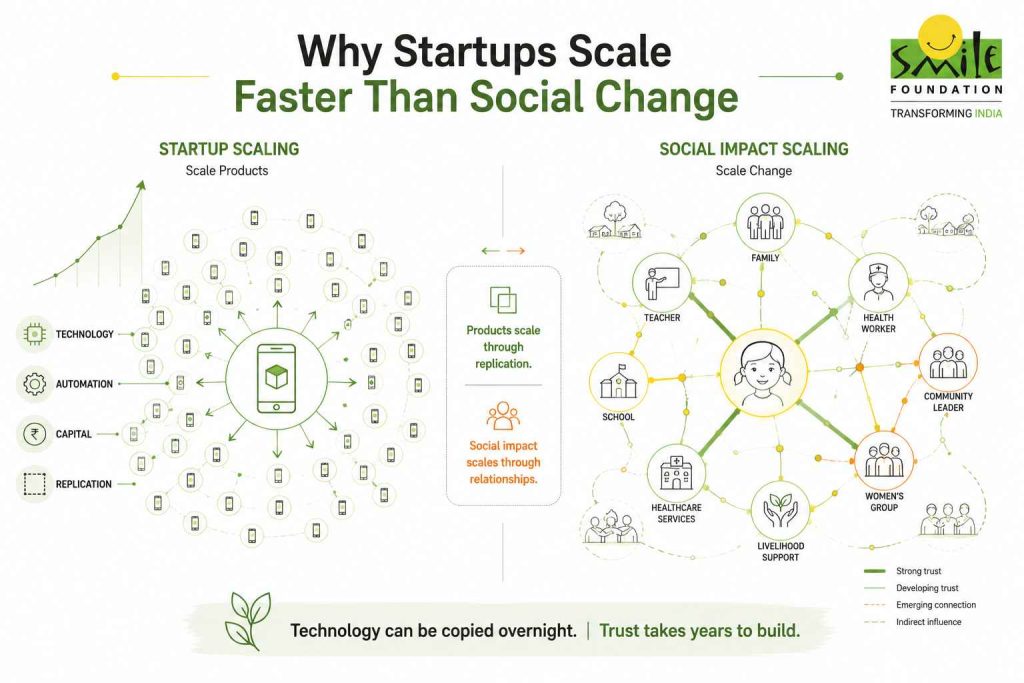
The startup ecosystem is designed around repeatability. Once a company finds product-market fit, it can often scale rapidly through technology, automation and capital infusion. A mobile app can be downloaded by millions overnight; a SaaS platform can onboard users globally with minimal marginal cost.
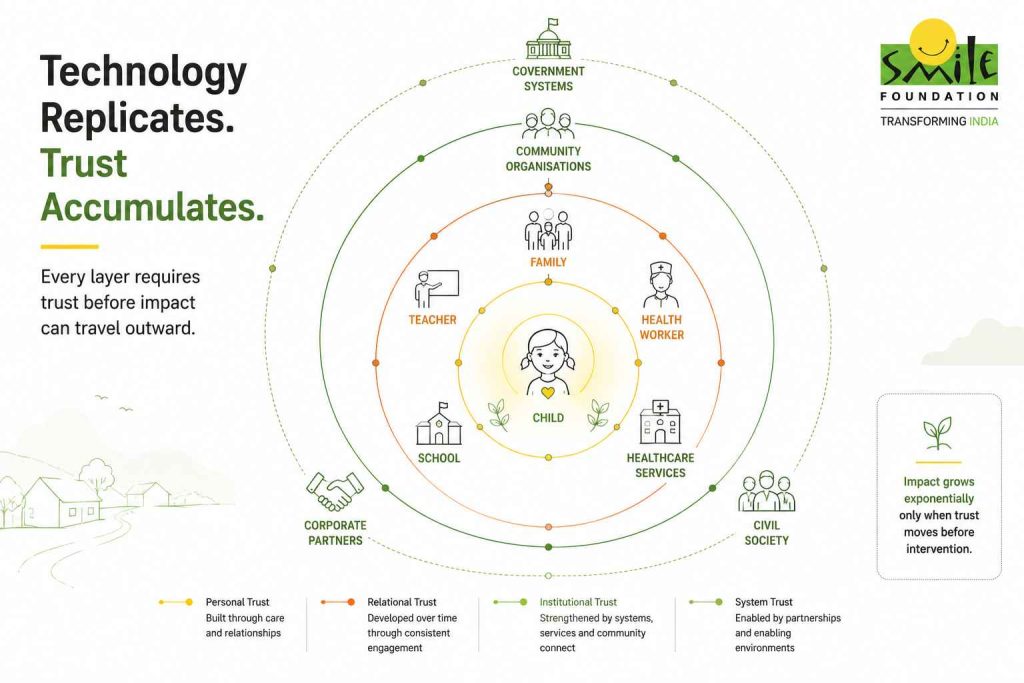
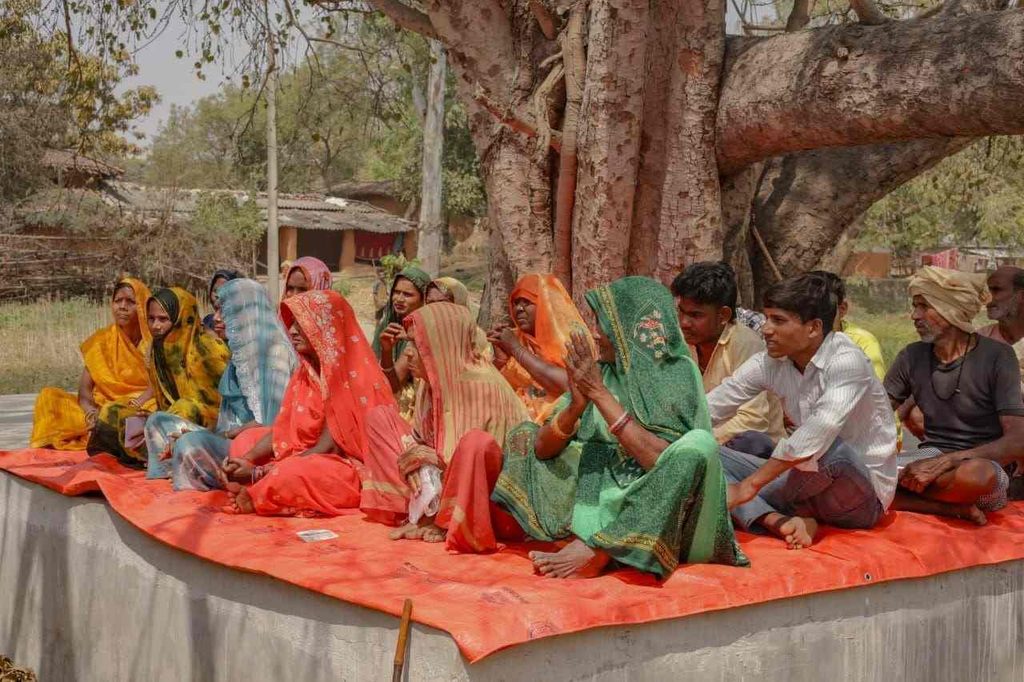
On the other hand, social impact does not work that way. A programme cannot simply be “rolled out” into a new community without understanding its unique social, cultural and political context. Trust must be built, sometimes over years, before any intervention can start seeing a semblance of success.
This is visible in the work of Smile Foundation, one of India’s leading development organisations, which reaches over 1.5 million children and families annually across 2,000+ villages and slums. Its scale has not been achieved through replication alone, but through deep, community-rooted engagement that adapts programmes to local realities.
That kind of scaling takes time and patience.
Measuring Social Impact is Harder than Measuring Growth
For startups, growth is often measured through relatively straightforward and immediate indicators such as revenue, app downloads, customer retention, churn rates or company valuation. These metrics are visible, quantifiable and can usually be tracked in real time, offering a clear picture of whether a business is growing or struggling.
Social impact, however, operates very differently. Its most meaningful outcomes are often deeply human and far more difficult to capture through numbers alone. How do you measure dignity, confidence, empowerment or a person’s ability to imagine a different future for themselves?
According to the Organisation for Economic Co-operation and Development (OECD), social outcomes often involve “long causal chains,” meaning that the full effects of an intervention may take years and sometimes decades to become visible. A girl receiving a scholarship, for instance, is easy to count as an output. But the real impact goes much deeper: does that scholarship give her the confidence to delay early marriage, pursue higher education, negotiate greater autonomy within her family or build a professional career?
Those transformational shifts are harder to quantify, yet they are often the outcomes that matter most. To address this complexity, nonprofits and development organisations increasingly rely on frameworks such as Social Return on Investment (SROI) and Theory of Change, which aim to map not only what changes but also how and why those changes occur over time.
Organisations like ours, Smile Foundation, too, have strengthened our focus on impact measurement and social return on investment through detailed annual reporting and programme evaluations. The irony, however, remains central to the challenge of scaling social impact: the outcomes that are easiest to count are often not the ones that matter most, while the changes that truly transform lives are often the hardest to prove.
Capital Behaves Differently in Social Impact
Unlike startups, which are funded by investors who knowingly accept risk in pursuit of outsized returns, the social sector operates within a very different financial reality. Venture capital is built on the understanding that not every investment will succeed; in fact, failure is often treated as an expected part of innovation, with the belief that one successful breakthrough can justify multiple unsuccessful attempts.
Philanthropy, however, tends to function with far less tolerance for uncertainty. According to the India Philanthropy Report 2025, nonprofit funding in India remains heavily outcome-driven, with donors increasingly expecting visible, measurable and immediate accountability for every rupee invested. While this demand for transparency is both understandable and necessary, it can unintentionally discourage experimentation, the very process through which new and more effective solutions are often discovered.
Social organisations frequently spend substantial time and resources on grant applications, donor reporting, compliance requirements and outcome documentation, all to secure and sustain funding. These are essential functions, but they also divert attention and energy away from innovation, community engagement and programme design. The result is a striking paradox: the organisations working to solve some of society’s most complex and deeply rooted problems—poverty, inequality, education gaps, public health, gender injustice—are often the ones operating with the least flexibility to take risks, test new ideas or learn through failure. In a sector where innovation is urgently needed, the very systems designed to support impact can sometimes make meaningful experimentation harder.
Human Systems Don’t Scale like Technology
Technology scales because it is designed to replicate flawlessly. Once a piece of code is written, it can be copied and deployed millions of times with near-perfect consistency, whether it reaches ten users or ten million. Human systems, however, do not scale as efficiently. They depend on individuals with varying skills, which makes growth far more complex.
Training one teacher, for instance, is manageable, but training 10,000 teachers while ensuring each of them maintains the same quality, commitment and motivation is difficult and complex.
The same challenge applies across the social sector, whether it involves community health workers, volunteers, frontline staff or local programme leaders.
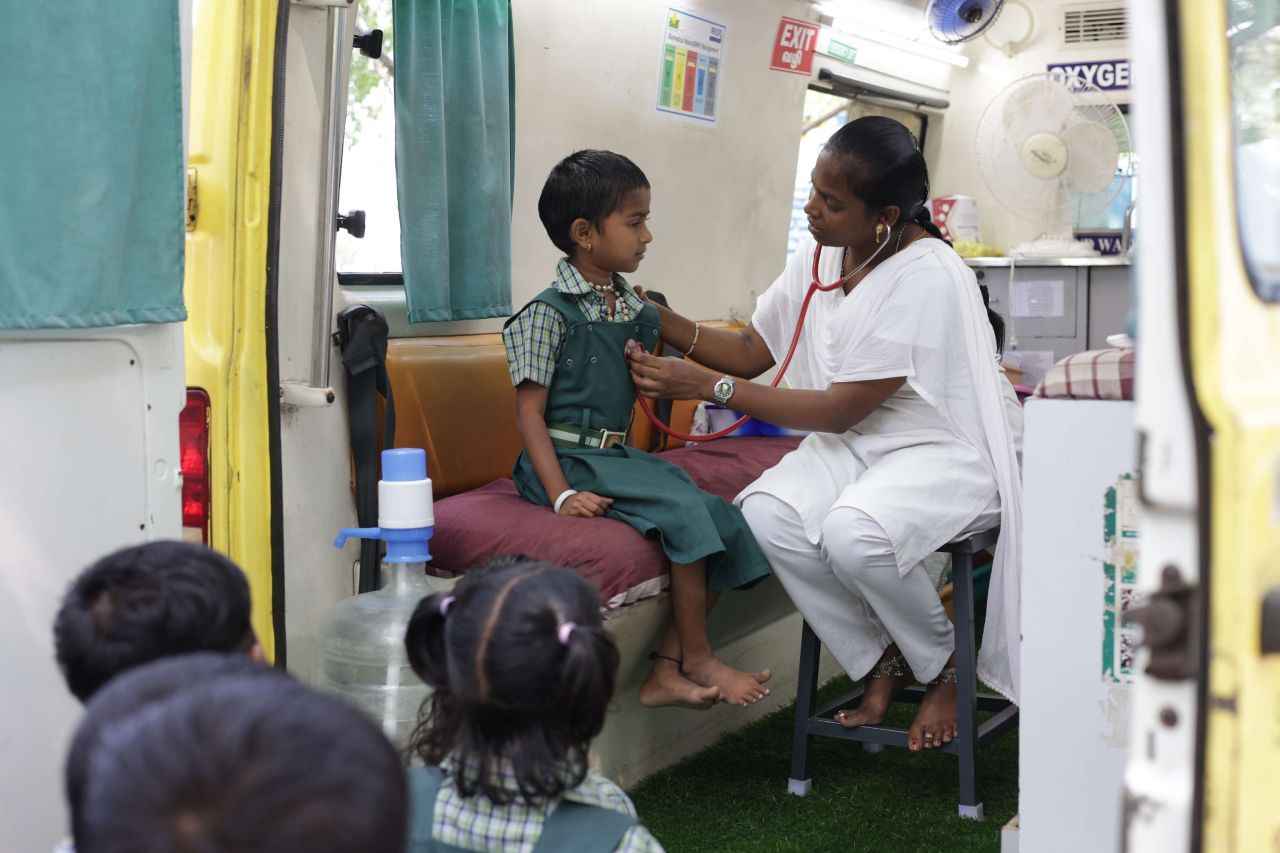
According to the World Health Organization, the world is projected to face a shortage of nearly 11 million health workers by 2030, a stark reminder that human systems are inherently fragile and cannot simply be scaled on demand. This challenge becomes especially visible in programmes like Smile Foundation’s Smile on Wheels, which delivers mobile healthcare services to underserved and remote communities across India.
On the surface, the model appears highly scalable. If one mobile medical unit works, why not launch a hundred more? But each additional van requires far more than physical infrastructure. It demands qualified doctors and healthcare staff, logistical coordination, fuel and maintenance, local permissions, sustained operational funding and most importantly, community trust and mobilisation to ensure people actually access the services being offered.
Expanding such a programme is not simply a matter of duplication; it is a process of building systems, relationships and institutions that can endure.
That is not software scaling, it is institution-building, and it is far more demanding.
Social Systems Change takes Decades
A startup can design, build and launch a product in a matter of months or sometimes even days. Social change rarely moves at that speed. Transforming public systems, behaviours and institutions often takes years, if not generations, because the problems being addressed are deeply embedded within society’s structures. Whether the challenge is sanitation, childhood vaccination, girls’ education or nutrition, lasting progress depends not only on individual interventions but on strengthening governments, reforming policy and improving the capacity of public institutions to deliver services at scale. These are not quick fixes; they are long-term commitments.
Swachh Bharat Mission offers a powerful example of this reality. Launched in 2014, the nationwide programme took nearly a decade to facilitate the construction of over 100 million toilets across India, a remarkable achievement, but also a reminder that meaningful systems change requires sustained political will, financial investment, behavioural change and continuous implementation over time.
We recognise this complexity. Rather than attempting to build parallel systems, we believe in complementing and supplementing government efforts, aligning our work with the Sustainable Development Goals (SDGs) and acknowledging that durable impact is created through collaboration, not duplication. We believe that progress may appear slow from the outside, but slowness does not mean inefficiency or failure. More often, it signals something far more valuable, change that is embedded, institutionalised and built to last.
Burnout is the Hidden Barrier
A major overlooked challenge in scaling social impact is the human cost borne by those doing the work.
In the startup world, burnout is frequently romanticised, framed as hustle, ambition or a necessary sacrifice on the road to success. In the social sector, however, burnout receives far less attention, even though it is deeply pervasive and often more emotionally complex.
Development professionals, social workers, community mobilisers and nonprofit leaders engage daily with poverty, trauma, inequality, crisis and human suffering. Their work demands not only technical skill but sustained emotional labour—listening to distress, responding to emergencies, navigating systemic failures and carrying the weight of unresolved social problems. Over time, this constant exposure can lead to profound mental and emotional exhaustion.
According to the Centre for Effective Philanthropy, 95% of nonprofit leaders reported experiencing burnout-related stress in recent years, highlighting how widespread this challenge has become. Yet conversations about scaling often focus on programmes, funding and systems, while overlooking the well-being of the people expected to carry these missions forward. This creates a fundamental contradiction: organisations are asked to deliver long-term impact while often neglecting the resilience and care of their own teams. Without investing in the people behind the mission, no social impact initiative can scale sustainably. Protecting human capital is not a side issue; it is central to the work itself.
Scale is Not the Goal, Change is
Perhaps the biggest mistake we make is assuming that scale itself is success. For startups, scale may mean valuation. For social organisations, scale means human dignity. A startup may improve convenience. A social organisation can change the course of a life.
Smile Foundation’s campaigns, such as She Can Fly, Shiksha Na Ruke and Mission Education, are not products but pathways toward dignity, opportunity and inclusion.
That is why scaling social impact is harder than scaling startups. Because startups scale systems. Social organisations scale hope. And hope is always harder.








One reply on “Scaling Social Impact Is Harder Than Scaling Startups”
Evaluating the expansion of development initiatives reveals that scaling social impact is inherently more complex than scaling traditional commercial startups due to the absence of a singular, market-driven metric like profit. When organizations attempt to broaden their reach, they cannot rely on uniform, easily replicable consumer behaviors; instead, they must navigate deeply entrenched systemic inequities, highly localized cultural nuances, and non-linear community needs. Ultimately, this framework underscores that sustainable societal growth relies on moving past rigid, top-down replication models to prioritize flexible, context-specific adaptation and deep multi-stakeholder collaboration, transforming expansion from a simple logistical rollout into a profound exercise in systemic empowerment.