Categories
Partnerships

FMCG’s Corporate Social Responsibility In India for Rural Growth

As the monsoons arrive in India, rural India sees a wave of change with a sigh of relief for a better harvest. Along with them, the FMCG companies in India also see the scaling up of their sales in rural India, as the opportunity of increased continuous rural wages are on the horizon.

But the question is, should rural India’s development only depend on how the monsoons treat them? Should FMCG companies in India prioritise solely on sales, or can they leverage their Corporate Social Responsibility (CSR) programmes to effect substantial improvements in the lives of over 9 million individuals residing in rural areas?

India’s FMCG Industry – A pillar of support 

India houses some of the most renowned FMCG brands of the globe. It is the fourth-largest industry in India and one of the highest contributors to the nation’s GDP. Through this industry, over 3 million individuals and their families are getting their bread and butter. And with steady growth each year, the FMCG industry is expected to become an industry worth 615 billion dollars by 2027

Thus, looking at the promising future of the FMCG industry and the opportunities it holds for the development of rural India, let’s understand how the FMCG industry can channel its Corporate Social Responsibility programmes, to boost the underserved communities living in the rural and remote corners of India.

Before delving into how FMCG companies can utilise CSR initiatives to empower and drive rural development in India, it is important to grasp the landscape and the specific challenges confronting underserved communities especially the needs of underserved children, aspiring women entrepreneurs and youth in rural India.

Loop of wage stagnation in rural India

Many rural areas face stagnant wages, where the growth in wages has not kept pace with inflation or the rising cost of living. This situation often leads to economic hardship for rural households, impacting their ability to improve their standard of living, access essential services and invest in education and healthcare. 

It has been observed that rural inflation has been higher than urban inflation for the past 11 months until May 2024, according to the Ministry of Statistics and Programme Implementation (MoSPI).

In May, it reached 5.3%, which was 110 basis points more than urban inflation. Since rural households spend more on food, food and beverages make up more than half (54.18%) of their expenses, whereas in urban areas, it is 36.29%. Experts believe that if the wage disparities continue then invariably it shall affect FMCG sales, however, the dependent variable this year is the monsoon and its positive result in the rural areas of India.

Challenges faced by underserved children

With the advancement of technology, the education sector has evolved and advanced itself to newer heights. However, the benefits of such advancement in the education sector have still not reached many underserved children. 

The most recent Annual Status of Education Report (ASER) reveals a concerning statistic: a significant majority of 14- to 18-year-old children in rural India face challenges with fundamental academic skills.

Specifically, more than half of these adolescents still struggle to perform basic tasks such as solving three-digit division problems, determining time, and executing elementary calculations—skills that are typically acquired by students in Classes 3-4.

Challenges faced by underserved youth in India

Did you know that India has the 5th largest population of youth in the world? This magnanimous ocean of young people is a reservoir of talent, that is still untapped to the fullest extent in our country. 

Issues like dropping out of school due to their family’s financial constraints or being pushed into labour work to provide for their families are often the pre-decided fates of the rural youth in India. Furthermore, poor educational infrastructure also hampers their interest towards garnering education or learning vocational skills, which invariably results in their holistic development and future opportunities to carve a stable financial life. 

Challenges faced by women entrepreneurs

As “Vocal for Local” echoes in the air, the number of entrepreneurs in India has grown significantly. With over 1 lac startups in India, the country has certainly become a global powerhouse as it stands being the third largest startup ecosystem after the US and China.

However, as much as the urban entrepreneurs have grown in a short period, the rural businesses- Grampreneurs, especially women entrepreneurs are still finding it difficult to sustain themselves.

With less capital, resources and training coupled with the complex problems of managing and filing business taxes, lack of knowledge regarding associated costs and knowledge of GST, these willed rural women entrepreneurs are facing the biggest test of their time- to become part of India’s mainstream entrepreneurial ecosystem.

Even with the increased usage of digital platforms and transactions across India, many rural entrepreneurs are yet to leverage the benefits of it. Only 60% of Gramprenerus use digital payment methods and 26% use e-Commerce sites for their sales. Furthermore, women entrepreneurs in rural India face significant challenges in setting up their businesses as compared to men. It has been observed that only 52% of women can access financial credit. 

Personal obstructions like their family’s disapproval and banks refusing them loans to kickstart their businesses are often the first hurdle that deviates many rural women entrepreneurs from kickstarting their entrepreneurial journey. 

FMCG Corporate Social Responsibility in India- A new way?

The Ben & Jerry’s Foundation, the charitable branch of the ice cream company, provides financial support to grassroots organisations focusing on social justice, environmental conservation, and community development. Established in 1985, the foundation has contributed more than $30 million to date.

Taking inspiration from such key players of the global FMCG industry, the Indian FMCG industry can also mould their CSR partnerships towards the rural development of India, while aligning them to the UN SDGs and the government schemes for rural development in India.

With the commitment towards holistic development, the FMCG industry can steer their CSR partnerships towards developing the rural education sector, employability, health infrastructure and empowerment of local businesses so that many underprivileged communities can get the opportunity to develop holistically.

FMCG Corporate Social Responsibility in India for underserved students

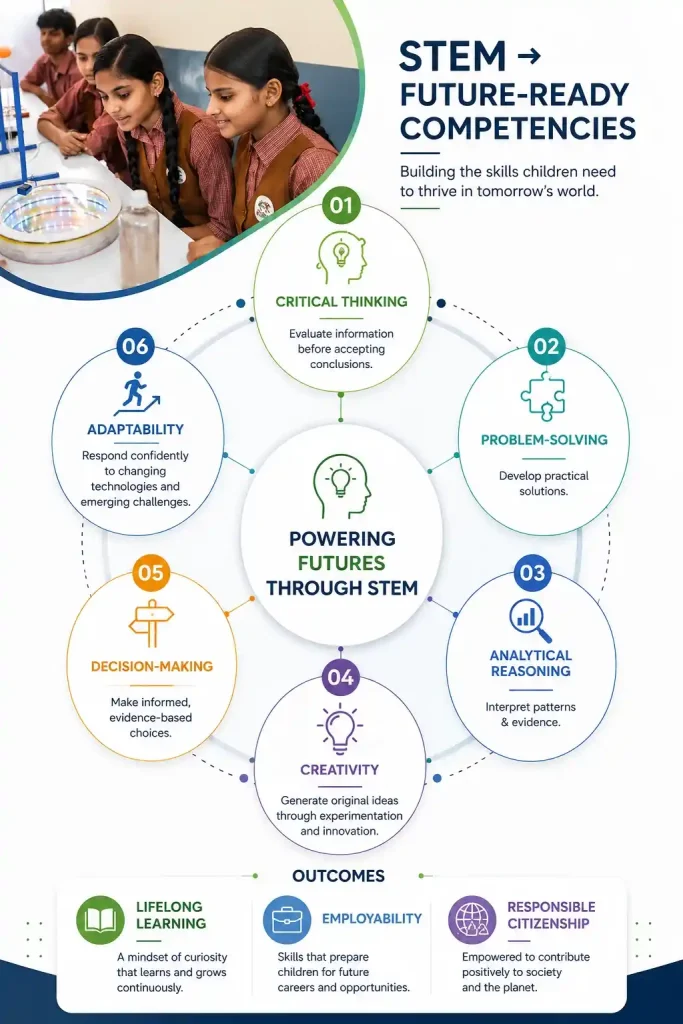
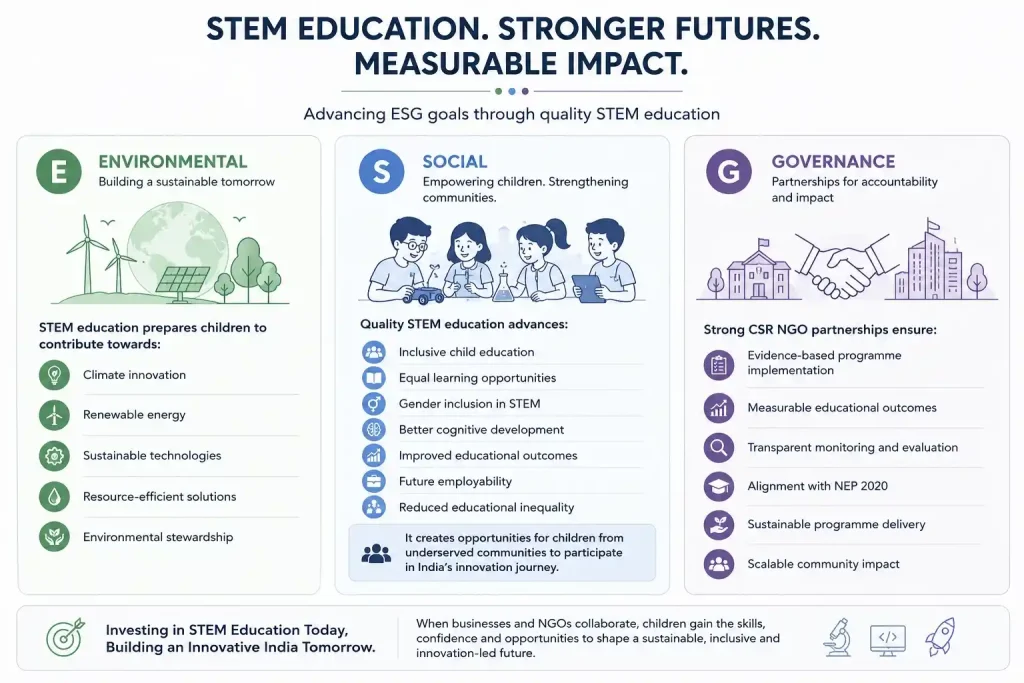
As the Indian education sector heads towards a bigger and brighter future with STEM education, we need to ensure that children of underserved communities in India also get the opportunity to learn and thrive with the benefits of STEM education. 

For this, the FMCG industry can invest their CSR fund for school buildings in rural and remote corners of the country, and support the school infrastructure with solar power, while also investing in developing equipped STEM labs for the underprivileged children. 

It should be understood that underserved children of India require a little more hand-holding than the children of the urban and developed communities when it comes to learning, therefore, support by providing technical books, digitised classrooms and computers can help these children learn and understand quality education, that enhances their cognitive development, as well as helps them to build a mindset that pushes them to come out of the cycles of economic stagnation. 

By partnering with Smile Foundation’s Mission Education programme , the FMCG industry can reach over 1 Lac children in 27 states every year. With a key focus on-

  • FLN & Grade-Specific Learning Outcomes
  • STEM Education
  • Digital Learning Environment 
  • Holistic Development of Students
  • Need-based Teacher’s training 
  • Parent & Community Engagement
  • Scholarships for Girl Child Education 

The Mission Education programme aligned with the NEP 2020 policy and UN SDG 4, aims at ensuring quality education is accessible to every underserved child in India. The aim is to ensure that no child stays away from school and can build a life for themselves and their families that is sustainable for years to come.

FMCG CSR activities in India for skill development in rural areas

Focused on imparting vocational training to underserved youth in sectors like retail, hospitality, and healthcare, STeP equips young girls and boys with market-relevant skills and enhances their employability. The holistic approach of the initiative integrates soft skills training, personality development, and financial literacy, ensuring comprehensive growth.

By partnering with Smile Foundation, FMCG companies can strategically align their Corporate Social Responsibility efforts with STeP’s curriculum, directly impacting communities, this collaboration not only shall address immediate skill gaps but also fosters long-term sustainability by creating pathways to economic independence for youth.

Through structured partnerships, FMCG firms can leverage our expertise and network to measure and amplify the social impact of their investments, contributing significantly to underserved youth development in India’s rural and urban areas.

Rural Women Empowerment needs FMCG industry support

Steering women empowerment in India, the FMCG industry’s CSR partnerships can be a powerful force towards making rural women of India financially independent by supporting them with vocational training, financial literacy and entrepreneurship support. 

Understanding the challenges faced by the local rural women of India, Smile Foundation’s Swabhiman programme has been working closely on encouraging and empowering rural women by introducing them to the world of entrepreneurship.

Each year over 1.5 lac women are given health and nutrition benefits, including skill development and entrepreneurial management training so that they can holistically develop themselves, their families and their communities. Swabhiman closely works on-

  • Capacity building to start Micro Enterprises
  • Workshops on E-commerce and digital marketing
  • Technical capacity building 
  • Enrolment in government schemes for livelihood opportunities
  • Setting up of model Micro Enterprises 

FMCG companies can play a pivotal role in empowering women in rural India by partnering their strategic CSR initiatives with programmes like Swabhiman.

With a focus on financial inclusion and empowerment of rural women,

the FMCG CSR initiatives can partner with Smile Foundation to empower rural women through- 

  • Skill Development Initiatives- By setting up vocational training centres focused on skills relevant to their industry, such as packaging, quality control, or distribution. These centres can impart training to women in rural areas, equipping them with marketable skills that enhance their employability and income.
  • Entrepreneurship Development-  Supporting women entrepreneurs by providing micro-financing, mentorship and access to markets can be a transformative CSR activity.
  • Health and Hygiene Initiatives-  Many FMCG products cater to health and hygiene needs. Companies can promote awareness and provide access to affordable products such as sanitary pads, soaps, and healthcare supplements. Additionally, organising health camps and workshops on nutrition and maternal health can significantly benefit rural women.
  • Financial Inclusion- Facilitating financial literacy programs and promoting savings and banking among women can empower them economically. FMCG companies can collaborate with banks to establish financial literacy camps and facilitate easy access to banking services in rural areas.
  • Digital Literacy- In today’s digital age, imparting digital literacy skills is crucial. FMCG companies can establish digital literacy centres or mobile training units to teach basic computer skills, internet usage, and e-commerce, enabling women to access broader markets and information.

As a significant industry both in India and globally, FMCG industry holds a unique position closely tied to its consumers. Leveraging its substantial influence, the FMCG sector’s Corporate Social Responsibility in India can catalyse transformative development in rural India.

The good days!

By focusing on initiatives such as

  • enhancing quality education for underserved children,
  • skill development for rural youth
  • and empowering rural women

FMCG companies and NGOs in India like Smile Foundation can create a dynamic ecosystem. This approach can nurture holistic development among underserved children, prepare youth for the workforce and also empower women, their core customer base, fostering financial independence and societal equality.

Considering the profound potential impact of FMCG’s CSR programmes on rural India’s development, it is imperative to invest in the inclusivity of the nation because , acche din (good days) must reach every individual of India. Partner Now

Categories
Partnerships

CSR Trends 2024: What Can NGOs Expect?

Before heading into the topic of recent trends in CSR in India 2024, let’s under the visible impact of Corporate Social Responsibility (CSR) in the lives of those who need it.

“The true test of a company’s commitment to CSR is when times are tough, not when they’re good.”

Steve Rochlin

During the COVID-19 pandemic, many companies including nonprofits faced unprecedented challenges. However, many stepped up to support their communities and employees. One great example is Pepsico Foundation, the philanthropic arm of Pepsico, an American multinational food, snack, and beverage corporation. In partnership with Smile Foundation, they provided over 50,000 PPE kits, along with digital thermometers, thermal scanners, oximeters, concentrators & more than 1 lakh N95 masks, across 11 Indian states to support the administration in its fight against the pandemic.

Corporate social responsibility (CSR) departments have endured a lot during the last few years. Every CSR team is likely juggling a whole lot of things together— social justice movements, geopolitical turmoil, and also the need to connect the employees and the communities, meet board expectations and adapt their strategies to a fast-paced and uncertain economy.

So what do CSR trends 2024 look like? How should the sector get ready for a world economy traversing inflation, stock market crashes, wars, and more? Some of the recent CSR trends in India and the world overall are listed below:

Trend 1: How to Safeguard Your Social Impact Programs During the Recession with CSR

The anticipated recession is the fundamental background for 2024. Since many businesses are working in anticipation of a slowing economy, the temptation to reduce their corporate giving may materialise.

CSR will be put to the test in 2024, according to the leaders at the Association of Corporate Citizenship Professionals (ACCP), Points of Light, and Chief Executives for Corporate Purpose (CECP). They contend that because it can both boost your company’s performance in the short term and enhance connections with stakeholders over the long term, corporate social impact is even more crucial during recessions.

Cutting ties to the community may make it less likely that consumers will want to support your business because customers, investors, and employees all consider corporate purposes when making decisions.

Corporate volunteering and benchmarking are just a few of the strategies to increase your influence when you’re on a tight budget. The causes most important to your stakeholders should be the focus of your team’s efforts after you have clarified your social impact plan.

Trend 2: Despite Criticism, linking ESG to Business Success

Environment, Social, and Governance (ESG) has emerged as a hot topic outside of the corporate citizenship industry. ESG has progressed beyond risk reduction to profit creation for businesses globally. Enhancing confidence with stakeholders while improving the quality of lives of the marginalised globally, seems like something everyone benefits from.

Trend 3: Prioritise Results Over Proxy Metrics

With corporate philanthropy, results clearly matter. It’s challenging to support your work without understanding your actual results, whether you’re changing systems policies or offering direct relief programmes.

In a recent study on policies in food security, nutrition researchers and activists emphasised the value of outcomes. They said that by emphasising quantity over quality, food security programmes frequently neglect nutrition. So, rather than filling people up with empty calories, a move from “food security” to “nutrition security” will increase health, inclusion, and general well-being.

Qualitative parameters are going to matter as much as the quantitative reach of the CSR associations. 

Trend 4: Demands for Impact Data are Increasing as Public Interest Grows

Never before have corporate social impact teams’ efforts been so widely observed. More data requests, questions, and speaking requests have been made of CSR experts than ever before, ranging from reports for their ESG department to speeches outlining how their programmes would improve society by 2030.

Because of this drive for transparency, CSR teams will require precise impact data to show their leadership, board, and other stakeholders the success of their programmes. Executives in the field anticipate that they will want impact data this year to “justify or secure their funds.”

Trend 6: Giving Underrepresented Communities Chances

Businesses are collaborating with nonprofits like us, Smile Foundation to use a variety of strategies to give disadvantaged communities access to opportunities. Opportunities with the potential of holistically changing their lives. Out of the recent trends in CSR in India

Among the tactics are— expanding the amount of shelf space available for goods produced by minority-owned companies, giving minority business owners access to investment capital and mentoring minority youth. Other examples are employing candidates with years of gaps in their resumes, awarding DEI grants, and conducting customer-facing fundraising campaigns.

Trend 7: The Value of Taking a Position in Business Social Activism

Stakeholders look to companies to speak out and act in times of global crises. Companies may have been under pressure to react or face backlash as a result of corporate positions and public reactions to the Russia-Ukraine War and the Roe v. Wade(abortion) ruling by the US Supreme Court.

Several businesses are attempting to create a framework to address societal challenges. Your response may be influenced by the questions you pose regarding the incident, like “Do we have a stake in this issue?”, “Can we really make a difference in this situation?”, “Does this have a direct impact on our stakeholders and customers?”

Corporate Philanthropy Value in 2024

Between 2020-21, COVID-19 tested everyone’s resilience. Through 2022, social justice increased as a result of the catastrophes that the pandemic brought into everyone’s lives. In 2023, the effects of conflict and geopolitical upheaval were felt all over the world. In 2024, everyone is thinking about the economy, from the boardrooms to the grocery stores. There has been a paradigm shift in corporate social responsibility trends.

CSR is crucial to ensuring the survival of a company and society when a recession is a possibility. By financial assistance, volunteers, in-kind gifts, and advocacy, businesses may aid nonprofits while also strengthening their relationships with their stakeholders and positioning themselves to continuously thrive and be genuine changemakers.

Do you intend to change your CSR plan this year? Become a part of the recent CSR trends in CSR in India. Contact us at Smile Foundation for a CSR partnership and we will be glad to guide you through the process. Let’s build a better world for our kids and the marginalised!

0%