Categories
Education CSR Partners In Change Partnerships

STEM Education: Turning NEP 2020 into classroom reality

Summary:

  • STEM education builds India’s future-ready workforce.
  • Integrated STEM ecosystems deliver lasting learning outcomes.
  • Teacher capacity is central to quality STEM education.
  • Technology and innovation make STEM education more inclusive.
  • CSR for education can scale measurable STEM impact.

India’s National Education Policy (NEP) 2020 has laid a transformative foundation for the future of education by placing STEM education at the heart of classroom learning. Through its emphasis on coding, scientific temper, multidisciplinary learning and experiential pedagogy, the policy reflects India’s ambition to build an innovation-led, knowledge-driven economy.

However, the true success of this vision will depend not on policy alone, but on its implementation in a rapidly evolving global landscape. Climate change, artificial intelligence, public health, renewable energy and space technology are no longer distant trends—they are redefining industries, economies and the skills required for tomorrow’s workforce.

Preparing children for this future demands far more than curriculum reform. It requires access to science laboratories, digitally enabled classrooms, trained teachers, hands-on learning opportunities and environments where children are encouraged to question, experiment and solve real-world problems.

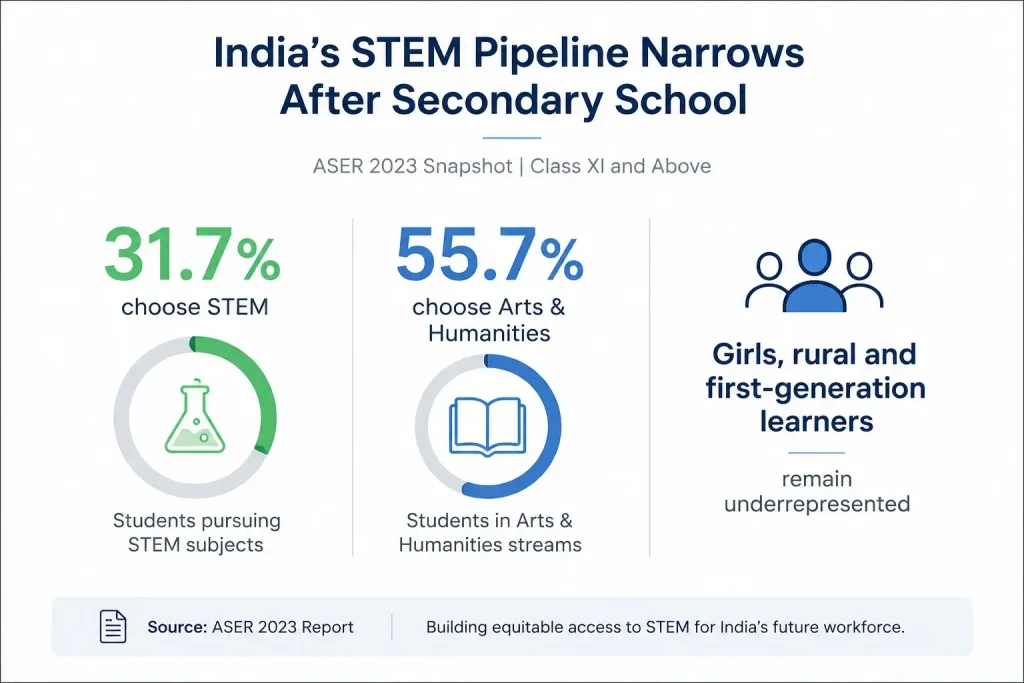
This need is particularly urgent in India, home to more than 250 million school-going children and one of the world’s fastest-growing innovation ecosystems. While the country is positioning itself as a global technology leader, the journey towards innovation begins much earlier than higher education—it begins in school classrooms. Yet, for millions of children studying in government schools and underserved communities, access to quality STEM learning remains limited by inadequate infrastructure, traditional teaching practices and unequal opportunities.

The STEM gap begins much earlier than we think

India is the world’s third-largest producer of science and engineering graduates. Yet, according to NITI Aayog, nearly 30% of engineering graduates remain unemployed or underemployed, largely because of inadequate practical and industry-ready skills.
For many government schools, the barriers are structural:

  • Limited access to laboratories and STEM infrastructure
  • Teacher shortages and limited exposure to experiential pedagogy
  • Outdated rote-learning methods
  • Minimal opportunities for experimentation and inquiry

When curiosity is replaced with memorisation, children lose far more than marks. They lose confidence to question, innovate and create.

Why STEM education matters beyond science

The World Economic Forum estimates that 65% of children entering primary school today will eventually work in jobs that do not yet exist.

Preparing children for this future requires much more than teaching physics or mathematics.

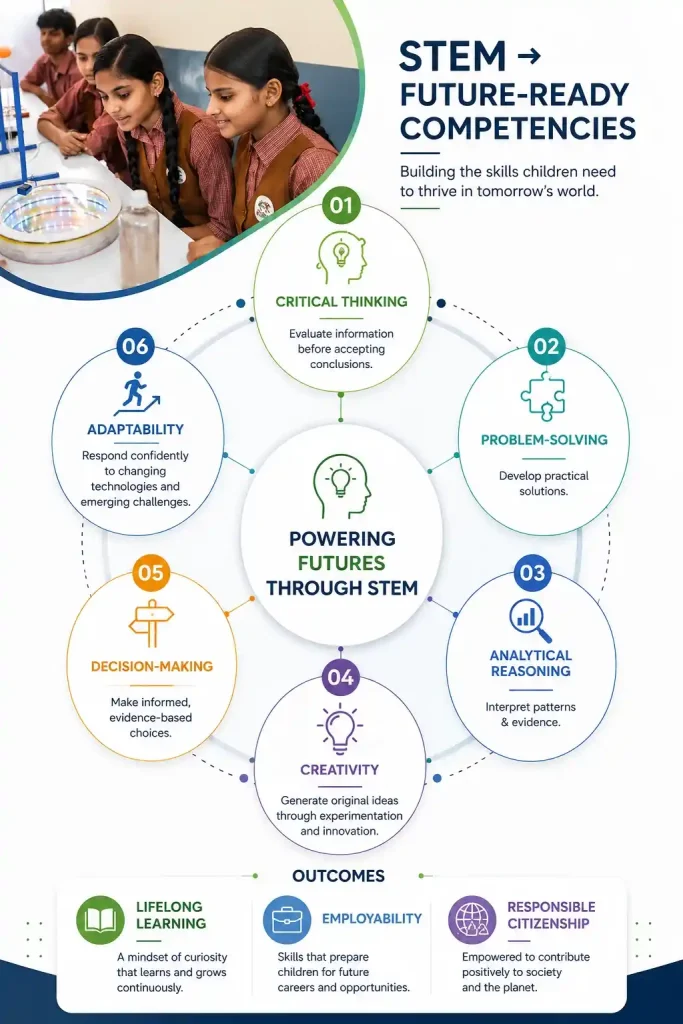
Quality STEM education develops:

  • Critical thinking
  • Creativity
  • Collaboration
  • Digital literacy
  • Problem-solving
  • Adaptability
  • Design thinking

These are precisely the competencies industries increasingly seek.

Investing in STEM today therefore strengthens tomorrow’s workforce, innovation ecosystem and economic competitiveness.

What Makes STEM Education Effective in Underserved Communities?

Research consistently demonstrates that successful STEM education interventions extend beyond the provision of laboratories or digital devices. Sustainable outcomes emerge when infrastructure, pedagogy, teacher capacity, assessment and community engagement function as an integrated ecosystem. Smile Foundation’s Mission Education programme reflects this systems-based approach, aligning STEM interventions with the objectives of the National Education Policy (NEP) 2020 and the practical realities of government schools.
1. STEM infrastructure is most effective when embedded within the learning ecosystem

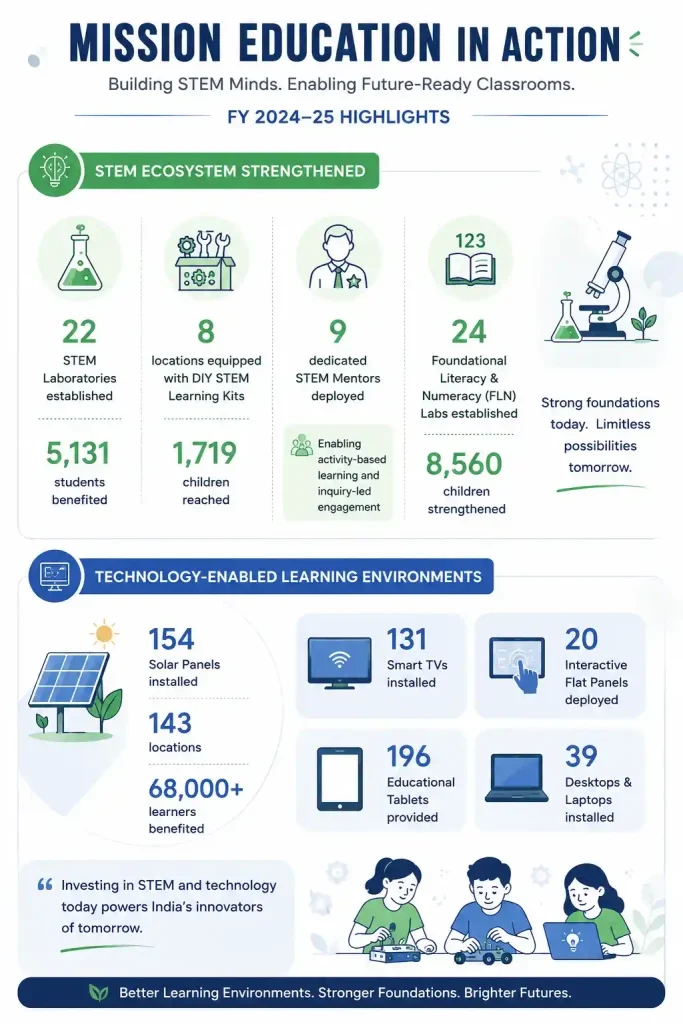
One of the key findings from Mission Education is that infrastructure alone does not improve learning outcomes. Instead, STEM facilities must be accompanied by structured pedagogy, teacher support and experiential learning opportunities.

These interventions indicate that STEM education is more effective when integrated across the learning continuum rather than delivered as a standalone science initiative. Activity-based learning, collaborative problem-solving and structured experimentation collectively shift classroom practices from knowledge transmission to knowledge creation.

2. Digital infrastructure strengthens STEM only when it improves access and participation

The relationship between technology and learning is often misunderstood. Digital infrastructure does not automatically improve educational outcomes; its effectiveness depends on equitable access, teacher readiness and integration into classroom pedagogy.

From a systems perspective, these investments address two structural barriers simultaneously: improving access to digital learning resources while enhancing the resilience of schools operating in regions with inconsistent electricity and limited technological infrastructure. The integration of renewable energy infrastructure further illustrates how STEM education can be aligned with broader sustainability goals.

3. Teacher capacity remains the strongest predictor of classroom transformation

Evidence from education reform globally suggests that teacher quality has a greater influence on learning outcomes than infrastructure alone. Mission Education reinforces this finding by positioning teacher development as a core component of its STEM strategy.

During FY 2024–25, the programme conducted 244 teacher training sessions across 244 locations, reaching 1,142 educators. Training modules focused on inquiry-based learning, experiential pedagogy, classroom management, lesson planning, Foundational Literacy and Numeracy (FLN), multi-level teaching strategies and environmental sustainability.

This approach reflects an important shift from teacher-centred instruction towards facilitative learning environments, where educators encourage questioning, experimentation and collaborative problem-solving. For organisations investing through CSR for education, these findings reinforce that long-term educational improvement depends as much on human capital as on physical infrastructure.

4. Mobile STEM models improve equity by decentralising access

Geographical inequity remains one of the most persistent barriers to quality STEM education. For many students in low-income and rural communities, access to fully equipped science laboratories continues to be limited.

Mission Education addresses this challenge through a Mobile STEM Bus, supported by the BMW India Foundation, which delivers practical STEM experiences directly to underserved schools. Equipped with robotics models, digital learning tools, innovation kits and hands-on experimentation resources, the solar-powered mobile laboratory currently serves 20 community schools, four government-aided schools, and one Mission Education centre across the Delhi NCR region.

The initiative demonstrates an important implementation insight: bringing learning infrastructure to children can be more cost-effective and scalable than expecting every school to independently develop advanced STEM facilities. Mobile delivery models therefore present a viable strategy for expanding STEM access in geographically or economically constrained contexts.

5. Measuring learning outcomes strengthens programme effectiveness

An emerging trend in education programming is the shift from activity reporting towards outcome measurement. Mission Education incorporates baseline assessments, end-line evaluations and continuous monitoring mechanisms to understand changes in learning achievement and programme effectiveness.

Programme data from FY 2024–25 indicates measurable improvements in educational outcomes, with more than 10,000 students demonstrating improvement in Foundational Literacy and Numeracy, while 2,500 learners achieved grade-appropriate learning outcomes.
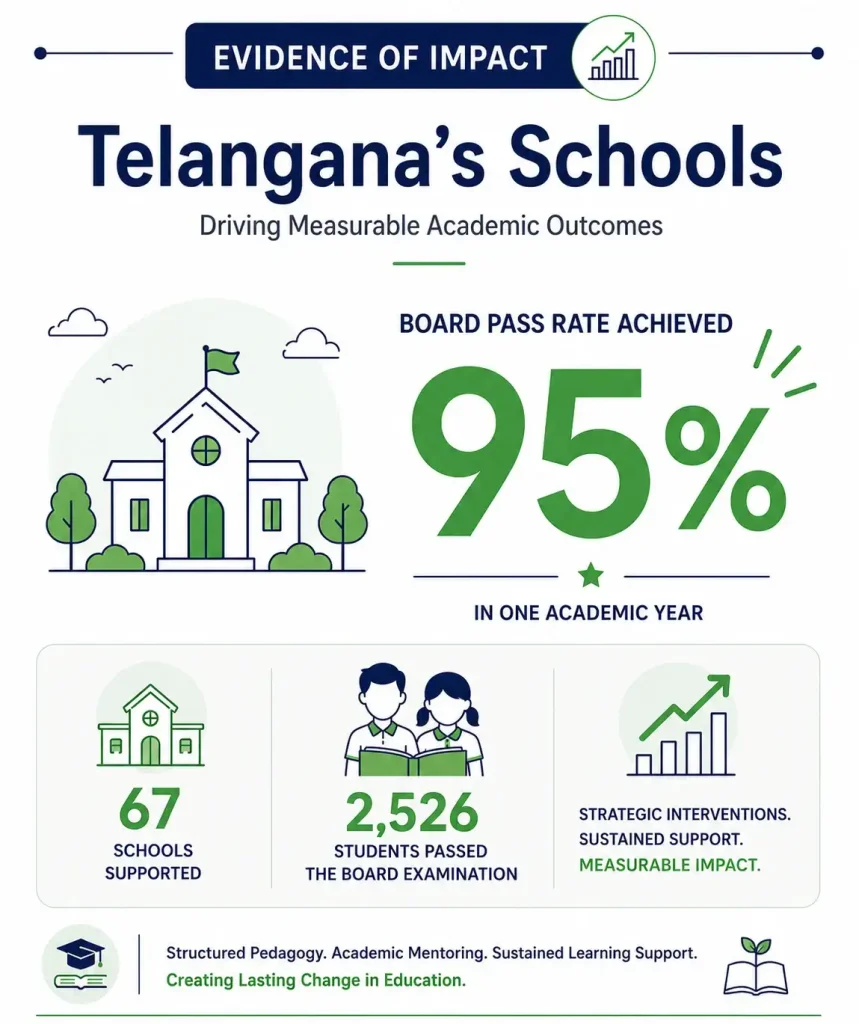
One of the strongest examples of measurable impact emerged from Telangana, where focused academic interventions were implemented across 67 tribal schools, supporting 2,526 Class X students. Within one academic year, overall board examination pass percentages increased from 56% to 95%, highlighting the cumulative impact of structured pedagogy, academic mentoring and sustained learning support.

For CSR partnerships, these findings demonstrate the value of integrating monitoring, evaluation, accountability and learning (MEAL) frameworks into programme design, ensuring that investments are assessed through measurable educational outcomes rather than implementation outputs alone.

Partnerships for STEM education

The evidence suggests that ecosystem-based interventions rather than isolated investments characterise successful STEM education programmes. Infrastructure, digital access, teacher professional development, continuous assessment and contextual programme design collectively determine educational outcomes.

For organisations investing through CSR for education, this has several implications:

  • Prioritise integrated STEM ecosystems over standalone laboratory installations.
  • Invest simultaneously in teacher capacity building and digital infrastructure.
  • Expand access through innovative delivery models such as mobile STEM laboratories.
  • Incorporate measurable learning assessments to strengthen accountability and programme effectiveness.
  • Design interventions that intentionally improve participation among girls, first-generation learners and underserved communities.

As India advances towards a knowledge-driven economy, the future of STEM education will depend on how stakeholders, through CSR-NGO partnerships can expand access, strengthen the quality, inclusivity and scalability of learning ecosystems.

The experience of Mission Education demonstrates that when evidence-based programme design is combined with strategic partnerships, STEM education can become a catalyst for long-term educational transformation rather than a short-term infrastructure intervention.

Partner with Smile to accelerate STEM education for all

FAQs

1. What is STEM education and why is it important?
STEM education integrates Science, Technology, Engineering and Mathematics to develop critical thinking, creativity, problem-solving and digital skills required for future careers.

2. Why is STEM education important for India’s future?
With emerging technologies reshaping industries, STEM education prepares young people with the skills needed to drive innovation, economic growth and global competitiveness.

3. How can CSR for education strengthen STEM education?
CSR for education can support STEM laboratories, digital classrooms, teacher training, mobile STEM labs, learning technologies and evidence-based programme evaluation.

4. Why is teacher training important in STEM education?
Well-trained teachers enable inquiry-based and experiential learning, helping students understand concepts through exploration rather than rote memorisation.

5. How does Smile Foundation promote STEM education?
Through Mission Education, Smile Foundation builds integrated STEM ecosystems by establishing STEM labs, strengthening digital infrastructure, training teachers and introducing mobile STEM learning initiatives.

6. What are the biggest barriers to STEM education in India?
Limited laboratory infrastructure, inadequate digital access, teacher shortages and unequal opportunities for rural, tribal and first-generation learners remain key challenges.

7. What makes an effective STEM education programme?
Successful programmes combine quality infrastructure, skilled teachers, technology-enabled learning, continuous assessment and strong community engagement.

8. How do CSR-NGO partnerships improve STEM education outcomes?
CSR-NGO partnerships help scale inclusive STEM education by combining corporate resources with proven implementation models, ensuring measurable and sustainable learning outcomes

Sources:

Categories
Girl Child Education Smile Women Empowerment

World Science Day 2025: Making Science Accessible for Every Child, Every Future

Every year World Science Day reminds us that science is the bridge between knowledge and opportunity. From waking up and switching on the lights to discovering life on another planet, the evolution of science shows that when it is blended with digitalisation, it becomes a force that helps the society to grow, heal and sustain itself collectively. In India, science has moved beyond laboratories and has integrated into the daily functionalities of life, like life without it never existed.

To truly celebrate Science Day, we must recognise that science can only drive progress when it is inclusive. When every child, regardless of gender or geography has access to learn, explore and innovate. 

Science For Inclusive Future

Science is universal and till the time this is not implemented and adapted in its entirety, we shall be risking losing countless potential innovators and problem solvers. 

Smile Foundation for over decades has been working with grassroot communities to bridge the gaps of science education for children belonging to the marginalised communities of India. By creating equitable access for scientific learning and promoting STEM education, our interventions have been working within these communities through capacity building, digital innovation and community engagement to empower the next generation of teachers and engineers. 

1. Training and Capacity Building

Regular teacher development workshops strengthen STEM pedagogy, introduce digital tools and enhance classroom leadership. A strong emphasis on gender sensitivity helps teachers identify and correct unconscious biases, ensuring girls receive equal encouragement in scientific learning.

2. Technology-enabled Teaching

In remote areas, solar-powered digital classrooms have transformed the learning experience. Teachers, especially women, now use visual tools and multimedia lessons to explain complex scientific concepts with confidence and clarity. These innovations make science accessible and engaging for rural learners.

3. Community Sensitisation

Through parent–teacher meetings and outreach sessions, Smile Foundation builds awareness about the importance of science education for girls. This effort has led to tangible results with higher attendance rates, delayed marriage ages and more girls continuing their education beyond primary levels.

The aim is to create a pipeline of empowerment, from student to teacher to role models. Science becomes a source of learning that inspires generational change in how children, especially girls interested in science perceive the subject. 

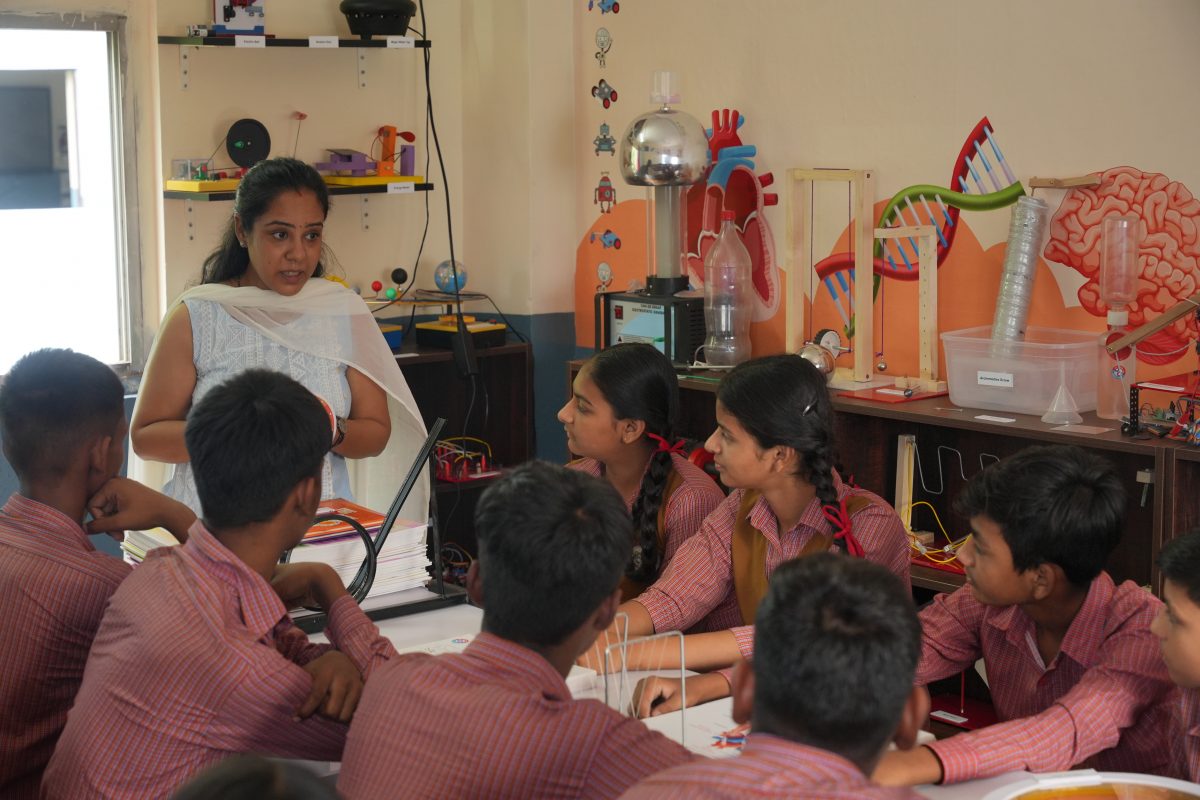
Today STEM learning has become an engaging and enjoyable experience for children through Smile Foundation’s STEM Labs. Here students explore science, technology, engineering and mathematics in simple, hands-on ways. Through interactive activities and guided lessons, they grasp complex concepts with ease, find joy in learning and build confidence to discover something new each day.

Building Sustainable with Scholarships for Girls

According to India Skills report 2025 only 54.81 % of graduates meet industry employability standards. Between 2013-2014 female enrolment in undergraduate programmes rose by 46% and 55.5% at the post graduate level. However, there has been a decline in the enrolment of girls in engineering course by 1.35% at the undergraduate level, whereas at postgraduate level the decline is of 43%.

Many first generation college students, especially girls, face more than financial hardships. They have to navigate new challenges like understanding academic culture, professional networking and career opportunities. Traditional scholarships often come with its limitations which usually only aids in accessing engineering courses, but doesn’t support in allowing the student to survive the course and successfully establish themselves as work ready engineers. 

Smile Foundation’s Scholarship programme for Girl Engineer adopts a holistic model that combines financial aid with-

  • Life skill and digital training
  • English fluency session 
  • Career counselling and mentorship
  • Mental health support 

The programme integrates employability training, communication workshop, mock interviews and technical bootcamps to bridge the gap between academic learning and professional readiness. Collaborations with private sector provide internships, mentorships and industry projects that allow aspiring engineers, particularly young women, to gain practical exposure and workplace discipline. This approach nurtures confidence and prepares them to transition seamlessly from classrooms to careers. 

For over two decades, Smile Foundation has worked closely with grassroots communities across India, witnessing first-hand the transformative power of targeted interventions. Each initiative, no matter how small, has shown that when opportunity meets access, change becomes inevitable.

In line with the theme of World Science Day 2025, which celebrates the power of science to trust, transform and build tomorrow, Smile Foundation believes that making science truly accessible to all is the first step towards equitable and inclusive education in India.

Spreading the Power of Science

Through initiatives such as STEM Labs, children from underserved communities are introduced to hands-on learning in science, technology, engineering and mathematics. These interactive spaces ignite curiosity and creativity, allowing young learners to explore scientific ideas through practical experience rather than rote learning. Such exposure helps them see science not as an abstract subject, but as a living, breathing part of everyday life something that they, too, can master and shape.

Equally important are scholarships for girls in engineering, which go beyond financial support. They provide what Smile calls “wraparound support” with mentorship, employability training, and guidance that help young women navigate both their studies and future careers. For many, this is the only bridge between aspiration and achievement. It gives them the freedom to dream without the weight of financial pressure and the confidence to step into spaces where women have been historically underrepresented.

The World Science Day for Peace and Development 2025 carries a clear and urgent message: science and innovation must become the tools that create equitable systems of learning and livelihood. By empowering every child through STEM education and supporting India’s daughters in engineering, we are nurturing a generation ready to trust in their abilities, transform their communities and shape a sustainable tomorrow for themselves and for the nation.

Sources:

  1. Where Are the Women? Exploring the Decline of Female Engineers and IT Professionals
  2. World Science Day for Peace and Development, 10 November
  3. World Science Day for Peace and Development 2025
Categories
CSR Education Partnerships

STEM Today, Changemakers Tomorrow

Imagine a future where children across India learn to design, code, and build right from their homes. With the right support through CSR-led STEM education, this is not just a possibility – it’s within reach.

Drawing guidelines from the reports of UNESCO, McKinsey & Company, CSR programmes can trace the natural path of identifying barriers to forging lasting partnerships that deliver resources, mentorship and digital infrastructure. By promoting STEM education through corporate investments with developmental expertise, initiatives can be developed to create inclusive STEM education projects that effectively upskill underrepresented children in India. 

This collaboration ensures sustainable ecosystems where academia institutions, industry and community organisations co design curricula, facilitate internship and provide ongoing support. Ultimately, such synergy drives innovation, economic growth and social development by promoting equitable access to STEM education and careers. 

Bridging STEM gaps – Policy meets CSR

The Government of India has established a robust policy environment to strengthen STEM education, recognising its role in national development and global competitiveness. Key schemes include Rashtriya Avishkar Abhiyan, which integrates STEM learning with experiential methods in schools; Innovation in Science Pursuit for Inspired Research (INSPIRE) which nurtures scientific talent from an early age and Digital India which promotes digital literacy and e-learning tools, enhancing STEM access in rural and semi-urban areas. 

Additionally, initiatives like Atal Innovation Mission and PM eVIDYA support innovation labs, teacher training and digital content development. These programmes provide the policy infrastructure for corporate social responsibility initiatives to scale their impact through strategic public-private partnerships. 

However, despite several initiatives to make STEM education accessible in India, the gaps still exist. In low-resource communities, be it from Mumbai slums or remote Himalayan villages, many children look forward to learning, to questioning and to creating. But because of the lack of basic resources, trained teachers and hands on experiences their potential goes unrealised.

Why is STEM education vital?

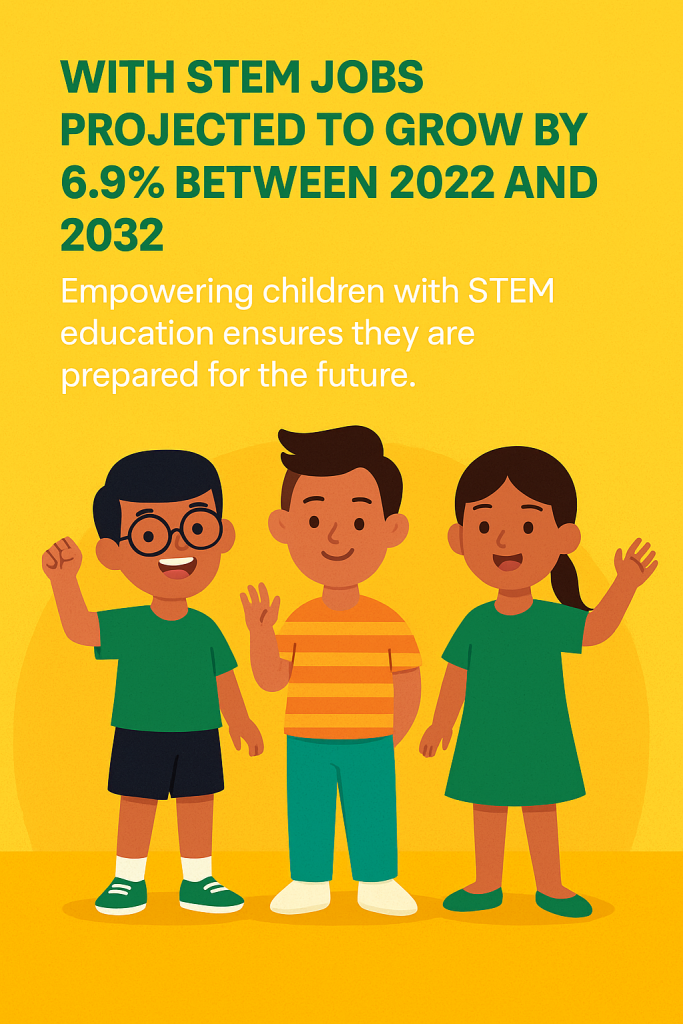
STEM careers are poised for exceptional growth, driven by rapid technological advancement and the global push towards digitalisation, sustainability, and innovation. According to the U.S. Bureau of Labor Statistics and the World Economic Forum, STEM jobs are projected to grow by 6.9% between 2022 and 2032 outpacing non-STEM roles.

Fields like AI, data science, cybersecurity and renewable energy engineering could see growth of 30–45%, creating millions of high-quality, future-ready jobs. This surge not only promises economic opportunity but also the chance to shape a more resilient, equitable world. 

Thus, STEM education from an early age in countries like India holds the key to empowering children to dream, innovate, and thrive in a world that’s changing rather too quickly. At its core, it’s not about gadgets or code—it’s about levelling the playing field and expanding the horizon of what’s possible for every child.

STEM powers equal futures for every child

  1. Builds Blocks for STEM Equity

STEM education in India is a powerful enabler of inclusive growth, but its success hinges on foundational infrastructure. In remote regions, where electricity, internet connectivity, science kits and safe laboratories are scarce, these essentials are pillars of opportunity. Without them, the dream of inclusive, inquiry-led education remains out of reach for millions of children. Investing in this infrastructure is both an operational necessity and a moral imperative for building an equitable society.

  1. Empowers Local Learning Ecosystems

Technology belongs to everyone – a truth reflected in the way STEM education can unlock potential across the social fabric of India. To achieve this, the country must nurture ecosystems that welcome underserved children through:

  • Trained mentors who guide and inspire
  • Community-led robotics and science clubs that encourage collaboration
  • Peer networks of young innovators that foster belonging and shared learning

An inspiring example comes from IIT Bombay’s collaboration with Smile Foundation and GnaanU Education. Their STEM education workshop exposed children from low-resource communities to robotics, aero-modelling, 3D printing and sustainability. Young minds are filled with curiosity, confidence and the courage to imagine a future in technology-driven fields.

  1. Responsible Governance for Sustained Impact

STEM education in India must be anchored in ethical, accountable frameworks. This calls for partnerships between government bodies, NGOs and the private sector working together to monitor, evaluate and refine programmes. The goal is to ensure every child has the tools, guidance and opportunities to explore, experiment and thrive. When STEM education becomes truly inclusive, we sow seeds of confidence and belonging that can transform generations.

STEM education NEP 2020 and CSR: A shared vision for inclusive learning

The National Education Policy (NEP) 2020 places STEM education at the forefront of building an innovation-driven, equitable India. It champions inquiry-based, experiential learning, digital literacy and vocational skills – all critical to preparing young minds for the future. Achieving this vision requires demands committed action on the ground. Here, Corporate Social Responsibility (CSR) has a transformative role to play.

CSR as a strategic driver of NEP 2020 goals

  1. Enabling scalable education models

By supporting mobile STEM labs, digital classrooms and maker spaces, CSR initiatives can create flexible, replicable models that bring hands-on, experiential STEM education to children across diverse geographies.

  1. Advancing digital equity

CSR efforts that fund devices, internet connectivity and learning platforms empower low-resource communities, helping bridge the digital divide and ensuring every child has equal access to quality STEM education opportunities.

  1. Strengthening capacity-building for educators

Investing in teacher training, mentoring networks and innovative pedagogy equips educators to deliver dynamic, inclusive STEM learning, enabling alignment with NEP 2020’s vision of inquiry-based and technology-enabled education.

These efforts bridge systemic gaps, helping underserved learners thrive and contribute meaningfully to India’s knowledge economy.

CSR-NGO synergy: Catalysing equitable STEM education in India

STEM education in India is a cornerstone of the National Education Policy (NEP) 2020, envisioned as a pathway to an equitable and innovation-led future. Achieving this vision requires joint efforts by CSR leaders, NGOs and government bodies. Public-private partnerships play a vital role in strengthening educational infrastructure, digital access and foundational learning systems. Corporates, as co-creators, can help scale mobile STEM labs, maker spaces and digital classrooms that bring experiential learning to underserved communities, in line with NEP 2020.

Equally crucial is collaboration with trusted NGOs, ensuring that STEM initiatives are inclusive, locally relevant and grounded in real-world needs. Such partnerships enable tailored solutions from teacher capacity-building to community-led science clubs that nurture curiosity, confidence and innovation. By aligning CSR investments with NEP 2020 priorities, corporates can help build future-ready education models that empower every child to thrive in a technology-driven world.

NGOs as ecosystem enablers

In India’s pursuit of equitable STEM education, grassroots NGOs play an indispensable role in turning policy intent into meaningful action. For corporates aiming to make long-term, scalable impact through their CSR investments, partnering with NGOs in India is not just strategic, it is pivotal. Organisations like Smile Foundation act as ecosystem enablers, bridging the critical gap between national education priorities and ground-level realities through culturally rooted, community-led models.

At the core of Smile Foundation’s education initiative lies its impactful STEM intervention. We believe that every child regardless of geography or gender deserves access to quality, inquiry-led learning. Our multi-pronged approach ensures that the right tools, training and opportunities reach those who need them most.

  • Mobile STEM Laboratories
    These portable science labs bring practical, experiment-based learning directly to schools in underserved and remote areas. Equipped with interactive kits and DIY experiments, they make STEM tangible and exciting, especially for students with limited access to formal lab infrastructure.
  • Teacher Capacity Building
    Recognising the role of teachers, we conduct regular training programmes for rural educators, enabling them to adopt experiential pedagogies. These sessions empower teachers to deliver hands-on, inquiry-based STEM lessons that foster curiosity and critical thinking.
  • Gender-Inclusive Innovation Spaces
    Through initiatives like science clubs, innovation fairs and safe, inclusive learning zones, we actively encourage girls to explore and participate in STEM. These platforms are designed not only to build confidence but to challenge long-held stereotypes about gender and scientific ability.
  • Strengthening Foundations
    Through shared vision and efforts, we’ve established interactive smart classrooms and STEM labs. These interventions aim to create a dynamic and inclusive environment for foundational and advanced STEM learning.

Impact at Scale

0

STEM DIY kits

0

Number of students in STEM

0

Mobile STEM Labs Deployed

Impact at scale: More than just numbers

Through consistent, integrated implementation, Smile Foundation’s STEM education programmes have:

  • Improved student attendance, particularly in equity-challenged schools
  • Significantly increased the participation of girls in STEM activities
  • Enabled month-on-month capacity building for teachers in STEM pedagogy
  • Fostered a shift towards holistic, project-based learning frameworks

These outcomes underscore a simple yet powerful truth-

“ When corporates and NGOs co-create solutions rooted in empathy and aligned with national priorities, transformation is not only possible, it is scalable and sustainable”.

Partner for cross-sector collaboration

The future of STEM education in India rests in our collective hands. When corporates, NGOs and government bodies come together, we don’t just fund education - we shape futures. At Smile Foundation, we believe true impact begins with data-driven decisions and ends with empowered classrooms.

 Join us in co-creating a scalable, inclusive STEM ecosystem because every child deserves the best we can offer.

Sources- 

Building Purpose Beyond CSR, The STEM Labor Force: Scientists, Engineers, and Skilled Technical Workers, Future of Jobs Report 2025

Categories
Smile CSR Education

STEM Makes Journey to Moon Possible

Summary

  • STEM education in India transforms curiosity into critical thinking through experiential learning.
  • Hands-on learning strengthens children’s cognitive, creative and problem-solving skills beyond academics.
  • Smile Foundation’s Mission Education creates inclusive STEM ecosystems through labs, DIY kits, teacher training and digital learning.
  • Investing in child education prepares future-ready talent while contributing to innovation, employability and lifelong learning.
  • Strategic CSR NGO partnerships can scale measurable STEM education outcomes and strengthen ESG impact.

On 14 July 2023, a classroom in Chavakkad, Kerala, was buzzing with questions.

“Will Chandrayaan really reach the Moon?”

“How does a rocket know where to go?”

“Could someone like us build something like that one day?”

Among the students asking these questions was Abhay*, a Class VI student whose excitement about India’s third lunar mission had quietly transformed him into the most enthusiastic learner in the room.

That morning, Smile Foundation’s STEM workshop had begun like many others—with children gathering around simple experiments, everyday materials and practical demonstrations designed to make science less intimidating and more relatable.

No one had planned the workshop around history.

Yet history decided to join the classroom.

At 2:35 p.m., Chandrayaan-3 lifted off from the Satish Dhawan Space Centre. As the live launch appeared on the screen, the room fell silent. Curious conversations gave way to wide-eyed wonder. For many of these children, this was the first time they had witnessed a national scientific milestone unfold in real time.

The launch lasted only a few minutes.

Its impact on the classroom lasted much longer.

In that moment, space exploration stopped being a chapter in a textbook. It became tangible. The questions became more thoughtful, the discussions more animated, and the students began imagining themselves not merely as spectators of India’s scientific achievements but as future contributors to them.

For Abhay, Chandrayaan-3 was no longer just India’s mission to the Moon.

It became a reminder that every scientist, engineer and innovator begins as a curious child asking simple questions.

STEM Education : Curiosity Builds in Classrooms

Children are born curious. They instinctively ask questions, explore their surroundings and learn by observing, experimenting and making connections. The challenge facing STEM education in India is therefore not a lack of curiosity, it is the limited opportunities many children have to develop that curiosity into meaningful knowledge and lifelong skills.

For millions of children studying in government schools and underserved communities, learning continues to be shaped by memorisation rather than exploration. Without access to practical learning environments, science often remains confined to textbooks, examinations and theoretical concepts. As a result, children may learn answers, but they seldom develop the confidence to ask better questions.

Abhay’s experience during Smile Foundation’s STEM workshop demonstrates what happens when this learning environment changes. Watching the launch of Chandrayaan-3 while participating in hands-on STEM activities transformed a national scientific achievement into a personal learning experience. Instead of simply witnessing a rocket launch, he began connecting classroom concepts with real-world innovation.

His story reflects a broader educational insight: children learn best when they experience knowledge rather than merely receive it.

STEM Education as a Foundation for Child Development

Quality child education extends beyond improving examination scores. It equips children with the cognitive, emotional and social competencies required to navigate an increasingly complex world.

STEM education contributes to holistic child development by strengthening:

Cognitive Skills

  • Critical thinking and logical reasoning
  • Scientific enquiry and evidence-based decision-making
  • Analytical thinking and data interpretation
  • Creativity and innovation
  • Observation and experimentation
  • Curiosity-driven learning

Social and Emotional Skills

  • Collaboration and teamwork
  • Communication and presentation skills
  • Confidence to ask questions
  • Resilience through trial and error
  • Adaptability in unfamiliar situations

Future-Ready Skills

  • Digital literacy
  • Design thinking
  • Computational thinking
  • Problem-solving
  • Innovation mindset

Rather than treating science as an isolated academic discipline, STEM learning encourages children to understand how ideas are connected and how knowledge can be applied to solve everyday challenges.

From Memorisation to Meaningful Learning

One of the most significant shifts taking place in education is the movement from rote learning towards experiential learning.

Traditional classrooms often prioritise remembering information for examinations.

This transition is particularly important during a child’s formative years, when cognitive development is shaped through active engagement rather than passive instruction.

When curiosity becomes part of everyday learning, children begin developing the confidence to explore unfamiliar ideas independently.


Smile Foundation- Building Thinkers, Not Just Students

This philosophy lies at the heart of Smile Foundation’s Mission Education programme.

Rather than introducing STEM as an additional classroom subject, the programme integrates experiential learning into children’s educational journeys by creating environments where they can investigate, build, test and discover.

The programme focuses on strengthening both academic learning and cognitive development through:

  • Interactive STEM laboratories
  • Do-It-Yourself (DIY) STEM learning kits
  • Hands-on experiments
  • Innovation and science workshops
  • Teacher capacity building
  • Foundational Literacy and Numeracy (FLN) integration
  • Digital learning environments
  • Science fairs and model-making activities

These interventions encourage children to become active participants in their own learning rather than passive recipients of information.

The objective is not simply to improve academic performance but to nurture curiosity, creativity and analytical thinking that remain valuable throughout life.


Developing the Cognitive Skills Required for the Future

The future workforce will increasingly be expected to solve complex problems that cannot be addressed through memorised knowledge alone.

Whether designing sustainable cities, developing artificial intelligence, improving healthcare systems or advancing clean energy technologies, future professionals will require strong cognitive capabilities developed during childhood.

ESG Perspective: Why STEM Education Creates Long-Term Social Value 

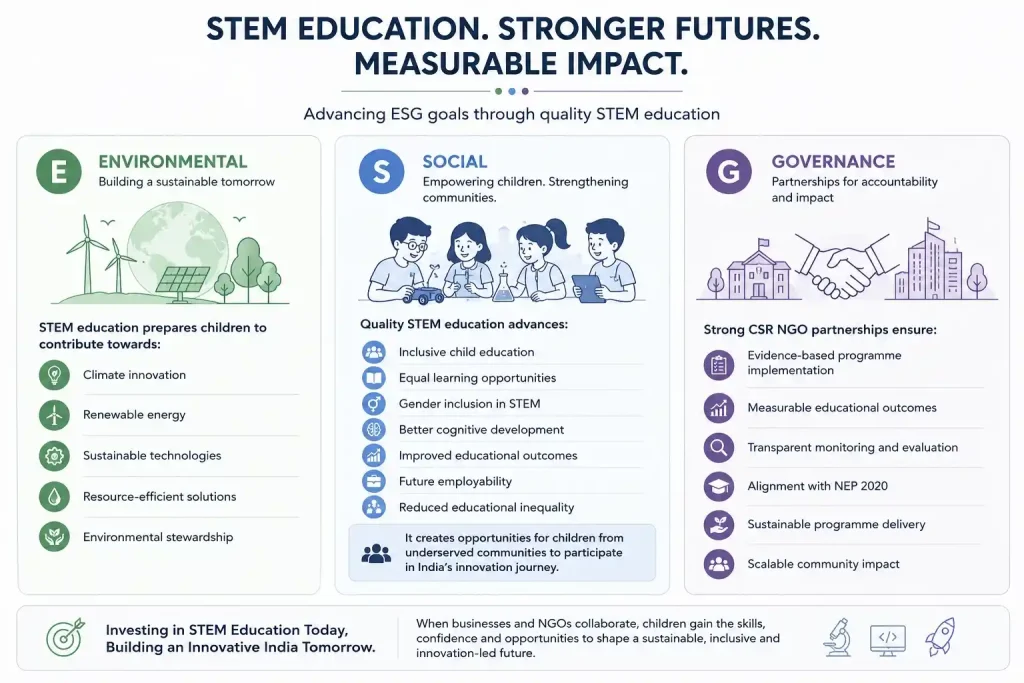
For businesses, investing in STEM education in India is no longer solely an education initiative—it is an ESG investment that strengthens both communities and future economic resilience.

Building the Next Generation of Innovators Requires Collective Action

Abhay’s curiosity during the Chandrayaan-3 launch is a reminder that innovation begins long before a child enters a laboratory or a workplace. It begins in classrooms where children are encouraged to question, experiment and think critically.

The true promise of STEM education in India lies not only in preparing future scientists and engineers but in developing the cognitive, creative and problem-solving capabilities every child needs to thrive in an innovation-driven economy.

Realising this vision requires more than isolated interventions. It calls for long-term investments in child education, teacher capacity, experiential learning and inclusive STEM ecosystems that reach children regardless of geography or socio-economic background.

This is where CSR NGO partnerships can create lasting value. By combining corporate resources with implementation expertise, organisations can build scalable education models that strengthen learning outcomes, contribute to ESG priorities and develop a future-ready workforce.

Partner with Smile Foundation to strengthen STEM education in India and create measurable impact through strategic CSR initiatives that prepare the next generation of innovators.

FAQs

1. Why is STEM education important in India?

STEM education equips children with critical thinking, creativity, problem-solving and digital skills needed to thrive in an innovation-driven economy.

2. How does experiential STEM learning benefit children?

Experiential learning encourages children to observe, experiment, ask questions and apply classroom concepts to real-life situations, improving cognitive development.

3. How does Smile Foundation promote STEM education?

Smile Foundation’s Mission Education programme strengthens STEM education through interactive laboratories, DIY STEM kits, science workshops, teacher capacity building, FLN integration and digital learning.

4. What cognitive skills does STEM education develop?

STEM education develops analytical reasoning, critical thinking, creativity, scientific enquiry, problem-solving, innovation and evidence-based decision-making.

5. Why is child education central to India’s innovation future?

Quality child education nurtures curiosity and future-ready skills that prepare children to become innovators, responsible citizens and contributors to national development.

6. How do CSR NGO partnerships strengthen STEM education in India?

CSR NGO partnerships combine corporate resources with NGO implementation expertise to create scalable STEM ecosystems, improve learning outcomes and deliver measurable social impact.

7. How does STEM education support ESG goals?

STEM education advances ESG by improving educational equity, developing future-ready talent, strengthening communities and creating long-term social value through measurable educational outcomes.

8. How can organisations partner with Smile Foundation for STEM education?

Organisations can collaborate with Smile Foundation to support STEM infrastructure, teacher training, experiential learning and digital classrooms through strategic CSR initiatives.

0%