Categories
Health Insights

How can we improve the Present Healthcare System in India?

More public spending on healthcare. Period!
Most of the problems that Indian healthcare is facing currently are primarily due to low government spending on healthcare.

Let’s do a quick comparison of where we stand:
BLOG 1

The amount India spends on public health per capita according to a news report is Rs 1,815 is less than the cost of a single consultation at the country’s top private hospitals–or roughly the cost of a meal at many hotels. That comes to Rs 150 per month or Rs 5 per day. 

At 2.1 percent of its gross domestic product (GDP)–India’s public health expenditure is amongst the lowest in the world, lower than most low-income countries which spend a good percent of their GDP on healthcare.

India’s low public-health spending is one reason why patients turn to the private sector for healthcare. India ranks 66th in a group of 189 counties in out-of-pocket (OOP) health spending, as mentioned in National Health Estimates (2018-19)

These costs push millions of Indians below the poverty line every year, according to various studies.

Now Let’s see What the Typical Problems are in Our Current Health System:

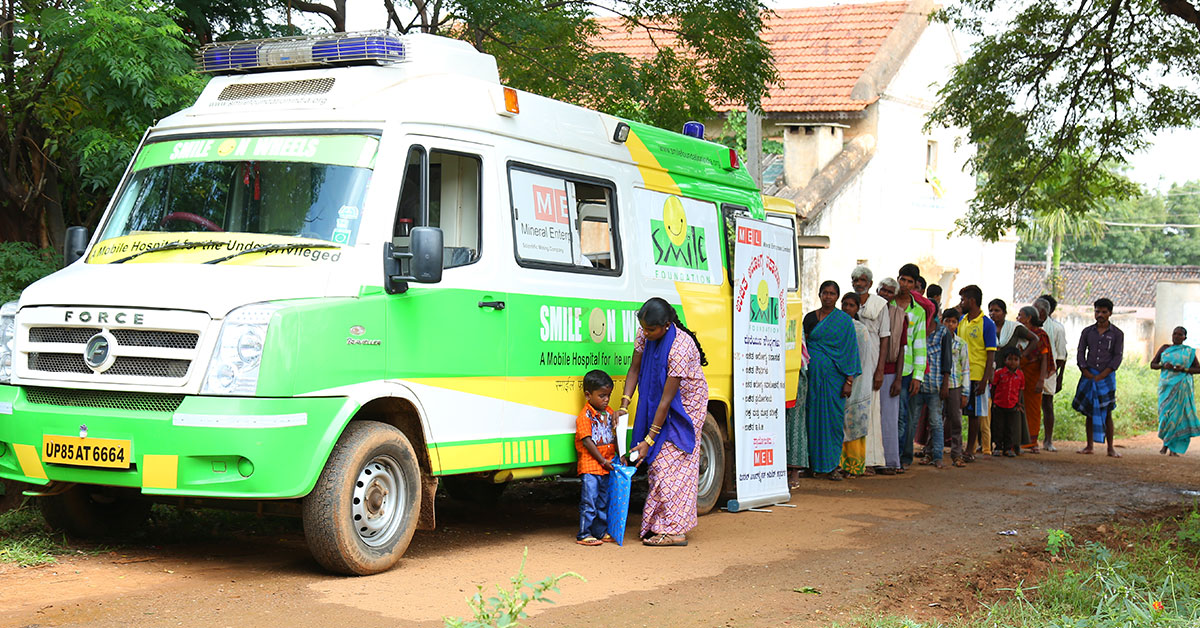
1. Skewed Distribution of Health Facilities: While India is one of the preferred destinations for medical tourism, which implies that some of our hospitals can provide world-class treatment at relatively lower costs, we also have hospitals that are understaffed, have insufficient facilities, inadequate medicines’ supply and may not even be able to provide a bed or an ambulance to a patient. For example, rural India contains 75% of the total population but only around 30% of the country’s hospitals, hospital beds and doctors. Imagine the sheer burden put on those rural health facilities and doctors because of this!

2. Lack of Manpower: We face a shortage of trained and skilled doctors, nurses, technicians and other medical staff. Back in 2015, there was a shortfall of 2 million doctors and 4 million nurses in India. It’s common knowledge that many skilled nurses go overseas for higher pay. We need more super specialist doctors but the ones we have are either concentrated in tier-1 cities or working abroad. 

There is a shortage of technicians and medical staff in many hospitals which leads to other problems like poor equipment maintenance, limited diagnostic services, etc. The shortage of manpower and the hesitation of existing manpower to work in smaller towns and villages limits the expansion of better medical facilities across the country, thus leading to skewed distribution.

3. Poor Infrastructure: Public health facilities comprise 20% of the Indian primary healthcare system. The majority of the secondary and tertiary care centres come under the private sector. A typical government hospital have limited doctors, nurses, or staff. Such hospitals are often crowded because they are catering to a large population in the surrounding area.

They do not have enough beds (because they’ve excess patients). They’re dirty and unhygienic, they lack security, patient care is unheard of, there may often be a shortage of medicines and consumables, staff may be corrupt and seek bribes from patients, and they may even lack basic utilities like a steady supply of water, electricity, and fuel. Their ambulances may be unavailable due to breakdown or corruption, forcing patients to fend for themselves.

4. Low Penetration of Health Insurance: When public health systems fail, people are forced to turn to private health facilities to avail of treatment. Private health facilities operate to make a profit. There’s a clear demand-supply gap and they utilise the low supply to raise their own prices. This means medical treatment in a private hospital could be a lot more expensive than in a govt. hospital. But since 75% of our population doesn’t have health insurance, they’re forced to pay for their treatment by themselves. And this situation leaves healthcare unaffordable for many people.

5. Low-quality Control: Remember the gaps in the supply side? This leaves healthcare a profitable venture for private players. There is no compulsion for a small new entrant to get an accreditation. People too are neither aware of quality parameters, nor bothered about it. They go to whatever is cheap. And so small, private clinics, hospitals, diagnostic and imaging centres mushroom everywhere with very little monitoring from the government. They do not have to provide any minimum quality. And yet they flourish because they’re affordable. As of 2014, less than 1% of hospitals and diagnostic labs had NABH or NABL accreditation.

So, if the government spends more on public healthcare than it currently is, it can achieve the following:

1. Higher wages would attract skilled doctors and manpower to stay in India
2. Higher wages and better living conditions in smaller towns and villages will enable medical staff and doctors to be able to work there
3. Higher spending will enable public hospitals to acquire medicines and supplies, receive uninterrupted water and electricity supply, maintain the premises and keep it clean and safe, and maintain equipment and ambulances so that they’re functional and available when required
4. More funding for medical and nursing colleges and technical training centers would help increase the existing number of seats or open new colleges in more locations. This would produce more number of skilled medical manpower to cater to the huge demands of our population.
5. With more funding and easy availability of skilled manpower, more public health facilities can be opened so that individual centers are not overcrowded. When the number of patients is manageable, they can be provided beds, medicines and proper care.
6. With more funding, the government can provide free treatment to the poor through the public health system. In addition to free treatment, the government can provide health insurance to the poor so that they can avail of treatment in private hospitals as well.

The government would also have to innovate to make public healthcare more efficient so that it delivers the maximum possible for a given investment. Technology would help automate several processes, thus making healthcare operations less prone to human errors and faster and more accurate. 

Technology like telemedicine could increase the reach of public healthcare, and technology like EMR and big data analytics could provide vital insights to governments, policymakers, doctors and all stakeholders to improve public health and deal with epidemics and disease outbreaks. Technology, again requires money.

In addition to funding, the government would have to tighten its regulations regarding healthcare. Stricter regulations regarding quality and an efficient monitoring mechanism will ensure that fake doctors and quacks do not operate. And that even the smallest medical facility, say a lab, provides a minimum assured quality of service at affordable prices.

Regulations would also enforce price control to protect patients.

But before stricter regulations and price control, the government needs to first strengthen the public healthcare system so that the majority of the population can afford and avail assured healthcare of high quality. Because without a strong public health system, the burden of the entire population would fall on the private sector which would not be able to serve the entire population while remaining profitable.

So How Does the Government Spend More Money?

1) For starters, it should allocate more funds to healthcare, in the budget.
2) Central and state governments should be in sync about the funds each is going to allocate and how they’re going to implement programs to improve and strengthen healthcare. Many well-intentioned govt. health initiatives have run against a wall because of irregular or lower funding from the central govt. which put an additional burden on the concerned state govt.
3) Improve the funding mechanism. Fund flow should be regular and adequate. Projects should be clearly defined and target-oriented so that funds can be matched to the results delivered. Funding mechanism should be transparent and the unnecessary layers of bureaucracy and paper pushing reduced so that corruption is eliminated or at least, reduced.
4) Public-private partnerships can help achieve #3, where the government provides the funds, and the project is implemented and run by the private sector. After all, when it comes to project management, processes, best practices and quality control, the private sector far supersedes the public sector.
5) To encourage private spending and participation in improving healthcare, the government shouldn’t rely on the concept of CSR because it’s neither profitable for the private player nor sustainable. Instead, the govt. should provide tax benefits and other incentives to encourage private participation in key areas of healthcare while ensuring sustainability.
6) Health insurance and innovations in funding mechanisms: to ensure that all citizens can avail the best quality healthcare, the govt. should increase health insurance coverage, and introduce co-payments and health savings accounts.

There’re many other solutions for improving healthcare, for example:

1. Encouraging innovation and manufacturing (of medical devices) within the country

2. Spending more on medical research

3. Improving medical, nursing, and technical education as well as upskilling of existing manpower

4. International collaborations: But before we achieve this, it’s imperative that the govt. increases the healthcare funding, and fixes the basic infrastructure first.
Categories
Insights

Building a sustainable environment for women

We must always nourish leadership abilities of women for their development. They must always be upheld.
Women’s lives are improving at a good rate now, girls are being educated, hence literacy rate of women is increasing, their life expectancy is also increasing and they are earning members of the society. Women are making contributions from taking care of their families to bringing an

IMG 20170715 140543 1024x768 1 2

income into the household. Laws are being made to protect them. To attain a sustainable environment for them we need to improve the provision of health services, make sure they get quality education, promote their employment, ensure the availability of good quality sanitation.


Improving health care may include essential care of newborns, they must be given proper vaccinations and must be kept clean. All health facilities must have proper medications, hygiene and sanitation. The staff providing care  must be fully trained to do so. Services must also be provided at home. Women must also be encouraged to have routine check ups.


Educating girls would bring economic development. It also would improve health and well being  of families. Education also helps them to protect themselves from trafficking. Literate women can express their concerns towards development and can also bring community change. Education also helps girls to protect themselves from  contagious diseases like HIV.


In the labour market, women still face many barriers and are denied the opportunities of employment because of this. Companies must hire more and more women. We must also try to create safe and friendly working conditions for women,  they must be confident that they will not have to face  sexual harassment. They must be provided equal opportunities as men for better productivity.


Most of the women living in rural areas practice open defecation which affects their overall well being while women who have adequate sanitation have better health. As a result, healthier women work more productively.we can spread awareness through campaigns and we can demand for toilets. Making women aware of the side effects of not having proper sanitation and living in unhygienic conditions could make them worried about their health and they may then take action.


If women are empowered, encouraged for leadership and given equal opportunities as men, economies overall will grow. Women support their households, while taking care of their family and generate income.

Categories
Smile

WHY INDIA SHOULD INVEST IN THE SKILL DEVELOPMENT OF YOUTH

India celebrates National Youth Day on 12 January on Swami Vivekananda’s birth anniversary, also called Swami Vivekananda Jayanti since 1985.This day is celebrated to inspire and encourage the youth to embark on a successful journey.


According to UNESCO,  “Youth” is best understood as a period of transition from the dependence of childhood to adulthood’s independence and awareness of our interdependence as members of a community. Youth is a more fluid category than a fixed age-group. However, age is the easiest way to define this group, particularly in relation to education and employment.


India is a developing country and around 50% of its population is under the age of 25. According to the UN report, India has the largest youth population in the world. So skill development becomes very important.  It is a process in which youth  of India is enabled and mobilized in  a large number to take up outcome based skill training and become employable and earn their livelihood. As they are the future of country it is very important that they have a job or they are doing something productive. It will also eradicate unemployment. There are many reasons for a country like India to invest in the skill development of the youth.


  • It will eradicate unemployment and poverty.
  • Increasing capacity & capability of existing system to ensure equitable access to all.
  • It will promote lifelong learning, maintaining quality and relevance, according to changing requirement particularly of emerging knowledge economy.
  • It will channelize the vast potential of indigenous man power.
  • It will transform India into a diversified and internationally-competitive economy.


On July 15, 2015 to enable Indian economy and industry to benefit from the country’s young work force Prime Minister Narendra Modi launched

  • National Skill Development Mission
  • National Policy for Skill Development and Entrepreneurship
  • Pradhan Mantri Kaushal Vikas Yojana (Prime Minister Skill Development Scheme)
  • Rural India Skill
  • Skill Loan Scheme


Though government of India is taking initiative, alone it cannot accomplish this task. It calls for a concerted effort of government, private players and NGOs to address the issue in a comprehensive manner. We need to focus on the skill development of the youth as it is one of the essential element of India’s future economic growth. It will play a defining element in India’s growth story. As aptly quoted by Nelson Mandela -“The youth of today are the leaders of tomorrow”.

Categories
Smile

Importance of Primary Education

Right to Primary Education is a fundamental right in India.  Free-education is now being provided to every boy and every girl up to the primary level. Every child ought to get quality education. The parents and guardians should understand the value of education and send their children to primary schools. As knowledge of health, hygiene and morals play an essential role in our lives. Elementary learning of well being and cleanliness is an important thing for primary education for keeping the child’s physical well being in good condition. playing and exercising also help to create social skills and participation abilities of the child. Moral education helps to develop sentiments of the child and also helps in developing the ability to see positive outlooks and have a clear point of view. Primary education does not only mean dealing with books and learning but it also highlights the importance of hygiene and good nutrition. We cannot ignore the importance of primary education as it also works for the betterment of poverty issues of a country. In India, child labour has also been banned for the improvement in literacy rate and to make sure that children do not work in difficult and risky conditions. Education has been made free for the people who cannot afford it and are therefore forced to not go to schools .The future of our nation relies on the children of today.


Challenges faced by the education system in a developing nation 


Technology in classrooms can help you experiment more but it can also be a distraction for students. It also stops the children from communicating verbally.


Some schools in developing countries do not even have a classroom which results in not getting proper education.


Children who are poor often tend to be malnourished which affects the brain and its development. Poverty has always been a barrier to schooling.


Some students leave schools due to pressure from their parents so that children can look after their homes while their parents are working.


Quality education has been a major problem in the education system , the lack  dedicated teachers who  take the extra mile to support students emotionally and socially.


What we can do


  • Primary education should be made as much more enjoyable as possible.
  • We should have schools that provide education to children living in villages and not only the urban areas.
  • Schools should also provide training for skills that the students are interested in, for e.g. painting, handicraft.
  • Communication between the teachers and parents should be improved so that children are not forced to choose their  careers.
  • Parents should also have good communication with their children and also they can support them by showing their interest in the child’s participation in school functions, it actually cheers them up.
  • Teachers must always try to inspire their students by regularly asking them about their progresses and interests.
  • Primary age group children love to play, so we should try to excite them with well designed activity rooms.
  • Introducing digital learning will also help in making learning attractive for children. They must also be encouraged to participate in sports and quizzes.
  • Learning apps can also prove to be very enjoyable for children and things can be easy for them to grasp this way.


Mission Education is a national level programme of Smile Foundation, which is committed to providing basic education and healthcare to underprivileged children. To know more about our mission education programme please visit: https://www.smilefoundationindia.org/education.html

WhatsAppFacebookTwitterLinkedInEmailShare

Categories
Partners In Change

‘Empowering Grassroots’ towards Sustainability

Since its inception, Smile Foundation has been keen on addressing the challenges of sustainability of the grassroots NGOs and equipping them with the skills to operate in a more structured and effective manner.


Grassroots NGOs and CBOs, despite their impact on ground, do not have enough leverage to push for their vision during the contract drafting and signing phase as they lack resources and competitive edge to attract the best talent.  In addition, most grassroots NGOs lack direction and strategy which causes them to deviate from their year plans. Propelled with a dream to minimize these challenges, Smile Foundation through its programme – ‘Empowering Grassroots’ has associated with Change the Game Academy to empower the grassroots NGOs and help them become self-sustainable.


DSC 0256 645x430 1

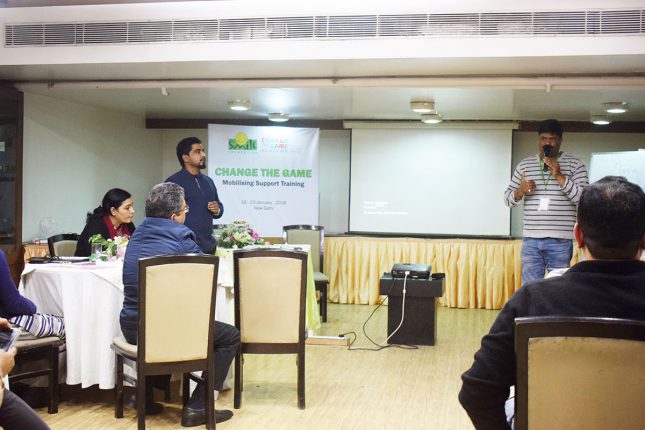
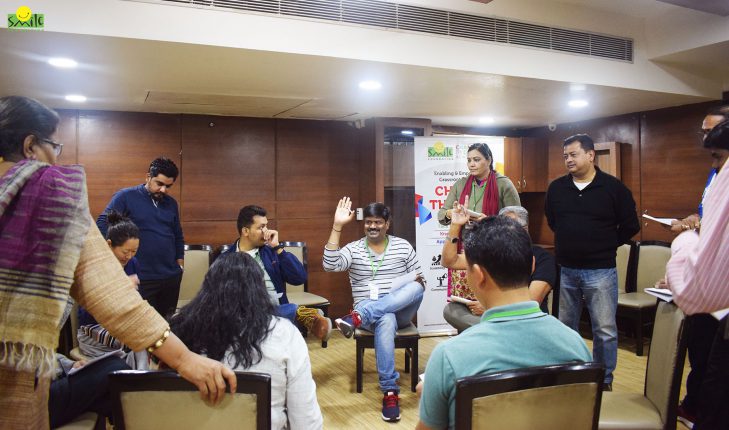
Change the Game Academy, an initiative nurtured through the collaboration between Wilde Ganzen, The Netherlands and Smile Foundation aims at empowering Self Help Groups (SHGs), Community Based Organisations (CBOs) and Non-Governmental Organisations (NGOs) all over the world, with special focus in low and middle-income countries. Smile Foundation’s ‘Empowering Grassroots’ is a national capacity building programme that aims at handholding, training and enabling Community Based Organisations to maximize their impact. Under ‘Empowering Grassroots’ initiative, Community Based Organisations are trained on vital issues relevant to the development sector in the country like scalability, sustainability, communication, resource mobilisation and governance by industry experts from reputed Indian and International organisations.


The action implemented by the organisations after the workshop showcases how they performed in crowdfunding and local fundraising. One such case study is reviewed from Swami Vivekanand Shiksha Samiti(SVSS), an NGO based in Chopan Block, Sonbhadra, Uttar Pradesh, India.


Due to lack of resources and extreme poverty, children in the villages of Sonbhadra work in the mining sector. The stark reality of these children is that in spite of back breaking hard work that they put in, they cannot have two square meals a day. They are condemned to a life of abject poverty which steals away their childhood. The children here don’t play any sports and most of the families don’t even allow their daughters to play outside.

DSC 0227 729x430 1

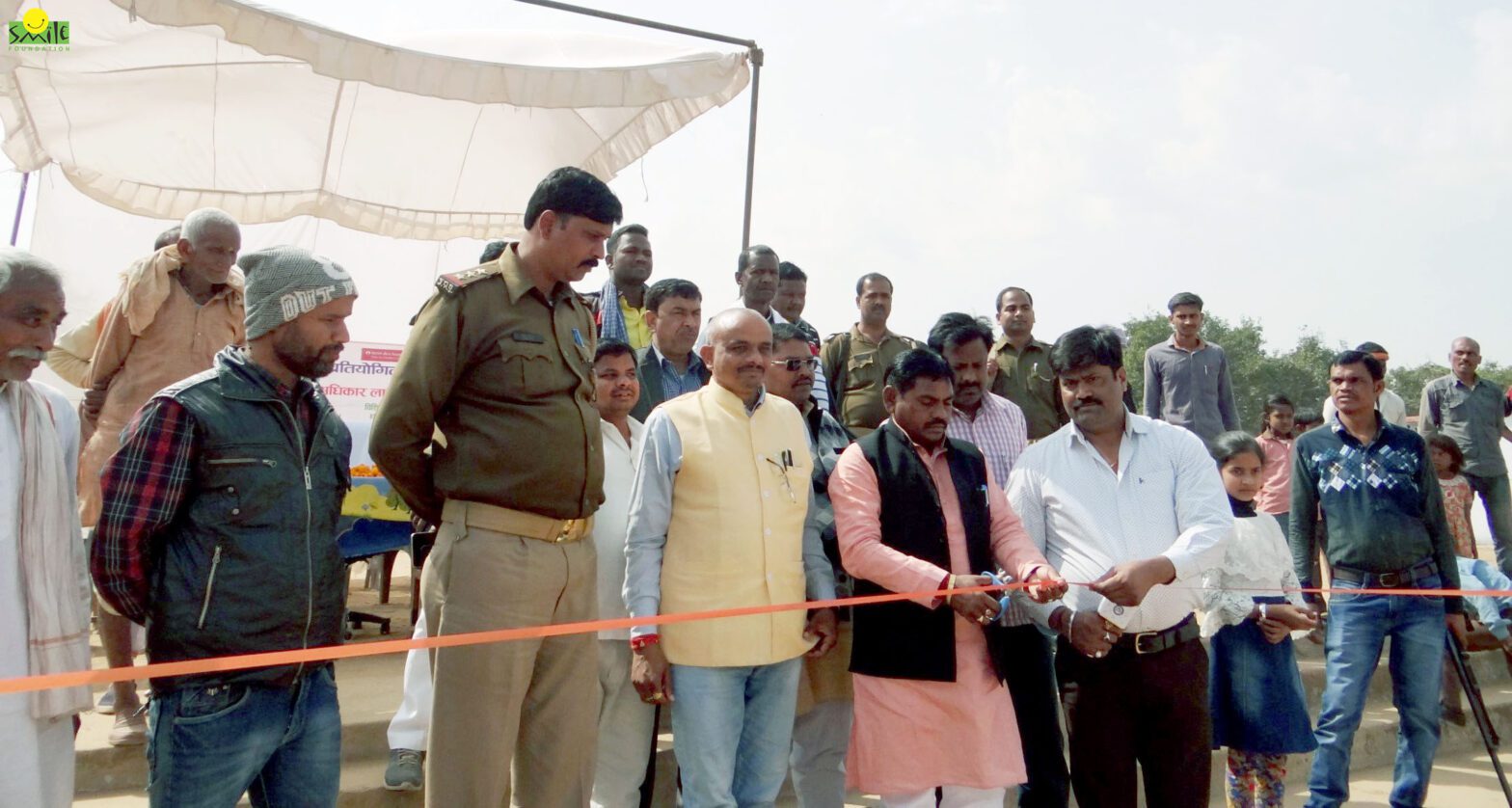
SVSS, which closely works with children in 10 villages, organised a sports welfare programme for the children and youth to instill confidence and educate them about the rules and regulations of different sports like Badminton, Volley Ball, Kho-Kho and Kabadi. The primary intention behind this initiative was to build a strong foundation for children to develop their interest in sports so that they can eventually represent their villages at international platforms. The organisation also educated guardians and concerned institutions about the benefits of sports and its positive impact on children. SVSS plans to reach out to the journalists, Local Panchayat, MLAs and different school management who are interested in children welfare so that the ‘Right to Play’ initiative can be further developed.


The initiative undertaken by SVSS is just one example of how grassroots NGOs can motivate children to attend school. Apart from this, the curriculum can be adapted to make it more relevant for the children. Students should be inspired by people by sharing their success stories with them to impart practical knowledge that complements their academic curriculum. Proper arrangements for the remuneration provided to teachers needs to be made in order to incentivise them to attend school regularly. These are all just an essence of the productive activities that can help people develop a clear mindset about the positive effects of education and how it can be used as a vital tool to uplift communities.


To know more about our projects on Empowering Grassroots please log in to https://www.smilefoundationindia.org/empowering-grassroots.html

Or contact Mukesh at 8750980633


Categories
Insights

CHALLENGES IN EDUCATION FACED BY A DEVELOPING NATION

Education, as we all know, is an important tool to the human resource development and empowerment in the stages of growth of a nation. Increased access to education can improve the overall health and longevity of the society, grow economies and even combat climatic changes. Yet in many developing countries, children’s access to education is limited by numerous factors.

Following are some of the problems which each and every developing country faces –


  • A lack of funding for education
  • Having no teacher, or having an untrained teacher
  • No classroom or proper infrastructure
  • A lack of learning materials and other tools
  • Living in a country in conflict or at risk of conflict
  • Poverty
  • Various discrimination and crimes against children
  • Distance from home to school
  • Hunger and poor nutrition
  • The expense of education
  • Being the ‘wrong’ gender
  • The exclusion of children with disabilities


The Universal Declaration of Human Rights makes clear that every child has the right to a free basic education, so that poverty and lack of money should not be a barrier to schooling. In many developing countries, over the last decades governments have announced the abolition of school fees and as a result, seen remarkable increase in the number of children going to school.


According to a UN report India has made significant progress in ensuring access to education through Sarva Siksha Abhiyan (Education for All) and the implementation of RTE (Right to Compulsory and Free Education ). There is near universal enrollment at the primary school level. But the challenge still remains because around one third of children drop out before even completing the full cycle of education.


There are many government, non-government and private organizations which are working towards this cause. But there are many challenges since India is a developing economy with the second largest population in the world which hinders the speed of development.


Smile Foundation is also one such NGO which has introduced various education programmes for underprivileged boys and girls throughout the country. It covers primary, secondary as well as senior secondary levels of schooling. To know more, visit www.smilefoundationindia.org/me

Education is both the means as well as the end to a better life. As quoted by Nelson Mandela –

‘Education is the most powerful weapon which you can use to change the world.’

WhatsAppFacebookTwitterLinkedInEmailShare

Categories
Insights

Factoring Process Indicators in Programme Evaluations: Rationale and the Way Forward

Healthy people are vital to economic and social development. The last decade has witnessed multidimensional changes in health and more so in reproductive health in India. Although India has made significant progress in improving the health of its population, fertility rates, HIV and infectious disease burden and child survival, it still mandates for continued investment to expand programmes, identify new models for intervention, and develop approaches to ensure sustainability. Policy and programme environment too has undergone a change.

India launched the National Family Planning Programme in 1951 with the demographic objective of a stable population at a level consistent with the requirements of national economy. Since then, the programme has undergone dramatic changes from family planning to family welfare services to a Target Free Approach which has been restructured as Community Needs Assessment Approach in Reproductive, Maternal, New-born, Child and Adolescent Health (RMNCH+A)- a client oriented and client driven programme under National Health Mission (NHM).

The catalyst for these remarkable changes in 1990s has been the International Conference on Population and Development (ICPD) held in Cairo in September 1994. The ICPD approach is strongly reflected in India’s population and RCH programme, which has made available improved services, involves women and lays direct emphasis on community planning.

Promotion of maternal and child health has been one of the most important objectives of the Family Welfare Programme in India. The Government of India took steps to strengthen maternal and child health services as early as the First and Second Five-Year Plans (1951–56 and 1956-61). As part of the Minimum Needs Programme initiated during the Fifth Five-Year Plan (1974–79), maternal health, child health, and nutrition services were integrated with family planning services. The primary aim at that time was to provide at least a minimum level of public health services to pregnant women, lactating mothers, and preschool children.

In 1992–93, the Child Survival and Safe Motherhood Programme continued the process of integration by bringing together several key child survival interventions with safe motherhood and family planning activities. In 1996, safe motherhood and child health services were incorporated into the Reproductive and Child Health Programme. This new programme seeks to integrate maternal health, child health, and fertility regulation interventions with reproductive health programmes for both women and men. With regard to maternal and reproductive health, the important elements of the programme include:

  • Provision of antenatal care, including at least three antenatal care visits, iron prophylaxis for pregnant and lactating mothers, two doses of tetanus toxoid vaccine, detection and treatment of anemia in mothers, and management and referral of high-risk pregnancies
  • Encouragement of institutional deliveries or home deliveries assisted by trained health personnel
  • Provision of postnatal care, including at least three postnatal visits
  • Identification and management of reproductive tract and sexually transmitted infections

Globally many countries pursue the result orientation toward any development initiative, be it Public Health, Education, Agriculture, Livelihood etc. As part of strengthening this result or outcome orientated initiative the countries develop monitoring and evaluation system focusing primarily on outcome or performance indicators.

In theory, the indicators are used as tools for assessing the efficiency, effectiveness, reliability and completeness of programme implementation. The programme or scheme assessment should actually establish a coordinated balance between all the critical indicators which encompass both process as well outcome indicators. 

Whereas in practice the assessment focuses largely on the outcome indicators, the outcome indicators measure the performance of the programme against certain standards which is eventually spread over a period of time. The process indicators focus on guidelines which are being followed, the availability and accessibility of the programme. They also focus on the potential risk involved and the attributes which finally influence the outcome indicators.

The monitoring and evaluation framework which have been developed under NHM have the indicators which are result oriented as in output or outcome oriented. For instance, the total number of Cheranjeevi Yojana and JSY beneficiaries in Gujarat, for the year 2010- 11 were 132470 and 292785, respectively were 23251 and 63478 beneficiaries less, respectively, from the preceding year 2009-10 (155721- Chiranjeevi Yojana and 356263 JSY) (Source- State MIS 2011), although the institutional delivery had been ever increasing. So, the concern is as to why was the number of beneficiaries dropping down while on the other hand as per NFHS 3 the IMR of Gujarat declined to 49.7 per 1000 live births and 50 per 1000 live births as per SRS 2009 and MMR to 160 per 1,00,000 live births as per SRS 2004-2006. Is it the quality of care being provided in the hospitals which is refraining the masses to go to hospitals? Also, our state MIS focuses primarily on the ultimate outcome indicators.

Till date, there has been no framework to measure any of the process indicators for, say, conducting the normal delivery for instance. The clinicians by and large conduct the delivery process (history taking, examination included) as per their respective experiences over the years. There is no specific framework to monitor the processes which are being followed while implementing any of these schemes. The challenges while developing monitoring framework for the process indicators are the indicators need to have a measurable numerator and denominator so that the indicators could be quantified and measured as the outcome indicators. Readiness (infrastructure supplies and trained human resources) of the health facilities at all level has shown significant improvement which is an important requisite for providing quality services. The process component which actually address to the quality of delivering services has also shown improvement but at a lot more initiative from district health management is required. It is primarily because it demands behavioral change, adherence to clinical standards and adoption of good practices. To accelerate the improvement in the processes, supportive supervision need to be strengthened and more attention should be given to review the process part.

To read about Smile Foundation’s health interventions, please visit

https://www.smilefoundationindia.org/smile_on_wheels.html

Categories
Insights

Gender Equality with Women Empowerment

According to the World Bank:

Empowerment is the process of increasing the capacity of individuals or groups to make choices and to transform those choices into desired actions and outcomes.


Therefore, we can describe women empowerment as to give the authority or the power to women.  Women Empowerment is recognition of women’s basic human right and creating an environment where they are treated as equal to men in every aspect (economically, politically, socially and individually).


According to Jim Kim, The president of World Bank also believes that countries pay a big prize by failing to realize the potential of women. And ending gender equality will make so much sense in our society as well as economy. Currently women account for 38% or even less in some parts of the world versus 62% of men. If women earned as much as men they would add an additional $160 trillion in human capital worldwide if only we bridge the gap and empower them.


The crime and violence against women is on rise worldwide and it hampers the development tremendously. Many organizations and NGO’s are working worldwide towards this cause.


Smile Foundation, an NGO based in New Delhi with its presence in 25 other Indian state has taken few initiatives empowering young girls and women.


Mission Education is one such initiative in which the underprivileged children are provided with basic level education and healthcare. The 50% of the children benefitted are girls and it is a national level programme.


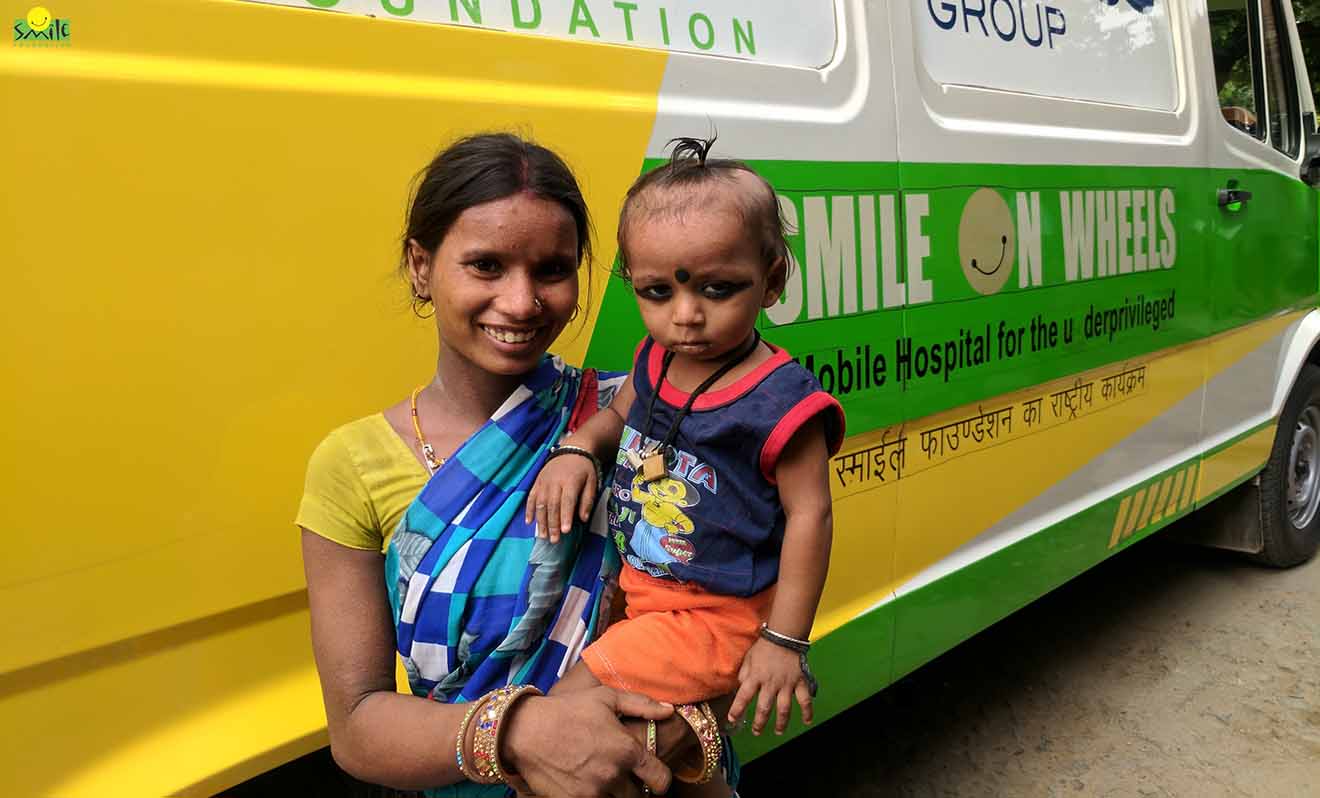
Healthcare is another initiative in which free medical services are provided mostly to the Urban slum dwellers, rural areas where proper healthcare facilities are not available and other underprivileged.  Smile on Wheels programme is another initiative in which mobile healthcare in urban slums and remote rural areas and it has provided health services to more than 10 lakh children and families.


According to statistics 66% of the total beneficiaries are women and girls.


Another initiative taken by smile to empower the underprivileged youth is Smile Twin E- learning Programme STeP. In this programme the underprivileged youth is trained in English, computer, soft skills and other required skills. Till now more than 22,000 youths are trained and more than 14,000 have been placed in more than 150 brands across different projects in India. In this programme also 52% of the beneficiaries were girls.


swabhiman i.e.  Self-respect in English in another initiative which identifies adolescent girls and women and develops them into Change Agents, who in turn actively contribute to the community mobilization process.


Till now Swabhiman has empowered and successfully made a difference to the lives of over 500,000 women and girl children.


Pandit Jawaharlal Nehru said, “To awaken the people, it is the women who must be awakened. Once she is on the move, the family moves, the village moves, the nation moves”.


Therefore empowering women and rebuilding the society would take the nation on a path of greater development.


To know more about the projects in Smile Foundation for the empowerment of women please visit https://www.smilefoundationindia.org/swabhiman.html

Categories
In The Spotlight

My Experience Working With Smile Foundation

I was born almost two decades ago.

In the cradle of human race,

In the birthplace of human speech,

To the mother of history,

To the grandmother of legend,

And to the great grandmother of tradition,

I was born in INDIA.

And now my roots are calling me for it is time that I serve my true purpose to this country, a country which has given me so much, serve those in dire straits, down and out.

And to start moving towards this altruism, I found Smile Foundation as my benediction. I worked for 5 days with the Smile on Wheels programme in Ludhiana, Punjab and to begin with. All I know now is that these particular 5 days of my life will be permanently etched in my memory.

Well, I went for the first day pretty casually, with an initial emotion as that of euphoria, and then it was only a matter of an hour, seeing the less fortunate around me, that the realisation of the onus of responsibility struck me that the ultimate Lord bestowed me with.

First, I would first like to take out a moment to thank all the members of the Smile on Wheels Ludhiana programme team. Because my journey would have remained incomplete without them. Sitaram Sir (Project Coordinator), donning the mantle of a leader, manager and a facilitator, his working style gave a new dimension to my life. Meenu Didi, with her ever smiling face, and countless stories to tell, she knows exactly what to do and does her work with perfection, always very caring and supportive. Gagandeep Didi (pharmacist), serene, friendly and always beaming with joy she has been the cynosure of all eyes. She always makes sure the patients never get the prescription wrong. Devit Bhaiya (Driver), always on time and with an amazing sense of humour, drives with an awakened conscience. And then, everybody’s favourite doctor, Dr G.P. Singh, chiselled with perfection, working with perfect values, serving everybody without any bias. Collectively, they are a team of committed soldiers who stand guard on the principles of Smile Foundation. Working with this basket of gems taught me influential lessons of life.

Now my five day journey is replete with memorable experiences. All the while I was conscious of my demeanour and conduct. But no later, I realised that my task wasn’t daunting or an onerous one. But rather was formidable. I have always been a person grown around with all the luxuries of life but now having a one-to -ne relationship with those on the skids, actually made me realise the importance of even a single penny in life. Every bit of advice, every tablet given is important to them, and we in our bed of roses, let go everything in fritter. I was shocked to meet a girl only a year younger to me, and a mother of two already, taking up all the responsibilities of her household. And I, on the other end, my parents and I myself still consider myself as a kid. And now every day I tell my mother, “Mummy, I have grown up now!” Also I see litres and litres of water being wasted in my home every day, but to them even a drop of water is a valuable pearl. I was sensitised towards so many heterogeneous issues of the ordinariness of life, different, yet all homogenous to destitute poverty, which until recently was only an abstract idea for me.

Another incident worth narrating is that of this little girl whom I asked to smile, for I was clicking her picture. She did not understand the meaning of “smile”. I tried using different synonyms of smile in her local language, but nothing worked. Her friends were like she never smiles. I tried a lot to teach her to smile but to no effect. It was then that I realised the importance of the name of “Smile” Foundation. SMILE something which comes naturally to us all, but to them it is a luxury, an exorbitance they cannot afford.

It is even difficult for me to express in words, all the sentiments that I went through within this short span of time. This odyssey of acquaintance with the needy has kindled an inextinguishable flame of mindfulness in me. A closer look at the actual realities of life, the sense of responsibility one must hold, self-dependency and most of all finding happiness in whatever difficult situation you are in. As I experience the travails of life in future, these values shall be instrumental in dispelling the darkness. I tried working with receptivity, perspicacity and perseverance and in the process of all this I realised that how we love playing mute spectators without any scruples of conscience. The feeling of incapacitation in our minds needs to be cleansed before the very essence of our nation recedes into oblivion. It is like taking the bull by its horns. This voluminous task of working for India and the alacrity with which it is to be accomplished needs a lot of creativity, innovation and out of the box thinking.

Well, I look at Smile Foundation in awe and thank for this wonderful opportunity to work with them. They have begun a renaissance. The die has been cast. This definitely augurs well for the country’s future. The journey from depravity to prosperity, bedlam to order, melancholy to melody and disgusting to sterling could be an arduous one, but well begun is half done and I already see glimmering rays of hope.

I wish Smile Foundation all the best so that their relentless efforts, commitment, and keenness help resuscitate India in a manner that we take pride in bequeathing a Bharat that is sans any clutter. Let’s all share this beautiful dream.


Smile,smile,smile! At the end of every quarter mile. Smirk,smirk,smirk! While you work. Laugh,laugh,laugh! Complete your part, don’t leave it half. Grin,grin,grin! Every struggle you will win. Be happy with us at every occasion, join us at Smile Foundation!


Know more about the programme here:  https://www.smilefoundationindia.org/smile_on_wheels.html

Or if you want to volunteer, you can write to volunteer@smilefoundationindia.org

Categories
Insights

Improvising Education System in Rural India

The Annual Status of Education Report (ASER) shows that even though the number of students attending schools in rural areas of India is rising, more than half of the students in fifth grade are unable to read a second grade text book and are not able to solve even simple mathematical problems. It is time that we recognize not just literacy, but also quality education and applied knowledge as a basic need and fundamental right of every child.


A sizeable segment of our population continues to reside in the villages. However, access to quality education in rural India is still very limited. Efforts have been made to improve the scenario, but the progress has been slow and unevenly spread across the country. Remote, faraway and cut-off villages with little or no administrative interest are usually the last to avail of amenities – be it private or public.


Lack of well-trained teachers and a highly skewed student teacher ratio are major drawbacks that abate the advancement of the education system in rural India. Most rural areas have primary schools that provide free of cost education, but due to lack of committed teachers, we are not able to establish a firm foundation and love of learning in the younger children, because of which they lose interest in continuing further studies. The quality of education should be high right from the start which needs to be laid down at the primary level itself. This will become a factor which can turn India into a strong nation.


Another problem is the absence of middle and senior secondary level education institutions in the villages. The children often have to travel long distances amid difficult terrains – traverse hills, forests, and deserts to reach the nearest school, which serves as a deterrent for both the children and their parents. It is imperative to sensitize parents and help them understand the importance of education and how it can end the vicious cycle of poverty and be the beginning of a dignified and empowered future for their children and also for the whole family. Instead of looking at their children as extra hands at work in the farms or forests, they should be encouraged to send their children to school and get a proper education. Emphasis should be paid on the education on girls, and doing away with regressive customs such as child marriage.


The traditional teaching methods also need to be revised to enhance engagement and interest of the children in the classroom and beyond. Simple things like relating the textbooks to the children’s cultural values can pique the curiosity of the kids, making them attentive and responsive. The school curriculum should involve extracurricular activities and fun-learning exercises to improve the morale of the students. The reasons for drop outs and low attendance should be investigated in spite of free education. This becomes a major hurdle on the way to progress. Improvements should be made in the school infrastructure, and teachers should be given performance based incentives as motivation to bring out their best in the classrooms.


There is a difference between children in urban and rural areas, not in terms of potential, but their learning environment, skills, cognitive abilities, availability of infrastructure, and access to proper facilities. With proper administration and assessment, we can achieve positive results and ensure that education in rural India is at level with that in urban India, and becomes a model system that is emulated by the world.


To Know about our education program please log in to https://www.smilefoundationindia.org/education.html

0%