Categories
Insights

Finding Your Sweet Spot in the Development Sector

Q : What do you do? Where do you work?
Me: I Work in the Development Sector…

Q: Ah…IT?
Me: No….

Q: Real Estate?
Me: Uh, no. I work in the Social Development Sector…(blank stare)…Social Sector…(another one)…I work in the NGO Sector…(Finally a smile, the ice breaks…about time!)

For a very long time now, the social sector has been ably represented and identified by this all-encompassing term – NGO! It represents not just an organizational form, but the sum of all the work, thought process, culture, mindset and even lifestyle of an entire sector and its people. 

The Kurta Pyjama (or jeans, dhoti), sandal wearing NGO professional with a jhola (bag) on their arm is the first thought which crosses many people’s mind then they hear this word (given my upbringing in Calcutta, there might be a slight Bengali bias to the imagery).

However, over the last 5-8 years, the sector has evolved at a rapid pace. While NGOs still represent an overwhelming majority of the work and people in this space, the sector is now much more diverse in terms of opportunities and thereby more open to accepting and providing exciting opportunities to people from different kinds of backgrounds, with different hopes, aspirations, skillsets and change models. 

The simple answer to the question “How do I work in the Development Sector?” is no longer “Join an NGO”. This question deserves a little more thought and careful analysis to find your sweet spot in this sector. Here I attempt to highlight a particular line of thinking that one could follow while making this decision and a set of questions one should look at answering for the self:

1. How much time you got? 

Almost everyone I meet wants to help improve people’s lives and contribute in some way or the other. The easiest way to do that is through charity which is also the least involved decision. Using time as a parameter for analysis, one can move from a zero-time contribution model (pure charity), to a small time commitment (Volunteering), to a higher time commitment (Part time) to the highest time commitment (Full time). 

Your passion for social change combined with your life realities and compulsions will decide which of these options you take up at any point of your life (Some always remain at the charity level while others spend their whole life working full time in this space. Options chosen can also change from life stage to life stage).

2. What issue(s) bothers you a lot? 

There are 17 Sustainable Development Goals (SDG’s) which define the development agenda over the next 15 years for the world. Which Goal(s) you choose to work with will be determined by a combination of an emotional (What tugs your heart? What makes you uncomfortable?) and a cognitive (based on numbers, statistics, world realities, theory of change) decision making process. Given the technical nature of each of these areas, it’s important to get an in-depth understanding of some of these areas and combine it with an ability to view things systemically and design holistic change interventions.

3. What kind of an organization works for you? e.g. NGO, CSR, Social/Corporate Foundations, Social Enterprises, Support Organizations, Think Tanks etc.

a. NGO: Even NGOs are not all homogenous, they can be categorized in many different ways – Geography (Local, Regional, National, International), Theme (Education, Health, Livelihood etc.), Strategic Orientation (Rights based, Service Delivery, Advocacy etc.). Each such category represents different kinds of work (working on the ground with communities versus coordinating with a group of implementing NGOs), requires different nature of talent and has very different compensation levels.

b. Corporate Social Responsibility (CSR) organizations: With India CSR budgets ranging from Rs.15-20K Crore, we increasingly need people who understand field level realities and have the ability, mindset to work in a corporate setting with the challenge of managing internal stakeholders

c. Social and Corporate Foundations: Typically, large organizations which either act as a source, funnel of funds or have their own funding and implementation teams. Require the ability to identify and work with partner organizations to help deliver on the project mandate and budget.

d. Social Enterprises: Largely For-profit entities with a strong social mission. E.g. Microfinance, Microinsurance, Affordable schools etc. Require people who have the ability to balance social and commercial goals.

e. Support Organizations: Includes a range of organizations like social consulting organizations, social Investment bankers, social recruitment platforms / portals etc.

f. Think Tanks: Typically, create and disseminate knowledge – Conduct relevant research, publish papers etc.

4. What nature of work are you really good at? 

Choosing the kind of work that one wants to do is one of the most important decisions to make. It should typically arise from what you really enjoy doing and where your actual skillsets lie. Some potential work areas are as below:

a. Research & Knowledge creation: If you have an academic bent of mind and enjoy teaching and/or research (Knowledge creation and dissemination), the sector now has lots of opportunities for your skillset. Like any other space, this sector continuously needs to refresh its knowledge base, develop and disseminate new theories and ways of working

b. Social Work: If you are basically a technical person, enjoy going into the depth of social issues to understand the reasons behind them, love working at the grassroot level with communities to ideate and implement solutions, then training to become a Social Worker with probably a deeper understanding of some of the sub sectors (education, health, etc.) is a great idea for you

c. Development Management: If you are excited with the idea of building world class social organizations, design, implement, evaluate and monitor large scale social interventions and develop collaborative ecosystems which can together deliver sustainable social change at scale then you should go down the path of Development Leadership and Management.

 This would include areas of work like Organization strategy, People Management, Communication and Engagement, Financial Management, Organization Design & Development, Program Design and Management, CSR Management, Fund Raising, Partnerships & Stakeholder Engagement etc.

d. Consulting, Investment Banking: If you like looking at the broader picture and not getting into actual operational roles (at the ground or the organization level), if working on a variety of different problems gives you satisfaction (width versus depth), social consulting roles could be for you. Preference for number crunching, developing effective storyline presentations, engaging with donors and investors is your story, then social investment banks might be a good fit

This is just a thought framework that I have found useful. It is neither exhaustive nor does it seek to depict decision making as a linear chronological step by step model. Decision Making is complex and will happen simultaneously with multiple iterations. 

However, focusing (without getting paralyzed by) on some of these questions will potentially help you understand yourself, your aspirations your skillsets better and thereby help in making a more informed choice about where you want to work. 

While part of this thinking can be done individually, supplementing it with a lot of secondary research, this process should involve a lot of discussions and deliberations with people doing work in your area of interest and if possible, actual internship / volunteering stints in particular areas. This will bring real-life realities and flavour to your thinking and give it the depth required to make better and more appropriate decisions.

In a college discussion, a girl once told me that she does not want to give up her Starbucks Coffee by working in this sector! Just wanted to end by saying that the sector has evolved a lot of the last few years and offers tremendously rich opportunities to do meaningful work and live lives of choice and dignity. You don’t need to trade off your coffee (or whatever it may be!) for living a life of meaning and satisfaction anymore!

Happy Hunting…and may you find your sweet spot!
Categories
Insights

Let Children be Children!

We commemorate the World Day Against Child Labour, once again, this time of the year on June 12. Nevertheless, we find an opportunity to self-evaluate, regroup and make resolutions so that we can ‘celebrate’ the day soon in the future.

The United Nations estimate that there are reportedly 33 million child labourers in India. Our census reveals that 20% of the child labourers belong to backward castes and about 80% from Dalit families. Child labour, though rare, is not uncommon amongst the upper caste poor.

As a recollection, the National Policy on Child Labour declared in August 1987 took up a two-pronged and gradual approach to tackle the challenge. First, the aim was vouching for strict enforcement of the laws and secondly, addressing the root causes of the problem such as poverty, caste etc. through development measures.
Well enough.

Early this month, the Govt. of India (The Ministry of Labour and Employment) comes up with the Child Labour (Prohibition and Regulation) Amendment Rules, 2017. The same has automatically come into force.
Hence forth, the principal rules, the Child Labour (Prohibition and Regulation) Rules, 1988 have substituted “Child and Adolescent Labour” for the previous words “Child Labour”. Thanks to the amendment rules.

Going further, awareness on prohibition of employment of child and adolescent has been provisioned in the rules. The Central Government is entrusted with the task of ensuring that children and adolescents are not employed or permitted to work in any occupation or process in contravention to the provisions of the Act, through appropriate measures. 

It will include use of both traditional and mass media, displaying the provisions of the Act in all possible public places and institutions, integration of the same in learning materials and school syllabi; training and sensitization of various stakeholders such as Central Labour Service, police, judiciary, civil services and sensitization & refresher courses for Panchayat members, doctors and other government officials.

The rules seem to have gone practical by allowing children to help his family without affecting education. Any engagement that is remunerative for the child or the family is prohibited. Hazardous occupations will be out of bound and the family enterprises will be those where the family will be the occupier. School hours, play time, space for home work, rest etc. are accounted for and a child cannot work for more than three hours without rest or five hours (if the child works as an artist) in a day.

All remunerations to be deposited in the child’s bank account. If a child remains absent consecutively for 30 days without intimation, the school principal or head master is required to report the matter to the concerned nodal officer.

Fines for specific offences, including compounding ones, have been defined for those who violate the provisions for engaging children in work. Obviously, the same applies also for parents.

Going back to the Census 2011 data, it reveals some unsurprising yet disheartening realities. Some 78 lakh Indian children must earn their livelihood while joining school, owing to poverty. More shockingly, 8.4 children do not attend school at all.

As matter of fact, half of the world’s malnourished and stunted children live in India. Nearly half of our population make a living as labour forces in agriculture and other unorganised sectors. Uncertainty in livelihood, seasonal patterns and migration keep on forcing families to hop from one place to another.

On the brighter side, a few government schemes in the areas of livelihood generation and food security for families, and mid-day meals for children have resulted in a drop in child labour number.

There is a tough mission ahead for the government, civil society and to a great extent, the businesses to complement each other on war footing. Else, the coming generation as well as the future will never forgive us.

Categories
From The People, For The People

Dreaming in a Slum in Basai

What would you see if I asked you to imagine your mornings when you attended school? The cold water hitting your face, when you took that morning shower to wash away your sleep maybe? Does the image of your school bus, and the face of the conductor asking you to hasten up come to your mind? Probably the broken seats and the potholes on the road greet your imagination at this point. 

Having been woken up in the morning from the comforts of my bed is what I am reminded of, my sweet sleep broken and my dream of eating the biggest, most delicious chocolate cake in the world, disrupted.

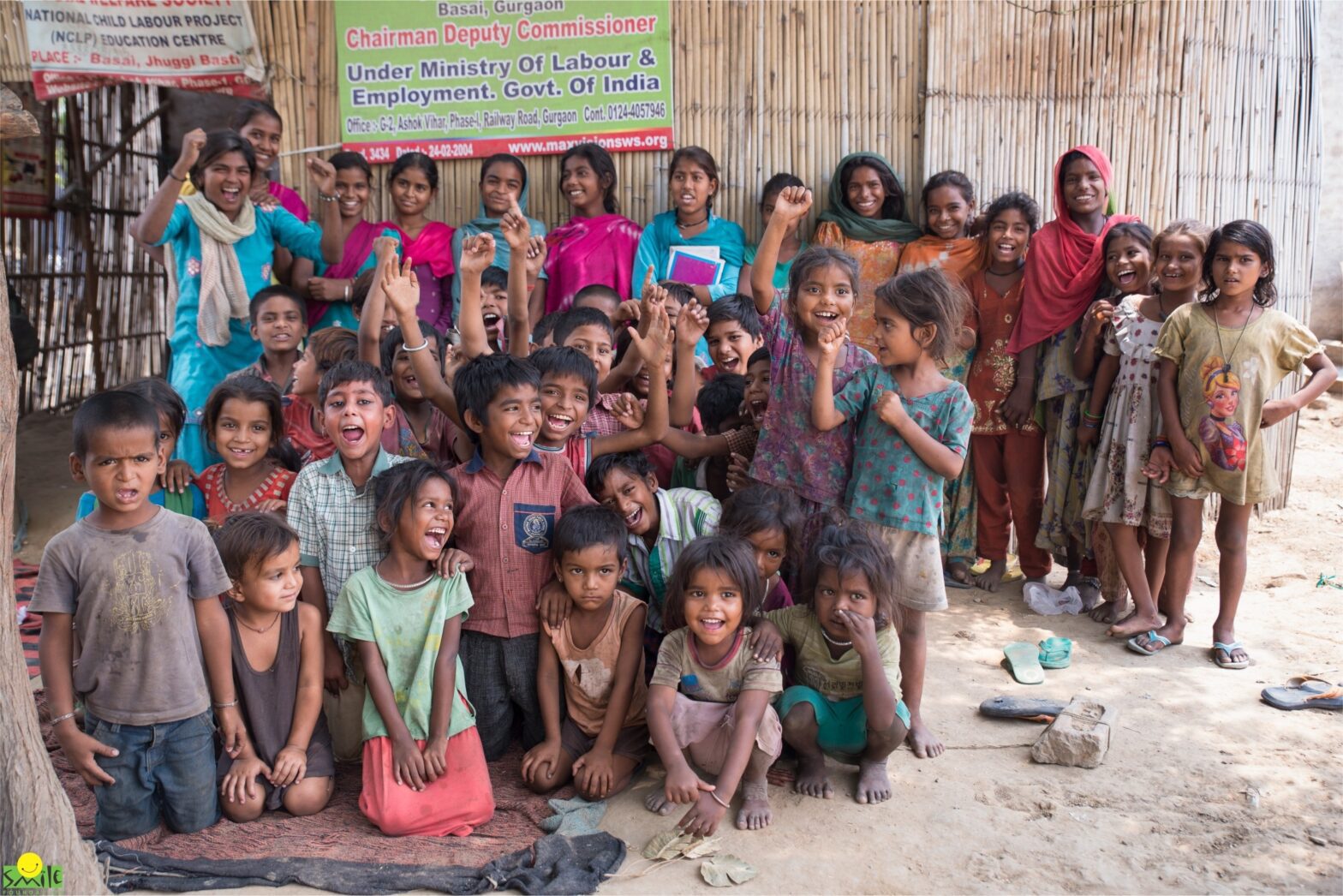
But what would you do if your world was defined by an odd, 100 metre area, where you slept amidst filth, woke up to the pungent smell of rotting cloth and went to school with only an old fan greeting you? Mind you, that’s the best comfort any of these slum-dwellers get, in a small garbage-dump in a town called Basai. 

Here you’re greeted by the advances that technology has afforded human beings on one horizon, and the apathy of the larger system on the other. This little slum brings you to the grim reality just a few kilometres away from Gurgaon-the “mirror to India’s Growth(1)”.

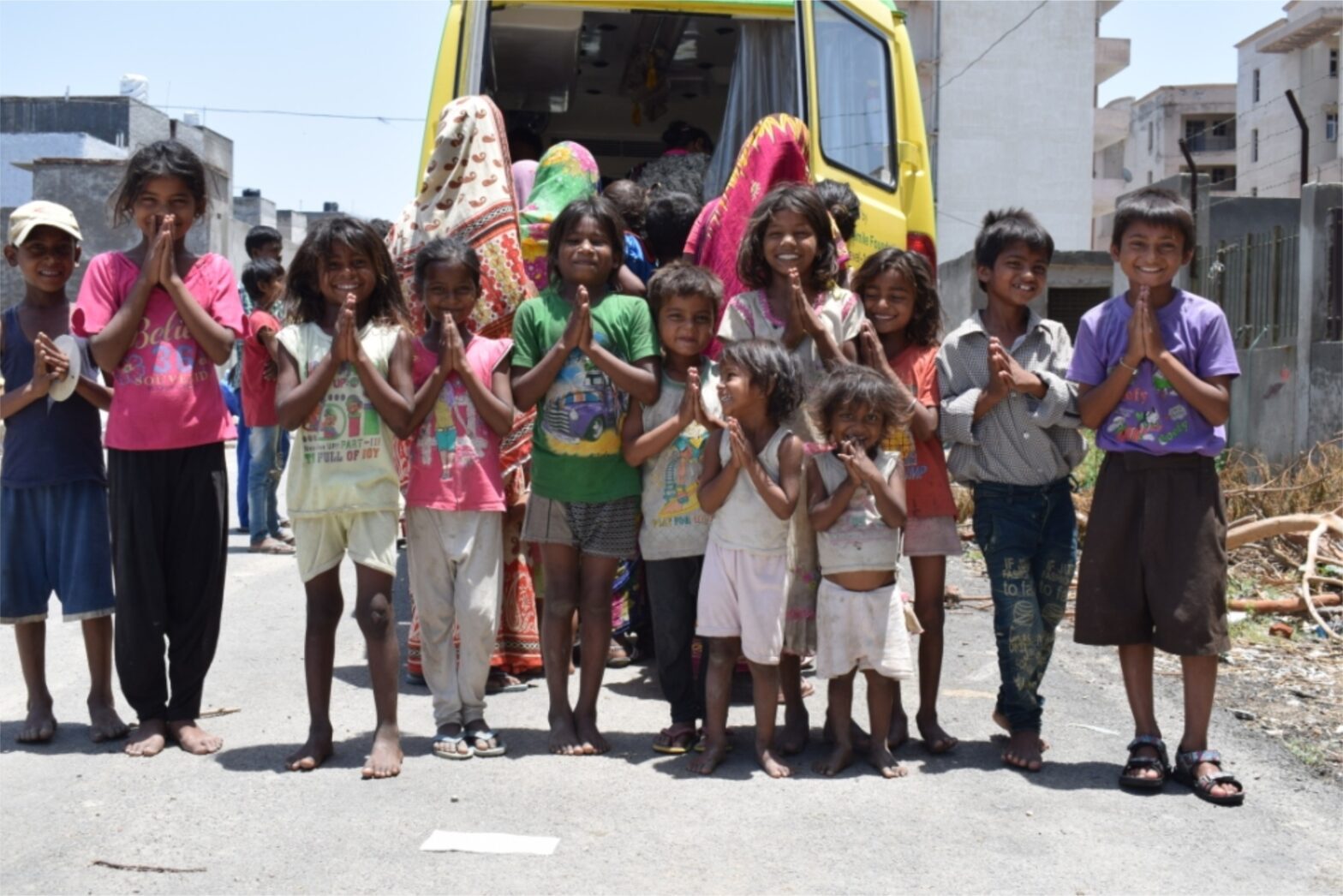
Interning with Smile Foundation as a YES Fellow Designate, gave me the chance to visit this community and the school situated right in the middle of the slum. It isn’t the place that shocks you as much, but the grave irony which hits you in the face, the high-rises and magnificent college buildings under construction serving as a mocking background to the miseries tainting the slum, with its school and the children sitting outside reciting the varn-mala in unison.

But all’s not lost when you see these children earnestly trying to work hard to take a place in that fancy college. Talking to them makes you believe that there is hope in a world of the ‘haves’ and the ‘have-nots’. Their little, unclean hands skimming through the pages of their copies while they try to keep up with their teacher, the lines on their foreheads showing their grit to do better- it all points to them reclaiming their rights as equal citizens of this country, refusing to be treated as lesser citizens anymore.

“We too want the jobs, we too want to get out of here and lead a comfortable life where we’re not evicted from every place we decide to go at”, says Santosh, a 13 year old who studies at the Maxvision centre and dreams of becoming a doctor.

They’re taught everything, in a class that ranges from children who are 3 years old, to teens who are as old as 15. They are mainstreamed from this centre and sent to schools, either government or private, once they learn enough to cope with the kids who don’t have to worry about food, or who haven’t seen life through the same lens as them. 

The teachers and volunteers know that their jobs not only include teaching these kids the basics of science, hindi and math as we know it, but also inspiring these kids, giving them the assurance that their dreams will take flight on the wings of their hard-work.

“We’ve been here thirty years, me and my wife. We have grandchildren now, who go to this school. We send them here because we know that this takes them a step forward to a better, more secure life”, says Pawan who has a character that is larger than life, and a laugh that is infectious and lifts the spirit. This community of rag-pickers have made their own makeshift hutments at the back of the dump, their own refuge from the world.

“I draw very well, and I’m also the best in class when it comes to reciting the poem that was taught to us by the teacher a week back”, says Jonu, as he goes on to recite “Raja Ram Sipahi The” for the camera that I’m holding very determinately. His copy, which doubles up as his drawing pad, shows all the makings of a great artist of only 10 years of age, Chhota Bheem and its characters his clear muse.

As I leave to go back to ‘my side of the world’ with clean drinking water, IHOP openings at malls and Black Friday sales, I come to realise that it’s not the place or the resources that solely add up to what you become, but determination, grit and a reassuring smile that truly defines your dreams.

While having schools or centres of education which are accessible for every child in our 1.3 billion population is imperative, giving children from weaker sections similar footing as the children who grow up with more resources can only be achieved when teachers take it up to themselves to inspire these children to aim higher. But that is not it.

We need more support from the other side- “the privileged”, people like you and me, to make these children aware that they too can stand with their self-respect in place with the children of the privileged sections and actualise their dreams. That they too can grow up to be doctors, artists and teachers. This is the future that we should all work towards, spirits united and our time dedicated to our dream of “India shining”, as my high school sociology teacher would put it.

Categories
Education

EVERYDAY HEROES!

Father, Dad, Papa, Abba, Appan- they’re all different ways to address that one person who is our shield, our supporter, our pillar. Our fathers are those heroes who always assume their roles in the backdrop. This Father’s day, we take a moment to thank them, honour them, but most of all, acknowledge them- for being there, always. Below, we capture some ordinary stories of extraordinary dads!

Budhi Pratima studies in Grade 2 at SERVE, our Mission Education centre in Faraki Danga, West Bengal.

She looked up at me, and I knew I was going to be her everything- her father, her mother, her world’, says Budhi. His wife (Lakhi) passed away, when his only daughter, Pratima, was a few months old. With Pratima in his dear arms, Budhi knew he had to stay strong- for his daughter’s sake. ‘I have never been to school, but that doesn’t mean I don’t understand how powerful education is. I work hard every day to give my daughter a worthy life. I promised Lakhi that Pratima would not suffer because of poverty.’ Budhi smiles and says, ‘I think she’s happy. She goes to school, she learns- teaches me also! I think I’ll be able to do well by her”.

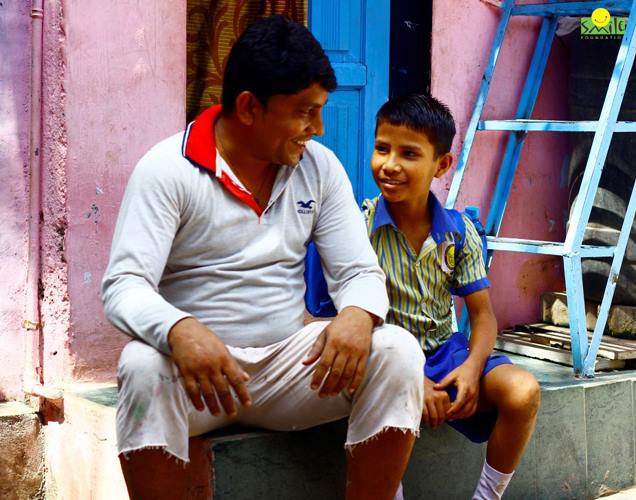
Abdul Farhan is studies in Grade 4 at MAKZ School, our Mission Education centre in Mumbai- located in the slum cluster of Dharavi. We hope he fulfils his father’s dream one day!

As Abdul looks at his ruffled hands, he thinks of all the jobs he’s had over the years- from washing cars to making hand-bags, he’s been through it all. He shrugs, ‘It was all worth it’, he says. ‘Fathers often say that they want their son to be like them, but I want him to be better- I want him to be great.’ Abdul did every kind of job he could get his hands on, every job that got his hands dirty, just so that he could feed his family. ‘If I get a chance- I would do it all over again. If it means my son can go to school and get the education that every child deserves, it’s worth it!.

Purna chandu Ganesh studies in Grade 2 at Lepakshi, our Mission Education centre in Visakhapatnam.

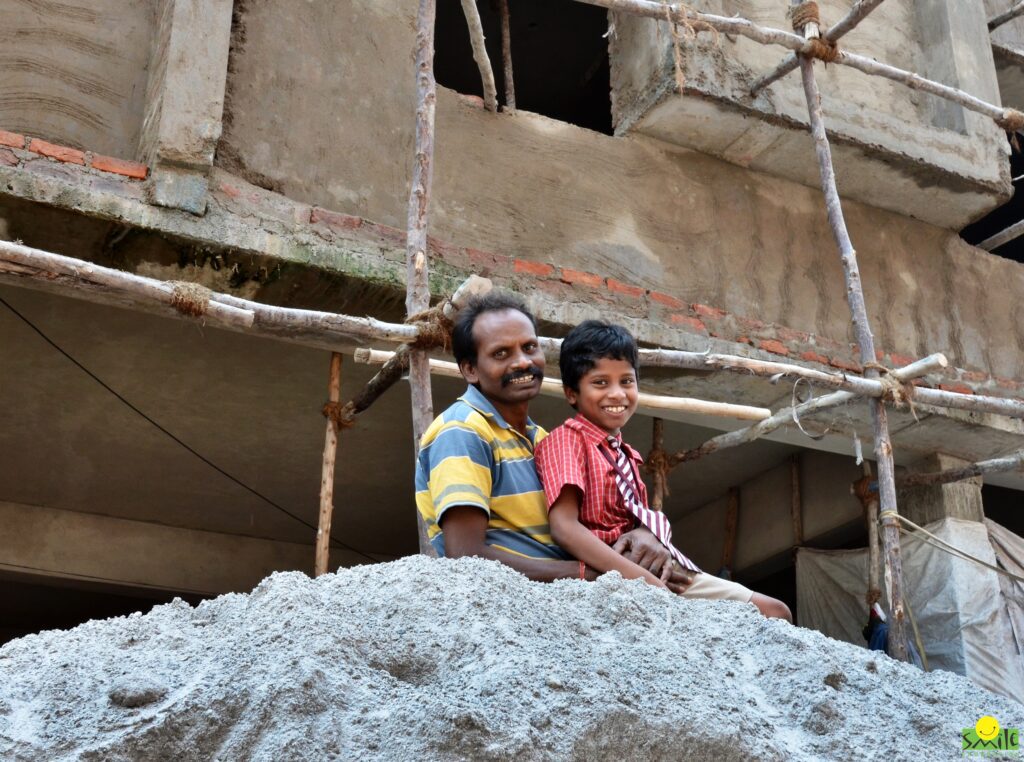
He is the best son one could ever ask for. I mean, he has made a construction site his home! In today’s time and age, what kid would do that willingly and happily?’ asks Ganesh’s father. Chandu is a construction worker- living without a place he could call home. But Ganesh never lets him feel that way. His mother is a domestic maid, and their overall family income is just about enough to feed the entire family once in a day. ‘I and my wife work hard every day so that Ganesh never has a crease on his forehead. His happiness means the world to us. Every day, when we come tired from work, he always lights us up with his stories. Usually, it’s the father who puts his son to sleep with bedtime stories, but in our case, Ganesh always lulls me to sleep with his. I know he’s going to turn out to be a great man.

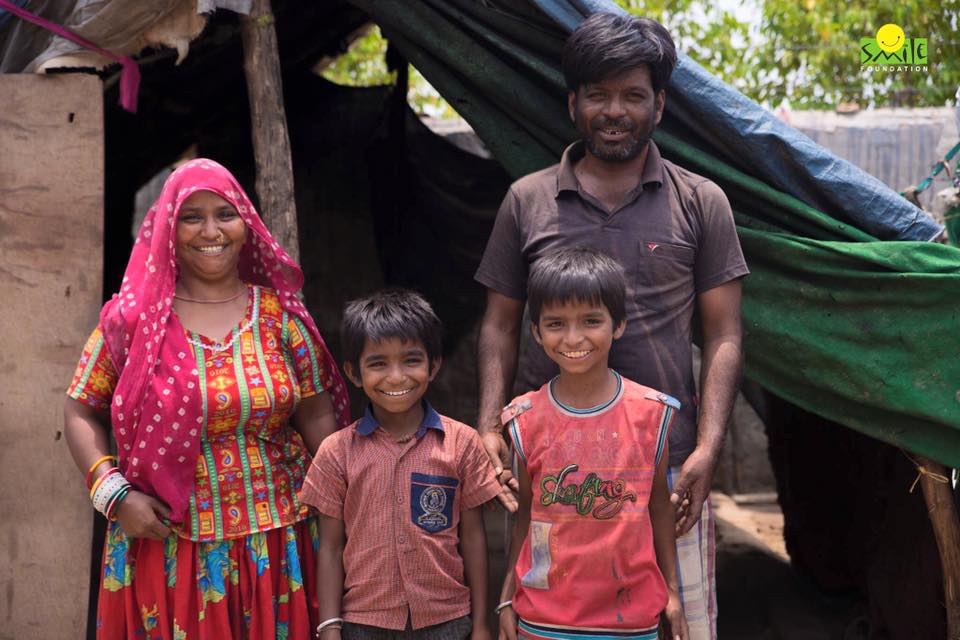
Ram Kumar 1 Rajkumar and Ravi study at Maxvision, Mission Education centre in Gurgaon.

I don’t know what is more important than family. I am very thankful to God. At least we have a home to sleep, food to eat, and children to love’, says Ram Kumar. He works in a garbage dump, cleans drains and carries wastes from houses. ‘My parents always taught me that no job is small if it is fulfilling your needs, and putting a smile on your family’s faces’. At times, ‘my children get insulted by strangers because their father works in a dumpster. But I raised them with the same values as I was raised. They are my strong champions’. His wife adds that while sometimes their children cry because they feel upset, they still never forget to ‘count their blessings.

Categories
From The People, For The People

A Pen to Learn, or Earn?

It was a bright Saturday afternoon, and I was on the way to the mall with my mom. About a decade or two back, malls were only beginning to come up in metropolitan cities, so there was a certain fancy attached to them. Peak summers with a high of 45 degrees, and windows rolled up to let the air conditioner do its job, I was blissful in my own right.

Just then, we halted at a red light, and a young boy, almost as old as I was back then, came up to my window. He had pens of every color with him, and I was suddenly excited by the sight of those pens. At the time, it didn’t matter to me that it was a child selling those pens, I was just happy to look at them. I asked my mom if we could get some, but she just said that we’ll buy something from the mall. And that was the end of the conversation.

Having always been inquisitive, I later reflected on the incident, and I instantly asked my mother if we knew people who also sell things like that. Though I was quite sure that no one in my peer group ever had. My mother tried to explain to me how not everyone was born equal- “Some people are more fortunate than others”, she said. But I being I, was not satisfied with that explanation.

The following week as I went back to school, I recounted the entire experience to my social science teacher. She smiled at me, and asked me to come see her after my lunch break ended- it was time for a chat.
As we began talking, the term ‘child labor’ was first introduced to my vocabulary. 

As we spent some more time talking, words like ‘privileged’ and ‘underprivileged’ were also added to my knowledge storehouse. This is when it hit me what my mom really meant when she made that comment. But it was still a few years until I gathered my sensibilities.

It’s been a while since that difference has been actualised for me. And I found my own ways to make a difference. But grand sayings aside, it takes more than a person or even a few handful of people to make a difference. Of course, every action sets off another one, but on a meta-level, nothing less than a revolution needs to be at play.

What we need, is to educate ourselves and the people around us. It’s important to have empathy because, in all honesty, we truly cannot choose where we’re born. While it’s good to thank our fortune if we can send our child to a top-tier school, it’s just as necessary to ensure that our child feels thankful too. But in order for that to happen, we need to educate our children on what they’re thankful for – because that’ll be starting point of change- in any country around the world!

(Smile Foundation’s Child for Child program is an initiative in the same spirit, which impacts and sensitizes 1.2 million young minds across 5000 schools in 417 districts of India.)

Categories
Girl Child

Let’s Nurture Every Girl Child; They Too Deserve to Fly High!

It is a misconception that only the first child or the grown up women from uneducated or backward segments of the society face the dominate challenge of inequality. The challenges faced by the modern women cut across all such social dynamics.


The way I see it, the genesis of this goes back in time to the rock age where the strength of the males was required to hunt and feed the family. As time went by, the male domination conditioned by historical practices molded the social norms to continue.


Having said this, India was perhaps the only civilisation that reflected practices of knowledge, dignity and awareness of the feminine strength which play an integral part in weaving the social fiber of a healthy society – be it Maa Ambe symbolising strength, Maa Saraswati symbolising wisdom or Maa Laxmi symbolising abundance/prosperity. All our divines from mythologies who gave us indication of how evolved our ancient society were evolved and matured.


Unfortunately we let this heritage get lost over time and went to the other extremes of social hypocrisy where the women of our land had their wings clipped simply while making knowledge the domain of males. With the advent of technology and higher awareness along with the means of spirited individuals and organisations, we are seeing this balance tilting for the better like never before there is a long way to go.


Starting from when a child is in the womb, the desire of a male child over a female and all the atrocities linked to this has to go. Till the time parents do not focus on this one phase of their lives, the child’s education, nurturing, ideologies, self – esteem, aspirations and visions will continue to contaminate. This awareness of welcoming the girl child with love, joy and open arms will create a fertile ground which is the best for physical, mental and emotional growth of a girl child.


I speak from my experience coming from a family that gave me a freedom of choice with love and understanding, which in turn gave me the wings and strength to face life and FLY HIGH!

0%