A s a nation, we have long battled with the problem of hunger, where a large part of our population was forced to sleep hungry every night. But today, we have reached a point, where while families are finding food in some form or another, they are not finding the right nutrition. Ensuring two times food for their children has always been the primary concern for these parents, and due to limited access and awareness, they have not been able to think beyond it.
India is home to over one-third of the world’s chronically malnourished children. Close to 21% of our children are underweight for their height. Anaemia in India is rampant among children below the age of three (78.9%). That’s a grim reality to begin with!
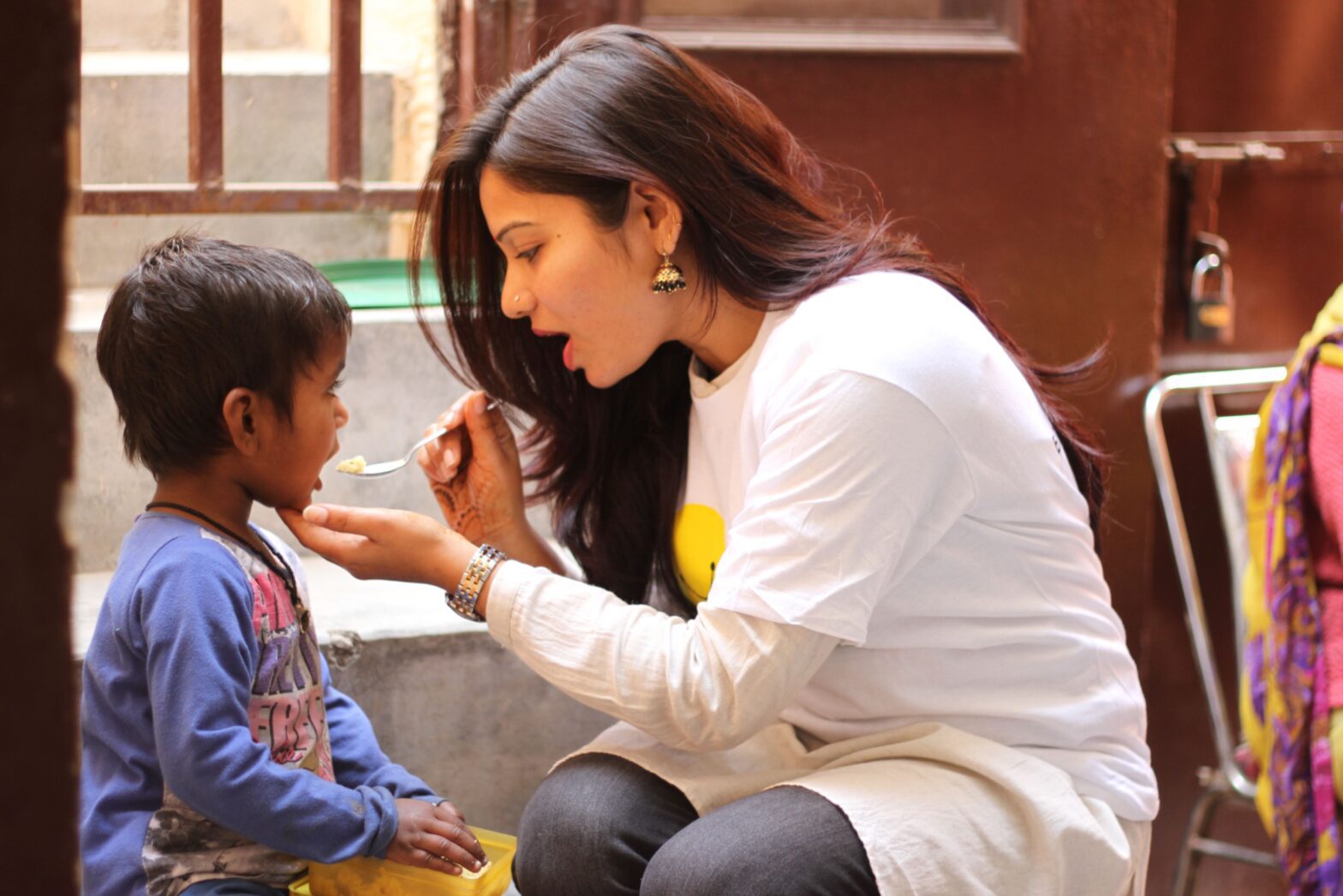
Against this reality, Smile Foundation started to work in the field of nutrition. We realized it was necessary to move from food to the ‘right’ food. We then launched ‘Nutrition for Education’ initiative, under which we not only provide nutrition to children in accordance with their daily requirements; but also, sensitize parents and families on how their child needs the right nutrients, how these nutrients enhances their child’s health and education, and all the small changes in their daily food intake that can create a huge impact.
Recently, India ranked 100th out of 119 countries on the Global Hunger Index. This against the 97th position that India held last year. Slipping down 3 places from last year, and faring worse to most other developing countries in the world sets a backdrop of the massive crisis that we are currently in the middle of as a nation.
This list takes into consideration the undernourishment, child mortality, child wasting and child stunting. It also appears that only about 9.6% of children between 6 to 23 months of age receive adequate diet in India. Given that our child birth rate per day is about 360,000, 9.6% then is a relatively low rate for children eating healthy food.
Malnourishment and undernourishment are on a rise amongst Indian children. It should suffice to say that it’s time we come together and protect our children. It’s time we provide them with the right food which they all deserve. It’s time we shift complete focus to nutrition based programs and ensure our children grow up to be healthy and happy.
This World Food Day, will you pledge to support an India that is free of malnutrition?
(Know more about nutrition program: http://www.smilefoundationindia.org/nutrition.asp)
Life feels like a blank sometimes. A big blank. People told me I could fill it with whatever I want. But the thing is, you know what I really wanted? To fill it with nothing. Absolutely nothing. I was scared to say it out loud. Depression. “Stop acting like a baby, and man up”- that’s the first thing my dad said to me when I told him what I was going through. That’s when everything went downhill.
My dad had always been that role model who represented everything ‘masculine’, and strong. In retrospect, I ask myself what it even means? I was told that I can’t be depressed because I am a man. But what they don’t realize is depression doesn’t care about your gender. It catches you by surprise, and seeps through your entire existence. I had the perfect everything. And out of nowhere, it’s like my stars decided to turn against me, and EVERYONE around me started doubting and questioning my capabilities. I have always been the proud one, but then, I mean, I don’t know to explain this, but your self worth takes a dip, right? When everyone is saying it should?
For one entire year, I didn’t leave my room. I haven’t always lived in Delhi, I come from a small city, and I don’t know how much you know about small cities. But there, everyone knows everyone. For months, my friends and relatives would come to my house, and I’d tell my sister to send them away. I had reached a point where I couldn’t bear to look at anyone, or have any human interaction. I had isolated myself, and it was satisfying. What I hadn’t realized back then was how mortifying it is- that isolation, and in all probability, I only made matters worse for myself.
My life kept circling between depression, and round trips to Mumbai, Bangalore, Pune- and repeat. Rejections kept pouring down on me, and all I could really ask- what was the point? But I knew my younger sister’s responsibility was still on me, and I couldn’t just give up. After months of futility, Delhi became my last stunt. I swear I haven’t told anyone this, but I was shivering. When I got to Delhi, I was shivering because I knew there was no way I could get a job. But I had to try. I owed that to my sister.
I guess you would have already figured by now that I got it. I got that job. And honestly, I haven’t looked back at those people in my life who told me I was worth nothing. My work has helped me give meaning to my life. I have always been of the belief that hope is the strongest currency we have. I want people to know – don’t ever lose hope. It’s the key to your soul.
The Annual Status of Education Report (2016) points that learning levels remain depressingly low across the country, while 97% of children (aged 6-14 years) across rural India are enrolled in a school, only 13% of the children in grade 2 can read from their language textbooks. Current scenario becomes worrying given the status of quality of education.
The reasons for this state of affairs vary from infrastructure to availability of qualified teachers, from pedagogical to gender biased approach. Though there are many aspects which need to be addressed but amongst them the student-teacher ratio remains an important factor which affects quality of education. In many areas a single teacher is found teaching multiple classes which is not an exceptional arrangement but has become a routine affair. Upon that one can easily see the wide range of variance, at one end we have urban students competing at the global level and on the other hand there are rural students who lack basic infrastructural facilities such as school building and sanitation facilities.
In the context of student-teacher ratio and other factors affecting quality learning of students, Information and Communication Technologies (ICTs) finds a unique place to bridge the challenge. In the contemporary global telecom workspace, India is one of the leading players. In terms of its quality of internet and its affordability, India has the best tariff plans globally, thanks to the domestic competition.
In my childhood, cartoon characters like ‘Tom and Jerry’, ‘Mickey Mouse’ were a choice for urban well-to-do children. In the contemporary time, Indian characters like ‘Choota Bheem*’ and ‘Doreman**’ have not only reached every household but have made themselves an integral part in children’s life. I have seen many instances in the recent times where children have started learning ‘Choota Bheem and Doreman’ before learning ‘Papa and Mama’.
It is high time that these things are noticed and leveraged to improve the quality of primary education which is the building block of an empowered nation in terms of human resources.
While appropriateness of content has been a subject of discussion for a long time, the delivery of content to the children has been an obvious challenge. This is the scenario where e-Leaning can play a catalytic role in bridging the gap and addressing the challenge. It must be understood that e-Learning needs to evolve continuously with recent innovation and should not be restricted to digitization of course material or videography of classroom sessions.
There is enormous potential in designing the content where children’s perspective is at the core; probably the way ‘Choota Beem’ has done in large scale. The fun aspects drive children rather than an animated teacher teaching some student who asks the same question every time the program is viewed unlike in the computer game where there is a degree of unpredictability every time.
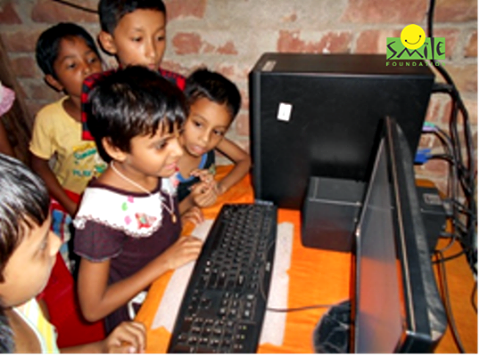
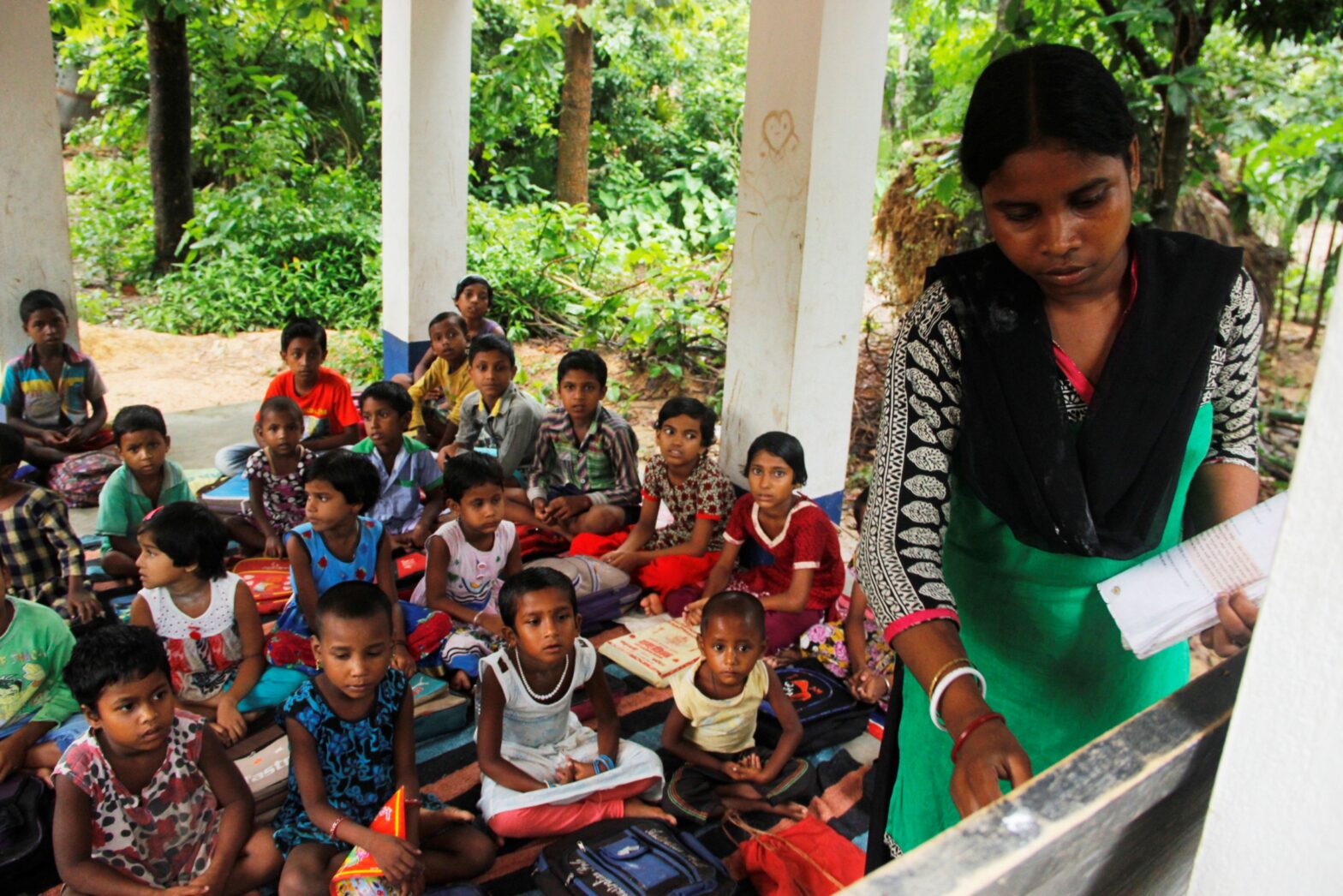
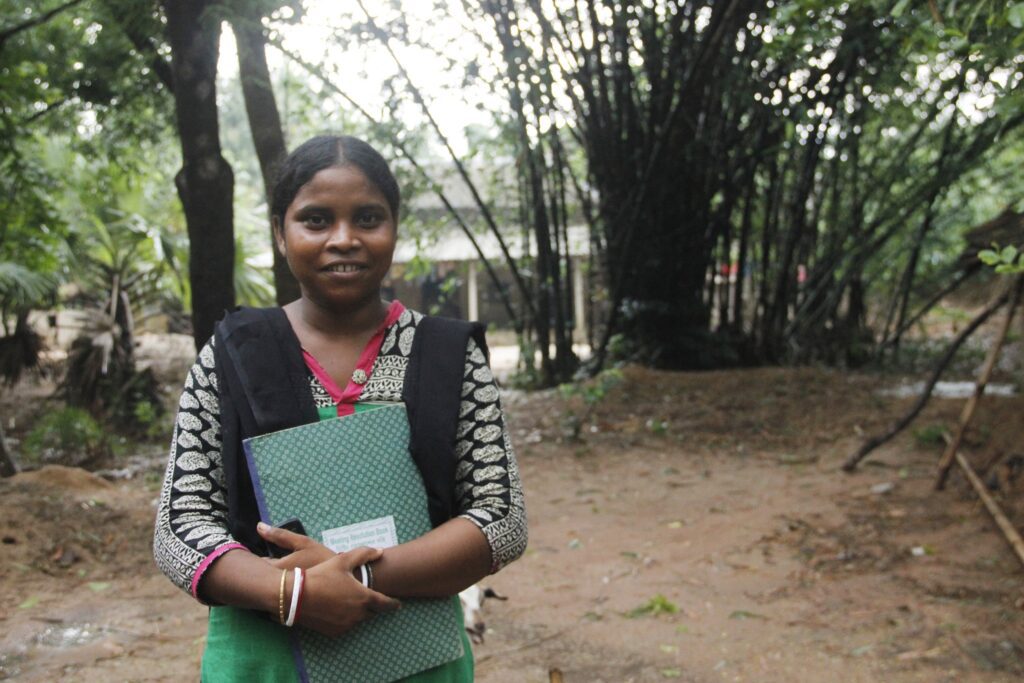
Children use a computer for the first time at our Mission Education centre in West Bengal
Success of a pilot project is probably the easiest thing to do and scaling & mainstreaming is the most challenging phase in an innovative program. We have witnessed many successful case studies demonstrating the success in a limited scale such as in a couple of schools or for some hundred students. e-Learning is an area where mainstreaming is feasible because the base for deployment is ready – the only thing required is innovative way of content development and deployment. All stakeholders must be taken into confidence while doing so as to realize the maximum efficacy of the program.
There is power dynamics in each and every ecosystem. If we try to create a system that will replace the existing one, probably it will not work in scale. Any initiative of this scale must undergo a transformation process and things must be adapted to the requirement in the due course of time to make it more contextual.
Gaming has been a big global business and there are millions of game players. The best part of it is that it attracts (most of the time people get addicted) the player again and again. Probably, we have to learn the same in designing an e-Learning module. The obvious underlying factor is that it needs huge investment and a multi-stakeholder partnership to make it a success. The e-learning material must be designed keeping the smart phone in mind so that it will be able to reach the un-reached population.
Human resource is the most precious resource of a country and their fundamental knowledge building is quite crucial for building a nation. Once fundamental is built properly, any amount of innovation can flourish and be harnessed to its optimum.
*Choota Bheem is a cartoon character who is brave, strong and intelligent. **Doraemon – A robotic cat which travels back in time from the 22nd century to aid a pre-teen boy named Nobita Nobi
There are few people in life who leave an everlasting impression on us. Their lives, struggles, and achievements drive us to strive for better, and inspire us long after they are gone.
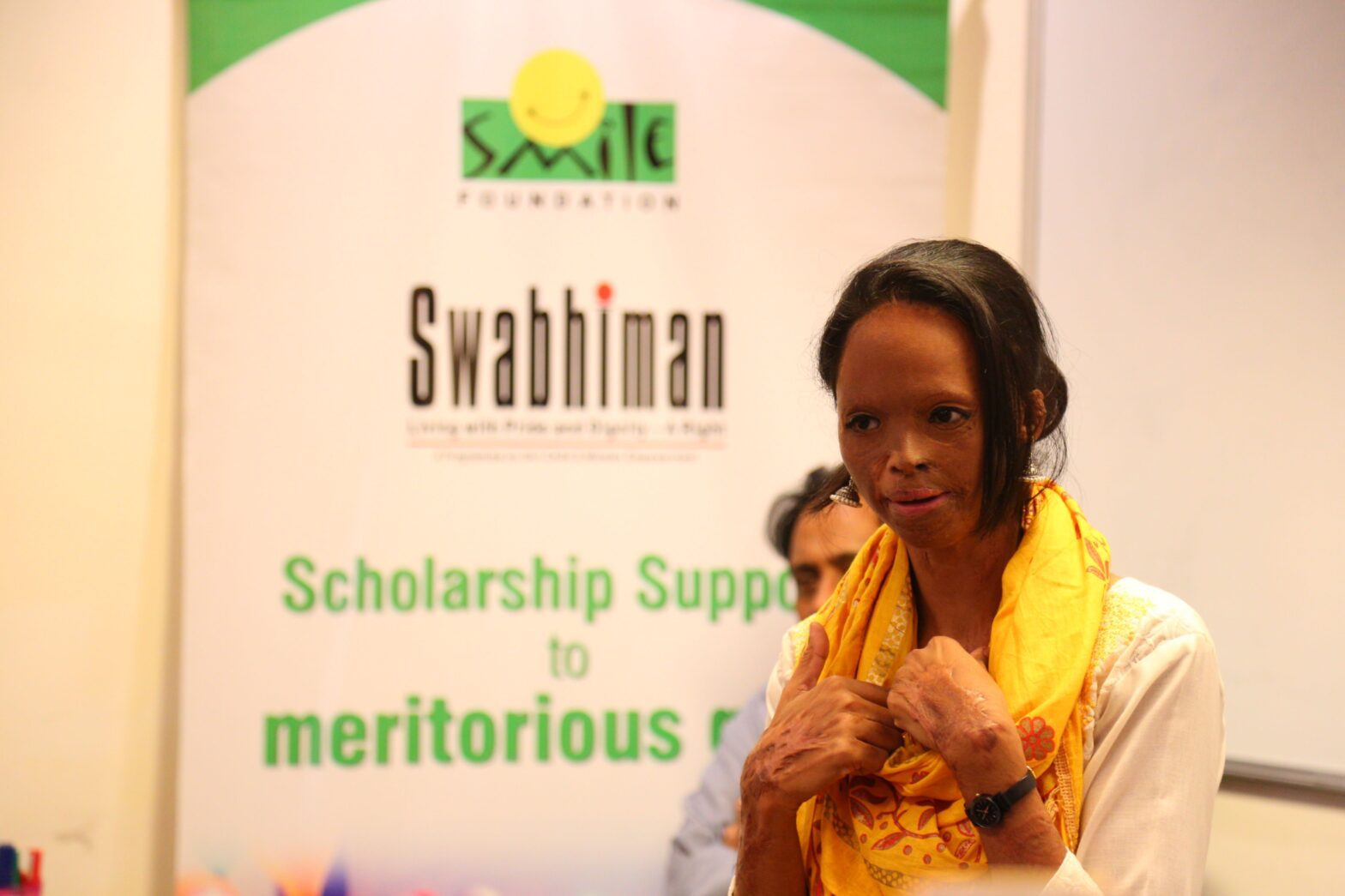
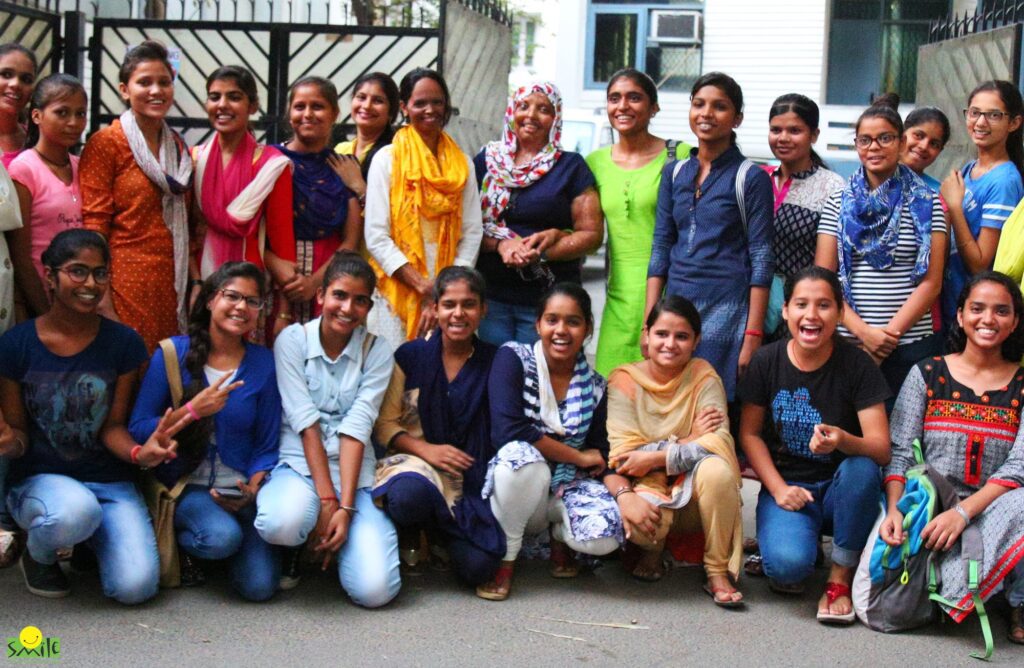
Some exceptionally talented girls identified from slums across Delhi recently had this experience as they got to interact with the “International Woman of Courage” Laxmi Agarwal. These girls have been awarded the merit based Swabhiman scholarship by Smile Foundation to complete their schooling and higher education.
In the course of the long and candid conversation, Laxmi and her colleague and co-founder of Chhanv Foundation, Ms Rani, invoked the deepest emotions in the girls. While some had their faces wet with tears, others were astounded by the struggle and strength of these incredible women. But the one common thing that remained was every one of them was inspired. At no moment did she ever let herself be branded as a victim – by herself or by others.
Below are a few snippets from the stirring session:
Q: How did you feel when your parents told you not to work and stay at home?
I knew I couldn’t let that happen. They kept saying how I too young to work or go out. But something in me kept pushing. That was the only way for me to do something, only way for me to pursue my dreams of becoming a singer. I told them I couldn’t keep holding their hand, and they couldn’t keep holding on to me. At some point, they would have to let go, and I will have to look out for myself. It was my way of believing in me and gathering my courage.
Q: After the attack, were you always determined to change something and make a difference?
For months after the attack, I had lost hope and I had given up – on myself, on my identity. I wanted to kill myself. I didn’t think it mattered anymore. What the attacker had said to me earlier, before the attack – “You want to do something in your life; you want to make your parents proud, right?” kept ringing in my ear. At that time, how easily I had replied with a ‘Yes’ surprised even me. It felt like that was another Lakshmi talking.
Q: What motivated you to do more and to change your situation and of others around you?
This one time, as I was looking into the mirror, I started talking to myself. While on one hand, I thought life had no meaning anymore, on the other, images of my parents surfaced in front of my eyes. My mother who hadn’t taken a shower in over two months because she was too busy looking after me, or my father who didn’t lie down for a nap so that he could sit next to me in the hospital – I couldn’t do this to them. I would have ended my life in an instant, but they would have died every moment after that.
Q: If you could change one thing, what would it be?
Talk to my parents. I wish I would have talked to my parents more often. I can’t stress enough on how important that is. I made the mistake of not talking to them before my attack, but I didn’t make that mistake again. When I wanted to finish my life, I told my parents what I was feeling. While they couldn’t answer any questions on why this had happened to me, my father stood next to me, put his arm around me, and said, “There is nothing in this world that is impossible. Everything is possible. There will be a day when THIS is the face that you will be proud of. And you will go places in life.” I think that has been my biggest motivation till date.
Q: What would you say to those who stress on how important a girl’s face is?
I don’t think I would be standing here if that were true. I don’t think I would have walked down the ramp or hosted my own television show if that were true. I don’t think you would be listening to me if that were true. But at the same time, I know that’s the common perception of so many people. Ever since I was growing up, I too was told how important my face was – more important than my education, my journey in life, and really, more important than anything else. But I know that isn’t true anymore. The attacker threw acid on my face, not on my dreams and my courage.
Laxmi Agarwal, and Ms Rani with our Swabhiman Scholars
Q: How has been your journey since your victory with your PIL to regulate sale of acid in the country?
It was still not easy. The society had rejected me, and I wasn’t surprised. They judge even if your lipstick is too dark a shade, and here I was with a burnt face. I couldn’t find any job because of this. And in 2012, my father passed away, and that made everything a lot worse for me. Then the ‘Stop Acid Attacks’ campaign was launched next year. That was when I realized I was not alone, and that there were so many women who were facing similar struggles as me. Some of them were struggling with worse. That ignited a fire in me – it made me angry. We started a movement. Prior to 2013, acid attack was just one-time breaking news. But today, there are laws, people are aware, and they are talking about it.
Q: What do you envision from here on now?
Right now, we are all focusing on the first ever café run by acid attack survivors – Sheroes Hangout in Agra, Lucknow, and Udaipur. It’s our safe place where we all support each other, and help each other overcome our struggles. I also want to use social media to reach out to the masses even further. I believe it’s one of the most important tools we have today to deliver a message. I want to continue working for what I believe in, because that is what makes a difference in the end – not our faces.
Q: What message would you give to our young scholars today?
Move from ‘Me’ to ‘We’. I ask all of you to think about not just yourself, but others around you. However I will also say, that before I try to change someone else, first it my duty to change myself. Only then can I think of changing anyone else. That is something we must never forget. Today, I am here to do just that, change myself.
Q: What kind of a world do you want your daughter and India’s daughters to grow up in?
A world that is free of acid attacks. A world where no girl wishes she were a boy. A world that is, over anything else, equal.
(Laxmi ended the conversation by inviting the girls to her café. She went on to talk about her love for her daughter Pihu, shared her experience of visiting the USA and receiving the International Woman of Courage Award by Michelle Obama, and also sang a beautiful song in her ever so melodious voice.)
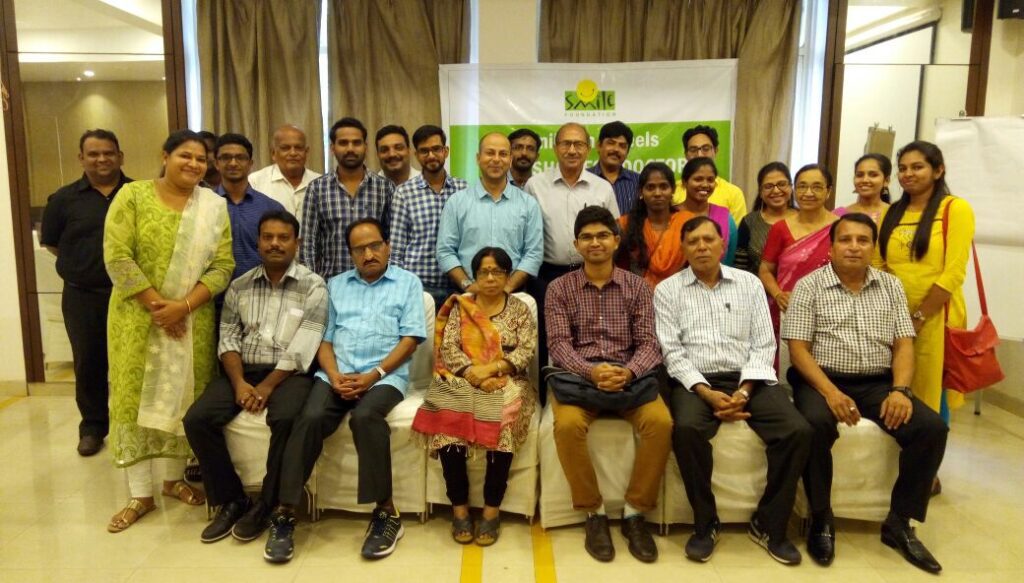
Dr. Kalpesh is a retired doctor but he says he has never worked harder. Dr. Riti is a young aspirant and dreams of making a difference to as many lives as she can. Working in remote and inaccessible villages and neglected slums across the country, 19 doctors came together to attend a 2-day training workshop. Each one of them had a story to share.
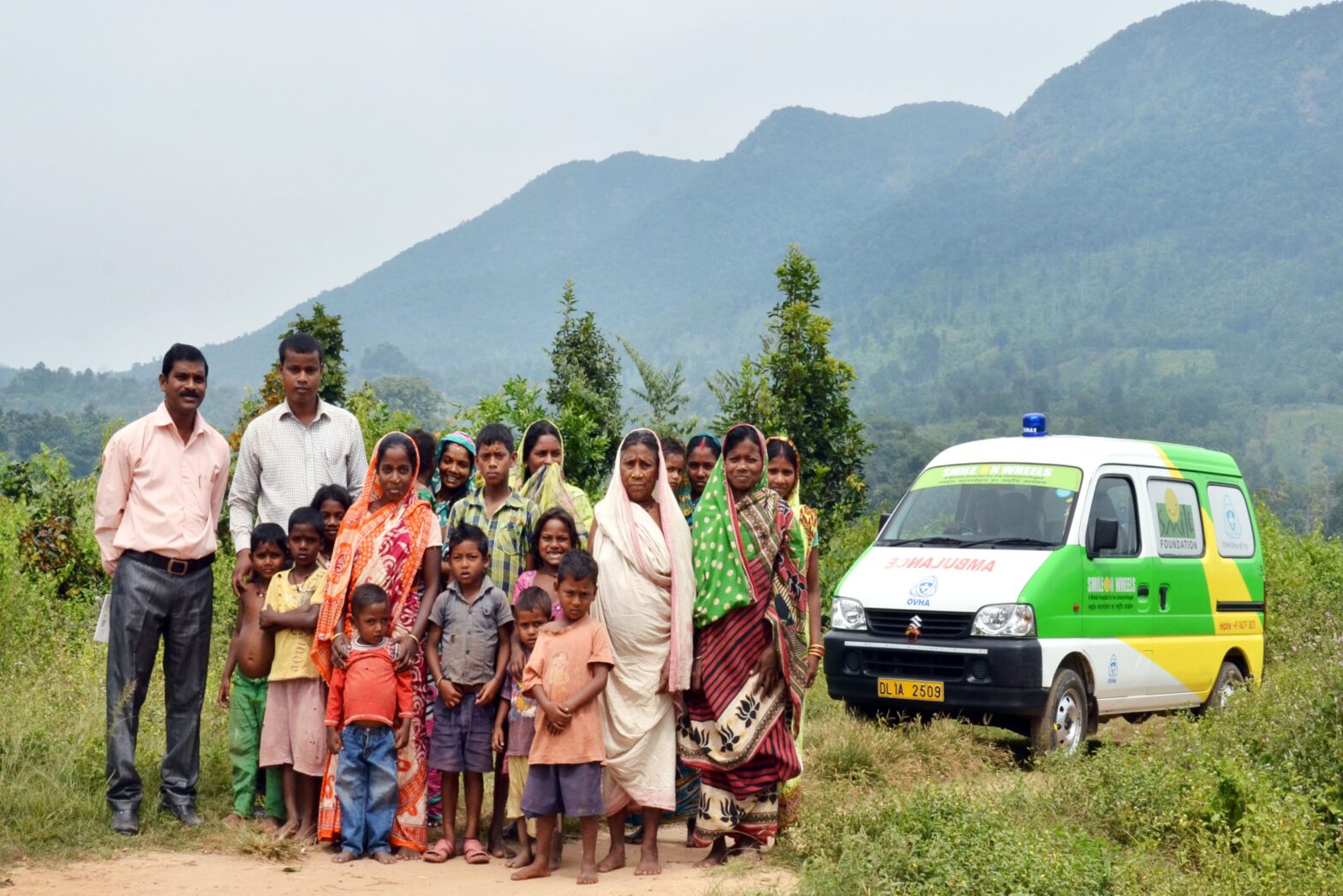
The every-day challenges for the doctors range from convincing the community members to believe in medical science, and spreading awareness about the importance of health and hygiene, to trekking long distances in hilly terrains where vehicles cannot reach even today. At times, they trek to the same community several times in a week to get to know the community better, and to nurture a trust with them.
“Sometimes we have to scold them. Sometimes we have to be extremely patient and win their trust before they finally start taking their medicines. Every person has the right to healthcare, irrespective of their birth, circumstances or economic conditions. A person’s survival should not depend on mere chance; this is the purpose of our profession. Diseases do not distinguish between the haves and the have-nots, neither should we”, shared a doctor.
These doctors, along with their dedicated team of medical professionals, including nurses, ANM, lab technicians and pharmacists are the backbone of our Smile on Wheels mobile hospital programme.
Over the course of 2 days, we learnt from each other, and we all left with a stronger sense of purpose and commitment to the cause-
#HealthCannotWait.
(Through Smile on Wheels, 354,088 people have received healthcare services through 23 operational projects in 465 remote villages and slums so far.
To learn more about our programme, please visit http://www.smilefoundationindia.org/smile_on_wheels.html)
In the span of our entire lifetime, some of the most amazing memories and times that we spend is what we spent back in school. Right from the classroom to the playground, the stories are never ending. School is a place which teaches us to dream big, take a step out into the world and face the challenges the world throws at us.
Looking back at my school days, I recall all those moments which are filled with happiness; and those little pleasures of childhood days. From appreciations to punishments, extra classes to bunking classes, stealing lunch boxes to sharing them, playing cricket with friends to copying their homework, enjoying activities & hobbies to stressing over writing exams. This is the childhood that every child dreams of. For the privileged lot, school is where our noble teachers not only teach literature, math, science, et al but also inculcate necessary perspectives of human life-to mould us into responsible human beings.
Contrary to this. more than a million children suffer everyday; and only dream of going to school. Engaged in child labour- selling balloons at traffic signals, knocking on car windows to beg and facing exploitation is their reality. Beds, warm food and a home is just something for them to imagine. The streets are their home and the ways of the street, their culture- sans teachers and classmates, big playgrounds or homework.
As responsible human beings, there is a responsibility we have- a very important one at that. Our generation is possible the only one that can help fix the social gap between the lesser privileged and the privileged. While a timely meal and some clothes are surely going to give them momentary happiness, it is not enough. It does not help bridge inequalities in the long run or even empower them. Thorough efforts should be made to sensitize the people who have better opportunities. Taking baby steps, children should be the first ones to be sensitized. The younger they learn to be responsible and the value of helping and giving back, the quicker the nation walks towards the path of total empowerment.
Let’s all teach and nurture the generation of youngsters and turn them into significant change makers. So that no child in future has to dream about holding a pen, or going crazy on a sheet of drawing paper with bright colors. Let’s work towards empowering each and every child, and enable each of them to hold on to their freedom and run amok under the azure sky towards a bigger, better and brighter future.
Located near one of the biggest garbage dumps in Delhi, Azadpur cannot boast of a great locality and socio-economic conditions. Living in shanties, in slums where houses are crumbling into one another, people can barely afford to eat two full meals a day. For daily wagers- working as labourers, painters, rag pickers and garbage dumps are the prime occupation of people living there. In such conditions, there are little chances that children get to go to school with the aim to avail white collar jobs.
The lack of awareness in all aspects have resulted in making the area more backward and also resulted in the births of large families sans any family planning which is directly linked to the problem of rising unemployment and poverty. Girls are not allowed to venture outside homes and married off at an early age, often carrying the burden of their unrealised dreams forever. There is a serious lack of access to and interest in higher education of the children. To address this acute shortage of educational and employment opportunities, to motivate and sensitise the youth about their potential and the vast opportunities that are left to be utilized, Smile Foundation’s Janhit Society for Social Welfare STeP centre was initiated in the community.
Students who have completed their 10th or 12th standard education or students who have dropped-out after getting basic formal education are inducted and given training in employability skills along with rigorous one-on-one counselling sessions to boost their self-confidence. “From the day I have joined, I knew that from now on, everything is going to fall into place. I study hard and the teachers support us immensely. I have also asked my friends to come and join as this programme has been hugely beneficial for me”, says a student of the centre.
STeP students visit LinkedIn’s corporate office in Bandra, Mumbai.
The students are trained in basic management and retail skills; classes are conducted to enhance their spoken English skills, personality development trainings are conducted to bring about a change in the attitude of the students and imparted communication and other soft skills. The main target is to train more girls and empower them to a level wherein they can be financially independent and support their families. This type of empowerment has multiple benefits reducing the cases of child marriage and maternal and child mortality rising out of early pregnancies.
Industrial visits, interactions with experts from different professional backgrounds, placement and post placement assistance are provided to the students which help them choose their own career and work towards a better future. The scenario is changing gradually and it is changing for the good. Parents are now more encouraged to send their daughters to the centre and are becoming more aware of the importance of skill based training. And the youth are leading the change and making the best of their efforts to enroll their peers and others from the community to join the initiative.
Ma’am, I want to become a teacher just like you when I grow up.”
I felt so happy when a little girl from my class walked up to me and said this. I knew she was too young to mean it, but nonetheless it was the biggest compliment I had ever received. When I was growing up, I had never thought I could become a teacher, let alone becoming someone’s role model.
Till the age of six I had not even been to school. There was no school in our village. The few children who did go to school had to travel kilometers on foot, making their way through dense forests to reach the nearest school. The number of girls enrolled in the school was even more negligible. Most parents never considered school necessary for their daughters, and others were discouraged by the long and unsafe journey.
But my parents were determined that I should not grow up illiterate like them – they wanted their children to be able to read and write. They were agricultural labourers and worked hard to earn daily wages that were barely enough to provide two times food to the family.
Despite this, my mother enrolled me in the distant school. She would use her lunch break to drop me off to school. I do not remember how many days she did not eat her lunch just to make sure that I would not be late for school. In the evening baba would pick me up after a tiring day at work. While I waited for baba to come, I would revise my lessons and finish my homework. This is how I completed my schooling.
When I got admission to college, my parents spent a whole year’s savings to buy me a few clothes and belongings that I would need to live in the city. After getting my degree, I started teaching in a primary school in the Burdwan city. One day maa called to tell me that a free school had opened in the village, but there was a shortage of teachers as there were hardly any educated people. Most of my peers who had got a chance to go to school were settled in cities like I was. I kept thinking about it for days and finally decided to leave my job and returned back to my village.
It has been six years since then, and I have not regretted my decision even once. In each one of these children, I see myself. They do not have to travel far to go to school anymore, and they can begin their education at the right age. But many challenges remain the same. The outlook of parents towards education, particularly in case of daughters, has not changed. However, we try our best to ensure that there are no drop-outs. We conduct door-to-door visits to all the families in the village to identify non-school going children, and counsel their parents on the necessity of sending their kids to school. Today more than 80% of the children of school-going age are enrolled at the centre. This is one of our biggest achievements.
When these children grow up and become something in life, I will feel my life has served some purpose. I doubt if any of them would remember me. But I am happy to be able to play a small role in building a better life, a brighter future for my children.”
(As shared by Moni Marandi, teacher at Smile Foundation’s Mission Education centre-SERVE in Koucha village, Burdwan, West Bengal. Moni’s classroom is one of the most fun classrooms to be in. Children learn through role play, art and through teaching each other. She has developed her own teaching model and while we are so proud of what she has been able to accomplish, she continues to dream of even bigger things.
Thousands of teachers like Moni work on the ground every day because they all share a common vision- to see every child in school. If you share their goal, then join hands with us for our initiative #MyMissionEducation. Visit smilefoundationindia.org/me for more details.)
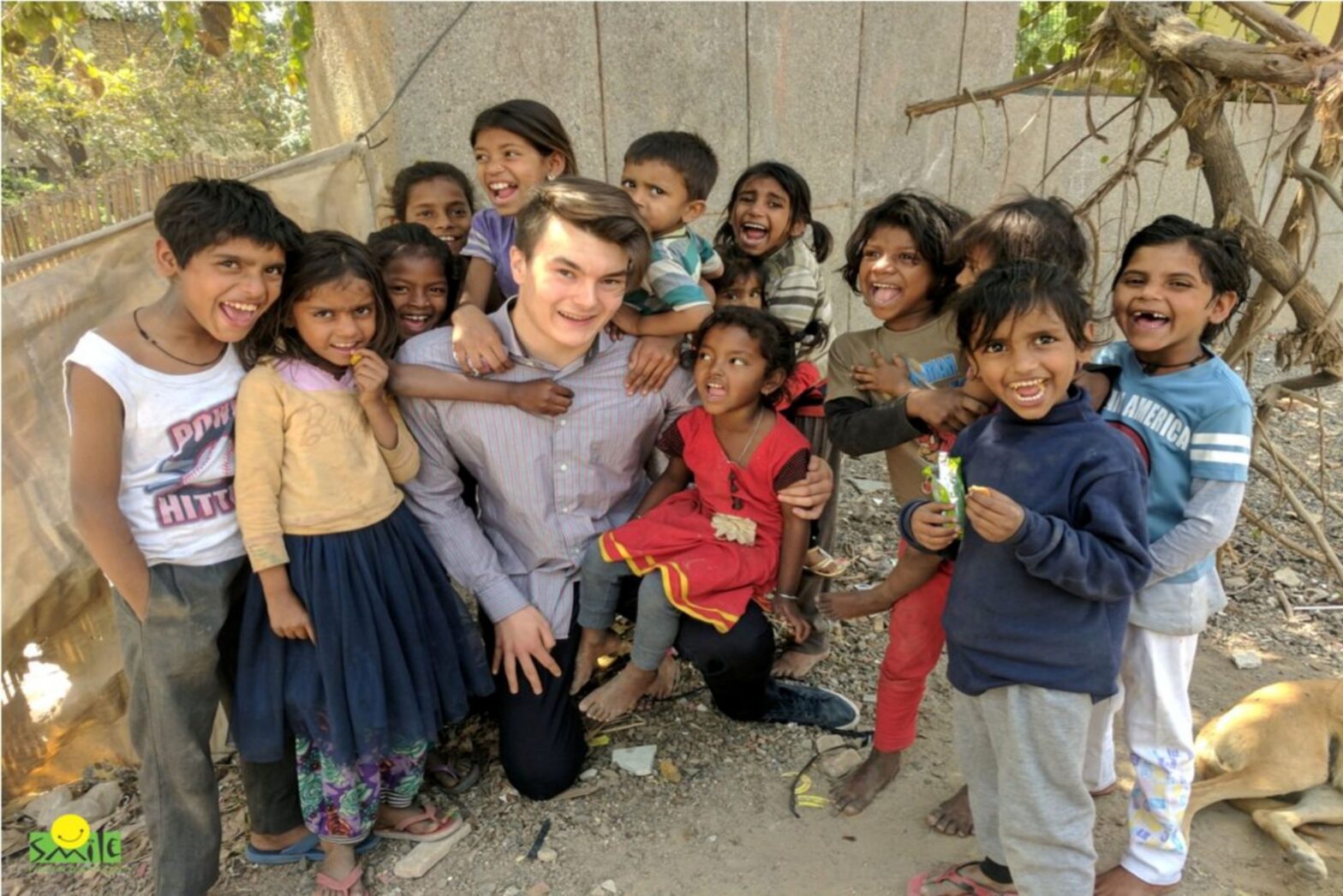
My name is David Martori, I am 16 years old, I am from Spain but I live in Japan with my parents. My life has taken me to many different countries and I have had the privilege of living in several countries. I was born in Spain and lived there for until I was 6, which is when I moved to Japan and stayed there for 5 years. Then, I went back to Spain for 2 years, but then moved to India and lived there for 2 years. Now I have been living in Japan again for almost 2 years and I plan on finishing my studies there, until I go to college abroad.
Having lived in so many countries I have had the pleasure of being exposed to many cultures, and living in India truly left a mark, since as amazing as the culture and the people are, there are still many problems left to solve. But it was great to see how hard everyone tries, and the extent to which people are invested in fixing the problems, piece by piece. Because of this, and considering how lucky I have been in life, when I started to join groups to help the community in Japan, I decided I should do it for India as well, since I had lived there before, and I wanted to do more than what I was doing in Japan. This is the second year I volunteer for an NGO in New Delhi, and I must say the exposure and the experience is like no other.
The community that I have worked with in Japan was always extremely grateful of the help we provided them with, and they were aware of the problems they had, but they did not want to fix them in the long run. However, here in India, the entire community seems invested into the idea of improving in the long run. Here, members of the community itself volunteer to help the NGO, and they are an active part of improving their lifestyle. They are also exceptionally aware of the progress they have made thanks to the teachings, lessons, and meetings organized by Smile Foundation and their project Swabhiman. They recognize how their lives have been improved, how they used to lack knowledge and now they have it, and have the ability to share it with others as well.
The children were remarkably excited at almost all times, and their general excitement and joy was contagious. They seemed like they had no worry in the world, and there was only that moment they were in. It was also great to realize that everything that is improving now will eventually have an impact on their lives when they are older, and if progress continues at this rate they will see the fruit of the effort of the current volunteers, and they will get to enjoy its results. They kids were also the best at surpassing the language barrier, since my knowledge of Hindi is practically non-existent and not everybody knows enough English to communicate their thoughts. Nonetheless the children were persistent and tried different ways to make me understand until I got it. Their attitude in general was wonderful.
In conclusion, this will not be my last visit, and I hope to come back soon.
The 7th edition of “Ramp for champs” was bigger and brighter! The show was held at the beautiful Hotel Renaissance in Powai, Mumbai and raised support for the education of 1000 girl children from across India, under the Mission Education programme. With a fantastic team working hard, the upcoming editions are only going to be more exciting, and more unmissable!
“Ramp for champs” is a charity fashion show, an initiative by Smile Foundation that allows fashion, art, and entertainment to combine, with one aim—to raise money for the education of the underprivileged kids. The show brings together people from different walks of the lives and the children studying at Mission Education centers of Smile Foundation. It portrays the need of the society to co-exist and help each other.
The motivation for Ramp for Champs comes from the need to sensitize and engage the civil society proactively to bring meaningful change in the lives of these underprivileged children, by supporting their education.
Celebrities are involved in the event as they have the power to influence the masses, whereas corporate are involved for their strength of resources. This initiative allows a fusion of these two forces to create a huge and much required impact towards the cause of education of more and more underprivileged children.
Children are the main highlight of the show wherein they share their aspirations and walk the ramp in confidence matching steps with the famous personalities. The show is for those kids, and those little dreams that are waiting to be realized.
With each event, the bling and the beautiful from Bollywood and the trendy fashion industry walk the Ramp for Champs to engage in a meaningful cause. With an eclectic mix of performances, talent and creativity by the designers and a bunch of beautiful, vivacious and influential personalities, the show becomes more than a chimera of beauty, glamour and cause! Ramp for Champs hopes to present more editions of thought-provoking events that allow you to be a part of our journey, and see what a truly inspiring world we live in.