Categories
Insights Smile

Menstrual Hygiene Day 2026: The walk towards reducing risks

Summary

  • Hygiene Day, observed on 28 May, draws global attention to menstrual health management — a subject that remains underfunded, under-discussed and deeply consequential for women’s health, education and economic participation in India and worldwide
  • Despite urban expansion and growing digital connectivity, menstrual hygiene access in India remains deeply unequal — a 2022 NFHS-5 survey found that 77.3 % of women aged 15–24 use hygienic methods of menstrual protection, with significant rural-urban and income-based disparities
  • An estimated 23 million girls drop out of school in India annually, with inadequate sanitation and menstrual hygiene facilities among the contributing factors making menstrual health an education issue as much as a health one
  • Cultural taboos and social stigma remain among the most persistent barriers to menstrual hygiene management, preventing open conversation, limiting access to care and producing health consequences that accumulate across a lifetime
  • India’s National Menstrual Hygiene Policy and related government schemes represent genuine progress but implementation gaps, particularly in rural districts and informal urban settlements, limit their real-world reach
  • Grassroots programmes like Smile Foundation’s Swabhiman initiative demonstrate that sustained, community-rooted engagement combining awareness, peer education and hands-on health support produces the kind of behavioural change that policy alone cannot
  • Menstrual hygiene in emergency and disaster contexts remains critically under-resourced as seen during Cyclone Fani in Odisha, where women lost access to basic hygiene materials alongside all other relief needs
  • Addressing menstrual hygiene comprehensively requires integrating it into education, healthcare, sanitation, disaster response and workplace policy — not treating it as a standalone health communication issue
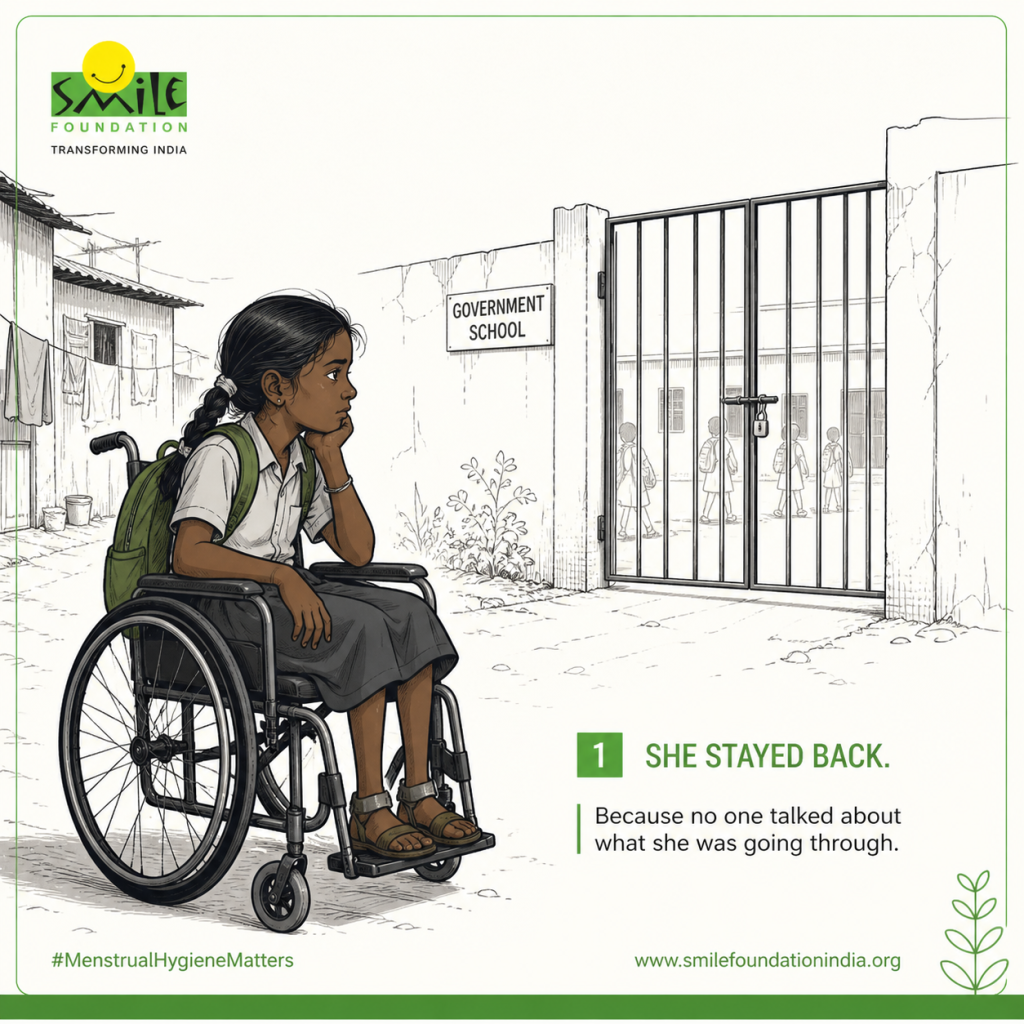
Menstrual Hygiene Matters 1

The Problem That Persists

Every 28 May, Hygiene Day returns to the global calendar, and with it, a set of questions that should, by now, have simpler answers. Why do hundreds of millions of women and girls worldwide still lack access to safe, dignified menstrual hygiene management? Why does a biological reality experienced by half the world’s population remain, in so many communities, a source of shame, silence and health risk? Why, despite years of awareness campaigns, policy commitments and development investment, does the gap between intent and reality remain so wide?

In India, these questions are not rhetorical. They describe the daily experience of a large and largely invisible population — women in urban slums who manage their periods with cloth and improvised materials, girls in government schools who stay home because the toilet block has no door, women in disaster-affected communities who lose access to basic hygiene products alongside everything else they own.

Hygiene Day matters because it creates a moment of public attention around a subject that is routinely marginalised — not because the stakes are low, but because the stigma is high. Menstrual health is directly connected to women’s physical health, education, economic participation and dignity. It is, in the most literal sense, a development issue. And in India in 2026, it remains one that demands sustained, serious and well-resourced attention.

The Current Landscape: What the Data Tells Us

India has made measurable progress on menstrual hygiene awareness over the past decade. The National Family Health Survey (NFHS-5) conducted in 2019–21 found that 77.3 % of women aged 15–24 use hygienic methods of menstrual protection, compared to significantly lower figures in earlier surveys. The removal of GST on sanitary napkins in 2018, state-level free sanitary pad schemes and the expansion of health education in schools have all contributed to improvement.

But the headline figure obscures deep and consequential disparities. In rural areas, access to and use of hygienic menstrual products is considerably lower than in urban centres. Among women in the lowest wealth quintile, the gap is even wider. A 2016 study published in the BMJ estimated that only 12-15% of women in India used commercial sanitary protection, with an estimated 85%–88% relying on home-made alternatives ranging from cloth to improvised pads stuffed with ash, husk or sand. While more recent data shows improvement, the underlying pattern in which income and geography determine access has not been resolved.

The school attendance dimension makes the scale of the problem concrete. An estimated 23 million girls drop out of school in India annually, with menstrual hygiene among the contributing factors. Research on South Asian schools has found that more than one in three girls miss school around the onset of menstruation — driven by the absence of private, clean toilet facilities, lack of access to sanitary products and the social discomfort of managing menstruation in a public environment that has not been designed to accommodate it. Once a girl begins missing school regularly, the academic gap widens quickly and the path to dropout shortens.

Globally, the World Bank Group estimates that 500 million women and girls lack adequate access to menstrual hygiene facilities. UNICEF data suggests that in low- and middle-income countries, less than half of schools have adequate single-sex sanitation. These figures place India’s challenges in a broader context but they do not diminish the urgency of addressing them domestically.
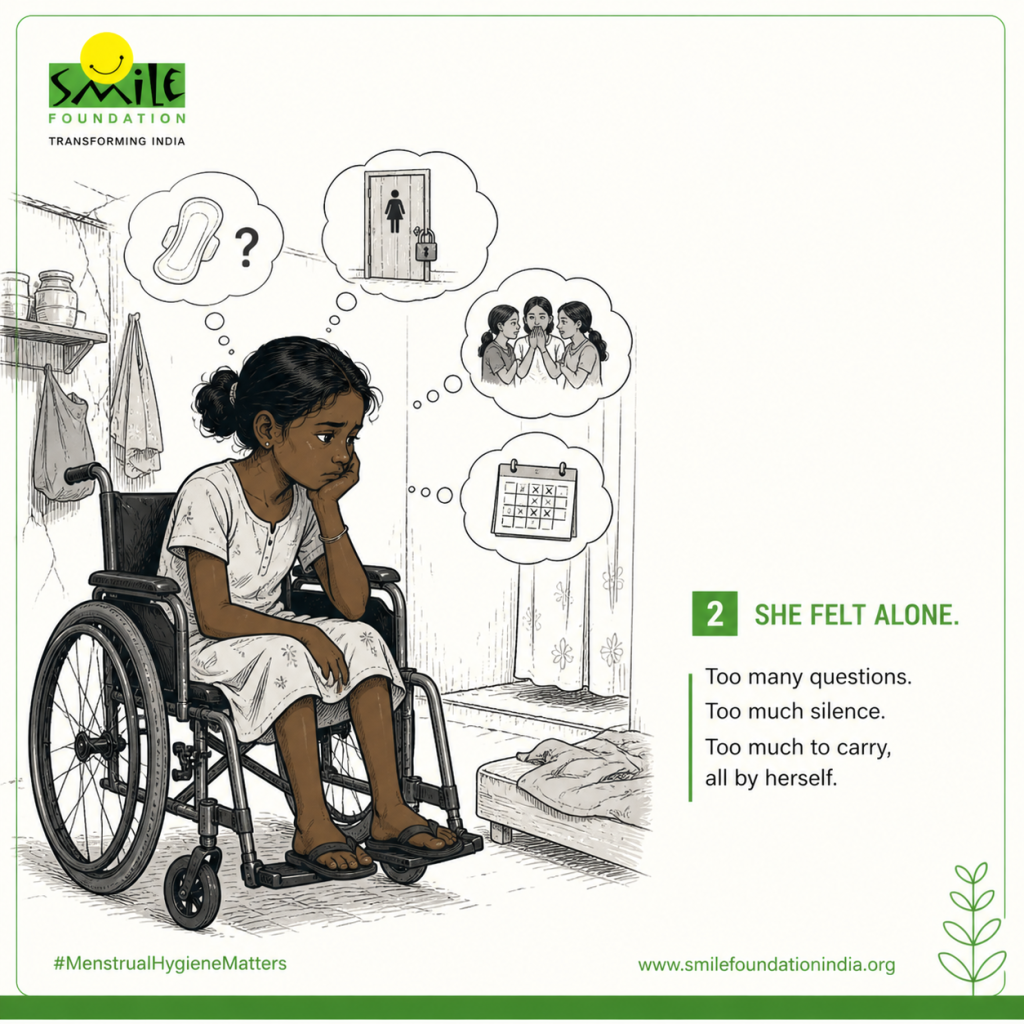
Menstrual hygiene 2

The Layered Challenge: More Than a Product Problem

One of the most persistent misframings of menstrual hygiene as a development issue is the reduction of it to a product access problem. If we could just get sanitary pads to every woman and girl, the thinking goes, the problem would be solved. The reality is considerably more complex.

Cultural stigma and behavioural barriers are among the most significant obstacles. In communities across India cutting across regional, religious and socioeconomic lines, menstruation is surrounded by restrictions and taboos that communicate to girls and women that their bodies are sources of impurity during their periods. These norms are not merely symbolic. They prevent open conversation, limit knowledge transmission, discourage health-seeking behaviour and produce a sense of shame that can persist throughout a woman’s reproductive life.

A girl who has absorbed the message that menstruation is something to be hidden and managed in silence will not ask for help when she experiences symptoms that require medical attention. She will not speak up in a classroom about needing to manage her period. She will not, in many cases, seek out or use the health services that exist for her because accessing them requires acknowledging, in public, something that she has been taught is private to the point of secrecy.

Infrastructure gaps compound these behavioural barriers. Clean, private, functional toilet facilities remain inadequate in many government schools, particularly in rural areas. Workplaces in the informal sector where the majority of India’s working women are employed typically have no provision for menstrual hygiene management. Public spaces rarely offer facilities adequate for women managing their periods with dignity.

Economic barriers persist alongside the removal of GST. Sanitary napkins, while cheaper than they once were, remain financially out of reach for many women in low-income communities. And the broader economic logic matters: a woman who spends money on sanitary products is making a trade-off with other essential expenditures — food, transport, children’s schooling — in a household context where every rupee counts.

What Is Missing: The Overlooked Dimensions

For all the progress made on menstrual hygiene awareness in India, several dimensions remain consistently under-addressed.

The urban slum dimension receives insufficient attention in policy and programme design. Awareness campaigns and government schemes tend to be calibrated for either rural or formal urban settings — missing the significant population of women who live in informal urban settlements and who face a combination of rural-origin stigma and urban-infrastructure inadequacy. The 2007 door-to-door survey conducted by Smile Foundation’s Swabhiman change agents in Delhi’s Shashi Garden — an urban slum — found that most women in the area were using cloth instead of sanitary products, turning to traditional remedies instead of medical care and suffering from preventable infections. Seventeen years later, the conditions that produced those findings have not been systematically addressed.

The disaster and emergency context is one of the most significant gaps in India’s menstrual hygiene response. When Cyclone Fani struck Odisha in May 2019, Smile Foundation’s disaster response teams found women using contaminated water and whatever cloth they could find, having lost access to all hygiene materials along with everything else. This is not an isolated scenario. Every major flood, cyclone or displacement event in India creates a population of women whose menstrual hygiene needs are acute and largely invisible to standard relief frameworks.

The recognition that hygiene kits including soap and sanitary products must be standard components of disaster relief is growing, but implementation remains inconsistent. The Sphere Humanitarian Standards include menstrual hygiene materials as essential items for women of reproductive age, but field-level compliance varies significantly.

The mental health dimension is almost entirely absent from India’s menstrual hygiene discourse. The psychological burden of managing a normal biological process with shame, secrecy and inadequate resources over years and decades produces anxiety, reduced self-esteem and a fractured relationship with one’s own body that has real and lasting consequences. This dimension requires attention from mental health professionals, educators and programme designers who currently treat menstrual hygiene as a purely physical health concern.

The environmental dimension is gaining awareness but not yet adequate policy response. India generates an estimated 113,000 tonnes of menstrual waste annually, most of it from synthetic disposable products that take hundreds of years to decompose. Scaling up sanitary product access without simultaneously developing sustainable disposal and waste management infrastructure creates an environmental problem that will compound over time.

What Works: Evidence from the Ground

The evidence on what produces genuine, lasting change in menstrual hygiene management points consistently in one direction: community-rooted, relationship-based engagement, sustained over time.

Information campaigns that arrive once and leave do not produce behaviour change. Product distribution without accompanying education does not produce sustained use. School infrastructure improvements without teacher training and curriculum support do not reduce absenteeism.

What works is the combination — trusted messengers, sustained presence, open conversation, practical knowledge and the kind of social permission that comes when peers talk openly about their own experiences.

Smile Foundation’s Swabhiman programme, operational since 2005, is one of the longer-running examples of this model in India. Working with women from low-income and underserved communities across urban and peri-urban settings, the programme trains community members including women from the communities themselves as change agents. These change agents conduct door-to-door outreach, facilitate group sessions and build the kind of trust that enables conversations about menstruation, family planning, nutrition and reproductive health in communities where these subjects were previously unaddressable.

The results visible in Swabhiman communities reflect what the broader research literature suggests: when girls and women have access to accurate information, delivered by trusted people, in a context that normalises rather than stigmatises menstruation, their behaviour changes. They use safer products. They seek medical care when they need it. They talk to younger girls. The peer multiplication effect where one informed woman becomes the entry point for many others is one of the most powerful mechanisms available in menstrual hygiene programming, and it is one that community-based models are specifically designed to activate.
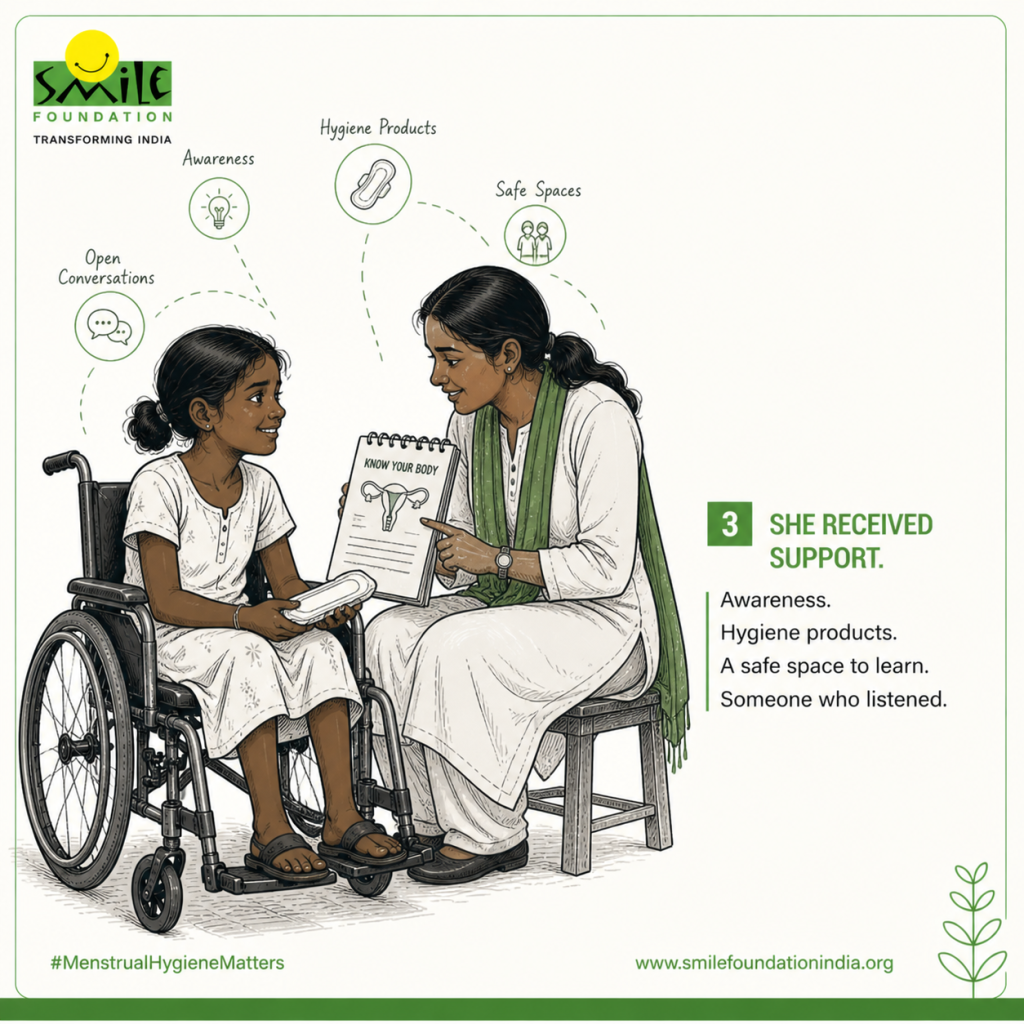
Hygiene Day

Policy Architecture: Where Progress Has Been Made and Where It Has Not

India’s policy framework for menstrual hygiene has developed significantly over the past decade. The National Menstrual Hygiene Policy, developed with multi-ministerial input and civil society engagement, provides a framework for improving access to facilities, products and education across schools, workplaces and public spaces. Several state governments have implemented free sanitary napkin schemes for girls in government schools. The Swachh Bharat Mission has invested in school toilet construction and maintenance. The National Health Mission incorporates menstrual health in its community health worker training.

These are genuine advances. But the distance between policy design and programme delivery remains a persistent challenge in India’s social sector, and menstrual hygiene is no exception.

The most significant implementation gap is at the last mile: the rural government school where the toilet exists but has no lock, the ASHA worker who has received training but not the materials needed to distribute, the urban slum community that falls between the coverage areas of rural and urban schemes. Closing these gaps requires not just better design but better accountability — monitoring systems that track not just whether facilities have been built, but whether they are functional, clean and used.

The workplace dimension also requires more deliberate policy attention. The debate around menstrual leave policies has attracted significant media coverage, but the more fundamental question — whether working women across sectors have access to adequate sanitation and hygiene facilities during their working hours — has received less attention and less policy response.

The Way Forward: What Hygiene Day Should Prompt
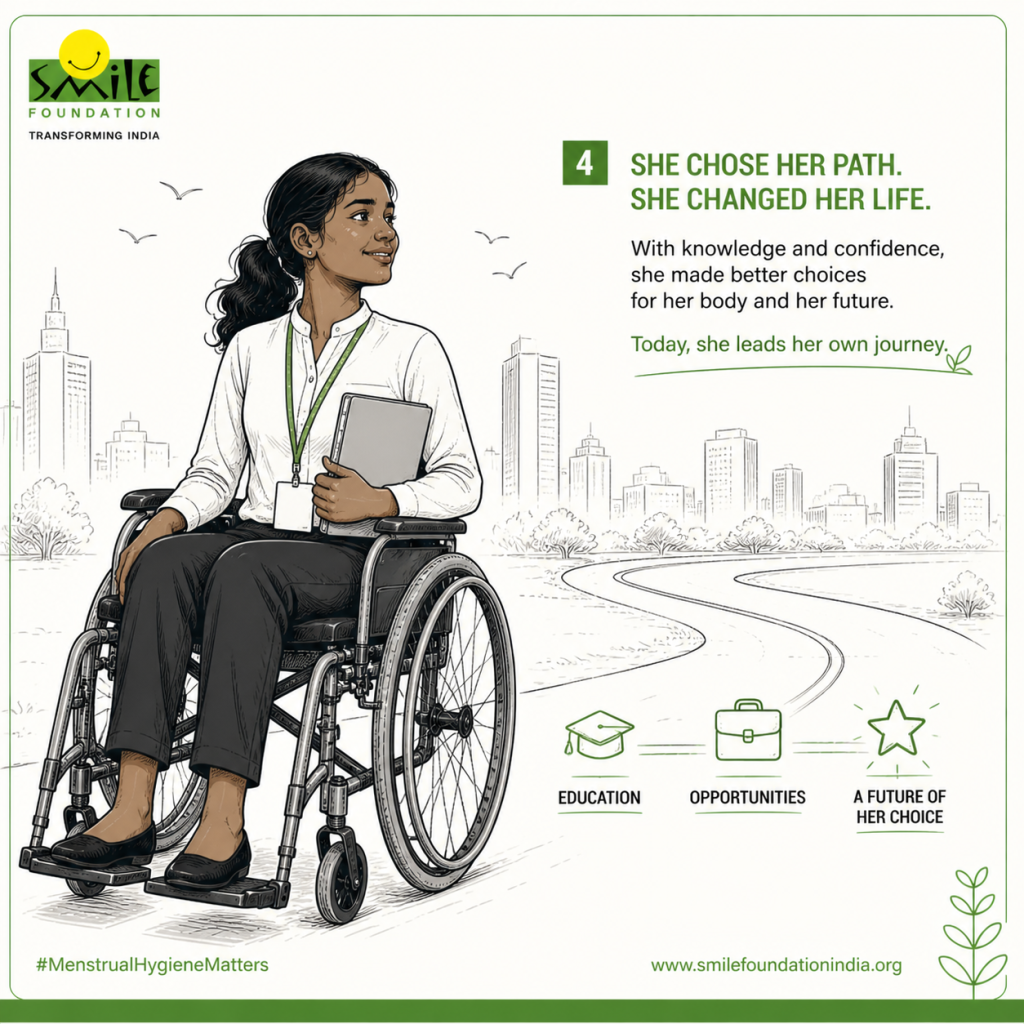
Hygiene Day is most useful not as a day of awareness — awareness, by itself, has limited lasting impact — but as a moment to assess progress honestly and recommit to the harder work of structural change.

For governments, this means ensuring that policy commitments on menstrual hygiene are matched by implementation infrastructure, maintenance budgets and monitoring systems that hold delivery accountable. It means integrating menstrual hygiene into disaster response frameworks consistently, not selectively. And it means investing in community health worker capacity — the ASHA workers, Anganwadi workers and peer educators who are the primary interface between health policy and the women it is designed to serve.

For civil society and NGOs, it means maintaining the sustained, community-level engagement that national programmes cannot replicate and documenting the evidence from that engagement in ways that can inform policy design.

For the private sector, it means recognising that menstrual hygiene is a workplace issue, not just a CSR opportunity, and investing in facilities, policies, and workplace cultures that genuinely support women employees.

And for all of us, Hygiene Day is a reminder that the silence around menstruation is not neutral. It has costs to health, education, economic participation and the simple experience of moving through the world with dignity. Breaking that silence, in families and schools and workplaces and policy forums, is not a communication exercise. It is a precondition for the structural changes that menstrual health in India genuinely requires.

Beyond the Day

When Hygiene Day passes on 28 May, the conversation it generates tends to fade quickly. Social media posts are archived, events are concluded and the subject returns to its usual position at the margins of public discourse.

The challenge is to resist that fading to maintain the urgency and the attention that Hygiene Day momentarily produces and to channel it into the sustained, unglamorous, community-level work that actually changes outcomes for women and girls.

India has the frameworks, the institutions and the civil society capacity to make menstrual hygiene management a reality for every woman and girl in the country. What it requires is consistent political will, adequate resourcing and the kind of accountability that ensures delivery reaches the last mile — not just the policy document and not just the press release, but the woman in the urban slum, the girl in the rural school, the relief worker’s hygiene kit.

Frequently Asked Questions (FAQs)

What is Hygiene Day and when is it observed?

Hygiene Day, formally known as Menstrual Hygiene Day, is observed globally on 28 May each year. Initiated in 2014 by the German NGO WASH United, the day brings together governments, NGOs, healthcare professionals and communities to raise awareness about the importance of menstrual hygiene management and to advocate for improved access to products, facilities and education for women and girls worldwide. The date is deliberate: May is the fifth month of the year and 28 represents the average length of the menstrual cycle.

Why is menstrual hygiene still a significant challenge in India?

Despite policy progress and growing awareness, significant gaps in menstrual hygiene access and practice persist in India due to a combination of economic barriers, inadequate infrastructure, cultural stigma and inconsistent policy implementation. The NFHS-5 survey found that only 64% of women aged 15–24 in India use hygienic methods of menstrual protection with significant disparities between rural and urban areas and between income groups. Cultural taboos that prevent open discussion further limit knowledge, health-seeking behaviour and the social normalisation of menstruation.

How does menstrual hygiene affect girls’ education in India?

The connection between menstrual hygiene and girls’ school attendance is direct and well-documented. When schools lack clean, private toilet facilities and girls have no access to sanitary products, menstruation becomes a reason to stay home. Research suggests that more than one in three girls in South Asia miss school during menstruation, and an estimated 23 million girls in India drop out of school annually with inadequate menstrual hygiene facilities among the contributing factors. Repeated absences widen academic gaps, reduce confidence and increase the likelihood of dropout.

What is India’s National Menstrual Hygiene Policy?

India’s National Menstrual Hygiene Policy provides a framework for promoting menstrual hygiene management across education, health and sanitation systems. It includes provisions for sanitary hygiene facilities in schools and public spaces, free sanitary product distribution through state-level schemes and menstrual health education as part of the health curriculum. While the policy represents genuine progress, implementation gaps — particularly in rural areas, informal urban settlements and schools where facilities exist but are not maintained — limit its real-world reach.

How does menstrual hygiene intersect with disaster relief and emergency response?

Menstrual hygiene needs do not pause during disasters but relief response has historically been slow to address them. During Cyclone Fani in Odisha in 2019, women lost access to all hygiene materials alongside everything else and were using contaminated water to manage their periods. Smile Foundation’s disaster response team, and others, have recognised hygiene kits including soap and sanitary products as essential components of emergency relief. The Sphere Humanitarian Standards include menstrual hygiene items as requirements for women of reproductive age in emergency settings, but field-level implementation remains inconsistent.

What role do community organisations play in improving menstrual hygiene outcomes?

Community organisations play an irreplaceable role in translating policy intent into behavioural change at the community level. Through sustained, relationship-based engagement — peer education, group sessions, door-to-door outreach — they create the social permission and practical knowledge needed for women and girls to manage menstruation safely and without shame. Smile Foundation’s Swabhiman programme has been working in this space since 2005, training community women as change agents who conduct health outreach on menstrual hygiene, family planning, nutrition and reproductive health in underserved urban and peri-urban communities.

What are the environmental concerns associated with menstrual waste in India?

India generates an estimated 113,000 tonnes of menstrual waste annually, primarily from synthetic disposable sanitary products that take hundreds of years to decompose. Improper disposal in open drains, water bodies and open land creates environmental and public health risks. As government schemes and NGO programmes scale up access to disposable products, the absence of adequate waste management infrastructure means that environmental consequences are growing. Reusable alternatives — menstrual cups, cloth pads and biodegradable products — offer more sustainable options but require broader awareness, cultural acceptance and access to washing facilities.

What can individuals and organisations do to support menstrual hygiene on Hygiene Day and beyond?

Individuals can contribute by normalising conversations about menstruation in families, schools and workplaces — reducing the stigma that remains one of the most significant barriers to menstrual health. Donating menstrual products to organisations working with underserved communities, supporting advocacy for stronger policy implementation, and amplifying the work of grassroots programmes provides practical support. Organisations can invest in workplace sanitation facilities, implement menstrual health-aware HR policies and partner with experienced NGOs to extend menstrual hygiene programming into communities that public systems do not consistently reach.
Categories
Health

World Health Day 2026: What It Is, Why It Matters and How to Take Action

Every year on April 7, the world pauses to ask a difficult question: what does it really mean for health to be a right and not a privilege? World Health Day, led by the World Health Organization, is where that question moves from principle to action.

The reality behind it is hard to ignore. According to WHO’s Universal Health Coverage data, at least 4.5 billion people, more than half the global population, still do not have full access to essential health services. Preventable diseases continue to claim millions of lives and the gap between those who can access care and those who cannot remains wide.

This guide is for those who want to go beyond acknowledging the problem. Whether you are part of a nonprofit, a public health initiative, an educational institution or simply someone trying to understand where you can contribute, this is meant to offer both context and direction. It looks at where World Health Day comes from, what it focuses on in 2026 and how that focus can translate into meaningful action.

Whether you are planning a campaign, organising a community event, or trying to understand why this day continues to matter, this is a starting point.

Summary

  • World Health Day is observed every year on April 7 and has been led by WHO since 1950.
  • The 2026 theme, “Together for health. Stand with science,” highlights the importance of scientific collaboration and the One Health approach.
  • More than half the world still lacks access to essential health services.
  • Individuals, organisations and communities all have a role to play in turning awareness into action.

What Is World Health Day?

World Health Day is an internationally recognised health awareness day observed on April 7 each year. Unlike awareness days that focus on a single issue, this one looks at health more broadly, bringing attention to systemic challenges and shared global concerns.

The date marks the founding of the World Health Organization in 1948. Since then, it has served as a reminder that health is not just a sector, but a collective responsibility that cuts across systems, societies and borders.

Each year, WHO identifies a central theme that reflects the most urgent health challenge of the moment. These themes guide campaigns, conversations and policy focus across countries.

Who Organises World Health Day?

The World Health Organization leads World Health Day globally, working with governments, institutions and partners across more than 150 countries. But the day is not owned by one organisation alone. It is carried forward by a wide network of actors, including nonprofits, schools, healthcare providers and communities, each adapting the message to their own context.

A Brief Look at Its Origins

World Health Day was first observed in 1950, originally on July 22, before being moved to April 7 to align with the founding of WHO. The idea that shaped it from the beginning was simple but ambitious: that every person has the right to the highest attainable standard of health.

That idea still holds. But the challenge has always been in making it real.

Over time, the themes of World Health Day have reflected shifting global priorities. Early years focused on infectious diseases and sanitation. Later, attention moved to non-communicable diseases, mental health and strengthening health systems. More recently, the focus has expanded to include climate, pandemics, and access to care.

World Health Day 2026: Theme and Focus

The 2026 theme, “Together for health. Stand with science,” brings attention to a growing reality. Health challenges today are interconnected, and so must be the solutions.

At its core, the theme emphasises the role of science and collaboration in protecting health. It highlights the need to translate evidence into action, and to ensure that scientific progress does not remain confined to research or policy spaces.

A key part of this approach is the idea of One Health, which recognises that human health is closely linked to the health of animals, plants and the environment. Whether it is the spread of diseases, the impact of climate change or antimicrobial resistance, these connections are becoming harder to ignore.

The theme also reflects another concern that has grown in recent years: trust. Trust in science, in public health systems and in the information people rely on to make decisions about their health.

Why This Theme Matters Now

The emphasis on science and collaboration is not abstract.

Despite major advances in healthcare, access remains uneven. Millions still struggle to reach services in time, afford treatment or navigate systems that are often complex and under-resourced.

Scientific breakthroughs alone cannot solve this. They must be supported by systems that ensure:

  • Access at the last mile
  • Clear and reliable communication
  • Trust between communities and providers

In many parts of the world, including India, these gaps are visible in everyday experiences of healthcare.

Why World Health Day Still Matters

The significance of World Health Day lies in its ability to connect global priorities with local realities.

The numbers tell part of the story:

  • 4.5 billion people lack full access to essential health services
  • 1.3 billion people are affected by neglected tropical diseases
  • Non-communicable diseases account for 74% of global deaths
  • Mental health remains one of the most under-addressed areas of care

But beyond the data, the day serves as a reminder that health systems are only as strong as their ability to reach people consistently.

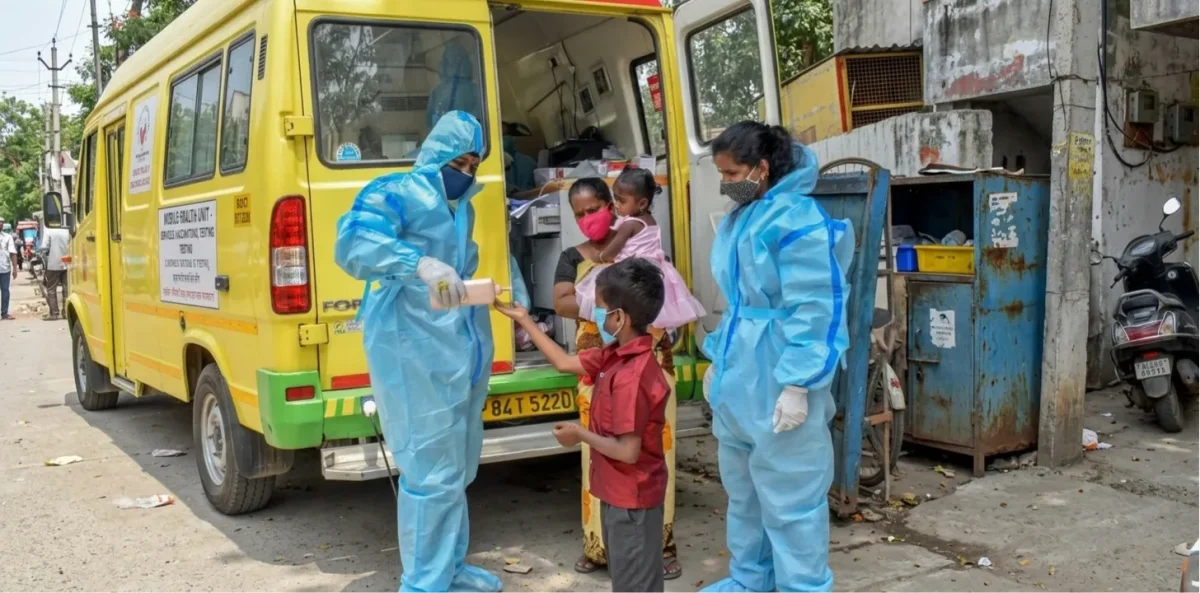
In India, organisations like Smile Foundation work to bridge these gaps by bringing healthcare closer to underserved communities through mobile health units, awareness programmes and community-based interventions.

Conclusion

World Health Day returns each year with a different focus, but the underlying question remains the same. Who is being reached, and who is still left out?

The 2026 theme, “Together for health. Stand with science,” points toward a future where collaboration and evidence guide decisions. But that future depends on whether systems can carry those solutions far enough.

Until then, the gap between possibility and access will continue to define how health is experienced.

And that is what this day ultimately asks us to confront.

Frequently Asked Questions

When is World Health Day observed?
It is observed every year on April 7.

Who organises World Health Day?
It is led by the World Health Organization.

What is the theme of World Health Day 2026?
The theme is “Together for health. Stand with science.”

What does the theme mean?
It highlights the importance of scientific collaboration, trust in evidence and the One Health approach to addressing interconnected health challenges.

What is the One Health approach?
It recognises the link between human, animal and environmental health, and promotes coordinated solutions.

How can people participate?
By engaging with accurate information, supporting health initiatives and contributing to community efforts.

How does Smile Foundation support healthcare?
Through mobile healthcare services, awareness programmes and outreach in underserved communities.


Categories
Smile Education Skill Development Women Empowerment

Ambedkar Jayanti 2026: One Vision That Continues to Transform India

Summary

  • Ambedkar Jayanti falls on April 14 every year and is a national holiday in India.
  • Dr. B.R. Ambedkar’s lifelong mission centered on universal education, gender equity and economic self-reliance.
  • In 2026 and every other year, the day is widely observed by corporates, NGOs, schools and government bodies with meaningful programs.
  • Organizations like Smile Foundation carry forward Ambedkar’s ideals through education, healthcare and livelihood programmes.
  • Working professionals and businesses can actively participate through CSR, skill training drives and inclusive workplace policies.

Why Ambedkar Jayanti Matters More Than Ever in 2026

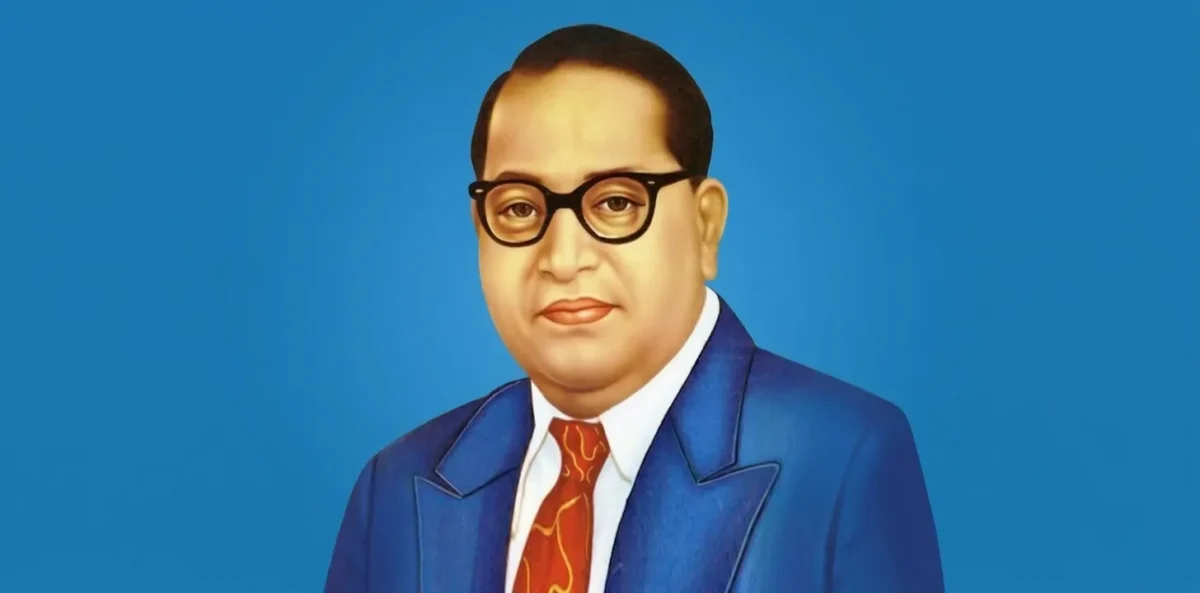
Every nation has leaders who shaped its laws, but very few have leaders who shaped the very idea of who deserves those laws. Dr. Bhimrao Ramji Ambedkar was one such leader. Against extraordinary personal hardship, he earned multiple doctorates from Columbia University and the London School of Economics, became the principal drafter of the Indian Constitution, and spent his entire life building a legal and moral architecture of equality. Every year on April 14, the country pauses to honour that extraordinary journey.

But Ambedkar Jayanti is not merely a holiday of remembrance. It is an annual checkpoint for the nation. How far have we come in making education truly universal? Are women gaining economic independence? Are livelihoods reaching the last mile? These are the questions Dr. Ambedkar spent his life answering and they remain still urgent in 2026.

For working professionals and businesses, this day presents a genuine opportunity: to align corporate purpose with the ideals of education, skill development and women empowerment that Ambedkar championed. This blog explores everything you need to know about Ambedkar Jayanti, from its history and significance to practical ways individuals and organizations can observe it meaningfully.

What Is Ambedkar Jayanti and When Is It Celebrated?

Ambedkar Jayanti is a national public holiday observed annually on April 14 to commemorate the birth anniversary of Dr. B.R. Ambedkar. In 2026, the occasion marks his 135th birth anniversary, making it one of the most widely observed commemorative days in the country.

The day is officially recognized as a gazetted holiday by the Government of India. State governments, central institutions, schools, corporate offices and community organizations all participate in marking the day through programmes, rallies, seminars and cultural events.

Also known as Bhim Jayanti in many parts of the country, the occasion draws millions of people to public squares and auditoriums where Dr. Ambedkar’s statue is garlanded and his ideals are discussed, debated and reaffirmed.

The Life Behind the Day

Born on April 14, 1891, in Mhow, Madhya Pradesh, Dr. Ambedkar overcame extraordinary adversity to become one of the most educated men of his era. He earned degrees from Mumbai University, Columbia University, the London School of Economics and the University of London. His academic credentials were matched only by his determination to reshape Indian society through law, policy and social reform.

As the first Law Minister of independent India, he led the drafting of the Constitution of India, which enshrined fundamental rights, equality before law and provisions for social upliftment. He resigned from the cabinet in 1951 over policy disagreements, continuing his advocacy work until his passing on December 6, 1956.

Dr. Ambedkar’s Vision for Education: The Foundation of Everything

Perhaps no cause defined Dr. Ambedkar more than his belief in education. His most famous statement, “Educate, Agitate, Organise”, was a strategy for liberation. He believed that access to quality education was the single most powerful tool available to any individual seeking to change their circumstances.

This belief remains strikingly relevant. According to the UDISE+ Annual Report 2024-25, India still records a significant drop in student enrollment between secondary and higher secondary levels, particularly among girls from economically weaker sections. The gap Ambedkar identified a century ago has not fully closed.

Education as an Instrument of Social Change

Dr. Ambedkar used education as personal proof of concept. He demonstrated that intellectual achievement, when supported by access and opportunity, could transform an individual’s trajectory entirely. He then went further, advocating for free and compulsory education, reservation in educational institutions and government scholarship programs.

His advocacy directly influenced several constitutional provisions, including Article 21A (Right to Education), the establishment of the Right to Education Act 2009, and scholarship schemes that continue to this day under the Ministry of Social Justice.

How Ambedkar Jayanti Inspires Education Drives Today

Organizations across India use Ambedkar Jayanti as a catalyst for education-related initiatives. Smile Foundation runs year-round programmes in education, healthcare, and livelihood. Our Mission Education initiative provides holistic support including mid-day meals, digital learning tools and community engagement to ensure children, especially girls, stay in school through critical years. Ambedkar Jayanti often serves as a day for development organizations to renew commitments and announce new program targets.

For businesses observing the day, supporting education-focused NGOs, sponsoring scholarships or hosting ‘learning at work’ events for employees and their families aligns directly with Ambedkar’s legacy.

Key Takeaway: Education was the cornerstone of Ambedkar’s vision and Ambedkar Jayanti is the ideal moment for organizations to renew commitments to learning access and digital literacy programs.

Ambedkar and Women Empowerment: A Legacy That Is Still Being Built

Dr. Ambedkar was one of the earliest and most forceful advocates for women’s rights in India. He strongly supported the Hindu Code Bill in 1951, which sought to codify and reform personal laws relating to marriage, inheritance and divorce. When the bill was diluted beyond recognition in Parliament, he resigned from the cabinet, citing his inability to accept a compromise on women’s rights.

His constitutional work embedded gender equality directly into India’s foundational document. Articles 14, 15 and 16 of the Indian Constitution explicitly prohibit discrimination on the basis of sex and provide for equal opportunity.

The Persistent Gender Gap in India’s Workforce

Despite constitutional guarantees, gender equity in India’s labour market remains a work in progress. According to the International Labour Organization India Report 2024, India’s female labour force participation rate is among the lowest in Asia, at around 24 percent for urban women. The gap between aspiration and reality is precisely the gap that Ambedkar’s framework was designed to close.

This is where Ambedkar Jayanti becomes more than a celebration. It is a call to action for businesses to examine their own practices: equal pay structures, maternity benefits, anti-harassment policies and advancement pathways for women employees.

NGO-led Women Empowerment on Ambedkar Jayanti

Organizations like Smile Foundation channel the spirit of Ambedkar Jayanti through programmes such as Swabhiman, which focuses on women’s economic empowerment, digital literacy for women and sustainable livelihood creation. By supporting women entrepreneurs in semi-urban and rural communities, these programmes translate Ambedkar’s constitutional framework into tangible income growth and financial independence.

Corporations can participate on this day by pledging to hire or mentor women from underserved backgrounds, supporting women-led businesses in their supply chain or funding training programmes that build women’s leadership capabilities.

Skill Development and Livelihood: The Economic Pillars of Ambedkar’s Vision

Beyond education and gender equity, Dr. Ambedkar understood that real freedom required economic independence. He fought against systems that confined people to specific occupations and advocated for the freedom to pursue any profession. His economic writings, particularly the work on Annihilation of Caste, argued for occupational mobility as a fundamental right.

This philosophy directly informs India’s current policy landscape. According to NSDC Annual Report 2024-25, the National Skill Development Corporation has trained over 12 million individuals under various government schemes since its inception. The mandate is clear: build skills, create livelihoods and break cycles of poverty.

Government Schemes Aligned with Ambedkar’s Vision

Several flagship government programmes carry forward Ambedkar’s economic ideals:

  • PM Vishwakarma Yojana: Supports traditional artisans and craftspeople with skill upgrades, digital tools and market access.
  • Pradhan Mantri Kaushal Vikas Yojana (PMKVY): Provides industry-relevant skill training to youth across sectors.
  • Stand-Up India Scheme: Facilitates loans to women and Scheduled Caste/Scheduled Tribe entrepreneurs for setting up greenfield enterprises.
  • Deen Dayal Upadhyaya Grameen Kaushalya Yojana (DDU-GKY): Focuses on rural youth, providing market-linked skill training and placement support.

These schemes are most effectively observed and amplified on Ambedkar Jayanti, when public attention is highest and community mobilization is most natural.

How Businesses Can Align with Skill Development on Ambedkar Jayanti

Corporate India has both the resources and the responsibility to accelerate skill development. Under India’s CSR mandate (Schedule VII of the Companies Act 2013), companies are eligible to fund skill development, vocational training and livelihood programmes as part of their social responsibility commitments. Ambedkar Jayanti is an ideal activation moment.

Smile Foundation’s Tayyari Kal Ki is one such example, offering placement-linked vocational training in sectors like IT, retail, hospitality and healthcare. Programmes like these demonstrate how private sector partnership can operationalize Ambedkar’s vision of economic freedom for all.

How to Observe Ambedkar Jayanti: A Practical Guide for Working Professionals and Businesses

Observing Ambedkar Jayanti does not require grand gestures. The most meaningful observations often begin with small, consistent actions that reflect Ambedkar’s own method: educate yourself and those around you, then act.

Step 1: Learn and Share

Begin the day with a team briefing or email sharing Dr. Ambedkar’s life story and the significance of the day. Many organizations send curated reading lists or short videos to employees. The goal is awareness, not just acknowledgment.

Step 2: Pledge a Workplace Inclusion Audit

Use Ambedkar Jayanti as the date to formally review your organization’s diversity and inclusion metrics. Are all employees paid equitably? Are advancement opportunities open to all? Publish your findings internally and commit to targets for the year ahead.

Step 3: Support an Education or Skill Initiative

Partner with an NGO or government program to fund scholarships, sponsor training batches, or donate equipment to a vocational training center. Even a one-day volunteering activity, such as mentoring sessions for students, carries enormous impact.

Step 4: Amplify Women-Led Businesses

If your organization has a procurement function, commit to sourcing a percentage of goods or services from women-led enterprises. Announce this commitment on Ambedkar Jayanti and make it measurable.

Step 5: Engage Your Community

Participate in or sponsor local Ambedkar Jayanti events such as public talks, youth competitions, or cultural programs. For companies with a branch network, encourage local teams to connect with community organizations on this day.

Key Takeaway: The most impactful Ambedkar Jayanti observations are those that translate inspiration into institutional commitments in education, inclusion, and livelihood support.

Enduring Ambedkar Quotes on Education and Self-Reliance

Dr. Ambedkar’s words remain among the most cited in India’s public discourse. They carry a clarity and urgency that few others match. Here are some of his most powerful statements, each as relevant in 2026 as they were when first spoken:

  • “Cultivate the habit of being grateful for every good thing that comes to you, and to give back in return.”
  • “Men are mortal. So are ideas. An idea needs propagation as much as a plant needs watering. Otherwise, both will wither and die.”
  • “I like the religion that teaches liberty, equality and fraternity.”
  • “Political tyranny is nothing compared to social tyranny, and a reformer who defies society is a more courageous man than a politician who defies a government.”
  • “Lost rights are never regained by appeals to the conscience of the usurpers, but by relentless struggle.”

These quotes are widely used in Ambedkar Jayanti speeches, corporate awareness programs, and school assembly themes. They serve as a grounding anchor for any organization reflecting on its social purpose.

Ambedkar’s Pillars in Numbers: Education, Women Empowerment and Skill Development Across India (2025-26)

One of the most powerful ways to honour Ambedkar Jayanti is to measure, honestly and rigorously, how far India has come on the three pillars Ambedkar dedicated his life to: education access, gender equity and economic opportunity. The data below, drawn from government and multilateral sources, shows both the progress made and the distance still to travel.

Understanding this data is not just an academic exercise. For businesses, NGOs and policymakers, these numbers reveal where investment and intervention are most urgently needed, making them the foundation of any credible CSR or social impact strategy.

National Snapshot: Where India Stands in 2026

Indicator National Figure (2025-26) Target / Benchmark Source
Gross Enrollment Ratio, Higher Education 28.4% 50% by 2035 (NEP 2020) AISHE 2024-25, Ministry of Education
Female Labor Force Participation (Urban) ~25% OECD average: 55% ILO India Report 2024
Youth Skilled Under PMKVY (cumulative) 15.3 million+ 40 crore by 2030 (NSDC) NSDC Annual Report 2024-25
Women-owned MSMEs ~20% of total MSMEs 30% by 2027 (MSME Ministry) MSME Annual Report 2024
Drop-out Rate (Secondary Level, Girls) 13.7% Below 5% (NEP target) UDISE+ 2024-25
CSR Funds Spent on Education (FY2024-25) Rs 6,200+ crore Largest CSR category MCA CSR Report 2025
Rural Women with Bank Accounts (PM Jan Dhan) Over 310 million Financial inclusion baseline PMJDY Dashboard 2025
Literacy Rate (National Average) 77.7% Universal literacy by 2030 Census Projections 2024

State-Level Lens: Education and Women Workforce Participation

State Literacy Rate (%) Female LFPR (%) Notable Skill / Education Scheme
Kerala 96.2 38.5 Kerala Knowledge Economy Mission
Maharashtra 84.9 24.8 Mahatma Phule Jan Arogya Yojana + PMKVY centers
Uttar Pradesh 73.3 16.1 UP Skill Development Mission (1.2 cr trained)
Rajasthan 69.7 25.4 Indira Gandhi Smartphone Yojana for women
Bihar 63.8 6.9 JEEViKA SHG Network (over 1 crore women)
Tamil Nadu 82.9 36.2 TNSDC vocational training (500+ centers)
Madhya Pradesh 73.7 32.6 Mukhyamantri Seekho Kamao Yojana
West Bengal 77.1 23.9 Karmasathi + Utkarsh Bangla schemes

Sources: UDISE+ 2024-25, ILO India Women and Work 2024, NSDC Annual Report 2024-25, MSME Annual Report 2024, MCA CSR Report 2025.

What This Data Means for Businesses on Ambedkar Jayanti

The numbers above are not just statistics for a report. They are a map of opportunity. States with low female labour force participation rates represent the highest-impact zones for women empowerment programs. Districts with high school dropout rates are where scholarship and mid-day meal programmes deliver the strongest return on investment. Regions with low MSME women ownership are where procurement pledges and mentoring programmes can shift economic outcomes fastest.

Organizations like Smile Foundation use exactly this kind of granular, state-level data to direct our programmes, ensuring that resources reach communities where Ambedkar’s vision of equitable access remains furthest from reality. For any business building a CSR strategy around Ambedkar Jayanti, this data is the starting point, not an afterthought.

Frequently Asked Questions About Ambedkar Jayanti

Q: When is Ambedkar Jayanti 2026?

A: Ambedkar Jayanti 2026 falls on Wednesday, April 14, 2026. It marks the 135th birth anniversary of Dr. Bhimrao Ramji Ambedkar. It is a gazetted national public holiday across India.

Q: Why is Ambedkar Jayanti celebrated on April 14?

A: April 14 is the birth date of Dr. B.R. Ambedkar, born in 1891. The date was officially recognised as a national holiday to honour his extraordinary contributions as the principal drafter of the Indian Constitution and a lifelong champion of equal rights, education and economic freedom.

Q: What is the significance of Ambedkar Jayanti for education?

A: Dr. Ambedkar believed education was the foundation of all social progress. He used his own educational journey to prove that access to learning could overcome any barrier. His constitutional provisions, including the Right to Education, make Ambedkar Jayanti the most relevant national day for education advocacy and policy discussion.

Q: How can companies and businesses observe Ambedkar Jayanti?

A: Companies can observe Ambedkar Jayanti by conducting workplace inclusion audits, sponsoring scholarship programmes, partnering with NGOs like Smile Foundation for skill development, pledging to support women-led businesses and releasing their annual DEI reports on this date to signal accountability.

Q: What is the connection between Ambedkar Jayanti and women empowerment?

A: Dr. Ambedkar was one of the strongest legislative advocates for women’s rights in India. He resigned as Law Minister partly over the dilution of the Hindu Code Bill, which sought to give women equal rights in marriage, divorce and inheritance. Ambedkar Jayanti is therefore a natural occasion to renew commitments to gender equity in the workplace and society.

Q: What government schemes are linked to Ambedkar’s vision of livelihood and skill development?

A: Several central government schemes reflect Ambedkar’s economic vision, including PM Vishwakarma Yojana for artisans, Pradhan Mantri Kaushal Vikas Yojana for vocational training, Stand-Up India for women entrepreneurs, and DDU-GKY for rural youth skill development.

Q: What are some Ambedkar Jayanti activities for schools and colleges?

A: Schools and colleges commonly organize essay competitions, debates on Ambedkar’s constitutional contributions, documentary screenings, art exhibitions and invited talks from social workers and policy experts. Many institutions also launch book donation drives and scholarship announcements on this day.

Q: What is Bhim Jayanti and is it the same as Ambedkar Jayanti?

A: Yes. Bhim Jayanti is another name for Ambedkar Jayanti. Dr. Ambedkar’s first name was Bhimrao and he is affectionately referred to as Bhimrao or simply Bhim by his admirers. Both names refer to the same celebration on April 14.

Q: How can individuals personally contribute to Ambedkar’s legacy on this day?

A: Individuals can donate to education charities, mentor a student from an underserved community, volunteer with Smile Foundation, share curated reading material about Ambedkar on social media, complete a skill development course or simply have a conversation with their team about workplace inclusion. Every act of learning and sharing counts.

Ambedkar Jayanti is a Mandate and Memory both

In 2026, Ambedkar Jayanti is more than a remembrance. It is a mandate for action. Dr. B.R. Ambedkar built a legal framework for equality, but he understood that constitutional rights alone do not deliver equity. What delivers equity is consistent, intentional effort, year after year, organization by organization, person by person.

The themes he championed, universal education, women empowerment, skill development and livelihood access, are precisely the themes that define a thriving, competitive and just economy in 2026. Organizations that align their purpose with these ideals do not just honour Ambedkar. They build stronger, more resilient businesses.

Key takeaways from this guide:

  • Ambedkar Jayanti on April 14, 2026 marks the 135th birth anniversary of Dr. B.R. Ambedkar, India’s Constitution architect.
  • Education, women empowerment, skill development, and livelihood were the pillars of Ambedkar’s vision and remain urgent national priorities.
  • Businesses and working professionals can observe the day with inclusion audits, CSR partnerships, and public commitments.
  • Organizations like Smile Foundation translate Ambedkar’s ideals into on-ground programs in education, women empowerment, and livelihood.
  • The best tribute to Ambedkar is not a social media post. It is a measurable, accountable commitment to building a more equitable workplace and community.

Sources and References

Categories
Partners In Change

How to Donate Online Safely and Effectively: The Complete Guide

According to UNICEF’s digital fundraising insights, digital giving channels have become the fastest-growing source of charitable contributions globally. Yet most donors still hesitate, unsure whether their money actually reaches the cause they care about, whether their chosen NGO is trustworthy, or how to claim the tax benefit they are legally entitled to.

If you have ever typed “donate online” into a search bar and felt overwhelmed by questions, this guide is written for you.

Whether you are a working professional who wants to support education or healthcare, or a business leader building a structured CSR program, donating online offers speed, transparency, and measurable impact that traditional giving cannot match.

In this guide, you will learn exactly how to donate online safely, how to verify a legitimate NGO, how to claim your 80G tax benefit, and how businesses can turn one-time giving into a strategic impact program. Let us begin.

Key Takeaways

•  Online donations are tax-deductible under Section 80G of the Income Tax Act, 1961, for donors who opt for the old tax regime

•  Always verify an NGO on NITI Aayog’s NGO Darpan portal before donating

•  Businesses can claim CSR deductions under Section 135 of the Companies Act for qualifying donations

•  Smile Foundation offers direct online giving across education, healthcare, women empowerment, and livelihood causes

•  Recurring donations create more sustained impact than one-time gifts and simplify annual tax planning

What Does It Mean to Donate Online?

An online donation, sometimes called a digital donation, is the act of transferring funds to a registered charitable organization through an internet-based channel. This includes NGO websites, donation portals, mobile apps, or direct UPI transfers.

When you donate online, your payment passes through a secure payment gateway, is verified by the organization’s system, and is credited to the NGO’s bank account, often within 24 to 72 hours. The entire process is digital, documented, and traceable.

According to the World Bank’s digital financial services research, digital payment adoption has directly accelerated online charitable giving, with mobile-first populations giving more frequently through digital channels. This reflects a permanent behavioral shift, not a passing trend.

For NGOs like Smile Foundation, receiving an online donation is faster and more cost-efficient than processing offline contributions. For donors, it means instant confirmation, an automated 80G receipt, and the ability to track how their funds are used.

💡 Key Takeaway

Online donation is a secure, digital method of charitable giving that benefits both donors and nonprofits through speed, convenience, and transparent fund tracking.

Why Online Donations Are Transforming Charitable Giving in India

The Rise of Digital Giving

Digital giving has moved from a convenience to the default mode of charitable contribution. According to UNICEF’s digital innovation reports, digital and mobile channels are now the primary mode of donor engagement globally. In India, the nonprofit sector receives over Rs. 75,000 crore annually, with digital channels accounting for a rapidly growing share.

Mobile giving accounts for a significant and growing share of all online donations. In India, UPI now accounts for 57% of all payment transactions, surpassing cash at 38%, according to a Finance Ministry commissioned study. NPCI data for February 2026 shows 20.39 billion UPI transactions in the month alone, a 27% year-on-year surge, with January 2026 hitting an all-time record of 21.70 billion transactions. Donation by QR code or UPI link is now a mainstream behavior across urban and rural India.

Smile Foundation has digitized its entire donor journey, allowing supporters to browse campaigns across education, healthcare, women empowerment, and livelihood, choose a cause, donate in under 60 seconds, and receive an automated 80G receipt by email.

Benefits for Donors and NGOs

For donors, making an online charitable donation offers:

  • Instant confirmation and a digital receipt for tax filing
  • Option to set up recurring monthly giving with one click
  • Access to multiple verified causes from a single trusted source
  • Real-time updates and impact reports on fund utilization
  • Lower risk of misappropriation compared to cash or cheque giving

For NGOs, digital donations reduce administrative overhead, improve cash flow predictability through recurring giving, and allow outreach to donors far beyond their physical geography.

💡 Key Takeaway

Online donations benefit both donors and NGOs: donors get convenience and transparency, while nonprofits gain efficiency and broader reach.

How to Donate Online Safely: A Step-by-Step Guide

Step 1: Verify the NGO’s Registration Status

Before entering any payment details, verify the organization on NITI Aayog’s NGO Darpan portal. Every legitimate nonprofit registered in India should have a Unique ID on this government portal. Search by name or registration number.

Step 2: Confirm 80G and 12A Certification

80G registration with the Income Tax Department allows you to claim a deduction on your taxable income. 12A registration confirms that the organization itself is tax-exempt. Ask for both registration numbers and verify them on the Income Tax India portal before donating.

Step 3: Review Audited Annual Reports and Impact Data

A credible NGO publishes its audited annual report and fund utilization disclosures on its website. Smile Foundation, for example, publishes annual reports and quarterly program updates showing exactly how donor funds are deployed across its education, health, and livelihood initiatives.

Step 4: Check for FCRA Registration if Donating from Abroad

If you are donating from outside India, or if your company is routing CSR funds to an Indian NGO, verify the organization’s FCRA (Foreign Contribution Regulation Act) registration. Without valid FCRA status, the NGO cannot legally accept foreign contributions.

Step 5: Use a Secure, Official Payment Channel

Recommended payment methods:

  • UPI: Fastest and most secure for Indian donors. Supported universally.
  • Credit or Debit Card: Use only on HTTPS-secured pages with SSL certification.
  • Net Banking: Reliable for larger donations; bank-level encryption applies.
  • Digital Wallets: Confirm the NGO officially integrates with the wallet before using.

Important: Legitimate NGOs never ask for donations through personal bank accounts, WhatsApp, or informal links. Always donate through the official website.

💡 Key Takeaway

Safe online donating requires verifying the NGO’s registration on NGO Darpan, confirming 80G/FCRA status, reviewing published impact reports, and using a secure payment method on the official website.

What Can You Donate Online For? Causes That Create Real Impact

When you donate online to a verified NGO like Smile Foundation, you can direct your giving toward specific causes, or contribute to an unrestricted general fund that the organization deploys where it is most needed.

Here is a breakdown of cause areas and the type of impact your online donation creates:

Cause Area Program Focus Who Benefits Impact Metric Example
Education School enrollment, digital literacy, dropout prevention Children aged 6-18 in underserved communities Child supported for full academic year
Healthcare Mobile health units, maternal care, preventive checkups Women, children, and rural families Medical consultations per Rs. 1,000 donated
Women Empowerment Vocational training, self-help groups, financial literacy Women in low-income households Women trained in livelihood skills
Livelihood Skill development, employment linkages, entrepreneur support Youth and adults aged 18-35 Individuals placed in employment per quarter
Disaster Relief Emergency food, shelter, rehabilitation Disaster-affected communities Families reached per relief campaign

Smile Foundation publishes program-specific impact data on its official website, allowing every donor to see exactly how their online donation translates into measurable outcomes. Visit Smile Foundation’s donation portal to explore current campaigns and choose your cause.

💡 Key Takeaway

Donating online to a cause-specific program allows you to align your giving with your personal or organizational values, while verified impact reporting ensures your contribution is accounted for.

Tax Benefits When You Donate Online in India (FY 2025-26)

Section 80G Deduction: What Every Donor Must Know

Section 80G of the Income Tax Act, 1961 allows taxpayers to claim a deduction on donations made to specified funds, charitable institutions, and relief organizations. Smile Foundation holds a valid 80G registration (Number: AACTS7973GF20210, PAN: AACTS7973G), making your online donation eligible for this benefit, provided you meet the conditions below.

Who can claim Section 80G?

As confirmed by the Income Tax Department’s official Section 80G FAQ, this deduction is available to individuals, HUFs, companies, firms, and NRIs, provided they have taxable income in India and have opted for the old tax regime.

Important: Section 80G is not available under the new tax regime.

As per Section 115BAC of the Income Tax Act, 1961, deduction under Section 80G cannot be claimed if you opt for the new tax regime, which has been the default regime since AY 2024-25. To claim this deduction for FY 2025-26 (AY 2026-27), you must explicitly opt for the old tax regime while filing your ITR.

How much deduction on a donation to Smile Foundation?

Donations to NGOs registered under Section 80G fall in the 50% deduction category, subject to a qualifying limit of 10% of your Adjusted Gross Total Income. This means:

  • If you donate Rs. 10,000, the deduction eligible is Rs. 5,000 (50% of donation amount)
  • However, if 10% of your Adjusted GTI is lower than Rs. 5,000, your deduction is capped at that lower figure
  • Any excess donation amount cannot be carried forward to the next financial year

What you need to claim Section 80G (FY 2025-26):

  • Form 10BE: The official donation certificate issued by Smile Foundation under Rule 18AB of the Income Tax Rules. It contains their 80G registration number, PAN, your name, amount donated, and Unique Registration Number (URN). Always ask for this certificate after donating.
  • Your PAN at time of donation: Smile Foundation is required to file Form 10BD with the Income Tax Department, listing all donors by PAN. Your ITR deduction claim is matched against this filing. If your PAN is not provided correctly at the time of online donation, your deduction may be disallowed.
  • Old tax regime: You must have opted for the old tax regime. The 80G deduction is not available under the new default tax regime (Section 115BAC).
  • Non-cash payment above Rs. 2,000: As per Section 80G(5D), cash donations above Rs. 2,000 are completely ineligible. Donate via UPI, card, cheque, demand draft, or net banking.
  • Monetary donations only: In-kind contributions such as food, clothes, medicines, or any goods do not qualify for Section 80G deduction under any circumstances.

Verify Smile Foundation’s 80G registration status at the Income Tax India exempted institutions portal before donating.

CSR Online Giving for Businesses

For Indian companies meeting qualifying thresholds, CSR spending is mandatory under Section 135 of the Companies Act, 2013. Online donations to organizations working in Schedule VII areas, such as Smile Foundation’s programs in education and healthcare, count toward this obligation. Note: As per the Income Tax Department, CSR donations made to Swachh Bharat Kosh or Clean Ganga Fund under Section 135 do not separately qualify for 80G deduction, since they are already treated as CSR expenditure.

According to the National CSR Portal, Ministry of Corporate Affairs, Indian companies spent Rs. 34,908.75 crore on CSR in FY 2023-24, a 13% rise from FY 2022-23. While FY 2024-25 final disclosures are still being compiled, early trends indicate continued growth. Companies donating online to compliant NGOs receive full documentation, including Form 10BE and fund utilization reports, for MCA compliance filing.

💡 Key Takeaway

Section 80G, Income Tax Act 1961, is fully valid for FY 2025-26. Key rules from the official Income Tax Department FAQ: (1) Available only under old tax regime – not under new regime (Section 115BAC). (2) Smile Foundation donations fall in 50% deduction category, capped at 10% of Adjusted GTI. (3) Cash donations above Rs. 2,000 are ineligible. (4) In-kind donations are ineligible. (5) Obtain Form 10BE and always provide your PAN when donating online to ensure your deduction is matched in the ITR system.

How Businesses Can Build a Strategic Online Giving Program

Many companies treat CSR as an annual compliance exercise. The most impactful organizations build structured giving programs that create measurable outcomes, strengthen employee engagement, and reinforce brand values simultaneously.

Setting Up an Employee Giving Program

Employee giving programs allow staff to donate online to verified causes, often with the company matching each contribution. Corporate matching doubles impact without doubling budget.

Research consistently shows that when employees are informed about employer matching programs, participation in workplace giving rises significantly. According to Ministry of Corporate Affairs CSR guidelines, companies that establish structured employee giving programs alongside their CSR mandates report stronger compliance outcomes and higher employee satisfaction scores.

Steps to set up an employee giving program:

  1. Define the annual giving budget and CSR focus areas (e.g., education, healthcare)
  2. Select a verified NGO partner like Smile Foundation with documented 80G and FCRA compliance
  3. Create a dedicated giving portal or integrate with your HRMS for payroll giving
  4. Set a matching ratio (1:1 is most common; 2:1 for high-priority campaigns)
  5. Publish an annual impact report showing total donations and beneficiary outcomes

Measuring Social Impact from Online Donations

A frequent frustration for corporate donors is the absence of clear impact data. “We donated Rs. 50 lakh, but what changed?” is a question every CSR manager should be able to answer.

Smile Foundation addresses this directly by providing quarterly impact reports, beneficiary data, photo and video documentation, and program-level outcome metrics for all corporate partners. When evaluating an NGO for a business giving program, ask for:

  • Number of direct beneficiaries reached per rupee spent
  • Program-specific outcome metrics (literacy improvements, healthcare coverage, income levels)
  • Third-party audit reports and NITI Aayog NGO Darpan compliance status
  • Annual fund utilization disclosures and audited financial statements
💡 Key Takeaway

Businesses that treat online giving as a strategic function build stronger employee engagement, better brand reputation, and more accountable impact relationships with their NGO partners.

Common Mistakes to Avoid When You Donate Online

Mistake 1: Donating without verifying the NGO’s registration

This is the most common and costly error. Always cross-check the organization on NITI Aayog’s NGO Darpan portal and confirm their 80G/12A status before making any payment.

Mistake 2: Clicking donation links shared on social media

Fraudulent fundraising links circulate on WhatsApp, Facebook, and Instagram, especially during disasters. Always navigate directly to the NGO’s official website rather than clicking a forwarded link.

Mistake 3: Not saving your donation receipt and Form 10BE immediately

Your Section 80G deduction claim requires Form 10BE from the NGO. If you do not save your receipt and transaction confirmation immediately, retrieving it later can be difficult, especially from smaller organizations.

Mistake 4: Treating a one-time donation as a complete giving strategy

A single donation creates a moment of relief. Recurring monthly giving creates sustained programs. Even Rs. 500 per month builds Rs. 6,000 in annual funding that an NGO can plan budgets around.

Mistake 5: Ignoring fund utilization transparency

Before donating online, check whether the NGO publishes audited fund utilization reports. If this information is not publicly available, that is a meaningful red flag about organizational accountability.

Mistake 6: Forgetting to check FCRA status for international or corporate giving

If you are based outside India or routing corporate funds to an Indian NGO, verify the organization’s FCRA registration. Donations to NGOs without FCRA approval are legally problematic.

Mistake 7: Donating to restricted funds when unrestricted giving is more impactful

Restricting a donation to a very specific project limits an NGO’s operational flexibility. If you trust the organization, consider contributing to their general fund so resources can be deployed where they are most needed in real time.

Expert Tips to Maximize Your Online Donation Impact

Pro Tip #1: Consolidate your giving into fewer, deeper relationships

Giving Rs. 5,000 to one deeply vetted NGO creates more accountability and relationship than giving Rs. 500 each to ten different causes. Fewer giving relationships also simplify your Section 80G documentation, as you need to track fewer Form 10BE certificates at tax filing time.

Pro Tip #2: Treat your giving like a SIP, not a one-time investment

Set up a recurring monthly donation, even as small as Rs. 500. Over 12 months, this creates Rs. 6,000 in predictable funding that an NGO like Smile Foundation can use to plan education or healthcare programs in advance.

Pro Tip #3: Check your employer’s matching gift policy before donating

Many Indian companies and MNCs have workplace giving or matching gift policies as part of their CSR framework. Check with your HR or CSR team to find out if your employer matches employee donations. A matched donation doubles your charitable impact at zero additional personal cost.

Pro Tip #4: Donate unrestricted funds to organizations you trust

If you have verified an NGO’s track record and find their work credible, donate to their unrestricted general fund. This gives program teams the flexibility to respond to emerging needs rather than being locked into predetermined projects.

Pro Tip #5: Donate before March 31 to claim your FY 2025-26 Section 80G benefit

March 31, 2026 is the cutoff for FY 2025-26. Donations made on or before this date qualify for a Section 80G deduction in the current financial year, provided you have opted for the old tax regime. Ensure you receive Form 10BE from Smile Foundation and keep your transaction confirmation for ITR filing.

Frequently Asked Questions About Donating Online

Q: Is it safe to donate online using UPI or a credit card?

A: Yes, it is safe when you donate through an NGO’s official website using an HTTPS-secured page with a trusted payment gateway. Legitimate NGOs never ask for donations through personal bank accounts, WhatsApp, or informal links. Always navigate directly to the official website rather than clicking on forwarded links.

Q: How do I claim a Section 80G deduction for my online donation in FY 2025-26?

A: First, ensure you have opted for the old tax regime, as Section 80G deduction is not available under the new tax regime (Section 115BAC). Then collect Form 10BE from Smile Foundation, which is your official donation certificate under Rule 18AB of the Income Tax Rules. Enter the donee details (name, PAN, address, 80G registration number, and donation amount) in Schedule 80G of your ITR. Always provide your PAN correctly when donating online, as Smile Foundation files Form 10BD with the Income Tax Department and your claim is verified against this data.

Q: Can NRIs claim a Section 80G deduction for donations to Smile Foundation?

A: Yes. As confirmed by the Income Tax Department, the benefit of claiming a deduction under Section 80G is available to both resident and non-resident Indians (NRIs), provided they have taxable income in India and opt for the old tax regime. The same documentation requirements, including Form 10BE and non-cash payment, apply.

Q: What is the difference between an 80G donation and a CSR donation?

A: Section 80G of the Income Tax Act, 1961 allows voluntary donation deductions for individuals, companies, and firms, but only under the old tax regime. CSR donations under Section 135 of the Companies Act, 2013 are a mandatory legal obligation for eligible companies and must go toward Schedule VII approved activities. A key rule from the Income Tax Department: if a deduction is claimed under Section 80G for a donation, that same amount cannot be claimed as a deduction under any other provision of the Act.

Q: How do I verify that an NGO is legitimate before donating online?

A: Check the NGO on NITI Aayog’s NGO Darpan portal and verify their 80G registration on the Income Tax Department’s exempted institutions portal. Confirm their 12A registration (tax exemption) and review their publicly available audited annual reports. Smile Foundation publishes all compliance documentation, including its 80G number (AACTS7973GF20210) and PAN (AACTS7973G), on its official website.

Q: Are all types of donations eligible for Section 80G deduction?

A: No. As per the Income Tax Department’s official FAQ, only monetary donations qualify. In-kind contributions such as food, clothes, medicines, or any other goods are not eligible for Section 80G deduction. Additionally, cash donations above Rs. 2,000 are not eligible under Section 80G(5D). Only donations made via cheque, demand draft, UPI, or other electronic modes are accepted.

Q: Can I set up a recurring online donation and still claim 80G?

A: Yes. Smile Foundation’s donation portal allows recurring monthly, quarterly, or annual giving. Each recurring payment qualifies as a separate donation and is eligible for Section 80G deduction in the respective financial year, provided you are on the old tax regime, pay via non-cash mode, and collect Form 10BE for each financial year from Smile Foundation.

Q: How can my company set up an online CSR giving program?

A: Identify Schedule VII approved cause areas aligned with your CSR policy. Partner with a registered NGO like Smile Foundation that holds valid 80G, 12A, and FCRA credentials. Set a giving budget, establish employee participation through a payroll giving or internal portal, and collect quarterly impact reports and Form 10BE for MCA compliance documentation. Remember that the same donation cannot be claimed both as a CSR expense and under Section 80G.

Conclusion: Your Online Donation Can Change a Life

Choosing to donate online is one of the most direct ways a working professional or business leader can create social impact, and with the right information, it takes less than 60 seconds to do it safely and meaningfully.

Here is what you now know:

  • Always verify an NGO on NITI Aayog’s NGO Darpan portal and confirm 80G status before donating
  • Opt for the old tax regime and save your Form 10BE to claim your Section 80G deduction during ITR filing for FY 2025-26
  • Businesses can fulfill CSR obligations and get full compliance documentation through strategic online giving
  • Recurring donations create more sustained impact than one-time contributions
  • Smile Foundation provides full transparency: 80G receipts, FCRA compliance, quarterly impact reports, and verified cause programs across education, health, women empowerment, and livelihood

Ready to make your contribution count? Visit Smile Foundation’s official donation portal to browse verified causes and donate securely online in under 60 seconds. Whether you give Rs. 500 or Rs. 5 lakh, every online donation you make moves resources from where they are to where they are needed most.

Share this guide with a colleague or teammate who is thinking about charitable giving. And if your organization is ready to build a structured CSR giving program, reach out to Smile Foundation’s partnership team directly.

Sources & References

  1. Income Tax Department – Official FAQs on Section 80G (Nudge Campaign)
  2. Income Tax Department – Exempted Institutions Portal (80G Verification)
  3. NITI Aayog NGO Darpan Portal
  4. National CSR Portal, Ministry of Corporate Affairs – CSR Expenditure FY 2023-24
  5. NPCI – UPI Transaction Statistics 2026
  6. Ministry of Home Affairs – FCRA Registration Portal
  7. Ministry of Electronics and IT – Digital Personal Data Protection Act 2023
  8. Companies Act 2013 – Section 135 CSR Provisions (MCA)
  9. UNICEF – Digital Fundraising and Innovation
  10. Smile Foundation – Official Website
Categories
Smile

Save Tax While Changing Lives: Your Complete Guide to Section 80G Donations

When you donate to a registered charity in India, you can save tax up to 50% or 100% of your donated amount under Section 80G of the Income Tax Act, 1961. Your generosity becomes a financial advantage — and a lifeline for someone in need.

What Is Section 80G and How Does It Help You Save Tax?

Section 80G is a provision in the Income Tax Act that allows individuals, HUFs, companies, and firms to claim tax deductions on donations made to approved charitable organisations.

In simple terms: the more you give to eligible causes, the lower your taxable income — and the less tax you pay.

Who Can Claim the Section 80G Deduction?

Anyone who pays income tax in India can claim this deduction. This includes:

  • Salaried individuals
  • Self-employed professionals
  • Business owners and companies
  • Hindu Undivided Families (HUFs)
  • Non-Resident Indians (NRIs) donating to India-based charities

Note: Foreign nationals donating from outside India are generally not eligible to claim this deduction under Indian tax law.

How Much Tax Can You Save Under Section 80G?

The deduction amount depends on the type of organisation you donate to.

100% Deduction (Without Qualifying Limit)

Donations to funds like the Prime Minister’s National Relief Fund (PMNRF), National Defence Fund, and similar government-notified funds qualify for 100% deduction with no upper cap.

50% Deduction (Without Qualifying Limit)

Donations to approved institutions such as the Jawaharlal Nehru Memorial Fund and similar bodies qualify for 50% deduction with no upper limit.

100% Deduction (Subject to 10% of Adjusted Gross Total Income)

Certain government and local authority funds fall here.

50% Deduction (Subject to 10% of Adjusted Gross Total Income)

Most registered NGOs and charitable trusts — including Smile Foundation — fall in this category. Your deduction is capped at 10% of your Adjusted Gross Total Income (AGTI).

Example:

  • Annual income: ₹10,00,000
  • Donation to Smile Foundation: ₹50,000
  • Eligible deduction (50%): ₹25,000
  • Tax saved (at 30% slab): ₹7,500

Eligibility Conditions for Section 80G Deduction

To claim the deduction, these conditions must be met:

1. Donate to a registered organisation The charity must hold a valid 80G certificate issued by the Income Tax Department. Smile Foundation is registered under Section 80G and Section 12A, making all donations eligible.

2. Donate only in monetary form Donations in cash above ₹2,000 are not eligible for deduction. Always pay via cheque, NEFT, UPI, credit/debit card, or online transfer.

3. Collect your 80G receipt You must have a valid donation receipt mentioning the trust’s PAN, registration number, and your name. Smile Foundation issues receipts instantly upon online donation.

4. No benefit in return You cannot claim 80G if you received any material benefit (goods or services) in exchange for the donation.

Documents Required to Claim 80G Deduction While Filing ITR

Keep these documents ready when you file your Income Tax Return (ITR):

  • Donation receipt from the organisation
  • Organisation’s 80G registration certificate (copy)
  • Your bank statement or transaction proof
  • Organisation’s PAN number (mentioned on receipt)

When filing online on the Income Tax Portal, report the donation under Schedule 80G in your ITR form.

Section 80G in Old Tax Regime vs New Tax Regime

This is one of the most-asked questions — and competitors often miss the nuance.

Old Tax RegimeNew Tax Regime
Section 80G deduction available?✅ Yes❌ No (for most)
Section 80G for donations to notified funds?✅ Yes✅ Yes (limited)
Standard deduction available?✅ Yes✅ Yes
Better for high donors?✅ Yes❌ No

Bottom line: If you plan to make significant charitable donations, the old tax regime gives you greater tax benefits. Evaluate your total deductions before choosing a regime each year.

💡 Pro Tip: If your total deductions (80C + 80D + 80G + HRA etc.) exceed ₹3.75 lakh, the old regime is likely more beneficial.

How to Donate to Smile Foundation and Save Tax

Smile Foundation has been working since 2002 to improve the lives of underprivileged children and families across India. With programmes spanning education, healthcare, women’s empowerment, and livelihood development, every rupee you donate creates measurable change.

Here’s what your donation does:

  • ₹1,500 can support a child’s education for a month through the Shiksha Na Ruke programme
  • ₹2,500 can provide healthcare access to one child through Mission Education
  • ₹5,000 can fund skill training for a young woman through the Smile Twin e-Learning Programme

How to Donate Online (Step-by-Step)

  1. Visit smilefoundationindia.org
  2. Click on “Donate Now”
  3. Choose your cause or amount
  4. Pay via UPI, net banking, credit/debit card, or wallet
  5. Receive your instant 80G receipt via email
  6. Use this receipt to claim your tax deduction at ITR filing time

All transactions are secured with SSL encryption. Smile Foundation is transparent about fund utilisation — annual reports and audited financials are publicly available.

Why Donate to Smile Foundation?

  • 20+ years of impact across India (founded 2002)
  • 1.5 million+ lives touched annually
  • Working across 25 states with 400+ field partners
  • Registered under Section 12A and 80G — all donations are tax-deductible
  • FCRA registered — transparent, accountable, internationally recognised
  • Rated 4-star on GuideStar India for transparency and accountability
  • Programmes verified by third-party social audits

Section 80G vs Section 80GGA — What’s the Difference?

Section 80GSection 80GGA
For whom?All taxpayersOnly for those with no business/professional income
Type of donationCharitable institutionsScientific research / rural development
Deduction rate50% or 100%100%
Cash limit₹2,000₹10,000

Most individual donors and companies will use Section 80G. Section 80GGA is a niche provision for researchers and rural development contributors.

Common Mistakes Donors Make When Claiming 80G

  1. Donating in cash above ₹2,000 — Not eligible for deduction
  2. Not collecting the 80G receipt — Deduction claim will be rejected
  3. Donating to unregistered organisations — Always verify 80G status
  4. Claiming deduction in new tax regime — Not permitted for most donations
  5. Forgetting to declare in ITR — Must fill Schedule 80G during filing

Frequently Asked Questions (FAQ)

Q1. Can I save tax by donating to an NGO in India?

Yes. Donations to NGOs registered under Section 80G of the Income Tax Act are eligible for 50% or 100% tax deduction depending on the NGO’s category and your tax regime.

Q2. Is Smile Foundation donation eligible for 80G deduction?

Yes. Smile Foundation is registered under Section 80G and Section 12A. All donations made to Smile Foundation are eligible for 50% tax deduction (subject to 10% of Adjusted Gross Total Income).

Q3. What is the maximum deduction under Section 80G?

For most charitable institutions, the deduction is 50% of the donated amount, subject to a ceiling of 10% of your Adjusted Gross Total Income. For certain government funds, there is no upper limit.

Q4. Can I claim 80G deduction if I file ITR under the new tax regime?

Generally, no. The new tax regime does not allow most deductions under Chapter VI-A, including 80G. However, donations to certain specific national funds (like PMNRF) may still be allowed. Switch to the old tax regime if charitable giving is a priority.

Q5. Is online donation to charity eligible for 80G?

Yes. Online donations via UPI, NEFT, credit/debit card, or net banking are fully eligible for Section 80G deduction. In fact, online donations are preferred — cash donations above ₹2,000 are not eligible.

Q6. How do I claim 80G deduction while filing my ITR?

While filing your ITR on the Income Tax Portal, go to Schedule 80G. Enter the organisation’s name, PAN, address, donated amount, and the eligible deduction amount. Keep your donation receipt handy for verification.

Q7. Can a company claim tax deduction for charitable donations?

Yes. Companies (both Indian and foreign companies operating in India) can claim deductions under Section 80G for donations made to eligible institutions, subject to the applicable limits.

Q8. What is the difference between 50% and 100% deduction under 80G?

With 100% deduction, the full donated amount is reduced from your taxable income. With 50% deduction, only half the donated amount is reduced. The category depends on the type of institution receiving the donation. (Source: GoDigit)

The Bigger Picture: Why Saving Tax Through Giving Matters

India’s philanthropic ecosystem is growing. According to Bain & Company’s India Philanthropy Report 2024, private giving in India crossed INR 1.2 lakh crore in FY2023, growing at over 10% annually. Yet millions of children still lack access to education and healthcare.

When you donate to Smile Foundation, you are not just saving a few thousand rupees in tax. You are directly funding a child’s future, a woman’s independence, or a family’s health. The Indian government’s Section 80G is essentially the state co-funding your compassion.

Give more. Save tax. Change lives.

Donate Now and Save Tax Under 80G Every donation above ₹500 comes with an instant tax-exemption receipt.

This article was reviewed for factual accuracy against the Income Tax Act, 1961, CBDT circulars, and official guidelines published by the Income Tax Department of India. It is intended for general informational purposes. For personalized tax advice, consult a certified Chartered Accountant or tax advisor.

Categories
In The Spotlight

Dr. A.P.J. Abdul Kalam: The Missile Man Who Never Stopped Teaching

SummaryDr. Kalam rose from selling newspapers as a child in Rameswaram to heading ISRO’s SLV-III project, driving the Pokhran-II nuclear tests and serving as President from 2002 to 2007. After leaving office, he gave up conventional retirement to visit schools, colleges and institutions across India, meeting millions of young people to fuel their ambitions. His autobiography Wings of Fire, his ‘What Can I Give’ movement against corruption and his tireless advocacy for science-led nation-building continue to shape India’s youth in 2026, more than a decade after his death.

There is a particular kind of influence that no state honour, award or formal position can create. It is the influence that grows in the silence between a teacher and a student, in the moment a young person sees, for the first time, that the life they dream of is actually possible.

Dr. Avul Pakir Jainulabdeen Abdul Kalam had that influence in abundance. He had it as a scientist who helped place India in an exclusive global club of space-capable nations. He had it as the 11th President who opened the gates of Rashtrapati Bhavan to thousands of schoolchildren. And he had it most powerfully as a teacher who never retired, who spent his final years on stages, in classrooms, and in canteen corridors talking to young people about their dreams.

A decade after his death, the conventional wisdom is that Dr. Kalam was a great man who is fondly remembered. That framing sells him short. His legacy is not memory. It is active. It is present in every student who reads Wings of Fire and decides that background is not destiny. It is present in every educator who treats teaching not as a job but as a mission. It is present in every institution in India that still asks: what would Kalam have thought of this?

This article makes the case that Dr. Kalam’s most important contribution was not the Agni missile or the Pokhran tests. It was the idea, lived and demonstrated over nine decades, that a person from the most ordinary circumstances can choose to serve others with everything they have and in doing so become extraordinary.

What Most People Know About Dr. Kalam (And Why It Is Only Half the Story)

Ask most Indians to describe Dr. Kalam and you will hear the same phrases: Missile Man of India, People’s President, author of Wings of Fire. These are accurate but still incomplete.

The standard biography runs like this. He was born on 15 October 1931 in Rameswaram, Tamil Nadu, to a Tamil Muslim family of modest means. His father, Jainulabdeen Marakayar, owned a boat used to ferry pilgrims. Young Kalam sold newspapers to supplement the family income before earning a degree in physics from St. Joseph’s College, Tiruchirappalli, and later a degree in aeronautical engineering from the Madras Institute of Technology.

He joined the Defence Research and Development Organisation (DRDO) in 1960 and later moved to the Indian Space Research Organisation (ISRO), where he served as Project Director of the SLV-III, India’s first indigenous satellite launch vehicle. According to the official record of the President of India, the SLV-III successfully placed the Rohini satellite into near-Earth orbit in July 1980, making India a member of an exclusive global space club.

He led the Integrated Guided Missile Development Programme (IGMDP) at DRDO, overseeing the development of the Agni and Prithvi missiles. His role in the May 1998 Pokhran-II nuclear tests, India’s second nuclear test series, earned him national hero status, according to Encyclopaedia Britannica. He received the Padma Bhushan in 1981, the Padma Vibhushan in 1990, and India’s highest civilian award, the Bharat Ratna, in 1997. In 2002 he became the 11th President of India, a position he held until 2007.

This is where most summaries end. The record stops at the presidency, or at his death on 27 July 2015, when he collapsed from a cardiac arrest while delivering a lecture at IIM Shillong.

But the part of his life that matters most to India’s future happened in the years between the presidency and that final lecture: the years when Dr. Kalam could have rested, lectured abroad for large fees or accepted the comfortable irrelevance of elder statehood. He chose none of it.

Key Takeaway: The familiar story of Dr. Kalam as scientist and president understates the decade-long grassroots teaching mission that defined the last chapter of his life.

Why Dr. Kalam’s Real Contribution Was Pedagogical, Not Political

The standard framing treats Dr. Kalam’s political career as the apex of his life. His presidency was indeed significant, but there is a stronger case for something else: that his most consequential work was the 14 years between the end of his presidency in 2007 and his death in 2015, years spent entirely in classrooms, auditoriums and school corridors.

After leaving Rashtrapati Bhavan, Dr. Kalam did not retire. He took up positions as a visiting professor at multiple branches of the Indian Institute of Management and became an honorary fellow at the Indian Institute of Science, Bengaluru. He continued to write, producing books on science, governance and youth. He travelled relentlessly across India specifically to meet children and young people.

By his own count, as recorded in a 2010 address at IIT Madras, he had met eleven million young people across India and abroad in a single decade. He described going through their hopes, experiencing their frustrations and listening to their aspirations. That figure, eleven million personal interactions, is not the output of a politician or a ceremonial figurehead. It is the output of a person who understood that the only way to change a country is to change the people who will run it next.

In 2012, he launched ‘What Can I Give,’ a youth programme built on the philosophy that corruption is defeated not by law enforcement alone but by a generation that simply refuses to participate in it. He asked students across the country to commit to giving their best to India, framing national development as a personal responsibility rather than a political one.

His post-presidential teaching style was also deliberately intimate. There is a well-documented story of Dr. Kalam surprising a staff member by personally taking the employee’s children to a science exhibition when the parent could not attend due to work commitments. Another account describes him making a surprise late-night visit to the students organising a college event the day before, staying for hours and talking with them as equals. These were not staged photo opportunities. They were the natural behaviour of a person who genuinely preferred the company of young people to almost any other.

As the organisation behind the children’s film ‘I Am Kalam,’ Smile Foundation has seen directly how Dr. Kalam’s philosophy about children’s potential translates into real-world impact. The film, which won multiple awards, grew directly from his belief that every child deserves a chance at the life they dream of, regardless of where they were born.

Key Takeaway: The eleven million young people Dr. Kalam personally interacted with after his presidency represent a scale of direct educational influence rarely achieved by any public figure in modern India.

The Scientific Humanist: Why Kalam Believed Technology Served People, Not the Other Way Around

One aspect of Dr. Kalam’s thinking that receives less attention than it deserves is his insistence that science and technology are tools for human welfare, not ends in themselves.

This was not abstract. In the mid-1990s, he collaborated with cardiologist Dr. Somaraju Bhupathiraju to develop India’s first indigenous low-cost cardiac stent, known as the Kalam-Raju stent, which reduced the cost of cardiac stents to roughly one-quarter of the prevailing market rate. The same collaboration later produced the Kalam-Raju Tablet, a low-cost device designed for rural healthcare delivery. He also worked on lightweight carbon-polymer calipers for children affected by polio, reducing their weight to a tenth of the original design.

His Technology Vision 2020, proposed in 1998, was not primarily a defence document. According to Britannica, it called for increasing agricultural productivity, expanding access to healthcare and education, and treating technology as the engine of economic growth rather than as a geopolitical asset. He wanted India to transform from a developing nation to a developed one within twenty years, using science as the mechanism.

This framing, science in service of people, animated his interactions with young students. He did not encourage students to pursue science for prestige or personal gain. He consistently framed scientific careers as acts of national service. He told students at IIT Madras that the challenge was to become a unique individual in a world that constantly tried to make everyone ordinary. He told audiences at schools and colleges that the youth needed to become job creators rather than job seekers, a statement that was economic vision as much as personal advice.

His autobiographical work Wings of Fire, published in 1999, has been translated into 13 languages including French and Chinese, according to published records. The book’s enduring international appeal is partly because it frames a scientific career not as technical mastery but as a search for meaning, which is a story that translates across cultures.

The Counterargument: Was His Legacy Mostly Symbolic?

It is fair to ask whether Dr. Kalam’s enormous popularity was primarily symbolic. Critics have noted that his presidency was largely ceremonial by design, as the Indian President holds limited executive power. His most controversial decision, signing the Office of Profit Bill in 2006 before returning it for reconsideration, attracted criticism from those who felt a stronger Presidential intervention was warranted.

Some observers have also pointed out that while his personal charisma and public presence were extraordinary, the systemic changes he advocated, in education, rural development and youth empowerment, remain incomplete. India’s public education system still struggles with quality at scale. Corruption, the central target of his ‘What Can I Give’ movement, has not been eliminated. Vision 2020 arrived and departed without India reaching the fully developed nation status he had projected.

These are legitimate observations. No individual, however inspirational, can substitute for institutional reform, sustained policy and adequate funding over decades. Dr. Kalam himself would not have disputed this.

But the counterargument misunderstands what kind of contribution he was making. He was not a policymaker in the executive sense during his post-presidential years. He was functioning as a teacher and a symbol, and the evidence suggests he was unusually effective at both.

Symbols matter in large countries. When a child from a fishing village in coastal Tamil Nadu sees that the President of India grew up selling newspapers to help his family and still chose to spend his final years talking to children rather than collecting honorary positions, something shifts in how that child understands what is available to them. That shift cannot be easily measured, but it is real.

Key Takeaway: For millions of young Indians from non-privileged backgrounds, his biography is direct evidence that their circumstances are not their ceiling.

Why the Symbolic Legacy Is Not a Consolation Prize

The rebuttal to the criticism is this: the gap between inspiration and outcome is not a flaw in Dr. Kalam’s approach. It is a gap that every generation must close for itself, using the raw material he provided.

His approach to youth was not passive. He set out to meet eleven million young people in a decade. He opened Rashtrapati Bhavan to schoolchildren during his presidency, not just for tours but to actually listen to their ideas, provide feedback and follow up on whether they had acted on them. These are not the habits of a person content with symbolic presence.

His ‘What Can I Give’ initiative, launched in 2012, was structured around the belief that civic corruption is fundamentally a values problem before it is a law enforcement problem. Rather than lecturing young people about government failure, he asked them to take personal responsibility for the kind of country they wanted to live in. That is a sophisticated pedagogical position. It places agency with the individual while situating that individual within a civic and national context.

He also demonstrated, through his own choices, that wealth and status are not measures of a life well-lived. According to published accounts, he donated a significant portion of his presidential salary and savings to a charitable trust called PURA (Providing Urban Amenities to Rural Areas), a project aimed at bringing infrastructure access to India’s villages. He lived simply throughout his life, and there is no record of him seeking financial accumulation after leaving public office.

In 2015, the Tamil Nadu government announced that his birthday, 15 October, would be observed as Youth Renaissance Day. His birthday has also been observed as World Students’ Day since 2010. These are not arbitrary designations. They reflect the specific and enduring nature of his connection to the next generation.

Key Takeaway: Dr. Kalam’s symbolic legacy is backed by a decade of concrete action: millions of personal interactions, civic movements, healthcare innovations and the daily choice to spend his time with young people rather than with power.

What Dr. Kalam’s Life Means Practically for India’s Young People in 2026

In 2026, India has the world’s largest youth population. According to the United Nations Population Fund, nearly 600 million Indians are under 25. The pressure on that generation to create livelihoods, navigate a competitive global economy, and hold together the civic fabric of a large democracy is enormous.

Dr. Kalam’s life speaks directly to that pressure in three ways.

First, it demonstrates that the starting point does not determine the ending point. He sold newspapers as a child and went on to lead India’s space programme. The specific mechanism he used, education pursued with single-minded focus on contribution rather than on personal advancement, is replicable. It does not require privilege, connections, or a prestigious family name.

Second, his career shows that technical excellence and human values are not in tension. He was a scientist who wrote poetry, played the veena and spent his final years talking to children about their dreams. He held both with equal seriousness. In an era when professional identity and personal values are often treated as separate domains, that integration is instructive.

Third, and perhaps most relevant to 2026, his ‘What Can I Give’ framework offers a mental model for civic participation that goes beyond voting or protest. It asks young people to identify the specific contribution they are uniquely positioned to make and then to make it. That is both a motivational stance and a practical one.

Organisations working directly with India’s youth, such as ours run programmes in education, healthcare and livelihood across underserved communities, operate from a similar premise: that the potential of a child is not defined by poverty but by the opportunities made available to them. The film I Am Kalam, produced by Smile Foundation and named in tribute to his legacy, reached audiences across India with exactly that message.

Key Takeaway: Dr. Kalam’s life offers India’s youth in 2026 a framework that is as practical as it is inspirational: start from where you are, focus your effort on contribution and treat every interaction as an opportunity to pass something forward.

FAQs

1. Who was Dr. A.P.J. Abdul Kalam and why is he remembered as a national icon?

Dr. Avul Pakir Jainulabdeen Abdul Kalam (15 October 1931 – 27 July 2015) was an aerospace scientist, statesman, author and educator who served as the 11th President of India from 2002 to 2007. He is remembered as a national icon for three distinct reasons. First, he led India’s defence and space programmes at their most critical junctures, including the development of the Agni and Prithvi missiles and the Pokhran-II nuclear tests of 1998, which established India as a nuclear power. Second, as President, he broke with the tradition of ceremonial distance and opened Rashtrapati Bhavan to ordinary citizens, especially schoolchildren, earning the title People’s President. Third, and perhaps most enduringly, he spent the final decade of his life as a visiting professor at IIMs across India, personally meeting an estimated 11 million young people to encourage them toward science, self-reliance and national contribution. He is the only Indian President whose post-presidential years were spent more in classrooms than in boardrooms.

2. What was Dr. Kalam’s role in India’s missile development programme?

Dr. Kalam served as Chief Executive of the Integrated Guided Missile Development Programme (IGMDP) at the Defence Research and Development Organisation (DRDO). Under his leadership, India developed five strategic missile systems: Agni (inter-continental ballistic missile), Prithvi (surface-to-surface), Akash (surface-to-air), Trishul (low-level) and Nag (anti-tank). The IGMDP, launched in 1983, was the most ambitious indigenous defence technology programme India had undertaken at that time. His success in building these systems without dependence on foreign technology gave India genuine strategic autonomy and earned him the widely used title Missile Man of India. The Agni missile in particular, capable of carrying nuclear warheads over long ranges, was considered his defining technical achievement in the defence domain.

3. What was Dr. Kalam’s contribution to India’s space programme at ISRO?

Dr. Kalam joined ISRO in 1969 after a stint at DRDO and served as Project Director of the SLV-III, India’s first satellite launch vehicle designed and produced entirely within the country. In July 1980, the SLV-III successfully placed the Rohini satellite into near-Earth orbit, making India the sixth nation in the world to achieve an indigenous satellite launch capability. He also contributed to the foundational design philosophy of the Polar Satellite Launch Vehicle (PSLV), the same rocket family that would later carry India’s Mars Orbiter Mission in 2013. His colleagues at VSSC have described the SLV-III as the technical ancestor of every launch vehicle India has flown since. He left ISRO in 1982 to lead the missile programme at DRDO, but his conceptual influence on ISRO’s launch vehicle engineering continued well beyond his departure.

4. What was Dr. Kalam’s role in the Pokhran-II nuclear tests of 1998?

Dr. Kalam served as the Chief Scientific Adviser to the Defence Minister and head of DRDO at the time of the Pokhran-II tests, known as Operation Shakti. Along with Dr. R. Chidambaram of the Atomic Energy Commission, he was one of the two chief coordinators of the entire operation. Five nuclear devices were detonated in two phases: three on 11 May 1998 and two on 13 May 1998. The operation required extraordinary secrecy because US spy satellites were actively monitoring Indian test sites. Under Dr. Kalam’s guidance, scientists wore army uniforms to avoid detection, worked on test sites only at night and used code words such as ‘Taj Mahal’ and ‘White House’ instead of technical terms. The tests made India a declared nuclear weapons state and triggered international sanctions, but consolidated Dr. Kalam’s status as a national hero. He was awarded the Bharat Ratna the year before the tests, in 1997.

5. What was Dr. Kalam’s presidency like and why was he called the People’s President?

Dr. Kalam was elected President in 2002 with support from both the ruling National Democratic Alliance and the opposition Indian National Congress, an unusually broad political consensus reflecting his non-partisan public stature. He was the first scientist and the first bachelor to hold the office. His presidency stood apart from those of his predecessors in one specific way: he insisted on accessibility. He regularly opened the lawns and halls of Rashtrapati Bhavan to school groups, listened to children’s ideas and followed up on what they had proposed. He responded personally to letters from young people. He reduced the ceremonial distance between the President’s office and ordinary citizens to a degree not seen before or since. He also used his position to actively promote science, technology and youth development as national priorities. His single most controversial decision as President was returning the Office of Profit Bill for reconsideration in 2006, which created brief political friction but was widely seen as a principled stand.

6. What was the What Can I Give movement and is it still active?

Dr. Kalam launched What Can I Give in May 2012, targeting the youth of India with a single central idea: that corruption is defeated primarily through a generation that refuses to participate in it, not merely through enforcement alone. The movement asked students and young professionals to take a personal pledge of integrity and to contribute their skills and time to national development. It was structured around the belief that national progress is not the government’s responsibility alone but a shared civic obligation. Dr. Kalam framed giving, in terms of effort, honesty and skills, as the highest form of patriotism. The movement’s website and affiliated chapters at educational institutions continued to operate after his death, and the core philosophy is referenced in civics and values education curricula at several Indian institutions. It remains one of the clearest articulations of his view that character and contribution, not position or wealth, define a life’s worth.

7. What books did Dr. Kalam write and which one should a student read first?

Dr. Kalam authored approximately 18 books across science, governance, and personal development. His most widely read works are Wings of Fire (1999), his autobiography, which traces his journey from Rameswaram to the space programme and has been translated into 13 languages including French, Chinese, and Korean; India 2020 (1998), his development roadmap for the country; Ignited Minds (2002), which addresses the potential of Indian youth specifically; and My Journey (2013), a more personal reflection on the values that shaped his life. For a student reading Dr. Kalam for the first time, Wings of Fire is the natural starting point. It is written in plain, accessible language, follows a clear narrative arc and deals directly with the experience of growing up without privilege and choosing science as a path. It has introduced lakhs of Indian students to the idea that curiosity and persistence are more important than circumstance.

8. What was Dr. Kalam’s vision for India’s youth and why does it matter in 2026?

Dr. Kalam’s vision for India’s youth rested on three beliefs that he repeated consistently across books, lectures, and personal interactions throughout his life. First, he believed that every young Indian, regardless of background, family income or region, carries the potential to contribute something meaningful to the country. He did not treat this as motivational rhetoric. He treated it as a factual statement that required structural support: better schools, wider access to science education and opportunities for rural youth that did not require migration to cities. Second, he believed that the correct question for a young person is not “what can I get” but “what can I give.” This inversion of the standard career-planning mindset was the philosophical core of his What Can I Give movement and the consistent message of books like Ignited Minds and Wings of Fire. Third, he believed that India’s strength in the 21st century would come not from political leadership or natural resources but from the quality and ambition of its young people, whom he consistently called “ignited minds.” In 2026, with India holding the world’s largest youth population of nearly 600 million people under 25, this vision is more practically relevant than ever. The core challenge Dr. Kalam identified, converting the energy of a young population into purposeful contribution rather than frustration, remains the defining national question of this generation.

The Argument Restated: A Teacher Above All

Dr. A.P.J. Abdul Kalam lived a life that disproves several common assumptions: that where you come from sets a ceiling on where you can go, that scientific achievement and humanistic values belong in different careers, and that the most powerful public figures are those who hold the most formal power.

He held significant formal power, as a missile programme chief, as Principal Scientific Adviser to the Government of India, and as President. But the years he spent after power, visiting schools with no title except Visiting Professor, meeting children not as a celebrity but as a teacher who genuinely wanted to hear what they thought, are the years that will be studied most carefully by future generations.

He left a question for every young person in India. Not a rhetorical question but a practical one, the same question he built a movement around: What can I give? It is a question that does not require privilege or position to answer. It only requires the willingness to begin.

Dr. Kalam began by selling newspapers in Rameswaram. He ended by teaching at IIM Shillong. The line between those two points is not a story of exceptional luck or rare genius. It is a story of direction, sustained over nine decades, always pointed toward what he could contribute rather than what he could accumulate.

That direction is the legacy. Not the missiles, not the presidency, not even the books, though all of those matter. The legacy is the orientation itself: outward, purposeful, and built for the people who come after.

Sources and References

  1. President of India Official Profile, Dr. APJ Abdul Kalam: presidentofindia.nic.in
  2. Wikipedia: A. P. J. Abdul Kalam: en.wikipedia.org
  3. Encyclopaedia Britannica, A.P.J. Abdul Kalam: britannica.com
  4. PMC / National Institutes of Health, Dr. A.P.J. Abdul Kalam: A Man Beyond Science: pmc.ncbi.nlm.nih.gov
  5. Speakola: Dr. Kalam’s 2010 IIT Madras Address: speakola.com
  6. NEXT IAS: Contributions of Dr. A.P.J. Abdul Kalam to the Nation: nextias.com
  7. Biography.com: A.P.J. Abdul Kalam: biography.com
Categories
Education

Celebrating Swami Vivekananda Jayanti as National Youth Day

We celebrate 12 January as National Youth Day in India. It is the day to mark the contribution of youth to society. The day is also about encouraging the youth to persevere and achieve greater goals in life. If the youth of the country dedicate themselves to the greater good, the country will surely grow.

The National Youth Day in India is also Swami Vivekananda’s Birthday. This is because we celebrate Swami Vivekananda Jayanti as a day dedicated to the youth. But what is the connection between him and the youth? How is a spiritual and religious leader connected to the youth?

Quotes of Swami Vivekananda

If we wish to understand this relation, we must look at some of the writings of Swami Vivekananda on youth,

My hope of the future lies in the youths of character, intelligent, renouncing all for the service of others, and obedient – good to themselves and the country at large.”

Swami Vivekananda

Here, Swami Vivekananda is emphasizing the role of youth in society and the qualities they need to build in themselves. A lot of his writings address the youth of the country because he firmly believed that it is the youth of India with the potential to transform the country.

“Supreme value of youth period is incalculable and indescribable. Youth life is the most precious life. Youth is the best time. The way in which you utilize this period will decide the nature of coming years that lie ahead of you.”

Swami Vivekananda

There is a long list of Swami Vivekananda quotes about youth that can help inspire generation after generation. This is why National Youth Day is celebrated on his birthday. His words and teachings are relevant even today after all these years.

Relevance of National Youth Day

Since 1985, the Indian government has recognised January 12 as National Youth Day, the anniversary of Swami Vivekananda’s birth. As per the official communication from the government, “It was felt that the philosophy of Swamiji and the ideals for which he lived and worked could be a great source of inspiration for the Indian Youth.”

According to predictions, 53% of India’s population will be under 30, with the remaining 47% being adults aged 30 and above. The Youth in India report, 2022, recognizes anyone between the age group of 18-29 as a youth. 

As of 2021, according to this parameter, 22 percent of India’s population is youth which makes India the youngest country in the world. Today, India has more than 260 million people who fall under the youth category. To put this in perspective, this number is bigger than the population of Pakistan.

Universal Teachings of Swami Vivekananda

Swami Vivekananda’s teachings are universal. He addressed the World’s Parliament of Religions in Chicago in 1983 and captivated everyone with his message for brotherhood, tolerance, mutual respect, and love.

He invoked the long history of India and how the country welcomed migrants and accepted them as its own.

“We believe not only in universal toleration, but we accept all religions as true. I am proud to belong to a nation which has sheltered the persecuted and the refugees of all religions and all nations of the earth...

I am proud to belong to the religion which has sheltered and is still fostering the remnant of the grand Zoroastrian nation.,” he stated in his address

He further added: “Sectarianism, bigotry, and its horrible descendant, fanaticism, have long possessed this beautiful earth. They have filled the earth with violence, drenched it often and often with human blood, destroyed civilization, and sent whole nations to despair. Had it not been for these horrible demons, human society would be far more advanced than it is now.”

This shows that Swami Vivekananda was way ahead of his time and a visionary. His teachings prodded everyone to create a world built on mutual respect, non-violence, and love for everyone. This message is relevant even today as we see more and more divisions among people.

The Indian Youth and Swami Vivekananda

If the youth of today understand his message of focusing on the universal good, personal growth, and a strong mindset, they can achieve bigger things in life. The opportunity that India has today as a young nation can bear fruit if the youth dedicates himself or herself to innovation and creativity. 

This is what the government wants to achieve by motivating the youth to launch start-ups and create jobs. For India to become a global leader, the contribution of youth is paramount. Through Vivekananda’s message, the youth can dedicate themselves to this cause.

The Message of National Youth Day

Swami Vivekananda, National Youth Day; these are the words that remind us of the importance of our youth. This also inspires the youth to take their role in society more seriously. It reminds us that we should move towards constructive thinking and create a better world for ourselves and future generations.

Swami Vivekananda was born on January 12, 1863, on the day of Makar Sankranti. His father, Vishwanath Dutta, was a prominent member of society and a wealthy lawyer. Vivekananda, named Narendranath Dutta as a child, was one of the eight children born to Vishwanath Dutta and Bhuvaneshwari Devi.

He took Ramkrishna Paramhansa as his spiritual guru and traveled across the country to understand the people and culture of India. Time and again, various political leaders have invoked Swami Vivekananda in their speeches to motivate the youth of the country.

One Leader Heralding Another

In his speech on National Youth Day, Swami Vivekananda Jayanti this year, Prime Minister Narendra Modi paid tribute to Swami Vivekananda and said his thoughts and spirit will continue to inspire the youth.

Swami Vivekananda died at the early age of 39 on 4 July 1902. In this short span, he inspired millions of people and had an ever-lasting impact on the political and social thinking of India. He lived a life as a young and enthusiastic individual and this is why the youth of today can relate to him. 

Smile Foundation and the Youth of India

Smile Foundation believes that the youth can become the backbone of the Indian economy. With this idea in mind, STeP, or the Smile Twin e-Learning Programme was launched in 2007. The initiative aims at helping as many youths as possible in getting gainful employment.

This e-learning education programme focuses on skill enhancement in tandem with market requirements providing training in soft skills, basic computer use, spoken English, and the basics of written communication as well. Till now, 75,000 youth have received skill training, and 45,000 have been placed in great jobs. Most importantly, 61% of the total youth beneficiaries were girls. Learn more here!

Let’s remember Swamiji’s words on the power of sincerity and making a better world for others,

“A few heart-whole, sincere, and energetic men and women can do more in a year than a mob in a century.”

Swami Vivekananda
Categories
Smile

Child Rights in India: What They Are and Why They Matter

India is home to approximately 480 million children under the age of 18, according to the MoSPI Children in India 2025 report — more than one-third of the country’s entire population. Every one of them holds a set of rights by birth. Not entitlements that governments choose to give or withhold, but legally recognised human rights protected by both international treaties and Indian law.

Yet millions of these children face child labour, denial of education, early marriage, malnutrition and exploitation. The gap between what the law promises and what children actually experience is where child rights work begins.

This article explains what child rights are, why they matter, how they are structured around four core pillars — Health, Education, Protection and Participation — what the legal framework in India looks like, and where the gaps remain in 2026.

Summary

  • Child rights are legally binding entitlements for all children under 18  (not optional privileges governments can grant or deny).
  • The UNCRC, ratified by 196 countries including India in 1992, is the legal foundation of the global child rights framework.
  • The four core pillars — Health, Education, Protection and Participation — form the complete framework every child deserves.
  • India has strong laws but implementation gaps remain, especially for children aged 14 to 18 and marginalised communities.
  • NGOs, community members, educators and civil society together play an essential role in making child rights a lived reality for every child in India.

What Are Child Rights? A Clear Definition

Child rights are the specific human rights that apply to all individuals below the age of 18. They recognise that children are not simply small adults. Children have distinct needs, vulnerabilities and developmental stages that require dedicated legal protections and active societal support.

The concept is rooted in the principle that children are rights-holders, not passive recipients of adult decisions. UNICEF defines child rights as the minimum standards of treatment, care and support that every child is entitled to, regardless of their background, nationality or the economic status of their family.

Child rights are not charity or goodwill extended by adults or governments. They are legally binding obligations. Denying a child one right, such as education, weakens all other rights including health, safety and the ability to participate meaningfully in society. The rights are a system, and they must be protected as one.

The Legal Age of Childhood

Under the UNCRC, a child is defined as any person under 18 years of age, unless national law sets a lower age of majority. In India, the Juvenile Justice (Care and Protection of Children) Act 2015 aligns with this international definition, establishing 18 years as the threshold for childhood across its provisions.

Why Child Rights Matter in 2026

According to the MoSPI Children in India 2025 report, India has made significant progress across child health and education indicators. Infant Mortality Rate (IMR) dropped to 25 per 1,000 live births in 2023 and school dropout rates have fallen to single digits at the primary and middle levels. Yet 23.3% of girls are still married before 18, 35.5% of children under 5 are stunted and millions of children remain out of the formal education system.

In 2026, child rights matter because the progress is real but uneven. The children being left behind are almost always from the most marginalised communities — children with disabilities, children of migrant workers, children from economically weaker sections and children in remote and underserved areas.

The UN Convention on the Rights of the Child (UNCRC)

The UN Convention on the Rights of the Child (UNCRC), adopted on 20 November 1989, is the most widely ratified human rights treaty in history. It has been ratified by 196 countries. India ratified the UNCRC on 11 December 1992, making it legally obligated to align its laws, policies and practices with the Convention’s standards.

The UNCRC contains 54 articles. The first 41 set out children’s rights. Articles 42 to 54 deal with how governments must implement and report on those rights to the UN Committee on the Rights of the Child.

Four guiding principles run through the entire UNCRC and apply to every right it contains:

  • Non-discrimination: Every child has every right, without exception, regardless of race, gender, disability, religion or family background
  • Best interests of the child: In every decision affecting a child — by courts, governments, schools or families — the child’s best interests must be the primary consideration
  • Right to life, survival and development: Every child has the inherent right to life and the right to develop to their full potential
  • Respect for the views of the child: Children have the right to express their views and have those views taken seriously in all matters affecting them
UNCRC Article What It Guarantees
Article 2 Non-discrimination — all rights apply to all children equally, without exception
Article 3 Best interests of the child must be the primary consideration in all decisions affecting them
Article 6 Every child has the inherent right to life, survival and development
Article 12 Every child has the right to express their views and have them taken seriously
Article 17 Children have the right to access appropriate information, including through the internet
Article 19 Children must be protected from all forms of violence, abuse and neglect
Article 24 Children have the right to the highest attainable standard of health and healthcare
Article 28 Every child has the right to education on the basis of equal opportunity
Article 29 Education must develop the child’s personality, talents and abilities to their fullest potential
Article 31 Every child has the right to rest, leisure, play and participation in cultural life
Article 32 Children must be protected from economic exploitation and hazardous work
Article 36 Children must be protected from all other forms of exploitation

The Four Core Pillars of Child Rights

Child rights are most practically understood through four pillars that cover every dimension of a child’s life. Each pillar is backed by specific UNCRC articles, Indian constitutional provisions and national laws. Together, they define what a rights-based childhood looks like.

Pillar What It Covers Key Indian Law
Health and Survival Life, nutrition, healthcare, clean water, immunisation, mother and child welfare National Health Mission, POSHAN Abhiyaan, ICDS
Education and Development Free schooling, quality learning, play, leisure, access to information, vocational training Right to Education Act 2009, Samagra Shiksha
Protection Safety from child labour, child marriage, abuse, neglect, exploitation and discrimination Child Labour Act 2016, Child Marriage Act 2006, BNS 2024
Participation Voice in decisions, freedom of expression, access to information, civic engagement No specific law yet — a key gap in India’s framework

Pillar 1: Right to Health and Survival

Every child has the right to survive and to the highest attainable standard of health. This is the most foundational of all child rights, because without life and health, no other right can be exercised.

The right to health covers far more than access to a doctor. It includes nutrition, clean drinking water, sanitation, immunisation, maternal and child healthcare, mental health support and protection from environmental hazards.

Where India Stands on Child Health in 2026

The MoSPI Children in India 2025 report shows significant progress:

  • Infant Mortality Rate (IMR): Declined from 44 per 1,000 live births in 2011 to 25 in 2023
  • Under-Five Mortality Rate (U5MR): Dropped from 30 in 2022 to 29 in 2023
  • Full immunisation coverage: Increased to 76.4% of children aged 12-23 months (NFHS-5)
  • Institutional delivery rate: Rose to 88.6%, indicating most births now happen in health facilities

Despite this progress, serious challenges remain:

According to NFHS-5 data, 35.5% of children under 5 in India are stunted (too short for their age), 19.3% are wasted (too thin for their height), and 32.1% are underweight. Anaemia affects 67.1% of children aged 6 to 59 months — a figure that represents a public health emergency.

Malnutrition is not just a health issue but a rights violation. A stunted child cannot learn effectively. An anaemic child cannot concentrate in school. Malnutrition in the first 1,000 days of life causes irreversible damage to brain development — damage that no amount of schooling can later undo.

Government Schemes Supporting the Right to Health

  • POSHAN Abhiyaan (National Nutrition Mission): Targets stunting, wasting, anaemia, and low birth weight through Anganwadi centres across India
  • Integrated Child Development Services (ICDS): Provides nutrition, health check-ups, immunisation and pre-school education to children under 6
  • National Health Mission (NHM): Strengthens primary healthcare access for mothers and children in rural and underserved areas
  • Mission Indradhanush: Intensified immunisation drive targeting children in remote and hard-to-reach areas

The Role of Nutrition in Child Rights

The Poshan Tracker, India’s digital nutrition monitoring system, now tracks over 100 million beneficiaries across Anganwadi centres. It monitors child weight, height and nutritional status in real time — allowing state governments to identify and respond to pockets of severe malnutrition faster than ever before.

Nutrition is where the right to health and the right to development intersect most directly. Smile Foundation’s Swabhiman programme addresses this intersection through mobile healthcare units that bring immunisation, nutrition counselling, haematology testing and maternal health services directly to urban slums and remote villages, reaching women and children who cannot easily access government health facilities.

Pillar 2: Right to Education and Development

Education is the right that unlocks all other rights. A child who can read, write and think critically is better able to understand her entitlements, participate in civic life and build a foundation for a healthier and more secure future for her family.

The Right to Education Act 2009 (RTE Act) made free and compulsory elementary education a fundamental right for all children aged 6 to 14 in India — the first time education was constitutionally guaranteed in the country. The Act prohibits fees, capitation charges, and expulsion in government schools. It mandates neighbourhood schools so no child has to travel long distances to learn.

Education Progress in India — 2026 Data

The MoSPI Children in India 2025 report shows remarkable improvement in education outcomes:

  • School dropout rate at preparatory level: Declined to 2.3% in 2024-25
  • School dropout rate at middle level: Declined to 3.5% in 2024-25
  • School dropout rate at secondary level: 8.2% in 2024-25 — still the weakest point
  • Gender Parity Index: Achieved across all levels of education in 2024-25 — a landmark milestone
  • Gross Enrolment Ratio at secondary level: Improved significantly under Samagra Shiksha Abhiyan

The Education Gap That Remains

Despite this progress, critical gaps persist. The RTE Act covers only ages 6 to 14. Children aged 14 to 18 have no legal guarantee of free education. This means that the critical secondary and higher secondary years, when dropout risk is highest and children face important life transitions, are not protected by the same mandatory educational framework.

Children with disabilities, children from nomadic and de-notified tribes, children of migrant workers and first-generation learners face the highest dropout risk. The Samagra Shiksha Abhiyan, India’s integrated school education scheme, attempts to address these gaps through inclusive education policies, residential schools for tribal children and conditional scholarships. But implementation remains uneven across states.

Quality of Education — Beyond Enrolment

Getting children into school is necessary but not sufficient. The Annual Status of Education Report (ASER) consistently shows that large numbers of enrolled children cannot read simple text or solve basic arithmetic by Class 5. Child rights in education demand not just school access but quality learning — the development of the child’s personality, talents and abilities to their fullest potential, as guaranteed by UNCRC Article 29.

Education is also broader than formal schooling. UNCRC Article 31 guarantees every child the right to play, leisure and participation in cultural life. Ensuring that children have time and space for creative expression, sport and rest is part of a complete rights-based approach to childhood — one that goes beyond enrolment numbers and examination results.

Smile Foundation’s Mission Education

Smile Foundation’s Mission Education programme has reached over 160,000 children from marginalised communities with quality non-formal and formal education support. The programme operates in areas where children face the highest dropout risk — urban slums, remote villages and communities where first-generation learners struggle without family support. By combining schooling support with community engagement, Mission Education directly operationalises the right to development for children who would otherwise remain permanently outside the education system.

Pillar 3: Right to Protection

The right to protection means every child must be safe from all forms of abuse, neglect, exploitation, and violence. It is not enough for harm to be illegal. The state, families, communities and institutions must actively prevent it.

Protection covers a wide range of threats: child labour, child marriage, corporal punishment, discrimination, neglect, online exploitation and the denial of basic needs. Every one of these is a rights violation — not just a social problem.

Child Labour — A Persistent Rights Violation

India’s most recent census-level data on child labour is from 2011, which recorded 10.13 million children aged 5 to 14 in child labour. A 2024 UNICEF Innocenti and ILO report warns that without accelerated intervention, South Asia will continue to have tens of millions of children in labour through 2025 and beyond.

Child labour violates the right to education, the right to health, the right to play and the right to protection simultaneously. Children who work instead of studying lose years of cognitive development they can never recover. The Child Labour (Prohibition and Regulation) Amendment Act 2016 prohibits employment of children under 14 in all occupations and restricts work for 14 to 18 year olds in hazardous industries. Enforcement, particularly in agriculture, domestic work and the informal economy, remains the critical weak point.

Child Marriage — Education Is the Best Protection

According to NFHS-5 data, 23.3% of women aged 20-24 in India were married before the age of 18. The MoSPI 2025 report confirms a gradual decline from 26.8% in NFHS-4, but the pace of change is not fast enough to meet the Sustainable Development Goal of eliminating child marriage by 2030.

Child marriage is not just a cultural practice. It is a rights violation that ends education, creates health risks from early pregnancy, and cycles poverty across generations. Girls with no schooling are married before 18 at a rate of 48%, compared to just 19% for girls with secondary or higher education. This single statistic captures why education and protection are inseparable pillars.

Child marriage rates vary significantly across India’s states and regions, according to a 2023 Harvard Chan School study published in The Lancet Global Health. The Prohibition of Child Marriage Act 2006 makes child marriage voidable and penalises facilitators, but consistent implementation across all states remains an ongoing priority.

Birth Registration — The Foundation of All Protection

One of the most overlooked protection rights is the right to a name and legal identity from birth, guaranteed under UNCRC Article 7. The MoSPI 2025 report shows that birth registration coverage has improved significantly in India, but millions of children — particularly in tribal areas, among nomadic communities and children of migrant workers — remain unregistered.

An unregistered child is invisible to the state. They cannot access government welfare schemes, school enrolment, health programmes or legal protections. Birth registration is therefore not an administrative task. It is the first act of recognising a child as a rights-holder.

Protection from Discrimination

UNCRC Article 2 guarantees that every child has every right, without discrimination. In India, children with disabilities, children from economically weaker sections, children of migrant workers and children in remote communities face compounded barriers — in accessing schools, healthcare facilities and government welfare programmes.

The right to protection from discrimination requires active measures, not just the absence of overt harm. It means ensuring that children with disabilities have accessible classrooms, that children of migrant workers are enrolled in schools at their destination and that children in remote areas have teachers who understand their language and cultural context.

Key Laws Protecting Children in India

Law Year What It Protects
Right to Education Act (RTE) 2009 Free elementary education for ages 6-14; no fees, no expulsion; neighbourhood school mandate
Child Labour (Prohibition & Regulation) Amendment Act 2016 Prohibition on employing children under 14; restrictions for 14-18 year olds in hazardous work
Prohibition of Child Marriage Act 2006 Sets marriage age at 18 for girls, 21 for boys; makes child marriage voidable; penalises facilitators
Juvenile Justice Act 2015 Care and protection for children in need; Child Welfare Committees; rehabilitation approach
Bharatiya Nyaya Sanhita (BNS) 2024 Replaced Indian Penal Code from July 2024; updated provisions on cruelty to children, kidnapping
Commissions for Protection of Child Rights Act 2005 Established NCPCR and State Commissions to monitor and enforce child rights

Pillar 4: Right to Participation

The right to participation is the most overlooked pillar of child rights in India. It is also the most transformative when fully realised. Participation means every child has the right to express their views, be heard and have those views taken seriously in all matters that affect them.

This right is guaranteed under UNCRC Article 12. It applies not just to courts and formal settings, but to family decisions, school governance, healthcare choices, community planning and policy design. A child’s right to be heard is not contingent on reaching a certain age or level of maturity — it applies from the earliest years of life, with appropriate weight given to the child’s age and level of understanding.

What Child Participation Looks Like in Practice

  • In families: Children should be consulted on decisions about their schooling, healthcare and daily life — not simply told what will happen to them
  • In schools: Student councils, class representatives and feedback mechanisms that give children a genuine voice in school rules and programmes
  • In healthcare settings: Children should be explained what is happening to their bodies and given age-appropriate choices
  • In communities: Children’s parliaments, child-led community surveys and child representatives in gram sabhas and ward committees
  • In policy: National and state governments should formally consult children when designing programmes that affect them — a standard that India has not yet institutionalised

Why Participation Produces Better Outcomes

Participation is not just a rights obligation but a practical necessity. Research consistently shows that when children participate in designing school programmes, they attend more regularly. When children are involved in community health campaigns, the campaigns reach more households. When children identify safety risks in their own communities, the solutions are more grounded and more effective.

Child participation also builds the civic skills and confidence that create active, informed citizens. A child who is heard, respected, and taken seriously is far more likely to grow into an adult who participates in democracy, advocates for their community, and supports the rights of others.

India’s Participation Gap

India does not have specific legislation guaranteeing child participation in policy processes. NCPCR consults children in some of its monitoring activities, but there is no formal, enforceable mechanism requiring government bodies to seek children’s views before making decisions that affect them.

Civil society organisations, including many operating in the child rights space, have created forums where children identify problems in their communities and speak to panchayat members, school principals and local officials. These initiatives demonstrate the practical value of child participation and point toward what a more systematic, inclusive approach to child engagement in governance could achieve.

India’s Constitutional Framework for Child Rights

India’s Constitution contains several provisions that directly protect children — both as fundamental rights and as directive principles that guide state policy.

Constitutional Provision What It Protects
Article 21A Free and compulsory education as a fundamental right for children aged 6 to 14 (86th Amendment, 2002)
Article 24 Prohibition on employment of children below 14 in factories, mines and hazardous occupations
Article 39(e) Directive: state must protect children from being forced into occupations unsuited to their age or strength
Article 39(f) Directive: children must be given opportunities to develop in a healthy manner, with freedom and dignity
Article 45 Directive: early childhood care and education for all children below the age of 6 years
Article 15(3) Permits the state to make special protective provisions for women and children
Article 47 Directive: state must raise the standard of living and improve public health, including for children

UNCRC vs Indian Law: Where the Gaps Remain in 2026

India has made strong legislative progress since ratifying the UNCRC in 1992. But several implementation gaps persist that directly affect the quality of child rights protection on the ground.

UNCRC Requirement Indian Law Gap in 2026
Education for all children RTE Act covers ages 6 to 14 only Children aged 14 to 18 have no free education guarantee — the most critical gap
Protection from all labour Child Labour Amendment Act 2016 Exceptions for family enterprises; OSH Code not uniformly adopted across all states
Protection from all violence BNS 2024, Child Labour Act Corporal punishment not fully banned in domestic and school settings across India
Right to participation No specific legislation No formal enforceable mechanism for children’s views in government policy processes
Birth registration for all Registration of Births and Deaths Act Millions of children — tribal, migrant, nomadic — remain unregistered and legally invisible
Non-discrimination Constitution Articles 14 and 15 Children from economically weaker sections, children with disabilities and children of migrant workers face compounded access barriers
Right to play and leisure No specific law UNCRC Article 31 has no corresponding enforceable right in Indian law

NCPCR: India’s Watchdog for Child Rights

The National Commission for Protection of Child Rights (NCPCR) is an independent statutory body established under the Commissions for Protection of Child Rights Act, 2005. It functions under the Ministry of Women and Child Development and is India’s primary institutional mechanism for monitoring, investigating and enforcing child rights.

What NCPCR Can Do

  • Examine complaints of child rights violations and conduct suo motu inquiries in cases of public interest
  • Summon government officials, demand records and recommend legal action when rights are being violated
  • Review existing laws and recommend amendments to Parliament and state legislatures
  • Monitor the implementation of the Right to Education Act across all states and union territories
  • Coordinate with State Commissions for Protection of Child Rights (SCPCRs) for district-level monitoring and action

NCPCR’s Limitations

NCPCR faces persistent challenges that limit its real-world impact. Its enforcement authority is advisory rather than binding — it can recommend action but cannot compel compliance in the way a court can. Strengthening NCPCR and state-level SCPCRs with greater resources and more responsive implementation capacity is one of the most important steps India could take to improve child rights outcomes.

Government Schemes for Child Rights in India

The Ministry of Women and Child Development and the Ministry of Education together administer India’s primary child welfare schemes. These programmes translate constitutional commitments into ground-level services.

Scheme Ministry Pillar It Addresses
Integrated Child Development Services (ICDS) WCD Health and Education — nutrition, immunisation, pre-school education for under-6
PM POSHAN (Mid-Day Meal Scheme) Education Health and Education — hot cooked meal in schools; improves attendance and nutrition together
POSHAN Abhiyaan WCD Health — targets stunting, wasting, anaemia through Anganwadis and community workers
Samagra Shiksha Abhiyan Education Education — integrated school education from pre-primary to Class 12; inclusive education
National Child Labour Project (NCLP) Labour Protection — rescues children from labour; bridge education and vocational training
Beti Bachao Beti Padhao WCD Protection and Education — combats child marriage and discrimination; promotes girls’ schooling
PM CARES for Children WCD Health, Education, Protection — support for children orphaned during COVID-19
Childline 1098 WCD Protection — National emergency helpline for children in distress; connects children with local child welfare services
Mission Vatsalya WCD Protection — child protection services, Child Welfare Committees, open shelters

Child Rights in the Digital Age — 2026

India crossed the 1.02 billion internet users mark by December 2025, according to TRAI, with 983 million accessing the internet through mobile devices. Children are among the fastest-growing demographics online — and among the least protected.

UNCRC Article 17 guarantees every child the right to access appropriate information, including through digital media. UNCRC Article 36 guarantees protection from all forms of exploitation, including online. These two articles together create the framework for digital child rights — a framework that India’s legal system has only partially addressed.

What Digital Child Rights Include

  • Right to safe digital access: Every child has the right to use the internet for education and information without being exposed to harm
  • Right to digital privacy: India’s Digital Personal Data Protection Act 2023 introduced consent requirements for children’s data and prohibits tracking by default — a significant step forward
  • Right to digital literacy: Children must be equipped with the skills to use digital tools safely, critically, and productively
  • Right to protection from online harm: Cyberbullying, online grooming, and digital exploitation are rights violations — and India needs a dedicated Child Online Protection Policy to address them

The Digital Divide as a Rights Issue

In India, the digital divide is also a rights divide. Children in urban households with smartphones and reliable internet access can use digital tools for learning, enrichment and participation. Children in rural areas without devices or connectivity are excluded from an increasingly digital education system, job market and civic life.

Bridging the digital divide is a child rights imperative because children without digital access are systematically denied the right to development and the right to participation in 2026.

The Role of NGOs in Making Child Rights Real

In a country of 1.4 billion people across vastly different geographies, languages and social contexts, the government cannot reach every child. Nonprofit organisations bridge the gap between policy design and lived reality, working where formal systems are weakest and the need is greatest.

Five Ways NGOs Strengthen Child Rights

  1. Direct service delivery: Running non-formal education centres, mobile health units, nutrition programmes and child-friendly spaces for at-risk children who fall outside the reach of government services
  2. Community sensitisation: Working with parents, local leaders, panchayat members and self-help groups to shift harmful social norms around child labour, child marriage and gender discrimination
  3. Child protection case management: Identifying children at risk, linking them with government schemes and supporting families in navigating welfare systems
  4. Policy advocacy: Generating community-level evidence and presenting it to state and national governments to push for stronger laws, better enforcement and increased budget allocations
  5. Child participation: Creating structured forums where children themselves identify problems in their communities and engage with decision-makers — including gram sabha members, school management committees and district officials

FAQ: Child Rights in India

Q: What are child rights in simple terms?

A: Child rights are the basic human rights that every child under 18 is entitled to from birth, regardless of who they are or where they come from. They cover four areas: the right to survive and be healthy, the right to be educated and develop fully, the right to be protected from harm and exploitation, and the right to be heard in decisions that affect them.

Q: What is the UNCRC and why does it matter for India?

A: The UN Convention on the Rights of the Child (UNCRC) is an international treaty adopted in 1989 and ratified by 196 countries. India ratified it in 1992, making it legally obligated to align all its laws, policies and programmes with the UNCRC’s standards. The Convention contains 54 articles covering every dimension of a child’s rights from birth to age 18.

Q: What are the four pillars of child rights?

A: The four pillars are: (1) Health and Survival — the right to life, nutrition, healthcare and clean water; (2) Education and Development — the right to free schooling, quality learning and the opportunity to develop to one’s full potential; (3) Protection — the right to be safe from abuse, child labour, child marriage, discrimination and exploitation; and (4) Participation — the right to express views and be heard in all decisions that affect the child.

Q: What is the Right to Education Act and what does it guarantee?

A: The Right to Education Act 2009 (RTE Act) makes free and compulsory elementary education a fundamental right for all children aged 6 to 14 in India. It prohibits schools from charging fees or capitation, bans expulsion of children, mandates neighbourhood schools and requires inclusive education for children with disabilities. Its biggest gap is that it does not cover children aged 14 to 18.

Q: What are the biggest child rights violations in India in 2026?

A: The five most significant are: child labour (10.13 million children per Census 2011; enforcement gaps persist in agriculture and informal sectors); child marriage (23.3% of girls per NFHS-5); malnutrition (35.5% stunting, 67.1% anaemia in under-5s per NFHS-5); secondary school dropout (8.2% per MoSPI 2025); and the denial of legal identity through lack of birth registration, affecting millions of tribal, migrant and nomadic children.

Q: What is NCPCR and what powers does it have?

A: The National Commission for Protection of Child Rights (NCPCR) is India’s statutory child rights watchdog, established under the Commissions for Protection of Child Rights Act 2005. It can examine complaints, conduct suo motu inquiries, summon government officials, review laws and monitor RTE implementation. Its main limitation is that its recommendations are advisory — it cannot compel compliance the way a court can.

Q: Why is child participation a right and not just a nice idea?

A: Child participation is guaranteed under UNCRC Article 12 as a legally binding right. Research shows that when children are heard and involved in decisions — about school programmes, health campaigns, community planning — the outcomes are better and more sustainable. India does not yet have specific legislation mandating child participation in government policy processes, which is identified as a key gap in the country’s child rights framework.

Q: How are child rights violations addressed in India?

A: Child rights violations in India are addressed through a combination of government institutions, legal mechanisms and civil society action. NCPCR and state-level SCPCRs investigate complaints and monitor implementation. District Child Protection Units (DCPUs) coordinate local responses. The Childline national helpline connects children in distress with appropriate services. Courts, Child Welfare Committees and Juvenile Justice Boards handle formal cases.

Q: What role do NGOs play in protecting child rights?

A: NGOs bridge the gap between government policy and community-level reality. They deliver direct services in areas where formal systems have limited reach, sensitise communities to shift harmful norms around child labour and child marriage, generate evidence for policy advocacy and create structured forums for child participation. Organisations working at the intersection of education, health and child protection play an especially important role in reaching children who are most at risk of being left behind.

Q: What is India doing to close the digital rights gap for children?

A: India’s Digital Personal Data Protection Act 2023 introduced data privacy protections for children and prohibits tracking by default. However, India does not yet have a dedicated Child Online Protection Policy. Advocacy organisations are pushing for platform accountability, age-appropriate content standards and safe reporting mechanisms for children facing online harm. Bridging the digital divide, ensuring all children have meaningful internet access, is also a key child rights priority for 2026.

For our today and the future

Child rights in India are legally grounded, constitutionally supported and backed by decades of legislation and institution-building. The UNCRC, the RTE Act, the Child Labour Amendment Act, the Child Marriage Act, NCPCR and programmes like ICDS and PM POSHAN together form a real infrastructure for protecting the rights of India’s 480 million children.

But infrastructure and outcomes are different things. In 2026, the four pillars of child rights — Health, Education, Protection and Participation — remain incompletely realised for the most marginalised children. A stunted child in a remote village, a girl married before she finishes school, an out-of-school child of a migrant worker, a tribal child without a birth certificate — these children are not statistical footnotes. Each one represents a specific, preventable failure of the child rights system.

Key takeaways:

  • Health: India has cut child mortality sharply — but malnutrition (35.5% stunting, 67.1% anaemia) remains a rights emergency
  • Education: Dropout rates have fallen — but the 14-18 age group has no free education guarantee and quality gaps persist
  • Protection: Strong laws exist — but child labour, child marriage and lack of birth registration continue at scale
  • Participation: The most overlooked pillar — India needs formal mechanisms to hear children in policy, not just in special programmes
  • Digital rights: The newest frontier — 1.02 billion internet users, but no Child Online Protection Policy yet

Child rights in India demand awareness, commitment and collective action. When families, communities, educators, policymakers and civil society understand what child rights mean and what obligations they carry, children are safer, healthier and better educated. The distance between law and lived reality closes not through a single act but through sustained, informed engagement at every level of society.

For organisations working to make child rights real at scale, Smile Foundation welcomes partnerships, volunteers and supporters committed to every child’s right to health, education, protection and participation.

Sources & References

All statistics and claims are cited below. Click each source name to visit the original document.

  1. UNICEF — Child Rights: Why They Matter — Definition, universality, and indivisibility of child rights
  2. OHCHR — Convention on the Rights of the Child — Full UNCRC text, 54 articles, legal obligations of state parties
  3. UNICEF — The UN Convention on the Rights of the Child — 196 ratifying countries, India’s ratification December 1992
  4. Right to Education Act 2009 — Ministry of Education — RTE Act coverage, free elementary education mandate, prohibition on fees and expulsion
  5. NCPCR — National Commission for Protection of Child Rights — NCPCR mandate, powers, suo motu authority, SCPCR structure
  6. MoSPI — Children in India 2025 (PIB Press Release) — IMR 25/1000 (2023), U5MR 29/1000 (2023), dropout rates 2024-25, Gender Parity Index
  7. MoSPI — Children in India 2025 Full Report — Child marriage decline to 23.3%, school retention, birth registration data
  8. NFHS-5 — Ministry of Health and Family Welfare — Stunting 35.5%, wasting 19.3%, anaemia 67.1%, immunisation 76.4%, institutional delivery 88.6%
  9. Census of India — Child Labour Data 2011 — 10.13 million children aged 5-14 in child labour
  10. UNICEF Innocenti and ILO — Child Labour and Schooling in India 2024 — South Asia child labour projections; link between education access and child labour reduction
  11. UNICEF India — Child Marriage Data — 23.3% girls married before 18 (NFHS-5); state-wise breakdown; SDG 5.3 target
  12. UNFPA India — Harvard Lancet Global Health 2023 Study — Child marriage stalled progress; state-level disparities; pace of decline insufficient to meet SDG 5.3 target
  13. TRAI — Indian Telecom Services Performance Indicator Report, December 2025 — India crossing 1.02 billion internet users; 983 million mobile internet users
  14. Poshan Tracker — Ministry of Women and Child Development — 100 million+ beneficiaries tracked; real-time nutrition monitoring across Anganwadis
  15. Samagra Shiksha Abhiyan — Integrated school education scheme; inclusive education; tribal residential schools; GER improvement
Categories
Education Smile

Christmas Special: Be a Smile Santa to Gift Education

Has anyone ever truly seen Santa Claus? Caught him slipping through chimneys or gliding across the night sky in a sleigh pulled by reindeer? Perhaps not. Yet, every Christmas, generations of children have believed his presence with unwavering faith. This belief endures not because Santa is seen, but because of what he represents– the quiet assurance that goodness is noticed and kindness is rewarded. 

The story of Santa Claus reminds us that values, stories and ideals often shape us more deeply than what is visible. Symbolising moral choice, Santa inspires children to strive for the “nice list”, gently guiding them towards empathy, compassion and responsibility. In this sense. Christmas becomes more than a festival, it becomes a lesson in character. 

Rooted in history, Santa’s legacy can be traced back to St. Nicholas, a monk born around AD 280 in present-day Turkey, revered for his generosity towards the poor and his deep devotion to children. Over centuries, his spirit travelled across cultures, evolving into the beloved global icon we celebrate today.

This Christmas 2025, it is time to honour that legacy collectively to ensure that his devotion to bringing joy to children continues in meaningful ways. For children from marginalised backgrounds, the truest way to become their Santa is by offering them access to education—one that nurtures potential, creates positive environments, and empowers them to grow with dignity, hope, and opportunity, much like Santa Claus has been spreading gifts of joy since time immemorial.

Santa’s Giving during Christmas

Christmas is incomplete without Santa’s gifts; an idea cherished not only by children, but quietly by adults as well. From Secret Santa exchanges to thoughtful gestures of giving, the season comes alive with shared joy. For children, however, Santa’s gift holds a deeper meaning. It affirms that their goodness has been seen, valued, and rewarded, nurturing confidence and reinforcing the belief that kindness matters.

At the heart of Christmas lies the spirit of giving. For a child, few gifts are as powerful as the opportunity to learn- to explore curiosity, ask questions, and grow within a safe, nurturing environment that protects and guides them. Education offers children not just knowledge, but dignity, hope, and the freedom to imagine a better future. 

In this spirit, one can become a Santa this Christmas by spreading the joy of education among children in rural India. Your generosity can open classroom doors, sustain learning journeys, and transform lives—making the festive season truly meaningful for those who need it most.

  1. Gifts for the Underserved: Christmas is synonymous with the joy of giving and receiving. Donations during this time can bring smiles to those who may not have the means to experience the thrill of unwrapping a gift. Consider contributing to toy drives, ensuring that children from less fortunate backgrounds can experience the magic of Christmas morning. You can donate to the education of our very bright and strong girls here.
  1. Feeding the Hungry: For many, the holiday season can be a challenging time, especially when it comes to putting food on the table. Donating to local food banks or participating in community-driven initiatives ensures that families in need can enjoy a festive meal, creating cherished memories around the dinner table.
  1. Warmth and Comfort: As temperatures drop, the gift of warmth becomes invaluable. Consider donating winter clothing, blankets, and essentials to homeless shelters or organizations working with vulnerable populations. Your contribution can provide comfort during the colder months, embodying the true spirit of Christmas.

Partnering with Development Organisations for Christmas 2025

  1. Supporting Local Causes: Your community is filled with organizations dedicated to making a difference. Partnering with local charities allows you to have a direct impact on your neighbors, contributing to initiatives that address specific needs within your area.
  1. Virtual Giving: In the digital age, the power of virtual giving should not be underestimated. Many charities offer online platforms for donations, making it easy for you to contribute from the comfort of your home. Virtual giving also opens up opportunities to support causes on a global scale.

Creating Lasting Memories

  1. Volunteering Opportunities: Beyond financial contributions, consider donating your time during the holiday season. Volunteering at local shelters, community centers, or soup kitchens allows you to actively participate in spreading festive cheer and creates lasting memories for both you and those you help.
  1. Educational Initiatives: Christmas is an excellent time to invest in the future. Donating to educational initiatives or scholarship funds can open doors for children and young adults, giving them the gift of knowledge and the opportunity to build a better future.

Making Christmas Merry for All

  1. Inclusive Giving: Embrace the spirit of inclusivity in your donations. Consider contributing to causes that cater to diverse needs, ensuring that your generosity touches the lives of individuals from various backgrounds and circumstances.
  1. Small Acts of Kindness: Remember that even small acts of kindness can make a big difference. Whether it’s paying for someone’s groceries or anonymously gifting necessities, these gestures embody the essence of the holiday season.

Celebrate Christmas with Smile

This Christmas, let the spirit of giving find deeper purpose by celebrating it with Smile Foundation. True to the legacy of Santa Claus, whose kindness transformed lives through selfless actions, Smile Foundation invites you to become a Santa for children by spreading the joy of education. 

In India, every year thousands of children still struggle to gain quality education which is why Smile Foundation ensures that through its Mission Education programme, children of rural and marginalised communities get access to 21st century learning, so that they evolve to be job ready individuals– who are capable and compassionate enough to channel their learnings and positivity to their communities. 

Through the Mission Education’s programme, your support can help children with continuous education, safe school environments and guidance they need to dream beyond their circumstances. Your contribution helps bridge gaps created by poverty, enabling children to stay in school, build confidence and shape brighter futures. 

Celebrating Christmas with Smile means choosing compassion over excess  and impact over indulgence. It means recognising that the most meaningful gift is one that lasts beyond the festive season– one that empowers a child with knowledge, dignity and possibility.

This Christmas, light up a child’s life not just with joy, but with education.

Categories
Smile Education

Diwali Celebration with Lights of Kindness

Diwali is so much more than just a festival – it is a time where one can self-introspect about their choices and rejoice in good over evil. From Hollywood sitcoms depicting Diwali celebrations to Pennsylvania declaring Diwali as a national holiday, the festival of lights has been recognised as a special moment for spending time with friends and family, welcoming warmth and embracing the victory of light over darkness and knowledge over ignorance.  

A five-day celebration, filled with prayers, sumptuous feasts, spectacular fireworks, and acts of charity, Diwali celebrations mark new beginnings and dreams for many.

हर इक मकान में जला फिर दिया दिवाली का

हर इक तरफ को उजाला हुआ दिवाली का

सभी के दिल में समान भा गया दिवाली का

किसी के दिल को मजा खुश लगा दीवाली का

अजब बहार का है दिन बना दिवाली का

Nazeer Akbarabadi, Urdu Poet

Donate on Diwali

The Essence of Diwali

Diwali’s essence is beautifully captured in its name, derived from the Sanskrit word ‘Deepavali‘, which translates to ‘row of lights’; each year Diwali is celebrated as a festival of lights, where people light up their homes with radiant clay lamps, or diyas, that symbolise their sparkling wishes and smiles.

The timing of Diwali is determined by the Hindu lunar calendar, marking the new moon between the Hindu months of Asvina and Kartika. This typically falls in October or November in the Gregorian calendar. This year, Diwali celebrations shall happen in full swing from 21st October till 22nd October’25 across the country, marking the arrival of new dreams for the upcoming new year.

Legends of Diwali

Diwali is a festival rich in legends, its significance evolving across different regions and communities. Its central theme, however, resonates with the triumph of good over evil. While its legends vary, they all reflect this common thread.

In Northern India, Diwali commemorates Lord Rama’s return to Ayodhya after 14 years of exile and the rescue of his beloved wife, Sita, from the demon king Ravana. In South India, the festival pays homage to the victory of Lord Krishna over the demon king Narakasura, who had held 16,000 women captive. Western parts of India celebrate the banishment of King Bali to the underworld by Lord Vishnu.

Sikhs, Jains and Buddhists, three of the many minority religions in India, each have their unique Diwali stories.

For Sikhs, a faith that originated in the late 15th century as a movement within Hinduism, with a strong devotion to Vishnu, Diwali is a time to commemorate the release of the 17th-century Guru Hargobind.

Jains, with their ancient roots dating back to the middle of the first century B.C. and shared beliefs with Hinduism, observe Diwali as a momentous day when Lord Mahavira, the final great Jain teacher, attained nirvana.

Buddhists, whose faith emerged in the late 6th century B.C. as a response to Hinduism, celebrate Diwali as the day when Hindu Emperor Ashoka, who reigned during the third century B.C., embraced Buddhism.

Beyond these stories, Diwali also symbolizes the celebration of the Hindu goddess of wealth and prosperity, Lakshmi. In ancient India, Diwali aligned with the final harvest before winter, making it a time to beseech Lakshmi for good fortune. In the present day, Indian businesses continue to mark Diwali as the commencement of the financial new year.

Diwali Celebration with Kindness

Traditionally marked by lights and the exchange of sweets, Diwali is deeply rooted in the values of kindness, joy, and the triumph of goodness. Beyond its rituals, the festival offers an opportunity to extend celebrations by—

Extend a Helping Hand: Diwali is a time of abundance. Extend your generosity to those in need, contributing to organizations like Smile Foundation that work tirelessly to make a positive impact.

Eco-Friendly Celebrations: Let’s celebrate in harmony with nature. Opt for eco-friendly decorations and minimize waste generation with sustainable practices.

Consider Our Animal Friends: The noise from fireworks can distress animals. Let’s make an effort to reduce the impact and care for stray animals in our communities.

Embrace Inclusivity: Diwali is a celebration of unity. Invite friends and neighbors from diverse backgrounds to share the joy.

Homemade Delights: Prepare traditional sweets at home and share them with loved ones. It’s a heartwarming gesture that spreads joy.

Diwali 2025: Light up Bright Smiles

In a world where darkness often prevails, Diwali is a reminder that the light within us can overcome any shadow. With this spirit, gear up to celebrate Diwali 2025, by extending your kindness towards people, who need your support the most. Your small, generous act can make their Diwali celebration – truly warm and memorable.

Kickstart your festive season with Smile Foundation. This year, donate on diwali by gifting education to children who come from very difficult circumstances and for whom education is the only light that can take them and their communities towards a bright future. 

0%