Categories
Skill Development

Making Career Decisions Easier with Career Counselling

It used to be simple, didn’t it?

You were told—sweetly, sharply, or with the ferocity of a middle-class parent who’d seen too much disappointment—that your destiny lay in becoming a doctor, an engineer, or if your handwriting was particularly elegant, a government officer. Careers weren’t choices; they were inherited burdens, passed down like wedding silver.

We didn’t so much choose our professions as fall into them, like open manholes.

But the world, as it’s inclined to do, shifted. It got louder, faster, and oddly more opinionated. Suddenly people were making a living designing cartoon avatars, managing social media meltdowns, or filming monkeys for documentaries watched by twelve million people in Denmark. Careers now came with adjectives: hybrid, remote, agile, gig-based, AI-driven.

And into this whirling, chattering void of possibility, we push our young people with a pat on the back and a panicked “figure it out.”

What we forget, what we always forget, is that they’re overwhelmed. They aren’t choosing between law and medicine anymore. They’re choosing between 4,000 courses, 5,000 certifications, and a gnawing sense that one wrong step might ruin their entire twenties.

The overwhelm is real

A study by the IC3 Institute and FLAME University tells us what our gut already knows: nearly a third of students in India have either no access to counselling or no structured support at all. And for those who do? Well, it’s often a five-minute conversation wedged between exam prep and a lecture on the dangers of TikTok.

The truth is, no matter how much the world has changed, we haven’t quite caught up in how we prepare young people for it. We hand them infinite options and then judge them for feeling paralysed. It’s a bit like tossing someone into a library and demanding they pick the one book they’ll read forever.

What they need isn’t more options. It’s guidance. Context. A mirror and a map.

Career counselling: The compass in the chaos

What real, thoughtful career counselling does is deceptively simple. It says:
“Let’s stop. Let’s talk about you. Not your cousin. Not your neighbour’s son. You.”

It begins with self-awareness, that slippery thing most of us don’t develop until we’ve already made our worst mistakes. Through assessments and conversations—not interrogations—counsellors help students uncover their interests, strengths, blind spots, and ambitions they’re half-afraid to say aloud.

Then comes the exploration phase—that glorious moment where a teenager finds out “marine biologist” is a real job, or that psychology doesn’t mean becoming a psychiatrist, or that data science might be the new architecture.

After the spark, comes the scaffolding. Counsellors work with students to set goals, plot academic journeys, shortlist courses and colleges, decode scholarships, and help them understand what’s actually required to walk the path they’ve just chosen. This is not YouTube advice. This is curated, focused, real-life planning.

And it doesn’t stop at planning. Good counselling provides ongoing support—through application deadlines, form-filling panic, interviews, confusion, heartbreak, and do-I-even-want-this-anymore moments. In other words, they stay.

They do what family often can’t and Google never will: they listen, they guide, and they stay.

Why career counselling matters more than ever

Today, choosing a career is not just about picking a subject in school or college. It’s about understanding:

  • What am I good at?
  • What skills are needed in the real world?
  • Will this job still exist in ten years?
  • What education or experience will get me there?

Career counselling provides a safe space to explore these questions. In a world shaped by AI, automation, the gig economy, and fast-evolving job roles, professional guidance can mean the difference between an aligned, fulfilling path, and years spent drifting from one career to another.

Beyond skill alignment, counsellors help cut through the noise created by:

  • Peer pressure
  • Societal expectations
  • Parental fears
  • Misinformation online

When students are provided a structured framework for reflection, they move from uncertainty to action.

Smile Foundation: Making career counselling accessible to all

While urban schools may have the privilege of trained counsellors and international career exposure, the same cannot be said for underserved communities. This is where Smile Foundation’s career counselling initiatives steps up.

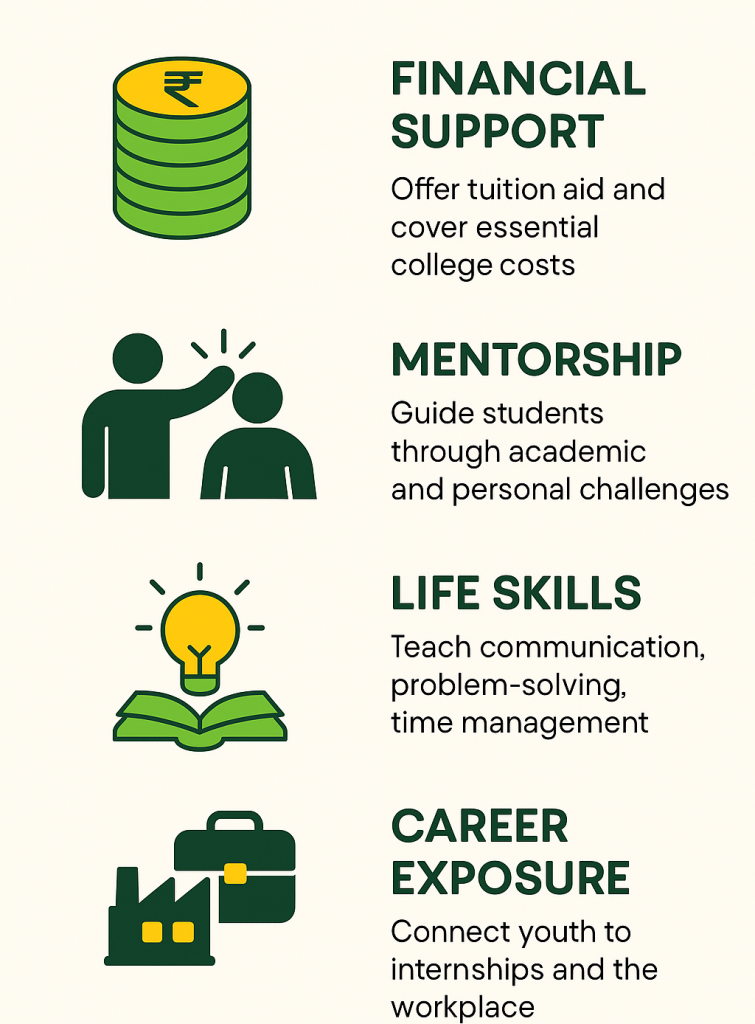
Through its flagship Smile Twin e-Learning Programme (STeP), Smile Foundation provides career-focused interventions to youth from low-income communities across India. The programme offers:

  • Career counselling sessions in government and low-resource schools.
  • One-on-one mentorship for young people preparing for employment.
  • Life skills, digital literacy, and workplace readiness training.
  • Strategic partnerships with private sector companies to deliver industry-aligned guidance.

Smile Foundation also incorporates career awareness in its broader education initiatives like Shiksha Na Ruke, She Can Fly, and Tayyari Kal Ki, ensuring that children and youth—especially girls—are not only educated, but empowered to dream and plan for sustainable careers.

In classrooms where the idea of “career” once felt distant, career counselling has brought direction, dignity, and hope.

How career counselling helps – A 4-step journey

1. Self-awareness

The first step to a meaningful career is understanding oneself.
Career counselling often begins with psychometric tools, aptitude assessments, and reflective exercises to help students identify:

  • Strengths and weaknesses
  • Interests and motivations
  • Work style preferences

Self-awareness lays the foundation for confident choices and helps students resist the pressure to “follow the herd.”

2. Exploration of options

With thousands of career paths available, a professional counsellor becomes a critical bridge between student potential and real-world opportunities.

Whether it’s choosing between journalism and design, or exploring lesser-known fields like environmental law or UX writing, counsellors help students:

  • Understand course and college options
  • Know what skills are required
  • Learn about industry trends and job scopes

For youth in Smile Foundation programmes, this phase often becomes the first time they hear that their passion can become a profession.

3. Goal-setting and preparation

After clarity comes action.

Career counselling includes setting short- and long-term goals and creating personalised academic or vocational roadmaps, including:

  • College applications and entrance exams
  • Financial planning and scholarship identification
  • Skill-building courses, internships, or volunteering

Smile Foundation also guides students through training modules, communication skills, and industry exposure visits, enabling them to step into the workforce with confidence.

4. Implementation and ongoing support

The final stage is bringing it all together—executing the plan, and staying responsive to change.

Counsellors support students through:

  • Admissions
  • Form filling and documentation
  • Interview preparation
  • Dealing with rejection or reevaluation

What makes this guidance unique is that it doesn’t end with a test score or a college list—it continues as a relationship.

Levelling the playing field

While the need for career guidance is universal, access is not. Urban private schools often have entire teams dedicated to college and career counselling, while students in government or low-income schools rely on luck, instinct, or hearsay.

By integrating career counselling into its education and skilling programmes, Smile helps break generational cycles of poverty by turning learning into livelihood.

Their impact is not only in the number of students trained, but in:

  • The girls who choose engineering over early marriage
  • The boys who discover design instead of defaulting to manual labour
  • The first-generation learners who now mentor others

Why the future depends on career counselling

The future of work is dynamic. Roles that didn’t exist five years ago, like AI prompt engineers or sustainability analysts, are now in high demand. At the same time, core skills like communication, creativity, and collaboration are becoming more valuable than ever.

Career counselling empowers young people to make decisions not based on survival, but on self-knowledge and aspiration.

By integrating career guidance into education systems, formal or non-formal, we give students the tools to navigate complexity with confidence. And by investing in organisations like Smile Foundation, we ensure that this clarity isn’t just for the privileged, but for every child with a dream.

In conclusion: Guidance is the new equity

Career confusion is normal, but staying confused shouldn’t be.
When we invest in career counselling, we invest in clarity, confidence, and choice. We help build futures that are not just employable but empowered.

And for thousands of young people in India, Smile Foundation is making that possible—one counselling session at a time.

Categories
Gender

How Women Empowerment Reduces Gender-Based Violence

Violence against women remains one of the most persistent violations of human rights globally. While laws, campaigns, and justice mechanisms play a role, the deeper and more enduring antidote lies in empowerment. Women’s empowerment is not simply a social good; it is a structural and economic necessity for building equitable, peaceful societies. Empowered women are more likely to assert their rights, challenge harmful social norms, and demand accountability when institutions fail them.

In India, where gender-based violence (GBV) intersects with structural inequality, poverty, and patriarchal norms, women’s empowerment plays a pivotal role in both preventing violence and enabling survivors to reclaim agency.

Understanding gender-based violence in India

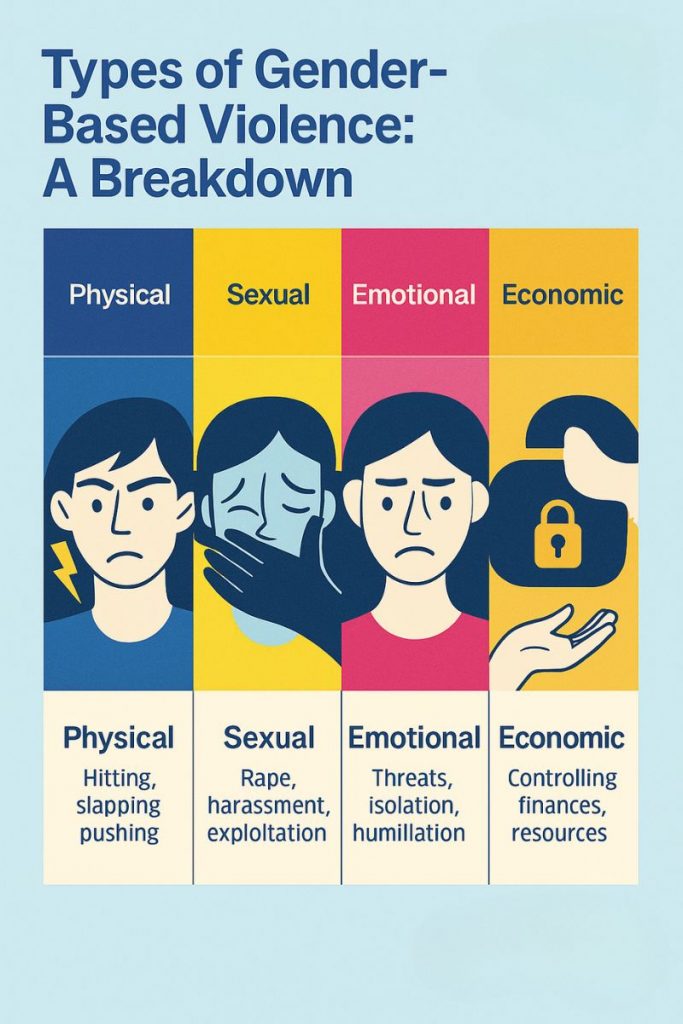
Gender-based violence is not confined to physical abuse. It encompasses a wide range of harms, including institutional violence (by state and legal systems), emotional and psychological abuse, sexual exploitation, and discrimination within households and communities. While GBV can affect all genders, women and girls are disproportionately affected due to entrenched gender hierarchies.

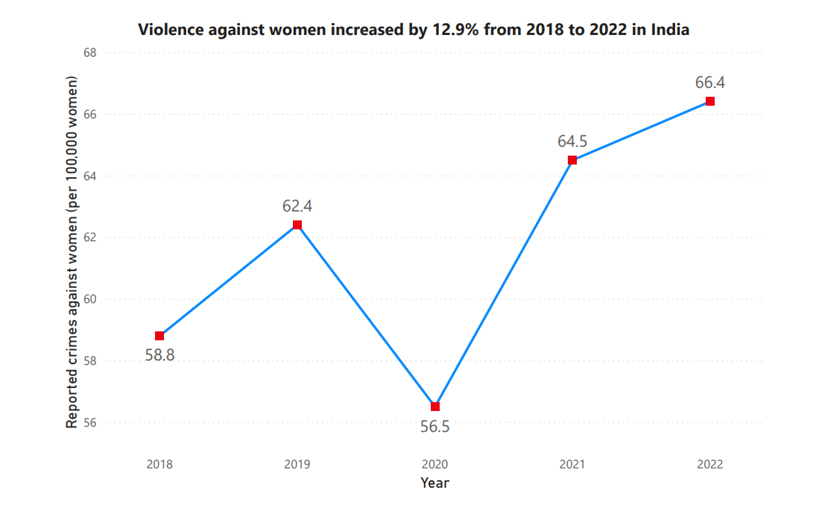
According to the National Crime Records Bureau (NCRB), reported crimes against women in India rose by 12.9% between 2018 and 2022, from 58.8 to 66.4 incidents per 100,000 women. Although this may partly reflect improved reporting, it underscores the urgent need to address GBV through comprehensive, preventative approaches.

output
output 5
Insight: Reported cases rose from 378,277 in 2018 to 445,256 in 2022, with a slight dip in 2020 likely due to lockdown-related underreporting.

Globally, UN Women estimates that one in three women has experienced physical or sexual violence, typically by intimate partners. These rates increase significantly in crisis contexts such as displacement, conflict, or pandemics, where legal protections weaken and vulnerability rises.

Education: The first step toward prevention

Education is a foundational intervention in reducing GBV. When girls remain in school longer, the incidence of child marriage, early pregnancy, and domestic violence decreases. Education fosters critical thinking, confidence, and access to information—tools that are essential for understanding and asserting rights.

output 3
Insight: As more women complete at least 10 years of schooling (from 40% in 2005 to 66% in 2021), early marriage rates have fallen significantly (from 47% to 23%).

Educated women are more likely to delay marriage, negotiate safer relationships, and resist societal pressure that normalizes violence. Moreover, education increases employment opportunities and financial independence, key factors in reducing vulnerability to abusive relationships.

output 4
Insight: Primary completion rose from 76% to 91%, while secondary completion saw major progress—from 38% in 2005 to 66% in 2021, indicating strong gains in girls’ education.

Economic empowerment: From dependence to autonomy

Economic dependence is a significant barrier to leaving abusive relationships. When women have access to work, credit, financial literacy, and entrepreneurship, they gain the capacity to make independent decisions about their lives and well-being. Financial inclusion empowers women to leave violent situations and seek legal or psychosocial support when needed.

The evolution of financial access in India is notable. The 2011 Census revealed only 58.7% of households had access to banking services. By 2016, this had risen to 99%, according to ICE 360°. Targeting women for financial inclusion has cascading effects—studies show that women invest a larger share of their income in education, nutrition, and healthcare, amplifying household well-being.

output 1
Insight: Household access to banking rose from 58.7% in 2011 to 99% in 2016, illustrating the massive leap in financial inclusion, especially relevant to women’s economic empowerment.

Cash transfers have also been shown to reduce GBV by easing financial strain and enabling women to make autonomous decisions. When embedded in social protection frameworks, direct benefits can shift power dynamics within households and increase women’s mobility and access to support services.

Addressing social norms: Transforming relationships and power

Empowerment requires challenging and transforming harmful social norms that legitimise violence. Feminist frameworks advocate for rebalancing power within families and communities, promoting shared decision-making and consent-based relationships.

This shift begins with community-level education that targets boys and men as allies in gender equality. Since men are often the primary perpetrators of GBV, interventions must focus on redefining masculinity, challenging entitlement-based behaviours, and cultivating respect for women’s autonomy.

Creating safe spaces, such as women’s centres, helplines, or peer networks, offers survivors the confidentiality and support they need to report violence and recover from trauma. These spaces also serve as platforms for advocacy, legal assistance, and skill-building.

The role of women-led and community-based organisations in reducing gender-based violence

Local women’s organisations are among the most effective actors in reducing GBV. They are embedded within communities, deeply attuned to local contexts, and trusted by the populations they serve. Their work ranges from operating shelters and helplines to leading campaigns and training programs.

Such organisations also play a crucial role in responding to the intersectionality of violence—where gender, caste, class, religion, and disability combine to create multiple layers of marginalisation. For example, dalit women often face both caste-based and gendered violence, requiring interventions that address both hierarchies.

Supporting these organisations with funding, capacity-building, and institutional recognition ensures that GBV prevention efforts are not top-down but inclusive, participatory, and sustainable.

Case in point: Smile Foundation’s integrated approach

Smile Foundation exemplifies how integrated, community-based approaches to women’s empowerment can reduce gender-based violence. Since 2005, its Swabhiman programme has worked to equip women with healthcare access, educational support, and leadership opportunities.

Swabhiman operates on a 4S model:

  • Seeking healthcare as a behaviour
  • Support through education
  • Support from men and male allies
  • Sustaining change through community engagement

To date, the initiative has reached over 150,000 women and girls, with more than 1,000 trained as community change agents advocating for rights, equity, and dignity.

In addition, through Project Manzil, Smile Foundation has enhanced vocational education for girls in Grades 9–12 across six districts in Rajasthan by installing smart TVs and delivering audio-visual training. Over 13,000 girls have benefitted from this digital learning initiative, while more than 14,000 girls have received employability training and 5,000 have accessed on-the-job placements.

output 2

These initiatives foster confidence, resilience, and social mobility, enabling young women to challenge the status quo and advocate for safer, more equitable environments.

Addressing structural challenges

While empowerment-based approaches offer hope, several systemic barriers must be addressed:

1. Patriarchal Social Structures

Gender norms that prioritise male authority and control must be dismantled through sustained education, media engagement, and community mobilisation.

Many women remain silent due to fear of retaliation, social stigma, or mistrust in the justice system. Strengthening survivor-centred reporting mechanisms and legal aid is essential.

3. Weak Implementation of Laws

Despite progressive legal frameworks (e.g., the Protection of Women from Domestic Violence Act), poor enforcement, delays, and corruption hinder justice. Reforms must address not only laws but the ecosystem in which they are implemented.

4. Intersectionality and Inclusion

Policies must consider the layered discrimination faced by women from marginalised communities. One-size-fits-all interventions often fail those most in need.

Empowerment as prevention

Women’s empowerment is not merely a parallel goal to ending gender-based violence—it is the core strategy. Education, financial independence, safe spaces, legal access, and social capital collectively reduce women’s vulnerability and expand their capacity for self-determination.

NGOs demonstrate that empowerment must begin early, embed locally, and evolve with the needs of women. Policymakers, researchers, and civil society must recognise that eliminating GBV is about prevention, protection, and power redistribution.

As India and other nations chart pathways to gender equality, investments in women’s empowerment will determine whether progress is inclusive or superficial—whether freedom from violence becomes the norm or remains an elusive right.

Categories
Health Gender

What No One Tells You About Postpartum

Pregnancy and childbirth are often described as magical, life-changing experiences—and they are. But what comes after can be just as intense, just as transformative, and often, not talked about enough.

Once the baby arrives, attention naturally shifts to the newborn. But a mother’s journey is far from over. In fact, it’s just entering a new chapter. The postpartum period, those first weeks and months after delivery, is a time of physical healing, emotional recalibration, and massive change. And yet, many women feel completely unprepared for it.

Let’s talk about what really happens during postpartum, why it matters, and how more open, informed conversations can help women feel seen, supported, and better equipped to take care of themselves.

The physical side: What your body goes through after birth

No one really tells you how physically demanding postpartum recovery can be. Sure, childbirth is tough but what happens afterward can be equally intense.

For starters, your uterus doesn’t just shrink back immediately. It takes weeks to return to its normal size, and the contractions that help it get there can cause cramping that feels like strong period pain. This is completely normal but often catches women by surprise.

Then there’s lochia, a heavy vaginal discharge made up of blood and tissue, which can continue for up to six weeks. Many women aren’t prepared for the amount or duration of postpartum bleeding and that can be unsettling if they don’t know what to expect.

Vaginal soreness is also common, especially for those who had a vaginal delivery. Swelling, discomfort in the perineal area, and stinging while urinating can linger for days or even weeks. Ice packs, warm baths, and prescribed pain relief can help, but the healing process is personal and varies greatly from woman to woman.

Breastfeeding brings another set of challenges. Breasts can feel swollen, tender, or painfully engorged. Cracked nipples, latching issues, and early breastfeeding discomfort are more common than most admit. And while nursing is often portrayed as natural and bonding, it doesn’t always come easily. Many mothers find the process frustrating, even distressing.

On top of that, hormone fluctuations, interrupted sleep, and the sheer exhaustion of caring for a newborn can leave women drained, both physically and emotionally.

This is why postpartum education is so crucial. New mothers need to be informed about what’s normal, what’s not, and when to seek help. Unfortunately, in many parts of India, and especially in rural or underserved communities, this kind of information just isn’t readily available.

Closing the gap: Making postpartum care accessible

Healthcare providers are doing their best, but time, infrastructure, and access are often limited. That’s where non-profits step in to fill critical gaps.

Smile Foundation is working to change that narrative. Through our Swabhiman programme, we conduct awareness sessions that empower women with information about postpartum health—from hygiene to nutrition to newborn care. These sessions not only educate but also encourage women to seek care without shame or delay.

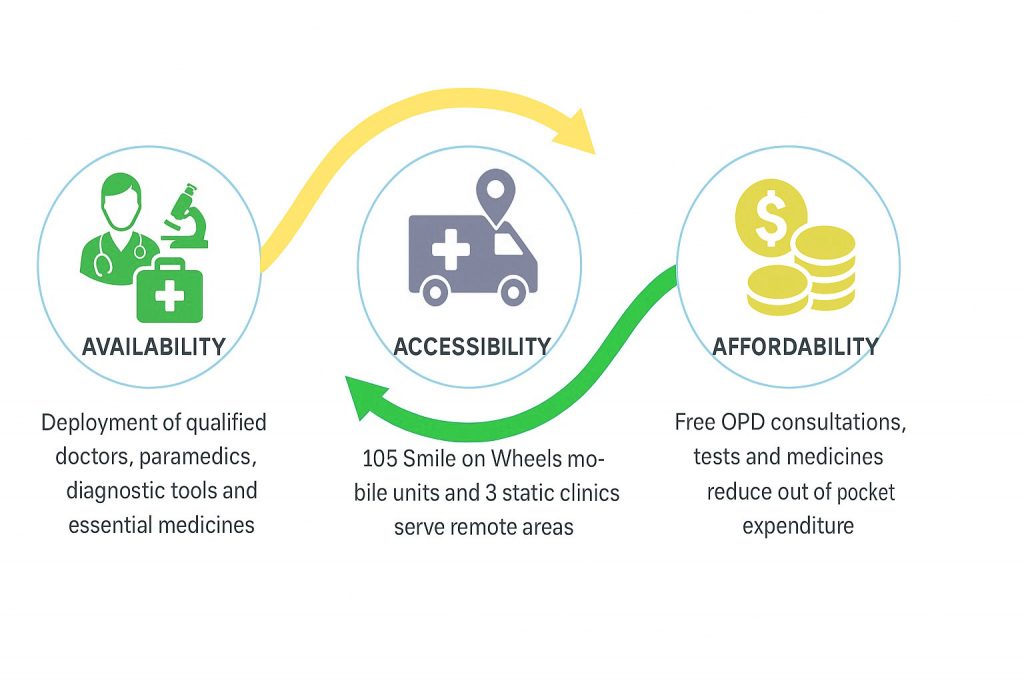
In areas where clinics are few and far between, Smile Foundation’s Smile on Wheels initiative brings healthcare right to women’s doorsteps. These mobile medical units, staffed with doctors and paramedics, provide essential maternal and child health services, including check-ups, basic diagnostics, and medications—free of cost.

By reaching women who might otherwise fall through the cracks, these initiatives play a vital role in building a more equitable healthcare system and improving maternal outcomes.

Emotional Wellness: The part we don’t talk about enough

While the physical changes are more visible, the emotional toll of postpartum can be just as significant—if not more so. Yet it often goes unacknowledged.

Many new mothers experience the “baby blues” in the first few days after birth. These mood swings, tearfulness, and irritability are usually short-lived. But when feelings of sadness, hopelessness, or anxiety persist, it could be something more serious: Postpartum Depression (PPD).

PPD affects between 10 to 20 percent of women after childbirth. It’s not simply about feeling tired or overwhelmed. Women with PPD may experience emotional numbness, chronic fatigue, trouble bonding with their baby, sleep and appetite disturbances, and even thoughts of self-harm or harming their child.

PPD can begin a few weeks after delivery, or it might take months to show up. Either way, it’s real, it’s serious, and it’s treatable. What’s needed is early identification and support through therapy, medication when needed, or a combination of both.

Again, awareness plays a huge role here. Smile Foundation has also stepped up in this space, conducting outreach and educational programmes focused on maternal mental health, breastfeeding education, and nutritional care. These programmes are designed not just to inform but to empower women to recognise when they need help and to feel safe asking for it.

Why talking about postpartum matters

The postpartum period is not just about recovery—it’s a time of rediscovery. A woman’s identity is reshaped as she learns to care for a newborn while also navigating pain, fatigue, hormonal shifts, and social expectations.

Yet, conversations about postpartum tend to be hushed or wrapped in guilt and pressure—to bounce back, to keep smiling, to just “be grateful.” The result? Many women feel isolated, overwhelmed, or even ashamed of their struggles.

Changing this starts with acknowledging the full picture. By speaking openly about the physical and emotional realities of postpartum, we make it easier for women to share, to seek support, and to trust that what they’re feeling is valid.

🍼 Myths vs. Facts: What No One Tells You About Postpartum

Myth: Recovery after birth is quick.
Fact: Healing takes time. Bleeding, cramps, soreness, and fatigue can last for weeks or even months.
Myth: Breastfeeding should come naturally.
Fact: Breastfeeding is often difficult at first. Pain, latching issues, and engorgement are common.
Myth: Feeling sad means you’re failing.
Fact: Postpartum depression is medical. It’s common and treatable with help and support.
Myth: Only C-section moms need recovery time.
Fact: Vaginal births can also be painful. All mothers need time to heal.
Myth: You should bounce back quickly.
Fact: There’s no rush. Emotional and physical healing happen at your own pace.

Support should be commonplace for new mothers

Postpartum care shouldn’t be a privilege. It should be a standard part of every mother’s healthcare journey. That means:

  • Providing clear, consistent information before and after delivery.
  • Offering mental health support without stigma.
  • Making maternal health services available and accessible, no matter where a woman lives.
  • Empowering women to ask questions and advocate for their own well-being.

Motherhood is powerful, but it’s also vulnerable. And women shouldn’t have to navigate that vulnerability alone.

Let’s start telling the full story. Let’s listen to mothers. And let’s make sure every woman knows she’s not alone—because she isn’t.

Categories
Smile Health

Corporate India and Preventive Physiotherapy for Truck Drivers

Every day, truck drivers—unsung heroes who deliver everything from food and medicine to the smartphones in our pockets—power the Indian economy. However, the life of a truck driver remains arduous and largely unknown. Long hours behind the wheel, irregular rest, poor posture, and inactivity all contribute to chronic pain, joint strain, and long-term musculoskeletal disorders, coupled with poor working conditions, little access to nutritious food and adequate healthcare takes a significant and often invisible toll on their physical and mental well-being. Yet, most seek help only when the pain becomes debilitating—too late for simple solutions. For many, the physical toll results in a steady, silent deterioration of their health and livelihood

Their injuries

The most common occupational injuries among professional drivers are musculoskeletal diseases (MSDs) of the neck, back, and upper extremities. Drivers who miss work due to MSD-related injuries suffer not only physical suffering but also financial damages. According to studies, MSDs cause 33% of all occupational illnesses and injuries.

Here lies a powerful opportunity for corporate India, particularly stakeholders in logistics, retail, e-commerce, and manufacturing. Companies may develop a healthier, more resilient trucking workforce by investing in preventative physiotherapy as part of their CSR or wellness initiatives, as well as building ethical supply chains that care for people who keep them operating. HDB Financial Services (HDBFS) has established its seventh Transport Aarogyam Kendra (TAK) in Indore, in collaboration with the Smile Foundation. TAK is a healthcare institution dedicated particularly to the well-being of truck drivers. 

Each TAK:

  • Offers free physiotherapy consultations and exercises for truckers.
  • Provides access to general health check-ups, eye exams, and lifestyle counselling.
  • Operates in transport hubs and logistics parks, ensuring easy access to drivers where they work and rest.

Alongside these centres, Smile Foundation deploys its flagship Smile on Wheels mobile medical units. These vans bring doctors, paramedics, diagnostic services, and free medicines directly to trucking zones and highways—ensuring healthcare is both accessible and continuous.

In just the last year, Smile Foundation’s mobile healthcare units have conducted thousands of physiotherapy sessions, delivered preventive care education, and helped drivers identify and treat symptoms before they became severe. This kind of early intervention model is both scalable and sustainable.

What is preventive physiotherapy?

Preventive physiotherapy, with its focus on early posture correction and mobility, could break this cycle. It is a cheap and effective way to keep India’s truck drivers moving without discomfort. Instead of waiting for problems to develop, it identifies risk factors early and addresses them before they cause pain or injury. It can be as simple as a 10-minute stretch routine during refuelling breaks or periodic visits from mobile physiotherapy units. When done consistently, these small changes can reduce long-term injuries, improve stamina, and help drivers stay on the road—safely and sustainably. It’s not just about treatment. It’s about giving drivers a fighting chance.

Why corporate India should step in

India’s logistics engine depends on its truck drivers, yet their health remains dangerously neglected. Corporates— Businesses, especially those in e-commerce, fast-moving consumer goods (FMCG), and supply chain operations, need to change this for moral and strategic reasons. Companies who are ahead of the curve know that spending money on driver health is not just the right thing to do, but also a smart business move that pays off in the following ways:

Strong Business Case

Healthier drivers mean fewer sick days, reduced attrition, and better performance. This has a positive impact on delivery timelines, fuel efficiency, and workforce morale—translating care into cost savings.

Enhanced Public Image

In an era of conscious consumerism, showing genuine concern for frontline workers improves public trust. Customers notice when brands treat their workforce.

Competitive Advantage 

Companies that offer full health benefits, such as preventive physiotherapy, can position themselves as progressive employers who really care about the health of their drivers. This is especially helpful for attracting and retaining skilled drivers and competing with companies that simply offer minimal pay.

Key corporate initiatives include:

  • Mobile health units that offer physiotherapy services at truck stops and highway rest areas. 
  • Technology-based solutions include driver health apps, wearable devices for posture monitoring, and telemedicine consultations. They can add basic wellness solutions, such applications with stretching exercises, reminder alerts, or films, to logistical platforms that are already in use.
  • Working with physiotherapy clinics, NGOs and hospitals to establish full networks of preventative care.
  • Adding to current wellness initiatives to give contracted drivers and fleet partners the same health benefits as employees. 
  • The education part can include things like being aware of how your body works, how to securely move freight and equipment, how to sit up straight, when to take breaks and change positions, how to see early signs, how to sleep properly, and how to eat well. 
  • Regular screenings can happen every three or six months, just like how corporations examine their employees’ health on a regular basis.

While road safety and fatigue have attracted some public attention, one critical area remains alarmingly overlooked: preventive physiotherapy. Truck drivers in India are the backbone of our economy, yet their health is not a priority. Corporate India has to start taking genuine, proactive action. Investing in physiotherapy isn’t charity; it’s sensible, long-lasting, and fair. A driver who is healthier now will make the supply chain safer and stronger tomorrow. Without their diligent efforts, the sophisticated web of supply chains that powers India’s economy would come to a halt. With the right design, care can meet them where they are—on the move.

Truck Driver Scroll Story
🚚

Life on the Road

Meet Rajesh, a truck driver who spends over 12 hours a day behind the wheel, delivering essential goods across India. Long hours, irregular meals, and no time for rest take a toll on his health.

😣

Pain Sets In

After years of work, Rajesh starts experiencing severe lower back pain and stiffness in his neck. The discomfort makes driving harder and more dangerous.

🩺

Meeting Smile Foundation

During a stop in Indore, Rajesh visits a Transport Aarogyam Kendra run by Smile Foundation and HDB Financial Services. He meets a physiotherapist who helps him understand the cause of his pain.

🤸‍♂️

Preventive Physiotherapy Begins

He learns simple exercises, posture correction techniques, and stretches he can do during breaks. He feels relief within days and commits to regular sessions.

💪

Back on the Road, Healthier

Rajesh is back on the road—stronger, more aware, and pain-free. Preventive physiotherapy has changed his life, and now he encourages fellow drivers to take charge of their health too.

Categories
In The Spotlight

What India’s Aspirational Blocks Are Really Building

There’s a certain sound to ambition in rural India. It’s not loud. It doesn’t echo in Parliament halls or air-conditioned policy conclaves. No, it’s quieter than that. Like the rustle of papers in a primary school, or the hiss of pressure cookers in a newly built health centre, or even the shuffle of slippers outside a panchayat office where, at this very moment, someone is trying to rewrite their future.

And if you ask the government, they’ll tell you they’re accelerating this quiet transformation through something called the Aspirational Blocks Programme—a name that feels a little too bureaucratic to contain the enormity of what it’s trying to do. But make no mistake: there is change afoot.

Take Puredalai Block, for instance. Tucked away in Barabanki district, Uttar Pradesh, it wasn’t so long ago that its residents were grappling with high TB burdens, low institutional deliveries, and that aching, invisible illness called neglect. Fast forward to June 2025, and it’s accepting a ₹1.5 crore award from NITI Aayog for outperforming on human development indicators.

From zero TB treatment gaps to 100% institutional deliveries, and from chronic underperformance to model block—Puredalai has had what the papers might call a glow-up. But what they often miss is what really powers this kind of change. Spoiler: it’s not just dashboards and deadlines. It’s community, care, and continuity. And it’s worth talking about.

Community: Where the real bureaucracy lives

There’s a village in Telangana called Gangadevipalli, and it should be on the syllabus of every development studies course in the country. With just 369 households, it quietly achieved what most districts still dream of: 100% literacy, 100% toilet construction, 100% school attendance, even a village-level alcohol prohibition law that actually works.

Its secret? Committees. Twenty-six of them, to be precise. One for plastic bans. One for widow welfare. One for sanitation. One for women’s issues. And the kicker? Every household has someone on at least one committee. Bureaucracy, yes; but the kind that works because it belongs to the people.

This is what real grassroots governance looks like. Not top-down schemes, but side-by-side solutions. Not the government arriving with answers, but the community asking the right questions.

In fact, if India’s underdeveloped regions have taught us anything, it’s this: no transformation takes root without community ownership. The best policies remain PDFs without people to carry them forward.

So it’s no surprise that under the Aspirational Blocks Programme, Panchayati Raj Institutions (PRIs) and community-based organisations (CBOs) are emerging as the backbone. They don’t just implement; they interpret. They ensure that the letter of a scheme doesn’t strangle its spirit.

Care: Not the kind you fill in a form

In Villupuram, Tamil Nadu, care wears a nurse’s uniform and has a name—Katheeza Beevi. Over three decades, she helped bring more than 10,000 babies into the world. No fancy degree, no media spotlight. Just the unglamorous, irreplaceable work of showing up, every single time.

Her health centre became known locally as the “lucky maternity hospital,” and honestly, who wouldn’t trust a place blessed by consistency?

But even good intentions can unravel if dignity isn’t woven into the thread. Tamil Nadu’s Chief Minister’s Breakfast Scheme, while brilliant on paper, faced backlash when a staff member allegedly mistreated a child. It was a stark reminder: welfare without empathy can turn nourishment into humiliation.

So yes, we need schemes. We need systems. But we also need to remember that people are not metrics. They’re not indicators to be monitored. They’re citizens. And care, real care, isn’t just about providing services. It’s about how those services are delivered.

When health workers follow up because they care, not because they’re being audited, something changes. When students eat breakfast and feel respected, not pitied—something grows.

Continuity: The art of not starting over every five years

Ah, continuity. The least glamorous of the Three Cs, and yet the most essential. Anyone who’s ever worked in or around development knows the ritual: a new scheme arrives, posters are printed, officials nod solemnly, and then—it all resets when the next big thing comes along.

But ABP doesn’t want to be the next big thing. It wants to be a consistent thing. The kind of initiative that stays long enough to matter.

It’s built on three foundational pillars:

  1. Convergence – getting state and union schemes to working in tandem with each other
  2. Collaboration – coordination between NITI Aayog, state governments, and district/block administrations
  3. Competition – a spirit of constructive rivalry aimed at maximising public good

Blocks are ranked based on 39 socio-economic indicators, nudged toward SWOT analysis (that’s Strengths, Weaknesses, Opportunities, Threats), and trained to make their own block development strategies.

And, then, there’s a knowledge portal, an iGOT Karmayogi integration, and more digital dashboards than you can shake a stylus at.

But what’s quietly radical about ABP is that it values institutional memory. It wants functionaries to be trained, yes—but also retained. It wants plans not just made, but maintained.

It’s not a patchwork programme. It’s an infrastructure for transformation.

The Smile factor: Where NGOs fit in for Aspirational Blocks

While government schemes provide scale, non-governmental organizations (NGOs) often bring adaptability, trust, and context-specific expertise. For instance, Smile Foundation has emerged as a crucial partner in complementing public efforts under the ABP framework.

Through initiatives like:

  • Mobile healthcare units (in partnership with Philips India) across Tamil Nadu, Karnataka, Haryana, and Maharashtra
  • Solar-powered digital classrooms in rural and tribal schools
  • Vocational training programmes benefiting over 44,000 girls
  • Telemedicine and health awareness campaigns reaching over 80,000 people
  • Education initiatives improving outcomes for over 1.6 lakh children

Smile Foundation demonstrates how multi-sectoral partnerships can translate policy intent into lived impact. Their work in Sundergarh (Odisha), Siddharth Nagar, and Shravasti (Uttar Pradesh) showcases how health, education, and livelihood interventions, when combined with community engagement, result in lasting change.
When the three Cs collide

When community, care, and continuity align, you don’t just see transformation—you feel it.

Like in Malkangiri, Odisha, where 23,000 people across five blocks are now part of the PM-JANMAN programme. It’s not just about roads and electricity (though those are there too). It’s about ownership. About tribal families participating in awareness campaigns and choosing pucca houses that suit their lives.

It’s about development not arriving with a press release, but growing from the inside out.

Aspirational Blocks: From block to blueprint

India’s Aspirational Blocks Programme more than a rural policy initiative—is a laboratory for governance innovation—a blueprint for inclusive development that others in the Global South might adapt to address their own regional disparities.

When community, care, and continuity intersect, development is no longer top-down. It becomes collaborative, enduring, and people-first. And when that happens, the gains are transformational.

Categories
Smile

Upskilling India’s Informal Workforce for Inclusive Growth

The backbone of India’s economy

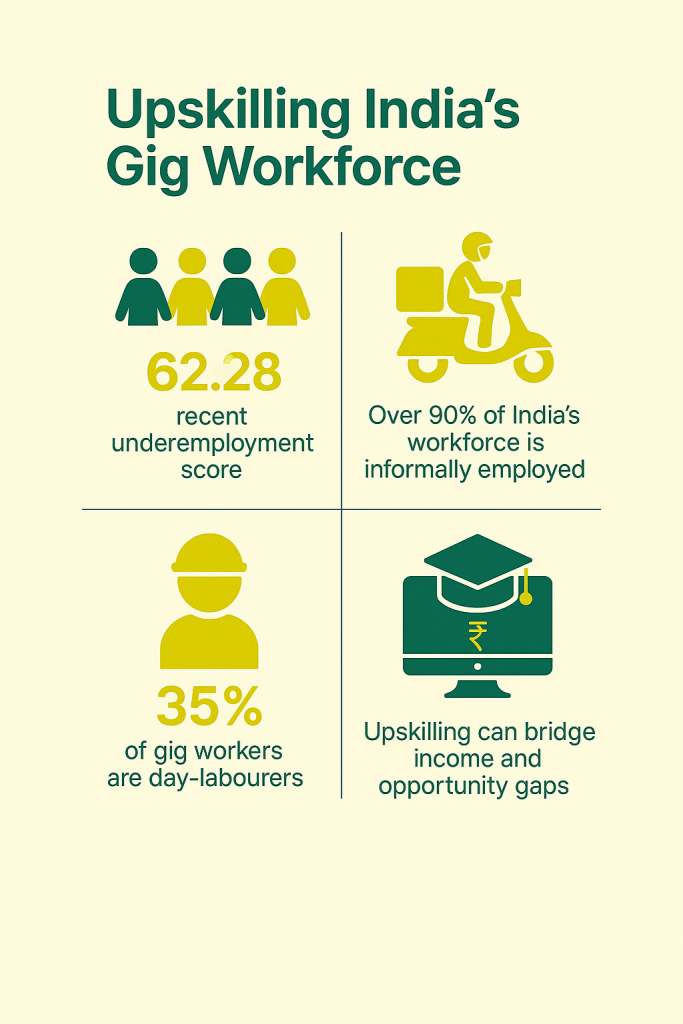
India’s growth ambitions rest on the shoulders of its blue-collar workforce – the electricians, plumbers, painters, construction labourers, delivery riders and countless others who keep the nation running. These workers make up the vast majority of India’s labour force, yet most operate in the shadows of the informal economy. Over 90% of all workers in India are employed under informal arrangements, meaning they lack formal job contracts, benefits, and often access to structured training. This predominance of informality has long been a double-edged sword. While it provides livelihoods for millions, it also means low productivity, precarious working conditions and a persistent skills deficit.

As India marches toward a modern, $5-trillion economy, the demand for skilled labour in infrastructure, construction, manufacturing and services is skyrocketing. By 2030, the country is expected to need to create 90 million new non-farm jobs and fully 70% of these will be in blue-collar roles that require vocational or soft skills training. Sectors like logistics, e-commerce, construction and the gig economy are already experiencing surging demand for workers. Blue-collar workers account for roughly 80% of India’s non-agricultural workforce and are truly the engine of the economy. However, while demand for these workers is rising, most remain largely untrained or under-skilled, limiting productivity and earning potential. 

Only about 4% of India’s workforce has received formal vocational training as of 2023. Even including informal on-the-job learning, a full two-thirds of working-age Indians have never received any skills training at all. This skills gap hits the informal and blue-collar workforce the hardest, trapping many in low-pay, low-productivity jobs and constraining India’s overall growth. Bridging this gap by transforming upskilling opportunities for India’s informal workers is necessary for inclusive growth.

The coming jobs surge and the skills mismatch

Several megatrends are poised to reshape India’s labour market in the coming decade. Rapid urbanisation, infrastructure expansion, the push in manufacturing (e.g. Make in India) and the digital services boom could together generate tens of millions of new jobs. McKinsey & Company projects that by 2030 India may generate 90 million net new jobs (non-farm), with blue-collar jobs driving 70% of this growth. These include roles like factory workers, carpenters, drivers, warehouse staff, cleaners, and tradespeople – jobs that typically do not require college degrees but do demand vocational skills or soft skills proficiency. The rise of the gig economy further accelerates this trend. 

App-based platforms are creating work for delivery couriers, rideshare drivers, and freelance service providers. India’s gig workforce, estimated at around 7.7 million in 2020-21, is projected to nearly triple to 23.5 million by 2029-30. By then, gig workers could form over 4% of the total workforce – a significant share for a workforce as large as India’s. Notably, the bulk of these gig roles are in low-to-mid skilled services (only ~22% are high-skilled jobs), indicating a vast need for upskilling if gig workers are to transition into more stable, higher-paying opportunities.

The challenge India faces is that its workforce training ecosystem is not yet equipped to meet this surging demand for skills. This mismatch between the skills required by a modernising economy and the skills available in the workforce could become a serious bottleneck. Already, industries from construction to healthcare report difficulties in finding trained personnel, even as millions of youths remain unemployed – a paradox of unemployable labour alongside unfilled job vacancies. Unless India dramatically expands and improves its upskilling initiatives, the anticipated jobs surge may be undermined by a lack of job-ready talent.

Gender gaps and structural inequities in upskilling

Any discussion of workforce transformation in India must confront the deep gender gap in both employment and skills training. Women’s labour force participation in India remains among the lowest in the world for a major economy – only about 37% of working-age women are either employed or seeking work, compared to nearly 79% of men. In the vocational training domain, the divide is equally stark. As of 2022-23, only 18.6% of Indian women aged 18–59 had ever received any vocational training, compared to 36.1% of men. This gap has in fact widened over time. Even within government skill programmes, women are under-represented; in 2021, women made up a mere 7% of total trainees in skill development schemes despite policy mandates like reserving 30% of seats in Industrial Training Institutes (ITIs) for women. 

Crucially, even when women do get upskilled, they tend to be tracked into lower-paying “feminine” trades, reflecting ingrained gender stereotypes in skills training. Data shows that women most commonly train in areas like beauty and wellness, tailoring, textiles, clerical work or healthcare assistance, whereas men dominate training in higher-paying trades such as electrical, mechanical and civil engineering, automotive, and IT hardware. This gender segmentation means women often miss out on the booming opportunities in construction, manufacturing, plumbing, electrical works, or emerging tech maintenance – sectors where wages and demand are growing. 

A recent study found that over 30% of skilled young women went into beauty-related work and 21% into tailoring, while men were far more likely to go into electronics or automotive work that typically commands higher earnings. Such occupational segregation is one reason the return on training (in terms of salary uplift) tends to be lower for women. It is clear that without deliberately addressing gender bias by encouraging and enabling more women to enter non-traditional trades and ensuring training environments are gender-inclusive, India’s overall skilling mission will leave a huge portion of its potential workforce behind. 

Inclusive upskilling must address issues like providing safe training facilities, flexible schedules, mentorship and placement support for women. Promisingly, when women do receive market-relevant skills, the impacts are massive: one survey showed skilled women earned 27% higher incomes than unskilled women, and had significantly better odds of securing formal jobs and financial independence. Thus, closing the gender gap in skilling has the huge potential of bringing millions more women into the labour force in better-paying jobs.

Government initiatives

Recognising the looming skills challenge, the Indian government has launched several initiatives over the past decade under the banner of Skill India mission. Flagship programmes like the Pradhan Mantri Kaushal Vikas Yojana (PMKVY), started in 2015, and Deen Dayal Upadhyaya Grameen Kaushalya Yojana (DDU-GKY), focused on rural youth since 2014, have aimed to provide short-term vocational courses and improve employability. Early on, policymakers set bold targets – the National Skills Policy of 2015, for instance, envisioned training 400 million individuals by 2022. These efforts have undoubtedly increased awareness of skill development and millions have undergone some form of training through government-funded programmes. However, the overall impact has fallen well short of what is needed.

As of 2023, for example, the PMKVY scheme – despite multiple phases and iterations – had cumulatively trained a number of people quite different from the original aspiration. DDU-GKY and others add some numbers, but the combined reach still pales in comparison to the hundreds of millions in the informal workforce needing upskilling.

While government-sponsored training programmes like PMKVY and others have made considerable strides in expanding the reach of skilling across the country, there remain opportunities to enhance the depth and industry alignment of these efforts. 

Community-based training: Bringing upskilling to the workers

One of the most effective strategies to upskill informal and blue-collar workers is to bring training opportunities directly to their communities. Traditional vocational institutes or ITIs are often concentrated in urban centers and many informal workers – juggling jobs and family responsibilities in peri-urban or rural areas – cannot easily access them. To overcome this, Smile Foundation is operating mobile training and community-based upskilling programmes that meet workers where they are. A standout example is Smile Foundation’s iTrain on Wheels programme which deploys mobile training vans to impart vocational skills in underserved areas. 

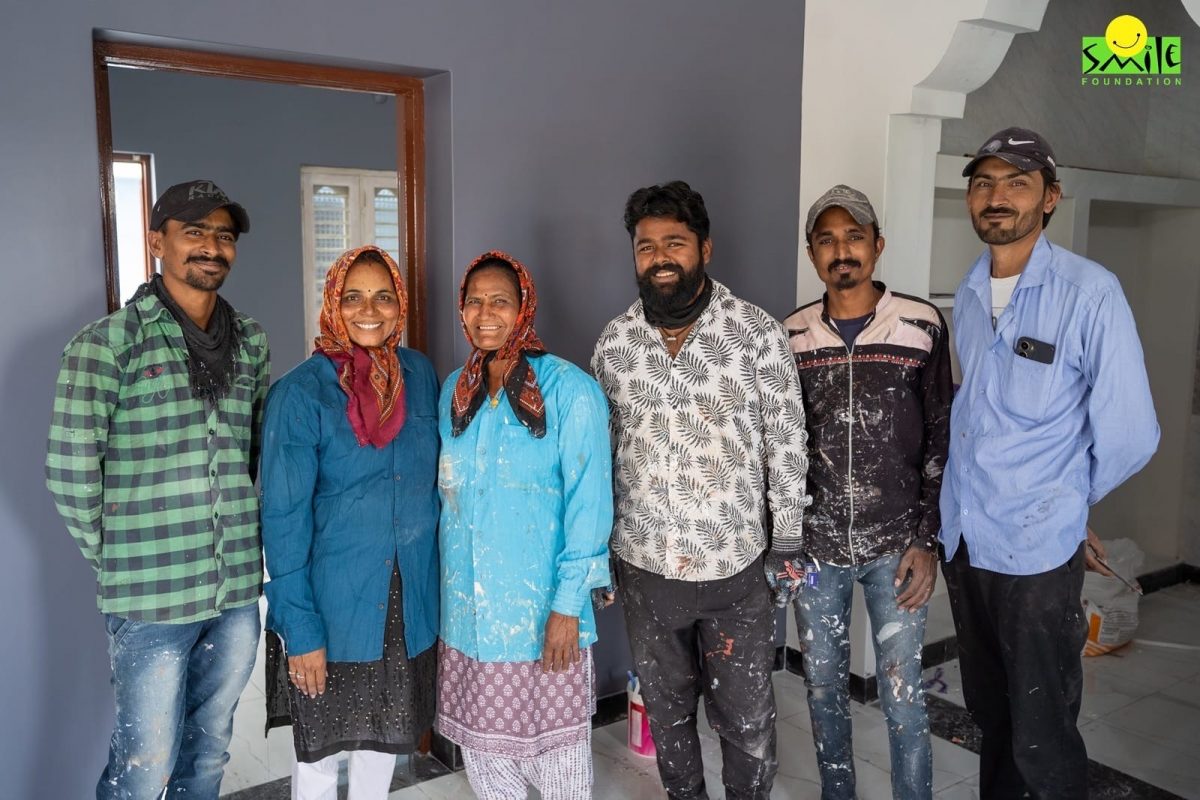
In partnership with industry (such as a collaboration with Berger Paints for training painters), the iTrain on Wheels model has supported vocational training for painters across 24 states in India. These brightly painted vans are essentially classrooms on wheels – equipped with training equipment, simulators and audiovisual aids – that travel to over a hundred locations, from urban slums to remote townships. 

The programme is designed around the needs of the worker—not the convenience of the provider. Static training set-ups are supported by specially equipped mobile units that bring workshops to worksites, dealer points and residential areas. Sessions are held in morning or evening slots to avoid wage loss and training durations are kept efficient—2 to 3 days per module—without compromising content depth. The curriculum spans a comprehensive range: pre-installation practices, fault diagnosis, safety standards, customer engagement, and even entrepreneurship ensuring that trainees are not only upskilled technicians but also confident, service-ready professionals. By literally rolling into communities, such programmes eliminate the cost and distance barriers that often exclude informal workers from formal upskilling courses.

By 2024, these mobile vans had empowered tens of thousands of unskilled or semi-skilled painters – including women painters breaking into the male-dominated trade – to become certified, improve their techniques and increase their incomes. Trainees practice everything from surface preparation to safe use of tools and even learn basic literacy and etiquette needed to deal with clients. An internal assessment of this programme showed enhanced technical proficiency and employability among graduates, many of whom have since secured better-paying contracts or started small painting businesses in their communities. 

Similarly, our electrician training initiative plans to reach 300 workers annually, with 10–15 day modules delivered outside of regular work hours. Training centers are equipped with hands-on aids and simulation tools, building technical capacity while ensuring practical relevance.

Toward an equitable workforce transformation

With the largest youth population in the world and a potential demographic dividend on the horizon, the country cannot afford to let its informal, blue-collar workforce languish in a low-skill equilibrium. Upskilling India’s informal workers is a foundational pillar for inclusive growth and a stronger social contract. When an electrician from a village gains certification in solar panel installation or a domestic worker learns professional caregiving skills, it doesn’t only elevate their own income; it enhances the productivity of entire sectors and improves services for everyone. Conversely, failing to upskill this vast workforce risks trapping millions in subsistence jobs, deepening inequality and slowing India’s economic engine just when it needs to accelerate.

For India to fulfill its economic promise and social goals, the upskilling revolution must reach every alley and village, uplift men and women alike and equip them for the jobs of tomorrow. In doing so, India can craft a new model of growth – one that leaves no worker behind and in which prosperity is truly shared on the strength of a skilled and upskilled nation.

Sources: Periodic Labour Force Survey (PLFS) 2022-23; International Labour Organization; National Skill Development Corporation; McKinsey Global Institute; Smile Foundation programme reports; Government of India skill mission documents.

Categories
Skill Development

Placement Support as a Catalyst for Youth Employment in India

India is home to the world’s largest youth population, a demographic asset that could drive long-term economic growth—if supported effectively. However, the paradox of a young, educated population facing mounting unemployment continues to challenge policymakers, educators, and development practitioners. As the job market becomes increasingly competitive and sector-specific, structured placement support has emerged as a critical link between education and employability, particularly for youth from underserved backgrounds.

Placement-oriented interventions, especially those integrated with skills training and mentorship, offer young people a pathway not just to jobs—but to confidence, agency, and long-term upward mobility.

The transition from classroom to career

Placement support serves as a crucial bridge between academic learning and real-world employment. It introduces students to sector-specific career paths, provides access to reputable employers, and fosters soft skills essential for workplace readiness. Beyond this technical value, placements significantly impact young people’s self-esteem, financial independence, and social mobility.

Importantly, structured placement programs promote equity and access in higher education. When colleges and training centres proactively engage with employers, offer preparatory sessions, and ensure accessibility in interviews, they create pathways for students across all backgrounds—including first-generation learners, women, and persons with disabilities.

Navigating a youth employment crisis

Youth unemployment is not a cyclical concern in India; it is a structural issue. Despite increasing enrollment in higher education, the transition to stable employment remains fraught. According to the 2024 Department of Economic Affairs evaluation, only 51% of final-year students in India were deemed employable.

This is compounded by worrying placement trends. According to media reports, placement rates at many higher education institutions were expected to fall between 30% and 70% in 2024. Global hiring slowdowns, layoffs in tech and services, and a 15–30% drop in campus recruiters, particularly in Tier 2 institutions, have further strained the transition from college to work.

India’s large middle class increasingly views quality placements as the single most important factor in college selection, more so than faculty or academic rankings. In this climate, the role of placement support is not optional—it is foundational to the promise of education.

What effective placement support looks like

To address this challenge, educational institutions and development partners have introduced a variety of interventions to build employability:

  • Vocational training and certification aligned with labour market demands
  • Industry partnerships to enable real-time skill alignment
  • Internships, apprenticeships, and job shadowing to foster experiential learning
  • Soft skill development in communication, problem-solving, and workplace ethics
  • Mentorship and coaching to build confidence and guide job-seeking behaviour

A growing number of initiatives now combine these components into comprehensive employment programs. By closing the skills gap, building professional networks, and providing job placement services, such efforts address both the supply- and demand-side constraints of youth unemployment.

Evidence of impact: Confidence and career trajectories

Several studies have shown the positive correlation between structured placements and long-term employment outcomes. One analysis found that students who completed formal work placements were 50% more likely to secure a job with higher starting salaries than those who did not. A 2023 study of engineering undergraduates reported a 5.7% increase in academic performance among students who participated in placements, indicating improved motivation and better integration of classroom and workplace learning.

Placements also help in developing resilience and adaptability, both critical for navigating the complexities of the modern workforce.

output 9

Smile Foundation’s skill and placement ecosystem

Through its flagship Smile Twin e-Learning Programme (STeP), Smile foundation offers comprehensive training in employability, digital literacy, healthcare, retail, banking, and communication skills across 74 centres in 8 states. With over 90,000 youth trained and more than 56,500 placed in jobs via partnerships with 400+ employers, STeP exemplifies how grassroots implementation can be scaled for systemic impact.

output 7

Smile’s iTrain on Wheels, developed with Berger Paints, extends this mission to the informal sector. The mobile training programme has upskilled over 90,000 painters across 24 states, equipping them with both technical and entrepreneurial skills to transition into stable livelihoods.

Another example is Smile Foundation’s partnership with Maxvision Social Welfare Society in Gurugram, where youth receive training in basic management, retail skills, spoken English, personality development, and computer literacy. These courses help shift employment trajectories from informal wage labour to formal, white-collar sectors—a transformation that enhances not just economic status, but also dignity and social inclusion.

output 6

Gender inclusion through placement

Smile Foundation’s Project Manzil exemplifies the gendered dimensions of placement support. Through this initiative, approximately 14,000 adolescent girls have received employability training, and an additional 5,000 have participated in on-the-job training placements. Manzil’s girl-centred approach—delivered both in and out of school—emphasises life skills, leadership, and stakeholder engagement to counteract socio-economic drivers of early marriage and school dropout.

Data consistently show that adolescent girls with vocational skills and job prospects are less likely to marry early and more likely to contribute to household decision-making. Empowerment through economic agency allows girls to negotiate timelines for marriage, pursue higher education, and envision alternative futures. Thus, placement support becomes a powerful strategy for advancing gender equality.

Policy implications and the way forward

Placement support is not merely a placement cell function—it is a policy imperative with macroeconomic relevance. India’s ability to leverage its demographic dividend will depend on how well it transitions millions of young people from classrooms into sustainable employment.

To maximise impact, the following strategies are recommended:

  1. Integration with national skilling frameworks: Placement should be a core outcome of government initiatives like Skill India and PMKVY, not a peripheral service.
  2. Incentivising industry partnerships: Employers should be encouraged—through tax credits or CSR incentives—to hire from vocational and NGO-run training programmes.
  3. Mainstreaming soft skills training: Curriculum reform should integrate employability skills across disciplines, especially in general degrees.
  4. Support for non-urban youth: Rural and peri-urban youth face significant barriers to mobility and exposure. Mobile training models and tele-interview platforms can help bridge this divide.
  5. Sustained mentorship: Beyond placement, mentoring must continue to ensure retention, performance, and growth in first jobs.
  6. Monitoring and evaluation: Data on placement outcomes, wage levels, retention, and career growth should be used to iterate and improve program design.

In a world where academic qualifications no longer guarantee employment, placement support is not a service—it is a social equaliser. By combining training, confidence-building, and strategic linkages to employers, placement-oriented programmes offer youth the opportunity to participate meaningfully in the economy.

As India faces both an employment crisis and a demographic opportunity, initiatives like those led by Smile Foundation show that with the right ecosystem—grounded in inclusion, industry engagement, and mentorship—youth potential can translate into prosperity.

Empowered with skills and guided into careers, today’s young job-seekers are not just looking for work—they are building futures.

Categories
Women Empowerment

Women Rewriting the Rules of Rural Enterprise

In a village near Bangalore, Yajjiamma turned a domestic chore into a livelihood. “I have turned a simple habit into something more — a source of income, confidence and purpose,” she says. After joining Swabhiman’s entrepreneurship training last year, Yajjiamma began hygienically packaging and selling fresh paneer (“cottage cheese”) every other day. “Some people from nearby towns place regular orders. A local shop also buys from me,” she reports, and the extra income now pays for her son’s school books, letting her “save a little too”. Stories like hers are multiplying across rural India.

AD 4nXetb4pJTdZD6I6ktvYlaIfvK5FtUEnqcC riiQrn2Wu7jLKjUM h ks7zll uoRH VpBU8JehhcreKLgRFzOyrAYlq4P2VaTK6L4ZqzdjsYZ8bTZvMv3 S0R Wm DOnh0jdpQ0d?key=Ougbja93JPAQ HJbHSUfvA
AD 4nXdGIBXd0LigswDSzDWbEj6SIC mJXP4EuCDwDd0 9yRKhBF4GduMnNAWkX5IMTyZgBf13QXSNNAcpAvYfjrHkvh7jsmr Nto7uW7cDBG BLvQdoV 8IwfRG11McKjvemcew9unl9w?key=Ougbja93JPAQ HJbHSUfvA

Figure 1 and 2: Yajjiamma (left) extracting paneer from curdled milk. She displays a plate of paneer (right) they now sell commercially, thanks to Smile Foundation’s Swabhiman training. 

Nearby, Pavithra of Bangalore Rural had a similar transformation. “I grew up in a small village near Bangalore, where survival was all we knew… There was no room for dreams,” she recalls. With her husband’s encouragement, Pavithra tried Swabhiman’s training and “came across beekeeping. It seemed simple, but it felt right. Working with bees… gave me a sense of purpose.” Today she sells honey from her own hives, which “became a way for me to provide for my family and build something lasting.” For the first time, she felt she could create something of her own.

AD 4nXeqJGV3Fkrk3WBvF73PWZ4tgRaOA94P6uwmAIzh1Bw5YBm2kRzdEJHjF0pGg4f7KxsIKgyY2IAHfynRJHgpK5ig3ngboSF407H7Zh9 SeY lRYYm4w THnuTly3P1gifylpHPo4?key=Ougbja93JPAQ HJbHSUfvA

Figure 3: Pavithra with a jar of honey from the beehives she manages as an entrepreneur.

These personal accounts scoop up a broader trend: rural women are stepping into entrepreneurship at unprecedented rates. According to NITI Aayog’s latest data, women borrowers in India have surged with a 22% CAGR from 2019 to 2024, and most of the new borrowers come from semi-urban and rural areas. In fact, as of December 2024 some 27 million Indian women are monitoring their credit scores, a sign of rising financial awareness that grew 42% over the previous year. Importantly, women’s share of business loan applications has also climbed – reaching 35% of all business borrowers by late 2024 – though consumer loans (for personal needs) still dominate their borrowing. In sum, more rural women are seeking loans and education on finances than ever before.

Yet entrepreneurship remains a small share of the total. Women constitute only about 14% of all entrepreneurs in India, and they own roughly 22% of micro, small and medium enterprises (MSMEs) overall. The Economic Survey notes that women’s entrepreneurship falls off sharply with scale: women own 22% of micro-enterprises, but only 12% of small and 7% of medium firms. In rural areas the pattern is similar: most women-led businesses are micro-enterprises employing only family members or a handful of workers. Globally, India also lags. A World Bank analysis found female entrepreneurs account for less than a fifth of business owners in India, and female-led firms tend to employ more women than male-led ones.

Despite these gaps, the potential impact of rural women entrepreneurs is vast. The World Bank highlights that women-led enterprises in rural India already employ an estimated 22–27 million people. Supporting these growth-oriented, opportunity-driven enterprises (GOWEs) through tailored finance and services could dramatically expand rural jobs and reduce poverty. As one NITI report observes, encouraging women’s entrepreneurship “could create employment opportunities for 150 to 170 million people” while boosting overall economic growth. In other words, each village woman who starts a viable business can spark change far beyond her own home.

Systemic barriers towards women entrepreneurship

However, significant barriers still hold many rural women back. 

  1. Access to credit is a perennial challenge. Banks often require collateral that most rural women lack, and financial products are rarely designed for tiny micro-enterprises. The NITI report notes persistent “credit aversion” and collateral issues for women, despite rising awareness. 
  1. Formal financial institutions tend to focus on larger loans, leaving rural entrepreneurs dependent on informal SHGs (self-help groups) or local lenders with limited capacity. In practice, even women with proven small businesses hit a ceiling; one Tamil Nadu vendor, Bhai Amma, made ₹700–800 a day selling biryani and eggs, but couldn’t find the ₹100,000 she needed to expand beyond her local lending group.
  1. Skills and training gaps compound the problem. Many rural women have valuable craft or agricultural skills but limited business know-how. They may not know cost-pricing, bookkeeping, or marketing. A recent World Bank feature emphasizes that rural women often “miss critical business development services like marketing, technology, and advisory”. 
  1. Another analysis highlights that rural women entrepreneurs suffer from limited business skills, weak market access, and technology deficits, along with a shortage of mentors and networks. For example, Yajjiamma needed training on hygiene, pricing and communication before she could scale her paneer sales.
  1. Infrastructure and markets are also weak in rural areas. Poor roads, unreliable power or internet, and lack of cold storage can make scaling a dairy or food enterprise nearly impossible. Local markets may pay low prices or remain closed to small producers. Women entrepreneurs often have to travel long distances on difficult terrain or depend on middlemen who take a large cut.
  1. Finally, social norms and time poverty limit many women. Even with interest in business, women typically bear the bulk of household chores and childcare. As Pavithra recalls, her “days were filled with chores and working in the fields” and “there was no room for dreams” until she found the courage and support to try something new. In some villages, families may oppose women traveling alone or doing “men’s work.” 
  1. Lack of mentorship means many women feel isolated. One report notes that rural entrepreneurs often lack exposure and networking, unlike urban businesswomen.

Support from the state and NGOs for women entrepreneurship

Recognising these issues, both government and civil society have launched numerous initiatives to help rural women entrepreneurs. The Government of India created the Women Entrepreneurship Platform (WEP) in 2017, an online ecosystem run by NITI Aayog. WEP aggregates information on funding, mentorship, incubators and skill training. Through partnerships it provides services in key areas like funding access, compliance assistance, mentoring and marketing for women entrepreneurs. 

Other national schemes include Stand Up India (subsidised loans for women and SC/ST entrepreneurs), Mudra Yojana (collateral-free loans up to ₹10 lakh for new businesses, with 3–5 year tenures), PMEGP (subsidies to create micro-units), and targeted credit lines like Mahila Samriddhi Yojana. There are also industry-specific programmes (e.g. skill training for women artisans under the Mahila Coir Yojana).

At the state and local level, governments have set up incubators, startup grants, and women’s SHG federations to channel funding. For example, some states offer reserved industrial plots or reduced fees to women-owned enterprises. Broadly, policy efforts have raised awareness of credit access, launched entrepreneurship modules in rural livelihoods programmes, and created awards and capacity-building grants for women.

The Swabhiman approach

Development organisations and corporate CSR funds complement these schemes on the ground. Smile Foundation’s Swabhiman programme is a prime example. Launched in 2015 and now active in over 20 states, Swabhiman takes a holistic approach: it integrates health, nutrition, skill training, and entrepreneurship development in villages. Our team organises village-level groups of women and girls for regular sessions. These include 

  • Nutrition education (teaching low-cost healthy recipes to combat anemia), 
  • Health check-ups, 
  • Life skills, and
  • Livelihood training. 

Critically, Swabhiman runs Entrepreneurship Development Trainings: multi-day workshops led by experts that cover business basics, financial literacy, product development and marketing. Sarita Pradhan, who heads Swabhiman, notes that the programme “empowers marginalised women through nutrition, healthcare, and livelihood support” and uplifts them “through skill training [and] financial literacy”.

Since its inception, Swabhiman has reached thousands of villages and has benefited over half a million women and girls with its interventions. In one district alone, hundreds of women in Modgaon (Maharashtra) have completed Swabhiman’s training. They now help each other start cottage businesses or cooperatives. As Pradhan reports, women in remote Modgaon are learning to manage money and turn ideas into businesses – exploring ventures from small catering services to artisanal products. Elsewhere, Swabhiman groups have formed village savings clubs and even shared grain mills, multiplying their economic options.

Other NGOs and CSR initiatives follow similar models. For instance, ITC’s “Shakti” programme (corporate-sponsored) has enabled tens of thousands of rural women to sell FMCG products through rural retail networks. Microfinance organisations and NGOs like Self-Employed Women’s Association (SEWA) provide credit and training to women artisans and farmers. Tech nonprofits (e.g. Digital Green, Agri-fintech startups) are also piloting business training and market linkages in villages. The common thread is combining training, access to markets and finance, and community support – as seen in Swabhiman and other programmes – to turn latent skills into viable enterprises.

Case studies: Beyond the expected

The case studies above show how women are pursuing unconventional enterprises tailored to their local context. Yajjiamma’s dairy-based paneer business and Pavithra’s honey enterprise are far from Silicon Valley startups, but they are just as entrepreneurial in spirit. 

Similar stories abound: in Modgaon, for example, women have started roadside eateries serving locally-grown grains and vegetables, using recipes learned through Swabhiman’s nutrition workshops. 

AD 4nXc vn6e3wkMJ12HW2IXdl6RTn1rIYVrDYGKrKAHD5ZZXt2gQy4Zz1IxSKa6wnjI0Ok9gM6etJg66Jqhhq7LG4ud8clf0NSp2e8ytVvG2sHvjM4DnhzD1c8t8mCZMGQu F2E89bM?key=Ougbja93JPAQ HJbHSUfvA

Figure 4: Women and adolescent girls learning to prepare healthy dishes using locally available ingredients through a session led by a nutrition expert, 

Others have revived traditional crafts: one beneficiary, Ranjana, launched a backyard poultry farm during the pandemic, supplementing her family’s income by selling eggs in neighboring villages (with advisory support from Swabhiman on feed and hygiene). Another cluster of villages trained villagers to dry and package local chilies and herbs, creating packaged foods sold in city markets.

These ventures challenge conventional definitions of entrepreneurship. They are often informal (many women cook or craft at home), small-scale, and community-rooted, yet they produce real economic value and empowerment. They show that an illiterate farmer’s wife can be an entrepreneur too, given the chance. As one development expert puts it, “recognising and supporting growth-oriented women’s enterprises can boost rural job creation, close gender gaps in entrepreneurship, and drive long-term economic growth”.

Recommendations for scaling up

Experts and experience point to concrete steps government, industry and NGOs can take to amplify this transformation:

  • Improve Access to Finance: Tailor credit products for rural women – for instance through collateral-free loans, group lending, or loan guarantees by governments or CSR funds. Training frontline bankers to understand women’s enterprises can help overcome “credit aversion” and paperwork hurdles. Expanding microfinance and linking village banks to national programmes would channel capital to women’s ventures at scale.
  • Expand Training and Mentorship: Scale successful programmes like Swabhiman that provide practical business education. Bundling financial literacy, marketing skills and digital training is key. Establish mentoring networks or helplines so women entrepreneurs can get advice. As one report notes, “raising awareness, providing skill training, and improving access to government benefits” are cost-effective ways to empower women. Peer networks of rural entrepreneurs can also offer mutual support and collective bargaining power for inputs and sales.
  • Build Market Linkages: Create more platforms that connect rural women producers to larger markets. CSR and private companies can source directly from women-led SHGs (as in ITC’s Shakti or KKV Karghewale initiatives). E-commerce tie-ups, rural fairs, and incubators that help women entrepreneurs brand and package goods will increase sales. Public procurement (for school lunches or uniforms) can earmark quotas for women’s groups.
  • Leverage CSR and Public-Private Partnerships: Corporations should partner with NGOs to co-fund training and infrastructure (e.g. shared cold storage or solar power for village enterprises). CSR can sponsor joint projects linking entrepreneurship with health or education. Governments can incentivise such partnerships. For example, multi-stakeholder schemes could provide matching grants for CSR contributions to rural livelihood programmes.
  • Address Social Barriers: Simultaneously run social campaigns that normalise women’s entrepreneurship. Community meetings should involve husbands and elders to win their support. Providing childcare or flexible training schedules can help women juggle family duties. Tackling issues like safety, transport and time poverty will free more women to participate.

Implementing these measures in a coordinated way could have multiplier effects. The World Bank and NITI Aayog emphasise that integrated support structures and sector-specific programmes are essential for growth-oriented women entrepreneurs. Similarly, a government review stresses the need to streamline credit links, sensities bankers, and deliver efficient support mechanisms for rural women.

Breathe more life into these local entrepreneurs

In summary, India is witnessing a quiet revolution in its villages. From paneer-making in Karnataka to honey-harvesting in Tamil Nadu and nutritious food stalls in Maharashtra, rural women are transforming their limited resources into enterprises that support their families and communities. These unconventional entrepreneurs – often invisible in official statistics – are beginning to reshape local economies. The success of initiatives like Swabhiman shows the power of targeted training and community networks. To ensure that Yajjiammas and Pavithras become the rule rather than the exception, stakeholders across society must double down on policies, investments and social support that build on this momentum. With sustained effort, rural women’s entrepreneurship can truly drive inclusive growth and change in India.

Smile Foundation’s Swabhiman initiative presents corporates with a meaningful opportunity to align their CSR efforts with inclusive, grassroots development. By combining vocational training tailored to local economies with financial and digital literacy, Swabhiman equips women to launch and sustain viable enterprises. The programme goes beyond skilling — it builds confidence, nurtures leadership, and strengthens market linkages, enabling women not just to earn, but to lead.

Through a partnership with Smile Foundation, companies can help catalyse real, measurable change — empowering women to rise, enabling families to thrive, and contributing towards resilient communities. Swabhiman isn’t asking companies to rescue women; it invites them to partner with communities already pushing against the limits of the possible.

Sources: Recent government and World Bank reports, news analyses and NGO publications were used to compile statistics and insights.

Categories
Smile

Parent-Teacher Teamwork in Child Development

Every child begins life as a spark—curious, energetic, and full of promise. But nurturing that spark into a steady, glowing flame requires more than just good intentions. It demands a collaborative effort between arguably the two most influential adults in a child’s life: parents and teachers. While schools provide the structure for learning, homes offer the emotional soil in which a child’s values and confidence grow. When these worlds align, the child doesn’t just succeed academically—they thrive emotionally, socially, and even physically.

This is not just a philosophy. It’s a principle that development organisations like Smile Foundation in India have put into action across thousands of communities. Through programmes that support both schooling and parenting, Smile Foundation is demonstrating how synchronised efforts between homes and schools can create an ecosystem where children truly flourish.

The evidence Is clear: Involvement matters

Decades of research underscore the value of parental involvement in a child’s education. Studies show that students with involved parents are more likely to earn higher grades, attend school regularly, have better social skills, and exhibit improved behavior. But “involvement” is no longer a matter of only showing up for parent-teacher meetings. It’s about establishing a meaningful, two-way relationship between families and educators—one that’s rooted in trust, frequent communication, and shared goals for the child.

In India, where millions of children are first-generation learners and their parents may not have completed formal schooling, building this bridge takes intent and innovation. Smile Foundation has increasingly invested in several models that prioritise family engagement—not as an afterthought, but as an essential strategy in child development. Whether it’s through structured home visits, parent facilitation groups, or community learning events, these initiatives send a clear message: the family’s role in education is powerful and irreplaceable.

Spotting challenges early: The preventive power of collaboration

One of the most profound benefits of strong parent-teacher collaboration is the ability to spot developmental challenges early. A teacher might notice that a child is unusually withdrawn in class, while the parent may observe that their child no longer seems excited to go to school. Alone, each of these signs might be dismissed as a phase. But together, they form a more complete picture—often revealing early signs of learning difficulties, emotional distress, or social anxiety.

Smile Foundation’s education programmes train teachers to engage in these diagnostic conversations with families regularly, not just during quarterly assessments. In Delhi’s urban slums, for instance, a school supported by Smile saw a dramatic turnaround in learning outcomes after initiating bi-monthly parent-teacher dialogues. Children who were previously struggling academically showed improvement—not solely due to pedagogical change, but because parents were now reinforcing learning strategies at home, guided by their teachers.

Early intervention is only possible when adults in a child’s life are paying attention, and talking to one another. This model is especially critical in under-resourced settings where access to clinical or counseling support is limited. In these contexts, a well-informed parent-teacher alliance can act as the first line of defense.

Personalised learning: Building on the strengths of home and school

Every child learns differently. Some absorb concepts best through visual aids, others by storytelling or physical interaction. Teachers bring insight into a child’s learning style in the classroom, while parents contribute essential knowledge about their child’s interests, cultural context, and emotional triggers. When this information is shared, children can receive the kind of individualised support that nurtures confidence and comprehension.

Smile Foundation recognises that true personalisation is a community effort. In our rural education centers across Madhya Pradesh and Odisha, teachers are encouraged to visit homes and invite parents into the planning process. In one case, a young girl with a speech delay began to flourish after her teacher incorporated local folk songs into lessons—something her grandmother had identified as a source of joy at home. This simple intervention, born of shared knowledge, helped the child communicate with greater confidence both in and out of the classroom.

Home-school alignment: A bridge of consistency

For children, the disconnect between what’s expected at school and what’s reinforced at home can be confusing. One place may value punctuality and silence, the other spontaneity and freedom. Without alignment, children may receive mixed messages about behaviour, responsibility, and values.

Smile Foundation’s initiatives take this insight seriously. In communities where formal schooling is new to the household, these sessions help parents understand school culture, routines, and behavioural expectations. More importantly, we emphasise consistency—not in strict rules, but in emotional tone and encouragement. When children experience a sense of continuity between home and school, they feel secure and supported, which in turn enhances their ability to focus and grow.

This alignment is especially crucial during periods of transition, such as starting preschool or moving to a higher grade. When parents and teachers work in tandem to prepare children emotionally and practically, these milestones become less stressful and more empowering.

Communication: The foundation of trust

The most effective parent-teacher partnerships are those where communication is open, frequent, and empathetic. Smile Foundation equips educators with simple but powerful tools: mobile messaging groups, child progress diaries, and even informal parent cafés where conversations happen over tea. These touchpoints build trust and shift the dynamic from transactional to transformational.

When parents feel seen and valued—not judged—they are more likely to engage proactively. This has a ripple effect on the child, who witnesses cooperation between the adults they look up to. In fact, schools supported by Smile report that once parents become active participants, student attendance improves, homework completion rises, and behavioral issues decline.

Emotional and social Growth: The invisible curriculum

Academics matter. But so do empathy, self-regulation, patience, and resilience. These social-emotional skills are not taught in a single class period—they’re modelled, reinforced, and practiced across both home and school settings. And when those settings share a common language for kindness, boundaries, and emotional expression, children absorb it more effectively.

Smile Foundation incorporates social-emotional learning (SEL) into both its classroom pedagogy and its parent workshops. One such workshop teaches breathing exercises to manage anger—something parents and children practice together. Another encourages storytelling as a way to explore moral questions and develop empathy. The result? A generation of children who not only read and write, but relate and reflect.

Parents as co-Educators: Small acts, big impact

Involving parents doesn’t mean asking them to become formal educators. It means valuing the richness of their lived experience. When a father shares stories from his farming work during a science lesson, or a mother helps demonstrate a local recipe during nutrition week, learning becomes alive and relevant.

Beyond the educational value, these moments send children a powerful signal: learning is everywhere, and everyone has something to teach. It also fosters respect between educators and families—transforming the school into a hub of shared learning, not just instruction.

A child cannot learn if they don’t feel safe—physically, emotionally, and psychologically. Consistency between home and school rules helps children navigate expectations with clarity. When both spaces reinforce similar approaches to discipline, screen time, or respect for others, children experience less confusion and more confidence.

Smile Foundation promotes these safe learning environments through integrated health, nutrition, and mental well-being components in its education programmes. We also counsel parents on positive parenting strategies, equipping them to be not just caregivers but champions of their child’s development.

The numbers don’t lie

A longitudinal evaluation of Smile Foundation’s Mission Education programme found that children whose parents participated in regular school activities had a 27% higher rate of grade completion and a 33% improvement in reading skills over two years, compared to peers with less family engagement.

Globally, similar findings emerge: a meta-analysis by the Harvard Family Research Project concluded that parental involvement is one of the most consistent predictors of student achievement, regardless of income or background.

A call to co-create

Parent-teacher collaboration is a developmental imperative. In a country as vast and diverse as India, where children grow up in dramatically different contexts, this partnership becomes even more essential.

We are showing that this collaboration doesn’t have to be elaborate or expensive. It can begin with a home visit, a shared story, a note in the diary, or simply a question: “How is your child doing this week?”

Because when the most important adults in a child’s life come together, they don’t just raise a student. They raise a human being—resilient, curious, and compassionate. And indeed, it takes such a team to raise a star.

Categories
Women Empowerment

Women Against All Odds

India is on the cusp of a demographic and economic transformation, and one of the most powerful yet underleveraged forces in this shift is rural women entrepreneurs. From bustling cities to remote hamlets, grassroots women are no longer waiting for change, they are creating it. Despite facing formidable challenges, from financial exclusion and gender bias to infrastructural gaps and limited education, many women are forging new paths through women-led micro-enterprises.

The hard-won road to economic participation

The path to entrepreneurship for rural women is strewn with hurdles. Cultural barriers, low digital literacy, and restricted mobility often prevent them from entering or scaling the market. According to a 2024 study by the Bhartiya Yuva Shakti Trust (BYST), over 44% of women entrepreneurs in India struggle to sustain their businesses compared to 36% of men. Only 13% have a presence on e-commerce platforms, and less than half use digital payment systems. Meanwhile, of the 63 million MSMEs in India, only 20% are owned by women.

ChatGPT Image Jun 30 2025 04 56 22 PM

This disparity should concern a country with ambitious gender parity goals. Active female participation in the economy, particularly in underserved rural regions, is essential not only for equity but also for national productivity. However, low financial confidence and limited social support leave many women isolated, without the tools or trust needed to succeed.

The power of women-led collective micro-enterprises

One proven strategy to overcome these hurdles is collective enterprise. Self-help groups (SHGs) and co-owned business models allow women to share risks, gain confidence, and pool resources. These structures also offer community validation, which is vital in societies where gender roles are rigid.

However, disparities persist even within these collectives. Gender segmentation in business types remains stark. Women are often nudged toward low-margin, low-growth sectors like handicrafts or food processing. There is a pressing need to open male-dominated sectors to women while also elevating the visibility and profitability of female-dominated fields.

Credit Access Challenge

Credit Access Challenge

You’re a woman running a small spice business in rural India. You want a ₹50,000 loan to expand. What do you do first?

Barriers that demand systemic redress

The obstacles facing grassroots women entrepreneurs are deeply embedded in India’s social and economic fabric:

  • Cultural Stigma: Traditional gender roles, family resistance, and social conservatism still deter many women from pursuing business activities.
  • Financial Exclusion: Banks often require collateral that rural women cannot provide. Financial products rarely cater to micro-enterprises run by women.
  • Knowledge Gaps: Many women lack formal education or business training. They may be skilled artisans or farmers but have no exposure to cost-pricing, branding, or customer service.
  • Infrastructure Deficits: Inadequate roads, power outages, and limited digital connectivity hinder scale-up efforts. Poor local markets force women to rely on intermediaries, eroding profit margins.
  • Time Poverty: With the burden of household responsibilities disproportionately falling on women, the time available for business pursuits remains minimal.

Addressing these barriers calls for a nuanced, multilayered approach that combines policy incentives, grassroots engagement, and corporate participation.

Exemplars of grit and innovation

Chetna Sinha, founder of the Mann Deshi Bank and Foundation, epitomises resilience. After her application to start a rural women’s bank was rejected due to the literacy levels of promoting members, she returned to her village to conduct literacy classes. Five months later, she reapplied and succeeded. Today, Mann Deshi Bank has over 100,000 account holders and has disbursed loans worth over ₹780 million. It offers customised products for rural micro-entrepreneurs and delivers training tailored to their evolving needs.

Bina Devi, the 'Mushroom Lady' of Bihar, began mushroom farming beneath her bed due to space constraints. Today, she has trained over 1,500 women across 100 villages in Munger district, democratising access to this high-nutrition, high-value crop. Her work earned her the Nari Shakti Samman from President Ram Nath Kovind.

Kanika Talikdar, a 27-year-old widow from Assam, turned adversity into opportunity by launching Jay Vermi Compost with just ₹500 and 1 kg of earthworms. Today, her organic compost is sold on Amazon and Flipkart, and she earns a monthly revenue of ₹3.5 lakh.

Pabiben Rabari, an artisan from Kutch, invented the "Hari Jari" embroidery technique to adapt to changing norms while preserving cultural aesthetics. Her enterprise, Pabiben.com, now supports over 300 women artisans and has taken her products to Bollywood and Hollywood.

These stories highlight both personal triumphs and also systemic cracks that, if bridged, could lead to large-scale economic inclusion.

The policy landscape: Foundations and fault lines

Several government schemes aim to promote women’s entrepreneurship:

  • Stand-Up India Scheme: Offers loans from ₹10 lakh to ₹1 crore to women setting up greenfield enterprises.
  • PM MUDRA Yojana: Provides collateral-free loans up to ₹10 lakh.
  • PM Employment Generation Programme: Offers higher subsidies to women applicants.

Many women are unaware of these schemes, and financial institutions still exhibit implicit biases. Effective implementation hinges on last-mile connectivity, community mobilisation, and continuous mentorship.

Swabhiman: Building from the ground up for women-led micro-enterprises

Smile Foundation’s Swabhiman serves as a model for scalable, grassroots intervention. Active in over 20 states, it combines health, nutrition, life skills, and entrepreneurship development. In 2023-24 alone, it impacted over 190,000 women and facilitated the creation of 68 women-led micro-enterprises.

Swabhiman offers:

  • Business workshops on idea generation, budgeting, and digital literacy
  • Training on e-commerce platforms and social media marketing
  • Linkages to government schemes and credit networks
  • Confidence-building modules and peer support

Beyond training, Swabhiman ensures women have the soft infrastructure of confidence, community, and clarity needed to scale.

ChatGPT Image Jun 30 2025 05 02 47 PM

Strategies for systemic scale-up

To harness the potential of grassroots women entrepreneurs, a coordinated, multi-stakeholder approach is essential:

  • Tailor Financial Products: Develop collateral-free, low-interest credit lines. Train bankers to assess non-traditional enterprises.
  • Build Market Access: Create rural-to-urban market bridges via online platforms, cooperatives, and CSR linkages.
  • Promote Inclusive Incubation: Rural incubators and startup bootcamps should offer business mentorship and marketing training specifically for women.
  • Mobilize CSR: Encourage corporate partners to co-invest in community-based entrepreneurship models. Programmes like ITC Shakti and Swabhiman demonstrate the power of CSR in grassroots development.
  • Break Stereotypes: Conduct social campaigns that challenge gender roles and promote success stories. Engage male family members as allies.
  • Invest in Infrastructure: Cold storage, transport, and reliable internet access are crucial for scaling.

The way forward

India’s economic narrative cannot remain incomplete by side lining half its population. The grassroots women entrepreneurs profiled here are not outliers; they are flesh and blood of what’s possible.

Investing in rural women’s entrepreneurship yields exponential returns—not just in GDP, but in societal wellbeing. As these women take control of their economic destinies, they uplift entire communities. The challenge is to turn isolated successes into structural shifts. Doing so will not only close the gender gap in entrepreneurship but also craft a more equitable, resilient India.

Sources:

  • Bhartiya Yuva Shakti Trust (BYST), 2024 Report on Women Entrepreneurs
  • Ministry of MSME, Government of India
  • Mann Deshi Foundation Annual Reports
  • Ministry of Finance, PMEGP and MUDRA Scheme Guidelines
  • Smile Foundation Annual Report 2023-24
  • World Bank Gender and Enterprise Analyses
  • NITI Aayog Women Entrepreneurship Platform (WEP) Reports
0%