Healthcare of the Rapidly Ageing Population of India
India is at the epicentre of a diabetes epidemic. With over 101 million people currently diagnosed and nearly 136 million pre-diabetic, the country has the second-largest population of people with diabetes in the world—second only to China. The International Diabetes Federation (IDF) warns that these numbers could rise dramatically if structural interventions are not implemented swiftly.
While public discourse on non-communicable diseases (NCDs) has increased in recent years, India’s strategy for diabetes remains reactionary and overly concentrated on tertiary care. As the burden grows, the focus must shift decisively toward prevention, early detection, and community-based management where a robust primary healthcare system can serve as the first and most important line of defense.
This article examines India’s diabetes crisis, the socioeconomic, and health system factors exacerbating it, and why strengthening primary healthcare is the most sustainable and inclusive response.
Diabetes in India: The numbers should alarm us
Diabetes is no longer a disease of the wealthy or elderly. Increasingly, it affects younger age groups and lower-income populations. The Indian Council of Medical Research–India Diabetes (ICMR-INDIAB) study published in The Lancet (2023) uncovered troubling data:
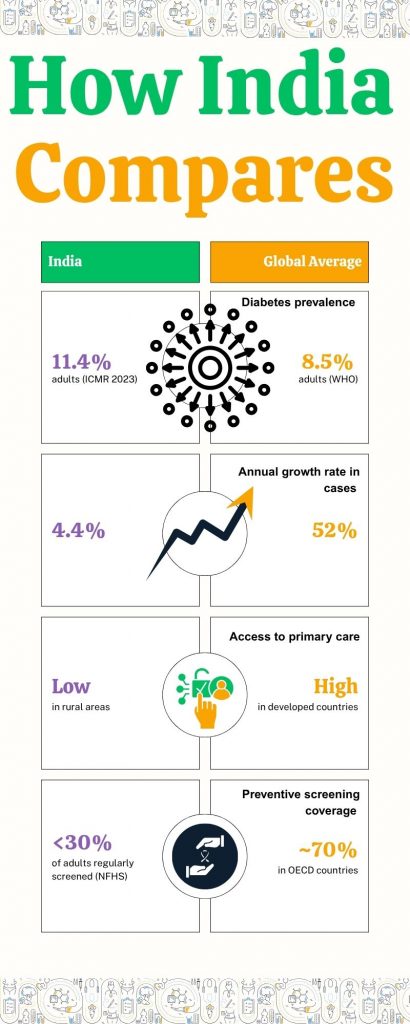
11.4% of Indians now live with diabetes (up from 7.1% in 2012)
Nearly 15.3% have prediabetes
Urban areas continue to show higher prevalence, but rural areas are catching up rapidly
Southern states like Kerala, Tamil Nadu, and Puducherry have the highest rates (19%+)
Compounding the crisis is the lack of awareness. Nearly 45% of individuals with diabetes remain undiagnosed. Among those diagnosed, only 7% have their blood sugar, blood pressure, and cholesterol under control, key factors in reducing complications.
The socioeconomic toll of Diabetes
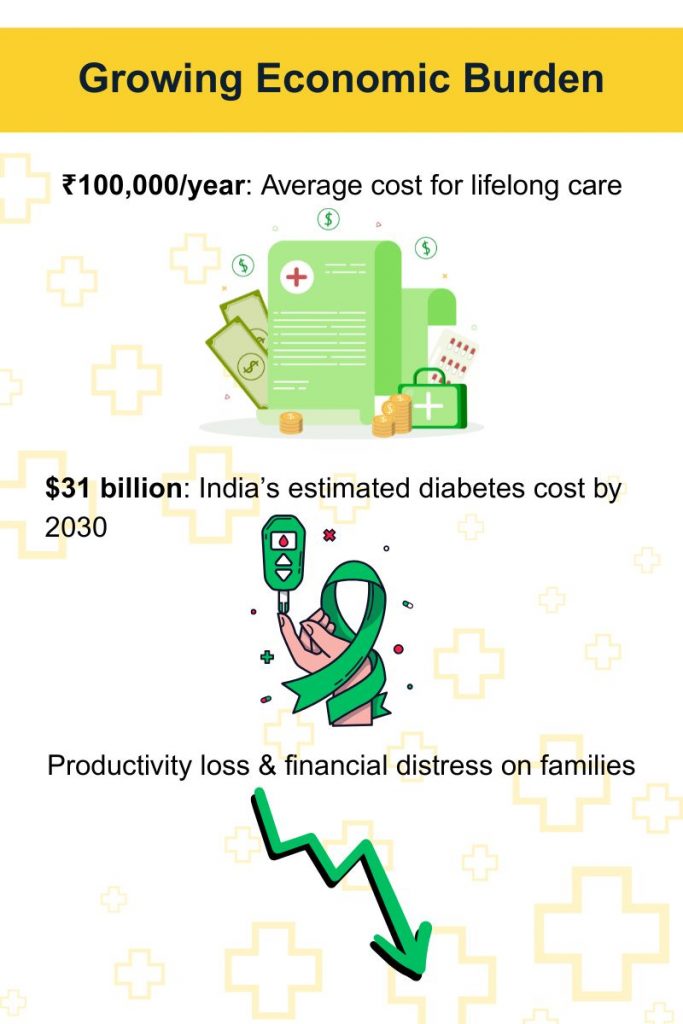
A 2020 study by the Public Health Foundation of India estimated that households in urban slums spend up to 25% of their income on diabetes-related expenses. The annual direct cost of treating diabetes per person ranges from ₹15,000 to ₹40,000, depending on complications.
India also loses billions in productivity due to poorly managed NCDs. The WHO estimates that between 2012 and 2030, India will lose $3.5 trillion in national income due to NCDs like diabetes, cardiovascular disease, and cancer.
For daily wage workers, women caregivers, and rural households, the impact is both medical and intergenerational. A parent’s loss of income due to untreated diabetes can affect children’s nutrition, education, and well-being. For many, diabetes becomes a poverty trap.
Why primary healthcare must be the frontline
India’s current health response is largely hospital-centric. But 70% of Indians seek care in the private sector, often at high personal cost. Primary Health Centres (PHCs) and Sub Centres are ill-equipped to screen for or manage diabetes.
This creates a dangerous cycle of delayed diagnosis, increased complications, and seeking help only when symptoms become acute. Hospitals are overwhelmed, and early prevention opportunities are lost.
Primary healthcare, if strengthened, offers a cost-effective, community-centric alternative.
Here’s why primary care matters:
Early detection and screening: Simple glucose monitoring and risk profiling can be done by trained nurses or ASHAs at the village level.
Continuity of care: Chronic diseases require regular follow-ups. A trusted local health worker can monitor patients regularly and ensure medication adherence.
Lifestyle counselling: Behaviour change communication on diet, exercise, tobacco cessation is more effective when rooted in local cultural contexts.
Cost efficiency: Community-based models are significantly cheaper than hospital admissions or dialysis for complications.
Integrated NCD care: Primary healthcare workers can manage multiple risk factors like hypertension, obesity, and tobacco use—all linked to diabetes.
What Is holding primary healthcare back?
Despite ambitious schemes like Ayushman Bharat and Health & Wellness Centres (HWCs), India’s primary care system remains underfunded and understaffed.
India spends only 1.9% of GDP on healthcare
Community health centres have a shortfall of 4578 surgeons, followed by 4087 OB&GY, 4499 physicians and 4425 paediatricians.
HWCs, though conceptually strong, face infrastructural, workforce, and medicine stock-out issues
Moreover, primary care still struggles with digital integration, referral mechanisms, and community trust, especially when it comes to NCDs that are invisible in their early stages.
Global comparisons for Diabetes: What India can learn
Other low- and middle-income countries offer models of how to integrate diabetes care into primary health.
Thailand: Uses village health volunteers to conduct home-based glucose checks and lifestyle counselling
Brazil: Its Family Health Strategy covers NCDs through community teams, reducing hospital admissions
Cuba: Every citizen is attached to a family doctor; diabetes care is embedded in routine check-ups
India need not reinvent the wheel. It must adapt global best practices with a hyper-local lens taking into account caste, gender, and economic inequities.
The role of technology and innovationfor confronting Diabetes in India
India’s digital health stack, including the Ayushman Bharat Digital Mission (ABDM), has immense potential to transform diabetes care:
eSanjeevani teleconsultations can bring specialists to remote villages
mHealth apps can aid self-monitoring for literate youth
AI algorithms can identify high-risk individuals based on health records
However, tech must be paired with grassroots capacity. A mobile app cannot replace a motivated ASHA who knows her community’s health profile. Digital must be inclusive, not aspirational.
Smile Foundation’s community-led health model
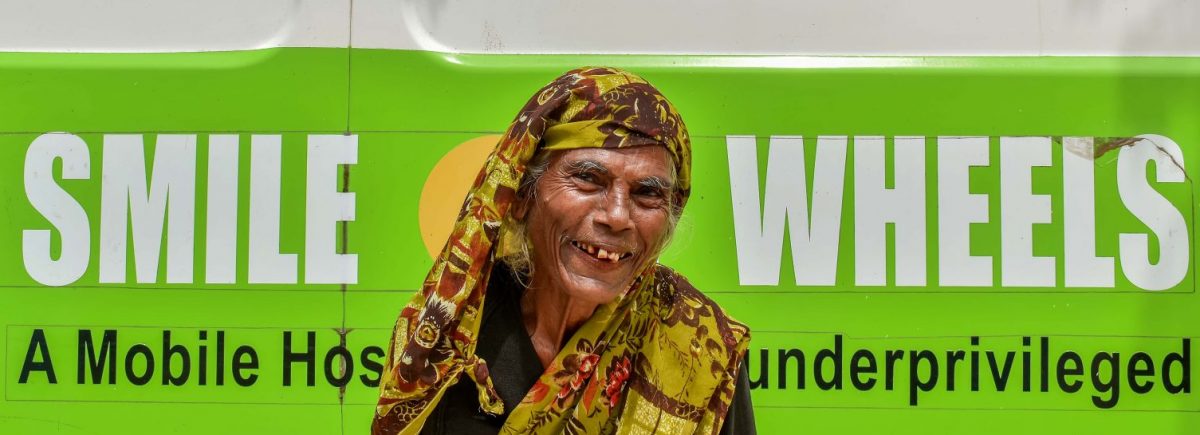
Smile Foundation’sSmile on Wheels mobile medical unit programme and community health initiatives, exemplifies how non-profit models can fill systemic gaps.
Rural outreach: Mobile health vans reach underserved blocks in states like Uttar Pradesh, Odisha, and Rajasthan, offering NCD screenings and awareness sessions.
Health education: Community sessions on healthy eating, exercise, and avoiding tobacco are delivered in local languages.
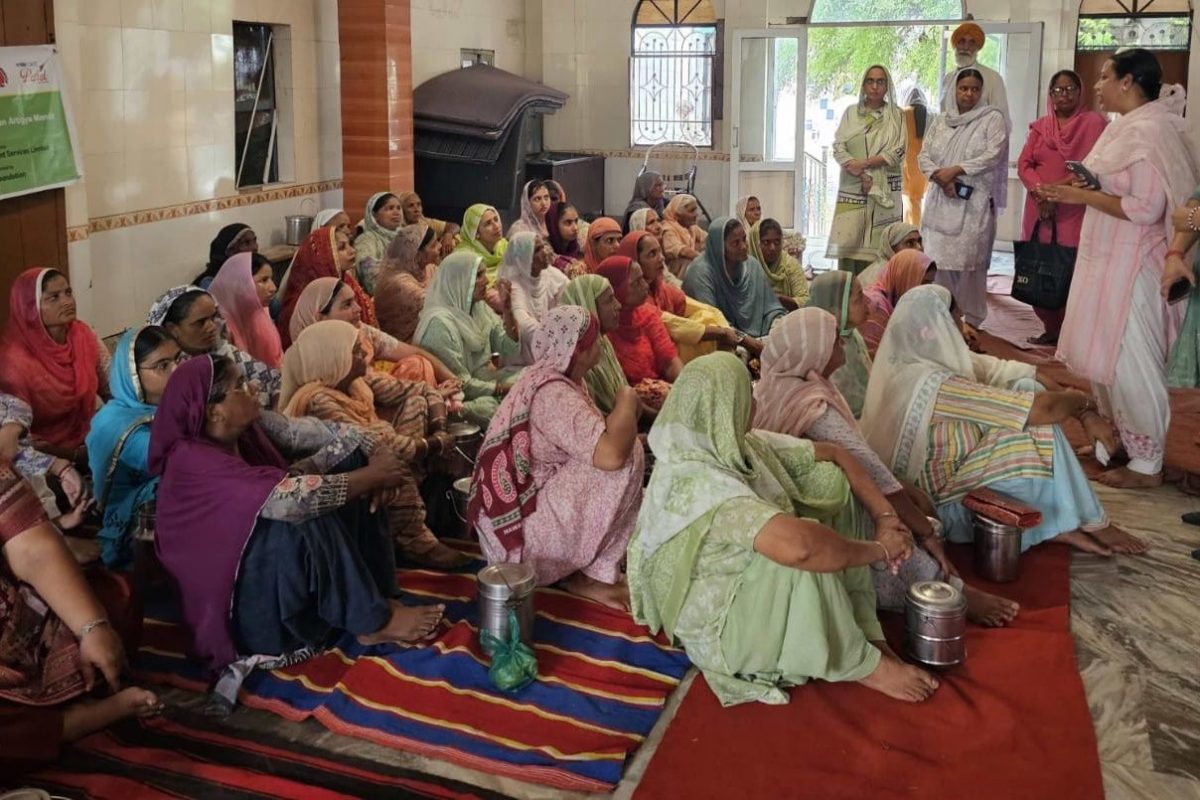
Women-centric care: ASHA and SHG women are trained to identify early signs of diabetes and refer cases.
Tech integration: Some projects use digital tablets for maintaining community health records and monitoring follow-ups.
These models prove that where trust, relevance, and access align, primary care becomes powerful.
Policy recommendations: What needs to happen next
Invest in frontline workers: Increase honorariums for ASHAs and ANMs, and train them in NCD management.
Decentralise services: Ensure PHCs have glucometers, test strips, and trained personnel. Empower local governance to monitor service delivery.
Public-private partnerships: Leverage CSR, NGOs, and health tech startups for scalable diabetes solutions.
Incentivise prevention: Link community health indicators (like blood sugar control) to funding for local health institutions.
Mass media campaigns: Normalise diabetes conversations. Use radio, local influencers, and vernacular media.
Make Primary Healthcare the Hero of Diabetes control
When diabetes affects millions of working-age Indians, it slows down productivity, depletes household savings, and strains public health resources.
India’s long-term solution cannot lie in more hospital beds or tertiary facilities. It lies in every village, in every urban slum, and in the hands of trained, trusted frontline workers.
A reimagined primary healthcare system, with diabetes at its core, will not just save lives, it will empower communities, reduce inequality, and deliver on the promise of health for all.
If you think healthcare is about doctors, prescriptions and the occasional hospital visit, think again. For millions across India, especially those on the margins, health means much more than treating illnesses. It’s about dignity, support and the chance to live without fear.
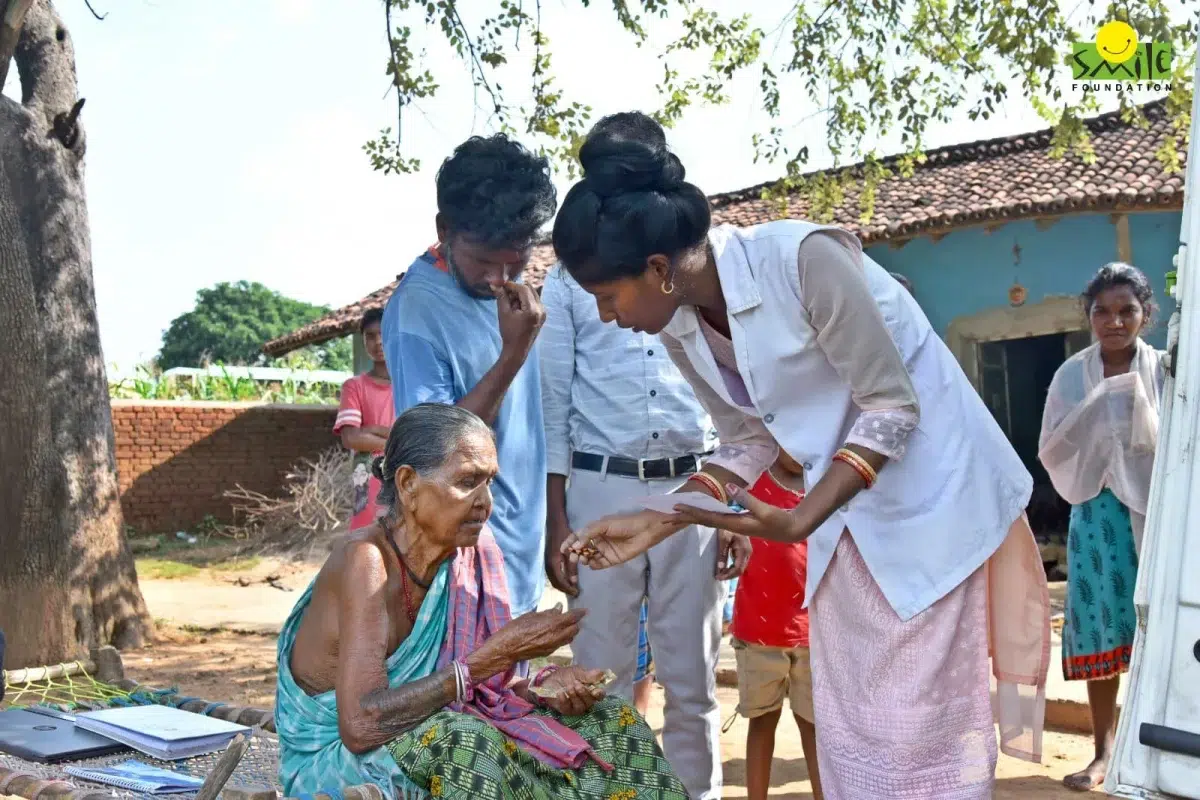
Take Mamtha, for instance. She’s elderly and works breaking stones to support her paralysed husband. Despite her own bodily diseases, she keeps going. For a long time, neither of them had access to regular medical care. But then a mobile medical unit run by Smile Foundation started visiting their village. Suddenly, Mamtha wasn’t invisible anymore. She had a doctor who listened, medicines that helped and a reason to believe things could get better.
Or consider Sarita Devi, who lost her home and her son. Living alone and frequently unwell, she had few people to turn to. Struggling with chronic illness and emotional trauma, she felt abandoned until the same mobile unit brought care right to her doorstep.
These stories are reflections of a healthcare system that often misses those who need it most. And they’re reminders that true healthcare is not just about treating illnesses but meeting people where they are, understanding their realities and building a system that supports them holistically.
Health is more than treating illnesses
In policy circles, we often talk about health in technical terms – mortality rates, hospital beds per capita, insurance coverage. But in everyday life, health is far more intimate. It’s whether you have the strength to go to work. Whether your elderly mother can walk to the bathroom without pain. Whether your child can focus in school instead of battling a persistent fever.
For vulnerable communities, especially in rural and underserved urban areas, even basic healthcare can feel out of reach. Clinics are too far. Hospitals are overcrowded. And private care is prohibitively expensive. What’s left is often neglect – until things spiral into emergencies.
That’s where mobile healthcare models like Smile on Wheels come in. These aren’t just vans with stethoscopes. They’re fully equipped units staffed with doctors, nurses and health educators who offer both curative and preventive care. More importantly, they offer trust and a relationship with communities that builds over time.
Building trust, one visit at a time
Dr Mahesh, Smile Foundation’s medical officer, believes in this every day. He reaches people who have little or no access to medical support. From simple check-ups to patient listening, he brings comfort and awareness to many. As part of Smile on Wheels, each day in different localities, he aims to provide comprehensive health coverage for people. From preventive education to regular check-ups, the programme offers a full package and is not just about treating illnesses. Smile on Wheels focuses on three A’s: availability, affordability and accessibility. It helps build trust between Smile’s team and the community.
Trust isn’t built overnight. But when healthcare workers show up consistently, speak the local language and treat patients with respect, people open up and they follow up too. They begin to see healthcare not as a last resort, but as a normal part of life.
Why preventive care matters
We tend to associate healthcare with crisis—surgery after an accident, IV drips after dengue, antibiotics after infection. But by then, the damage is often done. What’s needed is a shift in how we think about healthcare.
Preventive care – things like screenings, vaccinations, nutrition counselling and health education – keep small problems from becoming big ones. They cost less, require fewer resources and most importantly, reduce suffering.
Smile Foundation integrates preventive care into its mobile clinics. Health workers run regular sessions on hygiene, nutrition, menstrual health and common chronic conditions like diabetes and hypertension. These sessions are especially impactful for women, who are often primary caregivers but lack information about their own health.
When people know what to watch for, and where to go when symptoms show up, they’re less likely to wait until it’s too late.
Mental and emotional health can’t be an afterthought
We often forget that healthcare is not just physical. Emotional and mental health matter too, especially for the elderly, the isolated and the traumatised.
In India, mental health remains deeply stigmatised, particularly in low-income communities. But people like Mamtha and Sarita show us why it can’t be ignored. Chronic stress, grief and loneliness take a toll on the body and the mind. Left unaddressed, they can make recovery harder and illness more persistent.
Smile Foundation incorporates emotional support into its health model. Counsellors and social workers provide not just information, but companionship. Sometimes, that means guiding someone through grief. Other times, it means just listening – really listening – to someone who hasn’t felt heard in years.
Access is the first step, but it’s not the only one
Access is foundational. If people can’t physically reach care, or can’t afford it, nothing else matters. But access alone for treating illnesses doesn’t guarantee quality or continuity.
That’s why mobile healthcare needs to be more than just an emergency stop-gap. Smile on Wheels offers post-consultation follow-ups, chronic disease management and even referrals to secondary and tertiary care where needed.
For example, someone with high blood pressure isn’t just handed medication and sent away. They’re educated about diet and lifestyle changes. They’re checked on regularly. Their data is recorded, monitored and analysed to spot risks early.
This kind of consistent, community-rooted care is what transforms healthcare from a service into a system.
Policy gaps and the role of non-state actors
India’s health policy has made real progress over the last two decades. The National Health Mission, Ayushman Bharat and state-level initiatives have expanded infrastructure and access. But public health systems remain stretched, especially in hard-to-reach areas.
This is where civil society and NGOs like Smile Foundation play a critical role. They act as bridges between state infrastructure and ground-level realities. Between technology and trust. Between diagnosis and dignity.
Our work offers a model that policymakers should study more closely. Community health delivery doesn’t have to mean building more hospitals. It can mean equipping vans, training local health workers and investing in systems that adapt to where people are, not the other way around.
What comprehensive healthcare can also look like
As India moves toward becoming a $5 trillion economy, we can’t afford to leave millions behind when it comes to health. True progress is measured not just by GDP or hospital chains, but by whether Mamtha and Sarita Devi can live with dignity.
So, what should we be aiming for?
A health system that sees people, not just patients.
Infrastructure that reaches beyond cities and into forgotten lanes.
Prevention that is as much a priority as cure.
Mental health support built into primary care.
Policies that invest in trust, not just in technology.
Healthcare isn’t just about curing what’s broken. It’s about keeping people whole.
And as Smile Foundation’s Smile on Wheels programme shows, that starts with showing up – day after day, village after village – and reminding people that they matter.
In the pursuit of better public health, few tools are as powerful, cost-effective, and long-lasting as education. While medicine treats illness, education prevents it. Particularly in the case of common infectious and non-communicable diseases, health education provided early and often can determine whether children and their families thrive or survive. For millions across India, especially in low-resource and rural communities, education has the potential to be the first line of defence against disease.
Education and health: An interconnected realityfor preventing common diseases
Health and education are deeply intertwined, influencing not only individual well-being but the development trajectory of entire nations. As two of the Sustainable Development Goals (SDG 3: Good Health and Well-Being and SDG 4: Quality Education), their alignment is both urgent and necessary. Individuals with higher levels of education tend to have better health outcomes, longer lifespans, and greater access to preventive care. A 2020 study published in The Lancet Public Health found that each additional year of education reduces the risk of early mortality by 2%. More educated adults are also less likely to smoke, more likely to exercise, and better able to understand health information.
This linkage is especially critical for women. Educated women are significantly more likely to seek maternal care, follow immunisation schedules for their children, and access early treatment for illnesses. Education, therefore, does not only benefit the individual but reshapes the health outlook for entire families and communities.
The school as a health enablerfor preventing common diseases
Schools, where children spend the majority of their formative years, are natural platforms for delivering health education. They are not just spaces of academic learning but of behavioural formation. When integrated thoughtfully, school-based health education helps inculcate habits that leads to preventing common diseases and supporting lifelong well-being.
Key areas where schools contribute include:
Hygiene and Sanitation: Teaching handwashing, menstrual hygiene, and safe toilet practices directly reduces the spread of diarrhoeal diseases, respiratory infections, and skin conditions.
Nutrition and Physical Activity: Schools that promote healthy eating and physical activity can counter rising childhood obesity, undernutrition, and associated risks like diabetes.
Mental Health Awareness: Adolescence is often when early signs of mental illness appear. School counselling, peer support groups, and social-emotional learning (SEL) can reduce stigma and provide crucial early support.
Sexual and Reproductive Health: Comprehensive sexuality education helps prevent adolescent pregnancies and sexually transmitted infections (STIs) while encouraging informed, respectful relationships.
By embedding these themes into daily routines and learning environments, schools can function as health equalizers, particularly in disadvantaged areas.
Preventing common diseases through understanding
Children are particularly vulnerable to infectious diseases such as the flu, measles, chickenpox, and diarrhoea due to developing immune systems and frequent close contact in shared spaces. These diseases often spread through airborne droplets, contaminated surfaces, or poor sanitation. Education empowers children to recognise symptoms, understand transmission routes, and adopt preventive behaviours.
For example, hand hygiene alone can reduce the incidence of diarrhoea by up to 40%. Yet such practices are only sustained when reinforced through consistent education and supportive environments.
Bridging the health gap in underserved communities
For children in rural or low-income areas, where healthcare services are sparse or unaffordable, schools may represent the only access point to health information and support. This is where community-focused interventions become vital.
Smile Foundation exemplifies how education and health can work hand in hand to reduce disease burdens. Through integrated programmes across the country, we educate children and families about disease prevention, hygiene, nutrition, and mental health.
Smile Foundation’s health education interventions
Mission Education: This flagship initiative not only imparts academic learning but also integrates health awareness into daily schooling. Children are taught about personal hygiene, handwashing, nutrition, and preventive practices for communicable diseases.
Smile on Wheels: A mobile hospital programme that brings healthcare and health education to remote and urban underserved communities. It conducts regular health camps, where doctors and health educators provide treatment and awareness sessions on preventing common illnesses such as diarrhoea, dengue, and skin infections.
WASH initiatives in schools: Smile Foundation runs behaviour change campaigns focused on Water, Sanitation and Hygiene (WASH), reinforcing hygiene through wall art, child-led hygiene clubs, and interactive sessions in schools.
Training frontline workers: Smile also trains ASHAs, ANMs, and CHOs to become effective communicators of health information in their communities, ensuring the reach of preventive education beyond classrooms.
Community Engagement: Health camps and awareness drives often involve parents, thereby creating a ripple effect in local communities. Smile’s model reinforces that educating one child can educate a household.
Policy alignment and national programmes
India has recognised the role of education in promoting health through national programmes such as:
The School Health Programme under Ayushman Bharat, which designates teachers as Health and Wellness Ambassadors to promote disease prevention in classrooms.
UNICEF’s WASH in Schools and WHO’s Global School Health Initiative, which advocate globally for improved hygiene practices and health education in learning environments.
These initiatives, combined with grassroots models like those of Smile Foundation, are essential to ensuring health equity and building community resilience.
From awareness to agency
Ultimately, education does more than inform. It empowers. A child who learns the importance of vaccination is more likely to complete immunisation schedules. A girl who understands reproductive health is better equipped to make safe decisions. A student who knows the signs of mental distress is more likely to seek help.
When communities are educated, they are not passive recipients of aid, but active participants in health governance. They demand services, hold systems accountable, and foster collective well-being.
In this light, education is not an adjunct to healthcare—it is its most foundational layer.
A call to strengthen the link
The goal of universal health coverage cannot be achieved through medical interventions alone. It must be underpinned by widespread, inclusive, and consistent health education, starting with our schools.
Investments in school health programmes, partnerships with civil society actors like Smile Foundation, and curriculum reforms that include comprehensive health education are not just good policy; they are necessary strategies to protect the health of the next generation.
In a post-pandemic world that has exposed the fragility of health systems and the power of prevention, India has a clear opportunity to place education at the heart of its public health mission.
Stay Healthy, Stay Smiling
Simple Habits for a Healthier Life
🧼 Wash your hands with soap before meals and after using the toilet.
💧 Drink clean, filtered or boiled water every day.
🥗 Eat fresh fruits and vegetables to boost immunity.
🚽 Always use a toilet—never defecate in the open.
🪥 Brush your teeth twice a day to keep your mouth clean.
🩺 Visit a doctor for check-ups and take vaccines on time.
These small steps can prevent big diseases. Let’s build healthy communities together.
Sources
The Lancet Public Health (2020): Education and adult mortality, WHO Fact Sheet: Health promotion through education, UNICEF – WASH in Schools, CDC – Handwashing and Disease Prevention, WHO – Ad, olescent Mental HealthMinistry of Health & Family Welfare – Ayushman Bharat School Health Programme, Ministry of Education – Health & Wellness Ambassadors, WHO – Global School Health Initiative
Over 65% of India’s population lives in rural areas, but healthcare infrastructure and personnel remain disproportionately urban-centric. Punjab’s rural communities, home to ~17.9 million people, face a 20% shortfall in health sub-centres, fewer Primary Health Centres (PHCs) than needed, and a huge gap in Community Health Centres (CHCs). As a result, each rural sub-centre in Punjab serves on average 6,258 people (vs the national norm of 5,000) and each PHC covers 45,000 people (vs norm 30,000). These shortages are compounded by severe workforce gaps – for instance, rural CHCs in Punjab have only 55 specialist doctors against 336 required (over 80% vacancy).
Many facilities also lack basics like electricity and water: in 2023, 299 of Punjab’s 2,857 rural sub-centres had no electric supply and dozens lacked running water. This infrastructure deficit undermines service quality and deters healthcare utilisation, especially among vulnerable groups (women, children, the elderly). It reflects a broader inequity.
Globally, 56% of people in rural areas do not have access to essential health services, contributing to worse health outcomes and avoidable mortality. Bridging these gaps in accessibility is crucial for India’s commitment to Universal Health Coverage (UHC) and health equity.
Telemedicine has emerged as an effective solution to the rural healthcare crisis, by breaking geographical barriers and bringing medical expertise virtually to underserved areas. India’s national telemedicine platform eSanjeevani exemplifies this potential – since launching in 2019, it has facilitated over 34 crore (340 million) consultations as of Feb 2025, connecting remote patients with doctors and specialists.
During the COVID-19 pandemic, telemedicine proved indispensable in maintaining care continuity in remote regions. The Government’s two-pronged eSanjeevani system – AB-HWC (Ayushman Bharat-Health and Wellness Centre) for provider-to-provider consultations via Community Health Officers (CHOs) at rural clinics, and OPD for direct patient-to-doctor online visits – has helped ensure availability, accessibility and affordability of healthcare across India. However, leveraging telehealth at scale also requires robust digital infrastructure, training, and community trust. Studies indicate that without adequate training and protocols, telemedicine referrals can be sub-optimal, and limited digital literacy or connectivity in rural areas remains a barrier. Addressing these challenges is essential to realise telemedicine’s full impact.
Punjab, with relatively high mobile penetration and improving broadband reach, is well-positioned to benefit from telehealth innovations – provided the rural clinics are upgraded with power supply, internet, and skilled staff. This is the context in which Smile Foundation’s telemedicine initiative in Moga district, Punjab, was conceived as a public-private partnership model to strengthen rural primary care delivery.
Smile Foundation telemedicine initiative in Moga, Punjab
Moga, Punjab – identified under India’s Aspirational Blocks Programme for its lagging health indicators became the focus of a telemedicine-led healthcare strengthening project in 2023-24. Smile Foundation, in collaboration with the Health Department of Punjab, and corporate partner SBI Cards, launched a comprehensive telemedicine initiative to bolster primary healthcare in Moga’s rural blocks. This model builds on Smile Foundation’s prior success in Nuh (Haryana), adapting it to local needs in Punjab.
The project’s core intervention is the establishment of 12 e-Arogya Telemedicine Clinics at government Health and Wellness Centres (sub-centres) across Moga. Each clinic is equipped with a telemedicine kiosk, digital diagnostics (point-of-care devices), and a Medicine Vending Machine (MVM) for instant dispensing of essential drugs prescribed during tele-consultations. Crucially, the project invested in infrastructure upgrades and identified sub-centres were refurbished along with outfitting of solar power units in them to ensure 24×7 electricity, and providing reliable internet connectivity to support uninterrupted tele-consultation sessions. This approach directly addressed the basic facility gaps, like electricity, that previously hindered digital health services in Punjab’s villages.
By December 2023, necessary government approvals were obtained and the telemedicine units were integrated with the national eSanjeevani platform, aligning the project with the Ministry of Health’s digital health ecosystem.
Capacity-building and community engagement
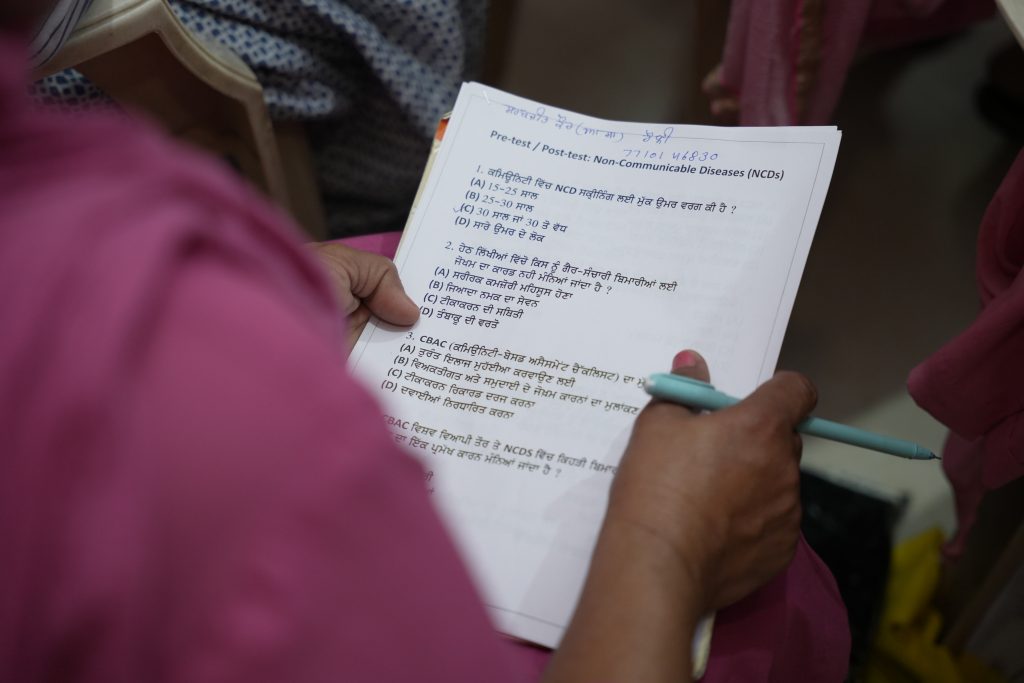
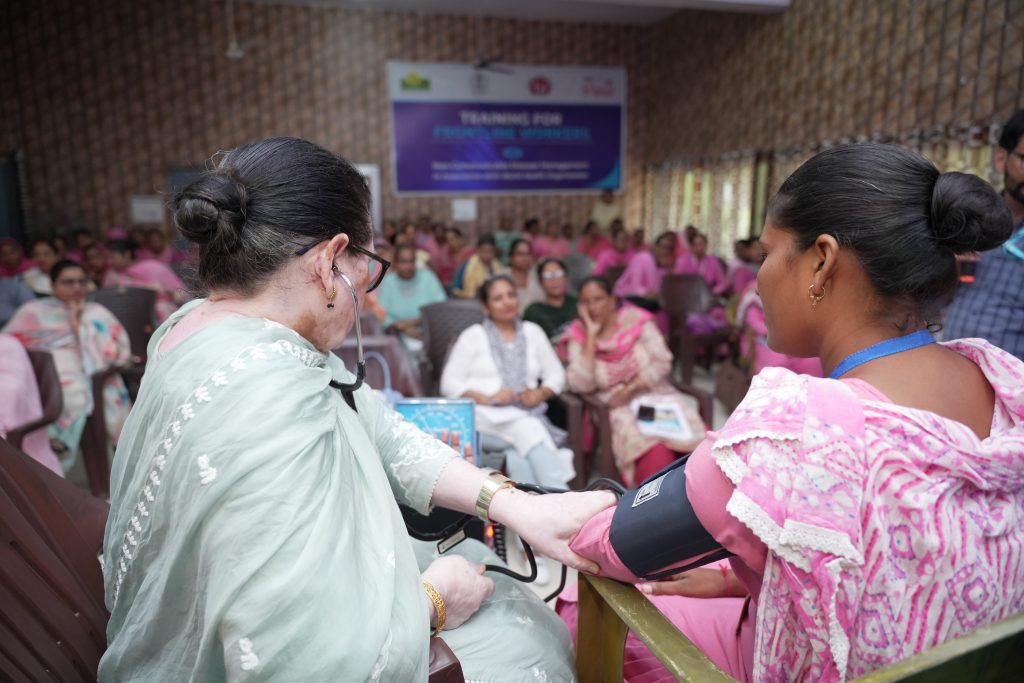
Capacity-building and community engagement form a major pillar of the Moga initiative. In partnership with state authorities, Smile Foundation conducted training for local healthcare providers and Frontline Workers. In late 2024, a two-day training for 180 frontline staff (CHOs, ANMs, ASHAs) from Moga’s health centres was held, focusing on management of common Non-Communicable Diseases (NCDs) like hypertension, diabetes, and screening for breast, cervical, and oral cancers. This skilling-up of workers aimed to ensure they can effectively use the telemedicine equipment, triage patients, and promote continuity of care.
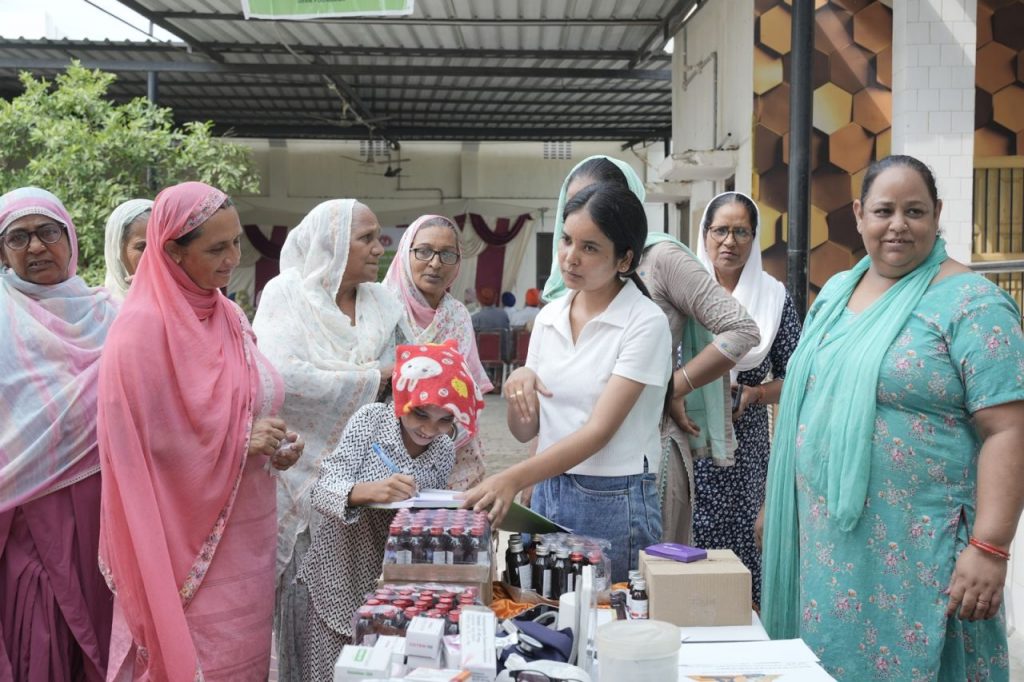
“Strengthening healthcare at the grassroots” also involved behaviour change communication in the community – health awareness camps, village meetings, and mobilisation by ASHA workers to increase acceptance of teleconsultation services. The programme specifically targets women and marginalised groups for outreach, in line with Smile’s Swabhiman (women’s empowerment) programme. Notably, Dr. Neena Bansal, Senior Medical Officer in Moga, commended the initiative and presented a Certificate of Appreciation to Smile Foundation for its contribution to upgrading rural Health and Wellness Centres.
By early 2025, the e-Arogya clinics in Moga have begun offering remote consultations with MBBS doctors and specialists (located at hub hospitals) via eSanjeevani, free medication for patients through the MVM linked to government supply, and routine NCD risk-factor screenings – bringing primary care delivery that normally required travel to district hospitals directly to villages.
Improved primary care delivery and health access outcomes
Though the Moga telemedicine project is in its early stages, it draws from the proven impact of Smile Foundation’s earlier telehealth intervention in Nuh district, Haryana which offers a template for expected outcomes. Nuh, a predominantly rural and socio-economically challenged area (ranked among India’s Aspirational Districts), saw its first Smile telemedicine unit launched in May 2021. By mid-2023, this had expanded to 10 e-Arogya clinics across 8 PHC areas in Nuh, covering a population of about 10 lakh (1 million). The results have been remarkable in enhancing healthcare utilisation and equity.
In a one-year period (April 2022–March 2023), Nuh’s telemedicine centres facilitated 32,789 doctor consultations for villagers who otherwise face barriers to access. Importantly, over 53% of patients were repeat users (multiple visits), indicating high satisfaction and trust in the quality of care. The telemedicine clinics also integrated NCD screenings into their workflow, leading to thousands being screened for diabetes, hypertension, and other conditions per government protocols, with data reported into the public health system for follow-up. Such integration with the national NCD programme means earlier detection and referral of cases (e.g. identifying hypertensive patients who were unaware of their condition), reinforcing primary care’s gatekeeping role.
💬 Ask a CHO: Your Questions Answered
Patients visit their local health centre, where I connect them with a qualified doctor via the eSanjeevani platform. The doctor assesses their symptoms, prescribes treatment, and if needed, we dispense free medicine right here through a vending machine.
We hold awareness camps and involve ASHA workers and local leaders. When people see positive outcomes—like timely treatment and free medicine—they come back and even refer others.
If the condition is serious, I refer them to a higher health facility. We help them book an appointment and follow up after the referral to make sure care continues.
Gender-equity impact
Critically, the Nuh model demonstrated a gender-equity impact. Of the 35,000+ individuals directly benefitting from the telemedicine clinics in Nuh’s first two years, 52% were women – a notable achievement in a conservative region where women’s healthcare-seeking outside the home was very limited. Community women who “could not think of going outside the village” for care were now comfortably accessing medical consultations virtually in their local clinic. This reflects how telemedicine can overcome socio-cultural barriers by providing primary care delivery in a familiar setting. Patients received not only primary consultations but also referral support: the telehealth system in Nuh is linked with higher centres – about 2–3% of cases each quarter were referred to secondary/tertiary hospitals for issues needing in-person intervention, with the telemedicine staff facilitating these referrals. By managing the bulk of routine ailments and follow-ups at village level, the project helped decongest higher hospitals and cut down out-of-pocket expenditures (e.g. travel costs) for the community. Local health officials in Nuh noted a visible increase in outpatient footfall at the upgraded sub-centres due to telemedicine and NCD services, which in turn meant earlier treatment and better monitoring of chronic conditions.
Strengthening of the public health system
Another key outcome from Nuh has been the strengthening of the public health system through collaboration. The telemedicine units were eventually integrated into the government’s eSanjeevani network and handed over to the District Health Administration for sustainable operations. All 10 units in Nuh are now run as part of the Ayushman Bharat-Health and Wellness Centre scheme, with trained CHOs managing the teleconsultations – effectively institutionalising the innovation. This sustainability plan was built in by Smile Foundation from the start:
“We focus on setting up telemedicine clinics under a PPP model and later handing them over to the government to operate,”
noted Mr. Santanu Mishra, Co-Founder of Smile Foundation.
Indeed, the Nuh telemedicine project was recognised nationally, winning the ASSOCHAM “Best CSR Excellence in Healthcare” Award in 2023 for its impact in an aspirational district. Punjab’s Moga initiative is following the same trajectory. Initial indications show improved health awareness and service uptake in target villages of Moga. The project has set quarterly targets (e.g. ~4,300 teleconsultations per quarter by late 2024, scaling to ~10,000+ per quarter by late 2025), and will similarly be evaluated on reductions in patient travel, better management of NCDs, and patient satisfaction. Already, the collaborative training and enhanced infrastructure have prepared Moga’s health sub-centres to function as “model health and wellness centres”, offering a broader range of services than before.
Toward equitable and scalable primary care delivery models
The telemedicine model in Moga, and previously in Nuh, highlights how digital health can catalyse equitable healthcare delivery when combined with investments in primary care and community engagement. These interventions directly contribute to national health goals and international targets. By bringing doctors to the remotest communities virtually, such projects are “ensuring healthy lives and promoting well-being for all at all ages,” advancing Sustainable Development Goal 3 on health. They operationalise the Indian government’s vision under the National Health Policy 2017 and Ayushman Bharat: namely, leveraging digital technology to increase access, improve quality, and reduce the cost of healthcare delivery.
The Ayushman Bharat Digital Mission (ABDM) provides a supportive framework for interoperability and electronic health records, which the Moga telemedicine clinics are utilising to generate digital health records and share data on NCDs with state systems. Notably, Moga’s inclusion in the Aspirational Blocks Programme means it receives coordinated support to uplift health indicators – WHO India is one of the partners in this effort, focusing on primary health care strengthening and capacity building in Punjab’s aspirational blocks.
The power of public-private partnership (PPP) model
Smile Foundation initiative dovetails with this by addressing service delivery gaps on the ground. It demonstrates a scalable public-private partnership (PPP) model: the private sector (NGO and CSR funding) innovates and pilots the service, while the public sector provides facilities, integrates the services into its schemes, and sustains them long-term. Such models can be replicated in other under-served districts and blocks. Indeed, the Government of India is expanding telehealth through eSanjeevani to all 1.5 lakh Health and Wellness Centres nationally, learning from these pilots.
Digital infrastructure is now recognised as a critical determinant of health access. Moga’s project showed that investing in basics like power and internet connectivity for rural clinics is a pre-requisite to digital health solutions – a lesson for scalability. As rural broadband improves under programmes like BharatNet, telemedicine’s reach will further expand. However, human infrastructure is just as important: continuous training for health workers, digital literacy for patients, and trust-building in communities are vital for success. The Moga initiative’s use of local language educational materials and involving community leaders (Panchayats, village health committees) has been key to winning acceptance – villagers see the telemedicine clinic as an extension of the public health system, not a foreign technology. This community-centric approach aligns with WHO’s emphasis on people-centred primary care and reducing rural-urban health disparities. The World Economic Forum has lauded India’s digital health progress, noting that “telemedicine platforms are overcoming geographical barriers and reaching remote populations with quality care, thus bridging healthcare disparities.”
Reaching the last mile
In conclusion, Smile Foundation’s telemedicine initiative in Moga, Punjab exemplifies a data-driven, collaborative strategy to strengthen rural health systems. Early evidence and comparative insights from Nuh indicate that such interventions can substantially improve health system accessibility, by providing “last-mile” connectivity for medical services, enhance primary healthcare delivery through comprehensive services at the community level, and build digital health infrastructure that leaves a lasting impact. With supportive policy integration, these models contribute to a more equitable healthcare framework – one where a villager in Moga or Nuh can access timely, quality medical advice as readily as someone in a city.
As Punjab and India at large work towards universal health coverage, scaling up successful telemedicine-public health hybrids could very well be a game-changer for underserved regions. The Moga telemedicine project, supported by multi-sectoral partnerships and aligned with national programmes, is not only delivering care today but also providing a proof-of-concept for sustainable, tech-enabled primary healthcare that can be reproduced across India’s aspirational districts and beyond.
By addressing both the supply-side (infrastructure, providers) and demand-side (community awareness, affordability) barriers, it charts a path toward bridging the rural health divide and ensuring that geography is no longer destiny when it comes to primary care delivery access.
Sources: Punjab rural health statistics; Smile Foundation reports and press releases; WHO/WEF analyses; Government data on eSanjeevani. All data and insights are current as of 2024-2025, reflecting the latest available information on telemedicine interventions in India.
👣 Telemedicine Journey Simulator
Select a patient to begin their healthcare journey:
The journey will appear here once a persona is selected.
Imagine a future where children across India learn to design, code, and build right from their homes. With the right support through CSR-led STEM education, this is not just a possibility – it’s within reach.
Drawing guidelines from the reports of UNESCO, McKinsey & Company, CSR programmes can trace the natural path of identifying barriers to forging lasting partnerships that deliver resources, mentorship and digital infrastructure. By promoting STEM education through corporate investments with developmental expertise, initiatives can be developed to create inclusive STEM education projects that effectively upskill underrepresented children in India.
This collaboration ensures sustainable ecosystems where academia institutions, industry and community organisations co design curricula, facilitate internship and provide ongoing support. Ultimately, such synergy drives innovation, economic growth and social development by promoting equitable access to STEM education and careers.
Bridging STEM gaps – Policy meets CSR
The Government of India has established a robust policy environment to strengthen STEM education, recognising its role in national development and global competitiveness. Key schemes include Rashtriya Avishkar Abhiyan, which integrates STEM learning with experiential methods in schools;Innovation in Science Pursuit for Inspired Research (INSPIRE) which nurtures scientific talent from an early age and Digital India which promotes digital literacy and e-learning tools, enhancing STEM access in rural and semi-urban areas.
Additionally, initiatives like Atal Innovation Mission and PM eVIDYA support innovation labs, teacher training and digital content development. These programmes provide the policy infrastructure for corporate social responsibility initiatives to scale their impact through strategic public-private partnerships.
However, despite several initiatives to make STEM education accessible in India, the gaps still exist. In low-resource communities, be it from Mumbai slums or remote Himalayan villages, many children look forward to learning, to questioning and to creating. But because of the lack of basic resources, trained teachers and hands on experiences their potential goes unrealised.
Why is STEM education vital?
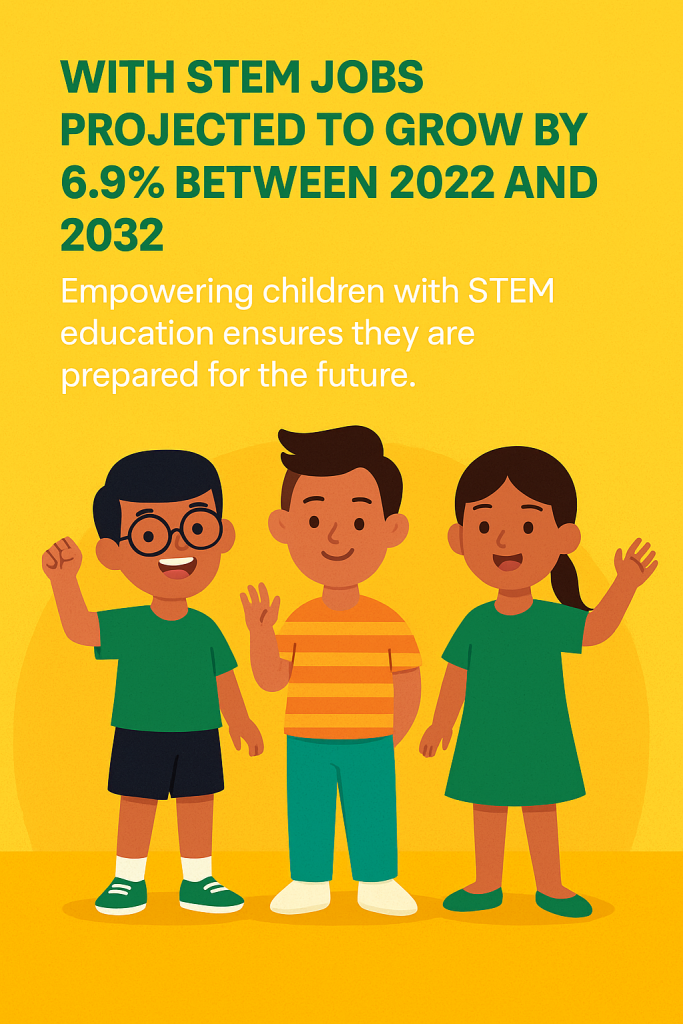
STEM careers are poised for exceptional growth, driven by rapid technological advancement and the global push towards digitalisation, sustainability, and innovation. According to the U.S. Bureau of Labor Statistics and the World Economic Forum, STEM jobs are projected to grow by 6.9% between 2022 and 2032 outpacing non-STEM roles.
Fields like AI, data science, cybersecurity and renewable energy engineering could see growth of 30–45%, creating millions of high-quality, future-ready jobs. This surge not only promises economic opportunity but also the chance to shape a more resilient, equitable world.
Thus, STEM education from an early age in countries like India holds the key to empowering children to dream, innovate, and thrive in a world that’s changing rather too quickly. At its core, it’s not about gadgets or code—it’s about levelling the playing field and expanding the horizon of what’s possible for every child.
STEM powers equal futures for every child
Builds Blocks for STEM Equity
STEM education in India is a powerful enabler of inclusive growth, but its success hinges on foundational infrastructure. In remote regions, where electricity, internet connectivity, science kits and safe laboratories are scarce, these essentials are pillars of opportunity. Without them, the dream of inclusive, inquiry-led education remains out of reach for millions of children. Investing in this infrastructure is both an operational necessity and a moral imperative for building an equitable society.
Empowers Local Learning Ecosystems
Technology belongs to everyone – a truth reflected in the way STEM education can unlock potential across the social fabric of India. To achieve this, the country must nurture ecosystems that welcome underserved children through:
Trained mentors who guide and inspire
Community-led robotics and science clubs that encourage collaboration
Peer networks of young innovators that foster belonging and shared learning
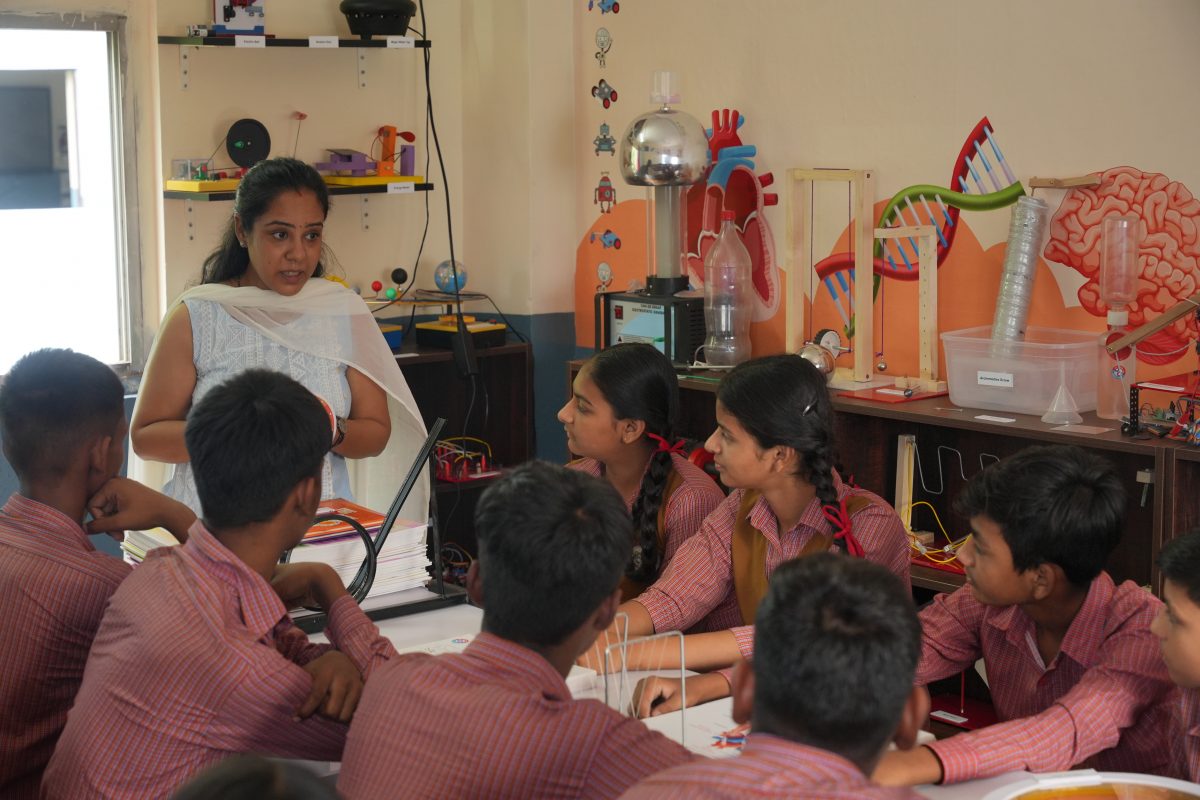
An inspiring example comes from IIT Bombay’s collaboration with Smile Foundation and GnaanU Education. Their STEM education workshop exposed children from low-resource communities to robotics, aero-modelling, 3D printing and sustainability. Young minds are filled with curiosity, confidence and the courage to imagine a future in technology-driven fields.
Responsible Governance for Sustained Impact
STEM education in India must be anchored in ethical, accountable frameworks. This calls for partnerships between government bodies, NGOs and the private sector working together to monitor, evaluate and refine programmes. The goal is to ensure every child has the tools, guidance and opportunities to explore, experiment and thrive. When STEM education becomes truly inclusive, we sow seeds of confidence and belonging that can transform generations.
STEM education NEP 2020 and CSR: A shared vision for inclusive learning
The National Education Policy (NEP) 2020 places STEM education at the forefront of building an innovation-driven, equitable India. It champions inquiry-based, experiential learning, digital literacy and vocational skills – all critical to preparing young minds for the future. Achieving this vision requires demands committed action on the ground. Here, Corporate Social Responsibility (CSR) has a transformative role to play.
CSR as a strategic driver of NEP 2020 goals
Enabling scalable education models
By supporting mobile STEM labs, digital classrooms and maker spaces, CSR initiatives can create flexible, replicable models that bring hands-on, experiential STEM education to children across diverse geographies.
Advancing digital equity
CSR efforts that fund devices, internet connectivity and learning platforms empower low-resource communities, helping bridge the digital divide and ensuring every child has equal access to quality STEM education opportunities.
Strengthening capacity-building for educators
Investing in teacher training, mentoring networks and innovative pedagogy equips educators to deliver dynamic, inclusive STEM learning, enabling alignment with NEP 2020’s vision of inquiry-based and technology-enabled education.
These efforts bridge systemic gaps, helping underserved learners thrive and contribute meaningfully to India’s knowledge economy.
CSR-NGO synergy: Catalysing equitable STEM education in India
STEM education in India is a cornerstone of the National Education Policy (NEP) 2020, envisioned as a pathway to an equitable and innovation-led future. Achieving this vision requires joint efforts by CSR leaders, NGOs and government bodies. Public-private partnerships play a vital role in strengthening educational infrastructure, digital access and foundational learning systems. Corporates, as co-creators, can help scale mobile STEM labs, maker spaces and digital classrooms that bring experiential learning to underserved communities, in line with NEP 2020.
Equally crucial is collaboration with trusted NGOs, ensuring that STEM initiatives are inclusive, locally relevant and grounded in real-world needs. Such partnerships enable tailored solutions from teacher capacity-building to community-led science clubs that nurture curiosity, confidence and innovation. By aligning CSR investments with NEP 2020 priorities, corporates can help build future-ready education models that empower every child to thrive in a technology-driven world.
NGOs as ecosystem enablers
In India’s pursuit of equitable STEM education, grassroots NGOs play an indispensable role in turning policy intent into meaningful action. For corporates aiming to make long-term, scalable impact through their CSR investments, partnering with NGOs in India is not just strategic, it is pivotal. Organisations like Smile Foundation act as ecosystem enablers, bridging the critical gap between national education priorities and ground-level realities through culturally rooted, community-led models.
At the core of Smile Foundation’s education initiative lies its impactful STEM intervention. We believe that every child regardless of geography or gender deserves access to quality, inquiry-led learning. Our multi-pronged approach ensures that the right tools, training and opportunities reach those who need them most.
Mobile STEM Laboratories These portable science labs bring practical, experiment-based learning directly to schools in underserved and remote areas. Equipped with interactive kits and DIY experiments, they make STEM tangible and exciting, especially for students with limited access to formal lab infrastructure.
Teacher Capacity Building Recognising the role of teachers, we conduct regular training programmes for rural educators, enabling them to adopt experiential pedagogies. These sessions empower teachers to deliver hands-on, inquiry-based STEM lessons that foster curiosity and critical thinking.
Gender-Inclusive Innovation Spaces Through initiatives like science clubs, innovation fairs and safe, inclusive learning zones, we actively encourage girls to explore and participate in STEM. These platforms are designed not only to build confidence but to challenge long-held stereotypes about gender and scientific ability.
Strengthening Foundations Through shared vision and efforts, we’ve established interactive smart classrooms and STEM labs. These interventions aim to create a dynamic and inclusive environment for foundational and advanced STEM learning.
Impact at Scale
0
STEM DIY kits
0
Number of students in STEM
0
Mobile STEM Labs Deployed
Impact at scale: More than just numbers
Through consistent, integrated implementation, Smile Foundation’s STEM education programmes have:
Improved student attendance, particularly in equity-challenged schools
Significantly increased the participation of girls in STEM activities
Enabled month-on-month capacity building for teachers in STEM pedagogy
Fostered a shift towards holistic, project-based learning frameworks
These outcomes underscore a simple yet powerful truth-
“ When corporates and NGOs co-create solutions rooted in empathy and aligned with national priorities, transformation is not only possible, it is scalable and sustainable”.
Partner for cross-sector collaboration
The future of STEM education in India rests in our collective hands. When corporates, NGOs and government bodies come together, we don’t just fund education - we shape futures. At Smile Foundation, we believe true impact begins with data-driven decisions and ends with empowered classrooms.
Join us in co-creating a scalable, inclusive STEM ecosystem because every child deserves the best we can offer.
You were told—sweetly, sharply, or with the ferocity of a middle-class parent who’d seen too much disappointment—that your destiny lay in becoming a doctor, an engineer, or if your handwriting was particularly elegant, a government officer. Careers weren’t choices; they were inherited burdens, passed down like wedding silver.
We didn’t so much choose our professions as fall into them, like open manholes.
But the world, as it’s inclined to do, shifted. It got louder, faster, and oddly more opinionated. Suddenly people were making a living designing cartoon avatars, managing social media meltdowns, or filming monkeys for documentaries watched by twelve million people in Denmark. Careers now came with adjectives: hybrid, remote, agile, gig-based, AI-driven.
And into this whirling, chattering void of possibility, we push our young people with a pat on the back and a panicked “figure it out.”
What we forget, what we always forget, is that they’re overwhelmed. They aren’t choosing between law and medicine anymore. They’re choosing between 4,000 courses, 5,000 certifications, and a gnawing sense that one wrong step might ruin their entire twenties.
The overwhelm is real
A study by the IC3 Institute and FLAME University tells us what our gut already knows: nearly a third of students in India have either no access to counselling or no structured support at all. And for those who do? Well, it’s often a five-minute conversation wedged between exam prep and a lecture on the dangers of TikTok.
The truth is, no matter how much the world has changed, we haven’t quite caught up in how we prepare young people for it. We hand them infinite options and then judge them for feeling paralysed. It’s a bit like tossing someone into a library and demanding they pick the one book they’ll read forever.
What they need isn’t more options. It’s guidance. Context. A mirror and a map.
Career counselling: The compass in the chaos
What real, thoughtful career counselling does is deceptively simple. It says: “Let’s stop. Let’s talk about you. Not your cousin. Not your neighbour’s son. You.”
It begins with self-awareness, that slippery thing most of us don’t develop until we’ve already made our worst mistakes. Through assessments and conversations—not interrogations—counsellors help students uncover their interests, strengths, blind spots, and ambitions they’re half-afraid to say aloud.
Then comes the exploration phase—that glorious moment where a teenager finds out “marine biologist” is a real job, or that psychology doesn’t mean becoming a psychiatrist, or that data science might be the new architecture.
After the spark, comes the scaffolding. Counsellors work with students to set goals, plot academic journeys, shortlist courses and colleges, decode scholarships, and help them understand what’s actually required to walk the path they’ve just chosen. This is not YouTube advice. This is curated, focused, real-life planning.
And it doesn’t stop at planning. Good counselling provides ongoing support—through application deadlines, form-filling panic, interviews, confusion, heartbreak, and do-I-even-want-this-anymore moments. In other words, they stay.
They do what family often can’t and Google never will: they listen, they guide, and they stay.
Why career counselling matters more than ever
Today, choosing a career is not just about picking a subject in school or college. It’s about understanding:
Career counselling provides a safe space to explore these questions. In a world shaped by AI, automation, the gig economy, and fast-evolving job roles, professional guidance can mean the difference between an aligned, fulfilling path, and years spent drifting from one career to another.
Beyond skill alignment, counsellors help cut through the noise created by:
Peer pressure
Societal expectations
Parental fears
Misinformation online
When students are provided a structured framework for reflection, they move from uncertainty to action.
Smile Foundation: Making career counselling accessible to all
While urban schools may have the privilege of trained counsellors and international career exposure, the same cannot be said for underserved communities. This is where Smile Foundation’s career counselling initiatives steps up.
Through its flagship Smile Twin e-Learning Programme (STeP), Smile Foundation provides career-focused interventions to youth from low-income communities across India. The programme offers:
Career counselling sessions in government and low-resource schools.
One-on-one mentorship for young people preparing for employment.
Life skills, digital literacy, and workplace readiness training.
Strategic partnerships with private sector companies to deliver industry-aligned guidance.
Smile Foundation also incorporates career awareness in its broader education initiatives like Shiksha Na Ruke, She Can Fly, and Tayyari Kal Ki, ensuring that children and youth—especially girls—are not only educated, but empowered to dream and plan for sustainable careers.
In classrooms where the idea of “career” once felt distant, career counselling has brought direction, dignity, and hope.
How career counselling helps – A 4-step journey
1. Self-awareness
The first step to a meaningful career is understanding oneself. Career counselling often begins with psychometric tools, aptitude assessments, and reflective exercises to help students identify:
Strengths and weaknesses
Interests and motivations
Work style preferences
Self-awareness lays the foundation for confident choices and helps students resist the pressure to “follow the herd.”
2. Exploration of options
With thousands of career paths available, a professional counsellor becomes a critical bridge between student potential and real-world opportunities.
Whether it’s choosing between journalism and design, or exploring lesser-known fields like environmental law or UX writing, counsellors help students:
Understand course and college options
Know what skills are required
Learn about industry trends and job scopes
For youth in Smile Foundation programmes, this phase often becomes the first time they hear that their passion can become a profession.
3. Goal-setting and preparation
After clarity comes action.
Career counselling includes setting short- and long-term goals and creating personalised academic or vocational roadmaps, including:
College applications and entrance exams
Financial planning and scholarship identification
Skill-building courses, internships, or volunteering
Smile Foundation also guides students through training modules, communication skills, and industry exposure visits, enabling them to step into the workforce with confidence.
4. Implementation and ongoing support
The final stage is bringing it all together—executing the plan, and staying responsive to change.
Counsellors support students through:
Admissions
Form filling and documentation
Interview preparation
Dealing with rejection or reevaluation
What makes this guidance unique is that it doesn’t end with a test score or a college list—it continues as a relationship.
Levelling the playing field
While the need for career guidance is universal, access is not. Urban private schools often have entire teams dedicated to college and career counselling, while students in government or low-income schools rely on luck, instinct, or hearsay.
By integrating career counselling into its education and skilling programmes, Smile helps break generational cycles of poverty by turning learning into livelihood.
Their impact is not only in the number of students trained, but in:
The girls who choose engineering over early marriage
The boys who discover design instead of defaulting to manual labour
The first-generation learners who now mentor others
Why the future depends on career counselling
The future of work is dynamic. Roles that didn’t exist five years ago, like AI prompt engineers or sustainability analysts, are now in high demand. At the same time, core skills like communication, creativity, and collaboration are becoming more valuable than ever.
Career counselling empowers young people to make decisions not based on survival, but on self-knowledge and aspiration.
By integrating career guidance into education systems, formal or non-formal, we give students the tools to navigate complexity with confidence. And by investing in organisations like Smile Foundation, we ensure that this clarity isn’t just for the privileged, but for every child with a dream.
In conclusion: Guidance is the new equity
Career confusion is normal, but staying confused shouldn’t be. When we invest in career counselling, we invest in clarity, confidence, and choice. We help build futures that are not just employable but empowered.
And for thousands of young people in India, Smile Foundation is making that possible—one counselling session at a time.
Violence against women remains one of the most persistent violations of human rights globally. While laws, campaigns, and justice mechanisms play a role, the deeper and more enduring antidote lies in empowerment. Women’s empowerment is not simply a social good; it is a structural and economic necessity for building equitable, peaceful societies. Empowered women are more likely to assert their rights, challenge harmful social norms, and demand accountability when institutions fail them.
In India, where gender-based violence (GBV) intersects with structural inequality, poverty, and patriarchal norms, women’s empowerment plays a pivotal role in both preventing violence and enabling survivors to reclaim agency.
Understanding gender-based violence in India
Gender-based violence is not confined to physical abuse. It encompasses a wide range of harms, including institutional violence (by state and legal systems), emotional and psychological abuse, sexual exploitation, and discrimination within households and communities. While GBV can affect all genders, women and girls are disproportionately affected due to entrenched gender hierarchies.
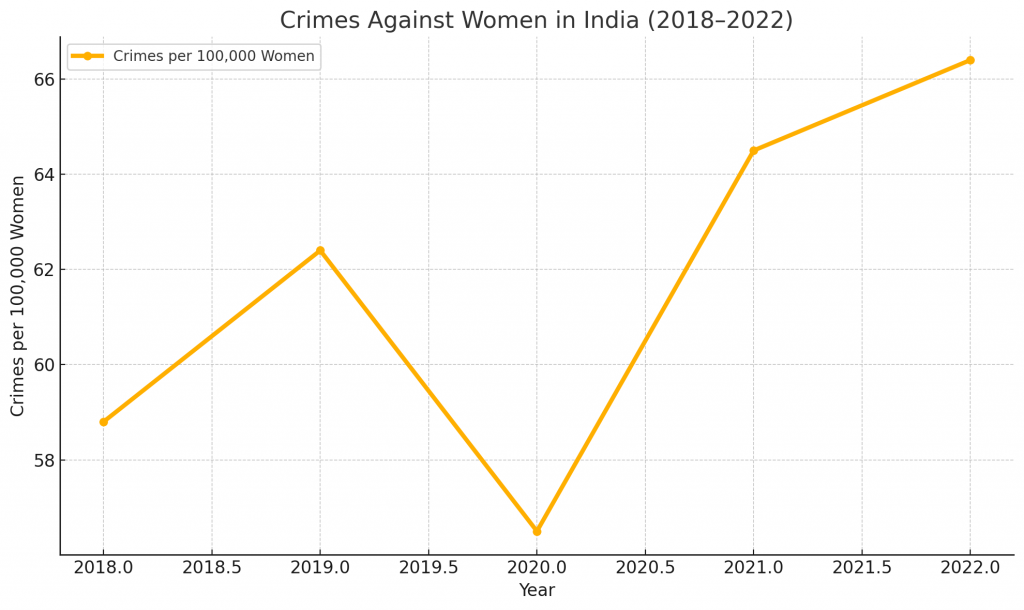
According to the National Crime Records Bureau (NCRB), reported crimes against women in India rose by 12.9% between 2018 and 2022, from 58.8 to 66.4 incidents per 100,000 women. Although this may partly reflect improved reporting, it underscores the urgent need to address GBV through comprehensive, preventative approaches.
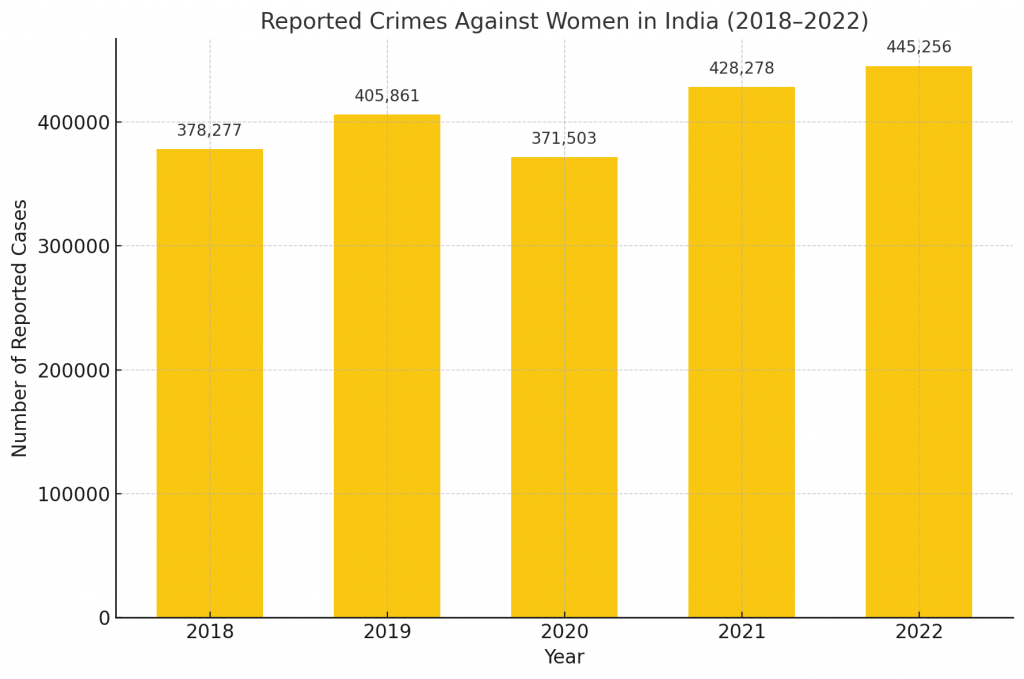
Insight: Reported cases rose from 378,277 in 2018 to 445,256 in 2022, with a slight dip in 2020 likely due to lockdown-related underreporting.
Globally, UN Women estimates that one in three women has experienced physical or sexual violence, typically by intimate partners. These rates increase significantly in crisis contexts such as displacement, conflict, or pandemics, where legal protections weaken and vulnerability rises.
Education: The first step toward prevention
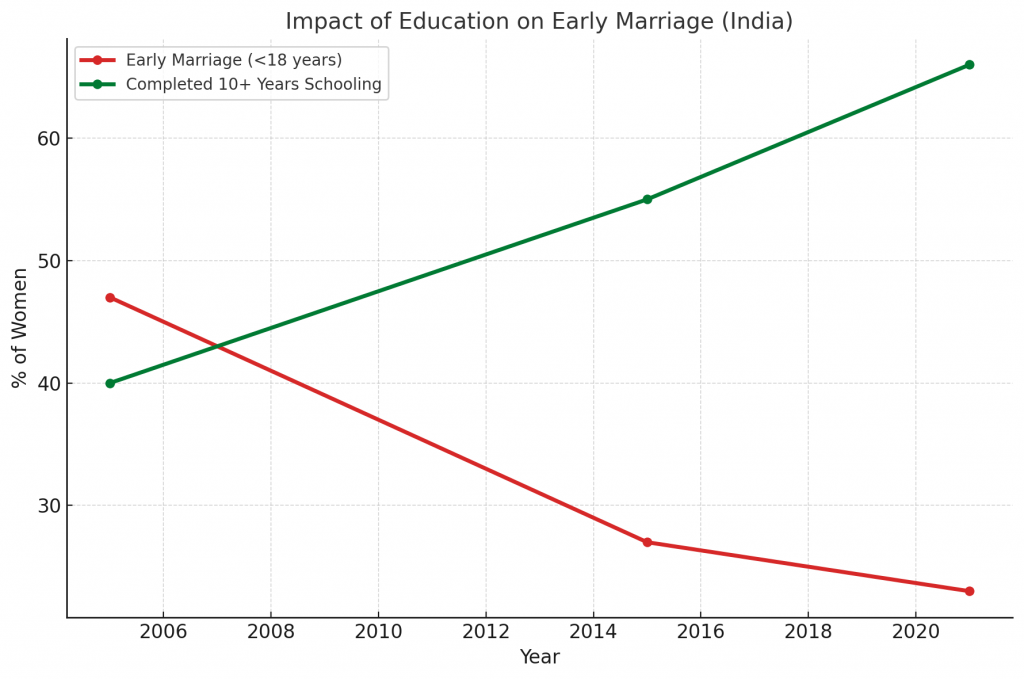
Education is a foundational intervention in reducing GBV. When girls remain in school longer, the incidence of child marriage, early pregnancy, and domestic violence decreases. Education fosters critical thinking, confidence, and access to information—tools that are essential for understanding and asserting rights.
Insight: As more women complete at least 10 years of schooling (from 40% in 2005 to 66% in 2021), early marriage rates have fallen significantly (from 47% to 23%).
Educated women are more likely to delay marriage, negotiate safer relationships, and resist societal pressure that normalizes violence. Moreover, education increases employment opportunities and financial independence, key factors in reducing vulnerability to abusive relationships.
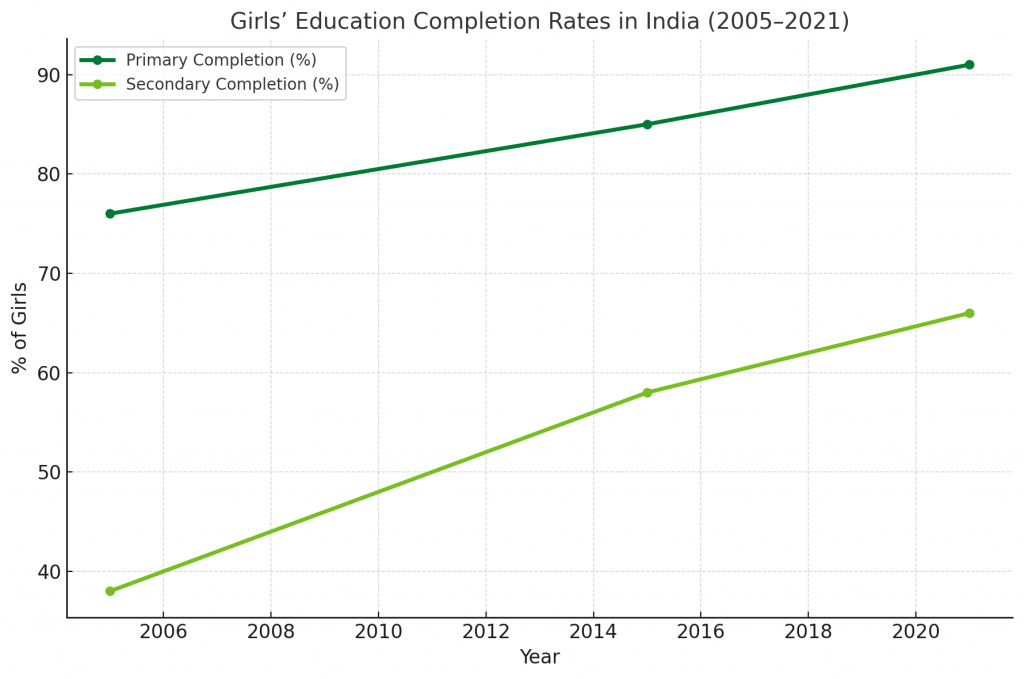
Insight: Primary completion rose from 76% to 91%, while secondary completion saw major progress—from 38% in 2005 to 66% in 2021, indicating strong gains in girls’ education.
Economic empowerment: From dependence to autonomy
Economic dependence is a significant barrier to leaving abusive relationships. When women have access to work, credit, financial literacy, and entrepreneurship, they gain the capacity to make independent decisions about their lives and well-being. Financial inclusion empowers women to leave violent situations and seek legal or psychosocial support when needed.
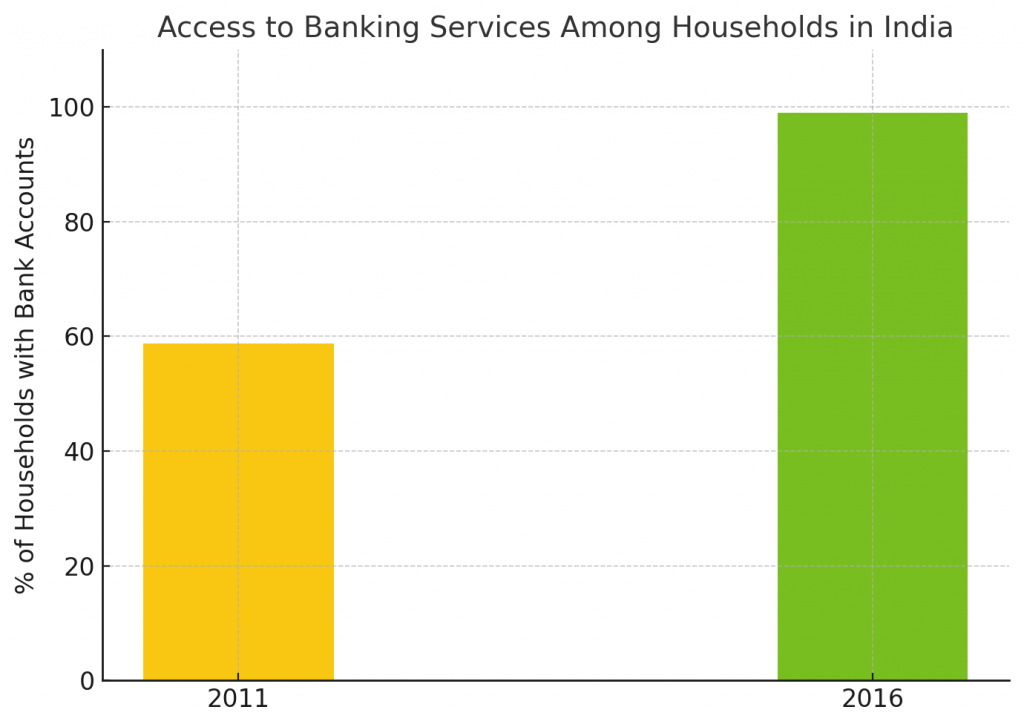
The evolution of financial access in India is notable. The 2011 Census revealed only 58.7% of households had access to banking services. By 2016, this had risen to 99%, according to ICE 360°. Targeting women for financial inclusion has cascading effects—studies show that women invest a larger share of their income in education, nutrition, and healthcare, amplifying household well-being.
Insight: Household access to banking rose from 58.7% in 2011 to 99% in 2016, illustrating the massive leap in financial inclusion, especially relevant to women’s economic empowerment.
Cash transfers have also been shown to reduce GBV by easing financial strain and enabling women to make autonomous decisions. When embedded in social protection frameworks, direct benefits can shift power dynamics within households and increase women’s mobility and access to support services.
Addressing social norms: Transforming relationships and power
Empowerment requires challenging and transforming harmful social norms that legitimise violence. Feminist frameworks advocate for rebalancing power within families and communities, promoting shared decision-making and consent-based relationships.
This shift begins with community-level education that targets boys and men as allies in gender equality. Since men are often the primary perpetrators of GBV, interventions must focus on redefining masculinity, challenging entitlement-based behaviours, and cultivating respect for women’s autonomy.
Creating safe spaces, such as women’s centres, helplines, or peer networks, offers survivors the confidentiality and support they need to report violence and recover from trauma. These spaces also serve as platforms for advocacy, legal assistance, and skill-building.
The role of women-led and community-based organisations in reducing gender-based violence
Local women’s organisations are among the most effective actors in reducing GBV. They are embedded within communities, deeply attuned to local contexts, and trusted by the populations they serve. Their work ranges from operating shelters and helplines to leading campaigns and training programs.
Such organisations also play a crucial role in responding to the intersectionality of violence—where gender, caste, class, religion, and disability combine to create multiple layers of marginalisation. For example, dalit women often face both caste-based and gendered violence, requiring interventions that address both hierarchies.
Supporting these organisations with funding, capacity-building, and institutional recognition ensures that GBV prevention efforts are not top-down but inclusive, participatory, and sustainable.
Case in point: Smile Foundation’s integrated approach
Smile Foundation exemplifies how integrated, community-based approaches to women’s empowerment can reduce gender-based violence. Since 2005, its Swabhiman programme has worked to equip women with healthcare access, educational support, and leadership opportunities.
Swabhiman operates on a 4S model:
Seeking healthcare as a behaviour
Support through education
Support from men and male allies
Sustaining change through community engagement
To date, the initiative has reached over 150,000 women and girls, with more than 1,000 trained as community change agents advocating for rights, equity, and dignity.
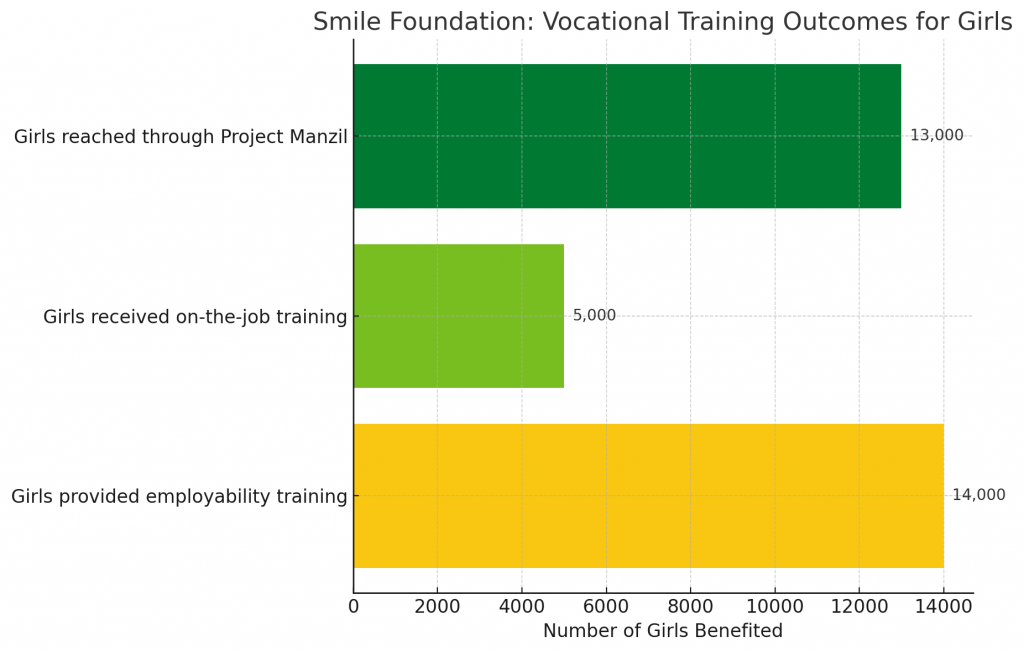
In addition, through Project Manzil, Smile Foundation has enhanced vocational education for girls in Grades 9–12 across six districts in Rajasthan by installing smart TVs and delivering audio-visual training. Over 13,000 girls have benefitted from this digital learning initiative, while more than 14,000 girls have received employability training and 5,000 have accessed on-the-job placements.
These initiatives foster confidence, resilience, and social mobility, enabling young women to challenge the status quo and advocate for safer, more equitable environments.
Addressing structural challenges
While empowerment-based approaches offer hope, several systemic barriers must be addressed:
1. Patriarchal Social Structures
Gender norms that prioritise male authority and control must be dismantled through sustained education, media engagement, and community mobilisation.
2. Underreporting and Legal Obstacles
Many women remain silent due to fear of retaliation, social stigma, or mistrust in the justice system. Strengthening survivor-centred reporting mechanisms and legal aid is essential.
3. Weak Implementation of Laws
Despite progressive legal frameworks (e.g., the Protection of Women from Domestic Violence Act), poor enforcement, delays, and corruption hinder justice. Reforms must address not only laws but the ecosystem in which they are implemented.
4. Intersectionality and Inclusion
Policies must consider the layered discrimination faced by women from marginalised communities. One-size-fits-all interventions often fail those most in need.
Empowerment as prevention
Women’s empowerment is not merely a parallel goal to ending gender-based violence—it is the core strategy. Education, financial independence, safe spaces, legal access, and social capital collectively reduce women’s vulnerability and expand their capacity for self-determination.
NGOs demonstrate that empowerment must begin early, embed locally, and evolve with the needs of women. Policymakers, researchers, and civil society must recognise that eliminating GBV is about prevention, protection, and power redistribution.
As India and other nations chart pathways to gender equality, investments in women’s empowerment will determine whether progress is inclusive or superficial—whether freedom from violence becomes the norm or remains an elusive right.
Pregnancy and childbirth are often described as magical, life-changing experiences—and they are. But what comes after can be just as intense, just as transformative, and often, not talked about enough.
Once the baby arrives, attention naturally shifts to the newborn. But a mother’s journey is far from over. In fact, it’s just entering a new chapter. The postpartum period, those first weeks and months after delivery, is a time of physical healing, emotional recalibration, and massive change. And yet, many women feel completely unprepared for it.
Let’s talk about what really happens during postpartum, why it matters, and how more open, informed conversations can help women feel seen, supported, and better equipped to take care of themselves.
The physical side: What your body goes through after birth
No one really tells you how physically demanding postpartum recovery can be. Sure, childbirth is tough but what happens afterward can be equally intense.
For starters, your uterus doesn’t just shrink back immediately. It takes weeks to return to its normal size, and the contractions that help it get there can cause cramping that feels like strong period pain. This is completely normal but often catches women by surprise.
Then there’s lochia, a heavy vaginal discharge made up of blood and tissue, which can continue for up to six weeks. Many women aren’t prepared for the amount or duration of postpartum bleeding and that can be unsettling if they don’t know what to expect.
Vaginal soreness is also common, especially for those who had a vaginal delivery. Swelling, discomfort in the perineal area, and stinging while urinating can linger for days or even weeks. Ice packs, warm baths, and prescribed pain relief can help, but the healing process is personal and varies greatly from woman to woman.
Breastfeeding brings another set of challenges. Breasts can feel swollen, tender, or painfully engorged. Cracked nipples, latching issues, and early breastfeeding discomfort are more common than most admit. And while nursing is often portrayed as natural and bonding, it doesn’t always come easily. Many mothers find the process frustrating, even distressing.
On top of that, hormone fluctuations, interrupted sleep, and the sheer exhaustion of caring for a newborn can leave women drained, both physically and emotionally.
This is why postpartum education is so crucial. New mothers need to be informed about what’s normal, what’s not, and when to seek help. Unfortunately, in many parts of India, and especially in rural or underserved communities, this kind of information just isn’t readily available.
Closing the gap: Making postpartum care accessible
Healthcare providers are doing their best, but time, infrastructure, and access are often limited. That’s where non-profits step in to fill critical gaps.
Smile Foundation is working to change that narrative. Through our Swabhimanprogramme, we conduct awareness sessions that empower women with information about postpartum health—from hygiene to nutrition to newborn care. These sessions not only educate but also encourage women to seek care without shame or delay.
In areas where clinics are few and far between, Smile Foundation’s Smile on Wheels initiative brings healthcare right to women’s doorsteps. These mobile medical units, staffed with doctors and paramedics, provide essential maternal and child health services, including check-ups, basic diagnostics, and medications—free of cost.
By reaching women who might otherwise fall through the cracks, these initiatives play a vital role in building a more equitable healthcare system and improving maternal outcomes.
Emotional Wellness: The part we don’t talk about enough
While the physical changes are more visible, the emotional toll of postpartum can be just as significant—if not more so. Yet it often goes unacknowledged.
Many new mothers experience the “baby blues” in the first few days after birth. These mood swings, tearfulness, and irritability are usually short-lived. But when feelings of sadness, hopelessness, or anxiety persist, it could be something more serious: Postpartum Depression (PPD).
PPD affects between 10 to 20 percent of women after childbirth. It’s not simply about feeling tired or overwhelmed. Women with PPD may experience emotional numbness, chronic fatigue, trouble bonding with their baby, sleep and appetite disturbances, and even thoughts of self-harm or harming their child.
PPD can begin a few weeks after delivery, or it might take months to show up. Either way, it’s real, it’s serious, and it’s treatable. What’s needed is early identification and support through therapy, medication when needed, or a combination of both.
Again, awareness plays a huge role here. Smile Foundation has also stepped up in this space, conducting outreach and educational programmes focused on maternal mental health, breastfeeding education, and nutritional care. These programmes are designed not just to inform but to empower women to recognise when they need help and to feel safe asking for it.
Why talking about postpartum matters
The postpartum period is not just about recovery—it’s a time of rediscovery. A woman’s identity is reshaped as she learns to care for a newborn while also navigating pain, fatigue, hormonal shifts, and social expectations.
Yet, conversations about postpartum tend to be hushed or wrapped in guilt and pressure—to bounce back, to keep smiling, to just “be grateful.” The result? Many women feel isolated, overwhelmed, or even ashamed of their struggles.
Changing this starts with acknowledging the full picture. By speaking openly about the physical and emotional realities of postpartum, we make it easier for women to share, to seek support, and to trust that what they’re feeling is valid.
🍼 Myths vs. Facts: What No One Tells You About Postpartum
Myth: Recovery after birth is quick.
Fact: Healing takes time. Bleeding, cramps, soreness, and fatigue can last for weeks or even months.
Myth: Breastfeeding should come naturally.
Fact: Breastfeeding is often difficult at first. Pain, latching issues, and engorgement are common.
Myth: Feeling sad means you’re failing.
Fact: Postpartum depression is medical. It’s common and treatable with help and support.
Myth: Only C-section moms need recovery time.
Fact: Vaginal births can also be painful. All mothers need time to heal.
Myth: You should bounce back quickly.
Fact: There’s no rush. Emotional and physical healing happen at your own pace.
Support should be commonplace for new mothers
Postpartum care shouldn’t be a privilege. It should be a standard part of every mother’s healthcare journey. That means:
Providing clear, consistent information before and after delivery.
Offering mental health support without stigma.
Making maternal health services available and accessible, no matter where a woman lives.
Empowering women to ask questions and advocate for their own well-being.
Motherhood is powerful, but it’s also vulnerable. And women shouldn’t have to navigate that vulnerability alone.
Let’s start telling the full story. Let’s listen to mothers. And let’s make sure every woman knows she’s not alone—because she isn’t.
Corporate India and Preventive Physiotherapy for Truck Drivers
Every day, truck drivers—unsung heroes who deliver everything from food and medicine to the smartphones in our pockets—power the Indian economy. However, the life of a truck driver remains arduous and largely unknown. Long hours behind the wheel, irregular rest, poor posture, and inactivity all contribute to chronic pain, joint strain, and long-term musculoskeletal disorders, coupled with poor working conditions, little access to nutritious food and adequate healthcare takes a significant and often invisible toll on their physical and mental well-being. Yet, most seek help only when the pain becomes debilitating—too late for simple solutions. For many, the physical toll results in a steady, silent deterioration of their health and livelihood.
Their injuries
The most common occupational injuries among professional drivers are musculoskeletal diseases (MSDs) of the neck, back, and upper extremities. Drivers who miss work due to MSD-related injuries suffer not only physical suffering but also financial damages. According to studies, MSDs cause 33% of all occupational illnesses and injuries.
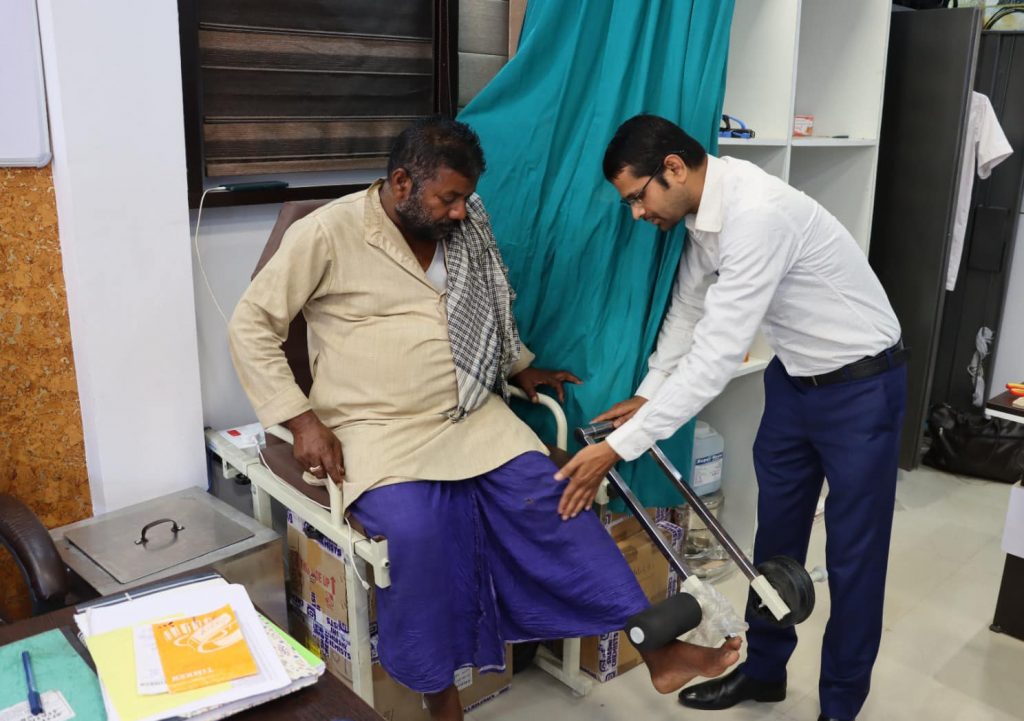
Here lies a powerful opportunity for corporate India, particularly stakeholders in logistics, retail, e-commerce, and manufacturing. Companies may develop a healthier, more resilient trucking workforce by investing in preventative physiotherapy as part of their CSR or wellness initiatives, as well as building ethical supply chains that care for people who keep them operating. HDB Financial Services (HDBFS) has established its seventh Transport Aarogyam Kendra (TAK) in Indore, in collaboration with the Smile Foundation. TAK is a healthcare institution dedicated particularly to the well-being of truck drivers.
Each TAK:
Offers free physiotherapy consultations and exercises for truckers.
Provides access to general health check-ups, eye exams, and lifestyle counselling.
Operates in transport hubs and logistics parks, ensuring easy access to drivers where they work and rest.
Alongside these centres, Smile Foundation deploys its flagship Smile on Wheels mobile medical units. These vans bring doctors, paramedics, diagnostic services, and free medicines directly to trucking zones and highways—ensuring healthcare is both accessible and continuous.
In just the last year, Smile Foundation’s mobile healthcare units have conducted thousands of physiotherapy sessions, delivered preventive care education, and helped drivers identify and treat symptoms before they became severe. This kind of early intervention model is both scalable and sustainable.
What is preventive physiotherapy?
Preventive physiotherapy, with its focus on early posture correction and mobility, could break this cycle. It is a cheap and effective way to keep India’s truck drivers moving without discomfort. Instead of waiting for problems to develop, it identifies risk factors early and addresses them before they cause pain or injury. It can be as simple as a 10-minute stretch routine during refuelling breaks or periodic visits from mobile physiotherapy units. When done consistently, these small changes can reduce long-term injuries, improve stamina, and help drivers stay on the road—safely and sustainably. It’s not just about treatment. It’s about giving drivers a fighting chance.
Why corporate India should step in
India’s logistics engine depends on its truck drivers, yet their health remains dangerously neglected. Corporates— Businesses, especially those in e-commerce, fast-moving consumer goods (FMCG), and supply chain operations, need to change this for moral and strategic reasons. Companies who are ahead of the curve know that spending money on driver health is not just the right thing to do, but also a smart business move that pays off in the following ways:
Strong Business Case
Healthier drivers mean fewer sick days, reduced attrition, and better performance. This has a positive impact on delivery timelines, fuel efficiency, and workforce morale—translating care into cost savings.
Enhanced Public Image
In an era of conscious consumerism, showing genuine concern for frontline workers improves public trust. Customers notice when brands treat their workforce.
Competitive Advantage
Companies that offer full health benefits, such as preventive physiotherapy, can position themselves as progressive employers who really care about the health of their drivers. This is especially helpful for attracting and retaining skilled drivers and competing with companies that simply offer minimal pay.
Key corporate initiatives include:
Mobile health units that offer physiotherapy services at truck stops and highway rest areas.
Technology-based solutions include driver health apps, wearable devices for posture monitoring, and telemedicine consultations. They can add basic wellness solutions, such applications with stretching exercises, reminder alerts, or films, to logistical platforms that are already in use.
Working with physiotherapy clinics, NGOs and hospitals to establish full networks of preventative care.
Adding to current wellness initiatives to give contracted drivers and fleet partners the same health benefits as employees.
The education part can include things like being aware of how your body works, how to securely move freight and equipment, how to sit up straight, when to take breaks and change positions, how to see early signs, how to sleep properly, and how to eat well.
Regular screenings can happen every three or six months, just like how corporations examine their employees’ health on a regular basis.
While road safety and fatigue have attracted some public attention, one critical area remains alarmingly overlooked: preventive physiotherapy. Truck drivers in India are the backbone of our economy, yet their health is not a priority. Corporate India has to start taking genuine, proactive action. Investing in physiotherapy isn’t charity; it’s sensible, long-lasting, and fair. A driver who is healthier now will make the supply chain safer and stronger tomorrow. Without their diligent efforts, the sophisticated web of supply chains that powers India’s economy would come to a halt. With the right design, care can meet them where they are—on the move.
Truck Driver Scroll Story
🚚
Life on the Road
Meet Rajesh, a truck driver who spends over 12 hours a day behind the wheel, delivering essential goods across India. Long hours, irregular meals, and no time for rest take a toll on his health.
😣
Pain Sets In
After years of work, Rajesh starts experiencing severe lower back pain and stiffness in his neck. The discomfort makes driving harder and more dangerous.
🩺
Meeting Smile Foundation
During a stop in Indore, Rajesh visits a Transport Aarogyam Kendra run by Smile Foundation and HDB Financial Services. He meets a physiotherapist who helps him understand the cause of his pain.
🤸♂️
Preventive Physiotherapy Begins
He learns simple exercises, posture correction techniques, and stretches he can do during breaks. He feels relief within days and commits to regular sessions.
💪
Back on the Road, Healthier
Rajesh is back on the road—stronger, more aware, and pain-free. Preventive physiotherapy has changed his life, and now he encourages fellow drivers to take charge of their health too.
What India’s Aspirational Blocks Are Really Building
There’s a certain sound to ambition in rural India. It’s not loud. It doesn’t echo in Parliament halls or air-conditioned policy conclaves. No, it’s quieter than that. Like the rustle of papers in a primary school, or the hiss of pressure cookers in a newly built health centre, or even the shuffle of slippers outside a panchayat office where, at this very moment, someone is trying to rewrite their future.
And if you ask the government, they’ll tell you they’re accelerating this quiet transformation through something called the Aspirational Blocks Programme—a name that feels a little too bureaucratic to contain the enormity of what it’s trying to do. But make no mistake: there is change afoot.
Take Puredalai Block, for instance. Tucked away in Barabanki district, Uttar Pradesh, it wasn’t so long ago that its residents were grappling with high TB burdens, low institutional deliveries, and that aching, invisible illness called neglect. Fast forward to June 2025, and it’s accepting a ₹1.5 crore award from NITI Aayog for outperforming on human development indicators.
From zero TB treatment gaps to 100% institutional deliveries, and from chronic underperformance to model block—Puredalai has had what the papers might call a glow-up. But what they often miss is what really powers this kind of change. Spoiler: it’s not just dashboards and deadlines. It’s community, care, and continuity. And it’s worth talking about.
Community: Where the real bureaucracy lives
There’s a village in Telangana called Gangadevipalli, and it should be on the syllabus of every development studies course in the country. With just 369 households, it quietly achieved what most districts still dream of: 100% literacy, 100% toilet construction, 100% school attendance, even a village-level alcohol prohibition law that actually works.
Its secret? Committees. Twenty-six of them, to be precise. One for plastic bans. One for widow welfare. One for sanitation. One for women’s issues. And the kicker? Every household has someone on at least one committee. Bureaucracy, yes; but the kind that works because it belongs to the people.
This is what real grassroots governance looks like. Not top-down schemes, but side-by-side solutions. Not the government arriving with answers, but the community asking the right questions.
In fact, if India’s underdeveloped regions have taught us anything, it’s this: no transformation takes root without community ownership. The best policies remain PDFs without people to carry them forward.
So it’s no surprise that under the Aspirational Blocks Programme, Panchayati Raj Institutions (PRIs) and community-based organisations (CBOs) are emerging as the backbone. They don’t just implement; they interpret. They ensure that the letter of a scheme doesn’t strangle its spirit.
Care: Not the kind you fill in a form
In Villupuram, Tamil Nadu, care wears a nurse’s uniform and has a name—Katheeza Beevi. Over three decades, she helped bring more than 10,000 babies into the world. No fancy degree, no media spotlight. Just the unglamorous, irreplaceable work of showing up, every single time.
Her health centre became known locally as the “lucky maternity hospital,” and honestly, who wouldn’t trust a place blessed by consistency?
But even good intentions can unravel if dignity isn’t woven into the thread. Tamil Nadu’s Chief Minister’s Breakfast Scheme, while brilliant on paper, faced backlash when a staff member allegedly mistreated a child. It was a stark reminder: welfare without empathy can turn nourishment into humiliation.
So yes, we need schemes. We need systems. But we also need to remember that people are not metrics. They’re not indicators to be monitored. They’re citizens. And care, real care, isn’t just about providing services. It’s about how those services are delivered.
When health workers follow up because they care, not because they’re being audited, something changes. When students eat breakfast and feel respected, not pitied—something grows.
Continuity: The art of not starting over every five years
Ah, continuity. The least glamorous of the Three Cs, and yet the most essential. Anyone who’s ever worked in or around development knows the ritual: a new scheme arrives, posters are printed, officials nod solemnly, and then—it all resets when the next big thing comes along.
But ABP doesn’t want to be the next big thing. It wants to be a consistent thing. The kind of initiative that stays long enough to matter.
It’s built on three foundational pillars:
Convergence – getting state and union schemes to working in tandem with each other
Collaboration – coordination between NITI Aayog, state governments, and district/block administrations
Competition – a spirit of constructive rivalry aimed at maximising public good
Blocks are ranked based on 39 socio-economic indicators, nudged toward SWOT analysis (that’s Strengths, Weaknesses, Opportunities, Threats), and trained to make their own block development strategies.
And, then, there’s a knowledge portal, an iGOT Karmayogi integration, and more digital dashboards than you can shake a stylus at.
But what’s quietly radical about ABP is that it values institutional memory. It wants functionaries to be trained, yes—but also retained. It wants plans not just made, but maintained.
It’s not a patchwork programme. It’s an infrastructure for transformation.
The Smile factor: Where NGOs fit in for Aspirational Blocks
While government schemes provide scale, non-governmental organizations (NGOs) often bring adaptability, trust, and context-specific expertise. For instance, Smile Foundation has emerged as a crucial partner in complementing public efforts under the ABP framework.
Through initiatives like:
Mobile healthcare units (in partnership with Philips India) across Tamil Nadu, Karnataka, Haryana, and Maharashtra
Solar-powered digital classrooms in rural and tribal schools
Vocational training programmes benefiting over 44,000 girls
Telemedicine and health awareness campaigns reaching over 80,000 people
Education initiatives improving outcomes for over 1.6 lakh children
Smile Foundation demonstrates how multi-sectoral partnerships can translate policy intent into lived impact. Their work in Sundergarh (Odisha), Siddharth Nagar, and Shravasti (Uttar Pradesh) showcases how health, education, and livelihood interventions, when combined with community engagement, result in lasting change.
When the three Cs collide
When community, care, and continuity align, you don’t just see transformation—you feel it.
Like in Malkangiri, Odisha, where 23,000 people across five blocks are now part of the PM-JANMAN programme. It’s not just about roads and electricity (though those are there too). It’s about ownership. About tribal families participating in awareness campaigns and choosing pucca houses that suit their lives.
It’s about development not arriving with a press release, but growing from the inside out.
Aspirational Blocks: From block to blueprint
India’s Aspirational Blocks Programme more than a rural policy initiative—is a laboratory for governance innovation—a blueprint for inclusive development that others in the Global South might adapt to address their own regional disparities.
When community, care, and continuity intersect, development is no longer top-down. It becomes collaborative, enduring, and people-first. And when that happens, the gains are transformational.