Categories
Partners In Change Partnerships Smile

Luxury Meets Purpose through Cause Related Marketing

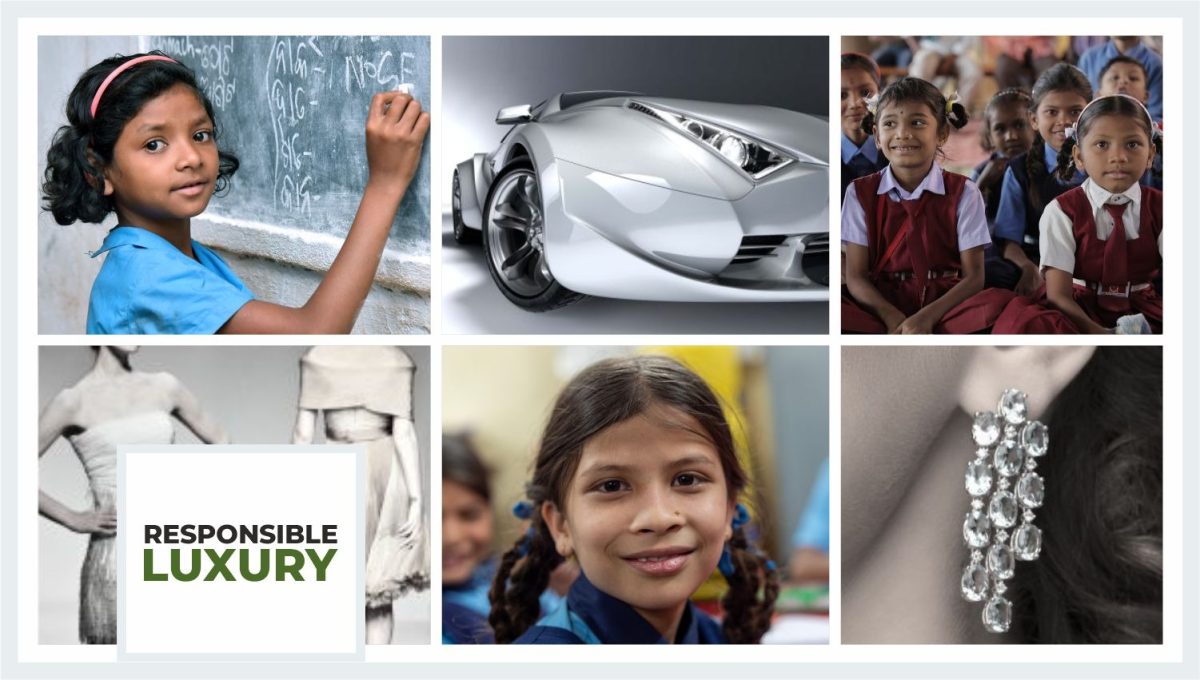
What makes a product truly luxurious? It is never only the sheen of fabric, the polish of metal, or the weight of a logo. These are surface signals. Real luxury is born from the story etched into its creation–the unseen hours of craftsmanship, the deliberate pursuit of rare materials, the precision that elevates mere function into art. Every stitch, every curve tells a story of rarity and desire.

In the same way, when luxury brands embrace cause related marketing (CRM) partnerships, they are not simply adorning their products with social relevance—they are deepening the narrative. The story of a product expands beyond craftsmanship to purpose, beyond elegance to impact. Luxury with meaning becomes not just an object of aspiration, but a statement of alignment with higher ideals.

Furthermore, today this evolution is also demanded by the socially conscious consumers. They seek brands that reflect their moral compass, their identity, their values. They buy not just the product, but the story of contribution, of responsibility, of cultural influence. 

Therefore, luxury houses mastering this art of narrative through CRM does more than build brand equity. It forges emotional resonance, transforming them into arbiters not just of taste, but of societal progress itself.

CRM in Luxury- Building Equity with Responsibility

Today luxury campaigns have evolved from silent contributions to illustrative CRM initiatives to promote cultural movements. Gucci’s Chime for Change initiative, co-founded by Beyonce and Salma Hayek, transcended fashion into a global platform for advocating gender equality, blending celebrity influence with grassroot impact. Similarly, Cartier’s Women Initiative has built a legacy of empowering female entrepreneurs worldwide embedding social progress into the brand’s identity.

These examples highlight a defining trend– that luxury brands through compelling and resonating storytelling are bringing their brand’s commitment to support social causes, for transforming their advertisement campaigns into a sustainable movement, that resonates with their consumers while reinforcing their social commitment. 

This evolution is also fuelled by shifting consumer expectations. Today’s consumers are not content to purchase products on the basis of popularity alone; they are attentive to the values and contributions of the brands they choose. With heightened focus on areas such as education, women’s empowerment, youth skills development, and last-mile health delivery in underserved regions, customers now seek evidence of whether the brands they trust are genuinely contributing to society.

A recent study illustrates this shift: 45% of consumers are more likely to purchase from a brand that donates to charity compared to a competitor that does not. For business leaders, this underscores a crucial imperative — cause-related marketing is no longer a discretionary activity, but a strategic lever that can simultaneously drive social impact and long-term brand equity.

Expanding Brand equity with Cause marketing

In the contemporary marketplace, the bond between consumers and brands has transcended the transactional limitations. Increasingly, the relation is defined by values, morals and social consciousness. As highlighted by The Impact of Storytelling Advertising on Consumer Experiences and Brand Equity, a research done by Great Lakes Institute of management, brands must cultivate authenticity and transparency, if they are to sustain consumer’s trust. Storytelling has emerged as the most effective means of achieving this, offering businesses a way to humanise their operations and demonstrate tangible impact. 

Cause-related marketing strengthens this storytelling agenda by embedding social purpose into brand narratives. Through partnerships with NGOs, companies gain access to authentic, lived experience that form the foundation of compelling stories.

By communicating these experiences, luxury businesses do more than showcase philanthropic activity; they invite consumers into a shared mission. This alignment of commerce with conscience is what drives brand equity in an era where reputation and trust are as critical as products’ quality or price.

Marketers have observed that cause-related storytelling has the power to go beyond campaigns and become movements. For example the above mentioned luxury brand campaigns came in with a strong messaging that invoked something personal in the audience. Emotional narratives activate empathy centers in the brain, making audiences more likely to remember a message, act on it or share it. Evidence suggests that brands employing storytelling not only drive stronger recall, but also foster higher levels of consumer loyalty and willingness to contribute– whether financially, socially or reputationally. 
Maximising CRM Impact via NGOs

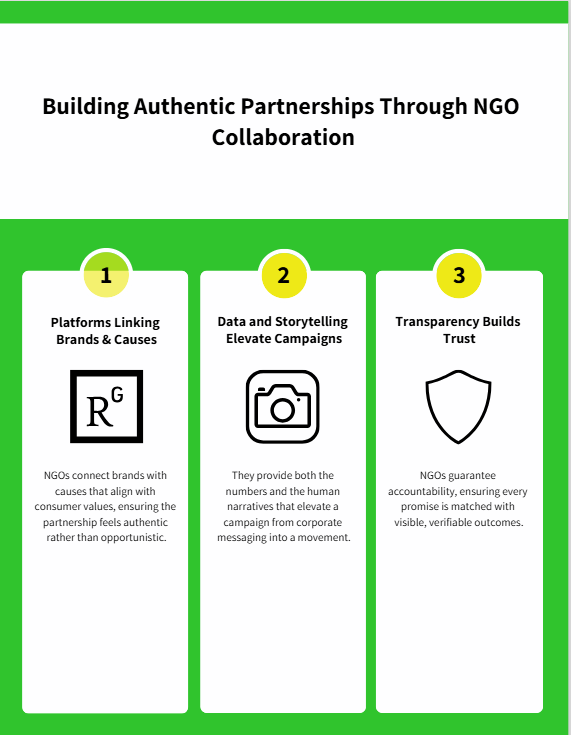
For luxury brands, NGOs serve as critical bridges of trust, translating philanthropic intent into tangible outcomes while converting marketing initiatives into measurable social and cultural movements that stay with their consumers. Partnerships with credible NGOs provide clarity in reporting, ensuring transparency and accountability, while enhancing consumer engagement by showcasing authenticity on the ground. 

By leveraging NGO expertise, luxury brands can design high-impact, multi level interventions that deliver real change such as – 

  • Quality and advanced education for children,
  • Last-mile delivery of healthcare at the doorsteps, 
  • 21st century livelihood training for the youth 
  • Entrepreneurship empowerment for women from rural communities.

These initiatives create a win-win for all involved as– NGOs grain scale and visibility, brands build purpose driven equity and most importantly, communities experience lasting improvements. 

Elevate Cause marketing with Smile 

In today’s business landscape, luxury brands are no longer evaluated solely on product quality or exclusivity. Modern consumers – particularly Millennials and Gen Z expect brands to demonstrate tangible social responsibility. 

Smile Foundation provides a structured, credible platform for integrating purpose into result oriented cause related activities, that allows businesses to show their determination in making measurable and sustainable social impact. 

Ways to partner With Smile 

  • Part proceeds: Allocate a share of product sales to Smile initiatives directly inkling revenue with measurable improvements in education, healthcare and livelihoods. 
  • Purpose marketing: Design campaigns aligned with Smile’s causes, strengthening customer trust while differentiating brand positioning in a competitive marketplace. 
  • In-app donations: Embed donation options within apps, creating seamless user experiences while reinforcing brand commitment to accessibility and inclusivity. 
  • Point of sale campaigns : Enable micro-donations at checkout, driving higher average order value while deepening customer engagement. 
  • Redeem points- Convert loyalty rewards into social good, enhancing retention and reinforcing long term consumer brand relationships. 

As a two decade old social development organisation, we truly believe that in today’s time, CRM partnerships are pivotal for luxury brands to build an intimate and lasting relationship with their customers. They command a premium through curated experiences, and by extending this premium to society through strategic partnerships, brands can elevate their ethos from exclusivity to shared value and responsibility. 

With the changing consumer demands, this opportunity and time is the right strategic lever that combines purpose with profit. By embedding CRM into core business strategies, luxury brands can drive social change at an amplified scale ensuring that they become — the beacon of social change in the truest essence.

Partner with Smile Foundation to turn commitment into measurable, lasting change.

Source– 
  1. Cause-related marketing: a systematic review of the literature
Categories
CSR Education Partnerships

STEM Today, Changemakers Tomorrow

Imagine a future where children across India learn to design, code, and build right from their homes. With the right support through CSR-led STEM education, this is not just a possibility – it’s within reach.

Drawing guidelines from the reports of UNESCO, McKinsey & Company, CSR programmes can trace the natural path of identifying barriers to forging lasting partnerships that deliver resources, mentorship and digital infrastructure. By promoting STEM education through corporate investments with developmental expertise, initiatives can be developed to create inclusive STEM education projects that effectively upskill underrepresented children in India. 

This collaboration ensures sustainable ecosystems where academia institutions, industry and community organisations co design curricula, facilitate internship and provide ongoing support. Ultimately, such synergy drives innovation, economic growth and social development by promoting equitable access to STEM education and careers. 

Bridging STEM gaps – Policy meets CSR

The Government of India has established a robust policy environment to strengthen STEM education, recognising its role in national development and global competitiveness. Key schemes include Rashtriya Avishkar Abhiyan, which integrates STEM learning with experiential methods in schools; Innovation in Science Pursuit for Inspired Research (INSPIRE) which nurtures scientific talent from an early age and Digital India which promotes digital literacy and e-learning tools, enhancing STEM access in rural and semi-urban areas. 

Additionally, initiatives like Atal Innovation Mission and PM eVIDYA support innovation labs, teacher training and digital content development. These programmes provide the policy infrastructure for corporate social responsibility initiatives to scale their impact through strategic public-private partnerships. 

However, despite several initiatives to make STEM education accessible in India, the gaps still exist. In low-resource communities, be it from Mumbai slums or remote Himalayan villages, many children look forward to learning, to questioning and to creating. But because of the lack of basic resources, trained teachers and hands on experiences their potential goes unrealised.

Why is STEM education vital?

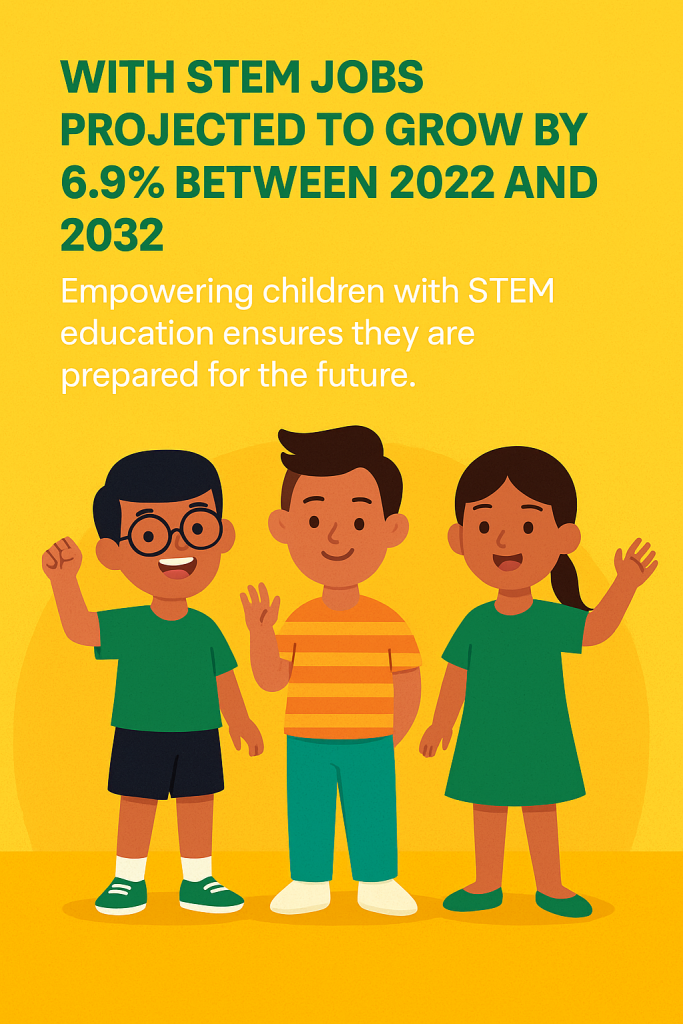
STEM careers are poised for exceptional growth, driven by rapid technological advancement and the global push towards digitalisation, sustainability, and innovation. According to the U.S. Bureau of Labor Statistics and the World Economic Forum, STEM jobs are projected to grow by 6.9% between 2022 and 2032 outpacing non-STEM roles.

Fields like AI, data science, cybersecurity and renewable energy engineering could see growth of 30–45%, creating millions of high-quality, future-ready jobs. This surge not only promises economic opportunity but also the chance to shape a more resilient, equitable world. 

Thus, STEM education from an early age in countries like India holds the key to empowering children to dream, innovate, and thrive in a world that’s changing rather too quickly. At its core, it’s not about gadgets or code—it’s about levelling the playing field and expanding the horizon of what’s possible for every child.

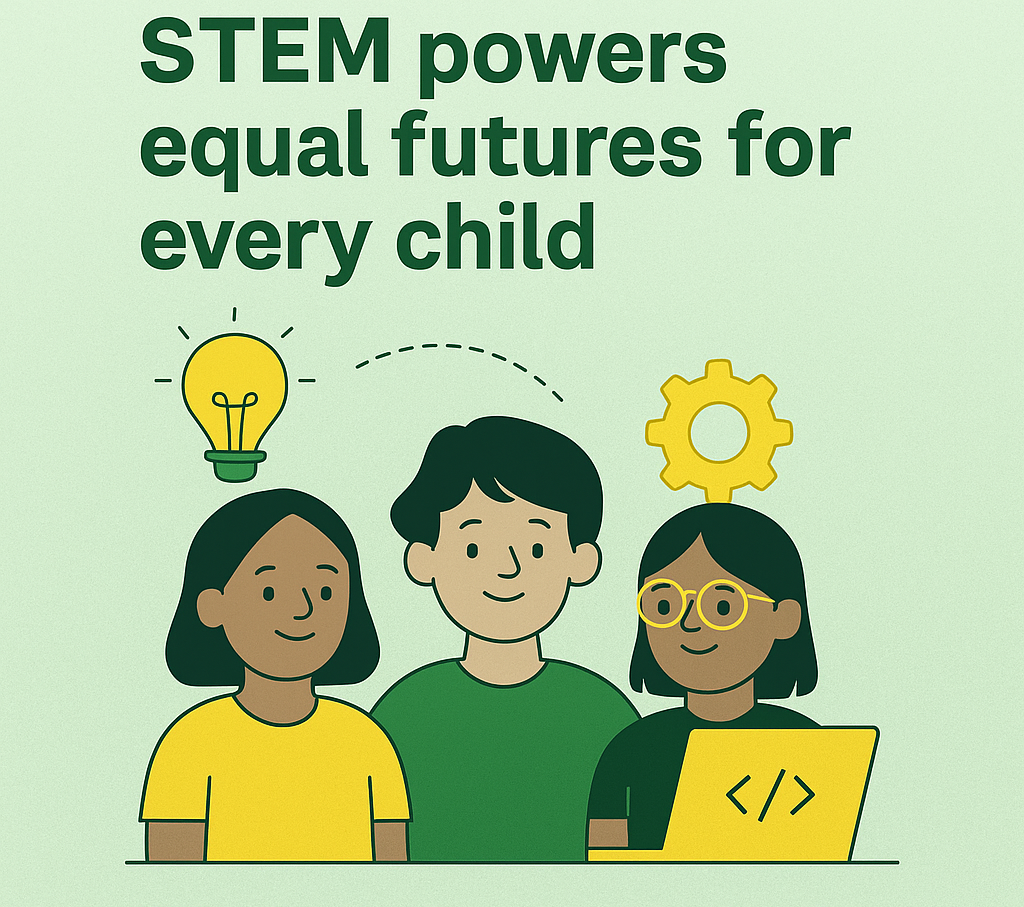
STEM powers equal futures for every child

  1. Builds Blocks for STEM Equity

STEM education in India is a powerful enabler of inclusive growth, but its success hinges on foundational infrastructure. In remote regions, where electricity, internet connectivity, science kits and safe laboratories are scarce, these essentials are pillars of opportunity. Without them, the dream of inclusive, inquiry-led education remains out of reach for millions of children. Investing in this infrastructure is both an operational necessity and a moral imperative for building an equitable society.

  1. Empowers Local Learning Ecosystems

Technology belongs to everyone – a truth reflected in the way STEM education can unlock potential across the social fabric of India. To achieve this, the country must nurture ecosystems that welcome underserved children through:

  • Trained mentors who guide and inspire
  • Community-led robotics and science clubs that encourage collaboration
  • Peer networks of young innovators that foster belonging and shared learning

An inspiring example comes from IIT Bombay’s collaboration with Smile Foundation and GnaanU Education. Their STEM education workshop exposed children from low-resource communities to robotics, aero-modelling, 3D printing and sustainability. Young minds are filled with curiosity, confidence and the courage to imagine a future in technology-driven fields.

  1. Responsible Governance for Sustained Impact

STEM education in India must be anchored in ethical, accountable frameworks. This calls for partnerships between government bodies, NGOs and the private sector working together to monitor, evaluate and refine programmes. The goal is to ensure every child has the tools, guidance and opportunities to explore, experiment and thrive. When STEM education becomes truly inclusive, we sow seeds of confidence and belonging that can transform generations.

STEM education NEP 2020 and CSR: A shared vision for inclusive learning

The National Education Policy (NEP) 2020 places STEM education at the forefront of building an innovation-driven, equitable India. It champions inquiry-based, experiential learning, digital literacy and vocational skills – all critical to preparing young minds for the future. Achieving this vision requires demands committed action on the ground. Here, Corporate Social Responsibility (CSR) has a transformative role to play.

CSR as a strategic driver of NEP 2020 goals

  1. Enabling scalable education models

By supporting mobile STEM labs, digital classrooms and maker spaces, CSR initiatives can create flexible, replicable models that bring hands-on, experiential STEM education to children across diverse geographies.

  1. Advancing digital equity

CSR efforts that fund devices, internet connectivity and learning platforms empower low-resource communities, helping bridge the digital divide and ensuring every child has equal access to quality STEM education opportunities.

  1. Strengthening capacity-building for educators

Investing in teacher training, mentoring networks and innovative pedagogy equips educators to deliver dynamic, inclusive STEM learning, enabling alignment with NEP 2020’s vision of inquiry-based and technology-enabled education.

These efforts bridge systemic gaps, helping underserved learners thrive and contribute meaningfully to India’s knowledge economy.

CSR-NGO synergy: Catalysing equitable STEM education in India

STEM education in India is a cornerstone of the National Education Policy (NEP) 2020, envisioned as a pathway to an equitable and innovation-led future. Achieving this vision requires joint efforts by CSR leaders, NGOs and government bodies. Public-private partnerships play a vital role in strengthening educational infrastructure, digital access and foundational learning systems. Corporates, as co-creators, can help scale mobile STEM labs, maker spaces and digital classrooms that bring experiential learning to underserved communities, in line with NEP 2020.

Equally crucial is collaboration with trusted NGOs, ensuring that STEM initiatives are inclusive, locally relevant and grounded in real-world needs. Such partnerships enable tailored solutions from teacher capacity-building to community-led science clubs that nurture curiosity, confidence and innovation. By aligning CSR investments with NEP 2020 priorities, corporates can help build future-ready education models that empower every child to thrive in a technology-driven world.

NGOs as ecosystem enablers

In India’s pursuit of equitable STEM education, grassroots NGOs play an indispensable role in turning policy intent into meaningful action. For corporates aiming to make long-term, scalable impact through their CSR investments, partnering with NGOs in India is not just strategic, it is pivotal. Organisations like Smile Foundation act as ecosystem enablers, bridging the critical gap between national education priorities and ground-level realities through culturally rooted, community-led models.

At the core of Smile Foundation’s education initiative lies its impactful STEM intervention. We believe that every child regardless of geography or gender deserves access to quality, inquiry-led learning. Our multi-pronged approach ensures that the right tools, training and opportunities reach those who need them most.

  • Mobile STEM Laboratories
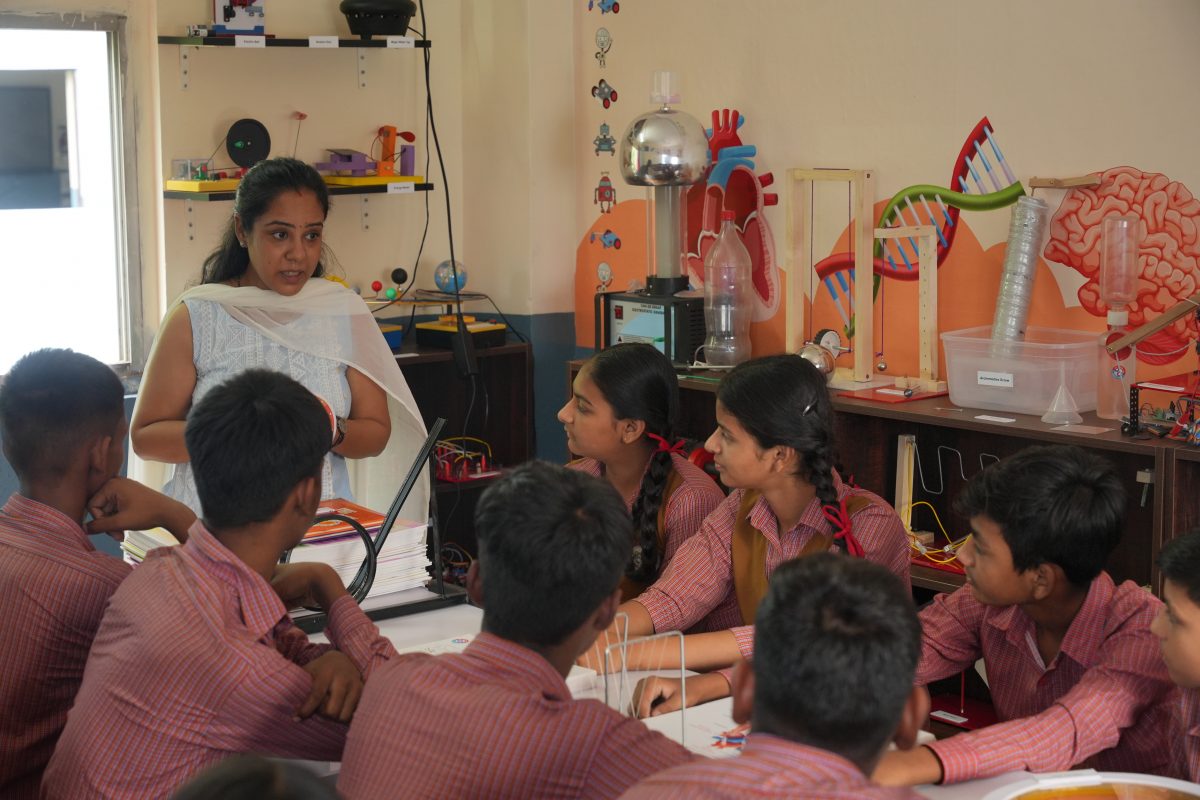
    These portable science labs bring practical, experiment-based learning directly to schools in underserved and remote areas. Equipped with interactive kits and DIY experiments, they make STEM tangible and exciting, especially for students with limited access to formal lab infrastructure.
  • Teacher Capacity Building
    Recognising the role of teachers, we conduct regular training programmes for rural educators, enabling them to adopt experiential pedagogies. These sessions empower teachers to deliver hands-on, inquiry-based STEM lessons that foster curiosity and critical thinking.
  • Gender-Inclusive Innovation Spaces
    Through initiatives like science clubs, innovation fairs and safe, inclusive learning zones, we actively encourage girls to explore and participate in STEM. These platforms are designed not only to build confidence but to challenge long-held stereotypes about gender and scientific ability.
  • Strengthening Foundations
    Through shared vision and efforts, we’ve established interactive smart classrooms and STEM labs. These interventions aim to create a dynamic and inclusive environment for foundational and advanced STEM learning.

Impact at Scale

0

STEM DIY kits

0

Number of students in STEM

0

Mobile STEM Labs Deployed

Impact at scale: More than just numbers

Through consistent, integrated implementation, Smile Foundation’s STEM education programmes have:

  • Improved student attendance, particularly in equity-challenged schools
  • Significantly increased the participation of girls in STEM activities
  • Enabled month-on-month capacity building for teachers in STEM pedagogy
  • Fostered a shift towards holistic, project-based learning frameworks

These outcomes underscore a simple yet powerful truth-

“ When corporates and NGOs co-create solutions rooted in empathy and aligned with national priorities, transformation is not only possible, it is scalable and sustainable”.

Partner for cross-sector collaboration

The future of STEM education in India rests in our collective hands. When corporates, NGOs and government bodies come together, we don’t just fund education - we shape futures. At Smile Foundation, we believe true impact begins with data-driven decisions and ends with empowered classrooms.

 Join us in co-creating a scalable, inclusive STEM ecosystem because every child deserves the best we can offer.

Sources- 

Building Purpose Beyond CSR, The STEM Labor Force: Scientists, Engineers, and Skilled Technical Workers, Future of Jobs Report 2025

Categories
Partnerships

Good News! CSR Partnerships Work Really Well

In recent years, India has witnessed a surge in successful CSR partnerships in India between businesses and nonprofits. These collaborations are creating real impacts at micro, macro and environmental levels, contributing to sustainable development and social well-being. From community upliftment to environmental conservation, the synergy between businesses and nonprofits is proving to be a game-changer for India.

Micro-Level Impacts: Empowering Communities through CSR Partnerships in India

At the micro level, business-nonprofit CSR partnerships in India are driving tangible improvements in local communities. These partnerships often focus on areas such as education, healthcare and livelihood generation, directly benefiting individuals and families.

1. Education and Skill Development

Smile Foundation and CNH Capital have partnered to enhance educational access for marginalized children in Gurugram, Haryana. This collaboration focuses on improving foundational literacy and numeracy for primary school students by setting up a Foundational Literacy and Numeracy (FLN) lab and supplying essential teaching materials and textbooks.

The key activities of this initiative include conducting baseline and end-line assessments to track learning progress, providing capacity-building programs for teachers and offering infrastructure support to create a conducive learning environment. Additionally, community engagement and employee volunteer activities will involve stakeholders in the educational process, ensuring a holistic approach.

The expected outcomes of this initiative are significant- improved learning outcomes, better hygiene practices and strengthened teacher skills. These efforts promise a brighter and more promising future for the underserved children of Gurugram.

2. Healthcare Initiatives

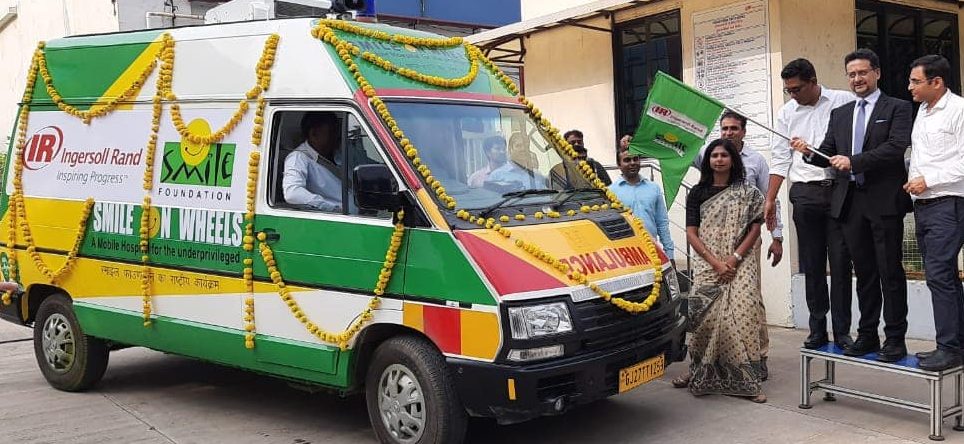
Healthcare is another critical area where business-nonprofit collaborations are making a difference. The partnership between Novartis and Smile Foundation aims to facilitate healthcare services for economically disadvantaged people in Naroda and neighbouring areas in Ahmedabad. Ingersoll Rand is supporting the ‘Smile on Wheels’ initiative that targets mobile healthcare vans to deliver professional healthcare services at the doorsteps of 4 lakh urban slum dwellers in identified communities.

As part of the project, Ingersoll Rand will support fully-equipped medical vans to deliver healthcare facilities such as regular health check-ups, basic pathological tests and doctor consultation. As part of the mandate, the doctors and paramedics will also hold awareness sessions among the local population to sensitise them on health and hygiene issues. These vans will cater to 12000-15000 patients annually.

3. Livelihood and Economic Development

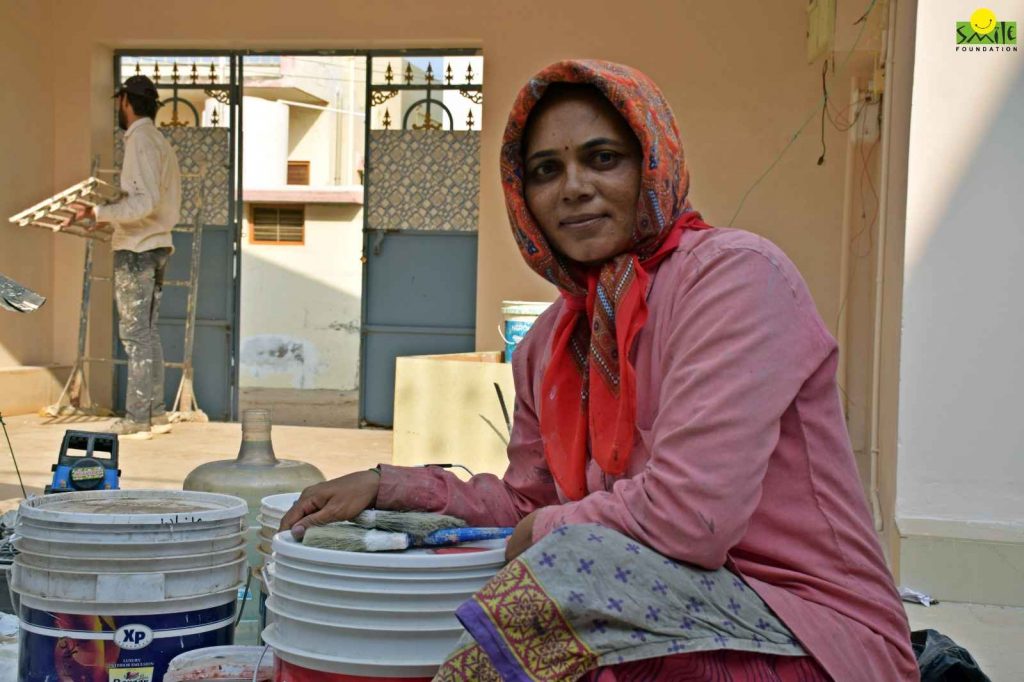
Many business-nonprofit partnerships focus on creating sustainable livelihoods. The collaboration between Berger Paints India Limited and Smile Foundation to implement the ‘iTrain on Wheels‘ programme- an upskilling initiative aimed at honing the skills of young painters by training them in contemporary painting techniques while upskilling existing painters to enhance their employability opportunities is one of a kind.

The programme aims to develop a pool of skilled workforce in addition to developing entrepreneurial skills in painters. The training, conducted through the Smile Twin e-learning Programme (STeP), will ensure that painters can improve their existing skills through upskilling modules. In addition to facilitating training, Smile Foundation will monitor and evaluate the program and its impact assessment.

Since 2021, the initiative has trained painters across the country through mobile iTrain vans in 24 states over 100+ remote sites.

Macro-Level Impacts: Strengthening Socio-Economic Structures

At the macro level, these partnerships are contributing to broader socio-economic development and strengthening institutional frameworks.

1. Economic Growth and Job Creation

Business-nonprofit partnerships stimulate economic growth by creating jobs and supporting small and medium enterprises (SMEs). The collaboration between Tata Trusts and the Government of India’s Skill India initiative aims to train and employ millions of young Indians. By leveraging Tata’s industrial expertise and the government’s infrastructure, this partnership has significantly contributed to reducing unemployment and fostering economic growth.

2. Policy Advocacy and Systemic Change

These collaborations also play a crucial role in policy advocacy and driving systemic change. Nonprofits often have deep insights into community needs and challenges, while businesses have the resources and influence to advocate for policy reforms. The partnership between the Confederation of Indian Industry (CII) and Save the Children India exemplifies this. Together, they have lobbied for child rights and influenced policies on child labor and education, resulting in more child-friendly legislation and programs.

3. Corporate Social Responsibility (CSR) Integration

The integration of Corporate Social Responsibility (CSR) into business strategies has gained momentum due to these partnerships. The Indian Companies Act 2013 mandates that companies with a certain turnover allocate 2% of their net profits to CSR activities. This legislation has led to increased collaboration between businesses and nonprofits to implement impactful CSR projects. Small, medium and big corporated have partnered with multiple nonprofits to execute projects in health, education and rural development, demonstrating how CSR can drive large-scale socio-economic change.

Environmental Impacts: Promoting Sustainability through CSR Partnerships in India

The environmental benefits of business-nonprofit partnerships are significant, addressing critical issues such as climate change, deforestation,and waste management.

1. Conservation and Biodiversity

Partnerships focused on environmental conservation are crucial for preserving India’s rich biodiversity. The collaboration between WWF India and a prominent bank aims to protect critical ecosystems and endangered species. The bank funds conservation projects, while WWF India executes field activities and community engagement programs. This partnership has led to the restoration of habitats, protection of wildlife and increased awareness about biodiversity conservation.

2. Sustainable Agriculture and Water Management

Businesses and nonprofits are also working together to promote sustainable agriculture and water management. The partnership between a multi-national food and beverage corporate and WaterAid focuses on improving water access and agricultural practices in water-scarce regions. By promoting drip irrigation, rainwater harvesting and sustainable farming techniques, this collaboration has enhanced water efficiency, boosted crop yields and improved the livelihoods of farmers.

3. Waste Management and Recycling

Effective waste management is another area where business-nonprofit partnerships are making strides. The collaboration between a final good company and Waste Warriors focuses on managing urban waste and promoting recycling. The company provides funding and logistical support, while Waste Warriors conducts on-ground waste collection and recycling activities. This partnership has significantly reduced urban waste, promoted recycling and created awareness about sustainable waste management practices.

Smile is hoping for more CSR Partnerships in India

The success of business-nonprofit partnerships in India highlights the power of collaboration in driving sustainable development and social well-being. At the micro level, these partnerships empower communities through education, healthcare and livelihood initiatives. At the macro level, they contribute to economic growth, policy advocacy and CSR integration. Environmentally, they promote conservation, sustainable agriculture and effective waste management.

As India continues to deal with complex socio-economic and environmental challenges, the synergy between businesses and nonprofits will play an increasingly vital role. These CSR partnerships in India not only address immediate community needs but also contribute to long-term sustainable development goals. By leveraging their unique strengths and resources, businesses and nonprofits can create a more equitable, prosperous and sustainable future for India.

0%