
Summary
- India’s space economy is expanding
- STEM education – Science, technology, engineering and mathematics equip children with problem-solving, innovation and critical-thinking skills.
- Inclusive STEM education can help bridge gaps in technology, infrastructure and opportunity.
- CSR can accelerate STEM access.
- Only by giving every child access to STEM education today can help create the diverse and skilled talent to help India’s technology economy
India’s space story is entering a new chapter. What was once largely associated with government-led missions is increasingly becoming a broader ecosystem of private enterprises, start-ups, research institutions and young innovators. As India looks towards a future shaped by advanced technology, human spaceflight, satellite applications and a growing private space economy, one question becomes increasingly important: Who will build this future?
The answer cannot come from a small pool of students with access to the best schools, laboratories and technology. India’s space ambitions will need a much wider talent pipeline—one that includes children from rural communities, underserved schools and economically disadvantaged backgrounds.
This is where STEM education becomes critical.
India’s Space Ambitions Need a Stronger Talent Pipeline
India’s space ecosystem has expanded rapidly in recent years. According to the Press Information Bureau (PIB), the number of registered space start-ups has grown from just one in 2014 to around 440 in 2026. India’s space economy is currently valued at approximately USD 9 billion and is projected to reach USD 40–45 billion over the next decade. Private investment has also risen nearly six-fold, from USD 100.5 million in 2021–22 to USD 618.5 million by March 2026.
The significance of these numbers extends beyond the space sector itself. They signal the emergence of new career pathways across satellite technology, electronics, robotics, data science, propulsion, engineering, telecommunications, Earth observation and other technology-driven fields.
The government has also strengthened the ecosystem through reforms that enable greater private participation. By mid-2026, 113 authorisations had been granted to 52 Non-Government Entities, including start-ups, for activities such as satellite operations, payload development and launch services.
India is therefore not simply preparing to send more missions into space. It is building an economy around space technology. And this modern robust economy will require young people of India to be prepared to imagine, experiment, solve problems and create.
Why STEM Education Matters
STEM education is about developing the ability to ask questions, understand how things work, test ideas, learn from failure and find solutions.
These are precisely the skills that a technology-driven economy demands.
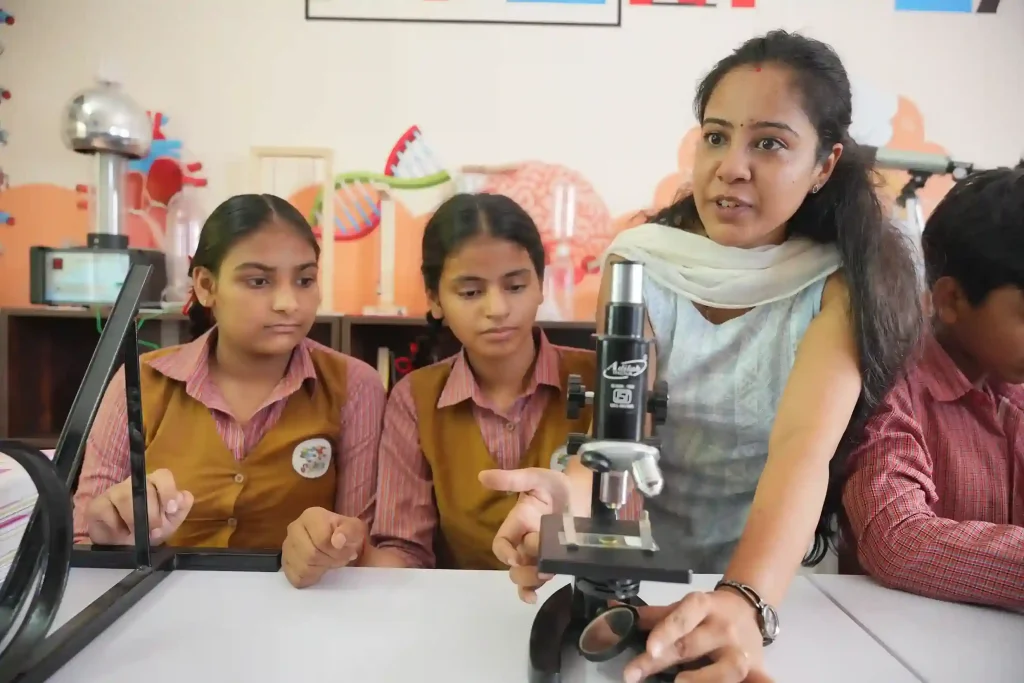
A child experimenting with a simple DIY model is learning more than a scientific concept. They are developing curiosity. A student programming a basic robot is learning computational thinking and problem-solving. A classroom activity involving measurement, design and construction brings mathematics and engineering into a tangible context.
This approach transforms learning from memorising answers to discovering possibilities.
For India’s emerging space economy, such capabilities are foundational. The country’s future requirements will span highly specialised areas such as
- Spacecraft systems
- Artificial intelligence
- Robotics
- Propulsion
- Remote sensing
- Materials science
- Satellite communications
But the pipeline for these careers begins much earlier. It begins with children developing confidence in science and technology.
The Space Dream Must Reach Rural India
India’s space ambitions can be truly transformative only when the opportunity to participate in them is inclusive.
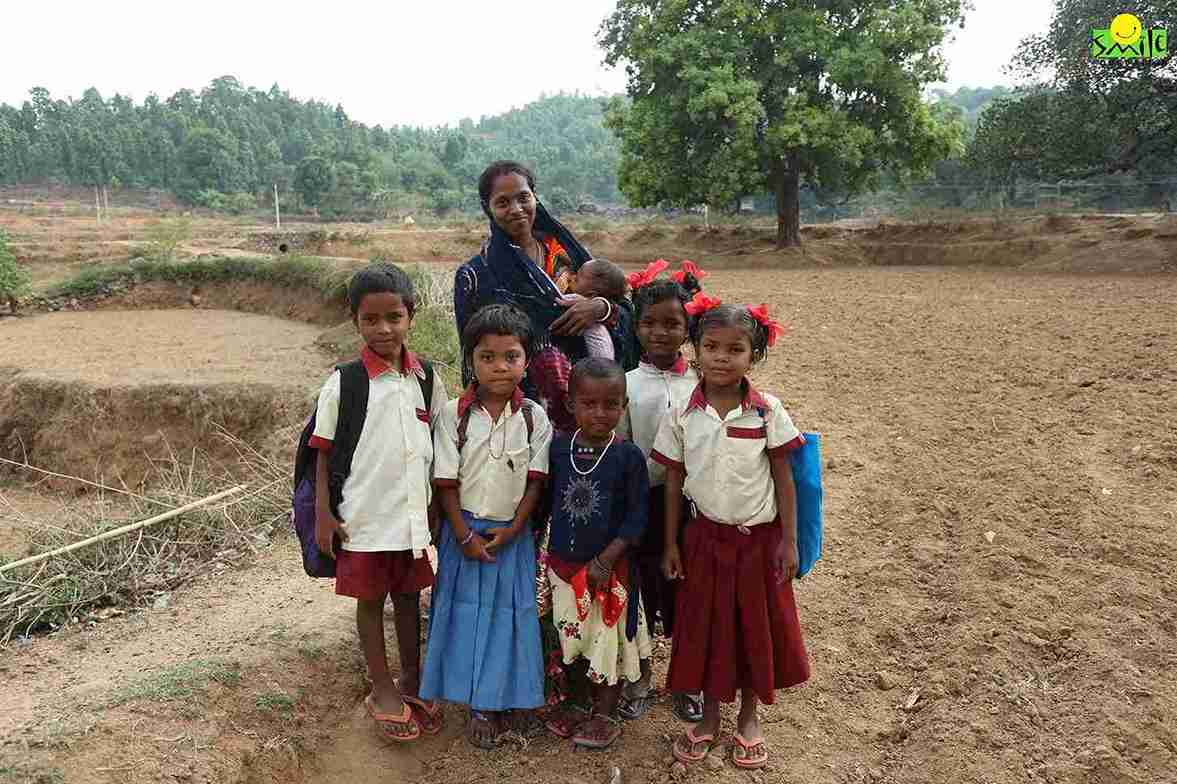
A child in a remote village may have the same curiosity about the Moon as a child in an urban private school. What may differ is access—to a science laboratory, trained teachers, digital resources, experiential learning and exposure to technology.
This is where the conversation around STEM education in India must move beyond urban institutions and specialised programmes. Inclusive STEM education means ensuring that children from underserved communities encounter science not merely as a textbook subject, but as something they can explore and create with.
It means a student should be able to ask, “How does a satellite work?” and have the opportunity to build a model. It means a girl from a rural school should be able to see engineering, robotics or space science as possible career choices rather than distant professions meant for someone else.
The challenge is significant.
Schools in India’s underserved communities continue to face gaps in infrastructure, digital access, teacher capacity and exposure to experiential learning. And addressing these gaps is essential, particularly when India wants its future technology workforce, to reflect the diversity and potential of its population.
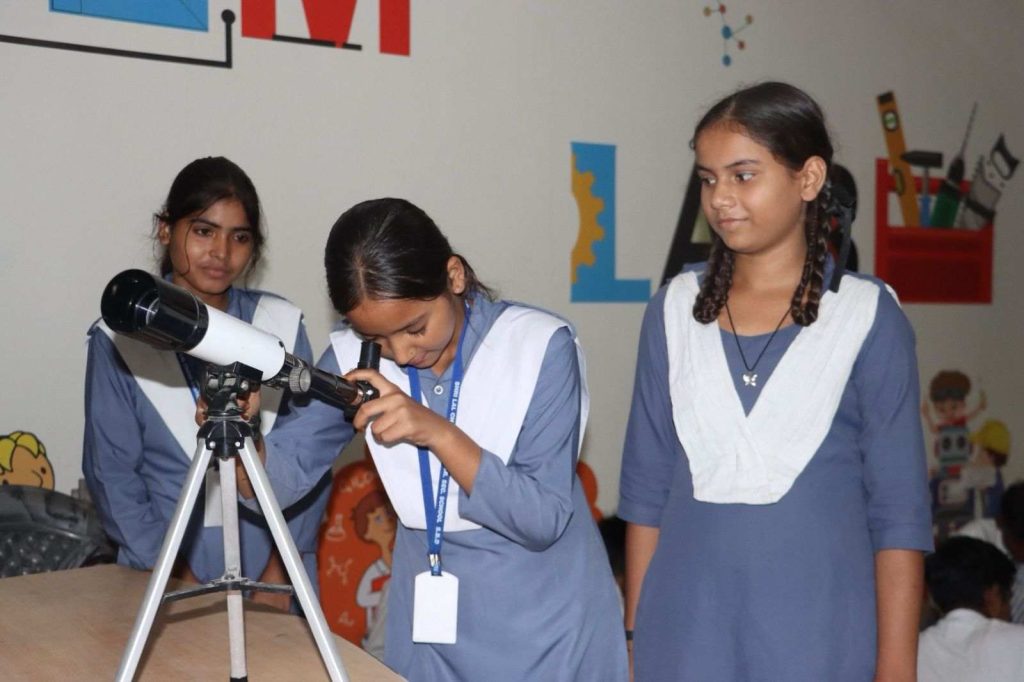
Making Learning Experiential with STEM
The answer is not necessarily to replicate expensive urban laboratories everywhere. It is to create learning environments where children can experiment with the resources available to them.
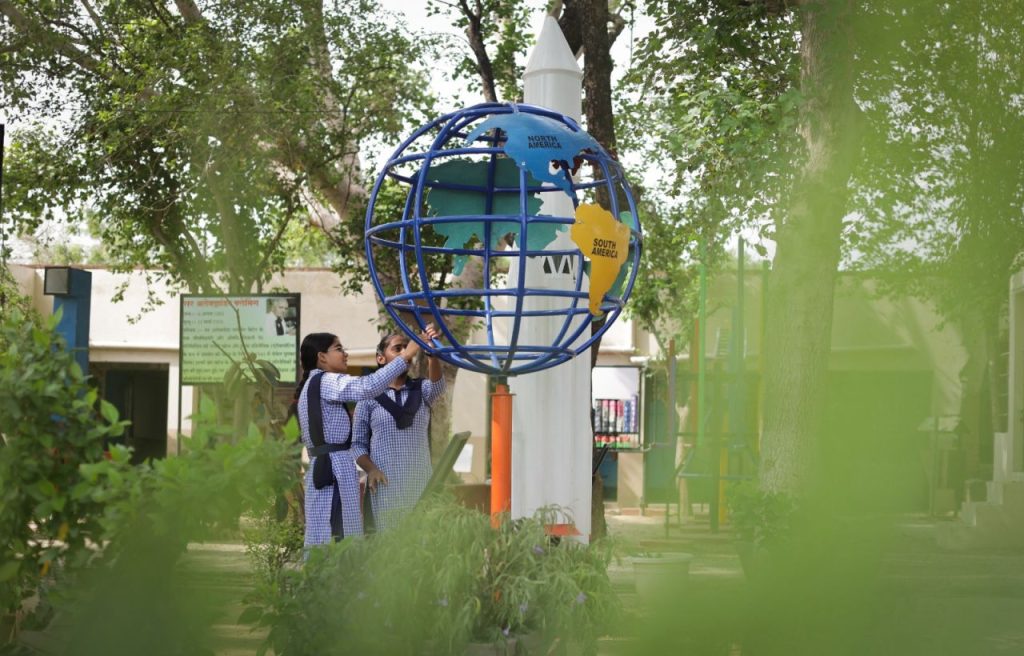
Mobile STEM laboratories, DIY activity kits, digital classrooms, locally relevant learning materials and teacher training can help bring experiential education closer to underserved communities.
Teachers are central to this transformation. Technology cannot replace an inspired educator who knows how to turn a question into an investigation.
Training teachers in inquiry-based and activity-based learning can help classrooms become spaces where children are encouraged to ask why, how and what if. Such methods can strengthen scientific temperament while making learning more engaging and relevant.
This is also where organisations working at the grassroots can play a meaningful role by connecting educational policy and community-level implementation.
The Role of CSR in Building India’s STEM Future
The scale of India’s STEM challenge makes collaboration essential. Government programmes can establish policy direction and public infrastructure, while educational institutions can contribute knowledge and research. The private sector brings technology, expertise and resources.
This creates a significant opportunity for CSR education in India.
CSR for education in India can move beyond supporting conventional access to schooling and contribute to the quality and relevance of learning itself. Furthermore, investments in STEM laboratories, digital classrooms, teacher training, robotics and innovation programmes can help underserved schools prepare children for an increasingly technology-led economy. Such interventions become especially meaningful when they are designed for long-term capacity building rather than one-time exposure.
For example, a STEM lab creates greater impact when teachers are trained to use it effectively, students regularly engage with hands-on activities and learning is integrated into the broader school environment. CSR partnerships can therefore help bridge the gap between access to education and access to opportunity.
Building STEM Access Through the Grassroots
At Smile Foundation, this approach is reflected through efforts to make learning more experiential for children from underserved communities.
Through its education interventions, including Mission Education, Smile Foundation works with children and communities to strengthen access to quality learning. Its STEM-focused initiatives have included establishing STEM laboratories, providing DIY activity kits and supporting digital classrooms. Teacher capacity-building is also an important part of the approach, with training focused on inquiry-based and activity-based pedagogy, classroom management and child-centric teaching.
The larger objective is not simply to introduce technology into a classroom. It is to create an environment where children develop the confidence to engage with it.
That distinction matters.
Because the future of India’s space sector will not be built only by those who have access to sophisticated equipment today. It will be built by children who learn to question, imagine, experiment and persist.
Space-ready Generation with STEM education
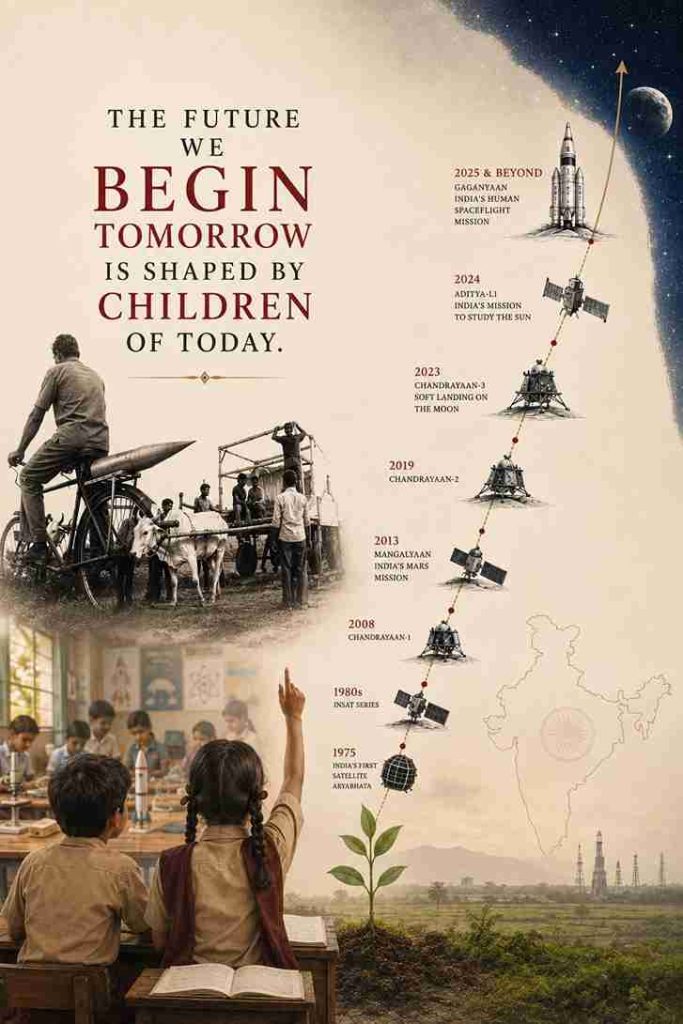
India’s ambitions are already extending well beyond conventional satellite missions. The country is preparing for future human spaceflight, advanced launch systems, planetary exploration and the proposed Bharatiya Antariksh Station. The PIB notes that the space station is targeted for operationalisation by 2035, while Gaganyaan aims to build capabilities for human spaceflight.
At the same time, India’s space capabilities are increasingly connected to everyday life; from navigation and communications to agriculture, infrastructure, disaster management and environmental monitoring. This means the impact of space technology will not remain confined to scientists and astronauts, it will increasingly shape the way communities live, work and solve problems.
And therefore, preparing children for this future, is not about expecting every child to become an astronaut. It is about ensuring that every child has the opportunity to become a problem-solver, innovator, engineer, researcher, entrepreneur or informed citizen in a technology-driven India.
Partnership for India’s STEM Education
India’s space story began with ambitious dreams and limited resources. Today, those dreams are evolving into a dynamic ecosystem of public institutions, private companies and start-ups.
But the next leap will require something even more valuable than technology: talent that is diverse, curious and widely distributed.
The child who looks at the night sky from a metropolitan city and the child who looks at it from a remote village are looking at the same universe. Their opportunities to explore it, however, should not be determined by where they were born.
CSR support for Inclusive STEM education in India can help close that gap.
If India wants its space economy to become a national success story, its investment must begin long before a child enters an engineering college. It must begin in the classroom—with curiosity, experimentation, access and the freedom to imagine.
Because India’s next space breakthrough may already be looking up at the sky and it is our responsibility to make sure that every child has the opportunity to reach for it.
FAQs
1. Why is STEM education important for India’s growing space economy?
STEM education develops critical thinking, problem-solving, creativity and scientific curiosity—skills essential for careers in India’s expanding space and technology ecosystem.
2. What is the role of STEM education in India’s future?
STEM education in India can prepare young learners for emerging fields including artificial intelligence, robotics, satellite technology, engineering, data science and space technology.
3. Why does India need inclusive STEM education?
Inclusive STEM education ensures that children from rural and underserved communities can access the knowledge, technology and learning opportunities needed to participate in India’s future economy.
4. How can STEM education benefit rural children in India?
Hands-on STEM learning, mobile laboratories, DIY kits, digital classrooms and trained teachers can help rural children develop scientific thinking and explore technology-related career possibilities.
5. How can CSR support STEM education in India?
CSR education in India can support STEM laboratories, digital infrastructure, teacher training, experiential learning, robotics programmes and innovation initiatives in underserved schools.
6. What is the connection between CSR education in India and India’s space ambitions?
CSR education in India can help create a wider and more inclusive talent pipeline by giving children early exposure to science, technology, engineering and mathematics.
7. How can organisations support STEM education in underserved communities?
Organisations can collaborate with schools, governments, corporates and communities to provide STEM infrastructure, teacher capacity-building, learning resources and experiential programmes.
8. How can STEM education prepare children for future careers?
STEM education helps children build curiosity, collaboration, analytical thinking, creativity and problem-solving skills that can support careers across space technology and India’s wider technology-driven economy.