

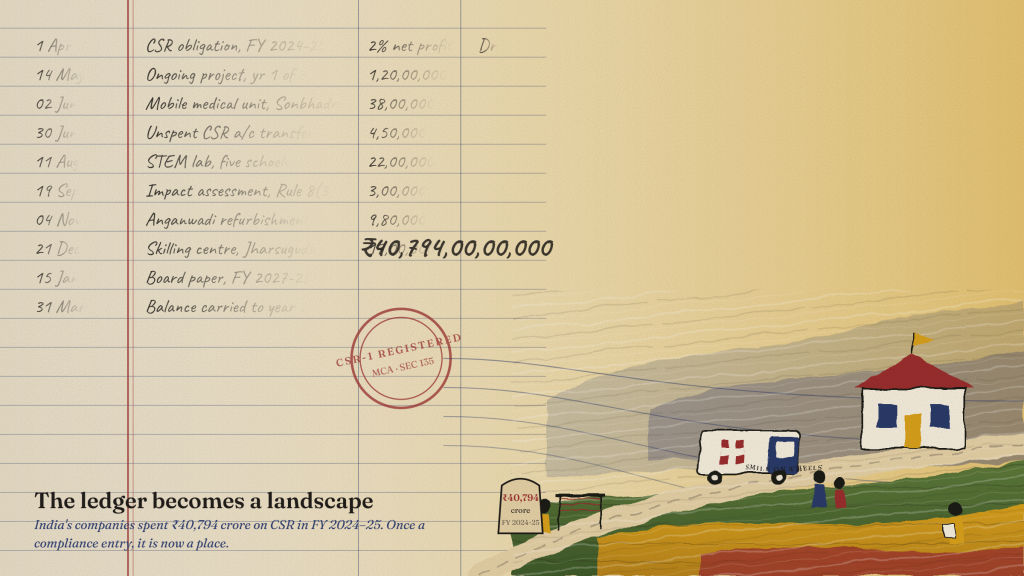
India’s CSR spend reached ₹40,794 crore in FY 2024–25, and the money is moving. For CSR trends 2027 India, boards are shifting from one-year grants to three-year projects, from metros to aspirational districts and industrial towns, from activity counts to outcome reports, and from general education to AI and skilling. If you are writing a CSR board paper in January, these are the nine trends to plan around, with the data behind each and what Smile Foundation’s corporate partners asked for in 2026.
Summary
- CSR has grown at about 15% a year for a decade; the top 10 companies still account for 20% of the total.
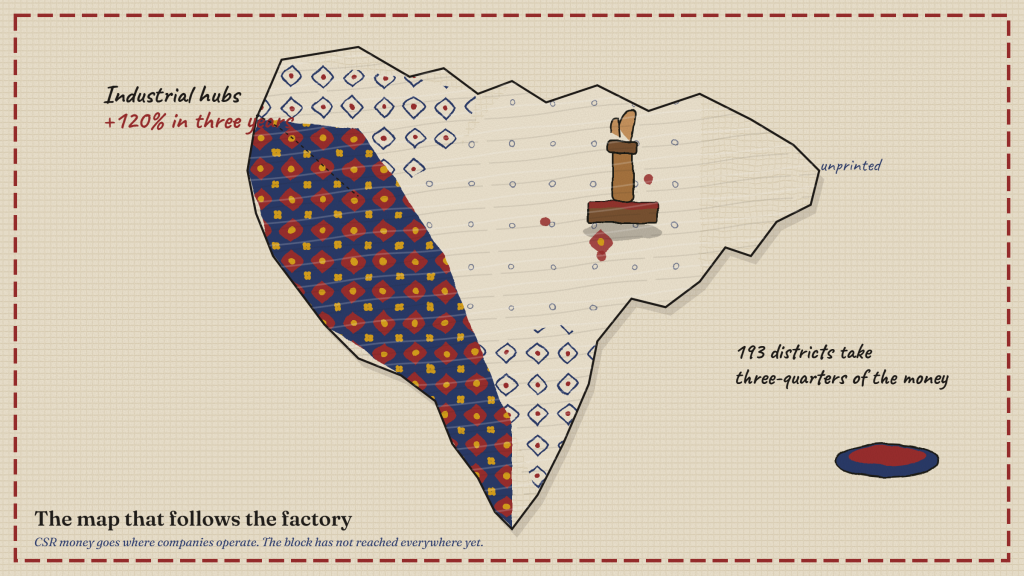
- Aspirational districts received 12% of FY24 spend, up from near zero, but 193 districts take three-quarters of district-level funding.
- The May 2026 rules let companies route up to 10% of CSR through the Social Stock Exchange.
- Impact assessments are mandatory for larger projects, and boards now ask for outcomes, not activities.
- Companies increasingly fund what sits next to their business: IT firms fund skilling, pharma funds health systems, manufacturers fund their plant districts.
- Smile Foundation’s partner enquiries in 2026 clustered around four asks: STEM and AI skilling, health in aspirational districts, multi-year programmes, and reporting that works for both MCA filings and global ESG teams.
Why FY 2027–28 is a different budget year
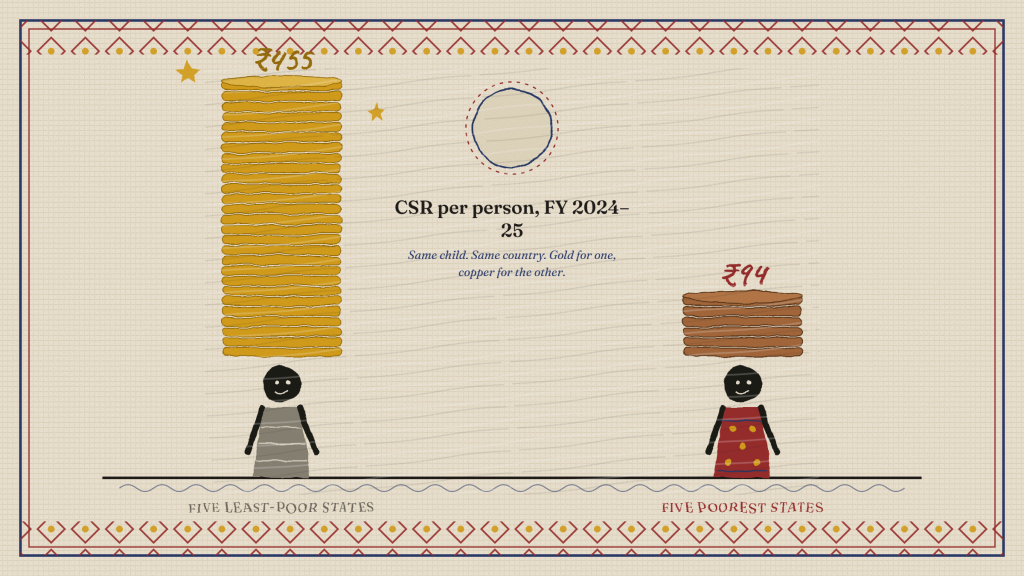
Three things changed in 2026. The Ministry of Corporate Affairs amended the CSR rules in May to allow companies to subscribe to Zero Coupon Zero Principal instruments issued by non-profits listed on the Social Stock Exchange, up to 10% of their CSR obligation. CRISIL’s tenth CSR yearbook showed that cumulative CSR spend has crossed ₹1.22 lakh crore, with 63% of it in the last five years. And Sattva’s seventh State of CSR report put FY25 spend at ₹40,794 crore while showing that the five poorest states receive ₹94 per person against ₹455 in the five least-poor.
Boards reading those numbers in January will face the same question from their auditors, their ESG teams and their own directors: is the money going where it does the most good, and can we prove it? The nine trends below are the answers companies are converging on.
Trend 1: Three-year projects replace annual grants
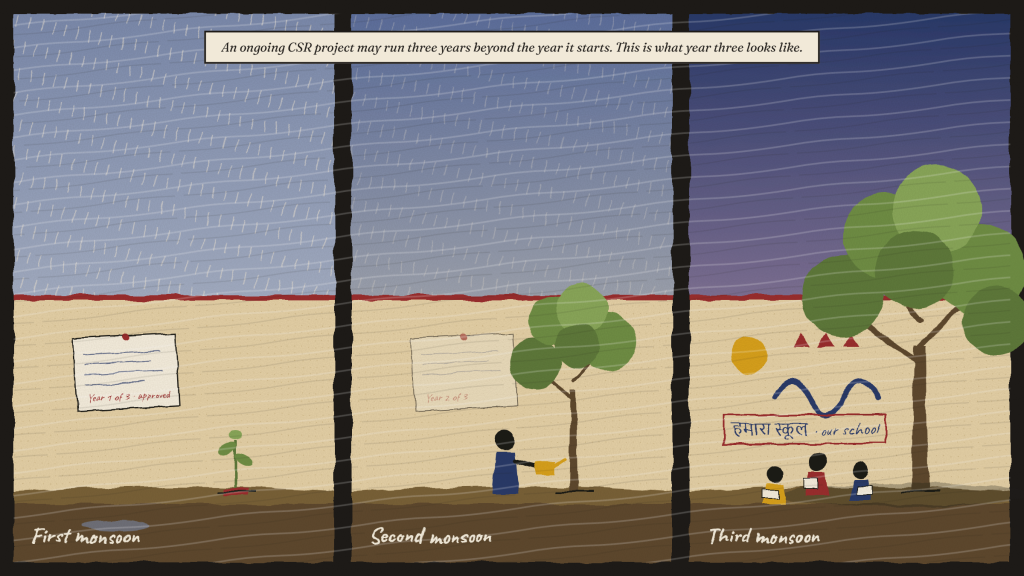
The 2021 CSR rules allow “ongoing projects” of up to three years beyond the start year, with unspent money held in an Unspent CSR Account. More boards are using the provision. The reason is practical: a one-year grant loses three months to contracting, loses staff between cycles, and ends before an outcome can be measured. A three-year project satisfies the mandatory impact assessment rule (projects of ₹1 crore or more, by companies with ₹10 crore or more obligation, assessed at least a year after completion) without a scramble.
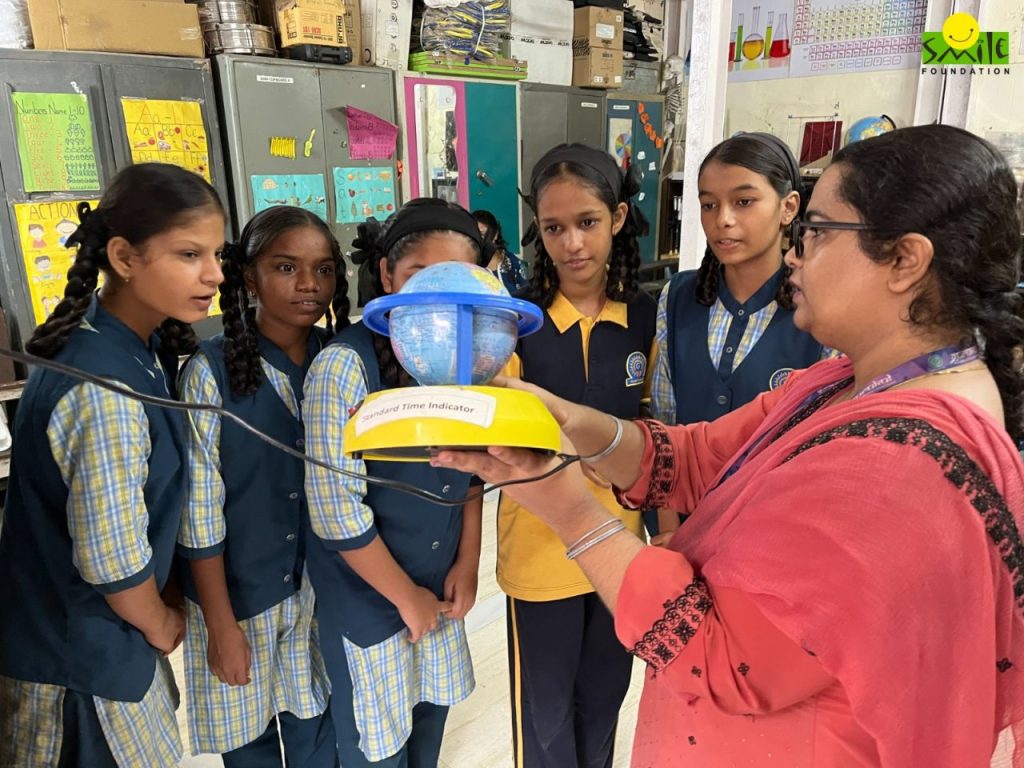
For a board paper: present the project as an ongoing project with a year-wise budget, baseline in year one, independent assessment after year three. Smile Foundation’s STEM programme in Noida and Ghaziabad showed a 27-point gain in combined science and maths scores among 1,654 students in a single academic year; every principal asked to continue. That is the year-one result a three-year commitment builds on.
Trend 2: Money moves to aspirational districts and industrial towns
CRISIL found that 397 of 2,020 qualifying companies, about one in five, ran projects in aspirational districts in FY24, spending ₹2,390 crore or 12% of the year’s total. IDR’s analysis puts the rise at 1.3% to 4.5% of funding over a longer window. Either way, the direction is up, and the headroom is large: Sattva calculates that redirecting just 5% more of FY25 spend to high-need districts would triple what they receive.
The second shift is to where companies operate. Sattva reports CSR inflows to industrial hubs up 120% in three years and to tier-2 cities up 55%, against 30% growth overall. Boards like this because the community is one their employees live in, and the impact is visible to the plant head.
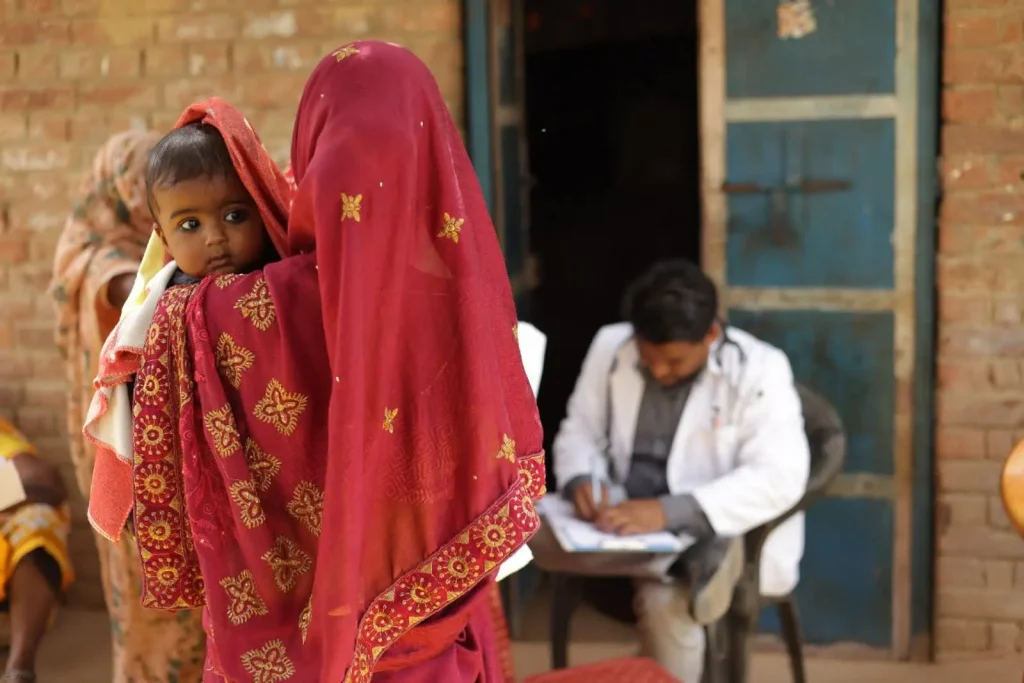
For a board paper: name the districts. Smile Foundation’s health programme works in 90 districts across 22 states, 22 of them aspirational districts, through 124 mobile medical units and a boat clinic. A company can fund a named unit in a named district and report on it by name.
Trend 3: Outcomes replace activity counts
The 2021 rules made impact assessment mandatory for larger projects. In 2026 the question has moved from “did you do the assessment” to “what did it find”. KPMG’s review of impact assessments by India’s top listed companies found only 12.2% reported any unintended outcomes, which auditors and ESG analysts now read as a warning sign rather than a clean sheet.
For a board paper: ask every implementing partner for a baseline, an endline and one number they are not proud of. Smile Foundation’s 2026 mobile medical unit assessment, covering 1,316 households in six states, reported that 70% of families now use the unit as their first point of care and 87.6% changed a health habit. It also reported that 95% of units lack emergency kits and 30% had medicine stock-outs. Both halves go into the report.
Trend 4: AI skilling becomes a budget line
IT and technology companies have always funded skilling; in 2026 the ask changed to AI literacy, data skills and digital safety, particularly for girls and first-generation learners. HelpYourNGO and IDR both list AI skilling among the fastest-growing CSR themes, and IDR notes that successful AI-in-education work is not built on a one-year grant cycle.
For a board paper: fund the full stack, not the laptop. Smile Foundation’s digital skilling and AI project reaches 3,000 girls in Classes 6–9 across Delhi NCR, Kolkata and Bengaluru, combining devices, teacher training, AI concepts and sessions with industry professionals. Its 32 STEM labs engaged more than 22,000 students in 2025.
Trend 5: CSR aligns with the business, not just Schedule VII
IDR describes 2026 CSR as “an extension of long-term business priorities”: pharma companies fund health systems, infrastructure companies fund their districts, IT companies fund skilling. Boards approve faster when the programme sits next to the business, and ESG teams can report it under BRSR Principle 8 (inclusive growth) without a separate narrative.
For a board paper: show the line from business to programme in one sentence. A logistics company funding livelihood training for last-mile delivery, a consumer company funding maternal health in its sourcing districts.
Trend 6: The Social Stock Exchange enters the CSR toolkit
Since 27 May 2026, companies can meet up to 10% of their CSR obligation by subscribing to ZCZP instruments issued by non-profits registered on the Social Stock Exchange segment of NSE or BSE. The instruments carry no coupon and no principal repayment; the return is the social outcome, reported to the exchange. Early uptake has been slow because few non-profits are listed and the compliance load on them is real.
For a board paper: treat it as an option for FY 2027–28, not a plan. Ask whether your preferred implementing partner intends to list, and keep the other 90% in direct projects.
Trend 7: Health funding shifts to screening and non-communicable disease
Non-communicable diseases now make up about 64% of India’s disease burden, and the national programme has screened over 41 crore people for hypertension since 2017. CSR health budgets that once funded camps and equipment are moving to screening, follow-up and referral, because that is where a company can show a measurable outcome within a year.
For a board paper: fund screening with follow-up built in. Smile Foundation’s health teams screened 1.57 lakh people for non-communicable diseases in 2025–26 and link positive cases to government hospitals.
Trend 8: Mid-sized companies and voluntary spenders grow fastest
IDR reports that more than 380 companies with no legal CSR obligation spent close to ₹800 crore in 2023–24, and one nonprofit found funders with turnover below ₹1,000 crore growing 32% a year against 11% for larger funders. These companies fund local problems, decide quickly and often exceed the 2%.
For a board paper at a mid-sized company: you have more flexibility than the large caps. A single district, a single programme, three years, one assessment.
Trend 9: Reporting has to work twice
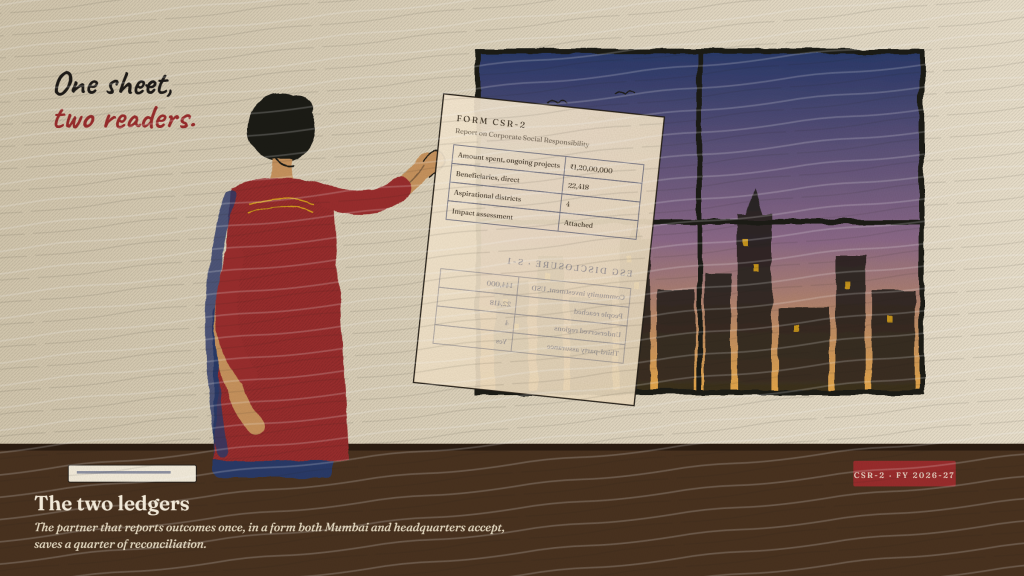
Multinational subsidiaries and GCCs must file Indian CSR reports and feed a global ESG or CSRD disclosure from the same programme. The NGO partner that reports outcomes once, in a format both audiences accept, saves the CSR team a quarter of reconciliation.
For a board paper: write the reporting requirement into the MoU. Smile Foundation’s third-party assessments use the OECD-DAC criteria, which map to both MCA impact-assessment expectations and international ESG frameworks.
What Smile Foundation’s partners asked for in 2026
Smile Foundation’s own partnership record over the past 18 months reads like a preview of these trends. The table below is drawn from Smile’s published press releases and partnership updates.
| What partners funded | Examples announced in 2025–26 | Trend it reflects |
|---|---|---|
| Mobile medical units in named districts | MSD Pharmaceuticals: four units in Lucknow, Sonbhadra, Prayagraj and Varanasi over three years, targeting 2 lakh people in 40+ villages; KONE Elevator: mobile clinic across 14 Delhi colonies, after a Guwahati unit running since 2023; Megmeet Electrical, Pernod Ricard (Kamrup, Assam), Avantor (Coimbatore), Aditya Birla Capital (Ahmednagar, Aurangabad), Mitsubishi Electric (Manesar) | Trends 2 and 7: health in operating and aspirational districts, multi-year, screening-led |
| STEM labs and digital learning | Evonik: four STEM labs in Mumbai; Borges India: STEM lab in Siddharthnagar; AVI Oil: FLN and STEM in Ballabgarh; Zimmer Biomet: solar-powered digital learning; a corporate partner’s five-school STEM programme in Noida–Ghaziabad assessed in 2026 | Trends 1 and 4: skilling and AI readiness, year-one outcomes that justify year three |
| Skilling tied to the partner’s own trade | Berger Paints iTrain on Wheels: 2.98 lakh paint applicators trained across 443 districts since 2021; Ashirvad by Aliaxis Plumber Saathi: mobile plumbing training unit in Odisha and Bhiwadi; Allianz, Dynata and Grant Thornton: employability training | Trend 5: CSR aligned with the business |
| Anaemia and nutrition | PepsiCo India Pink Smile: mobile units, screening and nutrition in 10 villages of Kosi Kalan, Mathura, targeting 40,000 people; Trianz Digital on the same model | Trend 7: NCD and screening with follow-up |
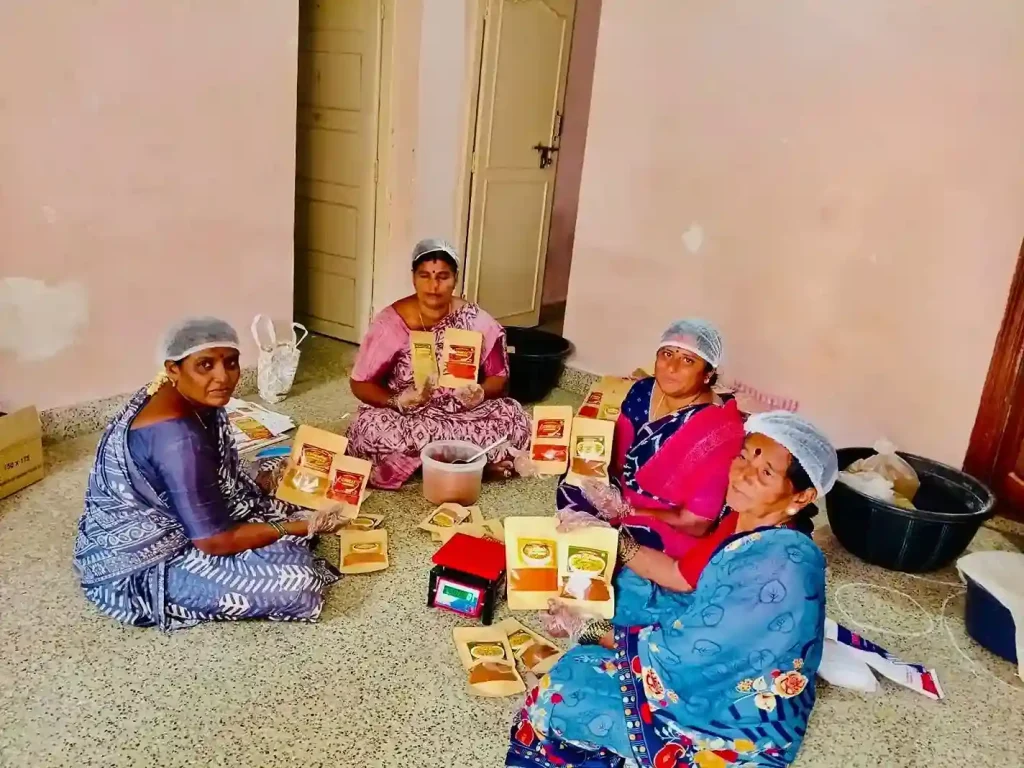
| Girls’ education and women’s enterprise | Mars Wrigley Foundation: anganwadi refurbishment in Pune; TK Elevator: women’s entrepreneurship; Zouk: She Can Fly proceeds | Trend 3: outcome-reported, cause-linked |
| Smaller and first-time CSR spenders | Twenty-plus mid-sized companies (Brevo, Draup, Near Intelligence, Sarovar Hotels, Seclore and others) funding Every Child in School in 2025 | Trend 8: mid-sized companies growing fastest |
Three patterns stand out. Companies named the district in the announcement, which is what boards now ask for. Health partners committed for three years rather than one, in line with the ongoing-project rules. And more than 80% of Smile Foundation’s welfare project funding now comes from CSR, so what these partners choose is a fair signal of where FY 2027–28 budgets are heading.
How to use this in a January board paper
- State the FY 2027–28 obligation and the three-year horizon you propose.
- Name the district or districts and say why: operations, need, or both.
- Name the programme and the partner, with CSR-1 registration, FCRA status and the last impact assessment.
- Set the year-one baseline and the year-three assessment in the resolution.
- State what the ESG team will report from the same data.
- Reserve a line for the Social Stock Exchange if your partner lists.
The trend lines are clear enough that a board paper written this way will look the same in FY 2028–29. The companies that move first get the partners, the districts and the data.
FAQs: CSR trends 2027 India
1. How much did Indian companies spend on CSR in FY 2024–25? About ₹40,794 crore, according to Sattva Consulting’s State of CSR report, growing at roughly 15% a year over the past decade. CRISIL puts cumulative spend by qualifying listed companies at over ₹1.22 lakh crore since the mandate began, with 63% of it in the last five years.
2. What are the biggest CSR trends for FY 2027–28? Three-year projects instead of annual grants, funding moving to aspirational districts and industrial towns, outcome-based reporting, AI and digital skilling, closer alignment between CSR and core business, the Social Stock Exchange as a new route, and reporting designed to serve both MCA filings and global ESG disclosures.
3. How much CSR money reaches aspirational districts? CRISIL found about 20% of qualifying companies ran projects in aspirational districts in FY24, spending ₹2,390 crore, or 12% of that year’s total. Sattva estimates that redirecting 5% more of annual spend to high-need districts would triple what they receive.
4. Can CSR funds go through the Social Stock Exchange? Yes. Since 27 May 2026, companies can meet up to 10% of their CSR obligation by subscribing to Zero Coupon Zero Principal instruments issued by non-profits registered on the Social Stock Exchange. The remaining 90% must go through direct projects or implementing agencies.
5. How long can a CSR project run? An “ongoing project” can run for up to three financial years beyond the year it starts. Unspent money for such projects must be moved to an Unspent CSR Account within 30 days of year-end and used within three years.
6. Is an impact assessment mandatory? Yes, for companies with an average CSR obligation of ₹10 crore or more, on projects of ₹1 crore or more, carried out at least one year after completion by an independent agency. The report goes to the board and is attached to the annual CSR report.
7. How should a company choose an NGO partner for FY 2027–28? Check CSR-1 registration, 12A and 80G status, FCRA if relevant, audited accounts, past independent impact assessments and whether the partner can report outcomes in a format your ESG team can reuse. See Smile Foundation’s guide on how to choose an NGO for CSR.

Partner with Smile Foundation
Smile Foundation works with more than 400 corporate partners across education, health, livelihood and women’s empowerment in 27 states, with independent impact assessments and reporting built for both Indian filings and global ESG teams. To plan a FY 2027–28 programme, write to [partnerships email] or visit our corporate partnership page.
Read next: What is CSR in India · CSR rules in India · Outputs vs outcomes vs impact
Sources
- Sattva Consulting, State of CSR in India 2025: ₹40,794 crore FY25 spend and per-capita distribution
- Sattva Consulting, CSR’s Next Act (full report)
- Sattva via Tribune: industrial hubs up 120%, tier-2 cities up 55%
- CRISIL CSR Yearbook 2026 via The CSR Universe: ₹1.22 lakh crore cumulative, aspirational districts 12%
- IDR, The new logic of CSR funding in India (2026)
- HelpYourNGO, CSR trends in India for 2026
- Tribune: MCA allows up to 10% of CSR through Social Stock Exchange
- Mondaq: CSR through the Social Stock Exchange, 2026 amendment rules
- Ropes & Gray: CSR Amendment Rules 2021 (ongoing projects, impact assessment)
- Smile Foundation: Monitoring and evaluation in NGOs (KPMG 12.2% figure), Community health screening programs, AI divide in education, 2 million healthcare treatments in a year
- Smile Foundation internal: Oumuamua Foundation STEM impact study (Feb 2026); SahaManthran mobile medical unit impact assessment (2026)
- Smile Foundation partnership announcements: press releases (MSD, KONE, Ashirvad, PepsiCo, Berger Paints, 2025), Smilescapes partnerships, July 2025, Megmeet partnership, August 2026, corporate partnership page (400+ brands, 80% CSR funding share), 2025 impact report