In the world of corporate social responsibility (CSR), one question continues to define whether a programme is only active or genuinely effective: what impact did it actually make on the ground?

For years, CSR largely focused on what organisations had done. Annual reports highlighted the number of schools built, saplings planted, scholarships awarded or health camps conducted. These figures mattered because they demonstrated effort, scale and financial commitment. But as the CSR ecosystem has matured, these numbers have begun to feel insufficient. Today, regulators, investors, boards and communities are asking deeper and more meaningful questions:
Did those schools improve learning?
Did those saplings survive?
Did those health camps improve long-term health outcomes?
This shift reflects an important change in how social investment is understood. It is no longer enough to measure activity as organisations are increasingly expected to measure change. That is where the distinction between outputs, outcomes and impact becomes critical. For CSR leaders, understanding these concepts is not simply about improving reporting language but it is about making better strategic decisions, designing more effective programmes and ensuring that resources create lasting social value.
Why this distinction matters more than ever
India is one of the few countries in the world where CSR spending is mandated by law. Under the Ministry of Corporate Affairs, the CSR mandate in the Companies Act 2013 requires eligible companies to spend 2% of their average net profits on social development initiatives. According to the National CSR Portal, annual CSR expenditure in India now exceeds ₹30,000 crore, making it one of the largest institutional pools of social capital in the world.
This scale naturally raises an important question: if so much money is being invested, what is it truly achieving? Increasingly, stakeholders are no longer satisfied with hearing how much has been spent. They want to understand what changed as a result of that spending. Did lives improve? Were systemic problems addressed? Were communities strengthened? This is why outcomes and impact have moved from the margins of CSR discussions to the centre of strategic planning.
Understanding the three levels of change

At its simplest, outputs, outcomes and impact represent three different layers of social change.
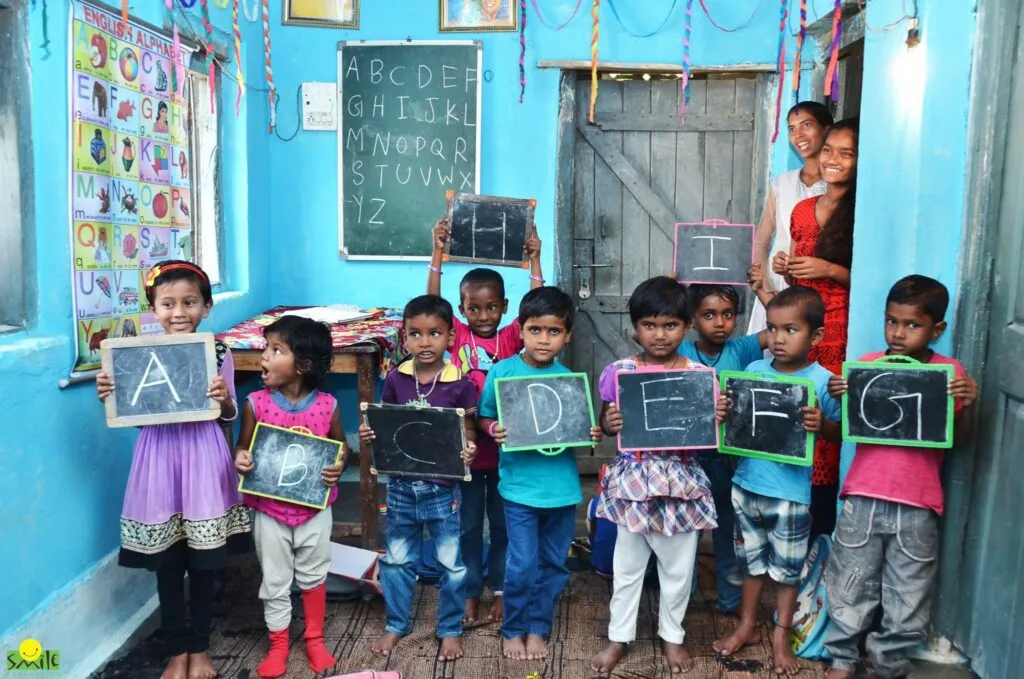
Outputs are the most immediate and visible results of a programme. They describe what was delivered or completed. If a company funds a school programme, the output may be that 500 students were enrolled, 20 classrooms were built or 1000 learning kits were distributed. Outputs are important because they confirm that activities happened. They help organisations track implementation and monitor whether commitments were fulfilled. But outputs do not tell us whether those activities actually improved people’s lives.
That is where outcomes become important. Outcomes refer to the short- to medium-term changes that occur because of a programme. Continuing with the education example, an outcome might be improved attendance, higher test scores or increased retention among girls. In a healthcare programme, it may mean increased immunisation rates or better maternal health indicators. Outcomes help organisations understand whether their intervention is producing meaningful progress. They shift the focus from activity to effectiveness.
Impact, meanwhile, is the deepest and most long-term level of change. It captures what happens when outcomes are sustained over time and begin to reshape lives, communities or systems. In education, impact may mean reduced dropout rates, increased employability or improved intergenerational mobility. In livelihoods, it could mean rising household incomes or reduced poverty over several years. Impact is harder to observe and even harder to measure, but it is ultimately the reason social programmes exist.
What a simple example looks like
Consider a company that funds an education initiative in rural India. If it distributes 1000 school kits, that is an output. If student attendance rises from 65% to 88% over the following year, that is an outcome. If, over five years, dropout rates decline significantly and more girls complete secondary education, that is an impact. All three levels matter. Together, they tell the full story of change. But when organisations confuse them, especially when they label outputs as “impact”, they risk misunderstanding whether their work is truly effective.

Why CSR often stops at output
Many CSR programmes continue to focus heavily on outputs because outputs are easier to measure and communicate. They provide clean numbers that fit neatly into annual reports and board presentations. Saying “we built 200 classrooms” sounds tangible and impressive. It signals action.
But outputs can create a false sense of success. A company may report that it distributed thousands of tablets to students, yet never ask whether children were able to use them effectively or whether learning actually improved. In such cases, the programme may appear successful on paper while failing to create meaningful change on the ground.
This is the danger of output obsession: it rewards visible activity rather than actual progress.
Why outcome matters for better decision-making
When organisations begin focusing on outcomes, their entire approach changes. Instead of asking, “How many people can we reach?”, they start asking, “What change are we trying to create?”
That seemingly small shift has major consequences. It improves programme design by tying interventions to clear goals. It strengthens budget decisions by allocating resources to strategies that deliver measurable improvement. It improves partner selection because organisations begin choosing implementation partners based on effectiveness rather than visibility.
Most importantly, it forces clarity. If a programme team cannot clearly define the outcome it wants, it is unlikely to achieve it.
Why is impact harder to measure
Impact is more difficult because social change is rarely linear. Many external factors shape people’s lives: economic conditions, climate shocks, family circumstances, political shifts and cultural norms all influence outcomes.
This makes attribution challenging. If household income rises, was it because of your livelihood programme or because of a broader economic recovery? If school attendance improved, was it because of your intervention or because transport access changed?
This is why impact measurement often requires more rigorous tools, including baseline studies, long-term tracking, independent evaluations and mixed-method research. The OECD defines impact as the broader long-term change, positive or negative, intended or unintended, resulting from an intervention.
Measuring impact is harder yet remains essential if organisations want to understand whether they are contributing to lasting transformation.
The rise of outcome-based CSR
It is important to clarify that outputs are not the problem. No social programme can function without outputs. You cannot improve education without classrooms, textbooks or trained teachers. You cannot improve health without clinics, vaccines or medical staff.
The problem arises when organisations stop there.
Outputs are the beginning of the story and never the end. Strong CSR strategy uses them as a foundation, then builds toward outcomes and impact.
Across the world, philanthropy and CSR are moving toward more outcome-oriented models, as investors increasingly demand evidence of effectiveness, boards seek stronger accountability and communities seek relevance.
Even public policy reflects this shift. In India, the Ministry of Corporate Affairs introduced CSR Impact Assessment Rules for larger projects, signalling that spending alone is no longer enough. This marks a major evolution in CSR thinking: from compliance to accountability and from spending to social value creation.
From activity to accountability
The journey from output to outcome to impact reflects the growing maturity of CSR itself. It marks a move away from performative philanthropy toward more thoughtful, accountable and evidence-led social investment. A programme is not successful because resources were distributed, but because realities changed. Because a child stayed in school. Because a mother accessed healthcare. Because a young person found dignified employment. Because a community became more resilient.
At Smile Foundation, we recognise the true power of CSR partnerships and offer an important example of this philosophy in action. Through initiatives such as Mission Education, success is measured not only by the number of children enrolled but by improved learning and school retention. Through Smile on Wheels, the organisation focuses not simply on the number of patients treated, but on whether underserved communities gain sustained access to healthcare. Its Swabhiman initiative similarly connects women’s empowerment to longer-term improvements in health, livelihoods and agency. In doing so, through these programmes, we aim to demonstrate what the future of CSR should look like — not activity for visibility, but measurable, human-centred change that lasts.