Categories
From The People, For The People

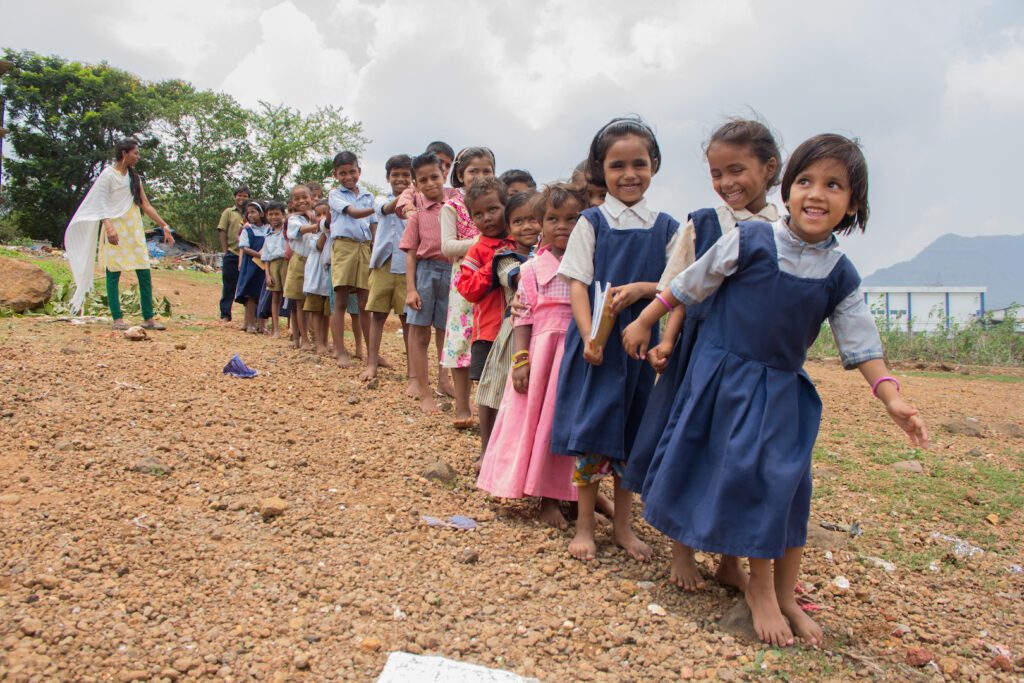
Educated girls & empowered women lead the change in Chhatarpur

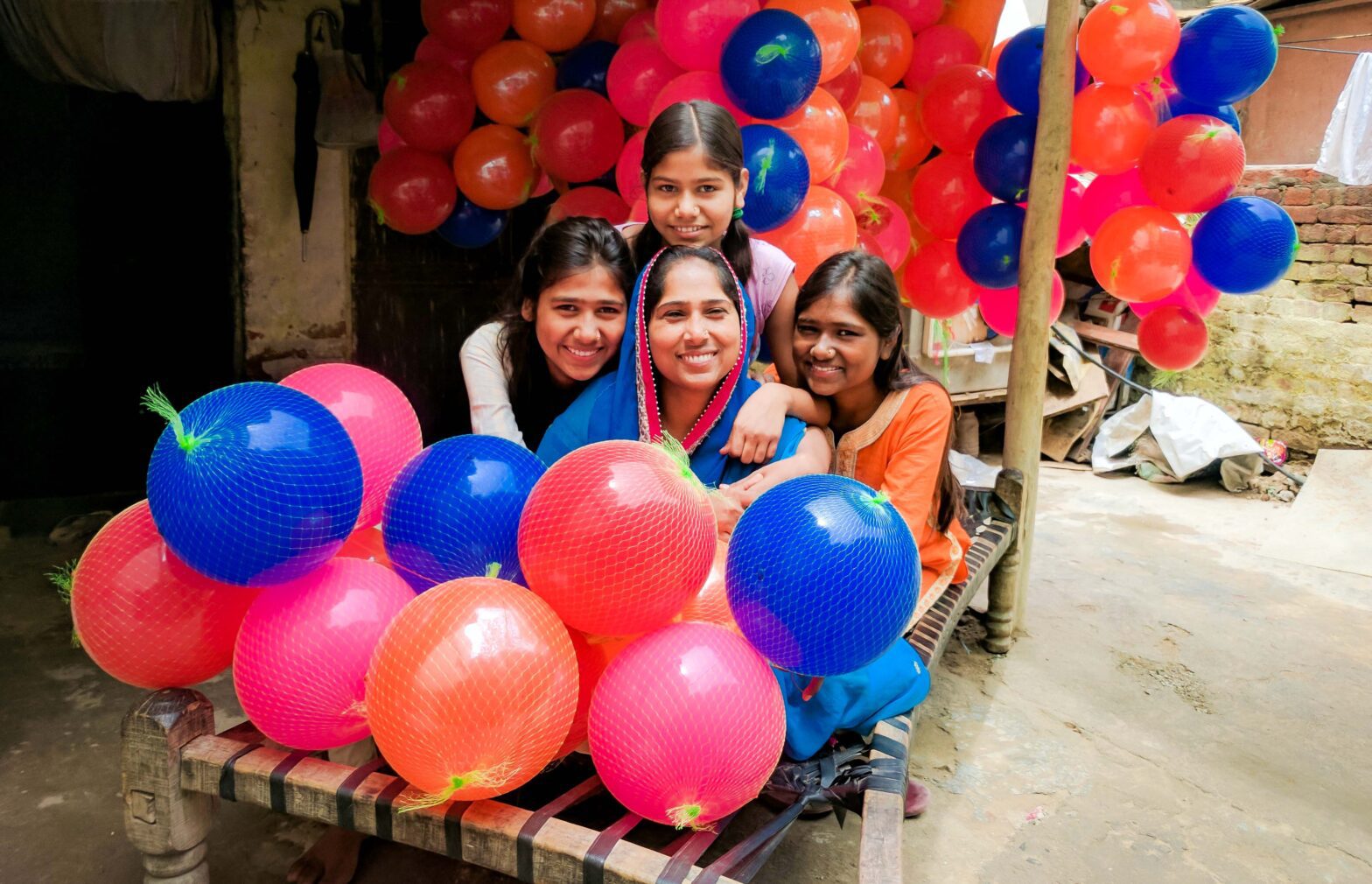
Right next to the high-rise buildings and sprawling farm houses of Chhatarpur area in New Delhi, brews the dilapidated and neglected shanties of the Nut colony slum cluster. The majority population here is either engaged in their traditional community occupation of singing and playing drums, or making paper flowers and selling trinkets by road-sides.


When Swabhiman was first initiated in the community, it was perceived as no more than a wasted effort, with the men opposed to sending their wives and daughters for awareness sessions, trainings and workshops. Slowly, but steadily, the Swabhiman team set out to turn this tide. They started conducting door-to-door visits and counseling families, making the male members of the community aware of the importance of women empowerment. With help of regular street plays, celebration of relevant days, and group meetings, sensitization on education, health and rights of girl children and women was conducted.


Today, the men and women in the community stand together in support of the programme. Every week a mobile hospital visits the community with the aim of providing mothers and children from the community free access to primary healthcare services. In addition, stand alone health camps with special services by pediatricians and gynecologists are also conducted as required to take care of their specific health needs. Health talks by experts are a regular feature of the project, to keep the women updated on vital RCH issues.


Exceptional girl children from the community were identified and provided scholarship support to complete their education. Their parents are also regularly counseled so that they encourage their daughters to pursue their dreams in life. The girls are further given relevant exposure and life skills training to ensure their over-all development. These girls have become peer influencers and are spreading the change further among their families, friends and neighbors.


Swabhiman health volunteers and community health educators have been appointed from within the community, along with “male change agents” – husbands, fathers, brothers who have become the face of the movement and are leading by example. With the consolidated efforts of the Swabhiman team and the community, the wheels of change have been set in motion, and the results are highly encouraging.


To know more about Swabhiman and support us please log in to   http://www.smilefoundationindia.org/swabhiman.html
Categories
Insights

Communication as a tool for the development of the rural masses in our country

Communication is the core activity of human association in general and progress as well as development in particular. Human life cannot exist in isolation. A man’s survival in the society is only through communication. Therefore, communication is identified as the oldest continued activity of human being since birth and goes on and on till death. More precisely, communication is the basic need of human beings and web of society which makes the survival, growth, progress and development of man possible and holds the society intact and progressive.  Communication is a vital part of personal life in the society. It is equally important in business, education, civilization, administration and other situations where people encounter with each other to satisfy their needs and wishes. Communication maintains and animates the life. It leads people from instinct to inspiration, through process and system of enquiry, command and control. It creates a common pool of ideas, strengthens the feeling of togetherness through the exchange of messages and translates through into action. As the world has advanced, the task of communication has become more complex. However, unless some basic structural changes are introduced, the potential benefits of technological and communication development will hardly be put at disposal of the majority of mankind. The rural poverty and its related incidences may decline if one puts efforts for sustained growth in agricultural production. Therefore, the communication is the most powerful input which brings substantial development in socio-economic status of an individual.


The term communications can be used in three interrelated ways: firstly, it refers to the interactions and engagements which take place between different actors in the education sector; secondly, it looks at the transmission of information, knowledge or data between two or more points and thirdly, it refers to the processes and means though which these interactions take place. Communications in this respect is multi-faceted and multi-directional, it is both an event and a process, and can be the interaction, as well as the means of interaction.


There is a range of arguments which can be put forward for the importance of integrating communications within education systems especially in the rural areas of our country. Some of these are highlighted below and explored. It can be claimed that good information and effective communications might help:


• enable communities and civil society to engage with educational issues at the school level, raise issues with educational providers and promote accountability of provision and promote public engagement with educational reform programmes.

• increase public awareness of educational rights in rural areas and make the uptake of educational services more likely, both for children and adults.

• provide evidence to support decision-making processes.

• improve the quality of policy formulation.

• build shared understandings which may lead to social change.

• improve educational service delivery and policy implementation.

• involve the voices of the marginalized groups, to make educational provision relevant to their needs.

• empower people to make decisions and develop ownership of educational processes.

• improve the quality of learning and educational outcomes.


Therefore the necessary part for the development of the rural mass would be of spreading the word and expressing the needs and wants of the rural masses through different modes of communication. Spreading the word itself is a powerful tool to share their thoughts, ideas and necessities which can fall in the right hands and ensure in the upbringing of the rural society. The struggles, schemes, policies, educational service can all be uplifted with the simple medium of communicating with the world outside using the correct form of platform. Smile foundation is associated with the welfare of the society and our platform is one place where we give our interest in looking after the needs and requirements for development of the needy. Smile Foundation ensures in benefiting the society with proper education, health, livelihood and women empowerment.


Visit us at http://www.smilefoundationindia.org/ to know more about our work.

You can log in to our facebook page at https://www.facebook.com/smilefoundationindia.org/ and be a part of our communication to support us in helping the society.

Categories
Insights

For A Greener and Sustainable Planet – Around Us

The color green has always been associated with plants, shrubs, trees and grasses. But in present times, the green patches are being wiped away to make space for concrete structures/establishments. As a result, denizens are forced to be displaced, loss of livelihood, increasing pollution levels, destruction of natural habitat and many more.  Just last two consecutive years, Delhi faced the problem of smog (crop burning, vehicular pollution, deforestation and others). In order to curb this prevalent problem, governments and civil society actors encouraged people to use carpooling, odd-even strategy, artificial rains and planting trees and the list goes on.


Yes, the environment around is deteriorating gradually and often opens up a Pandora box of negative impacts. If we have to preserve the environment for the generations yet to come, then children can surely be the flag bearers of these important initiatives. This isn’t a time bound project rather follows on the axiom of intent, innovative and inspiration. Therefore, individuals from any walk of life may follow these principles that help in conserving the environment for time immemorial.


  • Conserve Water


Being a responsible citizen of the planet, we can always opt for a three minute shower as compared to prolonged baths. Secondly, those homes that are gifted with kitchen garden should use watering cans to water plants and vegetables as compared to pipes and others. Finally, always wash or clean your vehicles on grass instead of a concrete platform.


  • Plant a Tree


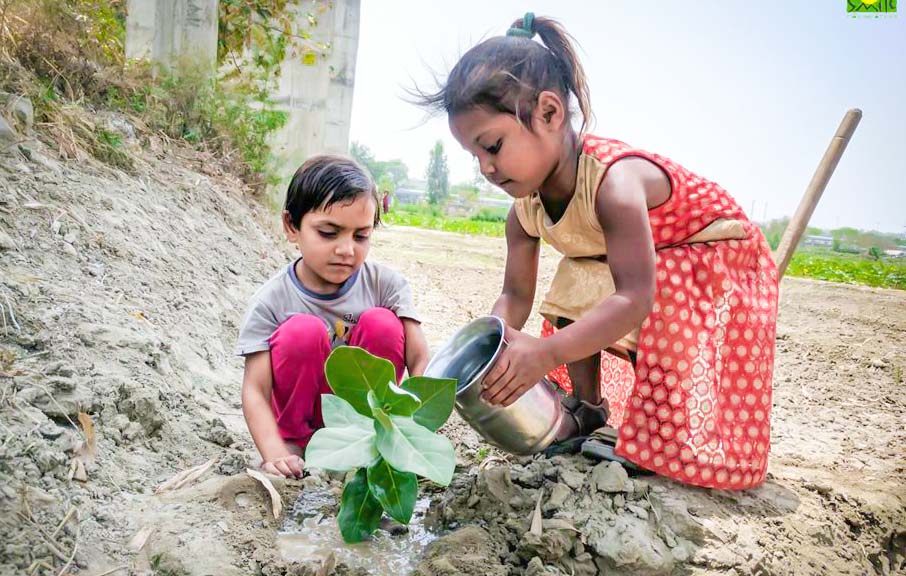
As a parent or a guardian always encourage your children to plant trees around vicinity. It not only uplifts the mood and instills the important quotient of responsibility such as caring and watering the plant on regular basis. We can also move a step ahead by ensuring water conserving plants find place in the kitchen gardens such as beets, lettuce, fennel and others.


  • Recycling-A Sorting Game


One of the major brain building exercise is the sorting of recyclable materials from inorganic products. Some of the interesting exercises are conversion of old plastic bottles into plant holders, leftover food to prepare new dishes and others. The recycling sorting game requires everyone’s participation and contribution to make our planet- a habitable place for generations yet to come.


  • Carpooling and Walking- Mode of Transport


In times when reducing the pollution and saving the environment should be the motto of life. Therefore, opting for carpools and walking to workplace should be a preferable choice. The benefits of this choice are particularly enormous such as saving fuel, saving money and getting a good workout too.


These are some of the principles that can be followed by all of us. It can surely bring forth a positive change in the environment. Why wait for times when pollution levels specifically in the winter continue to haunt us, if adequate steps are taken on suo moto basis, surroundings are bound to change. We already have sowed the seeds of conservation or preservation in us, all we need to do is getting into action.


Plant a small sapling, right away!

Categories
From The People, For The People

Emotional support for the elderly is as important as medical aid

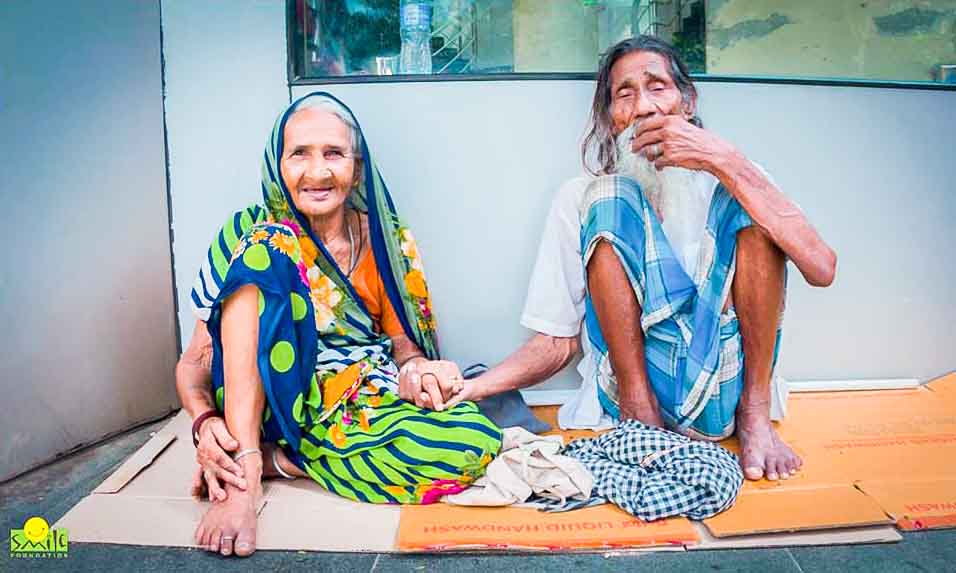
The world thinks that Indians really respect and love the elderly. With the concept of joint families and children living with their parents well after adulthood, it can be understood how the notion of this attachment to the elderly was conceived. Some really do everything in their power to take care of the elderly like they once took care of their children, however, in a large number of cases, it is all a charade. Children do not always have the same kind of regard for their parents as most expect. They do not understand the debt of gratitude that they owe their parents for bringing them into this world, nurturing and raising them with care.


An elderly couple from Dharwad, Karnataka, that was making a visit to a Smile on Wheels mobile hospital shared:


23316695 1864350143588945 8341976059477878993 n 3

“Every morning after offering our morning prayers, we move out of our home. We pass the entire day in the village temple reciting hymns. Each time we pray, we cry to God ‘Why do our children have to suffer because of us?’ We have one son. We live with him. Our daughter-in-law behaves very harshly with us and she always uses bad words directed at us. Our son earns a very small income and finds it difficult to afford to feed everybody in the family. We are afraid to ask for rice from own daughter-in-law. She shouts at us in front of our son. Our son says nothing and turns his head away. When we were young, we worked morning to evening to keep our only child out of hunger. I used to carry him on my shoulders and take him around the village. When he was sick, we did not sleep the entire night and tried to comfort him with everything we had! These days, I can’t see properly. My wife goes out to find work in other people’s houses these days. We feel helpless during this last stage of our lives. But we do not want to be a burden on our children’s family anymore.”


This is just one example of the psychological torture these people undergo at such a delicate age. It is often said that old age is like a second childhood. This does not only entail the physical care that is required, but also the social attention and care for their mental well-being. They are kept alive with the help of modern medicine, but are made to feel guilty for living in their own houses and eating meals provided by their own blood. This guilt and abuse that they face takes a toll on their mental health as well.


Most of the elderly are widowed and live an extremely lonely existence. Even the ones who do not face any abuse and are seemingly well looked after are left alone at home while their children work.  This isolation gnaws away at them. They are no longer fit to go out for work and often suffer from age related diseases such as dementia, which makes them incapable of making their way about; doing routine tasks without any aid is impossible. Yet, they long for company and attention, but this being denied to them causes them to fall into a deeper state of depression.


Placebo has scientific backing. Furthermore, mental well-being is deeply linked with physical well being. This means that emotional heartache can literally take a life away. The poor state of mind that plagues most elderly people causes their physical health to deteriorate as well. This affects those who belong to the working classes and are starved of not only attention and love, but also basic needs, to an even greater extent.


Just medical attention is not enough to take care of our elderly. We need to make them feel loved and cared for. Their emotional needs are just as vital to life as their physical and medical ones. We need to pay special attention to their social requirements in order to keep them happy, and thus, healthy.


To know more about Smile Foundation’s Program which help in  aiding the elderly and senior citizens across the country please log in the link description below.

http://www.smilefoundationindia.org/smile_on_wheels.html


Categories
Insights

Women on Wings

India has recently recorded the maximum number of women pilots in the world, Indian women are reaching new heights and conquering new lands with their skills and competence. India has been pushing hard for women empowerment via various schemes like  Beti Bachao Beti Padhao Scheme, One Stop Centre Scheme, Women Helpline Scheme etc. and the government is leaving no stone unturned to make women self-reliant.


India is a country with maximum number of women pilots in the world whether it’s Air India or Indian Air Force. The women in India have created a great impact in the aviation society. While the aviation industry is flourishing in India there are areas where we need to still focus for the welfare of the female community.


Believing in the fact that dreams come true we recognize Anny Divya, the world’s youngest woman to command a Boeing 777. She was fascinated to touch the skies from her childhood days. Divya was greatly motivated by her mother to be a pilot when her mother noticed that Divya was quite fascinated of flying. Anny Divya started working hard on her dreams to turn it into a reality. Today, Divya at the age of 30 years holds the title for being the youngest woman to command a Boeing 777, the world’s largest twin engine jet.


Divya joined the Indira Gandhi Rashtriya Uran Academy, a government run pilot training institute in Rae Bareli, Uttar Pradesh right after her schooling. During her two year course her parents had to take a loan of Rs. 15 lakhs to pay her tuition fees. Since she belonged to South India, Divya had to face cultural imbalances during her stay in North India. Divya faced challenges and problems but she realized what she needs to do and why she had come so far. Her determination, firmness and perseverance to make a pact with reality and never give up till she achieved her goals made her achieve one of the highest titles in the history of mankind.


There are stories of many firsts—first woman air marshal of the Indian Air Force, first woman engineer to acquire license in an airline, first woman air traffic controller, first woman aviation medicine specialist, the first all-women contingent to march down Raj path on India’s Republic Day two years ago. Their stories will inspire us to the core but behind the inspiration there were tremendous challenges and struggles they had to go through. We have to note the fact that living your dreams is to fulfill your primary tasks which our woman community has exercised it very well in various sectors.


The issue of women empowerment has been prevalent for years now. The universe is trying to find tackle the various issues surrounding women empowerment and the issues surrounding women equality with men. Women empowerment usually refers to an environment where women make decisions based on their preferences for the benefit of them and the society. It also refers to improving the economic, social, legal and political strength of women. The ideal scenario would be where women can claim their rights such as:


  •  Living a life of dignity and respect.
  • To be able to control their life within their home as well as the workplace.
  • To be able to make their own decisions in life.
  • To have equal rights to be able to participate in religious, social and public activities.
  • To have an equal status in society.
  • To have equal rights for economic and social justice.
  • To be able to determine economic and financial choices.
  • To get an equal opportunity for employment and education without any sort of gender bias.
  • To be able to work in a comfortable and safe environment.


“If you want something said, ask a man; if you want something done, ask a woman.”

     – Margaret Thatcher

Categories
In The Spotlight

Building a Better Place for Her

We, as a nation recently celebrated the National Girl Child Day (24th January 2018), promised to make the world around us a better place for girls from different walks of life. It provides a comprehensive platform for new opportunities to girl children in the country. Simultaneously, it creates more awareness in the masses about the problems and inequalities faced by the girl child in the society. Inequality of girl child is itself a vast problem that is visible in areas like inequality in education, nutrition, legal rights, medical care, child marriage and so many. The placards, posters and protests speak out the language of women empowerment, save girl child, educate girl children, bring back our girls from slavery. The promise of good, safe and healthy life is all she asks and can be delivered and sustained by us.


India, as a state-nation portrays a complex picture especially with the girl child. Every state in the country offers vivid statistics in terms of child-sex ratio, education, health, empowerment and other parameters. A balanced equation cannot be set, if in one corner of the country girls are not allowed to go to school while in a distant part a girl becomes a top-ranking IAS officer. The public policies and academic scholarships act as a balm to these ailments, but then the problem is deep rooted.


Let’s start with the child sex ratio, Haryana the features in the bottom of the rank list is gradually picking up with 834 girls against 1,000 boys in 2011 (Census 2011).  Post their birth, the next challenge is to break the brick/mud walls and make way for schools and space for school textbooks. Often the hour long (or less) walk to school is nothing less than consistent torture and pervasive humiliation.  School is an avenue of knowledge under the guidance of teachers with basic infrastructure like toilets, drinking water facility, playground and others.


The Student-Teacher ratio is considerably bad in rural and tribal areas, where one teacher is teaching 1 lakh students (a report tabled in the Parliament) without a proper classroom and a blackboard. Consequently, more than half of the school children in grade 5 are not able to read a two level text. In terms of sanitation, the figures are very shocking with reference to the Annual Status of Education Report (ASER) of 2013 states that 53.3% of useable toilets for girl children in schools and 47% schools in India still do not have separate toilets for girls.


Yes, the picture appears to be dismal and one shouldn’t be disheartened. One of the most prominent campaigns by the government; Beti Bachao and Beti Padhao has been ensured survival, protection and education of girl children. It was launched in 2015 with an initial funding of 100 crores focused on multi-sector action in 100 districts throughout country especially where child sex ratio is low. This campaign has been particularly vital for improving the child-sex ratio in Haryana (currently standing at 914 girls against 1000 boys). Similar improvements have been noticed in Rajasthan, Punjab, Delhi, Uttar Pradesh and other states.


The latest Economic Survey (2017-2018) states that the Pupil-Teacher ratio has seen significant progress which 23:1 and considerable improvements have been done in construction of school buildings/class rooms, drinking water facilities, toilet facilities and appointment of teachers at elementary school level. Interestingly, the student-classroom ratio that is greater than 30 has declined from 43 per cent in 2009-10 to 25.7 per cent in 2015-16.


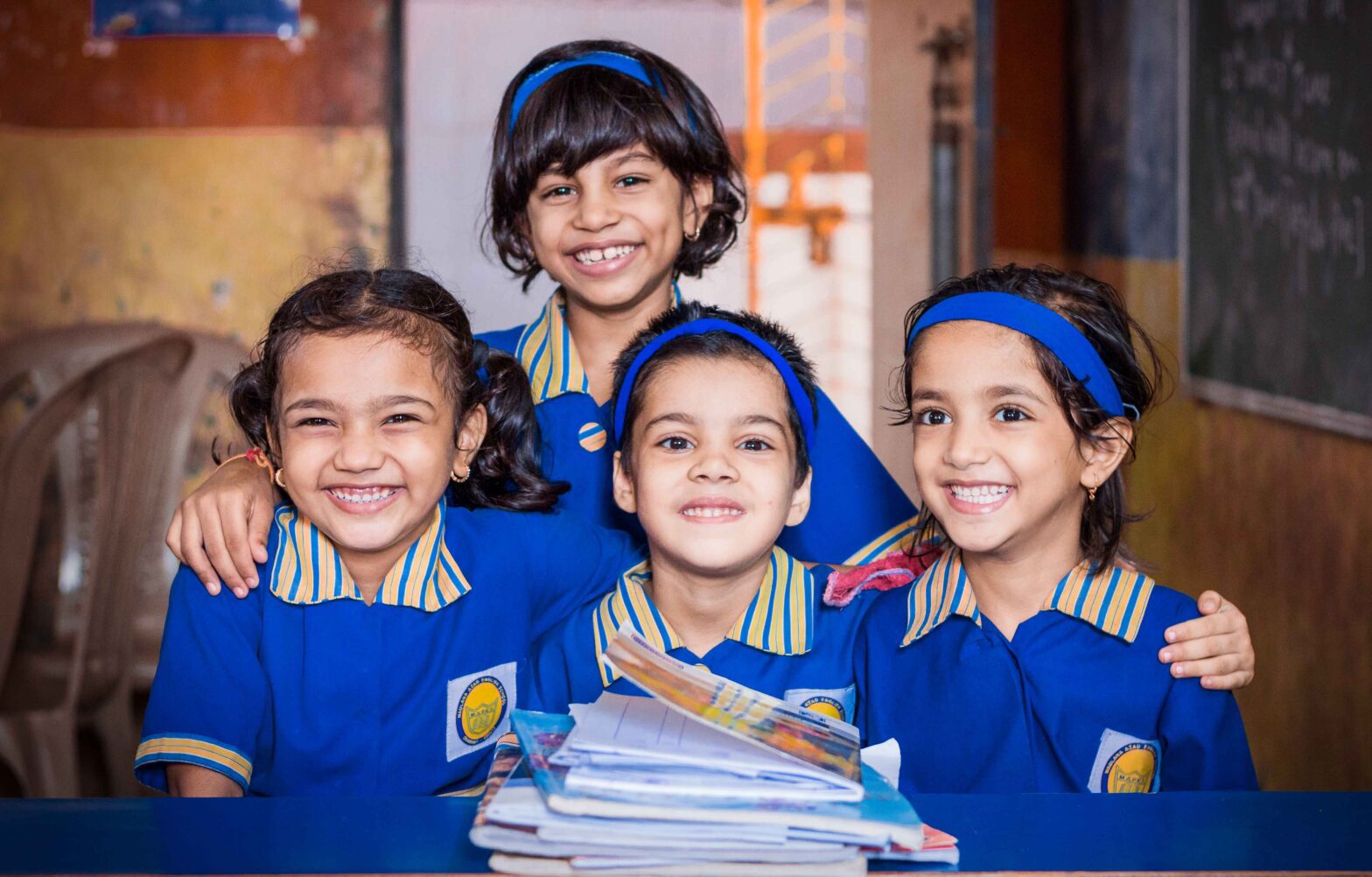
To mitigate differences in the society, education is the only opportunity and a sacred option. It helps girl child making informed choices and develops a responsible stature within the household in the decision making process. An educated woman not only uplifts the family from drudgery but can also contribute to the economic growth of the country.


“One Child, One Teacher, One Book and One Pen can change the World.”

–          Malala Yousafzai, Noble Prize Laureate,


Keeping the list of Millennium Development Goals in mind and agreeing to the axiom that every child must be school. Dedicated efforts have been done by the Government to merge the gap in access and quality to good and affordable education. A lot more needs to be done especially in areas where girl children don’t spend a couple hours in school. You and me, who are members of this growing civil society can surely make a difference and appeal to our friends that education has no barriers and knowledge is a free flowing discourse that enlightens the creative minds.


When girls are educated countries are stronger and prosperous- Michelle Obama.

Categories
From The People, For The People

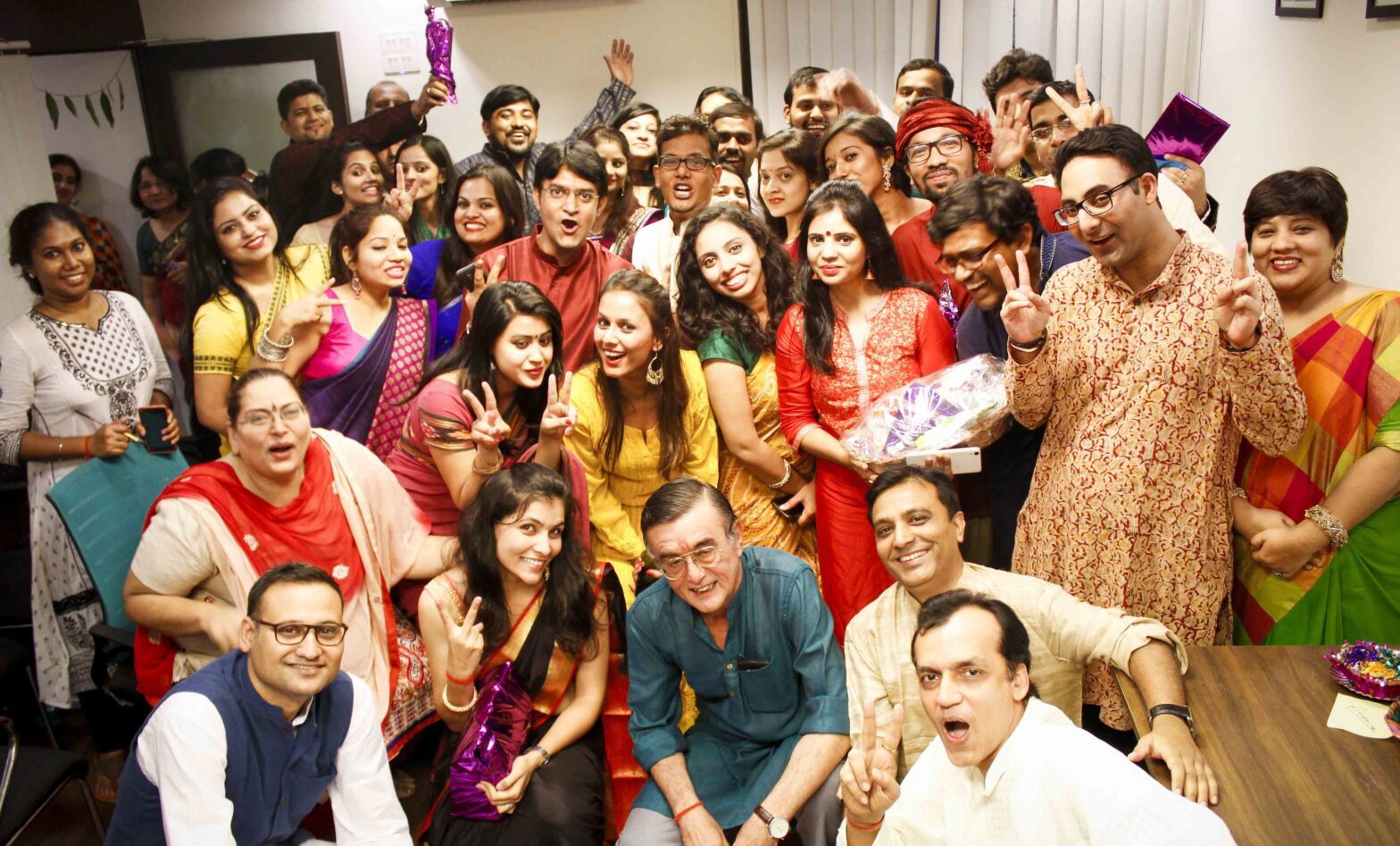
What makes employees smile in Smile Foundation?

At Smile Foundation, “Real Work, Real Change” is our ethos. Working on the ground to bring sustainable change is not easy, but in our country where more than half of the population is deprived even of its basic needs, this is where we must start. Before we debate on human rights, we must address urgent human needs. And this is what Smile Foundation has been tirelessly striving to achieve. Through intensive programmes based on education, healthcare, livelihood and women empowerment, we work towards bringing positive and long lasting change in the lives of children and their families.


People – committed, passionate individuals have always been at the core of all we do. Currently, we have a team of over 400 full-time professionals from diverse backgrounds working across India at our projects and offices. Here are some thoughts and feelings shared by Smile Foundation’s ex-employees:


Smile foundation is not merely an organization where I worked. It has been a place a place to pursue new ideas; conduct healthy debated and do something exciting always. I did the same and got lots of support and appreciation from seniors. It will not be an exaggeration to say that smile foundation changed me 360 degrees as a professional – by giving me space , by building my capacities and providing me with constant guidance. Wherever I have reached today both in my professional and personal spheres, I owe a lot to Smile foundation. I miss the organization and close colleagues, and will always cherish the same forever.”


  • Manish Kumar Singh


Former Assistant Manager, Programme (Health)


My experience with Smile Foundation is extremely enriching. Smile’s open environment offers numerous learning opportunities. An approachable management, dynamic work environment and versatile colleagues make Smile a great place to work. Apart from that it is, it is strongly involved ihn employee engagement, reward and recognition, which motivate people in this organization. I have thoroughly enjoyed working with Smile Foundation and I am sure the organization will grow further and achieve greater heights.


  • Kavita Tiwari


Former Manager – Alliances and Institutional Relations


My experience with Smile Foundation has been extremely good. I worked as programme officer under mission education for more than 3 years. It was my first job and gained a lot of experience which was very helpful for my future growth. All the colleagues have been very supportive. It was a great experience and will be of great help to me in my coming years.

  • Pragya Tripathi


Former Officer, Mission Education Programme


My association with Smile foundation has been a remarkable one. The space given to me and the great encouragement provided to me have helped me evolve to the next level with greater confidence and immense capabilities.


  • Sobha Rajan


Former Senior Manager, Corporate Partnerships


I started off as a volunteer in Smile foundation in June 2013 and eventually joined them as a full time employee in September 2013. The thing I liked the most working for Smile was the flexibility the management offered to me in terms of Participating in activities and projects of different departments, and also the freedom they gave me to explore ideas of my own. I received support and encouragement from management to implement a volunteer management system, which I thought would make the functioning of the organization more efficient. I believe that Smile is a great place to learn about the social sector and one has the flexibility to contribute a lot to the organization provided they are motivated and willing.


  • Pritika Anand


Former Executive Coordinator, Special Projects

Categories
Insights Smile

CSR: Why Partner With Smile Foundation

Mallen Baker, writer, speaker and CSR expert, defines Corporate Social Responsibility as a strategic act – “a way companies manage the business processes to produce an overall positive impact on society.”


Over the last decade, and much before corporate social responsibility became a mandate in India (Companies Act 2013), Smile Foundation has been working with the corporate sector linking the needs of development initiatives with the business needs of corporate, to produce results on the ground.


Today, having partnered with more than 300 global organisations, we have been able to impact over 1.2 million lives so far in the hardest to reach villages and slums of the country.


Here are some of the reasons that make Smile Foundation the perfect on-ground partner for your CSR project:


Pan-India Presence with Wide-spread Rural Outreach


In keeping with its philosophy of ‘Real Work Real Change’, Smile Foundation has taken its intervention into the interiors of India, reaching the unreached in the remotest of rural areas and urban slums. Currently having welfare projects in more than 950 villages and slum clusters across 25 states of India, Smile Foundation is directly benefitting over 600,000 children and their families every year under its four core programmes – education, healthcare, livelihood and women empowerment.


Transparency, Good Governance & Efficiency


Smile Foundation has been evaluated by some of the most reputed Indian and international evaluators including INTRAC London, KPMG, India Development Foundation and PRIA, and has come at par with their expectations and norms.


Credibility and accountability have always been the benchmark for Smile Foundation and are achieved through the promotion of principles of good governance in its processes and practices. It has a four-tier audit and evaluation mechanism which reviews programmes and projects, internal operations, compliance of statutory norms and conducts an external evaluation to ensure the impact of various welfare projects, as well as complete transparency and accountability in utilisation of funds.


Highest Social Return on Investment


The organization is relatively young, and sprung up just over a decade ago. Despite this, it has already been able to channelize sizeable resources towards the crucial causes it works for. It believes in achieving the highest Social Return on Investment (SROI) by bringing innovation, sustainability, optimum utilisation of resources and a culture of excellence in all its ground projects through rigorous monitoring, and robust systems and processes.


Partner Involvement


When Smile Foundation partners with an organisation, it endeavours to get both the brand and its employees directly involved in its welfare initiatives. They do this by making their partners active participants and encouraging them to play a fundamental role in the process of bringing change at the grassroots. This effort to engage is what has made Smile Foundation one of the best NGOs for CSR in India.


Use of Technology


Smile Foundation deploys the best possible technological tools for effective monitoring of our system and transparency in our internal processes. Tools like Global Positioning System (GPS), Beneficiary Management System (BMS), and online reporting formats and software are in place to ensure proper implementation of our welfare projects. Through website, social media and other such media, we endeavour to connect our supporters, well wishers and the civil society, and keep them updated, with the progress of our work on the ground.


To partner with us, please write to cp@smilefoundationindia.org

Categories
From The People, For The People

Education for the children of brick kiln workers in Kalyan, Maharashtra

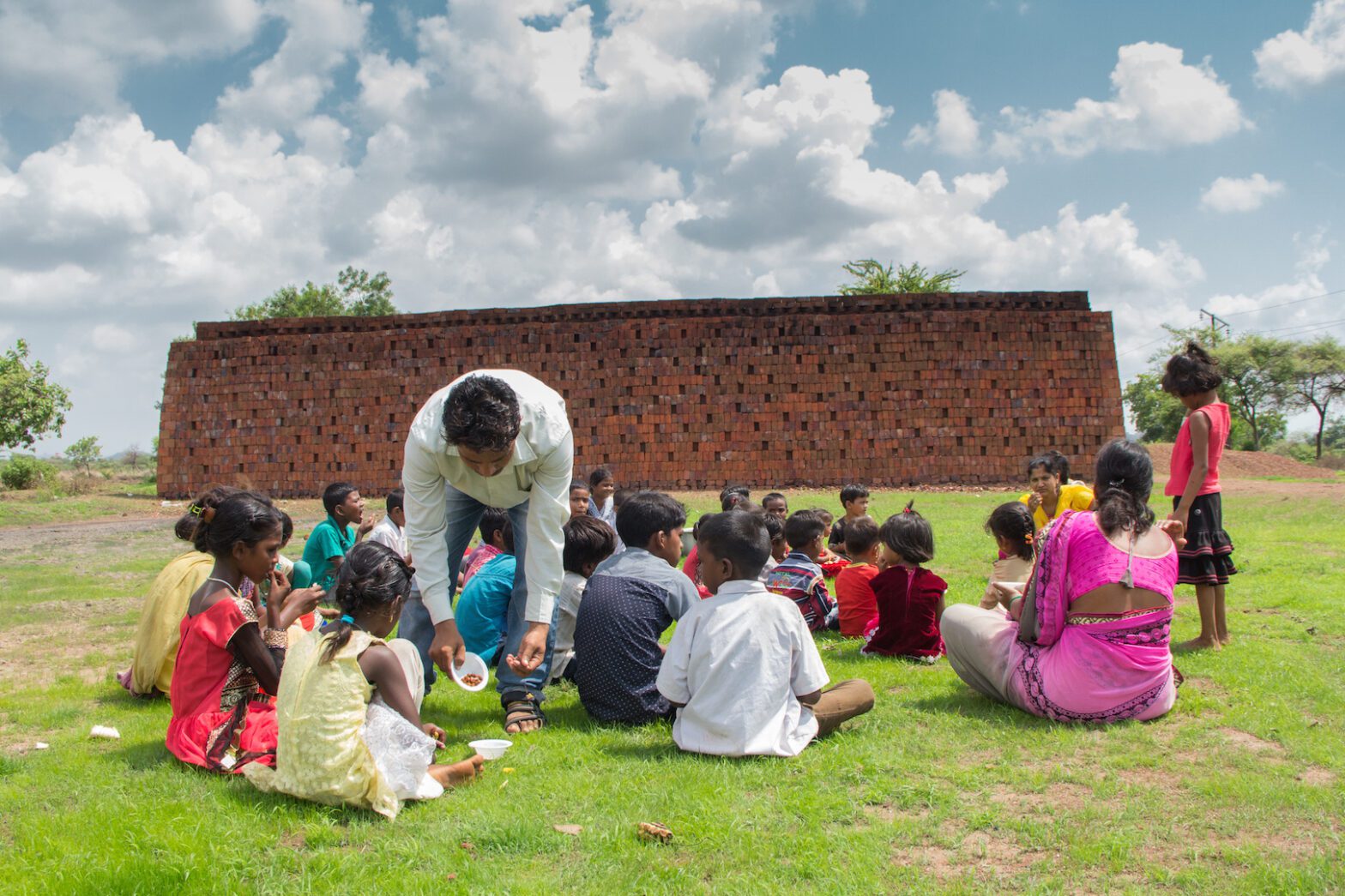
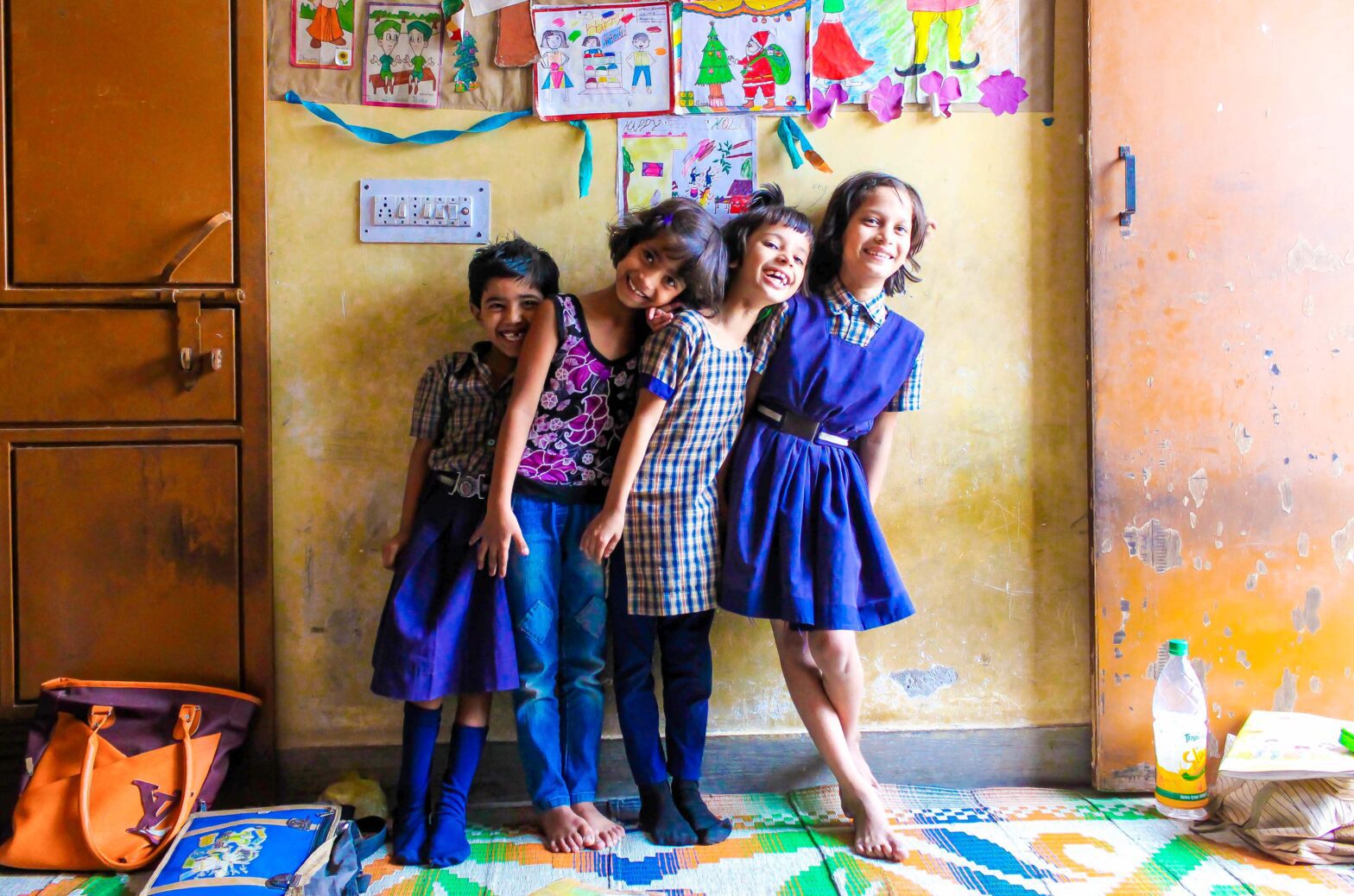
With their parents toiling hard as daily wage labourers in Kalyan’s brick manufacturing factories, these children never had a normal childhood. Even as kids they were carried along to the factory sites by their parents, and when they became old enough to stand, they had already joined work to add their share to the family income.


Never having seen any other side of life, these children could not even dream of a different future. Five years ago when Smile Foundation’s Mission Education centre BHT was initiated in the community, it was condemned by the parents. They thought that the only duty of their children should be to help the family survive.


It took months of rigorous counselling, endless home visits and mobilization sessions to convince the parents about the importance of education and bring the first batch of children to the centre. To keep the children in centre and make them regularly attend classes was another challenge for the teachers.


But with relentless hard work, playful and engaging teaching methods, activity-based learning, provision of routine health check-ups, nutrition, exposure visits and a lot of devoted attention, today the scenario has changed.

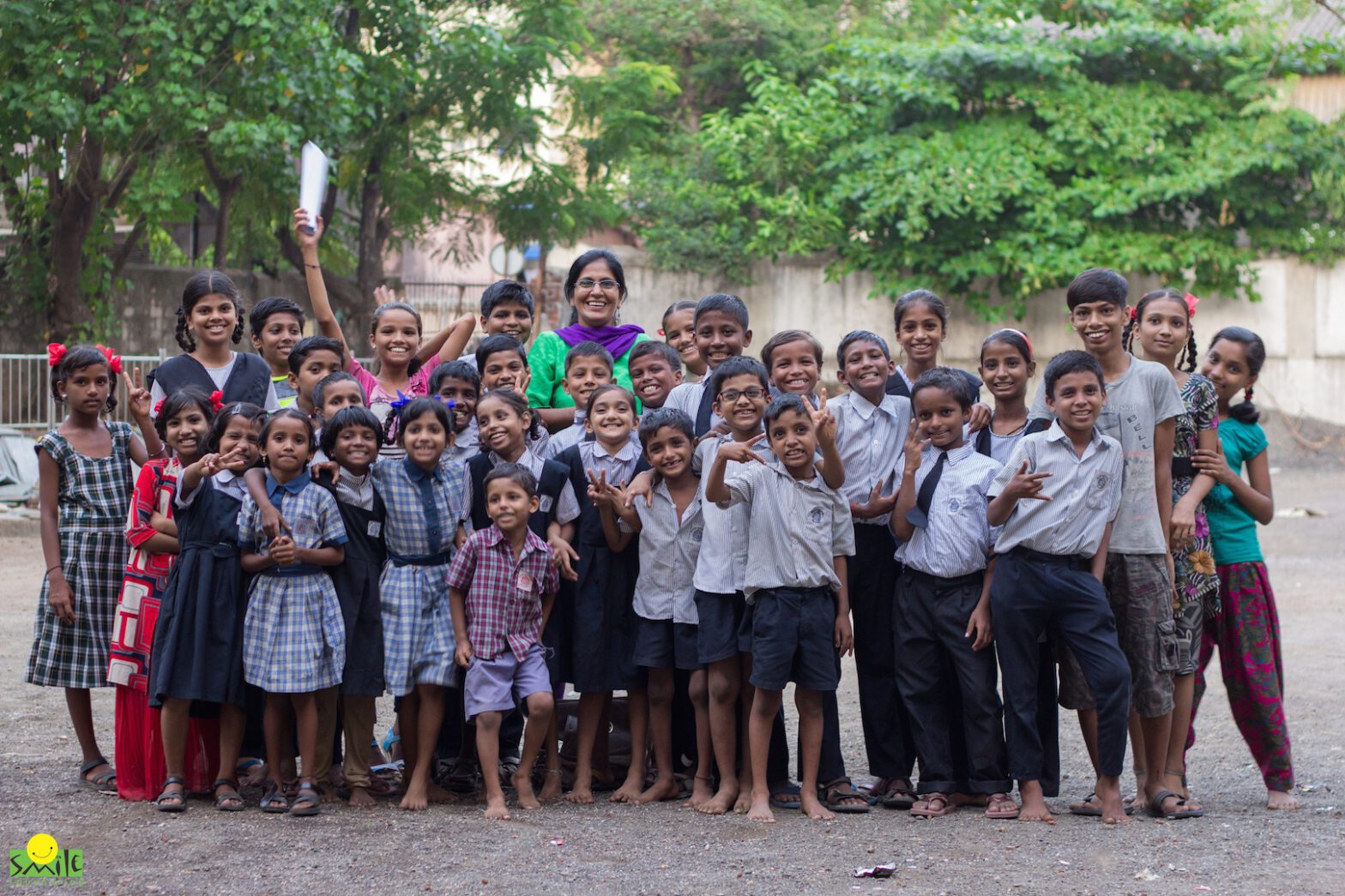
IMG 8573

Children from Smile Foundation’s Mission Education playing happily.


250 children are currently enrolled at the centre and willingly attend classes on a regular basis. Their parents take great care not to miss any of the parents-teacher meetings and take a lot of interest in their children’s academic progress.


Regular health and hygiene camps are organised under the project for not just the children, but also their parents. Working in hazardous circumstances day and night, the community is often left vulnerable to several health risks. Health camps and awareness sessions keep a check on the spread of preventable and communicable diseases, along with promoting a health seeking behaviour in the kids from an early age.


The centre is now not only well-accepted and appreciated by the community; it has been adopted by the community members, who actively participate to make the initiative a success.


To know more about Smile Foundation’s education programme, please visit our website.

Categories
From The People, For The People

New possibilities open up for slum youth in Yelahanka, Bengaluru

Bengaluru, famed as the IT hub of India, is home to a large migrant population from the remote villages of Karnataka and other states. Coming to the city in search of better job and growth opportunities, many end up working as daily wage labourers, struggling to fulfil the basic needs of their families.


As such they find it hard to give priority to the education of their children. Unqualified and untrained, the youth take up the same low paying jobs as their parents to add their share to the family income. Generation after generation of migrant families is caught up in this vicious cycle of ignorance, poverty and suffering.


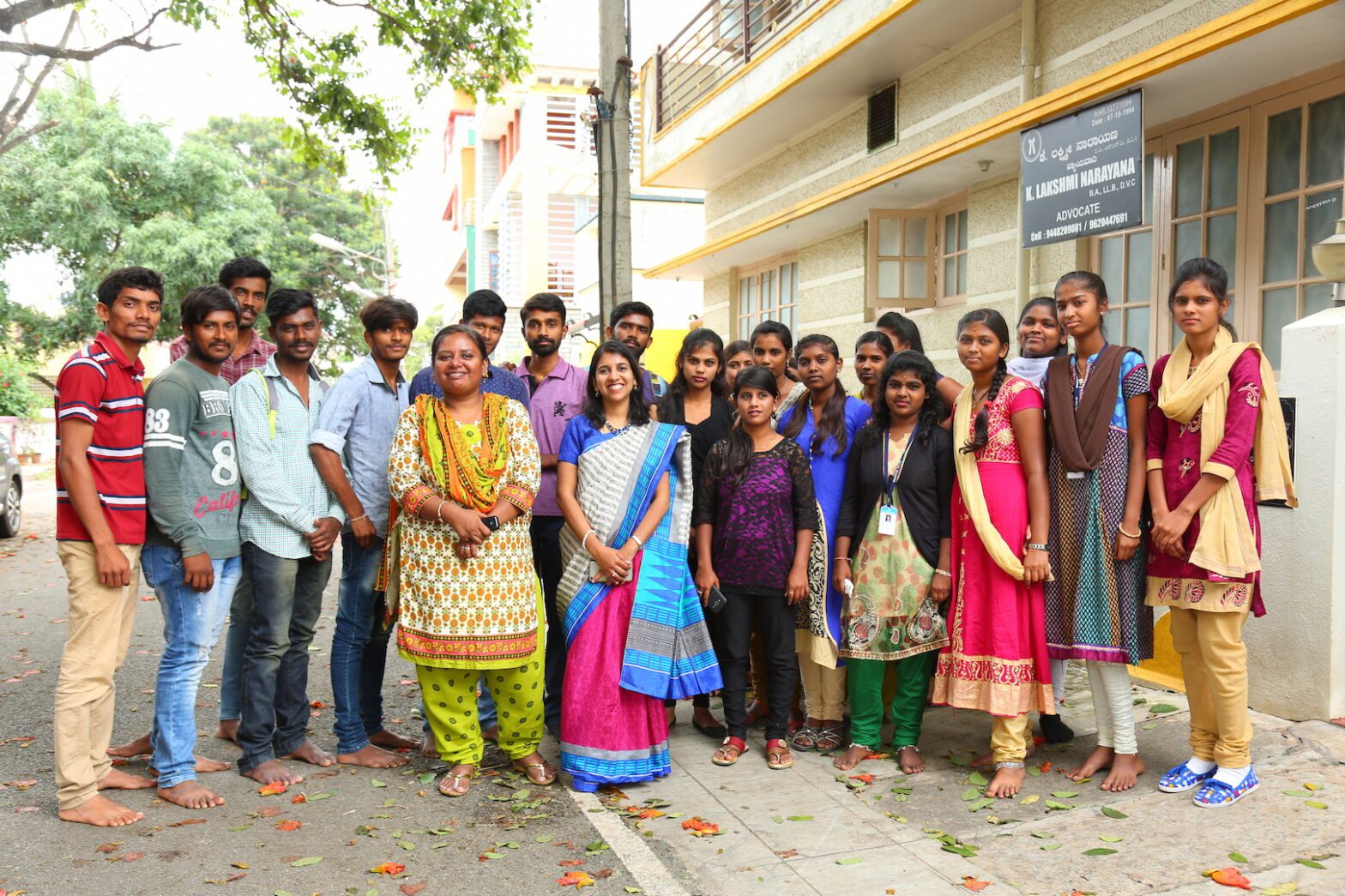
To break this cycle, Smile Foundation initiated a Smile Twin e-Learning Programme (STeP) centre in Yelahanka, a small town on the outskirts of Bengaluru. The project aims to provide a much-needed opportunity to youth from socio-economically marginalised migrant families who could not complete their education due to financial constraints.


The centre identifies and inducts deserving youth, and trains them in employability skills along with rigorous one-on-one counselling sessions to boost their self-confidence. The students are trained in computer education, basic management and retail skills, English communication, and personality development to not only enhance their skill set, but also bring about a change in their attitude.


Industrial visits, interactions with experts from different professional backgrounds, career counselling, and placement and post placement assistance are provided to the students to help them choose the career best suited to their individual interests and aptitude, and give them a hands-on practical learning experience in the chosen field.


With the community’s youth getting all set to become first generation white collar workers, parents and elders have also become expectant of new hope and opportunities entering their lives. The young men and women seem determined to build a better – secure and dignified future for themselves and their families where they do not have to fight an eternal battle to survive every day.


To know more about Smile Foundation’s livelihood programme, please visit our website.

0%