Categories
From The People, For The People

The First Steps Towards a Better Future for Dwellers of the Pandav Nagar Slums

Children in our country do not receive everything that children in first world nations do, and we are all aware of this. We know that underprivileged children in India have to struggle to put a morsel in their bellies. Their parents are engulfed with similar worries. Poverty pushes some communities to the brink and they fight their circumstances with all their might to keep from falling over the edge. The people from these communities are so occupied with fending for themselves, focussing on basic needs for survival that they do not even consider education a benchmark that they would like to reach. The only thing they wish for is their own survival and that of their children, and once this challenge seems to be conquered, they shift to attempting to put roofs over their heads. For them, the more working hands, the more money can be drawn in and the faster they accomplish this task. Their children join them in their daily labour while their hands are still too small to lift bricks or till fields. They are trapped in a vicious cycle and suffer knowing that their children are fated to live the same lives they loathe so much, and are reluctant to believe that there is a way out.


In the slums of Pandav Nagar area teachers and volunteers from Smile Foundation’s Mission Education centre, Pragati Wheels School, constantly counselled parents of underprivileged children, attempting to convince them that their children did not have to live the frugal life they themselves did. All they would have to do was sacrifice the income that child labour would have brought them or keep from marrying off their daughters before they were old enough to decide if they really wanted to be dependent on a man themselves. After several door-to-door visits and a long struggle to make the parents understand the benefits of an education, today over 200 children from the slums of Pandav Nagar area in East Delhi are brought to school.


27982600 1973928045964487 4551456934229161977 o
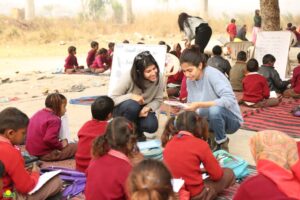
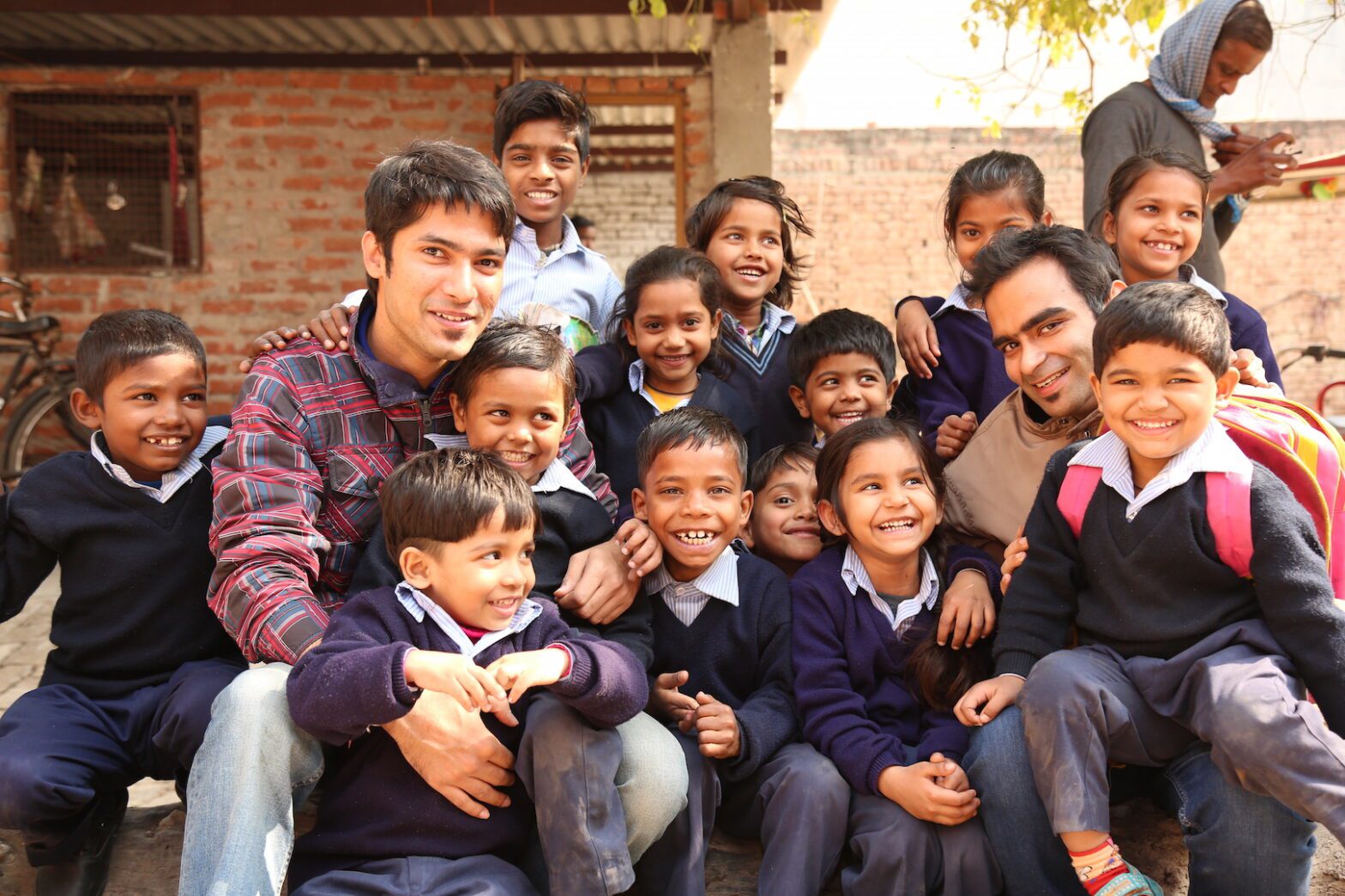
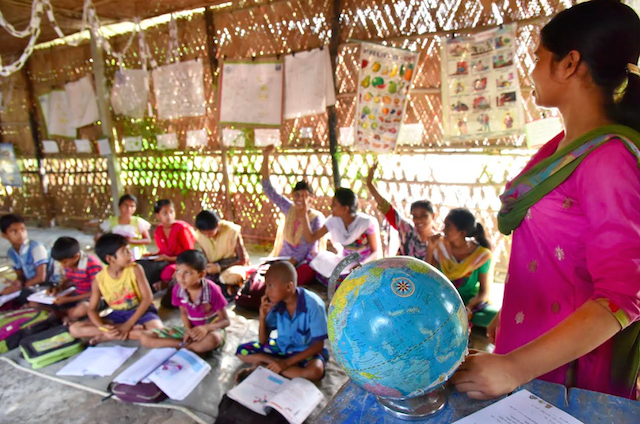
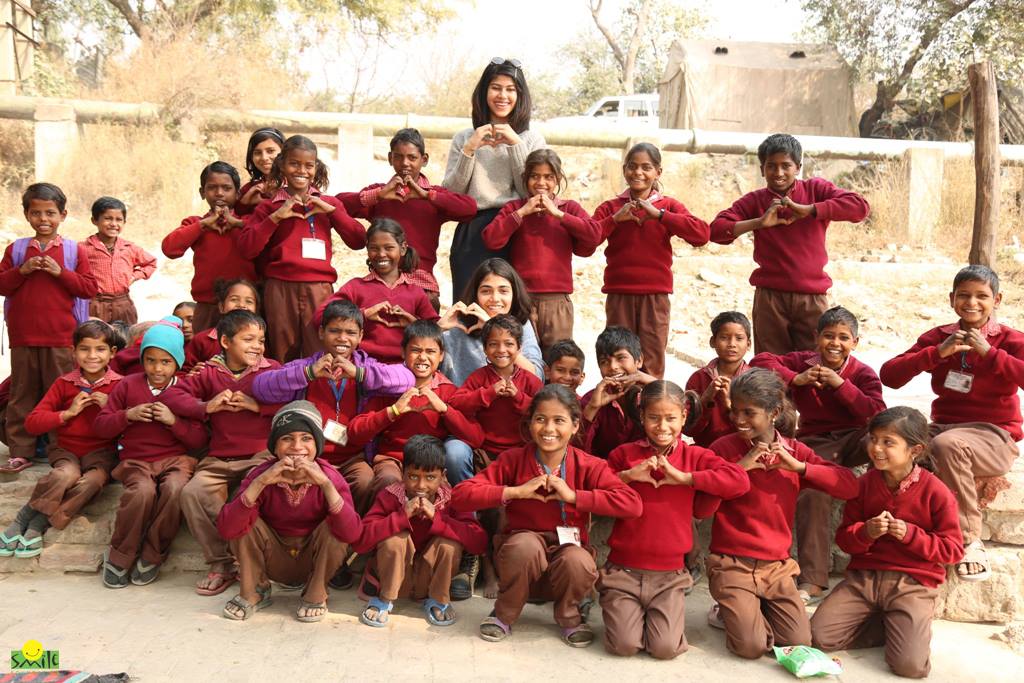
An interaction between volunteers and students of Pragati Wheels School


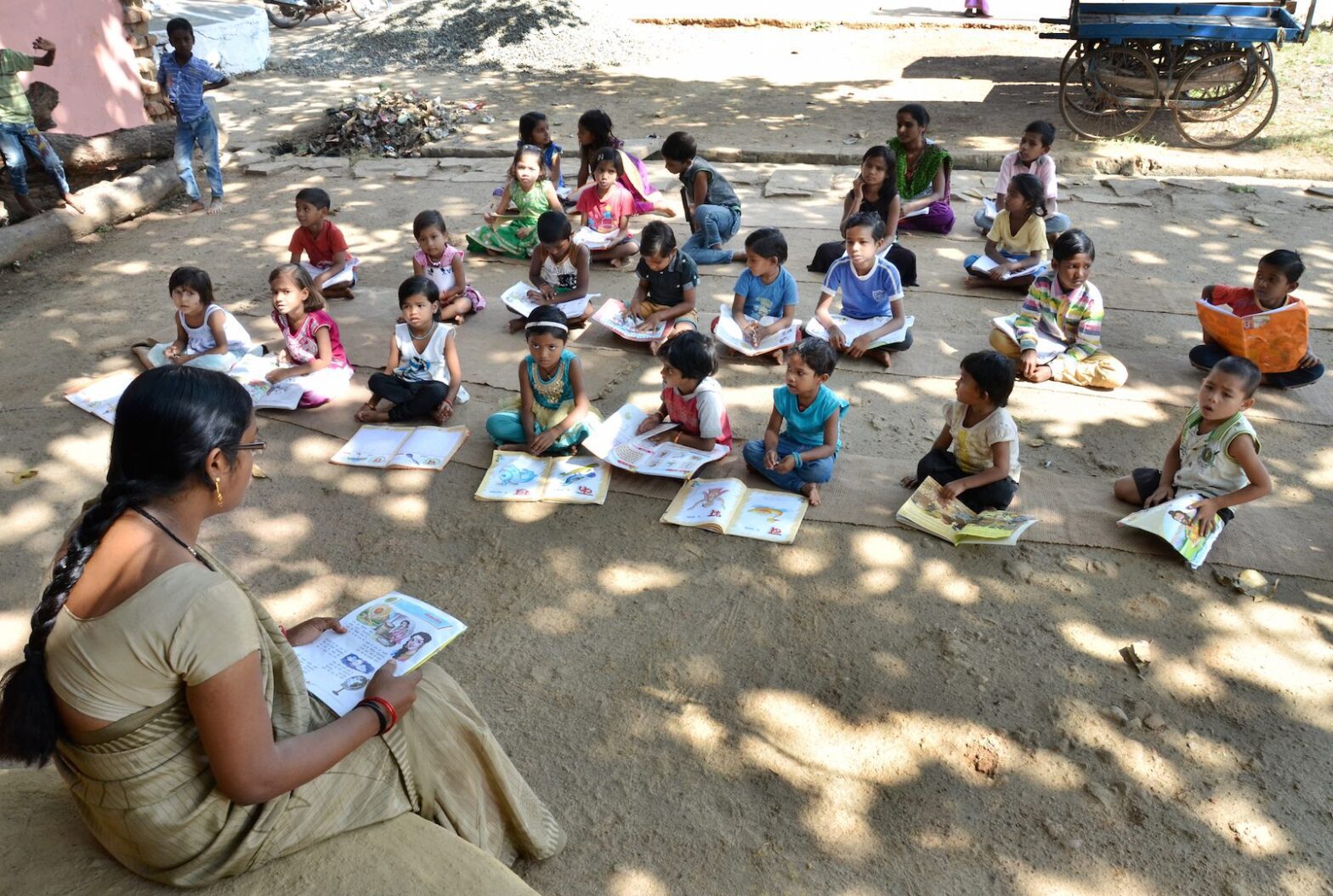
Seeing the little boys and girls sitting under the shade of a few trees on the banks of the Yamuna River, obediently looking at the white board before them is a rather picturesque scene. Several classes are carried out simultaneously and the teachers give their students individual attention. It is rather surprising to see only happy faces as these children make their notes, elated with the fact that they know more today than they did yesterday, and always eager to answer any question asked.


Most of these children belong to poor migrant families who work as labours in the nearby fields for a meagre income and reside in tiny shacks with leaky roofs. Some of them come from little settlements even further off, hidden within foliage and far from most of the educated population of the city. These children walk miles to get to school and do so with smiles on their faces. Both the parents and the children now seem to understand how essential an education is in order to assure a secure future. Nowadays, the parents have started taking the initiative to bring their children to school with the hope of a better future.


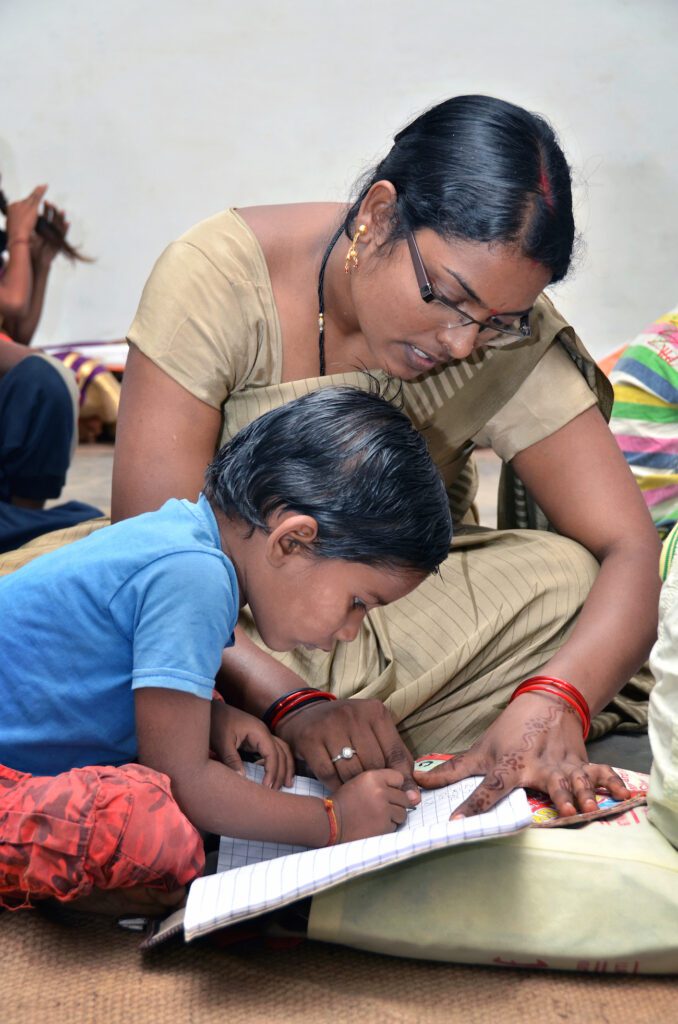
At the Mission Education centre’s Pragati Wheels School, these children not only receive education, but also healthy food and essential healthcare. They are tutored regarding basic hygienic practices, good values and engage in different activities, to ensure their holistic development. Their parents take great care in not missing any of the parents’ teacher meetings and take complete interest in their children’s academic progress.


To know more about Smile Foundation’s education programme, please visit our website.


Categories
Save Tax

Save Tax on Donations: Section 80G Deductions Explained for India

Every year, thousands of Indian taxpayers miss out on a simple, legal way to reduce their income tax liability, all while doing something meaningful for society. If you donate to a registered NGO or charitable trust, you can save tax under Section 80G of the Income Tax Act, 1961. This is not a loophole. It is a government-backed incentive designed to encourage charitable giving and social investment across India.

Whether you are salaried, self-employed, a business owner, or even an NRI, this guide explains everything you need to know: what Section 80G is, who qualifies, how much you can deduct, which donations are eligible, and exactly how to claim your deduction while filing your Income Tax Return (ITR).

KEY TAKEAWAYS

  • Donations to 80G-certified NGOs allow you to save tax up to 100% of the donated amount.
  • Deduction is available to individuals, HUFs, companies, and NRIs.
  • Only cash or cheque donations qualify. Donations in kind (food, clothes, medicines) do not.
  • For certain categories, deduction is capped at 10% of Adjusted Gross Total Income.
  • You must furnish a stamped receipt with the NGO’s 80G registration number to claim the benefit.

What Is Section 80G of the Income Tax Act?

Section 80G is a provision under the Income Tax Act, 1961, that allows donors to claim a deduction on the amount donated to approved charitable organizations, relief funds, and non-profit institutions. This deduction directly reduces your taxable income, which in turn lowers the amount of tax you owe.

The provision was introduced to incentivize philanthropic behavior among individuals and corporates, channeling private money into socially beneficial causes such as education, healthcare, disaster relief, and poverty alleviation.

According to the Income Tax Department of India, only organizations registered under Section 80G of the IT Act are eligible to issue tax exemption receipts to donors. You can verify an NGO’s 80G status on the official Income Tax e-filing portal at incometaxindia.gov.in.

Who Can Claim Deduction Under Section 80G?

The deduction under Section 80G is available to a broad range of taxpayers. You are eligible to claim it if you belong to any of the following categories:

  • Resident individuals (salaried employees, self-employed professionals, freelancers)
  • Non-Resident Indians (NRIs) who donate to eligible Indian institutions
  • Hindu Undivided Families (HUFs)
  • Companies, firms, and corporate entities
  • Any other person as defined under the Income Tax Act

There is no income threshold for claiming this deduction. Any taxpayer who has made a qualifying donation to a registered institution is eligible, regardless of their income bracket.

What Is the Difference Between 12A and 80G Registration for NGOs?

Many donors confuse 12A and 80G registrations. Here is a clear distinction:

Feature Section 12A Section 80G
Purpose Tax exemption for the NGO’s own income Tax deduction for the donor
Who Benefits The NGO / Trust itself Individual or corporate donor
Prerequisite Required before applying for 80G NGO must have 12A registration first

In short: an NGO with 12A registration but without 80G certification cannot provide tax deduction receipts to donors. Always verify both registrations before donating if tax savings are a priority for you.

How Much Tax Can You Save Under Section 80G? Understanding Deduction Limits

The deduction under Section 80G is not uniform across all donations. It falls into four categories based on the type of fund or institution you donate to.

Category 1: 100% Deduction Without Qualifying Limit

Donations to the following funds qualify for a full 100% deduction with no upper limit:

  • National Defence Fund
  • Prime Minister’s National Relief Fund (PMNRF)
  • National Foundation for Communal Harmony
  • Chief Minister’s Relief Fund or Lieutenant Governor’s Relief Fund
  • National Children’s Fund
  • Zila Saksharta Samiti (District Literacy Committee)

Category 2: 50% Deduction Without Qualifying Limit

Donations to the following institutions are eligible for a 50% deduction with no upper ceiling:

  • Prime Minister’s Drought Relief Fund
  • Jawaharlal Nehru Memorial Fund
  • Indira Gandhi Memorial Trust
  • Rajiv Gandhi Foundation

Category 3: 100% Deduction Subject to 10% of Adjusted Gross Total Income

Donations to family welfare and approved scientific research institutions fall here. The deduction is 100%, but the total eligible amount cannot exceed 10% of your Adjusted Gross Total Income (AGTI).

Category 4: 50% Deduction Subject to 10% of Adjusted Gross Total Income

Most donations to registered NGOs, charitable trusts, and social welfare organizations fall in this category. You get a 50% deduction on the donated amount, capped at 10% of your AGTI.

How to Calculate Adjusted Gross Total Income (AGTI)

AGTI = Gross Total Income (GTI) minus deductions under 80C, 80D, and other applicable sections, minus Long-Term Capital Gains (LTCG), minus Short-Term Capital Gains taxed at special rates.

Example: Mr. Sharma’s GTI is Rs. 8,00,000. He pays Rs. 1,00,000 as LIC premium (80C) and has LTCG of Rs. 50,000.

AGTI = Rs. 8,00,000 – Rs. 1,00,000 – Rs. 50,000 = Rs. 6,50,000

10% of AGTI = Rs. 65,000. If his donation to a qualifying NGO is Rs. 90,000, only Rs. 65,000 is eligible for deduction. Of that, 50% = Rs. 32,500 is the actual tax deduction.

What Donations Are Eligible Under Section 80G? Scope and Exclusions

Not every act of giving qualifies for a tax deduction. The Income Tax Act specifies a clear scope for eligible donations.

Eligible Donations

  • Donations made in cash or by cheque, demand draft, or online transfer to a registered institution
  • Donations by resident Indians, NRIs, HUFs, and companies
  • Donations made from taxable income or exempt income, both qualify
  • Donations deducted from salary by an employer (with employer certificate required)

Ineligible Donations

  • Donations made in kind, such as food, clothes, medicines, equipment, or any non-monetary contribution
  • Cash donations exceeding Rs. 2,000 (as per the Finance Act 2017, cash donations above Rs. 2,000 are not eligible for deduction under 80G)
  • Donations made to foreign or overseas charitable trusts
  • Donations to NGOs without a valid 80G certificate
  • Political party contributions (these fall under Section 80GGC, not 80G)

Important: The Finance Act 2017 introduced a significant restriction. Cash donations above Rs. 2,000 to a fund or institution under Section 80G are not eligible for deduction. This was introduced to promote digital payments and financial transparency. Always donate via cheque, UPI, NEFT, or RTGS to ensure your donation qualifies.

Want to save tax while changing a child’s life? Donate to Smile Foundation India, a registered 80G and 12A certified NGO working for education, health, and empowerment of underprivileged children across India.

Donate Now at smilefoundationindia.org and receive your 80G receipt instantly.

How to Claim Section 80G Deduction: Step-by-Step Process

Claiming your tax deduction is straightforward if you follow the right steps and keep the required documents ready.

  1. Donate to an NGO or trust that is certified under Section 80G of the Income Tax Act.
  2. Collect the official stamped receipt issued by the organization at the time of donation.
  3. Verify the 80G registration number on the receipt. You can cross-check it on the Income Tax India e-filing portal.
  4. If the donation was deducted from your salary, request a certificate from your employer specifying the donation amount and the organization’s details.
  5. While filing your Income Tax Return (ITR), navigate to the deductions section and enter your donation details under Section 80G.
  6. Attach the stamped receipt or employer certificate as documentary proof. Keep all physical records for at least 6 years.

What Must the Donation Receipt Contain?

A valid 80G receipt must include all of the following details:

  • Name, address, and PAN of the NGO or Trust
  • Name of the donor
  • Amount donated (mentioned in both words and figures)
  • Date of donation
  • Mode of payment (cash, cheque, online transfer)
  • Valid 80G registration number issued by the Income Tax Department, along with its period of validity
  • For donations qualifying for 100% deduction, Form 58 must be attached to the receipt

Section 80G vs. Other Tax-Saving Sections: How It Compares

Section  Purpose Max Deduction Limit
80C Investments (PPF, ELSS, LIC) Rs. 1,50,000 Fixed ceiling
80D Health insurance premium Rs. 25,000 to Rs. 1,00,000 Based on age
80G Donations to NGOs and funds 50% or 100% of donation 10% of AGTI for some categories
80GGC Donation to political parties 100% of amount No limit

Section 80G for Salaried Employees: Claiming Through Your Employer

If you are a salaried employee and your employer deducts a portion of your salary each month as a donation to an approved fund, you can still claim the tax deduction under Section 80G.

To do this, you must obtain a certificate from your employer that clearly states:

  • The name and PAN of the recipient institution
  • The total amount donated during the financial year
  • Confirmation that the institution holds a valid 80G registration

Submit this certificate alongside your ITR filing. This ensures the deduction is applied correctly and avoids scrutiny from the Income Tax Department.

Recent Changes to Section 80G: What Changed After 2021

The Union Budget 2021 introduced significant amendments to streamline the 80G certification process and improve transparency in charitable donations. Key changes include:

  • NGOs must now file a statement of donation (Form 10BD) with the Income Tax Department before May 31 of each year, listing all donations received during the financial year.
  • Donors will receive a certificate (Form 10BE) from the NGO, which must be uploaded while filing ITR. Physical receipts alone are no longer sufficient in many cases.
  • A unique Donation Reference Number (DRN) is generated for each donation, making verification easier and reducing fraud.

These changes were implemented to align with the government’s push toward digital financial transparency. Donors should ensure that the NGO they contribute to is compliant with these updated filing requirements.

Frequently Asked Questions: Section 80G Tax Deduction

Can I claim 80G deduction under the new tax regime?

No. As of FY 2024-25, the deduction under Section 80G is not available if you opt for the new tax regime under Section 115BAC. You must choose the old tax regime to claim this deduction. This is an important consideration when deciding which tax regime to opt for.

Is there a maximum limit on how much I can donate and claim under 80G?

There is no fixed upper limit on the donation amount itself. However, for donations in Category 3 and Category 4, the deductible amount is capped at 10% of your Adjusted Gross Total Income. Any donation beyond this threshold does not qualify for the deduction in those categories.

Can an NRI claim deduction under Section 80G?

Yes. NRIs can claim deduction under Section 80G for donations made to eligible institutions in India. However, donations to overseas or foreign charitable trusts are not eligible for this deduction, even if the donor is a resident Indian.

How do I verify if an NGO is registered under 80G?

You can verify an NGO’s 80G registration by visiting the Income Tax Department’s e-filing portal at incometaxindia.gov.in. Navigate to the ‘Verify NGO/Tax Exemption’ section and search by name or registration number.

Does donating in kind (clothes, food, medicines) qualify for 80G deduction?

No. Donations in kind, whether food, clothing, medicines, equipment, or any other non-monetary contribution, do not qualify for deduction under Section 80G. Only monetary donations made through cash (up to Rs. 2,000) or banking channels such as cheque, NEFT, UPI, or demand draft are eligible.

What is Form 10BE and why is it important?

Form 10BE is a certificate issued by the NGO or charitable institution to the donor. It was introduced after Budget 2021 to replace simple stamped receipts for the purpose of ITR filing. It contains the Donation Reference Number (DRN) and must be furnished while filing your Income Tax Return to claim the 80G deduction.

Can a company or business claim 80G deduction?

Yes. Corporate entities, companies, partnerships, and firms can all claim deduction under Section 80G for donations made to eligible institutions. For companies under the new corporate tax regime, the applicability should be verified with a tax consultant.

Conclusion: Give with Purpose, Save with Intent

Donating to a cause you believe in is one of the most rewarding financial decisions you can make. Section 80G of the Income Tax Act ensures that your generosity does not go unrewarded in a monetary sense either.

By donating to a certified NGO such as Smile Foundation India, you accomplish three things at once: you support the education and healthcare of underprivileged children, you reduce your taxable income legally, and you contribute to building a more equitable India.

The process is straightforward. Choose a registered 80G organization, donate via a banking channel, collect your Form 10BE receipt, and claim your deduction while filing your ITR. It takes minutes but creates change that lasts a lifetime.

Make a Difference. Save Tax. Sponsor a Child Today.

Smile Foundation India is a 12A and 80G certified non-profit. Your donation is 50% tax deductible. Visit smilefoundationindia.org to donate and download your 80G receipt instantly.

This article was reviewed for factual accuracy against the Income Tax Act, 1961, CBDT circulars, and official guidelines published by the Income Tax Department of India. It is intended for general informational purposes. For personalized tax advice, consult a certified Chartered Accountant or tax advisor.

Categories
Smile

Taking Care of the Elderly Through Specialised Health Camps

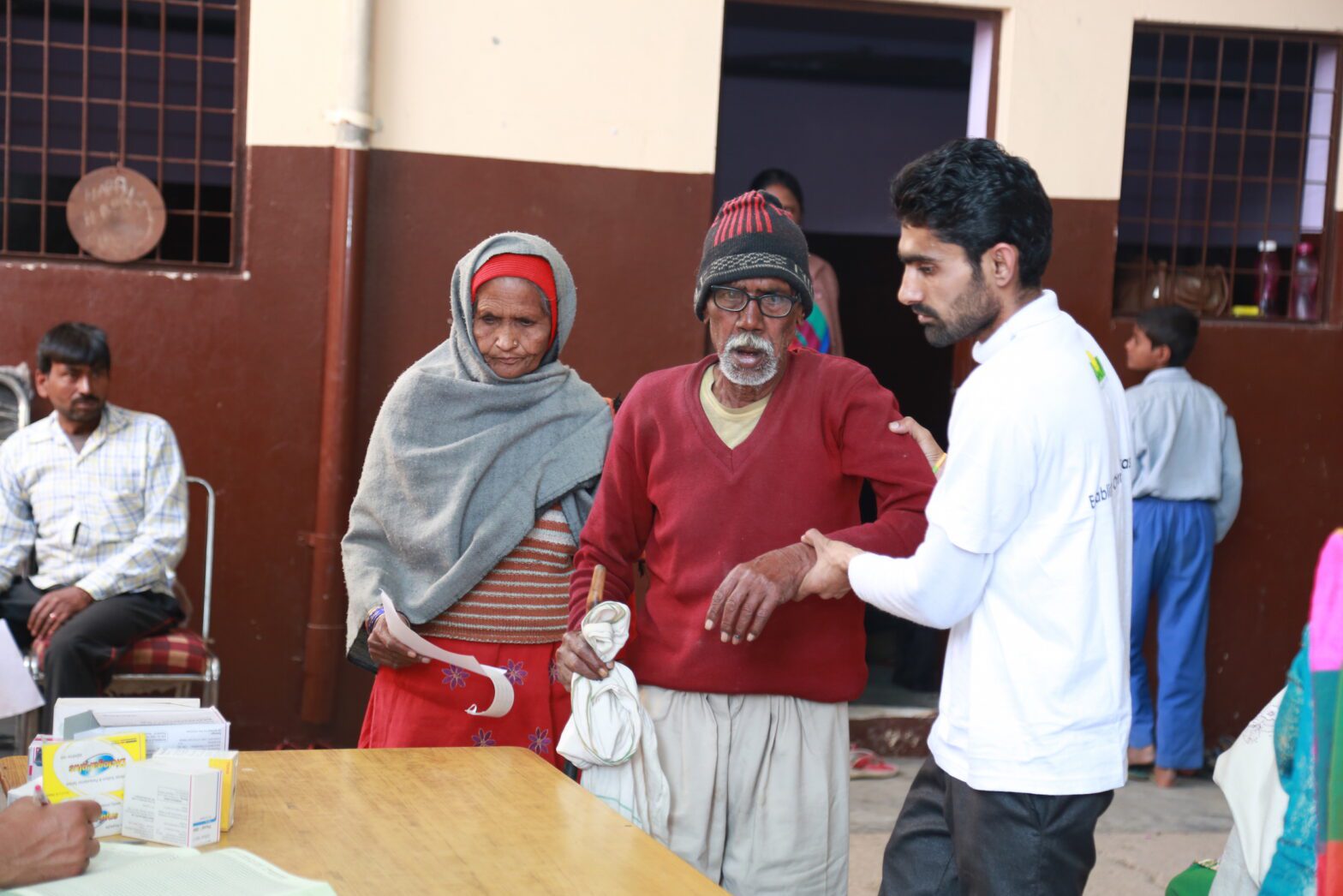
They dedicated all their lives for their children, providing them the best of education and lifestyle they could. And now when they need their children the most, they have been left to take care of themselves, on their own. “I have not been able to sleep properly due to the pain in my left arm”, said a 60 year old Shanti Devi. When asked about her family, she said she had two sons and both of them have moved to the city. They come home sometimes and bring me a few things. She said, “I am happy for them”, smiling and wiping off her tears.


This is just one of the many heart touching stories we came across during the several health and support camps organized for senior citizens as part of Smile Foundation’s healthcare projects across India. Hundreds turned up to avail the healthcare services, but in addition to imminent medical attention, what they needed the most was company – someone who would listen to them, say a kind word, hold their hand, and show just a little bit of love and care. Old age, coupled with poverty, neglect and loneliness is no lesser ailment for the less privileged elderly than the many health torments that they are bound to live with day and night. While in the prime of their lives, they struggled hard to ensure that their children do not have to sleep hungry, they have been left alone in an age when they are even unable to work for a living.


But you would not find them complaining. While some of them find solace in the company of their life partners who continue to be by their side despite time and age, others are determined to find an independent source of livelihood. They clearly do not wish to be an unwanted burden on their children, wanting nothing but some love and affection from them.


“Cataract had made my life tough. I was missing out on the small joys of my life. After a small surgery and a couple of visits at the doctor, my vision restored and once again, my life has become colourful. I only wish to see my children once more.” A grandfather to two kids, Shantaram had developed cataract in both his eyes. Due to lack of awareness and means to visit a health facility, he had attributed his vision loss to old age and had no hope that he could ever see again properly. Smile Foundation’s cataract camp in Bilaspur, Himachal Pradesh, came as a ray of hope in his life. He says Smile Foundation has not only given back his vision, but also his happiness.


DSC 0037
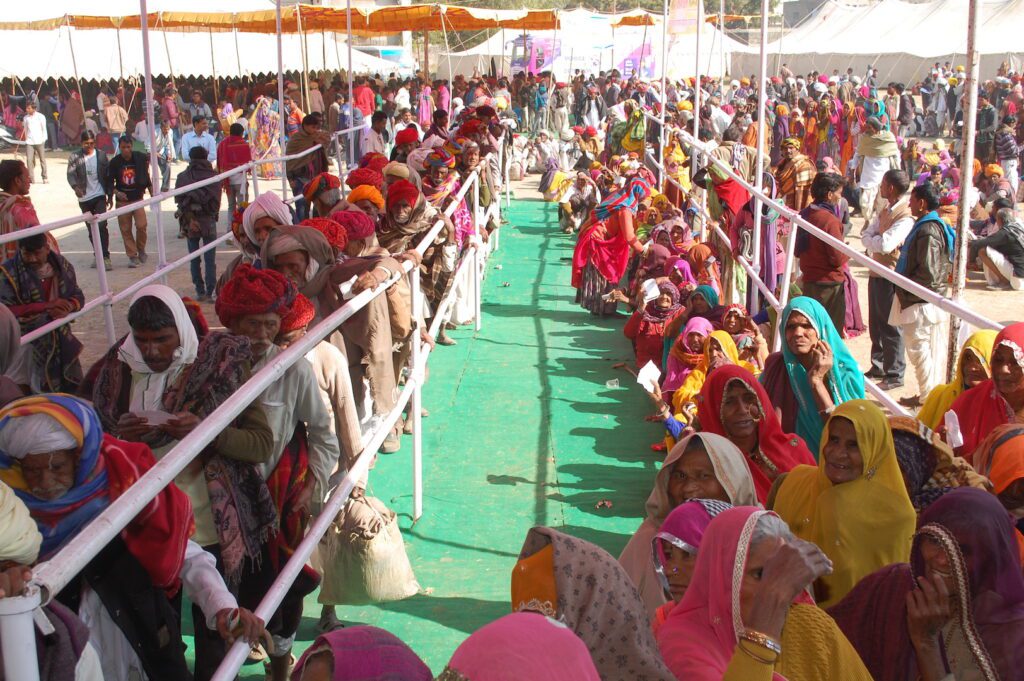
The elderly turned out in great numbers for the special cataract camp in Bilaspur

Smile Foundation had launched an initiative to provide the minimum healthcare provisions to the senior citizens in Bilaspur, Himachal Pradesh. Under the programme, a special eye cum cataract detection camp was organized in the area. In this camp, patients were subjected to eye tests and screening for cataract. The camp was attended by more than 400 people from different villages and majority of them were senior citizens having vision problems due to old age. Post screening, 180 patients, including both men and women, were identified for cataract surgery. These patients were counseled on the causes of the eye ailment they were suffering from and the treatment/surgery needed to restore their vision. All the identified patients underwent cataract surgeries successfully. To ensure full recovery, the patients were also explained the precautions they need to follow and were also provided the necessary medicines.


The camp gave a new hope to the elderly who have to earn their own livelihood. With corrected vision they will now be able to resume work and be independent. While many of the people were not even aware that cataract was treatable, others were simply negligent. Lack of awareness about the causes of cataract, its symptoms and treatment is a major factor that has led to an increase in the number of cataract patients in areas such as Bilaspur, particularly among the aged. Hence a major goal of Smile Foundation when organizing such camps was also to spread awareness among the community.


Another Smile Health Camp was organized in Gurgaon especially for the senior citizens. The camp was attended by both men and women. Old age leads to many health problems that are worsened by lack of awareness and neglect. Majority of the senior citizens who turned up for the camp were either living on meager incomes or with their families and had no funds for diagnosis and treatment.


A dedicated team of volunteers went from door to door to pick up the elderly from the identified slums and villages in the area, and after the camp ensured to drop them back to their homes safely. The team of doctors present at the camp not only performed screening tests on the attendees, but also explained ways in which they can take better care of themselves with minimum efforts. Free consultation along with the essential medication was provided to the beneficiaries.


Smile Foundation considers it a privilege to be able to take care of the health of elderly and aid them in any way which can reduce their pain and suffering. Senior Citizens for one of the most vulnerable sections of our society, along with women and children, and Smile Foundation will continue its efforts to bring quality healthcare to their doorsteps. The health and well being of the society’s aged should not just be considered a responsibility of their children, the society as a whole should come forward to become the supporting pillar for the elderly.


To know more about Smile Foundation’s education programme, please visit our website.


Categories
From The People, For The People

From surviving to living: A big leap for the beggars community in Chakrabhata

Neelam has been begging since she was very young. She does not remember the exact age since she started begging to support her family of five, including her husband and three kids. Her husband goes to the nearby city to earn a daily wage. She has begged all her life and so have her grandmothers and the other women in the small community she is a part of. Going to school and thinking of any other livelihood source was never a possibility for her and the other inhabitants of Chakrabhata village in Bilaspur, Chhattisgarh.


The men in the Chakrabhata village throng to towns and cities to find labour work on daily wages to bring back home meager earnings which just about meet the most basic needs of their families – food, clothing and shelter. While the men go out for work, the women who are also burdened by the financial adversities go begging. Lack of proper education has made it difficult for the women to leave begging that has been going on for generations in the community.


But this does not mean that they do not dream of a different, improved life for their children. If anything, their helpless situation has made them more determined to ensure that their children do not have to face similar hardships. “Our only wish is to see our children live a dignified life, where they do not have to asks for alms and depend on the mercy of others to feed themselves”, says Neelam. Thus, it was the mothers who took the initiative of enrolling their children at Smile Foundation’s Mission Education centre MITWA when it was first started in their village.


SCH 7076
“Their progress is my biggest award” – teacher at MITWA


With the implementation of this centre, the children in the community are now not deprived of the right to education. And their mothers are not deprived of hope anymore. Just like the other women in the community, Neelam feels joyous when she sees her children reading and doing their homework. She continues to beg but is hopeful that her kids will have a better life. She says she has a better aim in life now and that is to get her kids educated so that they can lead good lives. Her kids love going to the education centre and they love reading the stories written in their books.


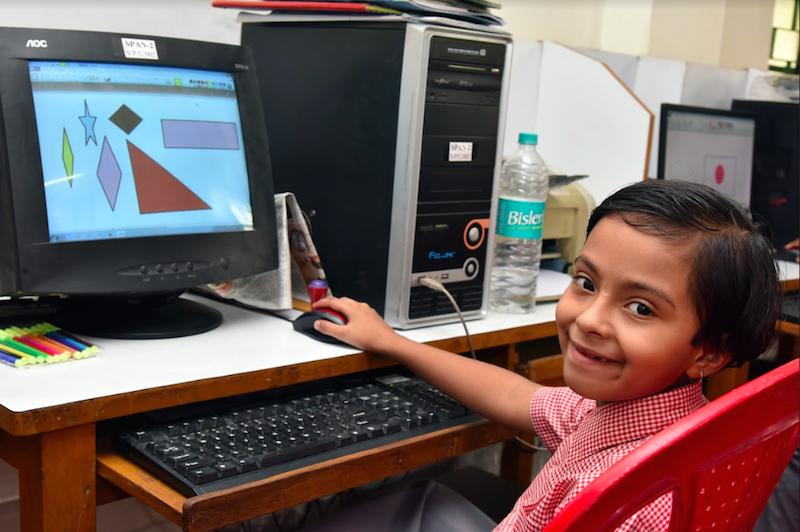
In addition to learning, they also enjoy playing with their friends and the poem recital class in the centre. The Mission Education Centre now has more than 100 children enrolled. Computer education is one of the major skills that the children are being taught at the centre. Deprived of education, proper food, adequate healthcare, the children now experience the little joys of a happy childhood. In addition to lessons for a brighter future, the students are given lots of love and care at the centre. While some of the children come to the centre without any goals, some have even realized that their motive to get educated is that they have to get skilled to earn a good job so that someday their mothers do not have to beg anymore.


A big percentage of our population still lives in destitution and one of the major reasons for this is the lack of education. A person who is not educated and aware is not equipped with the right mindset to take the right decisions in life. Limited and unequal access to education in our country makes it difficult for the weaker sections to emerge and contribute towards the growth and development of the society and the country as a whole. Education is both the means as well as the end to a better life; means, because it empowers an individual to earn his/her livelihood, and the end because it increases one’s awareness on a range of issues – from healthcare to appropriate social behavior to understanding one’s rights, and in the process evolve as a better citizen.


With the children in Chakrabhata being nurtured as first generation learners, there is an even bigger responsibility on the teachers to ensure the holistic development of each child, so that they can grow into good human beings, responsible citizens and potential change-makers. These children after all will not just be writing their own future, but also will be the way their families and community have lived for generations – forever!


Categories
From The People, For The People

Touching and being touched by the lives of children from Smile Foundation.

Sometimes life gives you everything and sometimes it takes a lot from you, but the choice of giving back all the time is totally upto you. Our visit to Smile Foundation’s Mission Education centre- Niveda Vidya Mandir in Nithari, Noida, a school which gives the children of the lower strata an opportunity to learn and grow, was a visit to remember. Started by a group of friends living the area it is a place which has turned the lives around of children in the area.


When I first entered the school not knowing what to expect, was in for a surprise, and a surprise it was when I saw the talent the kids had, the attitude of taking the lead from the front, helping each other to learn, play, draw, fight, sing and bond. The passion and expressions they depict in everything they do is commendable. The students who once worked as rag pickers with their intent to perform are now excelling in all the activities. Abhishek (Bachchan as he calls himself), Yash (the Mr. Mischief), Shravanti (the master of poems), Gopal (an aspiring doctor) are just some students amongst the talented lot we met.


The teachers, Shilpa Ma’am, Neha Ma’am, Monica Ma’am and others are the ones who give their all to bring out the best in these kids. They are the ones we must congratulate for the efforts they put in. They motivated the parents of the students to send them to school to lead a happy, prosperous and yielding life. They changed the social mindset of the parents and thought of only the betterment of the kids in their efforts to get them to school. They not only involve themselves with kids, but also with adults by organising different workshops on social abuse, skill development, healthcare etc. to integrate all in their mission of uplifting the neighbourhood.


I feel that visits like these are experiences that all of us should have because after going there you realise that the lives that we lead are so luxurious in comparison to the ones these children suffer through. Yet, we are the ones who are always complaining. I just wish and hope that I could get the spirit these kids showcase, the determination they have and try to imitate that in every aspect of life. This was an opportunity for me to grow. I am pleased that I was able to touch and make an impact on the lives of others directly!

To know more about Smile Foundation’s education programme, please visit our website.

Categories
In The Spotlight Smile

Smile Foundation Starts Digital Education for Underprivileged: Adding Digital Wings to Hopes

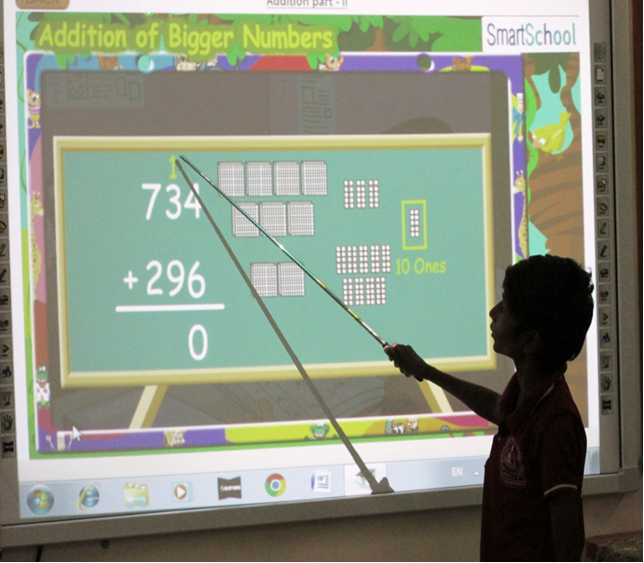
Aliterate India! A digitally literate India!! It isn’t only a dream nurtured by policy makers but also every citizen of the country. Unequal access to education and lack of a robust education system at the primary level has largely affected the equally large underprivileged section of India. Smile Foundation has been proactively involved in every nook and corner of the country to narrow this gap. Recently, Smile Foundation has launched the Digital Literacy project for underprivileged children. In line with the Finance Minister announcing the gradual shift of education from ‘black board’ to ‘digital board’ in Budget 2018, this initiative is directed towards making this dream of digital literacy come true fast.


The Concept


Blackboard teaching is an inherent feature of traditional classrooms. Going by the latest technological trends, application of innovative digital models will further facilitate all round development of the students. This will give them an insight into the use of digital technology in everyday life in and beyond classrooms. Creation of smart classrooms is part of this new-age concept. Students, without the use of pen, pencil, and paper gain a competitive advantage of learning smartly and understanding chapters visually in class.


Many a private school across the country has adopted smart classroom technology. Smile Foundation is creating a similar digital milieu in classrooms for underprivileged kids. The initiative is already given shape. It is just the beginning. Smile pledges to give digital wings to the hopes nurtured by lakhs of underprivileged children across the length and breadth of India.


After installation of smart classroom techniques, both teachers and students undergo an orientation program on the usage of the same.


Learning Outcomes


Learning outcome is an equally significant follow-up schedule that Smile Foundation follows in its Mission Education centres. This is directed towards monitoring the development of the students periodically. Smile Foundation believes not only in quantity but also quality – of producing a big number of quality and responsible citizens who can contribute to nation building in the future.


Smile Foundation’s Mission Education programme team on ground conducts baseline assessments on the students to measure their existing learning levels regarding computer education.  Accordingly, their development over time is monitored. The team is utilizing application based digital technology to assess and measure the learning outcomes of the students.


Part of the assessment is based on the language and numeracy skills of the children. To achieve this objective, Smile Foundation has collaborated with an external agency (Ayodhya Prasad Takniki Shiksha Evam Vikas Samiti) to create question papers along with their blueprints based on National Curriculum Framework (NCF) guidelines.


New Picture

The Smile Smart Classroom Set-up


  • Smart Interactive White Board
  • Interactive Classroom Projector
  • Wall Mount Kit for Projector
  • Smart Station Computer
  • Smart Digital Cabinet
  • Digital content for State Board Syllabus – in locally preferred languages
  • Biometric attendance to keep track of the attendance of children the digital way, which guarantees accuracy and efficiency
  • Other digital learning solutions: Installation of desktops/laptops, installation of Competency Based e-Learning solution (CoBELS) application on computers, and more.


Competency Based e-Learning Solution (CoBELS)


Competency Based e-Learning Solution (CoBELS) is an application based standards-aligned pedagogical tool that helps children learn concepts through real-world Acti-Game. The application works when installed in computers. The scientifically designed bite-sized ‘Acti-Game’ is an activity based game that delivers learning in a highly enjoyable form. It helps the child engage in activities and learn in the process the fun way. Children can understand and learn concepts better.


Some of the key features of CoBELS are:


  • Learner centric
  • Interactive
  • Experiential learning environment through activities and games that the learner engages in
  • Competency based curriculum
  • Standard (class wise) wise games and activities
  • Focuses on definite learning outcomes of learners
  • Curriculum covered includes Grade 1-8: Mathematics (English and Hindi) and Grade 1-5: EVS (English and Hindi).


Smile Foundation has installed CoBELS in few of its Mission Education centres. The underprivileged children are already enjoying the highly enjoyable digital learning process. Smile Foundation aims to include CoBELS in all of its education centres.


Qualitative Interventions and other Facilities


Smile Foundation has adopted methods/tools to asses and enhance the current classroom settings and optimize learning experiences in its Mission Education centres. Accordingly innovative techniques are implemented to make learning effective, engaging, and fun. It helps teachers to enhance their skill sets.


A small library cum language space is what Smile Foundation has started accommodating in its Mission Education centres. The books suit all skill levels, ensuring active participation from all students. The learning induced environment in this space is designed in such a way that language and reading skills of the underprivileged children shall definitely improve.


Learning through shapes is facilitated through seating blocks in the form of different shapes (circle, rectangle, triangle, square, hexagon, etc.) whereby children can sit as well as gain knowledge about the concept.


Organizing of workshops is now part of the Smile curriculum in its Mission Education centres. The objective is to transform the classroom space by integrating multiple arts where students discover their voice to express their thoughts about community strengths and issues through theatre arts, visual arts and narratives. Workshops are regularly conducted on theatre art, film making, etc.


Children are encouraged to express their views on the ‘Children Wall’, ‘Word Wall’, etc. Few other engagements include painting of Math periodic table and formula on walls and staircase as an easy and visible learning resource. And the list goes on.


Smile Foundation’s objective of Digital Education Project is directed towards facilitating the holistic development of every underprivileged child of India, in and beyond classrooms and thereby transforming them to become responsible citizens of the 21st century.


To know more about Smile Foundation’s education programme, please visit our website.

Categories
Insights

How Budget 2018 Can Bring a Marked Change in the Education Scenario of India

Many a government and municipal school across the country are deficient in terms of infrastructure and quality of education imparted. The government needs to tackle various issues ranging from upgradation of existing infrastructure and curriculum in line with 21st century teaching-learning techniques to regular training of teachers and monitoring of students’ development in terms of quality. This Budget 2018, the government has proposed several measures, the effective implementation of which can address most of the aforementioned issues to a great extent. Will Education Budget 2018 help India in achieving her target in the education segment?


Sarva Shiksha Abhiyan


Under the Sarva Shiksha Abhiyan, 100 percent enrollment of children in both rural and urban areas were witnessed. This project focuses on the universalisation of elementary education. But are only 100% enrollments enough to create a literate India? Emphasis should not be given only on quantity but also quality. To transform the educational landscape of the country, imparting of quality education is the need of the hour. This Budget 2018, Finance Minister has mentioned about the quality factor in education and the focus to be shifted from enrollments to learning outcomes.


Key Highlights of Education Budget 2018


  • Allocation of 1 lakh crore rupees over the next four years towards spending for revitalising educational infrastructure across the country
  • Increase of education cess from 3 percent to 4 percent
  • Proposal for training of 13 lakh teachers
  • Holistic imparting of education with emphasis on quality from pre-nursery to class 12
  • Gradual move of schools from blackboard to digital board
  • A school under Eklavya scheme in every block that has 50% tribal people in any region across the country
  • Government funding in PhD fellowship for BTech students from premier institutes
  • Integrated B.Ed program for teachers
  • Creation of 18 new schools of planning and architecture in the IITs and NITs.


Ekalavya Model Residential School


The Ekalavya Model Residential School (EMRS) program started by the Tribal Ministry, Government of India has been functioning for several years. 163 priority districts having 25% or more Scheduled Tribe (ST) population have been identified by the govt. for the establishment of EMRS. Out of this, EMRSs have been sanctioned for 112 districts across India. While the central govt. provides one time Rs 30 lakh grant for establishing the school, thereafter up to Rs. 30 lakh per school annually, additional cost is borne by state governments.


According to Education Budget 2018, the government has decided that by the year 2022, every block with more than 50% ST population and at least 20,000 tribal persons, will have an Ekalavya Model Residential School. The government has decided to upgrade facilities of Ekalavya schools at par with Navodaya Vidyalayas. Emphasis will be laid in providing training in sports and skill development.


Digital Shift in Education


Digital technology holds sway in every sphere of life today. Education Budget 2018 strives to introduce digital technology in teaching-learning methods to improve quality of education. The Finance Minister proposed for a gradual shift from ‘blackboard’ to ‘digital board’. The government also proposes to use technology to upgrade the skills of teachers through the government’s digital portal ‘DIKSHA’.


Education cess Increase and Public-private Partnership


This Budget 2018, the government has increased the education cess from 3 percent to 4 percent. The increase of 1 percent cess will help the government raise an additional Rs 11,000 crore which will be used to fund government programs on education and health.


To align the educational system of government and municipal schools to the realities of 21st century learning techniques, the government is also looking at Public-private partnership (PPP). To achieve this objective, govt and private schools can work together. Any private or public organization with a revenue of 25 crore plus or earnings of 10 crore can fund govt. schools as part of their CSR activities.


Conclusion


The focus of Education Budget 2018 on learning outcomes is an important step towards improving quality of primary education. When the foundation of a tree is strong, the creation of robust branches, stems, and leaves naturally happens. Likewise, quality primary education will help create a literate India, and thereby creation of a superpower nation. There are lakhs of primary schools across the length and breadth of India. With training of teachers, gradual shift from blackboard to digital board, emphasis on holistic education, thereby holistic development of students, a stronger nation will be in the making. But it will take some time, so as the saying goes, ‘Rome was not built in a day’.


To know more about Smile Foundation’s education programme, please visit our website.

Categories
Insights

Women from Tamil Nadu Villages Sew up Past Wounds and Tailor New Dreams

I always thought my incomplete education would keep me from earning a decent livelihood. I have a family of five, including two younger sisters. I am the eldest child in the family. Both my parents work as daily wage laborers. They used to worry a lot as there I had no brother who could support the family financially.” Mamta’s story is no different from the many young girls and boys who inhabit the villages of Kanchipuram. Mamta’s parents had worked their entire life, earning and saving the little they could. Their lives were hard hit by the 2015 Chennai floods. Loss of homes, livestock and other belongings in the floods left little for the villagers. After the flood, the community people have been trying to put their lives back together. The damage was not only limited to the dark and dank homes with sodden belongings, covered in thick layers of mud. It was much beyond that.


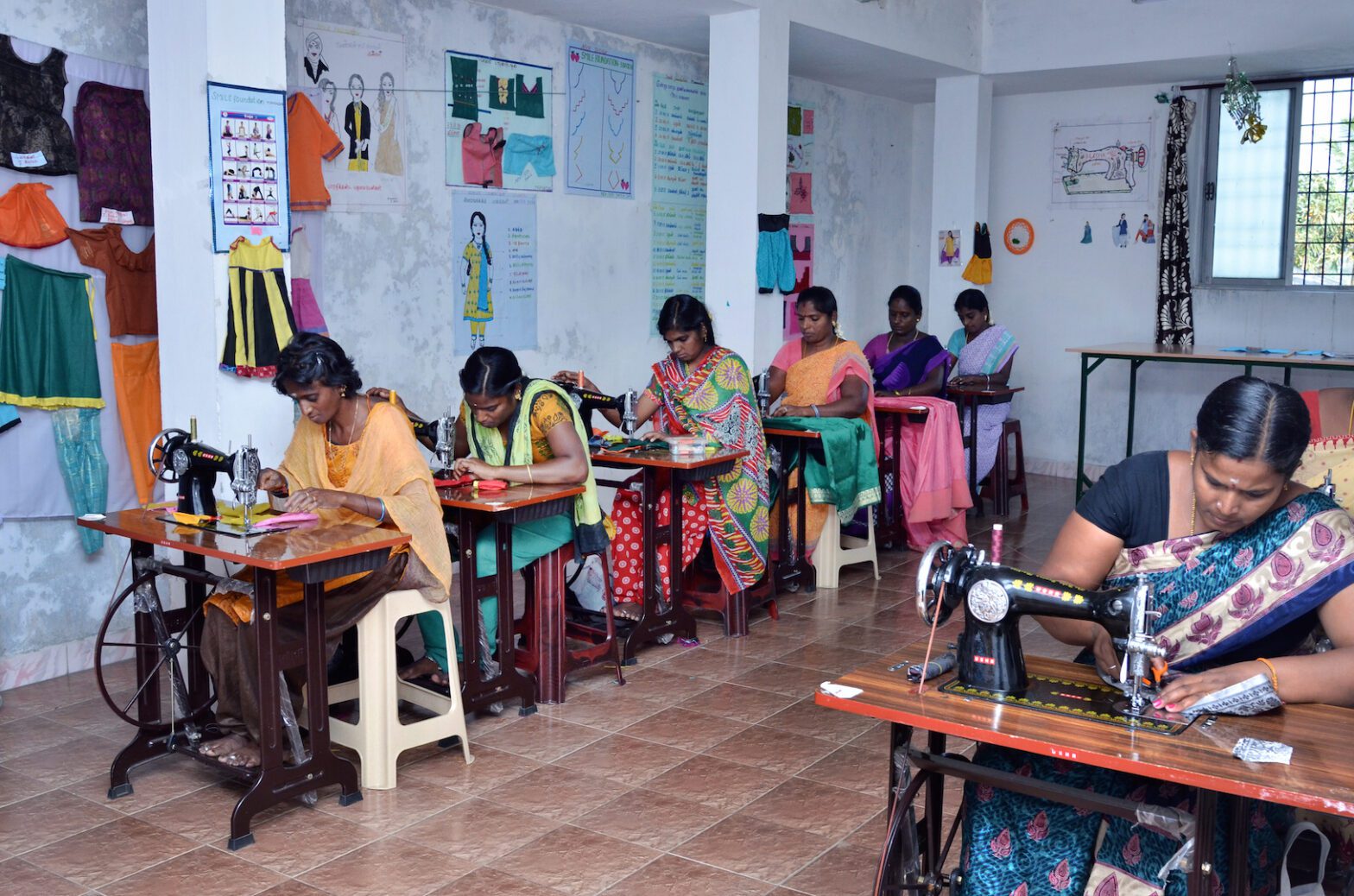
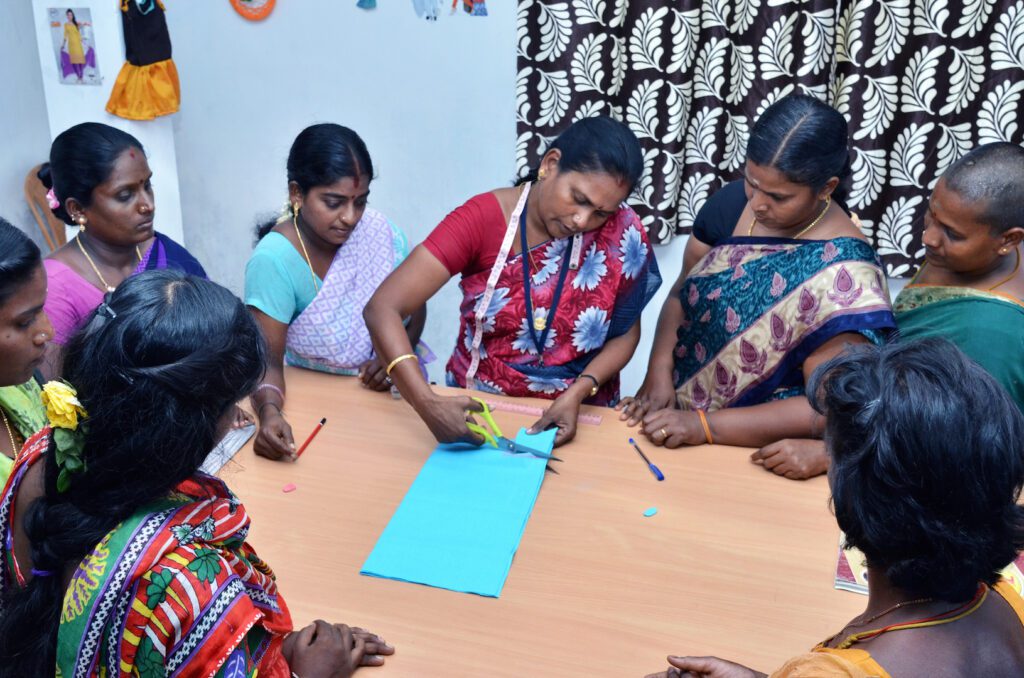
To give a helping hand to the inhabitants in rebuilding their lives, Smile Foundation in association with PepsiCo Foundation launched a community development and rehabilitation programme in Mamandur and 11 other villages of Kanchipuram district, Tamil Nadu. One of the major highlights of the intervention was the Mamandur Vocational Training Programme, which encouraged women and girls from the village to enroll for a 3-month skill training course in tailoring and sewing so that they can have a dignified and independent livelihood.


SCH 1290
Aiding by the hand – the trainer tutors women at the centre


“Initially I was apprehensive about joining the vocational training programme as women in our village only work as daily wage laborers at construction sites or stay back and look after their homes. Girls don’t get to study or train to get a job. When I attended my first class at the training center, I felt so good about myself that I was also capable of learning a skill and earning a decent income. With time I gained confidence in my abilities and as I practiced more, I could see a good future ahead for me. Once I completed my course, I joined a garment factory near my village. When I took my first salary home, my father proudly said I am more than a son for him”, shares a teary eyed, smiling Mamta. She hopes to open her own tailoring shop soon.


More than 235 women like Mamta from 12 villages in the district enrolled in the first two batches of the vocational training programme and successfully completed the course. Many smiling faces could be spotted during the convocation ceremony when the women graduated from the programme and were felicitated with certificates. To motivate and encourage the women in this new phase of their lives, and to give them a little extra support, they were gifted with a sewing machine each. The whole community, including dignitaries like Hon’ Minister of State for Industries, Thiru MC Sampath and Hon’ Minister of State for Electricity, Excise & Prohibition, Govt. of Tamil Nadu, Thiru P.Thengamani, came together to congratulate the women on their achievement and wished them good luck for their future. The women in turn shared their stories and experiences, and the confidence with which they spoke left the audience speechless.


“I don’t know what was harder – for me to lose my husband, or for my daughters to lose their father. Life did not allow us the time to even grieve. We were thrown out of the family home, where we had lived with his brothers’ families. Penniless, I roamed around with my daughters for days, asking for food and help. After a month, I got my first job at a tea stall. From then on, I started doing part time jobs, which would also give me some time for my daughters. But the pay was very less and survival was difficult. I would have endured the suffering, if it had not been for my children. I could not bear to see them hungry and sick. When I heard about the vocational training course, I decided to join. I had to spend more time away from my daughters, but it was for their good. Now I have finished the course and have also got a sewing machine. In the first week only I got five orders. This is a new beginning for me and my daughters”, shared P Vineetha, one of the successful women trainees under the programme.


Most of the women who completed their courses have found jobs at tailoring shops and garment manufacturing factories like Mamta, or have begun working from home like Vineetha. There are many who have joined the programme after getting inspired from the success stories of the women who have now become independent, confident and able to merit a secure and dignified livelihood. Indeed, the villagers of Mamandur have not only successfully overcome the aftermath of the floods, but have also found a positive hope for a better future.

Categories
Insights

Will Budget 2018 Allocation on Skill Development Create Enough Livelihood Opportunities?

Eighteen million: This figure constitutes the unemployed population of India! According to a NITI Aayog official, educated unemployment encompassing youth may be as high as 20%. Around 30.8% of India’s population aged between 15 and 29 years are NEETs (not in education, employment or training) as per a World Bank report. Will Budget 2018 fund allocation create enough livelihood opportunities?


The National Skill Development Corporation has trained thousands of youth under ‘Skill India’ initiative, a government funded program. Only less than half the candidates trained under this program could get jobs during the last two fiscals. Under the ‘Pradhan Mantri Kushal Vikas Yojana’ scheme, 30.67 lakh candidates were trained or undergoing training across the country until the mid of 2017. Out of this, 2.9 lakh candidates were successfully placed. The ‘Make in India’ project was launched to create entrepreneurial opportunities, employment, and thereby boost the economy. But it is yet a long way to go. Besides, the Modi government, after assuming office, created about 823,000 jobs. But is this number sufficient?


Only 10% of India’s total working population is equipped with vocational and technical education and training. The need of the hour is the creation of a competent workforce to be at par in the global market. How? India’s education system should be improved with focus on quality and skill development so that ‘employable graduates’ are churned out. With the roll out of Budget 2018 and considerable funds allocated for skill development and improving the quality of education, we hope enough jobs are created with creation of an equally competent workforce who can productively participate in nation building.


Key Initiatives under Budget 2018 for Livelihood Opportunities


  • Training of youth
  • Establishment of skill development centres in every district of India
  • PhD fellowships to be given to 1,000 BTech students under Prime Minister’s Research Fellows (PMRF) scheme. This will help stop brain drain and facilitate creation of technically skilled faculty, who will also be tuned towards research
  • Investment of Rs1,00,000 crore in next four years, major part of which will be utilized to step up investments in research and related infrastructure in premier educational institutions. For funding this initiative, the government will suitably structure the Higher Education Financing Agency (HEFA)
  • The government has taken major initiative in setting up institutes of eminence. As declared by Finance Minister Jaitley, 100 applications have been received by the govt. from public and private institutions towards giving shape to this initiative
  • The government will set up a specialized Railways University at Vadodara
  • Setting up of two new full-fledged Schools of Planning and Architecture is in the government’s agenda
  • Establishment of 18 new SPAs in the IITs and NITs as autonomous schools
  • Govt. to improve quality of life in 115 aspirational districts across India by investing on skill upgradation, education, and other social services sector.
IMG 1652
A livelihood training centre of Smile Foundation in New Delhi.


Pradhan Mantri Kaushal Vikas Yojana (PMKVY)


The Pradhan Mantri Kaushal Vikas Yojana was launched two years ago as a skill development initiative scheme by the Govt. of India. The program has been directed towards providing quality training to probable and existing daily wage earners besides giving them monetary awards and rewards. National Skill Development Council (NSDC) is the driving agency behind this program. Training programs have been developed on the basis of National Occupational Standards (NOS) by various Sector Skill Councils (SSC). PMKVY scheme has a target to train 1 crore Indian youth in between 2016 to 2020. 306 Pradhan Mantri Kaushal Kendra have been established for imparting skill training to the youth. This Budget 2018, the government has allocated considerable funds for setting up a model aspirational skill centre in every district of the country.


Generation of Employment


Finance Minister Jaitley during his address in the Parliament on Budget 2018 has emphasized on the creation of 70 lakh formal jobs this year. The govt’s focus, according to him, has been directed towards creation of job opportunities. As aforementioned, several measures were implemented during the last three years. To carry forward this momentum, the Government will contribute 12% of the wages of the new employees in the EPF during the next three years. This shall be applicable for all the sectors. Amendments in the Employees Provident Fund and Miscellaneous Provisions Act, 1952 are underway. Women employees shall majorly benefit from this initiative.


Big fund allocation this Budget 2018 in the textile sector will boost employment opportunities in general. The Finance Minister declared allocation of Rs.7148 crore in this sector. Furthermore, significant allocation of funds in MSME and SME segments will facilitate creation of livelihood opportunities for many.


Proper implementation of schemes should be the priority for India to be a competent nation. More job opportunities – a superior India in the making!


Categories
Partners In Change

Children of Today Plant Trees to Better their Tomorrow

Since the beginning of our existence, humans have been interacting continuously with nature. Like every other living being on our planet, we have evolved under the care of Mother Nature. We are creatures who belong to the natural ecosystem just like all the others. Spending time in nature rather, than man-made environments improves life significantly. We need to educate the future generations to create and maintain a cleaner, greener and better tomorrow. Smile foundation has joined hands with Tropicana and the celebrity chef Vikas Khanna to do exactly this.


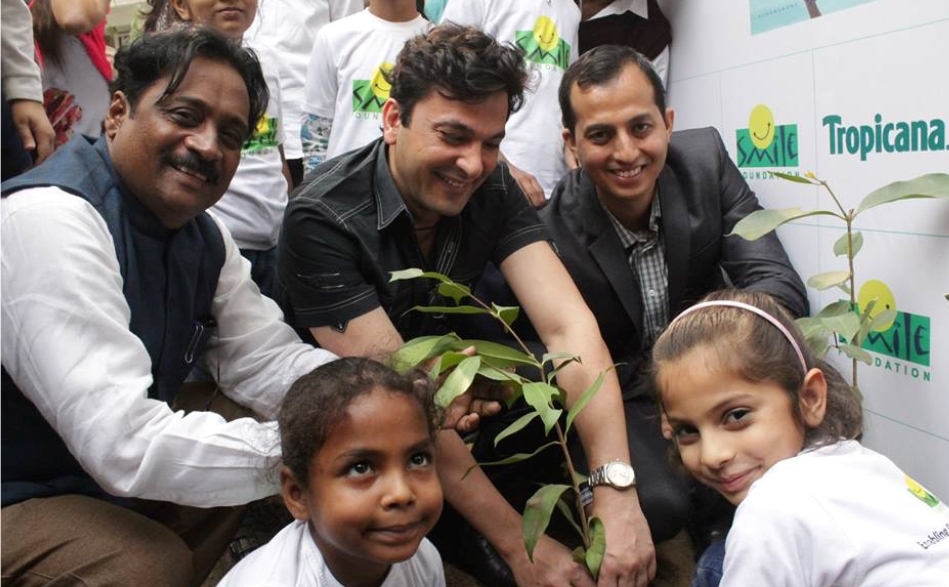
The Tropicana Gift A Tree Initiative was launched in the fall of 2017, a time of the year where most of the capital suffers from the effects of the smog and pollution, which envelop it. The poor who cant afford luxuries such as air purifiers and humidifiers suffer more. Were they surrounded by trees, nature’s air purifiers, they wouldn’t even feel the absence of such comforts. Keeping this in mind children from Smile Foundation’s various Mission Education centres participated in Tropicana’s Gift a Tree initiative. Smile Foundation’s Goodwill Ambassador Vikas Khanna planted trees with the children. He also unveiled his new book for children- A Tree Named Ganga.


“For me, trees have always been an inspiration as they teach us to give without expecting anything in return. So, I’m happy to join ‘Tropicana’s Gift A Tree’ initiative that embodies a powerful thought of gifting back to nature. I’m excited to share this experience of planting trees with children from Smile Foundation, who are our future generation. Through the story ‘ A tree named Ganga’, I’ve made an honest effort to help children understand the value of staying humble, and the essence of giving.” Said Vikas Khanna.


planting trees 2
Children form Smile Foundation’s Mission Education centre in Delhi planting trees.


Children who have always had access to proper formal education are taught about how planting trees is going to create a better environment for them to live in. From a young age, they know that greenery keeps the air pure and the soil fertile gives fruits and vegetables and adds to the beauty of the land. Underprivileged children on the other hand, are so overwhelmed with the need to meet the basic needs of life, as are their parents, that they cannot learn such valuable knowledge.


Smile has joined hands with Tropicana to now not only educate the children in Mission Education centres in academics, but also have added environmental education to the list of things these children will learn. The children are learning about how they can play a part in fighting pollution by planting trees. They are taken out on excursions where they plant up to 500 trees. Children from other schools around have also joined in the efforts. Smile Foundation, along with Tropicana’s Gift a Tree initiative is encouraging children to become ambassadors of greenery and harbingers of a better lifestyle in the future.

0%