
Categories
Insights

Online gaming and Cyber safety for children

The Covid-19 pandemic era will be known as an era where humans adopted technology without any qualms. Fortunately technology has evolved to a level across the globe which enabled people to adopt & adapt with the situation of working from home.  There has been a radical transformation in the way we work, the way we communicate and the way we learn. Offices moved online, e-commerce industry received a massive boost, digital content creators kept the Instagram Reels buzzing and product companies moved online to ship their products once the logistics sector was back on it’s feet. Another aspect which gained prominance along with all this was cyber safety.


Since the pandemic led to the shut down of schools, team Child For Child decided to e-connect with its school patrons. The team wanted to continue with its quest to inculcate empathy amongst children from privileged schools through online initiatives.  While interacting online with students, teachers and parents, the team realized that it would also have to start focusing on children’s mental wellbeing. Thence sprung the idea of organizing webinars on multitude of topics, some of them being Cyber safety awareness and Yoga for Peace.


One of the most transformational changes was viewed in the education sector. Not only did the classes move online, there was a surge of EduTech companies that flooded the market with their online edutainment programmes. Social Media organizations jumped the bandwagon with their handles and pages promoting all types of webinars and digital programmes with a gusto. Schools adopted Zoom, Webex, Teams and different online applications to conduct classes online. Those who could, increased the wifi connections in their homes and doubled up on their gadget purchases.


While the education industry was going through a 360 degree makeover, one disturbing trend that caught the eye was the uncontrolled spread of the tentacles of the digital gaming industry. Products of this industry initially proved to be a boon for children and young adults who could not step out of their homes in the initial days of the lockdown to indulge in sporting activities. In the beginning it seemed like a good way for children to ward away their boredom. But in the long run, there was a noticeable upswing in addiction of children as young as 8 years to games like Robolox, Among Us and Fortnite.


As students began spending anywhere from 4-10 hours on digital gadgets Team Child for Child felt the need to organize sessions on Cyber Safety Awareness across schools on a regular basis. A lot of focus was given on cyber bullying and cyber self-protection. Over time a need for organizing sessions dedicated to self-protection during Gaming was also felt. The focus pf Team CFC in the sessions for 10 year old students has primarily been on making them aware & wary while playing online games.
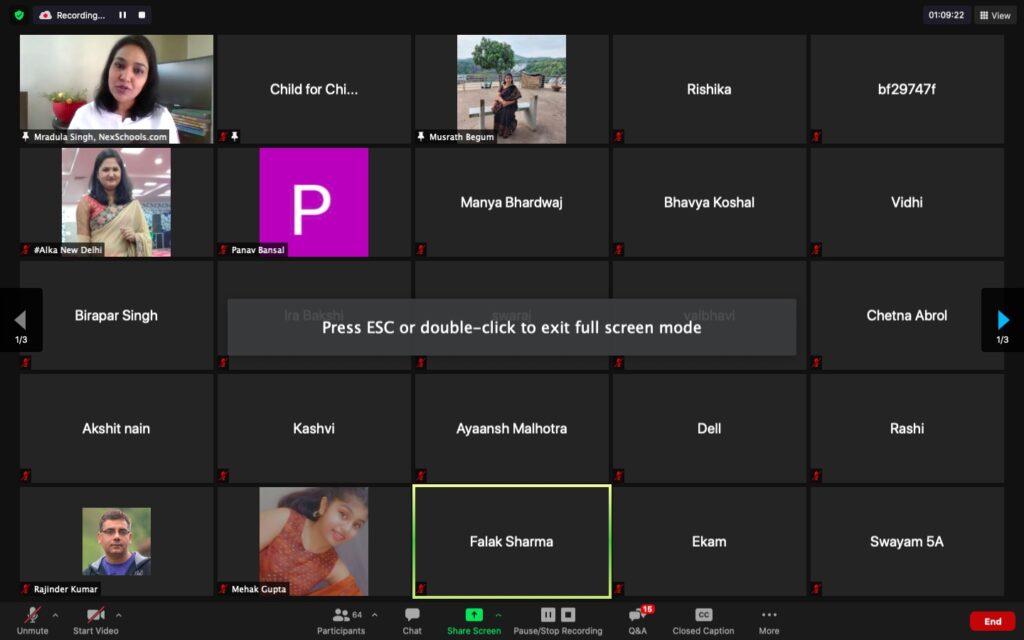
 

Cyber Safety session


To most of the students the first advice was to Research on details like Age classification and the level of violence and strong language being used in the games, before they even downloaded the games. Secondly they were advised to not download any game that was available for free. A proper check is to be conducted by parents on platforms for downloading games like Apple store, Google Play store, XBOX , Nintendo & PlayStation. Students should also be careful before Uploading personal details. Parents’ details should be shared for receiving all types of notifications. The next and probably the most important alert was towards their online gaming buddies and the chats that they participate in. Often gamers on various platforms create Chat groups and once a bon homie sets in among the gamers, young ones often share personal details inadvertently which could be misused.


One Mantra that works well online ..”if not required do not accept &/or share”! While we always discourage children from getting onto online games which are age inappropriate, it would be a huge help if their guardians also step up. Parents & guardians need to play a much stronger role by monitoring the games their wards play or the online activities they are involved in. Regular checks and conversations with their wards can go a long way in their cyber safety.


To know more about child for child visit https://www.smilefoundationindia.org/childforchild.html
Categories
In The Spotlight

National Youth Day: Empowering the Nation’s youth

“Youth is the best time. The way in which you utilize this period will decide the nature of coming years that lie ahead of you.”- Swami Vivekananda


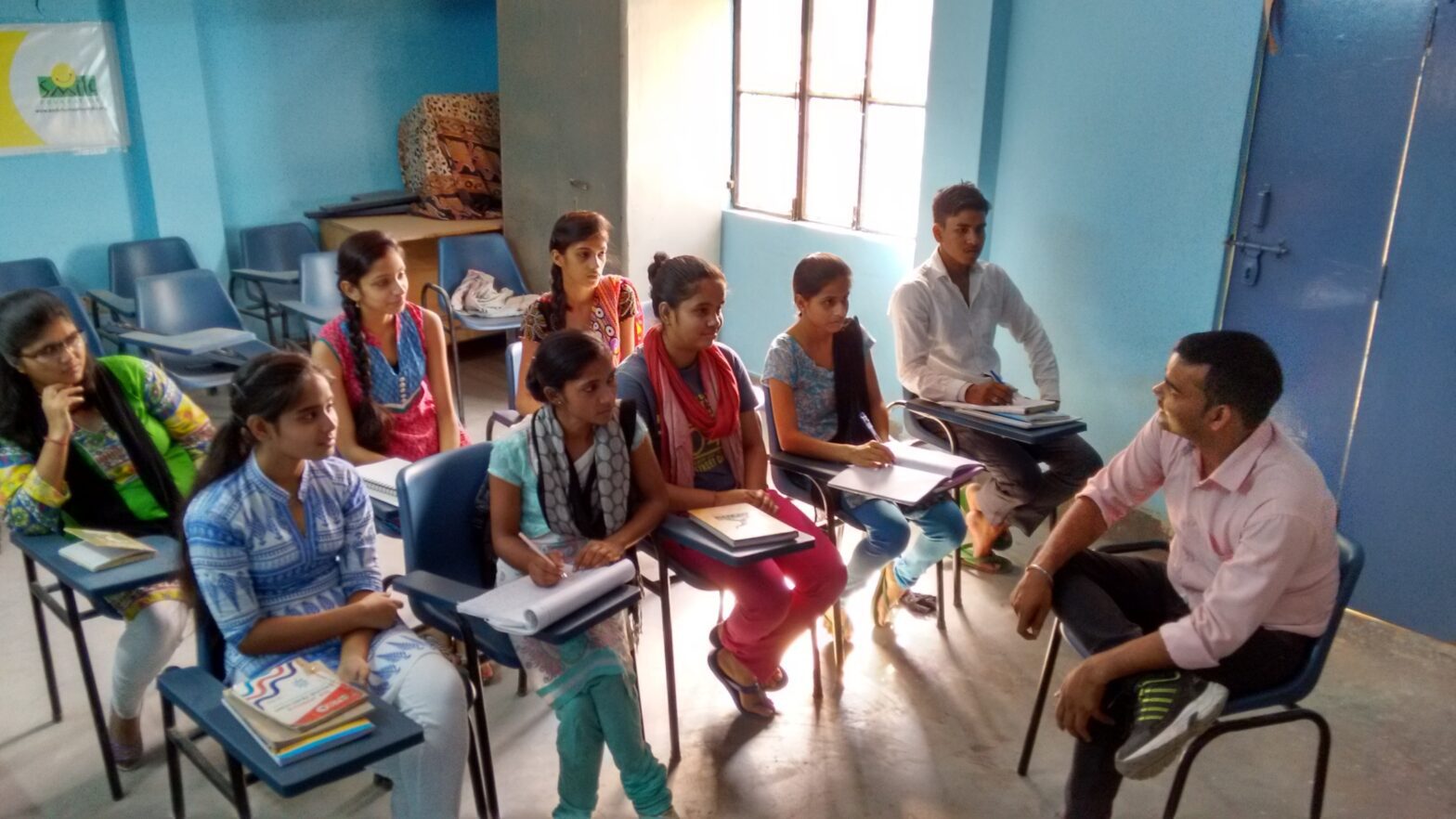
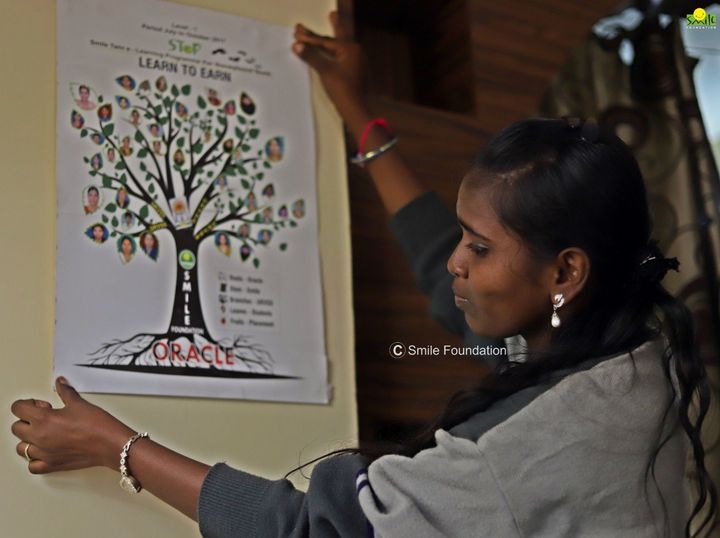
National Youth Day 2021 is celebrated every year on 12th January to honor the teachings and ideals of Swami Vivekananda. Vivekananda was vocal about the importance of education and empowerment of youth of a nation as an important part in the process of nation-building. Smile Foundation through its Smile Twin e-Learning programme for youth aims at creating a pool of young and independent people, from the underprivileged section, through skill enhancement in tandem with market requirements. It is an effort to bridge the gap between demand and supply of skilled manpower in the fast emerging services and technology sectors of modern India.


– Kalyani (STeP trainee) says,


“I think real strength is that which helps you take tough decisions and follow through. Such is the story of Kiran Bedi. She is a true inspiration for me, not just because she is strong, but because she became a strong woman despite facing so many struggles and restraints.


Kalyani 1


After passing out from high school, I did not have the option to continue higher studies. I had to let go of my dream of becoming an IPS officer. Coming from a poor family is one of the biggest restraints, especially for a woman. So, I decided that if I had no choice but to contribute to the household, I will do my best. I also wanted to acquire as many skills, save up and continue my studies. I enrolled myself into the Smile Twin e-Learning Programme and started the skill training course immediately. There was no looking back from then on. After a few months of progress, my teachers told me they were truly happy with my hard work and dedication. They were sure of my success and an opportunity for a job placement.  


I work hard to be able to help my family financially. As soon as I land a job, I’m going to start planning for further studies. Today on National Youth Day I have promised myself I won’t let the world tell me I should stop dreaming because I am a woman. It’s a long road, but I am not afraid to take this journey anymore.”


To meet the market demands and to continue providing opportunities to the youth during the Covid-19 lockdown the first batch of Smile Twin e-Learning Programme of capacity-building sessions for the healthcare sector was started.


The programme is relentlessly working towards creating livelihood opportunities in the rising health sector, where young students are provided with training sessions to be employed as General Duty Assistants & are also trained on other core employability skills. More than 1500 students are currently being trained through 40 centers in Delhi NCR, Bangalore, Chennai and Pune.


-Vazida Begum (Step trainee) says,


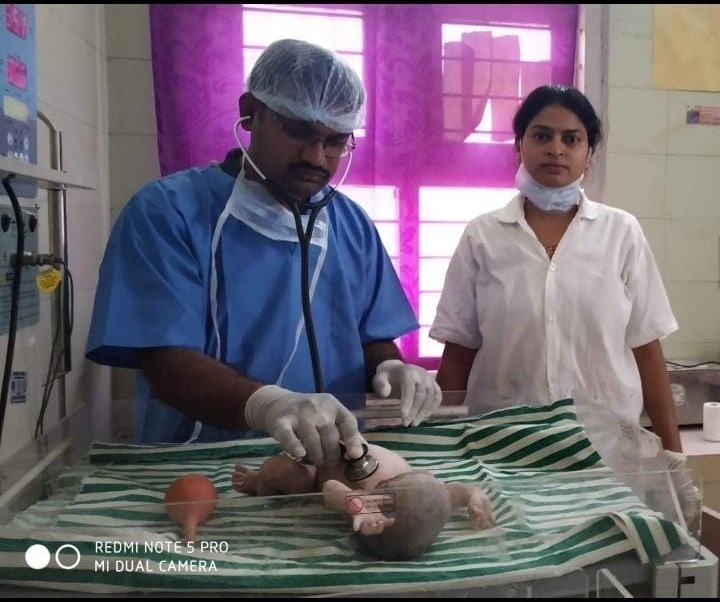
 “I belong to a poor family. My father is a rickshaw puller and my mother makes beads to sell. When the pandemic stuck both of them lost their livelihoods. In the initial few days we survived with whatever savings we had but we had to something more, something concrete for the future. My sisters and I decided to enroll for the Smile Twin-e Learning programme of Smile Foundation to train as General Duty Assistants.


Vazida Begum 2 1


At a time when people were scared to go out of their homes we went out to get trained to serve our society. We had to face a lot of discrimination but we did not give up. Now I work as a Nursing Assistant at a hospital in Bengaluru taking care of patients and my sisters are following my footsteps and are undergoing training to become GDAs. Our parents are very proud of us.”


Smile Foundation’s STeP programme is aligned to the objective of gainful employment for the youth. It is working towards building a digitally skilled workforce from less privileged youth that is prepared to face the new world thrown open by the pandemic. More than 50,000 young women and men have been trained so far through Smile Foundation’s STeP centres across India.


To know more about the STeP programme visit https://www.smilefoundationindia.org/e_learning.html

Categories
In The Spotlight

Implementing Early Childhood Education in the grassroots

Agrassroot organization has the advantage of knowing people, culture, and political environment and can take the innovation and better implement it on the ground. Grassroots initiatives are community-based approaches created to address problems at a localized level. Moreover, projects backed by local organizations can quickly gain momentum because they are generally enacted by people in local communities. In a country like India a lot of the population is rural based and dependent on agriculture. There is a great need to work on various issues at the grassroots level. Creating awareness and sensitizing the population comes first. The importance of NGOs working for early childhood education at grassroots specifically in this context takes priority.


Education for Meaningful Progress


Education is the backbone of any grassroot campaign. Only an educated society can make meaningful progress. It is important therefore to raise awareness about issues such as education for children from an early age. There is a need to communicate effectively why it is such a concern. A higher level of visibility garners more support locally. Information can be used as power to make a difference, thus increasing the collective impact of the group. NGOs like Smile Foundation, working at the grassroots level can act as a catalyst. A lot of change can be bought in rural areas and urban slums. There is a section of population who either have first generation learners or have children of school going age. Most of the children are still out of schools. They mostly engage in daily wage earning.


Implementation of NEP for Early Childhood Education


The implementation of NEP 2020 pitches for a “5+3+3+4” design. It corresponds to the age groups 3-8 years which is the foundational stage. Next comes the age 8- age 11 which is the preparatory stage. 11-14 is the middle stage and 14-18 is the secondary stage. This change in policy brings early childhood education (also known as pre-school education for children of ages 3 to 5) under the ambit of formal schooling. NGOs working for education therefore will now be key players in remote, rural settings. They will thus act as catalyst to bring children of age 3-5 under the folds of education.


WhatsApp Image 2020 12 28 at 4.48.44 PM


India is a vast country with a huge demographic and geographic divide. Hence, NGOs working for education play a key role in bringing people together. They play an important role in supporting the most vulnerable children access their Right to Education through innovative ideas. Firstly, by holding awareness workshops with parents they ensure that children are sent to school. Secondly, parent committees are formed to ensure that schools are run properly and that the children receive proper care and nutrition.


Awareness and Sensitization


The country is currently facing dynamic challenges in the realm of education. There is a need to implement policies in accordance and generate awareness amongst key stakeholders. Firstly on the importance of receiving education, imparting education, mobilization of society and engage communities for the delivery of education that is both productive and sustainable and in time can secure gainful employment for the beneficiary. It is the amalgamation of efforts by the government, not-for-profit organizations, societies, communities, corporates and individuals which can lead towards a successful approach in stitching customized and pragmatic solutions.


Smile Foundation an NGO working for education reaches over 48,000 children through 156 Mission education centers in 21 states every year. Cluster classes, remedial classes, mainstreaming children to formal schools are some of the activities done under Mission Education.  


To know more about Smile Foundation’s initiative on education visit https://www.smilefoundationindia.org/me/

Categories
In The Spotlight

Innovations in Education: Shifting to Online Education

A lot has changed in the education system in the past year. Due to the pandemic and the subsequent lockdown There was a sudden shift to online education and learning . More emphasis was laid on the mental health of students everywhere. In India the New Education Policy with its new innovations announced a new era for education system with a lot of policy changes as opposed to the last education policy. However, amid all these additions and changes the focus remained same; quality education for all and to make both school and college education more flexible and multidisciplinary to help bring out the unique capabilities of each and every student.


Shifting to Online Education


The pandemic has put restrictions on the classroom-based teaching and learning. Schools, colleges and educational institutions have now moved to online learning. Along with students teachers have had to prepare for this transition. In the face of a global crisis such as Covid-19 teachers globally have come together to ensure that the process of teaching and learning does not stop.


Changes in Education System Around the World


The Finnish education system is considered to be one of the best in the world. The system directed schools to ensure and arrange education services in exceptional conditions. The Finnish National Agency for Education guided schools to plan and organize different kinds of flexible learning arrangements for the children. Children have been learning at home with access to all course material. Similar arrangements were made in the United States and the United Kingdom. In countries like Belgium, China and Japan educational programmes are being broadcasted on national television. This was done to emphasize the importance to continue home education. Schools were provided with teaching resources and teaching plans. Social media was used to announce how to access those resources.


New Education Policy 2020


The National Education Policy 2020 has been a blessing in disguise for the changes in the Indian educational sector. Both online education and NEP 2020 are the need of the hour. The action points in the policy promises to establish a curricular framework for the schools. The framework will focus on promoting creativity, critical thinking, and innovation. The policy includes more transformational features like focusing on vocational studies, developing high-quality study modules. It will also dedicate units for online and digital learning and provide textbooks to teachers as well as students. These materials will be useful for homeschooling with a lot of self-learning components.


Innovations in Mission Education centers


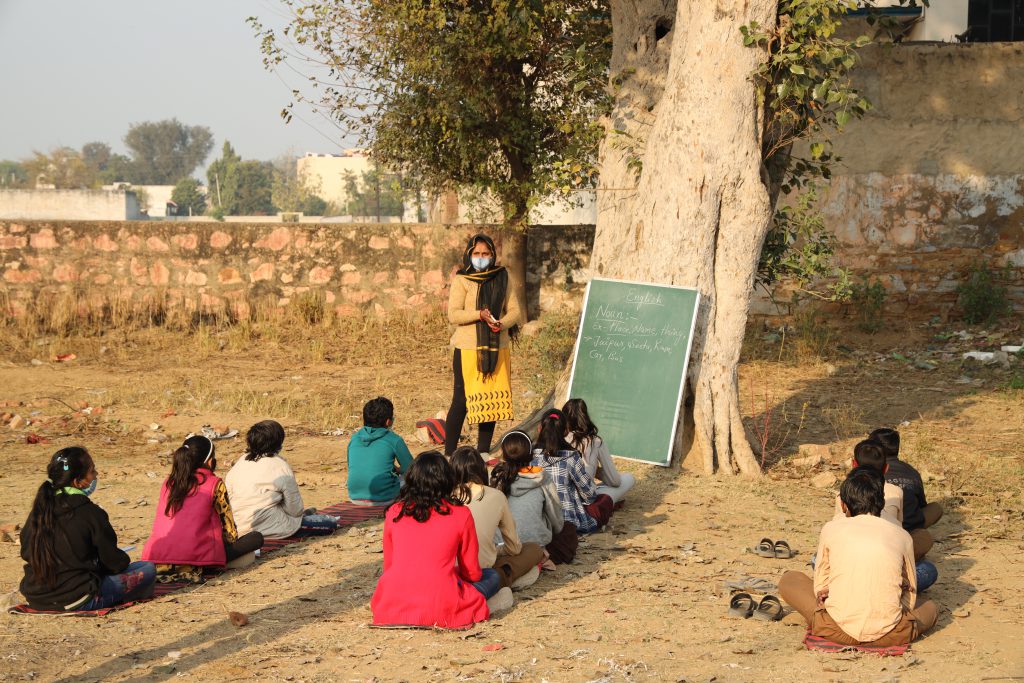
Educators from the Mission Education programme made sure that no child was left behind in their studies. Teachers ensured that parents were also sensitized about the importance of letting their child continue with their education. Regular visits to villages and parent-teacher meeting were conducted to encourage children and parents alike. To make it easier for the children many teachers prepared notes and delivered them to the students. Teachers ensured that children did not drop out due to lack of resources.


Arupota 06 1024x675 1


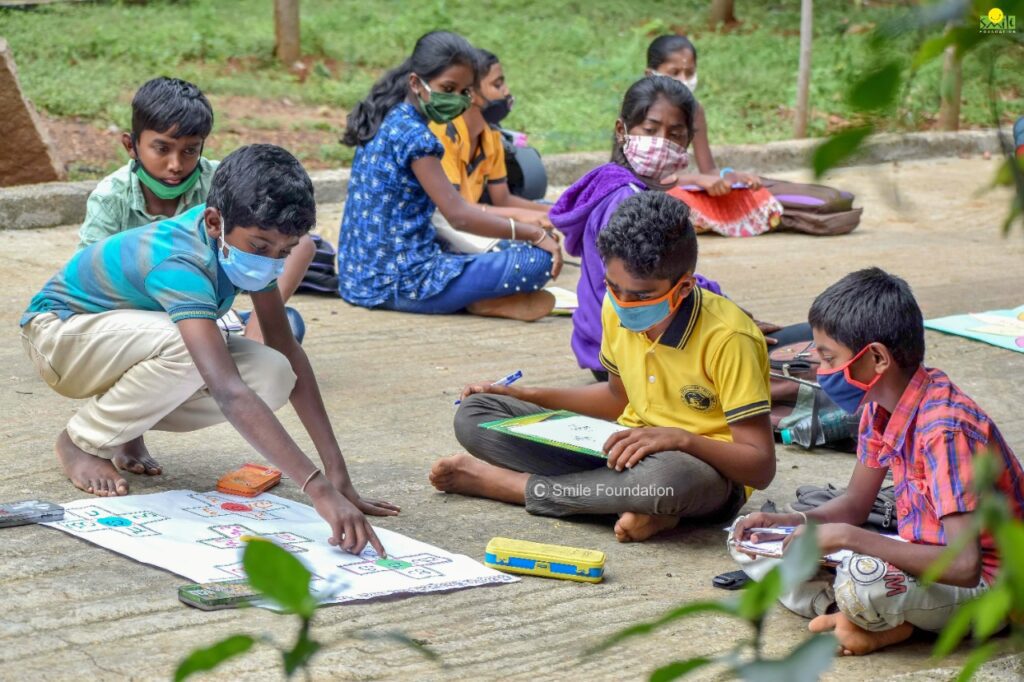
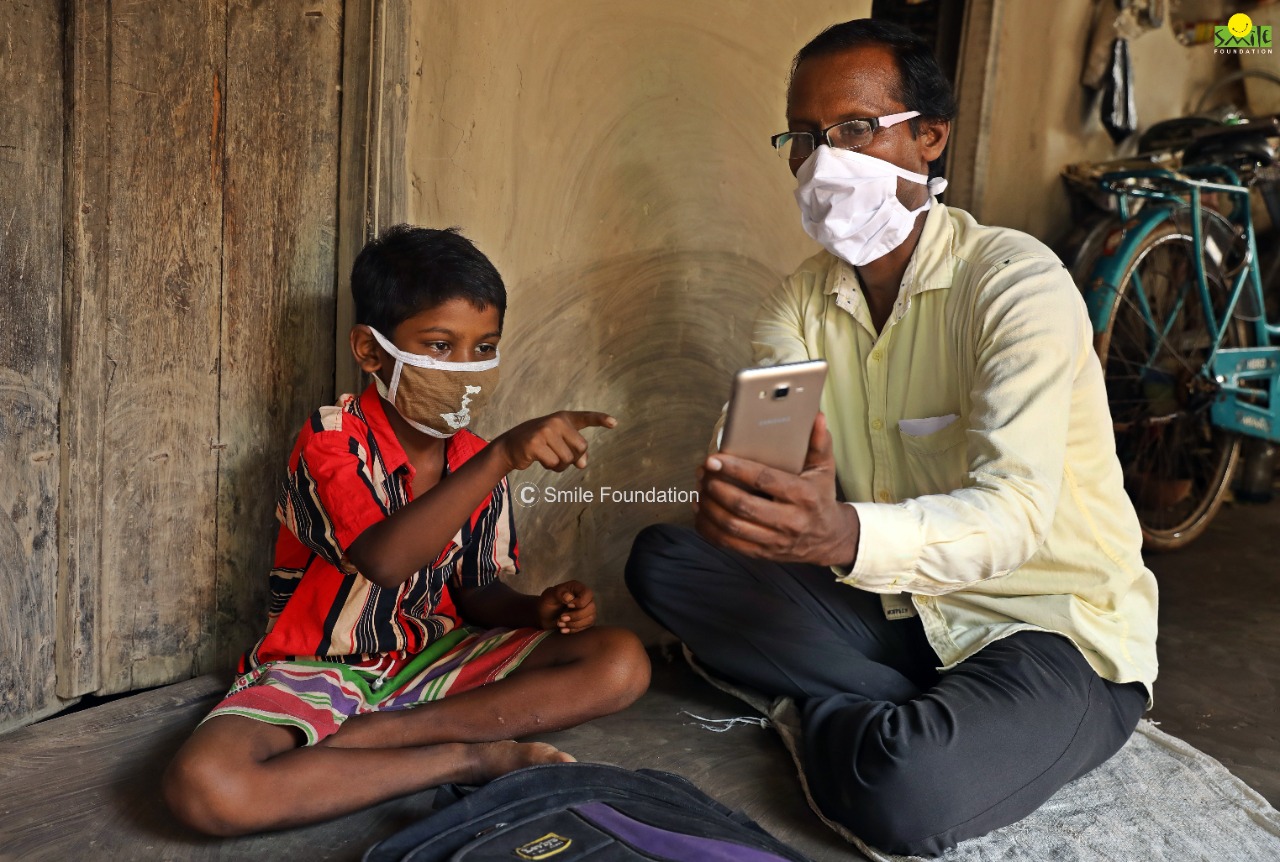
Teachers from Mission Education centers of Smile Foundation conducted sessions for parents to help their children in online learning. Thus, regular online classes were held for children and notes and lessons were shared through the medium. In places where children did not have access to online mediums teachers began to conduct cluster classes. The Mission Education Centers explored every possible method to stay in touch with students coming from poor communities. In order to carry forward with the approach of blended learning, teachers made sure that lessons, homework and assignments continued. Despite all odds and there was no hindrance in the education system.


Smile Foundation’s Mission Education programme ensures that no child is left behind in the journey of education. Through its relentless work on ground the programme has been able to benefit more than 232,000 underprivileged children so far.


To know more about Smile Foundation’s initiative, Shiksha Na Ruke visithttps://www.smilefoundationindia.org/me/

Categories
In The Spotlight

Digital Fest and awareness for child education

The year 2020 has been such a tumultuous year for not just the afflicted but equally so for child education and for the children who have been practically under lockdown for almost 10 months now. With their outdoor activities curtailed & their schools shut, their happy memories are getting replaced by morbid images of the pandemic. While some students have adapted very well to the changes and practically metamorphosed into tech geniuses, there were still some who do not have the necessary devices to partake online education. CFC team decided to surge ahead with their mission of inculcating empathy amongst the privileged children and getting them galvanized for supporting the cause of Shiksha Na Ruke, an initiative for child education.


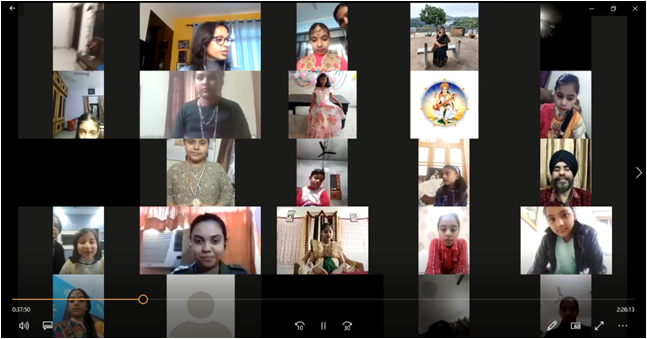
To put together an online fundraiser, the Child for Child team decided to organise a mini digital festival to say Goodbye to the year 2020 and raise awareness about child education, especially for underprivileged children. The two day digital fest over the 29th & 30th of December was also an attempt to get parents enthused about the mission of Smile Foundation and to apprise them of the work being done at the grassroots level  under the Shiksha Na Ruke campaign.


By the 22nd of December posters & event details were circulated amongst 4 schools, Swami Sant Dass Public School, Guru Amar Dass Public School, Cambridge International School & A I International School. The Principals of these schools too got caught in the fervor and ensured that their students participated in the contests with equal enthusiasm. Parents too felt that that this was the moment when children from within the confines of their homes could work for something that excited them immensely and slogged just as hard side by side to ensure that their wards put together their best performances. Children who were familiar with the Zoom platform immediately registered and started preparing for the contest day.


Picture4


Theme for day one Fancy dress contest was “Environment Matters”. Children were at their creative best when they came up with the most vivid costumes for the competition, and what was also apparent was the effort that had been made by parents to put together the look for their wards. Students worked hard over a week to make their costumes that reflected elements of nature. They focused on various aspects of Mother nature;  from the polluted rivers, the plastic pollution on this planet, the junk food that have replaced healthy diets, the trees that are being cut irresponsibly to noise pollution in our cities.


Theme for day two for the Song & Dance competition was Contemporary & Classical. Fancy numbers from movies were discouraged. The talent that was on display over the 3 hours of the event was phenomenal. It was heartening to see how beautifully students were using the room space within their homes to put up spectacular performances. Students picked up Punjabi Folk, Ghumar, Fusion, Tandav, Kathak, Thumri and Contemporary numbers as their choice of dances. The atmosphere created by students in the rooms where they had practically set up mini stages was stunning and the efforts made by parents were also visible. For the singing competition students chose Gurbani, Bhajan & patriotic numbers as their choice of songs for the competition. Students not only sang, they also played musical instruments like the Harmonium during their performance. In the 3 hours that went by it almost felt like a concert had been put together by these students.


To regale the audience during event recesses, students from DPS Bangalore, East and Lotus Valley International School, Gurgaon performed Live as well as shared their pre recorded performances.


Agastya Trikha on Guitar & vocals, Agrim Sharma on Guitar, Tanvi Kundri on Drums, Shreyas Subramaniam on Tabla, Tanisha Mathur on Piano,  Dhaiwik Naidu on Veena, Rahil SK on the Keyboards, Noel Jajo for his vocals and the combo of Mrunalini on Vocals & Varda on Guitar. Their performances were highly appreciated and added to the richness of the 2 –day event.


The digital fest went off smoothly and the judges for both the days Ms. Khushboo Singh from Jamshedpur for Fancy Dress competition and Ms. Rena Banik from Kolkata for Song & Dance competition too had a wonderful time doing their enviable task of watching, enjoying and sharing words of encouragement for the children. However, they definitely had a tough time arriving at the final decision for winners.


The winners for song competition were Shrey Thaper (1st position-Gurbani), Harleen Kaur (2nd position- Bhajan) and Nivi Thapar (3rd position- Patriotic). The winners for the dance competition were Prisha Duggal (1st position- Kathak Tarana), Maanya (1st position- Fusion), Shipra Tripathy (2nd position- Shiv Taandav), Angel Singh (2nd position- Fusion), Pranvi (3rd position- Thumri), Sukhleen (3rd position- Ghumar) and special mention to Jaspreet Aitan for his amazing bhangra performance.


The winners for fancy dress competition were Mayra Gaba (1st position- Ganga River), Aastik Gaba (1st position-Ozone Layer), Kavya (2nd position- Poly Bag), Harshika Kaul (2nd position- Reusing Newspaper), Harmanpreet (2nd position- Tree), Gurleen Kaur (3rd position- Plastic waste), Tejvinder Kaur (3rd position- Plastic bag) and Diya Gharu (3rd position- Tree)

The entire team of Child For Child too joined in from different parts of the country. The amalgamation of students and audience from pan India and the coming together of all elements for a special two day digital fest, have  left us at CFC feeling extremely motivated to organise an even bigger digital fundraiser event to ring in 2021 and raise awareness about child education at the same time.


Let us all hope & pray for a better 2021! Many congratulations to all Participants and Winners of the 2-day Digital fest!


To know more about Child for Child programme visit https://www.smilefoundationindia.org/childforchild.html
Categories
Partners In Change

Children spread the Christmas cheer!

The year 2020 has seen unprecedented situations unfolding before our eyes, disruptions in their truest sense have left their mark in every aspect of our lives, but life as we know carries on. The way with which children have been patiently dealing with the pandemic, the lockdowns, the so called new normal, as also adopting new technology, has been reflective of their indomitable strength of character. Whatever the situation, we need to remember that certain things are constant, and one such thing is the enthusiasm & fervour with which children participate in competitions. Children have adapted marvelously to the changes that impacted their education, their mode of education and their ability to physically participate in the umpteen activities that had been integrated with their daily routines. 


Cat D 1024x614 1


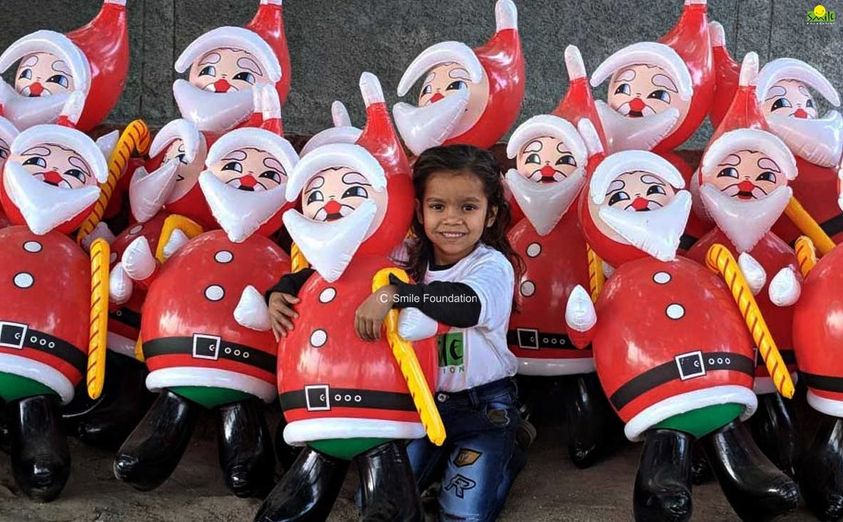
And so, it was time to muster up some competitive threads, weave in speckles of altruism and stitch together a festive bunting. Child For Child team of Smile Foundation decided that with Christmas 2020 round the corner, it was time to have some fun and bring out the celebratory spirit amongst children from across as many schools as possible pan India. 


The Annual CFC Christmas Fest started on the 8th of December all the way till the 20th of December. A Christmas themed poster making competition & Essay Writing competitions was put together for children who could participate by either making a poster &/or writing an essay depending upon the category they would fall in. The theme of the poster, draw a favourite fairy tale character or a favourite digital character next to a Christmas Tree and Essay competition based on the topic, “Your understanding of a Charitable Christmas” revolves around Christmas.


The winner for the poster competition in category A (KG-2nd Grade) were Vivaan Verma (1st position), Prabhleen Kaur (2nd position) and Anumegha Maitra (3rd position). In category B (3rd-5th Grade) the winners were Ojasvi Aggarwal (1st position), Kaashvi Mahajan (2nd position), Keertesh Sharma and Kriday Arora(3rd position). In category C (6th-9th Grade) the winners were Aditi Sharma (1st position), Somil Mahajan (2nd position), Arunika Varshney and Mohul Banerjee(3rd position). The category D (10th-12th Grade) winners were Prajit Deepak Naik (1st position), Samridhi Gupta (2nd position), S Ram Phutane (3rd position).


For the essay competition the winners for category A (6th-8th Grade) were Dhruv Dhingra (1st position), Evangeline Shekina (2nd position), Jaishree (3rd position). Winners for category B (9th-12th grade) were Anshika Prasad (1st position), Madhumitha Siddeshwar (2nd position) and Manya Sehgal (3rd position). Brinda Kari was the winner for the Digital Posters competition.


The jurors for the competition were Ms. Sangeeta Murthy for the Painting competition & Ms. Deepa Pal, juror for Essay writing competition.


To know more about CFC visit https://www.smilefoundationindia.org/childforchild.html
Categories
Nutrition

Importance of Nutrition for Children

A healthy nutritious diet is an essential component in the growing and developing years of children. It aids in building a strong foundation in the child with regards to staying healthy and imbibing good eating habits right from childhood. The 3 most important benefits of early childhood nutrition are; it helps in building immunity against various infectious diseases, ensures proper development of brain and other vital organs and improves a child’s activity levels and cognitive functioning. Therefore, proper nutrition for children is important as it sets the stage for them towards living a healthy and balanced life for the rest of their lives.

As per the Global Nutrition Report 2018 nearly half of all under-5 child mortality in India is attributable to undernutrition. Poor nutrition in the first 1000 days of a child’s life can also lead to stunted growth, which is associated with impaired cognitive ability and reduced school and work performance. Malnutrition in children occurs as a complex interplay among various factors like poverty, maternal health illiteracy, diseases like diarrhea, home environment, dietary practices, hand washing and other hygiene practices, etc. In the 2019 Global hunger Index, India ranks 102 out of 119 qualifying countries. With a score of 30.3, India suffers from a level of hunger that is serious.  Nearly 47 million or 4 out of 10 children in India are not able to meet their full human potential because of chronic under nutrition or stunting.

79206625 3077720088918605 8441862862871199744 o 1024x615 1

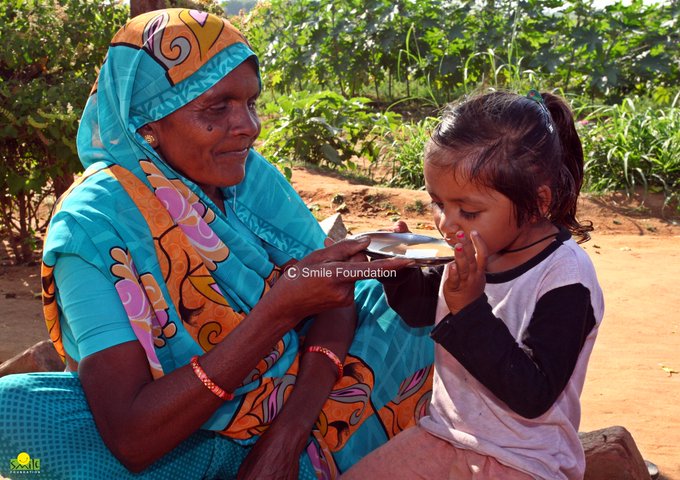
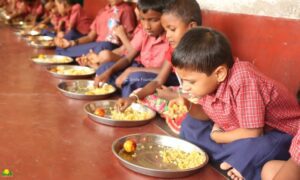
The Mission Education programme of Smile Foundation has initiated the campaign ‘Nutrition for Education’, wherein nutrition is provided to lesser privileged children, helping them get not only better health, but also better education, and other development opportunities.Smile Foundation initiated a nationwide awareness campaign on the importance of nutrition and health in underprivileged communities across India, with support from Yum! and Herbalife. Under this programme that is spread across Andhra Pradesh, Karnataka, West Bengal, Uttar Pradesh, New Delhi, Haryana, Chhattisgarh, Odisha, Bihar, Tripura, Maharashtra, Telangana, and Tamil Nadu, the campaign aims at sensitizing children, their families and communities, towards the importance of nutritious food, leading to better health, education and other opportunities for the children.  Through these projects Smile Foundation has been able to reach out to almost 4500 underprivileged children and provide one-time meal as per age specific Kcal value required.

The children belong to households where the parents are engaged as daily wage labourers, factory workers and other small scale entrepreneurs. With Smile’s nutrition program, children need not pack their lunch as they can have the freshly cooked hot meals at noon in school along with their friends. These delicious meals are looked forward to by the children as many a times; they do not have access to 3 proper square meals a day. Interestingly, there is an increase in regular attendance, decreased drop-outs and improved academic and over-all performance of children. Parents are contented and grateful that their children have access to a healthy and nutritious meal at least once a day.

Hence, a child’s healthy development is not complete without proper nutrition. Once the importance of good nutrition is instilled in a child, it remains with her/him in guiding him to live a positive, healthy and sustainable lifestyle.

To know more about the nutrition campaign visit https://www.smilefoundationindia.org/plate-half-full/

Categories
In The Spotlight

Sponsor Child Education For a Better Future

Education is one of the key components which brings growth and progress into society. When more people in a society are educated, they can provide valuable contribution to their environment. Education is a powerful agent of change. It drives long-term economic growth, improves health and livelihoods and contributes to social stability. Education is also essential to the realization of every one of the 17 sustainable development goals. Hence it is the duty of every individual to sponsor child education, to step towards a bright future.


There are 6 million children in India who are currently out of school due to poverty. The only way out for these children is through education. Education gives underprivileged children a chance to improve their lives, gain knowledge and acquire skills. But there are many who never see the insides of a classroom, who will never hold a pen to write or be able to read.


Many families do not understand the long-term benefits of sending children to school. Their immediate needs for sustenance outweigh the need for education. Hence, many end up doing petty jobs or household chores. It is important to understand that when we sponsor a child,, we are taking them out of the cycle of poverty.


When we sponsor child education, especially girl child education it helps improve the living conditions of a family. When a girl gets educated she has the chance to earn. More income means better healthcare and nutritionfor her and her family. It reduces the chances of girls getting married at a young age which in turn means she will not be a child herself when she becomes a mother. When an educated girl becomes a mother she is able to provide better care to her children at home, thus ensuring that her children are empowered. Educated girls and women are empowered to pursue their dreams of a better life. They have greater confidence and freedom to make decisions that affect their lives.

130549159 4084413574915913 3316509327027739814 o


Smile Foundation’s education programme Mission Education ensures that education reaches to the most underserved and underprivileged sections of the society. Currently there are 240 centres across 23 states of India providing education to more than 32,000 children every year.


To sponsor child education the first step is to sensitize the general masses about the need of such an activity.  When the privileged section of the society understand their obligation towards the ones who are less privileged only then can we bring change. The children living in the rural and urban slums of the country need urgent attention and it is our duty as citizens of the country to arise, awake and stop not till the goal is reached.


Sponsor a child’s education; help a child step into a bright future. When we support education we take a step towards a society which is equal and change the world for the better.

Categories
Insights

Importance of Educational NGOs in India

Education is an important component for the growth of a society. In India a number of children are deprived of education, most drop out due to poverty and girls seldom get a chance. It has become important for educational NGOs in India to intervene to reach the most remote areas and urban slums where the migrant population reside.  According to The National Sample Survey Organization’s 2017-18 household survey there are 3.22 crore out-of-school children in India (6-17 years). Seasonal migration, child labor, poor infrastructures of schools, lack of teachers, distance, lack of resources at home and illiterate parents are the major causes of children dropping out of school or not opting to go to school at all. When the pandemic hit the world at the beginning of 2020, it gave rise to more problems in education; confusion regarding continuation of schools amid strict lockdown rules, losing out on learning due to lack of access to online classes hit the underprivileged the most.


Educational NGOs in India work together with the government to realize the objective of universalization of Elementary Education. NGOs have a tendency to work in the grassroots of the society, in small locations to first achieve the impact on ground. Based on the principle of people’s participation NGOs work to improve education, social welfare, reduce poverty, and develop civil society. NGOs can be seen as alternative agencies which are working on ground to promote awareness, sensitize and to bring a change and improvement in society.


The major objectives of educational NGOs in India are to increase the number of school going children,developing other learning skills in local schools & communities, provide inclusive education to children with special needs and work as a catalyst to bring sustainable change in the lives of the children with a life-cycle approach of development.


JIT 2361 1024x683 1


Smile Foundation, one of the top educational NGOs in India is reaching children through its education programme Mission Education. Mission Education, started in the year 2002 has so far benefitted more than 232,000 underprivileged children. Through more than 240 centers across 23 states Smile Foundation is not just reaching the children but also the communities in which the children live. Through regular interactions parents are sensitized about the need and importance of education for boys and girls, abolishing child labor, opting for healthier habits. Community mobilizers and volunteers regularly visit these children to check on their progress and extra classes are provided to those students who face difficulties with their lessons. When schools were shut down to stop the spread of Covid-19, teachers from Mission Education children ensured through their hard-work and dedication that no child was left behind in their journey of learning. Parents were taught to assist their children to attend online classes. In remote rural areas of states like Rajasthan, West Bengal and Karnataka where people belonged to the most underserved sections cluster classes were introduced for children to continue their education. 


The importance of educational NGOs in India like Smile Foundation is immense as NGOs can change the face of India in the fields of primary and secondary education. It is the duty of every member of the society to contribute to the cause to make the initiatives of the NGOs successful and enable change in the society.

Categories
In The Spotlight

Role of NGOs in Childhood Education

The Covid-19 pandemic has led to the closure of institutions and schools subsequently leading to massive gaps in the education of children. In India alone, it has affected the millions of school going children living in rural and urban areas. To aid development from the grassroots it makes the role of NGOs in childhood education all the more important. According to an annual survey conducted by ASER (Annual Status of Education Report) many young children have not joined school. There is a sharp jump in the percentage of out-of-school children in the age- group of 6-10. This has gone up from 1.8% (in 2018) to 5.3% (in 2020) and among all children up to 16 years from 4% to 5.5%.


Why NGOs for Education are Important


The role of NGO for education in a child’s growing years under such grim conditions has become very crucial. There are numerous NGOs which have taken up the onus of education of kids. These NGOs also develop innovations that will improve the quality of primary education. The operations of an NGO in the grassroots level not only includes children attending school. It also helps by involving the community as a whole. There are villages and slums in India where many children are first-generation learners. They belong to underprivileged families of migrant laborers, daily-wage workers and their families seldom understand the importance of education. In such cases the role of an NGO for childhood education becomes important. They help sensitize families, involve the community and encourage the out of school children to go back to school.


Smile Foundation’s work in Education


Smile Foundation an NGO in India has been working in the field of education since the year 2002. The organization has so far benefitted more than 232,000 underprivileged children from underprivileged communities, reaching children in small villages of Nagaland to the urban slums of Mumbai and Delhi. Smile Foundation volunteers and community workers sensitize parents of children and community members.


The role of NGOs oj education is an important one


The vision of Smile Foundation is to work as a catalyst in bringing sustainable change in the lives of underprivileged children and their families, with a life-cycle approach of development. Through its intervention Mission Education the organization has been able to bring many underprivileged children under the folds of education. These children are currently unable to attend formal schools due to poverty, inaccessibility, health issues, etc. The Mission Education centers also aid in the development of other learning skills for example gardening, keeping the environment clean. There are many Mission Education centers which provide inclusive education to children with special needs. Special emphasis is given on girl child education and women education, so that they and their families get empowered.


The pandemic and the subsequent lockdown affected the education of many children who study in the Mission Education centers of Smile Foundation. To mitigate the crisis the Shiksha Na Ruke initiative was introduced recently which is providing underprivileged children access to continuous learning through the online mode.


Role of NGOs in child education is very important. To fulfil the same, proper support, resources and mobilization of the local communities is required to bring about a great change in the field of primary & secondary education in India.

0%