Categories
In The Spotlight

Choose to Challenge: Stories of Strength!

“The most effective way to do it is to do it.” –Amelia Earhart


When women are empowered and girls are educated great things countries prosper, children are educated, and communities thrive! Through its work in the grassroots communities Smile Foundation works with women and girl children to empower them with education, healthcare, skill training, etc. Following are some stories of the strength of women who choose to challenge the norms of society. They are still working to change the way society functions and stepping on one milestone at a time.


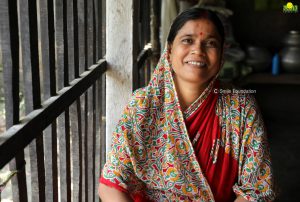
Mother Leads the Way


Cholona Pal
 

158261322 4329644477059487 5595975755639872047 o 300x202 1

“I have always felt imprisoned by financial constraints. I was unable to complete my education because there was always very little money left with my Maa-Baba after feeding the children. Health concerns took the rest of it.

I don’t want my children to suffer the same fate. I don’t want them to feel like they can’t dream because of money problems. If children are imprisoned by illiteracy, they will never be able to know how big this world is, how beautiful the people are, if they don’t come out of these shackles.

As a mother, I choose to challenge and sent my children to school. I always encourage my children to dream, because the way dreams can motivate you to break your barriers, nothing else can.”


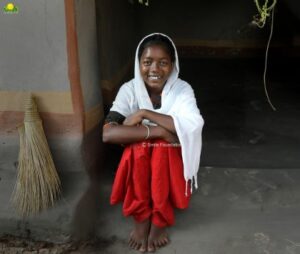
A Daughter Aspires to Shine

Neelima Murmu
 

157545305 4332241243466477 4636368103151799937 o 1 420x355 1

“My father is a mason. My mother stitches Sal leaves at home to help with household expenses. And I still aspire to become a doctor one day, because why not?

I belong to a family that puts in a lot of effort to make little money, feed each other, and sleep on a full stomach every night. We have basic requirements to lead a simple life, but that does not mean I have never thought about how I want my life to look like when I grow up.

As a girl, I have been taught to make do with whatever luck hands me down, but why should I accept that? I also have the right to dream big. I also have the right to make more of my potential, receive a quality education and give back to society. Why should a girl stop if she has taught herself to dream?

Luckily, my parents want to support my education, but as much as they want that, the pandemic has made life very difficult for us. I will continue to dream despite difficulties because I choose to challenge and I know that hard work always pays off, be it for a boy or a girl.”


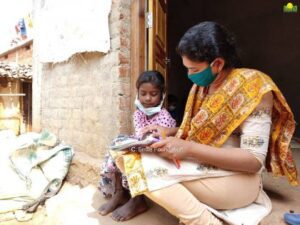
A Teacher lights the paths of her Students

Mina Chinchuan
 

157596877 4326872360670032 1881154659599311057 o 420x315 1

“Every time I look at my students, I feel proud. Proud that they are trying so hard, despite a million challenges that they face every day.

I began teaching little children from the age-group of 4 to 12 when I realized the importance of these formative years in an individual’s life. At this age, is it appropriate for them to learn the caste barriers that divide them from the rest of the world? No!

I was privileged in the sense that my parents decided to educate me despite the question of caste or gender. But many children in the village of Kuthurla never learn alphabets. I was determined to change that.

The kind of marginalized communities that they come from, as a teacher, I have to fight against all ignorance to bring these children to school. So when lockdown happened, I thought all my struggles would go in vain. No child would continue their education after their parents get a chance to employ them in working and earning money. Even children as young as 6 or 7 years olds would be forced to drop out because there would be nothing to eat at home.

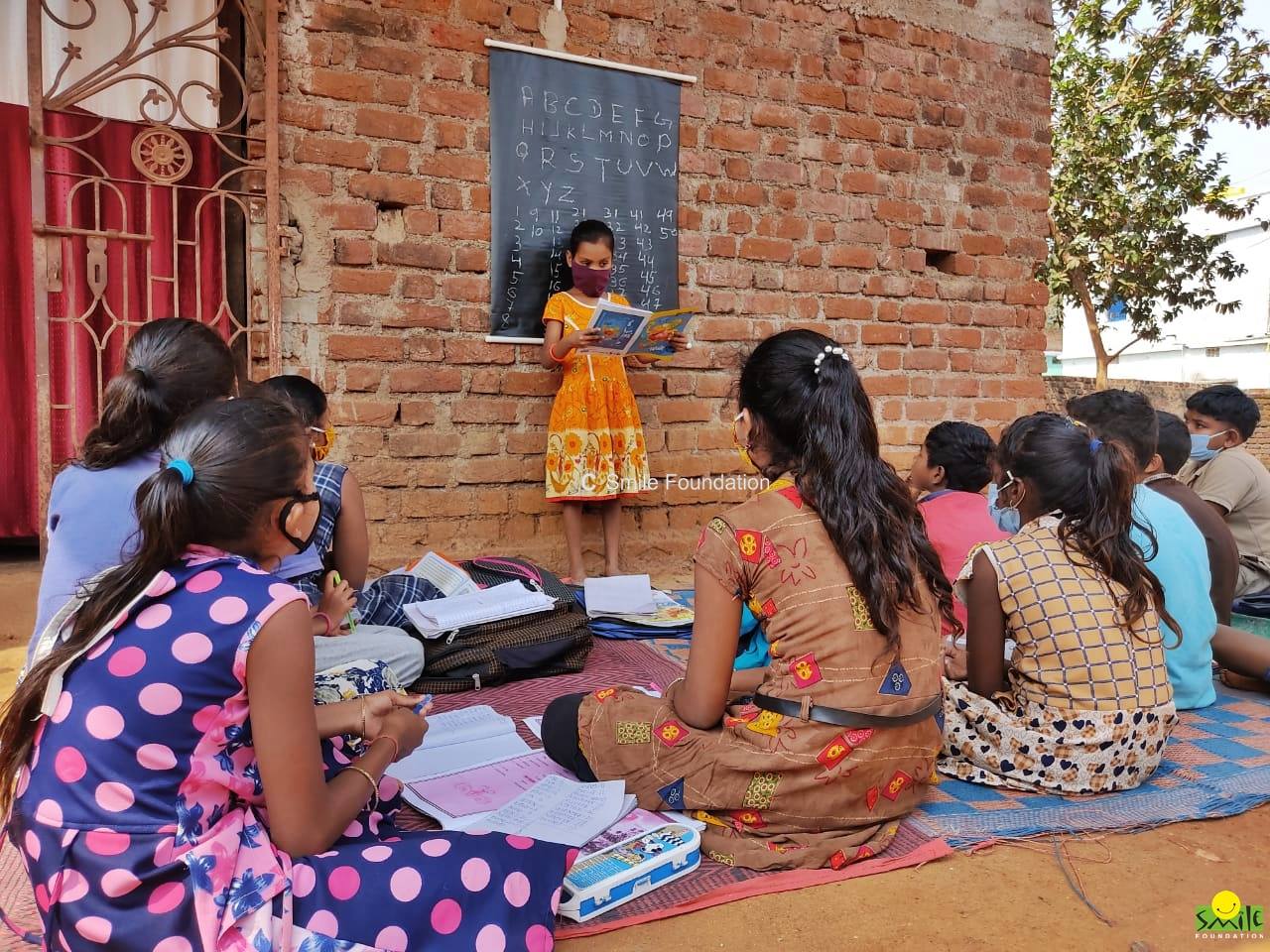
But before too much damage was done, I was able to start cluster classes in each village, once a week. With proper precautions in place, we started where we left off months ago. To my utmost surprise, the children were more excited than I was!”


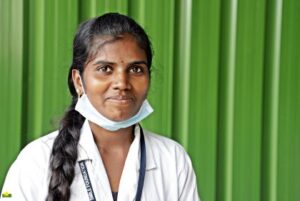
A Community Worker Mobilises and Sensitizes

Swapna
 

72472149 2910244182332864 6703166904955043840 o 420x282 1

“I was raised to believe that extending care to those who need it the most is the biggest act of kindness. I have always believed in it with all my heart. As a result, my biggest desire was to become a doctor someday. During the course of achieving my dream, I found an opportunity to work in close contact with the community. I faced the harsh reality and realized that working as a doctor would not fulfill the true purpose of my life. I wanted to help people in all ways possible. And feeling the pain of those who struggle every day to pay the fees for a doctor changed my perspective towards life. I met people who had decided to suffer in silence, instead of giving away their precious little daily wage for healthcare or for anything else.

I decided that these were the people who needed me the most. For once I choose to challenge the norms of society. I started visiting remote communities in far-reached rural areas and inaccessible slums. I listened to their problems and started extending help. My job now is to mobilize such people and sensitize them into seeking proper healthcare provided free of cost through the medical unit of Smile On Wheels.

I regularly communicate and keep a tab on the health and well-being of almost all the people of the community. I have made many new friends here, and I have become quite attached to most of them. At the end of the day, when I count the number of people I could help, it gives me the greatest satisfaction. So now when someone asks me- “What do you do?”, I reply with pride- “My job is to help people!”


To know how Smile Foundation helps empower women and children follow https://www.smilefoundationindia.org/swabhiman.html
Categories
In The Spotlight

Making STEM a part of Childhood Education

The pandemic put a sudden halt to everything.  The world had to reorient. The existing systems had to change in the present context of the COVID-19 crisis. For a developing nation like India, a halt in the development process; be it economic or in the education sector was non-negotiable. The draft of the new Science and Innovation Policy was released in 2020 for public consultation. Sustainable development, social inclusion, economic development, environmental sustainability, and science-based learning in childhood education were stressed upon through this policy.


STEM in School Education


Rote learning creates stagnation in the learning process. It does not have a place for creativity and growth. A move towards science, innovation, and technology will usher the much-needed changes in the education system. Experimentation, exploration,  inquiry, debates, questioning, application, and reflection, leads to theory building. New ideas are created which is important for the developing brain of a child.


Science, Technology, and Innovation Policy


Within the new STI Policy, online learning platforms will be developed using Information and Communication Technology (ICT). This will be done to address the issue of accessibility and also to promote research and innovation at all levels. Teaching-learning centers (TLCs) will be established to up-skill faculty members which in turn will improve the quality of childhood education. This will bring significant changes in the education for underprivileged children. They are deprived of resources that are not available in local schools and miss out on advanced learning. Many times they lose interest because of a lack of innovative learning in classrooms. Introduction of STEM Learning can be a way of generating interest and bring children back to school. Robust STEM education will help create critical thinkers, problem-solvers, and next-generation innovators. It also helps build confidence in children.


How will the STI Policy benefit STEM Education


WhatsApp Image 2021 02 26 at 2.33.47 PM


THE STI Policy aims to bring about serious changes through short-term, medium-term, and also long-term mission mode projects. Promoting research and innovation are its main aims. School, university, and vocational education are the main focus areas of this thematic group. The policy also recommends steps to accelerate research and innovation in higher educational institutions. To not only improve the education system but also teaching-and-learning through research. It also aims to make education at all levels more inclusive and connected with the economies and societies of the world.


By promoting the establishment of tinkering labs for children this policy gives a boost to STEM Education in schools. When blackboard teachings turn into teaching through virtual screens, it will give children access to a plethora of information.


Science Technology and Innovation for the Betterment of the Society


Science, technology, and innovation (STI) are universally recognized as key drivers for poverty eradication. STI also promotes access to learning and is considered essential for achieving the Sustainable Development Goals (SDGs) and Millenium Development Goals. While it will help in increasing productivity, industrialization, economic growth, it will also lead to the creation of proper jobs. Moreover, STI will promote health, health-seeking behavior, and access to essential drugs. There will be better food security in addition to the promotion of renewable energy to mitigate climate change.


Smile Foundation Interventions


Smile Foundation, believes that quality education can support children coming from difficult socio-economic backgrounds. An opportunity for holistic growth must be presented to every child. As a part of childhood education STEM education is an integral part of the curriculum at Smile Foundation’s Mission Education centers. Students are encouraged to experiment and question.


To help underprivileged children continue their education visit https://www.smilefoundationindia.org/me/

Categories
Insights

Education for Poor Children

India is one of the largest and fastest-growing economies in the world. On one hand, when we are making such economic advancements there is still a section that is deprived of basic needs. According to a report by UNDP, India has lifted 271 million people out of poverty between 2006 and 2016. The improved assets in the country include cooking fuel, sanitation, and nutrition for the poor. But is it enough?

Children and Poverty

Millions of children in India are still involved in daily wage-earning, poor children are not educated. They do not receive proper nutrition. 373 million Indians still continue to experience acute deprivations. Most of these deprived populations are children, the future of the country. A joint report released by UNICEF and International Labor Organization in 2019 stated that 30.3 percent of extremely poor children live in India. The nation has been successful in reducing cases in the Multidimensional Poverty Index (MPI) but the core issues remain the same. Education for poor children, reducing drop-outs from schools, food security, and child mortality are the burning issues that the country is currently facing.

Illiteracy in India

The Right to Education Act 0f 2009 has been instrumental in reducing the number of out-of-school children in India. Yet, there are 6 million children still out of school in India. The Covid-19 pandemic induced economic insecurities have led to an addition in the number of Out of School Children. A number of children have started helping parents with household chores, daily wage-earning, or taking care of younger siblings. The pandemic has made the situations of girls more vulnerable. Spending more time at home leads to an increase in their involvement in household activities and in many cases they also fall victims to child marriage.

Drop-outs, and Problems in Education System

A recent ASER Report has stated that many young children have not joined school after the reopening and there is a sharp jump in out-of-school children in the 6-10 age groups. This has gone up from 1.8% (in 2018) to 5.3% (in 2020) and among all children up to 16 years from 4% to 5.5%. One primary reason for this may be the financial constraints parents are facing due to the pandemic.

School-going children also often face the problem of poor learning levels. This obstacle in learning is the outcome of the absence of a strong foundation. This foundation is usually provided by quality early childhood education. Another problem is the lack of qualified teachers and the absence of quality teacher training.

Smile Foundation Interventions

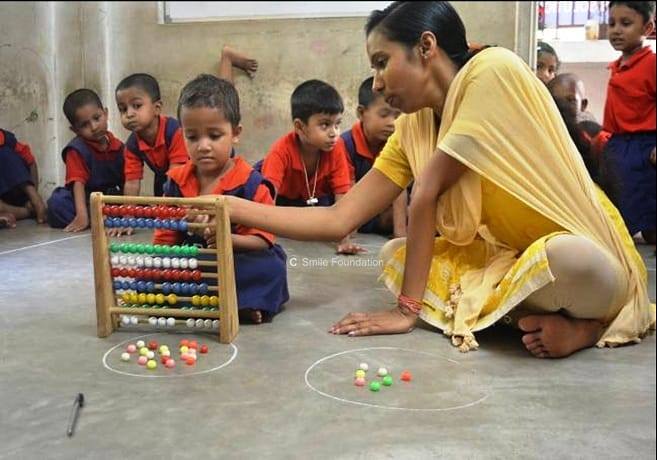
Smile Foundation’s Mission Education programme works for the education of poor children in urban slums and rural areas. Since 2002, more than 232,000 children have been directly benefitted through the program. Smile Foundation’s educational initiatives include Pre-school (3-6 yrs]), Non-Formal Education [6-14 yrs non-school going], Remedial Education (6-14 yrs school going), and Bridge Course [14-18 yrs drop-outs]. Nutritious food is provided in the Mission education centers for children to encourage them to attend school.

142875012 4213934451963824 4908626115809418460 o

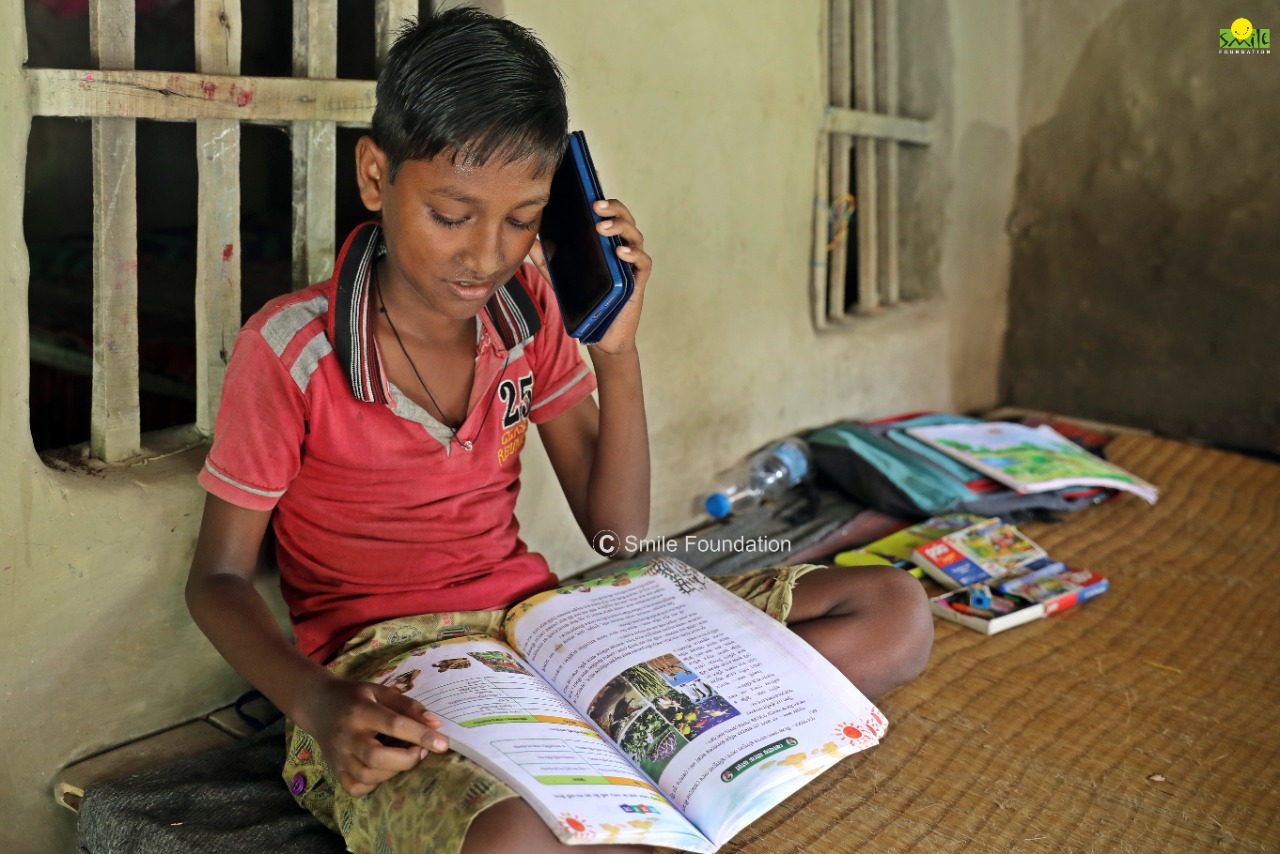
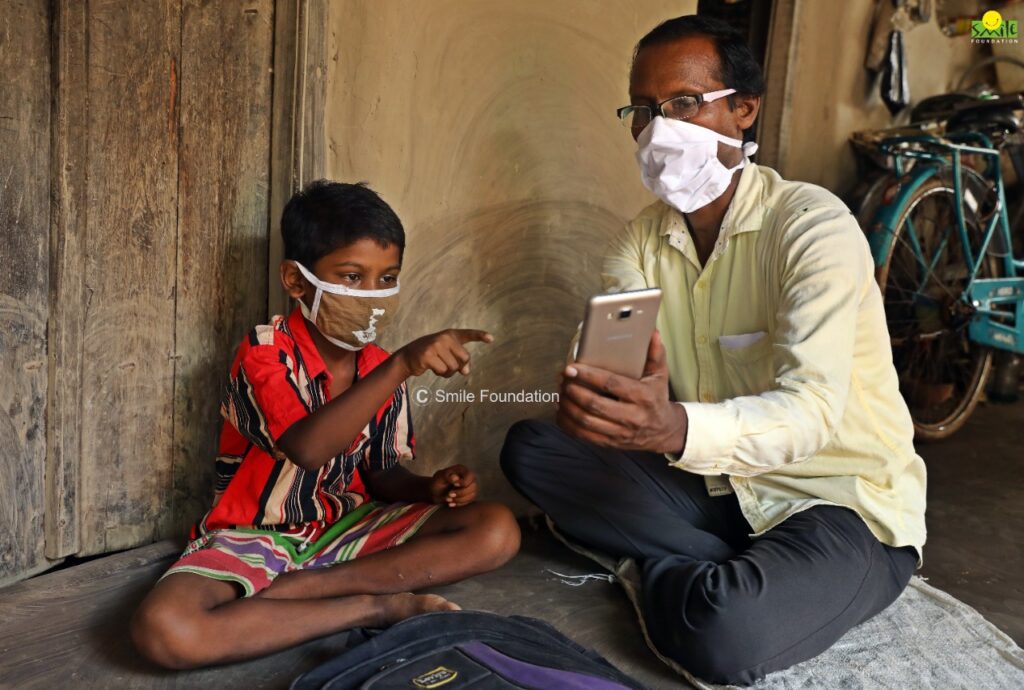
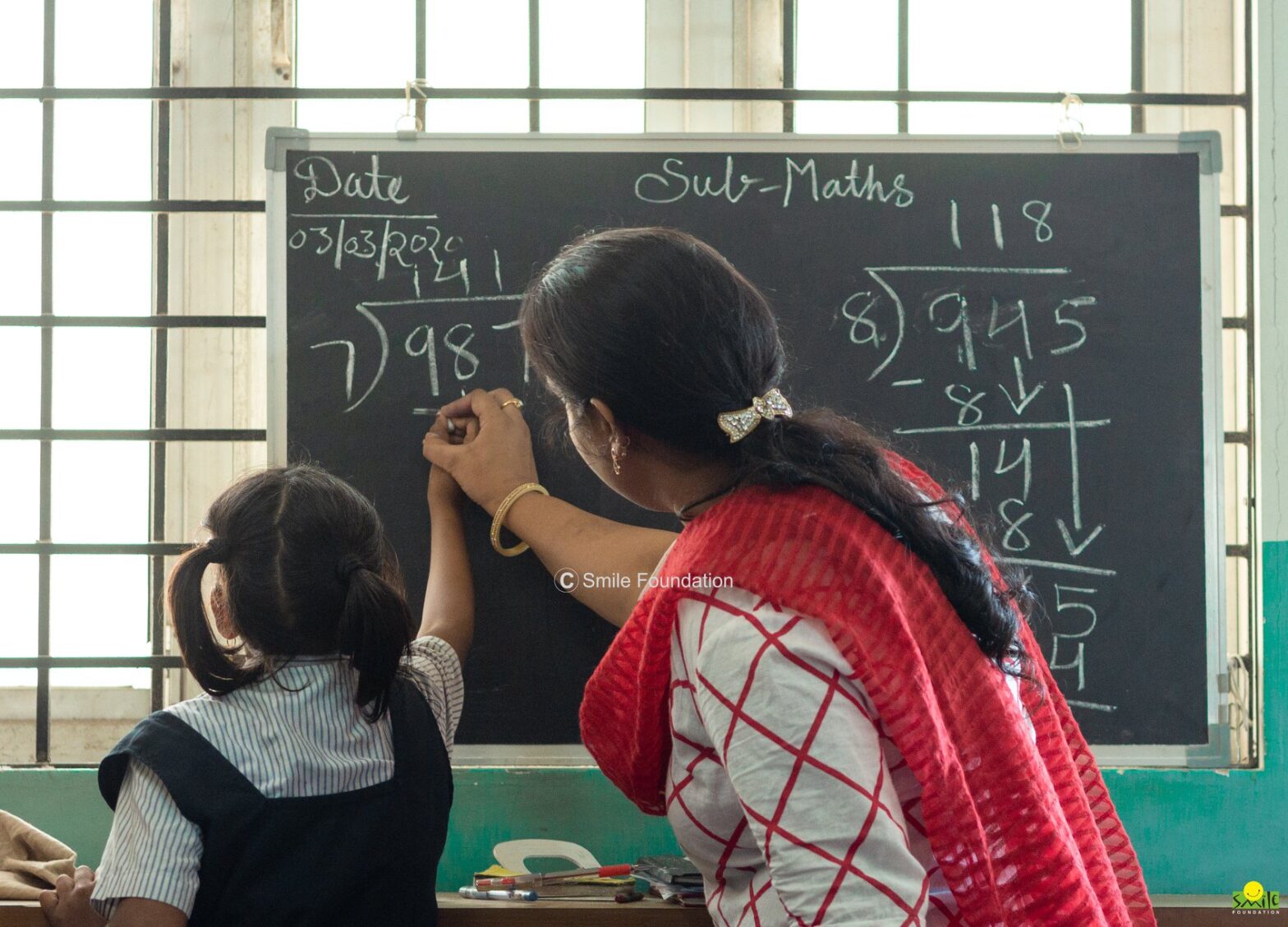
During the pandemic teachers from Mission Education ensured that no child was left behind in their studies. Classes were conducted online for children. For the poor children who did not have access to digital devices, teachers delivered notes. Cluster classes were conducted once the lockdown was eased. Teachers’ training and counseling sessions for parents were also conducted.

The key to development lies in educating children. Partnerships between the government and other stakeholders can fast-track the process of education for poor children. Improving access to education, counseling of students and parents, innovations in classroom teaching and learning process can aid the condition of education in India.

Categories
Partners In Change

Early Childhood Care and Education

Early childhood is defined as the period from the birth of a child till he/she is eight years old. Research in Neuro-science confirms the importance of the early years in a child’s life. 85 per cent of brain development already takes place by the time a child is six years of age. The environment in which a child grows up also highly influences them during this age. Early childhood care and education (ECCE) also refers to a range of processes and mechanisms that support, sustain and aid in the holistic development of children. Care in the initial stages in a child’s life is also considered as a critical window of opportunity to enhance his/her development.


Importance of Elementary Education and Care


Childhood care and education in the initial years is not just preparation of a child for primary school. It helps to build a solid and broad foundation for lifelong learning and well-being through the holistic development of a child’s emotional, social, cognitive and physical needs. It aims to nurture children to become caring, capable and responsible future citizens. Children should be are cared for and they should be educated from an early age. It offers an entry point and platform for improving social equity and inclusion, human resource development and gender equality. Research indicates that ECCE can be a powerful tool for helping to break the cycle of poverty in many countries. Inclusiveness and social equity in education are its two major takeaways. When the programmes are accessible to all sections of a society only then will it prove beneficial.


Young children grow and learn the most when they receive attention, affection and stimulation in addition to good nutrition and proper health care.  Investments in early childhood care and development through supportive care, early learning activities and improved school readiness increase the chances that boys and girls will complete primary school.


Playing and Exploring while Learning


There should be more emphasis on playing and exploring for young children. A formal school environment is not enough for learning. Playing and exploring helps them learn and develop social skills. It also helps children to grow emotionally, physically and intellectually. The process of play is a powerful, multifaceted learning experience. When children play it involves exploration, language experimentation, cognition, and the development of social skills.  The underlying goal of early learning is alsoto ensure disadvantaged children enter school on time and are cognitively, socially and emotionally ready for school.


New Education Policy and ECCE


132077468 4117252178298719 7568130207894313088 n


In a significant shift, The New Education Policy pitches for a “5+3+3+4” design. It is corresponding to the age groups 3-8 years which is the foundational stage. The next stage is 8-11 which falls under preparatory. 11-14 years of age which is the middle stage. And 14-18 years of age is secondary stage. This move is a significant shift from the 1986 policy which pushed for a 10+2 structure of school education. Accordingly this brings early childhood education also known as pre-school education for children of ages 3 to 5 under the ambit of formal schooling.


The high priority assigned in the policy document to early years can in fact give a strong backing to effectively translate policy into practice. Ten years after the Right to Education came into force, let us take the much-needed steps to give every child the right to learning and education.


Smile Foundation through it’s Mission education programme aims to bring every child to school. The programme gives special emphasis on children who are young and out of school. To know more visit https://www.smilefoundationindia.org/me/

Categories
In The Spotlight

Online Learning for Children, The New Normal

The repercussions of COVID-19 triggered a strong wave of digital transformation across the world in a very short period. Schools were temporarily closed by a majority of countries in the world. This impacted more than 91 per cent of students. The pandemic disrupted learning and altered the lives of school going children, especially in the most vulnerable and marginalized communities. Gradually, schools and educational institutions shifted to online modes of learning for children.


Growth of Online Education in India


E-learning had seen rapid growth in recent years. India witnessed an e-learning boom only when the pandemic hampered the traditional way of education. The old classroom teaching-learning model has now changed. it has transformed into one driven by technology. The number of children and youth enrolling for virtual classes has witnessed a rise. The trend is likely to stay, at least for now.


This technological advancement in online learning for children has impacted students who come from poor households. They usually have no access to internet and technology. These underprivileged children struggle to participate in online education.


Smile Foundation Study on Online Schooling


A study conducted by Smile Foundation across 23 states of India states that about 56 percent of children lack smart phones. The study was conducted among 40,000 children from Class I to Class XII. The is research titled “Scenario amidst Covid-19: On ground situations and Possible Solutions”. It has found that nearly one in eight children lack access either to smart phones or basic phones. The study also shows that only 43.99 per cent of surveyed students have access to basic phones with no access to internet. 12.02 per cent do not have access to either smart-phones or basic phones. And 56.01 per cent were found to have no access to smart-phones. This study was conducted to assess the need for a fruitful solution to bridge the digital divide, reduce inequalities in the field of education and implement a strategy to conduct online classes for children.


The Way Ahead


123098661 3968830243140914 8255086039341289803 o 1


Implementation of cluster classes to follow Covid precautions, teaching children through smart-phones and sharing class-notes through messaging mediums such as Whatsapp were the only options through which children could be kept engaged in the learning process. Grassroots workers and anganwadis counseled parents. They made sure that parents know the importance of structured environment for learning. And therefore the benefits of education for their children. Capacity building workshops for teachers have been conducted to equip them with necessary skills for online teaching. A teacher must always keep five things in mind while teaching online classes; instruction, content, motivation, relationships, and mental health.


While transition to online learning for children may not have been smooth but it has opened up a whole new world for exploration. It is certainly a departure from the traditional classroom mode of rote learning by focusing more on skills such as critical thinking and adaptability. Rigorous quality management programs and continuous improvement are essential for the success of  online learning and making people ready for any crisis situation.

Categories
In The Spotlight

Gardening, an important part of childhood education

Educating children about the benefits of a proper diet is important. Eating healthy is very crucial part of their learning process in adolescent years. Setting up of kitchen gardens in schools can play a very crucial role in early childhood education. Learning to grow and maintain produce is a lifelong skill. Gardening can help develop a culture of empathy in children. It can also aid in their cognitive development.


Benefits of learning to garden


Essential for Children’s health


A good and balanced diet is always essential for overall development of a child. A good diet ensures that children acquire better learning abilities. It also ensures good physical growth right from their childhood. Setting up of kitchen gardens in schools is a push towards encouraging the children to start their own gardens at home. Children who eat well learn well.


Learning to be self- sufficient boosts confidence


Nothing is more rewarding than fruits of one’s own labour. When children are taught to nurture, grow and work in kitchen gardens; they can really enjoy the fruits of their own labour. It instils in them a sense of achievement. They become more confident in their skill. Taking small steps towards being self-sufficient also helps build a sustainable society. It is a form of schooling in nature.


Good for children’s well-being


Interacting with nature brings joy of discovering new elements. It also increases children’s curiosity about nature. While gardening young children can also practice locomotors skills. When they move from one place to another it enhances their body management skills and object control skills. Being outdoors also ensures that children get a lot of fresh air.


Good for Learning


 School kitchen gardens are good for learning; it is a direct form of education; children can learn how to grow food which not only makes a way out for their livelihoods but also improves their self-sufficiency. Children learn to work in teams, build friendships and camaraderie while working in groups.


Smile Foundation Interventions


Based on the ideologies of gardening and its benefits, Smile Foundation’s Mission Education programme has executed a similar project in Siddharthnagar. The main purpose of this initiative was to make a way for a sustainable channel of nutritious foods within budget. It is the first among the 15 ME centres in Uttar Pradesh where the kitchen garden initiative has been taken up. Children under the supervision of teachers planted some seasonal yet nutritious vegetables.


Even though a lot of training and sensitization is required for many such initiatives to take place, proper guidance and enthusiasm can take the programme a long way and aid in childhood education.


To know more about Smile Foundation’s intervention in education and nutrition visit https://www.smilefoundationindia.org/plate-half-full/

Categories
Partners In Change

Children celebrate New Year with Smile

Child for Child programme works towards instilling a sense of empathy amongst children from the privileged community. The programme also aims at making the youngsters more conscientious towards underprivileged children and the community around them in general. With the start of a New Year children wanted to set a base for an exciting 2021. So, to continue with the momentum Smile Foundation’s Child For Child programme organized an event. Ring in 2021 was conducted on the 28th of January.


Competing for a Cause


In the New Year we wanted to talk about Earth Foundation’s mission for 2021, “Restoring Planet Earth”. Smile Foundation has in the past organized many environment related campaigns. Most of them were conducted with underprivileged children associated with its Mission Education centers. Often these children have organized plantation drives and environment conservation campaigns. All these were done in association with children from privileged schools. Therefore DPS East, Bangalore found it extremely interesting to organize an event around environment. They believed, empathy towards the immediate surroundings would be a huge takeaway from the event for students.


Gearing up for the Challenge


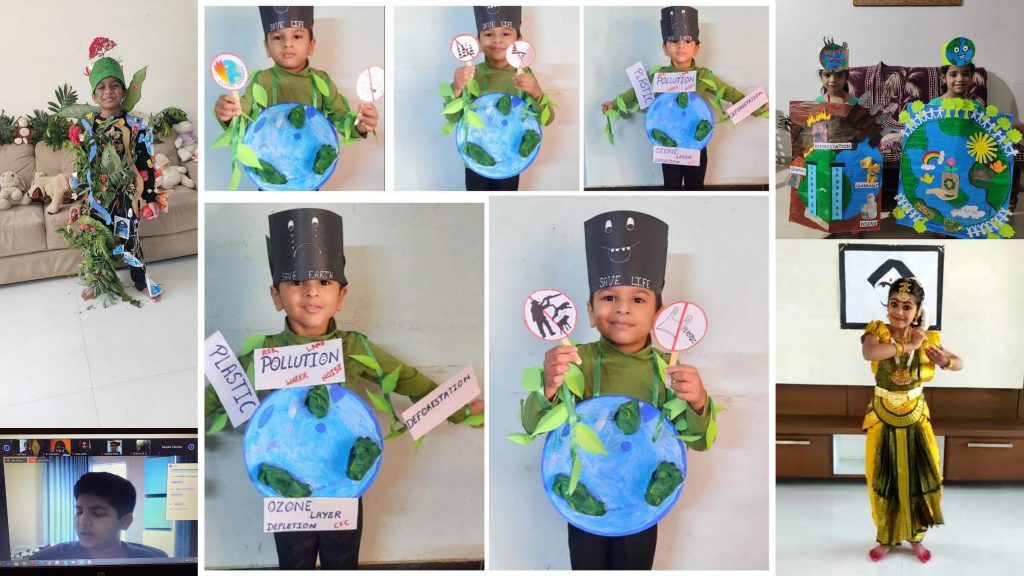
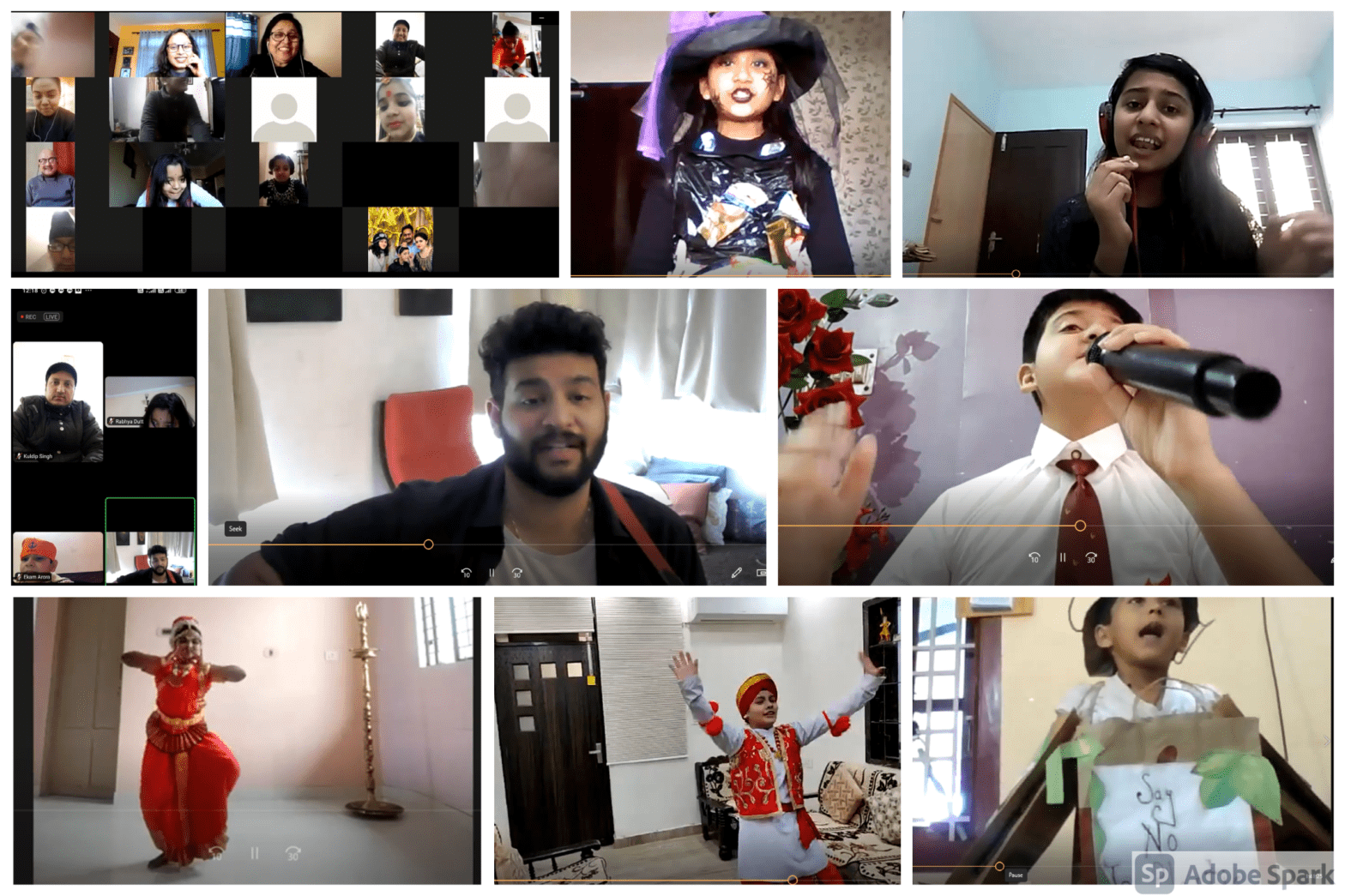
The event comprised a competition in Fancy Dress, Dance & Song for children from Nursery to class VIII. The team decided to focus on little children and their parents. The children were keen to participate in the Fancy dress competition. They had to make their costumes from reusable and recyclable materials available at home. So, this led children to start rummaging through all the waste materials within the confines of their homes. They worked doggedly with their parents to come up with the most innovative costumes.


The judge for the day was Ms. Arjita Chauhan works in the field of eco-friendly ready-to-wear Indian garments. In spite of that she found it extremely challenging to pick out the winners. All children along with their guardians put their heart & soul in preparing costumes. Waste paper bags, polybags, newspapers, leaves from trees, disposable crockery & cutlery etc were used for the costumes. The message of “Restoring planet Earth” was emulated profoundly. One example is of a child who had prepared a paper dress. Decorated it with teak tree leaves and made a little speech around the importance of preserving teak trees. Another one had dressed up as a cat and spoke about how protecting animals from extinction was just as important as protecting trees and plants.


Pic 6 Event Zoom pic


The Contest


The song and dance categories were filled with elements of entertainment in the day long event. Therefore we were treated to some excellent forms of dance. Ranging from classical like Bharatnatyam Kathak to Folk like Gidda the children were at their best. They even presented contemporary choreography on patriotic numbers. We were then regaled by high school students. They sang some extremely soulful numbers.


Results


Finally, there were multiple winners for each of the top 3 positions in every category. Special mentions for diligent performers were also announced.


The winners for the fancy dress competition are Krishvi Dave (1st position for Anti Plastic costume), Moulik Khatri (1st position for Good Earth & Dirty Earth costume), Anshika Shekhar (2nd position for Anti Polybag costume), Rikesh (2nd position for Protection during Covid costume), Akshara Aravindakannan (3rd position for 3Rs – Reduce, Reuse & Recycle costume), Aaradhya Prashant Sarpatwari (3rd position for Solar Panel costume) and Special Mention for Advita Pandey (for Honeybee costume) and Ritvik Reddy K (for Biodiversity costume).


The winners for the dance competition are Swasti Deepa Sahoo (1st position for Odissi), A G Sadhana (2nd position for Bharatnatyam), Prabhleen Kaur Saini (2nd position for Gidda), Siyashree Mishra (3rd position for Odissi), Ashmita Ananth (3rd position for Bharatnatyam) Special mentions for Eshan agrawal (Contemporary choreography) and Shyam.S (Hip Hop).


The winners for the Song competition are Uthra Ramkumar (1st position for Raag Majdar), Abhishek Bhat (1st position for Sri Ganesh Vandana in Sanskrit), Medha Deshpande (2nd position for Raag Malkauns), R.Sreelekha (2nd position for Song from Bombay – multilingual), Nanditha Mavath (3rd position for Jaan Nisar) and Sujai Aravindakannan (3rd position for Patriotic number )


Our heartiest congratulations to all participants and special wishes to all who have occupied the first three positions and special mentions!

Categories
In The Spotlight

Girl Child Education: Paving the way for Equality

Girl child education is important for the development of any country. A lot has been done over the years to empower girls through education. However, even after so many years we are far from reaching the goal. There are laws which remain unchanged and cultures which still do not allow basic rights such as schooling for girls. Women and girls continue to receive unequal pay. They experience violence at home and outside and have fewer choices. Girls are still immensely underestimated.


Scenario of Girl Child Education


According to a report by UNESCO, 132 million girls around the world are out of school. This is also a lag in educating girls which means that 34.3 million girls of primary school age are out of school. 30 million girls of lower-secondary school age do not go to school. 67.4 million girls of upper-secondary school age do not have access to education. In most of the developing or under-developed countries there are major hurdles to education of a girl. Some of them are poverty, violence, lack of toilets, child marriages.


Bridging the Gap


In India, a lot has been done for to send girls to school. The Beti Bachao, Beti Padhao campaign has been successful in increasing the enrolment rates of girls. The gross enrolment ratio of girls across all levels of education is now higher than boys. At the elementary level it is 94.32 % as contrasted with 89.28%  for boys. The secondary level has 81.32 per cent girls as against 78 % boys. At the higher secondary level girls have achieved a level of 59.7% compared to only 57.54 per cent for boys.


The MHRD has sanctioned 5,930 Kasturba Gandhi Balika Vidyalayas under the Sarva Siksha Abhiyan to boost learning for girl child. These are residential schools for girls who belong to the weaker section of the society. These Vidyalayas have an enrolment of 6.18 lakh.


Under the National Scheme of Incentives to Girls for Secondary Education launched in May 2008 an amount of Rs 8.56 crore has been sanctioned to 28,547 beneficiaries. In addition the scheme also provides Rs 3,000 which is deposited in the name of eligible unmarried girls below 16 years of age. The amount can be withdrawn along with interest only when the girl is 18 years of age and after passing standard X.


Other schemes like Sukanya Samridhi Yojana, Balika Samriddhi Yojana, National Scheme of Incentives to Girls for Secondary Education and CBSE Scholarship Scheme/Policy for Girl child literacy were introduced to uplift the condition of female literacy.


139380098 4181886055168664 946988829573367617 o 1024x683 1


Shiksha Na Ruke


The spread of the pandemic and shutting down of schools has had a negative impact on school going girls. Girls are not only at a risk of not returning to school but also face a of being more involved in household chores. Many of the girls will be married off and discouraged to get an education by the family.


It is equally important and urgent that parents and the community be sensitized for the empowerment of the girls in India. Smile Foundation through it’s campaign Shiksha Na Ruke is working extensively across India to reduce the gap in education. Education of girls is a special focus of the campaign.


Teachers are conducting online classes and cluster classes for children who have limited access to resources for their education. Class notes are delivered at home. In some places loudspeakers were installed across the entire village so that the teachers could teach the students together. Furthermore, motivational sessions for teachers and sensitization drives for parents and community were conducted regularly.

Categories
In The Spotlight

Girl Child: Education and Empowerment

“When you educate a woman, you educate a nation.”


Education of a girl goes beyond just enrolling her into school. Girls should have equal opportunities to complete their education. They should feel safe while in school. Girls should acquire adequate knowledge and skills to compete in the labor market. They should be enabled to learn life skills necessary to navigate and adapt to a world which is fast changing.  Women and girls should be empowered to make decisions about their own lives; and to contribute to their communities.


Importance of Education for Girls


Girl child education is a strategic development priority for any nation. When we educate girls we ensure that the community/nation is on a path of development. In fact women who are educated tend to be more informed about healthcare and nutrition. They have planned families and have fewer children, marry at a later age, and their children are usually healthier. Girls and women who are educated are more likely to participate in the formal labor market. In fact they also earn higher incomes. Empowered women can lift the family and society out of poverty.


Condition of Female Literacy


Progress in the field of education for adolescent girls has not kept pace with the realities they face today. According to a report by United Nations 1 in 4 girls in the world, aged 15-19 years is not employed. She is neither educated nor trained as compared to 1 in 10 boys of the same age. 47 million girls will be pushed into poverty as a result of the ongoing pandemic. 435 million women and girls will be living on less than $1.90 a day.


107451401 3619021798121762 1660021250554990982 o


Education of Girls in India


The sex ratio in India is 940 females per 1000 males. It is still far from achieving its gender equality goals. The patriarchal influence on the society often deems a girl child as a ‘burden’. Gender inequality, gender stereotypes and being treated as the inferior sex is fairly common. Girls are denied a deserving education. They do not have access to quality healthcare, equal rights and employment. Girls and women and are often subjected to abuse inside and outside the house.


Interventions in Learning for Girls


A number of government initiatives in the recent years coupled with the work of grassroots organization in remote areas and urban slums has been able to change the scenario. According U-DISE data in 2018-19, the Gross Enrolment Ratio for girls at the primary stage is 101.78%. At the elementary stage it is 96.72%.


One of the most important interventions has been the provision of incentives for secondary education through the National Scheme of Incentives. Other major happenings have been the opening of Kasturba Gandhi Balika Vidyalayas (KGBVs). These vidyalays educate girls from the upper primary level up to the senior secondary level. Other major developments have been renovations of toilets in educational institutions as well as providing self-defense training to girls of Class VI to XII.


Girls face barriers to education as a result of poverty, cultural norms and practices, poor infrastructure, violence, and fragility every day. We should ensure to empower girls with education. In fact they should be taught other life skills to be self-reliant. At last every one of us should pledge and ensure that no girl is left behind in her journey of education.


To know more and support girl child education visit https://www.smilefoundationindia.org/she-can-fly/

Categories
Partners In Change

Celebrating the New Year with Smile!

A New Year! A new harbinger of smile and hope for all who have successfully survived the disruptions of 2020, be it the pandemic or be it ill-effects of the same!


January 2021 brought in a lot of excitement amongst schools and students with the news that schools would be reopened shortly albeit with certain restrictions in place due to the ongoing pandemic. Students are now in a mood where they can hardly wait to meet their friends, their teachers and more than that, just to spend some time in school classrooms & courtyards. The pandemic made them realize the importance of going to school every day and that study from home is not what they had signed up for. Since the beginning of January schools & teachers are connecting with parents on a daily basis and counseling them about reopening of schools while also assuaging their fears about their wards’ safety.


Smile Foundation’s Child for Child team wanted to Ring in the New Year with students who seem to be in an exuberant mood and to join them in their joie-de-vivre. Not only will schools reopen soon, the academic year is also coming to an end. The anticipation is visibly building up for a new class, new batch mates and a back to school scenario. And before students get busy with their exams in the month of February, we Smile Foundation’s team CFC decided to organize a two day fest for about 15 schools who wanted to Ring in 2021 with Smile and who have been our biggest patrons for the campaign Shiksha Na Ruke. These are the schools who have even during the pandemic displayed an exemplary level of empathy towards the underprivileged children in the society. This Fest was an ode to their big heartedness! Some of the schools which participated include Bhawan Vidyalaya Jr, Chandigarh; St. Soldier International Convent, Mohali; Mt. Litera Zee, Bhatinda; L’ecole Chempaka and Sarvodaya Vidyalaya from Trivandrum; Gopalan International School, Bangalore; Sarla Birla Gyan Jyoti, Guwahati; Guru Nanak Public School and Laurel High The School from New Delhi; St. Sebastian, Goa to name a few. Over 200 students registered for the event from these schools.


 Day 1 was Fancy Dress Competition & Day 2 was a Song & Dance competition. There were judges for the contests and there was Bhuwin Khursija who joined in the 2-day fest to deliver a Live performance with his Guitar & vocals. He regaled and completely floored the audience with his mellifluous vocals and his rendition of Sufi numbers while also playing the guitar. The entire event was on Zoom platform. But, for the occasional technical issues, it felt like a 48 hours concert where there was display of some exceptional talent and visible outcomes of sheer hard work.


The theme for Fancy dress was picked up from the Earth day Foundation’s mission for this year, “Restore Planet Earth”. We saw children dressed up as Garbage Witch, Paper bags, Planet Earth and what not, all trying to spread the word about saving & restoring Mother Earth. The winners for the Fancy Dress Competition are Arav Khanna (1st position for Mother Earth costume), Tanish Lodha (1st position for Newspaper costume), Aadya Jain (1st position for Garbage Bag witch), Riddhi  Jain (2nd position for Mother Earth), Reeda Zakiya Nawaz (2nd position for Crude oil ), Vasu Bhanderi (2nd position Save Earth), Mayank Kochar (3rd position for Dirty Earth), Adi Anand (3rd position for Forms of Water) and Parth kathuria (3rd position for Raincoat made of waste plastic).


The Dance & Song competition on Day 2 was packed with a phenomenal outpouring of participants & saw some excellent classical & contemporary performances. The winners for the dance competition are Ishabir (1st position for Western Fusion), Esha Paramesh (2nd position for Bharatnatyam), Arshdeep Singh (2nd position for Bhangra), Krishtee Barman (3rd position for Sattriya) and Ojasvi Aggarwal (3rd position for Kathak Fusion). The winners for the Song competition are Mishti Garg (1st position for Raag Khamaj), Kamakshi Das (2nd position for Raag Khamaj) and special mention to Sanskrit Chakraborty (Jab Deep Jale Aana).


 Our jury for the 2 days, Ms. Rena Banik, Ms. Sulagna Sarkar and Mr. Kshitij Mathur who had a wonderful time while judging and found it incredibly difficult to arrive at the results.


Smile Foundation conveys heartiest congratulations to all participants and special wishes to all who have occupied the first three positions!


To know more about Child for Child visit https://www.smilefoundationindia.org/childforchild.html

0%