Categories
In The Spotlight

What has NFHS-5 revealed about malnutrition in India?

Malnutrition is among India’s most serious development challenges. It contributes significantly to the country’s disease burden. Stunting and under-nutrition continue to be the big challenges. The National Family Health Survey (NHFS)-5 has revealed some more insights into the problem of malnutrition. The NFHS is a large-scale, multi-round survey conducted in a representative sample of households throughout India. It is second only to the Census.


What NFHS-5 revealed about malnutrition in India


There are improvements on various dimensions. These include educational attainment, infant mortality, vaccinations, and institutional deliveries.


There are three main indicators of malnutrition: stunting (low height-for-age), wasting (low weight-for-height) and being underweight (low weight-for-age). There is an improvement on all three indicators. It is important to remember that the survey was conducted in two phases. In Phase, the malnutrition indicators had shown worsening; in Phase 2 none of the states show worsening. This anomaly may have something to do with COVID-19, which possibly affected the way data was collected.


As per the NFHS-5, 35.5% of children below five years were stunted and 32.1 per cent were underweight in 2019-21.


Among the stunted children, 37.3% are in the rural areas as compared to 30.1% in urban areas. If we look at state-wise data, Meghalaya (46.5 per cent), Bihar (42.9%), Uttar Pradesh (39.7%), and Jharkhand (39.6%) have the highest rates of stunting while Sikkim (22.3%) and Puducherry (20%) have the lowest.


Two states that had the lowest stunting rates in children in NFHS-4 (2015-16) but showed a substantial rise as per the NFHS-5 are Goa (from 20.1% to 25.8%) and Kerala (from 19.7% to 23.4%).


Moreover, the proportion of overweight children, women, and men also increased. This also reflects malnutrition which can lead to serious health consequences.


What this indicates


Stunting is a health condition caused due to malnutrition. It can have consequences on human capital, poverty, and equity. A child suffering from stunting may also study less and have fewer professional opportunities.  The World Bank says, “A 1% loss in adult height due to childhood stunting is associated with a 1.4 per cent loss in economic productivity.”


From what the data reveals, it can be inferred that collaborative measures will prove to be useful to overcome this menace. Thus, the government, health institutions, academic, as well as civil society organizations need to work together.  Health and nutrition programmes need to be converged to address these issues right from pregnancy until the child reaches five years of age.


Change at the behavior-level is also needed. For this, information, education, and communication sessions should be held. Effective social behavioural and communication (SBCC) strategy is essential because behaviours are ingrained in society and in family traditions.


Effective monitoring and implementation of programmes to address malnutrition and prioritise the reduction of child undernutrition in the national development agenda is the need of the hour.


Smile Foundation’s work on malnutrition


As part of our work with women and children, we have actively been working on reducing malnutrition. At our Mission Education centres, we ensure that children get healthy and nutritious meals. We also educate their parents on the same. Through our Swabhiman programme, which works for and with women in particular, we are constantly educating and empowering women to take charge of their own lives and health. For this, we conduct various informative workshops with them to teach them how they can take care of themselves as well as their newborns through the means of good food. Nutrition is a vital aspect of our work towards the improvement of society. After knowing what NFHS-5 has revealed about malnutrition in India, it is more important than ever to intervene on this aspect of development.


You can also do your part by ensuring nutrition for someone else. Know more here.
Categories
Insights

Mid-day Meals and Their Role in the Education of Children

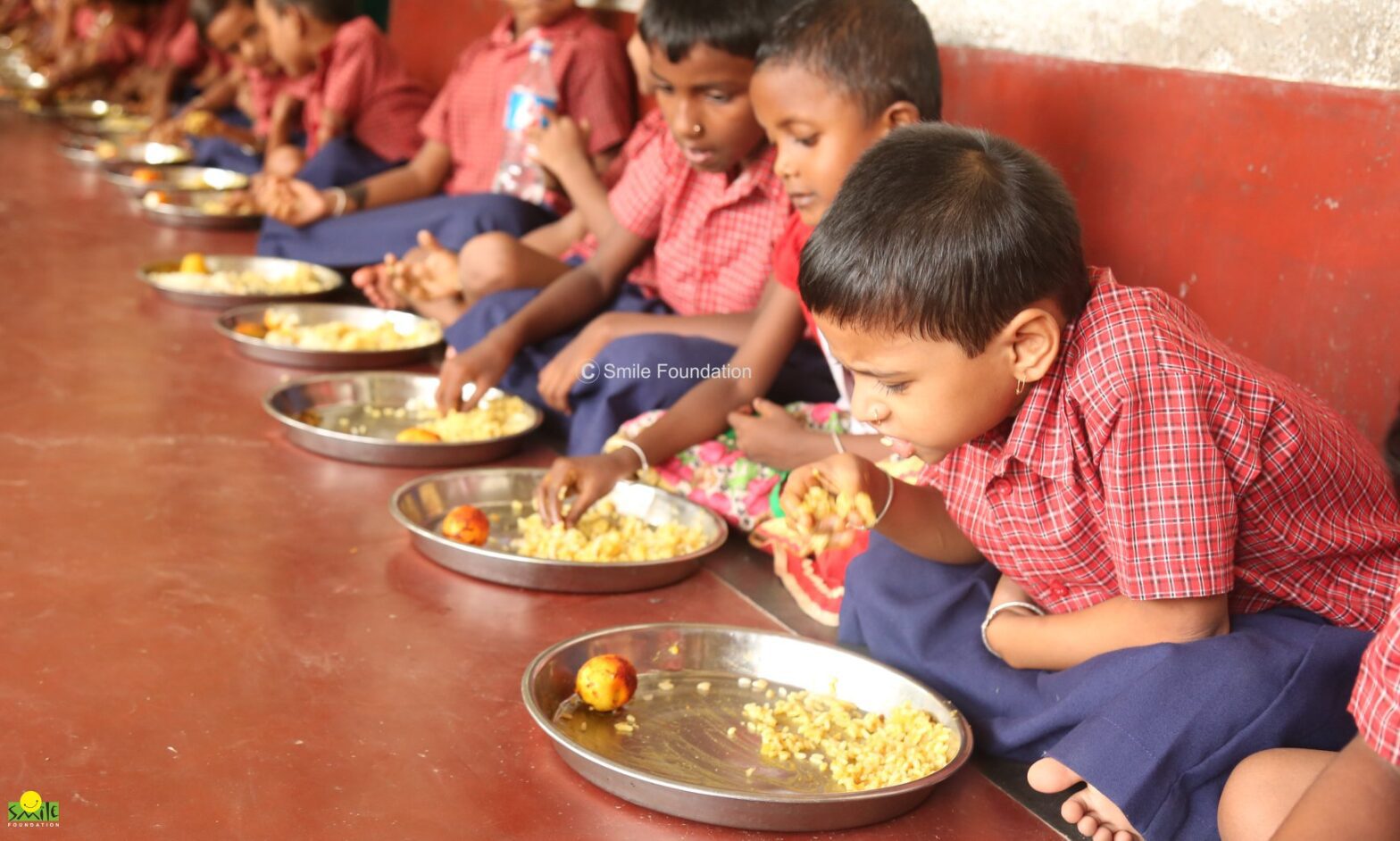
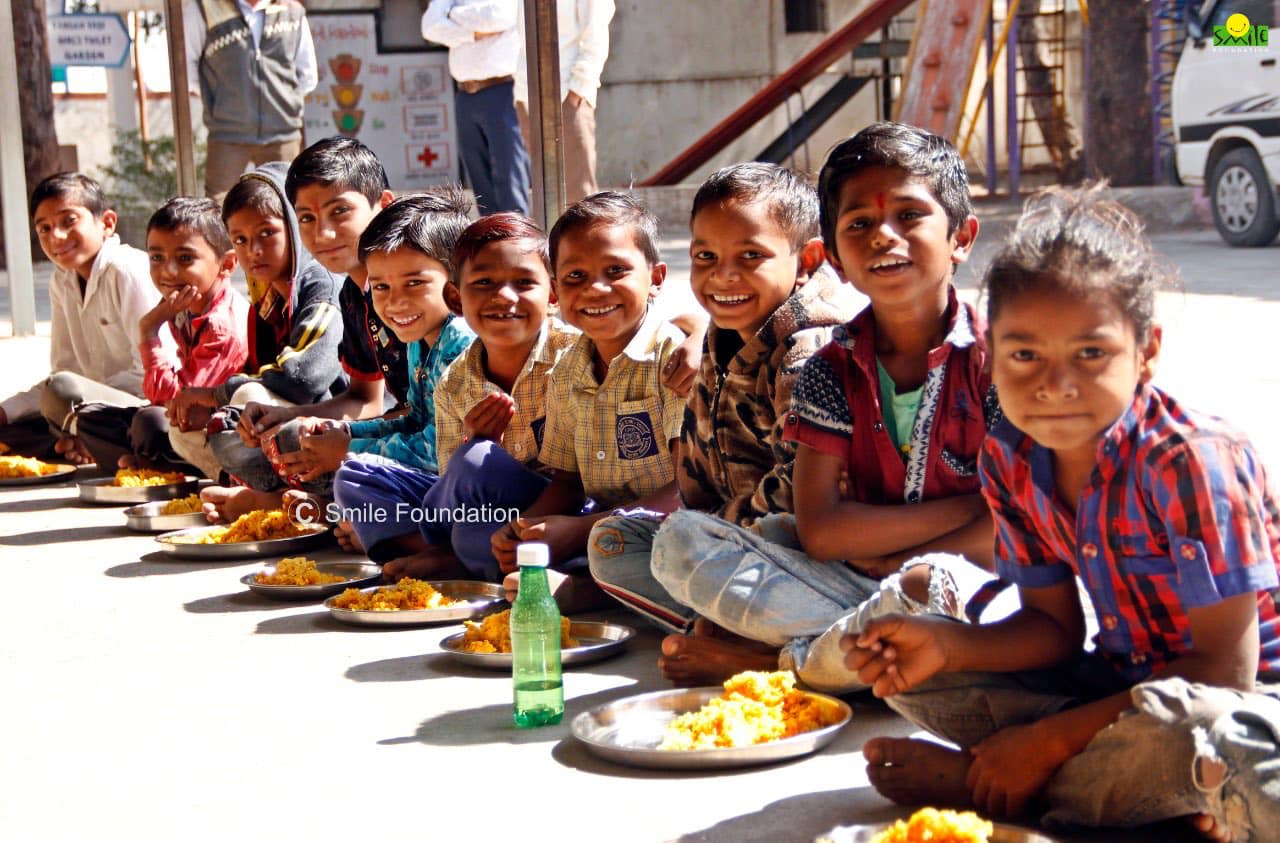
There are millions of children in our country who face many obstacles in their education. Socio-economic causes are the main deterrents to education, apart from others like geographical difficulties. However, it is important to keep working on educating such children for the many benefits it will provide to them and to the society at large. Some of these benefits also act as incentives for students to come to school and parents to send them. The mid-day meal is one of these. Mid-day meals play a vital role in the education of underprivileged children.


What are mid-day meals?


The Central Government of India established the mid-day meal scheme in 1995 to give free prepared meals to children in government and government-aided primary schools (classes I–V; ages 6–10 years). The National Programme of Nutritional Support for Primary Education had planned to cover all government schools. However, due to institutional constraints, only a few states promptly ramped up the programme.


Data from the 1999 National Sample Survey (NSS)–consumer expenditure survey (CES)–suggest that just 6% of all girls aged 6–10 years received mid-day meals at school.


However, between 1999 and 2004, the programme’s coverage expanded in many states. This was after the Supreme Court ordered state governments to provide prepared lunches in primary schools.


In 2004, 32% of Indian girls aged 6–10 years were covered by the programme, which increased to 46% by 2011 as significant funds were provided to the plan. Throughout this time period, boys received comparable coverage.


The study also discovered that the 14 states that implemented mid-day meals in the late 1990s had improvements in child height before the rest of the country. Following the Supreme Court rule, these states expanded the mid-day meal programme in the 2000s.


The findings imply that acting during the primary school years can make significant benefits to lowering future child stunting, particularly given the cumulative exposure that school nutrition programmes can provide. Because they target numerous underlying factors of undernutrition in vulnerable groups, these mid-day meal programmes have the potential to stimulate population-level stunting reduction.


What studies indicate


A new study discovered that girls who received free food in elementary schools as part of the mid-day meal programme had children with better growth. The study, titled ‘Intergenerational Nutrition Advantages of India’s National School Feeding Programme’ was published in the journal Nature Communications.


The study examined whether mid-day meals help intergenerational increases in a child’s linear development. This was done using nationally representative data on mothers and their children from 1993 to 2016.


How are mid-day meals helping


School, without a doubt, plays a vital part in the socio-economic development of society. It is a place where youngsters from all origins mix, establishing a culture of unity and brotherhood. Their education at school prepares them to reach their goals and be successful in life. However, the majority of students in government schools come from low-income families. Even when education programmes such as Sarva Shiksha Abhiyaan are being introduced, some youngsters are forced to pick jobs over school due to financial constraints. And this is where the true value of a mid-day meal emerges. The mid-day meal serves as an enticing incentive for parents to take their children to school. This way they can ensure that their child will receive at least one plate full of food for the day.


Social structures are used to channel policy actions. The resilience of these social institutions guarantees that social differences are maintained and that rewards are distributed based on one’s place in the social hierarchy. All policy interventions began in this manner. In the case of Mid Day Meal, the situation is rather different. It is worth noting that MDM governmental intervention is not included in that assumption of social structure. Rather, it has opposed the influence of an inequitable social structure by allowing disadvantaged students from low income categories, as well as female students, to complete their studies. Furthermore, advancements in girls’ education will lead to benefits in social development. Continued education postpones marriage and improves women’s participation in family decisions.


Role of civil society organisations


The Government of India encourages civil society organisations to participate by providing enough support in order to enhance the benefits of mid-day meals. These include


  • Avoiding classroom hunger
  • Increasing school enrollment
  • Increasing school attendance
  • Improving caste socialisation, 
  • Addressing malnutrition and 
  • Empowering women through employment.


Smile Foundation understands the concrete and long-term impact of a mid-day meal. Thus, through our various programmes we are providing meals and good nutrition to as many children as possible. As a result, it takes on the responsibility of providing mid-day meals for impoverished children.

Know more about our work here.

Categories
Insights

NEP and the Education of Tribal Children

The National Education Policy (NEP) has recommended a number of measures for the education system. This is a centralised policy for all states. A few key recommendations of the policy can have a huge impact on certain sections of the society. It is worthwhile to consider the effect that the NEP can have on the education of tribal children.


The language recommendation


The new NEP emphasizes on the use of the mother tongue. It recommends that the region’s mother tongue is used to impart teaching in primary classes.


Where tribes are concerned, several states have been using multilingual mode of education. However, there is still a huge gap in this for a number of reasons. First, tribal communities have their own languages and an even larger number of dialects. For instance, in Odisha, the tribal communities have around 21 languages, and nearly 75 dialects. With these kind of numbers, it is difficult to decide the medium of instruction.


Moreover, language training of teachers and curriculum development in the concerned language has not been addressed yet.


Multi Grade Learning Centres and strength of schools


India has several Multi Grade Learning Centres. These are also known as single teacher schools. Many tribal areas of the country has such schools which cater to just one or only a few villages. And many of these schools have less than 30 students.


The NEP recommends that schools with less than 30 students should be closed. These schools are deemed to be “economically suboptimal and operationally complex to run”. The policy has not stated clearly whether this would be applicable to all schools and all children. If it is, then hundreds of such schools would be shut and all the students studying in these schools would face the impact.


A related recommendation is to create cluster schools region-wise. Educationists who are against this policy say that due to different demographic patterns of different states, having cluster learning centres will deny education to many tribal children. For them, the cluster centre might be inaccessible.


History of tribals’ education


According to data in the Statistics on School Education 2010-11, the dropout rate among tribal students is quite high. Around 71% of tribal students between classes I to X drop out. Considering that the tribal population stands at 8.6% of India’s population, this is a significant number of students dropping out of school. A large number of tribal children also remain outside the formal education system.


Despite geographical and socio-economic barriers, modernization and industrialization have made inroads into the habitat of the tribal communities. Massive encroachment on their land and way of life has led to their displacement and exploitation. Most tribal communities are now in abject poverty.  All these factors have an impact on the education levels of tribal communities, which is still much lower than desired.


NEP and education of tribal children


Education is the key to any kind of development. It is no different for the tribal community. Due to poor educational status among tribal communities, their development is also quite slow. Only drastic measures can improve the status of the tribes of India.


Sensitization as well as preservation of culture should play a key role in the education of tribal children. The culture and integrity of tribal communities is an asset and a major part of their identity. Thus, teaching methodology and curricula need be designed keeping these aspects in mind. It is important to assimilate and incorporate tribal culture and values to ensure that education is an inclusive and enjoyable experience.


The NEP must keep these things in mind when implementing the new system. Socially and economically marginalized groups like the tribals need to nurtured to ensure their development. The vocational training that is part of the NEP could be a step towards this. It can ensure that tribal children learn skills that will help them get jobs in the modern economy, and they can move beyond the traditional occupations such as agriculture.

Categories
Insights

How to Foster Creativity in Children amid Virtual Classes?

The official schooling system has been severely disrupted, throwing children’s routines out of whack. It is important to have activities to keep them motivated and foster creativity in children during virtual classes.


You may have witnessed pupils struggling to complete work, or to participate and contribute creatively to school work near the end of the previous school year. The novelty of online learning had worn off, and there seemed to be a new wave of bad news every day. This has undoubtedly had an impact on everyone, but most notably on children.


We’re learning as we go


Most schools and teachers were unprepared at first to convert every lesson and school resource to an online platform, especially overnight. Students were also not entirely comfortable. Many were stranded at home without a dependable Internet connection or necessary gadgets such as a laptop.


Students have been in social isolation and under stay-at-home orders for months now. However, the new school year is swiftly approaching. By this time, some students are feeling more prepared and comfortable in their virtual classrooms. This new virtual learning environment raises the question of how instructors can continue to encourage and develop creativity while working from a screen.


Attempt to change things up


Trying to balance remote teaching duties with everything else might be difficult for instructors who are new with online teaching platforms. This type of juggling leaves little opportunity for spontaneity and can disrupt the entire class’s creative flow.


Consider for a moment what is missed while teaching electronically. For one thing, it’s far more difficult to pick up on students’ nonverbal communication while they’re online. Additionally, students may struggle to be active listeners. It is also considerably more difficult to provide tailored assistance with assignments. As a result of these virtual learning disadvantages, pupils are prone to grow dissatisfied and disheartened. Without in-person direction and monitoring, some students may become stuck or lost. One dead end after another leads to students being unable to reach the learning objectives.


Alternate between tasks to foster creativity in children


The University of Southern California (USC) recommends alternating between tasks to boost creative thinking for a better online experience. Task-switching gives pupils more choice and can help to minimize certain shortcomings while enhancing strengths. Setting firm stops and working in short spurts is recommended by USC. They further say that rotating between projects several times rather than focusing on one item provides a fresh viewpoint and encourages more innovation.


Though task switching isn’t something new for teachers, doing so online is. At the onset of the pandemic, teachers had found it simpler to focus on one activity at a time. Now that some time has gone and they are more aware about the ins and outs of the virtual classroom, it’s time to shake things up and get the creative juices flowing again.


Stay connected with nature


All of the restrictions and stress that children are experiencing during the pandemic will be reflected in their work and creativity. It is important to encourage pupils to take regular breaks away from screens outside of their homes. There are various scientifically documented advantages of spending time outside.


Improved mental health: Going for a walk, hiking, or riding a bike are all excellent ways to minimize negative thinking, reduce anxiety, and enhance your mood.

Improved immunity: Improved well-being is also beneficial to your immune system. Vitamin D, an immunity-boosting vitamin, is not produced naturally by humans. Fortunately, sunlight is the best source of vitamin D. Aside from this, spending time in nature can help the immune system in many other ways. There is scientific proof that being outside in nature protects you from diseases like ADHD, cancer, cardiovascular disease, depression, diabetes, and obesity

Enhanced creativity: Spending time in nature may be extremely motivating, boost cognitive processes, and revitalize the creative mind.


Motivate kids to go outside or make an assignment that requires them to spend some time outside. Of course, students should be reminded of COVID-19 safety precautions before they do so. This simple activity may appear to be a small thing. However, with everything going on around the globe, this may be the only time students get to take a break and reconnect with their surroundings.


To sum up


It goes without saying that this year has been quite difficult thus far. These past several months have been cognitively, emotionally, and physically exhausting for everyone. This is true for teachers, students, as well as parents. This is something to think about when you plan your next creative move in the classroom.


As virtual learning technology advances, educators may find themselves having to master new tactics. Students and teachers both encounter distinct challenges. One of them is definitely how to foster creativity in children in a virtual classroom. With the help of correct technology, resources, and motivation, teachers will assist and motivate students to overcome these unprecedented times and rediscover their creative spark.

Categories
In The Spotlight

Human Rights Day 2021: Reducing Inequalities and Advancing Human Rights

Human Rights Day is observed on 10 December every year. On this day in 1948, the United Nations General Assembly adopted the Universal Declaration of Human Rights. This day is celebrated to raise awareness about people’s social, cultural, and physical rights. Further, it seeks to ensure the welfare of everyone.


Each year, the day is celebrated by holding cultural events, public meetings and seminars, and other educational activities at various institutions.


Significance of Human Rights Day


This day encourages nations to create equal opportunities for everyone and address the issues of inequality, exclusion, and discrimination. There are some absolute rights which all human beings are entitled to. And this is irrespective of their race, colour, religion, sex, language, ideologies, birth, and so on. This important day seeks to celebrate this and remind everyone about their duty towards this.


Since 1968, the International Year for Human Rights, the UN has been awarding the United Nations Prize in the Field of Human Rights.


Theme for this year


The theme for this year is ‘Reducing Inequalities and Advancing Human Rights’. This theme is related to Article 1 of the Universal Declaration of Human Rights. This Article states, ‘All human beings are born free and equal in dignity and rights.” It is noteworthy that the UDHR is the second most translated document in history.


This theme is significant for a number of reasons. Equality and non-discrimination are at the heart of human rights. This particular theme indicates that the international community is making efforts to find solutions for deep-rooted forms of discrimination. The victims of such discrimination are women, LGBTQ people, people with disabilities, indigenous people, racial minorities, and so on. It is important to adopt a human rights-based approach to ensure equality and inclusion for all.


Previously, the themes have included ending discrimination, protecting victims of human rights violations, fighting poverty, and so on.


Smile Foundation’s work towards equality


At Smile Foundation, we believe that everyone deserves equal rights and equal opportunities. India has a large number of vulnerable people who do not have equal access to education and opportunities. We are constantly working to ensure that these people get the chance to be at par with the privileged few.


Whether it is educationhealth, our work with women, or training youth for a sustainable livelihood, we are working towards equality in each of these fields.

Categories
Insights

The Role of Nutrition in Economic and Social Development

The development of a country and the state of hunger and malnutrition in that country are directly related. This means that it is important to explore the significance of nutrition in economic and social development of an individual and the country.


Nutrition and development


The International Conference on Nutrition (ICN) was held in Rome in 1992. Here, the relationship between nutrition and human resource development was established and described. The Plan of Action developed at the conference stated that nutritional well-being of all people is a pre-condition for the development of societies and is a key objective of progress in human development.


The issue of nutrition


Till a few years back, being health-conscious meant eating a low-carb or low-sugar diet. Some foods that became popular as super foods were also considered as essential to being healthy.


A lack of essential nutrients in one’s diet is the main cause of mild to severe malnutrition. In India, there are a great number of facets to the problem of malnutrition. These range across sectors and factors. One has to look beyond stable and varied food supply to ensure good nutritional status.


A country’s political, economic, and social environment plays a critical role in the nutritional well-being of its people. Additionally, its institutional and delivery capacity also impact the nutritional status. Any country’s potential resources also affect the nutritional outcome. When the basic needs of a country’s citizens are not met, it leads to a potential loss in the development process.


The cost of malnutrition


There are wide-ranging social and economic impacts of nutritional disorders, both on individuals as well as society.


For instance, one of the effects of malnutrition is intellectual and developmental disability. A child with IDD has lower learning capacity, decreased productivity, and low income-earning capacity. This may become a burden for the family as well the state which has to support them. Having dependents increases the expenditure of individual households as well as the government.


Another example of such an impact is iron deficiency anemia in pregnant women. IDA affects not just the pregnant woman but also the child born who is born of a mother with such deficiencies. Newborn with iron deficiencies can face other related health problems, and so can the mother. Moreover, the new mother would not be able to care for the newborn either if her own condition is weak. Thus, IDA affects the potential growth and development of the next generation too.


Why we need to invest in nutrition?


Investing in nutrition is an important aspect of development. The efficient use of resources can ensure that the social and financial costs of malnutrition are averted. Moreover, health, education, and agriculture will also see improvement.


Benefits of good nutrition include good quality of life, increased productivity, and good economic returns. It leads to better performance of children in school and also helps build their cognitive ability.  In adults, it can improve productivity and income substantially, resulting in a higher standard of living and overall improvement in the quality of life.


Studies such as this have pointed out in various ways why it is important to strengthen nutrition from a young age. Firstly, children suffering from malnutrition tend to receive less education. There are several possible reasons for this: their caregivers invest less in their education, schools are not equipped to cater to them, or perhaps their proneness to sickness increases their absenteeism from school. Secondly, due to malnutrition, some children might start their schooling at a later stage. Thus, they receive lesser amount of schooling. Additionally, malnutrition may also reduce learning capacity due to the impact on cognitive development.


Investing in nutrition has great productivity gains. These gains are enough to justify the economic investment made for this. There is a widespread belief that resources invested in nutrition programmes are wasted and can be better used elsewhere. This is a false assumption because nutrition has many economic and social benefits, as has been highlighted above. This means that the role of nutrition in social and economic development is vital.

Categories
In The Spotlight

International Day of Persons with Disabilities: Theme and Significance in COVID times

The International Day of Persons with Disabilities is observed on 3 December every year. It was proclaimed in 1992 by the United Nations. The day aims to promote an understanding of disability issues. It also seeks to mobilize support for the dignity and rights of persons with disabilities.


Including persons with disability in all aspects of political, social, and economic life is an important part of sustainable development. The 2030 Agenda for Sustainable Development also promises to leave no one behind. Investing in fighting for the rights of persons with disabilities is an investment.


Theme for this year


The theme for this year is “Leadership and participation of persons with disabilities toward an inclusive, accessible and sustainable post-COVID-19 world”. This is in sync with the sustainability and inclusion goal.


Why is inclusivity needed?


As per estimates by the Government of India, only about 50% of persons with disabilities are literate. Even fewer get a chance to study in an inclusive school. An exploratory study shows some findings about inclusivity for children. Some of its key findings are as follows:


Most of the children do not continue in inclusive schools due to lack of professional knowledge, peer/teacher acceptance, and quality support.

Many parents felt that the admission criteria in inclusive schools often leave out children with disabilities.

Many inclusive schools demand a higher fee from children with disabilities without giving any special facilities.

The teacher-student ratio in special schools is much better.

Bullying by peers and neglect by teachers is common.


How COVID-19 impacted persons with disabilities


Education in India and across the world shifted online in 2020 with the onset of the COVID-19 pandemic. This was accompanied by a shift to online teaching and learning methods. This shift brought into sharp focus the unequal access to education and the growing digital divide.


The impact of this shift on persons with disabilities was felt even further. While other children struggled but still managed to cope with online classes, it is not surprising if children with disabilities found it harder to do so. It is important to keep in mind that their schooling is not restricted to just books and extracurricular activities. Various therapies are also included in their education.


Smile Foundation’s contribution for persons with disabilities


Smile Foundation has been working with persons with disabilities since many years. Sushma, who works at a centre in Odisha shares her experience of working with such special children during the peak of the pandemic.


“For our residential students, we were providing all the services even during lockdown.  We were going door-to-door to children in the community. During these campaigning sessions, we made the children and their families aware of the protocols they need to follow during the pandemic.”


Not only this, all the local-level workers attended capacity-building sessions to help them adapt and deal with the challenges of managing their work during the pandemic. Thus, they were able to continue the physical and occupational therapy as well as social education of the children.

Categories
Insights

Have the Disruptions to the Global Supply Chain due to COVID-19 Prepared Us for the Future?

The coronavirus pandemic has had a profound impact on the global supply chain. The healthcare industry has also felt the impact of this disruption. It has also affected COVID-related work. As the world gears up to face the new Omicron variant of the virus, it is time to analyse and relook at the supply chain. This can ensure that we are better prepared in the future to deal with the disruptions to the global supply chain due to COVID-19.


The problems in the supply chain


If there is a disruption in the supply chain, it impacts essential items like pharmaceuticals and medical equipment. We saw this abundantly when the pandemic first began and the whole world was unprepared to deal with it. Apart from the global supply chain, domestic logistics also suffer in this situation. There are problems at the grassroots level (such as migration of labourers), restrictions on movement of commercial vehicles, and so on. All these factors together contribute in delaying and hampering the supply chain. This impacts the supply of vaccines, hand sanitisers, testing kits, PPE kits, medicines, medical equipment such as oxygen concentrators, etc.


How we depend on the global supply chain


Modern items frequently have vital components or sophisticated materials that necessitate specialist technological expertise to manufacture. It is quite impossible for a single company to have the range of competencies required to manufacture everything on its own. Consider the increasing amount of electronics in modern vehicles. The touchscreen displays in entertainment and navigation systems, as well as the many microprocessors that regulate the engine, steering, and functions such as power windows and lighting, are not designed by automakers. Another more esoteric example is a class of compounds known as nucleoside phosphoramidites and the related reagents used to create DNA and RNA sequences. These are critical for all businesses working on DNA- or mRNA-based COVID-19 vaccines and DNA-based medicinal therapies. The source for many of the crucial precursor ingredients for this are sourced from South Korea and China.


In India, for instance, the oxygen challenge during the second wave of COVID-19 was caused mostly by local supply chain constraints and the unavailability of oxygen cylinders and tankers, rather than a lack of domestic production. While the majority of oxygen producers are located in the country’s eastern regions, the growing demand came from cities in the country’s western and northern areas. As one state after another went into lockdown, transportation and logistical disasters ensued. As our local supply chains failed us when we needed them the most, imports of oxygen cylinders and concentrators, as well as airlifting of oxygen plants from other nations, came to our aid.


Preparing for the future


The COVID-19 outbreak has provided valuable lessons for everyone. It has led to the realization of corporates that they need to adapt their supply chain strategies to the dynamic scenario during the pandemic. As humans, we have been adapting continuously to meet the needs of the pandemic. The supply chains also need to show resilience, responsiveness, and reconfigurability.


Companies should also look at diversifying their supply chains from a geographic perspective. This can ensure that they are not dependent on a single country for a particular product or raw material. There need to be protocols in place to activate these alternate sources of supply as and when required. Alternately, we can also look inward for the supply chain for long-term benefits. This will reduce dependency on other countries and also boost India’s economy.


After the problems faced in the initial few months of the pandemic, the Government of India decided to promote domestic manufacturing of key materials required by the pharmaceutical industry.


Diversified sourcing and digitization will be critical to constructing stronger, smarter supply chains and guaranteeing a long-term recovery.


Digitizing supply chains and process innovations


New technologies are already or soon will allow enterprises to cut their costs. They will also allow them to switch more flexibly among the items they create, rendering incumbent competitors’ or suppliers’ installed bases outdated. The following are some examples:


Automation: The cost of automation is falling. The requirement of social separation has made automation even more appealing. As a result of these advances, returning off-shored production to higher-cost countries is becoming more feasible.

Additive manufacturing: This manufacturing technology, also known as 3D printing, can significantly reduce the number of steps of manufacturing. It can also reduce reliance on distant suppliers of machines and tools required for, say, plastic injection molding.


Conclusion


The economic upheaval produced by the disruptions to the global supply chain due to COVID-19 has exposed many flaws and cast doubt on globalization. Managers everywhere should utilize this situation to take a new look at their supply networks, identify their vulnerabilities, and then make efforts to strengthen robustness. Forsaking globalization completely might lead to some negative implications. For instance, companies that do not abandon globalization will gladly and rapidly fill any gap. Instead, leaders should look for methods to improve their businesses and gain a competitive advantage.

Categories
Insights

Impact of Skill Training on an Ordinary Life

Smile Foundation has always believed in the importance of a sustainable livelihood. For an ordinary person with no means, getting the skills needed for a sustainable livelihood is not an easy task. The impact of skill training in such lives is quite significant.


Here are some stories of the individuals whose lives have undergone a change after proper skill training.


Poornima


Poornima at her job as a GDA.

Poornima is a 27-year-old woman who comes from a lower middle-class family. Her father is a farmer who lives in small village near Dervan in Maharashtra. Her father could not support her education after she completed her SSC, and married her off at an early age.

After her marriage, she moved to Pune with her husband. During the pandemic, her husband lost her job and it became difficult for them to support the family of five. Her in-laws and little daughter had to move back to the village.


Poornima took it upon herself to become a financial support to the family. However, she lacked confidence and had poor communication skills. Thus, she found it difficult to get a job. Unfortunately, she did could not even afford the fees of a vocational training course. When she got to know about the GDA course at the STeP centre, she enrolled herself.


Despite many obstacles, Poornima was determined to complete the training with flying colours. She learned a lot about the healthcare sector and also the practical skills required for a GDA. The mock interviews at the centre helped her with her confidence.


Poornima is not gainfully employed at Tarachand Hospital as a GDA at a salary of Rs 10,750. The first thing she did was buy a basic smartphone so that she could video call her daughter at any time.


Ruturaj


Ruturaj always dreamt of studying as much as he could and getting a respectable job for himself. However, due to financial conditions, he had to take up a job at a local grocery store in Talegaon soon after his HSC. He did manage to complete his graduation externally.


Ruturaj working as a Digital Marketing Executive

His father works as a carpenter and his mother is a housewife. His younger brother is still in school. Before the pandemic, the family’s monthly income was about Rs 15,000 per month.

Once the pandemic-related lockdowns began, Ruturaj’s family faced grave consequences. His father was not able to get any carpentry work, and Ruturaj lost his job.

Ruturaj always had an interest in sales and marketing. But due to lack of skills required for such a job, his search was proving to be futile. A friend recommended him to enroll in Smile Foundation’s STeP course for digital marketing. Since then, he has not looked back.

He proved to be a sincere student who always participated actively in all the classes. Along with acquiring skills related to digital marketing, Ruturaj also evolved as an individual. The training he received gave him the confidence to communicate with strangers. Soon after completing the course, Ruturaj got a job at Ace Marketing Solutions as a Digital Marketing Executive. He now earns a salary of Rs 11,000 per month.

Ruturaj is using his newly acquired skills to find carpentry gigs for his father too! He has created his father’s profile on various digital platforms. Now, he gets inquiries not just from Talegaon, but from other locations too.

To know more, read about our Tayyari Kal Ki initiative here.

Categories
In The Spotlight

Child For Child Celebrated Children’s Day with Fun Competitions

Children’s Day in India is celebrated on the 14th of November. It commemorates the birthday of Chacha Nehru. This is a special day when children either get to stay home or have a day of fun at school, physically or virtually as the situation be. It is a day to celebrate childhood and to empower children with the knowledge and tools that will make them better individuals. We at Child for Child celebrated Children’s Day our way.


Children are the future. We need to nurture and nourish them. As the saying goes, “It takes an entire village to raise a child.” Every day as adults we should take a renewed pledge to help raise the future generation. We should collectively ensure that the world they inherit is worth living and ensure they reach such levels of development where the sky is the limit. Sometimes it is not just about teaching them but just being around them and proving to be good role models.


The event


This Children’s Day, Child for Child organized a competition for students across different schools around storytelling. Children were encouraged to share their written, video, and audio stories. They received three theme options from which they had to choose one.


  1. A fictitious journey with your favourite superhero to a place you love
  2. Your experience about going back to school after the Covid-19 school closure
  3. A role model who inspires you to be empathetic and giving


Heartening response


For the first theme, we got insights into many superheroes (and this is a gender-neutral term here). And of course, children had such lovely places they wanted to visit. Some wanted to go to Kryptonite with Superman, some to Gotham with Batman. Our winner wanted to visit America with Iron Man and make it the journey of his lifetime. The innocence in this desire was reflected in his narrative. All he wanted was to enjoy the journey with Iron Man, who is actually a regular human being using technology and bravery to fight evil. What’s most endearing is that our winner chose the superhero who does not have superhuman powers but uses his intelligence and wit to transform into one, and that is where he sees himself in the near future.


For the second theme, children have written heart-rending stories about their experiences of going back to school. They laid emphasis on how they had started to lose interest in online classes. They had also started spending a lot of time on gaming. Reopening of schools was like a bolt of lightning that shook them up from their slumber. It once again motivated them to open their books and start concentrating on their regular school work. They also talked about how schools make them feel quite safe due to the Covid protocols in place. The thrill of meeting classmates and their favourite teachers motivates them to get up early, wear the school uniform, and head towards the school.


For the third theme, we had insights into the adorable thoughts of children. It showed their take on role models, and the reasons why that person is their role model. While there were some apparent role models like Rani Laxmibai, Bhagat Singh, and Winston Churchill, what moved the jury was the winner’s choice of role model. Here too it wasn’t the narration of her choice of role model but the reasons why. She adores her father, which is obvious, but the fact that his philanthropic nature inspires her to do a good deed every day moved everyone and there was a unanimous decision around this.


Kudos to the winners


This Children’s Day, as adults we felt inspired by the submissions made by children. Their stories, their narrations, the maturity with which they have weaved stories left us all awestruck. The fact that these children believe in goodness in the world and the people around them has impressed us a great deal. It is wonderful that they are empathetic towards those suffering, especially the underprivileged. It leaves us feeling that the world is in secure hands. The mission of CFC is to motivate privileged children to do good deeds for their underprivileged counterparts. This Children’s Day, we felt humbled by their generosity and their noble thoughts.


Many congratulations to all participants and a special hurrah to the winners.


Our winners for audio stories are:


1st Place: Ojasvi Aggarwal of class VI, Bhawan Vidyalaya, Chandigarh

2nd Place: Ashwath Sharma of Class V, Bhawan Vidyalaya Junior, Chandigarh


Our winners for Written stories are:


1st Place: Keertesh Sharma of class IV, Bhawan Vidyalaya Junior, Chandigarh

2nd Place: Aradhya Singla of class IV, Bhawan Vidyalaya Junior, Chandigarh

Special mention to Kuvam Goyal of Class I, Bhawan Vidyalaya, Panchkula for being our youngest participant.

0%