Categories
In The Spotlight

International Day for the Elimination of Violence against Women being celebrated on November 25

November 25 is celebrated every year as the International Day for the Elimination of Violence against Women. The day marks the launch of 16 days of activism, culminating on International Human Rights Day (10 December). Several events are held in various parts of the world to commemorate this day and remind everyone how important this issue is.


Thought behind it


Violence against women and girls (VAWG) is a prevalent problem in today’s world. This widespread and devastating issue remains one of the major human rights violations of our times. Unfortunately, most of the victims of such violence remain silent due to various socio-economic factors.


It is important to remember that VAWG is not just physical. It includes sexual and psychological violence as well. Thus, it manifests in various forms. For instance, psychological abuse, marital rape, forced marriage, stalking, harassment, sexual trafficking, child marriage, and so on.


The violence that women face has a lasting impact on their lives, which they face at various stages. It forms a major hurdle in the empowerment of women, leading to consequences such as restricting their access to education and jobs.


International Day for the Elimination of Violence against Women aims to spread awareness about all these issues and prevent such violence. It is a call to promote advocacy and create opportunities for discussion on challenges and solutions.


Theme for this year


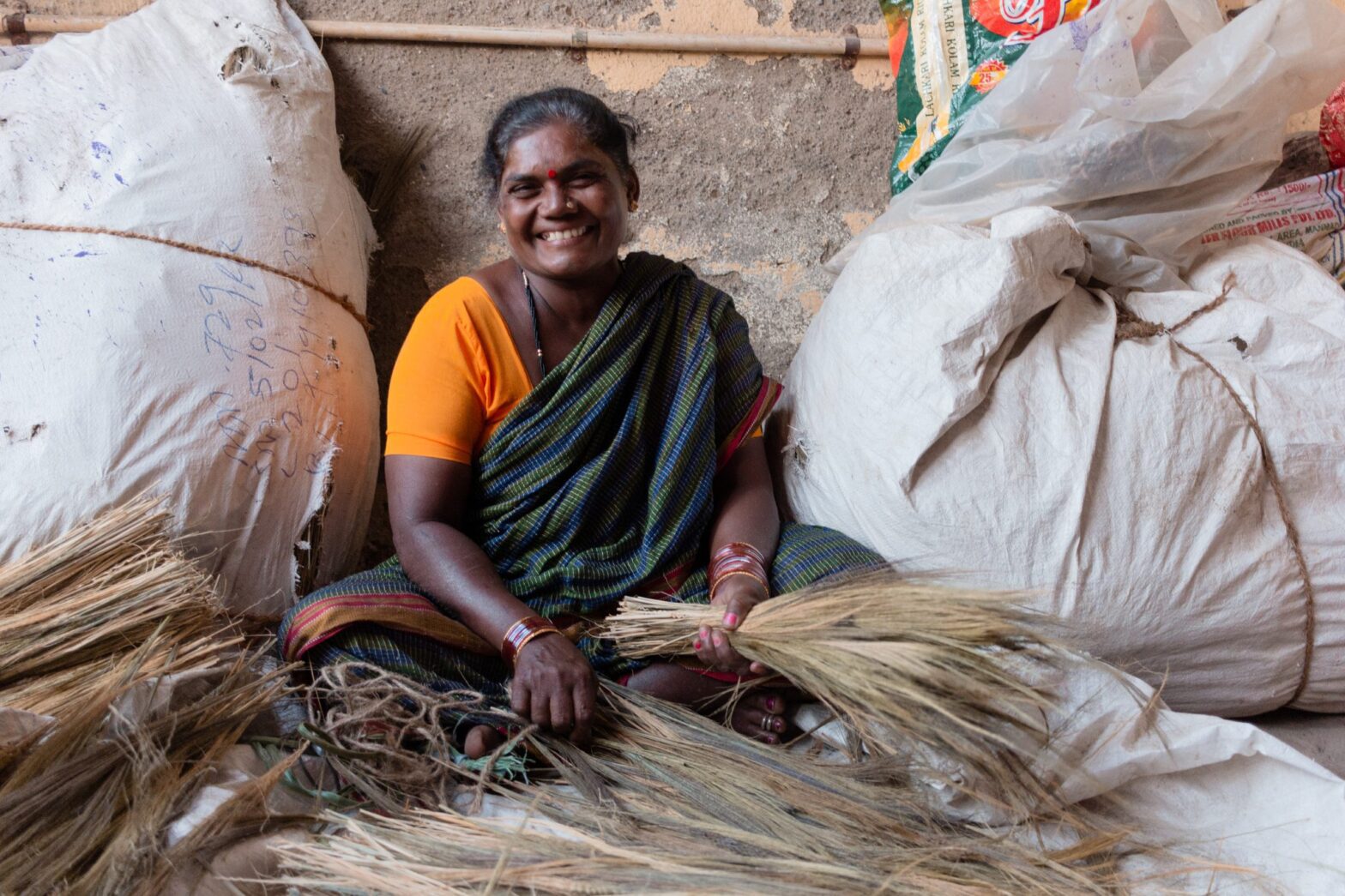
The colour orange symbolizes happiness, brightness, joy, and freedom. Thus, the theme for this year has been chosen as ‘Orange the World: End Violence against Women Now’.


UN Women has stated in a report that nearly 45% women reported that they or someone they know have faced violence against women. At least 65% reported experiencing this at one time or the other in their lifetime. In times such as the COVID-19 pandemic, these instances of violence have increased and women have reported feeling more unsafe.


This sort of gender-based violence is preventable. However, this can be done only through awareness and constant advocacy and education. This year’s theme celebrates the brighter future that women can look forward to if they stop facing violence.


Our work for women


Smile Foundation’s Swabhiman programme has been working for the empowerment of women since several years. Apart from educating on various aspects of their lives, we also work actively to spread awareness in the community and within men. This ensures a holistic approach to bettering the lives of women. Behavioral change is at the core of ending violence against women. And this is something that we are actively working on through our various on-ground initiatives.

Categories
Insights

Livelihood Training Beyond Income: Entrepreneurship and More

For long, livelihood training has been closely linked with income generation. Youth are equipped with skills to help them earn an income. But it is time to think of livelihood training beyond income.


In India, socio-economic factors play a major role in determining livelihoods. To acknowledge this, the stakeholders (government, civil society, business) need to engage with a deeper understanding of these factors. Generating income for the family is the first and most obvious impact of this. Building entrepreneurship skills, self-esteem, and resilience must also play a part in livelihood training.


Self-esteem


If one feels that their role is more formalized, primarily through some sort of documentation, it creates a sense of self-esteem. Having the necessary skills is essential. But that cannot ensure dignity for them. A street vendor who just one day decides to start selling his products at his kiosk may feel under-confident. However, if they have documents as well as skills, their self-esteem goes up. A sense of self-esteem leads to a sense of realization that they have been able to take charge of their own lives.


Such opportunities need to be created by the stakeholders.


Entrepreneurship and resilience


Entrepreneurship is on the rise. However, youth may be becoming entrepreneurs out of necessity, more than choice. The job market is shrinking slowly, despite some industries hiring trained workers for very specific jobs. Moreover, upward mobility is limited in many such jobs, such as those in logistics and delivery.


Micro- or nano-entrepreneurs might have the will and passion. But they may not have the skills to sustain a business venture. Due to these reasons, it is important to work on sustainability of livelihood training. The first step for this is skill development and enhancement. Communication, marketing, inventory control, and financial management are all vital in sustaining a business venture. A lack of these skills stops the growth of entrepreneurs.


Developing resilience also plays a key role in building an enterprise. Livelihood is a means to build resilience, not just generate or increase income.


Community-building


Entrepreneurs from urban areas, who have access to technology and the digital space, are able to sell their products through various digital channels as well. Thus, they are able to push more volume of goods and improve on turnaround time. They are also able to acquire better understanding of the market.


Local entrepreneurs, on the other hand, have better know-how of the demands of the local market. They can tap this market through retailers. As retailers acquire products from various producers, they look for a certain level of standardization. Thus, they can groom these local entrepreneurs to mould their products, packaging, and marketing to cater to a wider market.


How livelihood training beyond income can help


Imagine there is a family that survives on the daily wages earned through menial labour. For them, having a young person in the family earning Rs 10,000-12,000 every month can make a huge difference. Contributing financially makes them responsible in other ways as well. For women or those with disabilities, a livelihood promises more than just income. It becomes a source of independence, a way of gaining power and overcoming socio-economic obstacles.   

Categories
Insights

Why malnutrition in children needs to be addressed urgently

The word ‘malnutrition’ comprises of two words: ‘mal’ meaning improper and ‘nutrition’ meaning consumption of calories. With this view, any improper consumption of calories, whether ‘undernutrition’ (inadequate consumption of calories) or ‘overnutrition’ (excess consumption of calories) corroborates malnutrition in children.


Of these, undernutrition leads to low height-for-age or stunting. It is known as the most sinister form of child malnutrition. Unlike the loss of weight, height cannot be readily gained back. Hence, it is an indicator of chronic childhood malnutrition. This condition can lead to irreversible mental and physical damage that is even transmitted to the next generation.


Why should be address malnutrition in children?


On one hand, it is important and imperative to address the infant mortality rate and under-5 child mortality rate. On the other, it is equally important that those who survive are able to thrive. Malnutrition has direct impact on the growth and development of individuals and the country in the long run. India has achieved remarkable levels of economic growth. Yet, despite all the progress, it continues to host the highest number of malnourished children in the world. Economic studies reveal that India loses up to 4% of its gross domestic product and 8% of its productivity due to child malnutrition.


POSHAN Abhiyaan


India launched the POSHAN Abhiyaan, a flagship national nutrition mission to improve nutrition among children, pregnant women, and lactating mothers in 2017. The aim was to meet the second United Nations-mandated Sustainable Development Goal (SDG): ending hunger, achieving food security and improving nutrition. To this endPOSHAN Abhiyaan aims to reduce malnutrition among children by facilitating inter-departmental convergence, real-time monitoring, intensified health and nutrition services for the first 1,000 days, and Jan Andolan (community mobilisation).


Facets of malnutrition in children


With the evolving economy, India is facing a dual burden. The first is ‘hunger’-a situation where an individual does not have enough to eat. The other is ‘hidden hunger’-when intake and absorption of vitamins and minerals (such as zinc, iodine, and iron) are too low to sustain good health and development. Increase in consumption of fast food and junk has made the deficiency of micronutrients inevitable. These nutrients are essential for a child and their development.


Government interventions


There are three core areas of diet: diversity, frequency and adequacy–what to eat, how much to eat, and when to eat respectively. Smile Foundation is working to reach out to children between 0-6 years under the health system strengthening initiative. This can ensure the potential growth in the thriving age children.


These projects are operating in different states of India. They focus on leveraging the conventional pattern of kitchen garden, exploring local food grains, traditional recipes, conventional cooking pattern, etc. The project ensures community engagement through various cooking competitions. This ensures that the beneficiaries get directly involved. There is also cross learning about local food and ingredients. Various nutrition experts, individuals, organisations, and academics are also involved in assessing, advocating, and advising on the nutritional value of the food being prepared. This helps build a trust factor in the community.

Categories
Insights

How to Teach Social Skills in the Classroom?

According to research and experience, having social skills is critical for success in life. Classrooms have a diverse range of children. As a result, teachers have always taught, given, and supported the application of strong social skills in the classroom.


In essence, inclusive classrooms are simulations of the actual world in which people of different backgrounds and abilities coexist. In fact, several school systems have curriculum geared explicitly toward social and emotional development.


Here are some ideas for making classrooms more inclusive and promoting development of social skills in students. Once the pandemic subsides, these will prove to be helpful. Some can be implemented even while students study online from home.


Collaborate with peer mentors


As they witness the activities and behaviours of those around them, children develop similar social abilities to those around them. When children are paired with peer mentors of the same age, mastering social skills feels less like a lesson.


You can pair children of similar ages and discuss the social skill you want to focus on that day. This way, the peer mentor can effectively direct their pupils toward gaining the appropriate abilities.


Allocate classroom tasks


Assigning children jobs in the classroom allows them to display responsibility, teamwork, and leadership. Jobs such as distributing papers, taking attendance, and serving as a line leader can showcase a student’s talents and, as a result, boost confidence. It also helps to reduce your workload! Teachers frequently swap class assignments on a weekly or monthly basis to ensure that every student has an opportunity to participate. Consider this list of classroom occupations for some inspiration!


Leverage videos to demonstrate social skills


Videos are one of the most effective ways to teach social skills in the classroom. Video modeling teaches social skills and allows pupils to watch an activity before performing it on their own. Then, other students point out what the student did well and where they may improve.


Pen pals


Having a pen pal can critically teach pupils how to display social skills through written communication. Writing letters can provide students with time to collect their thoughts. This can prove especially beneficial for introverted personalities. It provides a level playing field for students with special needs or those who are nonverbal.


Form social situations


In regulated social situations, students are taught a social skill before putting it into practice. You may have youngsters study things on their own, one-on-one, before putting their new socialization abilities to use with others in a classroom setting.


Structured social circumstances begin with the definition of a behaviour and the expectations that go with it. For example, if a student struggles with standing too near to someone while conversing, you may go over personal space and have them practice it afterwards.


Enhance cooperation by implementing joint action routines


Joint action routines establish predictable patterns for skills which children can repeat. You demonstrate a skill and then have them practice it.


When teaching one skill at a time, joint action routines reduce distraction and confusion. They demonstrate to students exactly what to do in social situations in order to establish habits and become independent as they become accustomed to the conduct.


Form lunch clubs


Divide the children into small groups for lunch or activities. You can utilize topic boxes to prompt them to discuss specific topics or employ a specific skill.


Lunch groups can help children learn to chat about a variety of topics and relate to others by learning about their common interests. It also encourages children to engage in acceptable dialogues.

Categories
Insights

Why Is There a Lack of Women in STEM?

When it comes to women in medical, business, and law, there has been a significant improvement over the last few decades. Despite the fact that all of these are male-dominated occupations, successful female doctors, nurses, lawyers, attorneys, and entrepreneurs are becoming more prevalent. However, when it comes women in STEM (science, technology, engineering, and math), things aren’t looking so bright.


There is a rise in the number of women studying STEM programmes in college and working in STEM professions. However, statistics on women in STEM show that their percentage in these fields is actually decreasing.


Not only do fewer women pursue STEM education and careers, but they are also more likely to leave and earn less money. Given the emphasis on gender equality throughout the United States, a shortage of women in STEM makes little sense.


According to the Bureau of Labour Statistics, there is a significant need for more STEM workers. Despite the fact that STEM pay are among the highest, there is a scarcity of STEM experts. Right now, we need at least a million more STEM experts, and that number is only expected to grow in the coming decades.


Can women in STEM have a successful career


Girls have generally surpassed boys in academics, but the number of women who pursue research later in life is miniscule. The number of women on academic and research faculty is not proportional to the number of PhD holders. Only a small fraction of women who study science go on to pursue it professionally. According to the National Task Force for Women in Science study, women make up only 15% of the Indian research and development workforce, while the global average is 30%. The disparity is greatest in computer science and physics, and smallest in biological sciences and medicine.


Women in science are underrepresented, underpaid, and frequently unrecognized. According to a 2009 report, only 3.2% of the 744 Indian National Science Academy Fellowships were awarded to women. The paper emphasizes how male-dominated selection committees for awards and appointments to research and development jobs in government-funded institutions frequently discriminate against female scientists.


Why is this portrayal so poor?


One key element contributing to this is the belief that boys are better at science than girls. As a result, the bulk of the 11% of colleges in India that are entirely for women offer arts and commerce rather than science. Many times, role models play a role in job decisions. However, there are fewer female role models in science, math, and engineering for young female students to look up to. Furthermore, these role models are hardly discussed in our textbooks. As a result, most of us have never heard of Dr. Asima Chatterjee, the first woman to get a PhD in science from an Indian university, or A. Lalitha, the country’s first female engineer.


When it comes to pursuing a career in science, society’s established patriarchy pushes women down. Women are regarded to bear the combined responsibility of home and work by default, and if a professional gap is taken for family reasons, it becomes extremely difficult for women to return to professions in science. There are also patriarchal views in recruiting methods, as well as in the awarding of fellowships and grants, among other things. Women scientists face additional challenges as a result of a male-dominated work environment and gender insensitivity.


Some Empowering Measures are Required


The problem must be addressed on two levels: the social level, which will need long-term work, and the legislative and institutional levels, which may be implemented immediately.


Empowering women in science and technology, as well as ensuring their full and equal involvement, is one of the key objectives outlined in the Government of India’s Science and Technology Policy, published in 2003. As a result, the government has implemented a number of initiatives, the majority of which take the form of scholarships. However, evidence suggests that the government has been slow to address this issue. Many of the comments and recommendations made by scientists on various committees and task forces have yet to be implemented.


To address the persistent gender disparity in STEM majors, there is an urgent need to invest in supporting infrastructure, incentivizing institutions to promote gender equity, transparency in decision making, and so on. However, as a first step, schools must break down ‘gendered perceptions of intellect’ and encourage females not only to study science in secondary and higher secondary school, but also to pursue a career in STEM. This would enhance not only women’s ability to pursue their aspirations, but science as a whole would gain from diverse points of view.

Categories
In The Spotlight Partners In Change

Smile Foundation ties up with Nestle Special T through the Child for Child Programme

It is the mountains that often beckon us to higher order of living and thinking. Sometimes we get enraptured in the beauty and charm of the mountains. At other times we feel astounded by the peace and tranquility of the surroundings. People who reside there may be bereft from partaking the luxuries of big cities. But it’s the simple and organic living that keeps the residents living in the hills rooted to their values and their livelihood. Smile Foundation’s Child for Child can play a part in this.


Child for Child and Nestle Special T


A large number of people in the hills are engaged in SMEs and local agriculture. In Darjeeling and Kalimpong, where we stayed and interacted with local communities, most of the people are engaged in the tea garden. They are hardworking and the local topography makes them even hardier.


Parents are progressive enough to let their children pursue sports and music. They even let them travel to big cities for occupational reasons. Yet, the beauty of the place, the history and heritage prevail over all the developments in the name of modernization. During the pandemic, many children fell out of education; those who continued might give up studying to pursue other vocations. The focus in this region therefore has to be on holistic development of children. They need to not only study the curriculum but even become worldly wise.


At Child For Child we had the opportunity of starting a project in the districts of Darjeeling and Kalimpong in the Tea Garden Estates. We are extremely thankful to Nestle Special T for their support in nurturing the project to get every child back in school. We are also connecting them to children from privileged schools. The location of intervention are Chamong Tea Estate in Darjeeling and the Upper Fagu Tea Estate in Kalimpong. As children get back to school, we need to keep them motivated to remain enrolled by associating them with children from CFC’s partner schools across India.


Here is a bit about the project.


Background


Nestle Special T procures tea leaves from the tea gardens of Chamong in Darjeeling district of West Bengal. They therefore aim to do their bit for the workers of the tea estates. Hence the idea of connecting with Smile Foundation to reach out to underprivileged children, get them back into school, and to ensure they remain in school. The target audience under this project are primarily the children of the tea garden workers who have dropped out of school. The aim of the project would be to ensure that such children get enrolled in nearby schools, and they remain motivated to continue. To ensure the latter, there will be remedial classes for them. Along with this, they will also be connected to privileged children for various intervention measures.


Beneficiaries


The children who will benefit from the partnership are the underprivileged children in the region. Keeping the CFC mission in mind, we have also included privileged children as part of the project. They will act as ‘buddy mentors’ and handhold the underprivileged children to keep them excited about learning and studying. They will also help them with extra curricular activities like waste management and sports.


Goal


Through this initiative, we seek to promote “Every Child in School” as a lifestyle. Empathy-building among the privileged children on sharing with the underprivileged is also one of our aims. We seek to do this with an objective to generate a network of schools to enhance revenue generation.


Expected Outcomes


We expect the following outcomes through varied interventions.


Ensuring that the children of tea garden workers who have fallen off the education grid to get back into schools

Sensitising privileged children on sharing and giving for underprivileged children

Sustaining  and consolidating existing network of schools

Expanding the reach to new schools and chain of schools to enhance gap-bridging initiatives


Expanding to new Child for Child schools


The Child for Child (CFC) programme has to be expanded in terms of geographical reach, adding new schools in Darjeeling district. There are a number of ways to do this.


Identifying new schools and chain of schools in the focused district

Mapping new schools and chain of schools in the focused area

Identifying new talented staffs for effective execution of activities at expanded new operational areas and schools


The project was launched in the last week of October under the tutelage of the Nestle team. While they joined digitally, the Chamong and Upper Fagu Tea Estate officials and the elderly people from the local community were present for the launch. Parents accompanied by their children were present in huge numbers as they were very curious about how their children’s welfare would be looked into by a national level NGO. At Kalimpong as well as Darjeeling, the events had speeches and videos. This was followed by distribution of gifts and luncheon packets. During all this, COVID protocols were followed strictly. A few children even put up performances to welcome Smile Foundation into the community.


We look forward to supporting over 100 children in the local community in the coming few years. Further, we hope that as they grow up into intelligent individuals they even find gainful employment that will help improve their quality of life. We want the schools around the community to step to support them and the people to nurture the project. This shall help facilitate a civic-driven change, one of the main goals of Smile Foundation.

Categories
In The Spotlight

Children’s Day: A Day to Celebrate the Future Citizens and Leaders of India

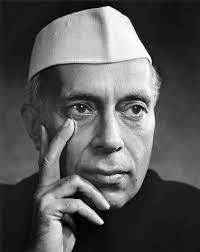
Children’s Day is celebrated on November 14 every year. The day marks the birth anniversary of Pandit Jawaharlal Nehru, India’s first prime minister. He was given the moniker Chacha Nehru because of his fondness for children. His birthday has been designated as Children’s Day since his death in 1964.


Children are like buds in a garden and should be carefully and lovingly nurtured, as they are the future of the nation and the citizens of tomorrow. 

Pandit Jawaharlal Nehru


What is the significance of Pandit Jawaharlal Nehru’s birthday being designated as Children’s Day?


Nehru 1

Nehru Ji had a strong affection for children. He believed that they are the nation’s future creators. If we want to safeguard our future, we must all work together to shape the destiny of these youngsters. Our country began to commemorate his birthday as Children’s Day in honour of this. The main goal of this celebration was to raise awareness among all Indians about the importance of providing children with the opportunity to receive an education. It is their right to follow a suitable path. Therefore, a well-organized and prosperous nation can be built, and the children’s future can also be secured.

Jawaharlal Nehru once said that a nation’s property is not in its repository but in its schools. Thus, we must identify our children as the country’s riches, preserve them, and promote their future. We at Smile Foundation believe in this firmly.


In our country, Children’s Day is celebrated with great enthusiasm. Pt. Jawaharlal Nehru is honoured on this memorable day. On this day, the stories of Nehru’s contribution for children are remembered.


His Substantial Contributions


In the context of Indian history, Nehru is significant because he imported and transmitted modern values and methods of thinking. Moreover, he adapted these to Indian situations. Despite India’s ethnic and religious diversity, he emphasised the country’s fundamental oneness. Nehru was genuinely concerned with leading India into the contemporary age of scientific discovery and technical growth. He also instilled in his people a sense of the importance of social care for the destitute and outcasts, as well as a respect for democratic norms.


During his 17 years as Prime Minister, he promoted democratic socialism as the guiding star, emphasising the importance of India achieving both democracy and socialism. He made progress toward that goal with the aid of the Congress Party’s overwhelming majority in parliament during his period of power. Democracy, socialism, unity, and secularism were the four foundations of his domestic policies. During his lifetime, he was largely successful in preserving the edifice anchored by those four pillars. 


Nehru’s Philosophy and Our Work


Nehru committed time and effort to developing a coherent national philosophy, in line with his idea that every state required a ‘national philosophy’ to sustain, cohere, and direct it. For him,’modernisation’ was India’s national philosophy, encompassing seven national objectives: national unity, parliamentary democracy, industrialization, socialism, scientific temper, secularism, and non-alignment. He also established the prestigious educational institutions of Indian Institute of Technology in Kharagpur (IIT) in 1951 and Indian Institute of Kolkata (IIM) in 1961.

The only way to reform them (children) is to win them over with love. So long as a child is unfriendly, you can’t mend his ways.

Pandit Jawaharlal Nehru

Even during the pandemic, our work in this regard has not stopped.

Read more


Categories
In The Spotlight

India Marks National Education Day 2021 on November 11

On the birth anniversary of Maulana Abul Kalam Azad, India marks National Education Day on November 11 each year. Azad was a celebrated educationist and writer. He served as the first Minister of Education of independent India along with being the Vice President.


Educational institutions across the country mark the day with various activities. Seminars, essay-writing competitions, workshops, and rallies on the importance of literacy and India’s commitment to education are part of the celebrations.


Why is Azad’s birthday marked as National Education Day?


Maulana Abul Kalam Azad made exemplary contributions to the field of education and institution building. It was he who paved the way for modern education in India. He has made many contributions to the field of education. Due to this, Azad is deemed to be the main architect of education in India.


The Ministry of Human Resource Development declared the birthday of ‘the great son of India’ as National Education Day in 2008. Since then, this date celebrates Maulana Abul Kalam Azad’s contributions every year.


His significant contributions


Maulana Abul Kalam Azad played a key role in driving the effort to eradicate illiteracy. He emphasized on elementary education and stressed on the importance of secondary education as well.


He played a significant role in the establishment of various educational institutions. Some of these are Indian Institute of Science and Jamia Milia Islamia. His most significant contribution was the establishment of the first Indian Institute of Technology in 1951. Over the past few decades, a number of IITs have come up.


Maulana Azad’s philosophy and our work


Azad had a pure philosophy for India’s education. And Smile Foundation firmly believes in this.


We must not for a moment forget, it is a birthright of every individual to receive at least the basic education without which he cannot fully discharge his duties as a citizen.”


Our Mission Education programme and related campaigns all focus on the right of each child to receive an education. Keeping in mind the role of children as citizens of tomorrow, we focus on an all-round lifecycle approach to intervene at various stages of a child’s development and health.


Donate now

Categories
Insights

The Role of STEM Education in National Education Policy 2020

Science, technology, engineering, and mathematics (or STEM) are slowly being recognized as a vital part of education. Thus, the role of STEM education in the National Education Policy 2020 is very important. The need of the hour is to understand why this is so and how we can work on it in conjunction with the changing times.


Why is STEM education important?


The STEM approach has certain aims. Earlier, these four subjects were mostly taught in isolation. Thus, there was the issue of integrating it into the curriculum, Moreover, without this integrated approach, there were also issues with hiring qualified candidates for high-tech jobs.


STEM education has emerged as a common term with reference to shortage of skilled workers and inadequate education in these fields.


STEM education uses new technologies to enhance STEM skills. This also encourages an interest in STEM fields. There are various methods to do this.


Develop a pool of talent by encouraging early learning in science and mathematics.

Strengthen teachers’ skills by providing additional training

Enlarge the scope for students to graduate with STEM skills, equipped with STEM skills.


STEM Education in the National Education Policy


Under the NEP 2020, it will be easy to integrate STEM learning and approach in the updated curricula. The pool of scientists, engineers, and mathematics will be strengthened a great deal if STEM education is introduced in stages at various levels. Some of the measures suggested by the new structure are as follows.


  1. The new policy seeks to encourage experiential learning. Learning objectives, and not rote learning, will be the focus in the future.
  2. Core essentials will become the focus. Emphasis will be on key concepts, ideas, applications and problem-solving. Critical thinking and holistic, inquiry-based, discovery-based, discussion-based, and analysis-based learning will be the focus of NEP 2020.
  3. Experiential learning and hands-on learning will play a big part in STEM education.
  4. Introduction of subjects such as Artificial Intelligence (AI) and Design Thinking will be important for STEM.
  5. An emphasis on Math, computational thinking, machine learning (ML), and data science will now begin at the foundational stage (at age 6).
  6. Students will start learning coding at age 11.


Thus, the NEP has a focus on a multidisciplinary approach. This will enhance conceptual understanding and foster skills such as critical thinking, hands-on training, and creativity. These are all important for STEM education.


The future of STEM learning


STEM learning is integral to every child’s development. With the digital influence in every person’s life, children’s exposure to technology is more than ever now. In a way, they have constant exposure to STEM in their daily lives. Thus, it is important to educate them about the same.


One is more receptive to and capable of learning at a younger age. That is why it is important to inculcate STEM learning from an early age, along with discipline, etiquettes, and social skills.

Categories
Insights

Online Education versus Conventional Classroom Method

It is no longer news that COVID has altered our way of life. The deadly virus has caused tectonic disruptions in practically every part of our lives. Be it business, entertainment, hospitality, or education – we are still dealing with the fallout. We’re also arguing how long these shifts will last and what the new normal will be in each of these industries. In this situation, a question about our education system becomes pertinent. In the tussle between online education versus conventional classroom method, which will trump?


Can online education take the role of in-person instruction? – The COVID-19 case


Soon after it became evident that this was not a passing infection, educational institutions began to shift toward online teaching. Students and professors swiftly adapted to the shifting ways of teaching and learning.


This success, however, has fueled widespread conjecture that the pandemic has launched a dramatic change. This is particularly in higher education, with many suggesting that online education is the future of college education.


The truth is that the future is no longer so black and white – there is much gray in between. What appears to be on the horizon is a hybrid model of learning — a mix of online and offline components. While on-campus teaching will undoubtedly return (maybe not as soon as we’d like, but it will), there will also be a plethora of online options available for those who want it.


Will one, however, take precedence over the other? No, because each has distinguishing features that make them worthwhile. People will learn to combine the two.


However, when it comes to choosing one over the other for college education, one argument can say that online learning can never truly replace an on-campus experience.


The immersive campus life is not the same as the virtual one


It’s not just about textbook learning and lectures in class. It is also about making lifelong friends and communicating with people from all over the world and having fervent debates late into the night over copious cups of tea. It is about sociability and adaptability – about learning to live alone in a new culture, new city, or even new country.


As you go away from the comfort of your home, it teaches you to be independent. Online college deprives students of these important life lessons.


Online education versus conventional classroom method


It may be easier to adapt standard theoretical subjects to online learning. However, this is not the case for a wide range of disciplines and fields in which students choose to specialize. Online learning deprives students of key resources such as labs and studios, which are required for particular disciplines and cannot be replicated at home.


For vocational majors such as theatre, cinema, music, and dance (to name a few), the shift to online learning is taking away more than it is providing. Being on campus also permits classes to go on field trips in their field of study. It allows students to see real-life applications of the things they’re studying. Online classes will find it difficult to replace this.


A case study


In Dakshina Kannada and Udupi Districts in Karnataka, a study was undertaken to assess teachers’ and students’ attitudes regarding online classrooms.


The research was carried out utilizing data acquired through two distinct structured questionnaires for students and teachers in the Karnataka districts of Dakshina Kannada and Udupi. The data was entered into a data software and evaluated using descriptive statistics.


According to the findings of the survey, students are comfortable with online classrooms and receive adequate assistance from teachers. However, they do not feel that online classes will replace traditional classroom instruction. It also discovers that teachers are having difficulty giving online classes as a result of a lack of sufficient training and development for doing so. Technical concerns are the most significant impediment to the efficacy of online classes.


Most institutions and universities consider incorporating online classes into their curriculum. As a result, it is critical to solicit feedback from participants in online programs before applying for them. This survey may assist institutions in gaining a general understanding of online classrooms among teachers and students.


The Internet and new technology have gained relevance in all industries, including education, creating opportunities for online classes. Furthermore, the global COVID pandemic has increased the importance of online classes. In this light, it is critical to comprehend student–teacher views of online classes.


Will Internet learning take the place of traditional classroom instruction?


While it is laudable that the education sector reacted so swiftly to the epidemic, allowing those even outside of official education settings to attend lectures, conversations, and readings, there is no denying that online education (particularly for universities) comes with its own set of issues.


It can be restrictive, and it risks perpetuating the misconception that university is only about theoretical academics. As a result, the future of education must be a healthy balance of online and offline — with the former serving as a supplement to the latter.

0%