Categories
Girl Child

Donate for Child Education in India: How Rs 500 a Month Can Change a Child’s Life

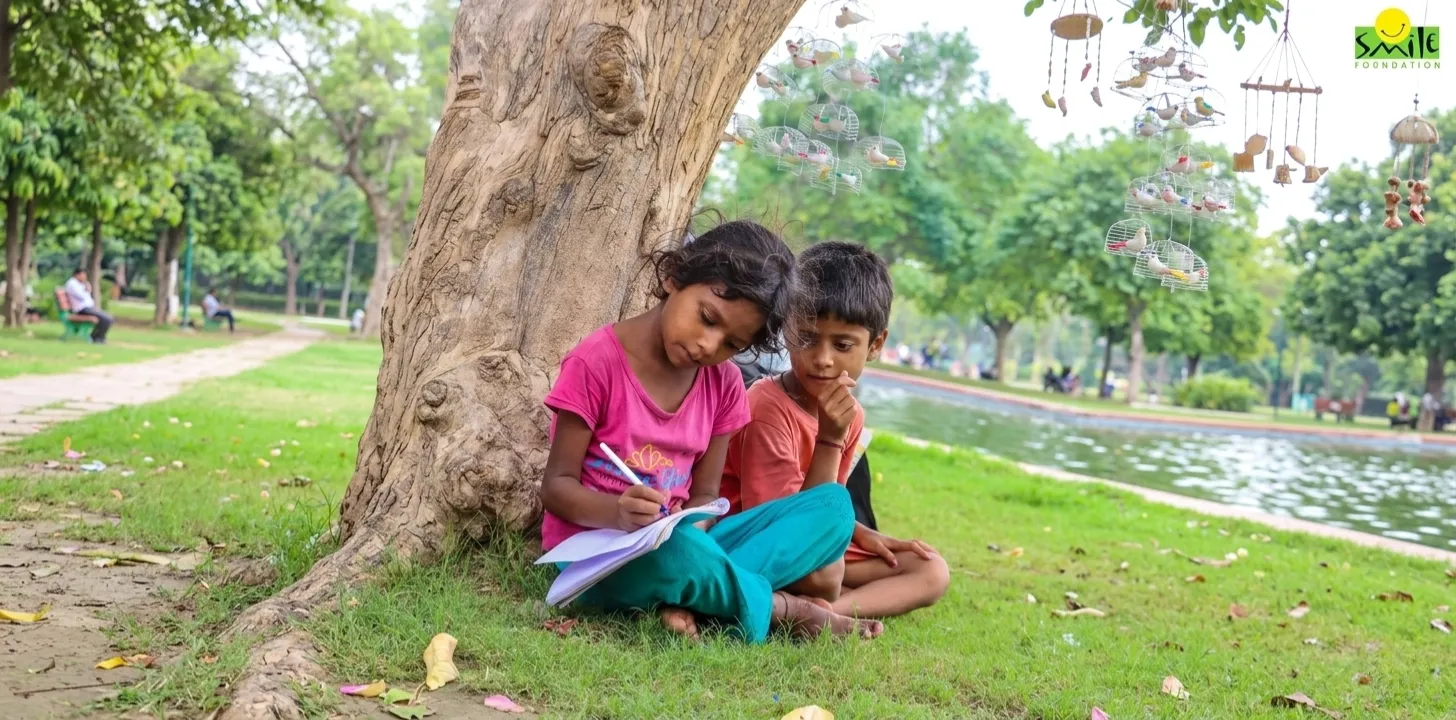
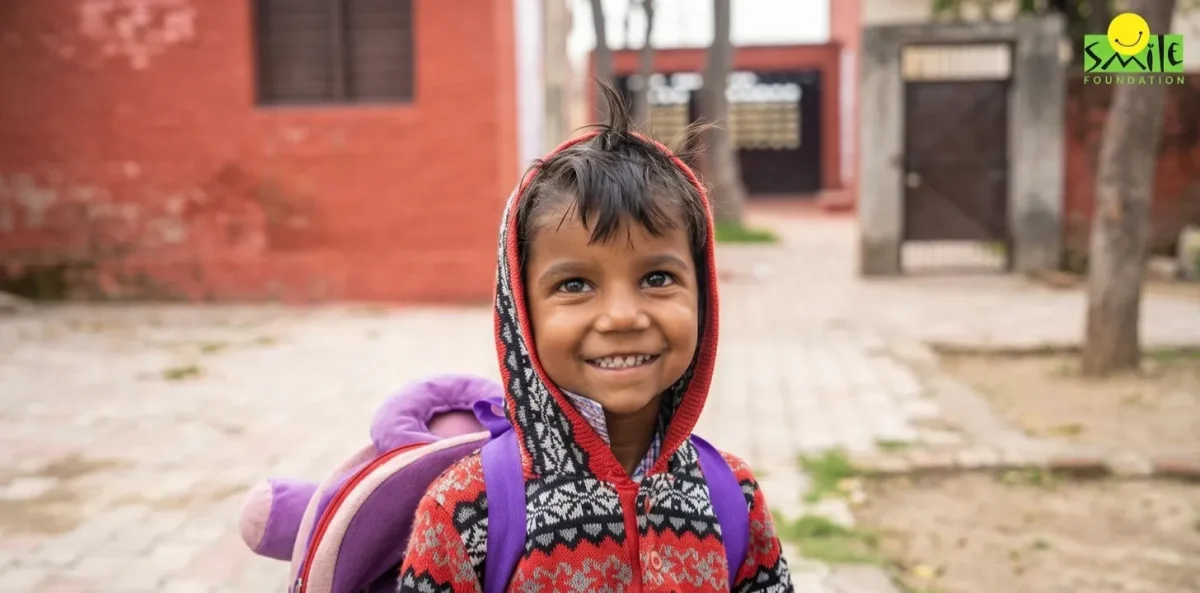
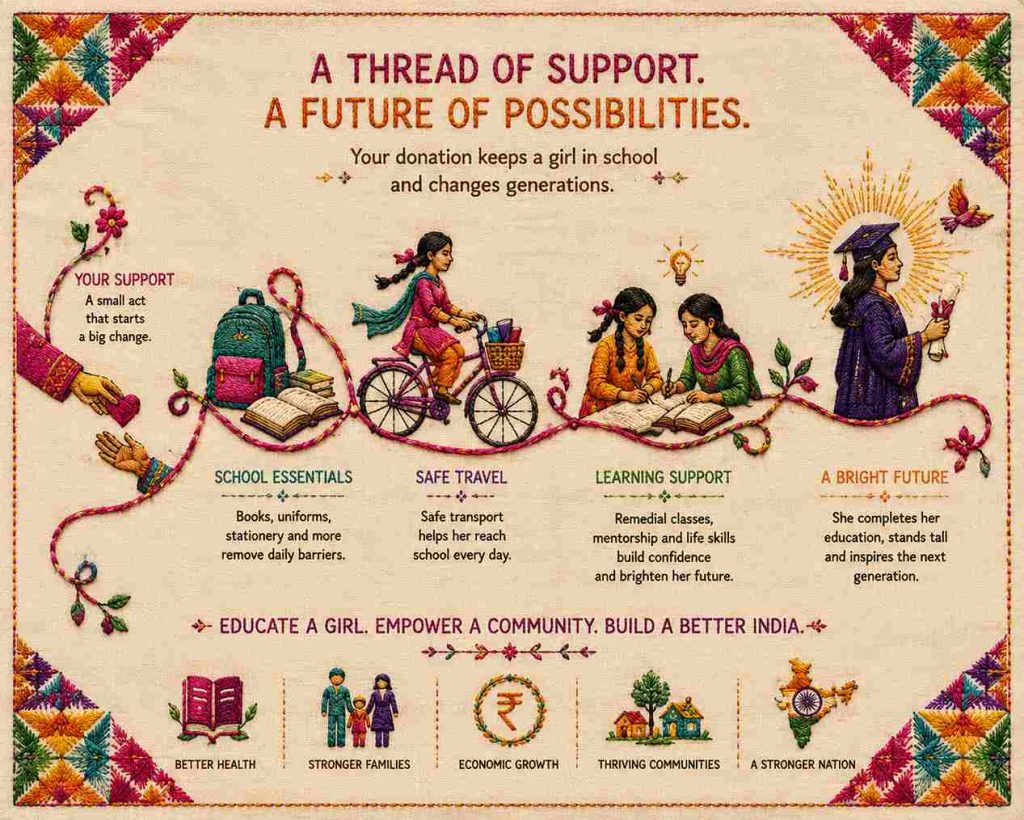
In India today, millions of children wake up every morning without a school to go to. Not because they don’t want to learn. But because the cost of staying in school — notebooks, uniforms, bus fare, a midday meal — is simply too much for their families to bear. So thinking to Donate for child education in India is one of the most direct ways to change that reality, and it costs less than most people think.

Rs 500 a month. That is roughly the price of a meal for two at a mid-range restaurant. For a child from a low-income family, it can mean the difference between dropping out and finishing school.

Why Millions of Children in India Still Need Your Help

International Day of the Girl Child 2025

India has made extraordinary strides in education over the past two decades. Enrolment rates have improved. New schools have been built. The Right to Education Act legally guarantees free and compulsory education for every child between 6 and 14.

And yet the gap between enrolment and learning, between showing up and staying, remains wide and stubborn.

How Many Children Are Out of School in India?

According to UNESCO, India still has one of the largest out-of-school child populations in the world. UNICEF estimates that millions of children, particularly girls, children with disabilities and children from marginalised communities, either never enrol or drop out before completing primary education.

The Annual Status of Education Report (ASER) has consistently shown that even among children who do attend school, many struggle to read a simple sentence or do basic arithmetic by the time they reach Class 5. Being in school and receiving an education are not always the same thing.

donate for child education

What Stops a Child From Going to School?

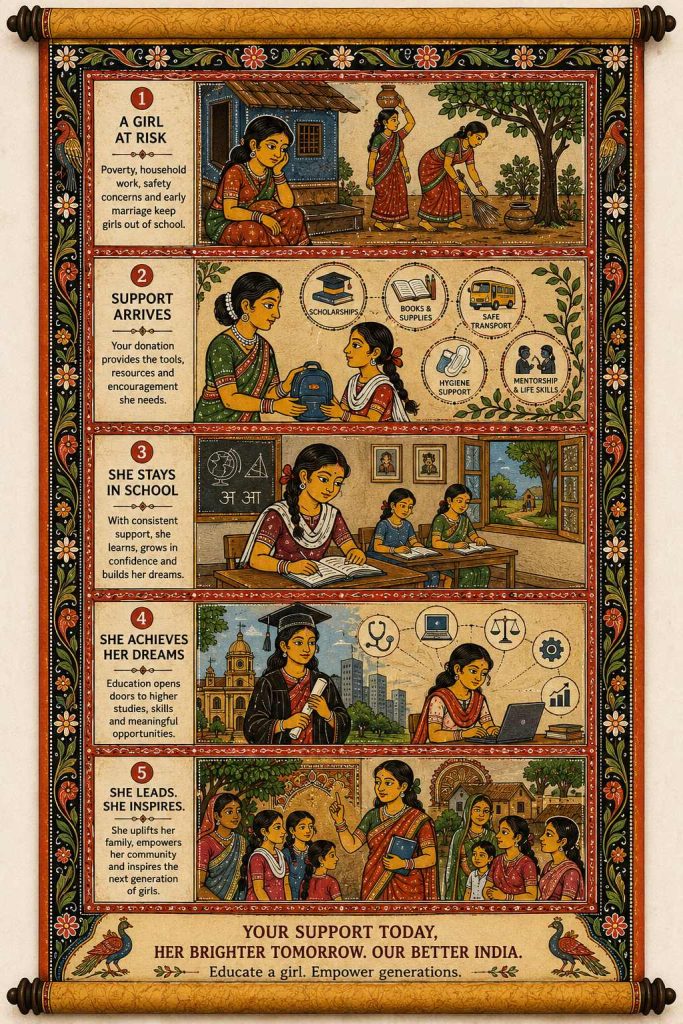
The barriers are rarely just one thing. They stack up.

  • Poverty: Families in extreme poverty cannot always absorb even indirect school costs — stationery, shoes, transport.
  • Child labour: Older children, especially boys, are often pulled into work to supplement family income.
  • Early marriage: Girls in rural areas face pressure to marry young, cutting short any educational future.
  • Distance: In remote regions, the nearest school can be several kilometres away with no safe transport.
  • First-generation learners: When neither parent has been to school, they often cannot support a child’s learning at home or advocate for their education.

Each of these barriers is real. Each requires more than goodwill to overcome. But each can be addressed, piece by piece, through sustained support.

Donate for Child Education: How Even a Small Contribution Can Change a Child’s Life

It is easy to feel that individual contributions are too small to matter in the face of a problem this large. That feeling is understandable and almost entirely wrong.

Child education in India does not fail because of a lack of ambition. It often fails at the smallest, most preventable points: a child who cannot afford a notebook, a girl who drops out because there is no toilet at school, a boy who stops attending because his family can no longer feed him in the afternoons.

Targeted donations, especially when pooled and deployed by organisations that understand local realities, fix exactly these kinds of problems.

What Rs 500 a Month Can Do

Rs 500 a month, sustained over a year, can:

  • Cover the cost of books and stationery for one child for an entire academic year
  • Contribute toward a school uniform that allows a child to attend without stigma
  • Fund remedial learning support for a child falling behind in foundational literacy
  • Support a midday meal programme that keeps children in school through the afternoon
  • Help pay for digital learning tools in under-resourced classrooms

None of these are abstract interventions. They are the practical, unglamorous things that keep a child enrolled, engaged and moving forward.

Smile Foundation Annual Innovation Challenge 4

Real Stories of Children Helped: Donate for Child Education

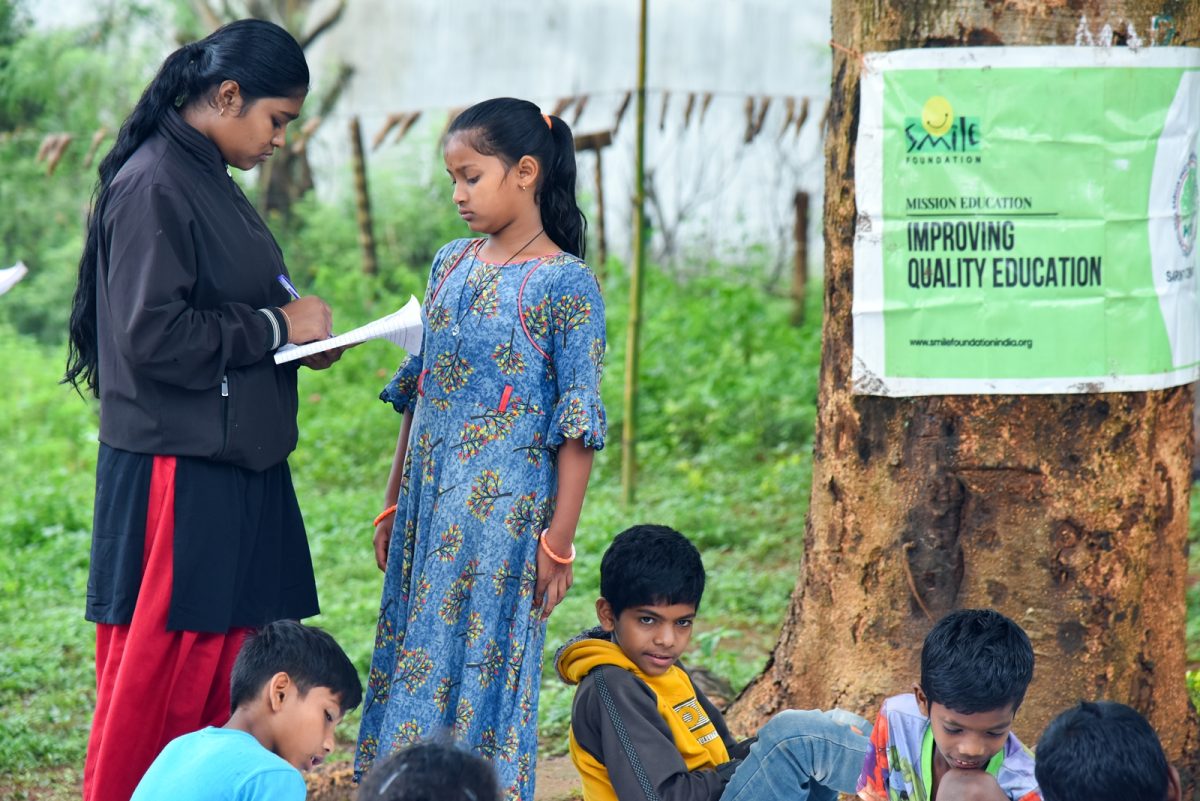
Across the communities where Smile Foundation works, children supported through Mission Education regularly describe the same turning point: the moment someone showed up and said the school would be there for them.

For Priya, a 12-year-old in Rajasthan, that moment came when a remedial learning centre opened in her village. She had been attending school but could not read. Within a year of focused support, she was reading full paragraphs in Hindi and doing multiplication independently.

For Arjun, growing up in a resettlement colony on the outskirts of Delhi, it was access to a bridge education programme that caught him after he had already dropped out. He is now back in the mainstream school system.

These are not exceptional cases. They are what consistent, well-designed support produces.

How to Donate for Child Education in India

If you have decided you want to help, the process is simpler than most people expect.

You can donate for child education to Smile Foundation’s Mission Education programme directly through the Smile Foundation website. The platform accepts one-time and monthly contributions, is secure and issues a receipt immediately.

If you are donating on behalf of a company as part of a CSR commitment, Smile Foundation also works with corporate partners to design structured giving programmes aligned with specific geographies or outcomes.

One-Time vs Monthly Donation: Which Is Better?

Both matter. But monthly giving has a compounding effect that one-time donations cannot replicate.

A one-time gift funds a specific resource. A monthly donation funds continuity. It allows organisations to plan, hire, train and maintain programmes without the anxiety of funding gaps. For a child, continuity is everything. Dropping out often happens not in one dramatic moment, but gradually, across weeks of slow disengagement.

Monthly donors make sustained attendance possible.

Catering to the Education and Health Needs of Tribal Populations

How to Claim 80G Tax Benefits on Your Donation

Donations to Smile Foundation are eligible for 80G tax deduction under the Income Tax Act. This means a portion of your contribution is deductible from your taxable income.

To claim the benefit:

  • Ensure you receive an 80G receipt from Smile Foundation after your donation
  • Keep the receipt ready when filing your income tax return
  • Enter the donation amount under the relevant section in your ITR form

For salaried individuals, this can meaningfully reduce annual tax liability while directing money toward something that genuinely matters.

How Smile Foundation Uses Your Donation for Child Education

School of books and broken dreams
Empty desk in classroom sunlight
ChatGPT Image Jun 1 2026 08 38 39 AM 11zon

Smile Foundation’s Mission Education programme runs learning centres, remedial programmes and school readiness initiatives across multiple states in India. It focuses specifically on children from low-income urban and semi-urban communities: the first-generation learners, the early dropouts, the children who fell through the cracks of the formal system.

The programme does not just support enrolment. It tracks attendance, monitors learning outcomes, trains local educators and works with families to reduce the pressure to pull children out of school.

Funding goes toward learning materials, educator salaries, infrastructure support and the kind of community trust-building that makes families believe education is worth the investment of time and sacrifice.

Transparency matters too. Smile Foundation publishes its annual reports and programme data, giving donors a clear view of where contributions go and what they achieve.

FAQs: Donate for Child Education in India

How does donating for child education help in India?

Your donation funds the direct costs that prevent children from attending or staying in school: books, meals, uniforms, learning support and educator training. When pooled and deployed by experienced organisations, small contributions create measurable, lasting change at the community level.

How much does it cost to educate one child in India?

Estimates vary by programme and region, but many well-run NGOs can provide meaningful educational support for one child for Rs 500 to Rs 1,000 per month. This covers materials, learning support and programme costs, not institutional fees.

What happens to my donation for child education?

Organisations like Smile Foundation allocate donations across learning materials, educator salaries, programme delivery and community engagement. Smile Foundation publishes annual reports so donors can verify exactly how funds are used.

Can I sponsor a specific child’s education in India?

Some programmes offer child sponsorship models. Smile Foundation’s approach pools contributions across programme areas, which allows resources to reach more children more efficiently, though you can often designate a geography or initiative you want to support.

Is a monthly donation better than a one-time gift?

Monthly giving creates continuity, which is particularly valuable in education. It allows programmes to plan ahead and ensures children receive consistent support rather than sporadic resources.

How do I get an 80G tax receipt for my child education donation?

Smile Foundation issues 80G receipts automatically after a donation is processed. Keep this receipt to claim a deduction when filing your income tax return.

Can I donate books and stationery instead of money?

Some organisations accept material donations. However, monetary donations are often more efficient, allowing organisations to procure exactly what is needed in specific locations at lower cost.

How can I verify that my donation is being used properly?

Look for organisations with published annual reports, outcome data and regulatory compliance. Smile Foundation is registered and compliant under relevant Indian charity laws, with publicly available financial and programme reports.

How do I start donating Rs 500 a month for a child’s education?

Visit Smile Foundation’s donation page, select the monthly giving option, choose your amount and complete the secure payment. The entire process takes under five minutes.

What does Smile Foundation do when you donate for child education?

Smile Foundation runs Mission Education, a programme that supports out-of-school and at-risk children through community learning centres, remedial education and school readiness initiatives. Donations fund educators, materials, outreach and the sustained community presence that keeps children enrolled.

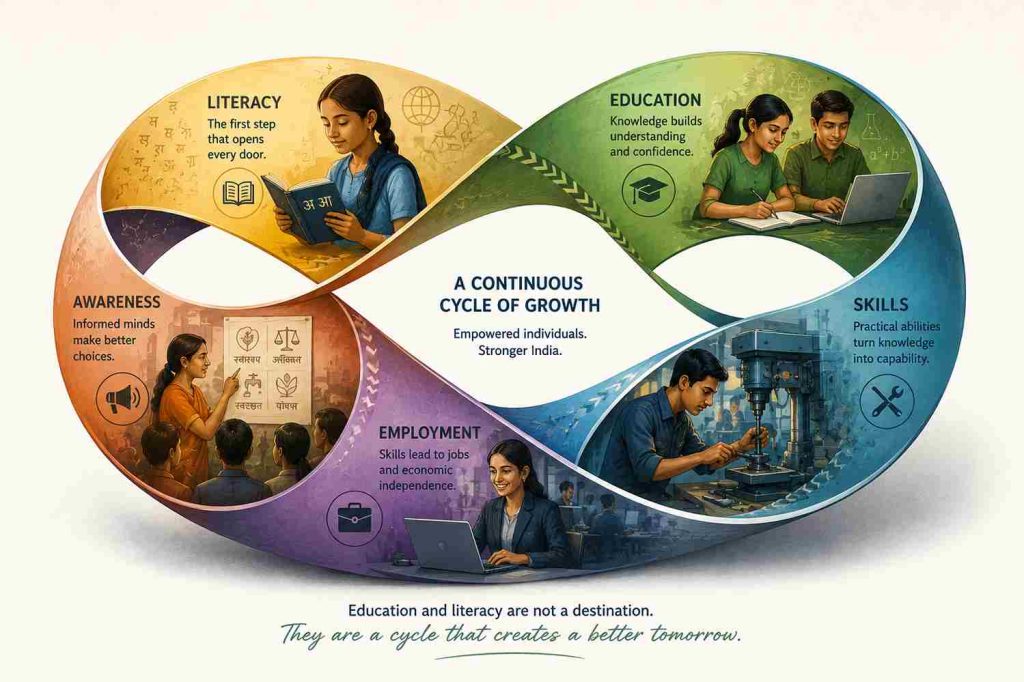
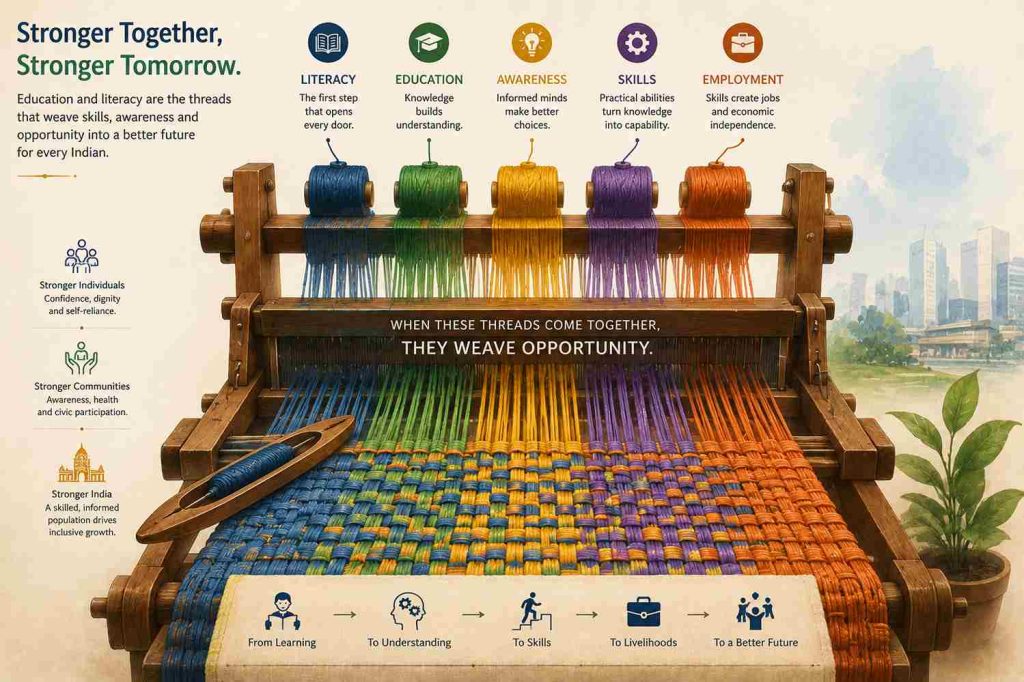
Every child who drops out of school does not disappear. They grow up. They enter adulthood with fewer choices, narrower opportunities and a harder road ahead. The decision to donate for child education in India is not charity in the abstract. It is an investment in a specific child’s specific future.

Rs 500 a month. One less reason for a child to stop showing up.

Support Smile Foundation’s Mission Education programme here.

Categories
Livelihood

Beyond Wages: Why Livelihood Programmes Must Focus on Dignity, Not Just Income

Summary

  • Income is a necessary but insufficient measure of livelihood success — poverty also encompasses vulnerability, exclusion and lack of voice, none of which a wage increase alone can address.
  • Dignity in work means safety, fairness, agency and the confidence to imagine a future beyond survival — qualities the ILO’s Decent Work framework recognises as essential, not aspirational.
  • Women face compounding barriers beyond income, including unpaid care work, mobility restrictions and social norms making agency and decision-making power as important as employment itself.
  • Livelihood programmes must go beyond certification to build full ecosystems of support including market access, mentorship, networks and confidence-building because opportunity rarely follows training automatically.
  • The most effective livelihood programmes start by listening: dignity is contextual, trust takes time and lasting change depends on community participation far more than funding alone.
Revealing identity from behind the glass

For decades, livelihood programmes across the development sector have been judged largely by one metric — the income bracket. If a household earns more after a policy or scheme intervention, the programme is often considered successful. It is an understandable measure, where income is tangible, easy to quantify and directly linked to poverty reduction. But increasingly, practitioners, policymakers and communities themselves are recognising that livelihood is about far more than wages.

A person may earn more and still feel insecure, excluded, overworked or trapped in exploitative conditions. They may have a job, but not dignity.

This is where the conversation around livelihoods is changing. Across the world, there is growing recognition that sustainable development requires looking beyond earnings and asking deeper questions: Does the work provide security? Does it offer agency? Does it improve confidence, social standing, and well-being? Does it allow individuals, especially women, youth and marginalised communities, to live with dignity?

A livelihood, after all, is not simply a source of income. It is deeply tied to identity, autonomy and belonging. When development programmes ignore that, they risk solving one problem while leaving many others untouched.

Why income alone is an incomplete measure

Are Core Skills Important in the 21st Century?

Income matters. There is no denying that. For families living in poverty, even a modest increase in earnings can mean better nutrition, school attendance, access to healthcare and reduced debt. According to the World Bank, nearly 700 million people globally still live in extreme poverty, surviving on less than $2.15 a day.

But poverty is not only about low income. It is also about vulnerability, lack of voice, insecurity and exclusion. A woman earning daily wages in unsafe working conditions may technically have “employment,” but not necessarily a better life. A young migrant earning in a city may send money home, yet live in isolation and precarity. A street vendor may earn enough to survive but remain vulnerable to harassment, eviction and exploitation.

This is why livelihood programmes that focus only on income often miss the fuller reality of what people need.

The meaning of dignity in livelihood

Dignity is harder to measure than income, but no less important. It means being able to work without humiliation, having agency over one’s choices, being treated fairly, earning safely and feeling valued. It also means having the confidence to imagine a future beyond survival.

The International Labour Organisation captures this idea through its framework on “Decent work and 2023 Agenda for sustainable development,” which argues that employment should be productive, secure and rights-based, not merely available. 

That distinction matters. A livelihood that pays but strips dignity can reinforce cycles of inequality rather than break them.

Why this matters especially for women

Promising Developments for Sustainable Livelihood Programmes in the Next Decade

Conversations on dignity become even more urgent when discussing women’s livelihoods.

Across many parts of the world, women’s economic participation remains constrained not only by income barriers but by unpaid care work, mobility restrictions, discrimination and social norms. In India, female labour force participation has improved in recent years, yet it remains significantly lower than that of men — under 40%, according to the World Bank Gender Data.

For many women, earning an income is transformative, but dignity comes from more than wages. It comes from decision-making power in the household, confidence in public spaces and freedom to shape one’s own future. This is why many of the most successful women’s livelihood programmes focus not only on jobs, but on agency.

A strong example of this approach is Smile Foundation’s women empowerment work, which goes beyond income generation to focus on long-term agency and social mobility. Through targeted livelihood programmes, the organisation has supported thousands of women and adolescent girls across underserved communities with relevant skills, vocational training, digital literacy, entrepreneurship support and life-skills development. By combining employability with confidence-building and community participation, its model recognises that true empowerment lies not only in enabling women to earn, but in strengthening their ability to make decisions, exercise voice and shape their own futures.

Skill development is not enough

Governments and organisations often respond to unemployment through skill-building initiatives. These are important, but they are not always sufficient.

Training someone in tailoring or digital literacy does not guarantee a livelihood. People also need access to markets, social networks, mentorship, transport, credit and often emotional support. Too many skilling programmes assume that once training ends, the problem is solved.

But livelihoods do not begin with certification, but with opportunity. That is why programme design must think beyond training and toward ecosystem support. This is increasingly evident in Smile Foundation’s livelihood programme, which views skilling as only one part of a broader employability ecosystem. Through initiatives such as STeP (Smile Twin e-Learning Programme), we combine vocational training with placement support, digital and communication skills, industry linkages and career readiness to improve long-term employment outcomes. Our model acknowledges that certification alone rarely changes lives; sustained livelihoods require confidence, networks and access to opportunity beyond the classroom.

Informality and invisible work and the emotional burden

ChatGPT Image Jun 1 2026 07 51 53 AM 11zon

A major challenge in countries like India is that much of the labour force operates within the informal economy, where work is often insecure by design. According to the International Labour Organisation, more than 80% of India’s workforce is employed informally, meaning millions of workers earn livelihoods without formal contracts, legal protections, social security or stable income guarantees. Their earnings may fluctuate month to month, their working conditions may be unsafe and their livelihoods can disappear overnight. Yet the consequences of such insecurity are not only economic but are deeply psychological.

Work shapes more than income — it shapes confidence, identity, routine and a sense of social belonging. When work becomes unstable, it often erodes self-worth alongside financial security. This is particularly visible among young people navigating fragile labour markets, where the experience of being “trained but unemployed” can lead to frustration, anxiety and disillusionment. If livelihood programmes focus only on increasing income without addressing vulnerability, they may improve wages while leaving insecurity and its emotional toll intact.

This is why the most effective livelihood interventions increasingly combine economic support with mentoring, peer networks and confidence-building, recognising that durable change depends not only on helping people earn, but on helping them feel secure enough to imagine and pursue a future.

What dignity-centred livelihood programmes look like

A dignity-centred livelihood programme begins with a fundamentally different question. Instead of asking, “How many jobs were created?”, it asks, “What kind of work was created and what did that work mean for the individual?” That shift changes everything about programme design. It pushes organisations to think beyond placement numbers and income targets toward the quality and meaning of work itself: whether it is safe, fairly paid and sustainable, whether it expands mobility and opportunity, and whether it enables voice, choice and social inclusion.

It also requires recognising that dignity is deeply contextual. For some, it may mean formal employment and financial stability. For others, it may mean entrepreneurship, flexibility, or simply the social recognition that comes from being seen as economically independent. There is no universal formula, which is why the most effective livelihood programmes begin not with assumptions, but with listening and understanding what communities themselves value and what meaningful work looks like in their lived realities.

This is also why trust matters so deeply. Livelihood programmes are most successful when they are rooted in local realities, shaped by community participation and built through long-term relationships rather than one-time interventions. This is especially true for populations that have historically faced repeated exclusion — women returning to work, youth from underserved communities, persons with disabilities and migrant workers, many of whom approach institutions with justified scepticism. Trust enables participation and participation enables sustainability. Without trust, even the most well-funded programme can struggle to create lasting change.

A strong example of this dignity-centred approach can be seen in the work we have been doing for years, which has increasingly embedded dignity into its livelihoods strategy. Through its STeP (Smile Twin e-Learning Programme) initiative, we go beyond vocational training to focus on employability, communication, confidence-building and career readiness among underserved youth, recognising that technical skills alone do not guarantee access to or retention in formal employment.

Young people need social confidence as much as they need technical capability. Similarly, through Swabhiman, we work with women and adolescent girls not only to improve economic opportunity but to strengthen agency, health and self-worth and acknowledge that women’s livelihoods are shaped as much by mobility, social norms and voice within households as by wages themselves. Together, these programmes reflect an increasingly important understanding: livelihoods are not experienced merely as salaries or jobs, but as pathways to identity, confidence, dignity and independence.

FAQs

Q1. Why isn’t income enough to measure livelihood success?

Because poverty is about more than low earnings — it also involves insecurity, exclusion and lack of voice. Someone can earn more and still face unsafe conditions, exploitation or a complete absence of agency over their own life.

Q2. What does dignity in work actually mean?

It means working without humiliation, being treated fairly, having choices and feeling valued. It also means earning safely and having the confidence to pursue a future beyond day-to-day survival — not just receiving a wage.

Q3. Why do women’s livelihoods require a different approach?

Because women’s economic participation is shaped by far more than job availability. Unpaid care work, mobility restrictions, household power dynamics and social norms all constrain what earning an income actually means for women in practice.

Q4. What is missing from most livelihood programmes?

A certificate does not create a livelihood on its own. People also need market access, mentorship, transport, credit and social support. Effective programmes treat skilling as one part of a broader ecosystem, not the endpoint.

Q5. What do dignity-centred livelihood programmes look like?

Livelihood programmes start by asking what kind of work was created, not just how many jobs. It prioritises safety, sustainability and voice alongside income — and it is built on trust, local knowledge and long-term community relationships rather than one-time interventions.

Categories
CSR

Outputs vs Outcomes vs Impact: A Simple Guide for CSR Leaders

In the world of corporate social responsibility (CSR), one question continues to define whether a programme is only active or genuinely effective: what impact did it actually make on the ground?

Outputs vs Outcomes vs Impact: A Simple Guide for CSR Leaders

For years, CSR largely focused on what organisations had done. Annual reports highlighted the number of schools built, saplings planted, scholarships awarded or health camps conducted. These figures mattered because they demonstrated effort, scale and financial commitment. But as the CSR ecosystem has matured, these numbers have begun to feel insufficient. Today, regulators, investors, boards and communities are asking deeper and more meaningful questions:

Did those schools improve learning?

Did those saplings survive?

Did those health camps improve long-term health outcomes?

Save Tax on Donations

This shift reflects an important change in how social investment is understood. It is no longer enough to measure activity as organisations are increasingly expected to measure change. That is where the distinction between outputs, outcomes and impact becomes critical. For CSR leaders, understanding these concepts is not simply about improving reporting language but it is about making better strategic decisions, designing more effective programmes and ensuring that resources create lasting social value.

Why this distinction matters more than ever

India is one of the few countries in the world where CSR spending is mandated by law. Under the Ministry of Corporate Affairs, the CSR mandate in the Companies Act 2013 requires eligible companies to spend 2% of their average net profits on social development initiatives. According to the National CSR Portal, annual CSR expenditure in India now exceeds ₹30,000 crore, making it one of the largest institutional pools of social capital in the world.

This scale naturally raises an important question: if so much money is being invested, what is it truly achieving? Increasingly, stakeholders are no longer satisfied with hearing how much has been spent. They want to understand what changed as a result of that spending. Did lives improve? Were systemic problems addressed? Were communities strengthened? This is why outcomes and impact have moved from the margins of CSR discussions to the centre of strategic planning.

Understanding the three levels of change

485176921 1127466502737824 89330 1 1

At its simplest, outputs, outcomes and impact represent three different layers of social change.

Outputs are the most immediate and visible results of a programme. They describe what was delivered or completed. If a company funds a school programme, the output may be that 500 students were enrolled, 20 classrooms were built or 1000 learning kits were distributed. Outputs are important because they confirm that activities happened. They help organisations track implementation and monitor whether commitments were fulfilled. But outputs do not tell us whether those activities actually improved people’s lives.

That is where outcomes become important. Outcomes refer to the short- to medium-term changes that occur because of a programme. Continuing with the education example, an outcome might be improved attendance, higher test scores or increased retention among girls. In a healthcare programme, it may mean increased immunisation rates or better maternal health indicators. Outcomes help organisations understand whether their intervention is producing meaningful progress. They shift the focus from activity to effectiveness.

Impact, meanwhile, is the deepest and most long-term level of change. It captures what happens when outcomes are sustained over time and begin to reshape lives, communities or systems. In education, impact may mean reduced dropout rates, increased employability or improved intergenerational mobility. In livelihoods, it could mean rising household incomes or reduced poverty over several years. Impact is harder to observe and even harder to measure, but it is ultimately the reason social programmes exist.

What a simple example looks like

Consider a company that funds an education initiative in rural India. If it distributes 1000 school kits, that is an output. If student attendance rises from 65% to 88% over the following year, that is an outcome. If, over five years, dropout rates decline significantly and more girls complete secondary education, that is an impact. All three levels matter. Together, they tell the full story of change. But when organisations confuse them, especially when they label outputs as “impact”, they risk misunderstanding whether their work is truly effective. 

The ripple of lasting change

Why CSR often stops at output

Many CSR programmes continue to focus heavily on outputs because outputs are easier to measure and communicate. They provide clean numbers that fit neatly into annual reports and board presentations. Saying “we built 200 classrooms” sounds tangible and impressive. It signals action.

But outputs can create a false sense of success. A company may report that it distributed thousands of tablets to students, yet never ask whether children were able to use them effectively or whether learning actually improved. In such cases, the programme may appear successful on paper while failing to create meaningful change on the ground.

This is the danger of output obsession: it rewards visible activity rather than actual progress.

Why outcome matters for better decision-making

When organisations begin focusing on outcomes, their entire approach changes. Instead of asking, “How many people can we reach?”, they start asking, “What change are we trying to create?”

That seemingly small shift has major consequences. It improves programme design by tying interventions to clear goals. It strengthens budget decisions by allocating resources to strategies that deliver measurable improvement. It improves partner selection because organisations begin choosing implementation partners based on effectiveness rather than visibility.

Most importantly, it forces clarity. If a programme team cannot clearly define the outcome it wants, it is unlikely to achieve it.

Why is impact harder to measure

Impact is more difficult because social change is rarely linear. Many external factors shape people’s lives: economic conditions, climate shocks, family circumstances, political shifts and cultural norms all influence outcomes.

This makes attribution challenging. If household income rises, was it because of your livelihood programme or because of a broader economic recovery? If school attendance improved, was it because of your intervention or because transport access changed?

This is why impact measurement often requires more rigorous tools, including baseline studies, long-term tracking, independent evaluations and mixed-method research. The OECD defines impact as the broader long-term change, positive or negative, intended or unintended, resulting from an intervention.

Measuring impact is harder yet remains essential if organisations want to understand whether they are contributing to lasting transformation.

The rise of outcome-based CSR

It is important to clarify that outputs are not the problem. No social programme can function without outputs. You cannot improve education without classrooms, textbooks or trained teachers. You cannot improve health without clinics, vaccines or medical staff.

The problem arises when organisations stop there.

Outputs are the beginning of the story and never the end. Strong CSR strategy uses them as a foundation, then builds toward outcomes and impact.

Across the world, philanthropy and CSR are moving toward more outcome-oriented models, as investors increasingly demand evidence of effectiveness, boards seek stronger accountability and communities seek relevance.

Even public policy reflects this shift. In India, the Ministry of Corporate Affairs introduced CSR Impact Assessment Rules for larger projects, signalling that spending alone is no longer enough. This marks a major evolution in CSR thinking: from compliance to accountability and from spending to social value creation.

From activity to accountability

The journey from output to outcome to impact reflects the growing maturity of CSR itself. It marks a move away from performative philanthropy toward more thoughtful, accountable and evidence-led social investment. A programme is not successful because resources were distributed, but because realities changed. Because a child stayed in school. Because a mother accessed healthcare. Because a young person found dignified employment. Because a community became more resilient.

At Smile Foundation, we recognise the true power of CSR partnerships and offer an important example of this philosophy in action. Through initiatives such as Mission Education, success is measured not only by the number of children enrolled but by improved learning and school retention. Through Smile on Wheels, the organisation focuses not simply on the number of patients treated, but on whether underserved communities gain sustained access to healthcare. Its Swabhiman initiative similarly connects women’s empowerment to longer-term improvements in health, livelihoods and agency. In doing so, through these programmes, we aim to demonstrate what the future of CSR should look like — not activity for visibility, but measurable, human-centred change that lasts.

Categories
In The Spotlight Insights Livelihood

Plumber Saathi: How Practical Skilling Is Creating Stronger Livelihoods Across Communities 

Summary

  • Practical skilling is emerging as a critical force in reshaping livelihoods across developing economies, particularly in India and the Global South.
  • Initiatives like Smile Foundation’s Plumber Saathi and Swabhiman programmes demonstrate how structured, hands-on training can generate sustainable livelihoods while restoring dignity to vocational labour.
  • Women stand out as significant beneficiaries, with skilling programmes enabling greater participation and autonomy in contexts where formal employment remains structurally inaccessible.
1774238815538 11zon

Across India and much of the Global South, conversations around employment often focus on degrees and formal qualifications. At the same time, the crisis of job scarcity isn’t unknown to anyone. However, beneath this discourse, another transformation is unfolding, one led not by elite institutions alone, but by practical skilling initiatives rooted in everyday life. Rural women learning digital bookkeeping, young people who are new into the workforce training in solar panel repair; practical skilling like plumber jobs is increasingly reshaping the relationship between education, work and survival of communities dependent on informal labour. 

Unlike conventional education systems that have historically promoted theoretical knowledge, practical skilling focuses on applied competencies: the ability to repair, design, manage, communicate, cultivate, build, code or fix. These forms of learning are often deeply local and responsive to changing economic realities. In doing so, they also challenge older hierarchies that separated knowledge work from manual or vocational labour. 

The significance of practical skilling today lies not only in employability, but in the dignity and social mobility they bring about. 

ChatGPT Image May 29 2026 01 38 23 PM 11zon 1

The changing nature of work 

1774238816332 11zon

The expansion of platform economies, automation, climate disruptions, etc., has fundamentally altered contemporary work structures in today’s times. Stable long-term employment has been flagged as a major concern particularly for young people in developing economies. According to the International Labour Organization, youth unemployment and underemployment remain disproportionately high across low- and middle-income countries, even among graduates. This has exposed a contradiction at the heart of formal education systems: degrees do not automatically translate into livelihoods. Employers across sectors increasingly seek adaptable workers capable of problem-solving, communication, digital fluency and technical competence. 

Practical skilling programmes attempt to bridge this gap by aligning training with lived economic realities. Scholars such as Amartya Sen have long argued that development should be understood through the lens of capabilities rather than income alone. From this perspective, skilling is not just about producing labour for markets, but about expanding an individual’s capacity to participate meaningfully in social and economic life. 

1774238816010 11zon

Smile Foundation’s Plumber Saathi initiative, supported by Ashirvaad by Aliaxis, offers a pertinent example of how practical skilling translates directly into stronger and more sustainable livelihoods. Much like broader shifts in contemporary labour markets, the initiative recognises that employability today depends not only on theoretical knowledge but on hands-on, adaptable expertise rooted in everyday working conditions. Through structured on-ground training, plumbers are introduced to modern plumbing systems, advanced installation and repair methods, safety protocols and practical problem-solving skills that can be immediately applied at worksites. This becomes especially significant in sectors like plumbing, where workers often rely on informal, experience-based learning without access to formal certification or updated technical knowledge. 

The programme also reflects a larger transformation in how vocational labour is being revalued within developing economies. In fact, given the scope of the requirement of practical skills in the society, contemporary skilling initiatives now also include areas such as renewable energy maintenance, logistics, digital marketing, healthcare support, community journalism, food entrepreneurship, AI-assisted workflows etc. The idea of skill itself has thereby expanded. 

Climate, migration and new future of labour 

ChatGPT Image May 29 2026 01 37 19 PM 11zon

Climate change is also redefining the urgency of skilling. Agricultural instability, heat stress, water scarcity, ecological degradation are accelerating patterns of migration and precarious labour around the globe. Communities dependent on seasonal work increasingly require diversified income sources to survive economic shocks. Practical skilling programmes connected to climate adaptation, such as sustainable farming techniques, waste management, green construction, solar technology and water conservation, therefore hold particular importance. They create livelihoods while simultaneously addressing environmental vulnerabilities. 

Migration patterns further complicate this landscape. Large sections of informal workers move between cities and villages, often without stable protections. Thus, adaptable skills become crucial forms of economic security. A worker trained in electrical repair, caregiving, or mobile servicing may navigate multiple labour markets more effectively than someone dependent on a single unstable sector. The COVID-19 pandemic made these vulnerabilities sharply visible. Millions of workers across South Asia faced sudden unemployment and displacement. In the aftermath, many grassroots organisations shifted toward hyper-local skilling ecosystems designed to reduce dependency on distant urban employment. 

Women and economic agency 

One of the most significant impacts of practical skilling has been visible among women, especially in semi-urban and rural communities where access to formal employment remains structurally limited. Self-help groups, micro-enterprise training programmes, cooperative-led skilling models have enabled more women to get paid work while negotiating restrictive social norms. Skills such as tailoring, food processing, handicrafts, digital literacy, financial management and community health work have become pathways toward greater economic participation.

Smile Foundation’s women upskilling initiatives, particularly through its Swabhiman and STeP programmes, show how practical skilling can become a powerful tool for economic participation and social mobility among marginalised women and adolescent girls. By combining vocational training with financial literacy, entrepreneurship and equipping women with market-relevant skills, these programmes move beyond conventional welfare models to create pathways toward long-term livelihood generation. 

Conclusion 

ChatGPT Image May 29 2026 01 45 44 PM 11zon

Practical skilling is often discussed narrowly through the language of employability statistics or economic growth. Yet its deeper significance lies elsewhere. It creates infrastructures of resilience in communities facing inequality, climate instability, migration and technological change. 

The shifts reveal that economic empowerment does not emerge only from elite institutions or formal labour markets. It also emerges from local knowledge, collective participation and the ability to transform skill into social possibility. In this sense, practical skills isn’t simply about preparing individuals for work. It is about reimagining how societies value labour, knowledge and human capability itself.

FAQs

Q1. What is practical skilling and how is it different from formal education?

Practical skilling focuses on applied, hands-on competencies — repairing, building, coding, cultivating, managing — directly aligned with real economic conditions. Unlike formal education, which often prioritises theoretical knowledge, it is locally responsive, immediately usable and designed to create livelihoods rather than credentials.

Q2. Why is practical skilling especially important in developing economies?

In low- and middle-income countries, youth unemployment remains high even among graduates, exposing a disconnect between degrees and employment. Practical skilling bridges this gap by equipping people with adaptable expertise that matches what employers and informal markets actually need.

Q3. How does climate change relate to the need for skilling?

Climate disruptions — agricultural instability, water scarcity, heat stress — are accelerating migration and making seasonal livelihoods unreliable. Skills tied to climate adaptation, such as solar technology, sustainable farming, green construction and water conservation, help communities build economic resilience while addressing environmental challenges simultaneously.

Q4. How does practical skilling benefit women in particular?

Women in semi-urban and rural areas often face structural barriers to formal employment. Programmes combining vocational training with financial literacy and entrepreneurship like Smile Foundation’s Swabhiman and STeP initiatives have enabled women to generate independent incomes, expand economic agency and navigate restrictive social norms more effectively.

Q5. Is practical skilling only about getting a job?

No. While employability is one outcome, its broader significance lies in building dignity, social mobility and community resilience. Drawing on Amartya Sen’s capabilities framework, skilling expands an individual’s ability to participate meaningfully in social and economic life — not just produce labour for markets.

Categories
Insights Smile

Running for a Reason: How Marathons Are Becoming a Powerful Force for Social Change

Summary

  • Marathons create rare community moments, bringing together people across class, age and profession in shared public spaces.
  • India’s running boom is exploding: the Tata Mumbai Marathon draws 65,000+ participants and the running gear market is projected to reach USD 4.8 billion by 2033.
  • Running has democratised fitness in India, making health aspirational and driving lifestyle changes among first-time runners.
  • They have become major fundraising platforms, raising crores for causes including women’s empowerment, disability inclusion, child welfare and clean energy.
  • Organisers face a core tension: as events scale commercially, preserving the social mission is essential to maintaining their emotional and civic impact.
Why do people run marathons and why should you?

A city looks and feels different on a marathon morning. For a few hours, instead of the city’s usual mad rush, there is a quiet rush as the city starts to feel like a community. The roads are empty of traffic but full of people. Office executives stand beside college students, amateur runners warm up next to elite athletes, celebrities join the runners and volunteers line the streets with water bottles and energy drinks. And above all, strangers cheer for strangers.

That shift explains why running today mean far more than sport. Across the world, and especially in India, marathons have evolved into powerful platforms for social change, bringing communities together, raising awareness and generating funds for meaningful causes. They influence public health, philanthropy, local economies, urban culture and civic participation in ways few sporting events can.

Marathon Stats

According to the IMARC Group, the India running gear market reached USD 2.4 billion in 2024 and is on track to hit USD 4.8 billion by 2033, driven by a steady 7.71% CAGR from 2026 to 2033. Behind those numbers is a running culture that’s exploding, both in India and around the world. In Mumbai, the Tata Mumbai Marathon has become a flagship event, drawing more than 65,000 participants in recent editions and now eyeing over 69,000 runners.  

Delhi’s Vedanta Delhi Half Marathon is seeing similar momentum, with over 40,000 people taking part in 2025 across the half-marathon and related categories, underlining how inclusive these events have become. 

This isn’t just an India story either. Globally, marathons are surging in popularity, with Britain offering one of the clearest examples: more than a million people applied for a spot at the London Marathon, including about 850,000 British runners and a striking share of them were Gen Z women. 

Building Communities 

TCS World 10K Bengaluru Marathon

One of the biggest strengths of a marathon is its ability to bring together people who would otherwise never cross paths. That shared experience creates a rare sense of equality in cities often divided by class and routine.

Behind every successful event are thousands of volunteers, local residents, NGOs, schools, healthcare workers, sponsors and event teams. People distribute water, cheer from balconies, hold signs for runners, and help manage logistics through the night. 

There is no dearth of ideas. Impact Marathon’s Nepal chapter immerses runners in the country’s remote trails while engaging them in hands-on volunteering projects, allowing them to witness the impact of their efforts first-hand. It’s a unique opportunity to connect with the people shaping Nepal’s future.

Running clubs and fitness communities often continue long after the race ends. In several urban centres, early morning running groups have become part of the social fabric. Many participants discover friendships, support systems, and even professional networks through these events. 

Turning Fitness Into a Public Movement

India’s running boom is also part of a bigger change in how people think about health. For a long time in cities, fitness mostly meant going to the gym, playing niche sports or joining exclusive wellness clubs. Running changed that. It brought fitness out into the open, made it easier for everyone to try and turned it into something people could share and do together.

The simplicity of running in a pair of shoes, with just some discipline and consistency, has helped marathons attract first-time runners across age groups. 

Today, many people train for their first 5K or half marathon because they want structure, motivation, and better health. They change their routines to gear up for the marathon. They sleep earlier, improve their diets, reduce or may even quit alcohol consumption. They may even commit to long-term fitness goals. Training for running can improve your cardiovascular health, boost your immune system, improve your mental health and help you maintain a healthy weight. Marathons have made health aspirational in a country battling rising lifestyle diseases.

The Rise of Purpose-Driven Running

The most remarkable change, however, is how running have blended fitness with philanthropy. Nowadays, running are increasingly becoming platforms for raising funds for various social causes, such as education, healthcare, environmental protection, disability support, and women’s empowerment. A prime example of this is the Tata Mumbai Marathon.

Running has evolved into a way for people to engage in civic participation. Around the world, organizations like the Impact Marathon Series are taking this concept even further. Their events promote long-term systemic change and provide immediate humanitarian assistance. For instance, in Guatemala, their partner organization is dedicated to nurturing grassroots community leaders over several years. 

Events like the Tata Mumbai Marathon, TCS World 10K in Bengaluru, and city runs in Chennai, Goa and New Delhi are raising crores of rupees and awareness for causes such as cancer care, women’s empowerment, housing for the homeless, drug abuse prevention, disability inclusion, child welfare and clean energy initiatives like rooftop solar.

The Challenges Behind the Movement

None of this means marathons are perfect. Large-scale events create traffic disruption, environmental waste and logistical strain. High registration fees can exclude lower-income participants. Commercial sponsorships sometimes overshadow the social mission. These challenges, however, drive progress, such as improved planning, sustainable practices and inclusive policies.

As marathons grow bigger, organisers face an important challenge: preserving purpose while scaling operations. Because once the event becomes purely commercial, it loses the emotional force that made people care in the first place.

The Real Impact

Marathon in the city at sunrise

A truly impactful marathon approach blends long-term systemic change with immediate, tangible outcomes. Carefully selected partner organizations address both the root causes and urgent needs within communities. By working closely with local groups and allowing unrestricted support, marathons can move beyond fundraising, making global goals relatable and creating sustainable transformation through running.

Marathons represent something larger. A city coming together, citizens investing in their health, communities raising money for causes they believe in, public spaces becoming more inclusive and people finding meaning through participation. That is why marathons continue to grow across India and around the world. The real impact of a marathon is measured by what the event leaves behind for the greater good.

FAQs

1. How have marathons become platforms for social change?

    By blending fitness with philanthropy, marathons now raise funds and awareness for causes like healthcare, education and women’s empowerment — turning participation into civic action.

    2. How big is the running culture in India?

    Significant and growing. The Tata Mumbai Marathon draws over 65,000 runners, the Delhi Half Marathon attracted 40,000 participants in 2025 and India’s running gear market is on track to reach USD 4.8 billion by 2033.

    3. What health benefits does training offer?

    Training improves cardiovascular health, boosts immunity, supports mental wellbeing and helps maintain a healthy weight — while also encouraging better sleep, diet and long-term fitness habits.

    4. What challenges do large marathons face?

    Traffic disruption, environmental waste, high registration fees that exclude lower-income participants and the risk of commercial interests overshadowing the event’s social mission.

    5. What makes running truly impactful beyond race day?

    Lasting impact comes from partnering with organisations that address root causes, enabling unrestricted community support and building running communities that sustain long after the event ends.

    Sources:

    Categories
    Education

    Why Children Dropout Even When Schools Are Free

    Summary

    1. Despite free education policies, India’s secondary school dropout rate stood at 8.2% in 2024–25, with nearly one in two students failing to complete Class 12.
    2. Poverty remains the single biggest driver, as indirect costs like uniforms, transport and stationery make schooling financially unviable for low-income families.
    3. Child labour, migration, gender inequality, and lack of digital access compound the crisis, disproportionately affecting girls, rural communities and migrant households.
    4. The COVID-19 pandemic widened learning gaps significantly, with UNESCO estimating over 24 million children globally at risk of never returning to school.
    5. Addressing dropouts requires a holistic approach — combining financial support, infrastructure, nutrition, healthcare, emotional well-being and community engagement alongside classroom learning.
    Why Children Drop Out Even When Schools Are Free

    Education is often rightly called a foundation for a better future, and governments around the world have been investing heavily in compulsory and free education policies. These state-backed interventions aim to ensure that every child has the opportunity to learn and build a better life for themselves. Despite this, millions of children continue to dropout of school every year. It raises a very important question: if education is free, why are children still leaving classrooms behind? 

    The answer lies in understanding the systemic problems that children continue to face, and it is much more than just the tuition fees. Especially for children from underprivileged backgrounds, the barriers to education are deeply connected and rooted in poverty, social imbalance and inequality, health, child labour, migration, gender, family issues and circumstances and a glaring lack of support systems. All of these need to be understood and addressed to get these children who choose not to pursue an education back into the classrooms. 

    India’s Dropout Problem: What the data shows

    India has made significant progress over the past few decades in improving access to education for children. According to UDISE+ (Unified District Information System for Education) data released by the Ministry of Education, dropout rates remain significantly higher at the secondary level than at the elementary level, despite all progress. By implementing policies such as the Right to Education (RTE) Act, the national secondary dropout rate dropped from 13.8% in 2022-23 to 8.2% in 2024-25, indicating progress, but there is a lot more to be done.

    The data also reflects that the primary education retention rate is a very healthy 92.4%, the elementary retention rate is 82.8%, the secondary retention rate is 62.9% and the higher secondary retention rate is 47.2%. This means that nearly one out of two students entering class 9 does not even complete class 12. The situation is exponentially worse in economically vulnerable and weaker sections and in rural areas, where dropout rates rise due to societal inequalities. 

    The biggest barrier

    Without an iota of doubt, poverty remains the biggest hurdle to school dropouts. Free schooling does not entail cost-free education, as families still need to bear indirect expenses such as uniforms, transportation, digital access, stationery, books, exam fees, etc. For low-income households, managing all such ancillary costs becomes unbearable and unmanageable. UNICEF’s 2024 report on child labour and schooling in India highlights that poverty and economic distress remain the key drivers of children dropping out of school early. Many children are pushed into labour to supplement household income, especially in informal sectors like agriculture, construction, domestic work and family businesses.

    Globally, UNICEF and the International Labour Organisation (ILO) estimated that about 138 million children were engaged in child labour in 2024, with 54 million being involved in hazardous work, with a majority of the numbers accounting for Africa and Asia. In India, the overlap between child labour and school dropout remains significant, particularly among migrant families and underserved communities.

    Recent challenges faced 

    The COVID-19 pandemic of 2020 and 2021 recently exposed the deep crevasses and inequalities of the Indian education system. It exacerbated and accelerated the risk of school dropout among the society’s most vulnerable students. According to the Annual Status of Education Report (ASER) 2024, while smartphone access improved considerably, nearly 1 in 4 students still lacked access to digital learning resources during school classes. This disproportionately affected children from low-income families, migrant households and rural and remote communities.

    Educational experts have always warned that prolonged learning gaps often lead to disengagement among students and children, reduced confidence, and eventually school dropout, especially among first-generation learners. Migration-related issues have also worsened the situation, with students in migrant families facing the brunt of school dropouts. UNESCO estimates that globally, more than 24 million children may never return to school after pandemic-related disruptions, with children in developing economies facing the greatest risk.

    Recognising these gaps, Smile Foundation has widened its focus to strengthen foundational learning and community-based education support. Through our Mission Education programme, we work directly in underserved communities to provide remedial learning support, bridge literacy and numeracy gaps, and ensure continuous academic engagement for children at risk of dropping out. Along with providing classroom support, we heavily engage with parents and local stakeholders to build awareness of the importance of schooling and of children’s need to continue attending school. 

    Smiling child in school uniform

    Secondary education is the worst performer

    While India has significantly improved in cutting down primary dropout rates, the transition to secondary education remains the biggest challenge. Various external factors, such as pressure to earn income, lack of nearby secondary schools, poor transportation access, early marriage, academic stress, inadequate career guidance and low perceived value of education, remain the biggest hurdles for children attending secondary schools.

    In Maharashtra, the UDISE+ data shows that over 12% boys and about 10% of girls dropped out of Class 9 and 10 standards during the 2024-2025 academic year. Experts have also been pointing to various infrastructure gaps in the system, where thousands of students in the country continue to learn without adequate teachers being available, and most lack digital learning facilities and proper sanitation infrastructure. 

    Girl students face an even greater challenge in completing their own education. Some common reasons include early marriage, domestic responsibilities, menstrual hygiene challenges, safety concerns during travel and other social norms prioritising boys’ education. Girls still face an abnormally bigger hurdle in completing their own education in the country. 

    Role of civil society vis-à-vis Smile Foundation

    Our programmes play a crucial role in reducing school dropouts by addressing the broader ecosystem around education and proactively implementing strategies to help children stay in school and pursue a meaningful education.

    Through Mission Education, we support underprivileged children across rural and urban India by providing access to quality education, remedial learning support, digital education, nutrition and healthcare, community engagement and life skills development. 

    Our Shiksha Na Ruke initiative was launched to ensure continuity of learning during and after the COVID pandemic. The programme specifically targeted vulnerable students, helping them stay connected to education through digital devices, worksheets, bridge learning and mentoring support. 

    Keeping children in school matters

    Our models are designed to recognise that education cannot be separated from nutrition, emotional well-being, family income and community awareness. By working directly with children, parents, teachers and local stakeholders, the organisation helps build long-term educational resilience.

    Moving beyond the numbers

    India’s education system has made important gains in access, but several other challenges remain, such as student retention and meaningful learning. The dropout crisis demonstrates that free schooling alone is not sufficient, and children also need financial stability, a safe learning environment, emotional support and well-being, quality teaching, digital inclusion and inclusivity, nutrition and healthcare and also eventually find pathways to future employment. 

    Reducing dropout rates requires a holistic approach that addresses both classroom learning and the social realities and challenges that the children face outside school.

    Every child who leaves school prematurely represents lost human potential, which must be curbed on a war footing if we are to make meaningful education gains beyond mere data and numbers. Ensuring that children not only enrol but remain and thrive in school is essential for India’s social and economic future. Education must not stop at access; it must continue until every child has the opportunity to learn, grow, and build a dignified future for the country.

    FAQs

    Q1. Why do children drop out of school even when education is free?

    Free schooling doesn’t eliminate all costs. Families still pay for uniforms, textbooks, transport, and exam fees. Beyond finances, barriers like poverty, child labour, early marriage, poor infrastructure and lack of support systems push children — especially from vulnerable backgrounds — out of school.

    Q2. What do India’s current school dropout statistics look like?

    According to UDISE+ data, India’s national secondary dropout rate fell to 8.2% in 2024–25. However, the higher secondary retention rate is only 47.2%, meaning nearly half of students who enter Class 9 don’t complete Class 12 — a stark indicator of how much work remains.

    Q3. Which children are most at risk of dropping out of school in India?

    Children from low-income and migrant families, girls facing early marriage or safety concerns, students in rural and remote areas, and those belonging to socially and economically disadvantaged groups face the highest dropout risk.

    Q4. How did COVID-19 affect school dropout rates?

    The pandemic disrupted learning for millions of students. With nearly 1 in 4 students lacking access to digital learning resources, prolonged gaps led to disengagement and reduced confidence — particularly among first-generation learners and children in low-income households.

    Q5. What role does child labour play in school dropouts?

    Globally, around 138 million children were engaged in child labour in 2024. In India, the overlap between child labour and school dropout is significant, especially in informal sectors like agriculture, construction and domestic work, where economic distress forces families to prioritise income over education.

    Q6. What measures are being taken to reduce dropout rates in India?

    Government policies like the Right to Education Act have made notable progress. Organisations like Smile Foundation complement these efforts through programmes like Mission Education and Shiksha Na Ruke, offering remedial learning, digital access, nutrition, healthcare and community engagement to keep vulnerable children in school.

    Categories
    Smile

    Back to School Programme: Putting Children Back in Schools?

    Summary

    • Smile Foundation’s Back to School Programme reached 9,290 students across 51 government schools in Siddharth Nagar and Shravasti, Uttar Pradesh, focusing on post-pandemic re-enrolment and learning quality
    • Solar panel installation increased consistent school electricity from 27% to 59% of students reporting 6–7 hours of daily power, directly enabling smart classroom usage
    • 74% of students preferred e-classroom learning over traditional methods, with 87% reporting improved understanding of concepts and 84% observing a positive change in teaching style
    • Pratibha Ki Khoj, the programme’s talent search initiative, achieved 100% satisfaction among participants but reached only 7.79% of students, pointing to a significant awareness and outreach gap
    • The programme scored near-zero on sustainability, with non-functional water purifiers and solar panel maintenance failures highlighting the need for embedded maintenance planning beyond initial infrastructure installation

    When the COVID-19 pandemic shut down classrooms across India, millions of children in rural Uttar Pradesh did not simply pause their education. For many, they stopped altogether. Poverty tightened its grip. Families pulled children into labour. Girls faced the threat of early marriage. The school — already struggling with crumbling infrastructure, too few teachers and unreliable electricity — became a distant memory.

    Smile Foundation’s Back to School Programme was built precisely for this moment. And a CRISIL impact assessment, commissioned by ABSL AMC CSR, now offers a rare, evidence-based look at what actually happened when investment met intention across 51 schools in Siddharth Nagar and Shravasti — two of Uttar Pradesh’s most underserved districts.

    The findings are instructive, honest, and in places, uncomfortable. That is what makes them worth reading.

    The Problem Was Never Just Enrolment: Back to School Programme

    India has made significant progress getting children into school. The harder challenge has always been keeping them there, and ensuring that when they do attend, something meaningful happens.

    According to the ASER report cited in the assessment, only 44.8% of fifth-grade children from government schools could read second-grade textbooks. Just 22.7% could perform simple two-digit division. The average government school operates with 3.8 teachers, compared to 7.8 in private schools.

    These are not statistics about what happens — or fails to happen — once a child walks through the gate.

    The Back to School Programme understood this distinction. Rather than focusing solely on getting children back into classrooms post-pandemic, it addressed the conditions that make a classroom worth returning to:

    • reliable electricity
    • clean drinking water
    • functional toilets
    • teaching methods that actually engage the children sitting in front of them

    9,290 Children. 51 Schools. Two Districts.

    Back to School Programme - Smile Foundation

    The Back to School programme reached 9,290 students across 51 government schools — 15 in Shravasti and 36 in Siddharth Nagar. The CRISIL assessment surveyed 76 students across 12 sampled schools, supplemented by in-depth interviews with 15 teachers, 15 parents and officials from Smile Foundation and the ABSL CSR team.

    The demographic picture that emerged matters as much as the headline numbers.

    58.54% of surveyed students were girls — not by accident, but because two of the sampled schools were girls-only institutions. In a region where adolescent girls face disproportionate barriers to education, that concentration reflects a deliberate choice about where intervention is most needed. 83.12% of students had at least one female sibling, underscoring the ripple effect that educating one girl can have across a household.

    The majority of students — 53.25% — belonged to Other Backward Classes (OBCs). Nearly 75% of fathers worked in daily wage, farming or informal labour. Most mothers were homemakers. The economic fragility of these families means that any disruption to schooling — a broken smart TV, a non-functional water purifier, three months of electricity cuts — is not a minor inconvenience. It is an argument, however unspoken, for not sending the child to school at all.

    Infrastructure as Motivation in Back to School Programme

    image 2

    One of the programme’s central arguments is that physical infrastructure is not separate from learning outcomes — it shapes them.

    Before the Back to School programme, 100% of surveyed students reported having no solar panels in their school. Post-installation, 59% of students stated that their school now had 6–7 hours of consistent electricity during school hours, compared to only 27% before. That 32-percentage-point increase is significant in schools where smart televisions, water purifiers and ceiling fans were previously rendered useless by power cuts.

    Every single student surveyed confirmed the installation of e-classrooms with smart TVs and android boxes. Every student confirmed the presence of solar panels. And 63% cited access to smart classrooms as the most significant benefit of the solar energy installation — not lighting, not fans, but learning.

    This is the chain the programme was trying to build: reliable electricity enables smart classrooms; smart classrooms enable better teaching; better teaching changes whether a child wants to come back tomorrow.

    74% of students said they preferred e-classroom learning over traditional methods. 87% reported that the sessions improved their understanding of concepts. 84% observed a change in how their teachers taught. 82% said classes had become more interactive.

    These are signals of engagement — the precondition for everything else.

    The Teacher in the Room

    Infrastructure without teacher capacity is hardware without software. Smile Foundation understood this.

    Teacher training was built into the programme, conducted by the Smile Foundation team for an entire day and covering interactive pedagogy, concept-based teaching and the effective use of smart classroom tools. At least two teachers from each sampled school participated in the December 2022 session, with a follow-up in February 2023.

    The proximity of those two training sessions was noted in the assessment as a limitation. With trainings so close together, the cumulative impact on classroom practice had not yet had time to show in student outcomes. This is a useful design observation for future programme iterations — spacing matters, and teacher behaviour change takes longer than a single session.

    Still, the early signals were positive. 58% of students observed an increase in teacher motivation. 85% reported that their teachers were using e-learning tools effectively. And critically, no student reported disagreeing that teaching quality had improved — the strongest signal in the dataset that teacher-facing investment is worthwhile.

    Pratibha Ki Khoj — A Promising Idea, Unevenly Realised

    image 14

    One of the programme’s more distinctive elements was Pratibha Ki Khoj — a talent search initiative designed to identify and nurture skills beyond the academic curriculum, through science activities, sports, arts and crafts.

    The concept is well-founded. Research consistently shows that extracurricular participation builds confidence, improves school attachment and reduces dropout risk — particularly among students who do not excel in conventional academic settings.

    The implementation picture, however, was mixed. Only 7.79% of surveyed students were aware of the initiative. Among those who were, 66% had participated in science activities, 33% in sports and 33% in arts and crafts. 100% of participating students reported being satisfied with the experience, and the reported benefits — increased motivation to attend school, greater confidence, stronger peer connections and teamwork — were meaningful.

    The challenge is reach. An initiative that achieves 100% satisfaction among its participants but awareness of less than 8% is a programme that has not yet found its full audience. This is an area where investment in communication, community ownership and teacher incentivisation could significantly multiply impact.

    Where the Programme Falls Short — and Why That Honesty Matters

    The CRISIL report is to be credited for not softening its findings in the areas where the programme has not yet delivered.

    Water purification was provided to three old schools. At the time of assessment, none of the purifiers were functional. Solar panels in four schools — all from the earlier cohort of interventions — had maintenance failures that rendered them non-functional. In one school, a smart television was destroyed by a roof leak that was already a known structural issue. These are not incidental failures. They are predictable consequences of installing infrastructure without embedding a maintenance plan.

    The scoring matrix reflects this honestly. On sustainability — covering beneficiary feedback mechanisms, internal assessments and exit planning — the programme scored 1 out of a possible 9. That is a near-zero score in the parameter that determines whether any of the other investments survive beyond the programme’s active phase.

    The CRISIL recommendations are: develop criteria for school selection that accounts for existing NGO presence and structural deficits; conduct thorough needs gap assessments before allocating infrastructure; build maintenance protocols into programme design from the outset; and strengthen School Management Committees so that schools develop internal capacity rather than dependency.

    What the Numbers Add Up To

    On the scoring matrix overall, the programme received a total score of 16. On impact — the most heavily weighted parameter at 30% — it scored 20 out of 25. Students reported measurable improvement in their understanding of concepts, their inclination to attend school and their overall learning experience. Dropout rates remained low. Community recognition of school quality improved.

    These are real gains in some of the most resource-constrained schools in one of India’s most underserved states. They were achieved in a post-pandemic environment where re-engaging children — particularly girls and children from marginalised communities — with formal education was itself a significant task.

    The programme’s overall score of 16 reflects a programme that is working where it has been allowed to work fully — and struggling where structural gaps, maintenance failures and awareness deficits have not yet been addressed.

    The Bigger Picture

    India has approximately 10.32 lakh government schools facing infrastructure deficits. The Right to Education Act mandates a pupil-teacher ratio of 30:1. The average classroom in this survey had 63 students.

    No single CSR programme bridges gaps at that scale. But the Back to School Programme demonstrates that targeted, evidence-guided investment in physical infrastructure — solar panels, smart classrooms, drinking water — combined with teacher capacity building and community engagement, can shift the conditions under which children learn. And when children experience school as a place that is functional, engaging and responsive to their needs, they come back.

    The challenge, as this assessment makes clear, is ensuring that the changes last. Infrastructure that works for one year and then fails teaches a different lesson entirely.

    For Smile Foundation, the ABSL AMC CSR team, and the schools of Siddharth Nagar and Shravasti, the path forward is not to start over. It is to deepen what is already working — with better maintenance systems, stronger community ownership, broader awareness of initiatives like Pratibha Ki Khoj, and a sustainability plan that does not wait for the next funding cycle to ask whether anyone is still looking after the solar panels.

    The children are waiting. They just need the lights to stay on.

    This blog is based on the CRISIL Impact Assessment of Smile Foundation’s Back to School Programme, commissioned by ABSL AMC CSR.

    Categories
    Education Smile

    Can Cinema Change Lives? Why Stories on Screen Matter More Than We Think? 

    Summary

    • Cinema creates emotional connections that help children safely process complex feelings, relationships and social issues
    • Psychologists link film viewing to “elevation” and “admiration” — emotional responses that can inspire real-world reflection and behaviour change
    • Meaningful cinema introduces children to empathy, diversity and difficult conversations around mental health, inequality and identity
    • SIFFCY brings purposeful global cinema to classrooms across India, pairing screenings with workshops and discussions that encourage critical thinking
    • With the right guidance, age-appropriate films support children’s emotional growth, mental well-being and social awareness

    Have you ever experienced that rush of adrenaline while watching an intense scene with your favourite star, doing something that could change the world? Or felt that wave of emotion when something wonderful happens? And then, a movie leaves you in tears when something heartbreaking unfolds on screen. Even though these moments aren’t yours to experience, they have a remarkable way of making you feel deeply connected to them. That’s the incredible magic of cinema. 

    “3 Idiots” took a bold stand against India’s obsession with grades, academic stress and traditional definitions of success, inspiring a whole generation to rethink what passion, creativity and individuality really mean. “Chak De! India” shattered stereotypes surrounding women’s sports, regional divides and leadership, evolving into so much more than just a sports drama. “Taare Zameen Par” transformed the dialogue about learning disabilities and parenting, urging schools and families to look beyond grades and acknowledge the emotional challenges children face. These films resonated because they forged an emotional connection before delivering their messages.

    For children and young audiences, this influence runs even deeper. That belief lies at the heart of SIFFCY, the Smile International Film Festival for Children and Youth, an initiative by Smile Foundation that uses meaningful cinema to educate, engage and empower young minds across India. (Watch to know more – https://www.smilefoundationindia.org/siffcy/#showreel)

    The Psychology of Cinema 

    There is a reason people cry during films, cheer for fictional characters or carry scenes in their memory for years. Good storytelling creates an emotional connection. The audio-visual and narrative strategies employed in film fictions allow us to experience emotions intensely and, also, safely. Our responses are shaped by how fictional and carefully made the stories on the screen feel. What happens before our eyes does not pose a threat to us. Our reactions depend on how obviously fictional and carefully crafted the stories on the screen seem. What we see does not threaten us and does not require us to act. 

    Further, psychologists also describe human response through concepts like “elevation” and “admiration.” When viewers witness acts of courage, kindness, sacrifice or resilience on screen, they often feel emotionally moved and inspired to reflect on their own behaviour. That emotional reaction can shape real-world action. They may be able to acquire an alternative viewpoint on an essential, controversial or difficult issue through the medium of film. There might be a change in their opinions, and they may even attempt to influence others positively.

    For instance, someone watches a story about forgiveness or about dealing with a misunderstanding and reaches out to a friend or family member. Another viewer sees a character overcome fear and decides to confront their own anxiety. A child watches someone stand up against bullying and begins to understand courage differently. 
    This becomes especially powerful for children because they are still learning how to process emotions, relationships, conflict and identity. Stories help them navigate these experiences safely. 

    cinema emotion journey

    Cinema and Mental Health

    Don’t many of us unwind and relax while watching movies? Movies can do more than entertain; they can support mental health by giving people a break from daily worries. A good film can lift your mood, ease stress and give your mind a break from daily pressure. Watching with someone you care about can also strengthen your connection and spark meaningful conversation. Comedies can make viewers laugh and feel happier, emotional films can help release feelings, and thrillers can create excitement that’s, in a way, safe and distant. Watching movies also improves mood, offers comfort and helps people feel refreshed.

    Why Meaningful Cinema Matters More Today

    Children today consume more visual content than any previous generation. Unfortunately, volume does not equal value. Much of today’s digital content is designed for speed, distraction and instant gratification, which pushes meaningful storytelling aside. Children need stories that slow them down, make them think, expose them to lives, struggles, cultures and emotions beyond their immediate surroundings. 

    cinema screen to real life

    A thoughtful film can introduce children to empathy without sounding preachy. It can start conversations around inequality, disability, mental health, gender, climate change, loneliness or social prejudice in a way that feels human and accessible.

    This has long been part of SIFFCY’s vision. Smile Foundation uses the festival to bring global stories into classrooms and communities across India through SIFFCY@Schools. From Bengaluru and Goa to Ludhiana, Nagpur, Jalandhar and smaller towns across the country, children gain access to cinema that broadens perspectives and encourages compassion.

    Films Often Start Conversations Society Avoids

    Some subjects remain difficult to discuss openly. Race, poverty, violence, bias, social inequality and mental health are issues that are at the forefront today. Cinema can open the door to those conversations. People may struggle to speak directly about painful or pressing issues, but they can begin by discussing a character, a scene or a story. That emotional distance creates safety. This is one reason films continue to shape public discourse across the world. For children, shared viewing experiences can also build collective understanding. When students watch films together, ask questions together and reflect together, they begin to see perspectives beyond their own lives.
    More Than Entertainment

    Not every film has the power to change a life, but some truly do. Sometimes the transformation is dramatic, while other times it’s just a subtle shift in perspective, a new question that lingers or a moment of reflection that resonates deeply. That’s why we should pay more attention to meaningful cinema, especially for younger audiences who are growing up in a world full of distractions.

    Kids need stories that challenge them, inspire them and help them grasp the complexities of humanity in a meaningful way. At the same time, too much screen time or exposure to violent or disturbing content can affect mood, sleep and attention. With the right guidance, kids can watch age-appropriate films that entertain, teach, and even support emotional growth.

    Movies on screen shape attitudes, influence behaviour, spark conversations and sometimes leave behind ideas that stay with people for years.

    SIFFCY treats cinema as a tool for emotional growth and social awareness. Alongside screenings, SIFFCY hosts workshops, discussions, masterclasses and interactive sessions that encourage children to think critically about what they watch. The conversations matter as much as the films themselves. Through SIFFCY, Smile Foundation continues to champion that idea. By bringing meaningful global cinema to children across India, the festival is nurturing emotionally aware, socially conscious and empathetic future citizens.

    Sources:

    FAQs

    1. How does cinema affect children’s emotional development?

    Films help children safely explore emotions, build empathy and understand perspectives beyond their own lived experiences.

    2. Can watching movies support mental health?

    Yes. Meaningful films can ease stress, lift mood and spark conversations that support emotional well-being in both children and adults.

    3. What is SIFFCY?

    SIFFCY is Smile Foundation’s international film festival for children and youth, using purposeful cinema to educate and empower young audiences across India.

    4. Why does meaningful cinema matter for children today?

    Children consume more visual content than ever, but much of it prioritises speed over substance. Thoughtful films slow children down and help them think more deeply.

    5. How does SIFFCY use cinema beyond entertainment?

    SIFFCY pairs film screenings with workshops, masterclasses and discussions, encouraging children to think critically about what they watch and connect it to the world around them.

    Categories
    Employee Engagement

    Employee Engagement Driving Better Child Education with BaLa

    In this essay: 

    • BaLA transforms classrooms into interactive child education spaces.
    • Activity-based learning improves participation and creativity among children.
    • Engaging classrooms encourages curiosity instead of fear-based learning
    • Child education becomes more meaningful through experiential learning methods.
    • Sports, storytelling and art help build confidence in children.
    • Health, hygiene and nutrition support stronger learning outcomes.
    • BaLA interventions create sustainable community impact through child education.
    • Employee engagement activities through BaLA strengthen teamwork and collaboration.

    In India, conversations around education often begin with access: enrollment numbers, school infrastructure, digital devices, examination results, tuition fees, etc. However, one of the most important questions is far more basic: what actually makes a child want to learn? The answer to this seemingly simple question is, in fact, multi-faceted. The key to making a child intrigued about learning lies not in textbooks or classrooms, but heavily in the emotional, social and physical environments surrounding them. Simply put, a child learns best when learning feels meaningful, engaging and joyful. 

    This is especially important in the Indian context, where millions of children are first-generation learners, come from economically vulnerable households or attend schools with limited resources. For many children, school becomes a place of nutrition, friendship, play, identity, emotional growth and not just not a place of academic instruction 

    Building Curiosity into Classrooms

    For instance, walk into Smile Foundation’s Mission Education centre in Bangalore, and the learning begins even before a class starts. The walls are painted with colourful alphabets, numbers and shapes. Students pause beside them, tracing letters with their fingers or solving simple puzzles while walking through corridors. In one corner, a group is practising reading exercises; outside, another is engaged in a game of football. Later in the day, discussions around hygiene, nutrition and health become part of the classroom experience. Enhanced through BaLA (Building as Learning Aid)—an architectural initiative that transforms school infrastructure into an interactive child education tool—a new programme that recognises that children learn best when education feels engaging.

    Much of India’s schooling system has historically relied on rote memorisation and exam-oriented teaching. But research consistently shows that children are more likely to learn when they feel curious rather than fearful. According to UNICEF India, many classrooms continue to be teacher-centred, with poor learning outcomes despite high enrolment rates. The challenge therefore, is not simply limited to getting children into schools, but ensuring they actually enjoy and benefit from learning.

    Transforming Child Education Through BaLA Classrooms 

    Child education in India

    The concept of BaLA, where classrooms and school infrastructure themselves function as pedagogical tools, reflects a broader understanding that education in India can become better, when children learn better in classrooms which–

    Become Learning Tools 

    BaLA transforms classrooms and school infrastructure into interactive learning spaces that support sensory engagement and active participation. 

    Encourages Curiosity Through Activity-Based Learning

    Visual storytelling, play-based methods, and activity-oriented spaces make schools more engaging, helping children learn with curiosity instead of fear. 

    Improves Learning Outcomes

    Research in child psychology and pedagogy shows that experiential learning improves children’s attention, retention, creativity and overall understanding, especially among younger learners.

    Relevant  in the Indian Education Context

    In overcrowded and resource-constrained classrooms across India, activity-oriented learning environments help extend education beyond textbooks and rote learning.

    Confidence, Care and the Conditions for Learning

    Equally important to academic instruction is the objective of inculcating confidence in students through the learning process. Many Indian children grow up internalising social hierarchies linked to caste, class, gender or language, and classrooms can often reinforce these insecurities rather than dismantle them. This makes it essential for educational spaces to consciously cultivate participation, encouragement and a strong sense of belonging. Activities such as storytelling, collaborative learning and sports can help children feel recognised and valued within the classroom environment. Once a child begins to believe that they are capable of learning, academic engagement and growth become significantly more likely.

    In this context, sports and physical activity should also not be treated secondary to education but instead, integral to it. For children who may not immediately excel within conventional academic settings, sports can become an important source of confidence and social inclusion. This is particularly relevant in low-income communities, where structured opportunities for play are often limited outside school spaces.

    Learning anyway cannot be separated from physical well-being. A child experiencing hunger, illness or poor nutrition is far less likely to concentrate or participate effectively in class.

    Research by UNESCO has consistently demonstrated that school health and nutrition programmes improve attendance, concentration and overall learning outcomes. No wonder, in India, interventions such as mid-day meals and school health initiatives—despite the reported inefficiencies, have become central to educational policy rather than supplementary welfare measures.

    Learning Beyond the Classroom

    Another research by UNICEF on “Home as a Learning Space” highlights the significant role parental involvement plays in shaping children’s foundational learning outcomes. In the Indian context, however, many parents may themselves have had limited access to formal education, making supportive learning environments at home difficult to cultivate. Community-based educational programmes therefore become crucial in bridging this gap by strengthening relationships between schools, children and families.

    Equally important is the recognition that children learn best when education helps them make sense of the world around them. Learning becomes meaningful when it connects to everyday experiences through storytelling, sports, art, friendships, local culture or practical engagement with their surroundings. This is why life skills and socio-emotional learning are increasingly being recognised as essential components of education rather than supplementary additions.

    Smile Foundation’s emphasis on health, hygiene and nutrition sessions reflects this holistic understanding of education. It recognises that children learn best not only when they are intellectually stimulated, but also when they feel physically secure, emotionally supported and socially included.  In a country as unequal and diverse as India, creating such environments is not merely an educational strategy. It is a social necessity that must be achieved through collective efforts of social stakeholders. 

    By investing in interventions like Smile Foundation’s BaLa intervention, corporates expand child education in India to newer horizons, as they create sustainable community impact through improved school infrastructure and experiential learning spaces. These initiatives build stronger educational ecosystems that support long term-social development, improved learning accessibility and empowered future generations. 

    Why BaLa are Ideal for Employee Engagement Activities 

    Meaningful and creative employer  engagement experience help teams build stronger communication, collaboration and interpersonal connections while improving motivation, workplace belongingness and overall productivity, through shared purpose-driven activities beyond routine professional environments. 

    Employee Engagement For Child Education

    As highlighted in the Mckinsey & Company article, experiential activities help employees communicate more openly and collaborate beyond routine workplace interactions. The article further notes how “45 minutes” of meaningful outdoor conversations achieved more than “30 hours of meetings,” emphasising the value of immersive and creative engagement experiences.

    Employee Engagement Benefits : 

    • Reduced Workplace fatigue 
    • Improved emotional well being 
    • Encourages mental rejuvenation
    • Builds higher motivation 
    • Strengthen employee morale 
    • Creates organisational belongingness 
    • Promotes purpose driven engagement 
    • Helps employees disconnect from routine work pressures

    In this context, BaLA classroom painting and storytelling activities become a meaningful employee engagement opportunity that encourages teams to connect, collaborate, and contribute collectively towards child education. Through Smile Foundation’s Mission Education programme, employees participate in transforming classrooms into interactive learning spaces where children can learn with greater curiosity, confidence, and creativity.

    Such purpose-driven employee engagement activities not only strengthen teamwork, communication, and emotional well-being within organisations, but also create a lasting impact on child education by making learning more accessible, engaging, and joyful for young learners.

    Engage with Smile 

    In today’s culture when business and social impact activities mirror each other, it is pivotal that collective participation becomes a norm, and not just a formality.  Through collective participation in BaLa classroom activities, employees contribute towards creating engaging learning spaces where children can learn with curiosity, confidence and ease.

    Interactive classrooms make child education more accessible, engaging, and joyful, encouraging greater participation, creativity, and experiential learning among children. By supporting child education initiatives like Smile Foundation’s Mission Education programme and BaLa activities, organisations strengthen employee engagement by fostering empathetic, collaborative, and purpose-driven teams. 

    Such meaningful participation not only transforms learning spaces for children today, but also inspires young minds to grow into individuals who will carry forward the gift of education and positive change for future generations. 

    Sources – 

    FAQs

    1. What is BaLA in child education?
    BaLA (Building as Learning Aid) transforms school infrastructure into interactive learning spaces for children.

    2. How does BaLA improve child education?
    BaLA encourages experiential learning, creativity, participation and better learning retention among children.

    3. Why is experiential learning important in child education?
    Experiential learning helps children understand concepts better through activity-based and sensory engagement methods.

    4. How do BaLA interventions support underserved communities?
    They improve access to engaging classrooms and strengthen learning environments in resource-constrained schools.

    5. Why are BaLA activities suitable for employee engagement?
    BaLA activities encourage collaboration, communication, creativity and purpose-driven team participation.

    6. How does employee engagement through BaLA benefit organisations?
    It improves teamwork, morale, workplace belongingness and interpersonal connections among employees.

    7. How do corporates contribute to child education through BaLA?
    Corporates support interactive classrooms, improved school infrastructure and experiential learning opportunities for children.

    8. What long-term impact do BaLA interventions create?
    BaLA interventions strengthen child education outcomes while building resilient communities and socially responsible workplaces.

    Categories
    CSR Education Insights

    CSR Invests in Innovation: Lessons from the Innovation Challenge

    In this essay:

    • Indian CSR has historically followed a welfare model treating communities as aid recipients rather than problem-solvers
    • That model is shifting: corporations are now funding STEM programmes, innovation challenges, coding bootcamps and entrepreneurship incubators
    • Smile Foundation’s Annual Innovation Challenge, supported by BMW India Foundation, exemplified this shift — 100 students, 25 working prototypes addressing real social and environmental problems
    • Start-up culture has influenced how CSR thinks about youth: from passive learners to future innovators capable of designing scalable solutions
    • Meaningful innovation CSR must be accessible, sustained and centred on communities that have the most to gain from solving their own problems
    Smile Foundation Annual Innovation Challenge 2

    For decades, corporate social responsibility (CSR) in India largely followed a familiar grammar of philanthropy. Companies built schools, donated books, funded scholarships, organised health camps, supported sanitation drives, conducted plantation drives etc. These interventions definitely addressed urgent social needs and filled critical gaps left by weak public infrastructure. But they operated within a limited framework and without much innovation: communities were largely seen as passive recipients of aid rather than active participants in shaping solutions. 

    That framework is now beginning to shift. Increasingly, CSR initiatives are moving beyond welfare-driven models towards investments in innovation, technology, problem-solving, a lot of which comes from the beneficiaries. Across India, corporations are funding robotics labs, STEM learning programmes, climate innovation challenges, entrepreneurship incubators and digital literacy initiatives aimed at school and college students. The language of CSR itself is changing: from charity to capacity-building, from assistance t o innovation. 

    Why Innovation Has Become a CSR Priority 

    The growing focus on innovation within CSR is closely tied to anxieties about the future of work and development. India is currently navigating multiple transitions at once: rapid digitisation, climate instability, urban expansion, automation and the rise of artificial intelligence. Future economies won’t depend on just labour or industrial output, but majorly on technological problem-solving. As a result, CSR is becoming a tool for building future-ready human capital. 

    A recent example of this transition was Smile Foundation’s Annual Innovation Challenge, supported by the BMW India Foundation and held at the National Science Centre in New Delhi. The event brought together 100 students who showcased 25 working models addressing practical social and environmental concerns. Among the projects were a conveyor-based River Cleaner aimed at tackling water pollution, a Plant Health Tracker using sensors for automated monitoring and irrigation and a Farmer Safety Stick designed to detect obstacles and improve agricultural safety. 

    Smile Foundation Annual Innovation Challenge 3

    What distinguished these projects was not simply technical creativity, but their grounding in everyday realities. The students were not imagining futuristic technologies detached from public life; they were responding to problems visible in rivers, farms, neighbourhoods and households around them. Their prototypes reflected a growing recognition that innovation can very well emerge from classrooms, community observations as well as everyday routine experiences, rooted in local and regional cultures. 

    STEM education, design thinking workshops, coding boot camps and innovation competitions are now seen as investments in long-term economic resilience. Companies are thus no longer interested only in improving access to education; they are also interested in shaping the kinds of skills students acquire. 

    This shift also reflects the influence of start-up culture on development discourse. Over the last decade, India’s economic imagination has become increasingly shaped by entrepreneurship. Start-ups are celebrated and supported as symbols of national progress. In turn, CSR initiatives are beginning to mirror this language by encouraging young people to think like innovators capable of identifying problems and designing scalable solutions. This emphasis on innovation represents a cultural shift in how young people are imagined within development frameworks. 

    Innovation Rooted in Everyday Life 

    Smile Foundation Annual Innovation Challenge 6

    Many student-led projects emerging from such programmes are shaped not just by abstract technological ambition, but by lived experience. 

    The River Cleaner model presented at the Smile Foundation challenge, for instance, addressed water pollution through a conveyor-based mechanism designed to remove floating waste. Similarly, the Plant Health Tracker responded to concerns around water management and crop care through automated sensor systems. These ideas emerged from direct engagement with environmental and agricultural realities that students encounter in daily life. 

    This matters because some of the most meaningful forms of innovation often emerge from proximity to problems. Students from rural, semi-urban or lower-income backgrounds frequently possess intimate knowledge of infrastructural failures and public service gaps. When CSR programmes provide these students with mentorship, technical exposure, and resources, innovation becomes more democratised. 

    Smile Foundation Annual Innovation Challenge 4

    Equally important is the confidence these programmes nurture. Public exhibitions, prototype-building exercises and collaborative competitions allow students to see their ideas taken seriously. This psychological shift, from passive learner to active problem-solver, may ultimately be as important as the technologies themselves. 

    The Limits of Innovation Narratives 

    Smile Foundation Annual Innovation Challenge 5

    At the same time, the growing celebration of innovation within CSR deserves critical examination. There is always the risk that “innovation” becomes an attractive corporate buzzword rather than a meaningful developmental strategy. 

    Not every social issue can be solved through technological intervention. Problems such as agrarian distress, water scarcity, unemployment or environmental collapse are deeply structural in nature. While student prototypes and technological tools may offer valuable interventions, they cannot substitute for public policy and institutional reform.

    There is also the question of sustainability. Many innovation challenges culminate in exhibitions or competitions, but relatively few projects receive long-term institutional support, funding or pathways to implementation. 

    This raises an important question: who gets to innovate? 

    If innovation becomes concentrated among students who already possess social and educational advantages, then CSR risks reinforcing exclusion while appearing progressive. For innovation-focused CSR to have meaningful social impact, accessibility must remain central. Programmes must deliberately include students from marginalised communities, government schools and underserved geographies. 

    Despite these challenges. In many ways, this marks a broader transformation in the meaning of CSR itself. Social responsibility is no longer confined to acts of giving; it increasingly involves creating ecosystems where people can generate solutions for their own communities. The emphasis shifts from relief to participation, from charity to capability.

    FAQs

    What is the traditional model of CSR in India?

    Historically, Indian CSR focused on welfare. Communities were largely seen as recipients of support rather than participants in finding solutions.

    How is CSR in India changing?

    Companies are increasingly investing in innovation-focused programmes aimed at building problem-solving skills rather than just addressing immediate needs.

    What was the Smile Foundation Annual Innovation Challenge?

    An event supported by BMW India Foundation, held at the National Science Centre in New Delhi, where 100 students presented 25 working prototypes addressing real social and environmental problems, including a River Cleaner, Plant Health Tracker and Farmer Safety Stick.

    Why are student innovation projects significant?

    Many emerged from students’ direct experience of local problems — water pollution, crop management, agricultural safety. That proximity to real-world challenges often produces more relevant and grounded solutions than top-down interventions.

    Who should innovation CSR be designed to reach?

    Deliberately and specifically: students from marginalised communities, government schools and underserved geographies.

    What does this shift mean for the future of CSR?

    It signals a broader redefinition from acts of giving to the creation of ecosystems where communities can generate their own solutions.

    0%