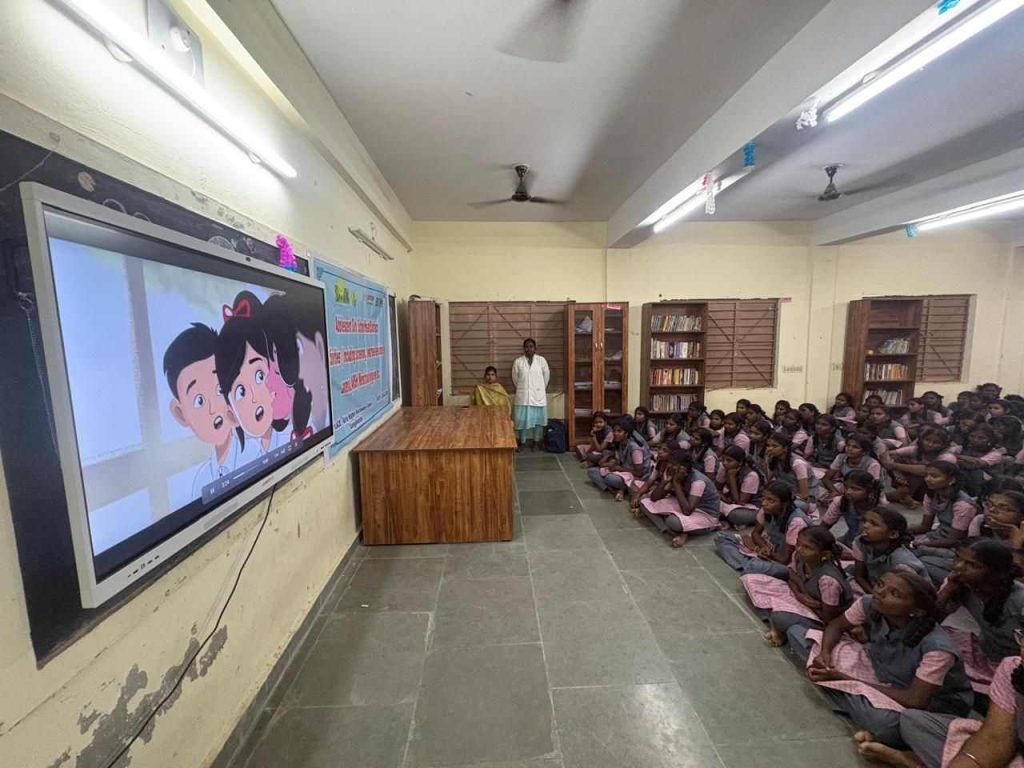
Education in rural India has come a long way since independence, yet millions of children still attend schools with crumbling walls, no toilets and teachers who are stretched thin across multiple grades. The gap between what the system promises and what students actually experience remains stark. Understanding why this gap persists and what is being done about it, is essential for anyone who cares about India’s future.

State of Education in Rural India Today
India has made real progress on paper. The Right to Education Act of 2009 made schooling compulsory for children aged 6 to 14. Gross enrolment ratios have improved significantly over the past two decades. But enrolment is not the same as learning.
Literacy Rates and Enrollment Data in Rural Areas
According to the Annual Status of Education Report (ASER) 2023, nearly half of Class 5 students in rural India cannot read a Class 2-level text fluently. The rural literacy rate, while improving, still lags behind urban India by around 15 percentage points.
Key numbers that tell the story:
- Rural female literacy stands at roughly 65%, compared to over 85% in urban areas
- Only about 4 in 10 rural students who enrol in Class 1 eventually reach Class 12
- Over 1.5 lakh government schools in rural India have fewer than 50 students enrolled
These numbers point to a system where access has improved but quality has not kept pace.
Every School Day Begins With Hope
Every child starts Class 1 with dreams and possibilities. But as the years pass, many disappear from the classroom.
The school bell rings…
Only four out of every ten rural students who enter Class 1 complete Class 12.
Every missing silhouette represents a child whose education journey ended too soon.
Key Infrastructure Challenges in Rural Schools
When a child walks into a school without electricity or clean drinking water, the message they receive is that their education is not a priority. That message has consequences.
Lack of Buildings, Toilets, Electricity and Libraries
A report by the Ministry of Education found that a significant share of rural government schools still face basic infrastructure deficits. Some of the most pressing issues include:
- Dilapidated or incomplete school buildings that become unusable during monsoons
- Absence of functional toilets, which is a primary reason girls drop out after puberty
- Unreliable or no electricity, making afternoon classes difficult and digital learning impossible
- No libraries or reading materials beyond textbooks
- Inadequate drinking water facilities, forcing students to bring water from home or go without
In states like Jharkhand, Chhattisgarh and Odisha, the situation is especially severe in tribal and remote areas. Schools may exist on maps but function only a few months a year due to seasonal access issues and staff vacancies.
Teacher Shortage in Rural Schools: Causes and Impact
The teacher shortage in rural India is not just a numbers problem. It is a structural one. Even where teachers are technically posted, showing up is another matter entirely.
According to government data, India has over 1 million vacant teaching posts in government schools, with the majority concentrated in rural and remote areas. Here is why this happens:
- Most trained teachers prefer urban postings for personal and professional reasons
- Rural schools often lack housing, transport, and basic facilities for teachers
- Contract and para-teacher models have created an underpaid, undertrained workforce
- Transfer policies are inconsistent, leaving some schools overstaffed while others have none
Multi-Grade Teaching and Absenteeism Issues
In hundreds of thousands of rural schools, a single teacher manages three to five grades simultaneously in one classroom. This is known as multi-grade teaching, and it severely limits the attention each child can receive.
Teacher absenteeism compounds the problem. Studies have found that rural government school teachers are absent on average 20 to 25% of working days. Reasons range from legitimate administrative duties to poor accountability structures.
The combined effect: children fall further behind each year, and many quietly stop attending.
Challenges Faced by Girl Students in Rural Areas
Girl child education in rural India faces a unique set of barriers that go beyond infrastructure. Social norms, early marriage, domestic responsibilities and safety concerns all play a role.

Specific challenges include:
- Schools without separate toilets for girls see dramatically higher female dropout rates
- Long distances to school expose girls to safety risks, particularly in remote areas
- Families with limited income often prioritise sons’ education when forced to choose
- Child marriage remains common in parts of Rajasthan, Bihar, and Madhya Pradesh, pulling girls out of school prematurely
The Path That Disappears
For many girls in rural India, the classroom isn’t always far away. The path to it slowly disappears.
No Separate Toilets
Schools without separate toilets for girls experience much higher female dropout rates.
Long & Unsafe Journeys
Long distances and safety concerns make regular school attendance difficult.
Families Forced To Choose
When resources are limited, boys’ education is often prioritised over girls’.
Child Marriage
Early marriage continues to end the education journey for thousands of girls.
Sometimes the school is still there.
The path isn’t.
Every gap in the chalk line represents a barrier that quietly removes a girl’s opportunity to learn.
The dropout rate for rural girls rises sharply after Class 8. This is the age when many families consider formal schooling optional and domestic or economic contributions more important.
Addressing girl child education in rural India requires both physical infrastructure improvements and sustained community engagement.
Want to contribute to bridging the rural education gap? Smile Foundation welcomes volunteers, donors and policy advocates. Even small actions can create meaningful change.
Government Initiatives to Improve Education in Rural India
The Indian government has not stood still. Several schemes have been launched with significant funding aimed directly at rural education.
Samagra Shiksha, Mid-Day Meal and Digital India
Samagra Shiksha Abhiyan is the flagship integrated scheme covering pre-school to Class 12. It merges earlier programmes like Sarva Shiksha Abhiyan and Rashtriya Madhyamik Shiksha Abhiyan. Its goals include improving school infrastructure, reducing dropout rates, and supporting teacher training. In 2023-24, the scheme received a budget of over Rs 37,000 crore.
The Mid-Day Meal Scheme (now PM POSHAN) serves hot cooked meals to over 118 million children in government and government-aided schools. The nutritional support has been one of the most effective tools for improving attendance, particularly in low-income rural households.
Digital India and the PM eVIDYA initiative aim to bring digital content and connectivity to rural schools. While progress has been made, the digital divide in rural education remains wide. Unreliable electricity and poor internet connectivity in remote areas mean that even distributed devices often go unused.
Kasturba Gandhi Balika Vidyalayas (KGBVs) are residential schools for girls from disadvantaged communities. They have helped keep thousands of girls in education by removing distance and safety barriers in one step.
These schemes are meaningful, but implementation at the last mile remains inconsistent.
Solutions and the Way Forward for Education in Rural India
Fixing education in rural India requires interventions at multiple levels. No single policy will be enough.
On infrastructure:
- Prioritise toilet construction and maintenance in all schools, especially for girls
- Invest in school buildings that can withstand local climate conditions
- Expand solar power to rural schools to address the electricity gap
- Build teacher housing near remote schools to reduce absenteeism
On the teacher shortage:
- Reform teacher recruitment and posting policies to make rural postings more attractive
- Increase salaries and career incentives for teachers in hard-to-reach areas
- Train and properly compensate local community members as teaching assistants
- Use technology for teacher training and monitoring without making it a surveillance tool
On learning outcomes:
- Shift focus from enrolment statistics to actual foundational literacy and numeracy
- Invest in mother-tongue instruction at the primary level, particularly in tribal regions
- Use ASER report data to identify district-level gaps and direct resources accordingly
On girls’ education:
- Make functional girls’ toilets a non-negotiable baseline for every school
- Expand KGBVs and residential school options in high-dropout districts
- Engage parents and communities through awareness programmes on the value of girls’ education
The path forward is not a mystery. The data, the frameworks, and many of the tools already exist. What is needed is consistent political will and local accountability.
FAQs: Education in Rural India
Why is education still a challenge in rural India?
Despite decades of investment, rural schools continue to struggle with poor infrastructure, too few qualified teachers, poverty-driven dropouts and geographic isolation. The gap between policy intent and ground-level reality remains large.
What are the main problems faced by schools in rural areas?
The biggest problems are lack of proper buildings, no functional toilets, teacher shortages, high absenteeism, low learning levels and inadequate digital access. Taken together, they create a cycle that is hard to break.
How does teacher shortage affect education quality in rural India?
When one teacher handles multiple grades, no child gets enough individual attention. Combined with absenteeism, entire school years can pass with minimal actual teaching. This directly explains why rural students perform well below grade level in reading and maths.
What is the infrastructure situation of rural schools in India?
While the number of schools has grown, many still lack toilets, electricity, libraries and safe drinking water. Infrastructure gaps are most severe in tribal districts and the educationally backward blocks identified by the government.
What are the dropout rates in rural Indian schools?
The dropout rate rises sharply at the secondary level. Roughly 17 to 18% of rural students drop out between Classes 9 and 10. For girls, the rate is higher in states with persistent poverty and early marriage practices.
How does poverty affect education in rural areas?
Poor families often cannot afford indirect costs like uniforms, stationery, or transport. Children, especially older ones, are frequently pulled into agricultural or domestic work. This makes even free schooling effectively inaccessible for the most marginalised.
What are the biggest challenges for girl students in rural schools?
Distance to school, absence of girls’ toilets, early marriage, safety concerns and family prioritisation of boys’ education are the main barriers. All of these are addressable with the right combination of infrastructure and social support.
What government schemes address rural education challenges?
Samagra Shiksha Abhiyan, PM POSHAN (Mid-Day Meal), PM eVIDYA, Kasturba Gandhi Balika Vidyalayas and NIPUN Bharat (focused on foundational literacy and numeracy) are among the key central government initiatives.
How does digital education help in rural areas?
When electricity and connectivity are reliable, digital tools can extend the reach of quality teaching through recorded lessons, remote tutoring and interactive content. However, the digital divide in rural education means these benefits are still out of reach for many students.
What are practical solutions to improve education in rural India?
The most impactful steps are building functional infrastructure (especially toilets), making rural teacher postings more attractive, focusing on foundational learning outcomes from Class 1 and keeping girls in school through residential options and community engagement.