
You can donate online to a registered NGO in India in under five minutes — and if you file taxes under the old regime, you can claim a deduction of up to 50% of your donated amount under Section 80G of the Income Tax Act. All you need is a secure payment method, your PAN number and a Form 10BE certificate from the NGO after you donate.
This guide walks you through exactly how the process works, from choosing a trusted NGO to claiming your tax benefit at the end of the year.
Why Online Donation Is the Easiest Way to Give in India
Digital giving has become the default mode of charitable contribution in India, and for good reason.
UPI now accounts for 57% of all payment transactions in India, surpassing even cash at 38%, according to a Finance Ministry commissioned study. NPCI data for February 2026 recorded 20.39 billion UPI transactions in a single month — a 27% year-on-year increase. Charitable giving has followed this shift. Donors today can contribute to a cause in seconds, receive an automated receipt and track how their funds are used — all from a mobile phone.
For NGOs, digital donations are also faster and more cost-efficient to process than offline contributions, meaning more of your money reaches the cause you care about.
The shift is not just about convenience. Online donations leave a clear, traceable record which matters when you need to claim a tax deduction at the end of the financial year.
What Is Section 80G and How Does the 50% Tax Exemption Work?
Section 80G of the Income Tax Act, 1961 allows taxpayers to claim a deduction on donations made to approved charitable institutions and government funds. Depending on the type of organisation you donate to, the deduction can be either 50% or 100% of the donated amount.
For most registered NGOs, including those working in education, health, livelihoods and women’s empowerment, the applicable deduction is 50% of the donation amount, subject to a qualifying limit of 10% of your Adjusted Gross Total Income (AGTI).
Here is what that looks like in practice. If your AGTI is Rs 10 lakh and you donate Rs 20,000 to a qualifying NGO, the eligible deduction is Rs 10,000 (50% of Rs 20,000), provided that amount does not exceed Rs 1 lakh (10% of Rs 10 lakh). Your taxable income is reduced by Rs 10,000 as a result.
Donations to certain government funds, such as the PM National Relief Fund and the National Defence Fund, qualify for a 100% deduction without any upper limit. Always check an NGO’s specific deduction category before donating if the tax benefit is part of your decision.
One important update for FY 2025-26: from Tax Year 2026-27 onwards, Section 80G will be governed by Section 133 of the new Income Tax Act 2025, with the same substantive rules. For filings in the current year, Section 80G continues to apply as before.
Who Can Claim the 80G Deduction?
The deduction is available to a wide range of taxpayers, including:
- Resident individuals and salaried employees
- Hindu Undivided Families (HUFs)
- Companies and partnership firms
- NRIs holding an Indian passport, provided they have taxable income in India and donate in Indian rupees
Who Can Claim the 80G Deduction?
The deduction is available to a wide range of taxpayers. Select a category to explore eligibility.
Individuals
Resident individuals and salaried employees.
EligibleHUFs
Hindu Undivided Families can claim deductions under Section 80G.
EligibleCompanies & Firms
Registered companies and partnership firms can claim eligible deductions.
EligibleNRIs
NRIs holding an Indian passport with taxable income in India and donations made in INR.
EligibleOne critical condition applies to all of the above. Section 80G deductions are only available under the old tax regime. If you have opted for the new tax regime under Section 115BAC, which has been the default since AY 2024-25, you cannot claim an 80G deduction, even if you donate to a valid NGO. If claiming this deduction matters to you, make sure to explicitly opt for the old regime when filing your return.
How to Get Your 80G Tax Receipt After Donating
This is where many donors miss a step that can cost them their deduction.
Since FY 2021-22, the Income Tax Department verifies all 80G claims against information filed independently by the NGO. The process works like this:
- The NGO files Form 10BD (a Statement of Donations) with the Income Tax Department, listing each donor’s name, PAN and amount donated.
- Based on that filing, the NGO generates and issues Form 10BE — your official donation certificate under Rule 18AB of the Income Tax Rules.
- When filing your ITR, you enter the donation details in Schedule 80G. The department matches your claim against the NGO’s Form 10BD submission.
If the numbers do not match, or if you do not have Form 10BE, your deduction may be disallowed, even if your donation receipt appears valid. Always ask the NGO for Form 10BE before you file. The due date for NGOs to file Form 10BD for FY 2025-26 is 31 May 2026.
You will also need your PAN registered correctly with the NGO at the time of donating, since Form 10BE is generated against your PAN. A small error here can create a mismatch that delays your claim.
Step-by-Step Guide to Donating Online to an NGO in India
The process is straightforward once you know what to look for.
Choosing a Secure and Trusted NGO
Not every organisation that accepts donations online is legitimate. Before donating, verify the following:
- Darpan registration — the NGO should have a Unique ID on the NITI Aayog’s NGO Darpan portal at ngodarpan.gov.in
- 12A registration — confirms the NGO’s income is tax-exempt and used for charitable purposes
- 80G registration — confirms your donation is eligible for a tax deduction; verify the current validity on the Income Tax Department’s portal at incometaxindia.gov.in
- Published annual reports — a credible NGO publishes audited financial statements showing how funds are used
Run a Trust Check
Not every organisation accepting donations online is legitimate. Verify four key credentials before you contribute.
Darpan Registration
Verify the NGO has a valid Unique ID on the NGO Darpan portal.
12A Registration
Confirms charitable status and tax-exempt operations.
80G Registration
Ensures donations qualify for tax deductions.
Annual Reports
Audited financial reports showing how funds are used.
Smile Foundation holds valid Darpan, 12A and 80G registration, and works with over 160,000 children across 27 states through programmes in education, healthcare and livelihoods. Reviewing an organisation's programmes and published reports before donating is always time well spent.
Payment Options — UPI, Cards, Net Banking
For your 80G deduction to be valid, the donation must be made through a traceable, non-cash mode. Accepted payment methods include:
- UPI (Google Pay, PhonePe, Paytm, BHIM)
- Debit or credit card
- Net banking (NEFT, RTGS, IMPS)
- Cheque or demand draft
Cash donations above Rs 2000 are not eligible for an 80G deduction. Keep this in mind if you are donating at an event or in person. For online donations, any digital payment method automatically satisfies this requirement.
When donating, always enter your PAN accurately. This is the identifier the NGO uses when filing Form 10BD and your claim will be cross-checked against it.
How to Check If an Online Donation Is Safe
Digital giving is safe when you follow a few straightforward precautions.
- Always navigate directly to the NGO's official website rather than clicking links forwarded on WhatsApp or social media
- Legitimate NGOs never ask for donations through personal UPI IDs, informal bank accounts or phone-based cash transfers
- Look for HTTPS in the website address and a recognisable, secure payment gateway
- Check that the organisation's Darpan registration, 80G number and PAN are clearly displayed on the donation page
- Avoid QR codes shared in forwards or messages; always scan from the official page
If something feels off, check the NGO's registration on the Income Tax portal directly before proceeding.
How to Donate Online to Smile Foundation and Claim Tax Benefits
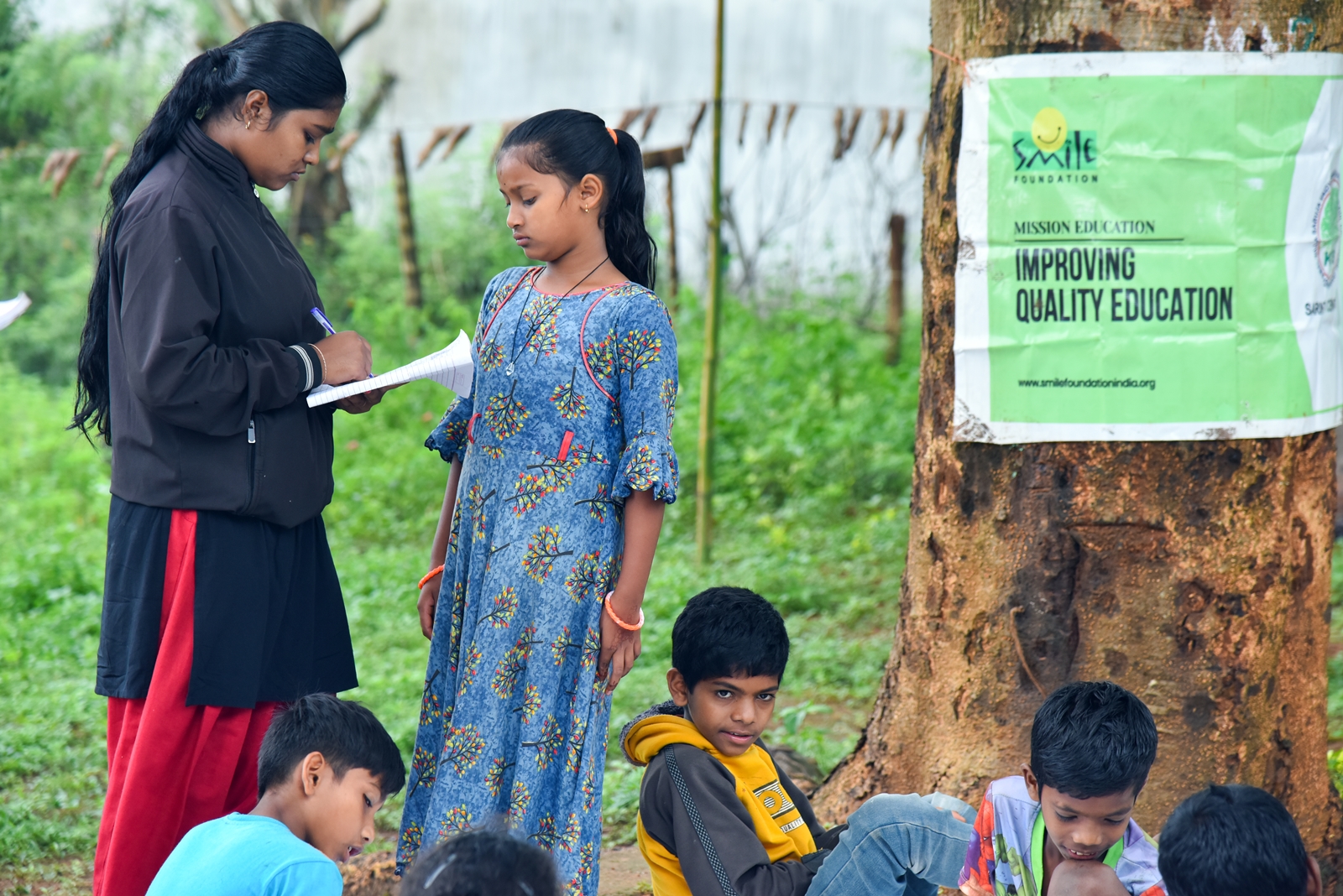
Smile Foundation is a registered NGO working across education, healthcare and livelihoods in underserved communities across India. Its flagship programmes — Mission Education, Health Cannot Wait and the Smile Twin e-Learning Programme (STeP) — support over 160,000 children and young people across 27 states.
Donating online through Smile Foundation's official website takes under two minutes. You can choose a one-time contribution or set up a monthly recurring donation to support ongoing programmes. Enter your PAN at the time of donating, select your preferred payment method, and save your automated receipt. Form 10BE will be issued by the NGO after it files Form 10BD with the Income Tax Department by 31 May 2027.
From Donation to Tax Benefit
See what happens after you make a donation through Smile Foundation.
Choose Donation
One-time or recurring contribution.
Add PAN
Required for 80G documentation.
Secure Payment
Complete payment through UPI, cards or net banking.
Receipt Generated
Receive instant confirmation.
Form 10BD
Donation details submitted to the Income Tax Department.
Form 10BE
Receive your official donation certificate.
Donations to Smile Foundation qualify for a 50% deduction under Section 80G, subject to the 10% AGTI qualifying limit, for taxpayers filing under the old tax regime.
For CSR teams, Smile Foundation also provides full compliance documentation, including Form 10BE and impact reports, for donations made under Schedule VII of the Companies Act, 2013. Note that the same donation cannot be claimed both as a CSR expense and as an 80G deduction.
Your contribution, however modest, directly funds a child's education, a family's healthcare access or a young person's pathway to employment. Start here.

FAQs — Donate Online and Get 80G Tax Exemption
How do I donate online to an NGO in India?
Visit the NGO's official website, verify its 80G and Darpan registration, choose a payment method such as UPI, net banking or debit card, enter your PAN and complete the transaction and donate online. Save your receipt and request Form 10BE from the NGO before filing your taxes.
What is Section 80G and how does the 50% tax exemption work?
Section 80G allows taxpayers to claim a deduction on donations to approved charitable institutions. Most registered NGOs qualify for a 50% deduction, subject to a limit of 10% of your Adjusted Gross Total Income. This deduction is only available under the old tax regime.
Is it safe to donate online money to an NGO in India?
Yes, provided you donate online through the NGO's official website using a secure, verified payment gateway. Always check the NGO's Darpan and 80G registration beforehand, and avoid clicking on donation links forwarded through messaging apps.
How do I get a tax-deductible receipt after donating online?
After you donate online, the NGO files Form 10BD with the Income Tax Department and then issues you Form 10BE — your official donation certificate. Always share your PAN correctly when donating, as the certificate is generated against this. Without Form 10BE, your 80G deduction claim may be disallowed.
What payment methods can I use to donate to an NGO?
You can donate via UPI, debit card, credit card, net banking, NEFT, RTGS or cheque. Cash donations above Rs 2,000 are not eligible for an 80G deduction, so digital payment is both more convenient and tax-compliant.
Can I set up a monthly recurring donation to an NGO?
Yes, most reputable NGOs including Smile Foundation offer monthly giving options through their donation portals. Recurring donations are eligible for 80G deductions each financial year, provided you collect Form 10BE annually.
How do I know my online donation reached the right cause?
Credible NGOs send automated receipts immediately after payment and share periodic impact reports or newsletters. You can also verify their audited annual reports, which are published on their websites and on the NGO Darpan portal.
What is FCRA and why does it matter when donating online?
FCRA — the Foreign Contribution (Regulation) Act — governs whether an NGO can legally receive donations from outside India. If you are donating from abroad or the NGO receives international funding, confirm it holds valid FCRA registration through the Ministry of Home Affairs portal.
Can NRIs donate online to NGOs in India and claim tax benefits?
Yes. NRIs holding an Indian passport can donate online to FCRA-registered NGOs in India and claim 80G deductions on their Indian taxable income, provided they donate in Indian rupees and file under the old tax regime.
How do I donate to Smile Foundation online and get 80G benefits?
Visit Smile Foundation's official website, select a programme or general donation, enter your PAN and complete the payment digitally. Request Form 10BE from the organisation after the financial year ends, and enter the donation details in Schedule 80G of your ITR while filing under the old tax regime.