In India’s pursuit of becoming a $5 trillion economy, one critical demographic is being systematically overlooked—its adolescents. At the cusp of adulthood, young people between the ages of 13 and 17 are navigating not only education and identity, but increasingly, financial decisions that will shape their futures. Yet, the national discourse on financial literacy in children continues to bypass them.
A nation of more than 600 million people under the age of 25 with financial illiteracy would power entrenching cycles of poverty and preventing upward mobility. To build a resilient, equitable economy, India must start teaching money management not just in business schools or financial advisory offices—but in the classrooms of its public high schools.
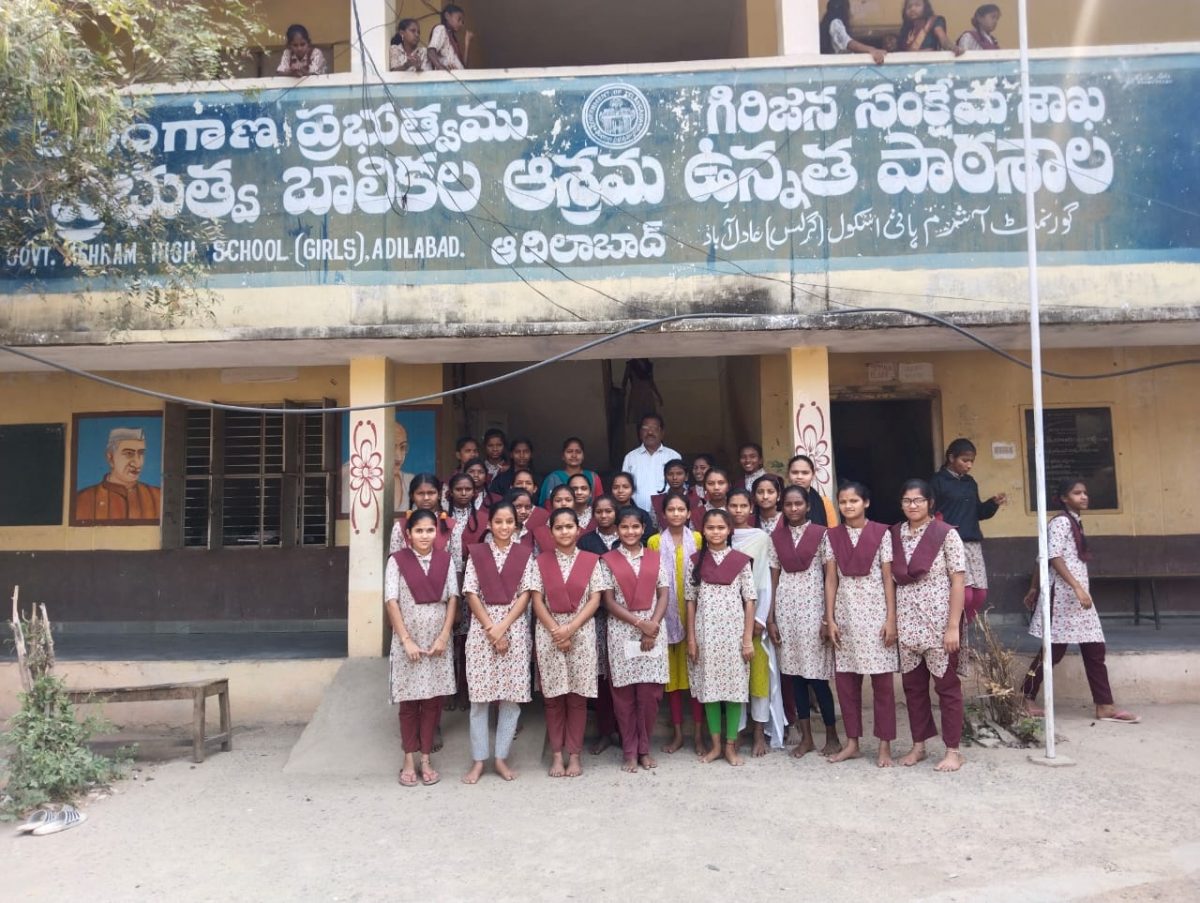
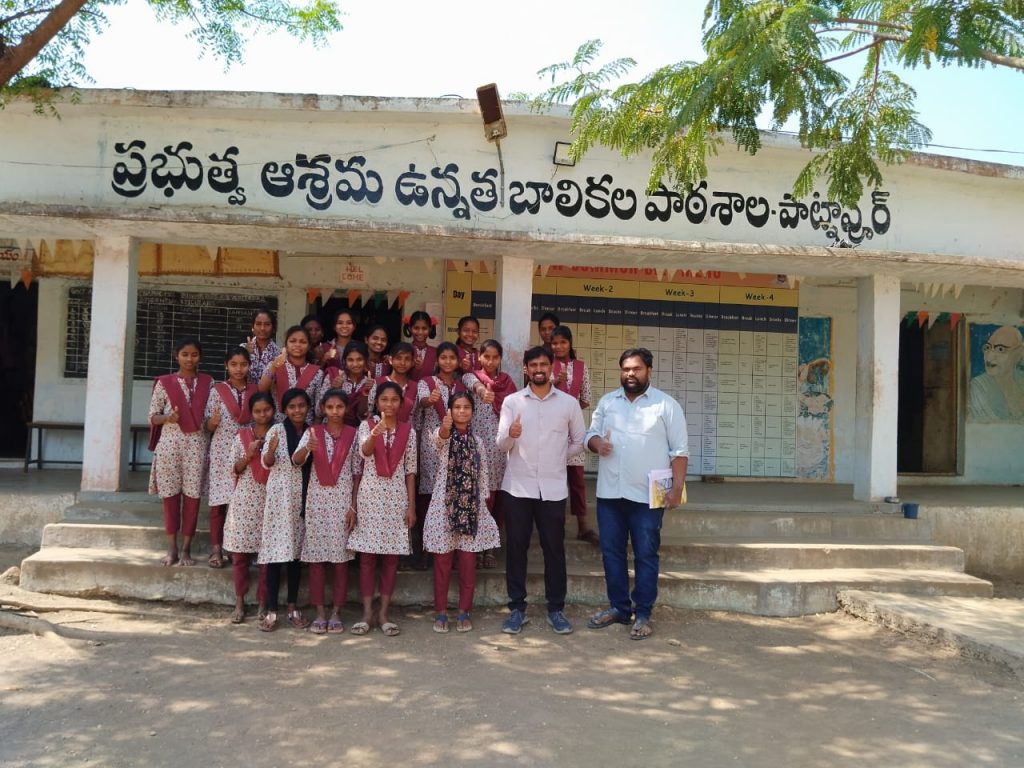
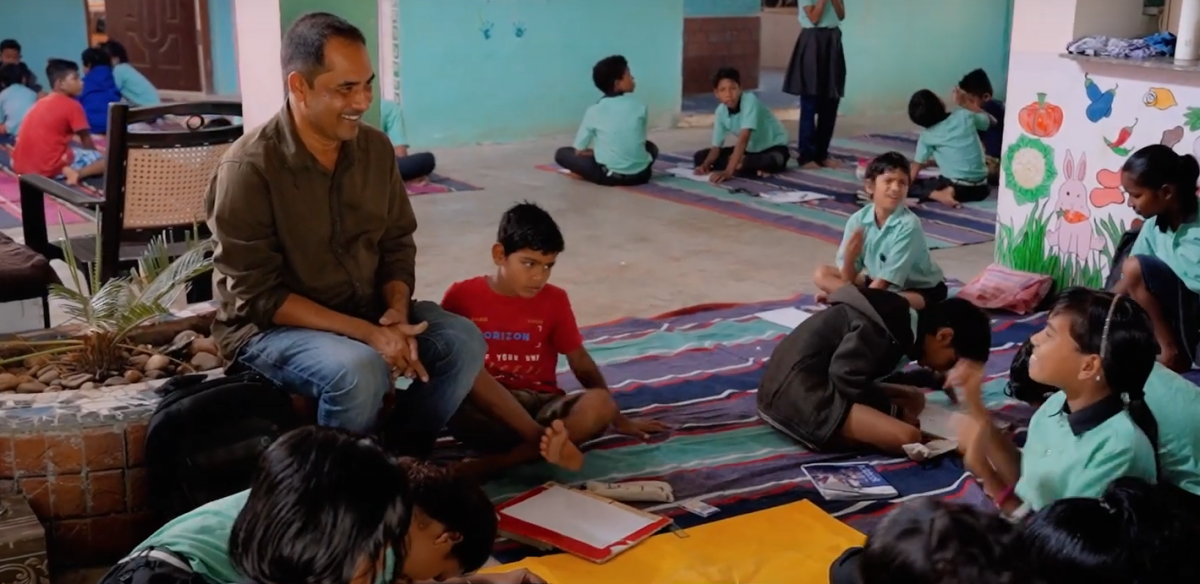
Smile Foundation’s recent initiative of Mission Education in Adilabad district, Telangana, supported by the Flipkart Foundation, offers a powerful model. Through an intensive financial literacy campaign across eight government high schools, the project engaged over 3,500 students, 155 teachers, and nearly 7,000 parents.
Financial literacy in children as a development imperative
Financial literacy encompasses more than the ability to budget or understand savings accounts. It is about empowering individuals with the knowledge, confidence, and skills to make sound financial decisions in an increasingly digital and volatile economic landscape. For adolescents, it lays the foundation for informed choices on everything from higher education loans to digital payment tools, and from household budgeting to entrepreneurial ventures.
The World Bank and OECD have long advocated financial literacy as a tool for inclusive growth. In the Global South, where formal financial education is often absent from school curricula, NGOs and CSR-backed interventions become vital. Smile Foundation’s programme in Telangana was one such effort—strategically designed to address the real-life financial challenges rural students face.
The initiative tackled the issue head-on, integrating modules on budgeting, saving, credit scores, digital banking safety, and even cyber-literacy related to social media. What made it stand out was its commitment to contextual relevance. Sessions were designed to reflect the socio-economic realities of tribal and rural youth, rather than transplanting abstract financial theories from urban settings.
From awareness to empowerment: A data-driven change
The scale of transformation this programme achieved in just two months is significant. Baseline data collected from 912 students—about 23% of the total cohort—showed alarmingly low awareness of basic financial concepts. Only 41% of students displayed a working understanding of financial literacy principles.
By the end of the programme, this figure soared to 78%.
Budgeting comprehension jumped from 21% to an astounding 94%. Awareness of the benefits of saving money rose from 39% to 94%, and familiarity with credit scores leaped from a paltry 8% to 89%. Students also reported improved understanding of digital safety: awareness about not sharing OTPs with strangers increased from 86% to 93%.
But perhaps the most transformative metric was behavioural: bank account ownership rose from 52% to 92% across participants—an extraordinary leap toward financial inclusion. These numbers represent students taking their first steps into formal financial systems, often in families with no history of banking.
Interestingly, UPI account ownership dropped slightly—from 16% to 9%. This anomaly, while needing further study, suggests that students may be learning to distinguish between appropriate and inappropriate financial tools based on their own circumstances and digital literacy levels.
Scaling literacy, mobilising equity
What makes this programme replicable and scalable is its hybrid implementation model. While teacher training ensured sustainability, Smile Foundation’s deployment of mobile facilitators brought much-needed flexibility and reach. These trained facilitators delivered sessions and built relationships, offered mentorship, and helped embed financial education into daily school activities.
Moreover, the project’s focus on teacher training (155 teachers received sessions on financial literacy) ensured that the benefits would extend beyond the intervention window. Teachers—often trusted figures in rural communities—can now serve as frontline advocates of financial well-being.
The initiative’s emphasis on gender parity is also worth noting. Girls accounted for nearly 47% of all students trained, and outreach to parents ensured that cultural hesitations around financial decision-making were addressed collectively. In fact, the sessions encouraged students to share their learnings with their parents, amplifying the impact through intergenerational dialogue.
A new frontier for CSR and public education
Flipkart Foundation’s role in underwriting this intervention exemplifies what good corporate social responsibility (CSR) looks like in the 21st century: strategic, outcome-driven, and anchored in community realities.
In a world dominated by fintech innovation, it’s ironic that many of the young users of digital tools know little about how to use them safely or wisely. India is leading the world in digital payments, yet lacks a comprehensive financial literacy curriculum in its public school system.
This is where public-private partnerships like the Smile-Flipkart collaboration can fill critical gaps. With just 2-3 hours of training per student and two rounds of reinforcement sessions, this model has proven that meaningful change doesn’t require a massive overhaul—only commitment, content, and coordination.
Toward a financially literate generation
India is no longer debating whether financial literacy in children is important—the question is how quickly and equitably we can scale it. As adolescents begin to earn, save, and transact digitally, they must be equipped not only with access to financial tools but with the wisdom to use them.
Financial literacy, like health and education, must be seen as a public good. It empowers young people to dream, to save, and to build futures not shaped by chance but by choice.
Governments worldwide have committed to SDG 4 – quality education for all – yet the most marginalised, including indigenous and tribal students, lag far behind. UNICEF notes that SDG 4 explicitly emphasises that vulnerable groups (poor, rural, indigenous, refugees, persons with disabilities) must benefit from inclusive education. In practice, this means schooling must respect local languages and cultures.
UNESCO stresses that “minorities and indigenous people require an education system that respects their cultural, linguistic and religious needs” – for example through bilingual, intercultural curricula and dedicated budgets. Without such measures, indigenous children face disproportionately high dropout rates and low learning outcomes compared to national averages. As a recent UNESCO report notes, simply enrolling children in school is not enough; curricula, teaching and community outreach must be tailored to local realities.
India’s new education policy acknowledges this challenge. The NEP 2020 recognises that “children from tribal communities often find their school education irrelevant and foreign to their lives, both culturally and academically,” and calls for “special mechanisms” to ensure these students benefit from education reforms. Tribal and first-generation learners often juggle long commutes, economic hardship, and language barriers (e.g. a sudden shift to English instruction), which makes bridging programmes essential. Failure to address these gaps entrenches inequalities: without help, many tribal youth drop out around the secondary level, when high-stakes board exams and complex subjects create bottlenecks.
Smile Foundation’s Adilabad initiative for tribal students
In Telangana’s Adilabad district – home to many Adivasi communities – these challenges are front and center. The Tribal Welfare Department runs 67 residential Ashram high schools that offer free lodging and schooling to tribal youth. In late 2024, Smile Foundation teamed up with the state’s Tribal Welfare (ITDA) agency to launch the Academic Enhancement and Examination Preparedness (AEEP) programme in all 67 schools. AEEP represents a classic public–NGO partnership: the government provides classrooms and student outreach, while Smile contributes tutors, training and materials. This programme targeted roughly 2,700 students (67% of them girls) preparing for the 10th-grade board exams. Its aim was simple but vital: to shore up basic learning (especially in English, math and science), build test-taking confidence, and bridge gaps created by recent reforms.
The need was urgent. Until 2023 these Ashram schools taught in Telugu, but the state mandated English as the medium, and exam papers were issued only in English. Students with little prior English instruction suddenly faced foreign-language exams. As Smile’s report notes, “the students who have been taught Telugu were taught English since the last two years” – yet “the SSC board decided the question paper would also be given in English”. Faced with this “huge bottleneck,” Smile and local officials designed AEEP as a crash course in academic basics and exam strategy.
Over January–March 2025, they held 268 academic sessions across the 67 schools. These included mock tests, problem-solving workshops in Maths/Science, and counseling on exam preparation. Facilitators (often recruited locally) used standardised lesson plans and materials vetted by subject experts. Crucially, Smile distributed a bespoke 875-page “All-in-One” SSC guidebook – covering all subjects in simple language – to every board student. This leveled the playing field by giving village students the study tools usually only available to better-off peers.
One Tribal Welfare officer reports that students and teachers welcomed the materials: the handbooks reduced financial burden and boosted learners’ confidence.
The impact of AEEP’s approach is tangible. By project’s end, every one of the 67 schools had hosted multiple coaching sessions, reaching a combined 2,701 students and 376 teachers. Over 1,800 girls participated (reflecting the schools’ strong female enrollment). Weekly quizzes and feedback loops identified learning gaps and progressively raised test scores.
Preliminary outcomes show significant improvements in exam pass rates for participating villages, though formal evaluations are pending. Importantly, the programme built trust between families and schools: community meetings and local-language tutors helped parents feel invested in their children’s success.
Global innovations in inclusive education
India’s tribal initiatives echo successful models elsewhere. In Brazil, for example, the government’s indigenous affairs agency (FUNAI) and education ministry support escolas indígenas, where instruction is adapted to native cultures and languages. Brazil’s 1988 constitution and subsequent laws guarantee intercultural, bilingual education, enabling Amazonian communities to design schools that blend traditional knowledge with core subjects.
Studies find that these programmes boost attendance and cultural pride by making schooling relevant to indigenous worldview. Rather than forcing assimilation, Brazil now emphasises curricula that respect native languages and lineages – a practice UNESCO cites as essential for indigenous inclusion.
In Kenya, the challenge is reaching children in remote arid regions. The government’s Primary Education Development Plan has explicitly targeted marginalised schools. With support from the Global Partnership for Education, some 4,000 schools – including 1,400 in Kenya’s poorest counties – received school improvement grants. Each school got about USD 5,500 to build toilets, train teachers, and raise community awareness of girls’ education and safety. These grants also funded volunteer patrols to accompany girls to school, helping Kenya close the gender attendance gap.
Moreover, Kenya’s nationwide textbook reforms illustrate the power of targeted support. By competitive procurement, the government cut costs by 70% and distributed over 10.5 million math textbooks for early grades in just two years. Many of these books were specially adapted with Braille and enlarged print to serve children with disabilities, signaling an inclusive vision. (The accompanying image shows a Kenyan schoolgirl with her new textbooks.) Kenya’s concerted efforts have paid off: primary enrollment is now effectively universal, and gender parity has nearly been achieved. Initiatives like distributing textbooks in refugee camps (Kakuma) further underscore Kenya’s commitment to “no learner left behind,” be they nomads or newcomers.
Australia’s remote schools also benefit from tailored policies. The federal “Closing the Gap” plan invested in the Remote School Attendance Strategy (RSAS), which shifted in 2019 from simply “getting kids to school” toward “keeping kids in school”. The revamped RSAS employs local Aboriginal liaisons and focuses on community engagement: local people encourage attendance, organise transport, and work with schools to solve problems. This model acknowledges that trust and local leadership are essential in isolated communities.
Other Australian measures mirror this community-centric philosophy: scholarships (e.g. boosting STEM for Indigenous girls), partnerships with elders, and state–federal cooperation. In each case, the common thread is clear – empower the community to uplift the school.
These international examples highlight key elements of success that mirror Smile’s approach in India.
First, local engagement: hiring local tutors, involving parents and traditional leaders, and using native languages all build ownership.
Second, cultural relevance: curricula that incorporate tribal knowledge or bilingual materials make learning less alien.
Third, remedial and bridge instruction: providing extra coaching in core subjects, particularly at transition points like board exams, closes learning gaps.
Fourth, continuous feedback: regular testing and adaptive lesson plans ensure programs respond to real needs.
Finally, sustained support and partnerships: none of these works as a one-off.
In Telangana, Smile’s coordination with the tribal welfare department and school officials provided continuity. Similarly, in Australia and Kenya, government initiatives were bolstered by NGO and private partners. For example, Smile’s award-winning NXplorers STEM programme (with Shell) now reaches thousands of rural students by training teachers and engaging girls in engineering projects. Public–private collaborations like these multiply impact and help embed innovations into official systems.
Recommendations: Scaling up equity for marginalised and tribal students
The Telangana case – and its global parallels – make clear that targeted investment can yield rapid gains for marginalised students. We offer several policy recommendations:
Strengthen public–NGO partnerships. Governments and international donors should empower local NGOs to fill gaps. Initiatives like Smile’s AEEP show that NGOs can mobilise quickly and innovate pedagogically. Funds and training (e.g. through Samagra Shiksha or GPE grants) can be channeled to community-based organisations in tribal areas. Institutionalise models such as ITDA–NGO co-management of ashram schools.
Invest in remedial and transition programmes. Scale remedial coaching, bridge courses and exam-prep camps for disadvantaged students, as envisioned by NEP 2020. Board exam stakes are high in India; dedicated support for Class 10 and 12 candidates from tribal backgrounds (tutoring, model exams, study materials) can dramatically improve pass rates.
Recruit and train local educators. Hire teachers and facilitators from within tribal communities. They are more likely to speak local dialects, understand cultural contexts, and gain trust. Provide these teachers with ongoing professional development, as well as pedagogical tools for multilingual education. Australia’s RSAS demonstrates that employing local liaison officers strengthens attendance and accountability.
Use culturally responsive curriculum. Educational content must reflect tribal students’ lives. This means bilingual textbooks, examples drawn from local ecology and culture, and integration of indigenous history. Allocating specific budgets for developing such materials, as recommended by UNESCO and India’s policy think-tanks, is vital. The MDPI study on Brazilian indigenous schooling shows that when education values tribal knowledge, communities respond with greater engagement and pride.
Enhance community engagement. Regularly involve parents, village councils and NGOs in school governance. Encourage community-driven monitoring of attendance and learning. Examples from Kenya and India alike show that when families see the value in education (through counseling sessions, scholarships, women’s literacy programs), enrollment and retention rise. Gender-focused outreach (mentoring girls, building girls’ hostels, abolishing child marriage) also helps meet SDG 5 on gender equality within tribal areas.
Align with national and global goals. Embed these efforts in broader frameworks. For instance, link tribal education programmes to SDG 4 and SDG 5 targets, NEP 2020’s equity provisions, and India’s Aspirational District Programme. Create measurable indicators (e.g. tribal literacy rates, board exam performance) to track progress explicitly. The AEEP project itself framed its goals around SDGs 4 and 5, a practice all programmes should adopt to leverage international support and accountability.
In sum, the Adilabad initiative provides an encouraging proof of concept: with concerted effort, the cycle of marginalisation can be broken. Learning outcomes in these 67 Ashram schools are improving because the programme meets tribal students “where they are,” academically and culturally. This lesson is universal.
As the world races toward 2030, every country must ask: Who is being left behind in our classrooms? Then fund and design programmes – like Telangana’s AEEP – that ensure those children also thrive. By combining public commitment, community knowledge, and innovative partnerships, we can bring high-quality education within reach of all. Educating tribal and marginalised children is an investment in a more equitable and prosperous society for everyone.
Sources and References
Smile Foundation (2025) – Mission Education: Academic Enhancement and Examination Preparedness Project Completion Report (AEEP, Adilabad).
United Nations Sustainable Development Goals (SDGs) –
An intelligent girl student trying out an experiment
At 13, Meera can calculate the area of a triangle faster than she can find a quiet place to study. Living in a dense informal settlement on the edge of Gurugram, India’s financial hub, she shares a single-room home with five family members, no desk, and only intermittent electricity. And yet, this year, she topped her class in science—thanks to a modest but methodically designed STEM programme of Smile Foundation that focused not on smart boards or silicon chips, but on building conceptual clarity, numerical fluency, and gender-sensitive teaching in one of India’s most overlooked urban margins.
Her story is not unique but what makes it remarkable is that it signals something larger: how small, targeted interventions can ignite systemic transformation. In a world scrambling to prepare youth for AI-driven futures, this initiative is a quiet but potent reminder that before we teach machine learning, we must first teach how to learn—equally, inclusively, and from the ground up.
STEM education as a social mobility engine—But for whom?
STEM education is now universally acknowledged as a critical lever for economic growth, innovation, and social mobility. From India’s National Education Policy (NEP 2020) to Africa’s Continental Education Strategy and the U.S. CHIPS and Science Act, the global consensus is clear: tomorrow’s citizens must be prepared not just to use technology, but to shape it.
Yet, for millions of children in low-income, rural, and underserved urban communities, this vision feels abstract. Globally, 70% of 10-year-olds in low-income countries cannot read or do basic math—a phenomenon the World Bank calls “learning poverty.” Even in countries with rising STEM investments, access to quality education remains uneven, especially for girls, first-generation learners, and children in informal settlements.
Smile Foundation’s STEM intervention (a part of its flagship initiative Mission Education) at its Shiksha Education Center in Mohyal Colony, Gurugram, offers a rare glimpse into what it takes to bridge that gap—not through high-budget tech but through thoughtful pedagogy and data-informed strategy.
Inside the intervention: What Smile Foundation did differently
Implemented over the 2023–24 academic year, this initiative targeted students in Grades 6 to 8, many of whom were first-generation learners from working-class families. The approach was built on three pillars:
Baseline-Endline Assessment: Students took diagnostic tests at the start and end of the year, measuring performance across four cognitive categories: conceptual, numerical, factual, and analytical.
Hands-On, Inclusive Pedagogy: Teachers deployed inquiry-based methods, real-world examples, and visual aids—designed to counter rote learning and foster actual understanding.
Gender-Responsive Design: Equal participation from girls was encouraged, and results were disaggregated by gender to inform future design.
This wasn’t just a school-year add-on—it was a structured experiment in how children learn, and what kind of inputs actually lead to better outcomes in STEM.
What the data tells us: Growth and gaps
The endline results are cautiously optimistic. Across all three grades, students improved their average scores in science and mathematics:
Grade 6: From 40.5% to 46.5%—with notable gains in science factual and math numerical sections.
Grade 7: From 36.8% to 39.4%—with girls outperforming boys in both subjects.
Grade 8: From 44.4% to 52.7%—the strongest gains, especially in science conceptual and math numerical areas.
Yet, the data also spotlight persistent gendered learning patterns. Girls tended to excel in science conceptual understanding and factual recall, while boys outperformed in numerical and analytical mathematics. For example, in Grade 8 math, boys exceeded girls by 30+ percentage points, while girls showed a 12-point advantage in science conceptual areas.
This divergence mirrors global patterns. In many contexts, girls are less exposed to logic-intensive environments or may internalize stereotypes that discourage competitive math engagement. Boys, conversely, may lack reinforcement in inquiry-based science. The solution isn’t to “equalise” pedagogy—but to diversify it.
What worked and why it matters
Several elements in Smile’s STEM model explain the gains:
Inquiry-Led Instruction: Replacing rote memorisation with real-world problem-solving empowered students—particularly girls—to visualise concepts and connect theory to life.
Feedback Loops: Frequent quizzes and diagnostic tools enabled dynamic instruction, where learning gaps were identified and addressed in real time.
Neutralized Pressure Zones: Without high-stakes exam pressure, students were more willing to engage, make mistakes, and ask questions—key to deep learning.
Culturally Aware Design: Teachers who understood the local context could tailor instruction to the social and linguistic background of learners, avoiding the alienation many first-gen students feel in STEM classrooms.
In short, the initiative proved that effective STEM education doesn’t always need smart classrooms—it needs smart, context-sensitive pedagogy.
Global parallels: Echoes from Brazil, Kenya, and Nigeria
The Gurugram project is not isolated. Across the Global South, other grassroots STEM efforts reinforce its lessons:
Brazil: FUNAI-backed STEM initiatives in Amazonian regions use bilingual instruction in Tupi and Portuguese. These culturally contextualised models have shown increased retention and enthusiasm among Indigenous girls.
Kenya: The Tusome and PRIEDE programmes improved learning outcomes through coaching, simplified materials, and classroom-level assessments—much like Smile’s modular, category-based approach.
Nigeria: The UNESCO-supported “STEM Café” in Lagos uses low-cost materials and community centers to create safe, co-ed environments where children can experiment, explore, and learn collaboratively.
Each of these models—and Smile’s in India—proves that innovation doesn’t require reinvention. It requires careful listening, local trust, and a feedback-driven model that can evolve with learners.
Policy lessons: From Pilot to scalable blueprintfor STEM education
Smile Foundation’s programme is a high-potential blueprint, but for wider system adoption, a few key shifts are essential:
Integrate STEM Baselines into Public Education India’s NEP 2020 calls for measuring “learning outcomes” but lacks structured diagnostic tools in middle school STEM. Smile’s conceptual-numerical-analytical model offers a replicable framework.
Expand Gender-Responsive Teaching Methods Classroom strategy must go beyond “equal access.” It should include differentiated learning approaches, role-model interventions, and confidence-building tools that respond to how boys and girls experience STEM differently.
Invest in Middle School as the Pivot Most STEM interventions focus either on primary basics or post-secondary skills. But Grade 6–8 is the inflection point—where interest is either sparked or snuffed out. Targeting this band pays long-term dividends.
Leverage NGO-Government Collaborations Smile Foundation’s ecosystem experience—teacher recruitment, curriculum design, and impact tracking—should be formally embedded in state and central education frameworks. The NGO-government hybrid model works, and should be resourced accordingly.
The future of STEM education lies in the margins
In a decade when countries are pouring billions into AI, climate tech, and digital literacy, it is easy to forget the simple math class in an overcrowded room on the urban fringe. But that’s exactly where tomorrow’s innovation will—or will not—be born.
What Smile Foundation’s project shows us is that shift doesn’t always begin with broadband or robots. Sometimes it begins with a worksheet, a quiet explanation, and a girl named Meera who learns—maybe for the first time—that she is capable of mastering complexity.
In a world obsessed with scale (a topic that we shall discuss in one of our future blogs), this intervention reminds us that impact begins with intentionality. The future of STEM—and of equity—depends not on how fast we teach machines to think, but how patiently we teach every child to believe they can.
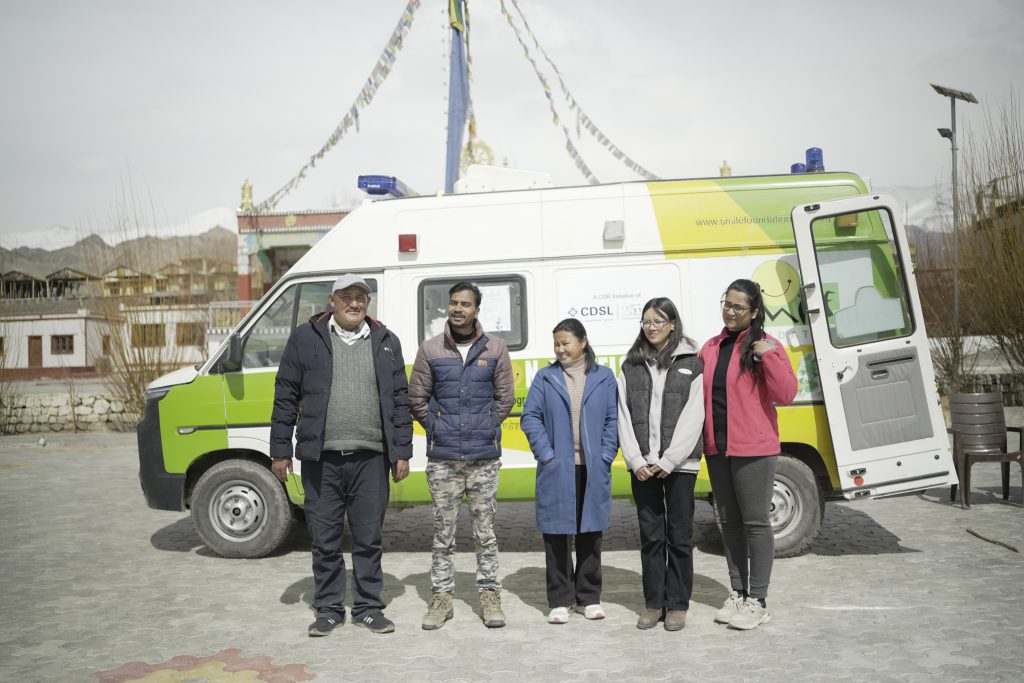
High up in the Himalayan desert of Ladakh, where oxygen is thin and winters of -25°C unforgiving, access to healthcare becomes a battle against geography. With only a handful of Primary Health Centres (PHCs) spread across vast, treacherous terrain, even reaching the nearest hospital—Sonam Norboo Memorial (SNM) Hospital—can take hours over broken, snow-laden roads. In these isolated stretches, Smile Foundation’s mobile medical unit becomes a lifeline. Through this photo essay, we journey with the health team that defies distance, cold, and silence to deliver care, hope, and dignity to those too often left behind. This is their story — one of grit, compassion, and the belief that healthcare must reach everyone, everywhere.
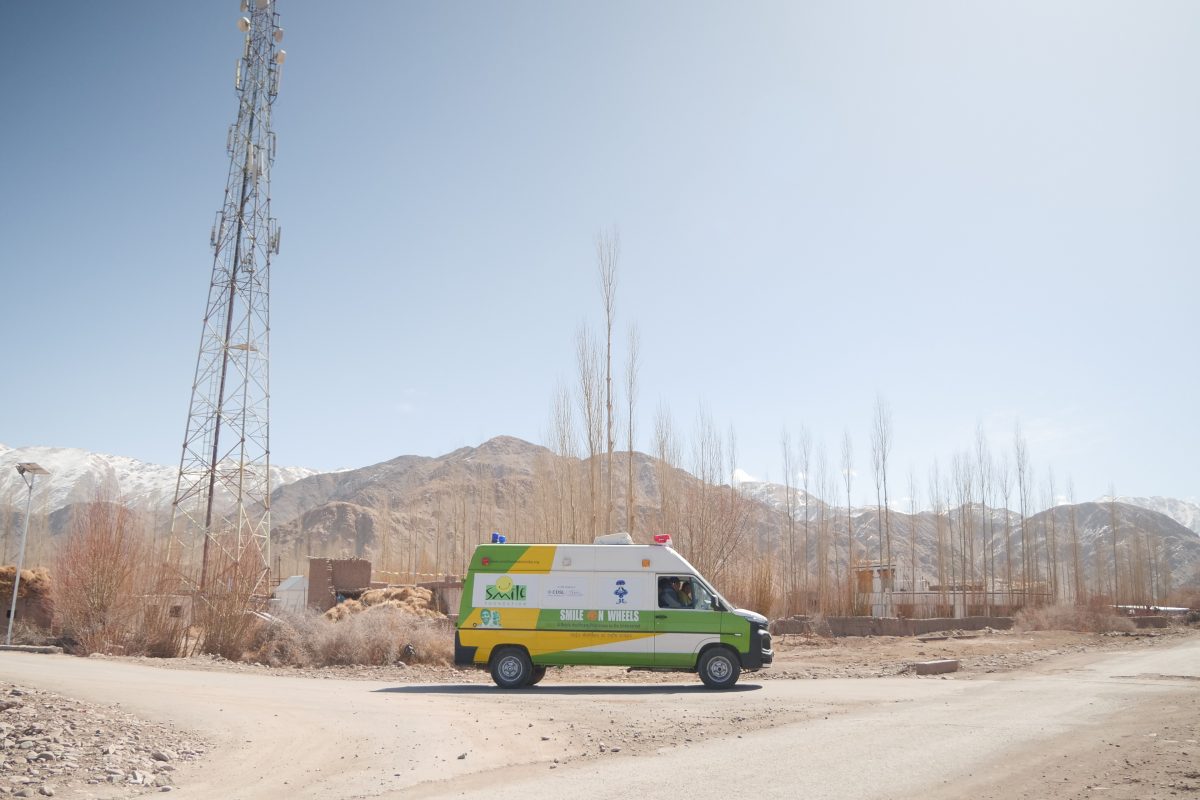
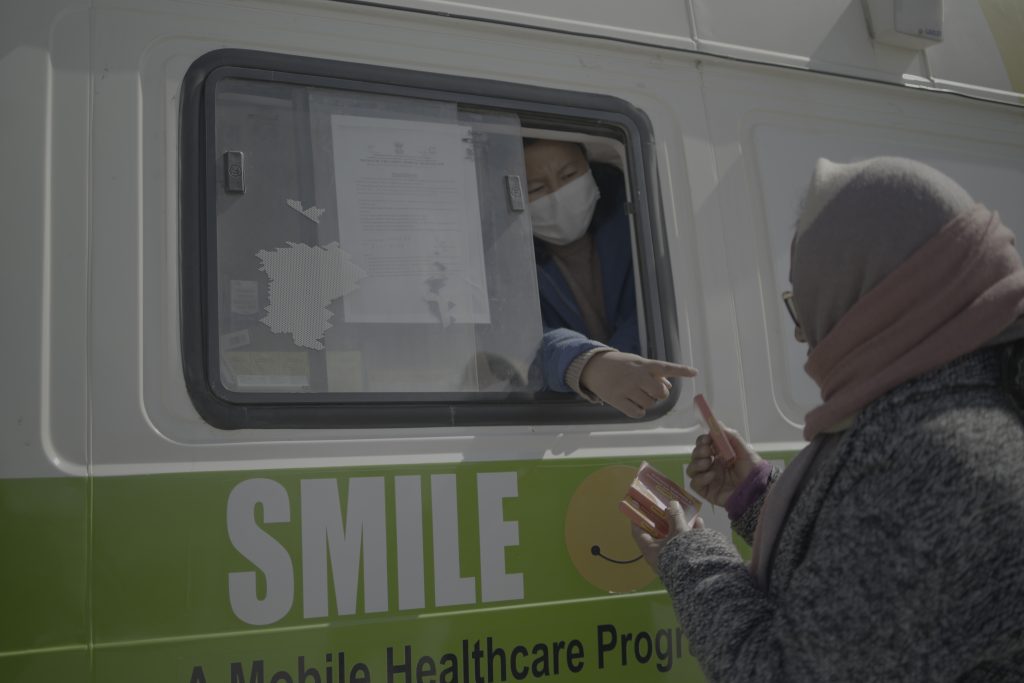
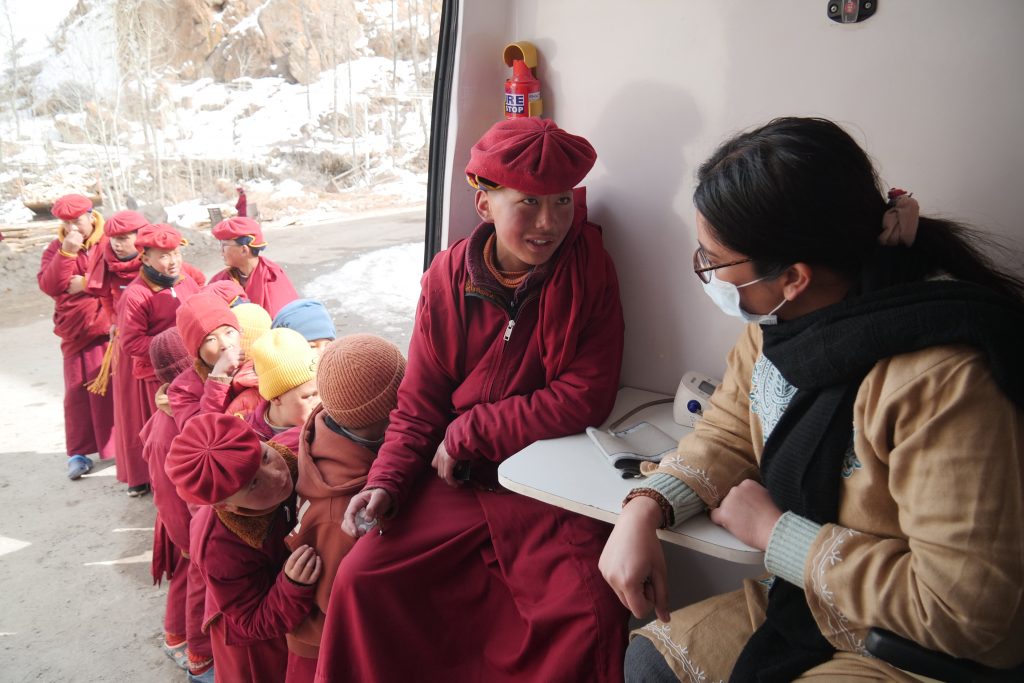
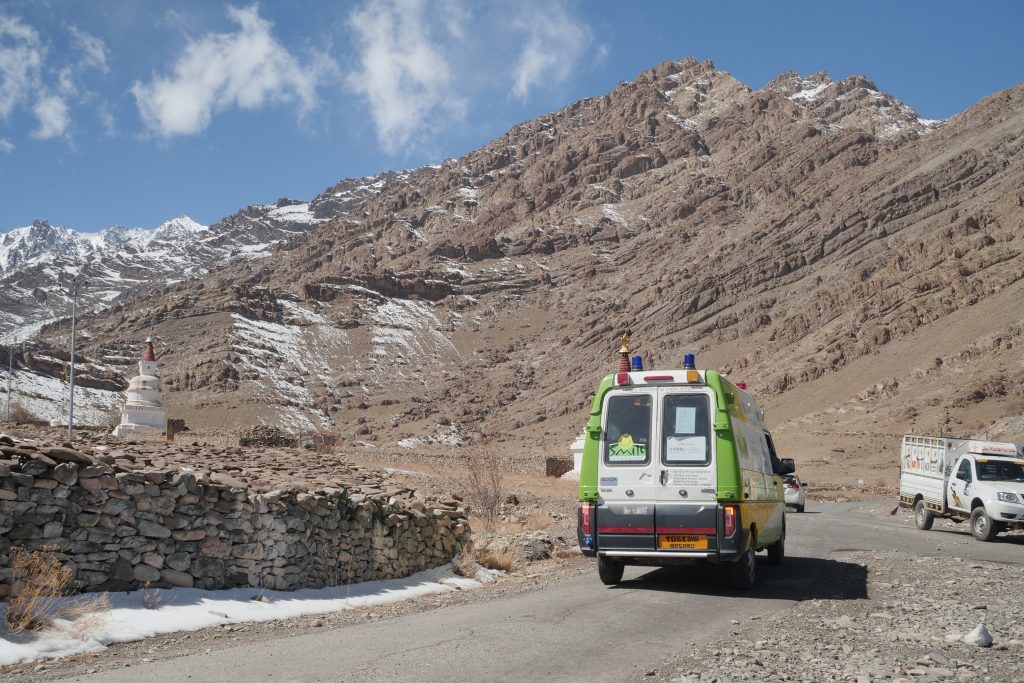
Bundled in layers against the cold, the Smile on Wheels team prepares to set off. The mobile medical van covers over thousands of kilometres every month, visiting 56 high-altitude villages in Ladakh.
Every journey begins with calls to village leaders — known as lambardars — the day before. In these red zones, where geography and isolation make emergencies more dangerous, the team’s arrival is a lifeline
A patient collects her medicines from the mobile medical van patiently in the biting wind. In places like Khaltse and Likir, temperatures drop below freezing even in April. But residents brave the cold for their monthly check-ups.
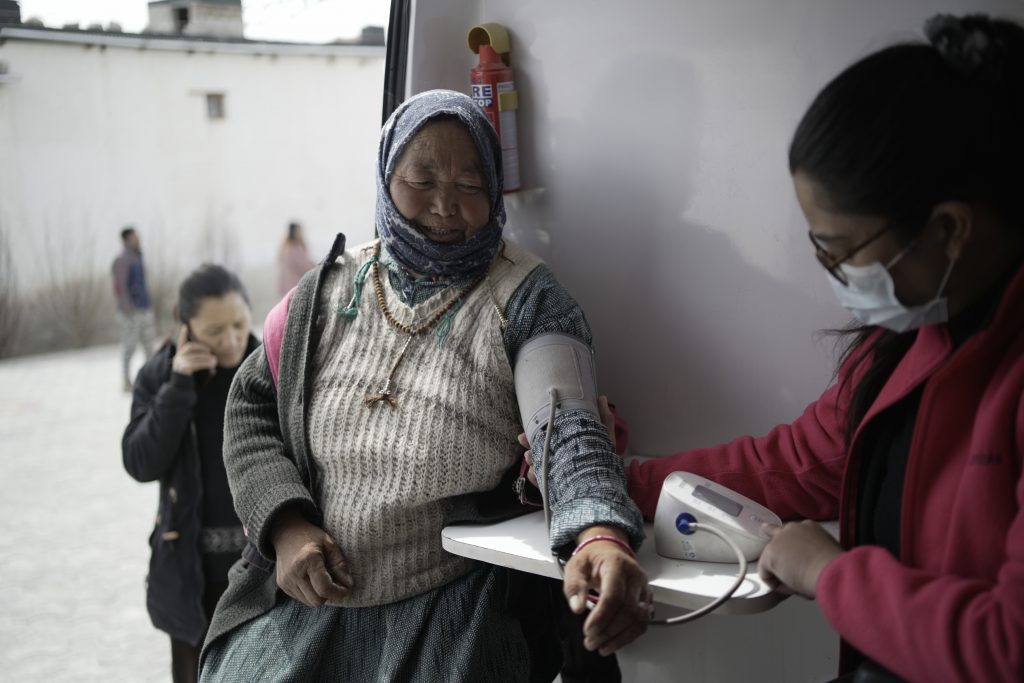
Most patients are between 35 and 70 years old, suffering from diabetes, high blood pressure, and joint pain. With just a handful of hard-to-reach Primary Health Centres (PHCs) in the region, many Ladakhis would otherwise go without treatment.
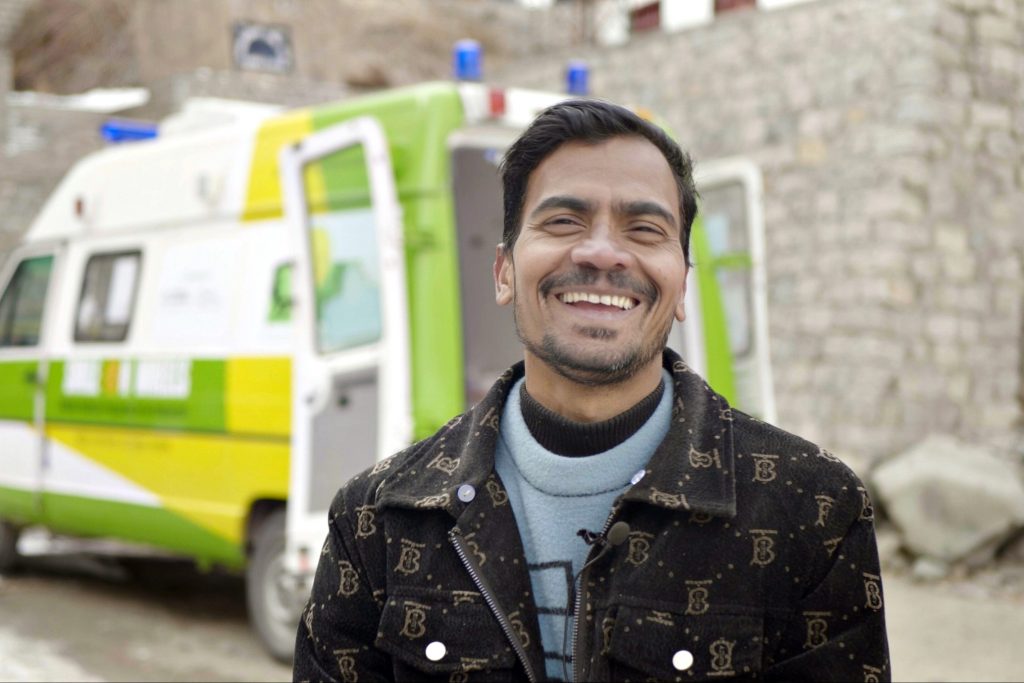
Taskeel Ahmad, Community Health Officer with Smile Foundation, originally from Bareilly, Uttar Pradesh, has served Ladakh’s remote communities for almost two years now.
“Here, I have learned that healthcare shouldn’t depend on where you live, what the weather is like, or who you are – it belongs to everyone, everywhere.” Taskeel says. “And honestly, I am just thankful I am able to play a small, meaningful part in someone’s life.”
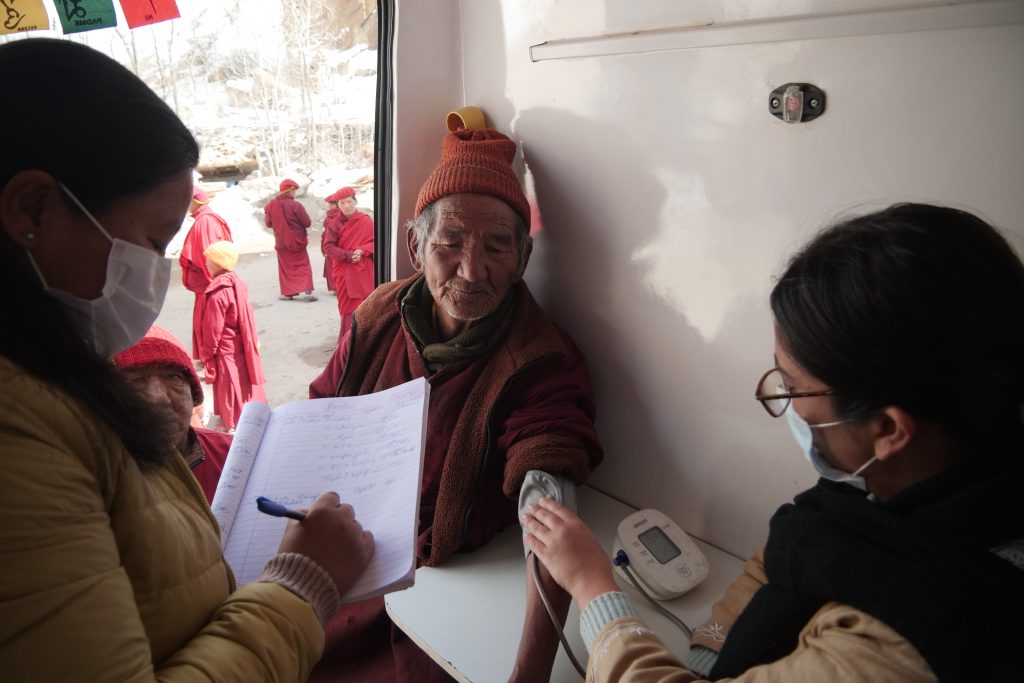
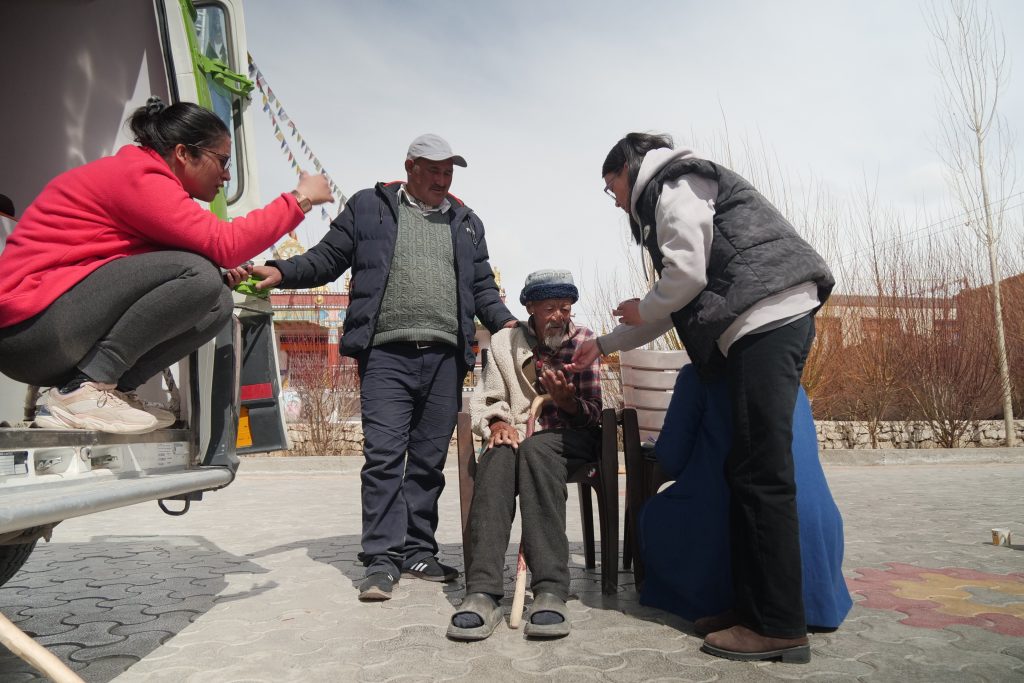
The doctor conducts a blood pressure check and Auxiliary Nurse Midwife (ANM) notes down important details of the health check-up. Hypertension is common among Ladakh’s older adults.
With no public transport in most villages, accessing even a Primary Health Centre can be near impossible. The mobile unit is sometimes the only healthcare people receive for months.
The mobile health van becomes a clinic on wheels. Equipped with basic diagnostics and essential medicines, it serves over 40,000 people annually.
When the van first arrived, villagers were skeptical. But over time — through WhatsApp groups and regular visits — trust grew. Today, people line up before the van even arrives.
Children peek in, curious. Though the primary age group is adults, the van welcomes all ages. Health education sessions help younger generations learn about nutrition and hygiene.
The team believes healthcare is not only curative — it must be preventive and inclusive. Every visit becomes an opportunity to plant seeds for long-term community wellbeing.
The team taking special care of the elderly.
By end of day, the team has often seen 1,100 patients — far beyond their daily minimum of 930. Each one is given time, attention, and care, even when daylight runs out.
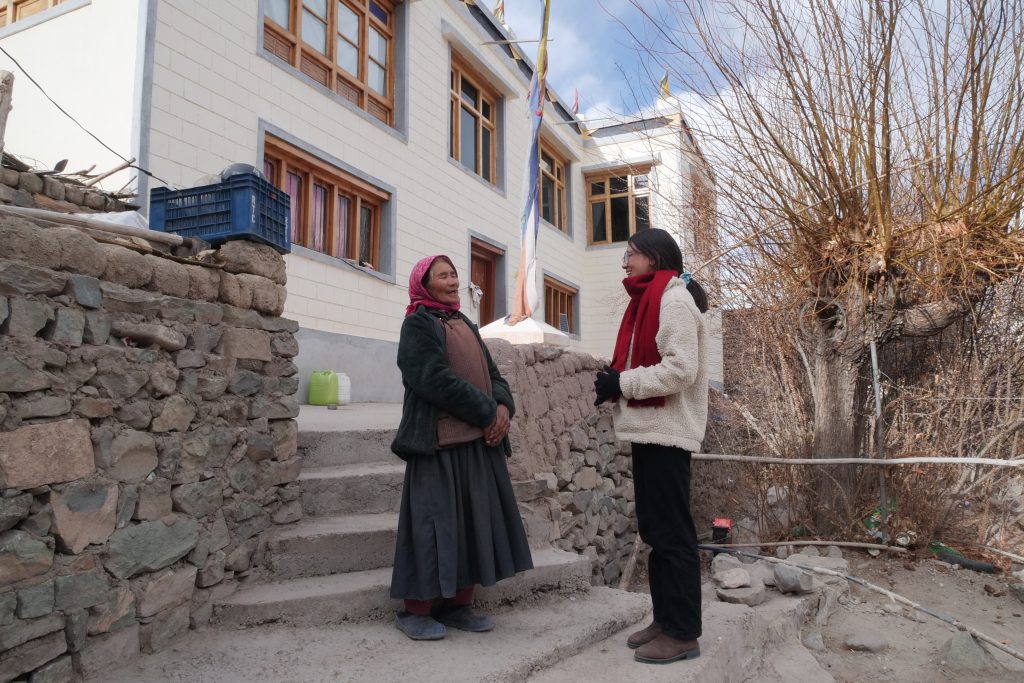
When villagers cannot reach us, the mobiliser goes door-to-door ensuring that no one is left behind. Many here have never seen a specialist — eye care, for example, remains a pressing unmet need.
Bright sun on snow causes chronic eye problems. Yet with no ophthalmologist in sight, most suffer silently. The team treats what they can, but the need for specialist care is urgent.
The road home is often lonely. Icy, broken tracks snake between mountains, and the van must navigate them carefully — a mechanical fault here can be life-threatening.
The nearest full hospital, SNM Hospital in Leh, has only 150 beds. For many villagers, getting there takes hours of private transport — a cost most cannot afford.
Back at base, the team pauses for a brief moment of warmth. For Taskeel and his colleagues, this is more than a job. It is a calling.
In a world that too often forgets its remotest corners, Smile Foundation’s health warriors continue to remember. Their work in Ladakh is a quiet but powerful reminder that compassion can traverse the steepest valleys and highest peaks. When asked why he keeps going, Taskeel simply says,
“Because someone is waiting. And we must reach them.”
Green Jobs for the Indian Youth: Progressive Nation, Protected Nature
India stands at a critical juncture in its developmental journey, where the strength of its large and youthful population can be a powerful engine for economic growth—if properly harnessed. Despite being home to one of the world’s largest youth demographics, the country has overlooked the importance of structured vocational education and even digital skills.
The importance of vocational education in India was first formally emphasised in the National Policy on Education (NPE) 1986, which recognised it as a crucial tool for reducing the growing mismatch between academic education and employment opportunities. This commitment was further reinforced by the Revised NPE in 1992, which reiterated the need for vocationalisation of education to enhance employability and economic relevance.
A significant leap in this direction came with the 11th Five-Year Plan (2007–2012), which laid the foundation for large-scale skill development initiatives, acknowledging that creating a skilled workforce was vital for accelerating inclusive growth. Thus, these sustained efforts over time have recognised that channelling the energy of India’s youth, especially those from disadvantaged backgrounds, holds importance.
The integration of digital skills into education and vocational training can play maybe the biggest role in empowering India’s youth. Government initiatives like Digital India and Skill India have laid the groundwork, but the pace of change requires greater collaboration between public institutions, private sector players, and civil society.
Smile Foundation skilling the youth
A case in point is Smile Foundation’s Skilling programme, STeP, a collaborative network skilling the youth in high-growth sectors with strong potential for both revenue generation and employment. The programme is designed to support and complement the Skill India Mission, while also aligning with Sustainable Development Goals 4 (Quality Education) and 8 (Decent Work and Economic Growth).
To date, the programme has successfully trained over 9,000 youth across eight states and facilitated sustainable employment for more than 5,500 individuals. It has established 74 skilling centres focused on sectors demonstrating significant growth potential. The programme adopts a practice-oriented approach, emphasising experiential learning and direct industry engagement. This is reflected in its robust network of over 400 employment partners, thus supporting the transition of trained youth into the workforce.
Imparting necessary digital skills through STeP
Across industries—from healthcare and finance to logistics and digital services—technology is reshaping the employment landscape, creating a surge in demand for specialised, job-ready skills. Recognising this shift, Smile Foundation’s STePis thoughtfully designed to align with emerging sectors and their evolving skill requirements.
The programme covers a wide range of high-growth fields, such as Business Process Outsourcing (BPO), which remains a major employment generator. It offers diverse roles in customer service, technical support, and back-office operations. Today’s BPO jobs require digital proficiency in Customer Relationship Management (CRM) tools, communication platforms, and basic automation, making them an accessible entry point into the digital workforce. Furthermore, with growing opportunities for remote work and upward mobility, BPO continues to be a future-proof career option.
Similarly, the banking and financial services industry is undergoing a rapid digital transformation. To thrive in this space, youth must gain skills in digital banking platforms, financial literacy, customer engagement, and regulatory compliance. As fintech solutions expand across both urban and rural India, the demand for digitally trained professionals is on the rise.
In the same vein, digital marketing has seen explosive demand as businesses expand their online presence. Skills such as Search Engine Optimization (SEO), Search Engine Marketing (SEM), social media strategy, email marketing, and content creation are vital for engaging audiences and driving growth—particularly for startups, freelancers, and entrepreneurs.
In parallel, e-logistics and supply chain management have become critical to India’s thriving e-commerce and manufacturing sectors. Proficiency in inventory control, digital tracking, warehouse management, and last-mile delivery operations is essential for those seeking long-term careers in this space. With businesses increasingly adopting technology-driven logistics models, this sector offers both growth and stability.
Lastly, the healthcare sector continues to offer stable and impactful opportunities through roles like General Duty Assistant (GDA) and patient care support. With training in basic healthcare practices, hygiene protocols, patient mobility, and digital health records, these professionals are indispensable in clinics, hospitals, and home-care settings. As India’s healthcare infrastructure grows, these roles provide both social value and professional advancement.
Embracing novel technology
As India embraces digital transformation, emerging technologies are playing a key role in reshaping industries and creating new career opportunities. In today’s digital economy, Data Science and Big Data are essential skills. As organisations generate massive volumes of structured and unstructured data, the ability to analyse and extract meaningful insights has become indispensable for driving informed decision-making across sectors.
Another critical skill is Blockchain Technology. While commonly associated with cryptocurrency, blockchain’s decentralized systems and smart contracts are revolutionising industries by improving security, transparency, and efficiency. Professionals proficient in blockchain can find opportunities across sectors such as finance, logistics, and healthcare, where its transformative potential is rapidly expanding. Augmented Reality (AR) and Virtual Reality (VR) are significantly altering industries like gaming, education, healthcare, and e-commerce. As these immersive technologies continue to be adopted, the demand for skilled AR/VR professionals will rise, creating exciting career opportunities in both creative and technical roles.
Lastly, Digital Health and Telemedicine are transforming the healthcare landscape. The widespread adoption of telemedicine, electronic health records (EHR), and health informatics is making healthcare services more accessible and efficient. As the demand for digital healthcare solutions grows, there is an increasing need for professionals in health tech and patient support. This rapidly expanding sector provides India’s youth with the opportunity to contribute to the future of healthcare, helping to improve outcomes for patients across the country.
Upskilling and building transferable skills
In India’s vast informal economy, countless workers find themselves locked in a cycle of low-skill, low-wage labour with limited pathways to upward mobility. For many, the opportunity to improve their skills—and in turn, their livelihoods—remains out of reach. Recognising this challenge, Smile Foundation launched iTrain on Wheels, a collaborative effort between Berger Paints India Ltd. and Smile Foundation, under Berger’s Corporate Social Responsibility (CSR) initiative.
The programme attempts to bridge the skill gap among local painters by offering specialised, hands-on training in contemporary painting techniques, safety standards, and customer service. Painters are also equipped with basic entrepreneurial skills, empowering them to manage their work independently, engage with clients more effectively, and even expand their own teams.
Since its inception, over 1,18,000 painters across 25 states have been upskilled. In the process, the programme has not only improved technical capabilities but has also opened doors to higher-paying opportunities and greater job security.
Skilling that truly pays off
India’s young population has the power to shape a strong and inclusive future—but only if we invest in the right skills today. Vocational training that matches real-world needs, includes digital tools, and supports young people with care and confidence can open doors to better jobs and brighter lives.
Programmes like Smile Foundation’s STeP and iTrain on Wheels show how practical, hands-on learning can make a real difference, especially for youth from underserved communities. But lasting change needs more partners—governments, companies, and communities working together to make skill-building a priority.
If we want every young person in India to succeed in tomorrow’s workforce, we must start by giving them the tools and support they need today.
India’s healthcare system stands at a critical crossroads. While it boasts of several remarkable strides in tech-based medical innovation and digital health, it continues to grapple with stark inequalities and underfunding in the delivery of health services.
Despite being home to one of the world’s largest populations, India spends not more than 2% of its GDP on public healthcare, far below the global average. Despite debates and a push for better healthcare facilities, this limited investment for years has created a fragmented system where top-tier private hospitals coexist with overburdened public facilities, leaving millions without consistent access to quality and affordable health services.
Limited to a meagre increase in health expenditure over the past five years, from 1.28 per cent of GDP in 2019-19 to 1.9 per cent in 2023-24 (Economic Survey 2023-24), most Indians struggle to access even basic healthcare leading to the burden of treatment falling heavily on them, increasing catastrophic out-of-pocket expenses.
During this same time, although there has been a steady decline in the out-of-pocket expenditure, from 48.8% in 2017-18 to 39.4% in 2021-22, the dominance of the private sector, the rising fragmented regulation, and geographic disparity between urban and rural services continue to make healthcare not just expensive, but deeply inequitable. As a result, healthcare in India remains more of a consumer good than a guaranteed right.
However, as India moves forward to achieve the Universal Health Coverage (UHC), the question is no longer whether reform is needed, but how urgently we can reimagine healthcare as an affordable, quality public service rather than a privilege.
Making healthcare accessible to all
Health dictates all other factors, leading to a country’s long-term growth and development. Promoting health and well-being is one of the 17 UN Sustainable Development Goals (SDGs) in the 2030 Agenda for Sustainable Development. While private healthcare services continue to promise world-class healthcare services, India must prioritise affordable healthcare services to the last mile. In this regard, our ‘Smile on Wheels’ programme sets an example of transforming healthcare services, such as delivering health services to India’s undeserved communities and rural areas, which house more than 65% of the population.
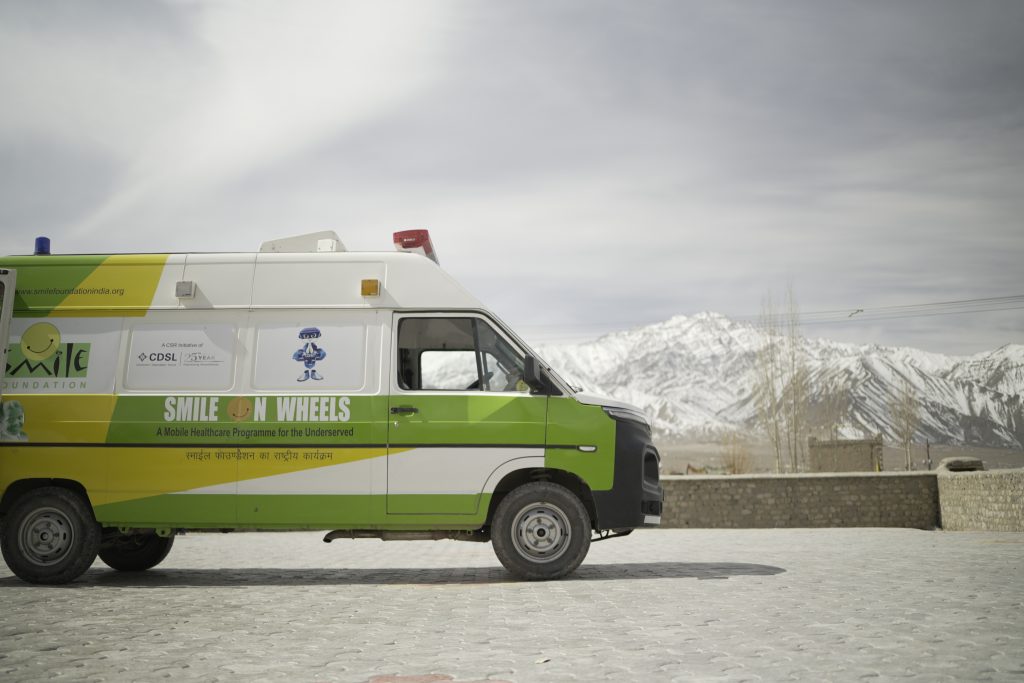
‘Smile on Wheels’ are custom-tailored mobile medical unit vans armed with modern equipment, with doctors and qualified nursing attendants on board, available to cater to the primary health needs of people in inaccessible areas. The programme provides free of cost doorstep consultation, medical tests like blood sugar and blood pressure, measuring weight and height and free medicines to the underserved. To date, 105 vans have been operational as fully equipped mobile healthcare units with doctors and paramedics, providing OPD services, point-of-care test facilities, medicines, etc.
These services and initiatives are key to addressing the crucial gaps in India’s healthcare services and supporting UHC and the government’s vision of Ayushman Bharat.
India’s healthcare industry is steadily gaining prominence through several recent health initiatives and programmes. The launch of the flagship Ayushman Bharat Program in 2018 has been a significant step in this direction. The primary focus has been its two main components—Health and Wellness Centres, which aim to improve primary healthcare services, and Pradhan Mantri Jan Arogya Yojna (PMJAY), which provides insurance for secondary and tertiary hospitalisation for the poorest 40% of the population.
As of September 9, 2024, the Ayushman Bharat Pradhan Mantri Jan Arogya Yojana (AB PM-JAY) has significantly improved healthcare accessibility across India, with over 35.4 crore Ayushman cards empowering millions of families with health coverage.
Further, through the initiative, there has been a push towards developing an integrated and interoperable digital health infrastructure, with the launch of Ayushman Bharat Digital Mission, which is instrumental in reshaping the healthcare industry. Through this, Cowin, e-Sanjeevani, Arogya Setu, e-Hospital, and other digital healthcare projects have sped up development and improved healthcare delivery and accessibility.
These programmes seek to guarantee that affordable healthcare reaches every home and establish a strong healthcare environment with partnerships with the commercial sector, non-profits, healthcare entrepreneurs, and foreign partners. These partnerships have played a key role in advancing health equity nationwide, encouraging innovation in healthcare delivery, and increasing access to cutting-edge medical treatments.
However, challenges continue to remain large towards India’s affordable health services.
Dearth of primary healthcare services
Lack of a strong primary healthcare infrastructure remains one of the most significant challenges in India’s healthcare system. Data suggests that India has an average of fewer than 1.4 beds per 1000 people, much lower than the WHO-recommended threshold of 3.5 beds per 1000.
The government’s investment in healthcare is less than 2% of GDP, while the private sector’s expenditure is slightly less than 3% of GDP, both falling well short of the global average of 9.5% of GDP invested. The shortage of beds and lack of adequate funding pose a fundamental challenge in providing health and wellness access to the masses.
Poor accessibility to healthcare services
A greater difficulty is found in the glaringly unequal accessibility, particularly concerning the urban-rural divide. Bihar, for instance, has just 0.29 beds per 1000 people, while Karnataka has 4.2 beds per 1000 people. Only a few districts have tertiary or quaternary care facilities; significant disparities remain between districts even within states. People are deprived of timely care due to travelling great distances within and beyond the state.
Not enough trained frontline workers
In addition, the lack of qualified frontline health personnel worsens the persistent healthcare challenges. Although there are over 1.3 million registered allopathic physicians and 5,00,000+ registered AYUSH physicians nationwide, there remain gaps in primary healthcare services.
For example, the Community Health Centres (CHCs) lack between 74.2% and 81.6% of trained frontline health workers, with ASHA workers often protesting unfair treatment and gaps in payment. Similarly, an average of 3.3 million registered nurses nationwide still totals less than the required one-third doctor-to-nurse ratio.
The 3s: Availability, Accessibility, Affordability
Services designed in the Smile Foundation may help the above-mentioned situations, ensuring mobility to make primary healthcare accessible for people living in hard-to-reach areas, rugged terrains, remote rural areas, and tribal belts.
Along with curative, our focus has been on increasing awareness and promoting health-seeking behaviour in these communities. For instance, with the Smile on Boat mobile health project in South Salamara, Assam, we have modified our flagship Smile on Wheels project, with the same core objective.
Further, we believe that healthcare growth in India depends on taking care of its frontline workers, who form the backbone of a resilient health system. This was evidenced during the COVID-19 pandemic, where they were at the forefront of managing the pandemic despite the severe risk it posed to their health.
Our experience working with frontline workers reveals that investing in health workers is imperative, as they are central to last-mile service delivery and ensure comprehensive healthcare. To create resilience among primary healthcare providers, 23 training programmes were organised across India on First Aid, Nutrition, Health, Immunisation, Family Planning and Non-Communicable Diseases.
At a time when there has been a growing emphasis on public-private partnerships to fill in the gaps, there must be more syncronisation between the government and private sectors, with the support of NGOs, to strengthen India’s healthcare.
Smile Foundation continues to support government services by implementing a threefold strategy—availability, accessibility, and affordability—by creating service infrastructure support and health awareness. Its many programmes and telemedicine services bring essential health services to underserved regions. We also enhance public health facilities and builds sustainability into communities via training and awareness drives. These integrated efforts address both immediate and long-term healthcare challenges, especially for women and children in rural and marginalised communities.
Affordable Healthcare Requires Collective Will
The journey toward affordable and equitable healthcare in India cannot rest solely on policy blueprints or technological breakthroughs—it must be rooted in people, partnerships, and purpose.
Smile Foundation’s community-driven models like Smile on Wheels and Smile on Boat demonstrate that when innovation meets empathy, even the most marginalised can be reached. The path forward lies in scaling such integrated, inclusive approaches, strengthening frontline capacity, and forging deeper collaborations between the public, private, and civil society sectors. Healthcare should no longer be a luxury determined by geography or income. It must be a right, upheld for every Indian, every day.
In the remote village communities of Raigad, Maharashtra, a centuries-old craft is making a modern comeback. Bamboo, once an overlooked resource, is now at the center of a transformative movement—thanks to the determination of local artisans and the quiet power of partnerships. Leading this revival is the Bamboo Resource Center (BRC), a grassroots NGO working to preserve traditional craftsmanship and uplift rural livelihoods. But what sets this story apart is not just the mission—it’s the method.
The Bamboo Resource Center’s journey toward self-reliance and sustainability has been significantly strengthened through its involvement in Smile Foundation’s Empowering Grassroots initiative, supported by Change the Game Academy. This collaboration has done more than improve financial inflows or polish communication—it has sparked a shift in mindset. It has helped small NGOs like BRC understand their power, their role, and most importantly, their potential to thrive independently.
Reviving a traditional craft
Bamboo, often termed “green gold,” holds immense potential in India’s rural economy. The country’s bamboo market was valued at approximately USD 5.84 billion in 2022 and is projected to reach USD 8.35 billion by 2030, growing at a CAGR of 4.6% . Despite this, many artisans remain marginalised, lacking access to markets and modern techniques.
Haridas Nair, founder of Bamboo Resource Center, reflects on the beginnings: “The objective was to promote bamboo artisans and provide them with a platform to sell their handcrafted articles. Funding then became a crucial need to run the organization.” His words reveal a common struggle for community-based organisations (CBOs): immense local potential constrained by limited access to institutional knowledge and sustainable financing.
From capacity building to collective strength
Recognising this gap, the Empowering Grassroots training intervened not just as a support system but as a catalyst for systemic change. Manjusha Khedkar, a trainer with the initiative, explains: “I observed that there are small grassroots-level NGOs who really need to develop their capacities—not only to raise funds, but how to communicate in the community, how to involve the community in their program.”
This insight became the foundation of a training model tailored to the actual needs of local NGOs. It was not a prescriptive, top-down solution. Instead, it encouraged the identification of real, local problems and supported NGOs in designing their own responses. Manjusha describes the process as a “lifelong lesson”—for both trainers and trainees. “As a trainer, I feel the best part of CtGA and Empowering Grassroots is that the training does not end at training, but post-training mentorship is very crucial. It’s a learning process for us as well as for them.”
Indeed, the results are evident. The Bamboo Resource Center, once primarily focused on artisan support, has now evolved into a learning hub for market readiness and community-led development. Its members are not only selling products but also building systems—supply chains, communication plans, and fundraising strategies.
Narratives of change
Advisors like Anil Harpude highlight how the initiative has redefined the very structure of opportunity for artisans. “There are many skilled artisans, but they lacked proper training and knowledge of urban market demands,” he notes. Training modules helped bridge this gap—equipping artisans not only with better tools and techniques but also with an understanding of how to position their craft in contemporary markets.
Equally important was the introduction of the concept of local fundraising. As Umesh Sonune, Programme Manager at BRC, shares, “Local fundraising was a new concept for us. But through the training, we learned new aspects… it’s about engaging people, building relationships, and integrating them into our initiatives.”
The nuance here is critical: fundraising might start with looking for money but is really about trust, engagement, and long-term partnerships with the very community an NGO serves. As Smile Foundation and CtGA emphasised throughout the training, ownership lies at the local level. By decentralising dependency and promoting autonomy, the model strengthens community-led systems from within.
From learning to leadership
India is home to approximately 1.49 lakh bamboo artisans, predominantly in rural and tribal areas . However, many lack exposure to urban markets and contemporary design trends. BRC addresses this gap by integrating traditional skills with modern market demands, thereby enhancing the artisans’ competitiveness.
Perhaps the most profound outcome of this initiative is not organisational growth, but the emergence of a networked ecosystem. As Manjusha notes, “They have now established good communication amongst themselves. It is kind of a small network of the small NGOs where they regularly come together, and they are growing that way.”
This is development done differently. It’s not an injection of aid or a temporary intervention; it’s the weaving of capacity, connection, and confidence into the fabric of community institutions. In doing so, the training has unlocked something more enduring than funding—a sustainable cycle of mutual learning and local leadership.
Why this matters
The implications of this model go far beyond one village or one NGO. India is home to more than three million registered NGOs, many of which operate with limited visibility and funding. While their local knowledge and community roots are invaluable, their impact often remains restricted without the infrastructure to grow sustainably.
Empowering Grassroots offers a replicable blueprint: empower local organisations not by doing the work for them, but by enabling them to build the muscle for long-term action. Train them in skills like strategic communication, donor engagement, and needs-based planning. Provide mentorship that continues beyond the last workshop. Most importantly, foster a culture of collaboration—where NGOs learn from each other and rise together.
A bamboo blueprint for development
The transformation of the Bamboo Resource Centre is not just about craft, funding, or strategy. It is about reclaiming agency. In turning inward to find strength, and outward to build partnerships, the BRC is crafting a new development narrative.
As India continues to address complex rural challenges—from employment to sustainability to education—the lesson from Raigad is clear. Solutions do not always come from above. Sometimes, they come from within—from the grassroots, with the right support, at the right time.
In rural Odisha, Dr. Sibaji Panda, a deaf educator and Indian Sign Language (ISL) advocate, has created Happy Hands School for the Deaf. In this interview, he shares his journey and the importance of sign language in building identity and community for deaf children.
Q1. Dr. Panda, can you take us back to the beginning — what personal experience first made you realise that deaf children need a different kind of education system?
Dr. Panda: I lost my hearing when I was just 10 years old. I was always a curious child, eager to learn and engage with the world around me. But after my hearing loss, I faced a huge challenge in trying to continue my education. The mainstream schools I attended weren’t equipped to accommodate a deaf child. No one spoke sign language, and I struggled to understand what the teachers were saying, but it was better than the special children school that I tried attending. Still, the whole experience was quite isolating.
Thankfully, my elder brother was also deaf, so he helped me navigate this new world. I started learning sign language at home, but it wasn’t until I entered the Delhi Foundation for Deaf Women that I truly found my voice. That’s when I began to realise just how limited the opportunities were for deaf students — not just in terms of education but in society as a whole. I saw firsthand how my peers, despite their intelligence and potential, were constantly underestimated because they couldn’t hear.
It was that realization that pushed me to do something about it. I wanted to create an educational space where deaf children could thrive, feel understood and supported. My journey led me to meet Professor Ulrike Zeeshan, a German linguist, who helped me document Indian Sign Language (ISL). I became the first person in India to do so, and with her help, we created the first ISL course, which is still used by institutions today.
Looking back, I see my work as a way to give other deaf children the opportunities I never had. I’ve spent my life working towards a future where no child has to struggle the way I did. The journey continues, but it’s been a rewarding one.
Q2. What makes Happy Hands unique compared to traditional schools for the deaf?
Dr. Panda: We’re a deaf-led, deaf-focused community. Every teacher here knows Indian Sign Language (ISL). Most are deaf themselves. Our curriculum is bilingual and bicultural, meaning students learn both ISL and written language. We don’t rely on one-size-fits-all methods. We use deaf multi-literacies, peer-to-peer teaching, activity-based learning, and a lot of visual storytelling. Our aim isn’t just to teach—it’s to empower children to think critically and build their identities with pride.
Q3. How does Happy Hands integrate ecology with education? Why is it important?
Dr. Panda: At Happy Hands, we believe that education should not just focus on academic subjects, but also on nurturing the whole child — their connection to the environment, their understanding of sustainability, and their role in the world around them. That’s why we’ve intentionally woven ecology into our curriculum, making it an integral part of our students’ learning experience.
We start by introducing the concept of ecology early. For example, our students engage in hands-on projects where they directly interact with nature. We have a garden at the school, where students plant vegetables and herbs. They learn not just how to grow food, but also about the delicate balance of ecosystems. They see firsthand how plants, insects, water, and soil all play important roles in maintaining life. These lessons are enriched with sign language, ensuring that every concept is accessible, visual, and deeply understood by the children.
Ecology is a theme that runs through various subjects. In science, we explore topics like biodiversity, climate change, and renewable energy. Our students take field trips to local ecosystems — whether it’s a wetland, a forest, or an urban park — where they experience the real-world application of what they’ve learned. By connecting theory with practice, we’re teaching them to respect and protect the environment from an early age.
We also focus on the ethical side of ecology. Through discussions and activities, we teach our students about the importance of reducing waste, conserving resources, and advocating for a cleaner, more sustainable planet. They’re involved in projects like recycling drives and learning to reduce plastic use at school. The students understand that their actions can have a positive impact on the world around them, and that ecological conservation is something they can actively contribute to.
Q4. Can you elaborate on the activity-based learning approach at Happy Hands?
Dr. Panda: Deaf children are highly visual learners. Also, we believe that learning should be interactive and engaging. Our activity-based approach involves using games, practical exercises, and real-life scenarios to teach various subjects. For instance, students might learn mathematics through measuring ingredients for a recipe or understand science concepts by observing plant growth in our gardens. This method caters to the visual learning strengths of deaf students and makes education a more enjoyable and meaningful experience.
Q5: What role do deaf teachers play at Happy Hands, and why is that representation important?
Dr. Panda: When I was growing up, I never had a deaf teacher. I didn’t see anyone like me at the front of a classroom. It was always someone who didn’t sign, didn’t understand what it was like to be deaf in a hearing world. That kind of isolation does something to a child — it makes you question your own potential. That’s why, when I started Happy Hands, I made a conscious decision: our classrooms would have deaf teachers. Not just as a token gesture, but as the core of our pedagogy.
When a child sees someone like them teaching science, leading a farm activity, or coding on a computer, it sends a very different message than when they’re simply trying to keep up in a classroom designed for hearing kids. Representation like that builds confidence. It creates belonging. It helps our students internalise that being deaf doesn’t mean being limited.
Deaf teachers teach with cultural fluency. They know how to communicate without needing to ‘translate.’ They teach in sign language directly, without interpreters. That fluency means learning happens faster, more naturally. They also bring their lived experience, which is something no textbook can teach. But here’s the problem: we don’t have enough deaf teachers in India because we haven’t created enough opportunities for deaf people to become teachers. That’s a systemic failure.
So we’re trying to change that — by mentoring our students, by advocating for teacher training programmes in sign language, by building pathways that never existed for us. Because the next generation deserves more than what we had. We need more deaf educators who can not only teach but advocate for the deaf community in every classroom, every institution, and every sector.
Q6: How has Indian Sign Language evolved over the years, and what still needs to be done?
Dr. Panda: Indian Sign Language (ISL) has come a long way, but it’s still not where it should be. I’ve seen the progress myself, especially in the last two decades. When I first started documenting ISL, it was practically invisible. There was no formal structure, no accepted curriculum, and no real understanding of the language as a complete, rich system of communication. It wasn’t even recognized as a language in its own right.
Over the years, however, more people began to see the importance of ISL. With the establishment of the ISL Research and Training Centre (ISLRTC) and growing awareness from private and public institutions, there’s been a shift in how people view the language. It’s slowly gaining recognition. More schools are teaching ISL, and more individuals are learning it as a second language.
But there’s still so much work to be done. For example, ISL is still not recognised as an official language of India, and that’s something the government needs to address. The deaf community continues to fight for this recognition, yet we are often met with resistance. Language recognition is about giving a community access to the same rights and opportunities as everyone else.
Additionally, the gap in education for deaf children is still stark. Many schools don’t have teachers proficient in ISL, and interpreters are still too few and far between. The challenges of inclusive education in India are huge, and they stem from a lack of understanding about what inclusive education truly means for deaf students. We need to prepare deaf students with the same academic skills as hearing students from an early age, and that’s a long-term process. But we’re not there yet. The pace of change is slow, and that’s why we must keep pushing for systemic reform — in policy, education, and awareness.
We are, however, seeing positive changes on the social front. People are beginning to appreciate the rich culture that ISL represents. I believe in the next few years, we will see even more momentum — we have no choice but to keep moving forward. But there’s still a long way to go.
Q7: How important is the involvement of the deaf community in shaping policies for Deaf education?
Dr. Panda: The involvement of the deaf community in shaping policies for deaf education is absolutely critical. Too often, education policies are made by people who are not deaf, who don’t understand the lived experience, and who have never navigated the world from a deaf perspective. This leads to policies that are well-meaning but ultimately ineffective. That’s why the deaf community must be involved at every step of the process — from curriculum design to teacher training to advocacy for government funding.
I’ve personally seen how vital it is to have deaf voices at the table. When I was involved in the early efforts to promote ISL, one of the challenges we faced was that many policy discussions about deaf education were happening without any input from deaf individuals themselves. The policies being discussed weren’t addressing the core issues we faced.
That’s why I pushed to make sure that deaf people were involved in the development of the curriculum and the training of teachers. I can’t tell you how many times I’ve been part of discussions where non-deaf people suggested “solutions” for the deaf community that were completely disconnected from our needs. We need deaf-led advocacy to ensure that we are fighting for the right things. We need deaf individuals in leadership positions, shaping the conversations around policy, not just being the subjects of those policies.
I can say from experience that when the deaf community is included in decision-making, the results are far more effective. Policies that come from the community are not only more inclusive, but they also reflect the true needs of deaf individuals. It’s not just about creating the right laws; it’s about creating a culture that values deaf people and understands the challenges they face.
For example, the Digital Sign Language Library project, which I worked on with other deaf leaders, was a perfect example of what can happen when deaf people lead the charge. We created a resource that was designed specifically for the needs of deaf students and teachers. The information has to be meaningful and accessible to the people it’s meant to serve.
Q8: What role does technology play in bridging the gap for deaf students in education, and what advancements would you like to see in the future?
Dr. Panda: When I started my career in deaf education, the resources available to deaf children were limited. There were no accessible learning platforms, no specialised apps for sign language, and certainly no online resources that catered to the unique needs of deaf students. But as technology has advanced, it has opened up new possibilities for bridging the gap in education.
But we’re still in the early stages of what’s possible. The next frontier is the integration of artificial intelligence (AI) and virtual reality (VR) in deaf education. Imagine a VR classroom where deaf students can interact with 3D models and simulations in sign language, or AI-based tools that can translate speech to sign language in real-time, enabling deaf students to participate in mainstream classes seamlessly. These are the kinds of advancements I’m excited about because they have the potential to eliminate many of the barriers that deaf students currently face.
However, there are challenges. Many schools, particularly in rural areas, lack the infrastructure and resources to implement these technologies. Additionally, there’s still a need for more research and development in the field of assistive technologies for the deaf. While we’ve made progress, there’s a lot more that can be done to make learning truly accessible and inclusive for deaf children.
In the future, I hope we can see a world where technology levels the playing field for all students — deaf or hearing. But for that to happen, we need continued investment in both the development of technology and the training of educators to use it effectively.
Q9: How has the partnership with Smile Foundation supported Happy Hands, and why do you think such collaborations matter?
Dr. Panda: The partnership with Smile Foundation has been a real turning point for us. The support is financial, strategic and empathetic. They understand that deaf education needs more than classrooms. That it needs awareness, training, and community engagement. With their help, we’ve been able to build better infrastructure, develop teaching materials in Indian Sign Language, and provide more consistent support for our deaf teachers.
What I appreciate most is that Smile Foundation doesn’t try to ‘fix’ things from the outside. They listen. They ask how they can strengthen what already exists. That’s rare. Many organisations come in with their own models and expect you to adapt. But Smile has partnered with us in a way that respects our philosophy and amplifies our impact.
Partnerships like this are essential because no one institution can transform deaf education alone. We need allies who believe in the long-term change we’re working towards. Smile Foundation is one of those rare allies.
Q10: What do you think needs to change in society to create a more inclusive environment for deaf people?
Dr. Panda: The most important thing that needs to change in society is the mindset around deafness. We’ve been taught to see Deafness as a “disability” or a “limitation,” when in reality, it’s just a different way of experiencing the world. For too long, society has treated deaf people as if they’re lesser or in need of fixing, when in fact, deaf individuals have the same intellectual capacity, creativity, and potential as anyone else.
I often think about how we create spaces that truly value deaf people. The first step is understanding that accessibility is a right, not a privilege. There needs to be a cultural shift where deafness is not just accepted, but celebrated. We need to normalise sign language in daily life, ensure that public spaces have the right accessibility features (like sign language interpreters at public events, captioning on TV shows, and accessible government services), and integrate deaf individuals into all aspects of society.
But more than anything, we need to change the narrative. We need to stop framing deafness as something that needs to be “fixed” and start seeing it as part of the beautiful diversity of human experience. Once we make that shift, we’ll see a true, lasting change in how deaf people are treated, included, and empowered.
Q11: How can parents support their deaf child’s development at home?
Dr. Panda: Supporting a deaf child at home begins with creating an environment where the child feels seen, heard, and valued. For many parents of deaf children, there’s an initial fear or uncertainty about how to communicate. They may feel like they’re missing out on some fundamental connection with their child, but in reality, the key to support is simple: communication and interaction.
The first thing I always tell parents is to learn sign language. When parents sign with their children, they are opening up an entire world of communication that would otherwise be closed off. This doesn’t just mean teaching them basic signs, but engaging in everyday conversation — talking about feelings, asking about their day, discussing the world around them. It’s about building a language-rich environment, even at home.
Beyond language, parents can also create a supportive home environment by fostering independence and self-expression. Encouraging their child to try new things — whether it’s drawing, reading, playing a musical instrument, or exploring the outdoors — is crucial. It’s also important to celebrate achievements, no matter how small, to boost the child’s confidence and self-esteem.
The key takeaway is that the home should be a place where a deaf child feels fully embraced. When parents take the time to understand their child’s needs and adapt their own communication methods, they’re setting the stage for a lifelong, positive relationship. The development of a deaf child happens most powerfully in the context of a supportive family, and it’s beautiful to see how far they can go when that foundation is laid.
Q12: What advice would you give to parents of deaf children, especially those who are unsure about which path to take for their child’s education?
Dr. Panda: My advice to parents of deaf children is simple: trust in the potential of your child. From the moment a child is born, they have the ability to learn, grow and thrive. Give them the tools they need to do exactly that. For a deaf child, the most important tool is language, and that language should be Indian Sign Language. If they don’t have language, they can’t fully engage with the world around them. That’s why it’s so critical for parents to choose early intervention programmes that focus on providing deaf children with access to ISL right from the start.
In terms of education, I would encourage parents to explore options beyond the mainstream school system. There’s a lot of resistance in traditional schools when it comes to deaf children, but there are also specialised schools and programmes that cater specifically to deaf children, like Happy Hands, that create a supportive, inclusive environment. Look for schools that offer a bilingual education — where deaf children can learn in ISL and also be exposed to written language — because this will give them the best chance for success.
But above all, don’t let anyone tell you that your child’s dreams are limited by their deafness. Deaf children can be anything they want to be — doctors, engineers, artists — as long as we, as a society, provide them with the right education, support, and opportunities. The only limitation is the lack of belief in their potential.
And finally, always remember: your child’s journey is unique, and it’s okay to take your time finding what works best for them. Surround them with people who believe in them and advocate for their rights, because no one else will do it as passionately as you will.
In the heart of a rural classroom in India, a group of children gathers around a laptop, exploring renewable energy and robotics through an interactive simulation. Just a few years ago, this would have seemed unimaginable. But today, on National Technology Day 2025, such moments are becoming commonplace across underserved communities. Digital tools are transforming how children in India learn, connect, and dream.
While technology alone cannot bridge the education divide, it is proving to be a powerful enabler when anchored in equity, supported by policy, and guided by the lived realities of the communities it seeks to serve. At Smile Foundation, we believe technology must not be a privilege of the few—it must be a public good, a tool for inclusion, and a bridge to opportunity.
On National Technology Day 2025, we celebrate not only India’s technological advancements but also the transformative impact of digital innovation on education. This year’s theme, “YANTRA – Yugantar for Advancing New Technology, Research & Acceleration,” underscores a shift towards leveraging technology for inclusive and accelerated development.
From textbooks to tech: A paradigm shift
India’s education system has long struggled with systemic inequities: outdated curricula, overburdened teachers, and an absence of infrastructure. For children in low-income and remote regions, these challenges are compounded by daily survival. In this context, digital tools offer a chance to leapfrog barriers providing access, engagement, and quality at scale.
Smile Foundation’s flagship education initiative, Mission Education, embraces a blended learning model that brings together smart classrooms, e-learning platforms, school-on-wheels, and AI-powered tools. The emphasis on STEM (Science, Technology, Engineering, Mathematics), activity-based learning, and life skills allows children to interact with complex ideas through practical, playful, and contextual experiences.
In our classrooms, students now experiment with 3D printing, explore space through virtual astronomy labs, and even build basic robots. Importantly, they do so in their mother tongues, on locally available devices, and with teachers who are supported—not replaced—by technology.
Aligning with NEP 2020 and SDG 4
The integration of digital tools is aligned with India’s National Education Policy (NEP) 2020, which calls for a shift from rote learning to holistic, student-centric approaches. It is also central to achieving Sustainable Development Goal 4—quality education for all by 2030.
Government initiatives such as DIKSHA, PM e-Vidya, and Digital India are laying critical infrastructure. But policy must translate to implementation at the grassroots. That is where developmental organizations like Smile Foundation play a vital role—bridging last-mile gaps, training educators, contextualizing content, and ensuring that no child is left behind in the digital revolution.
In a country where nearly 60% of children lack access to the internet at home, our Mobile School on Wheels brings digital learning to the doorsteps of children who would otherwise be excluded. By integrating health check-ups, nutrition, and counselling, we ensure that learning does not happen in isolation but as part of a holistic model of child well-being.
Why digital tools help children learn better
Technology enhances learning in several ways, especially for children from underserved communities:
Tailored Learning: AI-driven platforms can adapt to each child’s pace, level, and interests. This personalisation is critical for first-generation learners who may need to revisit foundational concepts.
Multisensory Engagement: Audio-visual content, simulations, and gamification bring abstract concepts to life. For children who struggle with text-heavy content, these formats unlock comprehension and retention.
Anytime, Anywhere Learning: Digital platforms offer flexibility, allowing students to learn beyond school hours and even during disruptions such as climate events or family emergencies.
Collaboration and Feedback: Online tools enable peer learning, mentor interactions, and real-time feedback, creating a participatory ecosystem rather than a top-down classroom.
Importantly, digital education builds skills essential for the 21st century like a mindset of inquiry, self-direction, and digital citizenship.
Skilling for the future: The STeP initiative
Education in the digital age must also prepare youth for a rapidly evolving workforce. Smile Foundation’s Smile Twin e-Learning Programme (STeP) focuses on technology-driven vocational training for underserved youth. Through 40 centres across India, more than 5,600 young people are currently receiving training in healthcare and core employability skills—including digital literacy, communication, and patient care.
Our trainees are acquiring skills and gaining confidence, aspirations, and access to dignified work. Many of them are now supporting families, pursuing further education, or leading change in their communities.
The shift from rote learning to skill-building is particularly urgent given that India’s working-age population is growing while formal employment remains elusive. Technology can be a great leveller but only if youth are equipped to use it creatively, critically, and ethically.
STEM: Reimagining rural classrooms
Smile Foundation’s STEM education model is rooted in experiential learning. In partnership with corporations like BMW, GlaxoSmithKline, Grant Thornton, and more, we have brought advanced learning modules such as aeromodelling, robotics, and environmental science to government and low-income private schools.
Our recent collaboration with IIT Bombay enabled 960 children from under-resourced backgrounds to engage in hands-on STEM workshops. These are not one-off events but part of a sustained approach to democratizing access to high-quality science education.
We are training teachers to adopt new pedagogies, designing contextualised STEM kits, and creating learning spaces that inspire curiosity. When a child in rural Maharashtra builds a solar-powered car from scratch, or a girl in Bihar codes her first app, it sends a powerful message: talent exists everywhere. Opportunity does not.
Technology is not a panacea
We must, however, acknowledge that digital tools are not a silver bullet. Technology cannot fix what is broken in our systems—it can only amplify what works.
Without electricity, connectivity, and trained educators, devices can become dead weight. Without attention to gender equity, girls may be excluded from digital access. And, without local language content and cultural sensitivity, learning remains alienating.
That is why Smile Foundation takes a systemic approach. We work with communities, schools, governments, and donors to build resilient ecosystems where technology enhances—not replaces—human connection. Our digital initiatives are designed to complement, not compete with, the social fabric of education.
A national moment of reflection on National Technology Day 2025
On National Technology Day 2025, as India celebrates its scientific achievements, we must also ask: Who gets to benefit from technology? Who is left out? What kind of future are we building for our children?
Digital transformation must not deepen divides—it must close them. Education is not only about employment. It is about dignity, agency, and the ability to imagine a better world. In that vision, technology has a role, but so does compassion, equity, and sustained public investment.
At Smile Foundation, we remain committed to ensuring that every child—regardless of their postcode—can access the tools they need to learn, thrive, and lead.
Sources:
National Technology Day 2025 Theme
Department of Science & Technology, Government of India (2025). “YANTRA – Yugantar for Advancing New Technology, Research & Acceleration.” https://dst.gov.in
A day without a decent meal, safe shelter, or clean drinking water is unimaginable for many of us. Yet, for millions of children around the world, and particularly in India, this is daily life. The global community has made strides in reducing poverty over the past decades, but the progress is uneven and fragile. According to the World Bank, nearly 700 million people still live in extreme poverty. Behind these numbers are young lives profoundly affected—shaped—by the scarcity that surrounds them.
When poverty becomes a child’s first language, the consequences are not only immediate but lifelong. The effects are stark: stunted brain development, impaired emotional resilience, and diminished opportunities. This is more than a moral crisis; it is a policy failure of global proportions. A generation raised in deprivation cannot be expected to thrive in a world demanding resilience, creativity, and cognitive agility.
The price of growing up poor
Poverty is not just a lack of income—it is a structural condition that affects how children think, feel, grow, and engage with the world. It shapes how they learn and limits what they imagine is possible. When children are forced to live in environments without stable food supplies, adequate healthcare, or access to learning, their potential is truncated before it even has a chance to emerge.
Smile Foundation has long understood this. By addressing poverty through a lifecycle approach—targeting health, education, livelihoods, and women’s empowerment—it works to break the vicious cycle. Our programmes are designed not only to meet urgent needs, but also to equip communities with the tools to achieve long-term resilience. Through public-private partnerships, community-based interventions, and grassroots mobilisation, Smile Foundation exemplifies what integrated, systemic response looks like in practice.
Stress, the silent sculptor
Science has repeatedly shown that chronic stress alters the architecture of the developing brain. For children in poverty, the triggers are constant: hunger, unsafe environments, illness, and uncertainty. The stress hormone cortisol can impair neural circuits responsible for memory, attention, and emotion regulation. Without intervention, children affected by toxic stress are less likely to perform in school, form healthy relationships, or regulate behavior.
One of Smile Foundation’s flagship programmes, Mission Education, integrates nutrition, mental health check-ins, and remedial teaching alongside formal schooling. This holistic model doesn’t just provide access—it builds a nurturing environment that counters the neurological and emotional toll of early poverty.
Malnutrition and missed milestones
Food insecurity is one of the most visible symptoms of poverty. Beyond hunger lies an even graver threat: malnutrition. A lack of essential nutrients impairs physical growth and undermines the development of executive brain functions. Children in India’s poorest communities are often not just underfed—they are undernourished. The effects can be irreversible, limiting a child’s ability to concentrate, remember information, or maintain emotional balance.
At Smile Foundation learning centers, children receive regular meals, supplements, and health screenings. These interventions may seem basic, but they are essential foundations for cognitive and academic growth. When properly nourished, a child begins to learn, dream, and participate fully in life.
Inequity in education: Poverty and children
Access to quality education remains deeply unequal in India and in many parts of the developing world. Poor children are more likely to attend overcrowded, under-resourced schools. Many are taught by a single teacher handling multiple grades in one room. Essential infrastructure—such as toilets, electricity, or internet—is often missing.
These gaps deepen existing inequalities and drive dropout rates. Girls are particularly vulnerable, pulled from classrooms to fulfill domestic responsibilities or dropped from school due to lack of sanitation.
Mission Education steps into this breach, supporting grassroots schools with trained teachers, age-appropriate materials, safe facilities, and digital learning tools. The goal is not simply to keep children in school but to ensure that their education is transformative, not tokenistic.
A health crisis at the margins
Poverty is a public health emergency—especially for children. In India’s poorest neighborhoods, clean water is a luxury, sanitation is patchy, and health services are either absent or unaffordable. Children are frequently exposed to preventable diseases that weaken their immune systems and rob them of critical developmental years.
Smile Foundation’s Smile on Wheels (SoW)initiative brings healthcare directly to these communities. These mobile medical units offer preventive care, vaccinations, maternal health services, and emergency treatment. When a child doesn’t have to travel miles to see a doctor—or miss school due to untreated illness—both health and education outcomes improve dramatically.
The urgency of now
With 2030 around the corner, the world is rapidly running out of time to meet the Sustainable Development Goal of eradicating extreme poverty. While economic growth will remain a crucial driver, targeted investment in early childhood development will yield the most equitable returns. This includes funding pre-primary education, strengthening child nutrition programs, expanding mental health services, and improving frontline delivery of social protection schemes.
In India, this means fully resourcing programmes like the Integrated Child Development Services (ICDS) and mid-day meal schemes. But it also means creating accountability mechanisms to ensure that public funds reach the children they’re intended for.
Smile Foundation advocates for not just policy improvements but also a transformation in how we view development. Education must no longer be treated as a standalone goal—it is the foundation upon which all other rights and opportunities rest. Equitable education can narrow health disparities, lower crime rates, and break intergenerational poverty. But only if it is accessible, inclusive, and attuned to the needs of the most marginalised.
A call to action
Every malnourished child who receives a warm meal, every schoolgirl who gets to stay in class, every boy who learns to read instead of dropping out—each one is a victory for humanity.
It is time we stop viewing poverty as inevitable. It is not. It is a condition created and sustained by choices—of policy, investment, and political will. And it can be reversed by the same.
Genuine progress requires a new compact—between governments, civil society, and the private sector—to invest in children not as a cost but as a catalyst. Programmes like those led by Smile Foundation demonstrate what is possible when that commitment is real, sustained, and focused on impact.
Because the true measure of a society is not the height of its skyscrapers or the strength of its economy—but how it treats its most vulnerable children.