Categories
Gender

How Can Rural Women Access Markets Digitally?

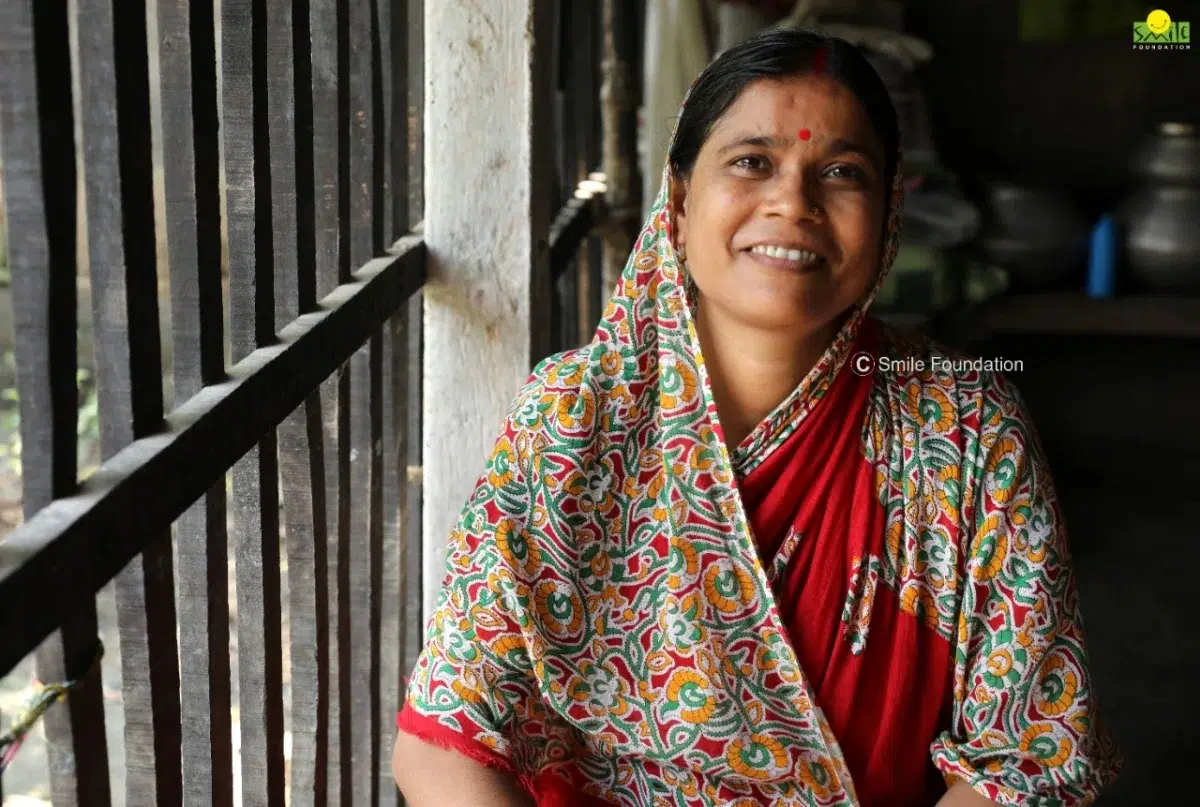
On a bright morning in a village in Madhya Pradesh, Rekha Devi scrolls through her son’s old smartphone, squinting at the WhatsApp orders popping up for her hand-woven baskets. Just a few years ago, these baskets rarely sold beyond the weekly haat (market). Today, she ships them to customers in Indore and even Delhi. Her phone has become a ticket to markets she once could only imagine.

From farmers and artisans to micro-entrepreneurs and teachers, women form the backbone of rural livelihoods. But, for decades, their labour has been unrecognised and underpaid. Fewer than one in five women globally are landholders, according to the FAO. In India, the figure is similar — land and credit remain firmly in men’s hands. And while women make up nearly 75% of agricultural workers, their role in formal markets is shockingly limited.

Now, a new frontier of digital access to markets is opening but the road isn’t smooth.

The Digital Gender Divide: The Missing Half

Let’s start with the hard truth. Rural women are still on the wrong side of the digital divide.

  • According to the NSO’s CMS-Telecom survey (2025), 51.6% of rural women aged 15+ do not own a mobile phone, compared to just 19.3% of rural men.
  • Even when phones are present in households, they are often shared, with men controlling usage.
  • NFHS-5 (2019–21) found that only about 25% of rural women had ever used the internet, compared to nearly 49% of rural men.

Think about that for a second. In a world where markets, jobs and even social life are moving online, three-quarters of rural women remain disconnected.

And yet, paradoxically, smartphone penetration is rising fast. Among rural mobile phone owners, more than 75% of women already use smartphones. The problem now lies with their agency, skills and autonomy.

Why Digital Markets for Women Matter

Why make such a fuss about rural women going digital? Because the payoff is enormous.

A woman’s economic participation has a multiplier effect:

  • Higher household income (studies show women reinvest up to 90% of their earnings into family welfare).
  • Better nutrition and health outcomes.
  • Greater investment in children’s education.
  • Delayed marriage and reduced fertility rates.

Secondary research underscores this. A World Bank report noted that women’s increased digital participation could add $700 billion to global GDP annually. In India, bridging the gender gap in mobile internet use alone could contribute billions to the rural economy.

Digital platforms — be it Flipkart Samarth, Meesho, Instagram Shops or WhatsApp groups — act as equalisers. They allow Rekha in Madhya Pradesh or Sushila in Odisha to bypass exploitative middlemen and reach urban and even global consumers. For the first time, women can control not just production but also pricing, branding and marketing.

Barriers on the Digital Highway

But let’s be honest. This revolution isn’t happening at scale — yet. Several barriers hold women back.

1. The Digital Divide

Connectivity has improved dramatically under Digital India, with 4G networks covering almost every village. But affordability and reliability remain concerns. For many families, one phone is shared by all and women are the last in line.

During COVID-19, this divide was glaring. Boys logged in for online classes while girls were handed chores. In many households, when there was only one smartphone, the son got it.

2. Digital Literacy Gaps

Owning a phone isn’t enough — you need to know how to use it. Many rural women lack basic digital literacy. Opening an app, making a UPI payment or navigating an e-commerce platform can feel intimidating.

This is compounded by education gaps. Female literacy in rural India still lags behind men (65% vs 82%, Census 2011). Without targeted training, digital tools risk reinforcing exclusion rather than bridging it.

3. Socio-Cultural Constraints

Even when women have phones, cultural norms often restrict their use. Husbands may monitor calls. In-laws may frown on women “wasting time” online. Women are discouraged from handling money, which translates into hesitation around digital finance.

Freedom to step into markets, even virtual ones, clashes with deep-rooted patriarchy.

4. Financial Exclusion

Cash is still king in rural India. Only about 77% of rural women have a bank account they use themselves, according to NFHS-5. Access to credit is even worse. Without financial tools, online selling is difficult.

Digital trade requires UPI, mobile wallets, micro-loans or at least a savings account. Without these, rural women cannot scale businesses beyond their neighbourhood.

What Works: Digital Markets for Women

Despite the challenges, sparks of innovation are lighting the way.

1. Internet Saathi

Launched by Google and Tata Trusts in 2015, this programme trained rural women as “Saathis” to teach others digital skills. By 2019, it had reached 30 million women in 300,000 villages. The model proved that peer-to-peer training works.

2. Self-Help Groups (SHGs) Going Digital

Under the National Rural Livelihood Mission (NRLM), SHGs have become digital enablers. Women use WhatsApp groups to coordinate sales of handicrafts, dairy and farm produce. In Andhra Pradesh, SHGs trained in digital payments now run rural e-commerce hubs.

3. Meesho & Social Commerce

Platforms like Meesho have empowered millions of “social sellers,” many of them rural women. With minimal capital, women sell clothes, cosmetics and household items through WhatsApp and Facebook. Meesho reports that 80% of its sellers are women and a large share come from Tier-2 and Tier-3 towns.

4. Common Service Centres (CSCs)

Part of Digital India, CSCs act as rural digital hubs, offering services from telemedicine to e-commerce. Women entrepreneurs known as Village Level Entrepreneurs (VLEs) run many CSCs, serving as role models for others.

5. NGO-led Programmes

Smile Foundation’s Swabhiman programme integrates digital literacy into its health and entrepreneurship training. By combining financial education, tablet-based learning labs and mentorship, it has impacted over 190,000 rural women across six states in 2024 alone.

These women don’t just learn how to use a smartphone — they learn how to turn it into a business tool.

Building the Digital Markets for Women Roadmap

So how do we go from scattered success stories to systemic change? Here’s a roadmap:

  1. Expand Infrastructure
    Affordable internet, better connectivity and more rural digital hubs. Government must push telecom companies to close the last-mile gap.
  2. Digital Literacy at Scale
    Community-based training through SHGs, NGOs and schools. Teach women not just how to use apps, but how to leverage them for trade, marketing and payments.
  3. Women-Centric Fintech
    Promote UPI, mobile wallets and micro-credit designed for women. Build digital credit histories that can unlock larger loans.
  4. Social Norm Shifts
    Campaigns showcasing role models — women entrepreneurs who sell online, manage finances and succeed — help normalise digital participation.
  5. Policy and Institutional Support
    Link Digital India, Startup India and NRLM explicitly with women’s entrepreneurship. Provide subsidies for women entrepreneurs to buy smartphones.

Rekha’s Ripple Effect

Back in Madhya Pradesh, Rekha’s earnings from online basket sales have doubled her household income. Her daughter now dreams of becoming a teacher. Neighbours ask her to teach them how to set up WhatsApp stores.

The promise of digital markets for rural women is enormous but only if access, literacy and empowerment go hand in hand. Otherwise, the same inequalities that lock women out of traditional markets will replicate online.

India stands at a crossroads. With over 200 million rural women of working age, empowering even a fraction of them digitally could transform the economy. The stakes are not just economic — they are about dignity, autonomy and equality.

Because when a woman in a village can sell her baskets to a buyer in Delhi—or London—it is more than a transaction. It is a rewriting of history: from invisible labour to visible power.

Categories
Smile

Of Chalk Dust and Dreams: Teacher’s Day with Smile Foundation

It begins, as many things in India do, with a blackboard.

A blackboard and a piece of chalk — worn down, smudged with fingerprints, leaving behind not just equations and spellings but also the faint outline of a teacher’s life.

On September 5th every year, we celebrate Teacher’s Day. We garland portraits of Dr Sarvepalli Radhakrishnan, we post sentimental notes about our “favourite teacher,” we remember the kindness of one who saw us, or the toughness of another who refused to let us slide. And then, we scroll away.

But somewhere in a government school in Uttar Pradesh, or in a classroom perched on a hill in Ladakh, a teacher still stands with that blackboard. Somewhere in a Smile Foundation digital classroom in rural Assam, a teacher clicks open a solar-powered projector and asks a group of children what they want to be when they grow up.

And somewhere, a student says: A teacher.

Teachers: The First Influencers

Before Instagram reels and motivational speakers, teachers were our first influencers. They taught us how to read poems, yes, but also how to measure time, how to whisper secrets across a row of benches, how to stand up when your name is called.

Remember the teacher who smelt of chalk dust and jasmine oil, who asked you to stop doodling? Or the one who told you that your scribbled essay about wanting to be an astronaut wasn’t silly? They were not just filling heads with knowledge, they were opening doors into possibility.

But, the irony is that in India — a country that worships teachers in rhetoric — we often abandon them in reality.

The Everyday Heroics (and Hardships) of Teachers

According to the Government of India’s UDISE+ 2024-25 report, the country now has more than 1 crore teachers. That’s an incredible number, but it hides another truth: schools in many parts of the country still function with too few staff, some with only one teacher managing multiple grades.

This shortage stretches teachers thin. It also reflects larger challenges — contract teachers with irregular pay, classrooms without electricity, toilets that don’t work. It’s like asking someone to conduct a symphony with a single cracked flute. And then blaming them when the music sounds thin.

The Smile Foundation Lens

Here’s where Smile Foundation comes in, not with the arrogance of saving but with the humility of partnership.

Through our Mission Education programme, Smile has supported over 200,000 children so far across India. That means not only enrolling children but training teachers in digital pedagogy, equipping classrooms with projectors and integrating life skills into lessons.

In one rural classroom, a teacher who once relied only on rote learning now uses videos to explain solar eclipses. In another, a young teacher in Jharkhand has been trained to recognise the signs of digital addiction among her students.

Smile doesn’t just count the children. It counts the teachers too. Because empowering teachers is like lighting a thousand lamps — each child’s mind becomes a wick catching fire.

Teacher, Interrupted

Teaching in India comes with its interruptions.

There’s the story of Meena Devi, a Smile-supported teacher in Bihar, who cycles kilometres to school every day. One monsoon, when the river flooded and the bridge collapsed, she still turned up. How? By wading through waist-deep water with her sari tied up. “The children are waiting,”

Or Shailendra Sir in Delhi’s slum cluster school, who uses theatre to teach. “When children act,” he says, “they remember.” His plays about hygiene and gender equality make students laugh, cry, and — without realising it — learn.

These stories are lived truths.

A Cultural Love Story with Teachers

In Indian films, teachers are recurring archetypes. From Rajesh Khanna in Bawarchi (teaching life lessons while cooking) to Amitabh Bachchan in Black, to Shah Rukh Khan in Mohabbatein with his violin and idealism — teachers are portrayed as life-changers.

But the reel often hides the real. The majority of Indian teachers are women, many balancing unpaid household work with professional teaching. They are the ones staying up to grade papers by candlelight or counselling a malnourished child who can’t concentrate. Their heroism doesn’t come with violins, only with stamina.

So perhaps the truest Teacher’s Day tribute is not flowers or chocolates, but infrastructure, training and respect.

The Smile Classroom

Step into a Smile Foundation classroom and you see this tribute in action:

  • Digital empowerment: Teachers receive training in using projectors, tablets and curated e-learning modules.
  • Health integration: Because you can’t teach a hungry child, Smile runs health check-ups in its schools. Teachers are trained to identify malnutrition, vision problems and refer them to Smile on Wheels mobile clinics.
  • Life skills: Beyond A-B-C, teachers are supported to deliver sessions on digital well-being, gender sensitivity and problem-solving.

Beyond the Blackboard: Teachers as Mentors

Think back to your own life. Chances are, the most memorable teacher wasn’t the one who stuck strictly to the syllabus. It was the one who stayed back after class to ask if you were okay. The one who lent you a book. The one who said, “You can do better, I know it.”

Smile Foundation invests in teacher capacity building precisely for this reason. Because when teachers are empowered, they don’t just produce students who can score marks — they produce students who can dream.

The Debt We Owe Teachers

In many ways, every scholarship, every mobile clinic, every smile on a child’s face ultimately loops back to a teacher. Because it was a teacher who said, “Try.”

On this Teacher’s Day, we must ask: how do we repay this debt? Not in Instagram posts, but in systemic change. By filling vacancies, ensuring fair pay, training teachers in new pedagogies and respecting the emotional labour they bring.

Smile Foundation is already doing its part. By treating teachers not just as deliverers of syllabi but as catalysts of change, Smile ensures that Teacher’s Day is not just one day — it’s every day.

When Dr Radhakrishnan suggested his birthday be observed as Teacher’s Day, he was reminding us of the dignity of the profession. Decades later, amid smart classrooms and solar-powered tablets, that dignity is still drawn in chalk on a blackboard in a dusty village school.

Teachers are the quiet architects of India’s future.

So perhaps the real garland this Teacher’s Day is not flowers but faith. Faith in teachers, who hold both chalk and dreams in their hands.

Categories
Livelihood

Why India’s Youth Remain Sceptical of Skilling Programmes

A Decade of Skilling Programmes, A Generation of Doubts

July 15, 2025, was a double milestone. The world marked the 10th anniversary of World Youth Skills Day (WYSD) and India celebrated a decade of its flagship Skill India Mission. It was meant to be a proud moment. After all, India boasts one of the world’s largest young workforces and skilling programmes were to be the lever for transforming this demographic dividend into economic gold.

But if you listen to young people — the very beneficiaries these programmes are meant for — the mood is more sceptical than celebratory. They carry certificates, but not confidence. They attend classes, but don’t land jobs. They scroll through job portals and wonder if all the promises of Skill India were just another chapter in the long book of missed opportunities.

The Data Behind the Disillusion

  • 7 out of 10 youth are economically disengaged because they lack market-ready skills.
  • 86% of students report they don’t feel prepared for jobs involving AI and emerging technologies.
  • In 2022, only 40.3% of young men and a shocking 27.4% of young women were employed.
  • 90% of adolescent girls and young women in low-income countries lack internet access, locking them out of digital skilling opportunities.
  • In 2023-24, only 14.29% of vocational trainees undertook courses, and the share of trainees attending ultra-short courses (< six months) jumped from 22% to 44%.
  • Even among those trained, youth unemployment remains high at ~17%, raising tough questions about programme effectiveness.
  • Verifiable data show low placement offers, despite official reports claiming otherwise.
  • Apprenticeships remain a tiny fraction of India’s workforce, cutting off crucial pathways for on-the-job learning.

India has allocated billions of rupees to skilling programmes like PMKVY (Pradhan Mantri Kaushal Vikas Yojana), NAPS (National Apprenticeship Promotion Scheme) and Skill India’s digital and international tracks. But, outcomes remain patchy, monitoring weak and long-term impact poorly evaluated.

No wonder youth view the ecosystem with suspicion.

The Trust Deficit in Skilling Programmes

Ask any student or trainee and they will tell you: the problem isn’t unwillingness to work — it’s mistrust.

  1. Short-termism over substance:
    Most courses last weeks, sometimes just days. Certificates are issued, targets ticked off, but depth is missing. Employers demand problem-solving skills and real proficiency. Youth end up over-certified and under-prepared.
  2. Curriculum misalignment:
    Training modules often lag behind market needs. While courses teach basic digital literacy, companies are hiring for coding, data analysis or domain-specific software. The disconnect fuels frustration.
  3. Lack of mentorship:
    Even when jobs are secured, poor onboarding and zero mentoring result in high turnover. Youth feel abandoned, questioning whether training centres or employers genuinely invested in their success.

What Global Models Show

The contrast with global best practices is stark:

  • Germany’s Dual Education System blends classroom learning with apprenticeships, ensuring graduates step into the workforce job-ready. Industry and educators co-design curricula, keeping it relevant.
  • Singapore’s SkillsFuture Initiative (2015) focuses on lifelong learning, offering financial incentives for continuous education tailored to individual career paths. It prepares citizens for both present and future skills.

Both systems underscore what India lacks in terms of employer integration, quality assurance, mentorship and transparency.

Why India’s Youth Call Skilling a Mirage

Beyond systemic flaws, the numbers reflect social realities:

  • Gender disparity: With only 27.4% of young women in jobs, India’s skilling ecosystem fails to address structural barriers like unpaid care work, mobility, and safety.
  • Digital divide: 90% of adolescent girls in low-income countries lack internet access — India’s rural youth face the same barrier, especially in states like Bihar or Jharkhand. Without connectivity, digital skilling remains rhetoric.
  • Stigma: Vocational training still carries the label of “second-class education.” Parents push for degrees, even if jobless, rather than skills training that may lead to modest employment.

All of this combines to create a perfect storm of mistrust.

Smile Foundation: A Community-Driven Alternative

Instead of chasing numbers, Smile Foundation designs training around actual community needs and industry linkages. Its specialised centres across India train low-income youth in:

  • Digital marketing
  • Data entry and IT services
  • Retail and customer service
  • Hospitality and healthcare support

Courses don’t just deliver technical know-how. They embed soft skills, communication and life skills so trainees can navigate interviews, workplaces and long-term careers.

Importantly, Smile aligns courses with industry demand collaborating with employers ensures trainees graduate into roles with actual openings. This approach breaks the cycle of “certificates without jobs.”

Smile’s work also tackles inclusivity. Many of its trainees are women, first-generation learners or youth from disadvantaged backgrounds. By reducing dropout rates, providing mentorship and creating job linkages, the programme chips away at the trust deficit plaguing India’s larger skilling ecosystem.

The Way Forward for Skilling Programmes

India cannot afford for its youth to lose faith in skilling. The demographic dividend will not last forever and mistrust corrodes ambition. Restoring confidence requires:

  1. Long-term, quality training — shift from token short courses to year-long, employer-linked programmes.
  2. Transparency & accountability — independent audits of placement rates, salaries and long-term employment impact.
  3. Industry integration — continuous employer feedback to keep curricula current.
  4. Digital inclusion — expand connectivity for rural youth, especially girls.
  5. Mentorship & support — structured onboarding and workplace mentoring to reduce attrition.
  6. Equity focus — tailor programmes for women, rural youth and marginalised groups.

Can Trust Be Restored?

Ten years into Skill India, scepticism is the biggest obstacle. Young people don’t lack ambition but there is still hesitation about their lack in belief that the system will deliver. Certificates without jobs, short-term courses, inflated claims — these erode trust.

But models like Smile Foundation’s livelihood programme show another way rooted in community, aligned with industry and focused on dignity as much as employability.

If India truly wants to unlock its demographic advantage, it must learn from its youth that trust isn’t built by slogans but by outcomes.


Source Links:

Categories
Gender

How Cultural Norms Hold Back Women’s Economic Participation

In a Bengaluru neighbourhood, Yashoda lived the life many women in India are expected to. She stayed at home caring for her child while her husband drove a cab. Work outside the home was never framed as hers. It was, in many minds, unnecessary — even improper. But when Covid-19 crashed into her world, when her husband lost his work, the fragile status quo dissolved. With little external support, she joined an entrepreneurship training programme run by Smile Foundation’s Swabhiman initiative, built a business making organic cosmetics and brought other women from her community along.

ChatGPT Image Sep 15 2025 08 45 53 AM

Yashoda’s path from invisibility to agency is not unique but it is rare. It shows how much is possible when targeted support meets a woman ready to break through. But it also throws into sharp relief the powerful cultural norms that so often prevent women from even imagining such a path — let alone walking it. To achieve gender equality in earnings, in work, in dignity, we must understand and dismantle these norms. And we must support, scale and strengthen interventions like Smile Foundation’s, which are proving that change is possible.

The Landscape

India continues to have among the lowest female labour force participation rates (FLFPR) in the world. According to recent government and independent reports:

  • Only 37% of women aged 15 years and above participate in the labour force (urban + rural), compared with roughly 75% for men.
  • The majority of women who do work are in informal sectors, which means unstable incomes, lack of benefits and little social protection.
  • Many women exit the workforce when they marry, have children or when household responsibilities intensify; re-entry is difficult, especially into decent, formal work.

These numbers are not only discouraging — they reveal that economic opportunity in India is deeply gendered, with cultural norms shaping both possibility and constraint.

How Cultural Norms Limit Women’s Economic Participation

Cultural norms influence what is considered appropriate for women and what is not in many overlapping ways. Among them:

  1. Early socialisation: From early childhood, girls are often taught to value sacrifice, caregiving, modesty. They are discouraged from taking risks or asserting themselves. Boys are more often encouraged to explore, lead, compete. These messages shape aspirations, confidence, choices of subjects in school, and later, work.
  2. Family expectations & reputation: Marrying early, staying close to home, avoiding unsupervised travel, avoiding jobs with “inappropriate hours” — these are often family decisions. The risk of social censure or “losing face” can keep women from seeking opportunities, even when external supports exist.
  3. Unpaid care work & the double burden: Women bear a disproportionate share of domestic work: childcare, eldercare, cooking, cleaning. Studies show Indian women spend 5-6 hours a day (in some studies, even more) on unpaid household work, compared with an hour or less for men. This leaves far less time, energy or flexibility to engage in paid work or to invest in training or upskilling.
  4. Mobility, safety and visibility constraints: Working hours that include early mornings, late evenings, night shifts; workplaces far from home; being in male-dominated spaces — all these can be seen as socially risky for women and families often restrict them. Lack of safe public transport, harassment, infrastructural deficits further compound the issue.
  5. Invisible discouragement/absence of role models: If you never see women like you in roles outside the home or leading businesses, or speaking confidently in public life, it sends a message that those roles are not for you. Many women internalise this, limiting what they try.

The Cost of Inaction

When women are held back by norms, the costs ripple:

  • Economic loss: India loses out on potential GDP growth when half its population is under-utilised. Women’s labour is often less rewarded or undervalued; when participation is low, economic growth is less inclusive and less resilient.
  • Inequality persists: Income, access to healthcare, education, decision-making power remain skewed. The status of women in households influences child nutrition, health, school enrolment, especially for girls.
  • Vulnerability in crises: Households without diversified income sources are more fragile. When disasters, health crises or economic shocks happen, women with no independent income lose more.
  • Intergenerational effects: Norms enforce themselves. Women who never worked or led enterprises cannot serve as models for daughters or nieces, and cycles of dependency, low expectations and constrained opportunity continue.

Smile Foundation & Swabhiman: Turning Cultural Norms Through Action

What is Swabhiman?

  • Launched in 2005, Swabhiman is Smile Foundation’s women-empowerment programme that reaches out to marginalised and socially excluded women.
  • Its work spans reproductive and child health, nutrition, entrepreneurship development, digital financial literacy and sustainability programmes. It also works on government convergence and systems strengthening.

Scale & Impact (recent years):

  • As of the 2023-24 period, more than 190,000 women have been impacted through Swabhiman.
  • More than 76,000 women were sensitised on reproductive and child health through door-to-door visits, community mobilisation, street plays, etc.
  • About 72,000 women accessed actual health services — camps, telemedicine, etc.
  • In FY 2023-24, 68 women-led micro-enterprises were established through Swabhiman.

What interventions are in play under Swabhiman that help shift cultural norms, not just outcomes:

ChatGPT Image Sep 15 2025 08 49 56 AM
  • Entrepreneurship and Skills: Swabhiman provides training in business skills — financial planning, marketing, operations — and helps women to start small-enterprises (tailoring, food carts, handicrafts, etc.).
  • Financial Literacy & Digital Skills: These are central to enabling women to manage income, savings, to access loans, to use digital tools for their businesses or for marketing.
  • Health & Nutrition as Foundational: Swabhiman treats health not as separate from economic empowerment, but as its base. Without reproductive health, antenatal care, nutrition, women are less able to seize opportunities, especially those demanding sustained effort.
  • Community Mobilisation & Norm Change: Swabhiman works not only with women but also engages men and boys, families, community leaders to shift how women are viewed and what they are expected to do. This is key for lasting change.
  • Linkage to Markets & Finance: Starting a business is one thing; sustaining it is another. Swabhiman helps women get connected to formal finance, mentorship and market access so they aren’t working in isolation.

How Swabhiman Illustrates Paths Forward Against Cultural Constraints

ChatGPT Image Sep 15 2025 08 51 54 AM

Let’s revisit the major cultural obstacles and see how Swabhiman addresses them and where more work remains.

Cultural ConstraintHow Swabhiman Confronts itWhat More Is Needed
Socialisation & belief that women’s place is homeBy providing stories, role models like Yashoda and others; by enabling women to start micro-enterprises that are socially visible; by sensitising communities (men & boys) to accept women’s economic roles.Expand reach in more conservative or remote areas; sustain media, education system interventions that reshape belief at early age.
Unpaid care: lack of time and energySwabhiman doesn’t eliminate care burden, but by increasing income potential, improving health, and raising awareness, it helps women make trade-offs that are more favourable. Some training may enable more flexible or home-based work.Public policies like affordable childcare, elder care; flexible work norms; subsidies or care allowances. Without these, even trained women can struggle to scale their work.
Mobility & safety constraintsSwabhiman’s community based approach reduces distance barriers; in many cases, enterprise or training is done locally; engaging men and local leaders helps ease restrictions on mobility. Health interventions may reduce the need for travel for basic health access.Improvement in infrastructure (safe transport, lighting), legal systems for harassment, safer public spaces; more remote / hybrid models of training and entrepreneurship.
Financial exclusion, lack of knowledgeFinancial literacy modules; digital skills; helping women access formal finance and market linkages. Swabhiman helps women start businesses. Expand the scale of credit, reduce bureaucratic barriers, collateral requirements; integrate financial inclusion with social norms work so women can control assets and income.
Lack of visibility and role modelsStories of change (like Yashoda, Ishwati etc.) are publicised; Swabhiman supports women-led micro-enterprises whose successes are visible; mentors help.More media representation; connecting women across states, caste, class; platforms for women to share their journeys; public recognition.

Policy & Systemic Levers: Building Beyond Pilots

While programmes like Swabhiman are essential, they cannot by themselves overcome every structural obstacle. For sustainable change, broader systemic reforms and policy shifts must accompany them.

  1. Integrate gender norms change into education from early childhood: Not just “gender sensitivity” as a subject, but building curriculum and school culture that values shared household work, equal participation, leadership by girls — all reinforced in both formal schooling and co-curricular spaces.
  2. Childcare, eldercare, support for care infrastructure: Government needs to invest heavily in affordable public day-care, after-school care, eldercare services; incentivise private sector to provide these; ensure workplace laws accommodate caregivers.
  3. Safe mobility and workplace safety: Safe public transport, street lighting, accessible transit routes; enforce harassment and safety laws in workplaces; ensure policies for women working shifts or remotely.
  4. Financial inclusion and property rights: Strengthening implementation of laws around inheritance, land owned by women; making credit accessible (low collateral, accessible formal procedures); ensuring women have control over accounts and income; promoting savings and insurance.
  5. Inclusive economic policies: When designing schemes (e.g., for small businesses, MSMEs, start-up grants), ensuring they are accessible to women — tailored application processes, mentorship, non-traditional sectors, recognition of home-based enterprises.
  6. Norm-shifting public campaigns & community leaders: Engage religious leaders, elders, local influencers; use media to reshape narratives of what women can do; ensure men are part of the conversation.
  7. Monitoring & evaluation with gender lens: Collect detailed, disaggregated data (by gender, caste, location) not only on participation but on agency: who controls income, whose decisions are respected, who leads. Use this data to inform policy.

From Tradition to Transformation

ChatGPT Image Sep 15 2025 08 54 01 AM

Yashoda’s story illuminates what one woman can do if belief, training and opportunity align. Smile Foundation’s Swabhiman programme shows that a well-designed intervention can touch hundreds of thousands of lives — translating cultural norms into changed expectations, economic opportunities, health improvements and greater agency.

But for India to truly shift, such programmes need to move from the margins to the mainstream. Cultural norms are strong because they are woven into family, religion, economy, daily life. To unravel them requires not only helping women overcome barriers one by one, but altering expectations across generations, across families, across institutions. When programmes like Swabhiman are scaled, when policy supports them, when entire communities see women not merely as caregivers but as breadwinners, leaders, agents of change — then we begin to build a society in which more women like Yashoda don’t need to wait for crisis to make the break, but are supported, encouraged, expected and enabled to step forward every day.

We must insist that women’s economic participation is not a side-issue or charity; it is central to social justice, to economic growth, to the very character of our democracy. Because a nation that holds back half its people holds back its own future. And when those people move forward, we all move forward.

Categories
Smile

Gift a Smile This Daan Utsav 2025

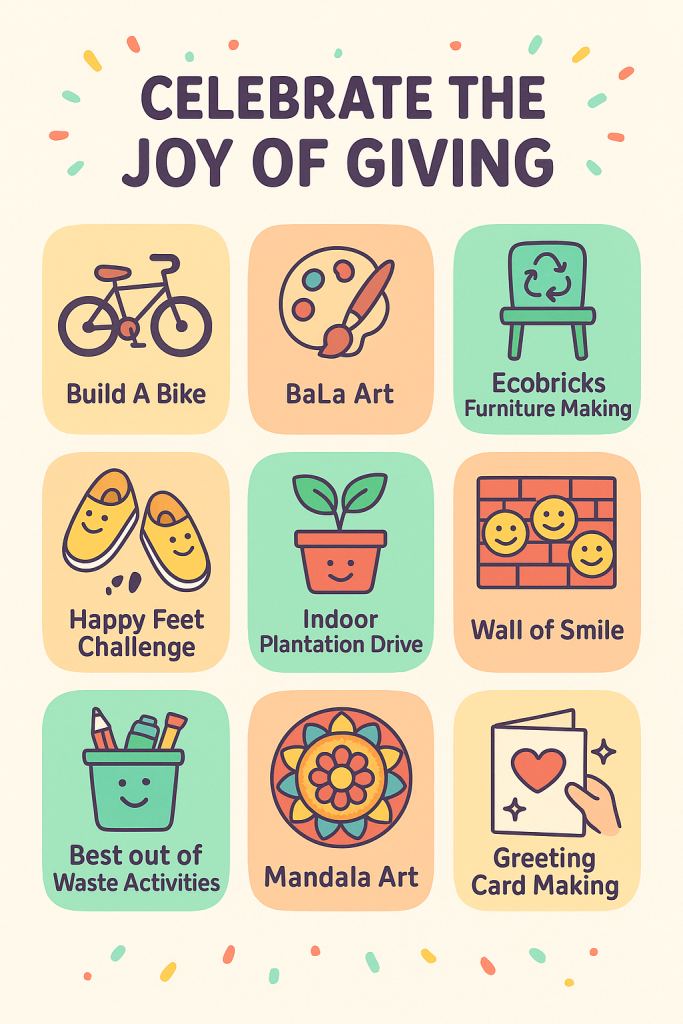
There is a kind of magic that happens when you give. Not the kind with fireworks or Instagram filters, but the brilliance of someone’s life shifting just a little, because another person cared. Daan Utsav is about that magic. It is India’s festival of giving, celebrated from October 2-8 every year, when people large and small come together to give what they can — their time, their skills, donations, kindness.

This Daan Utsav 2025, we want to pull aside the curtain and show you how Smile Foundation is turning giving into change and how you too can gift a smile, or maybe something more too.

What is Daan Utsav and Why It Matters

Daan Utsav (formerly Joy of Giving Week) is a week that asks us: what does generosity mean, beyond the wallet? It’s not owned by any one group — schools, corporates, NGOs, families, strangers all join in. You can give money, but you can also give your ears, your hands, your ideas. That’s what makes it powerful.

It is during this week that the ripple effects of small kindnesses become visible. A meal shared, a book donated, time spent teaching, a hygiene kit handed out — these are gestures, sure. But they also become part of someone’s story, their hope.

Smile Foundation: Gifts That Multiply

Smile Foundation, since its inception in 2002, has been turning those gestures into systems that uplift. We are among India’s large grassroots organisations, with over 400 ongoing projects in education, healthcare, livelihood and women’s empowerment across more than 2,000 villages and urban slums in over two dozen states.

Here are pieces of their work that shine especially during Daan Utsav, but actually work throughout the year:

  • Mission Education: Enabling underserved children to enrol (or re-join) mainstream schools, giving them books, uniforms, learning materials. This is foundational to giving the gift of opportunity. (
  • Smile on Wheels (SoW): Mobile health units that reach underserved areas — rural villages, urban slums — providing primary healthcare, preventive check-ups, basic medicines. Health is part of giving too.
  • Women empowerment & livelihood: Smile’s interventions train women (and youth) in vocational skills, soft skills, supporting their independence. When you help someone stand on their own feet, the effect multiplies into their family and their community.

Daan Utsav 2025: Gift a Smile

What does “Gift a Smile” mean?

It means choosing to give something that touches more than just the moment. It may be:

  • Supporting a child’s education supplies through Smile’s Mission Education
  • Contributing to mobile health unit campaigns so villagers can access health care without travelling many kilometres
  • Sponsoring a vocational training opportunity for a young person

During Daan Utsav 2024, Smile Foundation partnered with corporates, volunteers and communities to organise “Volunteer Days,” distribution drives, creative fundraising and awareness-spreading.

This year, in 2025, the opportunity is even larger — more children, more villages, more hands needed to reach smiles waiting in silence.

A little girl who dropped out of school because her family couldn’t buy uniforms. Smile’s Donation of Uniform and Stationery programme (as part of Mission Education) helps her return. A boy whose nearest clinic is hours away, gets healthcare in a Smile on Wheels van. A young woman in a slum is trained in tailoring or basic digital skills, starts earning. These aren’t big numbers in headlines, but in their homes they are everything.

Giving Not Because You Have to, But Because You Can

In many of my conversations, people say, “I don’t have much, what can I give?” The answer is: whatever you do give matters.

  • Time: volunteer to teach or mentor
  • Resources: donate books, clothes, health supplies
  • Skills: if you are a designer, teacher, storyteller — offer help in that capacity
  • Money: even small donations help run projects that reach many

Smile’s website provides clear ways to Donate, Volunteer, Partner.

Daan Utsav 2025: How You Can Participate

Here are some practical ideas:

  1. “Book Smiles Drive” – collect books from friends/neighbours, deliver to Smile-supported schools
  2. SkillShare Weekend – teach a workshop (drawing, music, coding) with children in your area or online
  3. Health Camps – support or volunteer for local mobile units under Smile on Wheels
  4. Micro-donations – pick a child’s need (uniform, fee, nutrition) via Smile’s portal, gift that directly
  5. Spread Joy Online – share stories of people helped by Smile; create a chain of gratitude posts

Why Smile Foundation’s Model Works

Smile’s model works for several reasons:

  • Holistic approach: Education + health + livelihood + empowerment. You don’t just fill one gap, you shore up many.
  • Deep reach: Thousands of villages, remote slums, underserved areas. It’s not just city-centre optics.
  • Partnerships: IDs local people, volunteers, corporate partners — giving becomes shared, scalable.
  • Transparency and reporting: Annual Reports, data on numbers reached, projects live, programmes alive. The kind of giving you can trace.

Gift a Smile

So here we are, on the cusp of Daan Utsav 2025. The dates are fixed: October 2-8. The question is: How will you give?

Will you gift a school uniform, a healthy meal, a few hours of teaching? Or lend your skills to make someone else’s day? Or simply uplift someone with your time?

Gifting a smile is not just for big wallets. It is for big hearts. It asks: what can I do, right now, to make someone else’s tomorrow less heavy?

Smile Foundation is ready. Projects are there. The children, youth, women waiting for just a little help — they are there. The act of giving bridges the gap between kindness and impact.

Categories
Nutrition

Poshan Maah 2025: The Double Burden of Malnutrition

Imagine a community where one child is too weak from malnutrition to play, while next door another is battling childhood obesity and early diabetes. It sounds like a plot twist in a dark comedy, but it’s reality in many parts of the world today. This “double burden of malnutrition” means the paradoxical coexistence of undernutrition (not getting enough healthy food) and overnutrition (eating too much of the wrong foods).

How did we end up with such a nutritional yin-yang? More importantly, what’s being done about it, let’s dig in.

In India, conversations on nutrition always peak during Poshan Maah, the national nutrition month. It’s the perfect time to spotlight this paradox and ask: how can a country simultaneously struggle with malnutrition and obesity? And more importantly, what can be done about it – especially for mothers and children, the most vulnerable groups?

ChatGPT Image Sep 3 2025 08 54 00 AM

What is the “Double Burden” of malnutrition?

In the not-so-distant past, the word “malnutrition” conjured images of skinny, stunted children with not enough to eat. That’s still a critical problem – millions of children worldwide are undernourished – but now we have a plot twist. The double burden of malnutrition refers to situations where undernutrition and overnutrition exist together. Think of it as malnutrition’s way of hedging its bets: if lack of food doesn’t get you, excess junk might!

According to the World Health Organization, this double burden can occur within populations, households or even individuals. For example:

  1. Within a population: A country might have a high rate of childhood stunting and a growing rate of adult obesity at the same time.
  2. Within a household: One family could have an underweight child and an overweight parent living under one roof – a perplexing dinner table scenario where one person needs more calories and the other needs fewer (and healthier) calories.
  3. Within an individual: Yes, a single person can experience both forms of malnutrition. For instance, someone can be overweight but deficient in essential vitamins and minerals (a phenomenon sometimes called “hidden hunger”). Picture someone who lives on soda and chips – they may be heavy on the scale but still malnourished in nutrients.

In all its forms, malnutrition is basically an imbalance – either not enough nutrients or too many (especially too many empty calories). It’s like your body is Goldilocks, searching for the “just right” diet, but constantly getting either a porridge that’s too little or too much cake instead.

The global paradox: Undernourishment vs. obesity

If this sounds like a strange paradox, the numbers confirm it. Globally, malnutrition now has two faces. On one side, we have chronic undernutrition; on the other, rising overweight and obesity. Consider these eye-opening statistics:

  • Under-nutrition by the millions: As of 2022, about 149 million children under five worldwide are stunted (too short for their age due to chronic undernutrition) and 45 million are wasted (dangerously thin from acute undernutrition). Nearly half of all deaths in under-five children are linked to undernutrition – a sobering fact that mostly hits low-income countries.
  • Over-nutrition catching up: Meanwhile, 37 million children under five are overweight globally. And it’s not just kids – about 2.5 billion adults were overweight in 2022, including 890 million classified as obese. On the flip side, 390 million adults were underweight. Yes, you read that correctly: there are hundreds of millions of underweight people and billions overweight, all at the same time on the same planet.

This is the very definition of the double burden – stubborn undernutrition and soaring obesity co-existing worldwide. It’s as if the global community is on a see-saw where one side of malnutrition won’t budge without the other tipping over. To put it more bluntly, we live in a world where some people are dying because they can’t get enough food, while others are dying because they can’t stop eating unhealthy food. It’s a nutritional irony of our times.

Double trouble in India and other developing countries

The double burden is especially evident in countries undergoing rapid economic and lifestyle changes. Take India as a prime example – a country often highlighted in discussions of malnutrition. India has long battled high rates of undernutrition and despite progress, it still has staggering numbers of undernourished children. In fact, roughly one in every three malnourished children in the world lives in India. According to national surveys a few years back, about 38% of Indian children under 5 were stunted, 46% underweight and 16% wasted – contributing to India’s unfortunate distinction of having the largest number of malnourished kids globally.

But here comes the double burden twist: even as undernutrition persists, over-nutrition is rising in India. The same nation with widespread malnutrition is also seeing growing obesity, especially in adults. Recent data show that about 24% of Indian women (15–49 years) are overweight or obese. Urban areas in India are witnessing more cases of childhood obesity and diabetes, even as rural areas struggle with underweight children. Talk about an identity crisis – India’s nutritional profile ranges from severe calorie deficit to calorie surplus depending on where you look.

This pattern isn’t unique to India. Many developing countries – from parts of Africa to South-East Asia and Latin America – now deal with a “two-front war” on malnutrition. As economies grow and diets shift from traditional foods to processed, high-calorie foods, waistlines expand even among populations that still face poverty and micronutrient deficiencies. Health experts call this the nutrition transition, where lifestyles move from active, whole-food diets to sedentary lifestyles with processed foods. The result? Grandma might be undernourished, while her grandchild is overweight. Or an overweight, anaemic mother may give birth to an underweight baby – thus continuing a vicious cycle.

It’s a bit like a tale of two meals: one meal is too meagre to sustain a child and the very next meal is a sugary soda and chips contributing to obesity. Both are lacking the quality nutrition needed for health and both can occur in the same community. No wonder public health officials sometimes scratch their heads – and then roll up their sleeves to tackle both problems together.

Why does the double burden happen?

How on earth do we end up with malnutrition at both extremes? There are several underlying causes fueling this double burden and (warning) some are on the serious side – but we’ll try to explain in digestible bites:

  • Poverty and inequality: In many regions, economic growth has been uneven. So you get pockets of prosperity alongside extreme poverty. Wealthier (often urban) populations start consuming more high-fat, high-sugar foods and become less physically active – leading to weight gain. Meanwhile, poorer communities still struggle with undernutrition. It’s not unusual to find, say, an urban slum where a few residents can afford fast food (and become overweight) while their neighbours cannot afford enough food (and remain undernourished). Poverty also means limited access to diverse, healthy foods, driving both malnutrition and reliance on cheap junk calories.
  • Changing diets (Nutrition transition): Globally we are witnessing a shift from diets rich in fibre, fruits and vegetables to diets high in processed foods, oils, sweetened beverages and meats. These foods are often calorie-dense but nutrient-poor. They fill the stomach (and add weight) but don’t provide the vitamins or minerals a body needs. So someone might get overweight on a diet of white rice, fried snacks and sugary drinks, yet become deficient in iron or vitamin A. As one study noted, as countries develop economically, undernutrition tends to decrease – but obesity increases markedly at the same time. We’re basically swapping one problem (not enough food) for another (too much unhealthy food) unless nutrition education keeps up.
  • Urbanisation and lifestyle: City life often means less physical activity (desk jobs, anyone?), more stress and greater exposure to fast food outlets than fresh farm produce. The result is a recipe for weight gain. At the same time, rural areas might still lack access to sufficient food or healthcare. Also, urban poor might fill up on cheap street foods that are high in carbs/fats but low in nutrients, leading to a condition humorously dubbed “skinny-fat” – normal weight or overweight but malnourished in nutrients. It’s like being overfed and undernourished simultaneously.
  • Generational cycle: Here’s a less funny fact – an undernourished child can grow up with health problems that make them prone to obesity later. For instance, if a foetus doesn’t get enough nutrition (say the mother was undernourished during pregnancy), the child’s body might become super efficient at storing fat (a survival mechanism). Later in life, if that child eats a high-calorie diet, they might easily become overweight or develop heart disease. Meanwhile, women who become overweight (yet nutrient-deficient) can have complications in pregnancy and risk giving birth to babies who are underweight or have developmental issues. This intergenerational cycle means undernutrition and overnutrition can feed into each other across a family’s timeline.
  • Lack of nutrition education: Sometimes, people simply don’t know what eating right means – especially if they’ve transitioned from food scarcity to having more food available. It’s easy to equate “chubby child” with “healthy child” in some cultures, so diets heavy in fried foods or sweets might be seen as a sign of prosperity. Conversely, parents might not realise that an inexpensive local vegetable is more nutritious than an expensive packet of noodles. When education levels are low, even relatively well-off families can make poor nutrition choices, leading to obesity and micronutrient deficiencies. As one research finding intriguingly noted, even higher maternal education in India doesn’t always protect against the double burden – possibly because education is not translating into better nutrition knowledge or lifestyle (an educated working mom might have a sedentary job and rely on convenient processed foods). In short, knowing how to eat healthy is as important as having access to food.

So, the double burden is essentially malnutrition in stereo – one channel is poverty and lack of food, the other is dietary excess and poor quality food. The two can play simultaneously. The challenge is that tackling just one side (for example, just eliminating undernutrition) without guarding against the other (like unhealthy eating) can backfire. Countries that successfully reduced famine have seen spikes in obesity and diabetes if diets became too rich in sugars and fats. It’s like a see-saw that needs balancing – focusing only on undernutrition might accidentally tip the population into an obesity epidemic. The goal has to be finding the healthy middle ground – ensuring everyone gets enough and the right kind of food.

ChatGPT Image Sep 3 2025 09 00 42 AM

Impact on mothers and children: The 1-2 punch

The double burden of malnutrition hits hardest where vulnerability is already high – especially among mothers and children. This duo has a special place in nutrition discussions because a mother’s health directly affects her child’s, starting even before birth.

Mothers: Consider an expectant mother in a low-income community. If she’s undernourished (perhaps anaemic and underweight), her baby might be born underweight or premature, immediately at risk of growth and developmental problems. Now imagine another mother who is overweight but nutrient-deficient (yes, that’s possible – living on polished rice and maybe sugary tea, for instance). She might face gestational diabetes or hypertension and her baby could grow larger than normal in the womb or conversely also face malnutrition if the quality of her diet is poor. In both cases, the child’s future is impacted. In India, over 52% of pregnant women are anaemic (low in iron) – that’s a form of malnutrition that can cause fatigue, complications in childbirth and affect the baby’s growth. At the same time, rising obesity among women means more cases of diabetes and C-sections, which interestingly have been linked to higher odds of mother-child double malnutrition (one study found mothers with C-section births had higher risk of an undernourished child combined with maternal overweight). It’s a lose-lose situation we must turn into a win-win.

Children: Now zoom in on the kids, the most visibly affected by malnutrition. Undernourished children (stunted, wasted, etc.) face impaired immunity, frequent illnesses and struggles in school. They’re the kids who might be too tired to play or concentrate. Meanwhile, an overweight child (yes, those exist in poorer communities too, often due to cheap junk food) faces a different set of issues: risk of early onset diabetes, joint problems and social stigma. And here’s the kicker – these problems can be neighbours. It’s not uncommon in, say, an urban Indian slum or an African city, to see a skinny child and an overweight child in the same playground. Undernutrition in early life can also prime a child’s body to store fat more efficiently if food becomes abundant later – leading to adult obesity. It’s almost cruel: a child who survives undernutrition might later in life succumb to an obese-unhealthy lifestyle if diets aren’t improved. As the Smile Foundation team observes, “The children most affected by malnutrition are the ones whose mothers are themselves victims of ill health.” It’s a cycle of weak moms, weak babies and a weak future – unless we intervene decisively.

To paint a more optimistic picture: improving a mother’s nutrition is like a two-for-one deal – you get a healthier mom and a healthier child. That’s why many nutrition programmes (including Smile Foundation’s, which we’ll discuss next) focus on maternal and child nutrition together, often termed “MCH” in development jargon. It targets that critical 1000-day window from pregnancy to the child’s second birthday, where the right interventions can prevent both stunting and future obesity. In a way, ensuring balanced nutrition for women and kids is an antidote to the double burden: it prevents undernutrition early on and establishes healthy eating patterns that ward off overnutrition later.

Smile Foundation’s approach for Poshan Maah 2025: Tackling malnutrition from all angles

ChatGPT Image Sep 3 2025 09 06 10 AM

Enough about problems – let’s talk solutions! This is where organizations like Smile Foundation roll up their sleeves to combat malnutrition in all its forms. We have been actively addressing nutrition through a variety of programmes. And the secret sauce to our approach is integration – recognising that food quantity and food quality must go hand in hand.

Smile Foundation’s nutrition initiatives are linked with education, health and women’s empowerment, creating a holistic model. For instance, one of our nutrition campaigns, “Plate Half Full,” was designed to ensure children not only attend school but also receive a nutritious meal every day. After all, what good is schooling on an empty stomach? As Mr. Santanu Mishra, co-founder of Smile Foundation, aptly put it, “Plate Half Full is a programme designed to address the challenge of nutrition and education in young children. It comes with a promise of nutritious food along with regular school education, encouraging more kids to attend school in the lure of wholesome meals.

In other words, feeding children well is a strategy to both improve health and boost learning outcomes – a win-win that tackles undernutrition (by providing food) and helps prevent future overnutrition (by instilling healthy eating habits early).

But Smile’s work goes beyond just school meals. Here are some key ingredients in our recipe for fighting malnutrition:

  • Daily nutritious meals & health check-ups: Through our Mission Education centres, Smile Foundation provides underserved children with at least one wholesome meal every day and regular health camps every quarter. For kids like six-year-old Kiran in Maharashtra, India, this was life-changing. Kiran was visibly malnourished when she joined a Smile education centre – she was weak, undersized and so hungry that she had developed a habit of eating mud (yes, actual mud!) to fill her stomach. Her parents, daily-wage labourers, could barely afford one meal a day and Kiran’s health was failing. Once enrolled, she started receiving nutritious meals each day and basic medical care. The result? Over time, Kiran’s health improved, she became more active in class, and her attendance and learning ability shot up. Proper nutrition literally put the “smile” back in her childhood. Her story is not unique – thousands of children in Smile’s programmes show better growth and school performance once their bellies (and brains) are fed with the right nutrients.
  • Nutrition education for families: You can’t fix malnutrition by food aid alone; mindset and knowledge have to change too. Smile Foundation knows this, so we conduct regular awareness sessions for parents and communities about health, hygiene and balanced diets. Imagine interactive street plays and catchy songs in villages about washing hands and eating your greens – that’s how Smile engages people without scolding or boring them. We hold workshops for mothers on how to grow kitchen gardens and cook low-cost nutritious recipes. Many parents in marginalised communities simply never learned what a balanced meal is – they might fill a child’s stomach with plain rice or bread, not realising the child also needs proteins and vitamins. By teaching mothers that a little bit of dal (lentils) or a few leafy vegetables can make a huge difference, Smile Foundation empowers families to fight undernutrition and prevent diseases. One fun example: mothers are shown how to make “power porridge” or other local dishes more nutritious by adding ingredients like peanuts or moringa leaves. Such education ensures that even when resources are scarce, they’re used smartly to maximise nutrition. And critically, this education also warns about the pitfalls of junk food, so as communities become economically better, they hopefully won’t trade malnutrition-by-undernutrition for malnutrition-by-junk-food.
  • Community-based programmes and campaigns: Smile’s approach often involves the entire community. For example, we initiated “Cook for Smile” contests where top chefs and corporate leaders literally don an apron and cook healthy meals to raise awareness and funds. Involving celebrities and influencers like renowned Chef Vikas Khanna has added creative twists – Chef Khanna even developed a special nutritious laddoo (an Indian sweet) recipe for adolescent girls suffering from anemia. The laddoo, made of local ingredients like jaggery and sesame, was a big hit in Gujarat: over 15,000 of these iron-rich sweet balls were distributed to a thousand girls over 10 months, alongside iron supplements. More than 70% of those girls showed significant improvement in haemoglobin levels and BMI (a key indicator of healthy growth). Now that’s a sweet victory against malnutrition – literally!
  • Integrated health and nutrition camps: In tackling maternal and child malnutrition, Smile Foundation often complements government initiatives. For instance, through projects like Nutrition Enhancement in Punjab and “Pink Smile” in Uttar Pradesh, they set up mobile health camps to screen women and children for anaemia and malnutrition on the spot. These camps don’t just screen – they treat and educate. If a child is found underweight, they might get referred for medical care and the mother gets counselling on feeding practices. If a woman is found anaemic, she’ll receive iron supplements and a lesson in cooking iron-rich meals. In one district (Sangrur, Punjab), Smile Foundation helped establish community kitchen gardens and added iron supplements to school meals; within six months, anaemia rates among schoolchildren plunged from about 40.6% to just 2.7% – virtually eliminating anaemia in some schools. That’s the power of an integrated approach: combine government resources (like mid-day meals and health workers) with community engagement (gardens, nutrition classes) and you get dramatic results. It’s like hitting malnutrition with a one-two punch.
  • Focus on women and adolescent girls: Since mothers are key to breaking the malnutrition cycle, Smile runs targeted programmes under our women’s empowerment and health initiatives. We provide one-on-one counselling for expecting and new mothers on diet (what to eat when pregnant or breastfeeding), encourage exclusive breastfeeding for 6 months, and teach families about proper child feeding practices. In adolescent girls, who are future mothers, interventions like the laddoo project (called Project Sampoorna in Banaskantha, Gujarat) address anemia so that these girls don’t carry ill-health into motherhood Through peer education and school-based programmes, girls learn about nutrition, menstrual health and the importance of a balanced diet. The goal is to ensure that when these girls become women and have children, neither they nor their babies fall prey to undernutrition. It’s a preventative strike on the double burden: healthy girl today, healthy mother tomorrow, healthy baby the day after.
Untitled design 3

In summary, Smile Foundation’s work on nutrition is comprehensive, addressing immediate undernutrition while also promoting long-term healthy habits. They’re essentially performing “double-duty actions,” a term used by experts to describe interventions that address multiple forms of malnutrition at once. For example, feeding a child at school (addresses undernutrition) and educating that child about healthy foods (helps prevent obesity later) is a double-duty action. Distributing iron tablets (treats micronutrient deficiency) and teaching a community to grow spinach (provides sustainable source of iron) is another double-duty move. By complementing government schemes like the public food distribution, mid-day meals or the Anaemia Mukt Bharat (Aanemia-Free India) campaign with these community-driven efforts, Smile Foundation ensures that policies on paper translate to food on plates and knowledge in minds.

It’s not just about giving out food but about changing behaviour and systems. And sometimes, it’s about making nutrition fun – be it through a local recipe contest or a celebrity cook-off – so that people want to be a part of it. After all, fighting malnutrition is serious, but it doesn’t all have to be grim. A dash of humour or a community celebration can make people more receptive, whether it’s kids learning through a puppet show that vegetables are heroes or moms laughing in a workshop as they learn how to sneak pumpkin into parathas (flatbread) to up the vitamin A content.

Success stories: From Plates Half Empty to Plates Half Full

No article on this topic would be complete without a few inspiring stories of change. We’ve already met Kiran, the little girl who went from eating mud to enjoying hearty school meals and thriving. But there are many Kirans and countless more subtle transformations happening every day through sustained efforts.

Take the case of a village in Banaskantha, Gujarat, where adolescent girls used to commonly faint in school due to anaemia. Before Smile Foundation intervened, a whopping 78% of girls aged 14–19 were anaemic in that region (far above the national average). These girls started receiving the special laddoos, nutrition classes and supplements. One of the beneficiaries, let’s call her Rekha, shared in a community meeting that earlier she felt tired just walking to school, but after a few months on the programme, she could concentrate in class and even convinced her mother to cook the family’s lentil soup with the greens from their kitchen garden – a habit they learned in the programme. Over 70% of the girls improved their health status and they carried those lessons home, turning it into a family and community improvement.

Or consider Sangrur, Punjab, where the Nutrition Enhancement Programme mentioned earlier turned things around dramatically in 23 villages. Here, a school principal noticed that ever since the kitchen garden produce (like spinach and fenugreek) started appearing in school lunches and children were taking iron syrup mixed in meals, absenteeism dropped. Kids weren’t falling sick as often. One mother commented (half in jest) that her son used to hate green veggies but once he learned in the school sessions that “Popeye was strong because of spinach,” he started eating it thinking he’ll get muscles! It may sound funny, but such creative education made kids eat better, which made them healthier. In just six months, anaemia in some schools nearly vanished. It’s almost like a magic trick but backed by very real science and a lot of hard work on the ground.

In Mathura, Uttar Pradesh, the “Pink Smile” project (in partnership with a corporate donor) set up regular health camps in 10 villages. A local health worker, Sunita, recounts how they discovered dozens of women with moderate anaemia who had never been diagnosed. “They just thought it’s normal to feel dizzy and look pale,” Sunita said. After enrolment in Pink Smile, these women got treatment and learned simple diet tweaks (like adding a handful of leafy greens to their daily curry). A few months later, many of these women reported higher energy levels. One woman even said she finally had the strength to start a small tailoring business from home now that she wasn’t constantly fatigued. Empowerment can start with something as basic as not being anaemic.

Battling malnutrition is about enabling people to live their lives to the fullest. A well-nourished child can focus in class, play and dream of a better future. A well-nourished teenager can pursue skills and opportunities instead of being held back by illness. A well-nourished mother can earn, care and contribute to her family without the drag of constant weakness. In short, nutrition is the foundation upon which individuals and communities build better lives.

Poshan Maah 2025: From double burden to double victory

Addressing the double burden of malnutrition may sound like chasing two rabbits at once. But the truth is, the solutions for undernutrition and overnutrition are two sides of the same coin: ensure everyone has access to balanced, nutritious food and the knowledge to choose healthy lifestyles. It’s not as out-of-reach as it seems, especially with the spirit of Poshan Maah 2025 around. Here are a few broad strokes of what’s needed (and happening) to turn this double burden into an opportunity for double victory:

  • “Double-Duty” policies: Governments and organisations are increasingly adopting double-duty actions, meaning strategies that tackle both ends of malnutrition simultaneously. For example, fortifying staple foods with vitamins (like adding iron to flour or vitamin A to cooking oil) can help undernourished populations and ensure those who eat a lot of these staples don’t become micronutrient deficient. School meal programmes now often emphasise not just giving calories but giving diverse food (protein, veggies, etc.) to prevent undernutrition and obesity. Nutrition programmes are aligning with agriculture to promote crops that are climate-resilient and nutrient-rich, so communities don’t resort to just rice or wheat but have millets, legumes, fruits, etc. readily available. The idea is to end undernutrition without inviting obesity – growth without the growing pains.
  • Education and behaviour change: Perhaps the most powerful tool is knowledge. When a community understands nutrition – truly grasps why a carrot is better than a candy – they become active participants in their health. This is where Smile Foundation’s model can be replicated and scaled. Imagine every village having a nutrition champion or every school including basic nutrition in the curriculum. It sounds mundane, but these are lifelong lessons. Kids who learn to snack on fruit instead of fried chips carry that habit into adulthood and to their own kids. Many countries are now running public health campaigns about the dangers of sugary drinks and ultra-processed foods (some with humorous jingles because who doesn’t remember a funny ad?). Empowered consumers will demand healthier options and make better choices cutting off malnutrition at both ends.
  • Strengthening health systems: Early detection is key. A child shouldn’t have to become severely wasted or an adolescent morbidly obese before action is taken. Training health workers to monitor growth, check for anaemia, counsel on diet – all these make the healthcare system a frontline fighter against malnutrition. Initiatives like India’s Poshan Abhiyaan (National Nutrition Mission) are using technology (smartphone apps for health workers) to track every child’s nutrition status. If something is off, interventions kick in sooner. It’s much easier to course-correct early – give a malnourished toddler supplemental food before stunting becomes irreversible or advise an overweight teen before they develop diabetes. Health systems also need to treat malnutrition in all its forms as part of routine care (e.g., diabetes clinics that also screen for undernutrition and vice versa). A holistic approach means whether someone comes to a clinic for weight loss or weight gain, they get guided towards balance.
  • Community engagement and empowerment: As the Smile Foundation experience shows, involving the community creates lasting change. Women’s self-help groups learning about nutrition, youth clubs doing healthy cooking competitions, local leaders being nutrition advocates – these social approaches make good nutrition a community value. In places where malnutrition was once accepted as “fate” or simply not noticed, community-led monitoring can spur action. For example, villagers in some areas have started their own nutrition kitchens or co-ops to ensure everyone gets at least one nutritious meal. When communities are empowered, they also hold governments accountable ensuring food programs are delivered, demanding clean water and sanitation (which are critical to prevent disease-related undernutrition) and so on. Think of it as crowd-sourcing good health.
  • A touch of innovation: The fight against malnutrition is also getting innovative. From bio-fortified crops (like zinc-enriched wheat) to mobile apps that teach mothers recipes, the arsenal is growing. Even the humour and creativity seen in campaigns like cartoons explaining the food plate or the use of local comedians to spread messages are forms of innovation. Chef Vikas Khanna’s healthy laddoo is a small innovation that paid off big. There are also policy innovations like taxes on sugary drinks (to reduce consumption) and subsidies on fruits and veggies (to encourage healthy eating). Each context will require a tailored mix of these innovations, but the encouraging part is that we humans are quite resourceful when we recognise a problem and malnutrition in all its forms is finally being recognised as a problem that every country must address.

In closing, it’s worth reminding ourselves why all this matters. Combating the double burden of malnutrition isn’t just a numbers game or a box to tick for the Sustainable Development Goals. It’s about people – the child who can grow tall and smart because she got the right nutrition, the mother who survives childbirth and raises a healthy family because she overcame anaemia, the community that thrives because its members are strong and productive, not held back by illness. There’s a saying that “a healthy mind in a healthy body” is the key to a happy life. We need to create conditions for both minds and bodies to be healthy which means ending undernutrition and promoting healthy eating.

The double burden of malnutrition might seem like a daunting double villain. But with integrated efforts, it can be defeated with a double dose of common sense and compassion. One part is ensuring food security – no one should go to bed hungry or wake up unsure of their next meal. The other is ensuring nutrition security – that people’s diets actually contain the nutrients needed for a healthy life, not just any calories. Organisations like Smile Foundation exemplify this dual approach by filling plates and educating palates at the same time. As we often emphasise, food is a basic necessity and proper nutrition is a fundamental right. When we help fulfil that right, we’re not only saving lives – we’re also adding joy and productivity to those lives, empowering the next generation and building a healthier nation and world.

So, whether you’re a policymaker, a donor, a health professional or a concerned member of the general public, remember that solving malnutrition is everyone’s cup of (fortified) tea. It can be as simple as supporting a school meal programme, spreading the word about healthy eating or contributing to NGOs like Smile Foundation that are on the frontlines. The burden may be double, but so can be our resolve. With a bit of teamwork – and perhaps a healthy laddoo in hand – we can ensure every child and adult has the right kind of weight on their shoulders (like the weight of a schoolbag or a bright future) and not the weight of malnutrition. And that outcome would truly be something to smile about.

Where Poshan Maah 2025 fits in

ChatGPT Image Sep 3 2025 09 09 22 AM

Every September, India observes Poshan Maah – a campaign to improve nutrition awareness, promote healthy practices and encourage community action. Poshan Maah 2025 is particularly relevant because it stresses convergence: linking food security, health, sanitation and education to fight malnutrition in all its forms. That aligns perfectly with Smile Foundation’s approach. Whether through daily meals at Mission Education centres, kitchen gardens for families or anaemia screening for adolescent girls, Smile’s interventions are real-life examples of how awareness plus action can turn the tide against both undernutrition and obesity.

So, while Poshan Maah provides the annual rallying cry, organizations like us ensure the momentum carries on all year. Together, they help India tackle malnutrition not just in headlines, but in households.

Sources:

Categories
Smile

Redefining The Role of Men for Social Impact

The missing half of the equation

When we think of social impact, our minds often jump to women leading change, mothers securing nutrition for their children or girls breaking cycles of poverty through education. Rightly so — women’s empowerment has been at the centre of development agendas for decades.

But lasting social change cannot be achieved without men. Whether as fathers, brothers, community leaders or frontline health workers, men shape family decisions, community norms and resource flows. But their role in caregiving, public health or education is often minimised or absent from programme design.

Smile Foundation’s two decades of grassroots work reveal a pattern: when men are engaged — not as gatekeepers but as partners — families thrive, women flourish and children’s futures brighten.

Why men’s role matters in social impact

Globally, research is clear. Men’s active participation in caregiving and community development benefits everyone.

  • For women: It reduces the double burden of income generation and caregiving, freeing women to pursue education and work.
  • For children: Fathers’ engagement improves cognitive development, school performance and emotional resilience.
  • For men themselves: Involvement in caregiving has been linked to better mental health, stronger family bonds and even healthier lifestyle choices.

And yet, stereotypes persist: men are the “breadwinners,” women are the “caregivers.” Programmes often reinforce these divides. The result is that a large section of potential change-makers remain underutilised.

Breaking the stereotype: Men for social impact

1. In Education: Fathers as Allies

In Smile Foundation’s Mission Education centres, teachers often encounter fathers sceptical about sending their daughters to school. But when engaged through community mobilisation sessions, fathers become some of the strongest advocates for girls’ education.

In Uttar Pradesh, a father who once insisted his daughter would only study till Grade 5 now proudly attends her science exhibitions. This narrative shift — from resistance to advocacy — is a reminder: when fathers believe, girls achieve.

2. In Health: Men as champions of preventive care

Smile Foundation’s Smile on Wheels and E-Arogya Clinics show another dimension: men’s participation in preventive healthcare.

During awareness drives on immunisation or maternal health, it was often men who decided whether a mother would visit a health camp. When fathers understood the benefits, vaccination rates improved. ASHAs and Smile’s health workers learned to engage men directly — through village meetings, evening film screenings or even door-to-door conversations timed when fathers were home.

The results were striking with more antenatal check-ups, fewer dropouts in immunisation and growing acceptance of concepts like nutrition for girls.

3. In Livelihoods: From sole providers to shared planners

Smile’s livelihood and vocational training programmes traditionally targeted women and youth. But a parallel effect emerged: when men saw women contributing to household income, household decision-making became more balanced.

Couple-based livelihood counselling sessions showed that men who planned budgets jointly with their wives also reported higher savings and lower debt. In communities across Assam and Rajasthan, men began to say: “We don’t just earn; we plan together.”

Barriers to men’s participation

Despite the promise, barriers remain — many tied to deep social norms:

  • Perception of masculinity: Care is still seen as “women’s work.” Men helping with household chores are often mocked.
  • Breadwinner pressure: In low-income communities, men feel their only valid contribution is income.
  • Lack of programmes for men: Development programmes often design interventions around women and children, assuming men are secondary.

These realities mean men often feel excluded from or resistant to, social programmes.

What works: Three pathways to engage men for social impact

Drawing from Smile Foundation’s fieldwork — and aligned with global evidence — three approaches stand out.

1. Design with men in mind

Skill-building for caregiving, health awareness or parenting is rarely targeted at men. When Smile piloted father-inclusive sessions in its education centres, men reported higher confidence in supporting their children’s schooling.

Takeaway: Men don’t resist involvement; they resist feeling incompetent. Structured training helps.

2. Reduce the breadwinner–caregiver conflict

Men in low-income households juggle long hours of labour. Smile’s evening or weekend community sessions — from health talks to parent–teacher meetings — increased male participation by 40%.

Takeaway: Programmes that respect men’s economic constraints are far more effective.

3. Build Peer Support and Social Acceptance

Men learn from men. When Smile mobilised male volunteers to champion nutrition drives, their voices carried weight in convincing other fathers. Peer networks also reduced ridicule for “breaking norms.”

Takeaway: Role models and peer validation are crucial in changing norms.

Men as Partners, Not Bystanders

Over time, Smile Foundation’s own messaging has evolved:

  • Then: Campaigns focused primarily on women and children as beneficiaries.
  • Now: Men are shown as allies — fathers walking daughters to school, husbands supporting maternal care, youth participating in community health campaigns.

This narrative shift is subtle but powerful. It reframes men not as obstacles, but as co-creators of impact.

From SDGs to local action

Engaging men is not just a local experiment — it aligns with global development priorities:

  • SDG 3: Good health and well-being, by involving men in preventive healthcare.
  • SDG 4: Quality education, by ensuring fathers support schooling, especially for girls.
  • SDG 5: Gender equality, by sharing caregiving roles and reducing violence.

Smile Foundation’s grassroots approach shows how these global frameworks translate into community-level action.

The fun but serious side: Why men benefit too

Let’s not forget — men gain immensely when they engage in social impact. Fathers who help with homework report better bonds with their children. Husbands who attend maternal health sessions with their wives feel more confident and respected. Even young men volunteering in Smile programs say they develop leadership skills that help in jobs.

In short: a more caring man is often a healthier, happier man.

Towards a shared future

If women have been the face of social change, men must now be the backbone. The future of social impact lies not in dividing roles, but in sharing them.

Smile Foundation’s journey proves this: from classrooms to clinics, when men are engaged, the outcomes multiply. Families grow stronger. Children dream bigger. Communities move forward faster.

The next big narrative in development may just be this: social change is not women’s work alone. It is everyone’s responsibility — and men have a central role to play.

Categories
Smile

How Smile Foundation’s Narrative Has Evolved Over Two Decades

Why Narratives Matter in Development

Every organisation has a story. But for non-profits, that story is not just about identity — it shapes impact, funding and public trust.

When Smile Foundation was established in 2002, India’s development sector was still framed in a language of charity. Campaigns featured images of malnourished children, appeals to “help the needy” and stories that positioned donors as rescuers.

Two decades later, Smile Foundation’s communication looks dramatically different. Today, the organisation speaks in the language of system strengthening, empowerment and partnerships. Children are framed as learners and future leaders, women as agents of change and frontline workers as pillars of India’s health and education systems.

This evolution in narrative is not cosmetic — it reflects deeper changes in India’s development sector, global priorities like the SDGs and Smile Foundation’s own growth as a professional, impact-driven institution.

The early years: A charity lens

At its inception, Smile Foundation’s work was heartfelt and immediate: enrolling children in schools, organising medical camps in underserved areas and providing relief during natural disasters.

The language of its campaigns reflected that era. Mission Education, Smile’s flagship programme, initially communicated in simple terms: “Help a child go to school.” Visuals showed children holding books or sitting in classrooms, the message being that donors could directly “give” them a future.

Healthcare too was narrated in numbers treated — the success of medical camps was reported by tallying how many patients received consultations or medicines.

This was effective in mobilising early support, but it carried a limitation: it cast communities as recipients of aid rather than participants in change.

The first shift: From pity to participation

By the mid-2000s, Smile Foundation began noticing the gaps in this approach. A child might be enrolled in school, but if her mother fell ill or the family needed her to work, she would drop out. A patient might receive medicine at a camp, but without follow-up care, the illness returned.

Smile realised that sustainable change required participation, not just pity.

The narrative began to shift:

  • Children were no longer depicted as helpless, but as eager learners with potential.
  • Mothers appeared not only as caregivers but as advocates for their children’s education.
  • Donors were framed as partners in progress, not just benefactors.

Case study: Smile Twin e-Learning Programme (STeP)

This vocational training initiative epitomised the narrative change. Instead of charity for unemployed youth, the story became one of opportunity and agency. Communication stressed that training in retail, IT and soft skills could help youth “step” into jobs and independence.

The tone shifted from “help them survive” to “equip them to thrive.”

Education: From sponsorship to systemic change

Smile Foundation’s Mission Education grew into one of India’s largest non-formal education initiatives, reaching thousands of children across urban slums and remote villages.

As the Right to Education Act (2009) reframed schooling as a right, not a privilege, Smile adapted its communication accordingly.

  • Then: “Sponsor a child’s education.”
  • Now: “Education is every child’s right — together, we can make it real.”

Case study: Shiksha Na Ruke

During the COVID-19 pandemic, when millions of children were at risk of dropping out, Smile launched Shiksha Na Ruke (Let Education Not Stop).

This campaign captured the essence of Smile’s evolved narrative. It was no longer about children in need but about a systemic crisis in continuity of learning. Smile’s solution — digital classrooms, community learning pods, parental engagement — positioned the organisation as a problem-solver at scale, not just a service provider.

Healthcare: From camps to systems strengthening

Health has been one of the most visible areas of Smile’s narrative change.

In the 2000s, healthcare meant temporary medical camps. Impact was measured by “patients seen” and “medicines distributed.”

With the launch of Smile on Wheels, mobile healthcare vans, the story expanded. Now, Smile spoke of last-mile healthcare access, taking doctors and diagnostics to where none existed.

By the 2020s, Smile’s healthcare narrative had matured into system strengthening:

  • E-Arogya Clinics integrated technology and medicine vending machines for sustainable delivery.
  • Campaigns emphasised preventive care, not just treatment.
  • ASHA workers were highlighted as partners, not just local assistants.

Case Study: Health Cannot Wait (COVID-19 Response)

This campaign reflected Smile’s evolved language. Instead of “we are distributing relief,” the message was: “We are ensuring system readiness and resilience for future crises.”

The focus was on preventive healthcare, capacity building and partnerships with frontline workers — aligning Smile with global public health priorities.

Women’s empowerment: From beneficiaries to leaders

In the early years, women appeared in Smile’s campaigns primarily as mothers — feeding children, attending health check-ups, receiving nutrition kits.

By the late 2010s, Smile’s gender narrative had transformed. Women were now leaders, earners and decision-makers.

Case study: Swabhiman

Initially a programme for reproductive health and nutrition, Swabhiman evolved into a holistic women’s empowerment platform.

Communication began highlighting:

  • Women leading self-help groups
  • Adolescent girls completing education
  • Mothers running small businesses

The storytelling shifted from “help women” to “invest in women.” This aligned Smile with the global development community’s push to frame gender equality as smart economics.

Disaster Response: From relief to resilience

Smile has responded to nearly every major disaster in India over the last two decades — earthquakes, floods, cyclones.

  • Early years: Stories focused on immediate relief — rations, clothes, medicines.
  • Later years: The emphasis shifted to resilience and recovery — rebuilding schools, psychosocial support, safe spaces for women and children.

Case study: Kerala floods (2018)

Instead of reporting “tons of food distributed,” Smile’s communication highlighted restoring schools, setting up safe spaces and enabling communities to recover stronger.

This reframing mirrored global frameworks like the Sendai Framework for Disaster Risk Reduction, which stresses long-term resilience over short-term relief.

CSR partnerships: From Donor appeals to co-Investment

The Companies Act, 2013, mandating CSR, forced NGOs to professionalise communication. Corporates wanted ROI, impact metrics and scalable models.

Smile adapted swiftly:

  • Reports highlighted learning outcomes, nutrition indicators and cost-effectiveness.
  • Campaigns spoke of “partnerships for nation-building,” not “donations.”

Case Studies:

  • PepsiCo Nutrition Enhancement Programme: Reached 60,000+ beneficiaries with kitchen gardens, health camps and worker training.
  • Mars Wrigley & Smile: Improved Anganwadi infrastructure in Maharashtra with solar lighting, toilets and water filters.
  • Microsoft Digital Classrooms: Framed as pilots for scalable ed-tech models, aligning with CSR interest in innovation.

This pivot ensured Smile remained relevant to CSR boards and corporate philanthropy.

Storytelling platforms: The medium is the message

Smile’s communication has also mirrored broader media shifts:

  • 2000s: Posters, donation appeals, newsletters.
  • 2010s: Short films, donor reports, case study booklets.
  • 2020s: LinkedIn carousels, infographics, blogs with policy-angled storytelling.

Today, Smile speaks to multiple audiences simultaneously:

  • General public: Through human-centered stories of children and women.
  • CSR leaders and policymakers: Through data, policy alignment and SDG framing.

Today’s narrative: System strengthening

Three elements define Smile Foundation’s present-day storytelling:

  1. Agency over pity: Communities are portrayed as capable agents of change.
  2. Systems over charity: Focus on continuity in education, healthcare resilience and women’s leadership.
  3. Partnerships over giving: Corporates, governments and individuals are invited to co-create solutions.

The next frontier: Dignity and advocacy

If the early 2000s were about need, and the 2010s about empowerment, the 2020s are about dignity.

The future of Smile’s narrative will likely emphasise:

  • System strengthening at scale: Training frontline workers, upgrading infrastructure, building resilient institutions.
  • Intersectionality: Connecting health, education, climate and livelihoods.
  • Digital storytelling: Data dashboards, interactive case studies, podcasts.
  • Policy advocacy: Moving beyond service delivery to shaping policy conversations in health, education and gender.

A story still being written

From charity appeals in the early 2000s to system-strengthening partnerships today, Smile Foundation’s narrative evolution mirrors India’s own development journey.

The heart of the story remains the same: a belief that every child, every woman and every frontline worker deserves not just survival but dignity, opportunity and the chance to thrive.

But the telling of that story has matured. It now reflects confidence, scale and a systems approach — positioning Smile Foundation not only as a service provider but as a strategic partner in nation-building.

And perhaps the biggest lesson is this: when narratives evolve, so does impact. A story well told is not just communication. It is transformation.

Categories
Education

The ABCs of Opportunity: Getting FLN Right

A curious thing happens when you walk into a rural classroom in India. You’ll see rows of children, bright-eyed, uniformed, ready to learn. The blackboard carries a neat lesson in English or Hindi. But if you flip open a child’s notebook and ask them to read a short sentence — something as simple as “The sun rises in the east” — many cannot. If you ask them to subtract 37 from 52, most will stumble.

This is not because the children are less capable, less ambitious or less curious. It’s because the foundation — the bedrock of learning itself — was never laid properly.

Welcome to the world of FLN: Foundational Literacy and Numeracy.

ChatGPT Image Aug 29 2025 10 13 14 AM

What FLN really means

Think of FLN as the educational equivalent of learning to walk. Before you run, before you dance, before you climb mountains — you need to take those first steps. Reading simple texts and doing basic arithmetic by the age of 10 is not just a milestone. It’s a life-defining skill. Without it, children fall into what the World Bank and UNICEF call “learning poverty”: the inability to read and understand a basic story by the end of primary school. Globally, 7 in 10 children in low- and middle-income countries face this challenge.

In India, the numbers are starker. According to ASER 2022, only 20.5% of Grade 3 students in rural India could read a Grade 2-level text and just 25.9% could do basic subtraction. Imagine trying to study science, history or even computer coding without this base. It’s like trying to build a skyscraper on sand.

Why should anyone care?

Because FLN is a growth, a health and even a democracy story — all put together.

  • The economic angle: Countries that improve literacy rates see GDP boosts. Every child who can read and count contributes to a more productive workforce. The World Bank estimates that every dollar invested in early education yields up to $14 in returns.
  • The social angle: Literate citizens participate more in civic life, understand their rights and engage better in communities.
  • The personal angle: For a child, being able to read independently sparks confidence and curiosity. That confidence compounds over a lifetime — affecting jobs, health, even how they raise their own children.

FLN, in other words, is not a “nice to have.” It is the difference between a nation of potential and a nation of missed chances.

ChatGPT Image Aug 29 2025 10 13 37 AM

India’s policy push — and its gaps

The good news: policymakers are aware. The National Education Policy (NEP) 2020 and the NIPUN Bharat Mission set a bold target —universal FLN by 2026-27. But a mission statement doesn’t teach a child to read.

India’s Achilles heel has always been implementation. Classrooms remain overcrowded, teachers undertrained and children first-generation learners without support at home. Add linguistic diversity — over 120 major languages — and the challenge becomes even more complex.

What works: Lessons from the field

Globally, there are bright spots:

  • Kenya’s Tusome programme deployed structured lesson plans, teacher coaching and continuous assessments. Within two years, students doubled their reading fluency.
  • Ghana’s Mother Tongue initiative proved that children learn faster when taught first in their home language before transitioning to English.

India has its own promising examples too — Smile Foundation’s Mission Education programme being one. Operating across 2,000 villages in 26 states, it reimagines the classroom by:

  • Grouping children by skill, not age or grade.
  • Training teachers in multilingual classrooms and hands-on methods.
  • Introducing technology like tablets and smart boards to make lessons interactive.
  • Involving parents so learning doesn’t stop at school gates.

One teacher from rural Odisha shared that when children were grouped by skill instead of grade, “the weakest child no longer felt left behind, and the strongest was no longer bored.” That small shift unlocked confidence for the whole class.

The missing middle: Teachers and parents

Any education reform is only as strong as the people delivering it. In India, teachers often juggle 40-60 students per class, many with varying abilities. Without training in differentiated instruction, they default to “teach to the average” — which means half the class is lost.

Equally, parents — many of whom are illiterate — feel unable to support homework. Yet, evidence shows that when parents read aloud at home, even for 10 minutes, literacy outcomes improve dramatically. Involving parents through workshops and simple activities is a low-cost, high-impact intervention India has underused.

The tech temptation — and its limits for literacy

Post-pandemic, edtech boomed. Tablets, apps and AI tutors promised to close the gap. But the catch is that technology is a tool, not a silver bullet. A tablet in the hands of a disengaged teacher changes little. What works is a blended model — community-based teaching reinforced by tech-enabled personalised learning. Think small-group storytelling circles in the village, backed by apps that track progress.

Why K-3 is where the action is

By Class 3, a child who hasn’t mastered FLN is four times more likely to drop out later. The early years matter because brains are most plastic then — absorbing language and numeracy at lightning speed. Prioritising K-3 means focusing resources where returns are highest. It also means resisting the temptation to overload children with content. A 7-year-old doesn’t need trigonometry — they need fluency in subtraction and the joy of reading.

ChatGPT Image Aug 29 2025 10 25 23 AM

The Triple Dividend of investing in FLN

Investing in FLN pays off three times over.

  1. Immediate gains: More children can learn effectively in higher grades.
  2. Economic gains: A literate workforce fuels innovation, jobs and GDP.
  3. Social Gains: Educated citizens strengthen democracy and health outcomes.

In fact, studies show early literacy improves public health because people understand prescriptions, nutrition labels and hygiene practices better.

So where do we go from here? India needs a coordinated, multi-pronged strategy:

  • Empower teachers: Continuous in-service training, peer mentoring and recognition to make teaching aspirational again.
  • Flexible models: Mix community centres, anganwadis and schools with mobile learning vans for hard-to-reach areas.
  • Language first: Prioritise mother-tongue instruction in early years before transitioning to English or Hindi.
  • Family engagement: Structured parent workshops that turn homes into mini-classrooms.
  • Accountability: Use simple assessments to track progress district by district and feed results back into policy.

This isn’t about reinventing the wheel. The building blocks exist. What’s needed is scale, speed and sustained political will.

Why it matters to you and me

You might be reading this on a smartphone during your commute. You probably don’t think twice about reading an email, scanning a menu or calculating a discount. That invisible skill — literacy — shapes every decision you make. Now imagine living without it.

For millions of Indian children, that’s reality. And unless we act, it will define their future — and India’s.

ChatGPT Image Aug 29 2025 10 19 39 AM

Don’t get lost

Education reforms often get lost in jargon. But FLN is refreshingly simple. Teach every child to read and count by the age of 10. Do that, and we set them up not just for school, but for life. Fail, and we condemn them to struggle before they’ve even begun.

The stakes are enormous, but so is the opportunity. In a country young, restless and ambitious, there may be no higher national priority than ensuring that every child can master the ABCs of opportunity.

Categories
Education

Why STEM Might Just Be the Best Superpower We Can Give to Kids

ChatGPT Image Aug 28 2025 10 56 20 PM

A few months ago, I watched a group of middle-school girls in rural Uttar Pradesh lean over a 3D printer as if it were a magic box. Out came a tiny plastic solar lamp, layer by layer, while they whispered and giggled as though they had just pulled off a science trick that could light up their whole world. In many ways, they had.

That moment captures why I’m obsessed with STEM education. Not because robotics or 3D printers are cool toys (though they are), but because they’re keys — keys to unlocking curiosity, envious careers and lovely confidence in children who may otherwise never imagine themselves as scientists, engineers or creators.

India, like many countries, sits at the cusp of a fascinating experiment — Can technology and STEM learning be democratised so that children in the most underserved schools and communities have the same opportunities as kids in elite institutions? Smile Foundation seems to think so — and they’ve been putting that belief on the road, quite literally.

Why STEM and why now?

STEM — Science, Technology, Engineering and Mathematics — has become one of those acronyms that makes policymakers nod vigorously. But beneath the jargon is a simple truth: the future is STEM-shaped.

ChatGPT Image Aug 28 2025 10 59 09 PM

From climate change solutions to healthcare innovations to digital jobs we haven’t yet imagined, the next generation of problem-solvers will need a toolkit rooted in science and technology. The National Education Policy 2020 in India recognised this, pushing for hands-on, inquiry-driven learning. What this means in practice is kids won’t just memorise Newton’s laws but they should build a catapult, measure the angle and argue about whether Newton would’ve liked Angry Birds.

The challenge? Access.

Most rural or low-income schools lack science labs, let alone robotics kits. Teachers are undertrained, under-resourced and often overwhelmed. Girls face cultural barriers and communities may not see immediate “value” in letting children tinker instead of cramming for exams. That’s where initiatives like Smile Foundation’s STEM programmes step in.

The Big Idea: Make STEM impossible to ignore

What I like about Smile’s approach is that it’s not trying to sprinkle STEM on top of existing curricula like confetti. It’s trying to embed curiosity as a way of life.

Here’s how:

  • STEM labs: Schools get physical spaces where science isn’t theoretical. Think robotics kits, DIY science projects, even IoT workshops. Smile rolled out labs with consumables and reusables, so experiments don’t end after one class.
  • Teacher training: Because a STEM lab without trained teachers is like a plane without a pilot. Teachers learn not just how to use equipment but how to weave STEM into everyday lessons.
  • Science & innovation clubs: Students form groups to build models, brainstorm and even enter challenges. It’s like a mini incubator for ideas.
  • Annual Science Fairs & innovation challenges: Kids get to showcase their projects and nothing builds confidence like explaining your robot to a hall full of parents and peers.
  • STEM-on-Wheels: My personal favorite. Mobile vans and buses equipped with labs visit underserved schools and communities. Imagine a traveling carnival, but instead of cotton candy, you get coding lessons and microscopes.

What does this look like on the ground?

Smile runs two kinds of delivery models: High Reach (lots of schools, less time with each) and High Impact (fewer schools, deeper engagement). In practical terms:

  • High Reach: A facilitator might serve 5 schools and 10 communities, reaching 2,000 kids a year, giving each child about 30 hours of STEM engagement.
  • High Impact: A facilitator might work daily in one school and two communities, reaching 400 children but offering up to 100 hours of STEM work per year.

This dual approach is clever. Some kids get broad exposure; others get deep immersion. Both matter — because you never know whether the spark of curiosity will ignite after 3 experiments or 30.

Special sauce: STEM for girls

Here’s where the story gets even more interesting. Smile runs STEM-Nayika, a programme designed especially for girls. It’s aligned with NEP and structured in three tiers (Ramanujan, Sarabhai, Kalam) to guide girls from curiosity to confident problem-solving.

Girls in India are still less likely to pursue STEM careers due to stereotypes, lack of role models and limited exposure. A programme that gives them labs, clubs, mentors and a safe environment to experiment is quietly revolutionary.

One girl I met at a workshop told me she had always thought “science was for boys.” After building her own solar-powered fan, she smiled (pun intended) and said, “Now I think science is for me.”

Taking STEM on the road

The concept of STEM-on-Wheels deserves its own section because it’s delightfully inventive. A bus, van or even bike can be outfitted with DIY kits, models and digital tools. They roll into schools or communities that may never otherwise see a lab.

This matters because access isn’t just about money — it’s also about geography. In many rural regions, even if a school has a lab, it may be locked up, underutilised or missing basic supplies. Mobile labs make STEM feel like an event. Kids run to them, parents peek in curiously and suddenly the entire community sees science not as abstract but as fun and tangible.

It’s also symbolic. Science is literally arriving at your doorstep.

But does it work?

The numbers are promising. Depending on the model, a single facilitator or vehicle can reach 1500 to 4000 kids a year. Students get between 15 and 100 hours of hands-on STEM exposure annually — a massive leap from zero.

ChatGPT Image Aug 28 2025 11 03 05 PM 1

Teachers, too, benefit. By gaining professional development and tools, they’re more likely to integrate STEM into their regular classrooms, creating a multiplier effect beyond Smile’s direct reach.

And then there’s the intangibles:

  • Kids who once dreaded science start forming science clubs.
  • Communities that saw education only as exam prep start valuing creativity.
  • Girls who thought careers in tech were impossible begin to imagine themselves as engineers.

STEM as social equity

It’s worth stepping back to see the bigger picture. In a country as large and diverse as India, education isn’t just about preparing workers. It’s about shaping citizens.

STEM education teaches problem-solving, collaboration and resilience — skills that help not just in jobs but in life. When a child learns to debug a code or fix a circuit, they’re also learning persistence and critical thinking.

And because STEM is inherently about solving problems, embedding it in underserved communities is particularly powerful. Imagine if the next big water filter innovation comes not from a university lab, but from a village girl who grew up tinkering with Smile’s DIY kits.

The fun part: STEM is Play

One thing I’ve noticed at these programmes is how much kids laugh. STEM education done right looks less like a classroom and more like a playground.

Robotics workshops feel like toy-building. Science fairs feel like festivals. Even teacher training sometimes resembles improv sessions, with educators trying out coding games or balancing structures made of straws.

This playfulness is not accidental. It’s central. Children learn best when curiosity feels like joy, not obligation. And in communities where education has historically been framed as rote memorisation, introducing joy into learning may be the most radical innovation of all.

What India can teach the world

Other countries are experimenting with STEM, too, but India’s scale makes its experiments fascinating. Few places attempt to bring hands-on science to millions of children across both rural and urban areas.

  • In Kenya, mobile science labs are being trialed, but at a fraction of India’s scale.
  • In the U.S., makerspaces and STEM clubs are common, but often limited to privileged schools.
  • In China, there’s massive investment in AI and coding education, but less focus on equity across rural areas.

India’s STEM-on-Wheels and STEM-Nayika models are unusual in their attempt to marry innovation with inclusion. This could well become a blueprint for other developing countries.

Of course, challenges remain. Equipment can break. Teachers can burn out. Programmes need sustainable funding. And scaling without losing quality is always tricky.

But if there’s one thing I’ve learned, it’s that kids don’t wait for perfect conditions. Hand them a tinkering kit and they’ll build something anyway.

The task for policymakers, NGOs and corporates is to keep fueling this momentum. More partnerships with schools. More investments in STEM labs. More champions for girls. And yes, more buses, vans and bikes carrying science across dusty roads.

The world is full of problems. Climate change, public health, energy, inequality. But the solutions will come from minds that have been trained to ask, “What if?” and “Why not?”

Every time I see a girl in a village hold up a solar lamp she built herself, I think: here’s someone who might grow up to invent the next sustainable energy breakthrough. Or maybe she won’t — maybe she’ll just gain the confidence to negotiate better wages or start her own business. Either way, that’s empowerment.

And that’s why STEM matters. Not just for jobs, not just for exams, but for unlocking potential.

So if you ever see a bus painted with science diagrams rolling through a village, don’t be surprised if it’s carrying more than microscopes and robots. It might be carrying the next generation of problem-solvers — and a brighter future for all of us.

ChatGPT Image Aug 28 2025 11 40 21 AM 1
0%