
In the wake of COVID-19, mental health has emerged as a global emergency. Studies estimate that depression and anxiety disorders surged by roughly 25% in 2020 alone. Put another way, the pandemic may have added over 129 million cases of depression and anxiety worldwide. Globally, one in eight people now lives with a mental health condition. These number represent lives disrupted by isolation, grief and uncertainty. The costs are enormous: mental illnesses already cost the world’s economy over $1 trillion every year in lost productivity and health expenses. And alarmingly, WHO reports a 25% increase in mental health disorders since COVID struck. This World Mental Health Day, we must recognise that every community and every country has been touched by this crisis – from children anxious about returning to school, to families facing financial stress and frontline workers coping with burnout.
Mental Health: A Public Health and Development Priority
Mental health is a major public health and development challenge. Worldwide, mental and substance use disorders account for about 13% of all years lived with disability – among the top health burdens on our societies. Suicide and depression alone cause millions of lost years of life, and the ripple effects touch families and economies everywhere.
In India, WHO estimates the burden is staggering: 2,443 disability-adjusted life years (DALYs) per 100,000 population, with an estimated economic loss of over $1 trillion by 2030 from mental health conditions. These figures underscore that investing in mental well-being is fundamental to achieving development goals. Recognising this, the UN’s Sustainable Development Goals explicitly call for promoting mental health as part of “healthy lives and well-being for all” (SDG 3.4).
In short, mental health underpins education, productivity, gender equality and poverty reduction. Children who are mentally healthy perform better in school and are more likely to become healthy, employed adults. Conversely, untreated mental illness can trap families in cycles of poverty and exclusion.
Yet historically mental health has been neglected. Worldwide, over half of people with severe mental disorders receive no treatment at all. In India only about one in ten of those who need care actually gets it. Stigma remains pervasive: many still view mental illness as a personal failing or spiritual curse rather than a medical condition, especially in rural areas where it can even bring “family dishonour”. Building awareness and dismantling these taboos must go hand-in-hand with expanding services.
The Social Determinants of Mental Well-Being in India
Mental health does not occur in a vacuum. It is shaped by social realities like poverty, education, gender and urban living. For example, poverty is a powerful driver of distress. Research finds that mental health disorders occur two to three times more frequently among people living in poverty. In India, where over 68% of the population subsists on less than $2 a day, the stress of daily survival – food and shelter insecurity, lost wages, debt – magnifies anxiety and depression.
Poverty also means limited access to healthcare or counselling, trapping the vulnerable without support. Conversely, mental illness itself can push families into deeper poverty: studies in Delhi show that people with severe mental illness are more likely to be poor, unemployed and less educated than their peers. In this way, mental health and economic status reinforce each other in a vicious cycle.
Education and school environment are another key factor. The pressures of exams, classroom bullying or child labour can take a heavy toll on a young mind. Often the most disadvantaged children – girls forced into early marriage or children pulled out of school for work – bear the brunt.
The National Mental Health Survey (2015–16) found that 7.3% of Indian teenagers (age 13–17) have a diagnosable mental disorder. Girls face extra burdens: nearly 27% marry before age 18 and 8% become mothers in their teens, events strongly linked to anxiety, depression and trauma. Without a supportive environment in schools or at home, these struggles can go unnoticed. That’s why educators and parents need better tools to recognise and address stress in children.
Gender too plays a role. Women in India report higher rates of anxiety and mood disorders – a gap rooted in social inequities. Discrimination, violence, and limited opportunity can erode a woman’s sense of control and self-worth, sowing chronic stress. Even in our data, female gender was associated with a higher risk of poverty linked to mental illness. In practical terms, community programmes must be sensitive to girls’ experiences and empower them with mental health literacy, support networks and life skills.
Rapid urbanisation brings its own mental challenges. India’s cities now house almost 400 million people and continue growing by millions each year. Urban life offers jobs and education, but also comes with overcrowded housing, pollution, traffic chaos and social isolation. Evidence shows that mental disorders are significantly more common in India’s cities: one study found 80.6% prevalence in urban areas versus 48.9% in rural regions. Congestion and high living costs can spark anxiety; lack of green space and rising crime can fuel depression. Urban migrants – away from family support, living hand-to-mouth in slums – are particularly vulnerable. To build healthier cities, planners must consider mental well-being as seriously as physical infrastructure. As research suggests, multisectoral “healthy city” initiatives (from safer neighborhoods to parks and reliable public transit) are needed to reduce stress and foster community resilience.
In short, the causes of mental illness are often social. Poverty, educational exclusion, gender inequality and urban stress are all part of the picture. Addressing mental health, therefore, requires addressing these root issues. It means improving schools, eradicating extreme poverty, ensuring girls’ education and creating liveable cities. This is why mental health is a development issue. Societies only progress sustainably when all their members are mentally healthy and included.
Smile Foundation’s Holistic Approach to Mental Health
At Smile Foundation, mental health is woven into our broader mission of child and community empowerment. Through school-based programmes and community outreach, we strive to nurture emotional well-being from a young age. For instance, under our Mission Education initiative, Smile integrates regular sessions on emotional well-being into the curriculum at our learning centres. Trained educators hold interactive workshops that teach children coping skills, encourage them to express feelings and create a supportive classroom climate. Rather than treating mental health as a one-off topic, Smile makes it ongoing and embedded. In communities where counselling is scarce, this early intervention can change life trajectories.
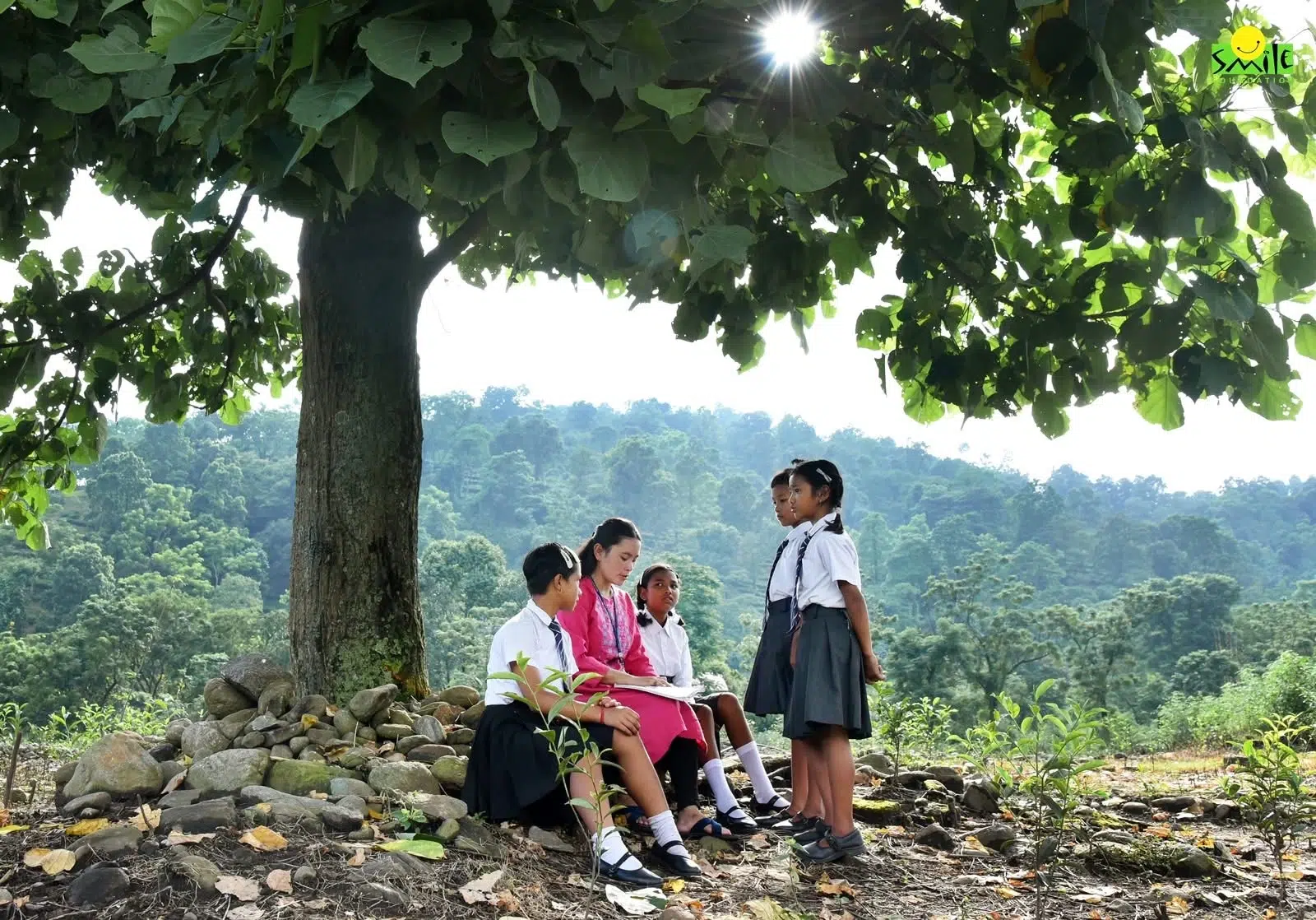
One flagship example is our “Child For Child” programme, which takes learning beyond textbooks. Here, teachers are empowered as mental health “first responders”. In intensive workshops, they learn to spot signs of stress, trauma or anxiety in students and guide them towards help. Simple practices like starting the day with mindful breathing or classroom chats about emotions – become part of daily school life. This destigmatises mental health: children who might have felt alone suddenly find language and space to talk. Smile’s data shows these efforts shift teacher mindsets and build more caring classrooms. We are also developing peer-led activities: short films and role-plays on issues like bullying and peer pressure prompt open discussion among adolescents.
In underserved communities, Smile’s outreach goes further. Community sensitisation sessions involve parents and local leaders, not just children. By training youth volunteers and social workers, we raise broader awareness so that families recognise mental distress as treatable rather than shameful. Though Smile’s specific projects may differ region by region, the common thread is early, community-rooted support. We often say: it’s better to plant seeds of resilience than wait until storms hit. By normalising conversations about stress and encouraging help-seeking, these programmes build a foundation for lifelong mental health.
Integrating Mental Health into Health, Education and Community Systems
World Mental Health Day is also a reminder of what more must be done at the policy level. Experts agree that mental health cannot be siloed – it needs to be integrated into our everyday institutions. In practical terms, this means:
- Primary Healthcare: Every clinic and community health centre should screen for common mental health problems, just as it checks blood pressure or malnutrition. Trained counsellors or accredited social workers should be part of basic health teams. This aligns with WHO’s call to make mental health care accessible at the lowest level of the health system.
- Schools and Education: Mental wellness should be as routine as literacy. Curricula can include life-skills and emotional literacy. All teachers ought to receive at least basic training in child psychology and how to respond to distress. India’s new School Health Programme is a step in this direction but it must be fully implemented and extended to every state and rural school. Schools should also partner with NGOs (like Smile) to bring in workshops and counsellors periodically.
- Community Systems: Public awareness campaigns can reduce stigma and promote local support networks. Village health committees, women’s self-help groups and youth clubs can be mobilised to talk about stress and wellness. Civil society and employers can fund helplines, peer counsellors and digital tools for mental health literacy. Importantly, policies should address social drivers – for example, anti-poverty schemes, women’s empowerment and housing programmes indirectly improve mental well-being.
- Research and Data: India needs better data – perhaps even a national adolescent mental health survey – to guide action. Tracking outcomes will help us know what works.
Such integration is urgent. Untreated mental illness leads to suffering that spills over into families and workplaces. The experience of the pandemic has shown that taking no action is not an option. Innovative models (like school counsellor training or tele-psychiatry pilots) should be scaled up with government and corporate support. Mental health must no longer be seen as a luxury or a stigma, but as foundational to healthy, productive lives.
Together Towards a Mentally Healthy Future
World Mental Health Day is a call to action – one that goes beyond one day of awareness to a year-round commitment. It reminds us that mental well-being must be everyone’s concern: policymakers, doctors, educators, parents and neighbours all have a role. By investing in early support and community-rooted care, we are investing in our shared future.
There is reason for hope. Across India and the world, we see inspiring examples of community-based models leading change. Organisations are lighting the way by showing how mental health can be woven into education and grassroots work. A teacher with basic counselling skills, a school that talks openly about feelings, a mother who learns to calmly reassure her child – these small acts accumulate into a stronger society.
This World Mental Health Day, let us reaffirm that mental health is as vital as physical health. By speaking up, by funding training and by simply listening, each of us can help break the silence and stigma. The result will be communities where every child and every adult has the chance to grow with confidence and hope. After all, a society where all minds thrive is a society where we all thrive