India, with a population exceeding 1.41 billion, still has a significant number of impoverished citizens. As a signatory to the United Nations Sustainable Development Goals, India is dedicated to ensuring that “no one is left behind.” Addressing each of these goals, particularly for the rural population, is vital for the nation’s holistic development. In this context, we must acknowledge the current state of the India’s healthcare system.
A vast institution spanning the country, India’s healthcare system has received numerous accolades, particularly during the 2020 pandemic. Serving both urban and rural communities, it is a crucial pillar of the nation. However, despite its efforts to provide quality healthcare to every individual, it faces serious challenges, including manpower shortages and the slow advancement of accessible quality healthcare access in remote areas.
India’s Health Profile
India’s healthcare system has made remarkable improvements, evidenced by better outcomes and numbers in life expectancy, vaccination rates and advancements in cancer research. According to the Ministry of Health and Family Welfare, the country boasts approximately 161,829 sub-medical centres and over 31,000 primary health centres catering to both rural and urban populations.
However, despite these advancements, access to modern healthcare remains challenging in rural India. A survey from the “Bharat Health Index” revealed that only 25% of respondents reported having local access to healthcare. Additionally, 90% of those requiring specialised treatment must travel long distances, while financial barriers persist, with 23% relying on informal loans for medical expenses and 6% selling assets for treatment.
Additionally, the issues of the rising prevalence of four major non-communicable diseases—cancer, heart disease, diabetes, and chronic pulmonary disease—which account for nearly 80% of deaths is also burdening the Indian Healthcare system to cater to every patient.
This situation becomes more alarming, as India’s developed cities are seeing a sudden rise in chronic diseases; Delhi and Kochi are witnessing an uptick in kidney diseases, while Kolkata and Mumbai are facing an increase in cardiovascular issues and heart attacks, particularly among individuals aged 31 to 50.
Given this landscape, one must pause to think: Is our Indian Healthcare System supported enough to address the needs of its growing population and the various medical crises it faces? How can we, as a society, support our healthcare system in delivering quality care across all regions of India?
Government’s efforts towards the Healthcare system in India
The Indian government has been dedicated to transforming the healthcare system into an inclusive institution. Leveraging global insights and technological advancements, it has initiated several programmes aimed at making quality healthcare in India accessible and affordable, even in the most remote areas.
Notable initiatives such as Ayushman Bharat Pradhan Mantri Jan Arogya Yojana (PM-JAY), the National Health Mission, Pradhan Mantri Suraksha Bima Yojana, and Janani Suraksha Yojana have significantly improved accessibility and affordability for underserved communities. These schemes provide individuals with the confidence and hope to seek medical treatment, alleviating the fear of high medical expenses and the lack of treatment facilities.
Digital Revolution of India’s Healthcare
India’s concentration on blending the best of technology within our Indian healthcare system has definitely been a game changer in recent years. The Digital India Revolution has brought significant changes in the healthcare sector with initiatives such as Ayushman Bharat, e-Sanjeevani, e-Hospital, e-blood bank and e-Rakhtkosh– that have allowed India’s medical infrastructure to push its boundaries and to evolve through virtual technologies so that, people living in the remotest corners of the county have the accessibility to get timely medical consultations and treatments as preventive solutions rather than just curative mechanisms.
Quality Healthcare & Smile on Wheels
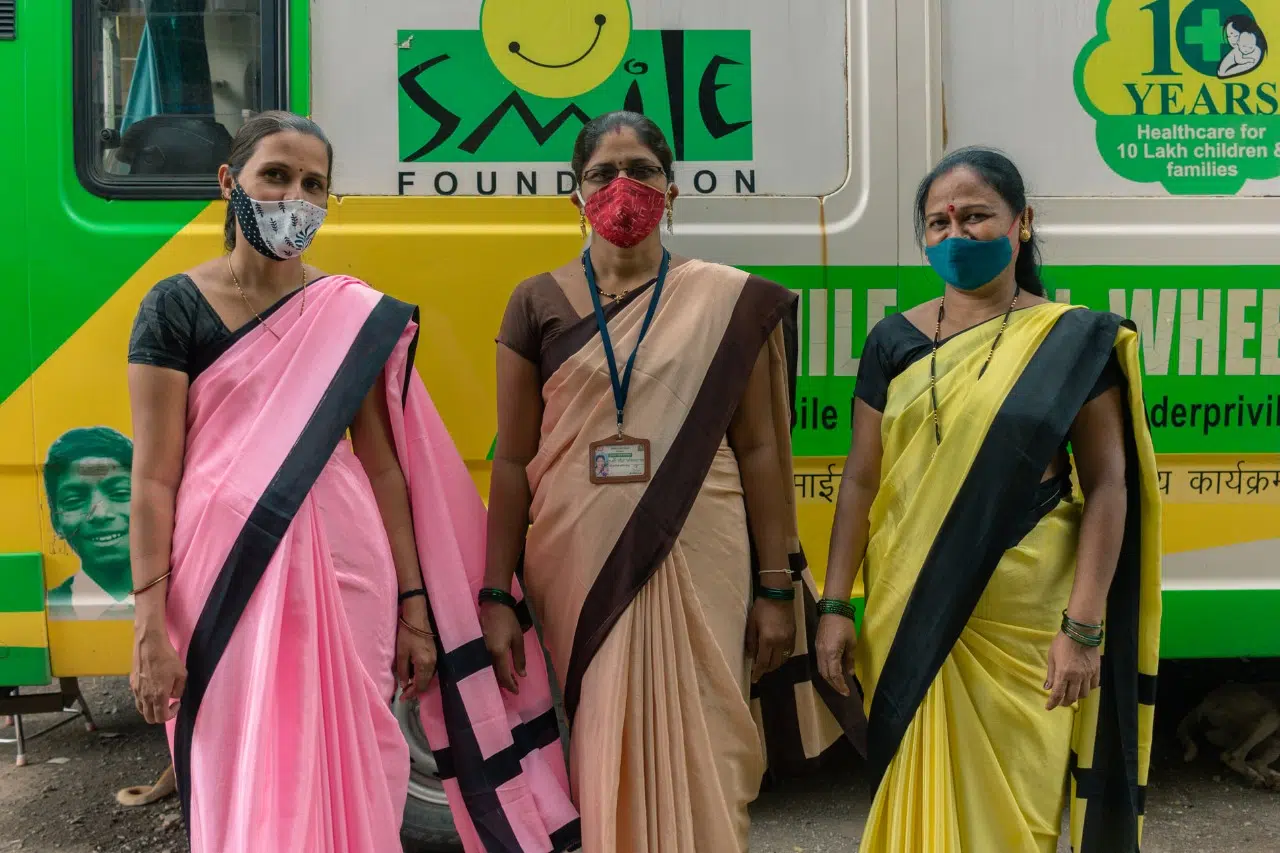
Complimenting the government’s mission, Smile Foundation health intervention, Smile On Wheels, is redefining last-mile healthcare delivery. These technology-enabled mobile medical units, reach communities that lie far beyond the reach of conventional healthcare infrastructure- villages, hilly terrains, flood-prone regions and urban slums.
With over 100 units operational across India, Smile on Wheels provides preventive, promotive and curative healthcare services; supported by doctors, nurses and trained paramedics, each unit is equipped with advanced telemedicine technology, capable of conducting 40+ diagnostic tests remotely enabling real time consultations for conditions ranging from maternal health to chronic illness. This initiative directly contributes to SDG 3- Good Health and Well being, while reinforcing the principle that healthcare should not be a privilege, but a fundamental right.
Building Health Equity Through Collaboration
While government initiatives lay foundation, the role of corporate partnerships with NGOs in India for bridging persistent healthcare gaps is crucial. Strategic CSR partnerships can drive scalable health innovations such
Strengthen preventive and primary healthcare access for underserved families
Co-create scalable, tech-enabled healthcare models aligned with SDG targets
Build a measurable impact narratives that reflect your brand’s commitment to inclusive development and employee-driven purpose
Let’s build a healthier tomorrow to ensure that no child misses school due to illness, no mother is denied care due to distance and no family is pushed into poverty by medical costs. Partner with us to create scalable, sustainable healthcare impact across rural India.
Despite gains in girls’ schooling worldwide, women remain a minority in science, technology, engineering and math (STEM). UNESCO reports that women account for only about 35% of STEM graduates worldwide, a figure unchanged over the past decade. Even as more girls attend school, gendered biases and social norms often limit their subject choices. This global shortfall has economic and social costs: countries miss out on women’s talents in innovation and research, and technologies risk being shaped by a predominantly male perspective.
Globally, STEM fields remain male-dominated. Studies consistently show that at school, girls perform as well as or better than boys in science and math, yet far fewer continue to STEM careers. Girls often match or exceed boys in math and science test scores, but disproportionately drop out of STEM pathways. Despite women earning 54% of all university degrees, they make up only 34% of researchers worldwide.
In many countries, stereotyped teaching and materials reinforce boys’ identification with science. For instance, surveys in Latin America found that up to 20% of math teachers believed mathematics is easier for boys, a bias shown to undermine girls’ confidence. Similarly, experiments reveal that professors rated identical applications from female science students as less competent than those from males. These stereotypes and biases – in classrooms, textbooks, homes and workplaces – create a “leaky pipeline,” where talented girls are channeled away from STEM by invisible barriers.
Global research identifies several key barriers for girls in STEM, often interlinked:
Social norms and stereotypes: Widespread beliefs (e.g. that science/math are “for boys”) discourage girls from pursuing STEM. Parents and teachers may subconsciously steer girls toward traditionally “feminine” fields. Surveys show parents often prefer sons for STEM careers and boys rate male peers as more “knowledgeable” in science, even when girls outperform them.
Access to education and resources: In many regions, girls face practical obstacles to STEM learning. Poor infrastructure (lack of science labs, computers or internet), long travel distances to school and even safety concerns can limit girls’ schooling, especially in rural areas. Girls are particularly under-represented in STEM education not because they learn less, but because they have fewer opportunities to continue in those subjects.
Economic constraints: Families under financial strain often prioritise sons’ education, viewing boys as future breadwinners. Studies (e.g. by Sattva Institute) find that the high cost of science degrees leads some families to invest in sons’ schooling over daughters’. Without scholarships or support, talented girls may drop out or choose lower-cost streams.
Curricular and institutional biases: Even where girls attend STEM classes, curricula and teaching often lack female role models. Textbooks frequently depict scientists as men, reinforcing the idea that STEM fields are male domains. Schools rarely offer targeted encouragement for girls in science and girls report less confidence in subjects like math despite equal ability.
Workplace and societal discrimination: The bias doesn’t end with education. Women in STEM careers face lower pay, fewer promotions and hostile work cultures. Global surveys (e.g. by Kelly Services) report that a majority of women in tech feel their colleagues believe men are genetically better at math and science. Such discrimination drives many women out of STEM jobs over time.
Collectively, these factors mean that girls’ high academic achievement in early schooling doesn’t translate to STEM careers. For example, girls in many countries match or exceed boys in math/science proficiency, yet globally women make up only about 22–29% of STEM professionals (estimates vary by field and region). This discrepancy – the “double bind” of performing well but being underrepresented – underscores the role of social and cultural barriers over ability.
Gender Gaps in STEM in the Indian Context
Many of the global factors above are pronounced in India, where gender norms and resource gaps intersect. India actually stands out for having a relatively high share of women enrolling in STEM classes, yet their numbers still dwindle. For instance, one analysis finds that women make up about 43% of all STEM graduates in India (the highest rate globally), yet only 27% of these women enter STEM careers. Engineering is even more skewed: Indian women accounted for just 30.2% of undergraduate engineering enrolments in 2020–21, down from 33.7% in 2012. In popular fields like Computer Engineering, women were only ~34% of students.
These gaps reflect both demand-side and supply-side issues. On the supply side, many government schools – especially in rural areas – simply lack STEM infrastructure. A report by Smile Foundation notes that only 32% of India’s schools have a computer and only 24% a “smart” classroom. In village schools, students may never see basic science lab equipment.
Culturally, rural girls face greater discouragement: girls in rural India are 40% less likely than boys to pursue STEM subjects after primary school Early marriage and household expectations can force girls to drop out of school before 10th grade. Safety concerns, long commutes and household chores also disproportionately affect girls’ attendance.
On the demand side, Indian society often steers talented girls away from STEM. Widespread attitudes frame science and technology as masculine fields. Even in urban middle-class families, parents may pressure daughters to choose medicine, teaching or arts over engineering, fearing that STEM careers demand long hours or relocation. A Smile Foundation analysis attributes the decline of women in engineering largely to societal perceptions and workplace challenges.
Economic factors play a role too: STEM degrees (engineering, tech) are expensive and with limited family resources some girls are pushed toward lower-cost degrees. An IWWAGE study highlights that when budgets are tight, Indian families often invest in sons’ technical education rather than daughters’.
The Annual Status of Education Report (ASER 2023) found that of all Class XI+ students, only about 31.7% were in STEM fields (Physics, Chemistry, Math, Biology), vs 55.7% in Arts/Humanities. Within that small STEM cohort, girls – especially from rural or disadvantaged backgrounds – are a minority. Even those who graduate in science or engineering face attrition: workplace surveys indicate women hold just 26% of India’s data-science and AI jobs and only 15% in engineering roles. Thus India mirrors the global trend: good academic performance by girls at school does not translate into equal representation in STEM professions.
Gender Gaps in STEM: Stereotypes, Biases and Systemic Factors
Across India and the world, gender stereotypes play out early. Children internalise notions that boys are “good at math” and girls are “good at reading.” Studies of classroom dynamics show that boys often get more attention in science class and girls receive less encouragement to explore. In India, this can mean that by middle school girls start to self-select out of advanced science courses. Without visible female scientists around them, many girls assume “science isn’t for me.” This is reinforced by media and advertising: most technology and engineering-related ads feature men. Role models and mentors are crucial – when girls see women succeeding in STEM, it challenges stereotypes.
In higher education and work, institutional biases become evident. Indian data suggest that even when women enroll in STEM degrees, far fewer stay. For example, between 2013–14 and 2021–22, India saw a 43% drop in women taking postgraduate engineering and IT courses. Experts attribute this to factors like lack of flexible hours, limited maternity leave and few women-friendly policies. Female engineers report being sidelined for fieldwork or assignments due to “safety” excuses. In corporate tech, women often hit a career ceiling as promotions favour male employees. Such workplace barriers not only deter entry but also push many women out of STEM jobs.
A broader intersectional factor in India is caste and class. Research indicates that girls from lower socioeconomic backgrounds face compounded obstacles: fewer schools, financial poverty and in some cases, discrimination at home or school. There are reports of Dalit girls experiencing harassment and leaving college. Unfortunately, much of this data is qualitative, but it underscores that the issue is not just gender – it’s gender plus other vulnerabilities. This aligns with UN Women’s observation that STEM gaps are largest for girls facing multiple disadvantages (poverty, disability, caste, etc.).
Bringing Data to Life: The “Leaky Pipeline”
The cumulative effect of these biases is that the transition from education to employment in STEM is much smaller for women. UNESCO’s Cracking the Code research shows that globally women earn just 35% of STEM degrees but only about 22–29% of STEM jobs (lower still in many tech fields). Similarly, World Bank analysis finds women are over 50% of university grads but only 34% of researchers. In India, recent data tell a similar story: despite one of the world’s largest young populations of female graduates, women are under 30% of engineering and tech professionals. This “pipeline leak” happens because at each stage – subject choice, college specialisation, job entry and career retention – women drop out at higher rates than men.
Studies also highlight the feedback loop of stereotypes and confidence. Girls who are constantly told (even subtly) that boys are better at science tend to lose confidence, which in turn affects their class participation and exam performance. Over time, a girl’s interest in STEM may wane for lack of positive reinforcement.
In India, concerted efforts have increased girls’ school enrolment, but making STEM relatable and accessible requires changing deep-rooted attitudes. Even the way STEM is taught – often by rote and with few interactive experiments in government schools – can fail to spark girls’ curiosity.
Government and Civil Society Responses
Recognising the gap, the Indian government and international organisations have launched initiatives to boost girls in STEM. For example, Atal Innovation Mission (AIM) has set up thousands of tinkering labs in schools (over 10,000 nationally) to encourage hands-on science learning among students – and many of these explicitly target girls The Rashtriya Avishkar Abhiyan promotes science fairs and mentorship in rural schools, often with a focus on girl students.
The National Education Policy 2020 even mandates coding education from primary grades, which could help normalise tech from an early age. However, reports note that only about half of school STEM policies specifically include measures for girls. Internationally, UNESCO and UNICEF emphasize training teachers in gender-sensitive pedagogy and distributing feminine hygiene products to keep girls in class. UNESCO’s Cracking the Code and other studies have spawned advocacy campaigns (e.g. “#GirlsCrackTheCode”) to raise awareness.
Beyond policy, civil society and the private sector have crucial roles. Non-profits run after-school science clubs, scholarship programmes and campaigns to encourage girls. Companies host “Girls Who Code”–style workshops and offer internships to young women.
The Times of India reports that India’s tech industry has launched skilling programmes: for instance, the Nasscom Foundation collaborates with tech firms to train female STEM graduates in coding and data skills. These efforts acknowledge that women also need mentorship and networks to navigate STEM careers. Early results show promise: where dedicated programmes support girls (with resources, female instructors and encouragement), more girls stay in STEM tracks.
Smile Foundation’s Initiatives for Girls in STEM
Smile Foundation has implemented several programmes directly addressing these challenges. Our Mission Education initiative brings hands-on science resources to underserved schools. For example, Smile sets up mini science centers and resource kits in government schools, supplies Do-It-Yourself learning kits and organises science clubs and fairs. Teachers receive training in inclusive STEM pedagogy so that girls are actively engaged. The effect is a shift from passive rote learning to active exploration: students (especially girls and first-generation learners) become curious scientists.
Empowering rural schoolgirls in STEM. To counter the lack of role models and labs, Smile also creates supportive environments for girls. In rural innovation ecosystems, we run “girls in STEM” workshops and mentorship drives where local role models (female engineers, scientists) share their stories. Our STEM labs and fairs have led to a an increase in girls’ participation in science activities. In one Uttar Pradesh project (in partnership with CooperSurgical), Smile opened a science lab for girls in a Kasturba Gandhi Balika Vidyalaya (a residential girls’ school). There, village girls build circuits, run experiments and present projects – experiences which improve their understanding of science and math and bolster confidence.
Smile’s broader girl-focused programmes also reinforce STEM inclusion by addressing dropout barriers. Our She Can Fly campaign provides scholarships, stipends and laptops to disadvantaged girls, and organises life-skills workshops to build confidence. By “meeting girls’ needs holistically,” Smile enables many talented girls to stay in school long enough to reach science classes. We also fund tertiary education through our Scholarship Programme, ensuring that girls who excel in school can go on to college and even technical careers.
In rural areas – where barriers are often highest – Smile’s experience underlines a simple truth: talent is universal, access is not. We deploy mobile STEM labs that travel to remote schools with kits and experiments and train local teachers in inquiry-based science education. We engage parents and community leaders to counter stereotypes, emphasising that girls innovating (like the students building pedal pumps or clean-water filters) can solve real village problems. Through these efforts, there is higher attendance and more girls stepping up as science club presidents or fair winners. These examples illustrate how multi-pronged programmes – combining infrastructure, mentorship and cultural outreach – can begin to close the STEM gap at the local level.
Path Forward
The underrepresentation of girls in STEM is a complex, global issue with local roots. On one hand, girls have the aptitude for science and often perform as well as boys in school yet they leave STEM paths in far greater numbers. On the other hand, the reasons are equally clear. Deeply entrenched gender norms, inadequate school resources (especially in rural and low-income areas) and institutional biases throughout education and employment systematically disadvantage girls.
In comparing nations, we see both progress and paradox. Some countries (including India) have high female STEM enrollment rates at the university level, but that does not guarantee workplace parity. More egalitarian societies still experience STEM gender gaps (the so-called “gender-equality paradox”), underscoring that cultural change must accompany any increase in equality.
Ultimately, addressing the gap means tackling it from all sides: reforming school curricula, training and sensitising teachers, providing girls with mentors and role models, offering financial support and safety nets (scholarships, menstrual health) and enforcing gender-friendly workplace policies.
Smile Foundation shows that integrated community programmes can make a difference. By embedding STEM labs, support networks and girl-centric scholarships into their education outreach, they help keep girls on the STEM track. Other countries and organisations offer similar lessons: hands-on STEM programmes that specifically engage girls, national policies that mandate gender equity in science education and public campaigns to shift stereotypes all play a part.
In the end, bridging the gap is not just a matter of fairness, but one of necessity. Innovation requires the brightest minds regardless of gender. When diversity is missing, the technologies we build can be skewed or incomplete. Only by dismantling cultural and structural barriers at every level can we ensure that the next generation of scientists and engineers fully represents half our population.
Controlling the Numbers of Newborn Mortality in India
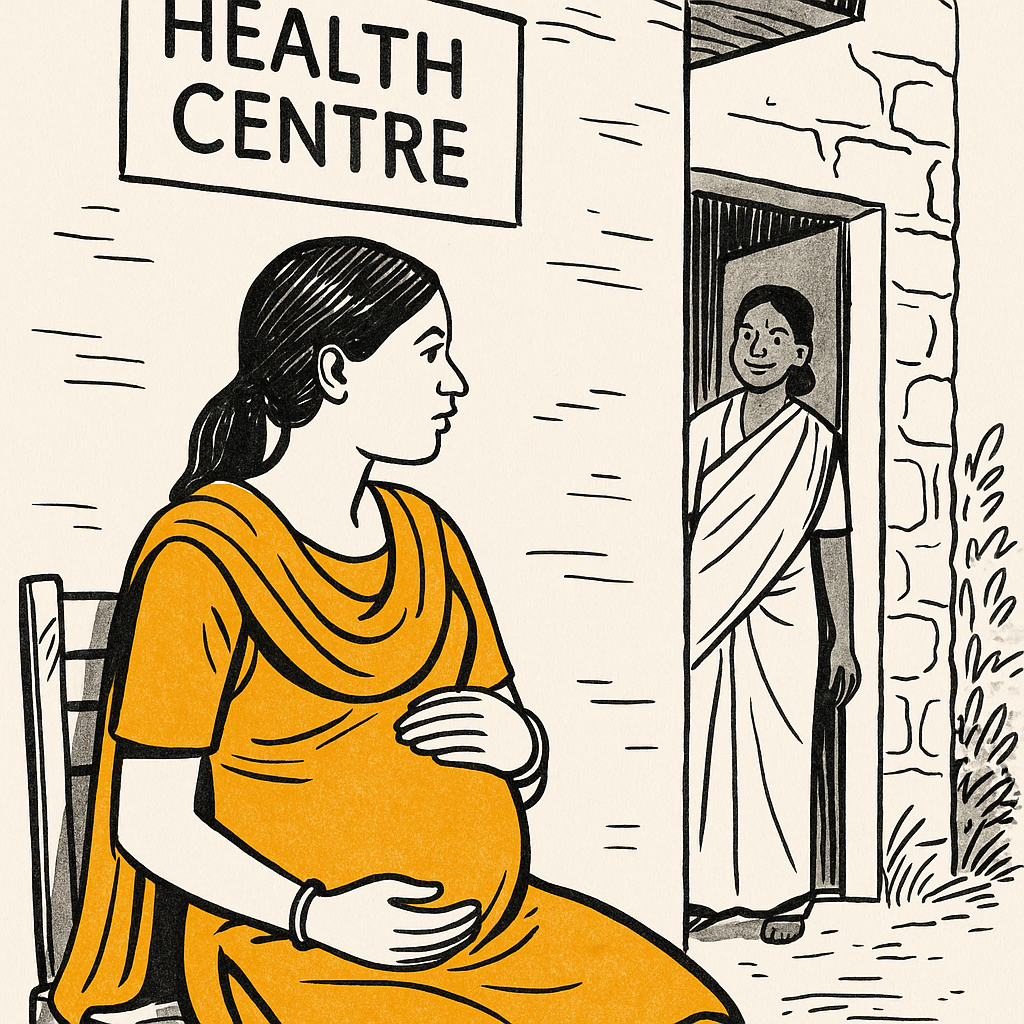
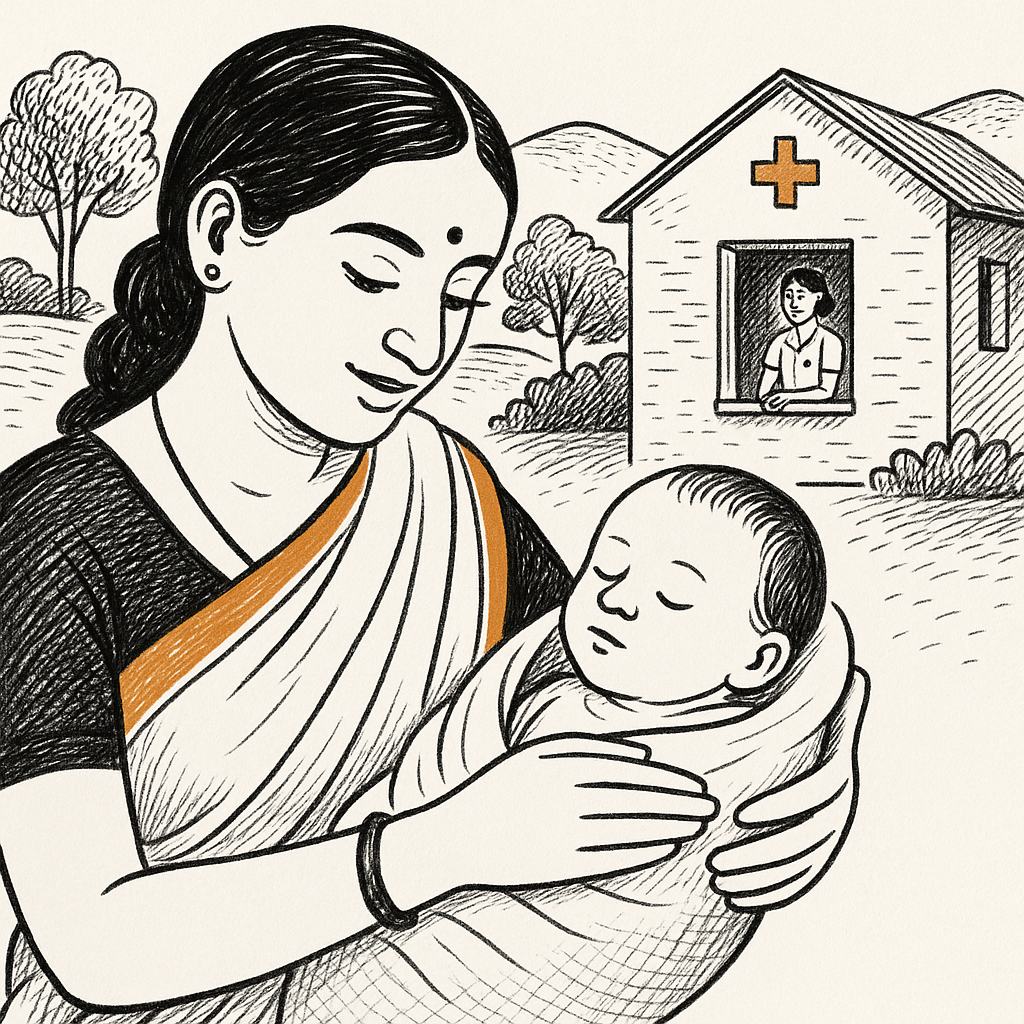
In a village in Gujarat’s Bhavnagar, a 22-year-old mother-to-be walks each month to the local healthcare centre. Her heart brims with hope and tender dreams of the memories she will one day weave with her newborn child. A warm sun follows her steps, while the air carries the dry sweetness of bajra fields and the dust of the roads. At the healthcare centre, kind hands greet her. The doctors and nurses listen carefully, guiding her through every stage of pregnancy. They check her heartbeat and ensure her body receives the nourishment it needs with vitamins and supplements, tailored just for her, with promises of a healthier tomorrow.
Months later, her cries of labour turn into the first wail of her newborn son — a healthy boy weighing 3.2 kilograms. His tiny fingers curl around hers, and in that moment, she feels the fulfillment of all her careful steps and sleepless nights.
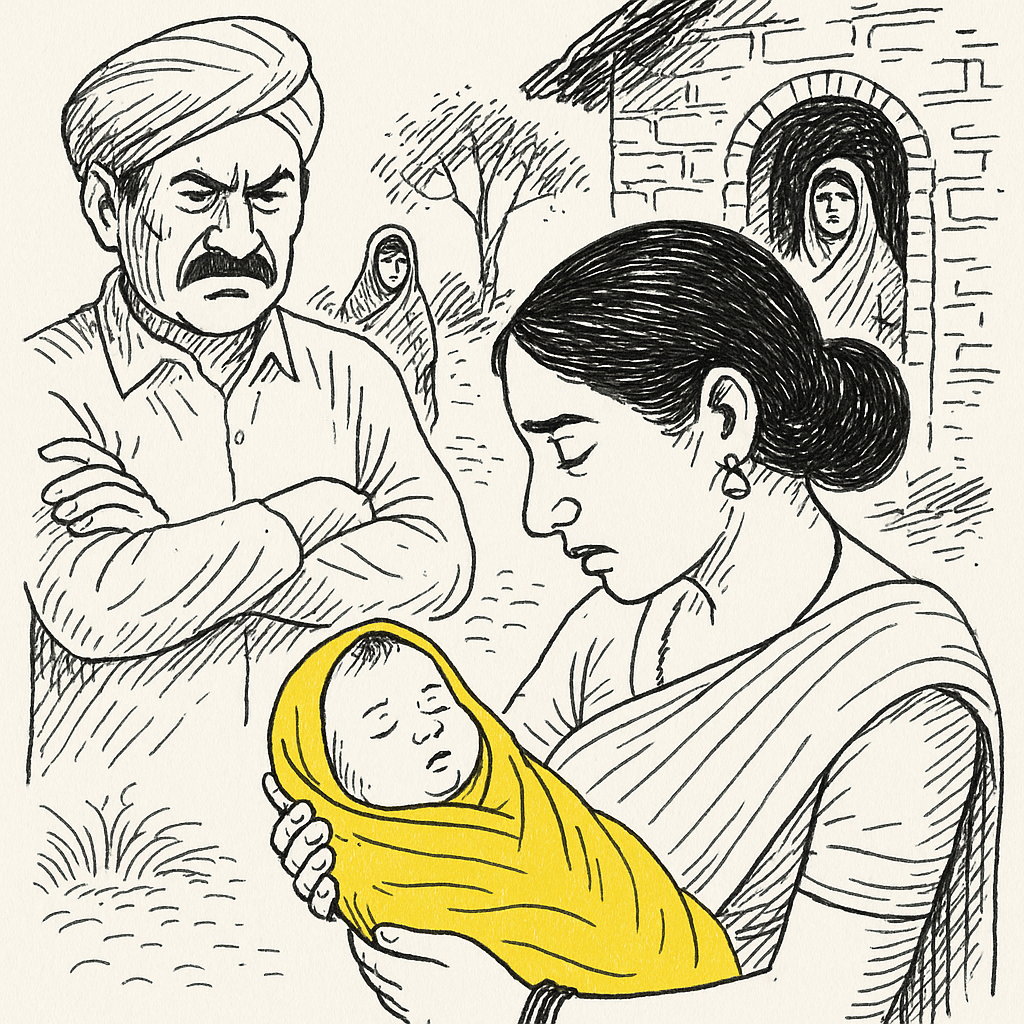
Yet, beyond her village, across countless corners of India, there are still millions of mothers who walk their journeys alone. They face their pregnancies without guidance, unaware that their own well-being is the foundation of their child’s future. They carry the weight of fear and their children’s futures, some hoping for, and others unaware of care they can receive.
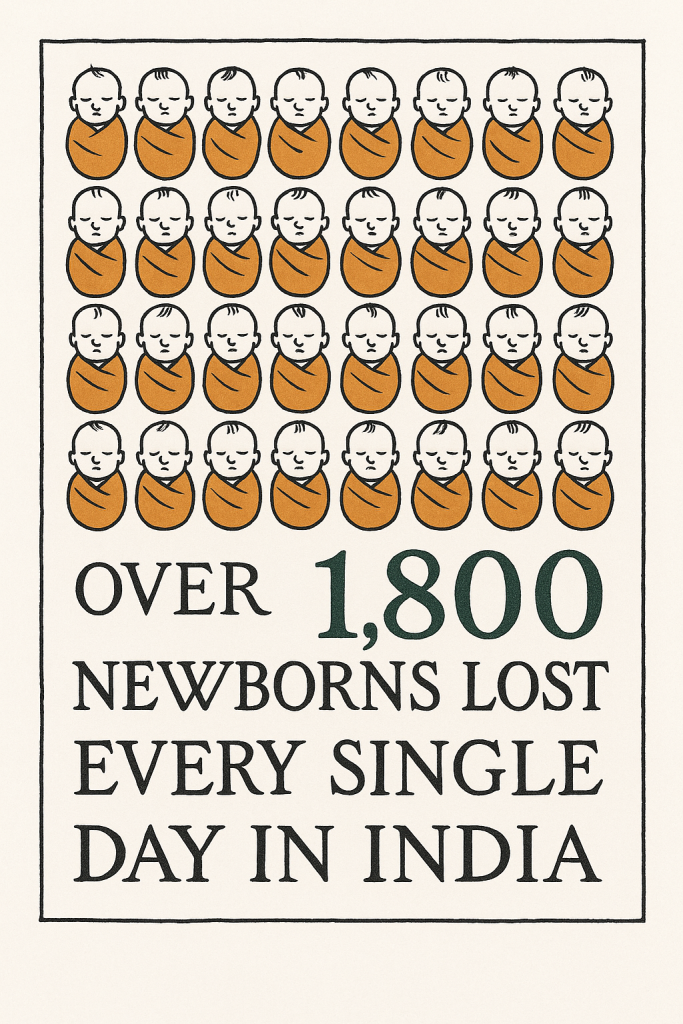
According to the Registrar General of India, the infant mortality rate (IMR) in 2020 was 28 per 1,000 live births, meaning one in every 36 infants dies before completing their first year of life. This translates to roughly 1,800 deaths per day, summing up to over 650,000 infant deaths annually.
Although the global infant mortality rate declined by 58% from 64 deaths in 1990 to 27 deaths per 1,000 live births in 2023. On average, 9,700 children under age of 1 died every day in 2023, compared to 24,600 in 1990. Nearly 46% of all maternal deaths and 40% of neonatal deaths happen during labour or the first 24 hours after birth.
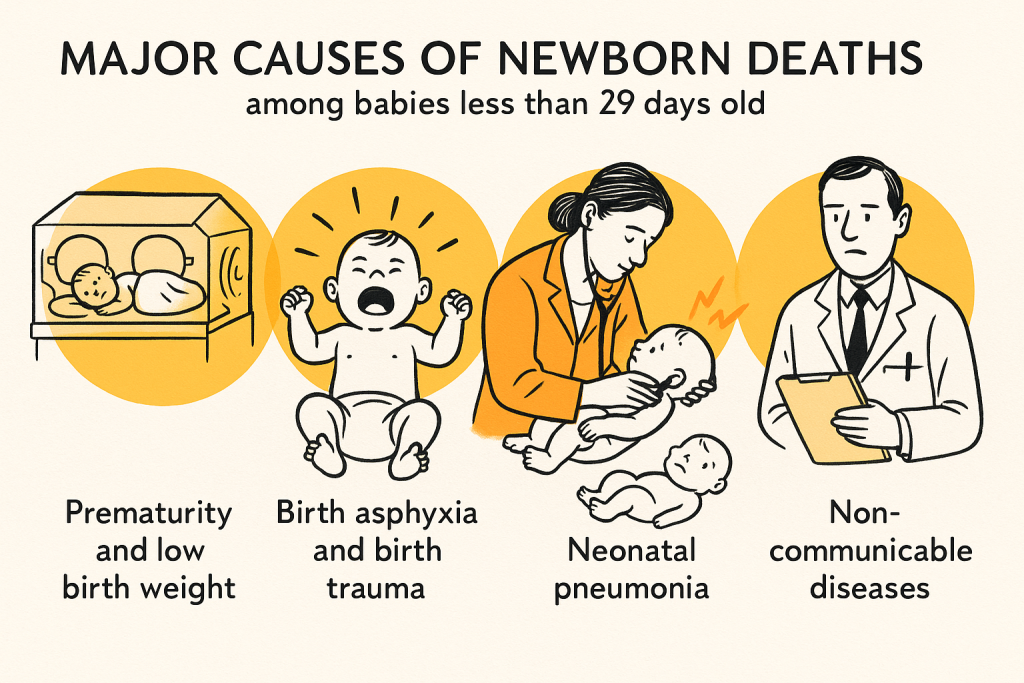
Some of the major causes of newborn deaths among babies less than 29 days old are: prematurity and low birth weight, birth asphyxia and birth trauma, neonatal pneumonia and non-communicable diseases.
Why Essential Newborn Care still Slips through the Cracks?
Neonatal mortality continues to pose a critical public health challenge in rural India, with birth asphyxia — defined as the failure to initiate and sustain breathing at birth — emerging as a leading cause of death within the first hours of life. While healthcare facilities may be physically accessible, the consistent implementation of essential newborn care practices remains suboptimal. Interventions such as immediate drying, skin-to-skin contact, delayed cord clamping, and early initiation of breastfeeding are frequently missed or improperly executed, resulting in preventable neonatal deaths. In fact, a study in Uttar Pradesh found that only 26.1% of newborns received the recommended ENC practices in public health facilities.
Skill Decay in Rural Health Systems: Addressing the Gaps in Post-Training Support
Neonatal resuscitation training is often provided through workshops; however, without regular refresher courses and practical sessions, skill retention diminishes over time. This gap is particularly evident in Mobile Medical Units (MMUs), Primary Health Centres (PHCs) and remote delivery points, where continuous training opportunities are limited. Many rural health workers (ASHAs, ANMs, MMU staff) receive initial training, but rarely get refresher sessions, hands-on practice or supervised feedback. As a result, life-saving interventions — like bag-mask ventilation for birth asphyxia or proper newborn care — may be performed incorrectly or not performed at all.
The First Minute Matters — But Tradition Often Gets in the Way
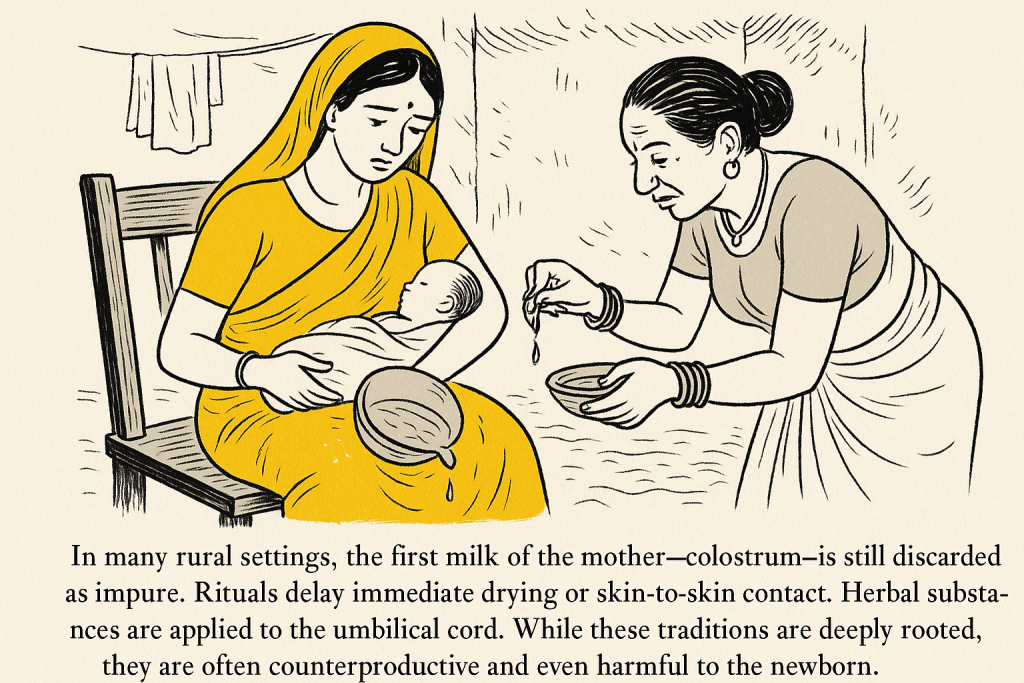
Deeply rooted cultural norms and traditional practices often delay the timely adoption of essential newborn care. For example, immediate drying and skin-to-skin contact — critical for preventing hypothermia — may be postponed due to rituals surrounding bathing or waiting for elders to arrive. Similarly, colostrum, the first milk rich in antibodies, is sometimes discarded because of the belief that it is impure. In other cases, herbal substances are applied to the umbilical cord, increasing the risk of infection. When newborns fall ill, families may also turn first to community-based practitioner outside the formal health system rather than trained health workers, leading to dangerous delays in appropriate treatment.
Prematurity and Low Birth Weight: Hidden Drivers of Neonatal Deaths
Premature birth and low birth weight significantly increase the risk of neonatal morbidity and mortality. Studies suggest prematurity accounts for approximately 30-35% of neonatal deaths in India.
Sepsis, pneumonia and meningitis continue to claim newborn lives, especially in areas where hygiene and infection control are inadequate. Infections are responsible for an estimated 25–30% of neonatal deaths. Conditions like severe jaundice and metabolic disorders, if left untreated, can lead to irreversible damage. Early detection and timely interventions are lifesaving, yet often delayed, and thus, infection is estimated to cause around 25-30% of neonatal deaths.
What We Miss About Newborn Health Starts with the Mother
Maternal health is the foundation of neonatal survival. Conditions like anemia, hypertension, diabetes and infections increase the risk of preterm birth, low birth weight and birth asphyxia. Inadequate antenatal care further compounds these risks, especially where emergency obstetric services are scarce. Strengthening maternal health systems is not just a women’s issue—it’s a newborn survival imperative.
Cultural and Religious Superstitions Leading to Infant Mortality in Rural India
In rural India, deeply ingrained cultural and religious beliefs continue to contribute significantly to infant mortality. These practices often stem from traditional customs, superstitions, and societal norms that place newborns, especially girls, at risk.
In certain rural regions of India, the birth of a girl is still viewed through the lens of economic burden and diminished social value — largely driven by dowry traditions and entrenched patriarchal norms. This perception has led to deeply troubling practices, including female infanticide and abandonment.
Buried Voices: The Unspoken Horror of Female Infanticide
A harrowing example occurred in October 2019 in Uttar Pradesh, where a newborn baby girl was discovered buried alive in a shallow grave. She had been wrapped in cloth, placed inside a clay pot and buried two feet beneath the earth — only to be discovered and rescued by a grieving family preparing a grave for their own stillborn child.
Ritualistic Cultural Extremes Threatening Child Safety
Despite legal prohibitions, ritualistic killings persist in isolated communities. Certain communities continue to practice ritualistic killings under the belief that child sacrifice can bring prosperity or appease supernatural forces. These acts, rooted in occult traditions and extreme superstition, represent one of the most violent expressions of cultural misbelief. A tragic case emerged in April 2025 in Chhattisgarh, where a seven-year-old girl named Lali Goswami was abducted and murdered by her own relatives as part of an occult ritual. The perpetrators believed that the sacrifice would bring them wealth. The crime was carried out in a cremation ground and the body was buried nearby in an attempt to conceal the act.
The Cultural Lens That Shapes Infant Health Decisions
In several communities across India, traditional newborn care practices — though dangerous to both mother and child — is widely prevalent. One common example is the application of substances like kohl, oil, or herbal powders to the umbilical cord to hasten its detachment. These practices can introduce infection, delay healing and increase the risk of sepsis.
Smile Foundation’s Operational Footprint in Rural Health Delivery
Mobile Healthcare Units: Bridging the Accessibility Gap
In remote areas where healthcare facilities are scarce, Smile Foundation’s Smile on Wheels initiative has been a game-changer. “Before Smile on Wheels, we had to travel miles to get basic medical care. Now, the clinic comes to us, and my children receive regular check-ups,” says a resident of a remote village in Rajasthan. These mobile medical units provide essential services such as antenatal check-ups, immunisations and postnatal care directly to communities. This approach ensures that even the most isolated populations receive timely medical attention.
Impact:
Over 10,00,000 people received healthcare services in 2022-23, with 75% being women and children.
80,000+ people benefited through telemedicine projects.
77,000+ people received relief support under emergency & disaster response.
Smile Foundation has integrated Godh Bharai into health campaigns. These events serve as platforms to educate expectant mothers about nutrition, breastfeeding and hygiene, thereby promoting healthier practices within the community. In the past year alone, over 76,000 women were sensitized on reproductive and child health through door-to-door visits, community mobilization sessions, street plays, couple counselling and more.
Addressing Anaemia and Malnutrition
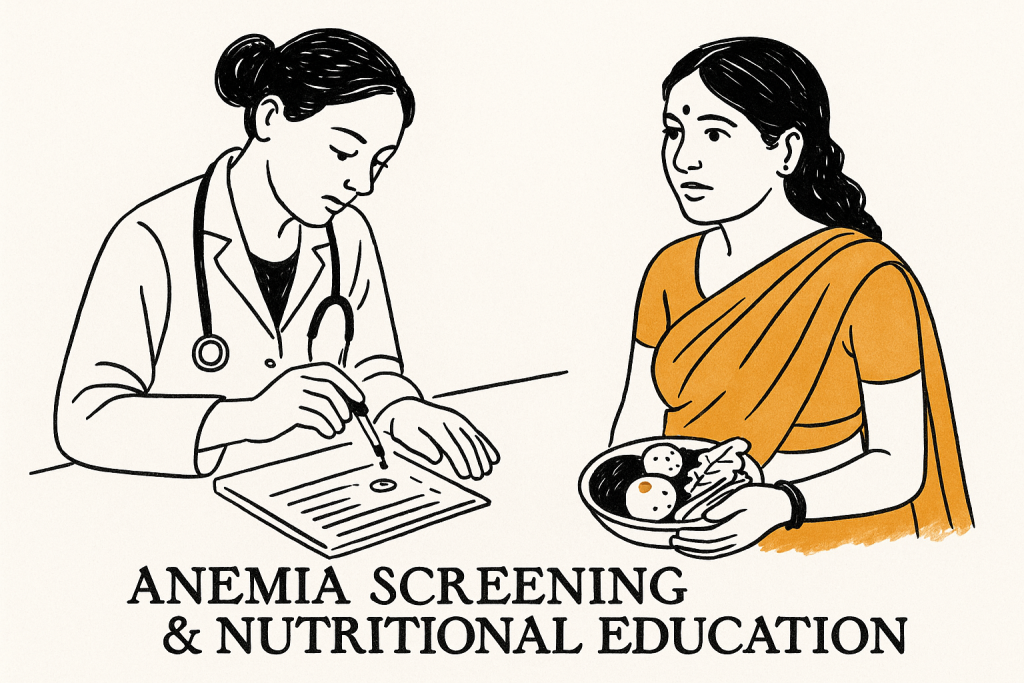
Anaemia and malnutrition are prevalent among women and children in rural India. Smile Foundation’s Pink Smile project in Mathura’s Chatta Tehsil aims to tackle these issues through anemia screening camps, nutritional education and supplementation. “I never realized how important my diet was during pregnancy. The sessions taught me how to eat right for my baby’s health,” says, a mother from Sangrur district, Punjab. In its pilot phase, the programme reached over 4,200 individuals and plans to expand its reach to over 40,000.
Impact:
The programme reached 23 villages and impacted over 60,000 people, including pregnant women, lactating mothers and young children and their families.
Through this effort, Smile teams and officials held 260 health camps offering nutrition and anaemia screening.
Conducted nearly 9,750 community sessions and home visits on diet and self-care.
Empowering Women through Education and Awareness
Smile Foundation emphasises the importance of educating women about their health rights and available services. “I used to be afraid of childbirth, but after attending the workshops, I feel more prepared and confident,” says a participant from Bihar. Through workshops and awareness campaigns, the foundation empowers women to make informed decisions about their health and the health of their children.
Impact:
Over 76,000 women were sensitised on reproductive and child health through various community outreach programs.
Born into a family facing financial hardships, Gaurav’s parents initially delayed seeking medical care due to the cost. However, with the support of Smile Foundation’s healthcare services, Gaurav received timely treatment and is now healthy and thriving.
A Shared Roadmap for Safer Births and Stronger Futures
The real impact of maternal and newborn health initiatives emerges when families understand and embrace evidence-based practices, replacing harmful beliefs.
Swabhiman focuses on empowering women with information about postpartum health, including hygiene, nutrition and newborn care. By conducting awareness sessions, Smile Foundation encourages women to seek care without shame or delay, thereby improving maternal health outcomes.
In partnership with ICDS and the PepsiCo Foundation, Smile Foundation organised breastfeeding demonstrations, emphasising the benefits of proper attachment and positioning. These sessions educated caregivers on the importance of breastfeeding for both mother and child.
Without addressing entrenched beliefs and misinformation, even the best medical interventions risk being underutilised. Too many newborns have been buried under the weight of myths. But awareness has the power to break that cycle — every child deserves to enter the world embraced by love, not burdened by myths. When families learn, when communities choose care over harmful tradition, we create a future where no newborn is claimed by myth. Each of us has a role to play — whether by supporting, by showing up or simply by helping communities unlearn practices that put newborns at risk.
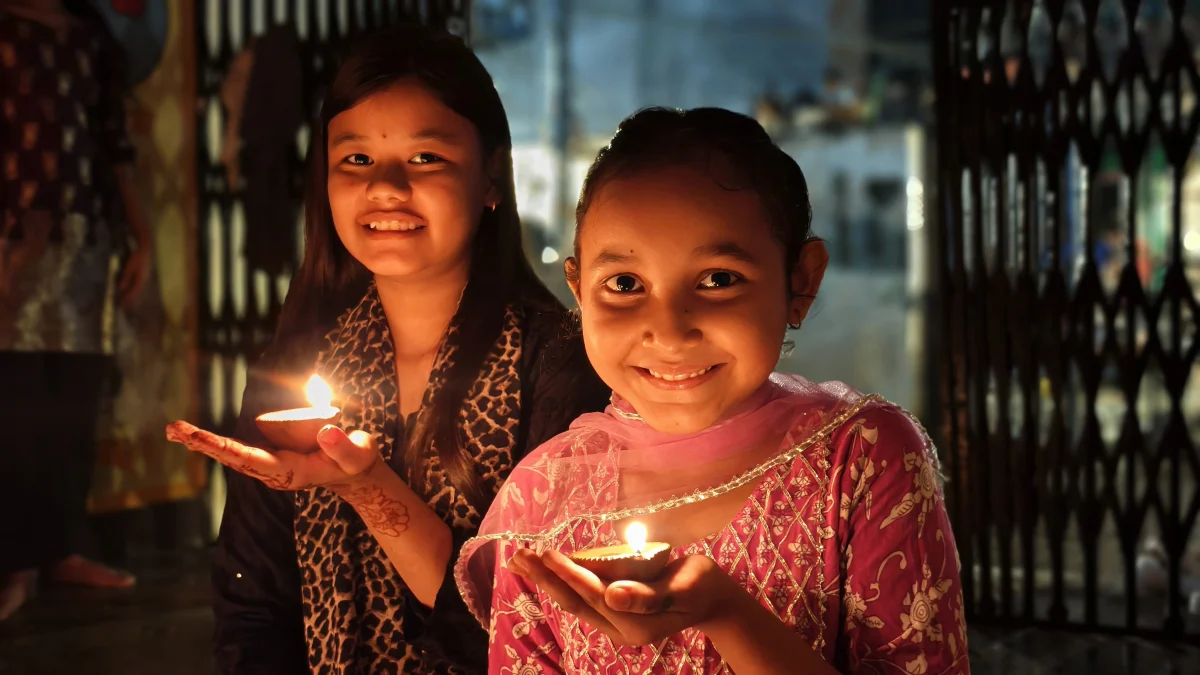
In India, festivals are far more than celebrations– they are moments of togetherness, gratitude and shared humanity. Families gather together, neighbours exchange sweets and communities come alive with hope, light and laughter making the air echo with new beginnings and aspirations.
A special time for India as it is the beginning of the festive arc– from Diwali to New year, this season is important in many ways for all. From the perspective of businesses , it is a rare window for brands to do something deeper – to build emotional connections that outlasts the noise of advertising.
This is where cause-related marketing plays a pivotal role enabling brands to move beyond sales- embedding themselves in the heart and minds of consumers, through values of giving, belonging and shared purpose.
Driving Festive Impact with Cause Marketing
Studies reveal that 60% of consumers are more likely to return to a brand within 6 months, if their festive marketing experience feels meaningful. This data only affirms what emotions have long known– people remember how brands make them feel, not just what they sell.
Campaigns like Myntra’s inclusive Diwali, which celebrated domestic helps as part of the festivities, or Big Basket’s “Neki Kar” campaign which championed kindness and humanity, remind us that meaningful, impact based storytellingdrives deeper loyalty than any discount ever could.
Yet, the festive season also poses challenges for brands– soaring media costs, dwindling attention spans, and content oversaturation can often lead to brands’ communication getting lost.
Therefore, in such a crowded landscape, brands can stand apart from their competitors through cause related marketing campaigns, that can become the bridge that transforms the festive campaigns into collaborations– purposeful, human and authentic.
The Modern Indian Shopper & Festive Cause Marketing
Festivals in India awaken generosity and nostalgia as Indian consumers’ shopping choices are often driven by cultural and religious sentiments. But, it is also important to acknowledge that today the modern Indian consumer is no more impulsive. Today consumers are deliberate, aspirational and emotionally attuned.
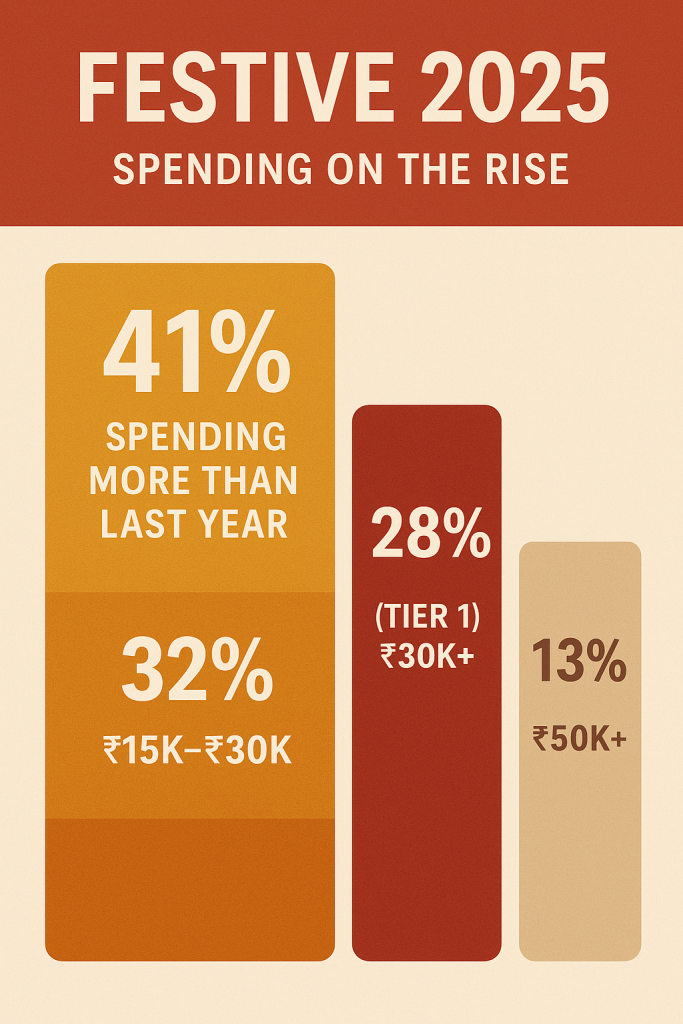
While urban consumersseekaspirational experience, shoppers in Tier 2 and 3 cities value practicality. But, across these diverse groups run a common thread– the desire for meaning alongside consumption . Increasingly, shoppers want their purchases to carry purpose– to add value not just to their lives, but to the communities around them.
These numbers show willingness to invest— but also the need for returns beyond material satisfaction. Through cause-related marketing, brands can align their messaging with consumers’ growing desire for joy with meaning– a purchase that uplifts both giver, receiver and a beneficiary of a community that needs support.
The Heart of Festive Spending
Festivals stir a universal impulse– the desire to give, to indulge and to make loved ones happy. Consumers want their spending to matter.
When brands infuse CRM into festive campaigns, they offer consumers an opportunity to multiply their joy through purpose. A parent buying a toy for their child could also be supporting another child’s education. A family purchasing electronics may empower rural women entrepreneurs– these layered experiences turn purchases into acts of compassion.
Furthermore, as consumer openness grows, particularly towards new and emerging brands– this emotional window during the festive seasons, gives challenger brands, D2C ventures and established players alike the chance to earn trust through purpose engagement.
When Promotions Meet Purpose
In India, festivals are just the right time to experience the vibrancy of India’s different cultures and communities- families shop together, give gifts together and celebrate together. Naturally, promotions and festive bundles remain irresistible. But, when these offers get tied to a meaningful cause, the result is often magnetic.
Imagine a festive sale that donates a percentage of proceeds to children’s health, or a bundle that funds skill training for women in rural India– these result oriented campaigns often become far more impactful than just being a sale’s affordable purchase–it becomes a powerful transformative action.
It has also been observed that 81% of consumers have said that short videos capture their attention most effectively during the festive season. This means that if brands align their festive marketing campaigns with cause marketing, they can establish their authenticity through real faces, real voices that tell the story of positive change in their own words, giving the consumers an insight to the commitment of the brand towards social welfare.
Guide to Leverage Cause Marketing During Festivals
Step 1: Early Planning and Long-Term Partnerships
Brands that plan early and build lasting partnerships with NGOs convey credibility and empathy. Through consistent, co-branded initiatives, consumers see tangible proof of impact, transforming each purchase into a story of real-world change.
Step 2: Phased, Story-Led Campaigns
Structured storytelling ensures awareness translates into action:
Pre-Festive Phase: Build curiosity through storytelling and awareness.
During Festivities: Encourage participation through donations, purchases, and events.
Post-Festive Phase: Showcase on-ground impact through real beneficiary stories.
This rhythm sustains engagement long after the lights fade.
For the Good, By the Good
In a world driven by visibility, empathy-driven campaigns resonate. Cause-related marketing enables brands to move beyond impression metrics– crafting emotional resonance that shapes society and businesses alike.
Stories of real lives such as a girl in Odhisha pursuing education, a widow in Tamil Nadu rebuilding her livelihood, a young aspirant achieving higher education through scholarships– all such stories transform consumers from spectators into participants of change as they see their spending being utilised to uplift others.
Festive Marketing Strategies That Spread Lasting Smiles
At Smile Foundation, we have witnessed first-hand how cause related marketing partnerships during the festive season can transform campaigns from transactional promotions into instruments of genuine social change.
Every year from Diwali to New Year, brands have the opportunity to align with programs like ours to deliver measurable and meaningful impact; we firmly believe that well strategic Cause marketing partnerships can enhance the wider ecosystem of all the stakeholders– brands, consumers and committees involved.
It is important to understand that cause related marketing must be viewed as a platform that can transcend seasonal giving. It can be a strategic investment in holistic development blending brand purpose with social progress.
Brands,NGOs and consumers alike become co creators of change as companies reinforce trust and loyalty, consumers experience fulfillment with purposeful purchase and participation, but most importantly– underserved communities benefit from tangible support in health, education and empowerment.
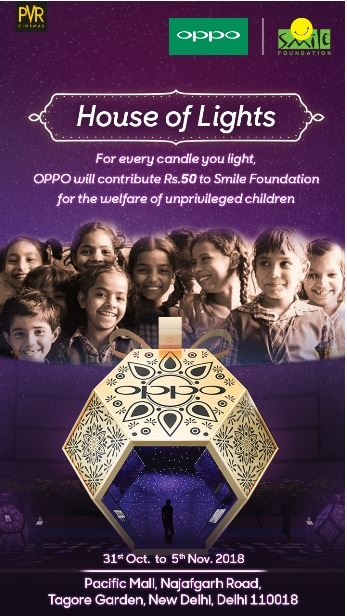
One such inspiring example of such collaboration wasOPPO India’s #BestDiwaliGift initiative, which inspired people to gift brighter futures to less privileged children. At OPPO’s House of Lights in Pacific Mall, New Delhi, visitors lit candles and shared stories of those who illuminated their lives. For every candle lit or story shared, INR 50 was donated to Smile Foundation — a gesture that turned celebration into compassion.
Another striking example of cause related marketing partnership with Smile was Swiggy Instamart’s Orange Santa collaboration where Swiggy delivered packs of joys to children from the Mission Education program. The campaign demonstrated the instant impact of strategic festive cause marketing partnerships; it successfully established that festive campaigns are more than seasonal promotions.
All such initiatives establish a key lesson – when festive campaigns are integrated with cause marketing, they provide measurable results across three dimensions- community impact, consumer engagement and brand differentiation, but most importantly they establish brands as social custodians, who implement “giving” as their business ethos to ensure that lives in need are truly supported for a better future.
Partner with us to transform festive campaigns into strategic initiatives that advance meaningful community impact.
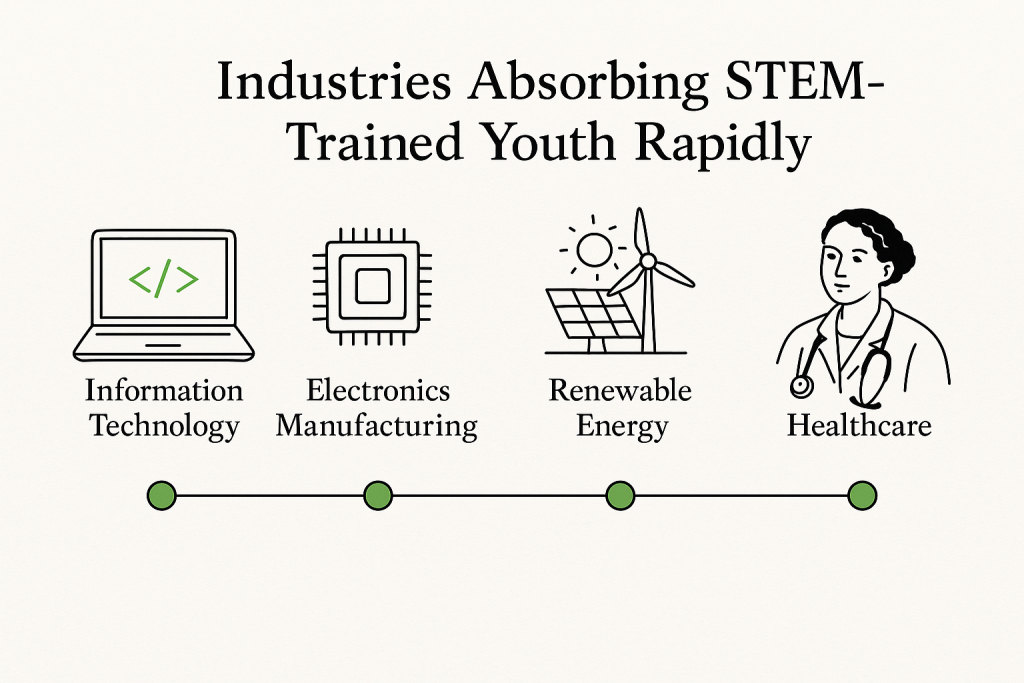
India is witnessing a transformation in its economic and industrial landscape, powered by the growing influx of STEM-trained (Science, Technology, Engineering and Mathematics) talent. With the country producing over 1.5 million engineers and thousands of graduates in pure sciences and mathematics every year, the absorption of this workforce across high-growth industries has become a key metric of progress. But the question remains: which sectors are absorbing this trained talent fastest—and why
The Shifting Demand for STEM Talent and STEM Jobs
India’s demographic dividend offers an extraordinary opportunity. A majority of the population is under 35 and millions enter the workforce each year. But having a young population is only useful if their skills align with industry demand. STEM education — ranging from engineering and IT to biotechnology and data science — is becoming the currency of employability in a rapidly digitising economy.
Employers increasingly value not just domain knowledge, but also adaptability, critical thinking and digital literacy. Fields like AI, analytics, clean energy and bioinformatics are no longer niches — they are engines of national growth. Government policy, private sector investment and skilling programmes are converging to channel talent into these emerging ecosystems.
Let’s explore the key sectors absorbing India’s STEM-trained youth the fastest.
1. Information Technology (IT) and Software Services
Why It Leads:
India’s IT industry has long been the poster child for STEM absorption, contributing nearly 8% to the GDP and employing over 4.5 million people. Companies like Infosys, TCS and Wipro, along with emerging SaaS and AI start-ups, are hiring engineers, data scientists and developers at scale.
Cloud computing, machine learning, cybersecurity, and mobile app development continue to be key areas. Even non-tech companies — from banking to retail — are digitising and need software talent.
Entry Point for Many:
STEM youth often find IT services as the easiest entry route — campus placements, training modules and demand for coders create a relatively accessible pathway.
2. Electronics and Semiconductor Manufacturing
Why It’s Growing:
With the launch of India’s Production Linked Incentive (PLI) schemes for electronics and semiconductors, a new wave of demand for hardware engineers, embedded systems specialists and robotics experts is emerging.
From mobile phone assembly lines to chip design labs, the sector is ramping up both domestic production and global supply chain integration. Start-ups working in drone technology, wearables and IoT (Internet of Things) are hiring engineers trained in electronics, instrumentation and materials science.
3. Renewable Energy and Sustainability
Why It’s Strategic:
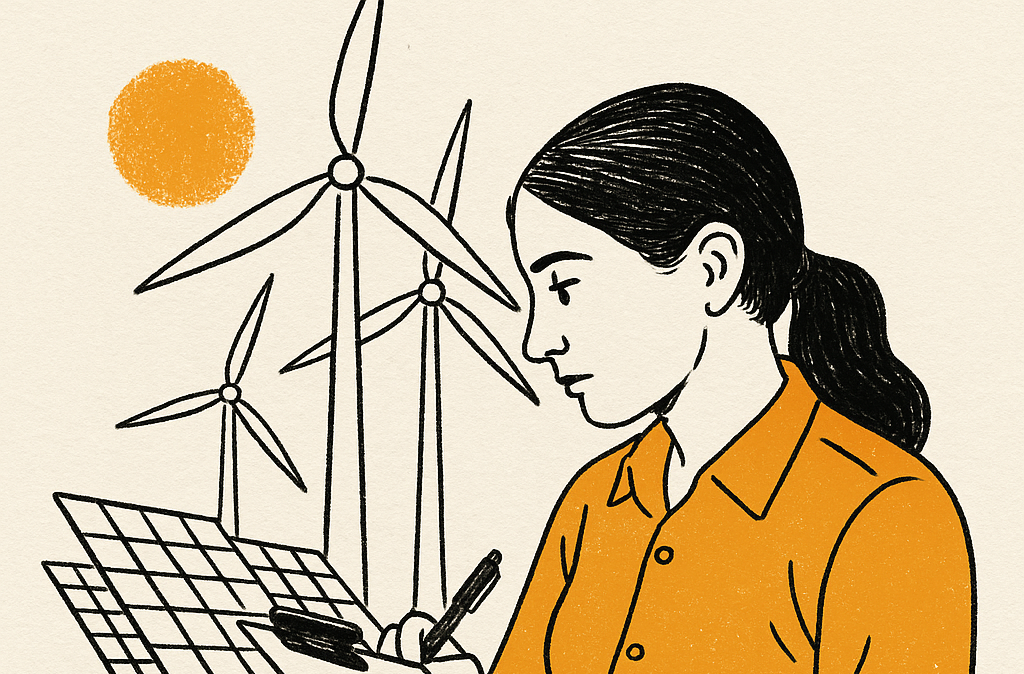
India’s commitment to generate 500 GW of non-fossil fuel energy by 2030 has created an urgent need for STEM graduates. Roles in solar panel design, battery technology, green hydrogen systems and energy storage solutions are rapidly expanding.
Institutions like TERI and industry leaders like ReNew Power and Adani Green Energy are partnering with engineering colleges for research and hiring. STEM-trained youth are finding work in solar installations, smart grid design, wind energy logistics and even carbon offsetting analytics.
4. Healthcare, Pharmaceuticals and Bio-Sciences
Why It’s Scaling:
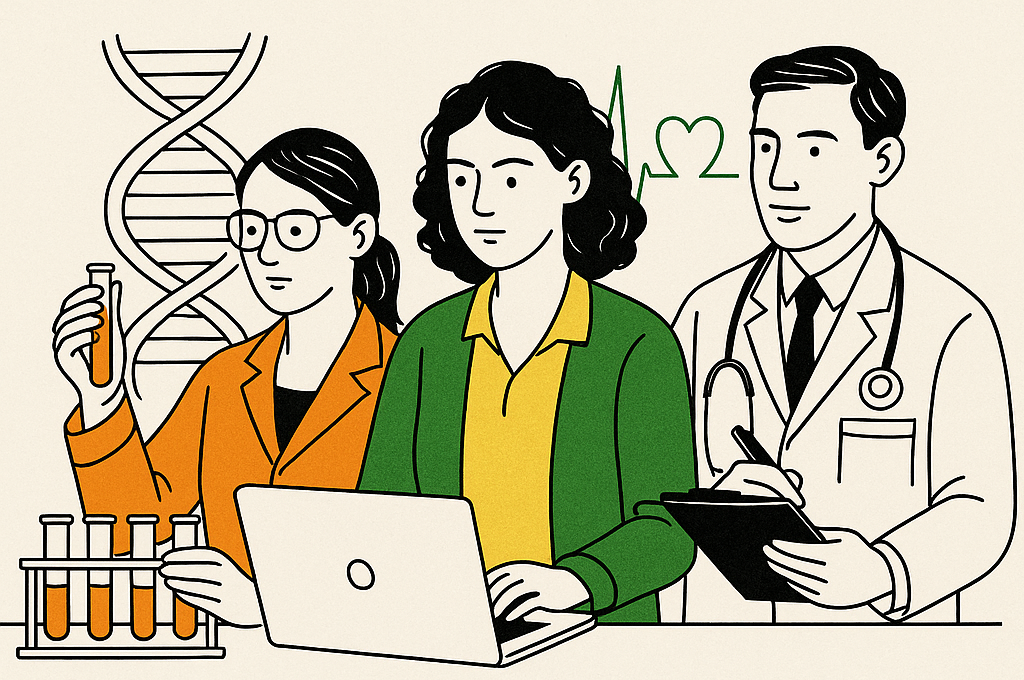
The COVID-19 pandemic accelerated hiring in biotech and health-tech. India’s robust generic drug industry is now complemented by a growing interest in vaccine research, diagnostics, digital health platforms and personalised medicine.
Biotech graduates, lab technicians, data analysts, and clinical trial professionals are increasingly absorbed by pharma companies, hospitals and research labs. Technologies like CRISPR, telemedicine and wearable health devices need STEM-literate minds who can build, test and interpret.
Smile Foundation’s own programmes have responded to this trend. Through its STeP initiative, the Foundation has added healthcare skilling modules such as General Duty Assistant (GDA), patient care and digital record management. Many underserved youth, especially women, now receive hands-on training to support clinics, nursing homes and diagnostic labs.
5. Fintech and Data Analytics
Why It’s Exploding:
As India becomes one of the world’s fastest-growing digital economies, the need for data scientists, business analysts and AI engineers is soaring. STEM graduates — especially those comfortable with mathematics, statistics and coding — are being hired in droves by fintech firms, banks, insurance companies and consulting agencies.
Startups like Razorpay, Cred and Zerodha, along with digital arms of traditional banks, require skills in blockchain, payment processing, risk modelling and data visualization. Often, graduates from non-metro cities find new career paths here, especially when they gain exposure to applied STEM learning.
6. E-Commerce, Supply Chain and Logistics Tech
Why It’s Rising:
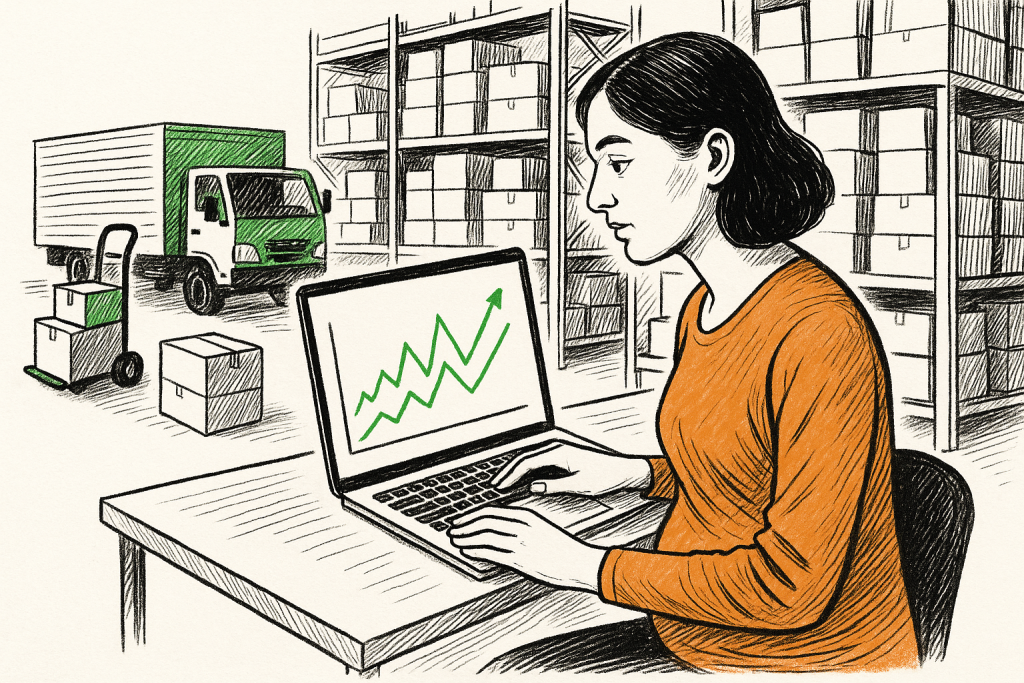
With the expansion of online commerce, logistics optimisation and warehousing management have gone high-tech. STEM youth with knowledge of process automation, data modelling and systems design are now employed in functions like supply chain analytics, route optimisation and AI-based inventory planning.
Companies like Flipkart, Amazon and BigBasket, along with B2B logistics tech startups, are hiring engineers to streamline everything from delivery networks to predictive demand analytics.
Smile Foundation has adapted its STeP programme to include logistics and e-commerce skill tracks. Modules on digital platforms, warehouse management and customer interface prepare youth for front-line tech roles in the sector — critical in Tier 2 and Tier 3 towns.
7. EdTech and Digital Learning
Why It’s Unique:
While edtech start-ups often hire educators, they also rely heavily on software engineers, UI/UX designers, AI content creators and data teams. With the rise of gamified STEM education and AR/VR platforms for immersive learning, the demand for technically sound teams is rising.
Companies like BYJU’s, Vedantu and Physics Wallah need coders and engineers who understand education. Young STEM graduates with a knack for content design and technology are finding niche roles here.
Bridging the Gap of STEM Jobs: The Role of Organisations Like Smile Foundation
While the industry side is evolving rapidly, not all STEM graduates are equally equipped. Many come from marginalised backgrounds, with limited access to industry-aligned training, exposure or confidence. This is where non-profits like Smile Foundation make a vital difference.
The STeP Programme: Empowering First-Generation Professionalsfor STEM Jobs
Smile Foundation’s STeP (Smile Twin e-Learning Programme) bridges the skilling-employment gap by equipping underserved youth — especially girls and first-generation learners — with:
Digital and computer skills
English communication
Sector-specific training (retail, digital marketing, healthcare, logistics)
Personality development and workplace readiness
In recent years, the programme has been updated to reflect industry trends, ensuring STEM-curious students can join sectors like healthcare, e-commerce and data support.
With over 13,750 youth trained and nearly 9,850 placed, Smile Foundation’s model proves that access to industry-relevant training, mentorship, and soft skills is key to helping youth enter and thrive in STEM-heavy fields.
Are We Doing Enough for STEM Jobs? Challenges Ahead
While absorption is growing, challenges remain.
1. Mismatch Between Curriculum and Industry Needs
India’s technical education often lags behind real-world application. Coding is taught in outdated languages and students are unfamiliar with modern tools or platforms unless they seek external training.
2. Urban-Rural Divide
STEM graduates from rural or semi-urban institutions often struggle with soft skills, digital fluency or exposure — putting them at a disadvantage in competitive hiring.
3. Gender Disparity
Women remain underrepresented in STEM employment despite comparable academic performance. Cultural biases, lack of workplace support and role models continue to discourage women from STEM careers.
Smile Foundation’s targeted focus on training young women in logistics, healthcare and digital commerce helps counter this by offering women a path into sectors where they are traditionally underrepresented.
The Future is STEM and STEM Jobs, But Only if It’s Inclusive
India’s journey toward becoming a $5 trillion economy hinges on how well it integrates its STEM-trained youth into its high-growth sectors. From AI to clean energy and from biotech to digital payments, the economy is being rebuilt with the hands and minds of young professionals.
But this promise can only be fulfilled if opportunity meets preparedness. Non-profits, government schemes and private sector partners must collaborate to ensure equitable access to STEM training and real-world pathways.
Smile Foundation’s work in STEM-linked skilling and livelihood training is a powerful example of how inclusion, mentorship and vision can turn marginalisation into participation.
Because the future doesn’t just belong to those who can code or calculate — it belongs to those who were given a fair chance to learn how.
Whether it’s an ASHA accompanying a mother to the health centre, an Anganwadi worker serving a hot mid-day meal or a grassroots teacher encouraging a girl to stay in school, these women are the invisible architects of India’s progress.
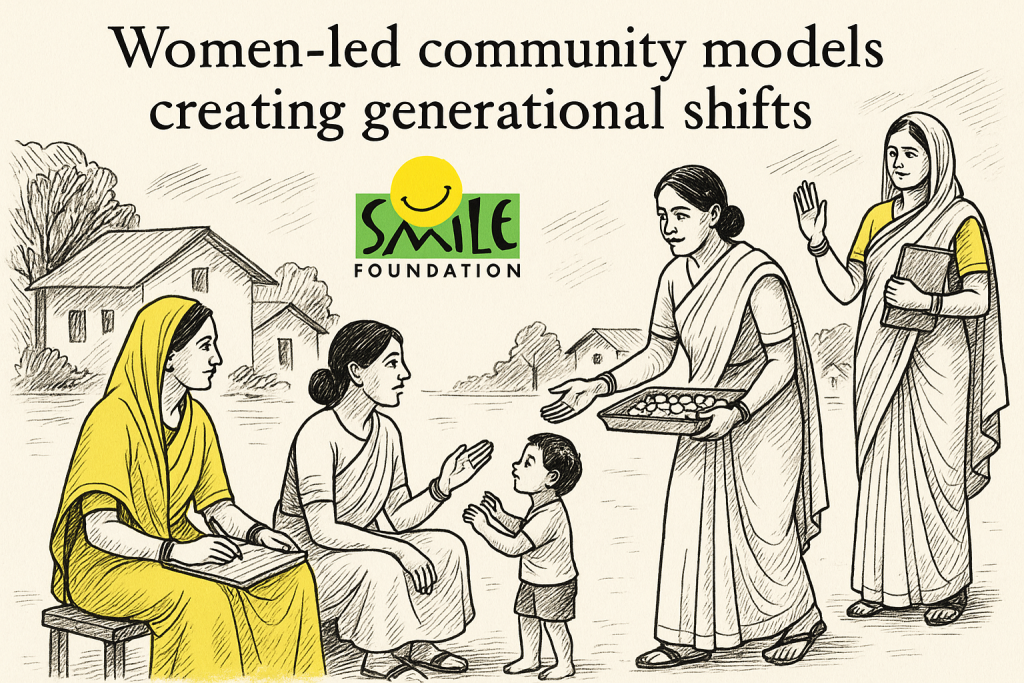
The narrative of India’s growth has often focused on infrastructure and innovation, but beneath those macro achievements lies also the story of women-led community models that are transforming generational outcomes in health, education and social well-being.
This transformation is not accidental. It stems from decades of investment in women’s leadership at the grassroots supported by public programmes like the National Health Mission and the Integrated Child Development Services (ICDS) and strengthened by civil society organisations such as Smile Foundation, which partners with community-based women workers to ensure that last-mile service delivery is not just efficient, but empathetic.
The Invisible Infrastructure of India’s Welfare System
India’s vast social sector machinery relies on nearly 3 million Anganwadi workers and helpers and over 1 million ASHAs (Accredited Social Health Activists) — each a vital link between policy and people.
An ASHA is the first point of contact for families in rural and low-income urban areas. She counsels pregnant women on antenatal care, tracks immunisations, identifies health risks and ensures referrals. Meanwhile, the Anganwadi worker manages the village’s ICDS centre providing nutrition, early childhood care and pre-school education to children under six. Together, they represent the frontlines of India’s human development mission.
Yet, their roles go beyond service delivery. They embody trust, accountability and cultural understanding — qualities that no formal institution can replicate.
In many villages, these women are the only visible representatives of the state. When a mother loses her child to malnutrition or a family faces a health crisis, it is not a distant bureaucracy that they turn to — it is the ASHA or Anganwadi “didi” next door.
As Smile Foundation’s community programmes show, this trust is what enables long-term impact. Development becomes sustainable when it is co-owned by women who live within the community and understand its pulse.
Health: When Care begins at the Doorstep
Public health outcomes in India have improved dramatically in the past two decades — maternal mortality has fallen by 75% since 2000 and institutional deliveries have become the norm in most states. But these gains were not driven by infrastructure alone. They were achieved by women — ASHAs and community health workers — who went door to door, convincing mothers to trust modern medicine.
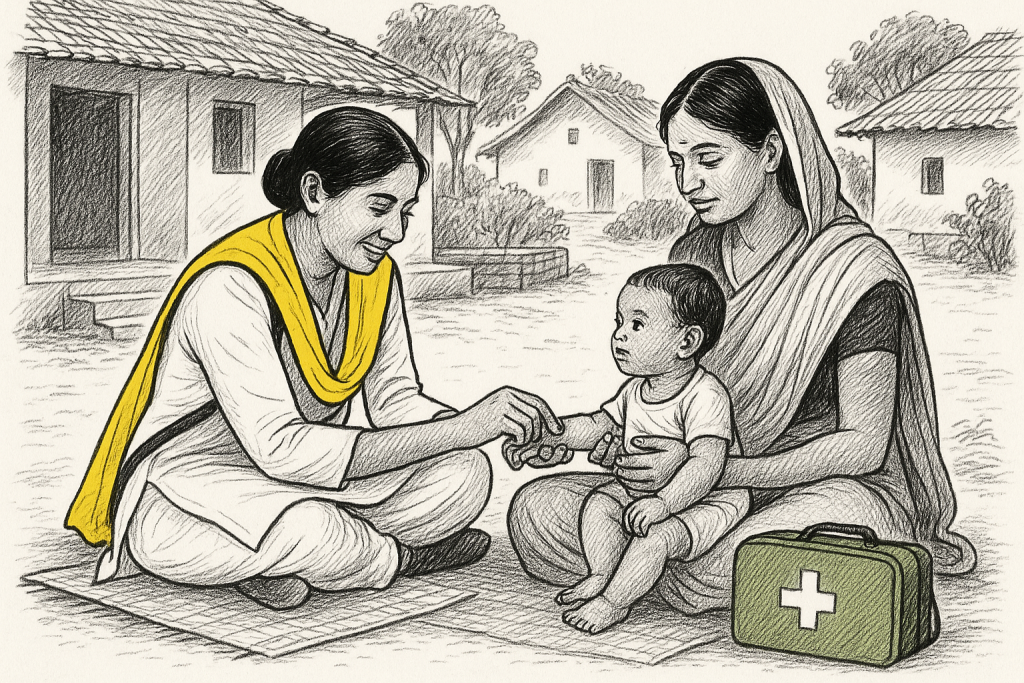
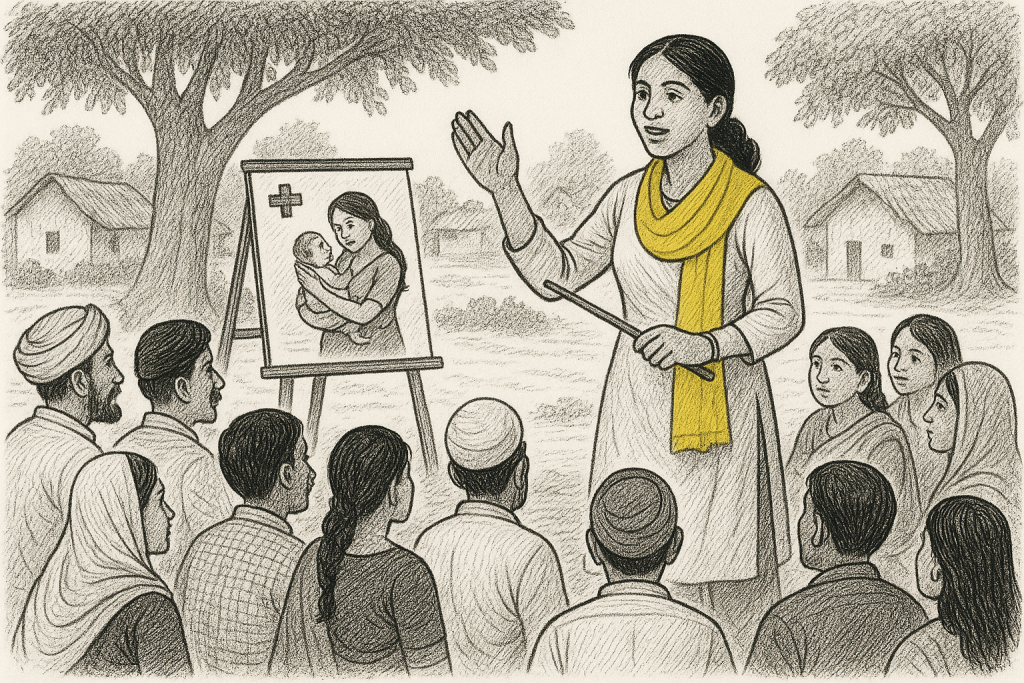
Smile Foundation’s Smile on Wheels mobile healthcare programme operates on this very principle. While its medical vans bring doctors and diagnostic services to underserved regions, its real strength lies in its community linkages. Each project is supported by local women volunteers—often ASHAs or Anganwadi workers—who mobilise families, identify high-risk cases and ensure follow-up care.
In Uttar Pradesh’s Kanpur Dehat, for example, where Smile Foundation runs a mobile health initiative, it is the women health mobilisers who track maternal and child health data, encourage vaccination and follow up on TB and anaemia cases. Many of them are ASHAs who have been trained to bridge preventive and curative healthcare.
“We realised early that you can’t just send a doctor in a van and expect people to show up,” says a Smile programme coordinator. “You need women from the community who people trust. They are the real health ambassadors.”
By strengthening this local health leadership, Smile Foundation’s model mirrors the philosophy of community-based care embedded in India’s health mission. The result is not just improved service uptake, but a deeper behavioural shift — families that now see healthcare as a right, not a privilege.
Education: The revolution in classrooms
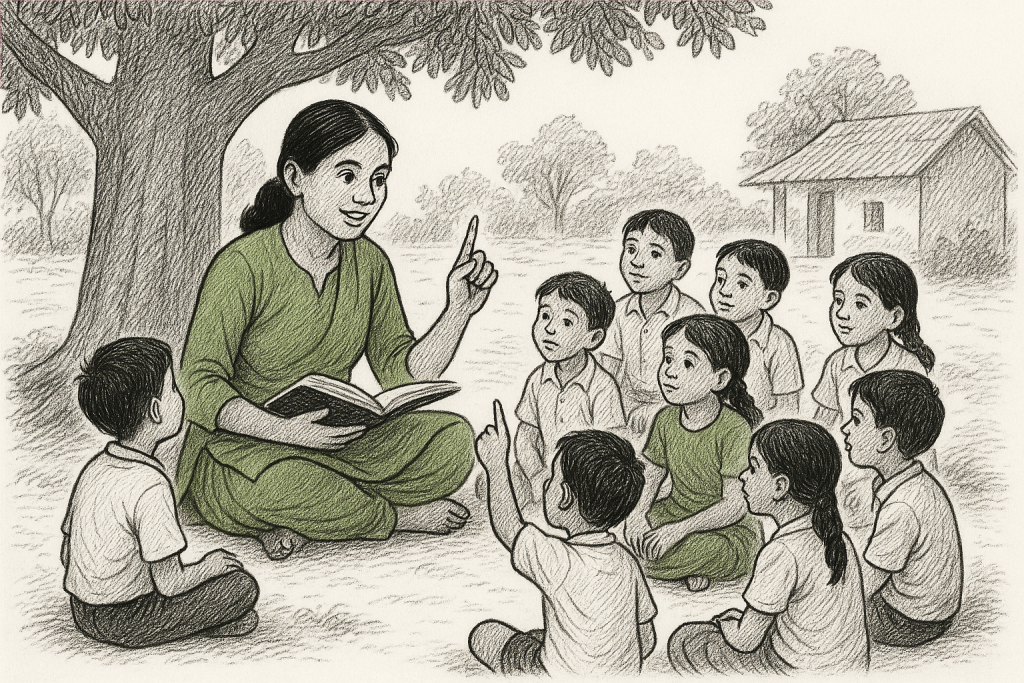
If ASHAs and Anganwadi workers anchor India’s health outcomes, grassroots women educators form the backbone of its education movement. Across Smile Foundation’s learning initiatives — from urban slums to remote tribal villages — local women serve as teachers, mentors and advocates for girls’ education.
In Smile’s Mission Education centres, women teachers are not just instructors; they are role models. Many are first-generation learners themselves, whose journeys inspire their students to dream beyond traditional boundaries.
In Ladakh’s residential learning programme for girls, the transformation is visible. Here, young girls from remote villages — where secondary schools are often days away — live and learn in a safe environment that combines academics with life skills. Most mentors and coordinators are women from the region who understand the socio-cultural context of girls’ education.
“When a girl from the village becomes a teacher, she doesn’t just teach children,” explains a Smile Foundation project lead. “She changes how the community perceives girls’ education.”
This “representation effect” is powerful. Studies have shown that female teachers increase girls’ school attendance and reduce dropout rates. But beyond data, it’s about continuity — how one generation of women nurtures the next.
In communities where early marriage or domestic responsibilities often pull girls out of school, seeing a local woman in a position of leadership sends a message more potent than any campaign slogan: education is possible, and it is powerful.
Nutrition and Early Childhood: The Anganwadi’s Everyday Impact
Step into any Anganwadi centre on a weekday morning and you’ll see India’s human development story unfold in real time. Children line up for a warm meal, mothers attend nutrition counselling and pre-school lessons blend play with learning.
At the heart of this system are Anganwadi workers, often juggling the roles of caregiver, educator and data collector. Despite modest pay and limited recognition, they are central to shaping early childhood outcomes for millions of children.
Smile Foundation’s work frequently intersects with these centres — whether through nutrition drives, capacity-building workshops or digital learning initiatives that support Anganwadi workers with better tools. In several states, Smile has introduced solar-powered digital classrooms, enabling both teachers and Anganwadi workers to access quality learning materials even in off-grid areas.
This integration of women-led community work with technology has shown promising results. In regions of Rajasthan and Madhya Pradesh, digital modules on nutrition, hygiene and early learning have helped Anganwadi workers improve both engagement and outcomes.
“Technology helps, but what really matters is the woman behind it,” says a Smile education coordinator. “These workers are not just delivering content; they’re shaping childhood experiences that define entire generations.”
Economic Agency and Social Recognition
For many ASHAs and Anganwadi workers, their work is the first opportunity to earn an income and gain public recognition. This financial independence often catalyses broader social change — allowing women to participate in decision-making within their households and communities.
“Their progress is my biggest award” – teacher at MITWA
In the rural government school of a small town in Odisha, 14-year-old Nisha sits on the front bench, her notebook filled with carefully drawn diagrams of human anatomy. Her curiosity is boundless, but her access to science role models is not. Her only science teacher — a kind but overworked man nearing retirement — teaches physics, chemistry and biology all in one week. There is no female science teacher in her school. There never has been.
Nisha’s story is echoed across thousands of schools in India. Despite decades of investment in education, only about 13.5% of institutions in India have a female science teacher, according to this study which has substantial impact on the associated skewed number of STEM female teachers in schools.
This is a reflection of how gender intersects with access, aspiration and agency. When girls rarely see women teaching science, the idea of pursuing it as a career becomes distant, even unimaginable.
At its core, the lack of female science teachers is a visibility problem. It’s about who stands at the blackboard, who demonstrates an experiment, who answers the questions that shape how young people perceive knowledge and power. Representation in the classroom is not symbolic—it’s structural.
Why it Matters: The Effects of Representation
A teacher does more than teach. She validates, motivates and models what learning looks like. In science education, long seen as a male-dominated field, having women teachers changes the social script.
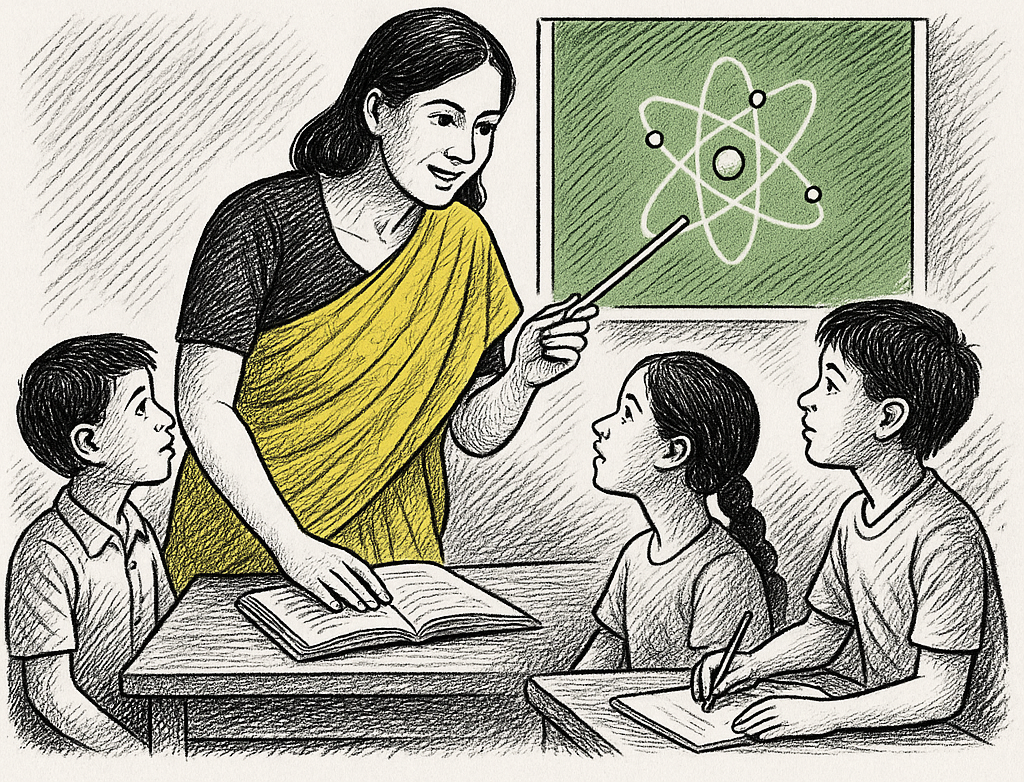
Research consistently shows that when girls are taught by female science teachers, their participation and performance in STEM subjects increase. But the impact goes beyond grades. It affects belief systems. A girl who sees a woman explaining Newton’s laws begins to see intelligence, authority and scientific reasoning as gender-neutral attributes.
In many schools, particularly in India’s smaller towns and villages, science is still perceived as ‘difficult’ or ‘not for girls.’ Parents often encourage girls to focus on subjects that seem ‘safer’ or more traditional like languages or home science. The absence of women science teachers reinforces these perceptions.
The result is a feedback loop: few women teachers mean fewer girls pursuing science degrees, which in turn means fewer women returning to teach. Breaking this loop requires deliberate, systemic intervention—something that civil society organisations like Smile Foundation are helping catalyse at the community level.
Barriers that Keep Women out of Science Teaching
The reasons for this gender gap are both structural and cultural.
1. Educational pipeline bottlenecks
In many regions, especially in low-income and rural communities, fewer women complete undergraduate or postgraduate degrees in science — often due to family constraints, early marriage or limited local colleges offering STEM courses. Without this qualification base, the pool of women eligible to teach science shrinks drastically.
2. Institutional bias and recruitment
Schools often prefer male teachers for science subjects, citing perceptions around discipline, mobility or technical competence. For example, a woman teacher may be considered less capable of managing a lab or taking students on field visits. These biases are subtle but widespread.
3. Work-life pressures
Science teaching, particularly in secondary schools, often involves additional administrative responsibilities — exam supervision, lab preparation and extracurricular activities—that require longer hours. For women juggling household or caregiving duties, this becomes a deterrent.
4. Rural assignment reluctance
For many qualified women, rural or semi-urban postings are challenging due to safety concerns, lack of transport or inadequate facilities. This skews gender balance even further in the very regions where representation is most needed.
5. Social conditioning
The larger societal belief that men are better at science continues to influence both student and teacher aspirations. When women internalise these stereotypes, they may opt for subjects seen as more appropriate or manageable.
These challenges are not insurmountable but they require a shift from viewing women teachers as beneficiaries to viewing them as agents of systemic change.
Smile Foundation Approach: Building Confidence through Classrooms
Over the past two decades, Smile Foundation has worked in education, health and livelihood sectors with one consistent thread — community-led empowerment. Within its Mission Education programme, which spans more than 25 states, the organisation focuses on holistic learning models that prioritise inclusion, quality teaching and local ownership.
A significant component of Smile’s education work involves supporting women educators, especially in STEM disciplines. Across many of its project schools, urban learning centres, digital classrooms and residential programmes for girls, Smile Foundation has seen how a single woman teacher can transform the learning environment for hundreds of children.
Take, for instance, Smile Foundation’s residential learning programme for girls in Ladakh. In this mountainous region, secondary schools are often several kilometres apart, and teachers frequently rotate in and out due to harsh conditions. Here, local women trained and supported by Smile serve as both educators and mentors. Many were once students in similar villages; now, they teach physics and environmental science, bridging both the cultural and gender divide.
As one teacher shared:
“When girls see me teaching science, they realise it’s not something that belongs only to boys. It belongs to anyone who is curious.”
This approach, rooted in local leadership and trust, has helped Smile Foundation create a network of women educators who are not only teaching science but redefining what it means to teach with empathy, relevance and community connection.
Changing the Narrative: Women as Science Role Models
It’s easy to underestimate the symbolic power of a woman with chalk in hand, explaining the solar system or a chemical equation. In villages where girls often drop out after primary school, this image itself is revolutionary.
Smile Foundation leverages this potential by mentoring local women who aspire to become teachers. Many of them start as community volunteers or tutors in Smile’s learning centres, receiving training in child pedagogy, STEM basics and digital literacy. Through this process, women not only gain professional skills but also emerge as visible role models.
In some Smile-supported schools, female teachers have introduced low-cost science experiments using local materials making science relatable and hands-on. These activities demystify concepts and encourage both girls and boys to participate actively.
When girls see women confidently teaching science, they internalise that confidence themselves. And when parents see women in respected teaching roles, their perception of girls’ education changes too.
Building Ecosystems of Equity
Creating gender balance in science education is not merely about hiring more female teachers, it’s about building an ecosystem where women can thrive as educators. Smile Foundation’s programmes address this through three strategic areas:
1. Training and capacity-building
Smile runs regular teacher development workshops focused on STEM pedagogy, digital tools and classroom leadership. These sessions also emphasise gender sensitivity helping teachers counter bias in their own teaching methods.
2. Technology-enabled teaching
With the introduction of solar-powered digital classrooms in remote areas, Smile Foundation has empowered both male and female teachers to access quality educational content. Women teachers, especially in rural settings, have found these digital aids invaluable, they enable them to explain complex scientific concepts with visual clarity, improving engagement and confidence.
3. Community sensitisation
Through parent–teacher meetings and community outreach sessions, Smile encourages families to support girls pursuing science. In many regions, this has led to tangible outcomes: higher attendance, delayed marriage age and greater continuity from primary to secondary education.
Together, these interventions form a pipeline of empowerment, from student to teacher to role model, creating generational shifts in how girls relate to science.
The Long Shadow of Underrepresentation
The scarcity of female science teachers does not just affect classrooms, it echoes through India’s broader STEM ecosystem. Women remain underrepresented in scientific research, technology jobs and leadership positions. The seeds of this imbalance are sown early, in schools where girls rarely encounter women who teach or practice science.
Without visible female mentors, girls’ participation in science subjects declines sharply after secondary school. According to various education surveys, female enrolment in STEM at the tertiary level remains disproportionately low, hovering around 30–35% nationally.
What begins as an absence in the classroom ends as a gap in the workforce. By the time women reach the professional stage, the gender divide in science has already hardened into habit. This makes the classroom, especially the presence of female science teachers, a frontline site for gender transformation.
When girls have women mentors early on, they are more likely to pursue higher education in STEM fields and challenge societal expectations that limit their professional scope.
Strengthening women’s participation in education
Government initiatives like Beti Bachao Beti Padhao, the National Education Policy (NEP) 2020 and STEM for Girls have all recognised the importance of gender inclusion in education. However, there remains a disconnect between vision and implementation, particularly in teacher recruitment and training.
To strengthen women’s participation in science education, policymakers could focus on:
Targeted fellowships for women pursuing science degrees who commit to teaching in underserved areas.
Residential training colleges in rural districts to make science education accessible to women closer to home.
Safety, transport and housing support for female teachers posted in remote areas.
Public–civil society partnerships that enable organisations like Smile Foundation to scale their models of local women educators and mentorship-driven teaching.
Bridging this gap is not just about gender justice, it’s about ensuring the quality and continuity of science education itself.
Generational change begins at the blackboard
In one of Smile Foundation’s Mission Education centres in Uttar Pradesh, a mural painted by the students reads: “Science is the language of the future, and the future belongs to everyone.”
This sentiment captures what’s at stake. When only 13% of India’s schools have female science teachers, millions of girls are effectively being told that science is not theirs to own. Yet, when even one woman stands before a class and explains the world through equations, experiments and empathy, the message changes.
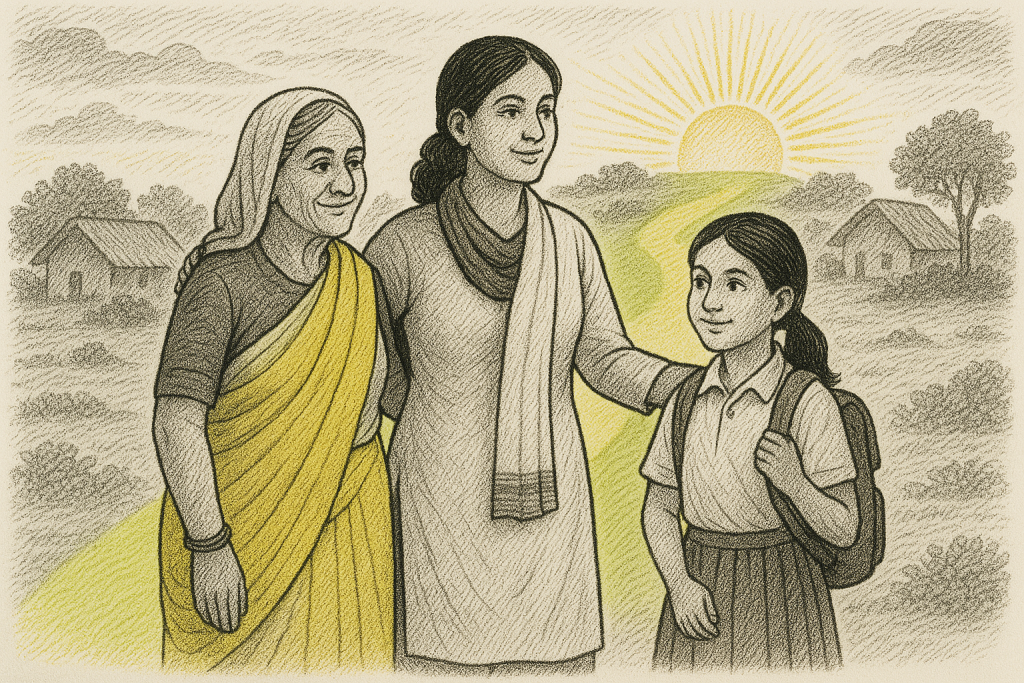
The grandmother who once collected water at dawn now watches her daughter teach health and nutrition as an ASHA worker and her granddaughter dream of becoming an engineer. This intergenerational chain of visibility is what truly shifts mindsets.
It is not about producing a few exceptional women in science; it is about normalising their presence everywhere, from Anganwadi centres to laboratories, from classrooms to policymaking boards.
Corporate Social Responsibility (CSR) in India has come a long way since it was formalised under the Companies Act, 2013. Today, nearly every major company speaks of women empowerment as a priority area in their CSR portfolio. From micro-enterprise development to digital literacy drives, the corporate narrative around empowering women has grown both louder and broader.
Despite the proliferation of projects, India’s female labour force participation remains below 30%, rural women continue to carry unpaid care burdens and gender disparities in education and health persist. The issue is not a lack of intent, but of design. Too many CSR initiatives treat empowerment as a deliverable rather than a process — a set of measurable outputs rather than a sustained shift in power and agency.
The question, then, is not whether corporations are investing in women—but whether they are doing so in ways that lead to long-term transformation.
The Shift to Capacity
The most effective CSR models for women empowerment are those that move beyond charity-driven interventions — what could be called ‘relief CSR’ —to capacity-based CSR that strengthens systems, skills and self-belief.
Charity models, while useful in emergencies, often provide short-term benefits: a sewing machine, a skills course or a stipend that helps women temporarily. But without access to markets, mobility, decision-making and continued mentorship, these gains seldom translate into lasting change.
The most transformative models, in contrast, focus on building agency, not just income. They empower women to make informed choices—about their work, their health, their families and their futures.
As Smile Foundation’s women-centric initiatives demonstrate, empowerment is not a linear journey but a layered one. A woman’s ability to earn or lead depends as much on her health, education and social support systems as it does on technical skills. Smile’s approach — combining education, livelihood and healthcare under one umbrella of community-driven development offers a blueprint for how CSR can sustain empowerment beyond project timelines.
The Four Pillars of Sustainable CSR for Women Empowerment
From Smile Foundation’s experience and the broader evolution of India’s CSR ecosystem, four critical pillars emerge for building long-term empowerment models.
1. Education as the foundation of agency
True empowerment begins in the classroom — not in the boardroom or the marketplace. Girls who complete secondary education are more likely to delay marriage, participate in the workforce and make autonomous health decisions.
However, CSR investments in education often focus narrowly on infrastructure—building toilets, distributing books or donating smartboards. While these are important, empowerment requires continuity and mentorship, not just facilities.
Through its Mission Education programme, Smile Foundation works with underprivileged children, especially girls, to ensure holistic learning that includes academic support, life skills and community engagement. Teachers, many of them local women, serve as mentors and role models, creating a multiplier effect within communities.
For example, in rural Madhya Pradesh, Smile’s digital classrooms have not only improved attendance among girls but also inspired parents to see education as a pathway to independence rather than a burden. This shift in perception, slow but steady, is the first step towards lasting empowerment.
Education-focused CSR that integrates female teacher recruitment, parental engagement and local leadership thus builds an ecosystem that outlives project cycles.
2. Livelihoods that go beyond employability
CSR programmes often equate women’s empowerment with vocational training. Stitching, candle-making or beautician courses dominate the landscape, but the challenge lies in sustainability. Many women trained under such schemes struggle to find consistent income because local markets are saturated or supply chains are male-dominated.
The most effective CSR models therefore extend support beyond training connecting women to microcredit, cooperatives or market linkages.
Smile Foundation’s livelihood projects under Smile Twin e-Learning Programme (STeP) follow this integrated approach. Women are trained not only in employable skills — retail management, IT, customer service — but also in soft skills like financial literacy, communication and digital awareness. Crucially, the programme links trainees with employers and local enterprises, ensuring real economic mobility.
In Delhi’s Seemapuri, for instance, STeP graduates have moved from informal work to full-time employment in retail chains and healthcare companies, often becoming primary earners in their households. For many, this is the first taste of financial independence, and with it, dignity.
Long-term livelihood CSR must view women as entrepreneurs and decision-makers, not just as beneficiaries. It must equip them to navigate both the workplace and the world.
3. Health and nutrition: The invisible enabler
Women’s empowerment cannot be sustained without women’s health. Yet, health remains the most underfunded area in corporate philanthropy. While companies fund skill training or education, they rarely address the foundational barriers — malnutrition, reproductive health issues or lack of access to preventive care that keep women from thriving.
Smile Foundation’s Smile on Wheels programme — mobile healthcare units serving remote communities addresses this gap head-on. Many of its frontline health volunteers are women, often trained as community mobilisers or ASHA-like workers. They deliver primary care and health education at the doorstep, freeing women from the time and cost of travelling to faraway clinics.
In Uttar Pradesh, for example, Smile’s mobile health initiative has improved maternal health outcomes and reduced anaemia prevalence through consistent follow-up and counselling. These health interventions indirectly support empowerment by ensuring that women are well enough to participate in education and livelihood programmes.
CSR models that integrate healthcare, nutrition and sanitation into empowerment projects create stronger, more resilient outcomes because a woman’s ability to lead depends first on her ability to live well.
4. Community and family inclusion
Empowerment is a collective negotiation. A woman’s progress is often constrained, or supported, by her immediate ecosystem: her family, her peers, her village.
The most enduring CSR models recognise this social complexity and invest in community sensitisation. Smile Foundation’s projects consistently engage men, local leaders and parents to shift attitudes around women’s work and mobility.
In Rajasthan, for instance, Smile’s livelihood initiative involved fathers in counselling sessions that explained the economic and social benefits of women’s employment. Over time, these conversations have changed how families perceive working daughters or wives — not as transgressors, but contributors.
This community-based approach aligns with what development practitioners call normative change. When CSR programmes invest in changing mindsets, they ensure that empowerment doesn’t collapse once funding stops.
The long view: Empowerment as a continuum
What distinguishes impactful CSR from performative CSR is time horizon. Empowerment is not achieved in six months or even two years — it unfolds across generations. A girl who receives support today may only fully exercise her agency a decade later, when she chooses her career, delays marriage or educates her daughter differently.
That’s why long-term CSR models build continuity and convergence. Instead of isolated interventions, they create interconnected pathways — education leading to employment, employment supported by health, health reinforced by community awareness.
Smile Foundation’s work exemplifies this continuum. A girl who begins her journey in a Smile Mission Education centre may later benefit from digital training under STeP, access healthcare through Smile on Wheels and participate in community workshops on leadership or financial planning. The organisation’s multi-sector model allows women to evolve, not just survive.
This approach mirrors the UN Sustainable Development Goals’ (SDGs) principle of interdependence where quality education (SDG 4), gender equality (SDG 5), good health (SDG 3) and decent work (SDG 8) reinforce each other.
Corporates designing CSR strategies would do well to internalise this logic: empowerment is an ecosystem outcome.
What doesn’t Work and Why
While success stories abound, many CSR initiatives still fall short of their transformative potential. Common pitfalls include:
1. Tokenism and short project cycles
Too often, companies launch short-term empowerment programmes tied to financial years rather than community needs. Once budgets reset, so does the project. Without sustained engagement, progress reverses.
2. Lack of localisation
A one-size-fits-all model rarely works. Women’s realities differ vastly between urban slums, tribal areas and semi-rural communities. Programmes that fail to adapt to local norms, languages or aspirations struggle to gain trust.
3. Ignoring unpaid work
Many empowerment programmes overlook the enormous burden of unpaid labour that women carry — caregiving, cooking, cleaning, water collection. Without addressing this time poverty, even the best training or employment opportunity can falter.
4. Measuring outputs, not outcomes
Counting beneficiaries or training sessions may look impressive in reports, but real empowerment is reflected in agency — the ability to make and act upon decisions. CSR models must therefore adopt metrics that capture behavioural and attitudinal change.
5. Missing the emotional dimension
Women need confidence, not just capital. Successful models invest in self-esteem, leadership skills and peer networks that sustain women long after projects end.
Corporate Lessons from the Field
Several lessons stand out from CSR experiences across India, reinforced by Smile Foundation’s on-ground work:
1. Build from within
Empowerment is most sustainable when it grows from local leadership. Hiring and training community women as educators, facilitators or health workers ensures continuity and cultural alignment. Smile Foundation’s practice of recruiting from within the community strengthens trust and ownership.
2. Invest in multi-year programmes
Short projects rarely produce deep change. Long-term CSR commitments — spanning five to ten years — allow organisations to evolve with the community and adapt strategies as realities shift.
3. Forge partnerships
No single entity can address gender inequality alone. Collaborations between corporates, NGOs and government schemes (like NRLM or ICDS) amplify reach and reduce duplication.
4. Prioritise mentorship
For women entering work or leadership roles for the first time, mentorship provides guidance and emotional resilience. Corporate volunteers can play a vital role here, bridging professional expertise with grassroots ambition.
5. Focus on intergenerational impact
CSR models that support both mothers and daughters—through health, education and livelihoods create enduring shifts. Smile Foundation’s initiatives often involve entire families, ensuring that empowerment is not temporary but hereditary.
Every conversation about India’s demographic dividend begins with the same promise: the world’s largest youth population will drive the next wave of innovation, technology and economic growth. But millions of children in India cannot read with comprehension or perform basic arithmetic even by the end of primary school.
This is a skills crisis, one that begins in the earliest years of schooling and extends into the workplace. Before India can talk about coding bootcamps, artificial intelligence or green jobs, it must talk about reading, counting and comprehension.
No country can have a skilled workforce without a literate childhood.
What FLN Really Means
Foundational Literacy and Numeracy (FLN) is often understood as the ability to read, write and do basic math by the end of Grade 3. But in reality, it’s the ability to process information, reason logically and solve everyday problems — the cognitive and emotional roots of all later learning.
When a child reads a story, she is not just decoding letters; she is building the capacity for comprehension, critical thinking and creativity. When she solves a word problem in math, she is not just manipulating numbers; she is learning to apply logic, recognise patterns and make predictions — the very skills that define employability and STEM capability later in life.
FLN is therefore not the first step of education; it is the foundation on which every other step depends.
The Employability Gap begins in Primary School
India’s employability debate often focuses on higher education and vocational training. Reports regularly highlight that engineering graduates lack applied skills or that industry exposure is limited. But by the time a young person enters a skill development centre or a university, the roots of the problem are decades old.
The World Bank’s Learning Poverty indicator suggests that a significant portion of Indian children struggle with reading comprehension by age 10. This means millions enter adolescence without the basic learning skills needed to master complex subjects like science, mathematics or digital technology.
The employability crisis is not created in colleges — it begins in Class 3.
Without strong foundational literacy, vocational courses become rote memorisation. Without basic numeracy, financial literacy or technical training remain abstract. And without early comprehension, the very idea of lifelong learning becomes out of reach.
FLN and the STEM Connection
STEM (Science, Technology, Engineering and Mathematics) education doesn’t start with robotics kits or coding labs. It starts with curiosity — the ability to observe, ask questions, make inferences and test ideas. And this curiosity is cultivated through language and numeracy in early years.
Language builds logic. When a child reads instructions, stories or informational text, she learns structure and reasoning — core STEM competencies. Math builds precision. When she measures, counts or estimates, she’s learning to model real-world problems.
Together, literacy and numeracy form the cognitive scaffolding of scientific thinking.
So when India aspires to produce the next generation of innovators, coders and scientists, it must begin not with college curricula but with the FLN mission in its primary schools.
Why India’s FLN Focus Matters Now
India’s National Education Policy (NEP) 2020 recognised this urgency, identifying FLN as the single most critical learning goal. The NIPUN Bharat Mission (National Initiative for Proficiency in Reading with Understanding and Numeracy) aims to ensure that every child in Grade 3 and below attains foundational learning outcomes by 2026-27.
If children don’t master basic literacy and numeracy early, they struggle throughout school, and drop out before they acquire employable or STEM-relevant skills.
Execution must reach the last mile, particularly in rural and low-income urban schools where infrastructural gaps and teacher shortages persist.
This is where civil society and CSR interventions play a crucial role — not as parallel systems, but as complementary, localised engines of innovation.
Smile Foundation’s Approach: Laying Strong Roots Early
Through its education initiatives like Mission Education and digital learning classrooms, Smile Foundation has long understood that lasting empowerment begins with foundational learning. Across its learning centres, Smile integrates early literacy and numeracy into holistic education that combines academic, digital and life skills.
In remote and under-resourced communities, Smile’s early learning model focuses on three pillars:
1. Contextual learning
Children learn through stories, objects and examples rooted in their daily lives — helping them grasp abstract concepts through tangible experiences. A counting exercise might use grains, pebbles or local market transactions. A reading activity might use stories featuring local names and cultural references. This contextual relevance bridges comprehension gaps and keeps children engaged.
2. Teacher empowerment
Teachers in Smile’s network receive continuous capacity building to design and deliver FLN-focused activities. Many are women from within the community who bring empathy and relatability into the classroom. With structured training in child pedagogy and assessment, they help children move from rote to reasoning.
3. Digital integration
Through solar-powered digital classrooms, Smile Foundation uses technology to enhance foundational learning. Interactive modules on letters, numbers and phonics make learning more engaging and inclusive, particularly for first-generation learners. Digital tools also allow teachers to track progress and personalise support for children who fall behind.
Stronger literacy and numeracy skills at the primary level lead to higher confidence and retention at the secondary level — setting children on a trajectory towards employability and STEM readiness.
From FLN to Life Skills: The Multiplier Effect
When a child gains mastery over reading and numbers, the benefits multiply beyond academics. She becomes a confident communicator, a problem-solver and a critical thinker. These are precisely the soft and transferable skills that employers and industries value most.
For instance:
A child who learns to follow written instructions becomes an adult who can interpret technical manuals or code documentation.
A child who understands patterns in arithmetic becomes an adult who can manage finances or data-driven decisions.
A child who articulates her thoughts in writing becomes an adult who can lead teams, present ideas and collaborate.
The pathway from FLN to employability is therefore not linear but exponential — each layer of literacy and numeracy strengthens higher-order capabilities like reasoning, communication and adaptability.
The Rural STEM Paradox
Rural India often features prominently in conversations about the digital divide. But what’s less discussed is the STEM divide — the lack of access not just to technology, but to foundational skills that enable participation in science and innovation.
In many rural classrooms, children are introduced to science and mathematics as rote subjects, stripped of curiosity or connection. Without foundational comprehension, even bright students find STEM intimidating.
Smile Foundation’s interventions in such communities have shown that early STEM exposure, when coupled with FLN, can change this trajectory. In regions where Smile has introduced basic science experiments and digital math games, attendance and participation — especially among girls — have risen sharply.
One teacher from Smile’s centre in Rajasthan noted,
“When children learn to measure ingredients for a recipe or calculate rainfall for crops, math stops being abstract. It becomes part of life — and suddenly, they want to learn more.”
This is the missing link in India’s STEM pipeline: making foundational skills meaningful in children’s lived realities.
Girls, FLN and the Employability Chain
The connection between FLN and women’s economic participation is especially critical. Data shows that girls who master foundational literacy are more likely to stay in school, pursue higher education and join the workforce.
But in many low-income households, girls still face interruptions in schooling due to domestic responsibilities or social norms. Without strong literacy skills early on, they struggle to catch up later — reinforcing gendered inequities in both education and employment.
Smile Foundation’s residential learning programme for girls in Ladakh and other regions has demonstrated how sustained support in literacy and numeracy can reverse this pattern. Girls who once hesitated to read aloud now confidently handle mathematics, digital tools and science lessons — skills that expand their career horizons.
By combining FLN with life skills and digital literacy, Smile’s model creates a continuum of empowerment: from learning to earning, from classrooms to careers.
The Private Sector’s Role: Investing in Learning Foundations
Corporates that invest in skill development or employability programmes often overlook early education. But as data increasingly shows, the return on investment in early foundational learning is far higher than late-stage training.
A company funding a coding workshop for adolescents may impact a few hundred students. The same investment in early-grade FLN can influence thousands and its benefits last decades.
Forward-looking CSR models are beginning to reflect this shift. Many are partnering with NGOs like Smile Foundation to support early learning centres, digital classrooms and teacher training — recognising that the foundation for future engineers, scientists and entrepreneurs is built in the first eight years of schooling.
For the private sector, this approach also aligns with SDG 4 (Quality Education) and SDG 8 (Decent Work and Economic Growth), linking education and employability in a continuum rather than a sequence.
FLN and the New Definition of Employability
As automation and AI reshape industries, the definition of employability is changing. The jobs of tomorrow will value adaptability, reasoning and lifelong learning — all of which trace back to foundational competencies.
In this context, FLN is not a basic skillset; it’s a future skillset.
An employee who can read complex instructions, analyse information and apply logic is more resilient in an evolving workplace. The seeds of that capability are planted in early childhood education.
A student who once learned to count objects and recognise patterns is better prepared to understand algorithms or manage data later in life. The same numeracy that powers arithmetic in Grade 2 fuels analytics in adulthood.
Thus, the pathway from FLN to employability is not a leap — it’s a continuous learning arc, beginning with the simplest cognitive habits.
From outputs to outcomes
India’s education ecosystem is crowded with initiatives, but the challenge lies in moving from access to achievement. It’s not enough for children to attend school — they must learn while there.
Effective FLN programmes must therefore focus on outcomes, not just enrolment. Tools like learning assessments, teacher mentoring and technology-based tracking can help monitor progress meaningfully.
Smile Foundation’s use of simple yet effective digital tools in its classrooms shows that when children’s progress is measured consistently, learning gaps can be addressed in real time before they widen irreversibly.
For CSR and philanthropic partners, this approach ensures accountability and impact. It’s no longer about counting classrooms built; it’s about counting comprehension gained.
The Long-term View: FLN as National Infrastructure
If roads and power lines are the physical infrastructure of a country, FLN is its cognitive infrastructure. It fuels every sector — from manufacturing to IT, from research to entrepreneurship.
India’s ambition to become a global knowledge economy cannot rest on tertiary education alone. It must rest on a strong foundational learning system that produces a generation of thinkers, doers, and innovators who can learn, unlearn and relearn throughout life.
Smile Foundation’s early education and digital inclusion initiatives demonstrate how this infrastructure can be built inclusively — not from the top down, but from the ground up.
In this sense, FLN is both an educational mission and an economic one.
Building India’s Learning Roots
Every skyscraper stands only as tall as its foundation allows. The same is true for nations. Without foundational literacy and numeracy, the structure of employability and innovation cannot rise.
India’s future coders, engineers, scientists and entrepreneurs are sitting in today’s primary classrooms. Their curiosity must be nurtured, their comprehension strengthened and their confidence sustained.
As Smile Foundation’s work continues to show, the first investment in employability is not in resumes or training modules — it’s in reading stories, counting marbles and learning to learn.
And until every child in India reads, reasons and dreams with confidence, the nation’s true potential will remain untapped.
How Women Empowerment Reduces Gender-Based Violence
Trust is the invisible infrastructure of every economy. It allows money to move, contracts to hold and cooperation to thrive. In patriarchal societies, however, trust is rarely neutral. It’s distributed along lines of gender, age and authority.
For generations, women — especially in rural or traditional communities—have been excluded from financial decision-making not because they lacked ability, but because they lacked trust. They were considered too naïve to manage money, too vulnerable to fraud or too dependent on men to participate in financial systems.
Digital payments, over the past decade, have started to erode this imbalance. What began as a convenience tool in urban India — UPI transfers, mobile wallets and QR codes has become a gateway to recognition and independence for millions of women in rural and semi-urban settings.
By enabling direct, traceable, and transparent transactions, digital payments are rebuilding trust from the ground up—between women and institutions, women and their families, and women and their own sense of agency.
From Cash to Confidence
In patriarchal settings, control over cash often translates to control over people. In many families, even if women earn, their wages are handed over to male relatives. Savings are hidden, decisions deferred and mobility restricted. Cash, while tangible, has also been a tool of control — subject to scrutiny, suspicion and sometimes even confiscation.
Digital payments alter this equation subtly but significantly. When money moves digitally into a woman’s account, wallet or app — it introduces a form of autonomy that is verifiable yet private. The transaction is visible to systems but not necessarily to gatekeepers within the household.
For example, under India’s direct benefit transfer (DBT) programmes, government subsidies ranging from maternal health incentives to LPG subsidies are deposited directly into women’s bank accounts. With Jan Dhan–Aadhaar–Mobile (JAM) integration, women no longer need an intermediary to access what is rightfully theirs.
This shift from cash to digital has done something extraordinary: it has made women financially visible without making them socially vulnerable.
One woman from Madhya Pradesh put it succinctly in a field interview:
“When money comes to my phone, my husband believes I have earned it. When it came in cash, it was always questioned.”
That is the confidence digital money builds — not just in technology, but in women themselves.
The Digital Handshake: How Technology Builds Credibility
At its core, every financial transaction is a handshake of trust. Traditional banking relied on physical signatures, paper trails and face-to-face validation. Digital systems replace those with authentication, passwords and identity verification.
For many women, especially those excluded from formal credit systems, this digital handshake is their first encounter with institutional trust.
Once a woman uses her fingerprint or OTP to authenticate a transaction, she establishes proof of reliability — a digital footprint that can be used to access credit, insurance or subsidies in the future. Her transactions create a record that speaks louder than social assumptions.
Over time, this visibility becomes power. When a woman receives payments regularly — say, wages from a self-help group activity or small business — she not only gains financial stability but also digital credibility. Banks and fintechs see her as a customer; communities begin to see her as capable.
The digital trail that was once feared as exposure becomes evidence of empowerment.
Patriarchy, Privacy and Perception
But transformation doesn’t happen overnight. In many patriarchal households, the introduction of digital finance initially triggered anxiety. Men worried about loss of control, elders about misuse and communities about “women going astray” online.
These concerns were not unfounded—they were reflections of a system built on surveillance rather than trust. When women began using mobile payments, patriarchal gatekeepers saw them as a threat to the social order rather than a step towards efficiency.
Yet over time, digital literacy has shifted perception. Once families realised that digital transactions are traceable, auditable, and often safer than cash, resistance softened.
Ironically, it is the transparency of digital systems — the same feature that once frightened traditional structures — that eventually made them acceptable. Fathers who once refused daughters permission to carry money now approve digital transfers for online courses or business purchases because “it can be tracked.”
Thus, digital payments have built a new kind of trust in patriarchal contexts — not blind trust, but measurable trust. And that distinction has made all the difference.
The Gender of Trust: Why Visibility Matters
Trust is gendered because society measures credibility differently for men and women. A man’s transaction history is assumed honest until proven otherwise; a woman’s credibility must be earned.
Digital payments help level this field by replacing subjective reputation with objective record. Whether it’s a QR code business on a street corner, a self-help group’s micro-enterprise or a woman selling produce online, digital payment receipts act as evidence of reliability.
In one village in Odisha, a women-led self-help group reported that after adopting QR-based payments for their tailoring services, male customers who once delayed cash payments started paying promptly. The reason was simple: once a digital trail existed, excuses disappeared.
The women, in turn, gained not just income but business credibility. They could now show transactions to apply for micro-loans or request inventory credit.
Visibility in finance leads to visibility in society. When a woman’s digital transactions show consistency, her standing in the community rises. She becomes not just a participant in the economy, but a proof of what trust looks like in action.
Smile Foundation’s Work: Technology as a Social Equaliser
In several of Smile Foundation’s women empowerment and livelihood programmes, the adoption of digital payments has become a turning point — not only for efficiency but for dignity.
Through initiatives under its Smile Twin e-Learning Programme (STeP) and community-based skill development projects, Smile Foundation integrates digital finance training into women’s livelihood journeys. Women who learn tailoring, beauty services or retail management are also trained to use UPI, mobile wallets and basic online banking tools.
The change is often psychological before it is economic. Many women participants begin by expressing fear of “spoiling the phone” or “pressing the wrong button.” Within weeks, they are confidently scanning QR codes, receiving payments and explaining the process to neighbours.
A coordinator in Smile’s Delhi centre shared:
“The first time a woman receives a digital payment directly to her account, her body language changes. It’s not just money—it’s validation.”
By embedding digital payments into its livelihood ecosystem, Smile Foundation is effectively creating a new template of trust — one where institutions trust women as account holders and women trust themselves as decision-makers.
Trust, Access and the Social Contract
Patriarchal societies operate on a deeply unequal social contract: men are trusted with control; women are trusted with compliance. Digital financial inclusion challenges this contract by introducing a new, neutral arbiter of trust — technology.
A payment app doesn’t care about gender, caste or hierarchy. It validates identity and transaction objectively. This neutrality has subtle but profound effects:
Equal access: Once a woman has a digital ID and a phone, she holds the same transactional power as anyone else.
Traceability: Because digital payments leave an auditable trail, women can prove legitimacy without pleading for validation.
Portability: A digital wallet travels with a woman wherever she goes—across markets, districts or jobs giving her mobility that patriarchy often denies.
In other words, technology replaces gatekeepers with systems. And systems, when designed well, democratise trust.
Case Snapshots: Trust in Transition
1. The self-help group in Jharkhand
In a small tribal district, a women’s self-help group (SHG) selling handicrafts shifted from cash to digital payments using a basic smartphone and QR code stickers. Initially, customers hesitated. But when one transaction went smoothly, word spread. Within three months, their sales doubled because men from nearby villages felt “safer” paying digitally.
The irony: the same digital trail that gave buyers confidence also gave women bargaining power.
2. The young entrepreneur in Uttar Pradesh
A 22-year-old woman running a home-based bakery began accepting UPI payments during the pandemic. Before that, her father managed her earnings. Now, she receives payments directly and tracks orders online. When relatives question her independence, she shows her digital ledger: “It’s all here, transparent.”
Her earnings haven’t just grown — they’ve become respectable in her family’s eyes.
3. The Anganwadi worker in Tamil Nadu
An Anganwadi worker trained under a Smile Foundation digital module started using her phone to record nutrition supplies and receive stipends. Over time, she began helping mothers in her community set up digital accounts. Trust in her grew — not only as a caregiver but as a financial guide.
These vignettes show that trust, once built digitally, often cascades socially.
The Double-edged Screen: Risks and Realities
Of course, digital trust is not without fragility. For every woman who gains control through technology, another risks exploitation through misinformation, scams or coercion.
Patriarchal communities often adapt to new systems by replicating old hierarchies in digital form — for instance, men taking control of women’s PINs or requiring phones to be shared.
Digital inclusion must therefore be accompanied by digital literacy. Women must not only know how to transact, but also why privacy, consent and verification matter.
Smile Foundation’s experience reinforces this: digital confidence grows fastest when training includes rights awareness, not just technical know-how. A woman who knows that “no one should ever ask for your OTP” learns to guard not only her money but her autonomy.
Trust, after all, depends on safety.
Why Trust precedes Empowerment
Development practitioners often assume empowerment leads to trust. In patriarchal societies, it’s often the reverse: trust enables empowerment.
A woman cannot exercise agency if her community doesn’t trust her with it. Digital payments create small but powerful spaces where that trust can be tested and proven.
Each successful transaction — each moment when a woman sends or receives money independently — adds a data point to her social credibility. Over time, those data points accumulate into legitimacy.
In that sense, digital payments function as micro-acts of empowerment. They don’t dismantle patriarchy overnight, but they chip away at its foundation by making women’s capability visible, measurable and undeniable.
The Psychology of Proof: Numbers Don’t Lie
Traditional gender norms often rely on invisibility: “We don’t see women earn, therefore they must not contribute.” Digital payments dismantle this invisibility by turning women’s labour into quantifiable evidence.
When a self-help group’s sales or a domestic worker’s wages appear as transaction records, society can no longer pretend women’s work is secondary. The psychology of proof becomes a lever for equality.
Even sceptical family members, who once doubted women’s earnings, begin to respect the digital trail. “She’s earning through proper channels” becomes a common phrase — a subtle but significant upgrade from suspicion to respect.
When daughters see their mothers using digital payments confidently, it normalises financial independence early. In several Smile Foundation communities, adolescent girls have started helping their mothers navigate apps — creating a reverse mentoring dynamic that softens patriarchal authority.
A girl who learns to manage digital money grows up expecting autonomy. A mother who learns to trust herself financially raises daughters who are trusted from the start.
In this way, digital payments are not just building trust — they are redesigning inheritance, passing down confidence instead of compliance.
The Ecosystem Challenge: Beyond Technology
To sustain this transformation, digital payments must be supported by an ecosystem that reinforces trust. That includes:
Financial institutions that treat women as primary clients, not dependents.
CSR programmes that invest in digital and financial literacy as a continuum, not separate silos.
Community facilitators who act as intermediaries of trust helping women navigate errors, fraud or confusion.
Government initiatives that ensure grievance redressal mechanisms are accessible and gender-sensitive.
Smile Foundation’s integrated model combining education, health, livelihood and digital inclusion illustrates how trust thrives when technology is humanised. When a woman learns, earns and transacts within the same supportive ecosystem, her trust in the system (and herself) multiplies.
Measuring What Matters: The Trust Metric
How do we measure trust? It’s not captured in transaction counts or app downloads. True trust is reflected in behavioural shifts:
Women making independent spending decisions.
Families allowing women to handle household finances.
Communities recognising women as credible economic actors.
Smile Foundation’s monitoring frameworks, for instance, often track “decision-making confidence” — a qualitative yet powerful indicator of empowerment. Over time, trust becomes not just a social outcome but a development metric as vital as literacy or income.
The Future of Trust is Inclusive
As India moves toward a cash-lite economy, digital payments are poised to become the default mode of financial interaction. But their true impact lies not in convenience, but in cultural transformation.
When technology mediates fairness, when transparency replaces bias and when data replaces doubt — trust becomes inclusive.
In patriarchal communities, this is revolutionary. It means that women no longer need to ask to be trusted; they can show they are trustworthy. It means that systems start reflecting equality long before society fully embraces it.
And it means that empowerment is no longer an abstract promise — it’s a transaction verified in real time.
Trust as the New Currency
Digital payments have done what decades of policy couldn’t fully achieve — they’ve made women visible in the economy, credible in their communities and confident in themselves.
In the language of finance, trust is the highest-value currency. When women control their digital transactions, they start accumulating that currency — bit by bit, day by day.
The real revolution is not in the transfer of money, but in the transfer of belief: belief that women can earn, decide and lead.
As one Smile Foundation facilitator said:
“Digital payments gave women something they never had—a record of trust.”
And in societies where trust has long been hoarded by men, that record might just be the beginning of balance.