Categories
Education

Ten STEM Inventions That Changed Lives

Innovation doesn’t always wear a lab coat. Sometimes it lives in a classroom, a hospital or a workshop. Below are ten inventions — some ancient, some modern — that have left a lasting imprint on India’s social, health, scientific and educational landscapes. After them, we’ll see how Smile Foundation is working to spark the next wave of changemakers.

1. The Concept of Zero & Positional Numeral System

One cannot overstate the impact of zero. While not a “device,” the invention of zero (and the positional base-10 numeral system) in ancient India transformed mathematics globally. It made arithmetic, algebra and computer science possible.

In everyday life in India, zero underpins digital billing, financial systems, data storage, computer programming — virtually every modern STEM system.

2. Cataract Surgery (Ancient and Modern Continuity)

Ancient Indian medicine documented cataract removal (couching) as early as centuries ago. Over time, that seed evolved into modern ophthalmic techniques. India today is a global hub for cataract surgery, performing millions of operations annually, reducing blindness across rural areas.

In many rural clinics, these techniques restore sight to people who would otherwise live in darkness — re-opening opportunities for work, education, dignity.

3. Jaipur Foot — Prosthetic for All

In 1968, orthopaedic surgeon P.K. Sethi and craftsman Ram Chander Sharma developed the Jaipur Foot, a low-cost prosthetic leg tailored for India’s terrain, affordability and cultural habits (cross-legged sitting, squatting).

This invention has changed thousands of lives, letting amputees walk, farm, work — and participate in community life. Its adaptability and low cost make it especially life-changing in rural India.

4. Avaz & FreeSpeech App (Augmentative Communication)

Ajit Narayanan, an Indian innovator, invented Avaz, India’s first augmentative and alternative communication (AAC) app, which helps children with speech impairment communicate using symbols and images.

Combined with his FreeSpeech engine, these tools are particularly valuable in special education settings and inclusive classrooms. They allow non-verbal children to express ideas, learn and engage socially — a STEM creation with deep human impact.

5. “TALK” — Breath-to-Speech Device

A younger innovator, Arsh Shah Dilbagi, created TALK, a device that converts breath patterns into speech.

For individuals with speech impairment due to paralysis or other conditions, such a device can restore voice, independence and dignity in everyday life.

6. 3D-Printed Humanoid Robot “Manav” & Brain-Controlled Wheelchair

Roboticist Diwakar Vaish built Manav, India’s first fully 3D-printed humanoid robot, and also developed a brain-controlled wheelchair — which enables people with locked-in syndrome or paralysis to move using thoughts.

These inventions push boundaries in accessibility robotics, assistive tech, and inclusive design — showing that India is innovating at the intersection of mind, machine and care.

7. GEM Detector Foils Made in India

In advanced physics and nuclear instrumentation, GEM (Gas Electron Multiplier) detectors are widely used in particle physics experiments. India’s Micropack Pvt. Ltd. started manufacturing GEM foils domestically, enabling research labs to build detectors locally rather than relying entirely on imports.

This not only strengthens India’s research infrastructure but reduces cost and dependence, boosting homegrown science capabilities.

8. GROWTH-India Robotic Telescope

Astronomers launched the GROWTH-India robotic telescope, a 0.7 m telescope dedicated to time-domain astronomy (such as supernovae tracking) with remote operations and automated scheduling.

This invention empowers India’s astrophysics community to contribute to global observational astronomy — letting students and scientists across India engage with frontier science.

9. Avionics & Satellite Missions (StudSat2)

Undergraduate student teams across India designed StudSat2, a twin nanosatellite mission with propulsion systems and orbital control, contributing to India’s increasing capacity in space tech.

When students in India build satellites, they engage deeply with systems engineering, electronics, software — raising the STEM bar at grassroots level.

10. ANAHITA Underwater Vehicle

A team at IIT Kanpur built ANAHITA, an autonomous underwater vehicle, integrating sensors, power systems, modular design, and data processing.

This vehicle advances India’s ability to explore marine environments, research aquatic ecosystems, and contribute to ocean tech.

Why These Inventions Matter

These ten inventions share some common threads:

  1. Contextual design — Many were built to address Indian or local constraints (cost sensitivity, environmental conditions, cultural habits).
  2. Accessibility & inclusion — From prosthetics to speech devices, many inventions bridge barriers for underserved people.
  3. Capacity building — Local manufacturing (GEM foils, robots, satellites) strengthens India’s scientific ecosystem.
  4. Education & aspiration — These serve as role models: kids see that Indians can invent, not just import.
  5. Multiplicative impact — The zero digit, for instance, unlocked the entire edifice of digital systems.

Together, they form a technological backbone that supports health, inclusion, innovation and national pride.

Smile Foundation & STEM: Nurturing the Next Wave of Inventors

While inventions change lives, the seeds of future innovation need nurturing. That’s where STEM education comes in — and Smile Foundation is planting those seeds across underserved communities.

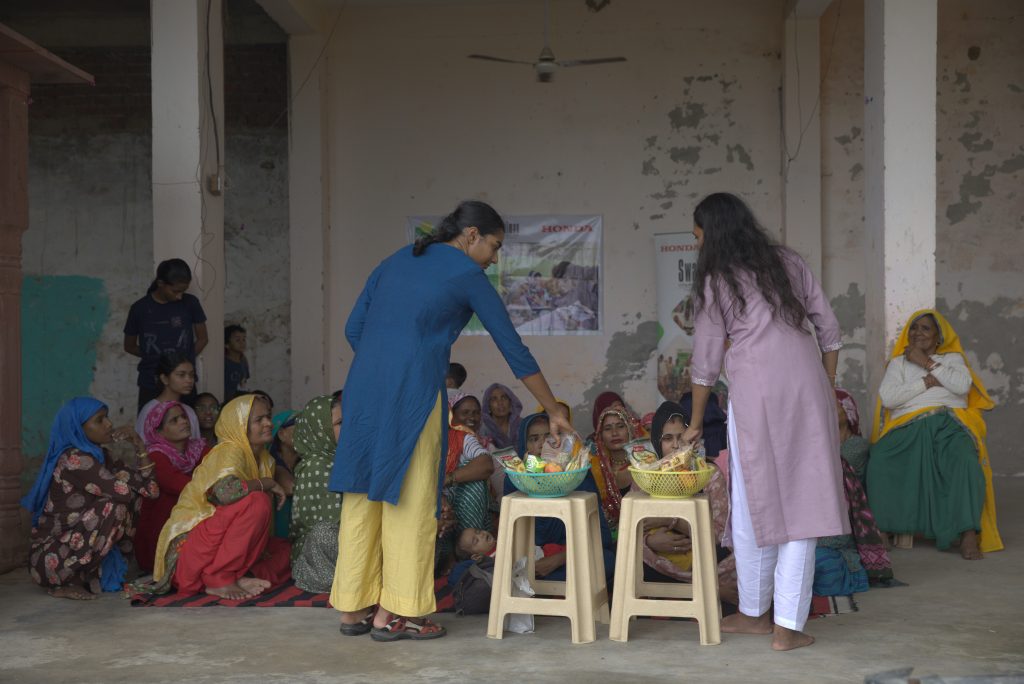
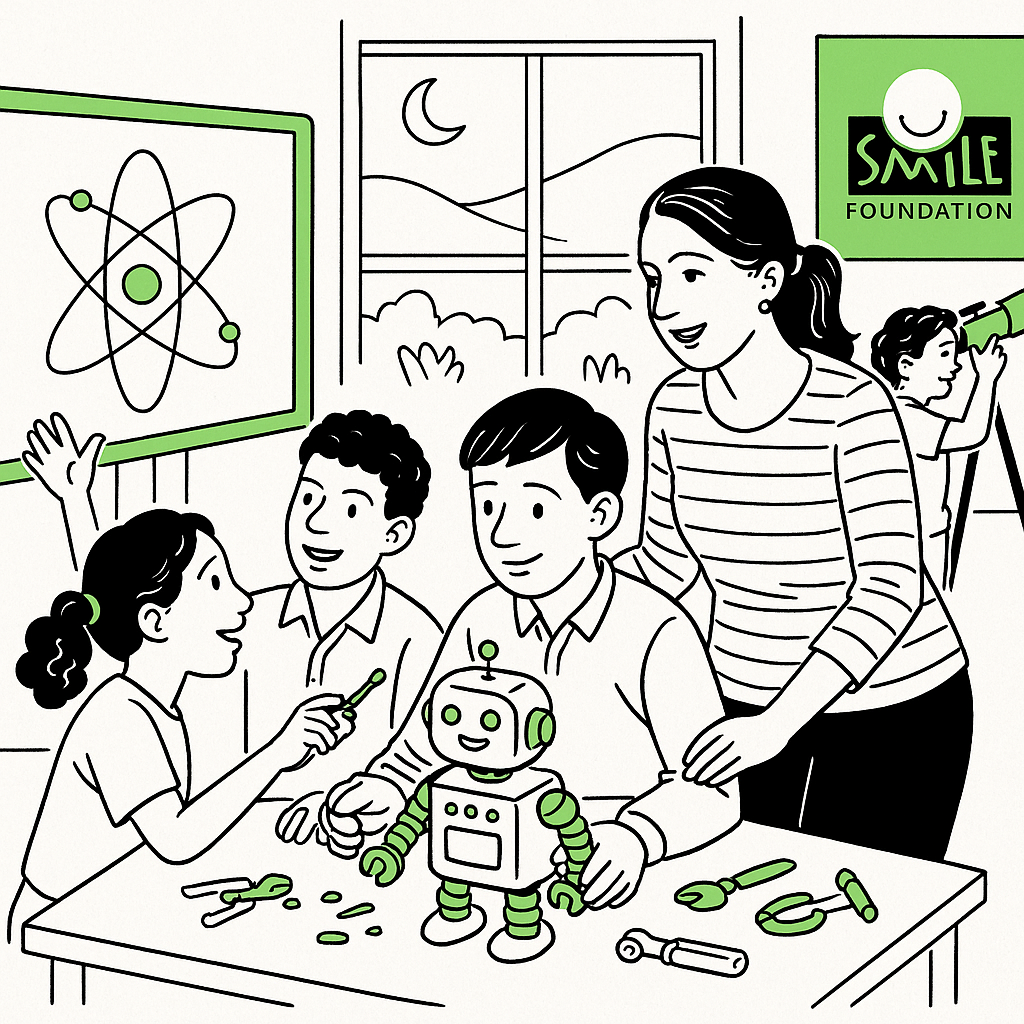
  • Mini Science Centres and DIY Kits: Smile equips government schools with hands-on resources, moving beyond rote learning toward discovery and experimentation.
  • Workshops, Labs & Training: Through partnerships (for example, with IIT Bombay), Smile has provided STEM workshops in robotics, 3D printing, aeromodelling, and more, reaching hundreds of children in low-resource areas.
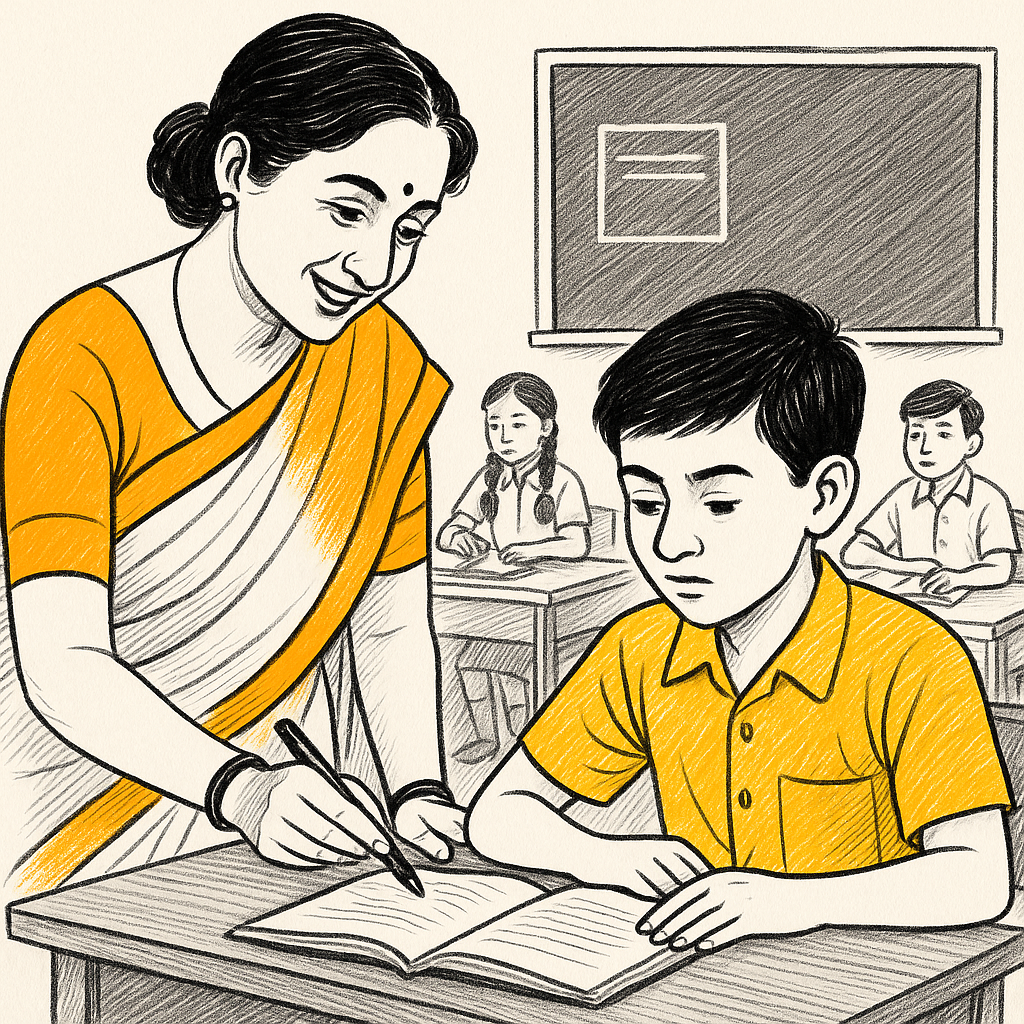
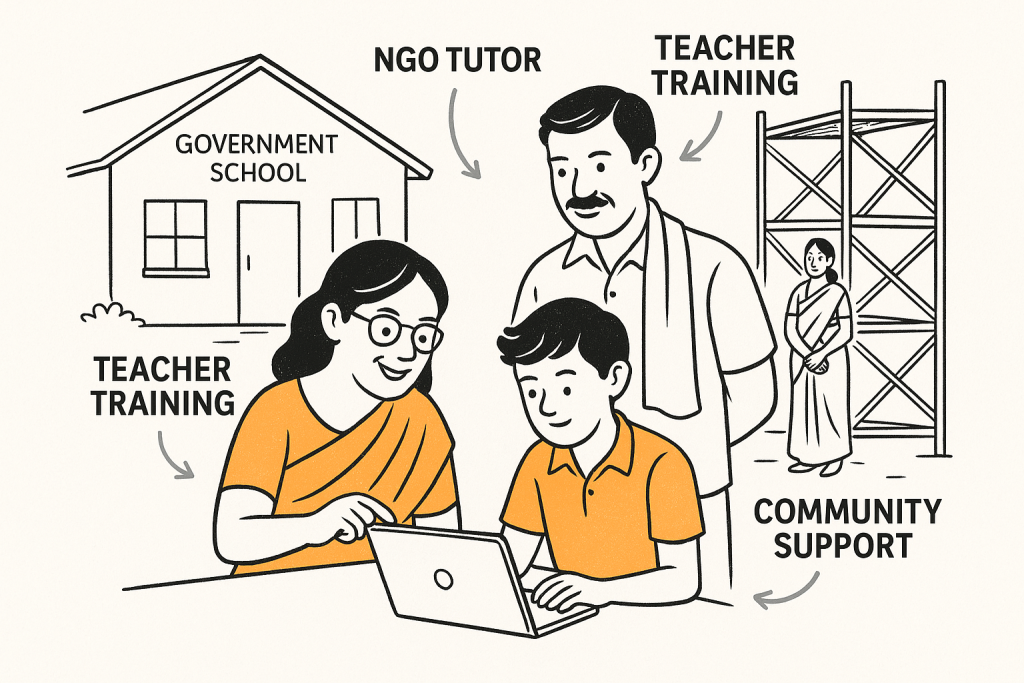
  • Teacher Capacity Building: Smile trains educators in inquiry-based pedagogy, STEM content and inclusive classroom methods so that teachers can guide students beyond textbook exercises.
  • Institutional Collaborations: A recent initiative in Delhi NCR, in collaboration with BMW India Foundation, is creating STEM labs across 25 schools to benefit over 2,500 students annually.
  • Technology Integration: Smile pilots tech-enabled learning, even in remote areas, bringing computer science, sensors and digital tools into classrooms.

Through these interventions, Smile is helping to democratise access to STEM, particularly for children who might never otherwise get such exposure.

Why This Matters

  • Inspiration & identity: When children from slums or rural areas build a simple robot or understand the logic of sensors, they see themselves as creators, not just consumers.
  • Bridging inequality: STEM education provides a route to future careers in engineering, data, robotics — fields that command higher incomes and influence.
  • Local problem-solving: Tomorrow’s inventors will be better placed to solve local problems — from water purification to accessible health devices — because they understand context.
  • Sustainability of impact: A person trained in STEM can innovate, teach, mentor — creating a multiplier effect.

Invention, Education and Inclusive Futures

When India first conceived of zero, it set a trajectory for mathematics, computing and every digital device we touch today. The Jaipur Foot restored mobility to thousands. Avaz gave voice to children. Robots and telescopes stretch the frontier of possibility. These inventions are not relics; they are beacons pointing forward.

But our capacity to invent tomorrow depends on how we educate today. In making STEM accessible in districts, urban slums, government schools — Smile Foundation is helping shape a future when the next TALK device or device to purify water with nanotech comes from a child who grew up with a maker kit in her hand.

The world doesn’t need another list of inventions. It needs more inventors. And organisations like Smile are working to turn dreams into tools — so that in every corner of India, children can reach for the stars they build.

Categories
Women Empowerment

Intersections of Health, Safety and Economic Opportunity for Women

In South Asia, a woman’s life is shaped not by one, but by a series of overlapping systems — social, economic and cultural — that influence her ability to live safely, stay healthy and earn a livelihood. These aren’t separate strands. They form a web. Health determines whether she can work. Safety dictates whether she can step outside. Economic independence influences how much control she has over her own body and choices.

Despite years of social progress and policy reform, the region continues to struggle with gender inequality that is structural, persistent and deeply entrenched.

Health: A Foundational Barrier to Participation

Women’s health remains one of the most powerful — and often overlooked — determinants of economic and social empowerment. The evidence is stark. A WHO report released during the Nourishing South Asia conference in July 2025 found that nearly 50% of women and adolescent girls in the region suffer from anaemia, making South Asia the world’s anaemia hotspot. Without coordinated action, that number could rise by another 18 million by 2030, adding to the 259 million women already affected.

Anaemia is not just a medical condition. It is a silent saboteur of progress. Fatigue, reduced concentration and decreased stamina limit women’s ability to study, work or even perform basic household tasks. For millions, it translates into a lifetime of unrealised potential — a physiological barrier that quietly dictates who gets to thrive.

Maternal health tells a similar story. While India has made significant strides in expanding antenatal care and institutional deliveries, access to quality care remains unequal, heavily correlated with women’s education, household wealth and mobility. Inadequate maternal health services don’t just endanger mothers — they also have cascading effects on children’s well-being, family stability and the economy at large.

The persistence of preventable conditions such as anaemia and maternal complications reveals that without prioritising women’s health, the promise of gender equality remains hollow.

Safety: The Unspoken Limitation

Health determines whether women can live fully; safety determines whether they can live freely.

In India, one in three women continues to face intimate partner violence (IPV), according to NFHS-5 data. But the numbers barely scratch the surface. Economic abuse — a quieter, often invisible form of violence — continues to strip women of financial autonomy and the ability to make decisions about their own lives.

A 2021 study revealed that women were frequently denied control over income, access to property or even basic financial tools like bank accounts — often by intimate partners or family members. The pattern is consistent across South Asia. Laws exist, but enforcement remains weak and patriarchal norms normalise control and silence.

What is often framed as a matter of “domestic” safety is, in fact, a structural issue of power. When a woman’s mobility, earnings and bodily autonomy depend on others’ permission, safety ceases to be a private concern. It becomes a societal failure.

Research has shown that women with greater financial inclusion and decision-making power are significantly less likely to face violence. But the systems meant to ensure these rights — from legal protections to community interventions — often remain disconnected, fragmented or chronically underfunded.

The Missing Women in the Workforce

Even as education levels among women rise, India’s female labour force participation has been falling for over a decade, dipping below 25% in many states. The reasons are complex — inadequate job opportunities, the burden of unpaid care, safety concerns during commuting and a persistent bias that continues to view women’s work as secondary.

Education, while essential, is not enough if the ecosystem around it does not support women’s participation. Girls from rural or minority communities face barriers in accessing both formal education and vocational training. Even when they complete school, they often find themselves without viable job opportunities that are flexible, local and safe.

Workplaces, too, remain inadequately equipped to address women’s safety and health needs. Lack of childcare, unsafe transport and workplace harassment discourage women from entering or staying in the workforce. The result is that more women are educated than ever before, but fewer are earning.

Studies have shown that women’s economic autonomy reduces the likelihood of domestic violence, improves reproductive health outcomes and increases household investment in children’s education. Economic opportunity, then, becomes a vehicle for safety, dignity and intergenerational change.

Interconnected Challenges, Integrated Solutions

The relationship between health, safety and economic opportunity isn’t linear — it is circular, each influencing and reinforcing the other. Poor health limits earning potential; lack of income constrains access to healthcare; insecurity reduces women’s ability to travel, work or seek medical help.

This cycle cannot be broken by addressing one issue at a time. The need of the hour is a multi-sectoral approach — one that recognises the intersection of these challenges and responds with integrated interventions.

For instance, maternal health programmes could incorporate domestic violence screening and provide safe referral systems. Financial inclusion initiatives could educate women about their legal rights and protection mechanisms. Job creation programmes could include guarantees of safe transportation and workplace equity.

Equally vital is changing the narrative through community-level engagement and education — shifting gender norms, involving men in behaviour change campaigns and creating environments where women’s choices are respected, not restricted.

A Model for Holistic Empowerment

A powerful example of this integrated approach is Smile Foundation’s She Can Fly initiative. The programme addresses multiple barriers simultaneously — education, healthcare and vocational training — to empower adolescent girls across India.

By combining classroom learning with health awareness and skill-building, She Can Fly doesn’t just prepare girls for jobs; it prepares them for agency. It provides mentorship, counselling and life skills that enable girls to navigate social and economic systems with confidence.

This multi-dimensional approach recognises what decades of development policy have sometimes missed. Empowerment is not an outcome of isolated interventions but of interlinked ones. A healthy woman is more likely to seek education; an educated woman is more likely to earn; and an economically independent woman is more likely to live safely.

The Road Ahead

The path to gender equity in South Asia lies in cohesive, intersectional policymaking. Governments must invest in public health systems that prioritise women’s nutrition and reproductive health. Laws protecting women from violence must be accompanied by stronger enforcement and social support structures. And economic empowerment must be seen not as an endpoint but as the foundation for sustainable gender equality.

When we address these three dimensions together — health, safety and opportunity — we build not just systems that work for women but societies that work for everyone.

Because a woman who is safe can participate.
A woman who is healthy can aspire.
And a woman who earns — changes the world.

Categories
Education

The Hidden Price of Learning in Urban India

In early May this year, a 14-year-old boy in Delhi turned up for his exams only to be turned away. His private school had struck his name off the rolls after his parents refused to pay a sudden fee hike they called “arbitrary and unauthorised.” That single moment — a child denied his right to learn — mirrors a growing anxiety among millions of Indian families. From Delhi to Pune to Hyderabad, protests have erupted against unchecked private school fees. What was once a choice is now an economic burden.

As public schools struggle and private ones expand, a second, shadow education system — the coaching industry — has flourished. Together, they are reshaping the landscape of urban education, turning learning from a public good into a private transaction.

The Public Promise, Frayed

Government schools were meant to be the great leveller — offering free, quality education that could lift entire generations. But over the years, chronic underfunding, teacher absenteeism and crumbling infrastructure have worn away that promise. There is a huge hidden price of learning now. While some cities like Delhi have tried to reimagine their public school systems, these remain rare islands of reform.

Most government and semi-private schools continue to rely on rote learning and overcrowded classrooms, producing students unequipped for the demands of the modern job market. Even working-class families, already stretched thin, now see private schools not as a privilege but as a necessity.

Private schools have become the de facto safety net for those who can pay. They offer smaller classes, more extracurricular activities and — perhaps most importantly — the perception of a better future. But this promise comes with a price tag that grows heavier each year.

The Coaching Economy: A Second Education

If private school fees weren’t enough, urban families now face a second drain — the sprawling network of coaching centres and private tutors. Once seen as supplements to schooling, these institutions have become the main act.

From board exams to JEE and NEET to the Common University Entrance Test (CUET), every milestone now comes with its own price. Coaching classes promise competitive advantage, but what they’ve really done is create a parallel education system that runs on anxiety and aspiration. Even students from elite schools now enrol in them, fearing that school alone isn’t enough.

This culture has made after-school learning less of an option and more of a survival tactic. Childhoods are shrinking under the weight of test prep and parents are paying for both the system and its failure.

Education as Privilege

India has long imagined education as the ladder out of poverty. But in today’s urban India, that ladder has too few rungs for too many people.

For the wealthy, education is abundant — digital devices, specialised tutors, extracurricular exposure and elite institutions. For the rest, education is a series of compromises: cheaper private schools with overstretched teachers, erratic internet for online classes or the constant risk of dropping out.

Even digital learning — hailed as a great equaliser — has deepened the divide. Smartphones, tablets and reliable internet are not tools of inclusion for many families but they are luxuries. When connectivity dictates opportunity, inequality hardens.

Hidden Price of Learning

Much of this inequity persists because policy has not kept pace with the problem. Fee regulation in private schools remains inconsistent, often toothless. Coaching centres — some of which make millions annually — exist in a regulatory grey zone. In January 2024, the Ministry of Education released new guidelines for the “Regulation of Coaching Centres,” effectively acknowledging their permanence.

Meanwhile, public school funding struggles to match the rising cost of private education. Without stronger oversight, transparency and investment, the system risks widening a class divide that education was meant to erase.

Rethinking the Future of Learning

The solution doesn’t lie in choosing between public and private education but in reimagining how they can coexist with accountability and purpose.

Public education must be restored as the default choice. That means investing in teacher training, modernising classrooms and integrating technology meaningfully. Regulation should ensure that private schools and coaching centres remain accessible, transparent and accountable.

Equally important are community-based alternatives — local learning hubs, after-school support programmes and hybrid education models that blend digital and in-person learning. Such approaches can help bridge gaps without turning learning into a privilege.

If India’s economic ambitions rest on its human capital, then education cannot remain an auction. A nation where learning depends on one’s wallet cannot truly call itself equitable.

Reclaiming Education as a Right

At Smile Foundation, we see this reality every day, and the possibility of something better. Through our education programme, we work to restore what education was always meant to be: a bridge to opportunity, not a barrier.

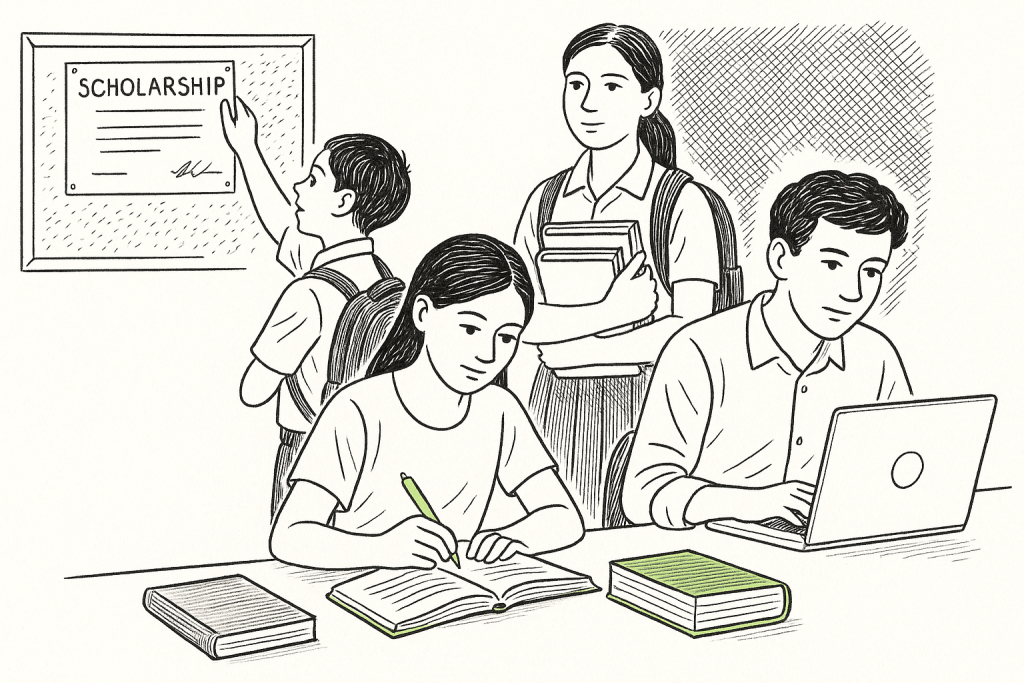
From school interventions that strengthen classroom learning to scholarships that keep promising students in education, our work ensures that children from underserved communities don’t have to pay the hidden price of learning. We support over 2,000 students through six active scholarship projects, in collaboration with partners such as Deutsche Bank, Quantiphi, Quest Global and Siemens.

More than numbers, these efforts represent a belief — that every child deserves a fair chance to learn, regardless of income, postcode or circumstance.

When access to education becomes unequal, the future itself becomes unequal. To fix education, India must first remember what it was meant to do: open minds, not widen divides.

Categories
Livelihood

What Makes Smile Foundation’s STeP “Job-Ready” Model Sustainable

The job market has never been about skills alone. It’s always been about people — their confidence, communication, adaptability and ability to grow with change.

According to a 2023 NASSCOM report, over 40% of Indian employers now prioritise soft skills and personality traits over academic qualifications. The reason is quite simple. While education builds knowledge, employability depends on how well people can apply it.

Every year, India produces more than 1.5 million engineering graduates. But, only about a quarter are considered employable in the IT sector. The issue isn’t lack of technical training but the absence of communication skills, professional confidence and workplace readiness.

A 2022 LinkedIn India survey finds that 76% of recruiters believe soft skills will matter more than hard skills in the next five years. India’s workforce is evolving. Our education-to-employment model must evolve with it.

That’s where Smile Foundation’s Smile Twin e-Learning Programme (STeP) comes in — an initiative designed not just to train, but to transform.

Beyond Skills, Towards Self-Belief

STeP stands out because it recognises that employability is not a course, it’s a journey.

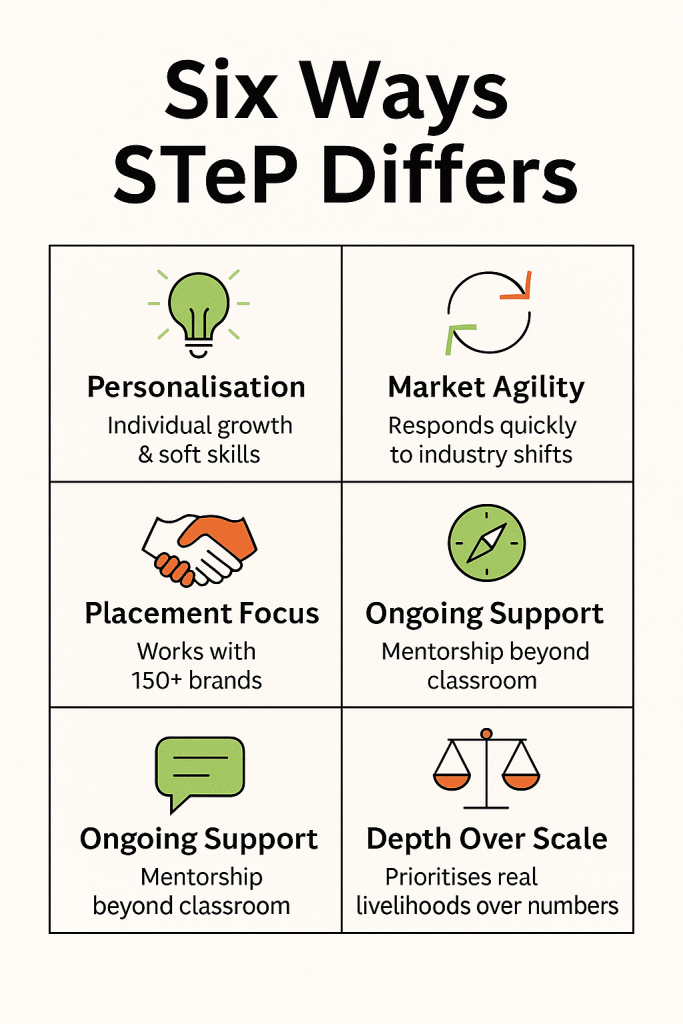
Unlike many skill development programmes that narrowly focus on vocational or technical training, STeP builds a bridge between knowledge and the real world. It combines domain skills with communication, digital literacy, financial awareness, personality development and mental well-being.

This layered approach makes young people not only employable but ready to walk into interviews with confidence, to speak with clarity, to navigate digital tools and to adapt when things change.

For young people from underserved communities, this distinction is powerful. It transforms opportunity from a distant idea into something tangible and lasting.

Rethinking What Education Should Do

Education has always been viewed as the foundation of national progress. Yet in India, despite reforms and rising enrolment, millions still struggle to turn education into employment.

The problem isn’t learning; it’s what we teach. A system rooted in rote learning and exam scores often sidelines the very qualities that shape professional success — communication, emotional intelligence, teamwork and self-awareness.

Recognising this gap, forward-thinking institutions like NIIT, TISS and even IITs are integrating leadership and communication modules into their curricula. Corporate training companies such as Dale Carnegie India are doing the same for young professionals entering the workforce.

Being “job-ready” today means possessing a well-rounded skill set: technical competence, yes — but also confidence, collaboration and adaptability. In a digital economy, that means being equally fluent in technology and human connection.

Workplace etiquette, grooming, emotional intelligence and stress management all matter. They determine how people show up — not just for interviews, but for life.

This is why STeP’s model resonates. It treats employability not as a checklist but as a continuum — where technical training meets emotional preparedness, and learning never really ends.

A World of New Careers

The pandemic reshaped economies and also redrew the map of employability itself.

Industries like hospitality and travel slowed, while digital, healthcare and financial services surged. Emerging sectors — from fintech and e-commerce to data analytics, renewable energy and digital marketing — now define the future of work.

Success in these fields demands hybrid skills: a mix of technical proficiency, digital fluency, creativity and interpersonal strength. People who can communicate well, adapt quickly and collaborate effectively are the ones who thrive.

Traditional education models rarely prepare youth for this. But programmes like STeP do — by teaching adaptability as a life skill.

STeP’s “job-ready” approach doesn’t prepare youth for just one job. It equips them for a lifetime of learning and reinvention — a future where change is not a threat but an invitation to grow.

Matching India’s Workforce to India’s Job-ready Future

Recognising the shifts in the labour market, Smile Foundation identified three sectors where demand and opportunity intersect — Healthcare, Digital Marketing and BFSI (Banking, Financial Services and Insurance).

Each of these sectors has witnessed massive growth and requires a workforce that can combine empathy, skill and adaptability.

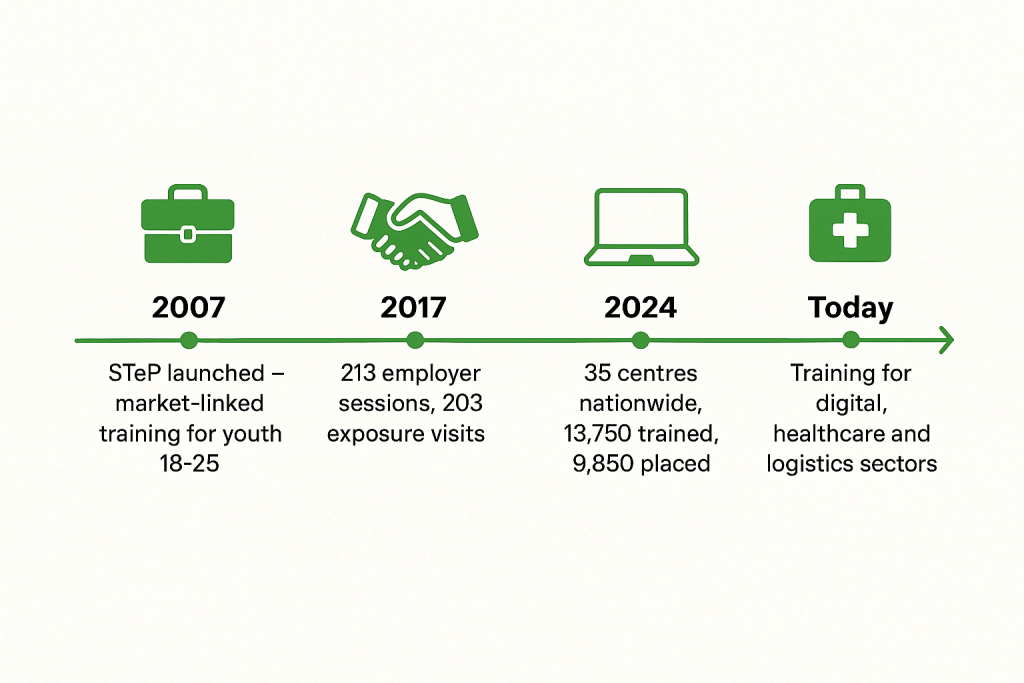
To address this, Smile Foundation began expanding its network of training centres nationwide. In November 2020, three dedicated centres were launched in Bengaluru, Delhi and Talegaon (near Pune), offering young learners a pathway into the digital economy.

In healthcare, where the pandemic revealed both the fragility and the necessity of frontline work, STeP responded swiftly. Forty-five healthcare training centres were established in October 2020, followed by nine more in June 2021 and twelve in July 2021. These centres train youth to become home caregivers, nurses, hospital assistants and ambulance staff — the unsung backbone of India’s health system.

Across all its programmes, STeP maintains a remarkable record. Over 9,000 young individuals have been trained and more than 5,500 are placed in meaningful jobs. Even more tellingly, 96% of enrolled students qualify for STeP certification, demonstrating both skill mastery and programme quality.

Why “Job-Ready” Means Sustainable

The sustainability of STeP’s model lies in its foresight. By marrying technical competence with life skills and by aligning its curriculum with market realities, STeP ensures its learners stay relevant even as industries change. Its impact is felt across families and communities, not only through income generation but through agency.

A young woman trained in healthcare not only earns for her family but becomes a symbol of resilience in her community. A young man trained in digital marketing gains not just a job, but a voice in a fast-changing digital world.

A Model for the Future

India’s demographic dividend will only be meaningful if its youth are empowered with skills that are future-facing, inclusive and humane.

Smile Foundation’s STeP model offers a blueprint for that future — one where education is not an endpoint but a springboard, and where learning prepares young people not only to earn, but to grow.

Sustainability, after all, is not about duration — it’s about transformation. And every STeP trainee who walks into a workplace with confidence is living proof of that change.

Categories
Smile Partners In Change Partnerships

Luxury Meets Purpose through Cause Related Marketing

What makes a product truly luxurious? It is never only the sheen of fabric, the polish of metal, or the weight of a logo. These are surface signals. Real luxury is born from the story etched into its creation–the unseen hours of craftsmanship, the deliberate pursuit of rare materials, the precision that elevates mere function into art. Every stitch, every curve tells a story of rarity and desire.

In the same way, when luxury brands embrace cause related marketing (CRM) partnerships, they are not simply adorning their products with social relevance—they are deepening the narrative. The story of a product expands beyond craftsmanship to purpose, beyond elegance to impact. Luxury with meaning becomes not just an object of aspiration, but a statement of alignment with higher ideals.

Andpersand Magazine

Furthermore, today this evolution is also demanded by the socially conscious consumers. They seek brands that reflect their moral compass, their identity, their values. They buy not just the product, but the story of contribution, of responsibility, of cultural influence. 

Therefore, luxury houses mastering this art of narrative through CRM does more than build brand equity. It forges emotional resonance, transforming them into arbiters not just of taste, but of societal progress itself.

CRM in Luxury- Building Equity with Responsibility

Today luxury campaigns have evolved from silent contributions to illustrative CRM initiatives to promote cultural movements. Gucci’s Chime for Change initiative, co-founded by Beyonce and Salma Hayek, transcended fashion into a global platform for advocating gender equality, blending celebrity influence with grassroot impact. Similarly, Cartier’s Women Initiative has built a legacy of empowering female entrepreneurs worldwide embedding social progress into the brand’s identity.

These examples highlight a defining trend– that luxury brands through compelling and resonating storytelling are bringing their brand’s commitment to support social causes, for transforming their advertisement campaigns into a sustainable movement, that resonates with their consumers while reinforcing their social commitment. 

banner final copy 1

This evolution is also fuelled by shifting consumer expectations. Today’s consumers are not content to purchase products on the basis of popularity alone; they are attentive to the values and contributions of the brands they choose. With heightened focus on areas such as education, women’s empowerment, youth skills development, and last-mile health delivery in underserved regions, customers now seek evidence of whether the brands they trust are genuinely contributing to society.

A recent study illustrates this shift: 45% of consumers are more likely to purchase from a brand that donates to charity compared to a competitor that does not. For business leaders, this underscores a crucial imperative — cause-related marketing is no longer a discretionary activity, but a strategic lever that can simultaneously drive social impact and long-term brand equity.

image 8

Expanding Brand equity with Cause marketing

In the contemporary marketplace, the bond between consumers and brands has transcended the transactional limitations. Increasingly, the relation is defined by values, morals and social consciousness. As highlighted by The Impact of Storytelling Advertising on Consumer Experiences and Brand Equity, a research done by Great Lakes Institute of management, brands must cultivate authenticity and transparency, if they are to sustain consumer’s trust. Storytelling has emerged as the most effective means of achieving this, offering businesses a way to humanise their operations and demonstrate tangible impact. 

Cause-related marketing strengthens this storytelling agenda by embedding social purpose into brand narratives. Through partnerships with NGOs, companies gain access to authentic, lived experience that form the foundation of compelling stories.

By communicating these experiences, luxury businesses do more than showcase philanthropic activity; they invite consumers into a shared mission. This alignment of commerce with conscience is what drives brand equity in an era where reputation and trust are as critical as products’ quality or price.

Marketers have observed that cause-related storytelling has the power to go beyond campaigns and become movements. For example the above mentioned luxury brand campaigns came in with a strong messaging that invoked something personal in the audience. Emotional narratives activate empathy centers in the brain, making audiences more likely to remember a message, act on it or share it. Evidence suggests that brands employing storytelling not only drive stronger recall, but also foster higher levels of consumer loyalty and willingness to contribute– whether financially, socially or reputationally. 

image 7

Maximising CRM Impact via NGOs

For luxury brands, NGOs serve as critical bridges of trust, translating philanthropic intent into tangible outcomes while converting marketing initiatives into measurable social and cultural movements that stay with their consumers. Partnerships with credible NGOs provide clarity in reporting, ensuring transparency and accountability, while enhancing consumer engagement by showcasing authenticity on the ground. 

By leveraging NGO expertise, luxury brands can design high-impact, multi level interventions that deliver real change such as – 

  • Quality and advanced education for children,
  • Last-mile delivery of healthcare at the doorsteps, 
  • 21st century livelihood training for the youth 
  • Entrepreneurship empowerment for women from rural communities.

These initiatives create a win-win for all involved as– NGOs grain scale and visibility, brands build purpose driven equity and most importantly, communities experience lasting improvements. 

Elevate Cause marketing with Smile 

In today’s business landscape, luxury brands are no longer evaluated solely on product quality or exclusivity. Modern consumers – particularly Millennials and Gen Z expect brands to demonstrate tangible social responsibility. 

Smile Foundation provides a structured, credible platform for integrating purpose into result oriented cause related activities, that allows businesses to show their determination in making measurable and sustainable social impact. 

ethoswatches 2

Ways to partner With Smile 

  • Part proceeds: Allocate a share of product sales to Smile initiatives directly inkling revenue with measurable improvements in education, healthcare and livelihoods. 
  • Purpose marketing: Design campaigns aligned with Smile’s causes, strengthening customer trust while differentiating brand positioning in a competitive marketplace. 
  • In-app donations: Embed donation options within apps, creating seamless user experiences while reinforcing brand commitment to accessibility and inclusivity. 
  • Point of sale campaigns : Enable micro-donations at checkout, driving higher average order value while deepening customer engagement. 
  • Redeem points- Convert loyalty rewards into social good, enhancing retention and reinforcing long term consumer brand relationships. 
Zanaaya 03 Website

As a two decade old social development organisation, we truly believe that in today’s time, CRM partnerships are pivotal for luxury brands to build an intimate and lasting relationship with their customers. They command a premium through curated experiences, and by extending this premium to society through strategic partnerships, brands can elevate their ethos from exclusivity to shared value and responsibility. 

With the changing consumer demands, this opportunity and time is the right strategic lever that combines purpose with profit. By embedding CRM into core business strategies, luxury brands can drive social change at an amplified scale ensuring that they become — the beacon of social change in the truest essence.

Partner with Smile Foundation to turn commitment into measurable, lasting change.

Source– 

  1. Cause-related marketing: a systematic review of the literature
Categories
Health

The Promise of Future-Ready Healthcare in India

Healthcare in India is standing at a fascinating crossroads. On one side are the glittering possibilities of AI-assisted diagnostics, cloud-based hospital systems and digital twins that predict treatment outcomes. On the other side are the persistent realities of overcrowded government hospitals, a shortage of beds and villages where primary health centres remain locked for months. So, what about the promise of future-ready healthcare?

The EY-Parthenon–CII HealthTech Survey 2025 captures this duality well. It notes that India’s healthcare providers are investing heavily in connected platforms, real-time insights and cybersecurity to transform the way care is delivered. The report also acknowledges the gaps like outdated infrastructure, fragmented data and shortage of skilled IT professionals.

To be truly future-ready, India’s healthcare has to do more than digitise hospitals. It has to create a connected ecosystem that brings tertiary hospitals and rural health vans into the same digital conversation. That is where both large-scale policy frameworks and grassroots innovations become crucial.

The 5S Framework for Future-Ready Healthcare

The survey lays out a 5S framework for future-ready hospitals:

  1. Scalable infrastructure – IT systems that connect HIS, ERP, CRM and EMRs.
  2. Seamless engagement – patient portals, teleconsultations, mobile apps.
  3. Strategic data use – unified platforms for timely, actionable insights.
  4. Sustainability & compliance – cybersecurity, privacy, environmentally conscious operations.
  5. Smart AI & automation – decision support, predictive analytics and operational efficiency.

This framework is visionary but it is also hospital-centric. The challenge is ensuring that it doesn’t stop at AI-enabled cancer units in Tier-I cities. Scalable infrastructure must also mean a mobile health van with digital records. Seamless engagement must also mean a teleconsultation for a farmer’s wife in Jharkhand.

India’s Healthcare Reality Check

Before imagining the future, let’s ground ourselves in the present.

  • India currently has 1.4 hospital beds per 1,000 people, while the WHO recommends 3 beds per 1,000.
  • Nearly 60% of bed capacity lies in the private sector, clustered in metros and Tier-I cities. Smaller towns and villages remain grossly underserved.
  • Public health expenditure still hovers at around 2% of GDP, one of the lowest among G20 nations.

This mismatch between demand and supply means that for millions of Indians, the patient journey begins not with a smart OPD or an AI assistant, but with a long bus ride to the nearest district hospital.

Prevention, Prediction and Proactive Intervention

The report emphasises a key shift: moving from reactive healthcare (treating illness) to preventive, predictive and proactive systems.

  • Preventive care means regular screenings, immunisations and health education.
  • Predictive care uses data analytics to identify at-risk patients early.
  • Proactive intervention ensures timely follow-ups and community-level action.

In urban India, this might look like AI models predicting heart disease based on wearable data. In rural India, it could be a mobile van screening villagers for diabetes and hypertension, digitising the results and flagging high-risk cases for specialist review.

Both are part of the same future-ready system if we design inclusively.

Smile Foundation’s Digital Healthcare Work

This is where Smile Foundation’s work becomes a compelling counterpoint to the hospital-centric narrative. Through our Smile on Wheels programme, Smile takes healthcare to places where the system is weakest, this includes urban slums, tribal belts and remote villages.

Each Smile on Wheels unit is a mobile hospital on wheels, staffed with doctors, nurses and community health workers. What makes it future-ready is the integration of digital tools:

  • Each unit functions as a moving OPD with EMR-linked patient histories.
  • Electronic health records: Patient visits are logged digitally, enabling continuity of care even in transient communities.
  • Telemedicine linkages: A villager in Odisha can connect to a specialist in Bhubaneswar through the van’s teleconsultation setup.
  • Preventive screenings: Blood pressure, sugar and maternal health indicators are collected systematically, building datasets that support predictive insights.
  • Digital health educators: Local health workers trained by Smile use tablets to deliver health education modules in vernacular languages.

As of 2024, Smile on Wheels had reached over 1.5 million people annually across India, often being the only point of healthcare contact for entire communities. This model embodies the 5S framework.

Why Grassroots Digital Models Matter

Large private hospitals will continue to be the flagbearers of cutting-edge health tech — AI in radiology, robotic surgery, cloud-integrated patient records. But for India to be future-ready as a nation, grassroots digital healthcare models like Smile’s are essential.

Here’s why:

  1. Scalability at low cost – A mobile van can serve thousands of people with minimal infrastructure.
  2. Trust-building – Local health educators, often women from the same community, bridge the trust gap that tech alone cannot solve.
  3. Equity – These vans bring digital healthcare to people who would otherwise be excluded from ABDM-linked systems.
  4. Data inclusion – Digitising rural health records means these populations are not invisible in national health databases.

Without such bottom-up approaches, India risks creating a two-speed healthcare system: AI-driven hospitals for the few and paper-based PHCs for the many.

User Adoption: The Human Side of Digital Healthcare

The success of digital health adoption hinges on users — doctors, nurses and patients — embracing the change.

Smile’s experience echoes this. In many villages, people initially resisted teleconsultations. It took community health educators patiently explaining, demonstrating and accompanying patients through the process to build confidence.

Similarly, doctors needed to see that EMR systems reduced duplication and improved follow-ups, not just added clerical work. Once they experienced smoother workflows, adoption increased.

Future-ready healthcare must invest as much in change management and training as in hardware and software.

Bridging Systemic Barriers to Future-Ready Healthcare

India’s digital health transformation still faces systemic obstacles:

  • Fragmented data silos between public and private systems.
  • Outdated infrastructure in government hospitals.
  • Shortage of IT professionals trained in health informatics.
  • Uneven internet connectivity in rural areas.

Smile Foundation addresses some of these barriers by:

  • Training local youth as digital health facilitators, easing the IT skill shortage.
  • Using cloud-based records to ensure continuity even with patchy local infrastructure.
  • Partnering with local administrations to integrate van data with district health databases.

These micro-level interventions offer valuable lessons for scaling national digital health frameworks like ABDM.

Toward Future-Ready Communities

If the goal is equitable, sustainable healthcare, then India’s vision of future-ready must extend beyond hospitals to communities. Imagine:

  • A mother in a Delhi slum using a Smile-supported app to track her child’s vaccination.
  • A farmer in Chhattisgarh receiving SMS reminders about his blood pressure medication.
  • A school in Rajasthan hosting a digital health camp linked to the local PHC.

These examples are already happening in pockets. The task is to scale them systematically.

Policy Pathways

To truly expand future-ready healthcare, India must:

  1. Integrate grassroots models like Smile on Wheels into ABDM frameworks, ensuring last-mile data flows into national health grids.
  2. Invest in digital literacy for health workers, not just IT infrastructure.
  3. Support public-private partnerships that blend high-tech hospital innovation with NGO-led community outreach.
  4. Mandate outcome reporting — digital health must prove it improves care quality, not just digitisation targets.
  5. Prioritise equity — allocate resources to underserved geographies first, to avoid widening the urban-rural digital divide.

Engineering Equity into the Future

India’s healthcare is indeed becoming smarter: EMRs, AI, predictive analytics, digital twins. But the real test of “future-ready” is not whether a hospital in Gurugram can perform a robot-assisted surgery. It is whether a tribal child in Jharkhand can get an early diagnosis for anaemia through a digital health van.

The future will be measured not by the sophistication of our machines, but by the breadth of our compassion. And in that future, both AI-assisted hospitals and grassroots digital vans must move in sync because one without the other is not progress, but privilege.

Categories
Education

How Early Should STEM Exposure Begin?

The consensus among educators and researchers is that STEM exposure should start as early as possible — ideally in the preschool and early primary years. Young children’s brains are highly plastic and primed to learn basic math and science concepts. Neuroscience shows that sensitive periods in early childhood make it a “window of opportunity” for learning foundational skills. In fact, infants and toddlers already display core knowledge about objects, numbers and geometry.

All experiences from birth – including simple counting games, building blocks or watching butterflies – become part of a child’s understanding of the world. This means that informal STEM activities (like exploring shapes, sorting objects or basic cause-and-effect experiments) are developmentally appropriate even for pre-schoolers. All of the experiences that children have — from birth on — inform them and the best educators can give them is the opportunity for exploration in every realm including basic science and math.

Research confirms that early math and science experiences pay off later. For example, studies find a robust association between young children’s early mathematical proficiency and later academic achievement. In other words, a child who learns to count, measure and reason spatially in preschool is more likely to excel in school math and reading in the long run. Spatial reasoning, such as understanding shapes and how things fit together, is a key part of STEM learning and is highly trainable from a young age.

Educators have long recognised that millions of young children are already in day cares and pre-schools where early mathematics and science learning can take place and that focused attention on these early foundations will yield “significant progress” over time.

Developmental Readiness: What Young Children Can Learn

Children do not need formal lectures to begin STEM learning. Even toddlers are natural explorers. Pre-schoolers readily engage in STEM through play: building block towers (engineering fundamentals), sorting and counting beads (math) or watching a caterpillar transform (life science).

Curriculum experts note that much early childhood education has always included STEM in disguise – planting seeds in a class garden (biology), cooking (chemistry/math, or even board games (patterns and logic). The key is giving children concrete, hands-on experiences and language to describe them. For instance, counting frogs at a pond or observing tadpoles helps pre-schoolers grasp life cycles and number sequences.

Psychologists report that children as young as 3–5 can learn basic STEM concepts when presented appropriately. They have innate core knowledge of objects and numbers. These intuitive abilities can be built on: a 4-year-old can sort shapes and ask “why does this tower fall?”; a 5-year-old can follow simple step-by-step instructions (an algorithm) to solve a puzzle. In fact, modern curricula in some countries introduce computing concepts at age five. For example, England’s national curriculum now teaches children (5–6 year olds) what an algorithm is – using everyday tasks like recipes or morning routines – and even lets them create and debug simple computer programmes. These examples show that with playful pedagogy, even very young learners can begin forming STEM skills.

Benefits of Early STEM Exposure

Early STEM experiences have many benefits beyond academic knowledge. They strengthen critical thinking, creativity and persistence from the start. Research in brain science shows that the preschool years are when children are active explorers and observers, building domain-general skills (like attention and reasoning) and domain-specific skills (like early math and science) simultaneously. Because learning is cumulative, giving children rich STEM experiences early can create positive momentum: strong early learning often leads to better later outcomes, whereas missed stimulation in early years can create vulnerabilities. In practical terms, a 3-year-old who intuitively sorts shapes or engages in cause-and-effect play will have an easier time learning geometry and physics later.

Studies of successful STEM programmes also underline early benefits. Young children who do hands-on science report higher curiosity and positive attitudes toward STEM subjects. A pilot study in China found that primary students who joined STEM activities were more interested in STEM careers and developed better problem-solving self-concepts.

Similarly, experts argue that teaching logic and algorithms at an early age – not only improves computer skills, but also helps children to be articulate and think logically, benefiting literacy and math too. In short, early STEM builds foundational 21st-century skills like collaboration, innovation and analytical thinking.

Global Benchmarks for Early STEM Exposure

International standards and research emphasise early STEM readiness. UNESCO and UNICEF’s recent Global Report on Early Childhood Care and Education (2024) advocates ECCE programmes that enhance literacy, numeracy and social-emotional skills as core to school preparedness. These skills are inextricably linked to early math and science concepts. UNESCO leaders stress that investing in our youngest children brings the greatest returns, pointing out that by 2030 millions of kids will lack basic skills without urgent ECCE investment. Likewise, the OECD and national academies highlight that early childhood is a critical stage: spatial reasoning and numeracy can and should be nurtured long before formal schooling.

Many high-performing education systems have taken this to heart. In England, computing education begins at age 5 (Key Stage 1), so even kindergarteners learn algorithms in context. The United States’ policy initiatives (e.g. Obama’s Educate to Innovate campaign) also stress STEM from K–12, including early grades. In Finland and parts of Scandinavia, early education is heavily play-based and often integrates basic science exploration and math games as part of daily activities. Worldwide, there is a clear trend of countries moving away from rote learning and toward inquiry-driven, hands-on curriculum in the early years.

India’s Policy Context and Challenges

India’s own National Education Policy (NEP) 2020 aligns with this global shift. NEP explicitly calls for experiential, hands-on learning at all stages and places mathematics and computational thinking at the core even in the foundational (pre-primary) stage. For example, NEP mandates using puzzles and games to make math enjoyable from age 3–8. Coding and basic computational ideas are introduced by the middle school years. Such guidelines recognise that early engagement in STEM, through play and exploration, builds the logical and creative habits Indian children will need.

However, implementing early STEM in India faces practical gaps. Many rural and government schools still lack basic science labs, let alone modern labs or trained STEM teachers. Although NEP recommends 10% of education budgets for ECCE, actual pre-primary enrolment and quality lag behind targets.

UNESCO reports that 95% of countries (including India) have made ECCE commitments, yet globally 37% of children still risk not meeting basic skills by 2030. India grapples with teacher shortages and underqualified staff in pre-schools with only a fraction of Anganwadi (pre-school) workers having formal training in early pedagogy. Large class sizes and rote curricula persist in many areas, making it hard to introduce child-led STEM activities.

At the same time, new initiatives are filling in. Central and state programmes (like Sarva Shiksha Abhiyan’s preparations and NCERT’s experiential modules) increasingly include simple math manipulatives and science corners in primary schools. The National Initiative for School Heads (NISHTHA) and others are training teachers in inquiry methods. But the equity gap remains stark with urban private schools often having labs and robotics kits, while nearby government schools may have none. Bridging this divide is urgent.

NGOs and Community Innovations: Smile Foundation’s Example

Non-profit and private partnerships offer models for reaching underserved schools. For instance, Smile Foundation is running a large-scale STEM programme reaching over 74,000 students in 450+ schools (10 Indian states) in 2024–25. Crucially, Smile’s description emphasises equitable access to quality STEM education, especially in government schools. Our multi-layered approach illustrates how targeted support can work: we help set up tinkering labs on college campuses (like an IIT-Bombay workshop) where children used real tools to make projects. We run robotics workshops for hundreds of government-school children, teaching Arduino programming and culminating in building obstacle-avoiding robots. Science fairs and DIY kit sessions are organised to encourage students across schools to create projects and experiments.

These activities do not feel like remote theory; they bring STEM concepts to life. When underserved students physically build a circuit or code a simple game, they not only grasp the ideas but also gain confidence as young scientists. Such programmes show that with even modest investment – traveling workshops, hands-on materials, teacher mentoring – the quality gap in STEM exposure can be narrowed. By linking students to colleges, competitions, and online communities, NGO initiatives like Smile’s also help sustain interest. Importantly, they demonstrate that early STEM need not be an expensive gadget show but even low-cost kits and local experiments can ignite curiosity.

Gaps and the Road Ahead

Despite these promising examples, many challenges remain. Urban–rural and public–private divides mean that a child’s ZIP code often determines her STEM exposure. Girls and disadvantaged children are underrepresented in enrichment programmes in some areas. Teacher preparedness is a bottleneck with many early childhood educators having little training in STEM facilitation or know-how to integrate math and science into play. Curricula still sometimes relegate science to textbooks, even at primary levels where interactive learning would be more effective.

The evidence is clear that starting STEM early pays dividends, yet policies and practice are often slow to catch up. For example, while NEP 2020 highlights computational thinking at the foundation stage, only limited digital infrastructure exists in rural pre-primary settings. Similarly, research-driven approaches like spatial reasoning training are far from standard practice. Without concerted action, the benefits of early STEM education will remain unevenly distributed.

Recommendations for Expanding Early STEM Exposure

Based on current research and best practices, stakeholders should take the following steps to ensure all children benefit from early STEM exposure:

  • Embed STEM in foundational curricula. Early education guidelines (national and state) should explicitly include hands-on math, science and technology activities in pre-primary and early grades. This means play-based experiments (counting games, nature exploration, simple machines), coding exercises (unplugged algorithms, age-appropriate apps) and manipulatives (blocks, shapes) as routine parts of the day.
  • Invest in teacher training. Empower ECCE and primary teachers with STEM pedagogical skills. Workshops, certifications and ongoing mentoring can help teachers feel confident leading inquiry and problem-solving lessons. For instance, training on using storytelling and art to teach math (as NEP suggests) or on facilitating science play will make STEM exposure richer and more engaging.
  • Equip learning environments. Classrooms need basic STEM resources. Low-cost science corners, mobile science kits, tinkering labs and computer tablets can dramatically expand what children experience. Partnership models work well with local colleges or tech companies sponsoring laboratory visits or donating kits. Smile Foundation’s experience shows that even in remote schools, setting up a small tinkering station or providing a DIY robotics kit can spark student initiative.
  • Focus on equity and inclusion. Special attention must be paid to under-resourced schools (rural, tribal, slum areas) and to empowering girls. Quotas or targeted outreach can bring female and disadvantaged students into STEM clubs and contests. Community engagement (educating parents about STEM’s value) can also help sustain interest. As global data suggest, without such focus, high-need children miss out on the “window of opportunity” in early years.
  • Encourage public-private collaboration. Government schemes (like Samagra Shiksha Abhiyan) and NGOs should team up. Programmes similar to Smile’s – combining local outreach with expertise from IITs or universities – can be scaled up. For instance, engineering departments could run summer maker camps for local schools. The private sector can fund digital literacy drives or sponsor national science fairs for children.
  • Monitor and adapt with data. Finally, stakeholders should track learning outcomes in STEM from the start. Simple assessments of number sense or scientific reasoning in early grades can flag gaps. As in other domains, continuous evaluation (e.g. via formative assessments) will ensure that early STEM programmes are improving actual understanding, not just activity participation.

In summary, there is no harm in starting STEM early – only in starting too late. The pre-primary and primary years are when children form attitudes to learning and acquire the mental frameworks that will support higher concepts. By integrating STEM exploration into early childhood and ensuring broad access, India (and other nations) can build a generation of confident innovators. Policymakers, educators, parents and NGOs each have a role. From classroom design to community science fairs, every effort adds up. The research and global experience both point to making STEM play a part of childhood as soon as curiosity blooms.

Sources: Peer-reviewed research and reports (including National Academies, OECD, UNESCO) and global benchmarks (e.g. NEP 2020) on early learning and STEM; along with case examples from Smile Foundation’s STEM programme.

Categories
Education

Emotional Burden of Debt vs Liberating Effect of Scholarships

“An investment in knowledge pays the best interest.” Benjamin Franklin may have said it centuries ago, but every young Indian sitting with an entrance exam admit card in one hand and a bank loan brochure in the other knows — it’s true and also complicated.

Let us tell you about Sidhi Lonkar, a spirited young woman from Pune. She was still reeling from her father’s loss when she sat for her 10th-grade exams. The idea of pursuing engineering seemed distant, perhaps even indulgent, in those shadowed days. But her mother, who had shelved her own educational dreams years ago, whispered insistently: Go ahead, do what I could not.

With Smile Foundation’s scholarship programme, the dream that had looked unreachable was not only closer, but tangible. Sidhi not only secured admission to a reputable engineering college but was handed a laptop, study materials and, most importantly, the quiet dignity of studying without that gnawing worry about where the next semester’s fees would come from.

Her story is not rare. It is one of thousands. But it neatly frames the paradox of higher education, that is of, its promise of liberation and its punishing financial chains.

Effect of Scholarships: Liberation Tied With Debt

Across India, education is still sold as the golden key. Crack JEE, ace NEET, land that B-school seat — the rewards are enormous. But the cost? Enormous too.

In recent years, the rising tide of education loans has swept across both developed and developing economies. In the US, student debt has ballooned into a trillion-dollar beast. Closer home, in India, education loans between 2019 and 2025 rose by a staggering 95.8%. What that means is that degrees increasingly come wrapped in EMIs.

And debt, as anyone who has carried it knows, is never just financial. It’s emotional.

A 2024 survey by Student Loan Planner revealed that 79% of students with loans felt anxious, 43.5% felt hopeless and 41.5% reported depression linked to their debt. That’s not just a balance sheet problem but a mental health crisis too.

Life Lived in Instalments

Educational debt creeps into every choice.

Graduates with loans don’t often take the jobs they love — they take the jobs that pay. Research, teaching, public service, social development, the arts — fields India badly needs talent in — get abandoned for the safer shores of IT packages and multinational offers.

It also delays life milestones. Should I marry? Should I buy a house? Can I afford to take a break, switch careers, study further? Every decision is measured against the invisible ledger of EMIs.

Debt makes you live life in instalments, long after the degree is framed on the wall.

The Other Path: Effect of Scholarships

Now, picture a young woman sitting at her desk, books open, ambitions swirling. But instead of the constant background hum of “loan repayment, loan repayment,” she hears something more pleasant like silence or freedom.

That’s what a scholarship does.

It isn’t just money. It is recognition. The gold effect of scholarships.

The economic relief is obvious with tuition fees covered, tools provided, stress lifted. But the psychological impact is profound. Scholarships bestow dignity. They validate not just need, but effort, merit, resilience.

And they motivate. Students with scholarships often feel compelled not by fear of debt but by faith placed in them. That faith can be transformative.

Take rural Rajasthan, where Smile Foundation’s Project Manzil scholarships have allowed girls to continue schooling instead of being nudged into early marriages. Or young engineers in Odisha who, instead of dropping out midway, finished their courses with laptops and stipends provided through Smile’s support.

One scholarship can alter not just one life, but a family’s trajectory. A mother rests easier, knowing she doesn’t need to mortgage land. A younger sibling dreams bolder, because they’ve seen what’s possible. A community gains role models — educated daughters who return as teachers, health workers, entrepreneurs.

This is the ripple effect debt can never create — but scholarships do, effortlessly.

Smile Foundation: Beyond Financial Aid

At Smile Foundation, scholarships are not just cheques. They’re carefully crafted bridges.

Through Mission Education, Smile has supported over 20,000 girls in continuing their education. That means tuition, yes, but also digital tools, inclusive infrastructure and mentorship. It means fighting dropout rates not by scolding but by supporting. It means seeing each student not as a statistic but as a story.

For Sidhi Lonkar, it meant not having to choose between her grief and her goals. For others, it means laptops in villages where even electricity is uncertain or vocational training that makes employability real.

And there’s a crucial difference here: where loans weigh down, scholarships lift up. Where debt narrows choices, scholarships expand them. Where EMIs eat into courage, scholarships feed it.

Why Scholarships Matter Now More Than Ever

We live in a time when education has never been more expensive or more necessary. India dreams of being a knowledge economy, a land of innovation and ideas. But how will we get there if half our young minds are bent under the weight of debt?

Scholarships are investments. They invest in ambition, in dignity, in possibility. They let education return to its true purpose — not to create earners chained to EMIs, but thinkers, builders, dreamers who can give back to society in ways money can’t always measure.

A Final Reflection

We’ve often thought that education should feel like walking into sunlight — not like walking with stones in your pockets.

Sidhi’s story is proof of that. Without the burden of loans, she could smile into her textbooks, not cry into bank slips. Her scholarship didn’t just buy her notebooks and a laptop — it bought her time, peace, dignity and the right to dream.

That’s what Smile Foundation is trying to do: remove the mask of debt and reveals the face of possibility.

And that’s the choice before us, as a society: will we let our youth live in debt or will we gift them dignity? Will we power their dreams with the effect of scholarships?

Because freedom, after all, doesn’t always wear a flag. Sometimes it looks like a scholarship letter, slipped into a young one’s hands.

Categories
Gender

The Superwoman Syndrome: Why Indian Women Leaders Still Feel Like Frauds

In India, when a woman make it to the top, they are celebrated like a Bollywood heroine or a superwoman in a triumphant climax scene. You’ve seen the headlines: “She cracked the glass ceiling,” “She’s proof you can have it all.” These women are splashed across glossy magazine covers — CEOs who close billion-dollar deals before breakfast, run half-marathons at lunch and still arrive at the PTA meeting with blow-dried hair and cupcakes in hand.

It’s the dream: having it all.
It’s also the trap: doing it all.

Because if you actually talk to these women, another story emerges. Fatigue. Guilt. That gnawing sense of “not enough.” And hovering over it all — impostor syndrome.

From “Lean In” to “Lie Down”

At some point between Sheryl Sandberg urging women to lean in and corporate India rolling out glossy “girlboss” campaigns, the narrative shifted. A new expectation emerged, one where not only should women break into boardrooms, but they must also be visionary leaders, doting mothers, tireless mentors and — why not — yoga influencers with green smoothies on the side.

The academic name for this cultural cocktail is neoliberal feminism. Catherine Rottenberg coined the term to describe how empowerment got rebranded as self-improvement. Basically: “Yes, inequality exists. But fix it yourself. Optimise harder. Be more confident. Sleep is optional.”

In India, where only 24% of women are in the workforce (World Bank, 2022) and just 18% occupy senior management roles (Grant Thornton, 2023), this message lands hard. For the lucky few who do make it, the seat at the table is never secure. Every day feels like an audition to prove they belong — much like a superwoman.

The Bollywood Version of Balance

Pop culture loves the image of the Indian “superwoman.” Think of films like English Vinglish where Sridevi effortlessly masters cupcakes, English grammar and self-respect, all in two hours flat. Or Kareena Kapoor in Ki & Ka, cycling in stilettos while climbing the corporate ladder. These heroines make multi-tasking look glamorous.

ChatGPT Image Sep 20 2025 02 26 28 PM

But real life? Not quite.

Take Ghazal Alagh, co-founder of Mamaearth, who bluntly calls work-life balance “a myth.” Her mantra is survival through non-negotiables like sleep, family weekends and joy. Everything else? Chaos.

Or Neerja Birla, who prefers the word “harmony.” Balance, she says, is utopian — life is a juggle, some balls drop and that’s okay.

Even Anita Bhogle, who has researched women’s leadership for decades, admits that even the most confident women are racked by impostor syndrome. In other words, no amount of degrees, awards or applause stops that inner voice from whispering: “You don’t really deserve this.”

And then there’s Ria, a marketing manager profiled in The Times of India, who confessed she re-reads every email five times, terrified that one mistake will expose her as a fraud. Her colleagues see her as a star performer. She sees herself as a ticking time bomb.

When the Pressure of being Superwoman Comes From Other Women

Here’s the plot twist no one likes to admit that sometimes the harshest critics are not men, but other women.

One Bengaluru executive told me: “I felt more judged by women colleagues than by men. It was like I wasn’t proving I could do it all.”

Scholars call this the queen bee phenomenon: women leaders distancing themselves from other women to survive in male-dominated spaces. It’s not about malice, it’s scarcity. Too few seats at the top, so solidarity gets replaced by competition.

Call it the sisterhood dilemma: we want more women in power, but when they get there, we sometimes police them with impossible standards.

ChatGPT Image Sep 20 2025 01 44 33 PM

Solidarity in Action: What Happens When Women Lift Each Other

This scarcity-driven competition isn’t inevitable. When women have systemic support, the results look very different.

Take Smile Foundation’s women’s empowerment programme, Swabhiman. Across India, Smile has built networks of women who are not just workers but leaders in their communities — self-help groups, skilling initiatives and entrepreneurship support that give women real economic agency.

For instance, through vocational training centres, thousands of young women have learned skills in digital literacy, retail, tailoring and healthcare — allowing them to step into workplaces with confidence and financial independence. In rural areas, Smile Foundation works with women’s groups to provide livelihood support that doesn’t just help individuals, but lifts entire families.

What’s striking is how this programme create solidarity. Instead of competing for scarce seats, women support each other to grow. The message shifts from “prove you can do it all” to “let’s build together.”

It’s a reminder that impostor syndrome isn’t only a personal problem. It’s shaped by culture and systems. Change the system and you change the story.

Why Confidence isn’t the Problem

Traditional advice goes like this. Women just need to “be more confident.” But impostor syndrome among Indian women leaders shows that confidence isn’t the problem. Culture is.

Think about it. Why is confidence demanded more from women than from men? Why is self-doubt treated as weakness when, in reality, everyone — yes, even CEOs — has it?

In truth, the problem isn’t women’s lack of confidence. It’s the cultural insistence that women should be endlessly competent, endlessly available, endlessly graceful. That they must work late, raise perfect children, maintain six-pack abs and smile while doing it.

It’s empowerment disguised as exhaustion.

ChatGPT Image Sep 20 2025 01 51 56 PM

The Real Mirror of Superwoman

Bollywood has long romanticised women who do it all. The mother who sacrifices everything, the working woman who never misses a puja, the heroine who sings while stirring dal. But rarely do we see the costs of the burnout, the cracks, the desire to just say “no.”

Perhaps it’s time for new scripts. What if the heroine took a nap instead of a promotion? What if she said, “Actually, I can’t have it all and that’s fine.” That might not sell movie tickets. But it could change workplaces.

Towards Authentic Role Models

What Indian workplaces really need are not perfect role models, but authentic ones. Leaders who admit they struggle. Who show it’s okay to ask for help. Who let vulnerability be visible.

That requires systemic shifts too:

  • Flexible policies: childcare support, parental leave, remote work options.
  • Cultural change: stop equating long hours with loyalty.
  • New narratives: celebrate leaders for impact, not for superhuman juggling acts.

Because the truth is women don’t want to stop leading. They just want to stop performing.

The Mask Slips

One executive said it best: “There is a need for some kind of mask. But what if I want to take it off?”

ChatGPT Image Sep 20 2025 01 46 44 PM

Maybe it’s time we let her.

Not the flawless “superwoman” of ad campaigns, but the real woman — ambitious, messy, brilliant, vulnerable.

That’s not weakness. That’s the future.

And if we are serious about building that future in India, we need fewer women asked to “have it all” and more women given the tools, opportunities and support to simply have what they choose.

That’s the story Smile Foundation is quietly helping write.

Categories
Smile Nutrition Women Empowerment

Swasth Nari Sashakt Parivar Abhiyaan: Powering a Nation through Women’s Health

“A nation will be empowered only when its women population gets empowered.”

Dr APJ Abdul Kalam 

Once upon a time, a jewel that weaved and nurtured beyond the walls of her home, gradually faded inside the walls– neglected as if she never existed – a woman’s journey in India, once a fairy tale, faded gradually; her status in the society diminished as the magic vanished away after midnight. Today, she still awaits for a happy ending – where her status is revered as an equal, where her health is a priority. 

The story of women’s health in India is inseparable from the story of women’s status. In the Rig Vedic age, women stood at the centre of intellectual and social life, but as history unfolded, their place was diminished, their rights eroded. Even in today’s modern era, the struggle continues. On one side, the lingering chains of patriarchy, binding women to a subordinate role; on the other, the urgent need for society to face an undeniable truth: a woman’s place is not a concession to be granted, it is a certainty. She is an equal – entitled to the same rights enshrined in the Constitution, chief among them the right to good health.

NGP 8194

As Dr Kalam observed, a nation’s power rests on many pillars, but its true foundation lies in the well-being of its women and children. In this light, on 17 September 2025, the Prime Minister of India, Narendra Modi, launched the Swasth Nari Sashakt Parivar Abhiyaan – one of the country’s largest health mobilisation drives for women, adolescents and children.

This mission speaks with clarity: women’s health is not an afterthought, but a right that has always belonged to them. To restore that right is to give women the strength and dignity they deserve and through them, to build healthier, stronger communities across India.

Women’s Health with Swasth Nari Sashakt Parivar Abhiyaan

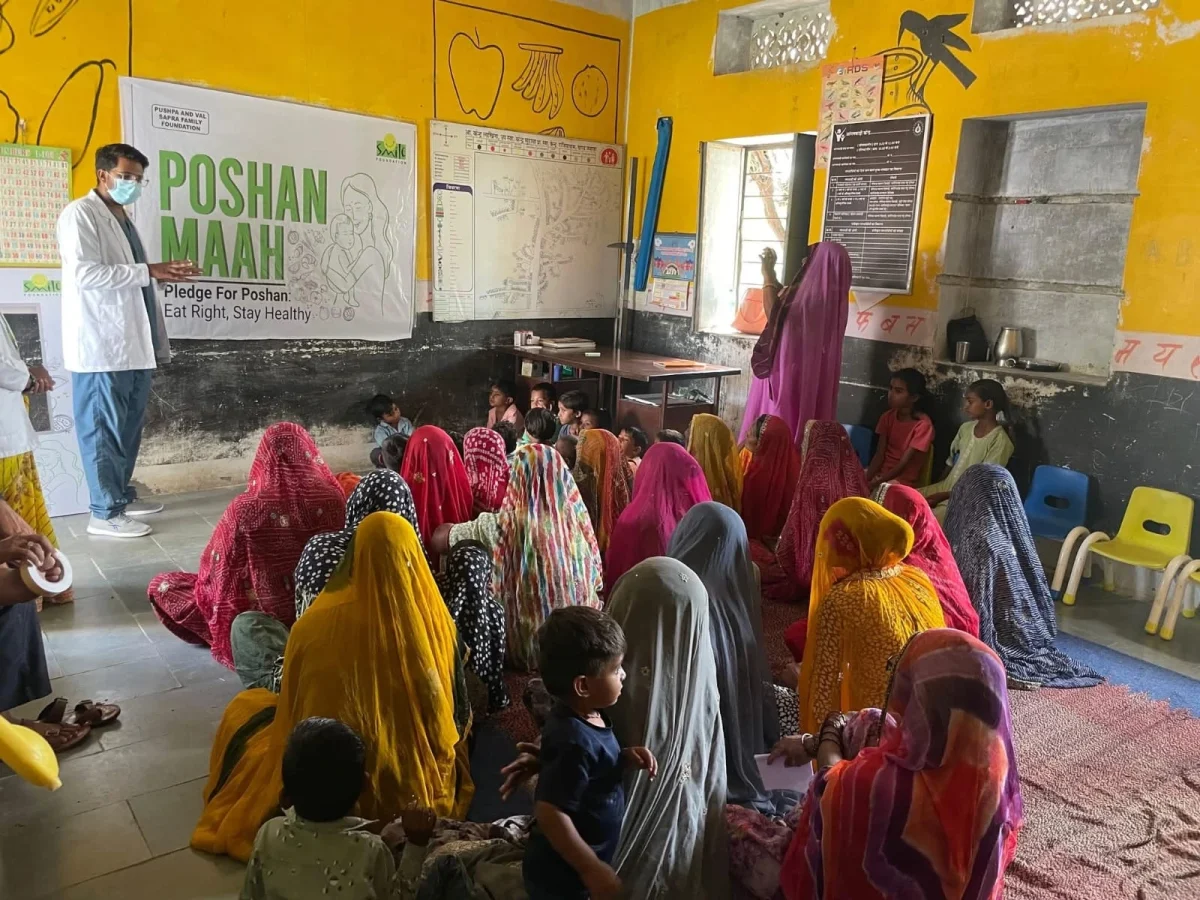
Being launched along with the 8th edition of Poshan Maah – the Swasth Nari Sashakt Parivar Abhiyaan is a strategic synchrony of the government’s effort towards uplifting women, children and adolescents health in India. 

Where Poshan Maah focuses on nourishing, this Abhiyaan builds systemic care, together forming a dual front to strengthen women and her community. 

Abhiyaan eng

Starting from 17 September to 2 October 2025, with the support of the Ministry of Health and Family Welfare and the Ministry of Women and Child Development, the Abhiyaan will unfold nationwide. Community health centres, Ayushman Arogya Mandirs and Anganwadis will become the stage for screenings, interventions and awareness programmes bringing healthcare to the very heart of communities.

DSC01586

According to the Ministry of Health, this initiative extends the state’s long-term commitment: to ensure that women, especially in rural and urban-poor settings receive uncompromised access to quality healthcare. At its core, the campaign targets critical challenges 

  • Anaemia
  • Tuberculosis
  • Sickle cell anaemia
  • Cancers of the breast and cervix
  • Oral cavity 

It also aims in strengthening antenatal care, expanding vaccination drives, establishing blood donation camps and integrating AYUSH-based wellness – ranging from nutrition literacy and local food promotion to menstrual hygiene, early childhood care and distribution of take-home rations. Digital health services such as Ayushman Bharat Health Accounts (ABHA) and PM-JAY will provide continuity of care.

This mobilisation rests not only on institutions, but also on the people who carry trust into households. ASHA and Anganwadi workers, ANMs, self-help groups and panchayati raj institutions under the MY Bharat initiative will drive grassroots awareness. 

Specialist services in gynaecology, paediatrics, dermatology, psychiatry, ophthalmology and dentistry routed through medical colleges, district hospitals and apex institutions like AIIMS, ESIC and CGHS will ensure last-mile access to women’s health and child care.

The Health Ministry frames this campaign as aligned with the Prime Minister’s larger vision: a future where health, nutrition and fitness are not privileges, but pillars of a developed India by 2047.

The Generational Struggle

In India, women’s health is a mirror of the nation’s deeper struggles between progress and neglect, between bold schemes and persistent gaps. To understand these generational challenges is to recognise the silent currents shaping not just women’s lives, but the destiny of families and entire communities. 

Four challenges that have been clouding women of India’s health for centuries are anaemia, malnutrition, chronic disease like diabetes and fragile antenatal care. 

  1. Anaemia – The Invisible Weakness

Anaemia is both widespread and insidious. According to the NFHS-5 report, nearly 59% of adolescent girls and 67% of children are anaemic, while 32 million pregnant women battle the condition at any given time. 

9A6A7655

This long battle has robbed several mothers from strength and vitality; they have a risk of low birth weight, prematurity and maternal death. The government’s Anaemia Mukht Bharat campaign attempts to counter this through the 6x6x6 strategy that covers

  • Iron and folic acid supplementation
  • Deworming 
  • Digital tracking 
  • Fortified foods
  • Community outreach
image

In 2024-2025, almost 154 million children and adolescents have received supplementation, but iron intake still remains low in three out of women. The anaemia struggle is not limited only to medical services, but cultural behaviours like diets lacking diversity, gender norms that force women to have inadequate diets and poverty are few of the reasons that result in women and young girls to be a victim of this silent disease. 

  1. Malnutrition v/s Overweight – The Double Burden 

Malnutrition and overweight are two challenges that women’s health in India faces alarmingly. On one side lies chronic energy deficiency, with millions of women entering pregnancy being underweight, weakened by insufficient protein and calorie intake. On the other hand, the alarming rise in overweight and obesity among adolescent girls adds a new layer of danger to women’s health in India. 

This double burden accelerates the cycle of poor maternal and child outcomes, as undernutrition leads to stunted child development, while obesity in young girls and women seeds chronic diseases like diabetes and hypertension in early adulthood.

NGP 8049

Government programmes such as Poshan Abhiyaan seek to balance this through

  • Counselling
  • Promotion of local foods
  • Take home rations 
  • Community-based awareness programmes

However, the concerning factor that our society faces is the harsh truth of behaviour change demanding consistent efforts and reduction in the resistance of transformation.

  1. Antenatal Care The Quality Gap

The WHO in 2016 revised its prescribed four antenatal visits to at least eight visits for safe motherhood and inspired from this India’s National Health Mission mandated that pregnant women must receive at least 4 or more antenatal check-ups that shall include

  • Timely registrations 
  • Essential lab tests
  • Tetanus toxoid vaccination 
  • 100 days of iron and folic acid
9A6A7543

Yet, the gap lies not in numbers but in the quality of antenatal checkups in India especially for women belonging to rural India. Even as flagship efforts like the Pradhan Mantri Surakshit Matritva Abhiyan and its predecessors policies have driven the maternal mortality ratio down from 130 to 93 per lakh live births and the infant mortality rate from 39 in 2014 to 27 in 2021 – still the machinery falters at the level of practice. Check-ups often become perfunctory rituals, danger signs go unnoticed and counselling – the most human part of care – is absent.

  1. Menstrual Hygiene A Hidden Fault Line 

Menstruation in India remains less a biological reality than a battlefield of silence and stigma. In rural regions, despite schemes for free of subsidised sanitary products, millions of women such as 85% of women belonging to the Juang community, an ethnic group of Odhisha’s Keonjhar and Angul district still continue to depend on old cloth during menstruation. 

The continuation of unsafe menstrual hygiene practices still continue in India because of financial constraints, weak supply chains and cultural shame. Infrastructure gaps compound the issue – shared toilets without water, poor disposal systems and inadequate privacy – push women into unsafe practices, raising the risk of infection and long term reproductive harm. 

image 9

The consequences ripple far beyond discomfort. Girls end up missing school, opportunities shrink and psychological scars accumulate. A mother weakened by neglect passes vulnerability to her children and that ends up in continuing this generational cycle of shame and treating menstruation as a taboo. 

The Indian state has built a massive machinery for achieving robust women’s health conditions in India, but the reality is that impact lies when execution is done at the smallest details. A pill missed, a danger sign gone unnoticed, rations misallocated – individually they may be small, but continuity of them erodes the strategy. 

The women’s health crisis in India is generational and to solve this, it requires more than policy – it demands precision, relentless vigilance and the reshaping of cultural habits that have kept women last at the table.

WhatsApp Image 2025 09 18 at 12.28.52 PM

Swabhiman’s Efforts for Women’s Health

Women’s health in India is trapped in a cycle of neglect – anaemia, malnutrition, unsafe motherhood and the chronic erosion of dignity. The state has erected vast programmes for women’s health as beacon of hope with policies and intent, however, the battle against these diseases would be won only when the execution of these policies are done at the smallest levels, where vigilance falters and neglect renews itself. Here social stakeholders such as NGOs become indispensable.

Smile Foundation’s Swabhiman initiative exists to sharpen this edge. Our efforts are to amplify the government initiatives for women’s health in India. By aligning our efforts with campaigns like Poshan Abhyaan, Anaemia Mukht Bharat and Swasth Nari Sashakt Parivar Abhiyaan, we transform the government’s intent into reality to ensure the accomplishment of sustainable development goals and national development goals holistically. 

Our projects like the Pink Smile, launched in Mathura have screened over 1700 women to combat anaemia. With medical camps, tele- consultation and nutritional support we have aimed in developing a methodical behavioural change towards women and young girls health in the grassroot communities. 

image 6

Swabhiman has been designed to see beyond treatment. It embeds nutrition into the household itself. 150 kitchen gardens have been established, so that food is no longer a luxury that cannot be dispensed but a practice cultivated; iron rich, locally sourced and sustaining regional food to ensure that women who once ate last and least are taught to reclaim the household table through low cost recipes and nutritional breakfast for expectant mothers. 

DSC01884 scaled

Swabhiman understands that health is not only an individual concern– it shapes the community. Therefore, to ensure that communities rise healthy, our intervention kickstarts right from the critical thresholds of motherhood. Through Godh Bharai ceremonies, couple counselling and reproductive awareness, Swabhiman aims at shifting the mother’s role from passive patient to informed decision maker. 

By training ASHAs, ANMs and Angandwadi workers, Swabhiman strengthened the women’s healthcare system at the grassroots level ensuring accountability in the service delivery.

9A6A7475

Equally, Swabhiman confronts the challenges around menstrual hygiene in girls. Our aim is to dismantle the long buried shame associated with menstruation. Through awareness campaigns, counselling and sanitary napkin distributions, our interventions do not just aim at maintaining hygiene, but cultivate young girls with autonomy on their body and future. 

At the core of every Swabhiman intervention lies a single unyielding truth–women’s health is generational. A weakened mother gives rise to a weakened child and the cycle reviews itself with ruthless precision. 

Swabhiman exists to break this cycle, through exacting work on the ground and the deliberate reshaping of habits and norms that have long condemned women to the margins of society and denied them their most fundamental needs – right to quality healthcare. 

Our purpose is not charity, but restoration; to see women, children and young girls of India rise strong, uncompromised and unashamed – claimed at last, as equal citizens and rightful architects of this nation’s future. 

Stand with us to forge a healthier, nourished India – where strong girls and women build resilient communities. Support Swabhiman!

Sources:

  1. PM Modi launch of ‘Swasth Nari, Sashakt Parivar Abhiyaan’
  2. Gender inequality makes beating malnutrition hard
  3. Swasth Nari Sashakt Parivar Abhiyaan
  4. Chances of dying from chronic disease increased in India, women affected more: Lancet study
  5. A half-won battle: why India’s growth is leaving a generation of women behind
  6. An analysis of inequality in physical health status of women in India: 2015‒2021
  7. India’s Fight Against Anemia- Nourish, Prevent, Protect
0%