Categories
Education Gender

Only 13.5% of STEM Faculty in India are Women

In the rural government school of a small town in Odisha, 14-year-old Nisha sits on the front bench, her notebook filled with carefully drawn diagrams of human anatomy. Her curiosity is boundless, but her access to science role models is not. Her only science teacher — a kind but overworked man nearing retirement — teaches physics, chemistry and biology all in one week. There is no female science teacher in her school. There never has been.

Nisha’s story is echoed across thousands of schools in India. Despite decades of investment in education, only about 13.5% of institutions in India have a female science teacher, according to this study which has substantial impact on the associated skewed number of STEM female teachers in schools.

This is a reflection of how gender intersects with access, aspiration and agency. When girls rarely see women teaching science, the idea of pursuing it as a career becomes distant, even unimaginable.

At its core, the lack of female science teachers is a visibility problem. It’s about who stands at the blackboard, who demonstrates an experiment, who answers the questions that shape how young people perceive knowledge and power. Representation in the classroom is not symbolic—it’s structural.

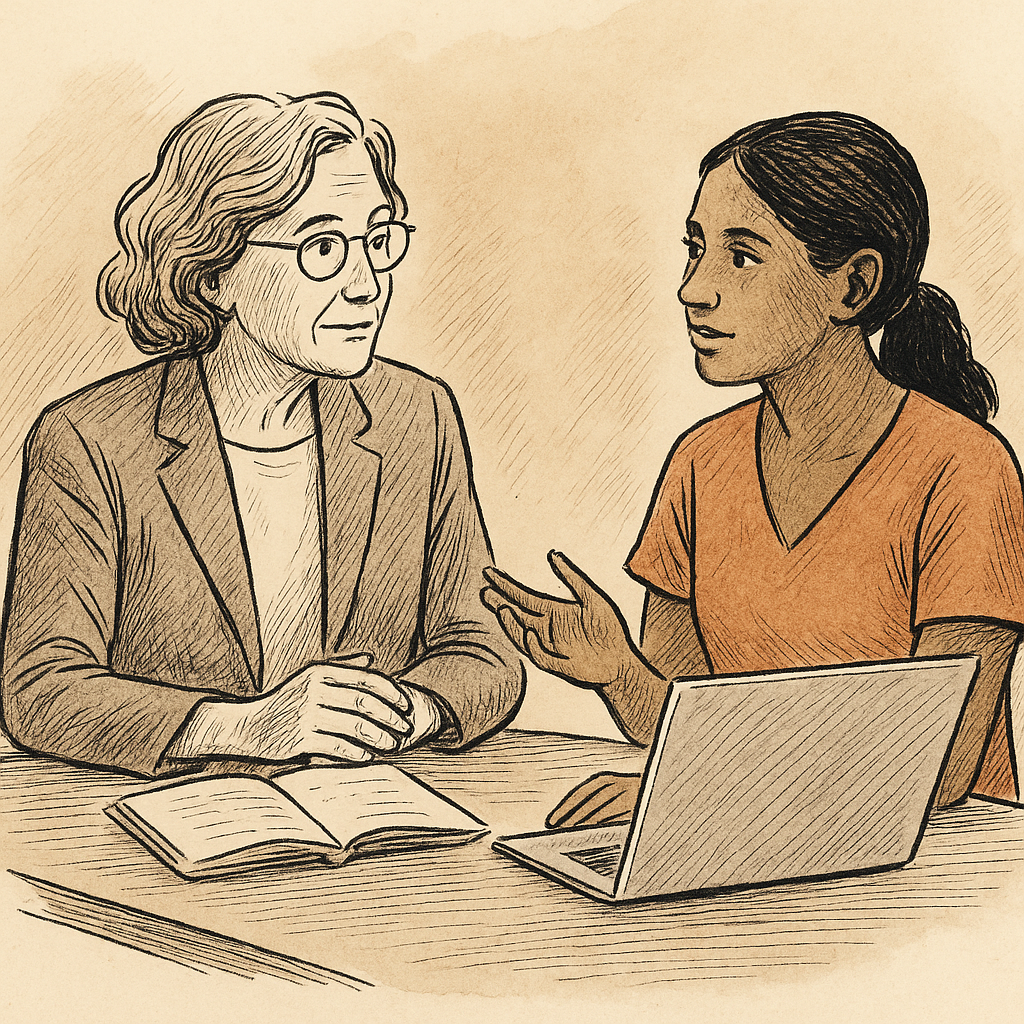
ChatGPT Image Oct 22 2025 06 59 41 PM

Why it Matters: The Effects of Representation

A teacher does more than teach. She validates, motivates and models what learning looks like. In science education, long seen as a male-dominated field, having women teachers changes the social script.

Research consistently shows that when girls are taught by female science teachers, their participation and performance in STEM subjects increase. But the impact goes beyond grades. It affects belief systems. A girl who sees a woman explaining Newton’s laws begins to see intelligence, authority and scientific reasoning as gender-neutral attributes.

In many schools, particularly in India’s smaller towns and villages, science is still perceived as ‘difficult’ or ‘not for girls.’ Parents often encourage girls to focus on subjects that seem ‘safer’ or more traditional like languages or home science. The absence of women science teachers reinforces these perceptions.

The result is a feedback loop: few women teachers mean fewer girls pursuing science degrees, which in turn means fewer women returning to teach. Breaking this loop requires deliberate, systemic intervention—something that civil society organisations like Smile Foundation are helping catalyse at the community level.

Barriers that Keep Women out of Science Teaching

The reasons for this gender gap are both structural and cultural.

1. Educational pipeline bottlenecks

In many regions, especially in low-income and rural communities, fewer women complete undergraduate or postgraduate degrees in science — often due to family constraints, early marriage or limited local colleges offering STEM courses. Without this qualification base, the pool of women eligible to teach science shrinks drastically.

2. Institutional bias and recruitment

Schools often prefer male teachers for science subjects, citing perceptions around discipline, mobility or technical competence. For example, a woman teacher may be considered less capable of managing a lab or taking students on field visits. These biases are subtle but widespread.

3. Work-life pressures

Science teaching, particularly in secondary schools, often involves additional administrative responsibilities — exam supervision, lab preparation and extracurricular activities—that require longer hours. For women juggling household or caregiving duties, this becomes a deterrent.

4. Rural assignment reluctance

For many qualified women, rural or semi-urban postings are challenging due to safety concerns, lack of transport or inadequate facilities. This skews gender balance even further in the very regions where representation is most needed.

5. Social conditioning

The larger societal belief that men are better at science continues to influence both student and teacher aspirations. When women internalise these stereotypes, they may opt for subjects seen as more appropriate or manageable.

These challenges are not insurmountable but they require a shift from viewing women teachers as beneficiaries to viewing them as agents of systemic change.

Smile Foundation Approach: Building Confidence through Classrooms

Over the past two decades, Smile Foundation has worked in education, health and livelihood sectors with one consistent thread — community-led empowerment. Within its Mission Education programme, which spans more than 25 states, the organisation focuses on holistic learning models that prioritise inclusion, quality teaching and local ownership.

A significant component of Smile’s education work involves supporting women educators, especially in STEM disciplines. Across many of its project schools, urban learning centres, digital classrooms and residential programmes for girls, Smile Foundation has seen how a single woman teacher can transform the learning environment for hundreds of children.

Take, for instance, Smile Foundation’s residential learning programme for girls in Ladakh. In this mountainous region, secondary schools are often several kilometres apart, and teachers frequently rotate in and out due to harsh conditions. Here, local women trained and supported by Smile serve as both educators and mentors. Many were once students in similar villages; now, they teach physics and environmental science, bridging both the cultural and gender divide.

As one teacher shared:

“When girls see me teaching science, they realise it’s not something that belongs only to boys. It belongs to anyone who is curious.”

This approach, rooted in local leadership and trust, has helped Smile Foundation create a network of women educators who are not only teaching science but redefining what it means to teach with empathy, relevance and community connection.

Changing the Narrative: Women as Science Role Models

It’s easy to underestimate the symbolic power of a woman with chalk in hand, explaining the solar system or a chemical equation. In villages where girls often drop out after primary school, this image itself is revolutionary.

Smile Foundation leverages this potential by mentoring local women who aspire to become teachers. Many of them start as community volunteers or tutors in Smile’s learning centres, receiving training in child pedagogy, STEM basics and digital literacy. Through this process, women not only gain professional skills but also emerge as visible role models.

In some Smile-supported schools, female teachers have introduced low-cost science experiments using local materials making science relatable and hands-on. These activities demystify concepts and encourage both girls and boys to participate actively.

When girls see women confidently teaching science, they internalise that confidence themselves. And when parents see women in respected teaching roles, their perception of girls’ education changes too.

Building Ecosystems of Equity

Creating gender balance in science education is not merely about hiring more female teachers, it’s about building an ecosystem where women can thrive as educators. Smile Foundation’s programmes address this through three strategic areas:

1. Training and capacity-building

Smile runs regular teacher development workshops focused on STEM pedagogy, digital tools and classroom leadership. These sessions also emphasise gender sensitivity helping teachers counter bias in their own teaching methods.

2. Technology-enabled teaching

With the introduction of solar-powered digital classrooms in remote areas, Smile Foundation has empowered both male and female teachers to access quality educational content. Women teachers, especially in rural settings, have found these digital aids invaluable, they enable them to explain complex scientific concepts with visual clarity, improving engagement and confidence.

3. Community sensitisation

Through parent–teacher meetings and community outreach sessions, Smile encourages families to support girls pursuing science. In many regions, this has led to tangible outcomes: higher attendance, delayed marriage age and greater continuity from primary to secondary education.

Together, these interventions form a pipeline of empowerment, from student to teacher to role model, creating generational shifts in how girls relate to science.

The Long Shadow of Underrepresentation

The scarcity of female science teachers does not just affect classrooms, it echoes through India’s broader STEM ecosystem. Women remain underrepresented in scientific research, technology jobs and leadership positions. The seeds of this imbalance are sown early, in schools where girls rarely encounter women who teach or practice science.

Without visible female mentors, girls’ participation in science subjects declines sharply after secondary school. According to various education surveys, female enrolment in STEM at the tertiary level remains disproportionately low, hovering around 30–35% nationally.

What begins as an absence in the classroom ends as a gap in the workforce. By the time women reach the professional stage, the gender divide in science has already hardened into habit. This makes the classroom, especially the presence of female science teachers, a frontline site for gender transformation.

When girls have women mentors early on, they are more likely to pursue higher education in STEM fields and challenge societal expectations that limit their professional scope.

Strengthening women’s participation in education

Government initiatives like Beti Bachao Beti Padhao, the National Education Policy (NEP) 2020 and STEM for Girls have all recognised the importance of gender inclusion in education. However, there remains a disconnect between vision and implementation, particularly in teacher recruitment and training.

To strengthen women’s participation in science education, policymakers could focus on:

  • Targeted fellowships for women pursuing science degrees who commit to teaching in underserved areas.
  • Residential training colleges in rural districts to make science education accessible to women closer to home.
  • Safety, transport and housing support for female teachers posted in remote areas.
  • Public–civil society partnerships that enable organisations like Smile Foundation to scale their models of local women educators and mentorship-driven teaching.

Bridging this gap is not just about gender justice, it’s about ensuring the quality and continuity of science education itself.

Generational change begins at the blackboard

In one of Smile Foundation’s Mission Education centres in Uttar Pradesh, a mural painted by the students reads:
“Science is the language of the future, and the future belongs to everyone.”

This sentiment captures what’s at stake. When only 13% of India’s schools have female science teachers, millions of girls are effectively being told that science is not theirs to own. Yet, when even one woman stands before a class and explains the world through equations, experiments and empathy, the message changes.

The grandmother who once collected water at dawn now watches her daughter teach health and nutrition as an ASHA worker and her granddaughter dream of becoming an engineer. This intergenerational chain of visibility is what truly shifts mindsets.

It is not about producing a few exceptional women in science; it is about normalising their presence everywhere, from Anganwadi centres to laboratories, from classrooms to policymaking boards.

Categories
Gender

What CSR Models Work Best for Women Empowerment?

Corporate Social Responsibility (CSR) in India has come a long way since it was formalised under the Companies Act, 2013. Today, nearly every major company speaks of women empowerment as a priority area in their CSR portfolio. From micro-enterprise development to digital literacy drives, the corporate narrative around empowering women has grown both louder and broader.

Despite the proliferation of projects, India’s female labour force participation remains below 30%, rural women continue to carry unpaid care burdens and gender disparities in education and health persist. The issue is not a lack of intent, but of design. Too many CSR initiatives treat empowerment as a deliverable rather than a process — a set of measurable outputs rather than a sustained shift in power and agency.

The question, then, is not whether corporations are investing in women—but whether they are doing so in ways that lead to long-term transformation.

The Shift to Capacity

The most effective CSR models for women empowerment are those that move beyond charity-driven interventions — what could be called ‘relief CSR’ —to capacity-based CSR that strengthens systems, skills and self-belief.

Charity models, while useful in emergencies, often provide short-term benefits: a sewing machine, a skills course or a stipend that helps women temporarily. But without access to markets, mobility, decision-making and continued mentorship, these gains seldom translate into lasting change.

The most transformative models, in contrast, focus on building agency, not just income. They empower women to make informed choices—about their work, their health, their families and their futures.

As Smile Foundation’s women-centric initiatives demonstrate, empowerment is not a linear journey but a layered one. A woman’s ability to earn or lead depends as much on her health, education and social support systems as it does on technical skills. Smile’s approach — combining education, livelihood and healthcare under one umbrella of community-driven development offers a blueprint for how CSR can sustain empowerment beyond project timelines.

The Four Pillars of Sustainable CSR for Women Empowerment

From Smile Foundation’s experience and the broader evolution of India’s CSR ecosystem, four critical pillars emerge for building long-term empowerment models.

1. Education as the foundation of agency

True empowerment begins in the classroom — not in the boardroom or the marketplace. Girls who complete secondary education are more likely to delay marriage, participate in the workforce and make autonomous health decisions.

However, CSR investments in education often focus narrowly on infrastructure—building toilets, distributing books or donating smartboards. While these are important, empowerment requires continuity and mentorship, not just facilities.

Through its Mission Education programme, Smile Foundation works with underprivileged children, especially girls, to ensure holistic learning that includes academic support, life skills and community engagement. Teachers, many of them local women, serve as mentors and role models, creating a multiplier effect within communities.

For example, in rural Madhya Pradesh, Smile’s digital classrooms have not only improved attendance among girls but also inspired parents to see education as a pathway to independence rather than a burden. This shift in perception, slow but steady, is the first step towards lasting empowerment.

Education-focused CSR that integrates female teacher recruitment, parental engagement and local leadership thus builds an ecosystem that outlives project cycles.

2. Livelihoods that go beyond employability

CSR programmes often equate women’s empowerment with vocational training. Stitching, candle-making or beautician courses dominate the landscape, but the challenge lies in sustainability. Many women trained under such schemes struggle to find consistent income because local markets are saturated or supply chains are male-dominated.

The most effective CSR models therefore extend support beyond training connecting women to microcredit, cooperatives or market linkages.

Smile Foundation’s livelihood projects under Smile Twin e-Learning Programme (STeP) follow this integrated approach. Women are trained not only in employable skills — retail management, IT, customer service — but also in soft skills like financial literacy, communication and digital awareness. Crucially, the programme links trainees with employers and local enterprises, ensuring real economic mobility.

In Delhi’s Seemapuri, for instance, STeP graduates have moved from informal work to full-time employment in retail chains and healthcare companies, often becoming primary earners in their households. For many, this is the first taste of financial independence, and with it, dignity.

Long-term livelihood CSR must view women as entrepreneurs and decision-makers, not just as beneficiaries. It must equip them to navigate both the workplace and the world.

3. Health and nutrition: The invisible enabler

Women’s empowerment cannot be sustained without women’s health. Yet, health remains the most underfunded area in corporate philanthropy. While companies fund skill training or education, they rarely address the foundational barriers — malnutrition, reproductive health issues or lack of access to preventive care that keep women from thriving.

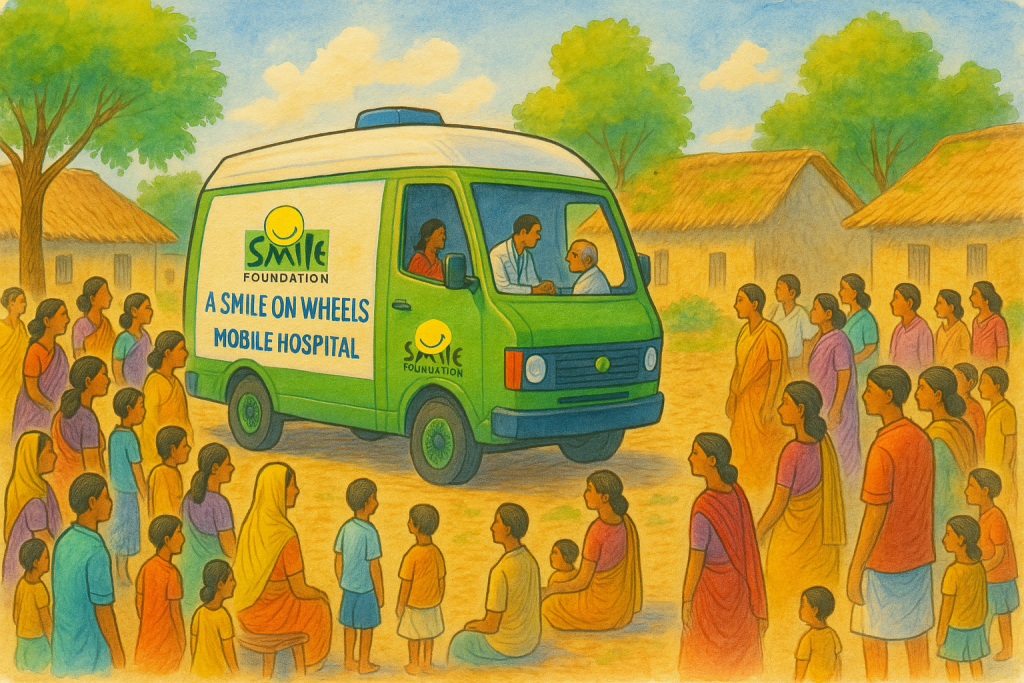
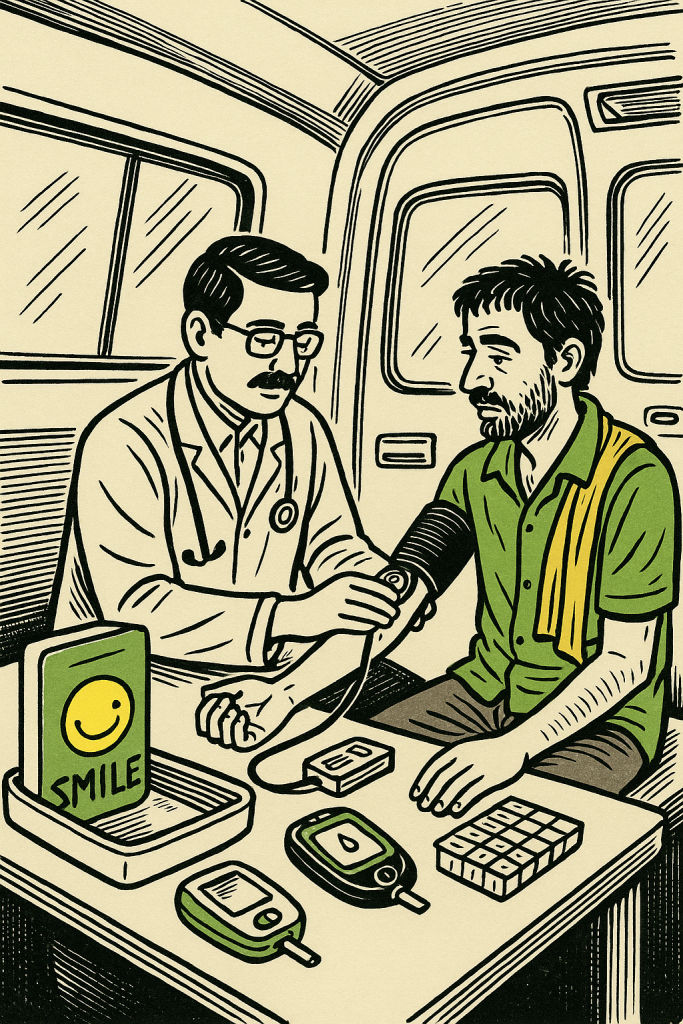
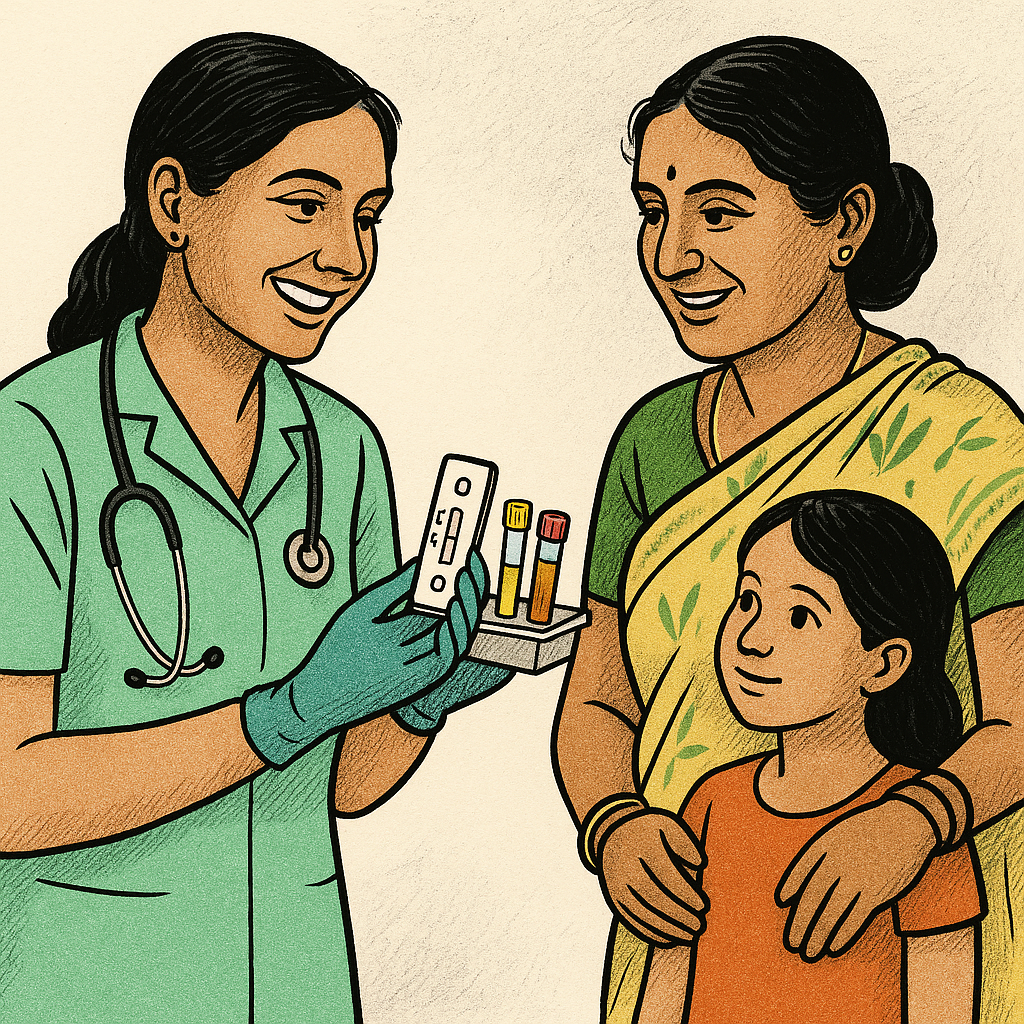
Smile Foundation’s Smile on Wheels programme — mobile healthcare units serving remote communities addresses this gap head-on. Many of its frontline health volunteers are women, often trained as community mobilisers or ASHA-like workers. They deliver primary care and health education at the doorstep, freeing women from the time and cost of travelling to faraway clinics.

In Uttar Pradesh, for example, Smile’s mobile health initiative has improved maternal health outcomes and reduced anaemia prevalence through consistent follow-up and counselling. These health interventions indirectly support empowerment by ensuring that women are well enough to participate in education and livelihood programmes.

CSR models that integrate healthcare, nutrition and sanitation into empowerment projects create stronger, more resilient outcomes because a woman’s ability to lead depends first on her ability to live well.

4. Community and family inclusion

Empowerment is a collective negotiation. A woman’s progress is often constrained, or supported, by her immediate ecosystem: her family, her peers, her village.

The most enduring CSR models recognise this social complexity and invest in community sensitisation. Smile Foundation’s projects consistently engage men, local leaders and parents to shift attitudes around women’s work and mobility.

In Rajasthan, for instance, Smile’s livelihood initiative involved fathers in counselling sessions that explained the economic and social benefits of women’s employment. Over time, these conversations have changed how families perceive working daughters or wives — not as transgressors, but contributors.

This community-based approach aligns with what development practitioners call normative change. When CSR programmes invest in changing mindsets, they ensure that empowerment doesn’t collapse once funding stops.

The long view: Empowerment as a continuum

What distinguishes impactful CSR from performative CSR is time horizon. Empowerment is not achieved in six months or even two years — it unfolds across generations. A girl who receives support today may only fully exercise her agency a decade later, when she chooses her career, delays marriage or educates her daughter differently.

That’s why long-term CSR models build continuity and convergence. Instead of isolated interventions, they create interconnected pathways — education leading to employment, employment supported by health, health reinforced by community awareness.

Smile Foundation’s work exemplifies this continuum. A girl who begins her journey in a Smile Mission Education centre may later benefit from digital training under STeP, access healthcare through Smile on Wheels and participate in community workshops on leadership or financial planning. The organisation’s multi-sector model allows women to evolve, not just survive.

This approach mirrors the UN Sustainable Development Goals’ (SDGs) principle of interdependence where quality education (SDG 4), gender equality (SDG 5), good health (SDG 3) and decent work (SDG 8) reinforce each other.

Corporates designing CSR strategies would do well to internalise this logic: empowerment is an ecosystem outcome.

What doesn’t Work and Why

While success stories abound, many CSR initiatives still fall short of their transformative potential. Common pitfalls include:

1. Tokenism and short project cycles

Too often, companies launch short-term empowerment programmes tied to financial years rather than community needs. Once budgets reset, so does the project. Without sustained engagement, progress reverses.

2. Lack of localisation

A one-size-fits-all model rarely works. Women’s realities differ vastly between urban slums, tribal areas and semi-rural communities. Programmes that fail to adapt to local norms, languages or aspirations struggle to gain trust.

3. Ignoring unpaid work

Many empowerment programmes overlook the enormous burden of unpaid labour that women carry — caregiving, cooking, cleaning, water collection. Without addressing this time poverty, even the best training or employment opportunity can falter.

4. Measuring outputs, not outcomes

Counting beneficiaries or training sessions may look impressive in reports, but real empowerment is reflected in agency — the ability to make and act upon decisions. CSR models must therefore adopt metrics that capture behavioural and attitudinal change.

5. Missing the emotional dimension

Women need confidence, not just capital. Successful models invest in self-esteem, leadership skills and peer networks that sustain women long after projects end.

Corporate Lessons from the Field

Several lessons stand out from CSR experiences across India, reinforced by Smile Foundation’s on-ground work:

1. Build from within

Empowerment is most sustainable when it grows from local leadership. Hiring and training community women as educators, facilitators or health workers ensures continuity and cultural alignment. Smile Foundation’s practice of recruiting from within the community strengthens trust and ownership.

2. Invest in multi-year programmes

Short projects rarely produce deep change. Long-term CSR commitments — spanning five to ten years — allow organisations to evolve with the community and adapt strategies as realities shift.

3. Forge partnerships

No single entity can address gender inequality alone. Collaborations between corporates, NGOs and government schemes (like NRLM or ICDS) amplify reach and reduce duplication.

4. Prioritise mentorship

For women entering work or leadership roles for the first time, mentorship provides guidance and emotional resilience. Corporate volunteers can play a vital role here, bridging professional expertise with grassroots ambition.

5. Focus on intergenerational impact

CSR models that support both mothers and daughters—through health, education and livelihoods create enduring shifts. Smile Foundation’s initiatives often involve entire families, ensuring that empowerment is not temporary but hereditary.

Long term empowerment grows where CSR takes reot
Categories
Education

FLN: The Root of Employability and STEM Readiness

Every conversation about India’s demographic dividend begins with the same promise: the world’s largest youth population will drive the next wave of innovation, technology and economic growth. But millions of children in India cannot read with comprehension or perform basic arithmetic even by the end of primary school.

This is a skills crisis, one that begins in the earliest years of schooling and extends into the workplace. Before India can talk about coding bootcamps, artificial intelligence or green jobs, it must talk about reading, counting and comprehension.

No country can have a skilled workforce without a literate childhood.

What FLN Really Means

Foundational Literacy and Numeracy (FLN) is often understood as the ability to read, write and do basic math by the end of Grade 3. But in reality, it’s the ability to process information, reason logically and solve everyday problems — the cognitive and emotional roots of all later learning.

When a child reads a story, she is not just decoding letters; she is building the capacity for comprehension, critical thinking and creativity. When she solves a word problem in math, she is not just manipulating numbers; she is learning to apply logic, recognise patterns and make predictions — the very skills that define employability and STEM capability later in life.

FLN is therefore not the first step of education; it is the foundation on which every other step depends.

The Employability Gap begins in Primary School

India’s employability debate often focuses on higher education and vocational training. Reports regularly highlight that engineering graduates lack applied skills or that industry exposure is limited. But by the time a young person enters a skill development centre or a university, the roots of the problem are decades old.

The World Bank’s Learning Poverty indicator suggests that a significant portion of Indian children struggle with reading comprehension by age 10. This means millions enter adolescence without the basic learning skills needed to master complex subjects like science, mathematics or digital technology.

The employability crisis is not created in colleges — it begins in Class 3.

Without strong foundational literacy, vocational courses become rote memorisation. Without basic numeracy, financial literacy or technical training remain abstract. And without early comprehension, the very idea of lifelong learning becomes out of reach.

FLN and the STEM Connection

STEM (Science, Technology, Engineering and Mathematics) education doesn’t start with robotics kits or coding labs. It starts with curiosity — the ability to observe, ask questions, make inferences and test ideas. And this curiosity is cultivated through language and numeracy in early years.

Language builds logic. When a child reads instructions, stories or informational text, she learns structure and reasoning — core STEM competencies.
Math builds precision. When she measures, counts or estimates, she’s learning to model real-world problems.

Together, literacy and numeracy form the cognitive scaffolding of scientific thinking.

So when India aspires to produce the next generation of innovators, coders and scientists, it must begin not with college curricula but with the FLN mission in its primary schools.

Why India’s FLN Focus Matters Now

India’s National Education Policy (NEP) 2020 recognised this urgency, identifying FLN as the single most critical learning goal. The NIPUN Bharat Mission (National Initiative for Proficiency in Reading with Understanding and Numeracy) aims to ensure that every child in Grade 3 and below attains foundational learning outcomes by 2026-27.

If children don’t master basic literacy and numeracy early, they struggle throughout school, and drop out before they acquire employable or STEM-relevant skills.

Execution must reach the last mile, particularly in rural and low-income urban schools where infrastructural gaps and teacher shortages persist.

This is where civil society and CSR interventions play a crucial role — not as parallel systems, but as complementary, localised engines of innovation.

Smile Foundation’s Approach: Laying Strong Roots Early

Through its education initiatives like Mission Education and digital learning classrooms, Smile Foundation has long understood that lasting empowerment begins with foundational learning. Across its learning centres, Smile integrates early literacy and numeracy into holistic education that combines academic, digital and life skills.

In remote and under-resourced communities, Smile’s early learning model focuses on three pillars:

1. Contextual learning

Children learn through stories, objects and examples rooted in their daily lives — helping them grasp abstract concepts through tangible experiences. A counting exercise might use grains, pebbles or local market transactions. A reading activity might use stories featuring local names and cultural references. This contextual relevance bridges comprehension gaps and keeps children engaged.

2. Teacher empowerment

Teachers in Smile’s network receive continuous capacity building to design and deliver FLN-focused activities. Many are women from within the community who bring empathy and relatability into the classroom. With structured training in child pedagogy and assessment, they help children move from rote to reasoning.

3. Digital integration

Through solar-powered digital classrooms, Smile Foundation uses technology to enhance foundational learning. Interactive modules on letters, numbers and phonics make learning more engaging and inclusive, particularly for first-generation learners. Digital tools also allow teachers to track progress and personalise support for children who fall behind.

Stronger literacy and numeracy skills at the primary level lead to higher confidence and retention at the secondary level — setting children on a trajectory towards employability and STEM readiness.

From FLN to Life Skills: The Multiplier Effect

When a child gains mastery over reading and numbers, the benefits multiply beyond academics. She becomes a confident communicator, a problem-solver and a critical thinker. These are precisely the soft and transferable skills that employers and industries value most.

For instance:

  • A child who learns to follow written instructions becomes an adult who can interpret technical manuals or code documentation.
  • A child who understands patterns in arithmetic becomes an adult who can manage finances or data-driven decisions.
  • A child who articulates her thoughts in writing becomes an adult who can lead teams, present ideas and collaborate.

The pathway from FLN to employability is therefore not linear but exponential — each layer of literacy and numeracy strengthens higher-order capabilities like reasoning, communication and adaptability.

The Rural STEM Paradox

Rural India often features prominently in conversations about the digital divide. But what’s less discussed is the STEM divide — the lack of access not just to technology, but to foundational skills that enable participation in science and innovation.

In many rural classrooms, children are introduced to science and mathematics as rote subjects, stripped of curiosity or connection. Without foundational comprehension, even bright students find STEM intimidating.

Smile Foundation’s interventions in such communities have shown that early STEM exposure, when coupled with FLN, can change this trajectory. In regions where Smile has introduced basic science experiments and digital math games, attendance and participation — especially among girls — have risen sharply.

One teacher from Smile’s centre in Rajasthan noted,

“When children learn to measure ingredients for a recipe or calculate rainfall for crops, math stops being abstract. It becomes part of life — and suddenly, they want to learn more.”

This is the missing link in India’s STEM pipeline: making foundational skills meaningful in children’s lived realities.

Girls, FLN and the Employability Chain

The connection between FLN and women’s economic participation is especially critical. Data shows that girls who master foundational literacy are more likely to stay in school, pursue higher education and join the workforce.

But in many low-income households, girls still face interruptions in schooling due to domestic responsibilities or social norms. Without strong literacy skills early on, they struggle to catch up later — reinforcing gendered inequities in both education and employment.

Smile Foundation’s residential learning programme for girls in Ladakh and other regions has demonstrated how sustained support in literacy and numeracy can reverse this pattern. Girls who once hesitated to read aloud now confidently handle mathematics, digital tools and science lessons — skills that expand their career horizons.

By combining FLN with life skills and digital literacy, Smile’s model creates a continuum of empowerment: from learning to earning, from classrooms to careers.

The Private Sector’s Role: Investing in Learning Foundations

Corporates that invest in skill development or employability programmes often overlook early education. But as data increasingly shows, the return on investment in early foundational learning is far higher than late-stage training.

A company funding a coding workshop for adolescents may impact a few hundred students. The same investment in early-grade FLN can influence thousands and its benefits last decades.

Forward-looking CSR models are beginning to reflect this shift. Many are partnering with NGOs like Smile Foundation to support early learning centres, digital classrooms and teacher training — recognising that the foundation for future engineers, scientists and entrepreneurs is built in the first eight years of schooling.

For the private sector, this approach also aligns with SDG 4 (Quality Education) and SDG 8 (Decent Work and Economic Growth), linking education and employability in a continuum rather than a sequence.

FLN and the New Definition of Employability

As automation and AI reshape industries, the definition of employability is changing. The jobs of tomorrow will value adaptability, reasoning and lifelong learning — all of which trace back to foundational competencies.

In this context, FLN is not a basic skillset; it’s a future skillset.

An employee who can read complex instructions, analyse information and apply logic is more resilient in an evolving workplace. The seeds of that capability are planted in early childhood education.

A student who once learned to count objects and recognise patterns is better prepared to understand algorithms or manage data later in life. The same numeracy that powers arithmetic in Grade 2 fuels analytics in adulthood.

Thus, the pathway from FLN to employability is not a leap — it’s a continuous learning arc, beginning with the simplest cognitive habits.

From outputs to outcomes

India’s education ecosystem is crowded with initiatives, but the challenge lies in moving from access to achievement. It’s not enough for children to attend school — they must learn while there.

Effective FLN programmes must therefore focus on outcomes, not just enrolment. Tools like learning assessments, teacher mentoring and technology-based tracking can help monitor progress meaningfully.

Smile Foundation’s use of simple yet effective digital tools in its classrooms shows that when children’s progress is measured consistently, learning gaps can be addressed in real time before they widen irreversibly.

For CSR and philanthropic partners, this approach ensures accountability and impact. It’s no longer about counting classrooms built; it’s about counting comprehension gained.

The Long-term View: FLN as National Infrastructure

If roads and power lines are the physical infrastructure of a country, FLN is its cognitive infrastructure. It fuels every sector — from manufacturing to IT, from research to entrepreneurship.

India’s ambition to become a global knowledge economy cannot rest on tertiary education alone. It must rest on a strong foundational learning system that produces a generation of thinkers, doers, and innovators who can learn, unlearn and relearn throughout life.

Smile Foundation’s early education and digital inclusion initiatives demonstrate how this infrastructure can be built inclusively — not from the top down, but from the ground up.

In this sense, FLN is both an educational mission and an economic one.

Building India’s Learning Roots

Every skyscraper stands only as tall as its foundation allows. The same is true for nations. Without foundational literacy and numeracy, the structure of employability and innovation cannot rise.

India’s future coders, engineers, scientists and entrepreneurs are sitting in today’s primary classrooms. Their curiosity must be nurtured, their comprehension strengthened and their confidence sustained.

As Smile Foundation’s work continues to show, the first investment in employability is not in resumes or training modules — it’s in reading stories, counting marbles and learning to learn.

And until every child in India reads, reasons and dreams with confidence, the nation’s true potential will remain untapped.

Categories
Gender

Digital Payments in Building Trust within Patriarchal Communities

Trust is the invisible infrastructure of every economy. It allows money to move, contracts to hold and cooperation to thrive. In patriarchal societies, however, trust is rarely neutral. It’s distributed along lines of gender, age and authority.

For generations, women — especially in rural or traditional communities—have been excluded from financial decision-making not because they lacked ability, but because they lacked trust. They were considered too naïve to manage money, too vulnerable to fraud or too dependent on men to participate in financial systems.

Digital payments, over the past decade, have started to erode this imbalance. What began as a convenience tool in urban India — UPI transfers, mobile wallets and QR codes has become a gateway to recognition and independence for millions of women in rural and semi-urban settings.

By enabling direct, traceable, and transparent transactions, digital payments are rebuilding trust from the ground up—between women and institutions, women and their families, and women and their own sense of agency.

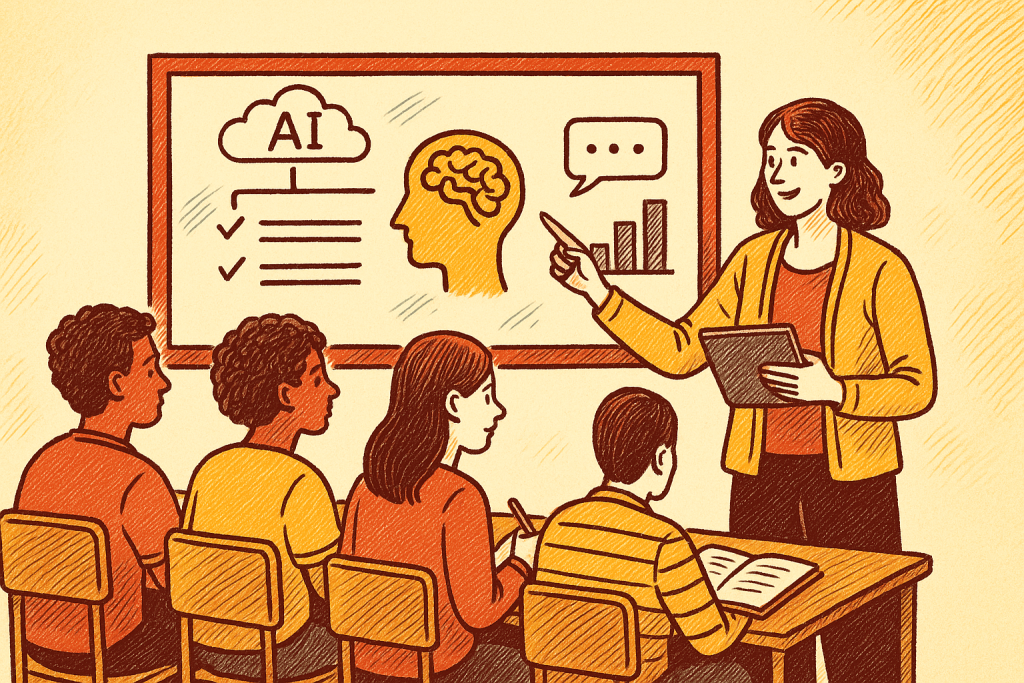
ChatGPT Image Oct 22 2025 09 34 09 PM

From Cash to Confidence

In patriarchal settings, control over cash often translates to control over people. In many families, even if women earn, their wages are handed over to male relatives. Savings are hidden, decisions deferred and mobility restricted. Cash, while tangible, has also been a tool of control — subject to scrutiny, suspicion and sometimes even confiscation.

Digital payments alter this equation subtly but significantly. When money moves digitally into a woman’s account, wallet or app — it introduces a form of autonomy that is verifiable yet private. The transaction is visible to systems but not necessarily to gatekeepers within the household.

For example, under India’s direct benefit transfer (DBT) programmes, government subsidies ranging from maternal health incentives to LPG subsidies are deposited directly into women’s bank accounts. With Jan Dhan–Aadhaar–Mobile (JAM) integration, women no longer need an intermediary to access what is rightfully theirs.

This shift from cash to digital has done something extraordinary: it has made women financially visible without making them socially vulnerable.

One woman from Madhya Pradesh put it succinctly in a field interview:

“When money comes to my phone, my husband believes I have earned it. When it came in cash, it was always questioned.”

That is the confidence digital money builds — not just in technology, but in women themselves.

The Digital Handshake: How Technology Builds Credibility

At its core, every financial transaction is a handshake of trust. Traditional banking relied on physical signatures, paper trails and face-to-face validation. Digital systems replace those with authentication, passwords and identity verification.

For many women, especially those excluded from formal credit systems, this digital handshake is their first encounter with institutional trust.

Once a woman uses her fingerprint or OTP to authenticate a transaction, she establishes proof of reliability — a digital footprint that can be used to access credit, insurance or subsidies in the future. Her transactions create a record that speaks louder than social assumptions.

Over time, this visibility becomes power. When a woman receives payments regularly — say, wages from a self-help group activity or small business — she not only gains financial stability but also digital credibility. Banks and fintechs see her as a customer; communities begin to see her as capable.

The digital trail that was once feared as exposure becomes evidence of empowerment.

Patriarchy, Privacy and Perception

But transformation doesn’t happen overnight. In many patriarchal households, the introduction of digital finance initially triggered anxiety. Men worried about loss of control, elders about misuse and communities about “women going astray” online.

These concerns were not unfounded—they were reflections of a system built on surveillance rather than trust. When women began using mobile payments, patriarchal gatekeepers saw them as a threat to the social order rather than a step towards efficiency.

Yet over time, digital literacy has shifted perception. Once families realised that digital transactions are traceable, auditable, and often safer than cash, resistance softened.

Ironically, it is the transparency of digital systems — the same feature that once frightened traditional structures — that eventually made them acceptable. Fathers who once refused daughters permission to carry money now approve digital transfers for online courses or business purchases because “it can be tracked.”

Thus, digital payments have built a new kind of trust in patriarchal contexts — not blind trust, but measurable trust. And that distinction has made all the difference.

The Gender of Trust: Why Visibility Matters

Trust is gendered because society measures credibility differently for men and women. A man’s transaction history is assumed honest until proven otherwise; a woman’s credibility must be earned.

Digital payments help level this field by replacing subjective reputation with objective record. Whether it’s a QR code business on a street corner, a self-help group’s micro-enterprise or a woman selling produce online, digital payment receipts act as evidence of reliability.

In one village in Odisha, a women-led self-help group reported that after adopting QR-based payments for their tailoring services, male customers who once delayed cash payments started paying promptly. The reason was simple: once a digital trail existed, excuses disappeared.

The women, in turn, gained not just income but business credibility. They could now show transactions to apply for micro-loans or request inventory credit.

Visibility in finance leads to visibility in society. When a woman’s digital transactions show consistency, her standing in the community rises. She becomes not just a participant in the economy, but a proof of what trust looks like in action.

Smile Foundation’s Work: Technology as a Social Equaliser

In several of Smile Foundation’s women empowerment and livelihood programmes, the adoption of digital payments has become a turning point — not only for efficiency but for dignity.

Through initiatives under its Smile Twin e-Learning Programme (STeP) and community-based skill development projects, Smile Foundation integrates digital finance training into women’s livelihood journeys. Women who learn tailoring, beauty services or retail management are also trained to use UPI, mobile wallets and basic online banking tools.

The change is often psychological before it is economic. Many women participants begin by expressing fear of “spoiling the phone” or “pressing the wrong button.” Within weeks, they are confidently scanning QR codes, receiving payments and explaining the process to neighbours.

A coordinator in Smile’s Delhi centre shared:

“The first time a woman receives a digital payment directly to her account, her body language changes. It’s not just money—it’s validation.”

By embedding digital payments into its livelihood ecosystem, Smile Foundation is effectively creating a new template of trust — one where institutions trust women as account holders and women trust themselves as decision-makers.

Trust, Access and the Social Contract

Patriarchal societies operate on a deeply unequal social contract: men are trusted with control; women are trusted with compliance.
Digital financial inclusion challenges this contract by introducing a new, neutral arbiter of trust — technology.

A payment app doesn’t care about gender, caste or hierarchy. It validates identity and transaction objectively. This neutrality has subtle but profound effects:

  1. Equal access: Once a woman has a digital ID and a phone, she holds the same transactional power as anyone else.
  2. Traceability: Because digital payments leave an auditable trail, women can prove legitimacy without pleading for validation.
  3. Portability: A digital wallet travels with a woman wherever she goes—across markets, districts or jobs giving her mobility that patriarchy often denies.

In other words, technology replaces gatekeepers with systems. And systems, when designed well, democratise trust.

Case Snapshots: Trust in Transition

1. The self-help group in Jharkhand

In a small tribal district, a women’s self-help group (SHG) selling handicrafts shifted from cash to digital payments using a basic smartphone and QR code stickers. Initially, customers hesitated. But when one transaction went smoothly, word spread. Within three months, their sales doubled because men from nearby villages felt “safer” paying digitally.

The irony: the same digital trail that gave buyers confidence also gave women bargaining power.

2. The young entrepreneur in Uttar Pradesh

A 22-year-old woman running a home-based bakery began accepting UPI payments during the pandemic. Before that, her father managed her earnings. Now, she receives payments directly and tracks orders online. When relatives question her independence, she shows her digital ledger: “It’s all here, transparent.”

Her earnings haven’t just grown — they’ve become respectable in her family’s eyes.

3. The Anganwadi worker in Tamil Nadu

An Anganwadi worker trained under a Smile Foundation digital module started using her phone to record nutrition supplies and receive stipends. Over time, she began helping mothers in her community set up digital accounts. Trust in her grew — not only as a caregiver but as a financial guide.

These vignettes show that trust, once built digitally, often cascades socially.

The Double-edged Screen: Risks and Realities

Of course, digital trust is not without fragility. For every woman who gains control through technology, another risks exploitation through misinformation, scams or coercion.

Patriarchal communities often adapt to new systems by replicating old hierarchies in digital form — for instance, men taking control of women’s PINs or requiring phones to be shared.

Digital inclusion must therefore be accompanied by digital literacy. Women must not only know how to transact, but also why privacy, consent and verification matter.

Smile Foundation’s experience reinforces this: digital confidence grows fastest when training includes rights awareness, not just technical know-how. A woman who knows that “no one should ever ask for your OTP” learns to guard not only her money but her autonomy.

Trust, after all, depends on safety.

Why Trust precedes Empowerment

Development practitioners often assume empowerment leads to trust. In patriarchal societies, it’s often the reverse: trust enables empowerment.

A woman cannot exercise agency if her community doesn’t trust her with it. Digital payments create small but powerful spaces where that trust can be tested and proven.

Each successful transaction — each moment when a woman sends or receives money independently — adds a data point to her social credibility. Over time, those data points accumulate into legitimacy.

In that sense, digital payments function as micro-acts of empowerment. They don’t dismantle patriarchy overnight, but they chip away at its foundation by making women’s capability visible, measurable and undeniable.

The Psychology of Proof: Numbers Don’t Lie

Traditional gender norms often rely on invisibility: “We don’t see women earn, therefore they must not contribute.” Digital payments dismantle this invisibility by turning women’s labour into quantifiable evidence.

When a self-help group’s sales or a domestic worker’s wages appear as transaction records, society can no longer pretend women’s work is secondary. The psychology of proof becomes a lever for equality.

Even sceptical family members, who once doubted women’s earnings, begin to respect the digital trail. “She’s earning through proper channels” becomes a common phrase — a subtle but significant upgrade from suspicion to respect.

When daughters see their mothers using digital payments confidently, it normalises financial independence early. In several Smile Foundation communities, adolescent girls have started helping their mothers navigate apps — creating a reverse mentoring dynamic that softens patriarchal authority.

A girl who learns to manage digital money grows up expecting autonomy.
A mother who learns to trust herself financially raises daughters who are trusted from the start.

In this way, digital payments are not just building trust — they are redesigning inheritance, passing down confidence instead of compliance.

The Ecosystem Challenge: Beyond Technology

To sustain this transformation, digital payments must be supported by an ecosystem that reinforces trust. That includes:

  • Financial institutions that treat women as primary clients, not dependents.
  • CSR programmes that invest in digital and financial literacy as a continuum, not separate silos.
  • Community facilitators who act as intermediaries of trust helping women navigate errors, fraud or confusion.
  • Government initiatives that ensure grievance redressal mechanisms are accessible and gender-sensitive.

Smile Foundation’s integrated model combining education, health, livelihood and digital inclusion illustrates how trust thrives when technology is humanised. When a woman learns, earns and transacts within the same supportive ecosystem, her trust in the system (and herself) multiplies.

Measuring What Matters: The Trust Metric

How do we measure trust? It’s not captured in transaction counts or app downloads. True trust is reflected in behavioural shifts:

  • Women making independent spending decisions.
  • Families allowing women to handle household finances.
  • Communities recognising women as credible economic actors.

Smile Foundation’s monitoring frameworks, for instance, often track “decision-making confidence” — a qualitative yet powerful indicator of empowerment. Over time, trust becomes not just a social outcome but a development metric as vital as literacy or income.

The Future of Trust is Inclusive

As India moves toward a cash-lite economy, digital payments are poised to become the default mode of financial interaction. But their true impact lies not in convenience, but in cultural transformation.

When technology mediates fairness, when transparency replaces bias and when data replaces doubt — trust becomes inclusive.

In patriarchal communities, this is revolutionary. It means that women no longer need to ask to be trusted; they can show they are trustworthy. It means that systems start reflecting equality long before society fully embraces it.

And it means that empowerment is no longer an abstract promise — it’s a transaction verified in real time.

Trust as the New Currency

Digital payments have done what decades of policy couldn’t fully achieve — they’ve made women visible in the economy, credible in their communities and confident in themselves.

In the language of finance, trust is the highest-value currency. When women control their digital transactions, they start accumulating that currency — bit by bit, day by day.

The real revolution is not in the transfer of money, but in the transfer of belief: belief that women can earn, decide and lead.

As one Smile Foundation facilitator said:

“Digital payments gave women something they never had—a record of trust.”

And in societies where trust has long been hoarded by men, that record might just be the beginning of balance.

Categories
Skill Development

Rural vs. Urban Skill Aspirations: India’s Split Dream

The Two Indias of Ambition

On a humid afternoon in Jharkhand, 19-year-old Suman Devi finishes her daily chores and sits under a neem tree scrolling through short videos on her brother’s smartphone. They’re tutorials on tailoring and small-business marketing — skills she hopes to learn at the new community centre nearby. “If I can stitch uniforms for the school,” she says, “I’ll earn and stay with my family.”

A thousand kilometres away in Gurugram, 22-year-old Ritesh Kumar, a BCom graduate, browses LinkedIn for entry-level roles in marketing analytics. “Everyone wants a job in data or AI now,” he laughs. “You can’t survive on just degrees.”

Both are part of India’s youth bulge — but their worlds and the skills they seek, could not be more different.

In rural India, skill aspirations are shaped by stability — staying close to home, securing livelihood and ensuring continuity. In urban centres, they are driven by mobility — climbing the social ladder, switching industries and chasing the next opportunity.

This rural–urban divergence is not just about geography. It’s about access, exposure and the confidence to dream differently.

The Geography of Aspiration

India’s demographic dividend is often celebrated as a national asset. Yet, behind the optimism lies an uncomfortable truth: aspiration is not evenly distributed.

In urban India, aspiration is nurtured by access — to technology, mentors, networks and role models. The city teaches its youth to plan futures in sectors that didn’t exist a decade ago: digital marketing, UI/UX design, AI development, social entrepreneurship.

In rural India, aspiration is tethered to proximity — to what’s visible and reachable. Here, ambition rarely sounds like “data analytics” or “product management.” It sounds like nursing, tailoring, teaching, driving or opening a small shop.

These are not lesser dreams; they are practical ones, forged by scarcity and sustained by resilience.

But the gap between what young Indians want and what they can access is widening. For every student in Delhi enrolling in a coding bootcamp, there are dozens in Bihar or Chhattisgarh who have never used a computer.

The result: a two-speed economy of skills, where one group is trained for Industry 4.0, and the other, still for survival.

Rural Skills

In India’s villages, skills have always existed — in crafts, agriculture, animal husbandry and services. What’s missing is the formalisation of those skills and the pathways to better livelihoods.

A young woman who manages livestock or grows vegetables already exhibits entrepreneurial traits — budgeting, planning, problem-solving — but without recognition or training, her potential remains invisible.

When rural youth think of “skill development,” it’s often synonymous with learning something employable quickly — usually vocational courses that promise immediate income:

  • Beauty and wellness
  • Electrical repair
  • Tailoring
  • Driving
  • Nursing assistance

These skills offer security, not social mobility. And that’s by design. In communities where family expectations, early marriage and financial pressure converge, young people often prefer certainty over experimentation.

As one rural facilitator in Smile Foundation’s livelihood programme explains:

“Our students don’t want to move to big cities immediately. They want to earn respect first — then money.”

That desire for respect is as powerful as the pursuit of profit. In patriarchal and close-knit communities, skill equals credibility — especially for women.

Urban Skills: Mobility and the Myth of Freedom

In cities, the equation flips. Urban youth are inundated with opportunities — and overwhelmed by choice. Digital learning, start-up culture, and global exposure have turned skill into a kind of currency, traded through certificates, online portfolios and networking events.

But even here, inequality persists. Not every urban youth belongs to the English-speaking, internet-savvy elite. Many are first-generation learners from migrant or low-income families. For them, the “urban advantage” often stops at proximity.

These young people aspire not to escape their city, but to claim it. Their goals are different from rural youth, but the stakes are similar: survival with dignity.

Smile Foundation’s Smile Twin e-Learning Programme (STeP) works precisely in this intersection — training urban and semi-urban youth in employable skills while building their confidence and soft skills.

In Delhi, Mumbai, and Chennai, STeP centres offer courses in retail management, digital literacy, customer relations and communication. For many participants, these are not just professional skills but social passports — tools that allow them to navigate workplaces, negotiate pay and redefine their roles in urban society.

A participant from Chennai put it best:

“Earlier I thought jobs were for other people. Now I know I can speak, learn, and grow too.”

In cities, aspiration is louder — but also lonelier. Rural youth aspire to stability; urban youth aspire to belonging.

The Aspiration Divide: Digital, Linguistic, Cultural

Between the rural and urban lies a gulf not of talent, but of translation.

  1. Digital Divide: While urban youth toggle between devices and platforms, many rural students still rely on community centres or shared smartphones. This restricts exposure to new-age skills that require continuous online engagement.
  2. Language Divide: Most online and professional content is in English, making technical learning inaccessible for millions.
  3. Cultural Divide: Urban youth are encouraged to take risks, switch careers, and embrace failure. Rural youth, bound by community and family expectations, are expected to conform and “not waste time.”

Together, these divides create a psychological ceiling. The question is not “Can rural youth learn new skills?” but “Do they believe those skills belong to them?”

Smile Foundation’s experience shows that the answer changes dramatically when learning becomes contextual and localised.

Smile Foundation’s Model: Bridging Aspiration through Dignity

Across its education and livelihood programmes, Smile Foundation has consistently emphasised earning with dignity. This phrase encapsulates what both rural and urban youth are truly seeking — not just jobs, but respect, agency and recognition.

In rural India:

Smile’s skill development projects focus on contextual employability. For instance:

  • Training women in tailoring, digital accounting and basic enterprise management.
  • Linking local skills (like weaving or food processing) with modern market access.
  • Integrating financial literacy and digital payment training, enabling women to manage earnings independently.

These interventions don’t uproot young people from their communities; they redefine opportunity locally. A woman who starts a tailoring business in her village is not “less skilled” than someone working in a retail outlet in Delhi — her value is simply rooted in a different ecosystem.

In urban areas:

Through its STeP centres, Smile trains young adults in retail, customer relations, digital tools and personality development — skills that increase employability in growing sectors like e-commerce and services.

But the difference lies in pedagogy. Trainers focus as much on communication and confidence as on content. A key learning from the programme: aspiration grows when young people see someone like themselves succeed.

This human-centric, peer-driven approach helps rural and urban learners alike bridge the gap between learning and livelihood.

Why Aspiration Matters more than Skill

Skill development often gets discussed in economic terms — productivity, output, GDP. But beneath those numbers lies something intangible yet powerful: aspiration.

A young person’s ability to dream determines how far they can go with the skills they acquire. If a rural girl believes her education ends at Class 10, her skills plateau early. If she begins to imagine herself as a teacher, nurse or entrepreneur, learning becomes continuous.

Aspiration is the engine of skill application. Without it, even the best training programmes produce compliant workers, not creative professionals.

That’s why development models must move from supply-driven (training for existing jobs) to aspiration-driven (training for the futures youth desire).

Smile Foundation’s approach embodies this shift. Trainers begin by asking: What do you want to become? — not What jobs are available? This reframing encourages agency and ensures skills are aligned with personal dreams, not just market demand.

Gender and Aspiration: The Invisible Frontier

In rural India, the gender gap in skill aspiration remains wide. For many young women, the first “skill” they’re expected to master is domestic work. Mobility is restricted, exposure limited and decisions mediated by family approval.

Yet, when women gain access to training, their aspirations often expand exponentially. A young woman who begins by learning tailoring may soon want to start her own boutique; one who joins a digital literacy class may later explore e-commerce.

Smile Foundation’s women-centric livelihood programmes have demonstrated this repeatedly. In a Rajasthan centre, 60% of women trainees reported that the biggest change after their course was not income but confidence. They started participating in family financial decisions, teaching digital literacy to others and exploring online marketplaces.

As one graduate shared:

“Before, my world ended at my house. Now, my phone shows me how big it can be.”

In contrast, urban women face different barriers — workplace bias, safety concerns and competition. Their aspiration is not access but recognition. The city teaches them ambition but rarely equality.

Thus, gendered aspiration is layered: in rural areas, it’s about visibility; in urban ones, about validation.

The Migration Myth: Movement vs. Opportunity

Migration has long been seen as the natural outcome of rural skill acquisition. “Train in the village, work in the city” — this was the unwritten rule of India’s labour mobility. But the pandemic changed that narrative.

The mass reverse migration of 2020 forced millions to rethink the urban dream. Cities no longer represented security; home did.

Post-pandemic, rural youth increasingly want opportunities that don’t require migration. Local enterprise, digital work and community-based roles are gaining appeal. At the same time, urban youth — disillusioned by contract work and burnout — are exploring hybrid and remote options.

In both cases, the future of skill is not about where you work, but how you connect.

Smile Foundation’s hybrid learning and digital classrooms embody this flexibility. By teaching digital and communication skills in both rural and urban centres, they help youth plug into broader markets without leaving home.

The goal is not to erase the rural–urban divide, but to build bridges across it.

The New Aspiration Economy

India’s economy is no longer defined just by manufacturing or agriculture — it’s increasingly defined by aspiration.

Every service, from online tutoring to gig work, feeds on the desire to rise, to participate, to matter. But this aspiration economy has its own fault lines.
Urban youth navigate over-supply; rural youth, under-access.

Bridging these requires more than training — it requires translation of dreams into viable pathways.

Here’s what the future of skill-building must embrace:

  1. Contextual learning: Training that respects local realities instead of imposing urban benchmarks.
  2. Hybrid exposure: Connecting rural learners with urban mentors and vice versa.
  3. Soft skills as core skills: Communication, critical thinking and confidence must be treated as foundational, not optional.
  4. Gender sensitivity: Programmes must recognise and dismantle invisible barriers women face.
  5. Community-led design: Local trainers and peer champions should lead, ensuring cultural trust.

Smile Foundation’s model already aligns with many of these. Its curriculum evolves with local needs, its trainers come from within communities and its digital modules ensure inclusivity.

In essence, it’s creating a shared vocabulary of aspiration — one that rural and urban youth can both speak.

The Role of Policy and CSR: Scaling Dignity

Policy frameworks like Skill India Mission have expanded access to training, but scale alone doesn’t ensure success. Many programmes still treat rural and urban youth as identical audiences, ignoring their divergent motivations.

CSR interventions can bridge this gap by funding locally grounded yet nationally aligned models. Smile Foundation’s partnerships with corporates already reflect this duality: urban centres focus on industry integration; rural ones, on enterprise and digital literacy.

The lesson here is clear — skill development must be decentralised, but aspiration must be universal.

The Future: Convergence over Comparison

The phrase “rural vs. urban” may itself be losing relevance. As connectivity deepens and digital literacy spreads, boundaries are blurring. The next generation of skilled workers will emerge from both — often crossing between them seamlessly.

A girl in Uttarakhand running an online handicraft store is as much part of the digital economy as a designer in Bangalore. A young man in Ranchi freelancing in graphic design shares the same ecosystem as one in Pune.

What differs is not capacity, but ecosystem support. That’s where organisations like Smile Foundation play a catalytic role — ensuring that rural ambition doesn’t remain invisible and urban opportunity doesn’t become exclusionary.

The future of skills will not be rural or urban — it will be integrated, inclusive and identity-free.

The Right to Aspire

At its heart, the rural–urban skill divide is a divide of imagination.
Cities teach their youth to dream without apology; villages often teach theirs to dream within limits.

But aspiration is not a privilege — it is a right. And when that right is nurtured with opportunity, dignity follows.

As India invests in skilling its future workforce, it must remember that skill without aspiration is mechanical and aspiration without support is fragile. The real transformation lies in marrying the two.

Smile Foundation’s work across rural and urban India shows that when young people are trusted, trained and treated with respect, geography stops mattering. What remains is human potential — universal, resilient and ready.

Categories
Employee Engagement CSR Partners In Change Partnerships Smile

Beyond Doing Nice : Employee Engagement that Changes Lives

Humans are wired to connect, as isolation has never been our natural state. Over time, our interactions be it professional, personal or social have shaped not only relations, but the narratives that define communities and generations. Among these, employee engagement has emerged as a uniquely powerful form of interaction. 

Today these engagements offer organisations more than productivity– they create opportunities to instill meaning, responsibility and purpose. When designed strategically, employee engagement becomes a lever for lasting impact, fostering workforce stations while delivering tangible societal benefits and bridging the connection between organisations, employees and the society they service.

528686906 1242086981275775 3266843380035607990 n

Why Employee Engagement Matters 

Employee  engagement is not a perk, it is a power strategy. In every organisation, there are two kinds of workers– one, who moves with the intent and second, who simply go through the motions. The difference lies in engagement. An engaged employee takes initiative, resists the drift of apathy and aligns their daily actions with broader mission, while employees who are less engaged may keep their distance from the business’s core organisation and beliefs, which unfortunately can impact on the business’s culture. 

The Business Benefit 

Employee engagement is the unseen force that separates high performing cultures from those in decline. It has been observed that engaged teams collaborate more effectively, adapt with resilience under stress and deliver consistently better outcomes. Their discretionary effort– the willingness to go beyond what is required, directly translate into-

  • Stronger customary experience 
  • Reduced turnover 
  • Safer and productive workplaces 

Skills & Professional Development

Employees thrive when they see a path to growth– when they are coached, challenged and recognised for their strengths.They develop sharper skills through meaningful projects, mentoring and volunteering opportunities to stretch their abilities. This investment is not altruism; it is the cultivation of human capital that returns dividends in innovation, loyalty and leadership. 

image 3

Corporate Value Alignment & ESG 

Modern employees demand more than pay– they seek purpose. Gartner research shows that 87% of employees believe that businesses should take a stand on societal issues, even those not directly linked to operations. It has also been found that, when companies act authentically i.e, rooted in their values and consistent with their strategy, employees respond with heightened engagement and discretionary efforts. Furthermore, is important to note that today, the ESG and social impact initiatives have moved beyond external optics– today employees look at them as internal catalysts for business growth which invariably results in binding employees to the organisation’s mission and culture. 

Turning Purpose into Joyful Impact

Abraham Maslow, in his “Motivation and Personality” mapped the architecture of human motivation through a hierarchy of needs– physiological sustenance, shelter, love and belonging, esteem and ultimately– self actualisation. He mentioned, that while survival and recognition are foundational, it is the pursuit of self actualisation that defines the apex of human ambition. Being part of something larger than oneself– a workplace community, a volunteer group, a team or a shared culture provides the scaffolding on which individuals can transcend the ordinary, discover latent strengths and contribute meaningfully.

This is where purpose intersects with celebrations. Organisations that embed environmental, social and governance initiative– or any mission driven programme into the fabric of their culture do more than tick boxes. They provide avenues for employees to act, engage and connect, satisfying deeper psychological needs, while igniting a sense of shared achievement. 

When these purpose-driven actions interweave with festivities, ritual and the joy of giving the impact is amplified. Celebratory movements infused with meaning transform routine participation into a powerful experience of belonging and self-expression. This way, employees are not just participants, they become co-creators of impact, experiencing firsthand the exhilaration of growth, contribution and recognition. 

In essence, celebration driven engagement lies in self actualisation– when people are given the opportunity to connect, contribute and witness the tangible results of their efforts, particularly, in joyous, collective settings – the workplace becomes more than a site of productivity. It becomes a theater of human potential, a space where ambition, empathy and shared joy converge for holistic welfare. 

Joy of Giving Engagement to Amplify Purpose

The path to meaningful engagement begins with understanding the spectrum of initiatives that connect employees to causes larger than themselves.  Employees who are given avenues to align their work with a higher purpose, do not simply perform, but they transform – themselves and their environment. 

Within the framework of this purposeful corporate employee engagements, Smile Foundation offers an arean where skills, service and celebration converge creating opportunities for employees to connect, contribute and evolve. 

“When work touches life beyond the office, engagement becomes a force and not just a function”

Over the years, Smile Foundation has orchestrated employee engagement activities with strategic precision, dividing initiatives into education, community, skill and sustainability along with grand scale projects. This design has helped organisations to turn ordinary participation into a conduit of influence where they gain motivation, empowered teams, strengthened culture and visible impact– while their employees wield purposes as a subtle form of power, leaving an indelible mark on both society and the corporate realm.  

Initiative Impact
Education- Focussed Through these activities, the employees can mentor and facilitate through skill building, teaching and learning sessions, turning their work hours into meaningful impact while also demonstrating leadership through empathy
Community- FocussedHealth camps, cleanliness drives and green belt development transform employees into agents of tangible community change 
Skill & SustainabilitySustainability workshops, livelihood and soft skills workshops, plantation drives, kitchen gardens, seed ball initiatives empower employees to foster self-sufficiency, environmental stewardship and responsible change, leaving a legacy beyond the workplace
Special initiativesMarathons like the Vedanta Delhi Half Marathon, Tata Mumbai Marathon and TCS unite teams under a shared purpose. These high-visibility initiatives build pride, camaraderie and demonstrate that impact can be celebrated as powerfully as it is achieved.

Festive Engagements into Impact

By aligning employee engagement activities with festivals, corporates can transform ordinary celebrations into impact of instruments creating a virtuous circle where joy, giving and corporate purpose reinforces one another. 

image 4

Each celebration— be it Diwali, Christmas, DaanUtsav, Eid, Raksha Bandhan, Friendship Day or New Year can become a canvas for purposeful action. Activities like Rangoli making, crafting greeting cards, storytelling sessions, school kit drives and nutrition campaigns can become more than festival engagements, and more like deliberate acts that magnify engagement, strengthen corporate identity and create tangible social impact.

Furthermore initiatives such as volunteering drives of “Wall of Smiles” can convert contribution into culture, incentivising participation and embedding generosity into the organisational DNA. Distribution of winter kits, school supplies and nutrition meals can allow employees to witness immediate outcomes, amplifying morale and reinforcing the importance of human interactions for social causes. 

True impact meets action

With year round initiatives tied to the spirit of giving, Smile Foundation and many leading corporate houses have collaborated for meaningful engagements which has turned small acts into lasting acts of influence. Employees, communities and organisations have wholeheartedly participated in creating social change that paves way for a better future. Some of the examples are–

image 5

  1. Over 250 Adobe employees came together to craft eco-friendly clay idols, an act that transcended mere creativity. Every hand that shaped the clay left an imprint not just on the idols, but on children’s futures and the environment they will inherit. This was more than a zero-waste initiative—it was a deliberate gesture of responsibility, community, and hope, showing how small, mindful actions ripple into profound change.
image 6
  1. Team Dyson spent a day at our Mission Education Centre where they painted shoes, shared stories, and created moments of pure joy with children. Each brushstroke carried a message of care, each smile became a memory, and each interaction quietly transformed lives. In these simple yet deliberate acts, we see how togetherness can awaken hearts, inspire minds, and leave lasting impressions far beyond a single day.
image 7

  1. Through the Build a Bike Challenge, Smile Foundation and Wells Fargo volunteers exemplified the art of meaningful engagement. Beyond assembling bicycles, employees forged connections, inspired children, and infused joy and care into the process showing how deliberate initiatives can convert teamwork into lasting social and emotional impact.

Turn Engagement into Impact

In today’s business world, employee engagement is no longer a peripheral activity, it is a strategic necessity. Companies that align their workforce with meaningful purpose unlock not just productivity, but influence, loyalty, and cultural strength. 

Keeping this in mind, Smile Foundation demonstrates how strategically designed initiatives—spanning education, skilling, sustainability, and community development—can transform employees into architects of meaningful impact. 

When these engagements are woven into festivals, they transcend routine participation, creating moments that leave lasting impressions on both beneficiaries and employees. Such initiatives inspire, delight, and embed profound fulfilment, embodying the alchemy of purposeful engagement where personal satisfaction, social impact, and organisational advantage converge into a single, potent force.

Join us to transform employee engagement from routine to remarkable. Together, let’s harness the year-round joy of giving to create a masterstroke of collective impact—uplifting children, empowering communities, and inspiring your employees.

Sources —

What Is Employee Engagement, and How Do You Improve It?

Why organisations should invest in employee engagement

Corporate Advocacy of Social Issues Can Drive Employee Engagement

Social Impact Through Employee Engagement

Higher Employee Engagement through Social Intelligence: A Perspective of Indian Scenario

The importance of social interaction at work and beyond

A Guide to the 5 Levels of Maslow’s Hierarchy of Need

Categories
Girl Child

International Girl Child Day 2025

October 11 marks International Day of the Girl Child, a moment for the world to pause—not just to celebrate girls, but to reflect on the obstacles they still face and recommit to dismantling them. Since the day was established by the UN in 2012, the global conversation around girls’ rights has grown louder and sharper. Yet too many girls remain invisible in policy, education, health and opportunity.

In India, where half the population is female, the journey toward gender equity is urgent—and uneven. This year’s Girl Child Day offers a chance to look at facts, tell stories and point toward impact. Below is a narrative with data, insight and hope—with a look at how Smile Foundation is walking the talk for girls.

Global Snapshot: Why Girls Are Still Held Back

To begin with, the numbers tell a story we must not ignore:

  • Around 133 million girls worldwide are out of school. The dropout rate among adolescent girls (15–19) is higher than for boys. (United Nations)
  • UNESCO estimates that 122 million girls are still denied schooling globally. (UNESCO)
  • From UNICEF: girls aged 15–19 are twice as likely as boys to be out of education, employment or training. (UNICEF)
  • Violence shadows many girls’ lives: WHO reports that nearly 1 in 4 adolescent girls who have ever been in a relationship experience physical or sexual violence. (World Health Organization)
  • Under-nutrition among girls is stubbornly persistent: The prevalence of underweight adolescent girls has only slightly improved over decades. (United Nations)

These statistics are roadblocks that many girls confront daily.

India’s Landscape: Progress, Gaps and Contradictions

India’s story is one of both promise and persistent challenges.

  • Child marriage, once rampant, has seen some decline. According to older UN commentary, India’s percentage of girls married before 18 fell from 47% to 27% over a decade.
  • Still, adolescent pregnancy remains a threat, especially in parts of India. For example, in Karnataka, over 25,000 teenage pregnancies were recorded in one 11-month period.
  • Health outcomes also reflect gender bias. A Lancet Global Health study estimated that about 230,000 girls under five die prematurely every year in India due to neglect and gender discrimination. (
  • In education, while India has made solid gains, many girls still drop out in secondary school or never access STEM opportunities.

So despite policies and schemes, structural inequities remain. The question is: Can more targeted, community-anchored interventions deliver at scale?

What It Takes to Empower the Girl Child

Empowering girls is not a single intervention—it is a mosaic of strategies that must be woven together:

  • Access to education & retention: Schools must be safe, welcoming, and relevant. Sanitary facilities, girl-friendly curricula, scholarships and mentorship programmes all matter.
  • Health, nutrition, and reproductive rights: Without physical well-being, learning suffers. Anaemia, adolescent pregnancy, menstrual health — these are not side issues, but foundational.
  • Protection & legal rights: Girls must be safe from violence, trafficking, and child marriage. Legal awareness and enforcement must align with community attitudes.
  • Skills, digital inclusion & agency: In a digital world, access to devices, connectivity, coding, STEM skills are not optional—they are lifelines. Girls must lead, not be left behind.
  • Community norms & male engagement: Girls don’t live in isolation. Families, communities, religious and local leaders must shift norms. Engaging boys and men is essential.

Smile Foundation & the Girl Child: From Vision to Action

Smile Foundation has long embraced a life-cycle approach: investing in children, youth, families and communities so that advancement is sustained across generations.

Here’s how Smile is working for girls in concrete ways:

a. Mission Education & Holistic Support

Through Mission Education, Smile supports children aged 3 to 18 in underserved settings—tribal belts, conflict zones, remote villages—providing education, health, nutrition and wellness support.

In Delhi slums, for example, the model integrates health check-ups, nutritional supplements and counselling with school activities, giving girls a safety net they might otherwise lack.

b. Child For Child — Peer Awareness & Sensitisation

Gentle yet powerful: Smile’s Child For Child programme takes youth into schools to sensitise students on rights, gender and equality.

When girls hear these messages from peers, the impact is amplified. It helps change perceptions from within.

c. Swabhiman — Women & Girls’ Empowerment

Although Swabhiman is a women’s empowerment programme, its ripple effects reach adolescent girls too. It focuses on nutrition, health capacity building, livelihood support for marginalized women.

By enhancing mothers’ agency, it indirectly reshapes girls’ possibilities—raising aspirations, role models and support.

d. Education & Gender Focus in All Interventions

Smile’s core programmes do not treat girls as an “add-on.” Gender sensitivity is embedded: ensuring equal access, scholarship support, sanitary infrastructure, mentorship and career exposure.

Through its network of 158 projects across 25 states, Smile connects with over 400,000 children, youth and women each year.

Challenges & The Road Ahead

No amount of good intent can substitute for sustained commitment. Some of the hurdles:

  • Scale & quality: Reaching millions of girls with depth—good teachers, safety, continuity—remains tough.
  • Data gaps: Disaggregated tracking by gender, region, caste is weak. We often don’t know how many girls drop off, where and why.
  • Norms & resistance: In many places, investments in girl children are viewed skeptically; backlash or inertia slows progress.
  • Transition support: Going beyond school matters. Girls need skills, digital access, job linkages, safe transport.
  • Sustainability & funding: Many programmes run on project cycles; continuity is fragile.

Yet for every challenge, there is innovation: mobile health vans, digital mentors, community-based savings, mentoring networks, “safe spaces” in schools, etc.

This Year’s Call: “Girls’ Vision for the Future”

UNESCO’s theme for International Day of the Girl in 2024 is “Girls’ vision for the future.” (UNESCO)

It is a demand for policy that listens to girls, budgeting that invests in them, technology that includes them and leadership that is gender-balanced.

India must pivot from “for girls” to “by girls”: creating platforms where girls lead narratives, design solutions and hold systems accountable.

How Every Stakeholder Can Rise

  • Government: strengthen girl-friendly budgets, enforce child protection laws, expand adolescent health, digital access, safe transport.
  • Schools & educators: integrate life-skills, girls’ health, mentorship, internships in school systems.
  • Community & parents: challenge gender norms, support girls’ aspirations, incentivise education.
  • Civil society & NGOs: complement state systems, innovate locally, scale what works.
  • Private & tech sector: invest in digital inclusion for girls—connectivity, devices, training, safe online spaces.

Measuring Impact: What Should We Watch

We need robust indicators:

  • Enrolment, retention and completion rates by gender, across grades.
  • Dropout causes (especially in middle and secondary school).
  • Health indicators: anaemia, adolescent pregnancy, menstruation outcomes.
  • Digital access: device ownership, connectivity, girls’ use.
  • Transition outcomes: girls entering vocational courses, urban migration, employment.
  • Perception & safety: reports of violence, safety in school, mobility.
  • Leadership and voice: fraction of girls in student bodies, community forums, mentoring roles.

When data is disaggregated, interventions can course-correct.

Why This Day Must Be More Than a Token

International Girl Child Day is a lens—a moment to look across society and ask: are we enabling or constraining girls’ futures?

For Smile Foundation, the mission is clear: to turn opportunity into equity, dreams into trajectories. Each girl educated, each community sensitised, each programme refined is a step toward a society where gender no longer predetermines destiny.

In the words of the day itself: “Girls’ vision for the future.” Let us make space, resources, power and protection so that vision is not deferred, not silent—and not compromised.

Categories
Smile

World Mental Health Day: Prioritising Well-Being in the Post-Pandemic Era

In the wake of COVID-19, mental health has emerged as a global emergency. Studies estimate that depression and anxiety disorders surged by roughly 25% in 2020 alone. Put another way, the pandemic may have added over 129 million cases of depression and anxiety worldwide. Globally, one in eight people now lives with a mental health condition. These number represent lives disrupted by isolation, grief and uncertainty. The costs are enormous: mental illnesses already cost the world’s economy over $1 trillion every year in lost productivity and health expenses. And alarmingly, WHO reports a 25% increase in mental health disorders since COVID struck. This World Mental Health Day, we must recognise that every community and every country has been touched by this crisis – from children anxious about returning to school, to families facing financial stress and frontline workers coping with burnout.

Mental Health: A Public Health and Development Priority

Mental health is a major public health and development challenge. Worldwide, mental and substance use disorders account for about 13% of all years lived with disability – among the top health burdens on our societies. Suicide and depression alone cause millions of lost years of life, and the ripple effects touch families and economies everywhere.

In India, WHO estimates the burden is staggering: 2,443 disability-adjusted life years (DALYs) per 100,000 population, with an estimated economic loss of over $1 trillion by 2030 from mental health conditions. These figures underscore that investing in mental well-being is fundamental to achieving development goals. Recognising this, the UN’s Sustainable Development Goals explicitly call for promoting mental health as part of “healthy lives and well-being for all” (SDG 3.4).

In short, mental health underpins education, productivity, gender equality and poverty reduction. Children who are mentally healthy perform better in school and are more likely to become healthy, employed adults. Conversely, untreated mental illness can trap families in cycles of poverty and exclusion.

Yet historically mental health has been neglected. Worldwide, over half of people with severe mental disorders receive no treatment at all. In India only about one in ten of those who need care actually gets it. Stigma remains pervasive: many still view mental illness as a personal failing or spiritual curse rather than a medical condition, especially in rural areas where it can even bring “family dishonour”. Building awareness and dismantling these taboos must go hand-in-hand with expanding services.

The Social Determinants of Mental Well-Being in India

Mental health does not occur in a vacuum. It is shaped by social realities like poverty, education, gender and urban living. For example, poverty is a powerful driver of distress. Research finds that mental health disorders occur two to three times more frequently among people living in poverty. In India, where over 68% of the population subsists on less than $2 a day, the stress of daily survival – food and shelter insecurity, lost wages, debt – magnifies anxiety and depression.

Poverty also means limited access to healthcare or counselling, trapping the vulnerable without support. Conversely, mental illness itself can push families into deeper poverty: studies in Delhi show that people with severe mental illness are more likely to be poor, unemployed and less educated than their peers. In this way, mental health and economic status reinforce each other in a vicious cycle.

Education and school environment are another key factor. The pressures of exams, classroom bullying or child labour can take a heavy toll on a young mind. Often the most disadvantaged children – girls forced into early marriage or children pulled out of school for work – bear the brunt.

The National Mental Health Survey (2015–16) found that 7.3% of Indian teenagers (age 13–17) have a diagnosable mental disorder. Girls face extra burdens: nearly 27% marry before age 18 and 8% become mothers in their teens, events strongly linked to anxiety, depression and trauma. Without a supportive environment in schools or at home, these struggles can go unnoticed. That’s why educators and parents need better tools to recognise and address stress in children.

Gender too plays a role. Women in India report higher rates of anxiety and mood disorders – a gap rooted in social inequities. Discrimination, violence, and limited opportunity can erode a woman’s sense of control and self-worth, sowing chronic stress. Even in our data, female gender was associated with a higher risk of poverty linked to mental illness. In practical terms, community programmes must be sensitive to girls’ experiences and empower them with mental health literacy, support networks and life skills.

Rapid urbanisation brings its own mental challenges. India’s cities now house almost 400 million people and continue growing by millions each year. Urban life offers jobs and education, but also comes with overcrowded housing, pollution, traffic chaos and social isolation. Evidence shows that mental disorders are significantly more common in India’s cities: one study found 80.6% prevalence in urban areas versus 48.9% in rural regions. Congestion and high living costs can spark anxiety; lack of green space and rising crime can fuel depression. Urban migrants – away from family support, living hand-to-mouth in slums – are particularly vulnerable. To build healthier cities, planners must consider mental well-being as seriously as physical infrastructure. As research suggests, multisectoral “healthy city” initiatives (from safer neighborhoods to parks and reliable public transit) are needed to reduce stress and foster community resilience.

In short, the causes of mental illness are often social. Poverty, educational exclusion, gender inequality and urban stress are all part of the picture. Addressing mental health, therefore, requires addressing these root issues. It means improving schools, eradicating extreme poverty, ensuring girls’ education and creating liveable cities. This is why mental health is a development issue. Societies only progress sustainably when all their members are mentally healthy and included.

Smile Foundation’s Holistic Approach to Mental Health

At Smile Foundation, mental health is woven into our broader mission of child and community empowerment. Through school-based programmes and community outreach, we strive to nurture emotional well-being from a young age. For instance, under our Mission Education initiative, Smile integrates regular sessions on emotional well-being into the curriculum at our learning centres. Trained educators hold interactive workshops that teach children coping skills, encourage them to express feelings and create a supportive classroom climate. Rather than treating mental health as a one-off topic, Smile makes it ongoing and embedded. In communities where counselling is scarce, this early intervention can change life trajectories.

One flagship example is our “Child For Child” programme, which takes learning beyond textbooks. Here, teachers are empowered as mental health “first responders”. In intensive workshops, they learn to spot signs of stress, trauma or anxiety in students and guide them towards help. Simple practices like starting the day with mindful breathing or classroom chats about emotions – become part of daily school life. This destigmatises mental health: children who might have felt alone suddenly find language and space to talk. Smile’s data shows these efforts shift teacher mindsets and build more caring classrooms. We are also developing peer-led activities: short films and role-plays on issues like bullying and peer pressure prompt open discussion among adolescents.

In underserved communities, Smile’s outreach goes further. Community sensitisation sessions involve parents and local leaders, not just children. By training youth volunteers and social workers, we raise broader awareness so that families recognise mental distress as treatable rather than shameful. Though Smile’s specific projects may differ region by region, the common thread is early, community-rooted support. We often say: it’s better to plant seeds of resilience than wait until storms hit. By normalising conversations about stress and encouraging help-seeking, these programmes build a foundation for lifelong mental health.

Integrating Mental Health into Health, Education and Community Systems

World Mental Health Day is also a reminder of what more must be done at the policy level. Experts agree that mental health cannot be siloed – it needs to be integrated into our everyday institutions. In practical terms, this means:

  • Primary Healthcare: Every clinic and community health centre should screen for common mental health problems, just as it checks blood pressure or malnutrition. Trained counsellors or accredited social workers should be part of basic health teams. This aligns with WHO’s call to make mental health care accessible at the lowest level of the health system.
  • Schools and Education: Mental wellness should be as routine as literacy. Curricula can include life-skills and emotional literacy. All teachers ought to receive at least basic training in child psychology and how to respond to distress. India’s new School Health Programme is a step in this direction but it must be fully implemented and extended to every state and rural school. Schools should also partner with NGOs (like Smile) to bring in workshops and counsellors periodically.
  • Community Systems: Public awareness campaigns can reduce stigma and promote local support networks. Village health committees, women’s self-help groups and youth clubs can be mobilised to talk about stress and wellness. Civil society and employers can fund helplines, peer counsellors and digital tools for mental health literacy. Importantly, policies should address social drivers – for example, anti-poverty schemes, women’s empowerment and housing programmes indirectly improve mental well-being.
  • Research and Data: India needs better data – perhaps even a national adolescent mental health survey – to guide action. Tracking outcomes will help us know what works.

Such integration is urgent. Untreated mental illness leads to suffering that spills over into families and workplaces. The experience of the pandemic has shown that taking no action is not an option. Innovative models (like school counsellor training or tele-psychiatry pilots) should be scaled up with government and corporate support. Mental health must no longer be seen as a luxury or a stigma, but as foundational to healthy, productive lives.

Together Towards a Mentally Healthy Future

World Mental Health Day is a call to action – one that goes beyond one day of awareness to a year-round commitment. It reminds us that mental well-being must be everyone’s concern: policymakers, doctors, educators, parents and neighbours all have a role. By investing in early support and community-rooted care, we are investing in our shared future.

There is reason for hope. Across India and the world, we see inspiring examples of community-based models leading change. Organisations are lighting the way by showing how mental health can be woven into education and grassroots work. A teacher with basic counselling skills, a school that talks openly about feelings, a mother who learns to calmly reassure her child – these small acts accumulate into a stronger society.

This World Mental Health Day, let us reaffirm that mental health is as vital as physical health. By speaking up, by funding training and by simply listening, each of us can help break the silence and stigma. The result will be communities where every child and every adult has the chance to grow with confidence and hope. After all, a society where all minds thrive is a society where we all thrive

Categories
Smile

Gandhi’s Living Legacy: Building a Nation of Smiles

Every year, on 2nd October, India pauses.
We hang up portraits of Mahatma Gandhi, revisit his words and recall the extraordinary man whose life’s work transformed not just a nation, but the very idea of what freedom, dignity and justice could mean.

But Gandhi Jayanti should not be a day of mere remembrance. It should be a day of renewal—a moment to ask: how far have we carried forward his vision of Swaraj—self-rule not just in governance, but in the moral, social and economic lives of the people?

And in that question lies the relevance of organisations like Smile Foundation, whose work with underserved communities—especially children and women—embodies Gandhi’s philosophy in action.

Today, Gandhi’s message doesn’t live in slogans or statues. It lives in the determined footsteps of a girl walking to a digital classroom in rural Jharkhand. It lives in the compassion of a doctor aboard a Smile on Wheels mobile hospital, serving a remote village in Uttar Pradesh. It lives in the confidence of a young man who, after training at a Smile skill centre, secures a job that transforms his family’s future.

This is the Gandhian idea of progress—not the accumulation of wealth or power, but the steady, humane upliftment of every individual.

Education as the truest form of empowerment

When Gandhi spoke about education, he didn’t mean mere literacy. He envisioned Nai Talim—an education that developed the head, the heart and the hand. For him, true learning built self-reliance, character and purpose.

More than a century later, that idea still forms the moral foundation of Smile Foundation’s work in education. Through its Mission Education programme, Smile reaches children from economically disadvantaged communities and helps them not only learn but truly grow—to think, question, create and dream.

Across thousands of classrooms supported by Smile Foundation, Gandhiji’s dream of an education rooted in dignity and equality comes alive. Children learn mathematics and science, yes, but also compassion, cleanliness, cooperation and respect for others—the same values Gandhi placed at the centre of his own moral universe.

What sets this approach apart is its focus on equitable access. Gandhi once said, “If we are to reach real peace in this world, we shall have to begin with the children.” Smile Foundation has taken this to heart, creating learning spaces where no child is left behind because of her background, caste, gender or circumstance.

By blending academic learning with life skills, digital literacy and mentorship, Mission Education nurtures individuals who are not just employable, but ethical citizens—a vision Gandhi would have recognised as the essence of Swaraj.

Health as a moral responsibility

In Gandhi’s worldview, health was inseparable from ethics. He often said, “It is health that is real wealth, not pieces of gold and silver.” For him, cleanliness, nutrition and preventive care were civic duties.

This idea finds its modern expression in Smile Foundation’s Smile on Wheels initiative—a fleet of mobile hospitals that bring quality healthcare to the doorsteps of those who most need them. From urban slums to remote tribal villages, Smile on Wheels embodies the Gandhian belief that access to health is justice.

Instead of expecting patients to travel long distances or incur unaffordable expenses, the healthcare goes to them. It’s a vision Gandhi would have recognised instantly—of decentralisation, local empowerment and compassion in practice.

In many ways, Smile on Wheels represents what Gandhi meant when he spoke of Sarvodaya—the welfare of all. Each medical camp, each vaccination drive, each counselling session for mothers and children adds up to something larger: a healthier, more humane society.

Empowering women: Realising Gandhi’s vision of equality

Gandhi’s feminism was ahead of its time. He believed that women were not symbols of sacrifice but agents of change. “To call woman the weaker sex is a libel,” he once wrote. “It is man’s injustice to woman.”

At Smile Foundation, this conviction finds resonance through programmes like Swabhiman—an initiative that focuses on women’s health, nutrition, safety and financial independence.

In communities where silence and social norms still restrict women’s mobility, Swabhiman builds awareness and confidence through education on reproductive health, self-defence, menstrual hygiene and livelihood training. It helps women stand on their own feet, literally and figuratively—one of Gandhi’s deepest aspirations for the Indian woman.

He believed that true empowerment begins when a woman can make her own choices, manage her own income, and claim her rightful place in society. That spirit runs through every Swabhiman workshop, every health camp, every conversation where a young woman begins to see herself not as a dependent, but as a changemaker.

Livelihoods and dignity of work

Gandhi’s ideal of bread labour—the dignity of earning one’s livelihood through honest work—was central to his philosophy. He despised idleness and dependence, urging every person to contribute meaningfully to society.

Smile Foundation’s STeP (Smile Twin e-Learning Programme) brings this idea to life for a new generation. It prepares youth from underserved backgrounds to participate in India’s fast-changing economy through skill training, personality development and digital literacy.

The focus isn’t just on employment—it’s on dignity. The young people trained through STeP are not passive beneficiaries; they are active participants in India’s growth story. They enter workplaces not only with skills, but with confidence and purpose.

When Gandhi spoke of self-reliance (Atmanirbharta), he didn’t mean isolation from the world; he meant moral and economic independence. STeP is the modern articulation of that same vision—creating a workforce that is skilled, self-sufficient and socially conscious.

Development through community

Gandhi’s idea of development began not in Parliament but in the village. He believed that India’s soul lived in its 700,000 villages—and that progress must be local, participatory and people-led.

Smile Foundation’s work mirrors this ethos. Every initiative—whether in education, health or livelihood—is designed with community participation at its heart. Local teachers, health workers and volunteers play a vital role, ensuring that programmes are not imposed from above but built from within.

This is how Smile Foundation has sustained impact across 25 states. By nurturing partnerships with communities, corporates and governments alike, it embodies the Gandhian model of trusteeship—where resources, power and responsibility are shared for collective good.

Smile Foundation’s flagship campaign She Can Fly is another powerful example. By enabling adolescent girls to access education, healthcare and skill-building, it empowers the next generation to lead their communities. Gandhi would have seen in these girls the living embodiment of his dream for India—self-confident, compassionate and courageous.

Gandhi’s message in the age of modern India

It is easy to relegate Gandhi to history. To treat him as a saintly figure rather than a social innovator. But the truth is, his ideas have never been more urgent.

In an era defined by inequality, environmental degradation and digital isolation, Gandhi’s principles—simplicity, self-reliance, compassion and service—remain timeless guides.

Smile Foundation, in many ways, is Gandhi’s message made modern. It replaces his spinning wheel with a laptop, his village ashram with a skill centre and his marches with community health drives. Yet the moral thread is the same: real change begins with empathy and empowerment is the highest form of service.

The unfinished dream

As India celebrates Gandhi Jayanti, we are reminded that freedom was never meant to be an endpoint—it was a beginning. Gandhi did not fight for independence alone; he fought for a society built on justice, equality and humanity.

That work remains unfinished.

In a world where millions of children still drop out of school, where women still battle preventable diseases and where youth still struggle to find dignified work, organisations like Smile Foundation continue the Gandhian struggle in a new form.

Each classroom built, each woman empowered, each young person employed is an act of faith in the India Gandhi imagined.

And perhaps, if the Mahatma were to walk among us today, he would not be found in the corridors of power. He might be seen in a Smile Foundation classroom, smiling at a girl solving a maths problem. Or in a mobile hospital parked under a banyan tree, watching a doctor treat a mother and her child.

Because Gandhi’s India was never about grand monuments—it was, and always will be, about ordinary people leading extraordinary change.

Categories
Education

The Scholarship Landscape: Mapping Financial Support Systems

The Indian government operates numerous scholarship schemes targeting different demographic segments and educational levels. The ONGC Scholarship represents one of the most comprehensive programmess, offering 2,000 scholarships annually with 50% specifically reserved for female students. With a financial aid of INR 48000 per annum, the programme distributes scholarships across five geographical zones, ensuring nationwide coverage while maintaining regional balance.

The Pragati Scholarship by AICTE specifically targets female students in technical education, providing INR 50000 annually to 5,000 women pursuing diploma or degree courses in AICTE-approved institutions. This programme directly addresses the gender gap in engineering and technology fields by making technical education more financially accessible to women.

Targeted Programmes for Underserved Communities

Scholarship access varies significantly across different social and religious communities. The Begum Hazrat Mahal National Scholarship serves minority community girls with INR 5000-6000 annually for students in classes IX-XII. The programme specifically targets Muslim, Christian, Sikh, Buddhist, Jain and Parsi communities, with distribution based on minority population concentrations according to 2011 Census data.

For Scheduled Tribe women, multiple specialised programmes exist including Pre-Matric and Post-Matric scholarships for students with parental income below INR 2.5 lakh annually. The National Fellowship programme reserves 30% slots (225 out of 750) for women pursuing PhD studies. Additionally, the National Overseas Scholarship allocates 30% of its 20 annual awards to women from ST communities.

Private Sector and Corporate Initiatives

Corporate scholarship programmes have emerged as significant contributors to women’s educational access. The Kotak Kanya Scholarship provides INR 1.5 lakh annually to academically outstanding girls from underprivileged backgrounds pursuing professional courses. Dr Reddy’s Foundation offers INR 80000 annually for three years to female students in Natural Sciences, B. Tech or MBBS programmes.

Recent initiatives include Amazon’s announcement of 500 scholarships worth INR 2 lakh each for female students in computer science and engineering, and vivo’s KanyaGyaan programme channelling over INR 2 crore in scholarships to women from underserved communities pursuing STEM careers.

Barriers to Access: Understanding Implementation Challenges

Economic Constraints and Family Spending Patterns

Despite increased enrolment, significant economic barriers persist in accessing education and scholarships. Research reveals that families consistently spend less on girls’ education across all schooling stages. In rural India, households spend INR 1373 (18%) more on boys, while urban families provide INR 2791 less for girls on average. By higher secondary level, urban families spend nearly 30% more on boys’ education.

These spending disparities extend to school choice, with 58.4% of girls enrolled in government schools compared to only 34% of boys in private unaided schools. Such patterns reflect deeper socioeconomic constraints and cultural biases that influence educational investment decisions, ultimately affecting scholarship utilisation and educational outcomes.

Infrastructure and Safety Concerns

Physical infrastructure and safety considerations significantly impact scholarship effectiveness, particularly for rural women. Many girls face challenges including lack of proper washroom facilities, transportation issues and safety concerns during school commute. These infrastructural deficiencies contribute to higher dropout rates, reducing the pool of eligible candidates for higher education scholarships.

Safety concerns represent a significant barrier, with research indicating that security issues, including sexual violence and harassment, pose substantial threats to girls’ educational participation. Fear of harassment during travel to distant educational institutions often leads parents to discourage daughters from pursuing higher education, even when scholarships are available.

Digital Divide and Access Challenges

The digital transformation in education has created new opportunities while exposing existing inequalities. Only 33.3% of women aged 15-49 have ever used the internet, compared to 57.1% of men. This digital divide affects scholarship application processes, online learning opportunities and access to information about available programmes.

Recent initiatives attempt to address these challenges, including WiDEF’s $500,000 funding programme specifically targeting gender digital divide reduction in India. However, the scale of the challenge requires sustained intervention across multiple dimensions of digital access and literacy.

Regional Analysis: State-Specific Patterns and Opportunities

Northern States: Mixed Progress

Northern states present a complex picture of educational progress and challenges. Delhi shows significant disparities with 65% of girls in government schools compared to 54% of boys, while 38.8% of boys attend private schools against 26.6% of girls. Similar patterns exist in Madhya Pradesh, Rajasthan and Punjab, where gender gaps exceed 10 percentage points.

However, some northern states demonstrate positive trends. Himachal Pradesh shows higher spending on girls in higher secondary education, particularly in urban areas where transport costs linked to safety concerns drive increased investment in girls’ education.

Southern States: Leading the Transformation

Southern states generally demonstrate more balanced gender participation in education. Tamil Nadu and Kerala show nearly equal ratios for boys and girls across government and private schools. Kerala’s exceptional GPI of 1.52 represents the highest in the country, indicating significant progress in women’s educational access.

These states benefit from more comprehensive scholarship ecosystems, including state-specific programmes like the Santoor Women’s Scholarship covering Andhra Pradesh, Telangana, Karnataka and Chhattisgarh. Such targeted regional interventions complement national programmes while addressing local specific challenges.

Eastern and Central India: Persistent Challenges

Eastern states face ongoing challenges in achieving gender parity in education. Bihar’s GPI of 0.91 indicates significant underrepresentation of women in higher education. Similarly, the state shows particularly low GPIs for SC students (0.72) and ST students (0.79), highlighting intersectional disadvantages faced by women from underserved communities.

Central states like Madhya Pradesh continue to show significant gender gaps in school enrollment and spending patterns. These regions require intensified intervention through both national and state-level scholarship programmes to address persistent inequalities.

Policy Effectiveness and Implementation Gaps

Success Stories and Positive Outcomes

Several scholarship programmes demonstrate measurable positive impacts on women’s educational access. ChildFund India’s Udaan Fellowship programme has supported over 1,100 fellows across 12 states, with 33 out of 72 scholars in southern states completing higher education and many securing employment. The program’s comprehensive approach, including financial support, career counselling, mentorship and life skills development, provides a model for effective intervention.

Research indicates that 43.2% of scholarship beneficiaries report significant improvement in quality of life, while 30.5% note moderate improvements. These outcomes demonstrate the tangible benefits of well-designed scholarship programmes extending beyond mere financial assistance.

Implementation Challenges and Systemic Issues

Despite policy intentions, significant implementation gaps persist across scholarship programmes. The scholarship scheme for religious minorities saw a major funding reduction in 2023-24 with INR 321 crore decrease in spending. Such budget fluctuations undermine programme continuity and beneficiary confidence in scholarship availability.

Systemic challenges include inconsistent fund disbursement to states, poor supervision of scheme implementation and lack of awareness about available programmes. The Standing Committee on Social Justice noted that educational schemes for tribals lack conviction and supervision, resulting in suboptimal outcomes despite significant investment.

Administrative and Accessibility Barriers

Many scholarship programmes face administrative challenges that limit accessibility. Complex application procedures, documentation requirements and digital literacy demands create barriers particularly for rural and underserved communities. The mandatory online application process through the National Scholarship Portal assumes internet access and digital skills that may not be universally available.

Language barriers, limited awareness campaigns and inadequate guidance at local levels further reduce programme effectiveness. These challenges are particularly acute for first-generation learners who may lack family support in navigating scholarship application processes.

Impact Assessment: Measuring Success and Identifying Gaps

The scholarship landscape has contributed to measurable improvements in women’s educational participation. Total higher education enrolment increased to 4.33 crore in 2022 from 3.42 crore in 2015, with female enrolment rising by 31.6% during this period. The Gender Parity Index improvement from 1.0 in 2017-18 to 1.05 in 2020-21 indicates systematic progress in achieving gender balance.

However, significant disparities remain in specific fields and regions. Women’s representation in engineering and technology continues to lag at 29.1%, indicating that scholarships alone cannot address deep-rooted cultural and societal barriers. Similarly, rural areas continue showing lower overall participation rates despite targeted interventions.

Qualitative Impact on Beneficiaries

Scholarship programmes demonstrate significant qualitative impacts on individual beneficiaries and their communities. Success stories from programs like Udaan Fellowship show scholarship recipients becoming research associates, HR professionals and community leaders who subsequently support other students. Such outcomes create multiplier effects extending programme impact beyond immediate beneficiaries.

Among beneficiaries, 56% are first-generation graduates, indicating scholarships’ effectiveness in breaking intergenerational poverty cycles. These achievements represent fundamental social transformation, with educated women more likely to delay marriage, have fewer children and contribute to community development.

Dropout Rates and Retention Challenges

Despite scholarship availability, dropout rates remain a concern particularly at higher education levels. Secondary education dropout rates stand at 14.6%, with higher rates for girls in rural and underserved communities. Factors contributing to dropouts include domestic responsibilities, economic conditions, safety concerns and inadequate school facilities.

Research indicates that financial support alone is insufficient without addressing broader social and infrastructural challenges. Successful programs combine financial assistance with mentorship, safety measures and community engagement to achieve sustainable educational outcomes.

Future Directions and Recommendations

Integrated Approach to Scholarship Design

Future scholarship programmes require integration across multiple dimensions of educational access. Successful interventions should combine financial assistance, safety measures, infrastructure development and community engagement to address root causes of educational inequality. Programmes like vivo KanyaGyaan, which provide scholarships, mentorship and career opportunities, offer models for comprehensive support.

Geographic targeting should consider both underserved regions and areas with emerging opportunities. The north-eastern states’ unique challenges require continued specialised attention, while rapid industrialisation in other regions creates new opportunities for targeted technical education support.

Technology-Enabled Solutions

Addressing the digital divide represents a critical frontier for scholarship accessibility. Programmes supporting device access, digital literacy and online learning infrastructure can significantly expand scholarship reach and effectiveness. Integration of digital platforms with traditional outreach mechanisms can ensure comprehensive coverage across diverse demographic segments.

Artificial intelligence and data analytics can improve scholarship targeting and impact assessment. Predictive models identifying at-risk students can enable proactive intervention, while real-time monitoring systems can ensure timely support delivery and programme adjustment.

Community-Centred Implementation

Successful scholarship programmes require deep community engagement and local ownership. Training local educators, community leadersand administrative staff in scholarship processes can improve accessibility and reduce bureaucratic barriers. Programmes should incorporate cultural sensitivity training and gender-responsive pedagogical approaches to address social barriers to women’s education.

Partnerships with local NGOs, women’s organisations and community groups can enhance programme reach and sustainability. Such collaborations can provide crucial support services including counselling, safety measures and family engagement that complement financial assistance.

Policy Integration and Systemic Reform

Scholarship effectiveness requires coordination across multiple policy domains including education, women’s empowerment, rural development and social justice. Integrated policy frameworks can address intersectional disadvantages faced by women from underserved communities while ensuring resource efficiency and impact maximisation.

Gender-responsive budgeting practices should guide scholarship allocation and programme design, ensuring adequate resources for addressing specific barriers faced by women in different contexts. Regular impact assessments and programme evaluations can inform continuous improvement and evidence-based policy adjustment.

Toward Equitable Educational Access

The landscape of scholarship access by gender and geography in India reveals a complex interplay of progress and persistent challenges. While women’s participation in higher education has reached historic levels, with gender parity achieved in overall enrolment, significant disparities remain across regions, communities and fields of study. The scholarship ecosystem, comprising government, private sector and community-based programs, represents a crucial mechanism for addressing these inequalities, yet implementation gaps and systemic barriers continue to limit effectiveness.

The evidence demonstrates that financial assistance alone, while necessary, is insufficient for achieving sustainable educational transformation. Successful interventions require comprehensive approaches addressing economic, social, cultural and infrastructural barriers simultaneously. The geographic analysis reveals that solutions must be context-specific, recognizing diverse challenges faced by rural versus urban populations, different regional development levels and varying community attitudes toward women’s education.

Looking forward, the convergence of policy commitment, technological innovation and community engagement offers unprecedented opportunities for expanding educational access. However, realising this potential requires sustained investment, improved coordination across stakeholders and continued focus on addressing the root causes of educational inequality. The scholarship landscape in India stands at a critical juncture where strategic interventions can accelerate progress toward truly equitable educational access for all women, regardless of their geographic location or socioeconomic background.

The transformation of India’s educational landscape depends not merely on the availability of scholarships, but on creating an ecosystem where every girl and woman can access, participate in, and complete quality education that empowers them to contribute fully to society’s development. This goal remains both achievable and essential for India’s continued progress toward gender equality and inclusive growth.

Smile’s workSmile Foundation’s Scholarship Programme was established to address these gaps and ensure that no girl’s education ends because of financial barriers.

The Programme Supports

  • School and college-going girls from low-income and underserved families
  • Disciplines: Arts, Commerce, Science, Vocational Studies and Professional Courses (Nursing, Engineering, Computer Applications, etc.)
  • Focus: Financial aid, mentorship, academic guidance and emotional support

It’s a holistic ecosystem that connects education with empowerment.

What Makes the Programme Unique

Unlike traditional scholarship models, Smile Foundation’s programme looks beyond academic marks or economic status. It focuses on the real factors that sustain education: encouragement, mentorship and community support.

ComponentDescription
Financial AssistanceCovers tuition, books, transportation, and other education-related costs
Mentorship SupportConnects girls with mentors from diverse professions for guidance and confidence building
Counselling & Life SkillsRegular sessions on time management, goal setting, mental health and self-esteem
Academic TrackingPeriodic performance reviews and feedback mechanisms to ensure consistent progress
Retention StrategyCounselling and mentoring to reduce dropouts due to social or financial pressures

The approach ensures that girls are not just educated, but empowered to thrive in college, career and community life.

Impact at a Glance

Impact AreaKey Achievements
Beneficiaries2,000+ girls supported through active scholarship projects
Partner OrganisationsDeutsche Bank, Quest Global, Quantiphi, Siemens and others
Retention Rate95%+ of beneficiaries continue education till course completion
Academic Success96% of students qualified for STeP certification or higher education placement
Fields of StudyHealthcare, Technology, Management, Education, Arts and Vocational Training

Each number represents a story — a life changed, a dream kept alive.

0%