Categories
Insights

What is the future of AI in India’s education sector?

Artificial intelligence has huge potential in India. India’s AI technology has the potential to make it a world leader in this sector. In India, AI technology is used effectively in practically every industry, such as health care. Thus, AI in India’s education sector has also come to be quite significant.


AI has the potential to add USD 1 trillion to the Indian economy by 2035, according to a 2018 discussion paper by NITI Aayog. In India, it has the potential to “overcome the physical restrictions of capital and labor, and open up new sources of value and growth”, according to the report.


How? In India, AI technology has the capability to automate both complicated and routine operations. This will lead to better utilization of human resources by allowing them to focus their efforts where they provide the most value, enhancing overall efficiency.


Leverage AI for development in areas such as agriculture, health care, and education can lead to innovation at a whole other level.


Scope of AI in Indias education


As previously stated, youth are the most essential segment of any country’s population. And good education is essential for it to be capable of directing the country toward a brighter future. With the impact of artificial intelligence on education in India growing by the day, the education sector must adapt its strategy to help today’s young minds become tomorrow’s capable leaders and innovators.


Artificial intelligence and machine learning in education in India will also play a key part in reaching the country’s 2030 ambitions. These are aligned with the UN Sustainable Development Goals. One of these goals is to raise the number of skilled teachers significantly. As stated earlier, AI in education can assist our teachers in increasing their efficiency by using AI applications such as real-time text to speech and text translation systems, automating repetitive tasks such as taking attendance and personalizing the learning journey based on experience, skill, understanding, and so on.


Advantages of AI in Education


A better grading system


For a very long time, grading and results have been criticized, and the grading process has been prone to human error.


This is an issue that AI solves!


The latest AI technology aids in the examinations and the effective assessment of a candidate’s knowledge by analysing their performance in exams. This contributes to a brighter future for the present generation of pupils.


Personalized learning


AI will assist in determining what a student enjoys and dislikes. This allows for the creation of a customised study programme for each student. Students have more choice over the path of their education with AI.


AI collects data to identify a student’s ability level and then generates a learning route for them.


A machine learns the behaviour patterns and preferences. This benefits students in their early years of schooling as AI offers personalised learning on a very personal level. They can take specialised classes, take tests, and track their progress–all on their cellphones, tablets, and computers.


Automated tasks


Administrative duties are repetitive processes, and no one likes to do the same thing over and over. This is where AI comes in!


This issue can be fixed by using artificial intelligence to automate data entry and operational chores such as grading and responding to students.


Challenges of AI in education


The lack of access to new technology is a serious issue, and its deployment is a lengthy process. It’s also worth noting that many educators have devised innovative ways to promote interactive learning. These also assist students in making the most of their time at home. AI makes extensive use of high-end tools, making operations more efficient. Educators are less aligned when it comes to technology, curriculum, and instruction. It necessitates potential planning, design-thinking, and educator training.


Industry insiders say AI necessitates the processing of a large volume of data. Security risk is a concern. The protection of children’s, instructors’, and parents’ personal information is currently an issue. Cyber-attacks are a serious problem in online learning, limiting AI implementation on a mass scale.


Conclusion


To make India atmanirbhar, we must tap into her creative potential. We must develop an innovation-led growth model that will aid in the transformation of our country into a new India. Artificial intelligence will play a critical role in achieving this goal. AI’s impact in India is more than one can see or think. And it will only grow with time. The youth need to be prepared to work with AI. The role of AI in India’s education sector is critical to making Indians AI-ready and ensuring India’s position as a global AI leader.
Categories
Insights

Budget 2018: Special Schemes and Fund Allocation to Change India’s Healthcare Landscape

A healthy nation is indeed a wealthy nation! But with the rise of communicable diseases and lifestyle ailments and majority of the Indian population living below the poverty line, this seems a far-fetched affair. Half of all deaths in 2015 accounted due to these two types of diseases. The Indian government fares low in terms of fund allocation in healthcare as a percentage of the GDP compared to her neighboring countries.  Besides, healthcare centres in rural areas are under-financed and short of staff. Healthcare needs of a majority of the rural population thus remain unmet. Furthermore, it is but a fact that majority of healthcare professionals prefer to serve more in urban areas than rural regions on monetary grounds. Thus rural areas remain underserved. Women and children suffer the most in such a situation. Do you know a major percentage of rural community health centres (CHCs) lack healthcare specialists? Besides, the existing healthcare infrastructure needs to be improved.


Thanks to Budget 2018! The government has allocated enough funds to address almost all of the above issues. Once proposed schemes are implemented, India will witness marked change in the healthcare sector.


Health Insurance and Ayushman Bharat Initiative


Over 62% of the Indian population meets their health expenses from their personal savings. A majority of the population living below the poverty line (BPL) are the worst sufferers! And healthcare is expensive. Visualize the consequences of the economically weaker sections of the society! According to the latest Insurance Regulatory and Development Authority, 76% of Indians do not have health insurance.


The government has been providing Rs 30,000 as health insurance for poor families under Rashtriya Swasthya Bima Yojana (RSBY). But this amount is insufficient given the rise in lifestyle diseases and skyrocketing healthcare costs.  


How will Budget 2018 be beneficial to people below poverty line in healthcare? Finance Minister Arun Jaitley has allocated Rs 1,200 crore on Ayushman Bharat initiative to provide comprehensive healthcare with focus on maternal and child health services. The health allocation in Budget 2018 is a great move by the government towards creating a healthier nation with special focus on women and children.


Furthermore, the government has increased the education cess from 3 percent to 4 percent to fund govt sponsored programs on health and education.  The additional 1 percent cess will help the government raise Rs 11,000 crore. The Finance Minister declared that this amount will be utilized to make Ayushman Bharat program a reality. Two major initiatives have been announced under this program. One is National Health Protection Scheme (NHPS) directed towards providing health insurance worth Rs 5 lakh each to 10 crore poor families.


National Health Protection Scheme (NHPS) and Health Insurance


This Budget 2018, the government has launched the National Health Protection Scheme (NHPS), which happens to be the world’s largest healthcare program. It is a part of Ayushman Bharat program. The NHPS scheme will be based on a paperless, cashless and Aadhaar-linked model with no cap on family size. According to FM Jaitley, the NHPS is expected to benefit 50 crore people across India. Involvement of private health insurance companies would require the government to spend at least Rs. 1.2 lakh crore in premiums to benefit 50 crore people. The health allocation amount for this scheme has been finalized at Rs. 2,000 crore. Regarding implementation at the centre-state level, the centre will bear 60 percent of the cost and the rest 40 percent will be borne by the states.


Under the NHPS scheme, beneficiaries will get medical treatment in secondary and tertiary hospitals. While steps would be implemented to improve quality of healthcare in rural hospitals, rural private hospitals will be encouraged to become a part of the scheme as per NITI Aayog. To ensure that the scheme witnesses an effective implementation with no fraud or malpractice, the IT structure of the scheme would be strengthened. The roll-out of the scheme will happen within fiscal 2018.


The scheme will generate employment opportunities to lakhs of rural people, particularly women.


Setup of Healthcare and Wellness Centres


This Budget 2018, a considerable amount has been allocated for the setting up of healthcare centres. This health allocation amount will be utilized to set up 1.5 lakh health and wellness centres or community healthcare clinics across India. Treatment of non-communicable diseases is the objective behind the initiative. The Finance Minister has invited contributions from the private sector in this program as part of their corporate social responsibility (CSR).


Other Initiatives in Healthcare


It is but a fact that Tuberculosis claims more lives every year than any other disease, especially in rural areas. This Budget 2018, the government has allocated Rs 600 crore to provide nutritional support to Tuberculosis patients. Under this scheme, each TB patient will be entitled to benefit from an amount of Rs. 500 a month throughout the treatment period.


The government has declared setting up of 24 new government medical colleges by upgrading existing district hospitals in the country. The focus shall be on setting up at least one medical college for a combination of three parliamentary constituencies.


Under the Jivan Bima Yojana, 4,465 Ganga gram villages now have toilets, thus benefitting 5.22 crore families. This Budget 2018, 115 aspirational districts have been identified by the government for further investment.


Healthier the people, wealthier the nation! Budget 2018 strives for a healthier India. A wealthier India is in the making!

Categories
In The Spotlight

Manzil Programme and Skill Training: A Ray of Hope for Girls in Rajasthan

Vocational Training Is the Way Forward


Vocational training is skill-based training that equips one to work in a particular field. This can be in sectors such as banking, health care, finance, computers, trade, tourism, and others. The purpose of vocational training is to impart practical knowledge to the students, over and above theoretical knowledge. Our Manzil programme is just a step in this direction.


Skilled and efficient employees are the need of the hour. Every industry and every company is seeking well-trained employees. Vocational training helps youth who are just entering the workforce to gain skills. These make them more employable and perform better.


Skill-based training gives an opportunity to even those who are not academically very good. But that does not mean that vocational training is only for those who are not able to cope academically. Practical industry-based training gives one the knowledge required for a specific job. With the right vocational skills, any learner is better equipped for employment in the long run, whether they scored marks in school or not.


Moreover, academic and vocational learning are complementary to one another. For example, it is important for an engineering student to learn hands-on skills along with theoretical knowledge.


The bigger picture


Government of India’s National Education Policy seeks to introduce students to vocational learning from Grade 6 onwards. Smile Foundation’s initiatives STeP and Tayyari Kal Ki are both aligned with this goal. In the earlier model, only students from urban areas got exposure to skill training, if at all. The idea behind introducing vocational skills at school and college level was to enable gainful employment for students who drop out of school or college.


Vocational education serves as a tool for those who want to learn a skill or trade quickly but cannot afford to invest time and money in a university degree. It offers more job opportunities and costs much lesser than a conventional degree.


Skill-based training needs to become an important component of our education system—from schools, to universities. This will contribute to a holistic education of youth and create better workers and leaders for the future. Moreover, this will go a long way in addressing youth unemployment.


The Manzil programme


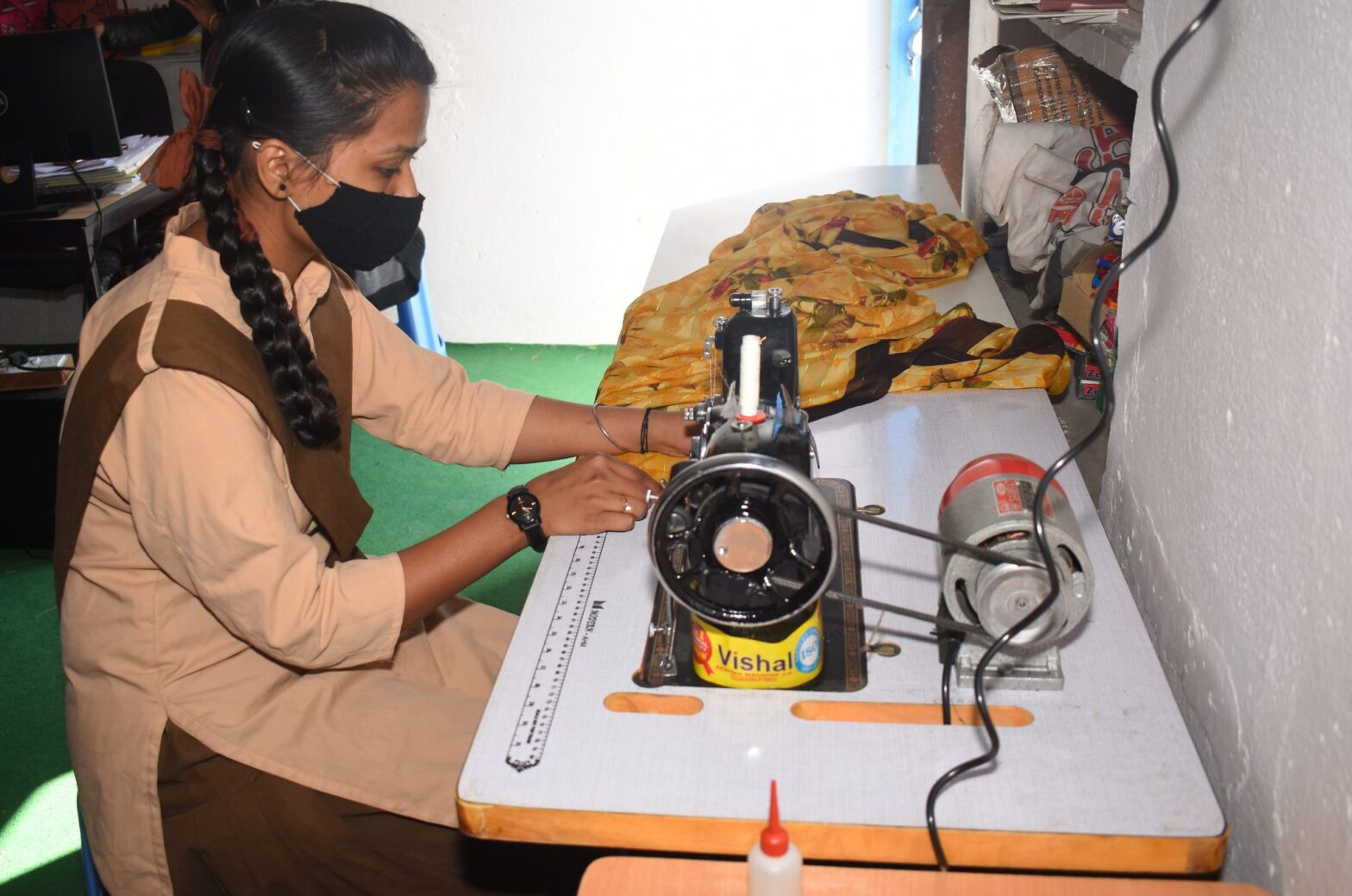
Vocational training is an important way in which one can improve their future. This is especially true for girls. Many parents of girls from smaller towns are skeptical about professional training and going to work in big professions and companies. However, they do have dreams for their future, of being independent and free. As a skill development NGO, Smile Foundation, through the Manzil project, is helping thousands of such girls from Rajasthan gain vocational and on-the-job training (OJT). The project also seeks to retain girls in school and reduce drop-out rates.


Vocationalisation of secondary school education is an attempt to help students to visualize the extent to which they can make informed choices in life and career, channelize aspirations, and become market ready and employable. Project Manzil envisions to empower adolescent girls to realize their career goals and educational aspirations.


The project aims to improve the quality of vocational education with a 3-pronged approach focusing on schools, students and industry. These approaches are designed to impact the overall effectiveness of vocational education with an aim to help the primary target group, that is, adolescent girls, to take informed decisions for their career.


There are some key aspects of the project.


Ensuring increased retention of girls in schools

Identifying and addressing gaps in vocational education

Mapping aptitude, skills, aspirations, local opportunities

Facilitating career progression for effective transition from school to further studies and/or work

Empowering adolescent girls socioeconomically

Project Manzil is an innovation in many ways.

Manzil Programme
Manzil Programme


It is important for civil society organizations to keep innovating and pushing themselves to make maximum impact at the ground and community levels.

Categories
Insights

Why Is There a Need to Adapt Technology to Optimize Education?

Education has undergone a radical change in the past two years. Depending entirely on classroom learning has become a thing of the past. Technology has become an important aspect of learning. And a future with blended learning is a very real possibility now. Thus, we need to adapt technology to optimize education.


Before the pandemic, we could never fathom that technology could be huge part of education. But as we have all seen and experienced in various aspects of our lives, technology was a boon of sorts when millions of us were locked indoors.


Adapting technology for education has a range of benefits, some of them relevant even in the long run.


Tailored and flexible learning opportunities


Technology allows unrestricted access to educational resources. A student can choose to learn at a time and place that is suitable for them. Moreover, using a mobile device or laptop, classes can be conducted entirely online too. Hybrid learning is possible only due to technology.


Moreover, this allows tailoring of plans for individual students. Teachers can create lessons based on what students are interested in and what their strengths are. They can also learn at their own pace. It is easier for students to review past lessons during self-study as the data is stored. Teachers also use data generated from online activities to offer personalized support to students.


In the traditional teaching environment, students had to rely only on the prescribed course books and what their teachers taught in the classroom. Access to the Internet also gives them access to unlimited resources and information on the web. Almost any question can be answered.


Engaging content, increased curiosity


Content that is engaging can spark inquisitiveness in children. As per research, boosted curiosity is linked to academic success. There are many tools to create engaging content. Augmented reality, videos, and podcasts are a few examples. Integration of technology allows students to experiment with different content formats as well. For instance, an assignment could involve a written component along with a video.


Pictures, videos, and sounds can enhance the educational experience. Using different mediums can help students understand better. Children have shorter attention spans. Use of such technology can ensure that children remain attentive for longer and can learn better.


Better teacher efficiency after adapting technology


Technology can be an additional tool for teachers to impart learning. Teaching a concept through practical examples or audiovisuals can definitely go a long way in better understanding by the students. Moreover, technology can also give teachers access to more information and supplementary teaching materials and methodologies. If used well, the possibilities are endless!


Educational institutions that use technology can also stand to benefit immensely. Reducing the costs of physical instructional materials and teaching, enhancing efficiency, and making the best use of teachers’ time are only some of the benefits.


Armed with practical experience


Most jobs now require one to be well-versed with technology. Getting proper exposure to technology from a young age can ensure that when the time comes, a person has the technical know-how to deal with the requirements of the workplace. Students are thus prepared for the professional space.


How Smile Foundation has adapted technology


Like everyone and everything else, we also had to adapt technology to optimize education. The most significant integration has been in our Mission Education programme. Through the Shiksha Na Ruke initiative that was launched during the pandemic for educating poor children, we have been using blended learning methods to make sure that underprivileged children continue learning. We understand that all children do not have access to smart devices to learn from. Thus, we are also attempting to provide children with tablets or other devices to facilitate learning.


Categories
Insights

How Can Life Skills Training Contribute to Holistic Development?

The demand for life skills training in schools and universities has skyrocketed in this age of breakthroughs and limitless options. Today’s children are shaped to reach material success and celebrity. This concept is what tarnishes pupils’ character and integrity. As a result, we have a large number of teenagers who lack basic human traits such as gratitude and empathy.


The need to strike a balance between materialistic achievement and genuine inner tranquility should be stressed to students. Without it, the true meaning of life will be lost, and disorders such as sadness and anxiety will worsen.


Life skills training focuses on an often-overlooked aspect of a person’s nature. People must recognize the importance of educating pupils on the inside as well. Low self-esteem and confidence might lead to severe problems in the future. These days, students are scared to even voice questions in class.


As a result, the learning experience and outcome are poor. Unfortunately, we do not teach life skills to our youngsters in India. Due to this, they often face problems in the real world scenario. Training students in life skills such as self-esteem, anger control, stress management, and happiness is crucial. These abilities are put to the test once they begin their professional careers.


Communication Skills


The ability to communicate in a clear and compelling manner in front of others is one of the most crucial life skills that anyone can learn. Communication talents refer to a person’s ability to provide and receive various forms of information.


Skills of communication provide numerous benefits for the individual. These include increased comfort when formulating ideas and confidence in oneself. The ability to attract people to oneself is also an important aspect of this.


People who are good at communicating with people can be innovative in a variety of enterprises. These include the sale of various things, as well as communicating ideas and viewpoints to influence others.


Communication skills, like all other life skills, require ongoing training.


Self-Awareness Skills


The readiness to be mindful of one’s own impulses, correctly assess one’s own assessment, and respond appropriately to diverse social circumstances is known as self-awareness.


This skill enables a person to comprehend his own feelings and those of others. A person who is self-aware can apply his expertise to make successful and sound judgments.


Problem-Solving Capabilities


Problem-solving abilities go beyond a person’s capacity to recognize and characterize a problem. They are also able to produce alternative approaches, evaluate and choose the best option, apply the chosen option, and resolve issues efficiently and quickly.


Training in Time Management


Time and tide don’t wait for anyone. An individual must be able to manage their time and put it to good use. It is difficult for a person to attain success in life without time management skills. Success requires a determined and disciplined plan.


Students often struggle to manage their time in today’s fast-paced society. They are unable to organize their belongings and plan their day. The most common cause of this problem is social networking sites, as students find it difficult to limit their screen time. As a result, they are stressed and anxious.


Students need to be taught how to prioritize tasks and distinguish between wasted and useful time during the day. This will result in increased production and results. Students who receive time management training will be able to create an orderly routine and stick to it. This instruction should begin in elementary school, as this is the best age to instill positive behaviour.


Thinking Capabilities


Absorbing information, making sense of events, building relationships, solving issues, and developing new ideas are all referred to as thinking skills. It is worth mentioning that thinking isn’t a depiction of one thing only. Rather it is the application of existing knowledge about one thing to create something new. This can be referred to as innovation.


There are four different sorts of thinking abilities:


Analytical Thinking Skills


Analytical thinking, also known as convergent thinking, is a form of visual thinking. It allows one to break down big problems into smaller, more manageable chunks and solve problems effectively.


Divergent Thinking Skills


This is a problem-solving technique that entails examining a wide range of alternative solutions in order to find one that works.


Divergent thought is frequently free-flowing, spontaneous, and non-linear in nature.


As a result, convergent thinking, which relies on focusing on a small number of options rather than offering various solutions, clashes with this.


Creative Thinking Skills


The power to make something innovative that makes an individual recognize the gaps in the missing pieces, look at things in a new way and scour for indicators and observations to fill these shortfalls and make the required modifications is known as creative thinking skills.


The ability to think creatively is built on imagination. This necessitates amazing imaginative abilities apart from reality and logical reasoning.


Critical Thinking Skills


The capacity to think clearly and sensibly about what to consider and do is referred to as critical thinking.


The ability to separate truth from fiction, personal views, and conviction, and the individual’s ability to predict, are all critical thinking skills.


Conclusion


Life skills are based on a big part of our experiences. How we might pass on this knowledge to future generations in order to study, communicate, and add to their knowledge are also part of this.


However, we are currently seeing rapid changes and a tremendous revolution in the sphere of science and technology. This is widening the gap among parents and children, particularly in terms of learning and passing on experience, and maximizing advantage.


It is essential for parents to understand the pressures that children and teenagers encounter. They should not place further pressure on them and should not be startled by their actions. Instead, they should grasp the technological advancements and the modern era in which they live and interact.


They should be aware of the demands and obstacles that the children face and work together to find answers.

Categories
In The Spotlight

Advancing STEM learning through engaging activities

STEM, an acronym for Science, Technology, Engineering, and Math, is a concept that has been widely prevalent globally. The major focus is on young school students who can develop STEM skills and pursue careers in the same. It is important that students develop critical thinking skills at a young age. It is also vital that they appreciate the idea of innovation and application of scientific principles. STEM learning can help in this regard.


As a country, the National Education Policy 2020 does focus on such interesting ways of making education come alive. Experiments, latest technology, quizzes, and developing applications are part of this. A huge population that is young and open to innovative and hi-tech ideas will benefit from an early introduction to STEM. To spread the idea effectively amongst youngsters, especially those from less privileged backgrounds, Smile Foundation has been facilitating STEM sessions in schools. These are managed by their various NGO partners as a part of their Social Venture Philanthropy model.


Advantages of STEM learning


  1. Bridges gender gap and motivates both boys and girls at an early age to participate in STEM initiatives and hone their skills.
  2. As more children start showing inclination towards STEM-related studies, the talent pool for the country will increase and there will not be a dearth of scientific minds in our country.
  3. When youngsters start showing an interest in latest technologies and scientific developments, the country progresses in a more effective way. Generations of children become more and more advanced in their skill sets.
  4. With increased awareness, both public and private entities will invest in STEM. This will create new avenues of employment for a large pool of children as they grow into intelligent young adults.
  5. Recently, Arts has also been added in STEM, making it STEAM. This ensures holistic development of children. We should see a future generation that not only possesses a scientific and technical bent of mind but is also extremely conscientious in their outlook.


RoboClub in association with Child for Child


Keeping all these aspects in mind, RoboClub, a premier STEM and Robotics Institute in New Delhi was formed by Ms. Sunaina Sood. This institution works towards promoting interest amongst children in computers, critical reasoning, robotics, and experiential learning. In addition, RoboClub organizes the STEM quiz which was conceptualised by Shivansh Gupta, a student of Grade X DPS RK Puram, New Delhi. This is an annual event for RoboClub and this year they organised it in association with Smile Foundation’s Child for Child team.


STEM learning through RoboClub quiz


The STEM quiz was promoted and conducted by six highly committed and tech-driven high school students from RoboClub’s Team Supercalifragilisticexpialidocious. The team includes Shivansh Gupta; Jai Gupta of Grade IX, SBS Noida; Sameeha Sood of Grade X, SBS Noida; Madhav Agarwal of Grade IX, SBS Noida; Vansh Gupta of Grade X, The British School, New Delhi; and Shorya Bhasin of Grade X, TSRS Moulsari, Gurgaon. The quiz was organised for primary and middle school students separately. Questions were in the areas of science, math, technology and computer science, logic and reasoning pertaining to the two grade levels. The initiative was aimed at getting youth to participate and test their STEM skills, inspiring them towards hands-on learning and creating more awareness of the importance of STEM in school children. The RoboClub team plans to conduct more such events in association with Smile Foundation to inspire STEM and hands-on learning amongst the less privileged.


The results for the quiz competition have been declared and the winners have received their certificates and prizes as well. Winners from primary school category areDevaansh Bhardwaj, VardaanMukerji, and Angel Kaur. Winners from the middle school category are Arav Bansal, Anant Agarwal, and Shreya Nair.


We wish the organisers and winners many congratulations! And we sincerely hope that more youngsters find STEM/STEAM a more exciting journey to undertake and build a brighter and a more hi-tech future.

Categories
In The Spotlight

Celebrating National Girl Child Day on Jan 24

National Girl Child Day is observed on January 24 every year. The Ministry of Women and Child Development has demarcated this date to mark this special occasion.


Female infanticide to gender inequality, discrimination to sexual abuse and violence … girls face numerous issues every day. National Girl Child Day aims to shed light on the inequalities faced by girls and promotes awareness about rights of a girl child. Education, health, and nutrition are all very important for the betterment of girl children.


Government and educational institutions celebrate the day with various events. All these seek to change the attitude of society towards women and uplift the girl child.


Working for girls is an important part of Smile Foundation’s initiatives. Today, let us celebrate some of the beautiful girls we are working with.


Lali


Eleven-year-old Lali is a student of class II studying at a Mission Education centre. She has 7 members in her family, including her parents and four siblings. Her father is a daily wage earner and mother is a homemaker. Being uneducated, her family members never encouraged her to study. This gradually lowered her self-confidence.


The ME centre staff held a number of meetings with Lali’s parents. They sensitized them on how important it is for their child to get educated and become self-reliant. As a result, they finally agreed to enrol Lali at the ME centre. However, due to the pandemic, things came to standstill. Children like Lali could not access online education due to lack of digital access. To help her study, her father bought a second-hand phone.


Now, Lali joins her online class at 10 am sharp. She attends 45-minute sessions each of English, Hindi, EVS, and Mathematics. Her teacher assigns activities and checks the completed work and gives feedback.


She is an intelligent and enthusiastic learner who enjoys her lessons. Lali strives to reach her full potential and seeks new challenges. She participates actively in discussions and responds to what is taught during the sessions. She is self-motivated, displays self-discipline, and is well prepared for class every day.


Sumitra


Sumitra is a student of Class 9. Her mother is the only earning member in a family of six since her father passed away. Due to her meager income, Sumitra’s mother is always worried about the family’s finances. Her mother used to work in a school. Thus, when the lockdowns began, her income suffered a great deal. Lockdown after lockdown has only added to the family’s financial instability.


Sumitra shares, “My studies have been neglected because the school has been closed for almost a year since the lockdown began. Smile Foundation gave me a tab to help me study. My siblings and I studied and practiced a lot on that tab. There is a video on how to crack the exam in all subjects, so it was very easy to understand and we benefited a lot from it. The tab also has puzzles. There is lots to read on the tab again and this helped us develop the habit of reading.”


Sumitra enjoys her studies and likes her teachers very much. Even through online learning, the teachers explain very well. They are also available to resolve any doubts. With regular and academic support, Sumitra was able to make significant progress in learning. She completes her daily work diligently and actively participates in co-curricular activities.


Sunaina


Words can hardly do justice to Sunaina’s story. Childhood gave her all the qualms and no joy. At the age of 12 years only, Sunaina has witnessed many hardships at a very tender age. This limited her growth in all aspects.


Sunaina’s her father passed away when she was 10. Her mother was left to fend for the family of 3. She picked up odd jobs to give her children a decent life. The odds were stacked against the family as their economic woes became an obstacle for the children’s education. Thankfully, one day her mother came to know about the Mission Education centre in their community and its facilities for the poor children. Learning about the free tuition and co-curricular support, uniform, learning materials, etc. convinced her to enroll Sunaina at the centre.


Through the direct intervention of ME teachers, Sunaina overcame the hurdles by accessing the available resources. Further, the positive and vibrant environment and easy access to learning materials have helped in her holistic development. She follows all instructions in class and pays attention to her teachers. She has also been getting good grades.


Sunaina was very thankful when she received the sanitization kit from the centre. It saved her mother an added expense. She dreams of becoming a teacher one day.

Categories
Insights

Development Sector Needs to Adapt to the Digital Age and Capitalise on Technology

Every firm will soon be a digital business. To succeed in the digital economy, CEOs must make precise decisions about their approach. Like every other sector, the development sector needs to adapt to the digital age too.


The world is changing due to digitization; philanthropy and development must adapt as well


Most digital development projects are still fragmented by sector. In some cases, they are motivated by a relentlessly optimistic goal of “connecting the last billion.”


Binary issues are a favourite of development. Either you had the polio vaccine or you didn’t. Either you’re above the poverty line or you’re not. We can agree on evaluation procedures that provide detailed data to demonstrate the program’s success.


Randomized Control Trials can be used to demonstrate the efficacy of our solutions. We can quantify the issues we encounter in terms of enormous numbers. These can be shared on social media once we’ve created a binary problem. The last billion, and so on.


The problem with treating digital connectivity as a binary issue is that while the system is based on binary logic, the capacity to benefit from being linked to it is not. “How many people are connected to the Internet throughout the world?” should not be the last question. “To what sort of Internet are people throughout the world connected?” and “How efficiently are they using it?” are questions that need to be answered.


Therefore, development organisations which want to engage in digitisation must avoid simple binaries like pushing for the digital gap to be closed. In the digital age, they will need to interact with complicated, nuanced notions like agency, literacy, authority, and structure.


It’s challenging, but we should strive for meaningful use rather than simply inclusion


Educating a few more people to code will not be enough to attain digital literacy. We need to encourage social and platform digital literacy in a world where virtually everyone on the planet needs to know how to engage with each other via platforms. Thereby people will know how to manage their digital lifestyle, from education and communication to livelihoods and citizenship, safely.


Whilst the cost of Internet access decreases, the ongoing quest to create a world that encourages inclusive and meaningful use will necessitate a variety of ways. Of course, startups, technological advancements, financing, and the private sector are all intertwined. However, the larger issues are multidisciplinary, involving psychology, sociology, political science, human-computer interaction, economics, and ethics.


Digital connectivity is vital but not adequate


Connectivity is required to participate in the global information economy. This is imperative for states and institutions to function in the twenty-first century. However, connectivity is insufficient in and of itself. We must advocate for it, and organisations such as the Alliance for Affordable Internet should be applauded. However, we can’t expect cell phones, social media, or even online accounting software to begin development on their own. These are tools, the foundation upon which prosperity can be built. But they are not drivers of prosperity in and of themselves.


Digital has the potential to unlock vast amounts of previously untapped human capital. Investment in digital infrastructure will be required to enable this. But digital platforms — the glue that binds digital infrastructure and human capital — are sucking value from both nations and citizens.


The trio of smartphones, satellites, and sensors


Smartphones, satellites, and sensors are revolutionising the way we see the world. On the one hand, they offer a huge potential to develop more inclusive, comprehensive, and global methods to understanding how humans interact with nature and with one another in socioeconomic systems.


On the other hand, the growing debates in the Global North about AI ethics and prejudice in algorithmic computation must be introduced into the development community. It’s vital that we focus on the decisions we all make about how we deploy, process, interpret, and regulate data, not just the data we can collect or even its potential.


Wrapping up


Every new network invention — telephony, television, highways, the Internet, and so on — highlights the interdependence between a network’s potential and its political economy: who gets rewarded, who retains power, and who benefits from the development.


In some ways, the new digital infrastructure sees a billion people too little, while at least a billion people now feel they are seen too much. The conflict between these issues will be kept in mind by excellent policymaking and good innovation. Without the other, neither can be solved. Thus, the development sector needs to adapt to the digital age and embrace technology.

Categories
Insights

Tools that Help with Online Learning

What a change in the way we work, the way we teach and the way we learn. … The pandemic has set in. “Unmute yourself! Turn on your video! Check the chat box! Stop annotating!” These few phrases have become an integral part of our lives since we all shifted our working, teaching, and training online. Thence started the journey of educators to first educate themselves and then take classes online. Teachers have started seeking tools that help with online learning. Brands like Zoom, MS Teams, Zoho, Google Meet became a part of everyday parlance. Schools have progressed to more advanced education tools and enlisted support from Edtech companies. Some schools even became Microsoft-certified schools. Edtech platforms like Byjus and Vedantu saw a jump in their user base. Many organisations setup online K12 curriculum as their core business.


However, when we look at most of the big schools, the transition was rather smooth. This is because students here had access to at least a smartphone and/or tablet for logging into online classes. On the other hand, teachers were being trained to use video conferencing, blackboard, and many such softwares and applications. All these are aimed to somehow make online teaching and learning more interesting.


There still is a huge part of the school fraternity that does not have the type of academic infrastructure mentioned above. That’s where a huge chunk of India is still languishing. This could also be we have seen students not really learning much in online classes. The government and many NGOs in the education space are trying to ensure that students and teachers alike are made more digital savvy.


Reopening of schools on and off


Around Dussehra 2021, we had started seeing a significant dip in Covid cases. Schools had started to reopen and we were seeing an increased number of children, from primary to senior classes, going back to school. Some were even using school buses. Unfortunately, the new year has brought with it a spike in Covid cases. And with it, the comeback of school closures. This has created huge unease in the minds of teachers who had started to welcome their students back physically with renewed vigour.


From an online training conducted by Smile Foundation.


Helpful tools for teachers


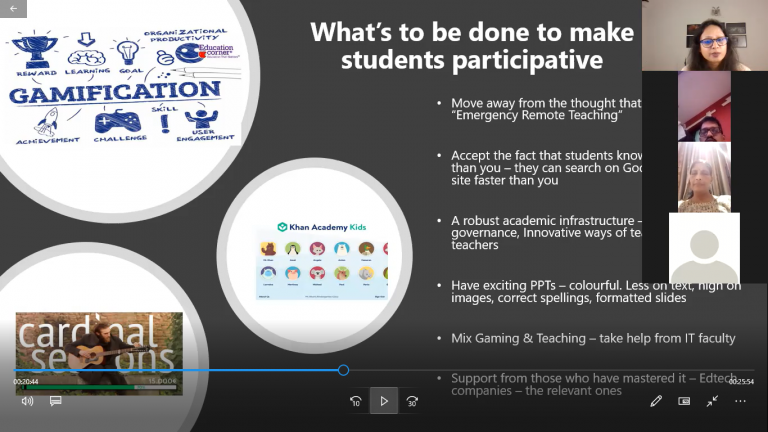
However, most teachers in India, despite almost 2 years of online schooling, still experience discomfort in taking online classes. So we witnessed a quick upsurge in school teachers looking for more and better applications and tools that can make their classes more interesting and students more attentive.


We organised one such session for primary school teachers of Vimala Hridaya Central School in Kerala. They have been running short of ways to keep their children engaged in online classes.


I got the opportunity to take the teachers through some very basic videos on Youtube that can be played in classes and could work as energizers for students. Then there are applications like Epic that take children back to the charm of reading books and short stories. This is especially true for the younger ones in primary classes who are also being subjected to, rather tortured through, online classes. And of course, there are a plethora of value-based movies and documentaries that can be streamed during online classes. These movies are sources of important lessons which can be taught to children.


To facilitate more exciting classroom experience these days there are AR (Augmented Reality) apps which schools can subscribe to at a nominal license fee. Such apps can actually make creatures come alive on a screen. Children can have a 3D view of the image and can understand the anatomy of various beings with a realistic view.


Back to basics


Most importantly, teachers have to stick to the basics. They must keep their PPT slides formatted, colourful, without spelling mistakes, and loaded with images. Presentations are their blackboard and that’s where children will love to interact. Mixing of sessions by interesting speakers from across the globe is much easier online these days. This should be done regularly.


All this calls for significant effort. But it’s all worth it when you have an engaged class that is interactive and keen to learn more.


Hybrid teaching and learning


With hybrid form of teaching and learning emerging as the norm and children already gaming online, teaching can definitely be made fun by using gamification. There should be goals, there should be challenges, and there should be rewards. Make every lesson a fun one for children. Once a challenge is accepted and solution found, there have to be rewards–a clap emoji or even a musical appreciation. Teachers have to upskill themselves, they have to become more digital literate and master the platform they are taking their classes on.


I do hope that the teachers had a fun time with me as I hope the students have with them.

Categories
Insights

How can we ensure that children return to school when schools finally open?

Countries around the world are still at various stages of the COVID-19 pandemic. This means they are facing a variety of issues, ranging from overburdened healthcare systems to growing economic despair. Many stakeholders are considering reopening schools in the geographies that are emerging from the first wave of COVID-19 cases. Schools give not only academic and social support to students, but also childcare, which many parents require in order to return to work. Reopening schools, on the other hand, poses a public health risk of the virus’ reemergence. It’s understandable that parents and teachers are worried about when children will return to school. 


UNICEF, UNESCO, the World Bank, the World Food Programme, and the UN Refugee Agency (UNHCR) published a joint framework for reopening schools. This provides high-level guidance on operational safety. It guarantees the health and wellness of students and teachers, and aims to reach the most oppressed and disadvantaged children to aid in reopening schools and stemming learning losses.


Evolving pedagogy and redesigning the academic schedule


Due to the COVID-19 pandemic, most nations’ academic calendars for the 2019/2020 and 2020/2021 academic years were severely disrupted. This raised challenges about how to approach the present and next school calendars to make up for missed learning and improve student well-being. Extending the school day, week, or year could be one option for increasing teaching time. Alternatively, countries may want to pursue an “intersessional” schedule, which allows for recovery time in the event of subsequent shutdowns.


Teacher preparation and support


The crisis has posed a significant challenge to educational systems in terms of ensuring learning continuity. It has also significantly increased the expectations placed on instructors and the intensity of their work. To boost their efficacy, countries must re-engage with teachers and assist them in improving their well-being. Countries must also offer teachers clear instructions on how to identify students at risk of dropping out. Teachers also need to be trained on how to enforce health measures. Finally, instructors should have access to high-quality professional development and continuing assistance in order to:


  1. reconnect with students
  2. assess student learning
  3. implement a redesigned curriculum adopting relevant pedagogy
  4. enhance their digital skills.


Ramping up learning recovery


National COVID-19 response education programmes should include remedial activity to speed up the recovery of learning loss. The quantity of learning loss is expected to differ by student. Thus, teaching at the appropriate level will be even more critical in assisting children in catching up to grade-level norms. In a variety of situations, national tutoring programmes, personalised self-learning programmes, and computer-assisted education have been found to boost student learning. Summer school can be extended to cover more students. When combined with the “teaching at the correct level” method, it can be very effective. Grade retention is ineffective as a remedial method unless it is used in conjunction with other specific measures.


Exams and evaluations of learning


Learning processes will help teachers, schools, and education systems identify learning needs before schools reopen. This way, they can adjust guidance and target resources accordingly to prevent learning losses caused by school closures and economic shocks associated with the pandemic. These tests should be targeted for pupils in the early grades or transition years. They should begin by reviewing the knowledge that was lost during closures in core areas such as reading and math. Education systems can adjust or replace high stakes assessments that verify school completion or determine transitions to higher levels of education. This will ensure safety and give every child equal opportunity to display what they know, understand, and can do.


Interaction with stakeholders


As education systems have gone through school closures and reopenings since the past couple of years, communication has evolved as a critical component of an effective COVID response program. The primary concepts include using numerous channels to communicate early and often, localizing communication efforts to include community leaders, and guaranteeing diversity in messaging via multiple languages and non-written media as well. In addition to health and safety communications, it has been discovered that communicating to foster learning continuity is helpful at improving achievement (in pre-COVID settings). It’s also critical to establish channels of communication with parents in order to plan ahead.


Promoting re-enrollment to encourage children to return to school


Many countries may find it difficult to assure that all pupils return to school following extensive school closures. Re-enrolling vulnerable pupils, such as girls and immigrants, will very certainly entail significantly more work. Providing financial and pragmatic support to students, closely watching the re-enrollment process, which would include women and girls in decision-making, re-evaluating policy proposals that might also result in inequity, and individually empowering the most at-risk students are all ways that countries can encourage re-enrollment.


These were crucial considerations for the reopening of the school. Above all, health, hygiene, and cleanliness must be maintained. Everyone, from school employees to students, must be educated on the value and importance of cleanliness.

0%