Categories
Education

One Nation One Subscription Scheme Helping India

Prime Minister Narendra Modi announced the One Nation One Subscription scheme in his recent address in order to bring about a much-needed change in the academic research and education landscape of India. The Prime Minister emphasised that the scheme or initiative will provide students and researchers with seamless access to a variety of journals and research publications. This move is expected to significantly enhance the quality of education and research in the country, bridging gaps and fostering innovation.

What is the One Nation One Subscription Scheme?

To many, who do not work in the academic research field, this may be a unique concept. Why do researchers need subscription and to what? To explain it simply, any researcher who is conducting a research in the area of their interest needs to refer to a lot of existing knowledge in the same area. This knowledge can be accessed through the already published books, journals, research articles, etc. By having access to the existing knowledge, the research can find gaps that exist currently and fill those gaps through their research.

The One Nation One Subscription scheme ensures that students, researchers and educational institutions across India have access to a vast repository of academic journals, research papers and other scholarly publications. The idea is to centralise the subscriptions at a national level and remove any disparities that may exist across universities and educational institutions, ensuring that all the researchers in India have equal access to the existing literature.

Talking about the scheme, Education Minister Dharmendra Pradhan said that the One Nation One Subscription scheme will democratise access to knowledge, making high-quality research materials available to every student and researcher, irrespective of their institutional affiliations or financial constraints.

Understanding Academic Research and Needs

As mentioned above, academic researchers depend on a range of databases, academic journals and publications to stay updated with the latest developments in their fields. They use it to validate their hypotheses and build upon existing knowledge. When the researchers have access to high-quality academic subscriptions, it increases their knowledge pool which means that the research that they conduct is rigorous and impactful.

In various universities across India, researchers face many challenges in getting this access because of the limited budgets and small number of subscriptions available to them through their institutes. Also, the researchers cannot individually subscribe to these publications because of their high cost. This lack of access can hinder the research process, leading to gaps in knowledge and innovation. The One Nation One Subscription scheme addresses this critical issue by providing comprehensive access to a wide range of academic resources, ensuring that researchers have the tools they need to excel.

The Research Landscape in India

India has always been a leading player in academic research globally irrespective of subjects and areas of research. There are some premiere institutes in the country like the IITs that support good quality research. According to Scimago Journal and Country Rank, India stands at number sixth globally, contributing a lot to the overall academic research in the world. The quality and impact of research conducted in India have also seen notable improvements, with Indian researchers contributing to significant advancements in various disciplines.

Apart from this, India also boasts of one of the biggest educational infrastructures in the world with more than thousand universities across the country. Lakhs of researchers rigorously undertake their academic work in the country at any given time, contributing to the advancements and progress in knowledge in various areas and fields. Institutes like IITs, IISc and AIIMS have received recognition in the past for some of the crucial research done by students in these institutes. Therefore, it is crucial that more and more universities and colleges in India get similar access to knowledge and produce better results in the future.

Impact of the One Nation One Subscription Scheme

In this regard, the One Nation One Subscription scheme can have a huge impact. Here are some of the expected benefits:

  1. Enhanced research quality: As mentioned above, access to a larger knowledge pool means better and more rigorous research. This helps in improving the overall quality of research happening in India. 
  2. Promoting collaboration: As a researcher, learning about the good work happening in the same area of your research opens up many doors. The researcher can reach out to others who have done quality work in the past and collaborate with them. It can also open up opportunities for collaboration between different universities within India and across the globe. At the same time, it can also help in fostering a multidisciplinary research environment in the country.
  3. Reduced inequality: One of the biggest challenges today is that few of the premiere institutes have enough funds to subscribe to best quality publications while the researchers in smaller institutions across the country may not have the same access. Therefore, this scheme aims to remove this inequality by creating a centralised structure.
  4. Innovation: As it can be understood, more knowledge can allow the researchers to think with more perspectives and come up with new ideas. Therefore, this can also help in boosting innovation in research.

Improvements Needs to the Scheme

While the scheme is being lauded because of the problems it solves, there are still some criticisms that need to be addressed. For instance, some experts have raised concerns about the sustainability and funding of the scheme. “While the scheme is a positive step towards democratizing access to knowledge, it is crucial to ensure that it is financially sustainable in the long run and that the quality of resources is maintained,” said noted educationist Dr Arvind Gupta in one of his interactions with the media after the scheme was announced.

Additionally, suggestions have been made that not only subscription-based but open-access publications should also be organised in a central database to make the overall access smooth and easy.

Conclusion

The One Nation One Subscription scheme represents an important step towards improving the education and research landscape in India. By providing universal access to academic resources, the scheme will empower researchers and students, foster innovation and promote a more inclusive and equitable research environment. As India continues to invest in education and research, initiatives like this will play a crucial role in positioning the country as a global leader in academic research and innovation.
Categories
Girl Child Women Empowerment

What do we Understand by Gender-budgeting Initiatives?

In July this year, the union finance minister, Nirmala Sitharaman, allocated a sum of Rs 3.2 lakh crore towards schemes aimed at women beneficiaries as a part of gender-budgeting initiatives. The government’s allocation for gender-responsive budgeting has gone up by 37.33% from the previous financial year. The fund is said to have touched the peak ever since it was launched a couple of decades ago. Before we delve into the topic, let’s understand what gender-responsive budgeting actually means. 

Understanding Gender-responsive Budgeting

Gender-responsive budgeting is a type of budget plan that aims to allocate resources by considering the needs of all genders. It requires analysing budgets to identify gender gaps well before creating schemes and policies to address those gaps. To address the gender gaps, governments need to understand the specific requirements of men, women and other genders and allocate specific budgets for them in each of their projects. This type of budget strives for a fair distribution of resources by applying a gender lens to the entire policy process. It thereby aims to work well for each of its citizens.

The existing budgets and economic models often pave the path for fiscal policies and they are biased. For they do not take into consideration the specific requirements of women. This often ends up having a huge gender gap within it and has unintended negative consequences. So when gender gaps are identified, available resources can be used to address the gender inequalities and ensure sustainable and inclusive development for all.

Meanwhile, goal 5 of the United Nations Sustainable Development Goals (UN-SDGs) is to achieve gender equality and empower all women and girls. The goal focuses on ending violence, discrimination, and harmful practices against women and girls. It also focuses on ensuring women’s full participation in political, economic, and public life. The deadline set for countries to meet the goals is 2030.

According to UN Women, more than 100 countries have taken steps to implement gender-responsive budgeting to address the historical underinvestment in essential services for women and girls. “Data from 105 countries shows that only 26% have comprehensive systems to track gender equality allocations in the budget. However, data also shows that a majority of countries have made some progress on gender-responsive budgeting and are working to improve their systems despite the prevailing gaps in gender equality spending,” it says.

Implementing gender-responsive budgets requires robust institutional frameworks, political will, laws and a whole-government approach to encourage and implement equal distribution of resources, to collect reliable data required to understand the diverse needs of people, to collaborate with private sectors and civil societies and to have monitoring and evaluation systems to estimate future budget adjustments.

Importance of Gender-responsive Budgeting

Gender-responsive budgeting has become essential in recent times. For it ensures that the government puts on the gender lens while drafting policies and making financial allocations to address the specific needs of all genders. Below are some of the key reasons why a gender-responsive budget is extremely important.

  1. Promotes gender equality: A gender-responsive budget makes sure that the government allocates funds to schemes and projects that address the unique needs of women and others. Its primary objective is to increase women’s access to resources like education, healthcare and employment opportunities by removing barriers that perpetuate gender inequalities.
  2. Incorporates women’s perspective in policy making: A strong political will and a robust institutional framework are the most required to make a gender-responsive budget in a country. Before tabling the budget, it is crucial to analyse and understand the requirements of women and other genders. Until recently, all the schemes and budgets were solely proposed and implemented by men with a few or no women on the team. While analysing the requirements of women, the perspective of non-men comes to the discussion on the table. It, thereby, gives a unique perspective even to the existing policies.
  3. Enhances economic growth and development: By ensuring that all members of society, regardless of gender, have equal opportunities to contribute to and benefit from economic progress, gender-responsive budgeting fosters broader economic growth. For instance, by investing in education and skill-development programmes for women, it contributes to a more educated and skilled workforce. When women gain equal access to quality education, they are more likely to enter the workforce and contribute productively to the economy. A key component of gender-responsive budgeting is ensuring women’s participation in the labor market by removing barriers such as wage discrimination, lack of child care facilities and unequal access to training and career advancement. Increased participation of women in the workforce boosts national economic productivity.

India and its Gender-budgeting Initiatives

The Indian government introduced a gender-responsive budget in 2005-06. Its main objective is to ensure that government budgets address the requirements of women and girls. Since then the union government has been putting on a gender lens at all stages of policy-making. The union ministry of women and child development implements gender budgeting at the national level, while the women and child development department, social welfare and finance departments act as its nodal agencies in states and union territories.

The government has been publishing a gender budget statement every year along with its budget. The budget statement presents gender-specific allocation for women. The statement breaks down expenditure into three categories. The first part deals with the allocation of funds made specifically for women-centric schemes (all beneficiaries are women). The other two parts deal with allocations of funds for schemes that benefit both men and women (part B has schemes that have about 30-99% of beneficiaries as women and part A has schemes that have up to 30% of their beneficiaries as women).

Ever since its implementation, the government has been allocating an average of 5% of the total budgetary allocation as gender budgeting. Some of the schemes that receive funds under gender budgeting are affordable housing, access to water supply and the Mahatma Gandhi National Rural Employment Guarantee Act (MGNREGA). 

The government has advanced the cause of gender-responsive budgeting by making the highest financial allocation as part of the gender budget statement in the financial year 2024-25. It has allocated a sum of Rs 3.2 lakh crore. This is about 1% of its Gross Domestic Product (GDP) and around 6.8% of the total expenditure budget.

According to the latest annual report published by the Union Women and Child Development Ministry, it aims to achieve 100% coverage of gender budgeting in all union ministries and departments, states and union territories as a part of its Mission Shakti for the empowerment of women. Its focus is on strengthening institutional mechanisms and processes to undertake gender budgeting at the union and state levels, developing internal and external capacities and building expertise across sectors to integrate the gender perspective in planning, budgeting and auditing.

Conclusion

It is indeed a positive sign that India is moving towards a gender-responsive budget to address gender disparities. But it continues as an evolving process and the country still has a long way to go to address the issues. Recently, the United Nations has lauded the Indian government for its gender budgeting initiatives. At the same time, it has also pointed out that India lacks sex-disaggregated data and continues to exclude key programmes that benefit women. Ensuring that the budget remains true to its name requires continuous monitoring, a deeper understanding of gender issues and active participation from women in all stages of planning and implementation. A more inclusive approach that addresses the intersectional aspects of gender will strengthen the impact of these policies.

Smile Foundation’s women empowerment programme, Swabhiman embodies the principles of gender-responsive budgeting by ensuring resources and opportunities reach those who need them most. Through targeted initiatives in entrepreneurship and healthcare, the programme addresses systemic gaps and empowers women and girls to lead independent, fulfilling lives.

With a strong focus on grassroots involvement, Smile’s efforts not only enhance access to essential services but also support economic independence and community leadership among women. By working hand-in-hand with local communities, the programme amplifies the voices of women, ensuring their needs and perspectives shape sustainable solutions for India and the world.

Categories
Education

Investment in Education, but is it Enough India? 

In India, learning and education are highly valued. However, across the country, educational institutions are understaffed, don’t have sufficient infrastructure, there is a shortage of teachers and existing personnel don’t have opportunities to upskill themselves. Is there a shortage of resources? Is India investing enough in education?

India’s Investment in Education meets International Benchmarks

In terms of GDP percentage and government expenditure, India has been investing more than other Central and Southern Asian countries, says a report in The Times of India. This is in contrast with the global trend of declining average investment in education.

Between 2015 and 2024, India allocated approximately 4.1% to 4.6% of its GDP to education, aligning with international benchmarks set by ‘Education 2030 Framework of Action’, which recommends that countries allocate 4% to 6% of their GDP to education, says the report.

A series of reports from the UNESCO Institute of Statistics on world education shows that India’s government expenditure on education fluctuated between 13.5% and 17.2% during the same period. This aligns with the Education 2030 target that encourages governments to allocate 15% to 20% of their public expenditure to education.

However, experts feel that this can be upped. “If you look at the manifestoes of all political parties for the last four general elections, all of them have said that they will invest 6% GDP in education but no one has done it till date,” says John Roberts, director, southern region, CRY.

Why India Needs to Invest in Education

“In India, many schools are still grappling with a shortage of teachers. Many others do not have the basic infrastructure, even a roof overhead. Some state governments do not have the budget to print enough textbooks,” says Merlia Shaukath, founder-CEO of Madhi Foundation, adding that education is also about the well-being of children in schools. “Tamil Nadu, for instance, has done well with the mid-day meal system. It has to be implemented in schools across the country as a child can’t learn on an empty stomach. So investing in nutrition is investing in education.”

How does Investing in Education Benefit the Country?

Investing in education is crucial for the country’s development as education lays the foundation for sustainable growth, social equity and global competitiveness. An educated population is essential for:

Building a skilled workforce: As India transitions towards a more knowledge-based economy, there is an increasing demand for skilled professionals in sectors such as technology, healthcare, finance and engineering. Investing in education ensures that there are enough people equipped with necessary skills and knowledge who are ready to join the workforce. 

Investment in education also helps India build a skilled workforce that can compete in the global marketplace, especially in emerging fields such as artificial intelligence, biotechnology and renewable energy. Higher levels of education also promote research, innovation and technological advancements. 

Breaking the cycle of poverty, social impact: Access to quality education also means more employment opportunities, which is linked to higher income levels. This helps break the cycle of poverty by providing people from disadvantaged backgrounds with opportunities for upward mobility. Educating girls and women also has a great impact on social and economic outcomes — reducing instances of child marriage, improving maternal health and increasing women’s participation in the workforce — all of which gives a boost to the country’s growth.

Improved Public Health: Educated people are more equipped to understand health-related issues, adopt healthier lifestyles and make informed decisions about nutrition, sanitation and healthcare. That’s why investment in education can contribute to improved public health outcomes, which in turn reduces the burden on the healthcare system.

Stronger Democracy: Well-educated people are more likely to participate in democratic processes such as voting and community decision-making. This helps strengthen democracy and good governance.

Promotes sustainable behaviour: In today’s world, we are struggling to combat environmental challenges such as climate change, deforestation and pollution. Education can raise awareness about these issues and foster more sustainable behaviours. Educated people are more likely to adopt environmentally friendly practices and support sustainable policies.

Helps bridge digital divide: It is essential for the country to invest in education that equips students with digital literacy and technological skills. This will help bridge the digital divide, ensuring that all citizens, regardless of their socio-economic background, have access to the opportunities created by the digital economy.

Leads to technological innovations: Investment in STEM (science, technology, engineering and mathematics) education is critical for preparing students for future job markets. Education helps drive technological innovation, which can enhance productivity, improve lives and create new industries.

Human development: A well-educated population is more resilient and adapts better to economic shocks, social change and global challenges. Education also helps cultivate leadership skills and critical thinking abilities, which are essential for fostering a new generation of leaders in all sectors.

Union Budget prioritises Investment in Education

The Union Budget 2024-25, presented by Finance Minister Nirmala Sitharaman in the Lok Sabha, allocated ₹1.48 lakh crore for education, employment and skilling in India. The government will provide financial support for loans up to ₹10 lakh for higher education in domestic institutions. It will upgrade 1,000 Industrial Training Institutes (ITIs) using a hub-and-spoke model, aligning course content with industry skill needs, and revising the model skill loan scheme. An internship scheme will be launched to provide opportunities for 1 crore youths in over 500 firms and 20 lakh youth will be skilled over the next five years.

Roadblocks that Need to be Addressed

“There is a fundamental problem of education being underfunded, which is evidenced by how understaffed our schools are and how little resources they have. For the longest time, recommendations have been made for education budget to be increased to 6% GDP,” says Merlia Shaukath.

The funds that are being sanctioned are also underutilised, she says. “The states have to submit a budget to the Project Approval Board (PAB). The meetings happen in February or March. By the time it is approved and reaches the state, it is almost the end of the financial year. This means funds are both unutilised and underutilised,” says Merlia, adding that this ineffective cycle puts a lot of pressure on the state governments. “They have prepared the education department to start implementation of various projects but can’t do it without money in hand. So they have to look for back-up options in the state government’s budget.”

About 98% of the state budget goes towards salary and administrative expenses, which leaves state governments with very little money to sanction innovative or quality programmes, says Merlia. 

Possible Solutions

Merlia feels that the delayed disbursement of funds needs to be seen as a major problem and someone has to care enough for the cycle to be expedited. “Maybe PAB meetings can be held for three years so that even if there is a delay in disbursement, it doesn’t affect programme implementation too much as it’s been disbursed for three years.”

She also feels that recommending a global blanket of 4.6% GDP to be invested in education is misguided. “We have to see what it means in our context, what is the per child cost, and what that covers (books, meals, uniform) needs to be standardised. And then we have to see what percentage of GDP it comes to,” says Merlia.

What NGOs are Doing for Investment in Education

Several NGOs in the field are working to ensure that all children have access to education, offering scholarships, improving infrastructure of educational institutions and combating teacher shortage.

“CRY launched a campaign about seven months ago, called ‘Poori Padhai Desh Ki Bhalai. We want to ensure that all children complete at least class 12,” says Roberts, adding that the nation will prosper when children are educated. “Some time ago we did a study, which said that if all girl children complete class 12, then there is a potential of adding USD 770 billion to India’s economy. As per government data only 58% girls have completed class 12.”

Smile Foundation’s education interventions are focused on helping children from difficult circumstances to have access to equal opportunities for school completion and equitable learning outcomes. Our programmes are aligned to the National Education Policy and aim to support the efforts of government to enhance accessibility of quality education for all children.

We operate six active scholarship projects in collaboration with donors such as Deutsche Bank, Quantiphi, Quest Global, Siemens and more. These projects collectively benefit over 2,000 students. A retention strategy is also in place, including the regular review of academic performance, counselling services and mentoring. 

The Foundation also gives students industry exposure by helping them visit the sites, offices and different departments of potential employers based on their interests, education and industry needs.

Categories
Education

Education Cannot Only Be About Employability

Education is not the filling of a pail, but the lighting of a fire.” This quote by WB Yeats beautifully summarises what education’s purpose is. It is not supposed to perform a limited function of giving knowledge to a person in order to make them employable; it is about lighting a fire within them and setting them on a path of growth and self-discovery. It is not just about getting education for the sake of employment; it is about igniting curiosity, nurturing character and encouraging a lifelong love for learning.

When you enter a government-run school in India, especially in the semi-urban and rural parts of the country, you will find a beautiful saying on its gate. On one side of the gate is written ‘enter for knowledge’ and on the other side – ‘leave for service’. This encapsulates the purpose of education. You gain knowledge so that you can serve the society, not just for your own benefit. It is about building individuals who are not only employable but are also responsible, empathetic and active participants in society.

How Education Shapes an Individual’s Future

First of all, it equips everyone to navigate the complexities of the modern world. Education prepares us to survive and thrive in the world. It helps us be ready to take on the challenges that come our way. Beyond that, education helps individuals develop critical thinking, problem-solving, and decision-making skills. It also fosters creativity, innovation and adaptability, which are essential in an ever-changing global landscape.

We live in a global world today, with everyone connected with each other, and with easy access to different cultures and ideas. This also makes our world complex as it means everyone has to adapt with the constantly evolving social constructs. Through education, an individual learns to be a part of this global community. It doesn’t matter where we are born and what are the underlying beliefs that are ingrained in our smaller communities; education allows us to know about the great arc of history and understanding the world beyond our limited lenses.

Education helps individuals to gain knowledge about different traditions and practices and perspectives and ways of life. This promotes tolerance, empathy, and cooperation. Education also instills values such as integrity, responsibility and respect, which are crucial for personal and professional success.

History of Education and its Role in the Society

Education is as old as civilisation. As humans developed cognition and advanced ways of perceiving their surroundings, they began production and acquisition of knowledge. Whether it is the invention of language, discovery of fire or agriculture; all of these pivotal events in history that provided the necessary momentum for the human race to grow and dominate were all possible because there was someone out there willing to learn and use that knowledge actively. 

Ancient civilizations, such as India, Egypt, Greece and China, recognised the importance of education and established systems to impart knowledge and skills to their citizens. In ancient Greece, philosophers like Plato and Aristotle emphasised the role of education in developing virtuous and knowledgeable citizens. In India, learned men and women wrote texts, debated them, and then developed institutions that were a global attraction. For example, Nalanda University was a major centre for study of philosophy, tradition, Buddhism and much more.

Throughout history, education has been a catalyst for societal development and progress. The Renaissance period, for example, saw a renewed emphasis on education and learning, leading to significant advancements in art, science and philosophy. The Industrial Revolution brought about a shift in education, with a focus on technical and vocational skills to meet the demands of the growing industries.

Over the following decades and centuries, we see eminent institutions coming up around the world as the knowledge expands and progresses. In Europe, institutions like Oxford were established in the Americas, places like Harvard became much-coveted institutions for those seeking modern knowledge. The introduction of universal education in the 19th and 20th centuries is trying to ensure that knowledge is accessible for everyone. There is also a renewed focus on ensuring education for all because it is the only way through which we can reduce conflict and progress together as a global community.

Modern Education and its Contribution to Human Progress

This brings us to the important topic of modern education. Today, we have well-established institutional structures which are inspired by the primarily western model of instruction. It has enabled scientific discoveries, technological progress, secular understanding of the world and economic growth. As we face newer challenges, modern education also adapts and works towards dealing with these challenges like climate change.

Having said that, we are also seeing various debates and experiments in the field of education as we gain more understanding. There is greater emphasis on learning without fear, replacing the old style examination system with more dynamic ways of assessment and integrating concepts of social and emotional learning in the classrooms. All of this is being discussed because we are realising that education is not just about finding jobs but also about shaping our future.

The Broader Purpose of Education

While employability is an important aspect of education, it should not be its sole focus. Education is supposed to teach us values such as community, gender equality, cultural integrity, peace, empathy and social responsibility. These values are essential for building a just, inclusive and harmonious society.

As discussed above, one of the important aspects of education is also social-emotional learning. It is about developing skills like self-management, self-awareness, relationships skills, social awareness and responsible decision making. Integrating SEL into education helps create emotionally aware and socially responsible adults who can navigate the complexities of life with resilience and empathy.

Moving Beyond Employability

As we have looked at the various aspects of education and discussed its purpose in detail, it is perhaps easier to understand why we need to move beyond employability while thinking about education. While it is true that we need productive individuals to join the workforce, we must also remember that we are not building machines but nurturing humans and that’s why education must focus on civic engagement, personal development and lifelong learning.

This means students should not be restricted to the most in-demand topics to learn which enable them to earn good salaries in future, but they should also be encouraged to engage with subjects like literature, philosophy, history, etc. Civic engagement is another crucial aspect of education. It involves teaching students about their rights and responsibilities as citizens, encouraging them to participate in their communities and fostering a sense of social justice and activism. Civic education helps create informed and active citizens who can contribute to the betterment of society.

At the same time, every individual must be encouraged to become a knowledge seeker so that their learning and growth does not stop the moment they become employed. Education should be a lifelong companion to any individual.

At the end of this article, we understand why education cannot just be about employability. While we build the workforce for tomorrow, we must also focus on building empathetic, secure, responsible and creative humans. We must integrate values of respect, secularism, equality, and integrity in education. Because education is about igniting the fire within individuals, not just filling their pail.

Categories
Health Smile

Importance of Regular Health Check-ups for Children

Early this month, when our team reached one of the government lower primary schools in Bengaluru to conduct health check-ups, several common health concerns – malnutrition, anaemia and skin infections – were identified among the children. While free medicines were distributed to them with the support of the teachers and parents, this sheds light on the importance of spreading awareness on essential topics like nutrition, hygiene and wellness at the school level and the need to work towards bringing about the necessity of regular health-checkup services for children, especially from the disadvantaged communities, where limited sanitation and healthcare access pose daily challenges.

Let’s remember that children are tender and delicate beings, constantly susceptible to several health hazards that can have long-term effects. Whether inherited or acquired, early detection of diseases and health conditions in children can facilitate a healthy life later. Thus, authorities, government and community-level healthcare institutions should come together and put conscious efforts to facilitate regular health check-ups for children because these checkups are essential even when your child shows no symptoms and looks healthy.

The Reality through Data

Child development is a global crisis affecting many low and middle-income countries. India, which comes under this category, is seeing an upsurge in child obesity, malnutrition, increase in cases of genetic disorders and stunted growth. While many factors cause this, a recent Lancet study suggests that nearly 182 million children in low—and middle-income countries, around three-fourths of those aged three or four, lack access to adequate nurture, risking healthy development.

A global problem mainly low- and middle-income nations is child development. This crisis largely affects India, where there is a rise in childhood obesity, malnutrition, genetic abnormalities and stunted development. Numerous factors contribute to this, but according to a recent Lancet research, over 182 million children in low- and middle-income nations—roughly three-fourths of those who are three or four years old—do not have access to proper nurturing, endangering their ability to grow normally.

The Lancet series highlights the critical phase between a child’s second and fifth birthdays, the “next 1,000 days,” for fostering nurturing care.

Why are Regular Health Check-ups Important for School Children?

Monitoring growth and development

Regular health checks are necessary for children to maintain a healthy life and parents play a crucial role in this process since routine examinations are essential to closely monitoring their child’s health. Regular engagement of parents and community health workers can enhance treatment outcomes and overall health of children by identifying potential health issues and taking prompt action. These examinations give parents the opportunity to engage in meaningful dialogue with medical professionals while also obtaining beneficial guidance on safety measures, nutrition and other aspects of child health. The purpose of health examinations is to protect a child’s development and growth.

Preventive care and early detection

Regular health checkups are the best way to inculcate other preventive treatments including vaccinations and immunizations. In order to preserve your child’s health and shield them from potentially dangerous illnesses, vaccinations are essential. To make sure your kid gets the required vaccinations at the right ages, regular health checkups are needed to set vaccination schedules. These immunizations help build community immunity in addition to protecting your kid. Further, regular check-ups for children can also inform children and parents about healthy nutrition, regular exercise and good hygiene practices. By focusing on prevention, children’s health outcomes are frequently improved, and therapy is more successful when initial detection occurs.

Assistance with emotional and mental health

Not only with physical health, through the regular routine health check-ups, medical practitioners can assess children’s emotional and mental health and provide the necessary support or referrals. At a time when there has been an increased discussion around mental health, early detection of mental health problems and timely intervention can enhance long-term outcomes.

Detecting the right nutrients

Several children in developing countries enter adolescence undernourished, making them more vulnerable to disease and early death. Iron deficiency anaemia was among the leading causes of healthy years of life lost due to disability by adolescents aged 10–19 in 2021. Iron and folic acid supplements are a solution that also helps to promote health of adolescents. It is only through regular health check-ups that the lack of these nutrients can be identified and thereby, the right diet and food are recommended for better development.

Detection of NCDs to improve health

Many NCDs, such as type 1 diabetes, congenital and rheumatic heart disease, sickle cell disease and asthma, manifest early in childhood, impacting a child’s social interactions and academic activities. For children with certain NCDs, an early diagnosis significantly improves outcomes, including a longer life expectancy and the avoidance of major problems. According to research, early intervention also improves quality of life by lowering chronic pain, exhaustion or difficulties carrying out daily tasks and improving learning and developmental results. Families are also significantly impacted financially and emotionally by NCDs. Early detection, prevention and treatment of noncommunicable diseases (NCDs) reduces the burden on families and enhances the general well-being of families and society. 

Smile Foundation’s Work 

As part of Smile on Wheels programme, health camps are regularly organised to extend preventive and curative healthcare to schools and communities in need. Additionally, Smile Foundation’s Health Cannot Wait campaign is bringing high-quality healthcare services to the doorstep of underprivileged communities, with an emphasis on women and children, in an effort to improve the nation’s current healthcare system and lower out-of-pocket medical costs. To encourage children and the community to adopt a health-seeking behaviour, awareness-raising events such as school health camps and street plays are also held.  

Categories
Smile Insights

Anganwadi Systems Help Indian Healthcare Systems

The initial five years of a child’s development are vital for their health, well-being and the direction of their lives in many aspects. High-quality care during this period can establish a strong foundation for good health, proper nutrition, educational achievement, social and emotional growth, and future economic success. However, not everyone has the opportunity to access these essential resources.

Here is where Anganwadis came in; they play an important role in the nation’s campaign against malnutrition, striving to ensure equitable access to government programmes across all regions of India that address issues such as malnutrition, infant mortality, public health challenges, insufficient educational resources for children and preventable diseases.

Launched in 1975 as part of the Integrated Child Development Service (ICDS), this initiative focuses on combating child hunger and malnutrition. These community-focused centres address the health and nutritional requirements of children under the age of six, expectant mothers and nursing women. They offer services such as vaccinations, additional nutritional support, health assessments and preschool education. By enhancing the well-being of mothers and children, Anganwadi centres significantly contribute to better public health results, help decrease malnutrition and promote early childhood development, particularly in rural and disadvantaged regions.

Role of Anganwadi Centres

Despite challenges faced by Anganwadi centres and workers, before and during the pandemic they have time and again proven themselves to be assets in healthcare development in India. Some of their core areas of work include:

Early Childhood Education

Anganwadi centers offer early learning and cognitive development for underprivileged children under six by providing preschool education. This helps prepare them for formal schooling while promoting their social, emotional and intellectual growth in a supportive setting.

Monitoring Health Indicators of Mothers and Children

This encompasses dietary guidance, monitoring growth, meal plans, and health support. Anganwadi centers provide nutritious meals that include pulses, grains, oil, sugar, and iodised salt. Food rations are sometimes available to take home. The centres measure and track a child’s growth. Additionally, they help mothers satisfy their nutritional and health through psychotherapy, home visits and hands-on demonstrations.

Bridging Healthcare Access Gaps in Rural Areas

These centres help build crucial links between rural communities and healthcare services by making the services accessible and affordable. They also reduce the burden on urban healthcare services.

Impact on the Indian Healthcare Systems

Reducing Child Mortality and Malnutrition 

Anganwadi centres are essential in the improvement of infant health by addressing malnutrition and its associated mortality. Supplementary nutrition is provided to alleviate undernourishment in young infants. These centres can promptly identify and address malnutrition through consistent health surveillance and their immunisation services substantially reduce the likelihood of preventable illnesses. Over time, these initiatives have resulted in a substantial decrease in infant mortality. 

Supporting Health Awareness and Preventive Measures

Anganwadi workers are necessary for the purpose of educating communities about preventive health practices, including family planning, breastfeeding and hygiene. They promote the well-being of mothers and children by increasing awareness, which in turn allows families to make healthier choices and reduce the incidence of illness. This heightened awareness is instrumental in the prevention of disease and improves long-term health outcomes.

Supporting Mothers

Anganwadi centres play a vital role in alleviating fatigue, health issues, and stress for caregivers (mothers) by supporting one of their key responsibilities: nurturing their young children. This assistance allows them to have more time for their other daily activities and family responsibilities.

Challenges that Hinder Their Effectiveness

Despite their successes, Anganwadi workers in India, who are predominantly women, face systemic barriers and occupational challenges that hinder their effectiveness.

Insufficient Training
Anganwadi workers receive inadequate training in behaviour change strategies tailored for vulnerable populations, which limits their effectiveness in encouraging positive health practices. 

Lack of Resources

The absence of essential medical tools and necessary supplies (including educational materials and medications) constrains their ability to tackle emerging health challenges. 

Emotional Challenges

Addressing sensitive issues that effectively change mindsets and attitudes combined with limited resources places a heavy emotional burden on Anganwadi workers.

Financial Challenges

Low compensation (often in the form of honoraria rather than salaries), insufficient social security, and irregular payment schedules contribute to considerable financial struggles for Anganwadi workers.

Supporting the Anganwadi Centres for Better Outcomes

Anganwadi centres are part of the community and should be treated as such. From homes to lawmakers, strong advice and support are needed. Understand and solve each difficulty these centres confront, then develop plans and schemes to improve quality in each Anganwadi. Develop the skills of workers through training programmes customised to the need of the particular centres and where it functions. Technology can be utilised to create tools and aides that alleviate the burden of Anganwadi workers.

Additionally, workers can be provided with sufficient training to enhance the effectiveness of their work. For instance, assisting them in the digital maintenance of records, telemedicine and monitoring, and digital health information. 

The strategic step towards a healthier future for all is the empowerment of Anganwadi workers through guidance, advanced training and monetary incentives. It is imperative that policymakers, healthcare providers and communities collaborate to guarantee that these workers are empowered to perform and succeed in their noble work. 

Smile’s Work with Anganwadi Workers

Smile Foundation recognises the potential of Anganwadi centers in shaping India’s healthcare landscape, particularly for vulnerable communities. Through its healthcare initiatives, Smile Foundation actively supports and complements the efforts of Anganwadi workers, ensuring better health and nutrition outcomes for children and mothers. By conducting health awareness campaigns, distributing essential supplies and providing supplementary healthcare services, Smile Foundation helps bridge critical gaps in the existing system. Our programmes focus on empowering Anganwadi workers with resources and training, enabling them to tackle malnutrition, ensure immunizations and offer much-needed support to mothers in rural and underserved regions.

Aligned with the ethos of community-driven care, Smile Foundation integrates technology and innovative solutions to enhance the impact of Anganwadi centres. From digital health tools for record-keeping to mobile health vans delivering doorstep services, we amplify access to healthcare in remote areas. By working closely with Anganwadi centers, Smile Foundation ensures that holistic support—spanning early childhood education, maternal health and preventive care—reaches those who need it the most, thereby driving meaningful improvements in India’s healthcare system.

Categories
Education

Climate Change will Create Problems for Our Children

Air Quality in Delhi again reached alarming levels, with Air Quality Index (AQI) measurements going above 1500 in some areas. At this level, the air in Delhi is practically poisonous and can cause major breathing problems, lung-related illnesses and other issues especially in vulnerable groups like the elderly and children.

Delhi has been grappling with severe air pollution for years now, primarily caused by industrial activities, vehicular pollution, burning of crop residues in nearby states and much more. However, it seems that not much has been done to solve the problem. This begs the question if Delhi’s air pollution is an isolated issue or is it connected to something bigger?

Air Pollution and Climate Change

Air pollution and climate change are intrinsically linked. The reasons behind air pollution, namely crop burning, vehicular emissions, fossil fuel consumption, uncontrolled industrial activities, etc., also contribute to global warming. In Delhi, the rampant use of diesel generators, open burning of crop residue and construction dust exacerbate the pollution levels, creating a vicious cycle that worsens the effects of climate change.

Delhi, known for its winters, has now been experiencing shorter and harsher winters, while the summers are becoming more and more unbearable every year. The use of air conditioning has become a necessity in the last decade. Similar changes are being experienced in other major cities too, as Mumbai, Kolkata, Bengaluru also grapple with problems of changing weather conditions, increased occurrences of floods and rise in pollution levels.

Even in the popular hill destinations like Simla, the temperatures are rising in a way that people are now forced to install air coolers and sometimes air conditioning in their homes and hotels. These changes are not just limited to India but can be seen in all the major cities around the world. This is because climate change’s adverse effects don’t remain limited to a country or region which is contributing the most to greenhouse gas emissions.

Beyond Air Pollution

While air pollution is the most talked about problem because it has a direct impact on our lives, there are other forms of pollution that are consistently contributing to climate change. One of the biggest issues is that of the pollution of our water bodies. Every day, huge amounts of industrial waste is dumped into rivers, lakes are dried up to make space for urban construction and dams are built altering the natural environment significantly.

Similarly, we are also dealing with newer and bigger problems as the world progresses and adopts more technology. Discarding electronic waste is one such problem as it is leading to huge landfills covered with electronic waste. This is again a major contributor to pollution and climate change. Cutting down of trees, deforestation and land degradation, everything is increasing the speed of climate change. However, these issues only get cursory coverage in the media while we go back to our daily lives.

Extreme Weather Events

While it may seem like all these climate changes are not creating a direct impact on us as of now, it would be a big misconception to carry. Climate change is causing an increase in the frequency and intensity of extreme weather events. Heatwaves, floods, hurricanes and droughts are becoming more common, with devastating impacts on communities worldwide. In India, recent events like the Kerala floods of 2018 and the Cyclone Amphan of 2020 have resulted in significant loss of life, property and livelihoods.

Similar extreme weather events are being reported from around the world and are becoming more frequent. While the worst effects of climate change are currently borne by the most vulnerable communities, like those who are living near the coastal areas, the poor and homeless, and those who do not have access to expensive remedies; we must understand that this is not a permanent condition. As the problem of climate change worsens, its effects will start showing up more significantly in our protected urban areas too. There is no escaping the effects of climate change.

Climate Change Impact on Children

Any extreme weather conditions or pollution is bound to have worse effects for children and other vulnerable groups because their immunities are not strong enough to fight it. Children are particularly vulnerable to the health risks posed by climate change due to their developing bodies and immune systems. According to UNICEF, over half a billion children live in areas with extremely high flood occurrence and nearly 160 million live in high or extremely high drought severity zones.

Air pollution can impact the lung development of children. It can also hamper their cognitive development. Water scarcity and food insecurity, driven by climate change, can lead to malnutrition and stunted growth. The psychological impact of experiencing extreme weather events, displacement and loss of loved ones can also have lasting effects on children’s mental health.

As the climate change problem increases, it is likely to intensify the impacts on children. Extreme weather conditions like floods, rising temperatures and changing precipitation patterns are likely to affect the access to clean water, air, nutrition rich food and healthcare services too. Children of today and tomorrow are most at risk of being denied a safe and healthy future and to live in the kind of world that their ancestors lived in.

Initiatives to Tackle Climate Change Problem

Addressing climate change needs a muti-faceted approach where individuals, organisations and governments work together. While individuals need to focus on their own carbon footprint and adopt a more sustainable lifestyle, governments need to come together and frame policies that can begin to slow down the climate change process. Here are some of the initiatives that have come up in the recent time-

  1. Paris Climate Agreement: It is an international treaty aimed at limiting global warming to well below 2 degrees Celsius, with efforts to limit it to 1.5 degrees Celsius. However, the progress in this direction has been far from impressive because of the political resistance.
  2. The United Nations Framework Convention on Climate Change (UNFCCC): This is again an international treaty that aims to counter climate change through various protocols and mechanisms.
  3. National Action Plan on Climate Change (NAPCC): India has also been playing a big role in this fight against climate change and NAPCC is one such initiative. It focuses on renewable energy sources, sustainable agriculture, water conservation, etc.

Apart from the global initiatives, various private sector organisations and nonprofits are also playing an important role in tackling climate change. Smile Foundation, for example, is actively involved in promoting environmental sustainability and educating communities about the impacts of climate change. Through initiatives like tree plantation drives, water conservation projects and climate resilience programmes, NGOs are making a significant impact at the local level.

To secure the future of children, it is important that the effects of climate change are mitigated. Children are the future of our world and if they do not have a healthy world to live in, our future will be in jeopardy. Therefore, we need to adopt solutions like promoting renewable energy, enhancing climate education, tackling pollution, etc. By taking collective action and implementing sustainable solutions, we can protect our planet and ensure a healthier and more prosperous future for all.

Categories
Smile Health

History of Healthcare in India

India’s healthcare sector is a combination of public and private service providers, and the government plays a central role in ensuring access to healthcare for everyone in the country. In a developing country like India, with one of the largest populations, the government becomes an important stakeholder in healthcare. However, the system faces significant challenges. For example, The Ayushman Bharat scheme, which was launched in 2018, aims to provide medical insurance to more than 500 million people. This also makes it one of the largest governments funded healthcare schemes in the world. Even after this, people face critical challenges in accessing good healthcare facilities because of lack of hospitals, healthcare professionals and insufficient infrastructure to support such a scheme. With 3.5 percent of its budget, India also spends less on healthcare as compared to the global average.

Latest Initiatives in Healthcare in India

As mentioned above, Ayushman Bharat is one of the recent healthcare programmes launched in India. Apart from this, PM-JAY or Pradhan Mantri Jan Arogya Yojana, is also a key scheme by the Indian government. Similarly, Ayushman Arogya Mandirs launched as part of Ayushman Bharat Scheme provide comprehensive primary healthcare services, including maternal and child health services, vaccination and screening for non-communicable diseases.

Various state governments in India are also launching their own healthcare programmes including insurance schemes, infrastructure support, etc. In Delhi, Mohalla Clinics are one such example which aim to provide local healthcare support for free. Also, the state government also provides free medicine to anyone through its official networks.

India also showed its intent in building a strong healthcare system at the time of Covid-19 pandemic when the country responded by developing vaccines that were later exported to other countries. The India COVID-19 Emergency Response and Health Systems Preparedness Package provided financial support and essential materials like PPEs, N95 masks and ventilators to healthcare facilities.

Healthcare in India – From Beginning to Now

Healthcare in India dates back to ancient times, with traditional medicine practices like Ayurveda. The practice is believed to have originated more than 3000 years ago and it continues to find ground in today’s world. Similarly, Unani medicine practice that was introduced in the region by Arabs and Persians also thrived and grew. There are names in Indian medicine history like Charak or Patanjali who played an important role in paving the path for modern medicine.

First medical colleges were established in India at the time of the British who brought modern medicine practice to the country with them. The founding of institutions like the All-India Institute of Medical Sciences (AIIMS) in 1956 marked a turning point in India’s healthcare system. AIIMS has since become a premier medical institution, known for its high standards of education, research and patient care.

Today, India boasts of a strong healthcare infrastructure with various AIIMS campuses across the country and a growing medical professional pool.

India’s Contribution to Global Healthcare

Today, India is a key player in medical research, pharmaceutical production and healthcare services. It is also an important medical tourism destination for people coming from different countries to access good-quality healthcare at a cheaper cost as compared to many western and European countries. Patients from around the world come to India for treatments like cardiac surgery, orthopaedics and oncology, benefiting from the high-quality care at a fraction of the cost in developed countries.

India’s pharma industry is also world’s third-largest in terms of volume of drugs manufactured here and it plays a significant role in the global drug production. Not just that, Indian companies also provide cheaper generic medicine to many developing and poorer countries. At the same time, the country is also an active participant in global medical research.

Gaps in Indian Healthcare

With all the advancements in healthcare, India still faces a lot of challenges, especially in ensuring equal access to good-quality healthcare services to all its people. This gap is even bigger when we see healthcare infrastructure and professional availability in rural and urban areas. According to the National Health Profile, India has about one doctor for every 1,445 people, which is below the World Health Organization’s recommended ratio of 1:1,000. Additionally, only about 50% of rural households have government health insurance, and access to diagnostic facilities is limited. While India becomes an important global player in healthcare, it needs to address these local challenges too for ensuring all its people can benefit from the progress.

Future of Healthcare in India

As we have seen, healthcare in India dates back to thousands of years. There is a vibrant history of traditional medicine, fitness practices and healthcare that exists. However, what is needed today is that modern medicine reaches all the people so that India can deal with new-age diseases. At the same time, the rural-urban gap in healthcare facilities also needs to be reduced as it puts a heavy burden on few institutions within the country which sees thousands of patients visits every day, overwhelming the entire infrastructure.

With the advancement of technology, India can make use of digital healthcare infrastructure to provide services to those living in rural areas or remote regions. The Ayushman Bharat Digital Mission seeks to create a national digital health ecosystem, linking healthcare providers, patients and insurance providers to streamline healthcare delivery. What can also be a game-changer is public-private partnerships and seeking global collaboration. India has a long way to become entirely self-sufficient in its healthcare landscape. However, there are a lot of opportunities that the country can leverage.

Smile’s Healthcare Commitment 

Smile Foundation is deeply committed to addressing the healthcare challenges that affect millions in India, particularly in underserved rural and urban areas. With a focus on bridging the gap between need and access, Smile Foundation’s healthcare initiatives deliver essential services to those who lack basic medical facilities. Through its Smile on Wheels mobile medical units, we bring primary healthcare services to the doorsteps of marginalised communities, tackling issues such as maternal and child health, vaccinations and chronic disease management. This innovative approach ensures that people in remote areas, often left out of the healthcare system, can receive timely and quality care.

Recognising the importance of preventive health, Smile Foundation also emphasises health awareness and education through health camps and school-based initiatives. These programmes focus on improving sanitation, nutrition and hygiene practices, contributing to long-term well-being. Additionally, we align our work with national health missions like Ayushman Bharat, complementing government efforts to create a more equitable healthcare system. Smile Foundation’s multi-faceted approach not only addresses immediate medical needs but also builds a healthier future for the communities it serves.

Categories
Smile Education

Interactive Classrooms – Engaging Children Better

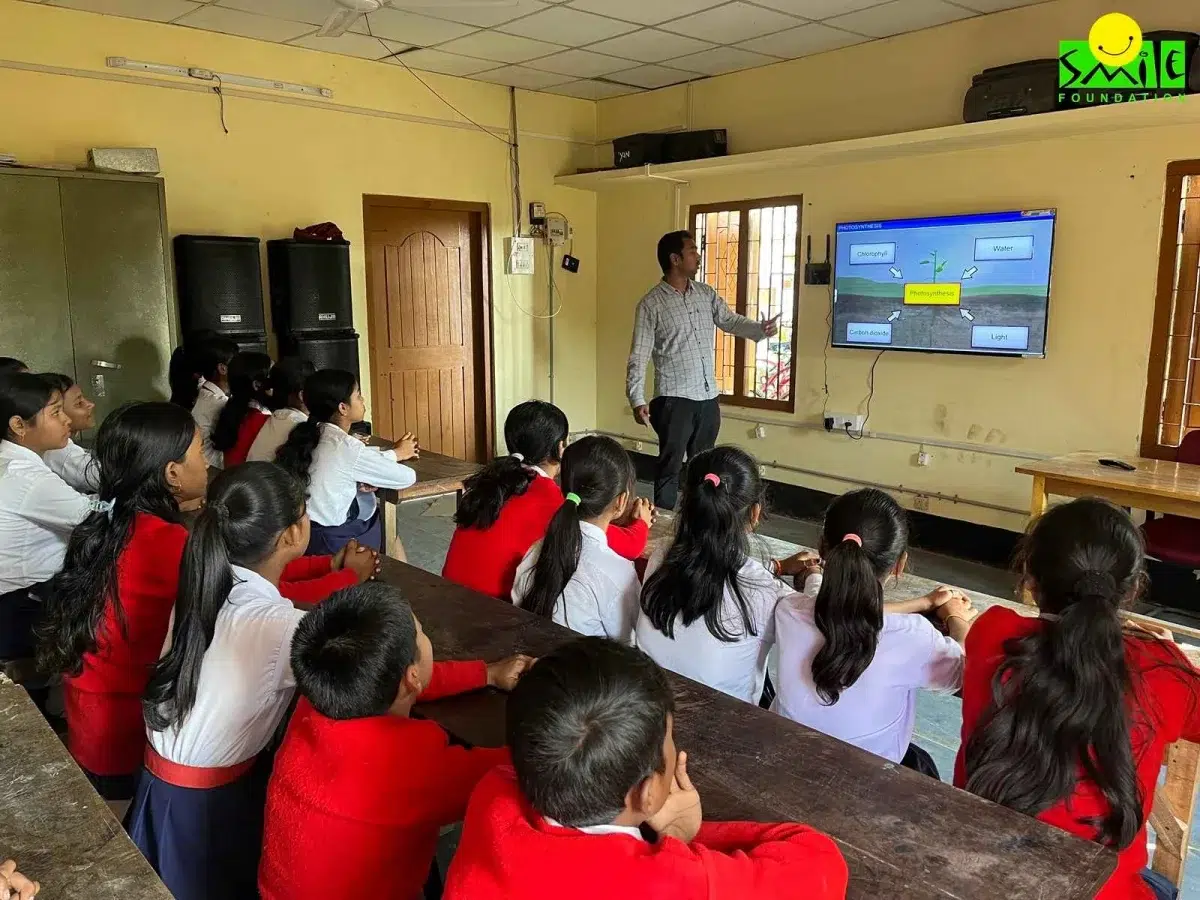
Imagine a science classroom where the students are learning about photosynthesis. If you remember your school days, you’d remember how this concept was taught to you – using chalkboard, books and a lot of words. Now, think about how it felt at the moment? Did the topic excite or fascinate you? Or did you feel bored?

Now, do you remember those science labs where you got to see the onion peel under a microscope for the first time? Or, where you saw different bird claws kept inside glass jars? How was that experience? The interaction in a traditional classroom, as we understand from the example of photosynthesis being taught using pictures and lectures, is minimal and students struggle to grasp the concept fully.

On the other hand, in an interactive classroom, students get to engage with the topic at a more immersive and experiential level. For example, the teacher might make use of animated diagrams, time lapse videos or a science experiment to teach a particular topic in the classroom. Students can participate in the experiment, answer questions, collaborate with each other and even conduct experiments of their own.

This is how an interactive classroom differs from a traditional classroom. While the latter is predominantly based on passive listening, the former allows the students to actively participate in the process of learning, thereby adding the element of play in the classroom. This is why we need interactive classrooms today, to enhance the learning experience of students.

What is an Interactive Classroom?

As we understand from the scenario shared above, an interactive classroom is where students get to engage and participate in the learning process actively and not just act like passive listeners. Interactive classrooms are modern learning environments that integrate technology to enhance teaching and learning experiences.

Even classrooms that do not have the latest technology can be turned into interactive classrooms with the use of simple techniques like creating teaching-learning materials, using games to teach a topic and engaging students into more hands-on activities rather than forcing them to sit and listen.

Differences between Traditional and Interactive Classrooms

  1. Teaching method – As explained above, the traditional classrooms primarily use lecture-based teaching methodology, while interactive classrooms use more collaborative and hands-on learning methods.
  2. Student engagement – In a traditional classroom, a student is just a passive listener who is supposed to grasp everything that the teacher says. On the other hand, an interactive classroom allows every student to learn in their own way through active participation.
  3. Technology – Traditional classrooms make minimal use of technology while interactive classrooms deploy any technology that helps in enhancing learning participation.
  4. Learning tools – The primary learning tools in a traditional classroom are chalkboard, books, etc., while in an interactive classroom, teachers can use smartboards, tablets, computers, VR headsets, etc.
  5. Assessment methods – A traditional classroom mostly assesses the students through age-old methods of written or oral examinations. However, an interactive classroom uses methods that are more innovative and allow for gathering real-time feedback to learning. This includes engaging activities, quizzes, demonstrations, etc.

Technology in Interactive Classrooms

One of the things that truly sets interactive classrooms apart from traditional classrooms is technology. Smart classrooms are becoming a reality today as we are realising the importance of giving students a chance to immerse in the topics they are learning. Here are some of the technological tools that are used in interactive classrooms-

  1. Smartboards – It is a replacement of a traditional board which was used to write with chalk. At the same time, a smartboard is also an extension of a traditional teaching board as teachers have the option to write on the board using a digital pen. However, they can also display pictures, animations, zoom in or out, and do much more with a smartboard. It also makes it easy for the teachers to explain a topic as they have more ways of explaining a concept.
  2. Tablets and laptops – While traditional classrooms could have had one or two computers, their use was again limited to passive demonstrations for students. In an interactive classroom, students get access to individual or shared digital devices through which they can engage with the learning in real-time by answering questions, sharing inputs, completing assignments, etc.
  3. Virtual reality and augmented reality – These are fairly new technologies and are yet to be deployed in classrooms in India. However, virtual reality allows for learners to completely immerse themselves into what they are learning. Think about the metaverse where social media users can live in a virtual world. This is how virtual reality can work in an interactive classroom. Students can get a chance to see the planetary movements up close, learn about prehistoric times or witness the photosynthesis process as if it is happening in real-time.
  4. Learning management systems – These are platforms that are used to host content on digital learning portals. A good example can be Google Classroom where teachers can host their content, share notes, take assignments and mark attendance.

Teaching in Interactive Classrooms

Now that we understand how interactive classrooms differ from traditional classrooms and how they make use of technology, let us look at a few examples of how the teaching-learning process becomes more engaging in interactive classrooms.

  1. In a science classroom, students who are learning about human anatomy can ditch the old method of seeing it on a dummy, but actually experience it through VR headsets where they can move through the human body and see the functioning of different organs.
  2. In a mathematics classroom, students can solve a problem collaboratively using tablets or computers and come up with solutions to real-life problems.
  3. Digital storytelling can be used in language classrooms where students can learn to make use of artificial intelligence and other tools that are changing the world of creative content rapidly.

Interactive Classroom Initiatives in India

Many state governments in India are now investing in building smart classrooms and the New Education Policy also promotes pedagogical methods that are more interactive. At the same time, many private organisations and nonprofits like Smile Foundation are also working in this area by supporting existing schools in building their interactive classrooms infrastructure, training the teachers and even sending their volunteers in educational institutions to teach students using these new ways.

Smart India Hackathon is also an event that focuses on developing innovative solutions using technology. It promotes the use of interactive learning methods. The Central government’s Digital India Campaign is also building digital infrastructure and services across India which are also allowing classrooms to go digital.

Future of School Education

The children growing up in today’s world are probably the first generation which is growing up in the world of artificial intelligence. If we look back at the last 10 or 20 years, we will realise how fast technology has changed and we can expect this to become even faster in the coming years. Therefore, for students to keep up with the changing times, they need to learn about concepts through innovative and interactive methods. This is the future of school education. It is going to be digital, interactive and collaborative.

As technology continues to evolve, so will the methods of teaching and learning. The integration of AI, VR and AR will further personalise education, catering to the unique needs of each student. Schools will become hubs of innovation, where students are not just passive recipients of information but active participants in their learning journey. As initiatives in India and around the world continue to promote interactive learning, the future of education looks promising, with endless possibilities for enhancing student engagement and achievement.

Categories
Smile

Employability in Rural India and Stable Consumption Behaviour 

Despite the growth of numerous manufacturing and service sectors over the years, India has always relied on agriculture both for its economic growth and employment. This is mainly because over 60% of its population resides in rural areas. One of the important factors that will drive rural prosperity is having access to stable and diverse employment opportunities that will provide regular income. Along with the employability, it increases the stability of household income. This in turn will have a significant impact on consumption patterns in both rural and urban areas of the country.

It is said that a stable consumption pattern is the core aspect of the economic stability of a country. For it makes sure of the predictable demand for goods and services, thereby reducing market volatility and supporting economic growth. Before we go on to discuss the connection between employability in rural areas and stable consumption behaviour across the country, let’s understand what stable consumption behaviour actually means.

Understanding Stable Consumption Behaviour

Stable consumption behaviour is a financial planning concept that has been developed and tested by renowned economists across the world. It refers to the practice of maintaining an average level of spending or expenses over a period of time, irrespective of the variations in their revenue. It is commonly referred to as consumption smoothing by experts. Consumption smoothing, according to Investopedia, is a practice of optimizing people’s standard of living by maintaining a proper balance between expenses and saving during various phases of life.

Consumption smoothing is aimed at offering a cushion to individuals while dealing with unexpected expenses, economic downturns, and income volatility. The cushion can be achieved by saving money whenever one gets a high income and spending the saved money during the income volatility or after retirement.

It is considered an extremely difficult idea to put in place. For it requires vigorous planning, and one needs to stick to the budget in all situations. But it is one of the aspirational ideas that will allow individuals to have a relatively predictable and stable way of living through their lifetime. Stable consumption behaviour promotes the financial resilience and stability of an individual.

Link between Increasing Employability in Rural India and Stable Consumption Behaviour

For a layman to understand the impact of the rise in rural employability on the stable consumption behaviour of the country, it is vital to break down and understand the relationship between employment opportunities, income stability and consumption patterns. Let’s discuss the relationship in detail. 

When the government attempts to increase employment opportunities in rural areas, they diversify and create opportunities in various sectors like manufacturing, service and agriculture sectors. Because diversification of opportunities spreads risk. It will also make sure that even if one sector faces challenges, other sectors can prevent the economy from destruction. For instance, if agriculture fails due to droughts or fluctuating commodity prices, manufacturing and service sectors will buffer the financial strain. A diversified rural economy will lead to greater resilience in consumption patterns even during shocks.

The increased employability in turn will allow people to grab stable, formal and diverse forms of jobs. This will eventually reduce revenue fluctuations caused by seasonal and limited employment opportunities and lead to a steady stream of income. 

When a household gets a stable income, they can predict their financial situations and plan their finances accordingly. Better planning and spending as per their budget will make their consumption patterns more consistent.

When people in rural areas get steady income, they can afford to purchase goods and services on a regular basis. This regular consumption of essential goods and services becomes predictable. Also, the chances for discretionary spending on non-essential goods and services will increase. This in turn will stimulate unprecedented demand in the economy. This consistent consumption pattern will reduce fluctuations in production cycles and allow small and medium rural businesses to plan and produce better.

As small and medium enterprises grow and employ more people, a higher flow of money starts to circulate within the region. A resilient and self-sustaining rural economy will contribute greatly to national economic stability. For it creates a more balanced regional consumption pattern. 

Moreover, when an individual gets a stable income, financial institutions are more likely to offer loans. Not just that, banks will also encourage rural consumers to save, invest, and spend more predictably. This will also help in smoothing consumption even during times of unexpected expenses.

Raised revenue will directly lead to increased purchasing power. (Purchasing power refers to the quantity of product or service that can be purchased with a particular currency unit.) This in turn will also reduce the consumption between the rural and urban areas, thereby reducing stark economic disparities between rural and urban areas. This will lead to a uniform consumption trend across the country.

This is how the stability in consumption patterns in rural areas will have a cumulative effect on the country’s economy.

Current Trends in the Rural Labour Market

For the first time since the Covid-19 pandemic that hit the globe in 2020, annual average employment demand for the Mahatma Gandhi National Rural Employment Guarantee Act (MGNREGA) has fallen below the pre-pandemic levels. Under the scheme, temporary jobs are provided to people in rural areas with limited or no stable income opportunities. According to the data accessed from their website, the average number of people employed under the scheme in 2024 is 25,000. Following the pandemic, the number had moved close to 40,000 in 2021.

A reduction in the number of employees under the schemes means there has been a rise in other stable employment opportunities in rural areas. This year has received above-average monsoons, thereby rising employment opportunities in the farm sector.

According to the latest PLFS report, employment opportunities in the construction sector have rebounded due to initiatives like the national infrastructure pipeline and increased government capital expenditures. Not just that, employment in manufacturing and service sectors has also increased considerably.

Conclusion

In summary, increasing employability in rural India like through Smile’s women empowerment programme Swabhiman will lead to a stream of stable income. This in turn contributes significantly to the stable consumption behaviour in rural areas. This smooth consumption will help rural households to manage their financial needs effectively. This will also create a more predictable and resilient consumption environment at the national level. As rural consumption stabilises, it can contribute to more consistent demand for goods and services, fostering overall economic stability and growth in India.

0%