
Someone wakes up with a headache constantly; what do you do? Seek medical help or wait till the headaches become more prominent and other symptoms present themselves. It may be a choice for you, but for a family managing a tight household budget, delayed medical treatment is the only choice. For them, even a doctor’s consultation can mean setting aside money meant for food, rent, school fees or other essentials. So, their default choice becoming delayed medical treatment, with families waiting until an illness becomes serious and difficult to ignore.
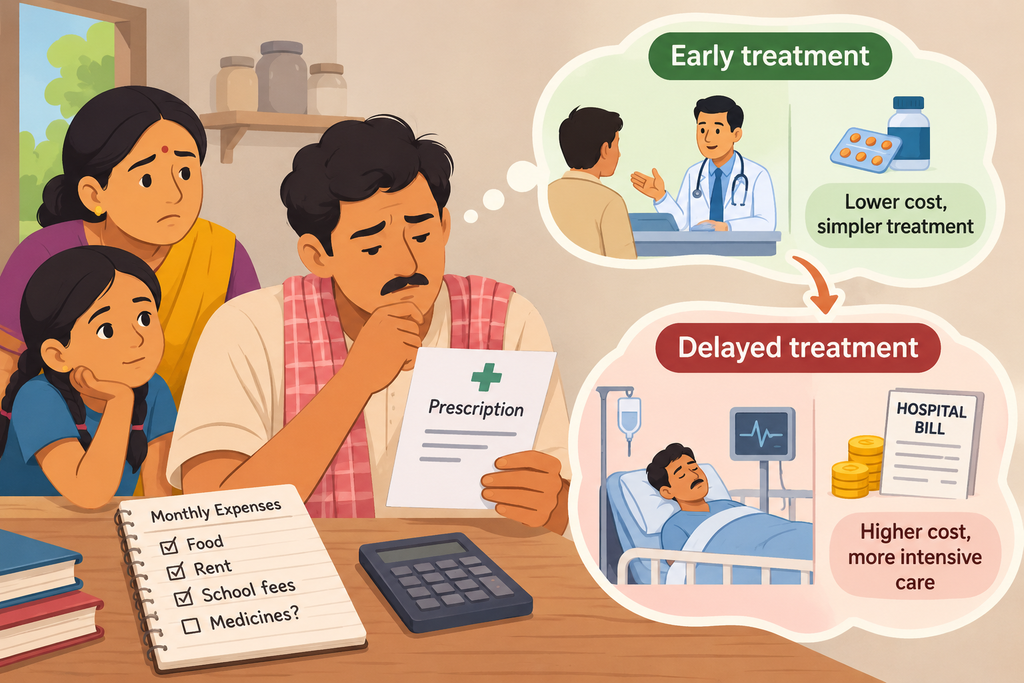
The cost of this decision, however, can extend far beyond the initial consultation. A condition that could have been managed with timely medical attention may progress and require more intensive treatment. Hospital bills can rise, time away from work can increase, and the financial strain can affect the entire household.
Delayed medical treatment, therefore, is not just a health concern. It is also an economic one. And to understand the true cost of waiting, we must first understand why so many families cannot afford to seek care when they need it.
Delayed Medical Treatment = More Expensive Healthcare
The cost of treating an illness is shaped not only by the condition itself, but also by how far it has progressed by the time a person receives care. When treatment begins early, some conditions may be managed with medication or less intensive interventions. But when care is delayed, patients may need hospitalisation, surgery or prolonged treatment, adding to the overall expense.
For families already struggling to meet healthcare expenses, even routine treatment can take a significant toll. Khemraj and Mangla, from Rajasthan, experienced this first-hand. After repeated droughts damaged their crops, the family fell into debt and had to sell their cows. As Khemraj shared in his story with the Smile Foundation, private clinics and medicines cost nearly half their earnings. Their experience reflects how quickly healthcare expenses can put pressure on a family’s finances.
The cost can rise further when an illness is diagnosed at an advanced stage. A Tata Memorial Centre study on oral cancer, involving 100 patients, found that direct treatment costs were around 42% higher for advanced-stage cancer than for early-stage cancer. The average cost rose from ₹1,17,135 to ₹2,02,892 per patient.
Although specific to oral cancer, the findings show how the stage of diagnosis can affect treatment costs. And the financial impact does not stop at the hospital bill.
Illness can become a financial burden for the entire family
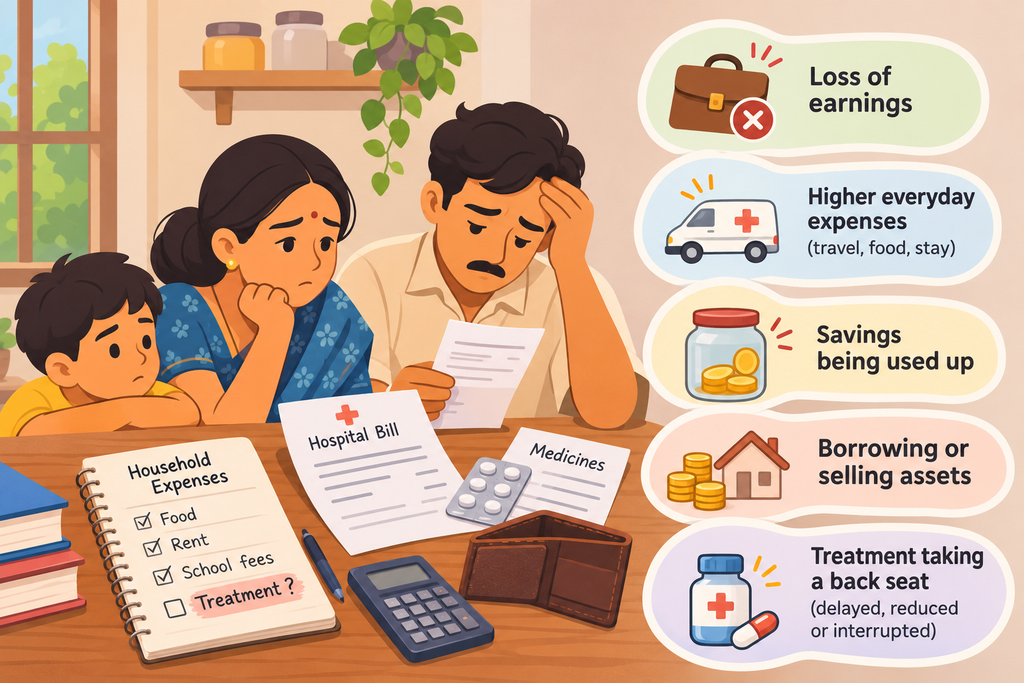
A serious illness can put a family’s finances under pressure in more ]than one way. Beyond paying for treatment, families often have to deal with the loss of income and changes to their everyday spending. Some of the biggest challenges include:
- Loss of earnings: When the person who brings in an income falls ill, the family may lose a regular source of earnings. If another earning member has to stop working to care for them, the household crumbles.
- Everyday expenses: Travel to hospitals, food and accommodation during treatment can add to the family’s spending, particularly when care is not available close to home.
- Savings being used up: Money put aside for school fees, rent or other household needs may have to be used to pay for treatment.
- Borrowing and selling assets: When savings are not enough, families may turn to loans, borrow from relatives or sell assets to meet medical expenses.
- Delayed medical treatment: If the financial pressure becomes too much, families may delay follow-up visits, reduce medication or interrupt treatment altogether.
The scale of this problem is reflected in a study based on India’s National Sample Survey (2017–18), which found that 20.4% of households faced catastrophic health expenditure due to hospitalisation, using the study’s measure of household consumption expenditure.
For a family with little financial protection, the effects can continue long after the immediate medical crisis. Recovering financially can be just as difficult as recovering from the illness itself.
The Economics of Getting Care Early
So, what can make it easier for families to seek medical attention before an illness becomes serious? A key part of the answer is access to affordable and reliable primary healthcare.
This means making basic health check-ups, consultations, medicines and diagnostic services available closer to the communities that need them. Regular screenings can help identify health concerns early, while timely referrals and follow-up care ensure that patients receive the treatment they need. Affordable medicines are equally important, so that starting treatment does not become the end of it.
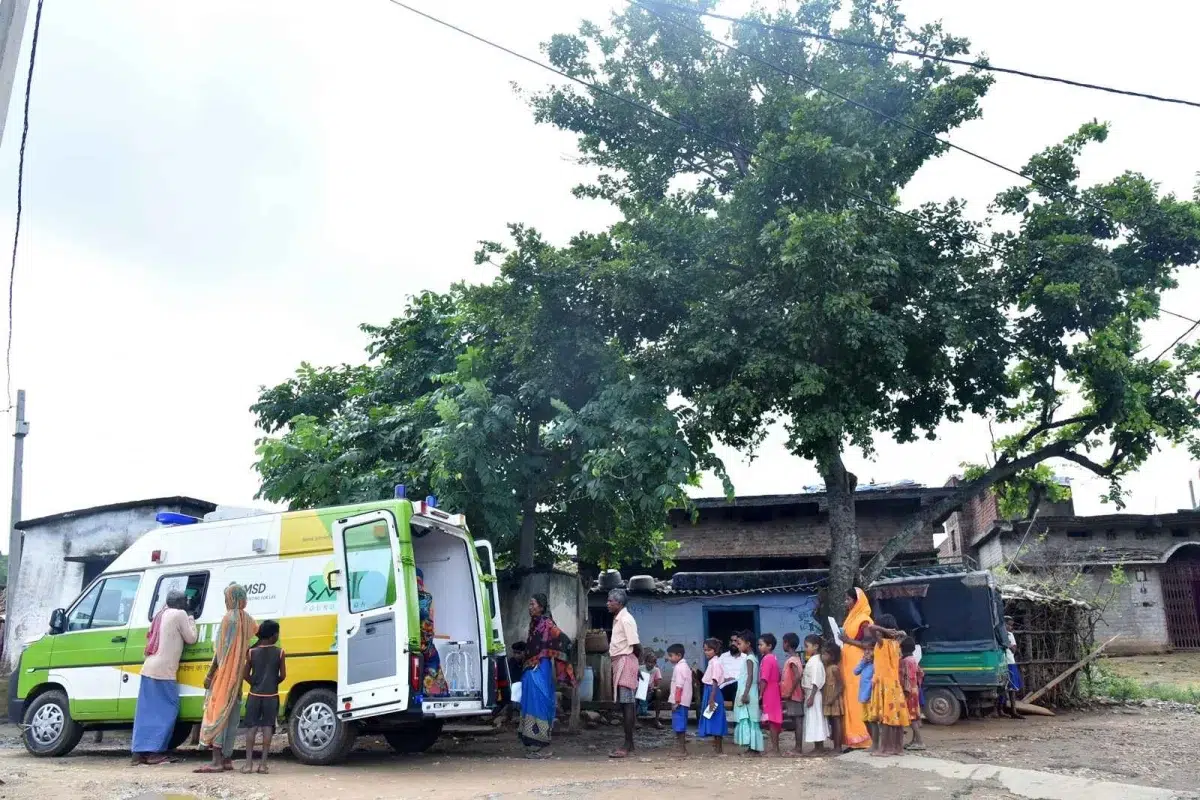
Khemraj and Mangla’s story is a reminder of what this access can mean. After facing years of financial hardship, the family found support through Smile on Wheels. Free health check-ups and medicines brought healthcare within their reach, giving them an opportunity to seek medical support without the expense of private clinics.
Early treatment did not prevent every complication or guarantee lower costs in their case. But accessible healthcare gave them the opportunity to address health concerns sooner, rather than waiting for an illness to become very difficult to manage.
Maybe for someone else, getting care early would delay their hardships.
Making Timely Healthcare More Accessible
Addressing the cost of delayed medical treatment also means making healthcare easier for families to access. Affordable consultations, medicines and health services closer to home can help people seek care earlier, rather than putting it off because of the expense or distance involved.
For Gaurav’s family in Haryana, managing one health concern became difficult when another arose. His parents, Rita and Sandeep, were daily-wage earners. When his elder sister fell ill with viral fever, they struggled to manage her medical expenses and had to take Gaurav home from a government hospital against medical advice. Later, when he developed a scalp condition, a local doctor could offer little help.
Through Smile on Wheels, Gaurav received a consultation and ointment, and began recovering. His story shows how access to even basic medical support can matter to a family navigating difficult circumstances.
For families like Gaurav’s, timely care is not just about knowing when to seek help. It is also about having somewhere to turn when the need arises.

The Cost of Waiting Is Too High!
Delayed medical treatment is not simply a matter of putting off a doctor’s visit. It can mean more intensive care, higher medical expenses and greater financial pressure on a family. And for households already managing limited resources, the consequences can last well beyond the illness itself.
But this is not an inevitable cycle. Making healthcare affordable, accessible and available closer to communities can help families seek medical attention earlier and reduce the risk of a treatable condition becoming a much bigger health and financial challenge.
The cost of waiting is high. Making timely healthcare possible is one way to ensure that families do not have to pay an even greater price later.
Frequently Asked Questions
- What happens when a health condition is left untreated?
A condition may worsen and become harder to manage, potentially requiring more intensive treatment, longer recovery and higher medical expenses. - Why do people wait until an illness becomes serious before seeking treatment?
For families on tight budgets, even a consultation or a course of medicines can compete with essential expenses such as food, rent and school fees. - How does a serious illness affect a family’s finances beyond medical bills?
Families may lose income, spend their savings, borrow money or sell assets to manage treatment and related expenses. - How common is the financial burden of hospitalisation in India?
A study using India’s 2017–18 National Sample Survey data found that 20.4% of households faced catastrophic health expenditure due to hospitalisation. - Can early diagnosis help reduce the cost of treatment?
In some cases, yes. A Tata Memorial Centre study found that direct treatment costs for advanced-stage oral cancer were around 42% higher than for early-stage cases. - What can help families access healthcare before an illness becomes serious?
Affordable consultations, medicines and healthcare closer to home can reduce barriers to seeking care. Initiatives such as Smile Foundation’s Smile on Wheels help bring these services to underserved communities.