
Categories
Health Insights

The Economics of Delayed Treatment: How Much Does It Cost to Wait Until an Illness Becomes Serious?

Someone wakes up with a headache constantly; what do you do? Seek medical help or wait till the headaches become more prominent and other symptoms present themselves. It may be a choice for you, but for a family managing a tight household budget, delayed medical treatment is the only choice. For them, even a doctor’s consultation can mean setting aside money meant for food, rent, school fees or other essentials. So, their default choice becoming delayed medical treatment, with families waiting until an illness becomes serious and difficult to ignore.
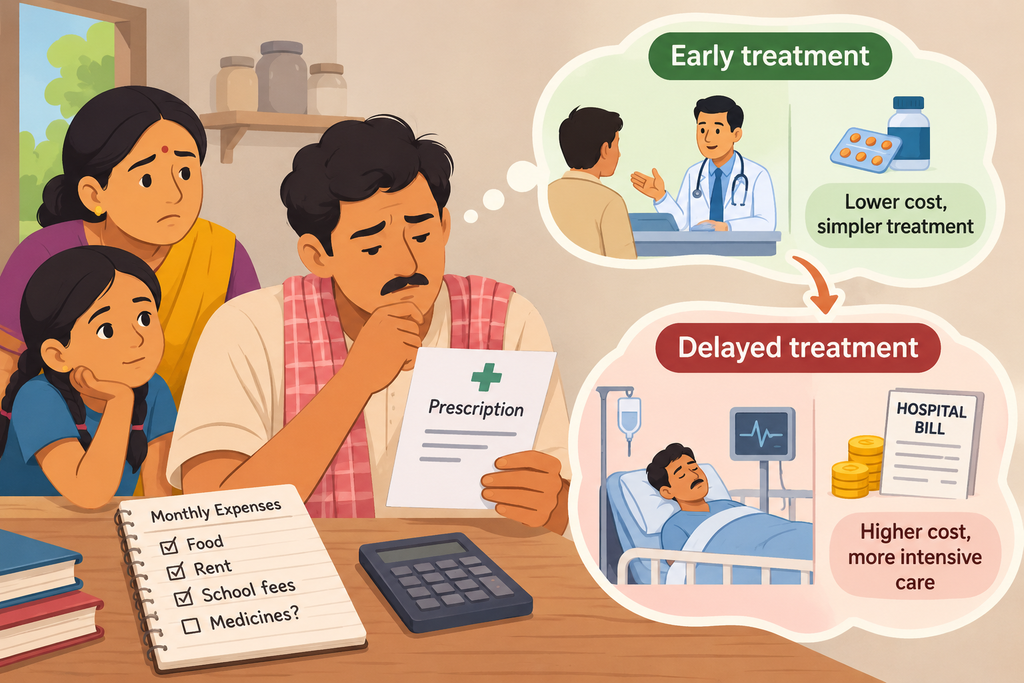
Difference between cost of early and delayed medical treatment | Smile Foundation

The cost of this decision, however, can extend far beyond the initial consultation. A condition that could have been managed with timely medical attention may progress and require more intensive treatment. Hospital bills can rise, time away from work can increase, and the financial strain can affect the entire household.

Delayed medical treatment, therefore, is not just a health concern. It is also an economic one. And to understand the true cost of waiting, we must first understand why so many families cannot afford to seek care when they need it. 

Delayed Medical Treatment = More Expensive Healthcare

The cost of treating an illness is shaped not only by the condition itself, but also by how far it has progressed by the time a person receives care. When treatment begins early, some conditions may be managed with medication or less intensive interventions. But when care is delayed, patients may need hospitalisation, surgery or prolonged treatment, adding to the overall expense.

For families already struggling to meet healthcare expenses, even routine treatment can take a significant toll. Khemraj and Mangla, from Rajasthan, experienced this first-hand. After repeated droughts damaged their crops, the family fell into debt and had to sell their cows. As Khemraj shared in his story with the Smile Foundation, private clinics and medicines cost nearly half their earnings. Their experience reflects how quickly healthcare expenses can put pressure on a family’s finances.
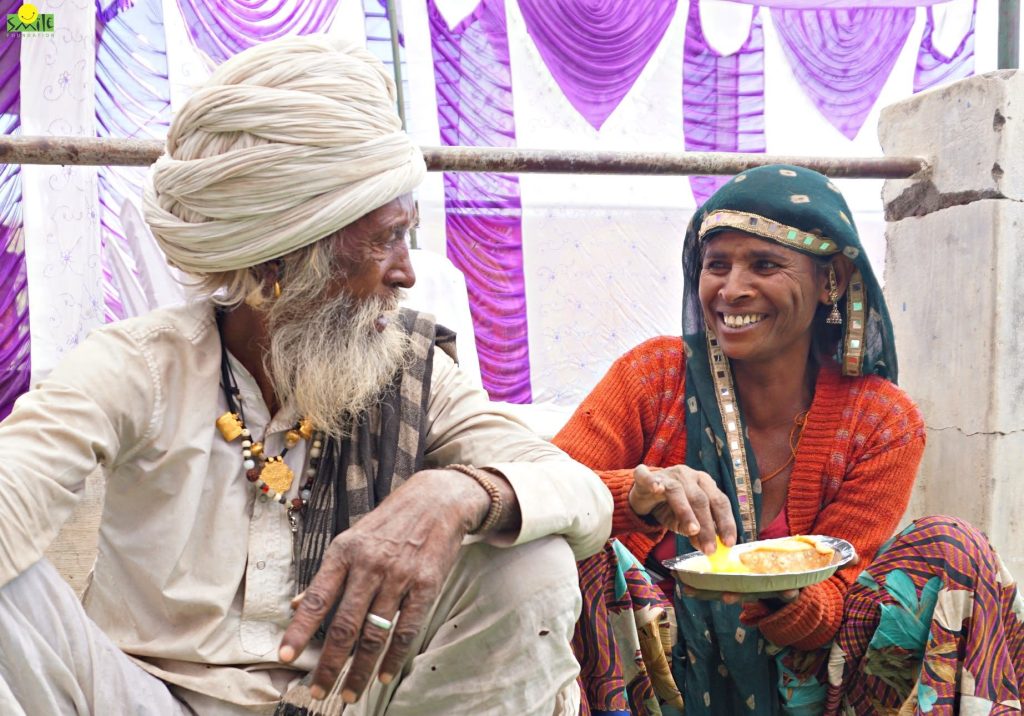
A family discussing healthcare concerns and consequences of delayed medical treatment

The cost can rise further when an illness is diagnosed at an advanced stage. A Tata Memorial Centre study on oral cancer, involving 100 patients, found that direct treatment costs were around 42% higher for advanced-stage cancer than for early-stage cancer. The average cost rose from ₹1,17,135 to ₹2,02,892 per patient.

Although specific to oral cancer, the findings show how the stage of diagnosis can affect treatment costs. And the financial impact does not stop at the hospital bill.

Illness can become a financial burden for the entire family

A serious illness can put a family’s finances under pressure in more ]than one way. Beyond paying for treatment, families often have to deal with the loss of income and changes to their everyday spending. Some of the biggest challenges include:

  • Loss of earnings: When the person who brings in an income falls ill, the family may lose a regular source of earnings. If another earning member has to stop working to care for them, the household crumbles.
  • Everyday expenses: Travel to hospitals, food and accommodation during treatment can add to the family’s spending, particularly when care is not available close to home.
  • Savings being used up: Money put aside for school fees, rent or other household needs may have to be used to pay for treatment.
  • Borrowing and selling assets: When savings are not enough, families may turn to loans, borrow from relatives or sell assets to meet medical expenses.
  • Delayed medical treatment: If the financial pressure becomes too much, families may delay follow-up visits, reduce medication or interrupt treatment altogether.
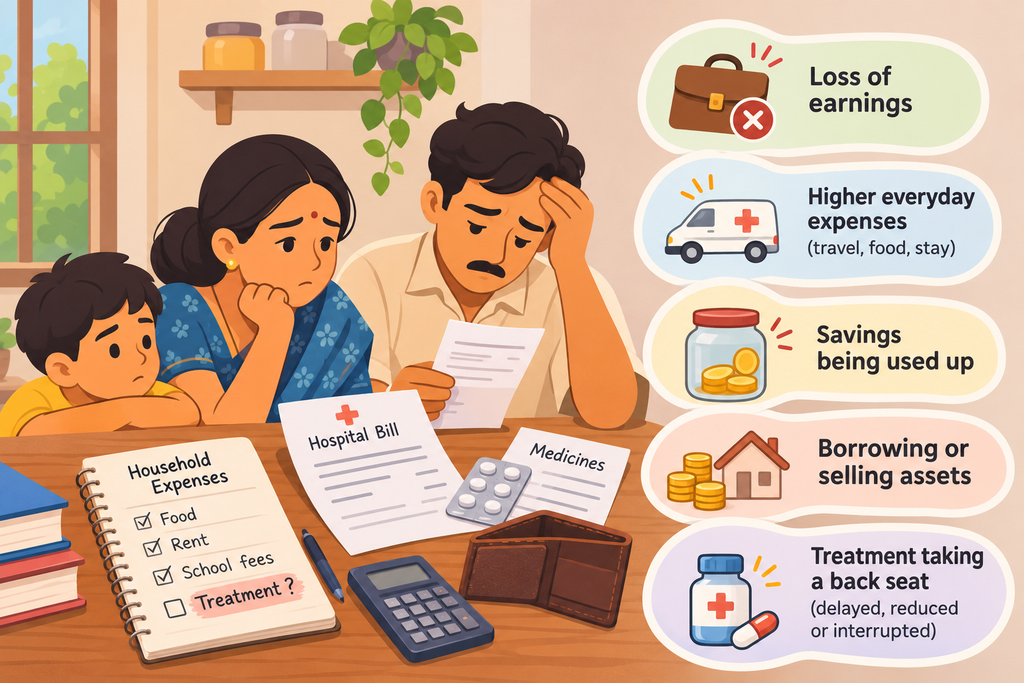
Difference between cost of early and delayed medical treatment | Smile Foundation

The scale of this problem is reflected in a study based on India’s National Sample Survey (2017–18), which found that 20.4% of households faced catastrophic health expenditure due to hospitalisation, using the study’s measure of household consumption expenditure.

For a family with little financial protection, the effects can continue long after the immediate medical crisis. Recovering financially can be just as difficult as recovering from the illness itself.

The Economics of Getting Care Early

So, what can make it easier for families to seek medical attention before an illness becomes serious? A key part of the answer is access to affordable and reliable primary healthcare.

This means making basic health check-ups, consultations, medicines and diagnostic services available closer to the communities that need them. Regular screenings can help identify health concerns early, while timely referrals and follow-up care ensure that patients receive the treatment they need. Affordable medicines are equally important, so that starting treatment does not become the end of it.

Khemraj and Mangla’s story is a reminder of what this access can mean. After facing years of financial hardship, the family found support through Smile on Wheels. Free health check-ups and medicines brought healthcare within their reach, giving them an opportunity to seek medical support without the expense of private clinics.

Early treatment did not prevent every complication or guarantee lower costs in their case. But accessible healthcare gave them the opportunity to address health concerns sooner, rather than waiting for an illness to become very difficult to manage. 

Maybe for someone else, getting care early would delay their hardships.

Making Timely Healthcare More Accessible

Addressing the cost of delayed medical treatment also means making healthcare easier for families to access. Affordable consultations, medicines and health services closer to home can help people seek care earlier, rather than putting it off because of the expense or distance involved.

For Gaurav’s family in Haryana, managing one health concern became difficult when another arose. His parents, Rita and Sandeep, were daily-wage earners. When his elder sister fell ill with viral fever, they struggled to manage her medical expenses and had to take Gaurav home from a government hospital against medical advice. Later, when he developed a scalp condition, a local doctor could offer little help.

Through Smile on Wheels, Gaurav received a consultation and ointment, and began recovering. His story shows how access to even basic medical support can matter to a family navigating difficult circumstances.

For families like Gaurav’s, timely care is not just about knowing when to seek help. It is also about having somewhere to turn when the need arises.

People queuing up outside Smile on Wheels van

The Cost of Waiting Is Too High!

Delayed medical treatment is not simply a matter of putting off a doctor’s visit. It can mean more intensive care, higher medical expenses and greater financial pressure on a family. And for households already managing limited resources, the consequences can last well beyond the illness itself.

But this is not an inevitable cycle. Making healthcare affordable, accessible and available closer to communities can help families seek medical attention earlier and reduce the risk of a treatable condition becoming a much bigger health and financial challenge.

The cost of waiting is high. Making timely healthcare possible is one way to ensure that families do not have to pay an even greater price later.

Frequently Asked Questions

  1. What happens when a health condition is left untreated?
    A condition may worsen and become harder to manage, potentially requiring more intensive treatment, longer recovery and higher medical expenses.
  2. Why do people wait until an illness becomes serious before seeking treatment?
    For families on tight budgets, even a consultation or a course of medicines can compete with essential expenses such as food, rent and school fees.
  3. How does a serious illness affect a family’s finances beyond medical bills?
    Families may lose income, spend their savings, borrow money or sell assets to manage treatment and related expenses.
  4. How common is the financial burden of hospitalisation in India?
    A study using India’s 2017–18 National Sample Survey data found that 20.4% of households faced catastrophic health expenditure due to hospitalisation.
  5. Can early diagnosis help reduce the cost of treatment?
    In some cases, yes. A Tata Memorial Centre study found that direct treatment costs for advanced-stage oral cancer were around 42% higher than for early-stage cases.
  6. What can help families access healthcare before an illness becomes serious?
    Affordable consultations, medicines and healthcare closer to home can reduce barriers to seeking care. Initiatives such as Smile Foundation’s Smile on Wheels help bring these services to underserved communities.
Categories
Health

Beyond Distance: What Really Determines Healthcare Access?

A healthcare facility can be close enough to walk to and still feel out of reach. The distance between a person and a doctor is not always measured in kilometres. It can be the three hours spent waiting for a consultation, the medicine that is not available at the pharmacy, the cost of losing a day’s wages, the referral to another hospital across town or simply the feeling that nobody will listen once you get there. This is why the presence of a health centre, on its own, tells us surprisingly little about whether people actually have healthcare access.

Healthcare access has traditionally been discussed through these more visible markers: the number of facilities, the availability of doctors, the distance patients have to travel and whether essential medicines and services are available. But the experience of seeking care is shaped by a much wider set of circumstances. A government hospital may offer free treatment and still be avoided if patients have previously encountered long queues, confusing procedures or dismissive treatment. A health scheme may cover a particular service and yet remain underused when people do not know they are entitled to it or cannot figure out how to claim it. 

The World Health Organization’s work on unmet healthcare needs reflects this broader understanding, identifying availability, accessibility and acceptability among the factors that determine whether healthcare actually reaches people. The distinction is important because access to healthcare does not become a reality simply because a facility has been built. People have to be able to reach it, afford it, understand it and, perhaps most importantly, trust that seeking care will lead to something better. 

Healthcare access

When Availability Does Not Mean Access 

The Indian healthcare system illustrates this gap between availability and healthcare access rather clearly. The country has a large public health infrastructure, ranging from sub-centres and primary health centres to community health centres and district hospitals. However, people frequently move between public and private providers, or bypass public facilities altogether.

According to NSSO’s 2017–18 Social Consumption of Health survey, around 60 per cent of hospitalisations and 70 per cent of outpatient services were delivered by the private sector, excluding antenatal care and deliveries. This is not simply a story of people preferring private healthcare. It also reflects how public healthcare is experienced. WHO’s demand-side assessment of primary healthcare in Assam found that only about 11.5 per cent of rural households and 4 per cent of urban households sought outpatient care at or below the community health-centre level, pointing to a substantial gap between the existence of primary-care facilities and their utilisation. 

The study identified factors such as quality of care and out-of-pocket expenditure alongside other demand- and supply-side determinants. The distinction is pertinent because a narrow understanding of access can place responsibility on the patient: the facility is there, so why aren’t people using it? A broader understanding barriers to healthcare access asks what happens when the patient actually enters the system. 

Trust as foundation for healthcare access

Trust is rarely listed alongside doctors, beds, medicines and diagnostic equipment as a component of healthcare infrastructure. Yet it can determine whether any of those resources are actually used. Patients make decisions under considerable uncertainty. They may not know whether a symptom is serious, whether a doctor has correctly diagnosed them, whether a prescribed test is necessary, or whether they will receive the medicine they were promised.

WHO’s health-system review of India notes that information asymmetry is a major challenge: patients may not know what services a facility provides, what they are entitled to, what treatment will cost or which facilities are covered by government schemes. This creates a major hindrance. Healthcare accessibility, therefore, is also shaped by how clearly the system communicates with the people it is meant to serve.

A patient who has previously spent an entire day waiting, been sent from one counter to another, found medicines unavailable or felt humiliated by staff may decide that seeking care is not worth the trouble next time. The decision can appear irrational if viewed only through the lens of geographical access. It becomes considerably more understandable when healthcare access is viewed as an experience. 

Reimagining affordability 

Recent WHO work on tribal health navigators in Karnataka makes this particularly visible. The organisation describes how complicated registration, pharmacy, laboratory and referral processes can make hospitals difficult to navigate, particularly for communities with limited prior exposure to formal institutions. The account also documents how experiences of discrimination and hostility can undermine trust in government institutions. This suggests that improving utilisation cannot always mean simply adding another facility.

Sometimes the intervention has to be directed at the relationship between the institution and the person entering it.The quality of interaction matters because healthcare is not merely a technical transaction. It involves vulnerability. Patients have to disclose bodily symptoms, financial circumstances, reproductive histories, mental distress and other intimate information to strangers. If they anticipate judgement or dismissal, they may delay care or seek alternatives. 

Gender can make this particularly consequential. Women may face restrictions on mobility, dependence on family members for money or transport, concerns about being examined by male providers, or the expectation that their own health problems should be secondary to household responsibilities. For adolescents, older people, people with disabilities and marginalised communities, the problem can similarly involve whether a facility feels socially navigable rather than simply geographically reachable. The result is a form of invisible exclusion. A person may technically have a hospital nearby while lacking the practical freedom, confidence or institutional support required to use it. 

Financial access also extends beyond the consultation fee. Even when free, a patient may have to pay for transport, diagnostic tests, medicines unavailable at the facility, food during a hospital visit or lost wages from taking time away from work. India’s reliance on private healthcare makes this particularly significant.

NITI Aayog has noted that the private sector’s substantial role is associated with high out-of-pocket expenditure and weaker financial protection. Financial hardship can consequently affect healthcare decisions before a patient ever reaches the point of treatment. For a daily-wage worker, say for instance, ‘free healthcare’ may not mean free healthcare if accessing it requires losing a day’s income.

For a woman dependent on another household member for transport, a hospital appointment may involve negotiating permission as well as arranging a journey. Access to healthcare is consequently shaped by the social and economic conditions surrounding the facility. 

Bringing Healthcare Closer to Communities

The question of healthcare access is ultimately a question of whether people can use care when they need it. This is where community-based healthcare models can play an important role, particularly for people who may face financial, geographical or social barriers to formal health facilities.

Smile Foundation’s healthcare work is built around this last-mile challenge. Through its healthcare initiatives, including Smile on Wheels, the organisation takes primary healthcare closer to underserved communities, particularly those in remote and difficult-to-reach areas. The approach combines preventive, promotive and curative healthcare with health awareness, helping communities access services without having to navigate the full burden of travelling to distant facilities.

The Science of Kindness: How Volunteering Benefits Mental Health

The model is deliberately broader than treating illness. Community-based health services can include health screenings, consultations, referrals, medicines, maternal and child health support, awareness on hygiene and sanitation, and information that helps people recognise when and where to seek care. In this sense, the intervention is not simply about putting a doctor closer to a community. It is also about reducing some of the uncertainty and practical barriers that can prevent people from entering the healthcare system in the first place.

That distinction matters for healthcare access. A person who has limited income, cannot easily afford transport, is unfamiliar with formal health institutions or has previously delayed treatment may need more than a facility to be physically available. They may need information, reassurance, screening, referral support and a point of contact they recognise and trust.

Smile Foundation’s healthcare programmes also demonstrate why health cannot be separated from the other conditions that shape people’s lives. For children in underserved communities, for instance, illness, nutrition, hygiene and education can directly affect one another. Healthcare interventions therefore work alongside broader community development efforts rather than operating as an isolated service.

The larger lesson is that improving healthcare access does not always begin with building more infrastructure. Sometimes it begins by understanding why people are not reaching the infrastructure that already exists, and then designing services around those realities.

Designing for use

The challenge for healthcare systems is to move from building capacity to building confidence in that capacity. This means paying attention to the small institutional experiences that determine whether people return. Health workers can also play an important role as navigators by helping patients understand and move through complicated health systems. Similarly, primary healthcare reforms need to consider what communities actually want from their local facilities rather than assuming that proximity automatically creates demand.

WHO’s demand-side studies in India specifically examine why individuals choose particular providers and what can reduce unmet healthcare needs. Digital tools may help with some of these gaps, but technology cannot substitute for trust. Telemedicine, appointment systems and digital health records can reduce certain logistical barriers, but they cannot by themselves resolve experiences of discrimination, poor communication or unreliable treatment. 

In a nutshell, healthcare utilisation is not only a question of whether treatment exists. It is a question of whether people believe that entering the system will lead somewhere useful. A clinic becomes healthcare infrastructure only when people can reach it, afford it, understand it and feel sufficiently respected and confident to return. The shift from treatment to trust is therefore not a soft addition to healthcare policy. It changes how healthcare access itself is understood.

If the objective is universal healthcare, the measure cannot stop at counting facilities, doctors or beds. It must also ask a more difficult question: when people need care, do they believe the system will actually care for them?

Donate for our healthcare programme here!

FAQs

1. What is healthcare access?
Healthcare access refers to people’s ability to reach, afford, understand and use health services when they need them. It includes more than the physical availability of hospitals, doctors and medicines and can also be shaped by quality of care, trust, information and social circumstances.

2. Why does having a healthcare facility nearby not guarantee access?
A nearby facility may still be difficult to use because of long waiting times, unavailable medicines, complicated procedures, referral requirements, costs or previous negative experiences. Physical proximity is only one part of healthcare access.

3. What are the main barriers to healthcare access?
Barriers can include distance, out-of-pocket costs, lost wages, transport difficulties, long queues, limited information, unavailable medicines, complicated referral systems and concerns about the quality or acceptability of care.

4. How does trust affect healthcare utilisation?
Trust can influence whether people seek care, follow medical advice and return to a facility. Experiences such as poor communication, discrimination, long waits or feeling dismissed can discourage people from using healthcare services in the future.

5. Is free healthcare always affordable?
Not necessarily. Even when consultation or treatment is free, people may have to pay for transport, medicines, diagnostic tests, food or other expenses. Missing work to attend an appointment can also create a significant financial cost, particularly for daily-wage workers.

6. How do gender and social circumstances affect healthcare access?
Women and other marginalised groups can face additional barriers, including limited mobility, dependence on others for money or transport, concerns about privacy or examination, discrimination and household responsibilities. These factors can make healthcare difficult to use even when a facility is geographically close.

7. What is the difference between healthcare availability and healthcare access?
Availability refers to whether healthcare facilities, providers, medicines and services exist. Access goes further by asking whether people can actually reach, afford, understand and comfortably use those services.

8. Can digital healthcare improve access?
Digital tools such as telemedicine, online appointments and digital health records can reduce some logistical barriers. However, they cannot replace the need for respectful communication, reliable treatment, trust and equitable access to physical healthcare when those are required.

9. How can healthcare systems improve access?
Improving access requires more than building facilities. Health systems can simplify procedures, improve communication, ensure medicine availability, reduce financial barriers, strengthen patient navigation and respond to the experiences and needs of the communities they serve.

10. Why is healthcare utilisation important when measuring access?
Counting hospitals, doctors or beds shows what a health system has available, but utilisation provides a better indication of whether people are actually using those services. Understanding why people choose, avoid or discontinue particular forms of care can reveal barriers that infrastructure statistics alone cannot capture.

0%