Categories
Insights

Why driving the WASH agenda is every citizen’s responsibility?

Although the government can help creating the necessary infrastructure, water, sanitation and hygiene (WASH) is intricately linked to personal habits. That makes every citizen responsible for driving it from the front. 


According to the UN, access to clean water, sanitation and hygiene (WASH) is fundamental to fighting the corona virus, more so for the vulnerable sections of the society. Corroborating a similar rider, the WHO emphasises that hand washing is one of the most effective actions one can take to halt the spread of infections like the COVID-19.Yet one in three people worldwide do not have access to safe drinking water, two out of five people do not have a basic hand-washing facility with soap and water, and over 673 million people still practice open defecation.


India is no exception to such sombre risk projections. Researchers fear that even the slightest possibility of water and/or faecal-oral transmission could turn the country into a ‘Covid-19 hotbed.’ With only one fifth of India’s households having piped running water, hygiene practices like frequent hand washing become difficult. Government surveys indicate that about 70 percent of people do not wash hands with soap prior to meals, while over 30 percent do not have the habit of washing hands with soap after defecation.


Areas where there’s piped coverage, the water pipelines are decaying and are increasingly becoming the reason for water-borne diseases. Groundwater continues to be the primary source of drinking for a large part of urban and rural India, but a World Bank report cautions that most of it runs the risk of being either depleted or contaminated.


Poor WASH infrastructure at schools continues to expose children to high risk and transmittable diseases like COVID-19, indicates a report by the WHO and UNICEF Joint Monitoring Programme. Inadequate hygiene remains the biggest contributor to infant and child mortality – a risk that can be reduced by 43 percent with proper handwashing habits.


The good news is that long before COVID-19, India had already begun its nationwide journey towards WASH under the Swachh Bharat Abhiyan (SBA). From a country where over 600 million people lived without any access to toilets, the SBA has been instrumental in building more than 100 million toilets over the past five years. On October 2nd, 2019 rural India was declared open-defecation-free (ODF). Days before the outbreak of the pandemic, the government had announced the Jal Jeevan Mission (JJM) with an aim to provide potable water to all households by 2024.


The next leap from here should be made in the realm of solid and liquid waste management.But before that, while the government can help building the adequate infrastructure, WASH is intricately connected to personal habits. Successes witnessed under missions like the SBA can be sustained by making them a people-led and people owned movement. Information, education and communication (IEC) initiatives will play a vital role here by promoting a health-seeking behaviour in communities and constantly reinforcing the message that the ownership of  building up a healthier and a more resilient nation lies with the citizens.


To know about how Smile Foundation is sensitising people visit https://www.smilefoundationindia.org/health-cannot-wait/

Categories
In The Spotlight

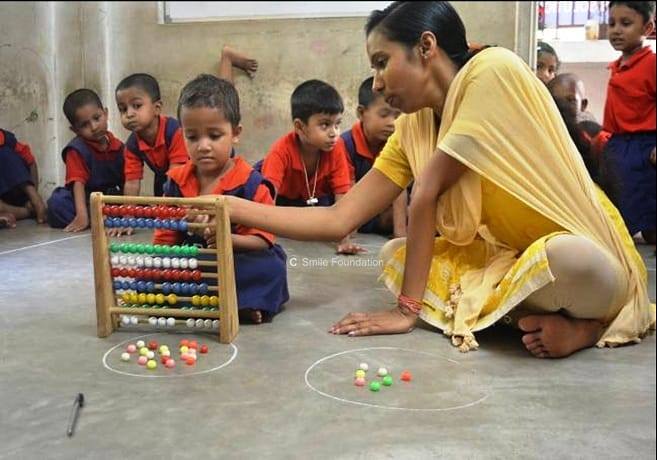
Transition of Anganwadi centres to child-friendly learning spaces

The National Education Policy was approved by the central cabinet in July 2020 and it has brought attention to all segments of population across the country. One important area that has been escalated to the priority zone of academicians, education professionals, policy makers and education enthusiasts is Early Childhood Care and Education (ECCE). The NEP categorically mentions that “Over 85% of a child’s cumulative brain development occurs prior to the age of 6 which indicates the critical importance of appropriate care and stimulation of the brain in the early years in order to ensure healthy brain development and growth”. This brings into limelight the role of Anganwadi centres and pre-primary centers in the country that are dedicated to the welfare of children below 6 years of age.


The ICDS program supports children in the age group of 0-6 years, pregnant women and lactating mothers for supplementary nutrition, pre-school non-formal education, nutrition & health education, immunization, health check-up and referral services. Currently, a total of 13.77 lakh anganwadi centers are operational in the country with a strength of 12.8 lakh workers and 11.6 lakh helpers, covering 1022.33 lakh beneficiaries under supplementary nutrition and 365.44 lakh 3-6 years children under pre-school component. A lot of community based activities are facilitated through these Anganwadi centers and Anganwadi workers are the change agents in-charge of implementation and integration of different departments like elementary education, health, and women and child welfare.


With their last-mile connect with the communities, Anganwadi workers have been playing a major role in bringing transformational changes in some of these areas like nutrition and immunization. However, elementary education has long been one of the neglected areas. There are various reasons for this including poor facilities and lack of proper infrastructure at the Anganwadi centres, inadequate training of the Anganwadi workers and also their being overburdened with multiple responsibilities. In fact, in many local communities across the country, Anganwadi centres are referred to as “Khichdi Schools” by parents because of the free meals provided to their children at the centres. A lot of work hence, needs to be done in order to ensure that these centres are also equally known and admired for their work in elementary education.


Firstly, in terms of infrastructure, the Anganwadi centres are ill-equipped to provide an enabling learning environment for pre-schoolers.  It has been reported that over 3,60,000 Anganwadi centers do not have toilet facilities and around 1,50,000 centers do not have drinking water facilities. That is not all. In terms of age-appropriate teaching learning material, or even proper seating space and lighting for the children, the existing centres fare poorly.


Secondly, the Anganwadi workers need to be especially trained in early childhood care and a special curriculum that focuses on the importance of holistic development of children, including early stimulation and brain development through activity based learning. Once trained, the Anganwadi workers will be a cadre of teachers creating a solid foundation for children between 3-6 years of age to make them school-ready.


In a nutshell, the Anganwadi centers are to be renovated and revitalized with new infrastructure and trained teachers. At the core of it, we need to bring confidence of the parents on their effective functioning. The NEP has emphasized on ECCE certificate courses for capacity building of the Anganwadi workers. For universal access of the ECCE, the Anganwadi centers will also have to be well ventilated, well-lit and designed in a child-friendly manner with an enriched learning environment. With a mission of having 100 percent of children school ready while entering at Grade 1 by 2030, hope this New Education Policy will bring a ray of hope for millions of children and parents across the country.


To know more about Smile Foundation’s education programme visit https://www.smilefoundationindia.org/education.html

Categories
In The Spotlight

Smile community mobilizer helps women deliver safely during Covid-19

At a time when maternal and child health has been pushed at the back end with all healthcare resources of the country focused on fighting the Covid-19 pandemic and lack of community mobilizer to assist in sensitization, pregnant women and new mothers have been highly vulnerable. Most women have been reluctant to go for their antenatal and post natal check-ups to avoid risk of being infected by the virus many are also skeptic of going in for institutional deliveries. The scenario is worst case for women from urban slums and remote villages who can only afford government hospitals where the already overburdened staff and inadequate infrastructure has been further strained by the pandemic.


In this grim scenario, one woman from Gurugram, Haryana has been working relentlessly to ensure that pregnant women and new mothers are not alone in these trying times. Savita has been working as a community mobilizer for creating awareness and linking community with government health services under Smile Foundation’s Swabhiman programme in a Gurugram slum cluster from the last three and a half years. She is someone who has never compromised on her work despite a life full of challenges.


Two years back, Savita’s husband was diagnosed with a tumorous growth in his spine and had to quit his job. Within few months her husband became bedridden and Savita had to shoulder the responsibility of the entire household starting from finances, daily household chores, children’s studies, and taking care of her husband. Her regular routine now included taking her husband to different medical centres in different cities for consultation and treatment. Her savings were diminishing with each passing day. But even this did not deter Savita from her role of a community mobilizer. She would manage her time; constantly follow up with the community women, especially the pregnant women and lactating mothers, over phone to make sure they are getting the required check-ups and vaccines on time.


In March 2020 amid Covid-19 outbreak, Savita’s husband came home after a long hospitalization, but he still needs constant care and support. In Swabhiman, we had to hault our on-ground activities due to the lockdown and necessity of social distancing. However, Savita realized how critical her role had become to create awareness, clear doubts and provide her support to the community. Ever since, she has been interacting with the community people telephonically – informing them about basic preventive measures required like maintaining hygiene and how to prepare cotton masks at home, etc.


Her focus on pregnant women and new lactating mothers became even more committed. She would call the pregnant ladies in their last trimester and help them understand any labour symptoms, dispel their fears about going to the hospital for delivery and encourage them to be positive in the difficult external environment. Her involvement and guidance helped six women get an ambulance in time and give birth through institutional delivery, ensuring proper care for the mother and the child. This way she helped twelve lives, the mothers as well as the children. She continues to counsel these new mothers now on healthy eating, breastfeeding, and immunization of the newborns.


“These women and their husbands are mostly daily wagers. Many lost their jobs during the pandemic. Expecting mothers need good nutrition for themselves and the babies, but when there is no food at home, how can they manage? It has been a difficult time for families who have lost livelihood and this has negative impact on health of pregnant women. Also, there is mental stress. Many of have moved to the city for work but their families are back home; they do not have emotional support that is needed during this time. I try my best to talk to them, understand their problems and provide solutions. Also through Swabhiman programme, we conduct awareness sessions, health camps and build a community of women who can support each other”, shares Savita.


Savita apart from being a community mobilizer is still managing her family’s expenses from hand to mouth but by standing strong with the community and especially the pregnant women, in this time of crisis, she has displayed the kind of humanity and solidarity that gives us hope that by helping each other we can get through the biggest challenges.


To know more about Women empowerment programme of Smile Foundation visit https://www.smilefoundationindia.org/swabhiman.html

Categories
Partners In Change

SIFFCY organises online film festival for children

The Smile International Film Festival for children & Youth is a special film platform initiated by Smile Foundation. The Festival & Forum is devoted to a greater appreciation of meaningful cinemas made for children and youth that can bring change in the society by showcasing those films, supporting emerging filmmakers, recognizing the pioneers and leaders of the similar industry and by promoting the diverse perspectives of Good World Cinema. It caters to young people (aged 6 to 25 ) with just about every level of interest in film or television industry . Offline, Siffcy organizes a week – long annual Film Festival which takes place at the Siri Fort Auditorium, New Delhi, India during December every year. More than 30000 young audience participate in the week – long festival & it attracts filmmakers, artists & Industry professionals from across the globe.


This year SIFFCY in association with Picture Paathshala, a student driven organization that combines Media Skills Training – Content Production & Community Service as digital media literacy modules for K-12 schools across India, organized an online film festival for children during India’s Independence Weekend from the 14th to the 16th of August 2020.


As schools took to online learning, offices took to work from home the demand for digital platforms to continue working and surging ahead against all adversities led to a miracle. Multiple digital platforms including social media sites emerged as saviours & came alive with options to keep working, learning and connecting people from across the globe. So, how could the media industry be far behind? When this is an industry that believes “the Show must go on!”


The SIFFCY Team too decision to adopt the digital platform and organize an online Film Festival for children in collaboration with picture Paathshala on Facebook was an absolutely novel idea. The film festival was focused on movies by children and for children.  Messages were shared across schools by Child for Child team, Education World and Picture Paathshala to participate in film making.


There was a palpable excitement amongst students across hundreds of schools, where children realized that they could showcase their creativity at a global level. Students were connected with mentors in Siffcy & in PPL. Eventually over 100 films were received by the team of SIFFCY. The movies made were across different themes, from lockdown diaries, to Covid etiquette (yes that is a subject), to cultural aspects in this country. Students took time off from their online classes, their online coaching, their online games and decided to make something unique with just their mobile phones. Some movies manifest so much effort that it is but obvious that during times of lockdown there has been an outpouring of creativity, especially amongst children.


The Online film festival was celebrated not only over the Independence day weekend, but also through the entire month of August. There were movie screenings over SIFFCY’s FB page followed by workshops on different thematic areas like making documentaries, making films and making animated movies.


While movies were screened by children from across the world, trainers too from different countries were invited to conduct the online workshops. Children who attended the workshops were asked to participate in a contest where they had to use their learnings and make a movie. This too resulted in over 50 submissions, clearly a manifestation of the level of engagement by children during the film festival.


Quick snippets from the film festival:


  • There was over 80000 global audience for the film festival
  • There were over 20000 engagements with the movies screened over FB
  • Over 100 schools participated
  • Over 3000 students registered via Child For Child team for viewing the films
  • 15 children from around 10 schools and 30 students from Smile Foundation’s ME centers made movies during the lockdown and submitted to SIFFCY jury


To know more about Smile International Film Festival for Children and Youth visit https://siffcy.org/

Categories
In The Spotlight

Virtual world or real, teachers are a comforting presence for students

I very fondly and proudly remember the famous lines from one of my favourite writers and philosophers, Rabindranath Tagore’s poem, Gitanjali, “Where the mind is without fear and the head is held high, where knowledge is free, where the world has not been broken up into fragments by narrow domestic walls. Where words come out from the depth of truth, where tireless striving stretches its arms toward perfection.” It personifies the attitude, courage and confidence that a teacher upholds while following her duty tirelessly, especially in today’s times. They have shown the world that nothing can deter their commitment and passion for their work.


COVID-19 caught everyone unawares and the education sector has had to brave its way to find solutions to reach out to every child in every corner of the country to aid them in continuing the learning process. Children majorly from the rural, semi-urban and slum pockets of the city are not equipped to access alternate modes of learning involving digital mediums. There would not be physical connect with the teachers, an important aspect especially for children who have difficulties in learning and understanding, with many of them being first generation learners in their family.


Yet, the teachers with their unwavering faith and honesty, are determined to find and deploy unconventional means to keep spreading the knowledge and keep the beacon of learning alive in the minds of the children. They geared up and adapted to new interactive mediums, became more digitally aware, got trained in innovative teaching methods, visited homes when required. They connected with the children, listened to their fears and concerns and motivated them to keep engaged in learning and fun activities within the safe confines of their homes.


The invaluable guidance and comforting presence of a teacher, be it in the virtual or real world, has instilled hope and positivity in the minds of the children and their guardians amidst the uncertainties induced due to COVID-19. Their persistent dedication and involvement in their work will continue to keep inspiring students and help children aspire to fulfill their dreams.


“Though you wrote in black and white, you brought colour in my life.”


This is my humble tribute to all the teachers who are walking the extra mile for their students!


To know more about the support that is needed to prep the education system for such emergencies read our Co-Founder’s views at https://www.smilefoundationindia.org/Media/opinion-prepping-education-sector-for-contingencies.html

Categories
Partners In Change

Healthcare services for the people of Bilaspur

70 year old Paiti Ram from Matiyari village in Bilaspur, Chhattisgarh, had accepted hypertension and chronic body ache as part of his everyday life. He spent most of his life working on daily wages at a cement factory to provide for his family. Dependent on his son’s meager income, at first, he was reluctant to even share his health problems or seek healthcare services hoping the pain would go away on its own. Later, as the pain increased, he started facing difficulty in doing simple activities, even walking around the village and taking care of the animals at home.


He decided to visit the village quack, but got no relief. Finally, he shared his affliction with his son, who then took him to the nearest government hospital 20kms away from the village. Just as Paiti Ram’s problems were finally getting over, the Covid-19 pandemic started. Because of his old age, he was at higher risk of being affected, and his son decided that it was best for his father to stay at home as advised. 


For 14 year old Sameer from Mohara village, a small skin infection became a major health affliction. His mother and father could not take him for treatment to the nearest government hospital because of lockdown. Itching only worsened his condition and made it unbearable for the innocent child. Lack of awareness and hygiene also prevented Sameer’s recovery, and his parents started feeling helpless watching their son’s agony.


Like Paiti Ram and Sameer, thousands of people from 14 villages of Bilaspur district in Chhattisgarh have found an answer to their health problems in the Smile on Wheels mobile hospital that regularly visits their community, delivering primary healthcare services at their doorsteps. Most of them being farmers and daily wagers, they have always had to lose a day’s wage to make the trip to the hospital. Their other resort was village quacks that were both uncertified and unreliable. The pandemic meant that their visit to the government hospital also became restricted, leaving them with no respite.


Talking about providing services during the pandemic, Dr Sadan Kumar, heading the medical team of the project shares,


“I have been working with the Smile on Wheels project in Bilaspur for the last nine months to serve the villagers who are in need. I have spent my childhood in a village too, and can relate very well with their problems. Covid-19 has created a difficult situation for many, especially in terms of accessing healthcare. We have been providing healthcare services in these villages by following proper social distancing protocols, and are also trying our best to make the community aware and prepared in the face of the pandemic.”


Amit Bairagya, Project Coordinator at Bilaspur adds,


“We feel blessed that in this critical time we are able to help those who need our support. The pandemic has made people realize that health is truly wealth and we must give it priority in our lives. Our aim with the community people is also to build a health seeking behavior in the long term by adopting everyday hygiene practices, eating healthy and nutritious food, and seeking medical attention when required.”  


To know more visit https://www.smilefoundationindia.org/health-cannot-wait/

Categories
Insights

Inclusion along with digital literacy should be at core of Digital India

As we celebrated the World Literacy Day this week, in the neo-normal scenario induced by the pandemic, it is evident to all that we need to move beyond just literacy to digital literacy, particularly at the grassroots where it can impact several development indicators and propel progress. 


In line with this, laying additional force behind the Digital India mission, the government has announced that it will extend internet services to six lakh villages in the next three years.The move is expected to intensify making of digital benefits in education, banking and tele medicine inclusive.


With 70 percent of India’s billion plus population residing in villages, digital inclusion, indeed should be the central theme of any digital literacy program.

Health has become the key concern today for both rich and poor. In a no-contact world while the urban population avail virtual consultation, the rural counterparts do not have such facilities. Most of the health centres and doctors are concentrated in the cities. Telemedicine, in such scenarios, can eliminate such challenges and enable remote treatment.


Small kiosk-like community based digital clinics can be set up with the government facilitating all the necessary equipment required. Village youth can be skilled on virtually connecting the patients and the doctors through digital training. These youths can also be trained on carrying out first level diagnosis like blood test, checking blood pressure, temperature etc. This not only brings the healthcare to people’s doorstep but also enables livelihood for the village youth.


About 72 percent of the rural workforce is engaged in agriculture. Digital literacy can be the springboard to include them into the development process. Information and Communication Technology (ICT) can bring at the farmer’s disposal important information like natural resources in the surrounding, agricultural practices to be employed, seasons and monsoons, market rates of different commodities, government schemes, the funds earmarked for rural development in their area and track the expenditures. This will drastically bring down the exploitation of this section by middlemen. 


The pandemic woke us up to the need for interjecting technology into education. Reports reveal that 320 million Indian students were impacted. Government was quick to respond with its recommendation for “online teaching.” But this left behind a large part of the students in rural areas – where internet access ranges at only 14.9 percent. This is a great opportunity to build a community based learning infrastructure. We can create a ‘digital volunteer’ model where households with internet access can share their bandwidth and people with smart phones can lend their devices to enable remote learning in their localities. The teachers and students at each local digital learning pocket can be adopted by a high-tech urban school to impart cutting edge education.


Digital literacy, the way ahead


Digital literacy can be a great means in for proliferating micro-entrepreneurship for women – thus serving the vision of financial independence. Through digital literacy they can learn about various financing schemes like the Mudra Yojna, Stree Shakti package and Dena Shakti among others. They can even avail various government backed women’s skilling programs. The National Skill Development Corporation (NSDC) is imparting digital, accounting and entrepreneurial skills to rural women to help them set up their own business.


The government has also launched a number of programs like the National Digital Literacy Mission (NDLM), The Digital Saksharta Abhiyan (DISHA), and the Pradhan Mantri Gramin Digital Saksharta Abhiyan (PMGDISHA). The key target audience are the ASHA workers, government functionaries, and fair-price shop workers among others.


There has also been massive participation by the private sector players. A case in point is Code Unnati by SAP for digital education of children of Dharavi in Mumbai. Similarly, Facebook is intending to train1 lakh women in seven Indian states on digital literacy. ITC has set up e-Choupal e-agricultural marketplace onboarding4 million farmers across 10 Indian states online.


Through a more inclusive effort, India can become a role model on how to build a digitally connected nation. But at the core, the digital literacy mission is about changing behaviour and inspiring the will to learn. To make this happen the government will need – apart from private participation, community involvement to create the awareness and the necessary buy-in among people by demonstrating its benefits. Community based organisations which work directly and closely with the people can play a key role in bringing this behavioural change.


To know more about Smile Foundation’s research on digital literacy and problem of inclusion of all visit https://www.smilefoundationindia.org/Media/about56per-cent-of-children-have-no-access-to-smartphones-for-elearning-study.html

Categories
Insights

Realising the vision of a women-led Atma Nirbhar Bharat

With the demographic dividend being designated as one of the five interrelated pillars of the Atma Nirbhar Bharat Abhiyaan, India needs to strive for women-led development that makes women the leading force of our development trajectory.


The rationality of the focus on youth and women is premised on the role this segment plays in pushing the country’s agenda for sustainable development by 2030 and its ambition of a $5 trillion GDP by 2025.Women, in particular, have the potential to generate 150–170 million jobs by 2030 and add $700 billion to the GDP by 2025 through workforce participation.


But the present context indicates there is work to be done before we reach there. Gender gap unemployment has expanded. Women joining the workforce has dropped from 32.2 percent in 2005 to 23.4 percent in 2019. The scene looks grimmer in the current COVID scenario with job loss for women standing at 26.3 percent while the same for men is at 23.3 percent.


Evidently, women’s participation in the economic process needs to be intensified if India were to truly become an ‘Atma Nirbhar Bharat.’ Education and empowerment are the two critical pillars in this pursuit. Special focus should be placed on women from economically backward section whose access to learning and economic resources is meagre, further limiting livelihood opportunities.


Smile Foundation has been working for over 18 years now to prepare a cadre of educated, confident, trained, aware and healthy women through our initiatives in education, healthcare, community engagement and livelihood. We believe that when women are empowered, families get healthier, communities become prosperous and the nation progresses.


Since inception:

  1. Over 4 million girls and women have been benefited in total.
  2. Around 180,000 girls have been provided education and nutrition under our Mission Education programme. Over 5000 adolescent girls have received scholarship support to complete their schooling and higher studies.
  3. More than 3.5 million women have received healthcare services with focus on maternal and child health.
  4. Nearly half a million women and girls empowered with awareness and life skills on a varied range of topics including reproductive health, menstruation, healthy eating, self defence, etc to navigate everyday life with enhanced ability and confidence.
  5. Over 25,000 girls have received skill training for employ-ability. In addition to this, projects on vocational training, entrepreneurship and financial literacy have enabled thousands of women to become economically independent.
  6. Through door to door visits and counselling, male engagement and community involvement, awareness sessions and rallies, street plays and talks, lakhs of community members have been sensitised to create a women and girl child friendly society


To support Smile Foundation’s women empowerment programme and to know more visit https://www.smilefoundationindia.org/she-can-fly/

Categories
In The Spotlight

Things to do for better mental well-being

There is no path to happiness: happiness is the path- Buddha.


A long-term experience of life satisfaction is almost certainly made up of many short-term feelings of joy and pleasure. Does that mean every day is a great day with no trials, temptations, or downturns? Certainly not. But it does mean when we look back at the many seasons of life, we can look back satisfied at how we navigated through them.


The long-term feeling of life satisfaction is most experienced when we embrace the emotion of joy in the here and now. And we accomplish that by taking steps each day to be happy.


Consider trying a few of these — or all of them! You’re guaranteed to give your day a little boost.


Establish Gratitude


Focusing on the small things that we have can be blinded by our desire of wanting more. But this desire, built by envy and jealousy usually leads to great levels of dissatisfaction. Instead, just taking a break from the daily hustle and appreciating the little we have, the friends and family. Our health or mental well-being or simply a cup of tea/coffee can boost one’s mindset for the better.


Defeat Anxiety


There is some wisdom in a Buddhist approach to emotions. A Buddhist-based mindfulness approach to overcoming anxiety is basically working with it. There’s unfortunately, no easy way to relieve one’s anxiety in a way that doesn’t involve masking it or just distracting oneself-that should be used. The second approach is to bringing mindfulness to the actual experience.


Sometimes, overcoming worry and nervousness is simply a matter of modifying your behaviour, thoughts, and lifestyle. Keep moving with your day-to-day routine, be open about your concerns and cut caffeinated products.


Listen to Amazing Music


Music we love is one of the best antidotes to mental pain or heartbreak. Trying to boost and uplift your mood while listening to music actually can help your mental well-being. 


Create a Sleep Schedule that Works well for you


sleep for better mental well-being


Getting a consistent good night’s sleep is vital. Chronic sleep deprivation is a huge problem nowadays, especially for those who work late or are keeping a busy schedule. It’s not just a lack of 6 to 8 hours of daily sleep which can be detrimental to your psychological health and mental well-being. Start with small steps. Give yourself a sensible and realistic bedtime. Try to go to bed half an hour before your usual bedtime and stick to it. Evaluate this new habit every day by having a journal and writing down your progress.


Do Spend Time Outside Every Day


spending time-outside for mental well-being
Spending time-outside for mental well-being


Go for a walk during your lunch break. Go to work and back, taking a walk from one station to another. Spend a few minutes drinking your morning coffee or tea outside. Pick up running or walking in the green outdoors. It doesn’t even have to be for a long period of time.


Say Nice Things to Yourself


An adjustment in your everyday vocabulary, both in your thoughts and even out loud. One should flip his dialogue to only positive outcomes. For example, instead of saying, ‘If I get that job,’ switch it to, ‘When I get that job.’ Those subtle changes in using positive language help to change your mind set to a glass half full instead of a glass half empty. You can also increase your positive thoughts by stating one thing you like about yourself when you look in the mirror each morning.    


Cut back on some  of your Unhealthy Habits


We know when and which things are bad for us. You can curb that by reducing them, but not giving them up entirely. Reducing something within your own means can save you the stress of immediate change. Only when you are completely ready, stay away from harmful food, smoking or things that cause procrastination.


Plan a Superb Vacation


plan a vacation for good mental well-being
Plan a vacation for good mental well-being


The anticipation and planning of a trip are almost as good as the trip itself. Prepping for a vacation or a journey has been shown to increase our happiness levels hence boosting our mental well-being.


Do Invest in a Quality Relationship


If you want to have good long-term mental well-being and physical health, you need to first see if you have meaningful, loving relationships. Picking one or more people close to you, and start planning to spend quality time together.  Loving meaningful relationships are good for our mental and physical health


Meet New People


Get out of your circle of friends. In order to find new companions and to expand your world, you need to go out there and meet new people. Everyone has an interesting history or story to tell. So move out of your comfort zone cast a smile and have fun when meeting others. Don’t need to over think it.


Accept your Flaws


Expecting perfection guarantees you’ll feel like a failure at least part of the time, and that can lead to serious anxiety. By accepting the fact that as humans, we make several mistakes, is fundamental to avoid living in judgment.

Learn the art of progress, not perfection. We are setting ourselves up for failure from the when we expect to ‘have it all’ perfectly balanced. In other words, we will always feel like we are failing.


 See a Therapist – They can definitely Help


If you were trying to get in physical shape and had no idea where to start, you might turn to a coach or personal trainer. Mental health works the same way. There are so, so many benefits to seeing a therapist. 


Write in a Journal


List some small dreams and thoughts you might have. Express your emotions in writing and read them later to yourself. Instead of allowing your brain to go to a place of anxiety and stress, arm yourself with grateful thoughts. Writing them down also helps. If you write down that which you have to be grateful for, your brain becomes better at finding even more gratitude.


Turn your Phone Off Please


It has been proven time and again in many studies that too much tech time can negatively impact mental health. Whenever the phone rings or we get an update, we instinctively try to reach to our devices. The temporary dopamine chain people to their phones or even computers. Every night or weekend, try and become less available via text and email so you don’t feel emotionally tethered to your phone.


If you want to be happy, be. – Leo Tolstoy

To know more about Smile Foundation’s initiative for promoting better mental health visit /https://www.smilefoundationindia.org/baton-baton-mein-sehat/

Categories
In The Spotlight

Thank You Teachers for Your Dedication!

Students, parents, teachers around the world are facing the unimaginable consequences of the spread of the pandemic due to the closing down of schools and educational institutions. While everyone is trying to cope with the challenges teachers are facing problems to provide quality education to children due to lack of resources. The most affected are the children living in rural areas and urban slums.

Teachers teaching in Smile Foundation’s Mission Education centres are facing similar problems but they are determined to help the children even if it means taking the school to their homes. Here are some testimonials which speak volumes about their hard-work. We thank you, teachers for everything that you have made possible for our little children and their education.

Neeta, Teacher, Mission Education Centre Delhi

“The first thing that we did was a survey, we visited the children from our Mission education centre to understand the problems they were facing in their studies.”

Ravi Pratap Singh, Teacher, Mission Education Centre

“We have created a special app called Udbhav and we are also encouraging the use of the app provided by the government, Diksha for the education of children from home. We share quiz based content and share the other curriculum content in form of PDFs with the children. we are trying our best to keep the children engaged”

Shweta, Teacher, Mission Education Centre Mumbai

“Hopefully in the coming year we will be out of this situation and we will be able to meet our students sitting on those benches and making fun!”- Shweta

To know more about Mission Education visit https://www.smilefoundationindia.org/education.html

0%