As the seasons of carols and the ringing of New Year echoes in the air, reflection and renewal rises with a sharpened desire to move ahead with purpose. This season brings an opportunity for brands to move beyond the noise of festive promotions and step into the world of purpose marketing, a strategic declaration of their brand’s intentions running deeper than a one-off donation or an obligatory CSR drive.
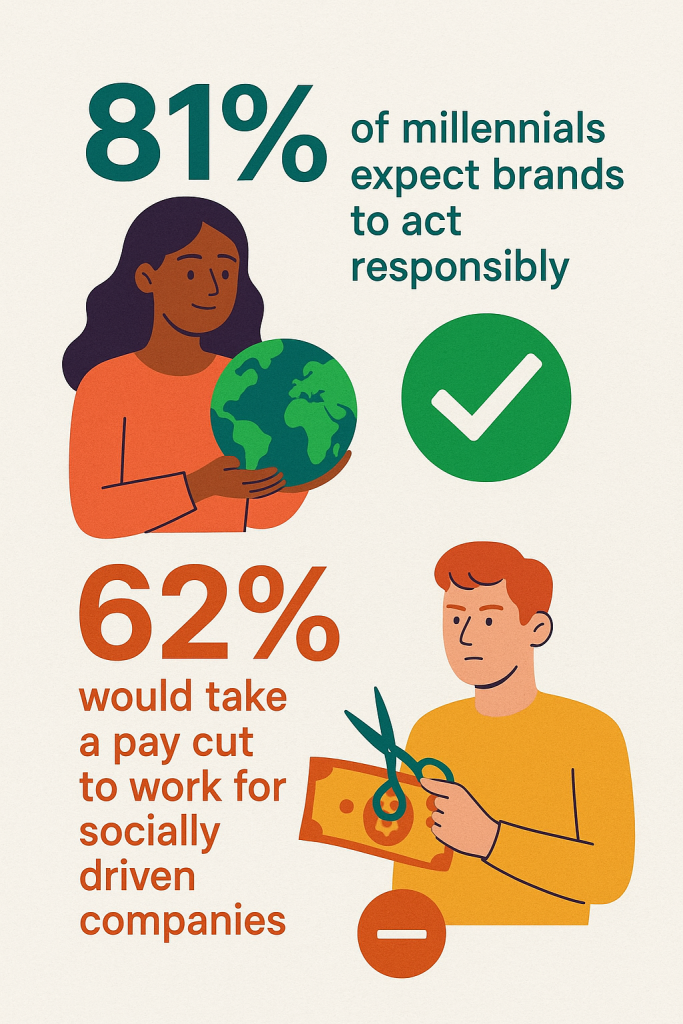
Today’s consumers, especially the younger lot are more discerning as they read and observe brands like books. They look for values, consistency and a mission they can attach their loyalty to. When a brand’s purpose aligns with their own, advocacy follows almost instinctively. Festivities like Christmas and New Year engagements in this sense become a seasonal checkpoint. It is a stage when people reset goals and reconsider their beliefs and support towards social causes. Those brands that choose to step onto this stage, do a lot more than discounts, they align purpose marketing initiatives through donations, employee giving, community engagement and cause-related campaigns that invite consumers to co-creates, making participation a form of persuasion.
Why Purpose Marketing Wins?
Across the world, corporations are rewriting their playbooks with strategies that reflect their new understanding that purpose is power. For example, Mastercard’s pledge to bring 1 billion people into the digital economy by 2050 or Intel’s commitment to ensure 40% women in technical roles by 2030 are not acts of goodwill alone, but a long sighted strategic move to strengthen the brand’s purpose while accelerating social justice, inclusion and sustainability.
Furthermore the governments, investors and consumers now expect brands to uphold more than profits, resulting in corporate social responsibility intersecting with purpose not as a parallel consent but as mutually reinforcing forces.
Benefits of Purpose Marketing :
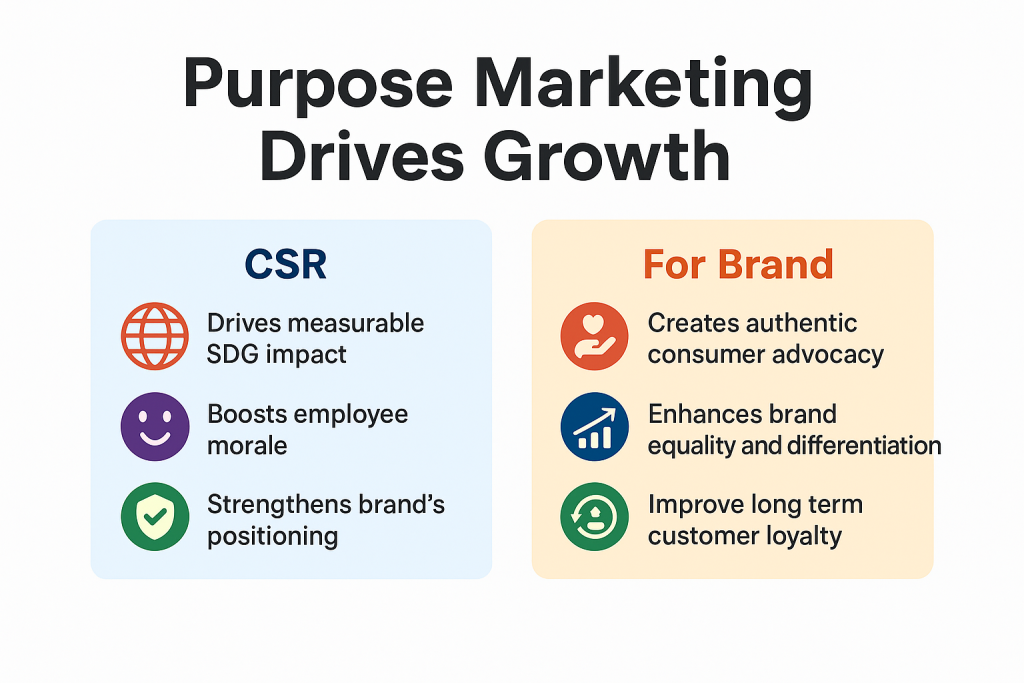
Stronger brand equity and long-term differentiation
Purpose marketing comes with a 360 degree approach where it builds an integral relationship with brands and consumers. Purpose-driven brands make a strong impression on consumers, making them remember the brands, trust them and stay for the long term while on the other hand, the “purpose premium” framework, as per to Deloitte, shows that brands with clear purpose enjoy advantages in brand and reputation, sales, innovation, operational efficiency, talent retention and risk mitigation.
Higher employee morale and retention through meaningful engagement
Employees feel a deeper allegiance to their organisations when they see them championing causes they personally value. When corporate social responsibility is woven into a company’s purpose, it becomes a quiet but powerful force strengthening loyalty and reducing attrition. In an article, Joan Steinberg, Morgan Stanley’s Global Head of Philanthropy quotes,
“it’s just not consumers who expect the company to be a good neighbor. It’s also employees”.
Greater consumer advocacy driven by authentic purpose
In the era of doing beyond profit, customers want brands to make tangible social impact. A purpose marketing driven approach through CSR approach or cause related marketing enables the consumers to build trust and emotional loyalty. Through credible storytelling showcasing impact, transparency and brand’s ongoing commitment, socially conscious consumers stick for long term, rather than transactional interactions, which further turns them into loyal advocates for the brand, who shall co-steer cause marketing initiatives through interventions like donations at checkout.
A measurable contribution to SDGs and national development priorities
As India works toward achieving the Sustainable Development Goals (SDGs) by 2030, it is crucial to recognise the power of collective engagement. Purpose marketing- whether through CSR commitments or cause-related initiatives, can become a true gamechanger by activating society’s collective consciousness. When brands align with social causes, they help enable quality education for children from underserved communities, deliver last-mile healthcare to remote regions and empower women, young girls and youth with livelihoods, that allow them to sustain themselves and shape a stronger future.
Giving Back in Action
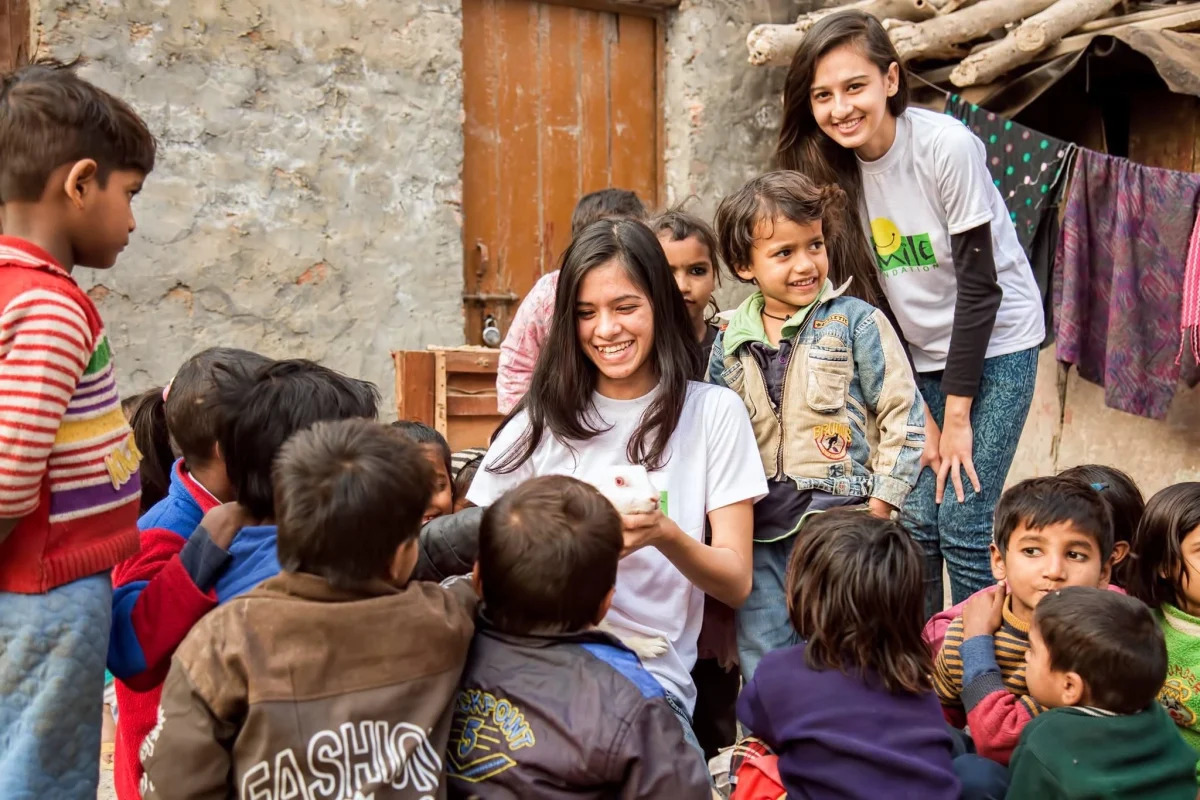
Purpose marketing becomes truly powerful when it shifts from intention to meaningful action. Across India, brands partnering with Smile Foundation have shown how CSR initiatives and cause-related marketing can create real, measurable impact. These collaborations have enabled children from underserved communities to access quality education, delivered last-mile healthcare to remote regions and opened livelihood opportunities for women and youth. In doing so, purpose-driven CSR and CRM interventions have not only strengthened communities but also enhanced brand trust, loyalty and long-term value- proving that when brands invest in purpose, both society and the business grow together.
Smile Foundation’s Purpose Marketing Activities- Case study
Blueleaf’s Integrated Rural Development Impact
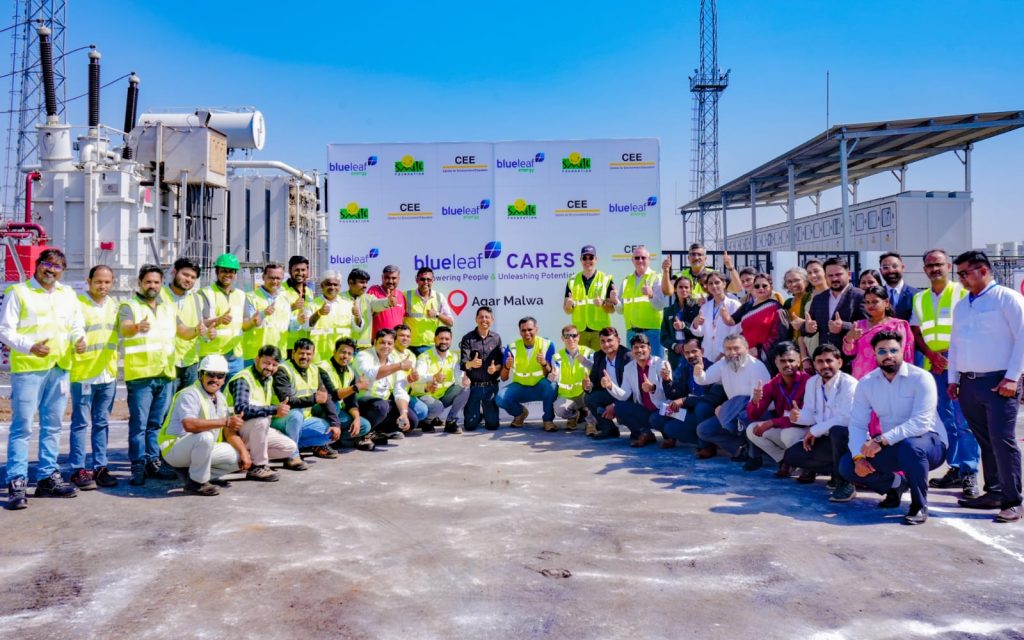
Blueleaf Energy, through its Blueleaf Cares programme, has partnered with Smile Foundation to drive integrated rural development across 27 villages in Madhya Pradesh. Focusing on healthcare, education, livelihoods and the environment, the initiative supports over 10,000 people, while strengthening local systems through community partnerships and alignment with national schemes.
Submarine Pens Turns every Pen into Purpose
Submarine Pens has partnered with Smile Foundation to advance education and healthcare for children across more than 2,000 villages and urban settlements in India. Through this collaboration, the brand integrates social impact into its core identity, turning every pen sold into a meaningful contribution towards stronger, more equitable community outcomes.
Lakshita’s Creative to Empowerment
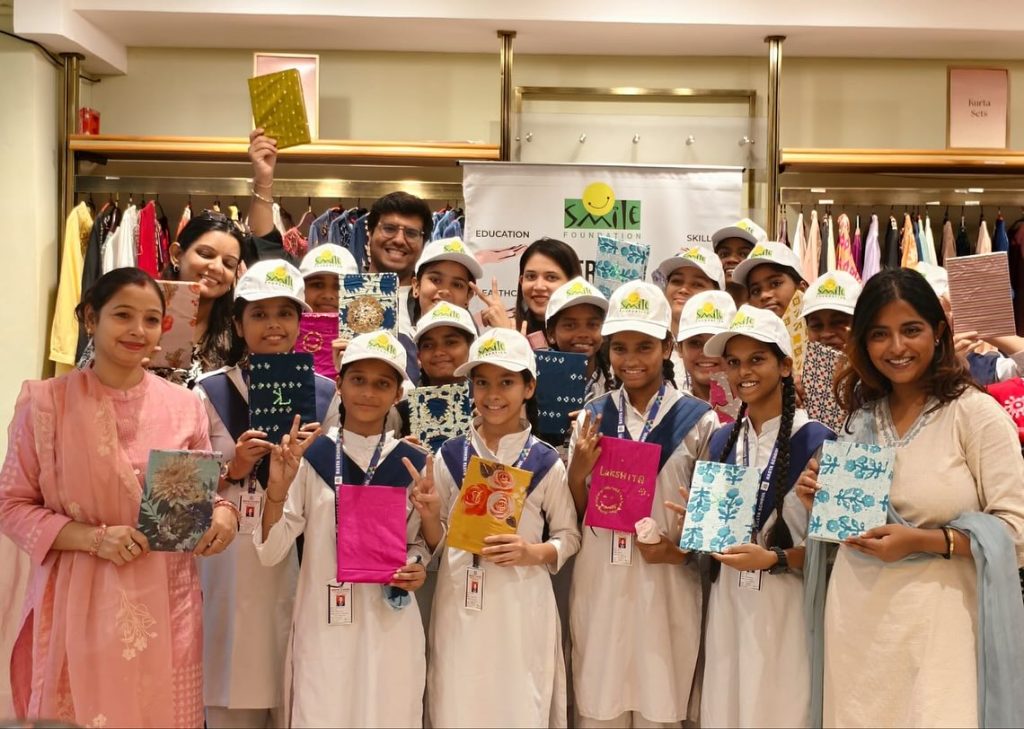
Children’s Day became a powerful expression of purpose marketing as Lakshita, in collaboration with Smile Foundation, invited young girls to explore sustainable fashion through hands-on creativity. The event transformed simple crafting into an experience of confidence, imagination and empowerment, while aligning brand values with meaningful social engagement; this celebration demonstrated how purposeful initiatives can spark joy while stitching aspirations for a brighter, more inclusive future.
Indus insights Purpose on Wheels for School going children
Indus Insights’ Manager’s Forum partnered with Smile Foundation to deliver bicycles to children who walk long distances to school- an employee giving programme that was rooted in the spirit of purposeful brand engagement. As volunteers assembled the bikes, children observed, learned and participated, creating a shared moment of joy. This impactful collaboration demonstrated how purpose-led initiatives can strengthen organisational culture, while creating meaningful community value.
Dear Diary’s Purpose-Driven Partnership
Smile Foundation’s collaboration with Dear Diary by Rashmika Mandanna brings the “Kindness Economy” to life through purpose marketing- with part of every sale going towards supporting education of children from the marginalised sections of the country. This initiative shows how brands can embed purpose into products, creating value that goes beyond fragrance to nurture dreams and spark ripples of positive change across communities.
Make New Year of Meaningful Impact with Smile
Businesses today are moving beyond profit to embrace purpose and support causes that strengthen the social fabric of our communities. What was once an optional charitable gesture has now become a core asset, resonating with consumers, employees and communities while advancing business objectives.
Festive moments like Christmas and New Year offer ideal opportunities for brands to transform seasonal campaigns into sustained, purpose-driven initiatives. Whether through CSR interventions, employee engagement programmes or cause-marketing campaigns, companies that embrace purpose position themselves as social pioneers. They foster emotional equity, create meaningful social impact and shape their brands, businesses and markets into catalysts for social good.
Partner with us to integrate purpose into your brand strategy today. Participate with communities, engage your employees and design initiatives that deliver measurable market growth and meaningful social change.
Scholarships To Increase STEM Participation of Women in India
For young Debasmita, continuing her education after the 8th grade was a challenge. Her father, who worked as a tailor, was out of work for about two years during the pandemic. She was on the brink of dropping out when Smile Foundation’s merit-based scholarship allowed her to continue her education. Today, she dreams of helping girls in her community pursue their studies. Like Debasmita, many deserving students lose out on quality education because of limited means. For academically-gifted students who come from low-income homes, the promise of higher education feels like a mirage, until scholarships intervene. Even though there’s a roster of national and local scholarships available for deserving candidates, the impact continues to be limited.
A Look at the Numbers
The National Means-cum-Merit Scholarship Scheme (NMMSS) launched by the Ministry of Education, in order to offer one lakh fresh scholarships every year for students entering Class IX, continuing through to Class XII. As of 2023–24, around 2.50 lakh scholarships were sanctioned, with a budget of approximately Rs. 300 crore. However, while, on paper, the scheme is straightforward (reward talent, retain students and reduce drop-out rates) the reality is more complex.
Data suggests that despite the noble intent, NMMSS has struggled to maintain its scale. Between 2017–18 and 2021–22, the number of scholarships granted under the scheme plunged by 51.9 per cent, according to parliamentary replies. In the same period, among the most marginalised groups — Scheduled Castes (SC) and Scheduled Tribes (ST) — the drop is, in fact, stark. While SC recipients of the scholarship fell from 58,307 in 2020–21 to 48,116 in 2021–22, pointing at a 17 per cent decline, ST recipients dropped from 22,562 to 16,460 which is a 27 per cent fall in that year.
This dramatic decline is tied to broader systemic issues in the country. While the budget for scholarships has positively grown over the last few years, the number of beneficiaries has fallen in several key schemes. For instance, central funding for the Post-Matric Scholarship for SC students nearly doubled, from around Rs. 2,710 crore in 2019–20 to Rs. 5,475 crore in 2023–24, yet the number of SC students receiving the scholarship fell from 54.27 lakh to 47.39 lakh, a drop of 12.7 per cent.
In response to these rather staggering numbers, experts and policy analysts point to several administrative bottlenecks. A major problem has been disbursement delays. The National Scholarship Portal that administers many of these scholarships demands multi-level verifications. Additionally, strict Aadhaar linkage, documentation issues and technical glitches often derail timely payments, causing eligible students to fall off or forfeit the award altogether.
In fact, another problem is the sheer lack of access to information about the scholarships available. Many deserving students from disadvantaged areas never even get to apply. For those who do, maintaining eligibility year after year, especially at times of renewal, poses to be difficult as academic performance must be sustained and the procedural burden (income proofs, verification) can be demanding. Without adequate advisory and material support, families may end up giving up.
The Way Forward
Civil society and NGOs have tried to plug this gap. Smile Foundation, for instance, offers scholarships to students from low income settings through their Mission Education Programme. Under this programme, deserving students, often girls and young people from economically disadvantaged backgrounds, receive merit-cum-need based support to complete their schooling or even pursue higher and technical education. The Foundation also offers engineering scholarships primarily for underserved girls to pursue four-year engineering degrees in cities like Bengaluru, Jaipur, Mumbai and Pune.
From a broader social perspective, these scholarships matter not just for individual students but for social mobility. When high-performing students stay in the system, they become role models and their success can cause a ripple effect across communities.
Looking forward, we need better data infrastructure that not just tracks disbursement of funds but last-mile receipt, student retention as well as outcomes. A real-time dashboard for scholarship delivery, renewal and impact could also potentially flag problem states or districts quickly. Streamlining the process is also vital in order to reduce red tapeism, and to overtly simplify verifications. Most importantly, a strong network between the government and NGOs, along with strong partnerships between NGOs, state education departments and alumni associations can raise awareness and help students with mentorship support.
In the end, scholarships for low-income, high-achieving students are more than just fiscal instruments. Scholarships can be engines of hope. For too many students, they mean the difference between dreams deferred and dreams realised. But without efficient delivery, systemic responsiveness and a commitment to equity, they risk becoming underutilised promises. If India truly wants to harness true potential, we need to ensure that brilliance is not lost simply because someone lacked the means. Only then can education serve as the bridge it is meant to be: for social justice and national progress.
In India, child marriages continue to be one of the deep-rooted social challenges to development, affecting individual rights, women’s empowerment, health, education and the future of millions of children, especially girls. With a marriage between two partners, with one or both of them under the legally permissible age, child marriages have long been tied to cycles of poverty, gender discrimination and limited access to education.
However, in recent years, there has been a significant decline in instances of child marriages in India, signalling a notable shift in social attitudes and governance responses. Emerging evidence from studies and research show that NGO-led awareness campaigns, government interventions, strong policies in place and targeted community interventions, among others, have played a key role in transforming these longstanding social norms.
However, while the decline is seen as an important milestone in the country’s social development, it also requires a deep-dive into the factors that have driven this progress, to understand how India can sustain it to ensure that the practice is entirely uprooted.
What does Data State?
According to a report by Just Rights for Children (JRC), released during a UNICEF side-event in September this year, child marriages have shown a significant drop in recent years. Between April 2022 and March 2025, child marriages declined by a 69% drop among girls and 72% among boys.
Breaking it down by state, Assam leads the way; child marriages of girls in Assam have fallen by 84%, and among boys by 91%. Maharashtra and Bihar also saw 70% reductions in child marriages for girls, while Rajasthan recorded a 66% decline and Karnataka saw a 55% drop.
These numbers reflect the impact of India’s long-sustained efforts, from government and civil societies, to fight social challenges. For instance, in Assam, experts attribute the sharp decline to a “zero-tolerance” approach, which involves strict law enforcement, frequent legal actions such as filing of FIRs and arrests. The report describes legal deterrence as one of the strongest tools in pressuring families to avoid child marriage.
But legal action alone doesn’t tell the whole story. Awareness campaigns played a huge role, too. People across the surveyed regions reported very high recognition of government efforts, especially the Bal Vivah Mukt Bharat campaign, with nearly 99% of respondents saying they were aware of it. In Karnataka, 92% of respondents said awareness drives were the most effective tool, while 50% highlighted prosecutions via FIRs and arrests.
What does it Mean?
Perhaps, this only shows how different regions are responding well to tailored strategies, with education, correct enforcement and community engagement. Take Assam’s example for instance. The rapid drop in child marriage rates shows that strong political will and clear legal consequences can shift entrenched social behaviours. Meanwhile, Maharashtra, Bihar, Rajasthan and Karnataka — all distinct in their social structure, economy and traditions — are also experiencing significant declines, which suggests that this is not just a success story for one region but a broader movement.
This decline is not only a statistical achievement; for ordinary families, it translates into real change. Fewer underage marriages mean more girls and boys are being able to stay in school and complete their education. This lets them grow up and become financially independent and make choices about their lives instead of being forced into adult roles early. This leads to a transition in mindset among communities, which are gradually internalising that child marriage often leads to worse outcomes in health, education, and well-being. The combined impact of legal deterrence, widespread awareness and on-the-ground civil society work appears to be reshaping how people think about child marriage, from an accepted tradition to a practice to be actively discouraged.
Overall, these data reflect not just a policy victory, but a social one. They suggest that when governments act decisively and when communities are empowered with knowledge, entrenched harmful practices like child marriage can be reversed. The decline across multiple states provides a powerful signal: India is moving closer to a future in which child marriage is not just legally prohibited but socially unacceptable.
What are the Key Drivers of Child Marriage in India?
While strong legal action and awareness campaigns have contributed to the decline in child marriages, there are deeper socio-economic factors that need to understood.
Poverty remains the strongest driver. In many of the surveyed states, over 90% of respondents identified poor financial conditions as the primary reason families marry off their children early. When parents struggle to afford food, schooling or basic household necessities, marrying off a daughter often feels like one less financial burden. Economic hardship also makes families more vulnerable to social pressure, where early marriage is framed as a practical solution rather than a harmful choice.
Beyond poverty, there are safety concerns for girls, with around 44% of respondents citing fear of sexual violence or harassment in public spaces as a major reason for marrying girls young. In communities where parents feel unable to guarantee their daughters’ safety, marriage becomes a protective measure — even though it often exposes girls to more severe risks. Traditional beliefs also continue to influence decisions. Between 28% and 33% of respondents across states mentioned cultural norms around family honour, purity and social expectations as factors that encourage early marriage.
Barriers to education are another critical contributor. In many rural areas, shortages of nearby schools, lack of transport, concerns about safety during travel and the cost of schooling push children, especially girls, out of education. Once a child drops out, marriage becomes the next expected step. The report emphasises that improving educational options and alleviating economic stress are crucial to preventing child marriage sustainably, highlighting the need for social reform to be accompanied by legal reforms.
The Continued Challenges that Remain
Although child marriages are declining, several challenges continue to slow progress. One major issue is the uneven pace of change across different regions. While some states have shown dramatic reductions, others continue to struggle due to weaker enforcement, lack of grassroots mobilisation or deeply entrenched social norms. In many villages, child marriage remains a quiet, socially accepted practice, carried out at night or in secret to avoid legal scrutiny. Poverty continues to push families towards early marriage, especially when they see no alternative path for economic security or upward mobility.
Social norms and gender expectations also remain difficult to dismantle. Even when families know the law, traditional beliefs around protecting a girl’s “honour” or getting her married “at the right age” often override legal deterrents. Awareness of formal reporting mechanisms such as child helplines, Child Welfare Committees, and district authorities remains patchy, making it hard for communities to intervene. Additionally, limited access to quality education and safe schooling environments makes it difficult for girls to stay in school, which is one of the strongest protections against early marriage. These persistent risks underline the need for sustained, long-term strategies that combine awareness, economic support and stronger institutional mechanisms.
Education and Community Interventions: The Way Forward
Interventions and community interventions have always played a crucial role in eradicating social challenges. For instance, Smile Foundation has been breaking the cycle of child marriage through our long-term investment in girls’ education. By placing education at the heart of its mission, Smile’s flagship programme Mission Educationsupports children aged 3 to 18 in difficult circumstances, including girls who are especially vulnerable to early marriage. Through this programme, Smile not only provides academic learning but also nutrition, healthcare support and safe school environments.
To directly address the link between education and early marriage, the foundation has emphasised that keeping girls in school empowers them to resist pressure to marry young. Our Swabhiman scholarship initiative further ensures that first-generation girl learners who face the risk of dropping out early due to marriage are supported not just to complete their education but also to develop life skills such as decision-making, refusal and conflict management.
By taking a lifecycle approach, Smile doesn’t just stop at educating girls; it extends help to their families and communities via health interventions, women’s empowerment and livelihood training. This holistic strategy helps reduce the economic vulnerabilities and social pressures that often drive child marriages.
244 million children and youth between the ages 6 and 18 years are not in school today and many marginalised children face barriers to learning even when they are in school.
An estimated 291.2 million children and adolescents globally live with a disability and approximately 95 per cent of these young people live in low- and middle-income countries.
Nearly half of the total children enrolled in schools in tribal areas (48.2 per cent) drop out even before they complete Class 8, according to the Tribal Development Report, 2022.
Despite advances in education, these facts are stark reminders of ongoing challenges. It’s crucial to maximise a child’s early years by actively supporting their development in every way. Providing early childhood care and education (ECCE) directly boosts various aspects of their growth. India must strengthen its early childhood care and education system to ensure all children and youth: from poor households, rural and remote communities, persons with disabilities, and ethnic and linguistic minorities, to other marginalised or vulnerable groups, can access early childhood care and education.
The Foundation for Future Success: Inclusive Early Childhood Care
Countries that make early childhood development a priority have seen real long-term results. The West’s advantage in education and the economy is largely the result of years of investing in its youngest children. India is now recognising this and has begun moving towards improved Early Childhood Care and Education (ECCE) systems, understanding that support provided at a young age greatly influences a child’s future learning and employment outcomes.
Where the System Falls Short
Inclusion is complex, as it means catering to every child and not just those who are easy to serve. Mainstream systems frequently overlook inclusion. Many early education settings still struggle with shortages of qualified teachers, engaging resources, proper facilities and inclusive approaches. Children’s ability to focus and grow is often compromised by poor nutrition. Some parents may not know about nurturing methods or might feel left out of important choices. Irregular funding continues to restrict both the reach and effectiveness of programmes.
The Reality for Tribal and Indigenous Children
Traditional schooling often fails tribal children. Factors like distance, unsuitable language of instruction, cultural disconnect and financial pressures push many out of education. When lessons feel irrelevant or alienating, children disconnect.
Alternative models that respect culture and context have begun to change this narrative. Eklavya Model Residential Schools provide safe environments where tribal culture works alongside mainstream academics. Schools like Vidya Vanam in Tamil Nadu use bilingual, activity-based approaches, easing transitions without erasing identity. Community-led initiatives integrate traditional knowledge, forest conservation, herbal practices and vocational skills, offering learning that feels meaningful and empowering.
More to Inclusive Early Childhood Care
Children with disabilities often face classrooms that are not equipped for their needs, along with staff who lack adequate training to support them, and, to make matters worse, stigma from their peers. Similarly, children from minority backgrounds or those who frequently relocate often struggle with language barriers and prejudice. Additionally, young girls may be burdened with household chores, forced into early marriage or left to worry about their personal safety. Families living in poverty or with low incomes are often preoccupied with meeting basic needs and may find it difficult to access quality education.
What we need to do is ensure that early childhood care and education can reach everyone – that means having flexible learning plans that consider different abilities, and making sure the teachers are properly trained to handle whatever unique challenges might come up. We also need classrooms that are accessible to everyone and learning plans that fit in with the child’s cultural background or learning capacity. Moreover, family support systems are a must.
Skill Building Early On
Early childhood education needs to focus on giving children the skills they’ll need to thrive in the world as it is now. Learning that’s about developing real-world skills helps give kids the confidence to take on tough problems and figure out solutions for themselves. And we can learn a thing or two from some of the tribal education models that teach skills like weaving, farming, pottery, carpentry and digital literacy. These demonstrate that traditional knowledge works hand in hand with modern ways.
What Truly Inclusive ECCE Can Deliver
A much stronger foundation for children’s learning and thinking.
Children who are better equipped to handle life’s challenges.
Improved overall social, emotional and physical health, which is one of the most valuable outcomes.
Students who perform better academically and attain higher qualifications.
A significant reduction in the gap between the privileged and the underprivileged.
Stronger, safer and more connected communities.
A more productive and thriving national economy.
India has shown its commitment to Inclusive Early Childhood Care for children and youth with disabilities through numerous national policies and initiatives since 1974. To ensure that India’s ECCE becomes genuinely inclusive and successful, it must draw lessons from global and regional programmes and foster close collaboration with all stakeholders for effective implementation and outcomes. Let’s not leave any child behind. Let every child walk into school ready to learn, feeling good about themselves and being in a good frame of mind.
Smile Foundation’s Mission Education (ME) programme brings extensive benefits that extend to individuals, communities, and societies. By prioritising the well-being and development of young children, we lay the groundwork for a brighter future characterised by enhanced human capital, reduced inequalities and sustainable growth.
A recurring theme in several Hindi films of the 1970s through the 1990s was the hero’s journey from a rural setting to the city that was a symbolic landscape of opportunity and upward mobility. This cinematic shift of the protagonist from rural idylls to the urban cityscape didn’t just tell a fictional story but instead reflected India’s evolving socio-economic realities and the growing centrality of migration in the national imagination.
Migration has long shaped India’s social and economic fabric. While the move from village to city has long been framed and presented as an expression of ambition, it is not the case anymore. For millions of young people, the move is often a forced response to structural deprivation. According to MOSPI data, 81.26 per cent of all internal migrants in India originate from rural areas. Further, among migrants in urban India, 61.11 per cent are from rural origins. In contemporary times, these figures are concerning because this shift underscores how uneven development and limited rural opportunities continue to push individuals into migration pathways that are more about survival than aspiration.
An Inequitable Scenario
Youth migration is very strongly influenced by educational aspirations. A 2022 report by the National Sample Survey Office (NSSO) found that around 18 per cent of rural youth migrate primarily for education-related reasons, often relocating to towns or cities to access secondary schools, colleges or coaching institutes. These educational gaps amplify the push towards urban centres, creating a cycle in which migration appears to be the only viable path for advancement.
However, several young people do not want this to be the case. According to a 2024 study conducted by the Development Intelligence Unit across 21 states, more than 60 per cent of rural male youth and nearly 70 per cent of rural female youth expressed that they do not wish to migrate for work; instead, they prefer employment opportunities closer to their villages. In an opinion piece published in The Hindu, the author remarks how mobility is a natural component of a developing economy. But the scale and persistence of youth migration expose deeper systemic failures such as the chronic inability to create dignified employment in rural areas, the weak alignment between rural education and labour-market opportunities, and the stark unevenness of regional development. This thus necessitates interventions from both governmental and non-governmental organizations and stakeholders.
Reducing the Push to Migrate through Rural Education
Improving rural education has the potential to transform the rural-to-urban migration dynamic by altering both push and pull factors. Firstly, high-quality schooling within villages can reduce the need for families to send children to towns for secondary or higher education. When parents trust the local school system, the pressure to migrate for education is further reduced. This also allows
More and more students to avail quality education. According to UDISE+ 2024-25 data, the national secondary dropout rate stands at 11.5 per cent, indicating that a significant proportion of students are not completing school. By strengthening and improving retention in rural secondary schools, those dropouts can be prevented — and hence fewer youth may feel compelled to migrate for further education or work.
Additionally, there is also a necessity to integrate vocational and skill-based training into rural education in order to equip the youth with employable competencies relevant to local industries such as agriculture, dairy processing, renewable energy, handicrafts and small-scale manufacturing. Linking an upgraded education system with local economic ecosystems helps generate employment at the source. This aligns with human capital theory, which posits that individuals will invest in learning when it is perceived as productive as well as being locally relevant.
Take the case of the Smile Twin e-Learning Programme (STeP), it provides marginalised youth between ages 18 to 25 with digital and vocational education. Trainees learn English, computer operations, personality development and job-oriented skills like retail or general duty assistance. Smile’s ImFACT 2022 report highlights how the programme has built a centralised placement cell and partnered with over 250 companies, ensuring trainees are job-ready and supported even post-placement.
Another key result in promoting educational opportunities in rural areas is the gender inclusion that can come about in this process. Take another example of Smile Foundation’s Project Manzil, which specifically targets adolescent girls in rural Rajasthan. The program provides training in areas such as agriculture, electrical and electronics, retail, tourism and other skill-based fields to enhance employability. As a result, beyond improving career prospects, programmes like such can help challenge traditional gender stereotypes in rural areas, allowing for greater female participation in non-traditional professions in the region.
Push for Greater Investment
Kerala, Himachal Pradesh and Sikkim are among the states that demonstrate how strong investments in rural education can reduce distress migration and promote more balanced regional development. These states consistently maintain high literacy levels and each has invested in robust school networks and community-based education models, especially in rural areas. This strength also laid the groundwork for effective digital expansion which now enables students to participate in online courses and virtual skill building programmes without relocating to urban areas.
In conclusion, strengthening rural education allows a long-term strategy to address the challenge of youth migration by enhancing local human capital and generating employment in rural areas. A robust rural education ecosystem will empower young people to transform their own environments and participate in a more balanced development process. At the end, rural education stands as a central pillar in reshaping India’s rural future.
India has never had more graduates than it does today. Every summer, convocation photographs flood social media: young men and women in borrowed gowns, mortarboards tilted somewhat awkwardly, clutching freshly printed degrees with pride that radiates through the screen. Parents beam. Universities celebrate their placement numbers. Politicians boast of the “largest youth workforce in the world.”
And yet, in factories across Tamil Nadu, construction sites in Gujarat, logistics hubs in Maharashtra and repair shops in Uttar Pradesh, managers are saying something that feels almost absurd for a country producing millions of graduates a year: “We can’t find skilled workers.”
This contradiction — a glut of degrees but a shortage of skills — is one of the defining paradoxes of India’s current economic moment. It is a problem that sits uneasily between aspiration and reality, between what young people are told education will deliver and what the labour market is actually willing to reward.
How did we get here? Why does a nation of graduates still lack the skilled workforce its industries require? And what does it mean for a generation that believed education was its passport to stability?
The promise that degrees would be enough
For decades, India’s middle class — and those striving to join it — placed blind faith in degrees as the ultimate insurance policy. A BA, BCom, BSc or even an engineering diploma was sold as the surest pathway out of precarity. Families scraped together savings to put children through college; young people travelled to cities to pursue higher education; new private universities mushroomed across the country, offering glossy brochures, manicured campuses and the dream of a “global career.”
But somewhere between the brochures and the job market, the promise unraveled.
The degrees kept coming. The jobs did not.
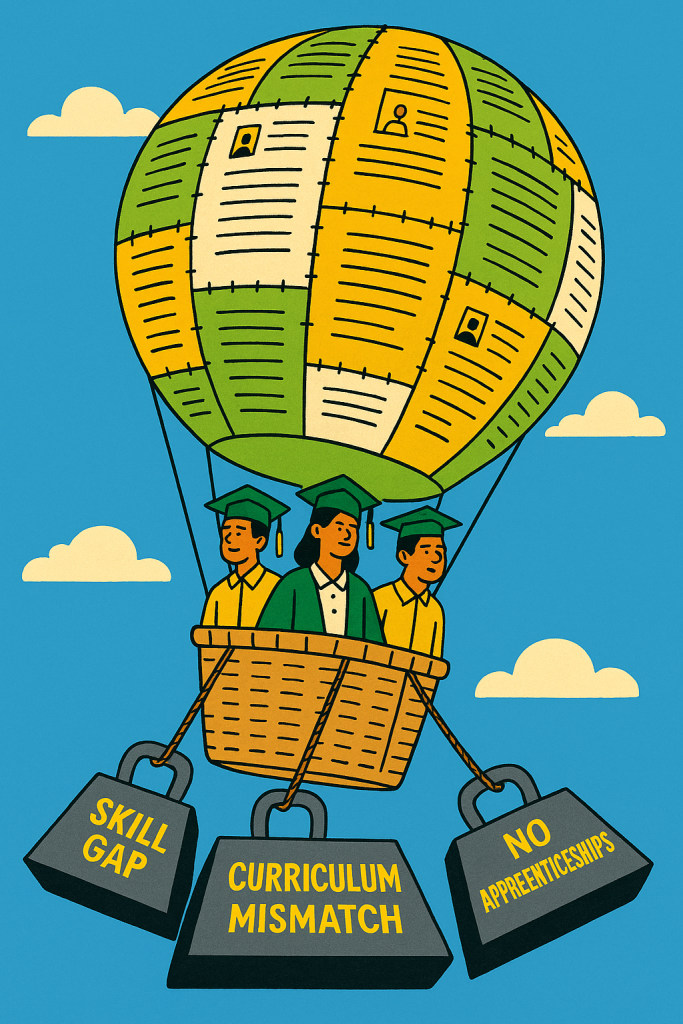
Employers now routinely complain that graduates lack workplace readiness, basic communication skills, reliability and — in many cases — even fundamental numeracy or problem-solving abilities. Meanwhile, industries such as construction, renewable energy, manufacturing, logistics, healthcare and automotive services report chronic shortages of skilled workers in trades that require hands-on expertise.
It is as if the entire country skipped a step: producing graduates without producing professionals.
When education becomes disconnected from work
Part of the problem is structural. A large portion of Indian higher education remains anchored in rote learning, theoretical assessments and outdated curricula. The distance between classroom teaching and real-world work is vast. A student may earn a bachelor’s degree in business without ever learning how to write a professional email. An engineering graduate may leave college without having used modern equipment or software. A hospitality student may never have spent a single day in a functioning kitchen.
The result is a generation holding certificates but unable to perform confidently in the workplace.
Employers, understandably impatient, have shifted their expectations. “Don’t tell us what degree a candidate has,” one hiring manager told me last year. “Tell us whether they can solve problems, communicate clearly, and work without supervision.” The gulf between degrees and capabilities has never been wider.
The quiet decline of vocational pride
Another layer of the crisis stems from India’s cultural bias toward white-collar ambition. Young people want to be engineers, managers, analysts, designers. Very few want to be electricians, welders, plumbers, machine operators or solar technicians — even though these roles often pay more than entry-level office jobs and offer a clearer path to stability.
Vocational trades carry an unfortunate stigma in India. They are seen as “lower” forms of work, unworthy of educational aspirations. Parents discourage children from pursuing them. Schools rarely expose students to hands-on learning. As a result, industries that depend on skilled trades are left scrambling for workers, while millions of graduates chase a shrinking pool of formal white-collar jobs.
It is a mismatch of expectation, not just supply.
The automation shock
Adding to this is the rapid transformation of industries. Companies are adopting technology faster than workers can adapt. Automation, AI-based tools, digital workflows and advanced machinery are reshaping job roles — but the skills ecosystem has not kept pace.
A warehouse manager told me recently that despite dozens of job applicants, he struggles to find workers comfortable operating digital scanners or basic inventory software. A garment factory owner in Bengaluru said that new machines require precision and speed, but most applicants have never received structured training.
Even in IT — the sector long thought of as India’s unstoppable engine — companies continue to report that a large percentage of new graduates must undergo extensive retraining before they are productive.
The skills gap is not just about shortages; it is about obsolescence.
The rural-urban divide deepens the crisis
While metropolitan graduates may still find pathways through internships, networks and exposure, the situation is far more severe in smaller towns. Colleges in tier-2 and tier-3 cities often lack resources, industry linkages and updated curricula. Students graduate with degrees that have prestige but little currency in the labour market.
Parents sacrifice everything to send children to college, only to watch them return home — degree in hand — unable to secure anything more than a temporary or informal job. The disappointment is palpable and sometimes devastating.
The uncomfortable truth: India does not have a jobs shortage alone — it has a skills shortage
Governments, understandably eager to showcase growth, often highlight job creation numbers, skilling missions and placement drives. But beneath the announcements lies the quieter truth: the labour market is struggling to match people to roles not because people don’t exist, but because the right skills are missing at the right scale.
Industries need skilled technicians, not just graduates. Hospitals need trained paramedics, not just biology majors. Factories need machinists and quality controllers more than they need administrative assistants. Construction sites require electricians and carpenters in numbers the education system never prepared for. Renewable energy companies need technicians, not just environmental science graduates.
The degrees don’t align with the demand.
Young people sitting idle — not because they lack ambition, but because the system failed them
In cities across India, you will find groups of young graduates sharing rented rooms, waiting for “something” — an interview call, an exam result, a job opening that aligns with their field of study. Their days are marked not by lack of desire to work but by uncertainty.
“What’s the use of studying if this is our life?” one commerce graduate in Lucknow asked me last month. Another, an engineering graduate from Indore, said he applied for 200 jobs but received only two callbacks — both for sales roles unrelated to his degree.
Meanwhile, factories in the outskirts of the same cities are trying desperately to hire skilled technicians.
India’s demographic dividend is at risk
The country’s greatest asset — its young workforce — is in danger of becoming its greatest liability. If millions of educated youth cannot transition into meaningful employment, India will face economic, social and psychological consequences for decades.
Idle youth become disillusioned youth. Disillusioned youth become frustrated youth. And frustrated youth, especially in large numbers, can destabilise economies, communities and even political systems.
The path forward: Skills with dignity, degrees with purpose
For India to bridge this growing crisis, a few shifts are essential:
1. Reimagining the value of vocational skills Skill-based careers must be treated with the respect they deserve. This requires cultural change: schools that introduce trades early, media that portrays skilled work with dignity and parents who see value beyond white-collar dreams.
2. Overhauling higher education Colleges must drastically reform curricula, invest in labs and practical training and establish strong industry linkages. The era of degrees without capability is over.
3. Prioritising apprenticeships and on-the-job learning Countries that have mastered youth employment — Germany, Japan, South Korea — have robust apprenticeship ecosystems. India must take this seriously, not as a CSR formality but as a national priority.
4. Aligning skilling missions with industry demand Government skilling initiatives often focus on training large numbers quickly. What India needs is training that responds to real-world demand, with pathways to actual placement.
5. Supporting small entrepreneurs and self-employment Not every trained worker must become an employee. Many can become service providers, contractors or micro-entrepreneurs — if supported with credit, markets and mentorship.
A quieter revolution: community-based skilling
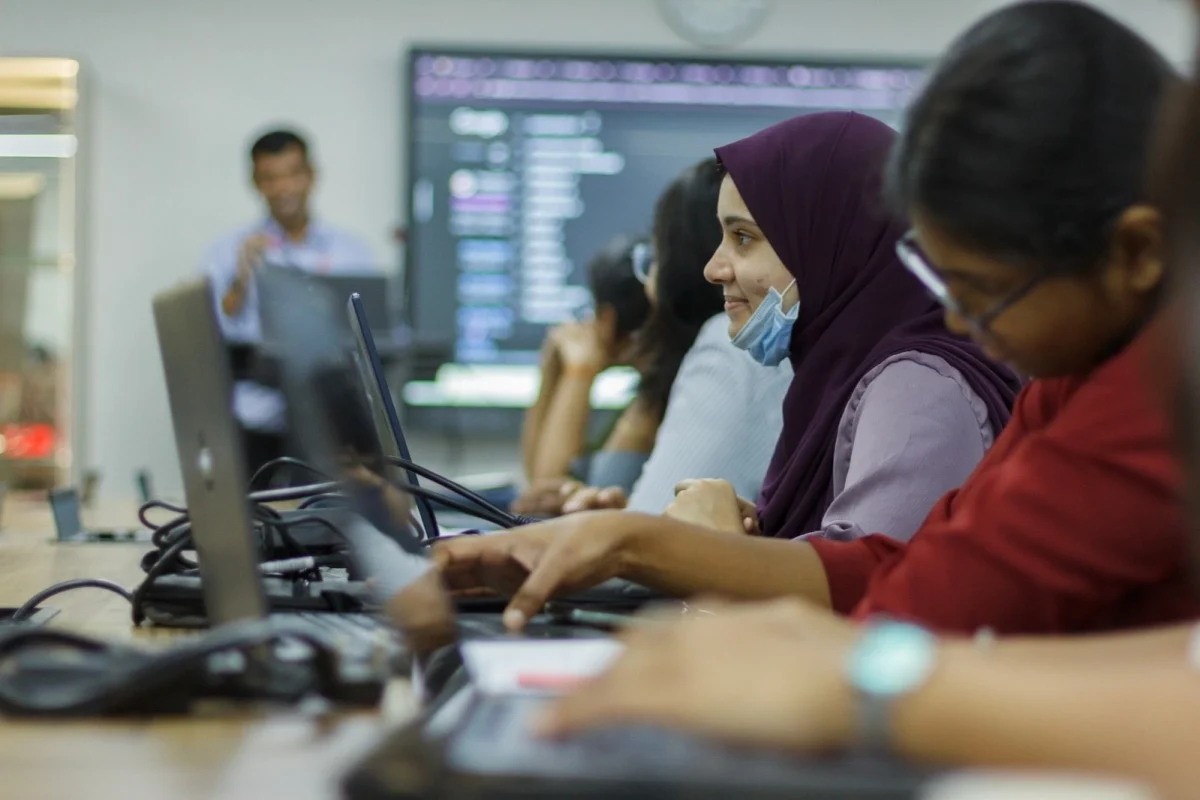
Some organisations are already tackling this crisis at its roots. Smile Foundation, for instance, has been working with young people in underserved communities to build meaningful, market-aligned skills — not just issuing training certificates, but helping them navigate interviews, build confidence and secure jobs that match their abilities. Their centres emphasize soft skills, digital literacy and hands-on learning — the kinds of practical competencies employers consistently ask for but rarely find.
The results are modest in scale but powerful in impact: young people who once feared the job market now step into it with clarity and capability. It is a reminder that while systemic change is slow, local change is possible — and transformative.
India’s choice
The shortage of skilled workers is not just a labour market issue. It is a reflection of what we value, what we teach and what we choose to ignore.
If the country continues to produce graduates who cannot find work and industries that cannot find skilled workers, the disconnect will widen into something far more dangerous.
But if India chooses to invest in real skills, real training and real dignity for its workforce, the demographic dividend could still become the engine of national transformation it was meant to be.
The question is not whether India has enough young people. It is whether India is willing to equip them with the skills they need — and the opportunities they deserve.
Every parent in India carries a persistent hope that education will give their child the chance to step into a wider world of opportunities. Yet in many parts of the country, this hope rests on crumbling foundations, sometimes quite literally.
Earlier this year, at a government school in Rajasthan’s Jhalawar district, children gathered for morning prayers. Minutes later, part of the building collapsed. Seven students died. It was a brutal reminder that for millions of Indian children, the greatest barrier to learning isn’t curriculum or digital access, it is the safety of the very rooms they sit in.
Before we talk about pedagogy or 21st-century skills, we must confront the truth that school infrastructure is the foundation of education, not an afterthought.
The Unseen Architecture of Learning
India’s policy debates often orbit around big reforms — teacher training, assessments, ed-tech. But the daily reality of children in thousands of schools is defined by more basic variables: whether the ceiling fans turn, whether there is light in the room, whether the toilets function, whether the water taps work.
Infrastructure may sound prosaic, but research worldwide shows it is one of the strongest predictors of learning outcomes.
A 2024 study from Ecuador’s primary schools, a context with surprising parallels to India, found that access to simple school infrastructure such as water, sewage connections, art/music rooms, nursing facilities and computer labs consistently correlated with better student performance in both mathematics and language.
Crucially, the researchers noted that basic infrastructure often produced greater learning gains than high-profile or expensive upgrades. In rural areas especially, investments in clean water, waste collection and functional computer labs had a stronger impact than more sophisticated facilities.
The lesson is blunt but powerful that if you strengthen the basics, learning follows.
India’s Progress — And Its Uneven Geography
India has made progress. The ASER surveys show steady improvements:
These are encouraging numbers, but they still leave millions of children in schools without safe sanitation or reliable water. The gaps are most acute in parts of the Northeast and in rural pockets across several states. Electricity remains erratic in many districts and schools continue to operate in buildings older than independent India itself.
The Ecuador findings resonate uncomfortably here: small, unglamorous investments in basic infrastructure can have disproportionately large effects but they often receive the least political attention.
Funds gravitate towards visible projects like boundary walls, digital boards while sewage, ventilation and nursing rooms remain invisible priorities.
Girls, Early Childhood and the Geography of Disadvantage
For adolescent girls, infrastructure is destiny. The absence of separate toilets remains one of the top reasons for dropout once they reach puberty. Safety — of the walk to school, of the classroom structure — is another.
The consequences begin earlier than we admit. Anganwadis, where India’s youngest learners take their first steps into structured learning, often operate in rooms with damaged flooring, poor ventilation and no age-appropriate equipment. Early childhood researchers warn that the physical environment in the first five years shapes cognitive ability, socio-emotional development and school readiness. Gaps created at this stage widen over time.
Children in facilities with basic amenities and dedicated activity spaces, including art and music, performed better academically, hinting at how environmental enrichment fuels cognitive growth.
Why Finland Still Matters
Finland’s schools are not better because they have more technology or modern designs. They are better because they are built on an uncompromising commitment to safety, dignity, equity.
Clean toilets. Well-lit rooms. Ventilation. Medical support. Free meals. These do not make headlines. But they create the conditions where teachers can teach and children can learn.
India, too, needs this clarity of purpose.
A New Model of School Infrastructure Reform
India’s demographic dividend will remain rhetoric if classrooms remain unsafe, undignified or simply unfit for learning. The path forward is not mysterious:
national minimum infrastructure standards
dedicated budgets for WASH (water, sanitation, hygiene)
safe, enriched Anganwadis
reliable electricity and digital connectivity as core entitlements
functional labs, libraries and activity rooms (not just computer labs)
ongoing teacher training so infrastructure is actually used, a gap the Ecuador study pointed out clearly
We need a shift in how we think. School infrastructure is not the backdrop to education; it is part of the learning system itself.
Transforming Spaces, Restoring Dignity
Smile Foundation has been investing in precisely this quiet architecture of opportunity creating STEM labs, English and science labs, solar-powered digital classrooms, smart class installations and upgraded learning environments. These efforts show that transformation doesn’t always come from sweeping reforms; often, it starts with a working light bulb and a safe room.
From Bengaluru to Nagaland, every child deserves a classroom that affirms their dignity, sparks their curiosity and expands their sense of possibility.
India has long believed in the power of education. It is time we give our children the infrastructure to make that belief real.
The alarm rings at 4:00 AM, as it always does. Long before the sun, Sita’s kitchen glows faintly under a single bulb. The fan clicks overhead while she folds the bedsheet, ties her hair tight and packs lunch for everyone in the family, in silence, while streetlamps outside flicker and the world is still half asleep.
Sita moves through the darkness with practiced precision — the clink of steel vessels, the hiss of the stove, each sound marking another task completed in the quiet race before her own day begins. By the time the first pale thread of dawn slips into the lane, she is already at the bus stop, every step marked by the weight of chores already done, pressing silently on her shoulders.
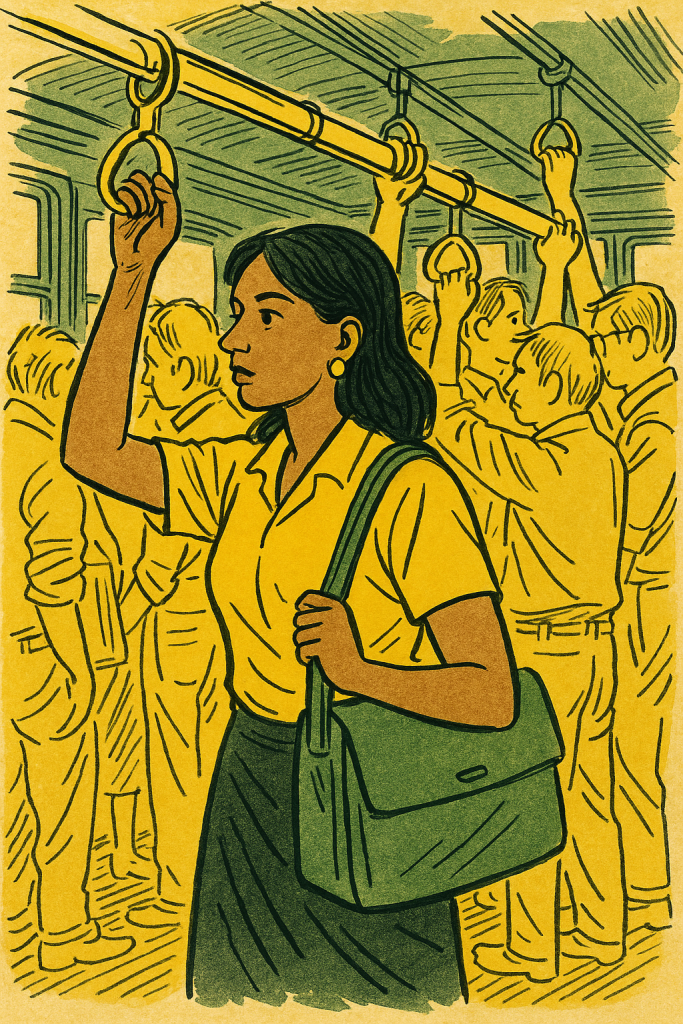
The bus lurches in with impatient horns. She braces herself, eyes narrowing at the high step. It takes all her strength to climb aboard and then she grips the overhead bar with her right hand. Her left arm reaches back, fingers searching until they catch the trailing pallu. And she draws it forward, sliding the fabric under her elbow, and presses it firm against her waist. The pallu clings there, held by the steady weight of her arm pressed throughout the journey. The bus sways, the crowd leans, but her arm does not move.
The day gets brighter, the streets get busier and the bus packs tighter. Her left arm, pressed at her waist with the pallu, now lifts higher. The pallu drops back naturally, but her arm climbs, crossing her chest and the palm sets at her right shoulder. The crowd sways, the bus bumps and her arm stays strong protecting herself from getting hurt by bearing every push from all sides.
She feels a cool breeze at her waist, glowing, not from the latest skin care routine on social media, but from sweat gathered since 4:00 AM.
Now her phone rings. A sharp trill of a hand‑me‑down mobile phone ringtone slices through the roar of the bus. But she just holds the bar tighter, and her other arm steady across her chest. Now the phone keeps ringing, but she cannot reach it.
Her thoughts spin — could it be family? something urgent? or is it something at work again — a deadline, a warning? The phone keeps ringing, each trill digging deeper questions.
Lost in her worries, she glances around. The men travel with ease — one hand steady on the bar, the other free for their phones.
They’re laughing, they’re relaxed and smiling, and they treat the commute like a break rather than a burden.
She begins to dwell on how heavy it already feels, though the day has barely begun. Then the whistle cuts through her thoughts. Her stop is called. Time to rise, step off the bus and begin work.
And this is how millions of women begin their day — balancing safety, space and exhaustion long before work even starts. Rising before everyone, carrying responsibilities, navigating unspoken rules shaped by culture and then stepping into workplaces where they must prove their worth twice to be seen once, expected to be tireless, calm and capable all over again.
According to the National Family Health Survey (NFHS‑5), Indian women face layered, measurable disadvantages across safety, health, education and economic life that constrain their agency and well‑being. Child marriage, while slowly declining in some states, remains widespread: the NFHS‑5 indicator for women aged 20–24 shows that a substantial proportion were married before 18, with rates systematically higher in rural areas than urban ones; national averages improved slightly (from about 27% to 23% across survey rounds), but the practice persists strongly in several states and continues to limit girls’ education, health and economic prospects.
Decision‑making and control over resources still remain uneven. Although financial and digital inclusion have improved in many places (more women now hold bank accounts and own mobile phones) gaps persist in regular paid work, asset ownership and meaningful control over earnings and mobility, which together keep many women economically vulnerable and dependent.
Large shares of ever‑married women report experiences of physical or sexual violence by a husband, showing that intimate‑partner violence remains a common and persistent problem with wide public‑health and social consequences. These patterns are not isolated: they interact. Early marriage increases the risk of school dropout and economic dependence; limited mobility and workforce participation raise vulnerability to exploitation and make reporting violence harder; and weak economic autonomy reduces the range of feasible choices when facing coercion or abuse.
What the numbers whisper: The gender gap in everyday India
Child marriage remains driven by economic precarity and entrenched social norms. Nationally, nearly one in four young women aged 20–24 were married before 18, based on the NFHS‑5 indicator used by UNICEF; rural prevalence remains higher than urban, reflecting structural disadvantages and normative pressures.
In Karnataka’s Belagavi district, 42 child marriages were recorded between April 2024 and March 2025, despite prevention efforts. Local data show the highest counts among the Kuruba community, illustrating how tradition, social expectations and household vulnerability intersect at the district level.
Child marriage is linked to interrupted schooling, early pregnancy, higher maternal and neonatal risks, and constrained lifetime earnings, perpetuating intergenerational disadvantage. NFHS‑5 and UNICEF analyses consistently associate early marriage with poorer health and economic outcomes, underscoring the urgency of sustained prevention, social protection, and norm change strategies.
A positive shift is visible: Prevention efforts have multiplied and spread across regions.
In 2023–24, more than 70,000 child marriages were reportedly prevented across 265 districts in 17 states and UTs, with both panchayats and civil society playing significant roles in detection, counseling and enforcement.
Workplace harassment and career barriers
Despite increasing female participation in formal employment, women continue to encounter bias, harassment and exclusionary practices that hinder retention and career progression. The Aon Voice of Women in Corporate India 2024 survey, which engaged nearly 24,000 professional women across more than 560 companies, highlights the scale of the challenge:
42% reported experiencing bias or potential bias.
37% cited insensitive behavior.
6% reported sexual harassment.
Importantly, less than half of those affected chose to formally report incidents, underscoring persistent gaps in workplace redress and trust in grievance mechanisms.
India’s POSH Act, 2013 establishes mandatory Internal Complaints Committees, local committees and employer duties, yet implementation gaps persist. Academic and practitioner analyses identify weak awareness, compliance shortfalls and limited trust in redress mechanisms as recurring barriers, reducing the law’s effective reach and deterrence.
Virtual harassment, AI‑generated deepfakes and technology‑fueled violence
AI‑generated deepfakes are intensifying school cyberbullying: surveys and educator reports show that 40–50% of students are aware of deepfakes circulating in schools, victims are disproportionately girls who suffer severe and lasting psychological harm, and many teachers and districts lack training or clear policies to respond. A 20-year-old student from the International Institute of Information Technology (IIIT) in Naya Raipur was arrested for allegedly creating obscene images of female classmates using AI tools, said the police.
In Assam, an influencer was reportedly targeted with explicit AI‑generated content allegedly created and monetized by an ex‑partner. Media coverage in July 2025 noted her large follower base and subsequent police action, highlighting how personal violations can quickly scale into public crises. The case highlights systemic vulnerabilities, revealing how existing mechanisms struggle to keep pace with AI‑driven harms.
The growing risk environment chills women’s participation online, damages reputations, and can fuel extortion and social isolation. Current regulatory and enforcement frameworks struggle to keep pace with the speed and scale of AI‑enabled abuse, pointing to the need for clearer platform obligations, faster takedown protocols and victim‑centric remedies.
Safety concerns and harassment in everyday public life
Women’s safety in public spaces shapes mobility, access to work and education and time use. Policy guidance highlights design and planning gaps in transport, lighting, last‑mile connectivity, and reporting pathways; surveys indicate fear and harassment that rarely appear in official records. Perception data from urban India suggest many women feel unsafe and under‑report incidents, reinforcing the need for gender‑responsive urban mobility and public‑space planning.
Intersecting norms: Culture, caste, superstition and religion
Harmful practices are embedded in gendered power structures: ideas about family honor, marriage timing, and “protection” of girls combine with economic pressures like dowry costs and poverty. In Bihar, a multi‑district survey found women branded as “witches” were often aged 46–66, married or widowed, and disproportionately from lower castes; accusations frequently followed visible increases in women’s or households’ income or leadership roles, pointing to control and retaliation beyond superstition. Jharkhand reports persistent witch‑hunting, with Gumla recording high caseloads; survivors face prolonged insecurity even after convictions.
In 2020, two individuals were killed after being accused of witchcraft in Karbi Anglong, Assam. The incident was reported as mob violence, followed by police arrests. The tragedy highlights how entrenched beliefs can spiral into extreme harm when left unchecked. It highlights the urgent need for preventive community engagement, swift police intervention, and robust legal accountability to dismantle harmful practices and protect vulnerable lives.
From schemes to systems: India’s multi-pronged push for women’s safety, education, and economic power
Beti Bachao Beti Padhao: Changing the narrative from birth
Launched in 2015, Beti Bachao Beti Padhao (BBBP) targets declining child sex ratio and girls’ education through national campaigns and district-level action. Government updates report sex ratio at birth improving from 918 in 2014–15 to around 930 by 2023–24, alongside increases in girls’ secondary enrollment, attributed to sustained outreach and enforcement under BBBP.
One Stop Centre (Sakhi): Integrated support for survivors
The One Stop Centre (OSC) scheme offers co-located medical, legal, counseling, and shelter services for women facing violence, operational across hundreds of districts. Analyses note 700+ centres are functional nationwide, with documented support across domestic violence, sexual assault, trafficking and acid attack cases; however, capacity and coordination challenges persist and vary by state.
Ujjawala and Swadhar Greh: Rehabilitation and reintegration
Ujjawala focuses on trafficking prevention, rescue and rehabilitation, while Swadhar Greh provides shelter and comprehensive support for women in distress. Both schemes have been evaluated by NITI Aayog and integrated into Mission Shakti to strengthen continuity of services; official briefings describe provisions for shelter, food, medical/legal aid and vocational training across homes nationally. Independent effectiveness studies highlight variability in implementation and recommend integration and improved staffing norms.
Mahila E‑Haat and Stand Up India: Pathways to economic independence
Mahila E‑Haat, launched under Rashtriya Mahila Kosh, provides an online marketplace for women entrepreneurs and SHGs to showcase products and services, positioning technology as a bridge to markets; early releases frame it as a Digital India/Stand Up India aligned platform. Public-facing dashboards and third-party summaries cite thousands of sellers and products onboarded, though official consolidated performance metrics are limited in the public domain.
Nirbhaya Fund and Safe City projects: Building safer urban spaces
The Nirbhaya Fund supports multi‑agency interventions for women’s safety, including Safe City projects in major metros that deploy hotspot mapping, improved lighting, CCTV, panic buttons, increased patrols and dedicated help desks. As of 2025, the government reports ₹7,712.85 crore allocated with roughly 76% utilization, 14,658 women’s help desks established and cyber forensic‑cum‑training labs operating across 33 states and Union Territories. Safe City, launched in 2018 and extended through 2024, is documented by the Ministry of Home Affairs and summarized in global databases that outline its core components and city coverage.
Gendered violence across belief, labor and digital spaces
Technology has become a weapon in silencing women journalists. What begins as trolling quickly escalates into manipulated images, deepfakes and sexualized threats designed to erode credibility and drive women out of public life. UNESCO’s The Chilling project and ICFJ’s global study reveal not only the scale of this abuse but also its strategic intent: to intimidate, discredit and isolate. Their findings call for urgent accountability — from platforms that host abuse, law enforcement that must treat it as a crime and newsrooms that need to protect their reporters rather than leave them exposed.
The Sumangali system drew adolescent girls and young women—many from Dalit communities—into bonded labour through “lump‑sum” promises tied to dowry savings. Despite legal action and brand pressure, investigations and academic studies reveal that risks persist in informal supply chains, where coercion and debt bondage remain entrenched. Addressing these harms requires more than compliance: robust enforcement, worker organizing, and transparent sourcing practices are essential to dismantle exploitative recruitment and ensure dignity in labor.
During and after COVID‑19, the National Commission for Women (NCW) expanded helplines and documented a rise in complaints. Greater awareness and improved access enabled more survivors to report violence and seek support. Alongside this, state programmes and women’s collectives have played a critical role in helping survivors reintegrate economically. To capture these shifts responsibly, analysis should draw on state‑level NCRB and NCW data to illustrate broad trends, while avoiding precise percentage spikes unless directly supported by official figures.
Beyond schemes: Education, gender inclusion, and social norms
Education is the foundation of durable social change. Government schemes and protection services create vital safety nets, but lasting shifts in life trajectories come when girls complete secondary education and gain practical skills. Completing higher secondary reduces the likelihood of early marriage, early motherhood and vulnerability to exploitation, because it expands options, delays household dependence and strengthens negotiating power.
Educational empowerment must go beyond basic literacy. Effective programmes combine:
Core schooling and retention strategies;
Life skills and socio‑emotional learning that build confidence and agency;
Digital literacy so women can participate safely in online economies and civic life;
Gender sensitisation for boys and men to reshape norms about care, leadership, and consent.
When girls are taught to claim space and boys are taught empathy and equality, the cultural script that normalises control and abuse begins to change.
Education is only the start: building pathways to equity
Economic and financial inclusion
Education without economic opportunity leaves empowerment incomplete. Financial literacy, access to safe savings, affordable credit and market‑linked livelihoods turn knowledge into autonomy. Programmes that combine skill training with linkages to markets, digital payments and tailored microfinance produce stronger shifts in household decision‑making and mobility than education alone.
Accessible health services
Affordable and accessible health services reinforce families’ ability to keep girls in school and women in work. Social protection reduces immediate economic incentives for child marriage and mitigates risks that push women into exploitative labor.
Social norms and cultural change
Long‑standing gender roles, caregiving burdens and mobility restrictions blunt the returns to both schooling and work. Evidence from community studies shows that increases in education and employment translate into empowerment only when accompanied by normative change: men’s engagement in caregiving, community endorsement of girls’ education, and public messages that contest honor‑based controls.
What effective programmes do differently
Integrate schooling with life skills, digital training and vocational pathways.
Couple financial inclusion with market access and mentorship for entrepreneurs.
Invest in male‑focused gender education and community dialogue to shift household practices.
Combine legal protections with accessible, survivor‑centred services and local accountability mechanisms.
Education starts the transformation; inclusive finance, social protection and conscious efforts to change norms complete it. Together, these levers reduce vulnerability, expand choice and make equality sustainable.
Swabhiman by Smile Foundation — community‑led health, livelihoods and agency for marginalised women
Smile Foundation launched Swabhiman in 2005 as a women‑and‑girl child empowerment programme. Over two decades it has evolved from safety and awareness activities into a multi‑sector, community‑anchored model that combines reproductive and child health outreach, nutrition awareness, entrepreneurship and livelihoods support, and digital and financial literacy training. Smile Foundation’s public materials report a wide geographic footprint — over 400 active projects across roughly 25 states — and an annual reach of approximately 1.5 million beneficiaries across Smile’s combined programmes, including a substantial share of women and adolescent girls.
Core approaches:
Community mobilisation and peer models: Swabhiman trains local “change agents” — peer educators, community health volunteers and women leaders — to drive sustained behaviour change and referral linkages to public services.
Health and nutrition outreach: The programme runs health camps, antenatal/postnatal follow‑ups, immunisation drives and nutrition awareness sessions to strengthen maternal‑child health outcomes at the community level.
Livelihoods and entrepreneurship: Swabhiman provides vocational training, enterprise development support and market linkages, promoting women‑led micro‑enterprises and self‑help group (SHG) participation. Programme materials cite cohorts of women trained and multiple small enterprises incubated through these interventions.
Digital and financial inclusion: Digital literacy, mobile money, and basic financial training are embedded to increase women’s access to markets and formal financial services.
Convergence with public systems and CSR partners: Smile Foundation partners with government bodies, CSR funders and private partners to scale services and strengthen referral systems.
The next morning, Sita wakes again at 4 a.m. The air is cool, the tap water colder. The house is quiet except for the soft hum of the ceiling fan and the ticking of her alarm clock.
But this morning feels different when she’s commuting. A new poster catches her eye — a government campaign on women’s safety with helpline numbers bold and visible. A poster from Smile Foundation’s Swabhiman hangs beside it, announcing a free health camp for women in her area. She remembers hearing about them from her neighbour — women who visited those camps said they learned how to manage nutrition, menstrual hygiene and even small savings.
During the tea break, she notices a few men standing unusually still around a phone. They’re reading how a group of school students exploited AI to produce inappropriate images of their female peers. One of them mutters, “This is terrifying.” Another sighs, “If this feels this awful to read, I can’t imagine how a woman must feel. This isn’t okay”. They head back to their desks, to the same familiar room, but it no longer feels the same. The usual conversations that objectified women taper off. Words are picked more thoughtfully. And when someone cracks an inappropriate joke, it’s met with an immediate stop.
Upon returning home, she lies down, the ceiling fan hums again, steady and familiar. The world hasn’t changed overnight, but it is changing through policies that protect, initiatives that empower and ordinary people who decide that respect and safety are not privileges, but rights.
Tomorrow at 4:00 AM, she’ll wake up again. But now, somewhere between the streetlight and the sunrise, she knows she is part of something larger, a country slowly learning to stand up for its women.
Each of these people become a thread in the larger fabric of change. They remind us that empowerment isn’t just policy or programmes; it’s a daily act of humanity that multiplies.
You can be that person — by speaking up when it’s uncomfortable, showing up when it matters, donating when you can and helping make the world a place where every woman, from the pre-dawn bus stop to the late-night return home, walks without fear and lives with dignity.
Every small act builds into something vast and unstoppable.
Be that quiet revolution.
Be her reason to believe again.
As Mother Teresa said,
“Not all of us can do great things. But we can do small things with great love.”
Controlling the Numbers of Newborn Mortality in India
In a small maternity ward in rural India, a young mother cradles her newborn with a mixture of awe and fear. Her baby’s heartbeat, fragile and insistent, is reminds one of both possibility and risk. Across the country, thousands of parents wake up to this same fragile hope. But whether that hope survives the first year of life often depends not on parental devotion, but on where the child is born.
India has made undeniable progress in reducing infant deaths. Kerala now records just 5 deaths per 1,000 live births, one of the lowest rates in the country. Nationally, infant mortality has dropped to 25 per 1,000—the lowest in India’s history, and a milestone that should not be understated. It is a sign that improvement is possible, that lives can indeed be saved. But it is also a reminder of how deeply unequal survival remains across the subcontinent. For all the headlines about progress, the truth behind the numbers is that far too many children still die from causes that should, by now, be consigned to history.
A Mirror of Inequality
Infant mortality is not evenly distributed across India’s vast landscape. It mirrors the country’s most stubborn inequities—geographical, economic, social. The emotional toll is immeasurable: the mother who watches her child slip away because the nearest clinic lacks oxygen; the father who cannot afford transport to a district hospital; the family that buries a newborn because the local health worker never arrived.
In rural communities, these tragedies often unfold amid isolation, shame, and entrenched cultural expectations. Women are frequently blamed—quietly, pointedly—for their child’s death, accused of neglect or misfortune. Such reactions only deepen the trauma, adding emotional injury to physical loss. But the real causes lie elsewhere: in the lack of nutrition for expectant mothers, inadequate antenatal care, unsafe birthing environments, and the absence of timely medical support. Infant mortality, perhaps more than any other health indicator, reveals the geography of opportunity, and of neglect.
Why Newborns Die: The Preventable Causes
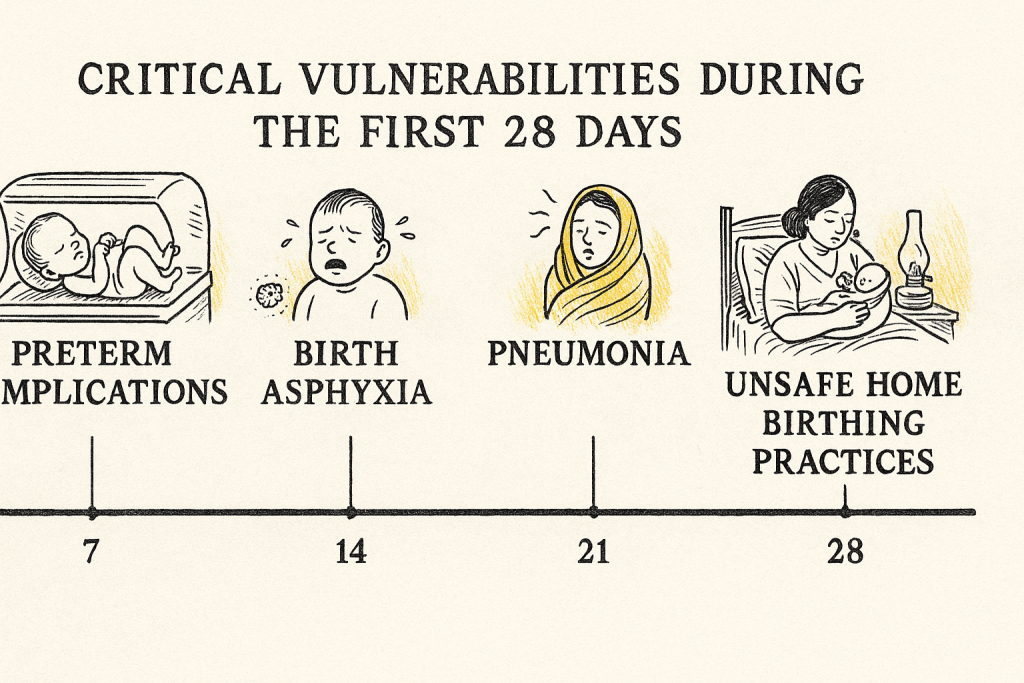
Across India, nearly half of all deaths among children under five occur within the first 28 days—the neonatal period. The causes are well understood. Complications of preterm birth. Birth asphyxia. Infections like sepsis and pneumonia. These are not mysterious ailments; they are predictable, largely preventable conditions that require functioning health systems, supportive nutrition programmes and skilled care during childbirth.
For infants aged one to twelve months, the threats shift slightly: diarrhoea, malaria, malnutrition. Congenital disorders also claim lives throughout the first year. But the underlying story remains the same: too many children are born into circumstances that drastically limit their chances of surviving into toddlerhood.
Poor maternal health plays an outsize role. Anaemia, still stubbornly prevalent among Indian women, weakens both mother and child. Malnutrition during pregnancy increases the risk of low birth weight and premature delivery. These vulnerabilities cascade, making newborns susceptible to infections and complications that stronger, healthier infants might withstand.
Hidden Costs: Social, Emotional, Economic
The death of an infant reverberates far beyond the family’s grief. Siblings grow up under the shadow of loss. Communities lose trust in health systems that they perceive as indifferent or unreliable. Overstretched hospitals must redirect scarce resources toward emergency interventions that could have been prevented.
On a national scale, these losses translate into diminished human capital. Every infant death represents a future foreclosed—a worker never trained, a student never enrolled, a life never lived. Economic progress is, at its core, the story of human potential. When infants die, that potential is erased before it can even begin.
When Culture Undermines Care
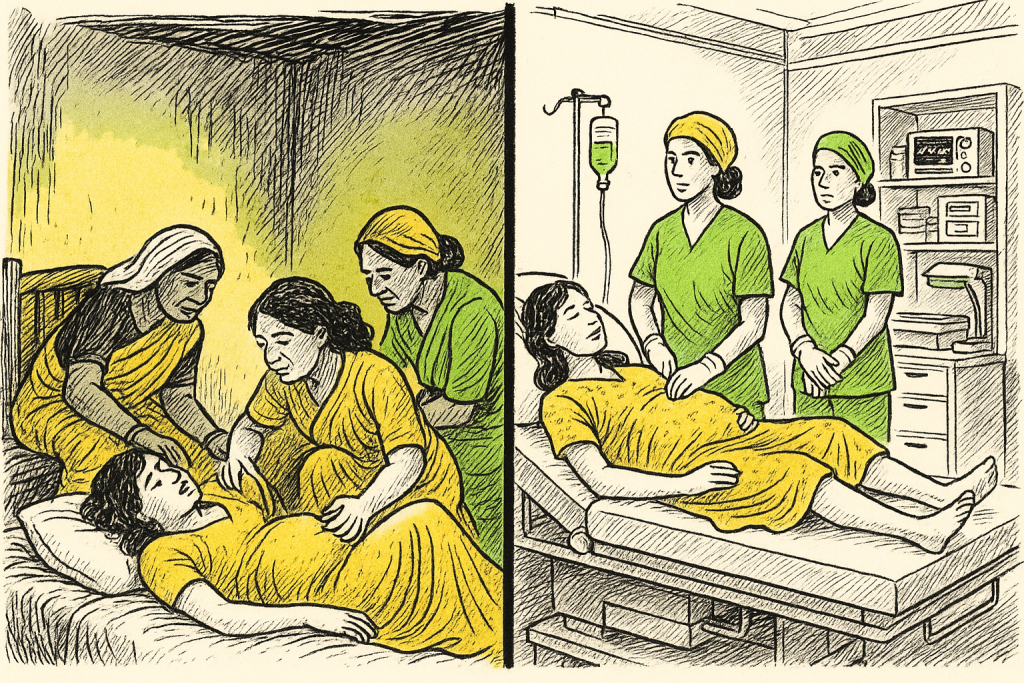
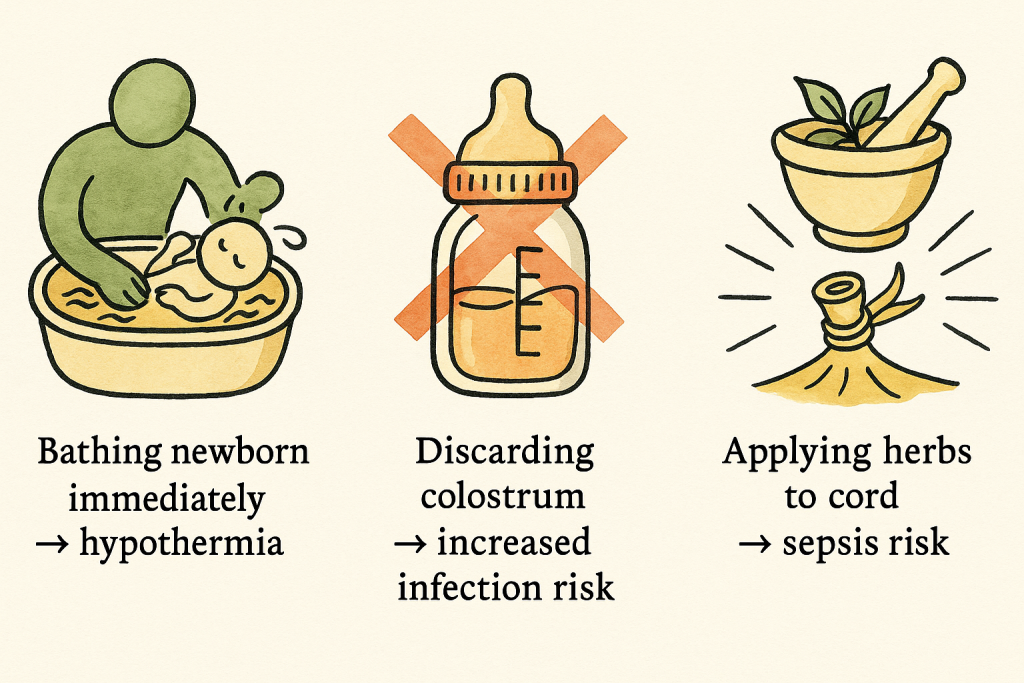
India’s cultural landscape is rich and diverse, but certain traditional practices continue to undermine newborn health. Essential Newborn Care (ENC)—the gold standard for safe infant care—recommends keeping babies warm, avoiding early bathing, ensuring hygienic cord care and breastfeeding within the first hour. Yet in many communities, babies are bathed immediately after birth, exposing them to hypothermia. Herbal substances are placed on the umbilical cord, inviting infection. Colostrum, the thick, antibody-rich first milk that protects infants from disease, is sometimes discarded due to misconceptions about impurity.
Gender norms deepen these risks. In many regions, the birth of a girl can bring disappointment, even resentment. This bias manifests in tragic ways: daughters receive less nourishing food, are taken to health clinics later than boys, or are simply neglected. The recent case in Rajasthan’s Sikar district, where a father allegedly killed his infant twin daughters, serves as a grim reminder that cultural attitudes remain deadly. Addressing these realities requires more than medical interventions; it requires confronting the social beliefs that shape daily decisions about newborn care.
Strengthening Mothers, Strengthening Newborns
The wellbeing of a newborn is inseparable from the wellbeing of the mother. A healthy pregnancy sets the stage for a healthy start to life, but that requires access to antenatal care, nutritious food and safe delivery services.
Government initiatives like the Pradhan Mantri Surakshit Matritva Abhiyan (PMSMA) and SUMAN have expanded access to antenatal check-ups and improved conditions for childbirth. Investments in midwife training, essential delivery kits and well-equipped birth centres are crucial steps toward ensuring dignified deliveries. But coverage remains uneven, and too many rural communities still rely on under-resourced facilities or unskilled birth attendants.
Mobile medical units, simple vans staffed with nurses and doctors, offer a lifeline in remote areas, stitching together the vast distances that often separate families from healthcare. When functioning well, they bring antenatal check-ups, vaccinations, counselling and emergency support directly to rural hamlets that are otherwise cut off.
Empowering adolescent girls is equally critical. Ensuring their nutritional health, providing menstrual hygiene resources and offering reproductive health education strengthens future mothers long before pregnancy begins.
The Cultural and Policy Gap
Despite ongoing efforts, the gap between policy goals and lived reality is often wide. Many frontline health workers shoulder impossible caseloads. Clinics in remote districts may have electricity only intermittently. Ambulances, when they arrive at all, may come too late. Public health messages often fail to penetrate local belief systems. India’s successes, like Kerala’s low mortality rate, demonstrate what is possible when governance, healthcare and public awareness align. But replicating those successes nationwide requires sustained political will, well-funded health systems and deep engagement with women and communities who navigate these risks daily.
Why This Moment Matters
India stands at a demographic crossroads. Its aspirations, to become a major global economy, to harness its youth bulge, to strengthen its workforce, will falter if it cannot secure the survival of its youngest citizens. Infant mortality is not merely a health statistic; it is a measure of whether a nation is honouring its most fundamental obligation: to protect life at its most vulnerable.
The sobering truth is that many infant deaths are not inevitable tragedies but preventable outcomes. They reveal where systems have failed, where knowledge has not reached, where nutrition is inadequate and where women lack autonomy over their own health.
A Future Worth Building
Among the civil society organisations confronting these challenges, Smile Foundation stands out for its sustained work in maternal and child health. Through programmes like Swabhiman and Smile on Wheels, the foundation delivers essential healthcare to underserved communities, promotes institutional deliveries, supports maternal nutrition and raises awareness about breastfeeding and newborn care. By bringing health services directly into communities through mobile clinics, trained volunteers and behaviour change initiatives, it helps ensure that more children survive the precarious first months of life.
These models demonstrate what is possible when systems meet people where they are, when services take into account cultural contexts, and when mothers are treated not as passive recipients but as central partners in their health journey.
The Promise in Every Heartbeat
A newborn’s first cry is not just a biological reflex; it is a declaration of possibility. Every tiny heartbeat holds the promise of a future, an education, a livelihood, a life lived fully. For India to secure that promise, it must transform not only its health systems, but also its social structures, cultural norms and political priorities.
When we care for mothers, educate girls, strengthen health systems and confront harmful practices, we do more than reduce mortality. We affirm a simple but profound belief: every child deserves the chance to grow, to thrive and to shape the future of the nation.
That future begins in the first year of life. And its protection is one of the most urgent responsibilities we have.
Every year, millions of Indian families face a wrenching choice: say “yes” to a promising education that could lift a child out of poverty, or say “no” because the fee is simply unaffordable. An Indian student’s educational journey often hinges on the family’s ability to absorb sudden financial shocks.
The Barriers to Studies
For low-income households, even modest fee hikes, transport expenses or the cost of digital devices can push education beyond reach. This financial fragility becomes most visible at the secondary and post-secondary levels, where the cost of continuing education rises sharply. In the absence of timely financial support, many students are forced to rely on high-risk loans or informal credit, exposing families to long-term debt cycles that can be difficult to escape.When formal loans are out of reach or too slow, desperate households sometimes turn to dangerous alternatives.
This belief forms the core of the Scholarships@Smile initiative, which has already supported more than 100,000 students across 22 states, many of them first-generation learners.
The Gaps Remain: Supply vs Need
Despite government and bank efforts (including new collateral-free education loan products and model loan schemes intended to increase access), there remain large gaps in coverage, timeliness and appropriateness of financial aid for the poorest households. Government schemes are evolving — for example, new schemes seek to extend collateral-free loans to meritorious students — but getting funds to the right students at the right time still depends on outreach, awareness and administrative simplicity. That’s where scholarships and NGO partnerships step in as swift, targeted solutions.
Borrowing is Growing, but so are the Risks
Education lending in India has expanded rapidly with education portfolios of NBFCs and banks having ballooned in recent years. As of mid-2024, the outstanding education loans of banks were reported at roughly ₹1,23,066 crore, a sign of both opportunity and mounting household exposure to debt. For many families that can’t meet bank criteria (collateral, guarantors, credit history), borrowing options narrow and the danger of predatory lenders rises.
Why Loan Sharks is an Education Problem
When legitimate channels fail, informal and often illegal lenders, AKA loan sharks, step in. These lenders charge crippling rates, demand brutal recovery methods and create cycles of debt that push vulnerable families deeper into crisis. For students, this translates into stress, interrupted study and sometimes forced withdrawal from college. The best safeguard isn’t only better regulation of lending but reducing the need to borrow in the first place by expanding grants and scholarships that are safe and predictable.
Research and field experience show scholarships are far more than money on a ledger. When combined with mentoring and community support, scholarships meaningfully reduce dropout rates and improve learning outcomes and completion. Smile Foundation’s scholarship initiatives including the Scholarships@Smile portfolio already support well over 100,000 students, demonstrating the immediate leverage that targeted financial aid gives to vulnerable learners.
Creating a Pathway for Equity
Girls and first-generation learners, in particular, benefit significantly from scholarships because they are disproportionately affected by social pressures, early marriage risks, and competing household responsibilities. Access to predictable financial aid, combined with academic support and mentorship, creates conditions that allow them to stay in school, pursue technical and professional education and transition successfully into the workforce.
As India pushes toward becoming a knowledge-driven economy, the demand for skilled workers in STEM, healthcare, technical and digital industries continues to rise. Yet, without adequate scholarship coverage, the country risks losing a large pool of capable students simply because they cannot afford elementary and higher education. Expanding scholarships, both in scale and in scope, is therefore not just a welfare measure but a strategic investment in national growth and gender equity. Larger, more accessible, and more inclusive scholarship systems can prevent vulnerable families from turning to predatory lending and ensure that the promise of education remains a path to progress, not a source of financial hazard.
Girls, in particular, benefit from a layered model that combines school-level scholarships for Grades 8 to 12 with opportunities for vocational education in fields such as IT, design, management, finance and pharmacy, as well as full engineering scholarships that cover all four years of B.Tech or B.E. degrees. Smile’s Girls-in-STEM initiatives further strengthen this ecosystem by providing laptops, digital learning tools, internship pathways and structured mentorship, ensuring that talented young women can enter technical fields with confidence and continuity. Through campaigns like She Can Fly, the Foundation adds life-skills training, mental well-being sessions, counselling, guidance and employability coaching so that girls are supported not only academically but are also somewhat protected from the social pressures, financial shocks and household barriers that so often push them out of school.
In a nutshell, scholarships need to become more than a financial intervention, it must aim to shield against vulnerability and a long-term investment in gender equity and national progress.
Why Smile Foundation focuses on Scholarships
If India hopes to reduce harmful borrowing and unlock the full potential of its young population, scholarship programmes need a structural rethink. The first step is making them bigger, not only in number but also in the actual value of each award. Scholarships must move beyond partial support and be large enough to realistically cover tuition fees, learning essentials and academic enablers such as books, internet access and transportation. Financial gaps — often small in absolute terms — are the very barriers that push students toward loans or force them to abandon their education altogether.
They must also become faster. Delayed or unpredictable disbursal often defeats the purpose of financial aid, as students may drop out, take on high-interest debt, or miss admission deadlines while waiting for funds. A streamlined, technology-supported process that delivers aid at the beginning of the academic cycle can prevent these avoidable disruptions.
Scholarships need to be smarter as well. Data-driven targeting based on income levels, geography, gender, caste and first-generation status can ensure that the most vulnerable students are prioritised rather than those who are already relatively secure. This approach strengthens equity and ensures that limited resources produce maximum social impact.
Equally important is making scholarships richer in support. Financial aid alone cannot compensate for a lack of guidance, exposure or digital access. Pairing funding with mentorship, career counselling, skill-building opportunities and modern learning tools creates a more holistic ecosystem in which students can thrive rather than merely cope.
Finally, scholarships must become sustainable. Long-term impact requires models that blend public investment, CSR partnerships, philanthropic capital, and community participation. A multi-stakeholder approach ensures that scholarship programmes do not disappear after a single grant cycle but remain resilient and predictable for years to come.
In essence, “bigger and better” scholarships are those that expand their financial reach, accelerate support, intelligently target need, enrich student development and endure across academic journeys, transforming education from a fragile aspiration into a stable, achievable reality.
Smile Foundation’s model already follows many of these principles — providing financial aid as part of holistic support packages that address the reasons students leave school, not just the costs.
A Practical Pathway: How Donors and Partners can help Scale Scholarships
Corporate partners (CSR): Fund scholarship cohorts tied to outcome metrics like retention and pass rates.
Foundations & trusts: Seed large endowments dedicated to regional scholarship hubs.
Individual donors: Monthly micro-scholarships (between 500 and 2000) create predictable support that keeps one student in school.
Policymakers: Simplify registration and disbursal frameworks for NGOs to partner with government scholarship databases.
Banks & Fintechs: Co-create early-warning funds that convert pending loans into scholarships for high-risk students.
Let Scholarships mean Promise and Protection
In the tug-of-war between opportunity and risk, scholarships are a practical way to tip the balance toward a stable future. They prevent families from turning to dangerous credit, protect students from the stress and violence of predatory lending and promise a different life through education. Smile Foundation’s reach — touching more than a million lives every year — proves that well-designed support works. But to protect every child who deserves a chance, scholarships must grow bigger, faster and smarter. Join us in making that happen.