
When a child stops going to school, the reason behind the absence matters as much as the absence itself. Dropout, disengagement and school refusal in child education look similar from the outside but need completely different responses. Getting this distinction wrong can do more harm than good.
Summary:
- When a child stops going to school, the wrong response can make things worse. Dropout, disengagement and school refusal in child education are three different problems that need three different approaches.
- School dropout in school education is usually caused by poverty, early marriage, seasonal migration or structural barriers that have nothing to do with the child’s ability or desire to learn.
- A disengaged child is still showing up, but their grades are slipping, they have stopped participating, and slowly they stop coming in too.
- School refusal in child education is driven by real anxiety and distress, and the physical symptoms every morning are genuine. This child is not being difficult; they are just overwhelmed.
- In India, only 51.9% of children who enrol at elementary level complete Class 12. The dropout rate rises sharply at secondary level, where financial and social pressure is hardest to fight.

Most mornings, it starts small. A stomach-ache at breakfast that disappears by noon. A reason to stay home just this once. A child who goes very quiet when school comes up in conversation.
By the time a parent realises something is wrong, weeks have sometimes already passed.
When a child stops going to school, the first response is usually to reach for the quickest explanation. Lazy. Difficult. Going through a phase. But a child who expects to be called lazy is not going to tell you they are scared. And a child who expects to be pushed straight back to school is not going to explain why they cannot face it.
The more understanding a parent is in that first moment, the more likely the child is to say what is actually going on.
Dropout, disengagement and school refusal in child education are three completely different situations. What helps one can make the others worse. And that difference is worth getting right.
Not Every Empty Chair Means the Same Thing
When a child is not in school, the instinct is to ask what is wrong with them. The better question is what is happening to them.
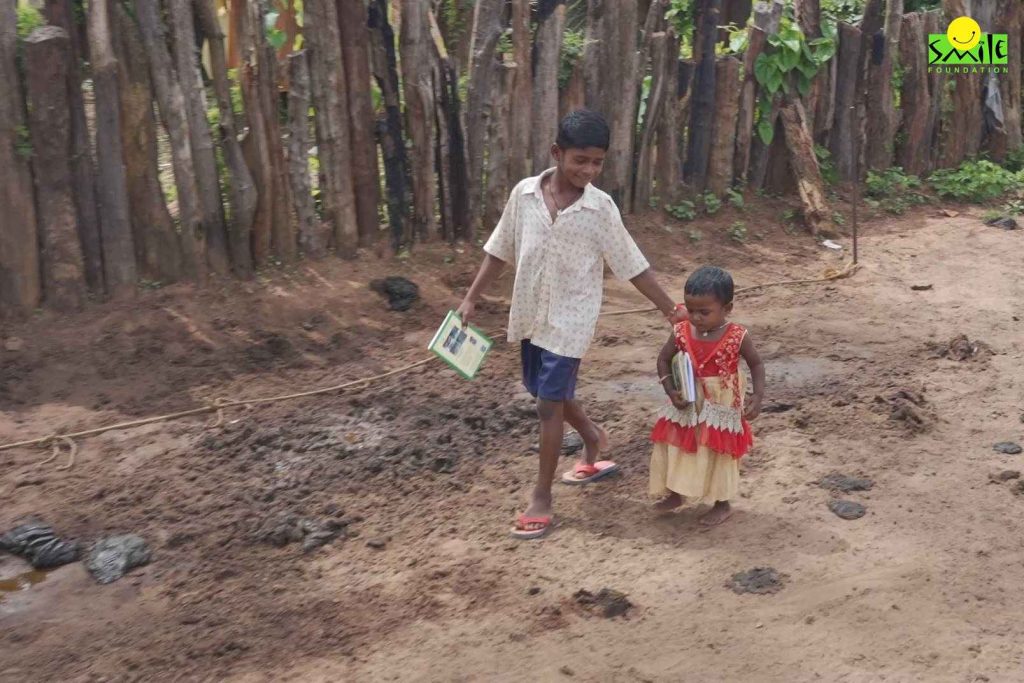
School dropout usually comes from outside the child. A family loses household income, a girl reaches a certain age and her parents decide school is no longer worth it or a family migrates and can’t get back to the routine.
School disengagement is quieter. The child still comes in for a while, but their grades slip, they stop participating, and then slowly they stop showing up too.
School refusal in child education is different from both. This child wants to go to school but the anxiety and the physical symptoms every morning make it impossible.
What School Dropout Really Looks Like in India
India’s school dropout numbers reflect structural failure, not individual weakness. Of the 98.5% of children who enrol at elementary level, only 51.9% reach Class 12. The dropout rate climbs from 1.8% at the preparatory stage to 7% at secondary level, where financial and social pressure peaks.
The causes are structural, not personal:
- Financial hardship that pulls children, especially boys, into early work.
- Early marriage and domestic responsibilities that end girls’ schooling prematurely.
- Seasonal migration that breaks the continuity of education for entire families.
- Poor school infrastructure, unsafe commutes and absent sanitation that quietly push girls out.
- Caste-based discrimination and disability barriers that make some children feel they do not belong.
Every year a child drops out also carries an economic cost. Each additional year of schooling raises a woman’s future income by 10 to 20%. Each year of school completion adds 0.37% to India’s GDP.
Dropout is rarely a sudden decision. It usually follows months or years of struggle where no one really stepped in.
What actually helps:
- Financial support and scholarships that keep vulnerable children enrolled.
- Reaching families early, before absence becomes a pattern.
- Flexible learning options for children whose lives don’t fit a standard school structure.
School Disengagement: What It Looks Like Day to Day
A disengaged child has not given up, but school no longer feels safe, relevant or worth the effort.
It usually starts small, when the child stops believing they can succeed and no teacher notices. Then slowly, they stop feeling like they belong in the classroom at all.
Signs of disengagement include:
- Work that is consistently late, incomplete or just not handed in.
- Dropping out of class discussions and group activities.
- Absence that starts as occasional but slowly becomes a habit.
- Going noticeably quiet or irritable when school comes up at home.
- No longer interested in subjects or activities they used to enjoy.
Disengagement is hard to catch because it moves so slowly. By the time teachers and parents notice, the child has usually been struggling for months with no one stepping in.
What actually helps:
- One adult at school the child genuinely trusts. This is often the most powerful factor.
- Lessons that connect to real life and feel relevant to the child.
- Feedback that builds confidence, rather than grading that just marks them down.
Understanding School Refusal in Child Education
School refusal in child education affects an estimated 2 to 5% of school-age children, equally among boys and girls. It is most common around ages 5 to 6, when children first start school, and again around 10 to 11, when academic and social pressure picks up.
This child is not being dramatic. Every school morning brings real physical symptoms: nausea, headaches, dizziness, stomach pain. They ease the moment the child is allowed to stay home. That pattern, getting worse in the morning and better by afternoon, is usually the clearest sign that anxiety is driving it.
With school refusal, parents almost always know. The child is at home, not out with friends. Both the child and the parent are often distressed and exhausted by the daily struggle.
Many of these children have anxiety, depression or a clear trigger like bullying, a change at home, or a difficult classroom situation. Children with autism are significantly more likely to find the school environment overwhelming. Some studies put that figure as high as 43%.
School Refusal in Child Education vs. Truancy vs. School Avoidance: What Is the Difference?
These three terms are often used to mean the same thing, but they are not.
- School refusal in Child Education: Driven by anxiety and distress. The child wants to go but cannot manage the fear. They are at home, with their parent’s knowledge, often visibly struggling.
- Truancy: Driven by choice, not distress. The child is absent without permission, usually somewhere else. There is no anxiety about school itself.
- School avoidance: A broader term. Many professionals now prefer “Emotionally Based School Avoidance” because it removes the idea that the child is choosing this.
Calling school refusal in school education truancy does real damage: a distressed child treated like a rule-breaker becomes harder to reach, and the trust between the child, the school and the family breaks down.
What actually helps:
- Cognitive behavioural therapy, which has the strongest evidence behind it.
- Gradual reintroduction to school, with support, rather than forcing attendance.
- Coaching for parents to understand how anxiety cycles work and how to avoid making avoidance worse.
- School accommodations: adjusted schedules, a safe space, one consistent person the child can go to.
How Smile Foundation Works to Keep Children in School
Many children who eventually stop attending school were showing signs long before anyone stepped in. The earlier someone reaches out, the better the chance of keeping them in.
Smile Foundation’s Mission Education programme runs across government schools in 27 states. The programme covers attendance monitoring, community outreach, teacher training and family engagement, working to keep vulnerable children enrolled before absence becomes permanent.
The children most at risk rarely ask for help. That is why someone has to go to them first. To learn more or support a child’s education, visit Mission Education.
FAQs
- What is the difference between school dropout and school refusal in child education?
School dropout is usually caused by external factors like poverty, family pressure, or seasonal migration. School refusal in child education is driven by anxiety and emotional distress from within. One is a structural problem. The other is a mental health concern. They need completely different responses.
- What causes school refusal in children?
The most common causes are anxiety disorders, separation anxiety, social difficulties, bullying, and traumatic experiences. Children with autism, ADHD, or sensory processing differences are much more likely to struggle with it. School refusal is not defiance. The child is overwhelmed and needs support, not discipline.
- How is school disengagement different from school dropout?
Disengagement is a slow pulling away, emotionally and academically, long before a child stops attending altogether. Dropout is often where it ends up. A disengaged child may still be enrolled but has mentally checked out. A dropout has left entirely. Catching disengagement early can prevent dropout.
- Can school refusal be confused with truancy?
Yes, and that confusion causes real harm. A child with school refusal is anxious and distressed, usually at home with a parent’s knowledge. A truant child is absent without parental permission and shows no anxiety about school. Treating a distressed child like a rule-breaker makes everything harder to fix.
- What are the early warning signs that a child is disengaging from school?
Watch for declining grades, reluctance to talk about school, withdrawal from friends, repeated absences, and loss of interest in things they once enjoyed. The signs are often gradual and easy to miss.
- How many children in India drop out before completing school?
Of children who enroll at elementary level, only 51.9% complete Class 12. The dropout rate rises sharply at secondary level, where financial and social pressure is strongest for both boys and girls.
- What is the right response when a child refuses to go to school?
Take the distress seriously. Forcing attendance abruptly tends to make anxiety worse, not better. Talk to the school, speak with a mental health professional, and work toward bringing the child back gradually. Acting early makes a real difference.
- What can parents do if their child seems disengaged from school?
Start by asking, without assuming. What feels hard about school right now? Look for what is driving it: academic pressure, a falling out with friends, or something bigger going on at home. Talk to teachers early. Do not wait for it to become a much bigger problem.
Sources:
- National Center for Biotechnology Information (NCBI) — School Refusal
- Australian Parliament Library Research Paper — School Refusal 2022-23
- Child Mind Institute — When Kids Refuse to Go to School
- Frontiers in Education — School Refusal Research (2021)
- Smile Foundation India — Dropout and Out of School Children
- Yale Medicine — School-Related Problems
- School Avoidance Alliance — School Avoidance, School Refusal and Truancy
- University of Queensland — School Refusal vs. Reluctance (2025)
- PMC NCBI — School Refusal Behaviors and Parental Factors
- Raising Children Network — School Refusal
- Stony Brook Medicine — Parent’s Guide to School Avoidance and Refusal
- EdPsychEd — EBSA vs School Refusal
- Daniel’s Diaries — School Avoidance vs School Refusal
- Griffith Centers — School Avoidance or School Refusal