Amar Ujala (December 23, 2010)
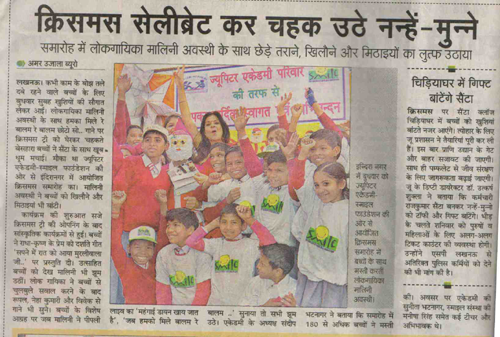


Amar Ujala (December 23, 2010)
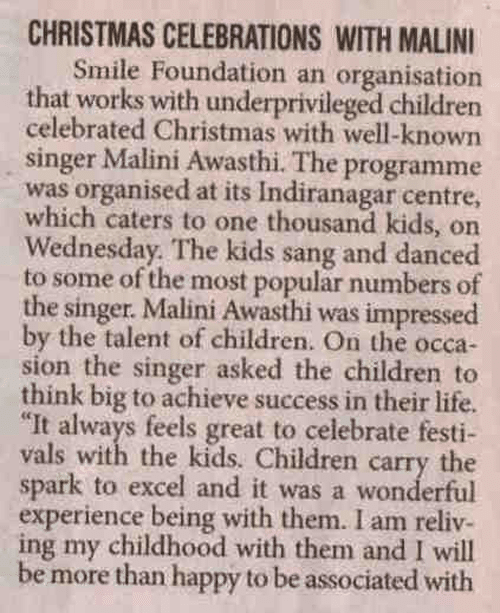
The Pioneer (December 23, 2010)
( August 17, 2019 )
Three premium motorcycle manufacturers organised Independence Day rides on occasion of 72nd Indian Independence Day.

Ducati organised its first ever Independence Day ride in India
It was India’s 72nd Independence Day and premium motorcycle manufacturers such as Ducati, Indian and Triumph organised Independence Day rides across the country. Up first was Ducati, who conducted its first ever independence ride in India. There were 350 participants across the country that came together and rode their Ducatis, tying up with the Lotus Petal foundation and supporting the cause of education and dignity of life for underprivileged children.
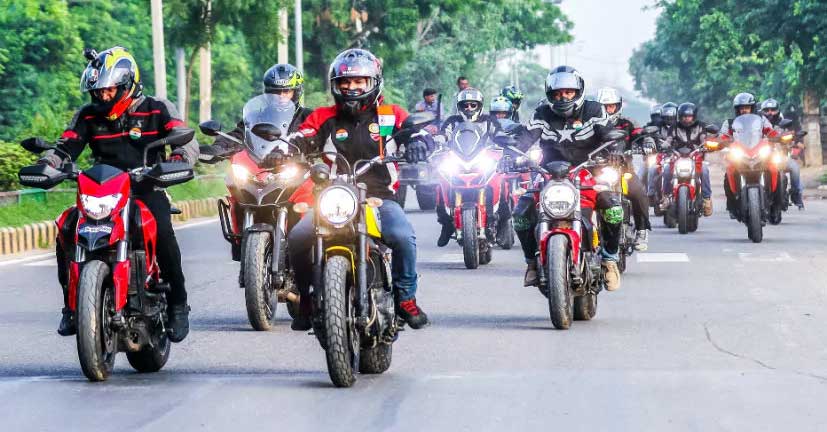
(Ducati tied up Lotus Petal Foundation to support the education of under-privileged children)
Sergi Canovas, MD of Ducati India, said “It’s a proud moment for Ducati, to have organised a first-of-its-kind Independence Day ride in the country, in association with the Lotus Petal Foundation. The Ducati family came out in great numbers to show their support to the cause and help raise awareness to transform the lives of the underprivileged. The participation from Ducatistis was a testimony to the brand and the motorcycle community giving a perfect platform for riders to come together to pledge independence from everything that’s holding these children back from achieving their aspirations.”

Over 513 Triumph owner got together across India for its Freedom Ride)
Triumph Motorcycles India too celebrated the Independence Day by organizing its annual Triumph Freedom Ride across its dealerships in India. A total of 513 Triumph owners participated in the ride across the country. The company continued its annual tradition of supporting the cause of girl child education. Triumph riders donated generously for this very special cause. The proceeds from the ride will support the “She Can Fly” campaign of Smile Foundation, and will be used to educate girl children for one full year.
Shoeb Farooq, General Manager, Triumph Motorcycles India, said, “It was fantastic to see so many of our riders turning up for the Independence Day ride, all riding for a noble cause, It was indeed a proud moment for all of us to be a part of this Freedom Ride. In a country like ours, where the female population has limited access to education, it is imperative we continue to create opportunities for growing girl children to learn, grow and evolve.
Lastly, but not in the least, it was Indian Motorcycle who organised a Freedom Ride at all of its nine dealerships in India. Riders from Indian Motorcycle Riders Group (IMRG) got together and rode to a venue of national importance in each city. Indian also conducted a contest of sorts on its social media handles, with the winner getting a helmet having the Indian tri-colour colour scheme.
Dainik Jagran (December 23, 2010)
( August 15, 2019 )
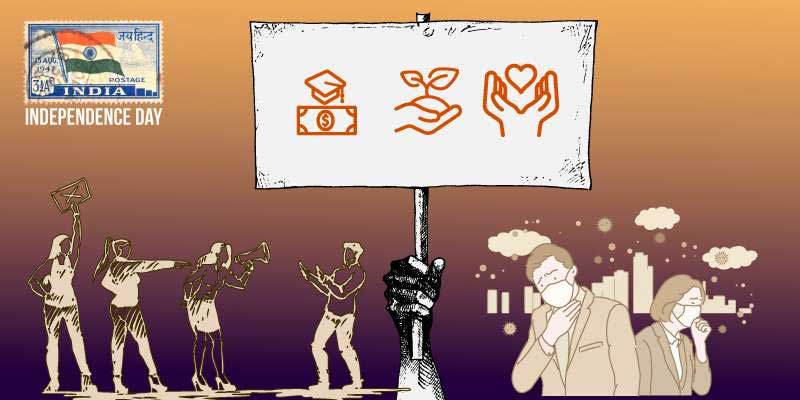
The essence of words like ‘freedom’ and ‘independence’ can be tricky and largely subjective. India gained independence from the British colonial rule a good 72 years back and went on to build a strong and democratic country thereon.
Albeit the great victory after over 90 years of struggle, today, India still has to contend with a few challenges from the bottom all the way to the top. When addressed collectively as a society, the resulting scenario can give the citizens both happiness and a better quality of life.
Low agricultural productivity, lack of healthcare facilities, inaccessibility to good education, environmental degradation, and compromised women safety are some of the issues that have been coming in the way of people’s liberation.
This Independence Day, let’s reflect on some social barriers that we need to break as a nation in order to obtain the real taste of independence.
Beyond Angel Tax, what does freedom truly mean for Indian startups?
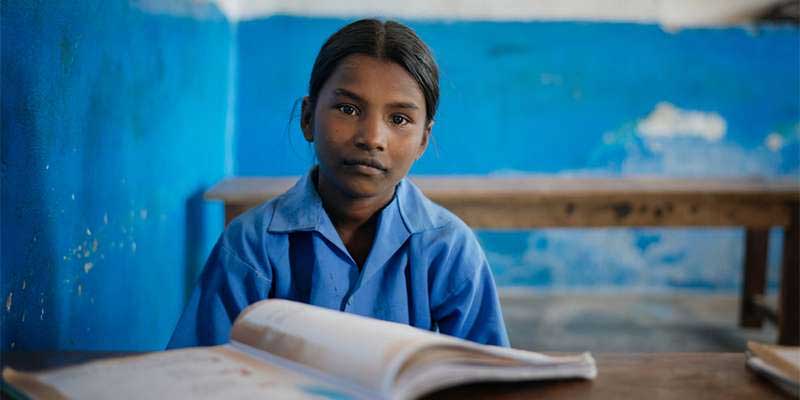
Freedom from illiteracy
India has come a long way in terms of educating its citizens and ensuring access to education with a mere 18.32 percent in 1951 to 74.04 percent in 2011.
The 2011 census reveals that Gross Enrolment Ratio (GER) for females at the primary level stood at 100.6 against 98.1 for males in 2013-14. On the contrary, dropout rates were 18.30 and 21.20 percent in the Classes I to V, 32.90 and 39.20 percent in Classes I to VIII, for females and males, respectively.
While women discontinue their formal education due to domestic responsibilities, male dropouts are largely attributed to being engaged in economic activities. Well, it is not uncommon to find young boys serving food at eateries or filling petrol at fuel stations.
How Haryana transformed dismal student learning outcomes in its government schools
The Government of India, along with educational institutes and other organisations, has been trying to bridge this gap in inequity, and educate more and more people.
One such non-profit organisation (NGO) is Maatram, which is working tirelessly to make education more accessible. Founded in 2013 by Sujith Kumar and Punitha Anthony, it has helped around 677 underprivileged children get access to higher education for free.
The Indian government has introduced a number of initiatives, including Chunauti 2018 policy, which focuses on the education of children at schools, and ePathshala, which aims to improve the reading ability of students by distributing textbooks for free to those pursuing higher education.
Though there is still a lot to be done in India’s educational space, the efforts put in by various parties contributed to the total enrolment of female students increasing by five percent on an annual basis with an estimate that by 2030, women pursuing higher studies might turn out to be more than men.
After all, empowering citizens is one of the most valuable assets, and what better way to do this than give away educational opportunities?
Freedom from sexual violence
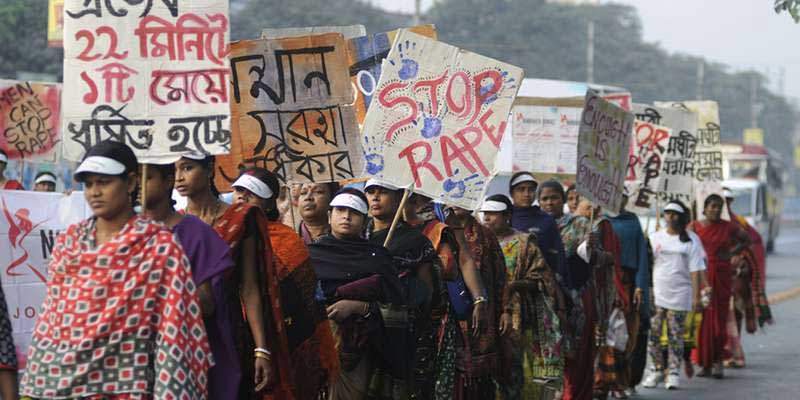
One of the gravest concerns that the country is grappling with right now is perhaps the extent of sexual violence inflicted on women and children. India is known to be the most unsafe country for women in the world.
The nation has witnessed several unforgiving acts of sexual violence in recent times, like the Kathua and Nirbhaya rape case.
However, in 2018, all the citizens expressed these woes and raised their voice against the perpetrators through the #MeToo movement. A number of personalities, including veteran actors Alok Nath and Nana Patekar, comedians like Tanmay Bhatt and Gursimran Khamba, were named in the process. Social media was rife with allegations for several days.
Following this, the Criminal Law Amendment Bill of 2013 was passed and an anti-rape law called the Nirbhaya Act was tabled. The National Commission for Women set up a separate cell to handle complaints of sexual harassment at workplace in 2018.
Startups like Sexual Harassment Law Compliance (SHLC) works with corporate houses and universities to help sensitise the management and staff to sexual harassment at the workplace.
While the government and others are helping ease the situation, it is in the hands of citizens to change mindsets so that India can be a country that is free from fear of gendered violence.
Supreme Court stresses on women safety, bats for stricter punishment
Freedom from agricultural distress
For over 70 years, Indian farmers have been toiling hard to produce bumper harvests. However, the sector has seen slow progress in recent years, and farmers have hardly got any freedom from the distress. Low farm incomes, crop failures, poor employment rates, and increased incidences of farmer suicides point to a multidimensional problem.
A slew of NGOs and startups are coming together to address the many gaps springing from a lack of awareness in the farming community, archaic agricultural practices, and poor penetration of technology.
For instance, the Deshpande Foundation launched the Neer Sinchina programme in the same year with support from the Tata Trusts to help facilitate irrigation in drought-prone areas across Northern Karnataka.
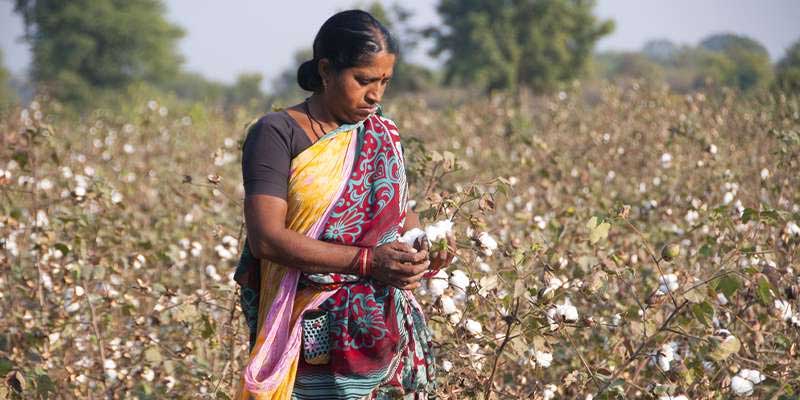
Modi govt extends PM-KISAN, announces new pension scheme to farmers
Mumbai-based startup FreshVnF has been using machine learning (ML) to optimise a farm-to-fork supply chain by connecting farmers with hotels, restaurants, and cafes across India.
The Gurugram-based enterprise The Krishi founded a one-stop digital platform in the form of a mobile application for farmers to obtain useful tips and information in order to boost both productivity and income.
Known as the Kisan Network app, the interface was designed to include features to assist farmers, right from the location of nearby marketplaces or mandis, weather predictions, seed and fertilizer details, specifics on cropping techniques and government schemes as well as real-time insights on technical tools.
The government, too, has been actively contributing to the welfare of farmers. Kisan Mitra, an intermediary between the farmers and the government, was set up to ensure farmers receive their entitlement according to the monetary schemes enlisted to them. The setup also protects farmers from moneylenders who charge exorbitant interest rates.
To add to this, schemes like Pradhan Mantri Fasal Bima Yojana and Paramparagat Krishi Vikas Yojana are attempting to deliver a new lease of freedom to the farmers.
On Barley Growers Day, AB InBev upskills 1000 farmers through the SmartBarley programme
Freedom from pollution
According to a report released by the Indian Council of Medical Research, around 77 percent of India’s population is exposed to outdoor pollution levels above the National Ambient Air Quality Standards safe limit, making it one of the biggest health hazards.
Pollution has different forms — air, water, land, and plastic — and attaining freedom from them all may sound like a pipe dream. However, many entrepreneurs and citizens have been devising innovations and kickstarting initiatives to combat it.
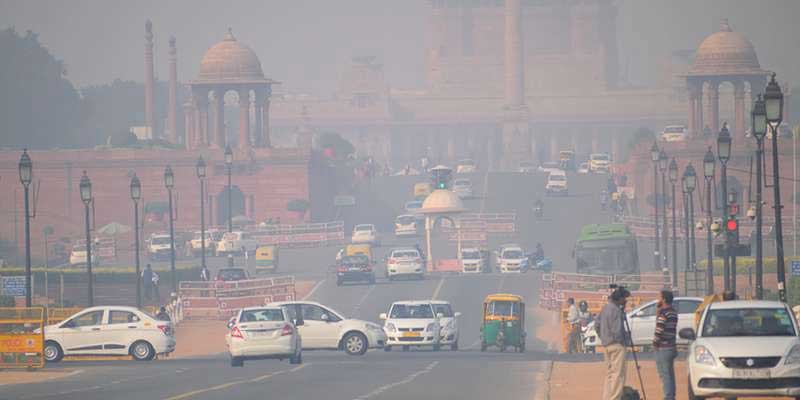
Delhi, Mumbai, and Kolkata among world’s top 20 most populous cities
For example, Nanoclean, a startup incubated at IIT Delhi, has developed a nasofilter that sticks to the user’s nasal orifice, and restricts foreign particulate matter. The team has ensured it is an environment-friendly product and gives negligible breathing resistance.
Bengaluru-based social enterprise rePurpose, is attempting to reduce plastic pollution by helping people keep a tab on their consumption and also negate the ill-effects attached to it. The organisation has developed an algorithm to help people calculate their plastic footprint at an individual level.
The Indian government also joined hands to beat plastic pollution in 2018 by banning all ‘single-use’ plastic materials across the nation. Alongside this, initiatives like upcycling plastic and organising clean-up drives across public spaces, national reserves, historical sites, lakes, and forests were launched both at the government and the citizen level across various cities.
Freedom from skewed healthcare
The healthcare space in India has wide disparities and gaps due to improper healthcare facilities and inaccessibility to basic medical needs. The country’s healthcare spending remains low at 1.2 percent of the GDP. This is dismal when compared with the US’ 17 percent or China’s 5.5 percent. Presently, India has just 0.7 doctors and 1.1 beds for every 1,000 of its citizens.
Freedom from this skewed setup is of utmost necessity to protect the health and well-being of the citizens.
While the government is aiming to increase the healthcare spending to three percent of the GDP by 2022, the startup ecosystem is using technology to increase the reach, and NGOs are working towards providing free healthcare services to people.
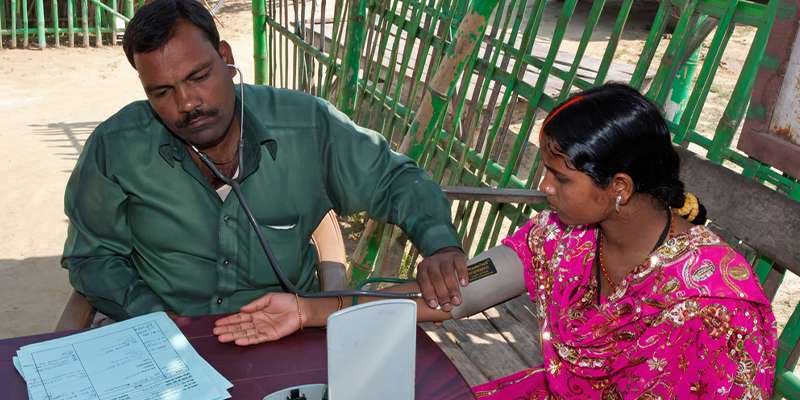
This 18-year-old entrepreneur’s startup is changing healthcare in rural India
Delhi-based Smile Foundation has been putting in efforts to take healthcare to the poorest of the poor over the last few years. And, to achieve this, it initiated a unique delivery model, called ‘Smile on Wheels’, which seeks to assist problems of mobility, accessibility, and availability of primary healthcare to rural folk.
Care India, on the other hand, is working in close collaboration with the government to secure accessible maternal and child healthcare across villages in India.
Bengaluru-based startup Niramai is using artificial intelligence (AI) for pain-free breast cancer screening. The screening device developed by the enterprise can detect tumours five times smaller than what a clinical exam can catch.
Another startup located in Bengaluru, called Forus Health, is using technology to fight the skewed ophthalmologist-to-patient ratio in India. With its portable innovative product 3nethra, screening of common eye problems that can lead to blindness can be done within a few minutes.
As Toni Morrison wrote in Beloved, “Freeing yourself was one thing, claiming ownership of that freed self was another.” Here’s hoping this Independence Day brings freedom to every citizen of India.
Hindustan Times (December 23, 2010)
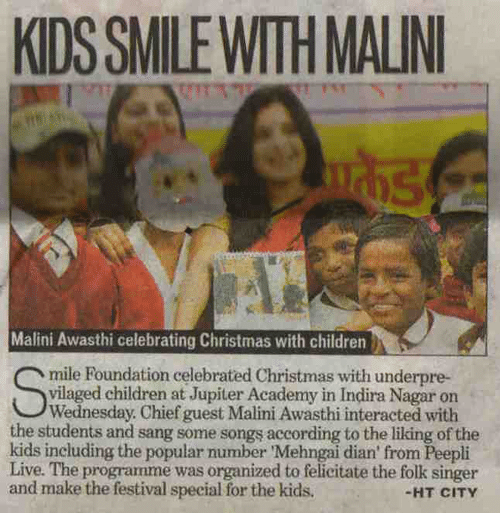
( August 14, 2019 )
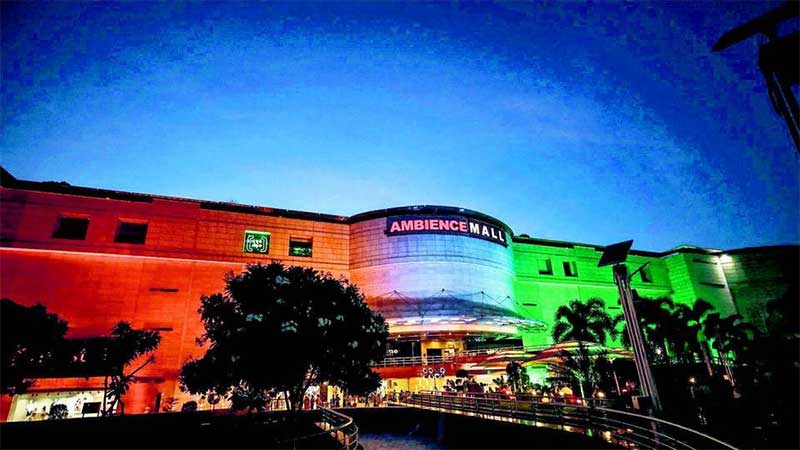
Independence Day 2019: For the occasion, Ambience Mall Vasant Kunj has been illuminated with saffron, white, and green lights, and the interiors are decked up with tricoloured drapery.
On Independence Day, tomorrow, there will be formal flag hoisting, followed by lively cultural performances. There will be a musical performance by Army’s Pipe and Jazz Band as well as various dance performances, making the mall a vibrant and lively place to celebrate the special occasion.
On the occasion of 73rd Independence Day in India, Ambience Malls are painting the town in patriotic hues. Celebrating the heritage and culture of India, Ambience Mall Vasant Kunj and Ambience Mall Gurugram are adorned with the colours of our national flag to spread the feeling of patriotism amongst shoppers and onlookers.
For the occasion, Ambience Mall Vasant Kunj has been illuminated with saffron, white, and green lights, and the interiors are decked up with tricoloured drapery. The celebrations have already commenced, with an energy-packed performance by Army Band along with a live handloom sari-weaving session as part of Ambience’s CSR campaign, in collaboration with Frontier Raas and Smile Foundation.
On Independence Day, tomorrow, there will be formal flag hoisting, followed by lively cultural performances. There will be a musical performance by Army’s Pipe and Jazz Band as well as various dance performances, making the mall a vibrant and lively place to celebrate the special occasion. For the first time in Delhi, a retail institution like Ambience Mall Vasant Kunj has set up a real-time experiential exhibit of artisanal sari-weaving to promote the welfare of handloom craftsmen. The karigars belong to a long line of weavers, who have preserved the ancestral knowledge and techniques of handloom for over 30 years.
All the saris made during this live session will be available for purchase at a silent auction. The funds collected from it will then be given to Ambience Mall’s CSR Partner, Smile Foundation, to organise weaving workshops and training for indigenous people in rural and remote areas.
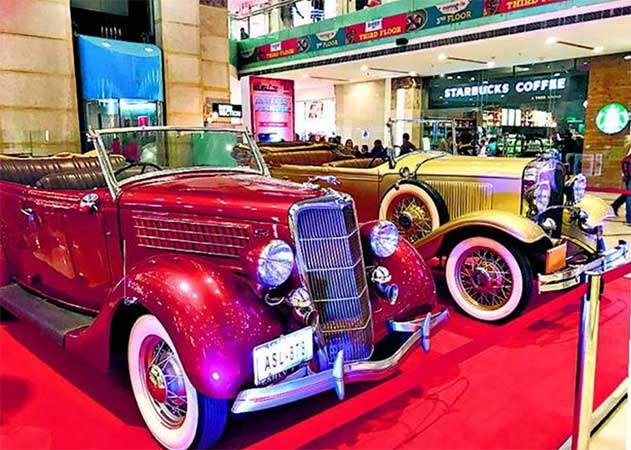
Ambience Mall Gurugram will also be adorned with tricoloured decor, with sand art displays to honour late former external affairs minister, Sushma Swaraj. It would also feature installations from Madame Tussauds. Also on display in the atriums will be vintage cars such as Lanchester 1927, Ford V8 1935, and Buick Convertible 1929.
Since Raksha Bandhan also falls on the same day, the mall has set up stalls where shoppers can buy rakhis and festive gifts. Speaking about the celebrations, Arjun Gehlot, director, Ambience Malls, said, “As we celebrate the 73rd Independence Day, it is important for us to honour the heritage, traditions, and culture of our country.
Through the display of national colours and activities at both the malls, we want our shoppers to join in and celebrate the spirit of patriotism.” Speaking about the campaign for weavers in Ambience Mall Vasant Kunj, he added, “Handloom is an integral part of India. It inspires an emotional connect in people who have a specialplace in their hearts for this art form. For Independence Day, our endeavor is to curate visual experiences rooted in true traditionalism of our country.”
Another meaty attraction for shoppers is the conclusion of month-long End of Season Sale. Tomorrow, both the malls will announce the lucky winners selected through bills submitted on the Ambience Mall app. The winners will be rewarded with extravagant prizes which include an international trip, luxury stay at The Leela Ambience Convention Hotel, and brand new iPhoneXR.
Rashtriya Sahara (December 23, 2010)
(July 22, 2019 )
Every 8 minutes, an Indian woman dies due to cervical cancer. Statistics state that this is the second-most common cancer among Indian women.
While most cases of cancer are attributed to human papillomavirus (HPV) infection, the catalyst for cervical cancer is a uterine tract infection. However, the HPV vaccination and maintaining proper genital hygiene can only reduce the cancer risk.
Moreover, yeast infections, reproductive tract infection, microbial diseases and hepatitis B via transmission are other health risks that occur due to lack of menstrual hygiene.
Understanding menstruation cycle
There’s lack of awareness about women’s health in India, mostly due to the taboos and superstitions associated with female genital hygiene and menstruation. For example, cervical screening, visiting a gynaecologists and vaginal discharges are still considered embarrassing among the masses.
These taboos have stigmatised female hygiene to the extent that women in most suburban and rural areas reuse old pieces of cloth during menstruation. On the other hand, the “humiliation and secrecy” about mensuration — in both rural and urban India — leads to the problem of improper disposal of sanitary napkins and non-biodegradable napkins can be seen accumulating on landfills.
Moreover, women avoid conversations about how negligence of personal hygiene can lead to various urinary tract infections (UTIs). These diseases can lead to major problems for under privileged women in rural areas, as visiting hospitals and undergoing various procedures can be a tedious and costly task.
Whatever be the reason, menstruation is not perceived with normalcy. Women are considered “impure”, they are asked to stay away from male family members, have to sleep on the floor, and have to stay away from the kitchen. These unreal practices followed for centuries make women vulnerable and they shy away from dealing with menstruation in the right manner.
Creating awareness about maintaining hygiene
Non-governmental organisations (NGOs) have taken up various projects to spread sanitary awareness. The government’s Menstrual Hygiene Programme (MHP) is aimed at creating awareness about personal hygiene, while the Menstrual Hygiene Scheme (MHS) is helping improve menstrual health among adolescents.
In a written reply to the Lok Sabha, Minister of State for Health and Family Welfare, Ashwini Kumar Choubey, said that the schemes will promote the use of quality sanitary napkins that are environment friendly.
According to the National Family Health Survey (NFHS) 2015-16, 62 percent of Indian women used cloth during their periods. Overall, 58 percent of women used hygienic methods, while 42 percent used sanitary napkins and 16 percent used locally manufactured products.
However, there was vast difference between women in rural and urban areas. As many as 77.5 percent urban women used hygienic products during menstruation, while a staggering 51.5 percent women in rural areas do not use a proper sanitary products.
Educating women
The survey revealed that more educated women — around 81 percent – used proper sanitary products in comparison to those with no education.
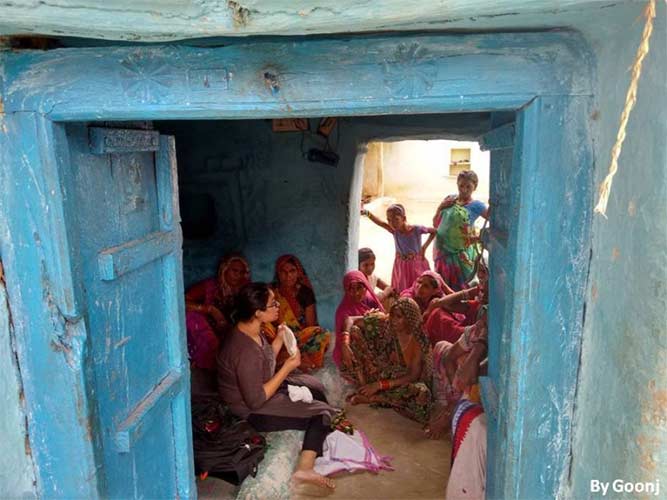
Anshu Gupta, founder of Goonj, an organisation that works towards rural development, disaster relief and women’s hygiene said that India needs to adopt a comprehensive approach to spread awareness about sanitary hygiene.
“The current scenario of menstrual hygiene is product centric. If free distribution of condoms couldn’t control population growth, a free delivery of sanitary napkins would not bring total inclusion,” he pointed out.
Gupta said, “Acceptance, accessibility and affordability,” were three important aspects of the menstrual hygiene campaign. The Goonj founder stressed on the necessity of dialogue in menstrual health management (MHM).
“Most women suffer from rashes, itching and abnormal vaginal discharges and continue to live with these symptoms. A large part of rural India remains untouched and lack of a proper delivery mechanism [of sanitary products] and lower literacy rate awareness campaigns are hindered,” he noted.
Gupta acknowledged the recent growth of the sanitary product industry in the country in terms accessibility, availability and choice of products.
“However, rural India is not included in the e-commerce sanitary product sales circle as most villages remain out of bounds for e-commerce companies. Hence rural areas remain a part of menstrual hygiene implementation.”
He added that the cost of biodegradable products will reduce once orders are placed in bulk, which will bring an environmentally conscious step for building a sustainable market for such products.
Empowerment and well-being of women
Santanu Mishra, co-founder of Smile Foundation, agreed that menstrual hygiene is integral to empower women and for the well-being of girls.
“It will not be an overstatement to say that it is one of the most challenging development issues in our country today. Not just rural India, but urban quarters are equally at a loss. Deep-rooted taboos, myths and misinformation create the delusion that the whole process of menstruation is gross and shameful.”
Mishra emphasized that the aspect of menstrual hygiene is not linked with access to sanitary pads but to “reproductive health and women’s rights”.
“Our distribution system at Smile includes training community workers on how to provide education to both boys and girls about puberty and menstrual hygiene. Distributing sanitary napkins, safe disposal and other practices are taught to young girls,” he said.
When discussing about the evolution of sanitary products industry and its role on sensitising menstrual hygiene in India, the Smile co-founder said, “The efforts of aggressive advertisements by giants like Whisper [Procter and Gamble], Stayfree [Johnson and Johnson] to take control of the market, has contributed to creating an atmosphere of sanitary revolution.”