
Categories
Health Nutrition Smile

Why One-Size-Fits-All Nutrition Fails Across the Life Cycle 

Summary

  • Nutrition needs evolve from infancy to old age
  • One-size-fits-all diets fail across life stages
  • Healthcare in India faces stunting, anaemia, undernutrition and obesity
  • Global diet trends must suit India’s affordability and food culture
  • Life-course nutrition improves health through targeted care and awareness

The idea that there exists a single balanced diet suitable for everyone is one of the most enduring simplifications in nutrition discourse over time. It promises clarity: eat this-avoid that-maintain moderation but obscures a far more complex biological and social reality that human bodies are not static. In fact, they change continuously across the life cycle, shaped by phases of rapid growth, hormonal transitions, reproduction, ageing and shifting patterns of work and care. 

Recognising this, organisations such as the World Health Organization, UNICEF and the Food and Agriculture Organisation increasingly advocate for a ‘life-course approach’ to nutrition, one that accounts for these transitions rather than flattening them. Nowhere is this more urgent than in contexts like India, where multiple forms of malnutrition coexist across age groups, from stunted children to anaemic adolescents and undernourished mothers. In such a landscape, the persistence of one-size-fits-all dietary thinking is inadequate and actively limits the effectiveness of nutrition policy and practice. 

The very importance of nutrition 

During infancy and early childhood, nutrition plays a foundational role in physical growth and cognitive development. The first 1,000 days, from conception to around two years of age, are widely recognised in public health as a critical window. Nutritional deficiencies during this period, particularly in protein, iron, iodine and essential fatty acids, can lead to irreversible consequences such as stunting, impaired brain development, weakened immunity etc., later in life. Applying adult dietary frameworks to children—whether through portion sizes or nutrient composition—would mean ignoring these developmental imperatives. 

As children transition into adolescence, the body undergoes another dramatic transformation. Puberty introduces rapid growth spurts, hormonal changes, increased nutritional demands, say how iron requirements rises significantly for menstruating girls. Yet, this stage is often marked by erratic eating habits. Thus, a generalised guideline that does not account for these physiological and behavioral shifts risks exacerbating deficiencies precisely when the body requires heightened support. 
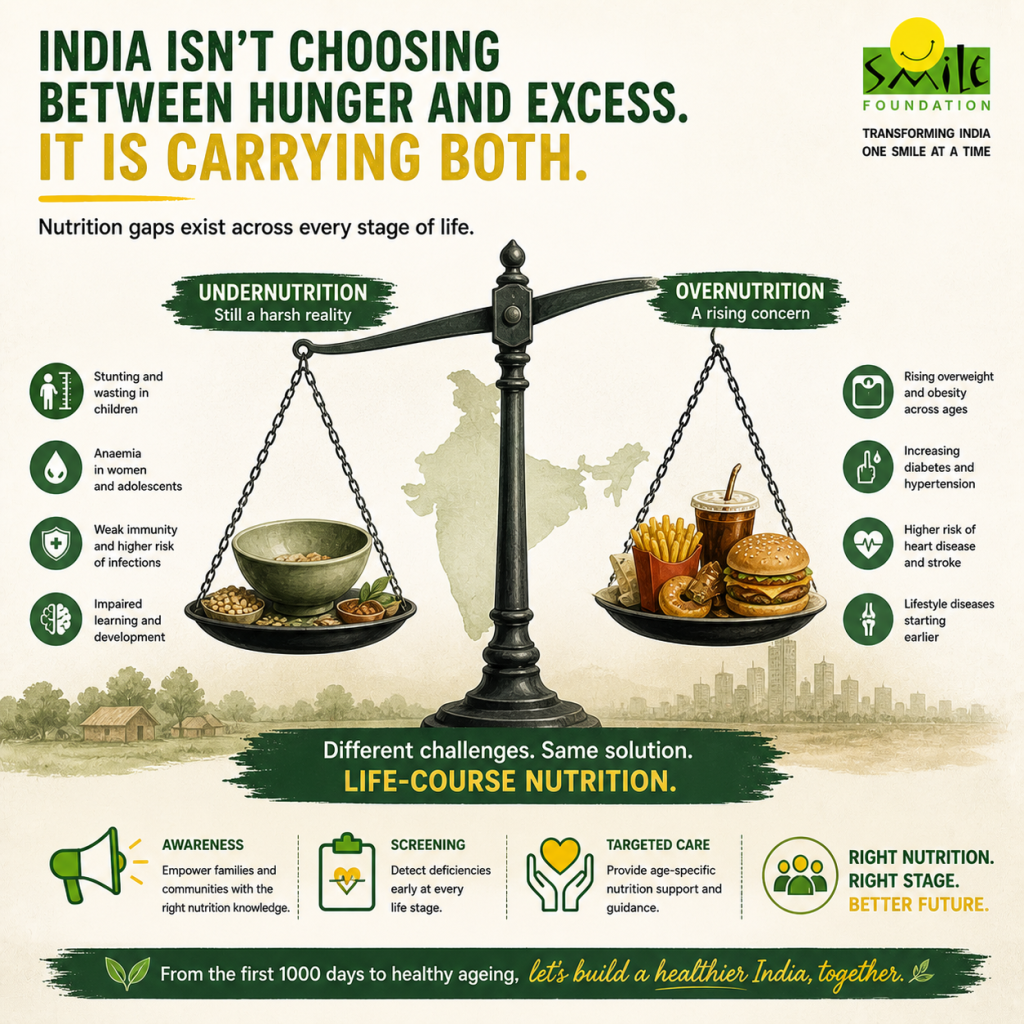
Adulthood is frequently treated as the “standard” phase upon which most dietary recommendations are based. However, even within this category, nutritional needs are far from uniform. A sedentary office worker, a manual labourer, a pregnant woman and an athlete all occupy vastly different metabolic realities. Ignoring these distinctions vis-a-vis generic dietary advice can contribute to maternal malnutrition, low birth weight, intergenerational cycles of poor health and other issues.

Read this: https://www.smilefoundationindia.org/blog/first-1000-days-of-a-child/

Why One-Size-Fits-All fails

The failure of one-size-fits-all is not just a biological problem but also a systemic one. Public health programmes, food policies and even commercial diet cultures often rely on generalised frameworks for scalability and simplicity. Such standardisation is often administratively convenient, but overlooks the diversity of human needs. This is why school meal programmes, workplace canteens, elderly care facilities often frequently operate on uniform menus that do not adequately reflect the specific nutritional requirements of their populations and age groups. 

Additionally, the rise of global diet trends, such as high-protein regimens, intermittent fasting or calorie-restrictive plans, has further reinforced the illusion of universal applicability. These approaches often emerge from specific cultural and economic contexts but are marketed as broadly effective solutions across populations which is very problematic.  

Take, for instance, the so-called Mediterranean diet, which is rooted in particular regional food systems and lifestyles. Its emphasis on olive oil, seafood, lean meats and fresh produce reflects not only nutritional principles but also geographic availability and long-standing cultural habits. Transposing such a diet to the Indian context is not straightforward. Food systems in India are shaped by different climatic conditions, agricultural patterns, and most importantly, socio-economic constraints. Olive oil, for example, is neither locally produced at scale nor affordable for large sections of the population. Also, seafood consumption remains uneven across regions. 

When such trends are adopted without accounting for differences in age, health status or local dietary practices, they can do more harm than good. Intermittent fasting, for example, may be unsuitable for adolescents, pregnant women or older adults with underlying health conditions, highlighting the risks of applying generalised diet frameworks to diverse physiological and socio-cultural realities. 

Nutrition for All with Smile

An age-specific approach to nutrition, therefore, is not a luxury but a necessity. It requires rethinking how dietary guidelines are framed and implemented. Instead of generic balanced diet models, nutrition policies must incorporate life-stage frameworks that recognise shifting needs. This includes targeted interventions such as fortified foods for children, iron supplementation for adolescent girls, maternal nutrition programmes and specialised diets for the elderly. 

Equally important is the role of education and awareness. Individuals and caregivers must be equipped with knowledge that allows them to adapt diets according to age and context. This is

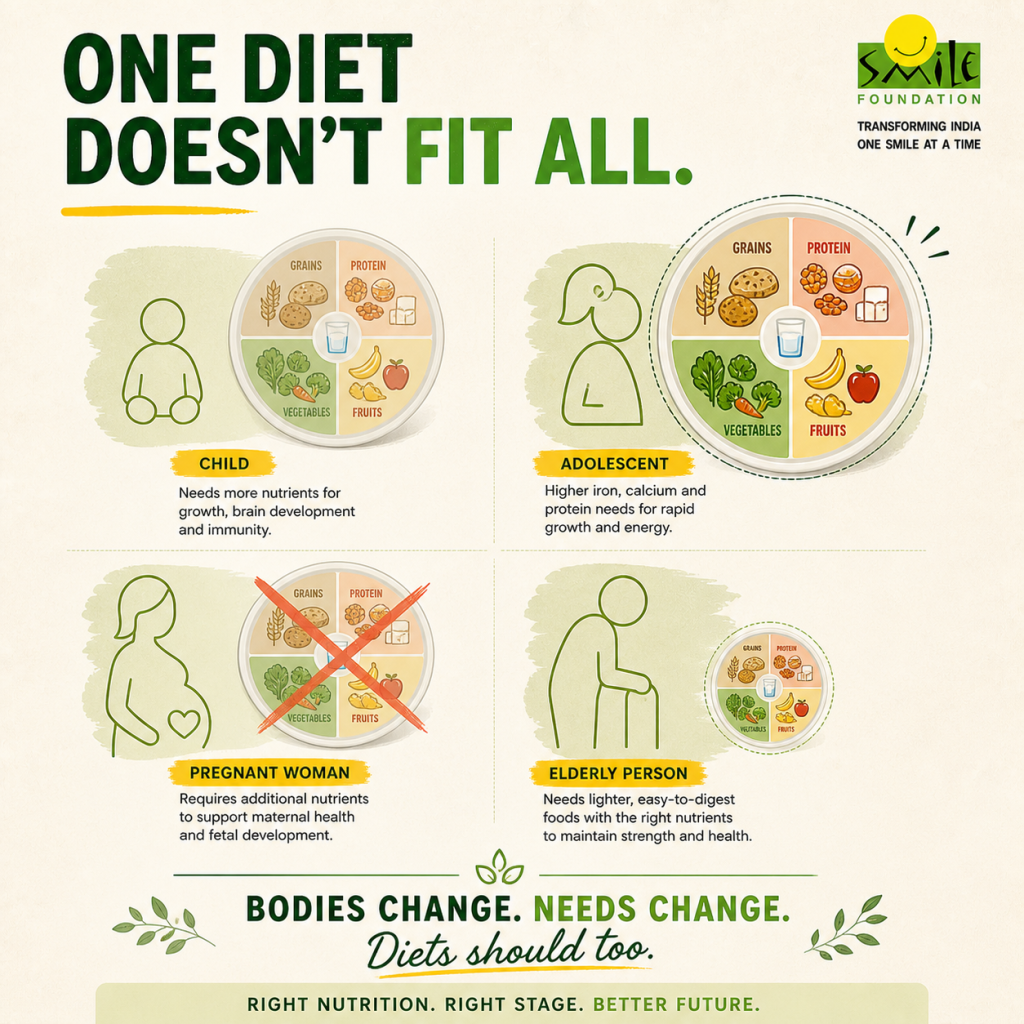
particularly crucial in countries like India, where nutritional challenges coexist across the spectrum, from undernutrition to rising obesity. An age-sensitive approach can help address this ‘double burden’ more effectively than blanket recommendations. 

The healthcare system, too, has a critical role to play. Routine nutritional screening at key life stages: adolescence, pregnancy and old age, can shift the focus from reactive treatment to preventive care. Early identification of deficiencies, coupled with timely dietary interventions, can significantly reduce the burden of both malnutrition and non-communicable diseases. 

At the end, it is pertinent that we approach nutrition as a dynamic, life-course process and as a life-course priority, not a one-time prescription. An age-specific approach is essential to address India’s dual burden of undernutrition and rising lifestyle diseases through timely care, screening and awareness.

 In this direction, Smile Foundation is driving impact through Smile on Wheels, which takes healthcare and nutrition awareness camps to schools and communities, enabling early intervention and informed choices. Through Pink Smile, focused efforts support the nutrition and wellbeing of young girls, women, and infants. Such targeted, preventive models show how community-led action can build healthier generations across every stage of life. 
Frequently Asked Questions (FAQs)

1. Why does one-size-fits-all fail in healthcare?

Because human bodies are not uniform. Nutritional needs vary across age, gender, occupation, health status and life stages. A diet suitable for a sedentary adult may be inadequate for a growing adolescent or a pregnant woman. Generic dietary advice overlooks these differences, making it ineffective and, in some cases, even harmful.

2. Why is life-stage nutrition important in healthcare?

Nutritional requirements change significantly from infancy to old age. Each stage—early childhood, adolescence, adulthood, pregnancy and ageing—comes with distinct physiological demands. A life-stage approach ensures that diets are aligned with these changing needs, supporting growth, preventing deficiencies and improving long-term health outcomes.

3. How does poor diet affect children’s healthcare?

Inadequate nutrition during early childhood can have lasting consequences. It can lead to stunting, weakened immunity, delayed cognitive development and reduced learning capacity. These early deficits often carry into adulthood, increasing vulnerability to diseases and limiting overall potential in education and livelihoods.

4. Why is adolescent nutrition important in healthcare?

Adolescence is a period of rapid physical growth and hormonal change, which significantly increases nutritional needs—especially for iron, protein and micronutrients. Poor dietary intake during this stage can result in anaemia, fatigue, reduced physical development and long-term health challenges, particularly for girls.

5. How does balanced diet support maternal healthcare?

Proper nutrition during pregnancy is critical for both the mother and the child. It helps reduce risks such as anaemia, complications during childbirth and low birth weight. A balanced diet supports healthy fetal development, strengthens maternal health and helps break intergenerational cycles of malnutrition.

6. Can global diet trends improve diet and healthcare?

Not always. While global diet trends may offer useful insights, they are often rooted in specific cultural and economic contexts. Without adapting them to local food systems, affordability and individual health needs, such trends can be impractical or even counterproductive, especially in diverse settings like India.

7. What role does preventive healthcare play?

Preventive healthcare shifts the focus from treatment to early detection and intervention. Regular nutritional screening, awareness and counselling help identify deficiencies before they become severe. Timely dietary support can reduce the burden of both malnutrition and lifestyle diseases, improving overall health outcomes.

8. What is the future of India’s healthcare?

The future lies in moving beyond standardised approaches towards more personalised, life-stage-based nutrition strategies. Integrating awareness, regular screening and targeted interventions can help address India’s dual burden of undernutrition and rising lifestyle diseases, building a more responsive and inclusive healthcare system.

Categories
Nutrition

Scarcity of nutrition on our plates: Leading to Crisis

Nutrition is fundamental for good health and well-being. It promotes growth and development, ensuring proper physical and cognitive development. Nutrition provides the energy needed for daily activities and bodily functions. It is also linked to better mental and physiological health. In today’s era of artificial intelligence, everything seems to be artificial including our food and dietary habits. Just like information is so readily available; anywhere & everywhere, just in one click, we want our food in the same manner, just in one single click.

Reports suggest that most working professionals living in a tier-1 city order at least one meal from outside. With food delivery apps lodging a growth rate of 15.98% in India and projecting a rise to a 9.7-billion-dollar market by 2025, it seems a good startup venture but is alarming for health and wellness. On the contrary, it could be a good time to enter the health and wellness industry since the rise of food delivery apps will also lead to a rise in several lifestyle disorders and heart-related diseases. Due to changing food and lifestyle choices, people are forgetting their roots, traditional foods and eating methods. They are carelessly filling their plates and stomachs, ignoring the nutrition criteria. Let’s get a brief understanding of what nutrients are:

Nutrients

In layman’s language, nutrients are the compounds in food that provide us with energy that facilitates repair and growth and helps us carry out different life processes. Nutrients can be broadly categorized into macronutrients and micronutrients. These can be further classified as:

Macronutrients

  • Carbohydrates: They are the body’s main sources of energy. They can be found in foods like bread, rice, pasta, fruits, and vegetables.
  • Proteins: They are essential for the growth, repair, and maintenance of body tissues. Sources include pulses, beans, nuts, dairy products, etc.
  • Fat: They are energy storehouses that protect organs and aid in the absorption of vitamins.

Micronutrients (Also known as vitals)

  • Vitamins: These are organic compounds that are crucial for various bodily functions. For example, Vitamin C is important for the immune system, while Vitamin D is essential for bone health.
  • Minerals: Inorganic elements like calcium, potassium and iron are vital for processes such as bone formation, nerve function and oxygen transport in the blood.

Nutrition Crisis

In a study, it was found that about 99.3 percent of the global population intake insufficient nutrients. The findings also suggested that around the world, almost 70 percent, or over five billion, people do not consume enough iodine, vitamin E and calcium. In India, while more women consumed insufficient amounts of iodine, vitamin B12 and iron, compared to men, more men consumed inadequate amounts of zinc and magnesium, vitamin B6, zinc and vitamin C, compared to women. This leads to a nutrition crisis where a significant portion of the population is unable to access or consume adequate nutrients necessary for maintaining health. This can result from various factors, including food insecurity or scarcity, economic instability, natural disasters, climate change, health crises such as pandemics, or conflicts and displacements due to wars causing food production and distribution disruptions.

A nutrition crisis that lasts for a long time can lead to various disruptions and issues. This includes malnutrition leading to wasting, stunting, or an underweight population. Severe malnutrition, especially in children, can lead to higher mortality rates. Chronic malnutrition can also affect physical and cognitive development, particularly in children. Malnutrition can reduce productivity and increase healthcare costs, perpetuating a cycle of poverty and underdevelopment. We need to implement sustainable agricultural practices, improve food systems and enhance economic resilience. This will also help us ensure access to healthcare and nutrition education to prevent and treat malnutrition.

Nutrition crisis is a complex issue

Addressing these issues requires a comprehensive approach that includes improving economic conditions, enhancing agricultural practices, strengthening healthcare and sanitation, ensuring effective implementation of government programmes and addressing social inequalities. Let’s discuss some major reasons for the nutrition crisis:

  • In India, a significant portion of the population lives below the poverty line, limiting their access to nutritious food. This also leads to economic disparities where while some regions and communities have better access to food, others struggle with severe shortages.
  • Agricultural practices like cropping patterns of a country also hold significant importance when it comes to food availability. In India, the major focus remains on cultivating rice and wheat which often overshadows the production of more nutritious crops like millet and pulses. This also happens due to ineffective policy interventions and low minimum selling price policies.
  • Limited access to healthcare services, especially in rural areas is the major reason for exacerbating malnutrition in India. These poor sanitation and hygiene practices lead to diseases that can worsen nutritional status.
  • Insufficient public health expenditure is still only about 1.3% of India’s GDP, which is insufficient to address the widespread malnutrition. Adding to it, programs like the Integrated Child Development Scheme (ICDS) and mid-day meal schemes have also faced disruptions during the COVID-19 pandemic.
  • Social factors like gender inequality and low literacy rates are also responsible. Women, especially in rural areas, often have less access to nutritious food leading to higher rates of malnutrition among women and children. Similarly, a lack of knowledge and awareness affects their ability to make informed nutritional choices.
  • Sometimes natural disasters, pandemics or extreme weather events leading to floods, drought and other climate-related events can destroy crops and reduce food availability.

Let food be your medicine

Ensuring access to nutritious food for all remains a challenge. This needs the combined efforts of the government, local self-help groups, nonprofits and other social organisations to ensure food security and awareness for all. Strengthening agricultural policies that promote sustainable farming, improving public distribution system (PDS) efficiency and expanding programmes like the National Food Security Act (NFSA) to ensure that nutritious food reaches marginalised populations. Nonprofits can also work with local organisations to spread nutrition education and awareness.

Smile Foundation also works in rural areas to spread nutritional awareness. We conduct school and community programmes to emphasise nutrition education from a young age, fostering lifelong healthy eating habits. Food available today lacks nutrition due to various uncertain reasons and the changing climate. In such cases, scaling up fortification efforts for common foods like rice, wheat and edible oils with essential vitamins and minerals, such as iron, folic acid and vitamin A is crucial. This can also be added to food programmes like the Midday Meal Scheme. Government programmes like the Anaemia Mukt Bharat and Poshan Abhiyan should be reinforced with better monitoring and coverage, ensuring that iron, folic acid and other nutrient supplements reach those in need.

Smile Foundation’s Smile on Wheels initiative visits the remotest areas of the country with our mobile hospital and a great medical team that regularly checks treats and updates health-related issues of the residents providing them with the best facility at their doorsteps. The programme also covers maternal and child nutrition for long-term health improvements. The government’s efforts to strengthen primary healthcare systems and integrate nutrition counseling into routine healthcare services can encourage better dietary practices.

As Hippocrates said, “Let food be your medicine and medicine be your food.” So, before you need to rely on medicines, make food your medicine to heal your body. Awareness about nutrition will go a long way and encourage mindful and conscious eating habits.

Categories
Nutrition

What’s on your plate? Healthy Diet and how India eats

It has now become evident that India is grappling with a major diabetes problem. So much so that the country is now known as the diabetes capital of the world. The problem is directly linked to poor food and lifestyle choices. As per a recent study by Lancet, more than 101 million people or over 11 per cent of the population of India is living with diabetes. This number is highly concerning as it shows that more than one-tenth of the total population in the country is now dealing with an issue which can lead to some serious health problems.

This alarming number reiterates the need for immediately addressing the lifestyle factors and dietary patterns that are causing the diabetes epidemic in India. While diabetes is directly linked to consumption of sugar, it needs to be understood that it is caused by a diet which is mostly rich in carbohydrates which includes wheat, rice, etc. Therefore, merely reducing sugar consumption cannot solve the diabetes problem. India needs to address the challenges associated with the traditional diet which is dominated by chapatis and boiled rice as primary sources of calories.

At the same time, some may argue that this has been the traditional diet of Indians since decades, and probably even centuries. While this may be true, what needs to be factored in is the changes brought by modern living. More and more people are now living sedentary and stressful lives, not engaging in any type of hard labour. Additionally, there is a sudden rise in the availability of packaged foods that are high on sugar and other carbohydrates while not offering a healthy balance of other nutrients. This is the reason why it is crucial to know about the food on your plate and how it affects your overall health and nutrition.

Importance of an overall healthy diet

A healthy diet is fundamental to maintaining overall well-being and preventing lifestyle-related diseases. You should see your body as a machine which requires fuel to run. Now, think of a machine like a motorcycle. What does it need to run perfectly? It needs petrol as fuel, engine oil to keep it running smoothly, brake oil to ensure that safety is maintained, etc. What if you mix water with petrol and put it into your motorcycle? Or, if you keep putting adulterated petrol in? Eventually, it will cause the motorcycle to malfunction because its requirements are not fulfilled.

Similarly, the human body needs certain energy sources to fulfil its needs. While carbohydrates may offer a cheap and easy source of energy, it is protein that helps in building your muscles and fibre helps keep your gut healthy. Consuming a balanced diet rich in essential nutrients helps in managing weight, boosting immunity and reducing the risk of chronic diseases such as diabetes, heart disease and hypertension. A nutritious diet provides the body with the necessary vitamins, minerals and antioxidants to function optimally. It also plays an important role in improving and sustaining mental health, enhancing mood and cognitive function. By adopting healthy eating habits, individuals can lead more fulfilling lives and contribute to a healthier society.

What a healthy diet should look like

As mentioned above, a balanced diet is a healthy diet. Now, this balance is decided by varying factors. Your diet can be highly personalised and if you are dealing with a problem like diabetes or obesity, it may be a good idea to reach out to a professional dietitian who can assess you and provide a personalised diet chart. Also, if you are not suffering with any of the diet related diseases, it is still recommended that you follow professional advice. In this article, we will be covering a bird’s eye view of what a healthy diet should look like. We must clarify that this must not be taken as professional advice of any kind.

The Indian Council of Medical Research (ICMR) and the National Institute of Nutrition (NIN) have outlined the Recommended Dietary Allowances (RDA) for different age groups and physiological states3. Here are the key components of a healthy diet:

  1. Carbohydrates: An average diet should constitute 45-65 percent of carbs of daily calories. Even while consuming carbohydrates, you should prefer whole grains, legumes, vegetables, etc. instead of simple sugars.
  2. Proteins: It is extremely essential for growth, repair and maintenance of body tissues. The best sources of protein are meat, eggs, dairy products, and pulses. The RDA for protein varies by age and activity level, with adults requiring about 0.8 grams per kilogram of body weight.
  3. Fats: This should make up around 25 to 30 percent of your daily calories. You should consume healthy fats like nuts, seeds, avocadoes, olive oil, etc. instead of trans fat and saturated fat found in processed foods.
  4. Minerals and Vitamins: These are like the building blocks of your health as they are essential for vital body functions like healthy immunity, bone health, haemoglobin levels, etc. You must ensure intake of vitamins A, C, D, E and B-complex, along with minerals like calcium, iron, and zinc. A diet deficient of these can lead to conditions such as anaemia, osteoporosis and impaired immune function.
  5. Fibre: Lastly, this is another thing that you should be mindful of including in your diet. Fibre is important for healthy digestive health and avoiding constipation. It also helps in feeling full after eating and can help with lesser consumption of unhealthy calorie sources. Whole grains, fruits, vegetables, etc. are a good source of fibre. You should aim to consume at least 25-30 grams daily.

Again, it should be noted that this is just an overview of the ICMR report. You can click on the link to read the entire report or consult a dietician.

Status of nutrition in India

There are several such deficiencies found in the average Indian diet. This is primarily because of lack of healthy food options, affordability, and awareness. This disparity is especially stark when it comes to urban-rural divide. Urban areas tend to have better access to a variety of foods, while rural areas often face challenges in affordability and availability of nutritious options. Food inflation further worsens the issue, making it difficult for low-income families to afford a balanced diet. The Global Hunger Index ranks India poorly, indicating widespread undernutrition and food insecurity.

Solutions for a healthier tomorrow

There are various ways in which this issue can be addressed. Here are some of the steps that can be taken immediately:

  1. Education and awareness: The most important step is educating people about how their diet affects their health. Moreover, they need to understand what the food on their plate includes and whether it offers a balance of nutrition. This knowledge can be imparted in schools, through media campaigns, and social media. Additionally, we should encourage the culture of reading food labels and healthy cooking practices.
  2. Government initiatives: Today, a large number of the Indian population receives food support from the government and it is extremely important that these schemes include healthy food options so that a nutritious diet is ensured for even the underprivileged citizens. We already have schemes like mid-day meals and Anganwadi in place through which children get access to nutritious food. Their implementation should be ensured.
  3. Diversification of diet: Lately, there has been a push for millets to be included in our diets. There are many such healthier food options that are inspired from our traditional diets. An initiative to bring back the healthy practices from the past can help with diversifying the food that we have on our plate.
  4. Diet options for vegetarians and vegans: While meat and dairy are the biggest sources of protein, India being a country with a large number of vegetarians, special emphasis should be placed on including fortified foods in diet. You should ensure adequate intake of protein, iron, calcium, vitamin B12 and omega-3 fatty acids through plant-based sources. Some of the options are legumes, tofu, fortified plant milks, nuts, seeds and leafy greens.
  5. Community support: Lastly, we should come together as a community to improve healthier farming practices and growing food which is diversified, pesticide-free, and offers a balance of nutrition. Additionally, we should support initiatives that provide nutrition education and resources to underserved communities.

Future with a healthy diet

A healthy diet not only prevents diseases but also supports overall development and well-being. Proper nutrition is crucial for children as it helps with their physical and cognitive development, impacting their academic performance and potential. Similarly for adults, maintaining a balanced diet can enhance productivity, improve quality of life and reduce healthcare costs. By prioritising nutrition, India can build a healthier, more resilient population capable of driving sustainable development.

By promoting healthy eating habits, ensuring access to nutritious foods and supporting vulnerable populations, we can make significant progress towards a healthier future. The journey towards better nutrition is a collective effort that involves individuals, communities and policymakers working together to create a more equitable food environment.

0%