Categories
Health Nutrition Smile

Why One-Size-Fits-All Nutrition Fails Across the Life Cycle 

Summary

  • Nutrition needs evolve from infancy to old age
  • One-size-fits-all diets fail across life stages
  • Healthcare in India faces stunting, anaemia, undernutrition and obesity
  • Global diet trends must suit India’s affordability and food culture
  • Life-course nutrition improves health through targeted care and awareness
Nutrition across the lifecycle

The idea that there exists a single balanced diet suitable for everyone is one of the most enduring simplifications in nutrition discourse over time. It promises clarity: eat this-avoid that-maintain moderation but obscures a far more complex biological and social reality that human bodies are not static. In fact, they change continuously across the life cycle, shaped by phases of rapid growth, hormonal transitions, reproduction, ageing and shifting patterns of work and care. 

Recognising this, organisations such as the World Health Organization, UNICEF and the Food and Agriculture Organisation increasingly advocate for a ‘life-course approach’ to nutrition, one that accounts for these transitions rather than flattening them. Nowhere is this more urgent than in contexts like India, where multiple forms of malnutrition coexist across age groups, from stunted children to anaemic adolescents and undernourished mothers. In such a landscape, the persistence of one-size-fits-all dietary thinking is inadequate and actively limits the effectiveness of nutrition policy and practice. 

The very importance of nutrition 

During infancy and early childhood, nutrition plays a foundational role in physical growth and cognitive development. The first 1,000 days, from conception to around two years of age, are widely recognised in public health as a critical window. Nutritional deficiencies during this period, particularly in protein, iron, iodine and essential fatty acids, can lead to irreversible consequences such as stunting, impaired brain development, weakened immunity etc., later in life. Applying adult dietary frameworks to children—whether through portion sizes or nutrient composition—would mean ignoring these developmental imperatives. 

As children transition into adolescence, the body undergoes another dramatic transformation. Puberty introduces rapid growth spurts, hormonal changes, increased nutritional demands, say how iron requirements rises significantly for menstruating girls. Yet, this stage is often marked by erratic eating habits. Thus, a generalised guideline that does not account for these physiological and behavioral shifts risks exacerbating deficiencies precisely when the body requires heightened support. 
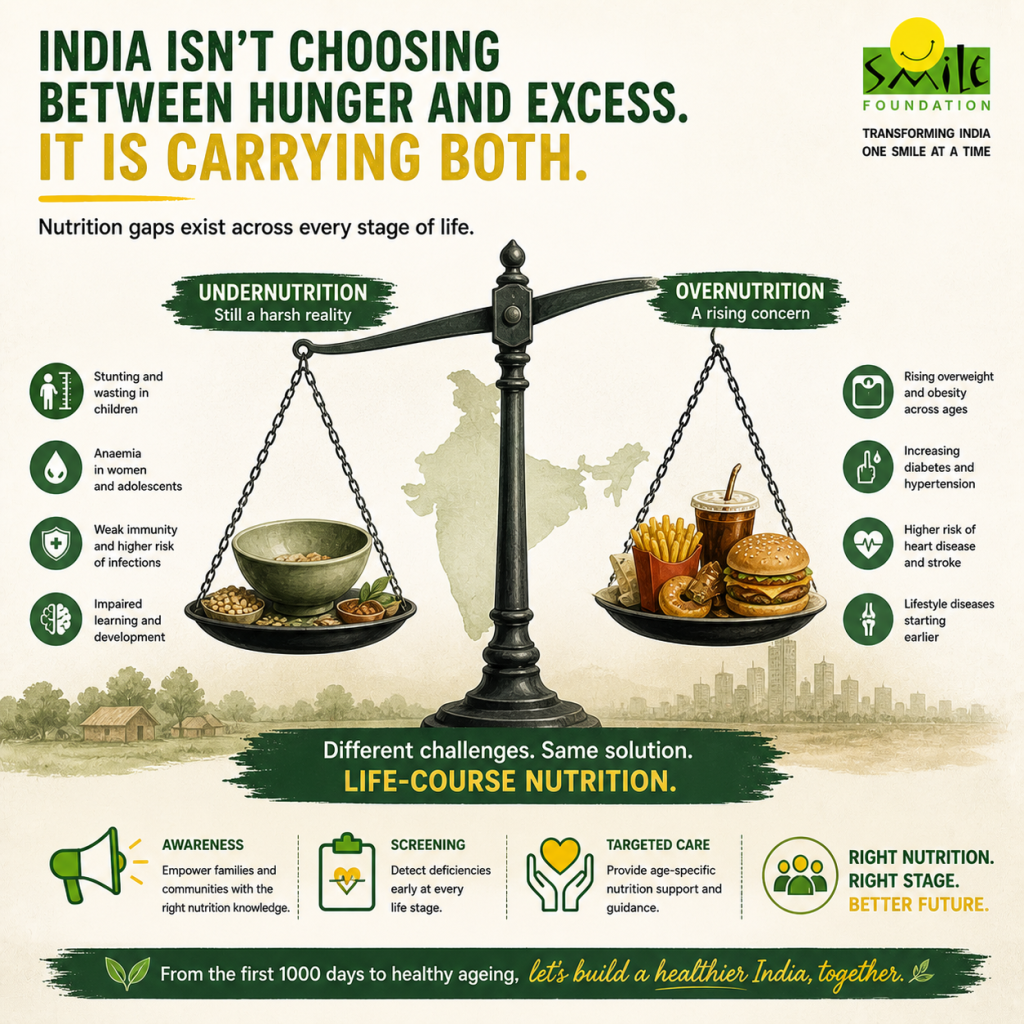
Balancing nutrition for a healthier India

Adulthood is frequently treated as the “standard” phase upon which most dietary recommendations are based. However, even within this category, nutritional needs are far from uniform. A sedentary office worker, a manual labourer, a pregnant woman and an athlete all occupy vastly different metabolic realities. Ignoring these distinctions vis-a-vis generic dietary advice can contribute to maternal malnutrition, low birth weight, intergenerational cycles of poor health and other issues.

Read this: https://www.smilefoundationindia.org/blog/first-1000-days-of-a-child/

Why One-Size-Fits-All fails

The failure of one-size-fits-all is not just a biological problem but also a systemic one. Public health programmes, food policies and even commercial diet cultures often rely on generalised frameworks for scalability and simplicity. Such standardisation is often administratively convenient, but overlooks the diversity of human needs. This is why school meal programmes, workplace canteens, elderly care facilities often frequently operate on uniform menus that do not adequately reflect the specific nutritional requirements of their populations and age groups. 

Additionally, the rise of global diet trends, such as high-protein regimens, intermittent fasting or calorie-restrictive plans, has further reinforced the illusion of universal applicability. These approaches often emerge from specific cultural and economic contexts but are marketed as broadly effective solutions across populations which is very problematic.  

Take, for instance, the so-called Mediterranean diet, which is rooted in particular regional food systems and lifestyles. Its emphasis on olive oil, seafood, lean meats and fresh produce reflects not only nutritional principles but also geographic availability and long-standing cultural habits. Transposing such a diet to the Indian context is not straightforward. Food systems in India are shaped by different climatic conditions, agricultural patterns, and most importantly, socio-economic constraints. Olive oil, for example, is neither locally produced at scale nor affordable for large sections of the population. Also, seafood consumption remains uneven across regions. 

When such trends are adopted without accounting for differences in age, health status or local dietary practices, they can do more harm than good. Intermittent fasting, for example, may be unsuitable for adolescents, pregnant women or older adults with underlying health conditions, highlighting the risks of applying generalised diet frameworks to diverse physiological and socio-cultural realities. 

Nutrition for All with Smile

An age-specific approach to nutrition, therefore, is not a luxury but a necessity. It requires rethinking how dietary guidelines are framed and implemented. Instead of generic balanced diet models, nutrition policies must incorporate life-stage frameworks that recognise shifting needs. This includes targeted interventions such as fortified foods for children, iron supplementation for adolescent girls, maternal nutrition programmes and specialised diets for the elderly. 

Equally important is the role of education and awareness. Individuals and caregivers must be equipped with knowledge that allows them to adapt diets according to age and context. This is

particularly crucial in countries like India, where nutritional challenges coexist across the spectrum, from undernutrition to rising obesity. An age-sensitive approach can help address this ‘double burden’ more effectively than blanket recommendations. 

The healthcare system, too, has a critical role to play. Routine nutritional screening at key life stages: adolescence, pregnancy and old age, can shift the focus from reactive treatment to preventive care. Early identification of deficiencies, coupled with timely dietary interventions, can significantly reduce the burden of both malnutrition and non-communicable diseases. 

At the end, it is pertinent that we approach nutrition as a dynamic, life-course process and as a life-course priority, not a one-time prescription. An age-specific approach is essential to address India’s dual burden of undernutrition and rising lifestyle diseases through timely care, screening and awareness.

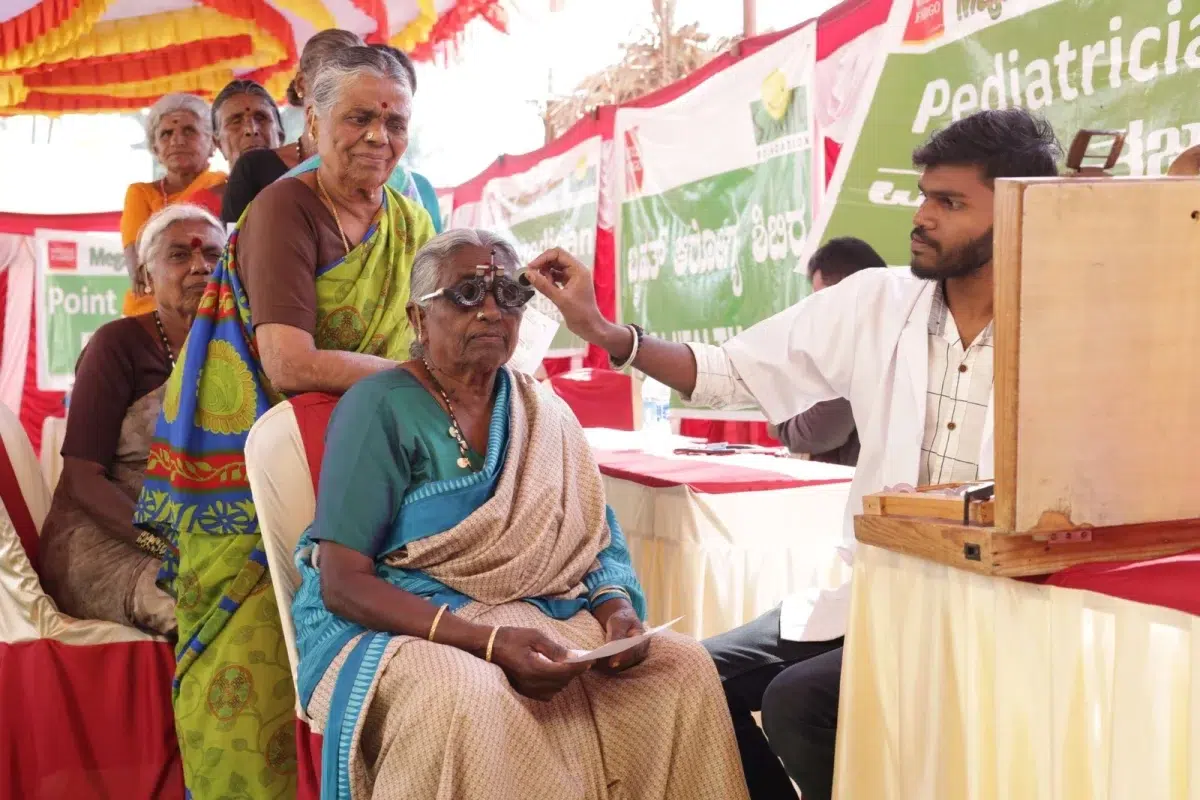
 In this direction, Smile Foundation is driving impact through Smile on Wheels, which takes healthcare and nutrition awareness camps to schools and communities, enabling early intervention and informed choices. Through Pink Smile, focused efforts support the nutrition and wellbeing of young girls, women, and infants. Such targeted, preventive models show how community-led action can build healthier generations across every stage of life. 
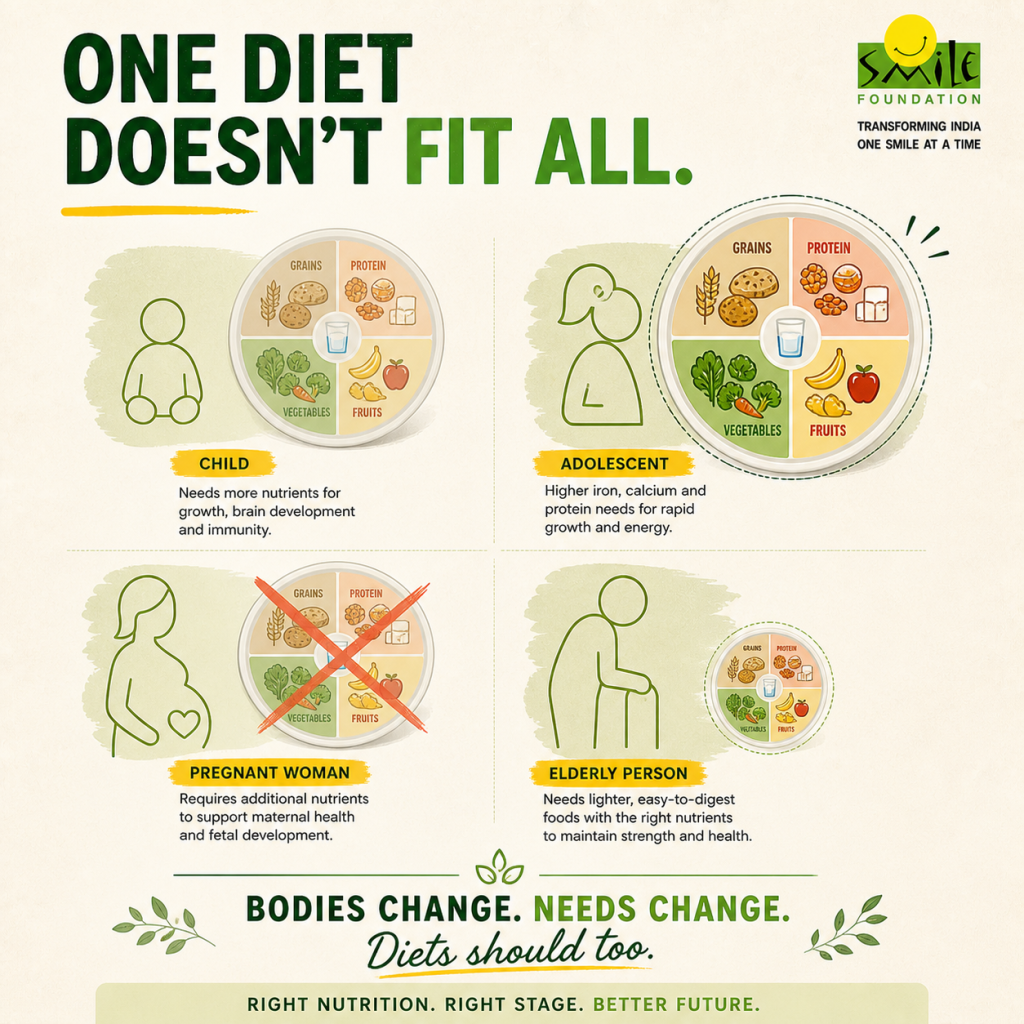
One diet many needs

Frequently Asked Questions (FAQs)

1. Why does one-size-fits-all fail in healthcare?

Because human bodies are not uniform. Nutritional needs vary across age, gender, occupation, health status and life stages. A diet suitable for a sedentary adult may be inadequate for a growing adolescent or a pregnant woman. Generic dietary advice overlooks these differences, making it ineffective and, in some cases, even harmful.

2. Why is life-stage nutrition important in healthcare?

Nutritional requirements change significantly from infancy to old age. Each stage—early childhood, adolescence, adulthood, pregnancy and ageing—comes with distinct physiological demands. A life-stage approach ensures that diets are aligned with these changing needs, supporting growth, preventing deficiencies and improving long-term health outcomes.

3. How does poor diet affect children’s healthcare?

Inadequate nutrition during early childhood can have lasting consequences. It can lead to stunting, weakened immunity, delayed cognitive development and reduced learning capacity. These early deficits often carry into adulthood, increasing vulnerability to diseases and limiting overall potential in education and livelihoods.

4. Why is adolescent nutrition important in healthcare?

Adolescence is a period of rapid physical growth and hormonal change, which significantly increases nutritional needs—especially for iron, protein and micronutrients. Poor dietary intake during this stage can result in anaemia, fatigue, reduced physical development and long-term health challenges, particularly for girls.

5. How does balanced diet support maternal healthcare?

Proper nutrition during pregnancy is critical for both the mother and the child. It helps reduce risks such as anaemia, complications during childbirth and low birth weight. A balanced diet supports healthy fetal development, strengthens maternal health and helps break intergenerational cycles of malnutrition.

6. Can global diet trends improve diet and healthcare?

Not always. While global diet trends may offer useful insights, they are often rooted in specific cultural and economic contexts. Without adapting them to local food systems, affordability and individual health needs, such trends can be impractical or even counterproductive, especially in diverse settings like India.

7. What role does preventive healthcare play?

Preventive healthcare shifts the focus from treatment to early detection and intervention. Regular nutritional screening, awareness and counselling help identify deficiencies before they become severe. Timely dietary support can reduce the burden of both malnutrition and lifestyle diseases, improving overall health outcomes.

8. What is the future of India’s healthcare?

The future lies in moving beyond standardised approaches towards more personalised, life-stage-based nutrition strategies. Integrating awareness, regular screening and targeted interventions can help address India’s dual burden of undernutrition and rising lifestyle diseases, building a more responsive and inclusive healthcare system.
Categories
Health Smile

Shift from Curative to Preventive Healthcare

  • Preventive healthcare lowers long-term treatment costs and improves workforce productivity.
  • Rising chronic diseases make prevention a strategic priority for India.
  • Screenings, vaccinations, and early detection reduce healthcare burden.
  • Technology can scale preventive healthcare to underserved regions.
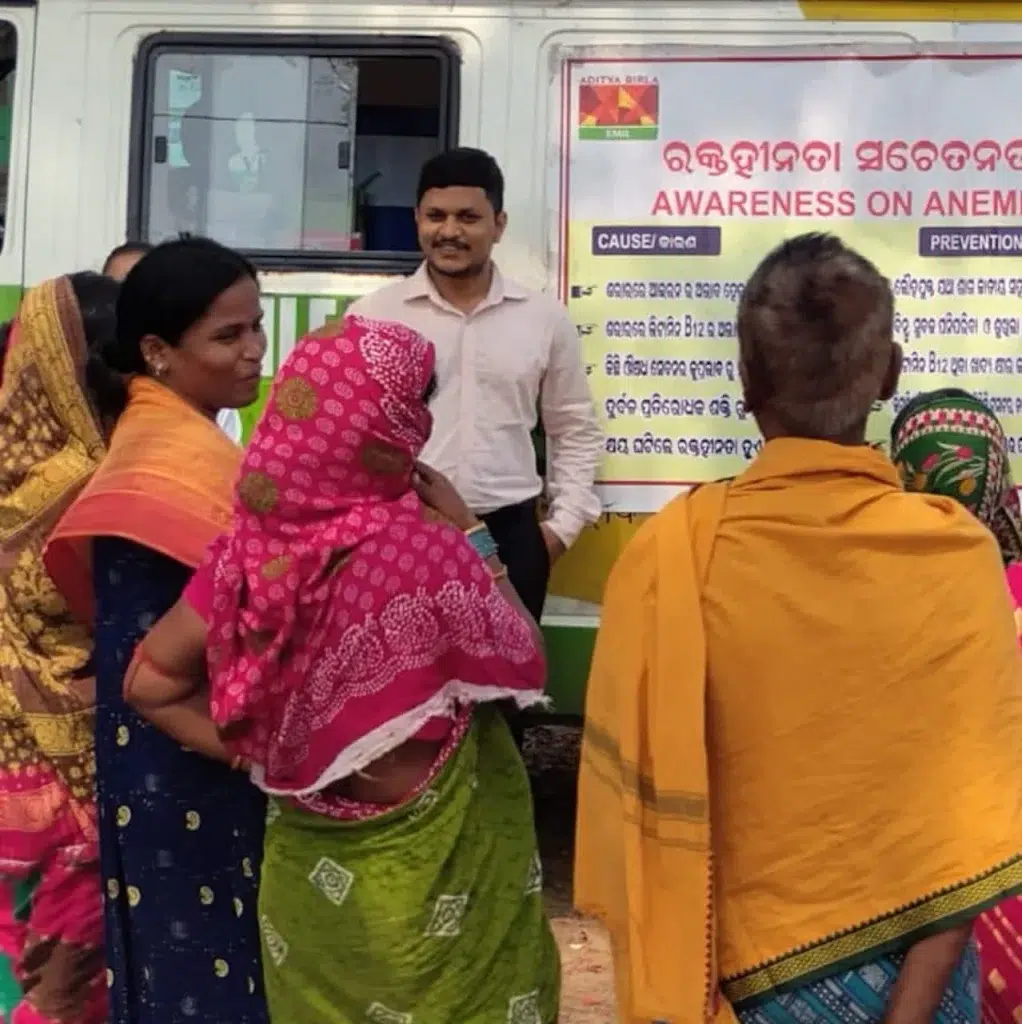
  • Smile Foundation advances preventive healthcare through Smile on Wheels outreach.

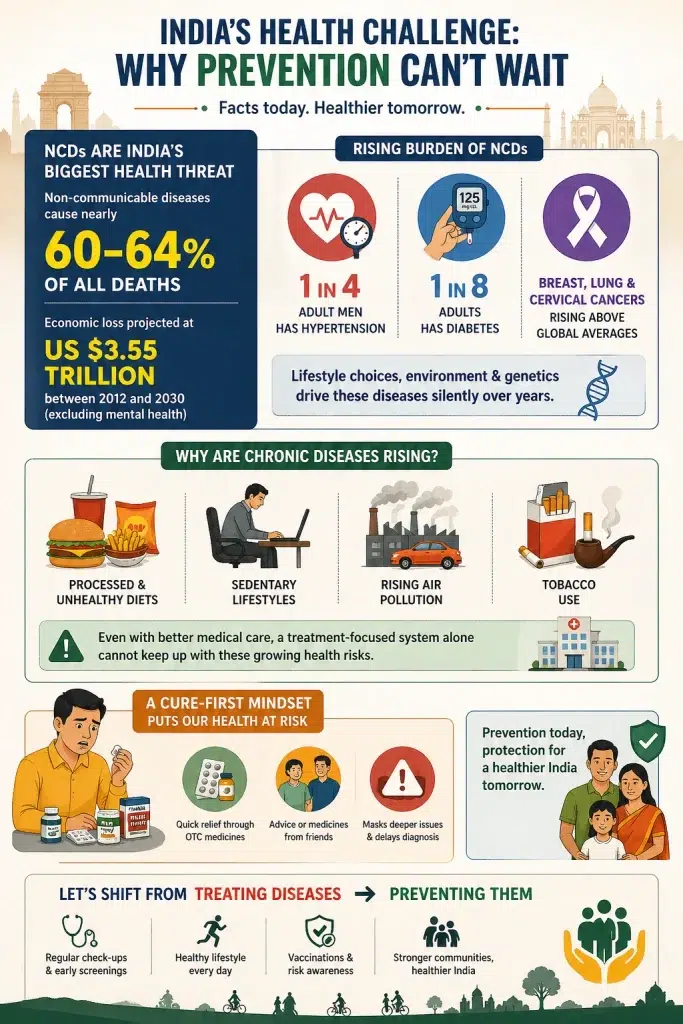
Prevention is better than cure. Cliché as the saying may be, it remains deeply relevant today. Preventive care is preferable to curative care because it is the first step towards protecting your health by stopping a problem before it begins.

Over the past few decades, India’s healthcare sector has undergone a significant transformation, driven by advances in infrastructure, technology, and accessibility. The country’s reputation as a leading destination for medical value travel reflects both the quality of its healthcare services and the strength of its branding. Yet heart disease, diabetes, and cancer continue to rise, often affecting Indians earlier in life, especially those outside urban centres. Most people see a doctor only when symptoms become hard to ignore. What is the use of a system that is so advanced, but is built to treat and does too little to prevent?

Preventive Healthcare System the Need of the Hour

It’s simple: every penny spent treating preventable chronic disease is money that could be used elsewhere in the health sector. Shifting to a prevention-focused ecosystem would bring major benefits, including longer healthy life expectancy, lower health inequalities, fewer hospitalisations, and more fulfilling, productive lives in which people can participate fully in their communities, education, and work. Higher productivity would also strengthen GDP.

Preventive Healthcare 4

What Prevention Really Means

Preventive healthcare offers a different path. It focuses on action before symptoms appear. It includes routine screenings, vaccinations, early risk detection, and lifestyle changes. It also recognises that health risks do not look the same for everyone.

This is where genetics and family history also enter the conversation. If diabetes runs in your family, your risk starts higher. If close relatives have had cancer or heart disease, your screening timeline should begin earlier. Prevention, in this sense, is then targeted, informed, and continuous.

Broadly, preventive healthcare includes:

·   Regular screenings for cancers like breast, colorectal, cervical, and prostate tests that can spot problems before they become serious.

·   Routine checks for blood pressure, cholesterol, and diabetes help flag metabolic conditions that, if ignored, could lead to major complications down the line.

·   For those entering or past menopause, osteoporosis screenings help detect bone loss before fractures occur.

·   Vaccines also play a big part, including annual flu shots and other immunisations tailored to your age, travel plans, or health history.

·   Counselling on things like quitting smoking, mental health, and healthier lifestyle choices. Even screenings for certain sexually transmitted infections fall under this umbrella, depending on your age and risk factors.

Why India Cannot Wait

The urgency of this shift becomes clear when you look at India’s disease profile, lifestyle, and culture.

India needs Preventive Healthcare

As chronic diseases rise and healthcare costs soar, the urgency to reorient from treating sickness to proactively preventing it has never been greater.

What Needs to Change?

Make Preventive Care Accessible and Affordable
To truly shift from curative to preventive healthcare, we have to focus on making preventive services easy to access and affordable for everyone. This means that routine screenings should be an integral part of everyday primary care and supported by insurance.

Embrace Technology for Better Access
Technology is another game-changer. With tools like telemedicine, wearable health trackers, and digital health records, we can keep an eye on health risks as they arise and bridge the access gap for folks living in remote areas.

Preventive Healthcare 3

Rethink Awareness Campaigns
Awareness campaigns need to ditch the generic messaging and connect with people on a personal level, addressing their real lives, cultures, habits, and risks. By tapping into schools, workplaces, and community networks, we can reinforce these messages and make prevention feel much more personal.

Strengthen Health Data Systems
India also needs robust health data systems. Good data helps spot patterns, predict risks, and focus resources where they matter most.

Redefine the Role of Doctors
A doctor’s role in a patient’s emotional support is worth stressing. Doctors should offer guidance, early detection, and collaborate with nutritionists and therapists.

Build a Collaborative Ecosystem
If we want a healthier future, it will take a collaborative push from educators, employers, NGOs, health innovators, and the government. Empowered individuals, smart legislation, integrated technology and community support can only make prevention the genuine backbone of healthcare.

Going Forward with Preventive Care

Some real-world examples of the most developed preventive health care systems include widespread vaccination programs, lifestyle interventions, early screenings, digital monitoring, and comprehensive public health campaigns. Sweden has long been known for its robust welfare state and emphasis on public health. Preventive health is a fundamental part of the Swedish health care system. Japanese people have one of the longest life expectancies in the world. Singapore has emerged as a world leader in digital health and preventive care.

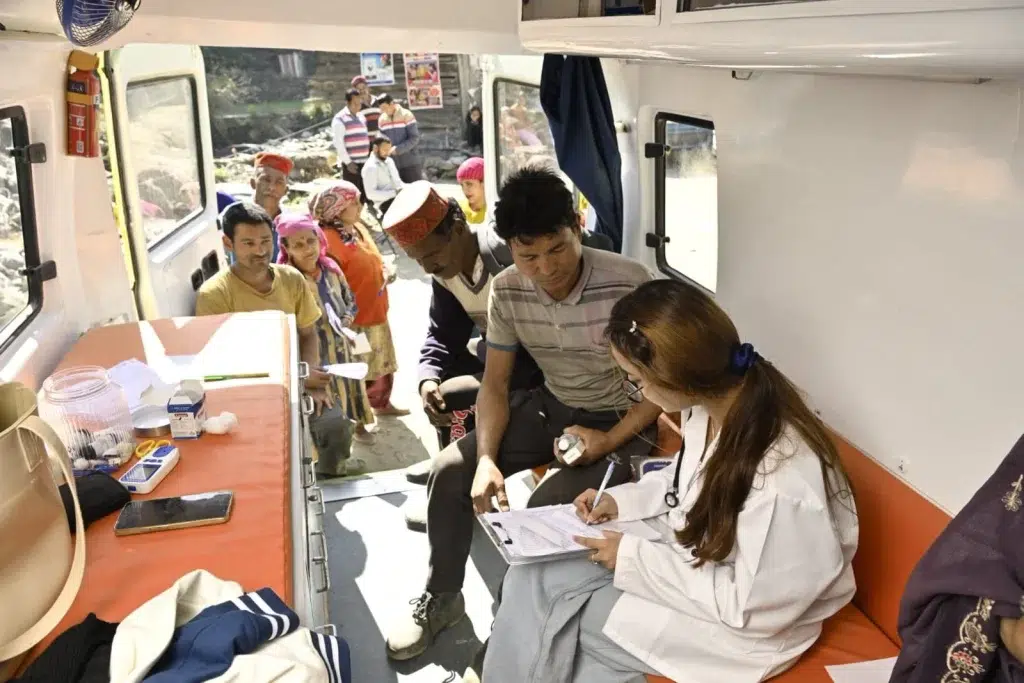
Smile Foundation has been actively involved in creating awareness among the most vulnerable and poverty-stricken people from the remote corners to urban villages of India. With over 100 “Smile on Wheels”, Mobile Medical Units are growing in underserved communities all over the country to strengthen access to essential primary healthcare services.

 FAQs: Shift from Curative to Preventive Healthcare

1. What is preventive healthcare?

Preventive healthcare focuses on avoiding illness before it starts through regular screenings, vaccinations, health check-ups, early risk detection, and healthy lifestyle choices.

2. How is preventive healthcare different from curative healthcare?

Curative healthcare treats illness after symptoms appear, while preventive healthcare aims to reduce the chances of disease developing in the first place.

3. Why does India need to shift towards preventive healthcare?

India faces a growing burden of chronic diseases such as diabetes, heart disease, hypertension, and cancer. Prevention can reduce hospitalisations, lower healthcare costs, and improve quality of life.

4. What are examples of preventive healthcare services?

Examples include blood pressure checks, diabetes screening, cancer screening, vaccination, cholesterol tests, osteoporosis checks, mental health counselling, and tobacco cessation support.

5. Can preventive healthcare reduce medical expenses?

Yes. Detecting risks early often prevents expensive treatments, surgeries, and prolonged hospital stays later, making healthcare more affordable for families and the system.

6. How can technology support preventive healthcare?

Telemedicine, wearable devices, digital health records, and mobile health apps can track health indicators, remind people about check-ups, and improve access in remote areas.

7. What role do doctors play in preventive healthcare?

Doctors guide patients on lifestyle changes, recommend screenings, identify risks early, and work with nutritionists or therapists to support long-term wellness.

8. How are organisations like Smile Foundation supporting prevention in India?

Smile Foundation supports preventive healthcare through awareness campaigns and its Smile on Wheels programme, which delivers essential healthcare services to underserved communities across India.

Categories
Girl Child Education Partnerships Smile

Made with Love, Shared with Purpose: Lakshita x Smile Foundation

The crisp November sun streamed softly through the large windows of the Lakshita factory, casting a golden glow over the room. Tables were neatly set, colourful bits of fabric lay scattered like little confetti, and the air buzzed with excitement. This wasn’t a regular day at Lakshita. It was a day when fashion met purpose and creativity became a bridge between hearts.  As the girls from the Smile Foundation’s education centres walked in, their eyes widened with excitement. Bursting with energy and curiosity, they looked around in awe at the swatches of embroidered fabric, sequins, threads, and beads that surrounded them. The Lakshita team greeted the children with warm smiles and open arms, ready to spend a day not just making things, but making memories.  

Children’s Day- Weaving Smiles

The day began on a heartwarming note, with songs and laughter filling the room. The children’s voices echoed through the factory, as they sang along to cheerful tunes. They also sang “Empathy” – their own anthem of kindness and empathy; the lyrics spoke of the beauty of compassion and the strength that comes from caring for each other – a message that resonated with Lakshita’s own ethos. Just as the brand strives to make life easier for women through thoughtful designs, the song reminds everyone that empathy lies at the heart of every meaningful creation. 

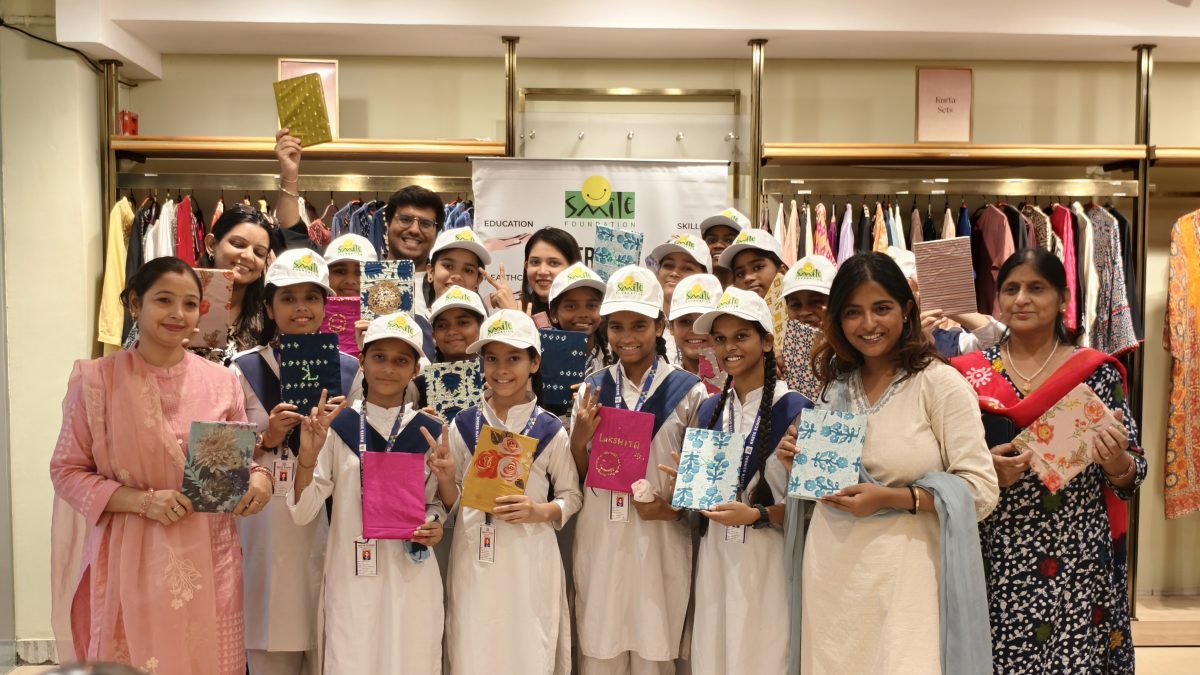
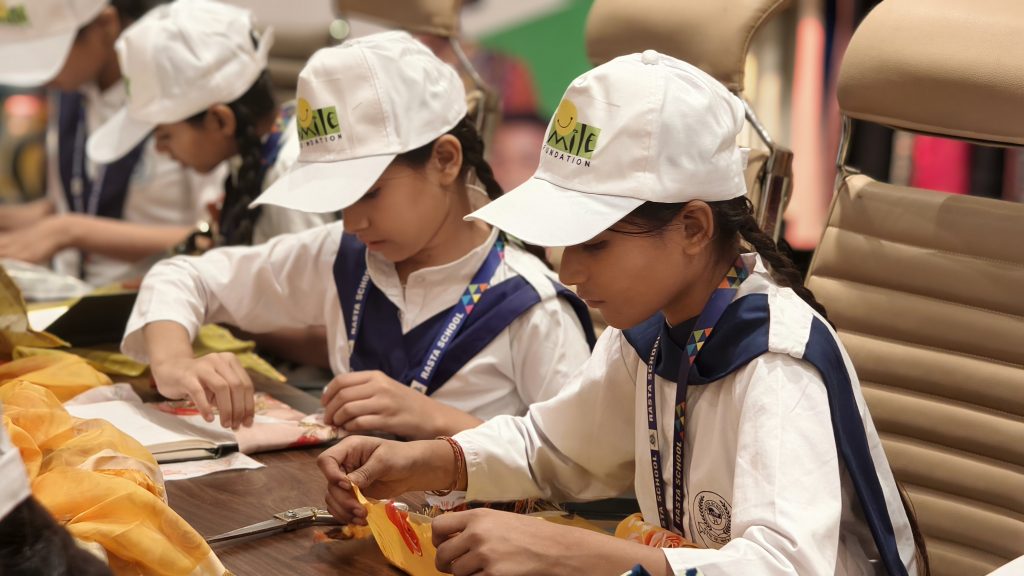
Once the children settled down, their hands began to move, hesitant at first, but then confident, almost instinctively.  Old fabric patches turned into colourful bangles wrapped in thread. Small pieces of lace became journal covers; buttons became embellishments, and mirrors became motifs of joy. The room echoed with laughter, soft chatter,  and the occasional joyful exclamation, as the children proudly showed off their creations to each other.  

IMG 20251106 121613

Lakshita’s team encouraged the children to embrace the joy of sharing. Every girl was asked to share a strip of fabric with her friend, sparking renewed chatter as they exchanged ideas and colours. Later, when they made bangles, they traded one of their creations with another’s. So, by the end of the day, each girl had a pair – one made by her and one by her friend! It was a simple reminder that creativity, much like kindness, grows richer when shared. 

As the day unfolded, it became clear that this was more than just a craft workshop. It was an exercise in empowerment, where every child’s creation carried a part of their spirit, a reflection of their dreams, resilience, and imagination. What began as a pile of discarded fabric was reborn through their touch into something beautiful and meaningful.  The tables filled with colourful bangles, handcrafted journals- transformed the room into a small gallery of joy with children walking around, admiring each other’s work and offering compliments. 

Joining the Lakshita team were Lakshita Kharbanda and Kabir Kharbanda, who spent time interacting with the girls. They shared stories, marvelled at the girls’ creations, and guided them in their projects. Their warmth and enthusiasm ensured that every child felt seen, appreciated, and inspired. The team clicked pictures and captured laughter over slices of pizza and juice boxes. 

By the end of the day, as the sun began to dip, the chatter slowly quieted down, and the room was filled with an unspoken sense of fulfillment. What had started as an initiative to reuse fabric scraps, had evolved into something much more profound – a celebration of creativity, compassion. And empowerment. 

For Lakshita, whose every endeavor is rooted in the vision of empowering women, this day was a living reflection of that purpose. Watching the young girls create with confidence and joy reaffirmed the brand’s belief that true empowerment begins when women are given the space to express, imagine, and build something of their own. For the children, the experience was proof that beauty and strength can emerge from even the simplest threads, and that their hands, hearts, and dreams hold the power to create change. 

In a world where waste often overshadows wonder, this initiative served as a reminder that creativity can transform even the smallest leftovers into something extraordinary.  

The creations have a journey of their own ahead. They will soon be displayed and sold at select Lakshita stores with all proceeds directly supporting the Smile Foundation causes, so more children get access to education, nutrition, and a brighter future. So, when customers pick up one of these handcrafted pieces at Lakshita, they aren’t just buying a product; they are buying a story of joy, resilience, and renewal.  

Lakshita’s Thread of Responsibility 

For Lakshita, this wasn’t just a CSR activity; it was a heartfelt extension of what the brand stands for. Fashion, after all, isn’t just about clothing. It’s about empowering communities, celebrating creativity, and using art as a medium to make a difference. 

IMG 20251106 143026
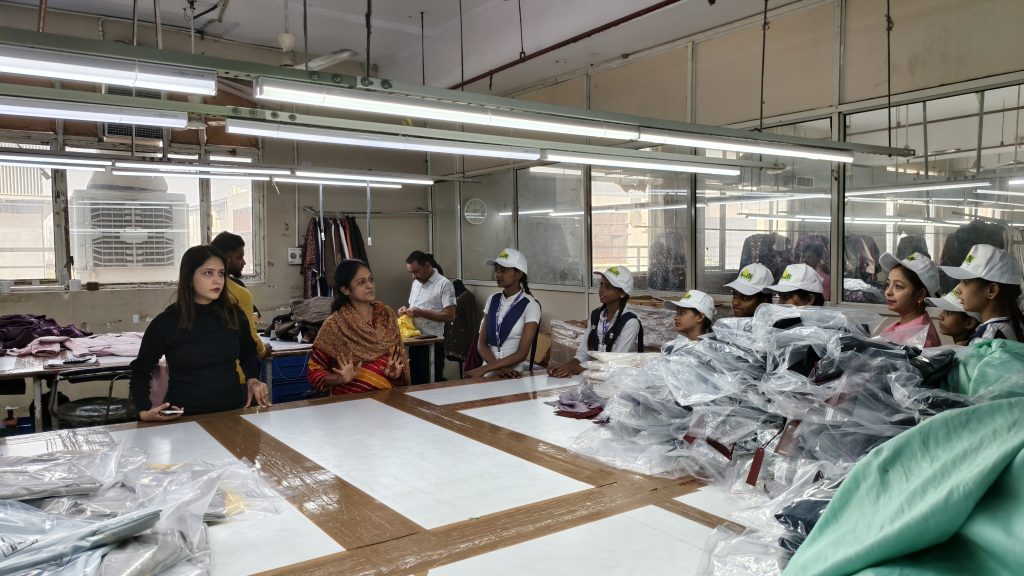
Children visiting Lakshita’s Manufacturing Unit

At its heart, this initiative was about more than creativity. Throughout the day, the team was moved by the girls’ dreams and ambitions. Many spoke eagerly about becoming doctors or lawyers when they grew up – professions they had always seen as symbols of success. But as the day unfolded, surrounded by fabrics, colours, and design stories, something shifted. By the time they waved their goodbyes, several of them wanted to be fashion designers. It was a moment of quiet pride for the Lakshita team. The day had opened their minds to possibility; it had challenged the stereotype that only conventional careers were meaningful, proving that creative fields are just as meaningful and impactful. 

For Lakshita, that realisation embodies what empowerment truly means: giving young girls the courage to dream differently, to find their voice, and to believe in their creative potential. Because, as the brand firmly believes, when you empower one child, you empower an entire family. That ripple builds a more compassionate world. 

Final Thoughts: A Heartfelt Promise 

The Children’s Day celebration stands as a meaningful example of how collaborative efforts can create lasting impact for young learners. Lakshita and Smile Foundation’s collective efforts to support children across the country remains widely appreciated, as their initiatives help open pathways to brighter and more secure futures.

IMG 20251106 123650

For Lakshita, this marks an important step in its ongoing efforts to champion purposeful initiatives. The brand continues to create spaces where art, awareness, and empathy intersect, reflecting its broader commitment to women’s empowerment and fashion with intention. This initiative also reinforces Lakshita’s dedication to responsible fashion, where each creation speaks not only of craftsmanship, but of care and compassion. 

To learn more about Lakshita’s journey and their work towards empowering women, you may explore their page.

0%