
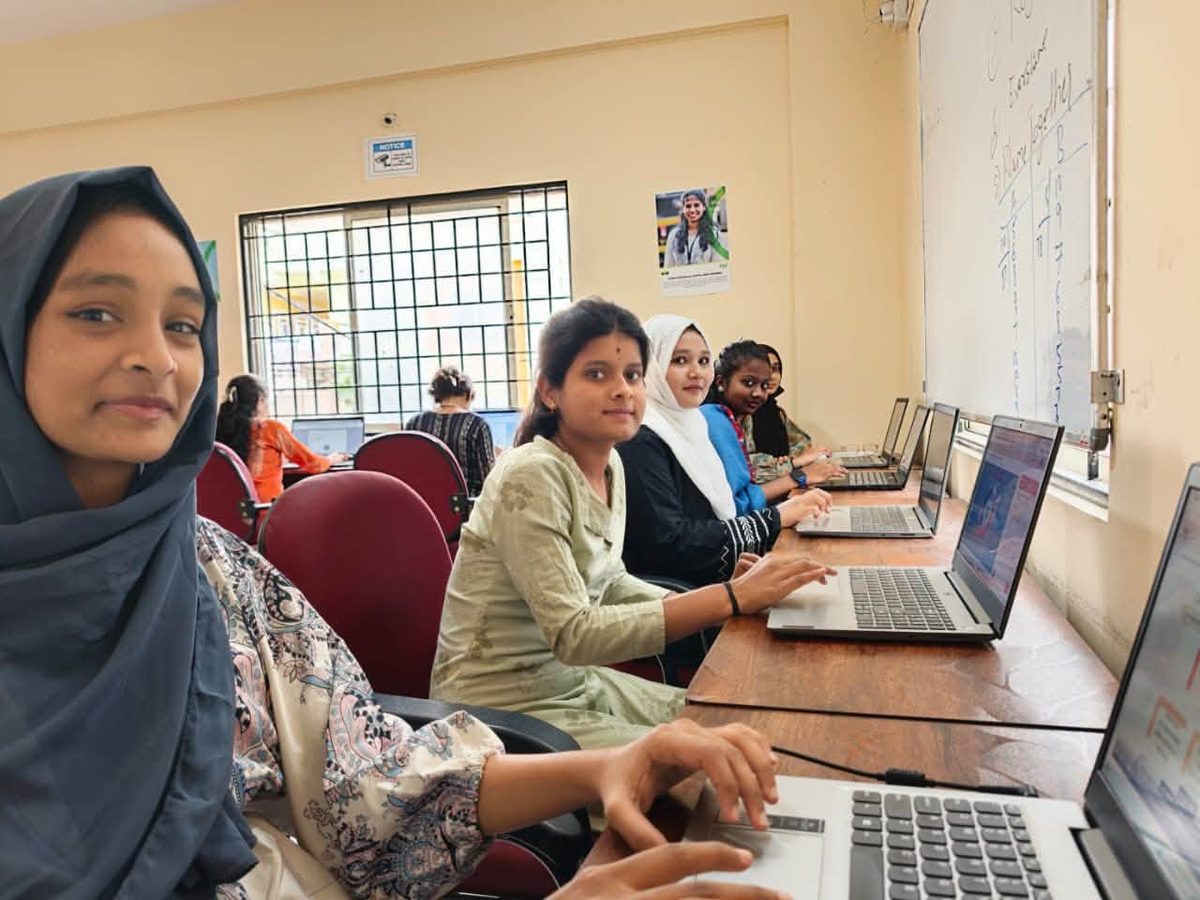
‘Hey Google, what is 128 × 80?’, ‘ChatGPT, help me create a project report on Indian history.’ For many students, help with schoolwork is now only a prompt away. For millions of others, even getting online remains uncertain. As AI enters the classroom, a pressing question follows: will AI help bridge India’s learning gap—or deepen it?
To answer that, we first have to look at who gets to use AI. A child needs a suitable device, affordable data and enough uninterrupted time online. Family income often shapes whether any of these are reliably available. The divide between students who can turn to AI for support and those who cannot is the AI divide in education.
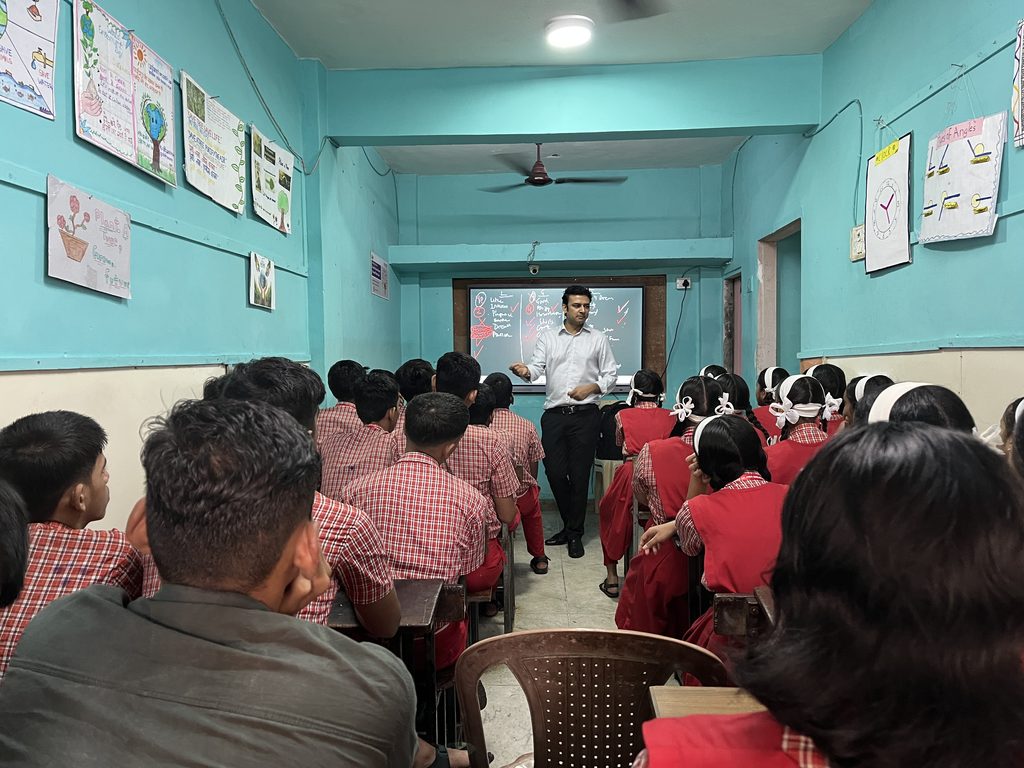
What does the AI divide in education look like in a classroom?
During the pandemic, when online lessons became the only route to continued learning, Rupali and her friends in Seperipanga, Odisha, did not even have smartphones. Cut off from their classes, their learning stalled and they eventually stopped attending school. That changed in 2021, when Smile Foundation established a Mission Education centre and helped them return to learning.

Rupali’s need was for something more basic than AI: access to an online class. Her experience raises a question that follows every new technology into education: how can a child benefit from a learning tool they cannot reach?
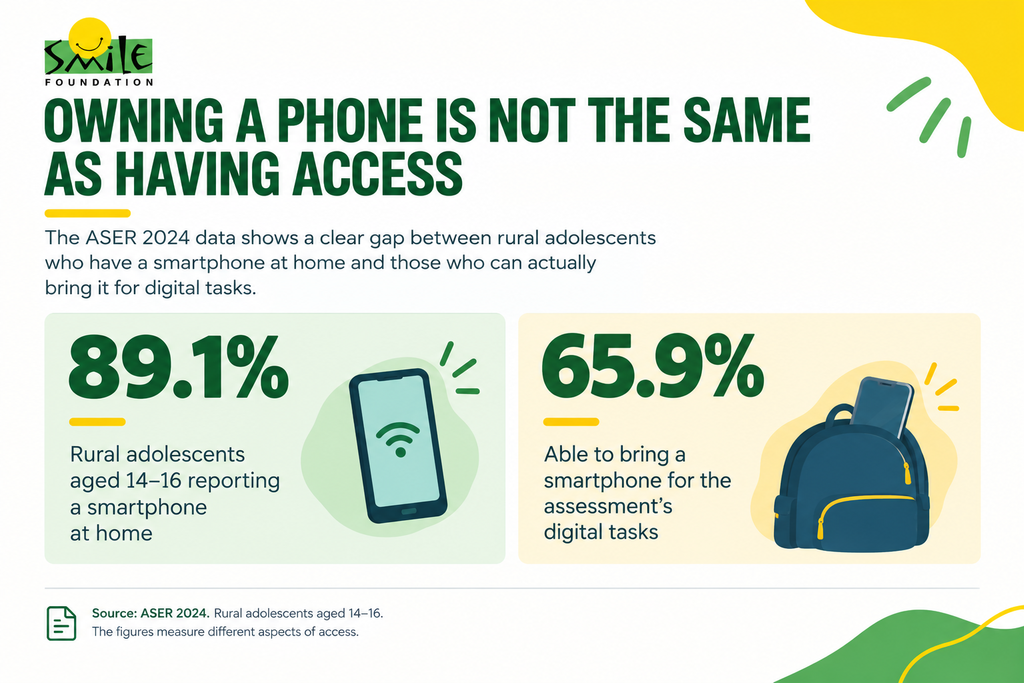
That issue becomes complex when we consider what ‘access’ means in an underprivileged child’s life. A smartphone at home does not always mean one is available when a student needs it. In ASER 2024, rural adolescents aged 14–16 were asked whether they had a smartphone at home and whether they could bring one for the assessment’s digital tasks. Although 89.1% reported having one at home, only 65.9% could bring one on the day.
Even when a family owns a smartphone, it may leave the house with a parent or be shared among siblings. Its availability for schoolwork can change from one day to the next.
There is, however, another point of access. UDISE+ data for 2025–26 reports that 67.4% of Indian schools have internet facilities. Schools could therefore play a pivotal role in narrowing the AI divide in education by offering children opportunities to use learning tools that remain beyond their reach at home.
How bridging the AI divide in education benefits students
Imagine a student returning home still unsure how to solve a maths problem. They could ask an AI tool to explain it differently, attempt a few more questions and identify where they went wrong. For a school project, they might use it to find a starting point or develop an idea. They could even ask for an unfamiliar term to be explained in a language they understand better. Sometimes, the simple act of getting unstuck is what makes a student want to keep going.
AI can also give curiosity somewhere to go. A lesson on electricity might leave a child wondering how the solar panels on a nearby roof work. They could pursue that question after school and bring what they discover back into the classroom.
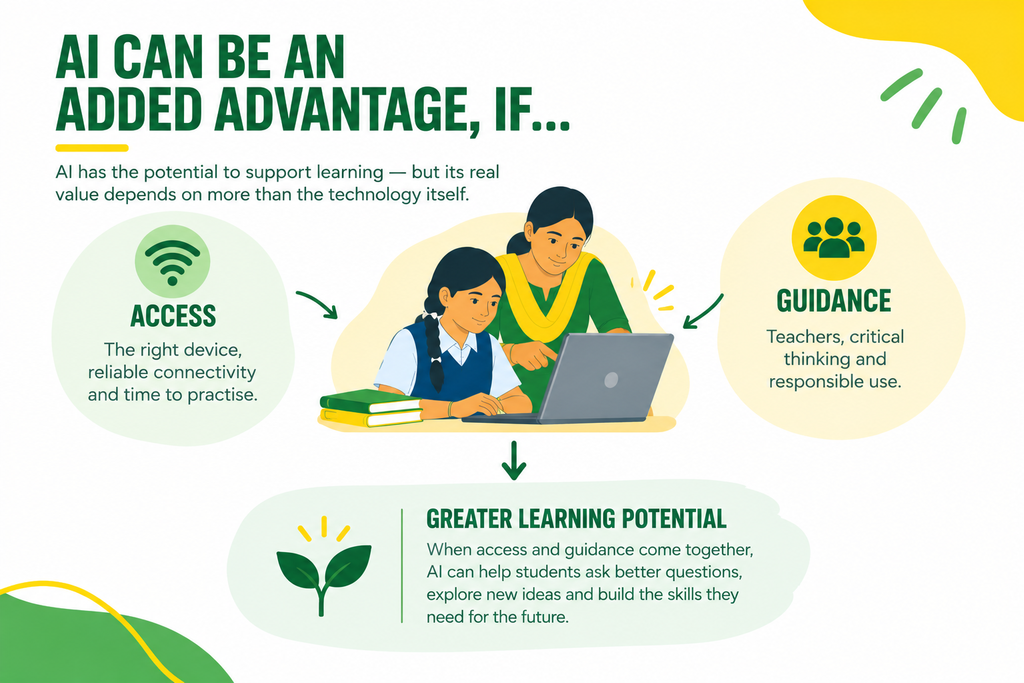
AI can become an added advantage, if…
…students learn to question AI-generated answers
AI can produce an answer in seconds, and make it sound entirely certain. A student may copy it into an assignment without noticing that something is missing or simply wrong. Learning to pause and ask, ‘Does this make sense?’ is as valuable as learning to write a good prompt. A teacher might ask pupils to check one claim against their textbook, discuss what they find and explain the answer in their own words.
…as many children as possible get to use AI
A child who never gets a turn with AI cannot discover whether it helps them learn—or where it falls short. If only students with a phone and data at home have that opportunity, the AI divide in education will simply reinforce existing socioeconomic advantages. More children need the chance to explore it for themselves, regardless of what is available at home.
…students understand that AI has limits
A child might ask for an explanation in a language they know and still think, ‘But what does that mean?’. AI may use unfamiliar words, skip the step where they found themselves stuck or misunderstand the question altogether. Children should feel comfortable saying that an answer has not helped and taking the question to a teacher. Using AI well also means knowing when to look beyond it.
How can we make AI accessible to more children?
Overcoming the AI divide in education begins with giving every child the simple chance to try these tools. Once they do, thoughtful guidance can help them use it responsibly: to ask better questions, understand the answers and explore new possibilities.
- How can individuals help?
People who are familiar with AI can help a child navigate basic generative AI applications: asking for an explanation, checking a doubtful answer and working through a problem independently. Those with resources to contribute can also support learning centres with devices or connectivity.
Smile Foundation’s Child for Child programme encourages children from more privileged backgrounds to understand the lives of those with fewer opportunities and to share with them. It can help a child recognise that a tool they routinely use for schoolwork may be out of reach for another child.
- How can schools contribute?
To actively address the AI divide in education, schools can give students regular time with shared devices and introduce AI through co-curricular learning. Teachers, not only students, need time to explore these tools so that they can help children question an answer, protect their privacy and use the technology with care. A demonstration can spark interest; repeated opportunities to experiment and build familiarity may eventually open doors to new possiblities.
- How can parents and communities help?
In homes where one phone is shared, setting aside even a little time for a child to use it for learning can make a difference. Community centres can provide another place to practise, particularly when a device or connection at home is unreliable. The aim is to give children repeated opportunities to learn, wherever those can be created.
How does access become opportunity?
For Rupali and her friends, the first need was a route back to learning. For other students, the next opportunity may be the chance to explore a technology they have heard about but never used.
Designed to tackle the AI divide in education, Smile Foundation’s digital skilling and AI project, girls in Years 6–9 are being introduced to digital literacy and AI concepts. In one session, 30 girls spoke with BT Group professionals about their journeys into science and technology. The wider project reaches 3,000 girls across Delhi NCR, Kolkata and Bengaluru.
Mayuri’s experience represents a different stage of that journey. With financial pressure eased by a Smile Foundation scholarship, she pursued an internship where she helped to develop an AI-powered chatbot for a medical device.
Rupali returned to her studies. The girls explored a new field and met women working within it. Mayuri put her skills to work on a healthcare challenge. Like all good stories in different forms and formats, they carry the same lesson: give students a way in, room to explore and the support to keep going.
So, will AI widen India’s learning gap?
It could—if the students who already have greater support are the only ones able to use it regularly. But AI could also help more children learn, explore and pursue ideas that once felt beyond their reach.
The difference will lie in the opportunities built around the technology. The way to gain access, a trusted person to guide its use and enough time to learn through experience. Where these elements are present, AI becomes a powerful asset; where they are missing, the AI divide in education risks deepening existing markers of inequality.
AI is becoming part of education. India’s education system now has a responsibility to ensure that more children have a meaningful chance to participate and widen the horizon of what they believe is possible.
Frequently asked questions
- What is the AI divide in education in India?
The AI divide in education is the gap between students who can effectively use AI for learning and those who lack a suitable device, reliable internet access, or the guidance to use it well. - How can students check an AI-generated answer?
They can compare claims with a textbook or another reliable source, check calculations step by step and ask a teacher when an answer remains unclear. - Can schools introduce AI with only a few devices?
Yes. Pupils can use shared devices in small groups, then discuss an AI-generated explanation with their teacher. This gives every child an opportunity to try it. - How can parents help if they do not know how to use AI?
They can set aside time on a shared phone for learning, ask what their child discovered and encourage them to check uncertain answers with a teacher. - What role do teachers play when students use AI?
Teachers can identify confusion, help pupils question AI-generated answers and judge when the tool is useful for a lesson—and when another approach would serve them better. - What would it take to bridge the AI divide in education across India?
More children need regular opportunities to use it, including those who cannot access it at home. They also need teachers who can help them question its answers and use it to understand a lesson. That is how access to AI can become a genuine learning opportunity.
