
There’s a version of this story playing out in millions of households right now. Someone keeps meaning to get that blood pressure check done or the diabetes screening their doctor mentioned two years ago. It could also be a basic health review, nothing that feels necessary or urgent, when you’re not in pain. Life or work gets in the way. And then, one day, it becomes a diagnosis.
That gap is where preventive healthcare loses, over and over again, to everything that feels more pressing in the moment. Everyone agrees that prevention matters. But it’s what actually happens, to a person and to a country, when it keeps landing at the bottom of the list.

Why Preventive Healthcare Keeps Getting Pushed Down the List
Nobody wakes up deciding to neglect their health. It happens by a thousand small deferrals, each one reasonable on its own. For a lot of India’s working population, a health check-up means a day of lost wages. When you’re paid by the day or the shift, you prioritize rent, school fees or dinner that has to be paid for. Moreover, there’s a health literacy gap that runs wide across the country and you get people who aren’t entirely sure what a screening is even checking for, let alone why it should take priority over something that feels urgent right now.
There’s also a deeper instinct at work. Prevention asks you to act before you feel unwell, which runs directly against how most of us are wired. Nobody queues for a check-up when they feel fine, no matter how much sense it makes on paper. And in large parts of rural India, this is an access problem, i.e. the nearest facility offering basic screening might be an hour away, if it exists at all.
Layer onto this India’s lifestyle-driven conditions, such as diabetes, hypertension and cardiovascular disease, which are climbing fast. A health system already stretched managing one crisis has limited bandwidth left to chase people who feel perfectly fine.
The Real Cost of Delay
Medically, the maths on early detection is almost absurdly favourable. A case of diabetes caught through a routine screening is manageable with diet, medication and monitoring. The same condition, left unchecked for years, starts damaging kidneys, eyes, nerves and by then you’re treating organ damage. Hypertension is the same story, which is silent for years, then suddenly not silent at all.
Financially, the gap is just as stark. Screening costs a fraction of what hospitalisation does. A round of routine blood tests is nothing next to dialysis, cardiac intervention or months of chronic disease management. Further, if you count the income lost to time off work or the debt many families take on to cover treatment costs, the public system doesn’t fully absorb.
Further, when a person in their thirties or forties develops a preventable chronic illness, it rarely stays contained to them. Someone else in the household picks up caregiving duties, often stepping back from paid work to do it. Household income drops just as medical expenses rise. Multiply that pattern across a population where a huge proportion of people are under forty. This situation turns into aa dent in the country’s productive capacity from being a single family’s misfortune. India has spoken, with real ambition, about the demographic dividend of a young population. That dividend evaporates fast if a large share of that population is managing preventable illness by the time they’re supposed to be at their most productive.
Who Pays the Price First
This burden doesn’t land evenly. Rural and lower-income communities absorb the worst of it, because the system offers them the least. Screening infrastructure clusters in cities. Awareness campaigns reach educated, urban audiences first and everyone else eventually, if at all. And when money and time are already stretched thin, a preventive check-up is the first thing to lose out to something more immediately pressing.
Women, in particular, tend to absorb this cost quietly. In many households, they’re the ones managing everyone else’s health, while their own screenings and check-ups get pushed indefinitely to ‘later’.
Then there’s the widening split between India’s private and public healthcare tiers. Private hospitals in major cities increasingly offer genetic testing, AI-assisted diagnostics and comprehensive health packages are genuinely impressive advances. But they’re priced for a slim segment of the population. Everyone else relies on a public system doing its best under real constraint.
What’s Changing and What Needs To
None of this is static, and there’s real momentum worth acknowledging. Ayushman Bharat has widened access to treatment for lakhs of families who’d otherwise have gone without. Jan Aushadhi is chipping away at the cost of medicines. Sanitation drives — toilets in schools, cleaner water access — sound unglamorous next to genomic medicine, but they’ve measurably shifted disease patterns at scale. The Genome India Programme signals that policymakers are thinking seriously, and ambitiously, about where prevention goes next. Between 1950 to 2025 the average life expectancy of people living in India has increased from 41.18 to 72.48 years.
But, what’s still missing is reach. Awareness efforts need to speak to people well beyond the urban, educated audiences they currently favour. Screening needs to be affordable and physically accessible in places where it currently isn’t. And some of the most effective interventions will come from workplace health check-ins, community screening camps, local health workers going door to door.
Bringing preventive healthcare closer to people
Prevention cannot work if it exists only on paper. A screening that requires a day’s wages to be sacrificed, a long journey to the nearest facility or an unfamiliar healthcare system to navigate may remain out of reach for the very people who need it most.
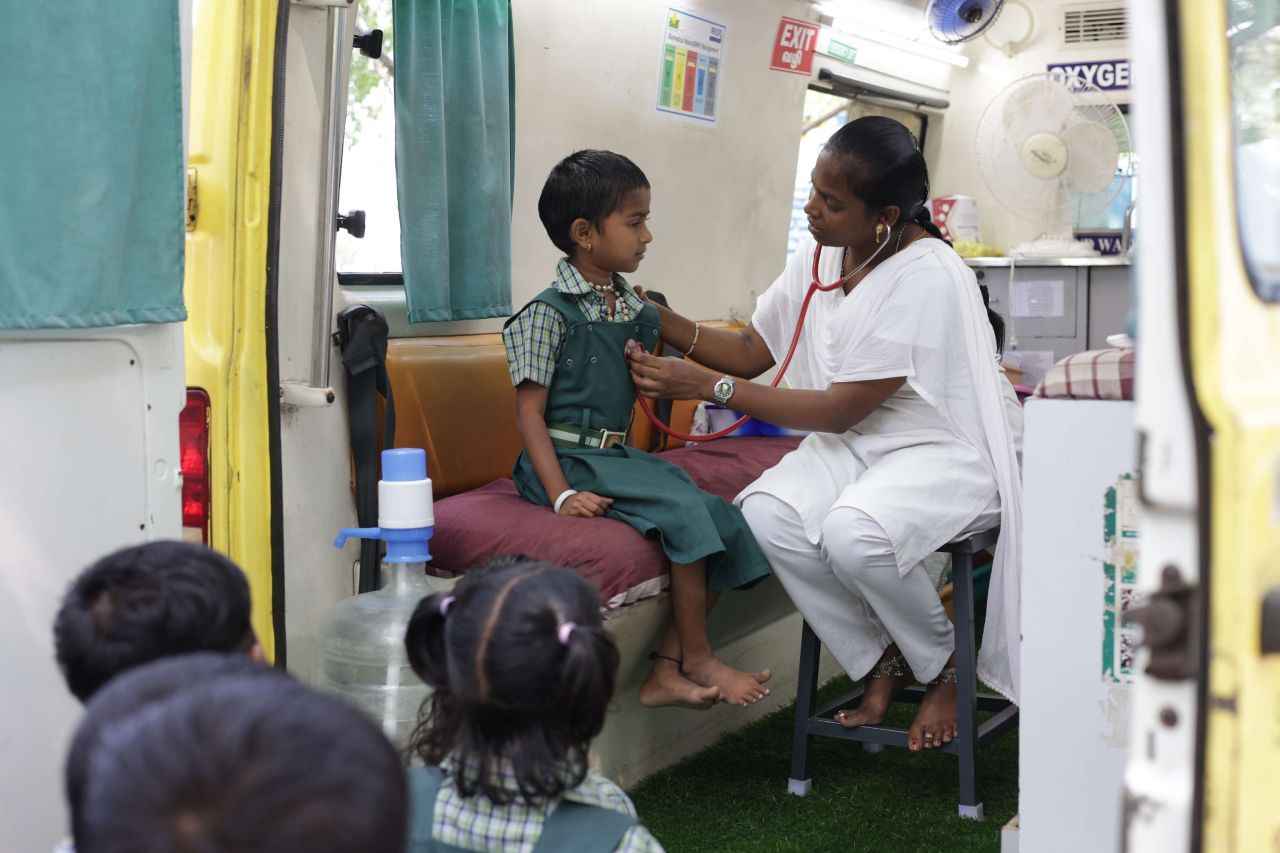
This is where primary healthcare and community-based outreach become critical. Smile Foundation’s healthcare programme takes a last-mile approach, bringing primary healthcare services to underserved communities across rural and urban India. Through initiatives such as Smile on Wheels, mobile medical units provide doorstep access to consultations, basic diagnostics, medicines and referrals, alongside preventive and health-awareness services. The aim is not simply to treat people when they fall sick, but to make healthcare more accessible and encourage communities to seek care earlier.
That distinction is important because prevention is not just about telling people to get a health check-up. It is about making that check-up possible.

For someone who cannot afford to lose a day’s income, bringing healthcare closer to home can remove a barrier that awareness alone cannot. For communities with limited access to health information, conversations about nutrition, hygiene, immunisation, chronic diseases and early symptoms can help turn awareness into health-seeking behaviour.
In 2025–26, Smile Foundation says its integrated community healthcare initiatives delivered 2 million healthcare treatments in a single financial year, with its primary healthcare model combining mobile healthcare delivery, preventive engagement, digital innovations and system-strengthening efforts.
The larger lesson is straightforward: if India wants prevention to become a habit rather than an afterthought, healthcare has to meet people where they are.
The Bigger Picture
Prevention is the cheapest, most effective tool healthcare has and it works best precisely for the people currently least able to access it. Stronger primary care, greater investment in health education, and a shift in mindset so that “staying healthy” is prioritized is how you’re protecting the very thing India is counting on: a young, healthy, productive population capable of carrying the country’s ambitions forward.
FAQs
1. What is preventive healthcare?
Preventive healthcare focuses on preventing illness, identifying health risks early and reducing the likelihood of complications. It can include regular health check-ups, screenings, vaccinations, health education, nutrition support and early intervention.
2. Why is preventive healthcare important in India?
Preventive healthcare can help identify health problems before they become serious and expensive to treat. It is particularly important in communities where the cost, distance or time involved in accessing healthcare can lead people to delay seeking care.
3. Why do people delay preventive health check-ups?
People may postpone check-ups because they feel healthy, cannot afford to lose working hours, lack awareness about screening, face transport barriers or have limited access to nearby healthcare facilities.
4. What are some examples of preventive healthcare?
Examples include screening for conditions such as high blood pressure and diabetes, vaccinations, antenatal care, nutrition counselling, health education, regular check-ups and early detection of health risks.
5. Who faces the greatest barriers to preventive healthcare?
People living in underserved rural and urban communities can face significant barriers because of limited healthcare infrastructure, affordability challenges, distance and gaps in health awareness. Smile Foundation’s healthcare programme specifically works to address these last-mile gaps.
6. How does early detection help?
Early detection can allow health conditions to be identified and managed before they progress or cause complications. This can make treatment more manageable and potentially reduce the financial and social costs associated with advanced illness.
7. How does Smile Foundation support preventive healthcare?
Smile Foundation provides primary healthcare services to underserved communities through its community-centric healthcare programme. Its Smile on Wheels mobile medical units bring healthcare closer to people in rural and urban communities and provide preventive, promotive and curative services.
8. What is Smile on Wheels?
Smile on Wheels is Smile Foundation’s flagship mobile healthcare programme. It takes healthcare services to the doorsteps of underserved communities, helping address barriers related to accessibility, availability and health-seeking behaviour.
9. Why is primary healthcare important for prevention?
Primary healthcare is often the first point at which people can access screening, basic diagnosis, health advice and early treatment. Bringing these services closer to communities can make prevention more practical and accessible.
10. How can India strengthen preventive healthcare?
India can strengthen prevention by investing in accessible primary healthcare, community-based screening, health education, frontline health workers, affordable diagnostics and outreach that reaches people beyond major cities.
11. Is preventive healthcare only about avoiding disease?
No. Prevention also means supporting people to maintain good health, recognise risks early and make informed decisions about their health. It includes health promotion, awareness, screening, early intervention and appropriate referral.
12. Why does preventive healthcare matter for India’s future?
A healthier population is better positioned to work, learn, care for families and participate in the economy. For a country with a large young population, investing in prevention is therefore not only a healthcare priority but also an investment in human and economic potential.
Sources: