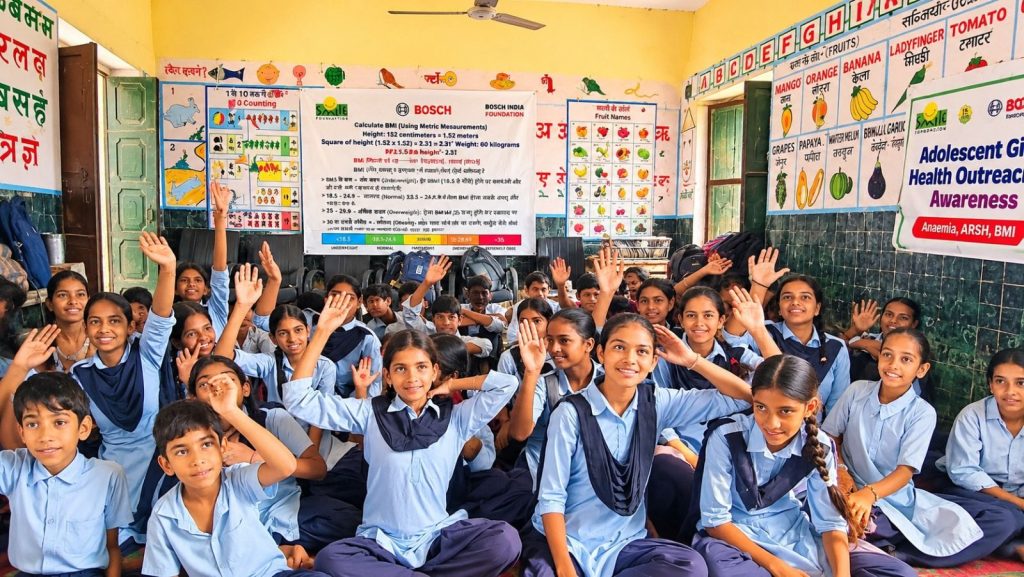
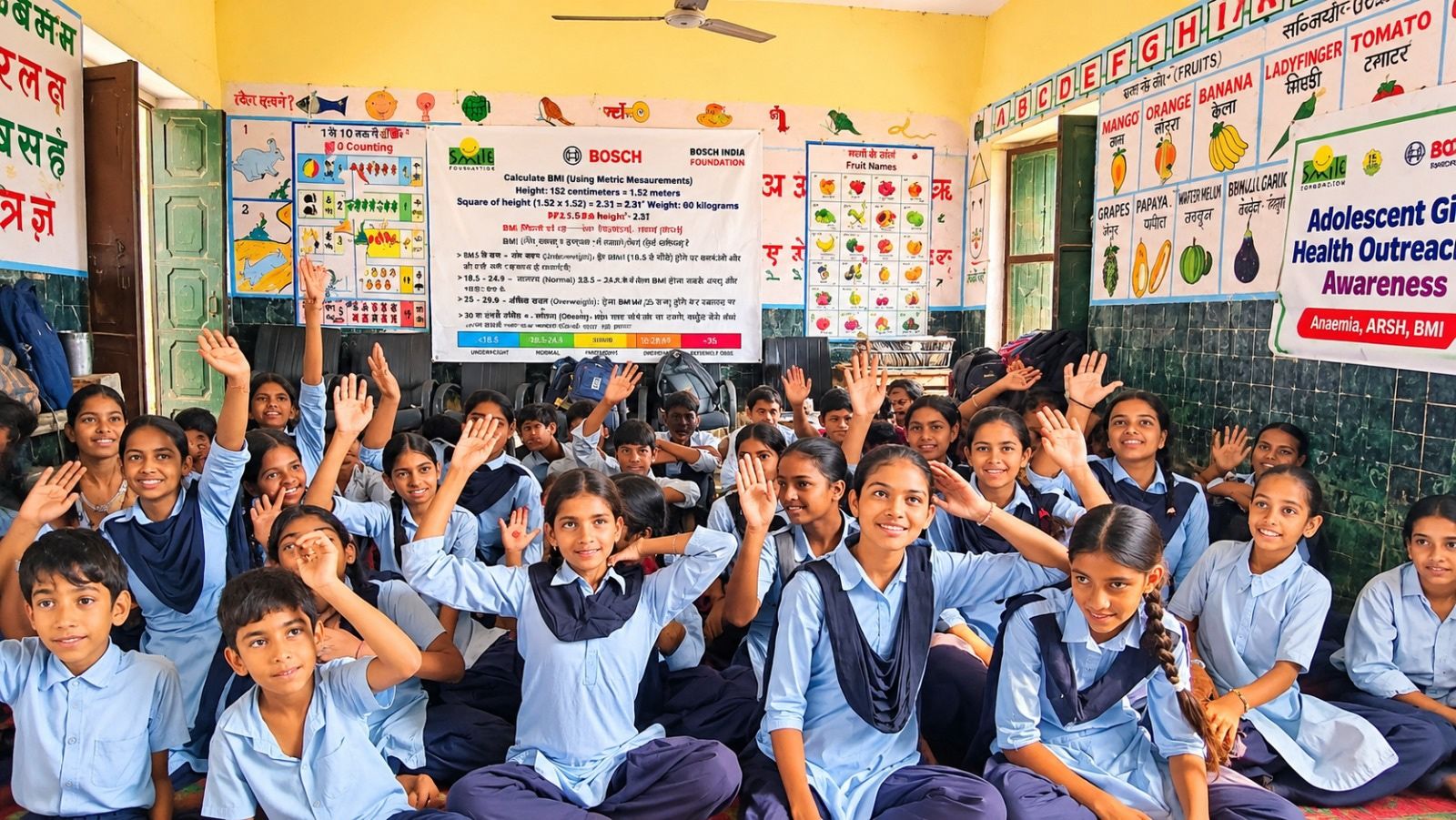

When a child comes home with a torn bag or a story about the group chat, the first adult question is usually “is this illegal?” The honest answer is: it depends on what happened, and most of the time the law that matters is not a criminal law at all. It is a school rule the school may not know it has.
Is bullying a crime in India?
Not as such. There is no section in any Indian statute titled “bullying”. NCPCR’s own 2024 guidelines acknowledge this too: there is no law in India that specifically addresses bullying in schools. What exists is a set of older laws that catch particular kinds of bullying when they cross a line, and a set of guidelines that tell schools what they must do before that line is crossed.
The consequences of this gap can be serious. Parents may turn to the police over incidents that fall outside their powers, while schools may downplay a serious incident as “just bullying”, even when they are legally required to report it within hours.
When does the POCSO Act apply?
The Protection of Children from Sexual Offences (POCSO) Act, 2012, protects children under 18 from sexual offences. Most bullying does not involve sexual behaviour and therefore falls outside its scope. But some behaviour that children describe as bullying, particularly as they grow older, may actually constitute an offence under POCSO.
Section 11 defines sexual harassment broadly. It includes making sexually suggestive remarks or gestures, showing a child pornographic material, repeatedly following or watching a child, and contacting a child through phone, social media or other means with sexual intent. Under Section 12, sexual harassment is punishable with up to three years’ imprisonment. Sharing a classmate’s intimate images, pressuring someone to send such images, or making sexually explicit comments about a girl’s body may therefore amount to criminal offences, rather than simply matters for school discipline. The accused may also be a minor. In such cases, the child is dealt with under the Juvenile Justice Act, but the conduct can still constitute an offence under POCSO.
For schools, however, two other provisions are particularly important. Section 19 requires anyone who knows or has reason to believe that a sexual offence against a child has occurred to report it to the local police or the Special Juvenile Police Unit. Under Section 21, failure to report can attract imprisonment or a fine.
The Supreme Court reinforced this obligation in July 2025, when it revived proceedings against a school official who had conducted her own inquiry after a child disclosed an alleged sexual offence and concluded that nothing had happened, rather than informing the police. The Court made clear that schools cannot take it upon themselves to determine whether an allegation is credible before reporting it. Investigating the allegation is not a substitute for reporting it.
For a principal, the practical implication is: if a child’s account suggests a possible sexual offence, the school must report it promptly to the police. It cannot wait for an internal committee to investigate or decide whether the allegation is serious enough.
What does the RTE Act say?
Section 17 of the Right of Children to Free and Compulsory Education (RTE) Act, 2009, prohibits physical punishment and mental harassment of children in schools. Anyone found violating this provision can face disciplinary action under the service rules applicable to them. Although the law is primarily directed at teachers and school staff, and has largely been invoked in cases of corporal punishment, its reference to “mental harassment” is significant. The NCPCR’s guidelines interpret this to include situations where schools fail to act on bullying they are aware of. This means that a teacher who publicly humiliates a child, or dismisses a bullying complaint by telling the child to “toughen up” without taking any action, could also be held accountable.
The Juvenile Justice (Care and Protection of Children) Act, 2015, provides another layer of protection. Under Section 75, anyone responsible for a child’s care or supervision can face criminal penalties for assaulting, abandoning, exposing or wilfully neglecting the child in a manner likely to cause unnecessary physical or mental suffering. This provision can also apply to school staff.
What does CBSE actually require?
CBSE has had detailed guidelines on bullying for over a decade, but many parents remain unaware of them.
On 9 March 2015, the Central Board of Secondary Education (CBSE) issued Circular Acad-17/2015, Guidelines for Prevention of Bullying and Ragging in Schools, to all its affiliated schools. These guidelines remain in force. CBSE’s September 2017 safety circular (No. 19/2017) also identifies non-compliance with its safety requirements as grounds for disciplinary action, potentially including disaffiliation.
Under the 2015 guidelines, every CBSE-affiliated school is expected to:
- Set up an Anti-Bullying Committee comprising the vice-principal, a senior teacher, school doctor, counsellor, representatives from the parent-teacher association and school management, a legal representative and peer educators.
- Develop a School Bullying Prevention Plan. The committee is responsible for preparing and reviewing this plan, organising awareness programmes and addressing bullying complaints.
- Make its anti-bullying policy accessible to parents by including it in the school prospectus and other information shared with families.
- Display contact details prominently, including the names and phone numbers of Anti-Bullying Committee members and the Childline helpline number, 1098.
- Train teachers and other staff to recognise bullying and intervene promptly. Schools are also expected to take appropriate action against students who bully others, with measures ranging from counselling to suspension, depending on the severity of the incident.
- Maintain records of bullying complaints and the action taken in response.
Importantly, CBSE’s definition of bullying is not limited to physical aggression. It also covers verbal abuse, social exclusion, spreading rumours, humiliation and cyberbullying, whether carried out directly or through others.
Bullying doesn’t always leave visible injuries. A child may be repeatedly excluded, humiliated or targeted in a class WhatsApp group without ever being physically harmed. CBSE’s guidelines recognise these forms of bullying too, so schools cannot dismiss them simply because no physical violence is involved.
The CBSE Affiliation Bye-Laws, 2018, provide further safeguards. Clause 2.4.12 requires schools to appoint a counsellor and wellness teacher, while Rule 44.1(d) allows the school management committee to suspend an employee accused of cruelty towards a student.
A 2025 amendment to Chapter 4 also introduced CCTV requirements at key locations on school premises, with footage to be retained for at least 15 days. This could make a significant difference when parents and schools disagree over what happened, particularly in cases where there are no witnesses willing to come forward.
Taken together, these provisions establish clear responsibilities for CBSE schools. They are expected to have systems in place to prevent bullying, receive complaints and act on them. Responding to bullying is not simply a matter of individual discretion.
What did NCPCR add in 2024?
In April 2024, the National Commission for Protection of Child Rights (NCPCR) published Preventing Bullying and Cyberbullying: Guidelines for Schools, following an earlier draft released in December 2023. Unlike CBSE’s circular, these guidelines are not binding on schools in the same way. However, they are intended for schools across all education boards, and some state commissions have begun adopting them.
The 2024 guidelines go further than CBSE’s 2015 circular in several ways.
For one, they address cyberbullying in greater detail, including incidents that take place on children’s phones or social media accounts outside school hours. They also explain which laws may apply to different forms of bullying, including POCSO, the Juvenile Justice Act, the Information Technology Act and the Bharatiya Nyaya Sanhita, which brings several offences against children together under Chapter V (Sections 93 to 99).
The guidelines also encourage schools to systematically collect data on bullying incidents and not simply dealing with complaints as they arise. This could help schools identify patterns of harassment that might otherwise go unnoticed.
Perhaps their most useful message for parents is that a school’s responsibility to protect children does not necessarily end at the school gate. Bullying that begins in a classroom may continue in a WhatsApp group long after school hours. Schools cannot automatically dismiss such complaints simply because the harassment happened outside their premises.
What this means in practice
For parents
If your child is being bullied, start by asking the school, in writing, for its anti-bullying policy and the names of its Anti-Bullying Committee members. Every CBSE-affiliated school is expected to have both.
Put your complaint in writing too, describing what happened, when it happened and who was involved. This creates a record and gives the school something specific to respond to.
If the bullying involves sexual harassment or abuse, including sexually explicit images or messages, you do not need the school’s permission to approach the police. The school also has a legal duty to report suspected offences under POCSO.
Parents can also contact Childline on 1098 for help. Online abuse can be reported through the National Cyber Crime Reporting Portal, while 1930 is the national cybercrime helpline.
For teachers and school principals
There are three areas where schools need to be particularly careful.
First, a school cannot conduct its own investigation into an alleged sexual offence before deciding whether to inform the police. Reporting suspected offences under POCSO is a legal obligation.
Second, bullying is not limited to physical violence. Deliberately excluding a child, spreading rumours or repeatedly humiliating them also falls within CBSE’s definition and needs to be addressed.
Third, an Anti-Bullying Committee cannot exist only on paper. It needs to meet, maintain records, respond to complaints and make its contact details available to students and parents.
CBSE introduced these guidelines in 2015. Schools have had over a decade to put these basic safeguards in place.
For NGOs working with schools
For organisations running education programmes, these guidelines offer a useful starting point for working with teachers and school management.
A buddy system or peer-support programme, for instance, can help schools fulfil the prevention activities envisaged under CBSE’s 2015 circular. Regularly asking children whether they feel safe, included and accepted at school can also help identify problems that may never reach a teacher as a formal complaint.
At Smile Foundation, we recognise that children need to feel safe and accepted in school if they are to learn with confidence. Our work with teachers and schools can help strengthen these everyday practices, encouraging children to look out for one another and ensuring that concerns about bullying are taken seriously.
The rule behind the rules
Look past the legal language, and all four point to the same responsibility: when a child is being hurt at school, the adults responsible for their safety cannot simply look away or dismiss what has happened. POCSO makes reporting a legal duty when a sexual offence is suspected. The RTE Act holds teachers accountable for physical punishment and mental harassment. CBSE requires schools to have systems to prevent and address bullying, while NCPCR sets out standards for protecting children.
But laws and guidelines alone cannot stop a child from sitting alone at lunch, day after day, because no one wants to sit beside them. That is something their classmates can change, and something we will explore in the next article.
This article provides general information and should not be treated as legal advice. If a child is in immediate danger, call 112. For child protection assistance, contact Childline on 1098.
FAQs: POCSO Act – bullying in schools and more
Is bullying a crime in India? No single law makes bullying a crime. Specific acts within bullying can be offences: sexual harassment under the POCSO Act, criminal intimidation or assault under the Bharatiya Nyaya Sanhita, and sharing intimate images under the IT Act. Schools are separately bound by RTE Section 17 and, for CBSE schools, the 2015 anti-bullying circular.
When does the POCSO Act apply to bullying? When the behaviour has a sexual element: sexual comments or gestures, showing or sharing sexual images, pressuring a child for images, or contacting a child with sexual intent, including online. Section 11 defines it and Section 12 sets up to three years’ imprisonment. It applies even when the person responsible is also a child.
Does a school have to report bullying to the police? Only when it is a POCSO offence. Section 19 requires any person who knows or suspects a sexual offence against a child to report it to the police or the Special Juvenile Police Unit; Section 21 punishes failure to report with up to six months’ imprisonment. For non-sexual bullying, the school’s Anti-Bullying Committee is the required forum.
What does CBSE require schools to do about bullying? Circular Acad-17/2015 requires an Anti-Bullying Committee, a written prevention plan and policy stated in the prospectus, display of committee contacts and the Childline number 1098, staff training, graded consequences and records of complaints. Breach can lead to action under the Affiliation Bye-Laws, including disaffiliation.
Who sits on a CBSE Anti-Bullying Committee? The circular lists the vice-principal, a senior teacher, the school doctor, the counsellor, a PTA representative, a school management representative, a legal representative and peer educators. Many schools name the principal as chair.
What are the NCPCR bullying guidelines 2024? Preventing Bullying and Cyberbullying: Guidelines for Schools, published in April 2024, define types of bullying including cyberbullying, map each to the relevant law, set out how schools should respond to online incidents, and ask schools to collect incident data. They apply across boards but are guidelines, not binding rules, unless a state adopts them.
What can a parent do if the school does nothing? Write to the principal asking for the anti-bullying policy and committee, which starts a record. Escalate to the school management, then the board (CBSE’s regional office for CBSE schools) or the State Commission for Protection of Child Rights. Call Childline 1098 for support, and the police if any act is a criminal offence.
Read next
- How peer support programs can help children feel included at school
- Digital safety for first-time internet users
- Importance of child-centred education
- Why girls drop out of school in India
Sources
- CBSE Circular Acad-17/2015, Guidelines for Prevention of Bullying and Ragging in Schools, 9 March 2015
- CBSE Circular 19/2017, Safety of Children in Schools, 12 September 2017
- CBSE Affiliation Bye-Laws 2018
- Lok Sabha answer on CBSE bye-laws, Rule 44.1(d) and 8.5
- CBSE CCTV amendment to Chapter 4 of the Bye-Laws, 2025 (Careers360)
- NCPCR, Preventing Bullying and Cyberbullying: Guidelines for Schools, 2024
- NCPCR draft guidelines, December 2023
- Supreme Court revives POCSO Section 21 case against school official, July 2025 (Sansa Legal summary)
- Centre for Child and the Law, NLSIU: Mandatory reporting under POCSO
- Ministry of Women and Child Development press release on child safety and NCPCR guidelines, December 2025
- Bare Acts: POCSO Act 2012 (ss. 11, 12, 19, 21); RTE Act 2009 (s. 17); Juvenile Justice Act 2015 (s. 75); Bharatiya Nyaya Sanhita 2023 (Chapter V). Writer to link indiacode.nic.in for each.