How was life before we were bombarded with the influx of various formats of social media? Frankly today it is difficult to imagine life without it. It’s almost as if the young generation can divide time into before and after the invasion of social media, where the before part is nothing but a blur.
In today’s day and age social networking has become a phenomenon which has seized us completely to the extent that we can’t imagine life without it. It is not just the young but one and all of us have fallen prey to it’s addictive nature. Even though there is cyber bullying and threat to privacy, still it is unbelievably shocking that on an average today’s teenagers spend about nine hours every day on social media.
Social media has completely taken over our lives. It’s almost like everyone is in a race to outsmart the others with their updates and feeds on, be it Facebook, Instagram, Twitter or Snapchat. This has resulted in loss of genuineness and given rise to superficial relations. There is stress, jealousy and lack of value and appreciation for true relationships.
Wherever you turn there are ill informed and angry opinions. It is so difficult to tell fake journalism from real. This freedom of speech on social media platforms are a big threat to democracy. The speed and extraterritorial reach of disinformation is alarming and people soak into it as if it were real for the sake of social desirability.
Looking back at the purpose for which this technology was developed, the advantages of social media still surpass its disadvantages. Besides being an ice breaker, social media is the biggest tool today to maintain and promote a business. It increases your business visibility and brand recognition. Today social media has become an indispensable tool and to sum it up, it has indeed transformed the world into one community, where anyone and everyone is just a friend request away.
Man is a self-indulgent being. We are always talking about human rights, but do we ever take the time to ponder that these planets where we are temporary residents have rights as well.
In earlier times nature played the biggest role in maintaining the earth’s natural equilibrium. As famously quoted by the father of our nation, Mahatma Gandhi, “Earth provides enough to satisfy every man’s needs, but not every man’s greed”, today human materialism has resulted in the forest and the green cover getting replaced by townships and industries.
We have all heard about our forefathers living in vast open spaces, surrounded with lush green trees, clear blue day skies and starry nights. The atmosphere was then clean and there was sufficient oxygen for humans to breathe freely. The environment has changed drastically since the last five decades. Human beings are themselves degrading the land surfaces, by polluting the water bodies and by emitting poisonous greenhouse gases and adding particulate matter to the air at an unprecedented rate.
Pollution is clearly a by-product of human activity. Our interference with nature is causing the depletion of basic natural resources like air, soil and water. Burning of fossil fuel is the largest contributing factor of carbon contamination in the environment. Deforestation along with dumping of huge quantities of human and industrial waste in oceans and fresh water bodies is another big reason for water pollution and oil spillage is largely effecting water pollutant. We humans are responsible for all of this upheaval and chaos.
We pretend to be ignorant about the level of destruction we are causing individually. In order to set the record straight, we have to realise that one of our biggest obstacles in achieving our goal for better living environment, is our mindset. We need to emotionally connect to nature and understand how it works for us and how dependent we are on it. Let us not live in this false belief that someone else is going to come and fix this for us. It is we, who have to set the ball rolling.
We must understand that even the most powerful nations have not been able to anything substantial to check the alarming rate at which environmental conditions are deteriorating. If we don’t take remedial action at an individual level then this will take the form of an incurable disease. Let us all participate equally and contribute to leaving the earth in its purest form for the future generations to prosper and live joyfully.
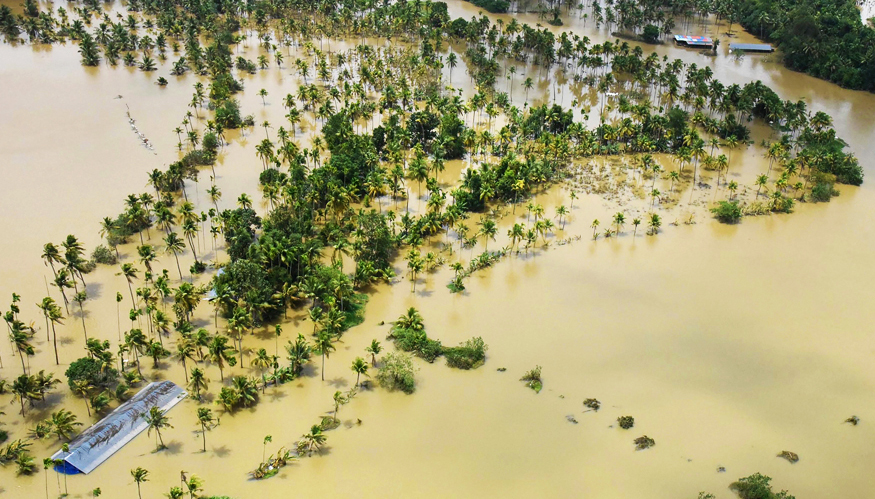
Kochi: A view of the flood affected areas, in Kochi on Sunday, Aug 19, 2018. (PTI Photo) (PTI8_19_2018_000165B)
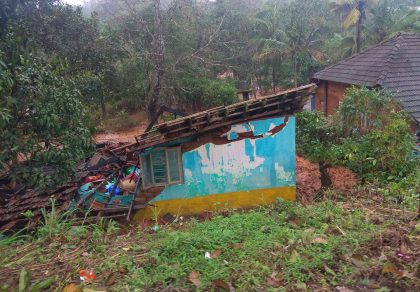
It is only a knock on the door that prepares one for the events that would follow. But disasters haven’t been so kind to us, least of all the floods that crippled Kerala over the past few weeks. Waters barged through houses, inundated the roads, and left people helpless. People were stuck on rooftops waiting for assistance, hoping and praying for the skies to clear. Paralysed by the shock of the rate at which events were transpiring, they looked on, watching the deluge take away their physical goods and wash away their hopes and dreams. Carefully constructed lives built through years of work slipped right through their fingers.
This has been the worst flooding that the people of Kerala have seen in living memory, continuous rainfall over the weeks since June was enough to stall the state machinery. Lives reached a standstill, except for the rivers that overflowed. The amount of water flowing into the rivers forced the open the sluice gates of all 34 Dams. Over 8 lakh people have been shifted to 3,500 relief camps. The loss of 19,000 Crores[1] is a superficial estimation of the damage that has been done; furthermore this has just been a preliminary assessment. Such a colossal disaster overwhelmed the State Government and the local volunteers, they were cut off for days from places where they were required to provide relief.
A total of 11 out of the 14 districts of Kerala have been majorly affected and five of them – Ernakulam, Pathanamthitta, Thrissur, Idukki and Alapuzha had been rendered completely incapacitated. The relief operations which gained a new momentum when the rains subsided last Sunday, the operations are still focused on rescuing marooned survivors and air dropping supplies to them. Even as late as Sunday two districts were still under red alert. According to Thomas Isaac, Kerala’s Finance Minister, “About one – third of the roads have been completely damaged”[2]. The cost repair would be astronomical proportions. The consistent pace, at which the communication lines have been developing, has been pushed back a couple of decades. “In addition to which about 1, 00,000 houses would have to be rebuilt” the large amount of plastic waste, “which was largely comprised of water bottles that have been provided in aid packages and have been washed away by the flood waters would need to be cleared” are also aspects that would have to be tackled both at the level of the state as well as that of the community.[3]
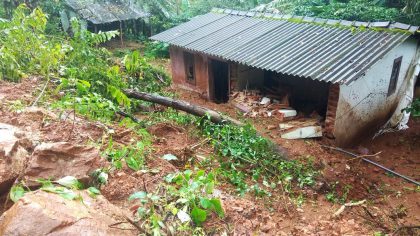
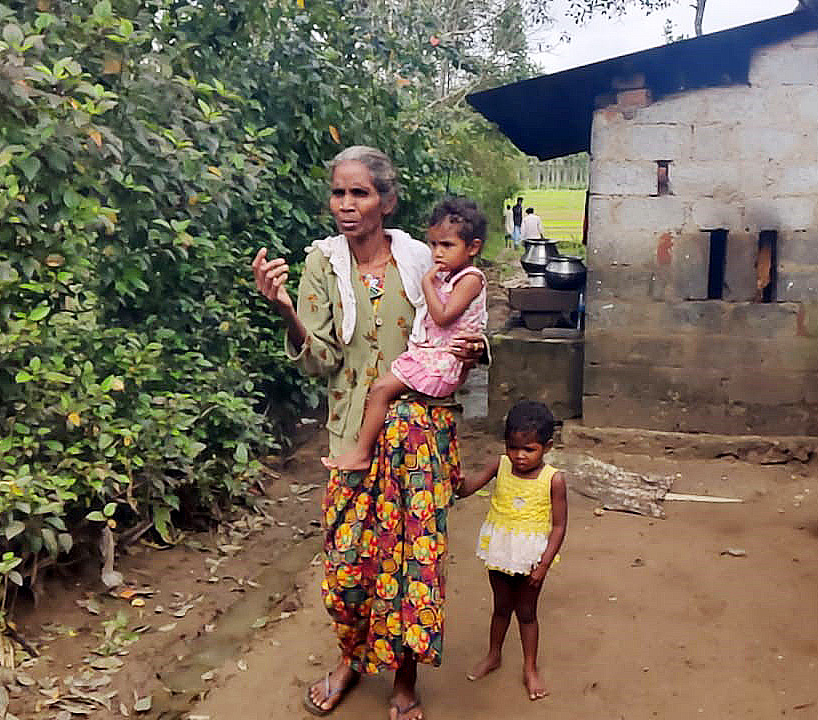
Such devastating news in terms of numbers and figures, though weighs on the minds of policy makers and rehabilitation groups, the role of qualitative stories and realities cannot be ignored. The depth of the damage caused by the deluge though has been calculated also needs to be reviewed in terms of the waves of emotion that battered the minds of people. Lives were carefully constructed according to their surroundings. Kaila had taken for granted, both her house and her environment. She had built her life around them; her economic, social and cultural realities were rooted in her environment. Disaster first struck when she lost her husband five years earlier. She hadn’t prepared for such an eventuality. When the rains first struck it seemed as harmless as every shower that would be a part of her life for monsoon every year of her life. Then came the landslide, demolishing her house and razing it to the very ground she would walk on everyday as she would go to collect wood. There was this thin sliver of hope that she could rebuild. That somehow she would be able to make her life whole again. The water washed away such dreams, made them unrealistic goals that she would not be able to achieve. All the wood that she was to collect was unusable. Drenched, lost and desolate she found assistance in the volunteers from Smile Foundation. She found support and solace amongst the people who were dealing with the same disastrous consequences. She saw her life of five decades crumble down, believing that she had lost all hope. It sparked in the midst of survivors, it lit up in the dark times that she was trapped in, and it burned to renew the flame that had helped her tide over her troubles.
The deluge didn’t spare, it didn’t select and choose it massacred every single living creature who was caught up in it. Not much unlike the malignant cancer that Omana was suffering from. Grabbing at the threads that bound her life together her life was torn asunder by the flood. Till the flood she was supported by her husband, who used to drive an auto-rickshaw. Stuck in a relief camp for 13 days, she and her family were left wondering at the state of their house. They were unsure of what they would return to, what they returned to left them mollified. The auto-rickshaw was not just a means to earn livelihood for her husband, but it was what made living possible for them as a family. The same auto-rickshaw was damaged beyond repair by the floods; it was the one that made living possible for them. Clutching at strands that abruptly dissolved in the water, new bonds were formed. Bonds that stretched across geographical regions, bonds that were based on emotional realities, bonds that reformed the way she looked at life. This paved a way that was lined with hope and made her realize a newer life for them.
The strength of the community has built new structures. They have ratified the eternal bonds that bind the whole of humanity together. It is without doubt that, every reality has cemented those ephemeral strands that were considered to be lost. We know that hope will be renewed; we know that people will start dreaming again, we know that boundless nature of mankind will shine through.
Bibliography
Edit, T. (2018, 8 20). Kerala’s sorrow: State’s plight is a warning to prepare for natural calamities and review vulnerabilities. Retrieved 8 22, 2018, from The Times of India Blogs: https://blogs.timesofindia.indiatimes.com/toi-editorials/keralas-sorrow-states-plight-is-a-warning-to-prepare-for-natural-calamities-and-review-vulnerabilities/
News, A. J. (2018, 8 20). ‘Huge disaster’: Deadly Kerala floods displace over 800,000. Retrieved 8 22, 2018, from Al Jazeera: https://www.aljazeera.com/news/2018/08/disaster-deadly-kerala-floods-displace-800000-180819142342769.html
Tyagi, A. (2018, 8 22). Kochi airport suffers Rs 250 crore damage in Kerala floods, massive repair work on. India Today . Kochi, Kerala, India: India Today.
Varma, V. (2018, 8 22). Kerala floods: Before help came, Malayalees forgot differences to help each other like never before. The Indian Express . Kochi, Kerala , India: The Indian Express.
Air pollution majorly affecting the Health of Indians
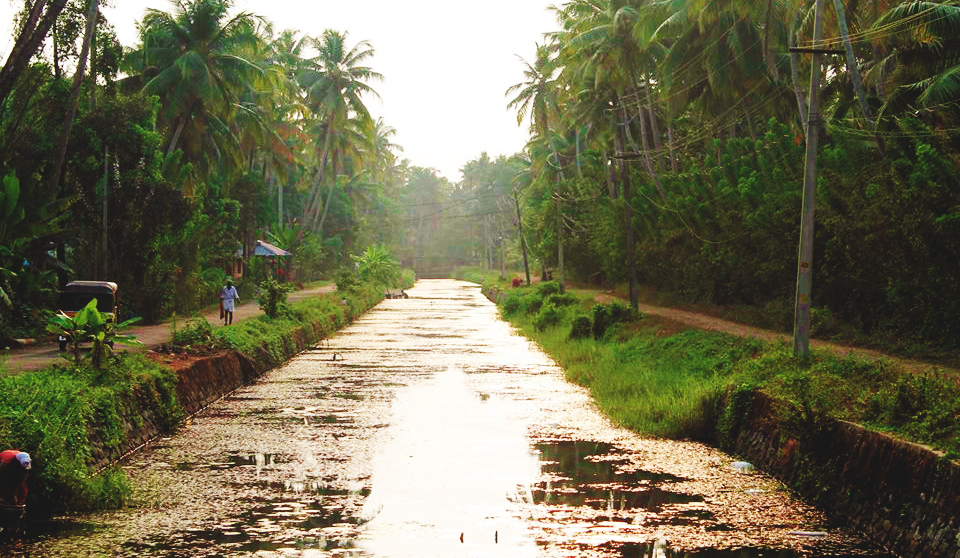
Skipping through lush green paddy fields on the side of a canal, holding my grandfathers hand, listening to him as he pointed out to a ripe jackfruit tree and many others is the way I remember my childhood holidays in Kerala. Being a Malaya lee born and brought up outside Kerala was never a deterrent to understand the culture and DNA of the state. Erudite, straightforward, hardworking, and disciplined- is your Malayalee, in or out of Kerala. He /she is peace loving and serene (like the land itself) that he belongs to. This is in gist what Kerala is all about- erudite, straightforward, hardworking, disciplined, peace loving and serene. And Onam, is the festival that is dear to every Malayalee. Kerala in my memory is happy times ,of a blissful childhood and Onam is the fulcrum of this memory
Fast forward to circa 2018, 14th August……I watch in horror on TV how in a surreal fashion the flood waters swept over the Nedumbasherry Kochi airport ,Kochi ‘s MG road and other areas that were our regular haunts during summer vacations. Then came the phone calls. Voices seeking help, in a tone of fear, disbelief and despair. In a matter of hours the entire state was in the grip of water. Leveling the rich and poor. Huge houses and small shanties all submerged in the deluge.
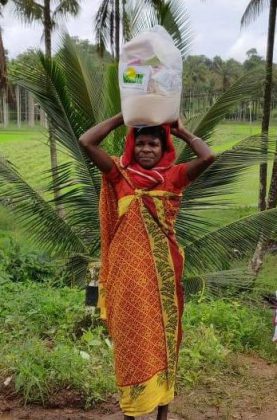
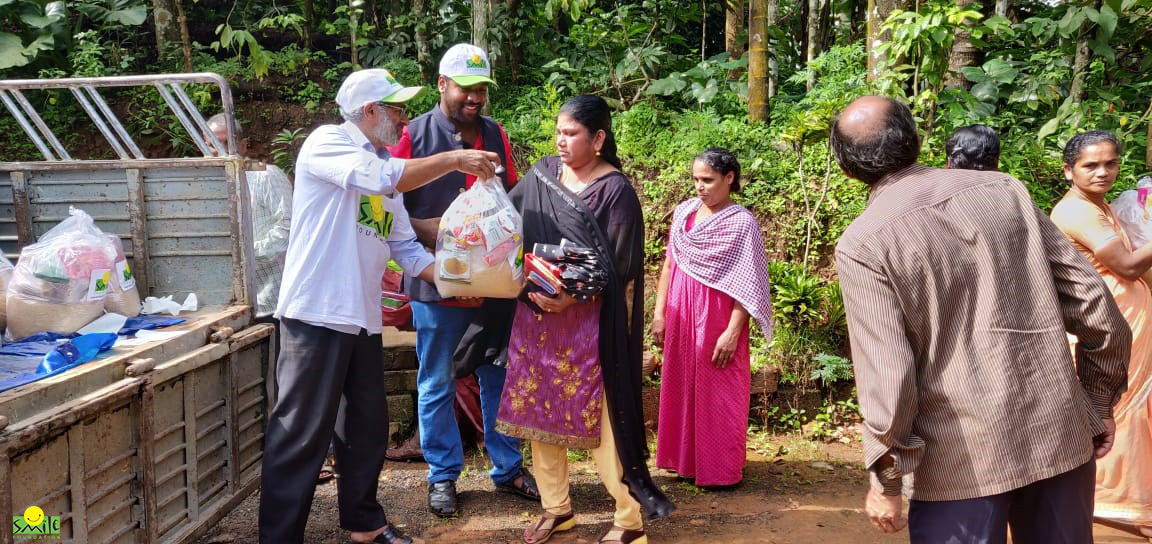
Sitting in the safety of Delhi, I wished I could help and that’s when my organization –Smile Foundation, decided to move away from its core area of education of the underprivileged and send a small team to Kerala with relief material. The members were from our outreach program which looked into the health vertical and community engagements. The team of three landed in Kozhikode airport and what they saw was a shocker. It was water everywhere. They then contacted a pastor who was our local contact person. We were asked if we wanted to go to relief camps or in the interiors to search out people, groups or communities. We decided to go for the latter. This team of passionate dedicated Smilians went into the interiors of Waynad-which is a very deep forested and difficult terrain of Kerala.. There they came across tribal communities that needed immediate relief supplies of food and clothing. This was duly provided then and is being carried out as this story goes to press. The challenge ahead is of health as Kerala now faces epidemic at state wide level. Smile is looking to move its Smile on Wheels (Mobile clinics) to this area. Meanwhile the team in Delhi tried to raise funds for these activities. The response was phenomenal. I personally know that whoever I called and asked have sent in funds. Smile employees to have agreed to donate one day’s salary to Smile’s Kerala Relief Fund. That is a barometer on the way India has reacted to this tragedy. I am proud to be part of the Team Smiles Kerala Relief operations. I am proud to have helped the people of my state. Each one of us can do the same in our own little ways.
Kerala has suspended all Onam celebrations. I do not remember a single year this has happened. The state is in a state of shock. It cannot think beyond the devastation. There is nothing to celebrate. Even the Malayalee’s favorite past time of marriages and important social occasions that were done with great aplomb is been given the pass. Today as Onam arrives on 25th August and Kerala’s favorite king “Mavelli” is to set to mythically visit his state, the state that he will visit is in disarray and there will be no celebrations to “welcome” him. But Onam is not only about celebrations. Onam is about the joy of giving, the joy of sharing, of the rich and the poor coming together, about spreading happiness. We can do this in one way or the other.
Let us all come together as Malayalees and non Malayalees to spread the basic message of Onam. The message of sharing, of giving so that “Gods own Country” is back being one of the jewels in modern India’s crown. Let it bounce back to be the beautiful green modern state that we all love to stake ownership to or visit and enjoy.
Smile Foundation’s team finally reached Calicut and immediately visited areas of Mananthavady, Kammana, Nedumpala, Kappukunum, Pulikad, Koilori, Varinilam where we conducted 3 community meetings. It was a sad plight to see the conditions the state was going through. The distress level was too high and much needed support was expected from the people of Kerala.
The Tribal Mission NGO came to visit the team and accepted to collaborate for our further operations.Dr. N Sadanandam, DHMS doctor providing medical service along with his wife came forward to interact and gathered information about our strategies in helping the affected people.
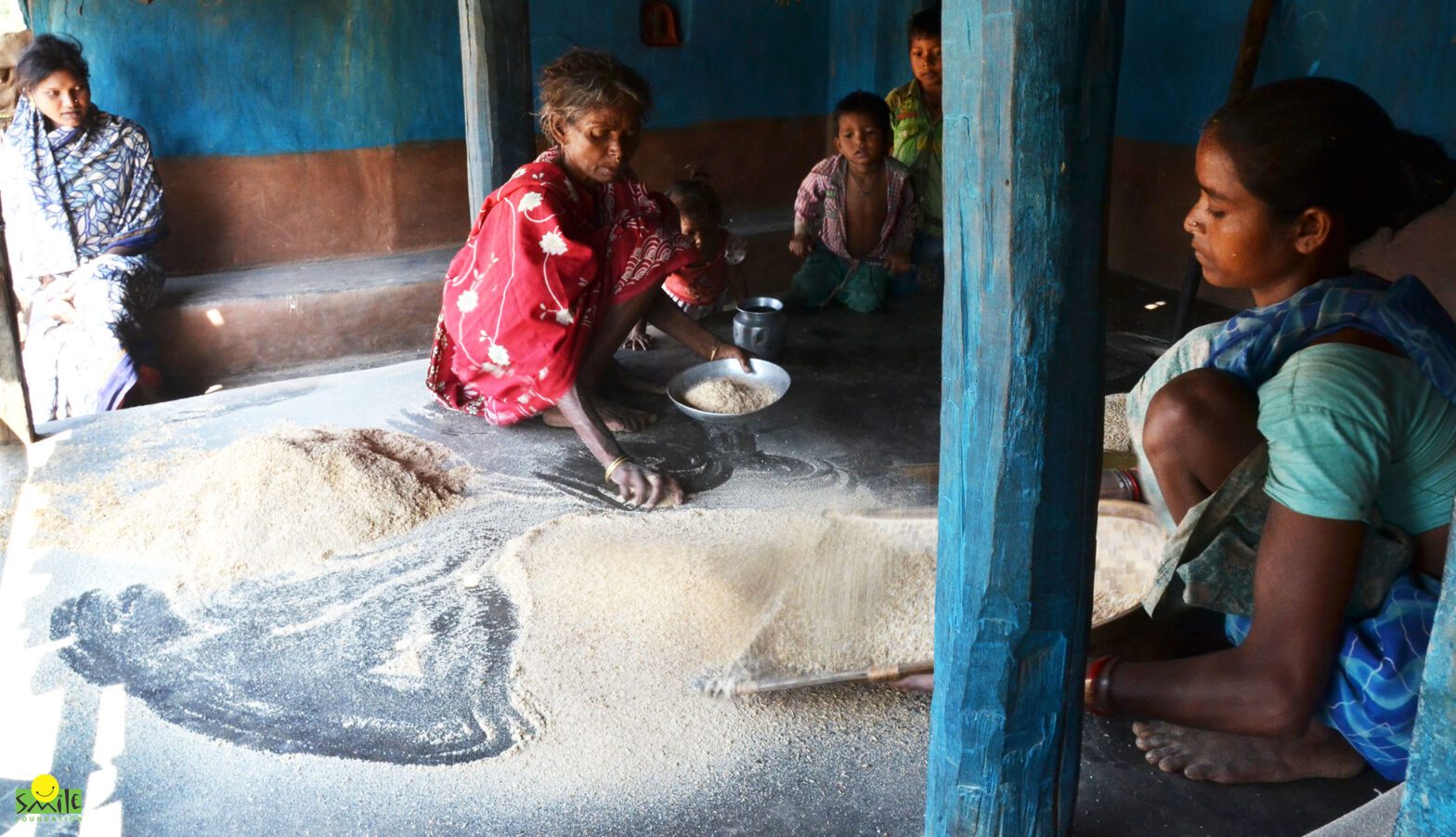
Later on we came in touch with Pastor Sunil of Tribal Mission (second in-charge) who enlisted 5 villages who were in need of Health care services, basic clothes and Food Kits( 2000 families), with 1600 families being from Adiya, Paniya, Kurunchiya and Kurnmar tribes.
The team met Pastor Vinod Kammana who enlisted 4 villages which needed 100 food kits. These were the places which needed maximum attention.
For immediate assistance we supplied dried fire wood for a private relief camp based at hostel, Kammana, which will suffice for 2 weeks. Tomorrow we will be giving food kits to 50 families at Dasanakara and food kits for 50 families at Eruluam (tribal community). Both of these places are in the vicinity of Pullapaly (30 Kms radius).
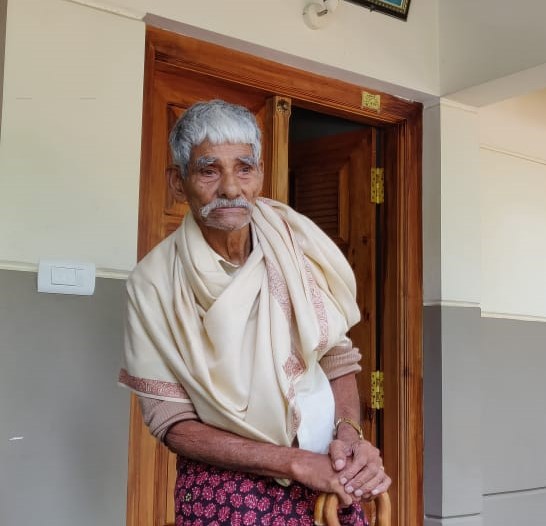
We happen to meet Aachan, 81 years old and sole survivor in his family. He lost his wife and both his sons in the landslide. We are grieved to see him heartbroken and pray for his well being
From The ground (21.08.2018)
The second day of the rescue operations our team was stationed at Irulam, Dasanakara, Cheyambam and Kolaratukunnu villages. Even though it was exhausting for them they were moved by the obstacles and struggles the people were going through. The team on ground worked with the belief that they should alleviate their troubles and get them back to their feet.
Three community meetings were held to access the needs of the residents. The key requirements raised are:
– Support to school going kids
– Need of Note books, Pens/Pencils, Umbrella, Geometry box, School bags, and A4 size papers for about 400 kids in all the areas which were visited.
Then the team visited Irulam and supported 50 families with food kits and another set of 50 families with food were supported in Dasanakara. They had reached Cheyambam and finalized the need to provide 100 food kits as immediate requirement. The same was to be provided the next day.
We had to follow up with Mr. Jacob for food kits distribution and Health camps. We finalise to conduct three health camps covering 5 villages and distribution of kits to 450 families of Adiya, Pani, Kurnuchiya and Kurnmar tribes of Mananthavady Mandal, Wayanad.
Following up with Mr. Vinod, Kammana, they enlisted 4 villages and finalized the need of 50 food kits same would be provided on 23.08.2018
The volunteers interacted with the community and identified the need to support 300 families with food kits in Kolaratukunnu area. Our heartiest gratitude to all the volunteers who are working round the clock with Smile Foundation’s Disaster Response Team on ground to provide relief aid reaches to those who need it the most. Many of these volunteers have faced the wrath of the floods themselves; have lost their homes, property and livelihood. But this has not stopped them from reaching out to help the other survivors.
As the day went by the team was more worried for the children because as the water recedes there will be air borne and water borne diseases floating around. As there was lack of proper sanitation due to the floods we have to give more importance towards the health.
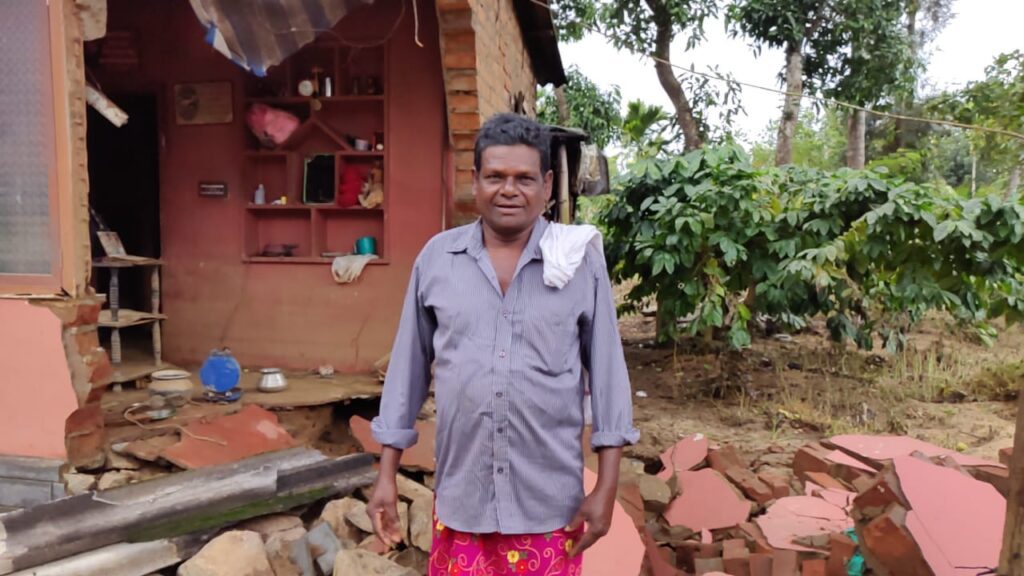
The only way i could earn for my family was through farming and now i am left with nothing. Even my house is damaged and can’t be accommodated. I request help and support from the ones who are willing – Mathew
From the ground: 22.08.2018
Third day of the stay and the water seems to be slowly receding. There are slight rains and showers but the floods seem to calm down. Undeterred by continuous rains, the Smile Team on ground in Kerala, along with dedicated volunteers, are reaching out to the cut-off villages Mathamangalam, Cheyambam, Irulam in the Wayanad district.
The flood and recurring landslides have caused havoc in the lives of families here – broken homes, uprooted families make for a heart wrenching sight. As flood waters have started receding, people have started putting together their homes and their lives.
In the first phase of its relief operations, Smile Foundation is distributing food and other necessary supplies to over 10,000 flood affected families in Kerala.
Our team on ground would be exploring more are at the regions of Pullapaly and aim to provide 100 food kits at Cheyambam.
Along with Mr.James (local representative) we would be visiting new areas – Thalapada, Makimalla, Khambamalla and Periya of Mananthavady Mandal, Wayanad.
These are Landslide affected areas. The main objective of the visits would be exploring the short and long term plans for relief and Rehabilitation. The teams would try to meet the government officials to understand the common community amenity needs for Rehabilitation and also with local leaders and people for individual support.
That night was terrifying. Had it not been for the surpanch my entire family would have drowned. The water is not at all drinkable and I am helpless how to feed my children. I have lost everything – Ullipi Amma
The recent reports provided by the ‘World Bank’ confirms that the wide gap that has existed between the two sexes is now costing many countries. The report reveals that women account for only 38% of their country’s human capital wealth, while the men account for 62%. Thus, if this gap was closed the world together would generate $160 trillion human capital.
In India, women make 48% of India’s population, but out of them only one fourth are working. The reason for their limited participation in the economy of the country are-deprivation of education, the responsibility of the household and low opportunities in the working sector. The study conducted by Booz says that if the country were equally employed the GDP would go up 27 percent.
The major problems faced by women are the normative structures that bind their households to limit them to the kitchens at the job of feeding the males in the house. They are unable to attain education or step outside for any jobs. In cases when women are able to reach the initial steps of education, their degrees are never put to use as they are again made to cater to the needs of their husbands and kids. Amid such traditional societal boundaries, the work done by women is not seen as a part of the human capital.
Woman have been considered inferior to men for centuries. Therefore, when women set out to work they are encountered with unequal pay. The women working at the same level as a man is paid less than him, simply because she is a woman. The examples of unequal pay exist across the various jobs and industries varying from sports to movies, each practices sexism. The laws passed in certain countries have made sure that the equal pay exists for both men and women, but many countries such as India have no concrete law to ensure the same.
Across the world, women have put forth experiences at the work place where they have been demeaned by their male colleagues who outnumber them. Women have still made their mark in all fields despite the barriers that have tried to restrict them. A very appropriate example could be of the ‘Grand Slam’ tournament that are played at the International level in lawn tennis. While the struggle started back in 1973 by Billie Jean King, to attain equal pay when women were rewarded less (that too 40% less prize money than men) it was only in 2007 that finally all the slams offered equal pay to women and men. These statistics are clearly hinting towards struggles that women have to face even in the 21st century after they have established themselves as efficient and skilful professionals.
The world has undergone a revamp but sadly the status of women has only moved as much from worse to bad. A woman is as powerful, strong, intelligent and ‘capable’ as a man. Feminists have never regarded women as the superior gender but only that they are equal to men. If a society cannot accept women as the same as men, they shall continue to suffer, this time as Mr. Jim Kim, President at the World Bank suggests, this inequality will cost them!
Various studies, as well as our experience, have shown that when we work towards women empowerment, the whole society benefits. But unfortunately in India, far from being empowered, most women are denied even their basic rights like health, education, employment and a respectable status in society.
Smile Foundation’s Program – Swabhiman, meaning self-respect in English, was initiated in 2005 to address these challenges through a simple yet effective approach. The programme is specifically aimed at realization of both individual and collective self-esteem and inner strength for marginalised and socially excluded women and adolescent girls through innovative community practices.
Law of nature is such that it has not provided us all with equal means. We are all born in different situations with different abilities and that is the reason the world is so diverse, having said that, we are all entitled to equal treatment and opportunities. Regardless of race, age, gender, religion, beliefs, culture and disability everyone must be treated fairly and respectfully, have rights and equal status in society in order to reach their full potential.
Man is a social animal, we cannot live in isolation. It is very important that we get involved and engage ourselves with the community . In the course of life irrespective of our position, each one of us faces upheavals and we as human beings have the capacity to bring about a change, everyone can in some way or the other give back to the fraternity. Volunteerism, civic participation, outreach and service are the driving force for making a positive impact and transformation in our community and society at large.
There are a lot of people who are in distress but very few are willing to lend a helping hand. As fellow travellers on planet earth we must show solidarity and give them support and extend our kindness if we are the privileged ones. As a matter of fact everyone needs inspiration sometimes in their lives. The entire world is a varied fabric of human beings and we all have the potential to enact change and improve the lives of fellow human beings.
Volunteering will equip us in promoting a more just and prosperous society. One of the biggest tool for bringing equilibrium in our society is the sharing of self. This opens up the door of understanding, compassion, education, and empathy. Even the smallest bit of support and contribution can make a huge difference to the lives of people, animals, and organisations in need. Hence providing support can actually be an overwhelming, humbling and exhilarating life changing experience.
The present day lifestyle has resulted in rising stress levels all across the globe. This results in negative effects on our well being – mentally, physically and emotionally. At a personal level volunteering helps curb stress, anger, and anxiety. When one gets involved and try to bring about a change, the entire process has an extremely profound effect on the overall psychological well-being. It gives the volunteer a new meaning and direction to their life. Community service provides a purpose and a natural sense of identity and accomplishment which in true sense is the essence of life.
There is a popular Chinese proverb that says: “If you want happiness for an hour, take a nap. If you want happiness for a day, go fishing. If you want happiness for a year, inherit a fortune. If you want happiness for a lifetime, help somebody.”
Smile Foundation believes that unless members of the civil society are involved proactively in the process of development, sustainable change will not happen. We encourage and invite volunteers to be an active part of our organization and share the same vision and purpose as us – to work for the welfare of children and their families. Volunteers are the backbone of every organization – they not only carry the organization’s ideals within them, but also spread the message far and beyond, sensitizing the society towards the cause.
Constitution of India: Rights related to Education, Health, Nutrition and Gender Equality
Jawaharlal Nehru’s “Tryst with Destiny” on the eve of India’s Independence, towards midnight on 14 August 1947, echoes in my head.
We have come a long way from midnight to the Millennium, as today we commemorate our 72nd birthday. Our Independence Day is a celebration of India’s democracy that has given every imaginable caste, creed, culture, and cause, the chance to break free of their bondage’s.
The conviction of “unity in diversity” was the catalyst in getting us freedom. From more than 100 years of suffering through subjugation, inequality and exploitation emerged the freedom fighters who lived and died dreaming of a free nation. This freedom has come after paying a hefty price. Every breath that we take in our free country is a gift bestowed on us by the martyred brave hearts. This is why we must not forget neither our past nor the ones who gave us our present, believing in this cause.
Regardless of abysmal opinions of the pessimists, India’s growth story is applaud worthy. The colonial rule bequeathed us with a shattered economy, widespread illiteracy and shocking poverty. Today, after more than seven decades of independence, India has now come closer to being an independent force to reckon with, rising from its shambles. The economic reforms came to India’s rescue, post launch of the policies of liberalisation and privatisation. Ever since we have witnessed growth in all sectors like agriculture, infrastructure, services, education, healthcare, science and technology. From Mangalyaan to Chandrayaan and now planning for Aditya, ISRO’s probe mission to the Sun by 2019-20, we have announced to world that we have arrived.
The freedom to choose, the freedom of speech, in fact, the freedom for me to write this column, as trivial as it may sound is actually the biggest gift that we have. Gandhiji had said, “The highest form of freedom carries with it the greatest measure of discipline and humility. Freedom that comes from discipline and humility cannot be denied”. Let us not forget the price that extraordinary men and women paid for this. This tree of freedom needs our sustained care and nourishment.
Let us all pledge not to take this freedom for granted. As Nehruji said, “Long years ago we made a tryst with destiny… At the stroke of the midnight hour, when the world sleeps, India will awake to life and freedom,”
The health of an infant is the responsibility of the parents. The first thing a child needs post-birth is to be breastfed by the mother. It is disturbing to find that infants succumb to death due to the careless approach of the parents towards the necessity of breastfeeding.
The health of an infant requires vital importance. The most basic and urgent necessity of a new born is the milk from the mother. The milk produced by the mother after the delivery of the baby is called ‘colostrum’. This milk is needed for the survival of the infant as it is rich in nutrition and helps increase the immunity of the child therefore reducing the chances of death at the neonatal stage.
The first two years of an infant’s life requires nourishment through the supplementary foods and mothers milk. These are vital years where the child develops physically and mentally. It is highly essential that during these growth yeas the proper nutrition is provided to the child and breastfeeding helps the child to fight allergies and other diseases such as diarrhoea and pneumonia by increasing their immunity. Malnourishment is the most commonly found problem in the children in India which can be prevented through breastfeeding. The malnourished child has low immunity levels and is critically underweight which also stunts the growth of the child through the years.
It is observed that India has poor rates of breastfeeding. According to National Family Heath survey (NFHS-3) the states such as Bihar have a low rate of approximately 4% breastfed infants after the first hour of birth. While Mizoram offers the highest percentage of breastfed infants at 66%. The average rates of breastfeeding in India is 24% which is unacceptable. Children in India can be potentially as strong and healthy as children anywhere across the globe, but the lack of awareness about the vitality of breastfeeding leaves them without a head-start they deserve in life.
Low breastfeeding can be life threatening for both the child and the mother. As it is the main source of nourishment for an infant, mothers milk proves essential for the chid. But it’s just not the child who benefits from it, even mothers benefit from breastfeeding as it works as a shielding against breast and ovarian cancer, diabetes and post-menopausal osteoporosis. It also helps in losing post-pregnancy weight and lowers the risk of developing Alzheimer’s at a later age.
The breastfed milk has been replaced by parents through the market bought packaged milk. The busy schedules these days has pushed women to opt for easier ways to feed their child. They hire caretakers for their infants or creche facilities to while they are at work, however the mothers forget the importance of breastfeeding. There are various alternatives that women may use to provide the child with their milk. The usage of breast pumps can help women to extract and store their milk which the child can intake. As breastfeeding rooms aren’t available, women may use nursing bra as it makes it easy to breastfeed in public.
But most importantly mothers must understand the importance of breastfeeding and the fact that no supplements or cereals can replace it as the power vested in the breastfed milk is superior to any other means of nutrition.
Healthy mothers are happy mothers! Under Smile Foundation’s Program Swabhiman, health mobilizers provide curative, ante-natal/post-natal services, & sensitize communities on family planning, nutrition & education.
India is gradually moving up the ladder in the world’s coveted list of the largest economies. We have become the world’s sixth-largest economy by nominal GDP and the third-largest by purchasing power parity (PPP). We are making significant strides forward economically and are poised to become an economic superpower by 2020. But Is this economic growth really targeted to bridge the gap between the rich and the poor section or will it just benefit the already benefitted?
The real engine for balanced growth lies in education and integration of one and all in the economy. The current trends in the labour market are undergoing a huge transformation. Automation is displacing unskilled workers, and non-routine jobs are having a similar impact on the expansion of the IT industry.
The good news is that we are one amongst the youngest nations of the world. According to demographics, 50% of India’s pollution is under 25 years of age. While the rest of the world is ageing, we have the power to be a youthful, dynamic and productive working population that can transform the world. Investing in education, vocational and skill training can be hugely benefitting, leading to an integrated economy.
Besides education, providing clinics and classrooms, medics and medicines, can help in bridging the gap in life chances and give people the tools to challenge the rules that perpetuate economic inequality. Free public healthcare and education are not just human rights; they also tranquillize the adverse impacts of the skewed income and wealth distribution in our society.
It is believed that in future, the better-educated workers will come almost exclusively from developing countries, replacing ageing workers from high-income countries in the global pool. This education wave will alter the dynamics of global inequality, both within and between countries.
There is no doubt that the challenges are enormous, but having said that, there is no doubt that here in our country we have the numbers and we have begun turning the wheel. I am sure with consistent continued efforts towards an economically integrated society, this common goal is just over the horizon and we can easily announce to the rest of the world that “We have arrived!”