Coronavirus disease or COVID-19, as it is known as taken the world in its clutches with the number of infected crossing the mark of 460,000 and that of dead 21,000. One-third of the world has been put under strict lockdown in a bid to tackle the disease which has no cure or vaccine.
In a situation, where almost all of the population is confined to their houses and doctors and healthcare workers are risking their lives while treating the affected, mental health suffers in an unexpected way.
With the number of cases increasing every day and easy access to the latest news, it is normal to feel anxious and panic. The disease is likely to affect not just the physical health of the people but also mental health. There is a growing threat of stress, panic, and sleep disturbance affecting the population. Anxiety disorder, obsessive-compulsive disorder, panic disorder, severe phobias, and PTSD may also be likely to grow among the people already suffering from mental health problems.
The most affected by this pandemic are the doctors who are working long hours and with next to no means to deal with the novel disease. The fear and anxiety of treating people with a disease that has no cure and which is yet not entirely understood can get surmountable.
Another major cause of stress and panic is misinformation and rumor-mongering. When a piece of inaccurate and unverified news starts making rounds among the general masses, the resulting situation becomes very difficult to deal with at times.
It is, therefore, very important to take care of mental health as well. WHO recommends that even though we all should stay at home and away from crowds to contain the disease, we must socialize with our friends and family regularly. Staying connected and sharing your thoughts, fears, and anxiety can help one a lot in dealing with the stress of the situation.
One should be aware and informed of the situation and how to protect oneself and those around from COVID-19, but one must avoid reading, listening or watching the news that causes one extreme stress and anxiety. It is important to maintain a regular routine in which you are physically active as well. Exercising and eating healthy can help in dealing with stress by increasing the level of dopamine and serotonin.
People must find opportunities to amplify positive stories and means to keep themselves busy and support one another in dealing with not just the disease but also the isolation that is accompanied with it.
Covid-19 is not just the test of technology and doctors but also of people as a whole. This disease has brought us closer and together this can be overcome. Scientists and doctors are doing their bit by working towards handling the disease and finding a cure for it. We must do our bit by staying home and by extending our support globally to prevent this disease from becoming a mental health epidemic as well.
Since the outbreak of Covid-19 in Wuhan, China earlier this year, the world has witnessed over 220,000 cases globally. China has 80,928 cases presently, however, there no new local cases reported either within Wuhan or across mainland China. The country has reported just 34 cases, all of which are imported ones.
The rest of the world is struggling to control the fast-spreading epidemic that has claimed 8,988 lives so far. Italy, Iran, Spain, all have now become the epicenter of the disease. In a situation where there is no treatment or vaccine to fight the disease, social distancing is a crucial method to contain the disease from gaining ground.
China stands as a role model in effectively preventing the spread of the disease across its population by implementing lockdown in the cities and executing measures to prevent hoarding of medicines and essential goods by the public. Italy, on the other hand, did not take the necessary action and has now turned into the hub of Covid-19.
Social distance is important in countries like India with high population density and lower reach of essential healthcare. An epidemic has four stages before it reaches an uncontrollable state. Stage one is the import of disease into the country and has not originated locally. The next stage involves the person to person local transmission when people come in contact with the infected person with travel history to the epicenter of the disease. Stage three is community transmission in which a cluster of people are infected and the source of transmission cannot be identified. The fourth is a full-blown epidemic.
India is yet to reach stage three as per the Indian Council of Medical Research (ICMR). This, however, will not last if appropriate measures are not taken by the government as well as by the people.
Covid-19 is dangerous for people above 60 years of age and people with a weak immune system or who have prior health conditions like heart disease, lung disease, diabetes, etc. Therefore, it is important to adopt social distancing at a personal level. Social distancing involves avoiding public gatherings and spaces until absolutely necessary.
Most people believe since they do not show any symptoms or even if they get the disease, it will not affect them as they are young and have strong immunity. Yet, even then we can be hosting the disease and might be transmitting it to people who may not be able to recover from it.
The present situation expects us all to be more socially responsible and execute our duties as human beings by distancing ourselves from other people as much as possible. The young might be able to bear the disease but there are a lot of people who do not have the luxury of having a body capable of fighting Covid-19.
As advised by WHO and CDC, maintaining good hygiene and social distancing are the two most important shields we have against this novel virus that is spreading like wildfire across the world. This disease may not be treatable yet, but it definitely is preventable. China has proved it to the world by effectively controlling it. A country that is not sending out medical professionals to aid other countries in this fight against Covid-19.
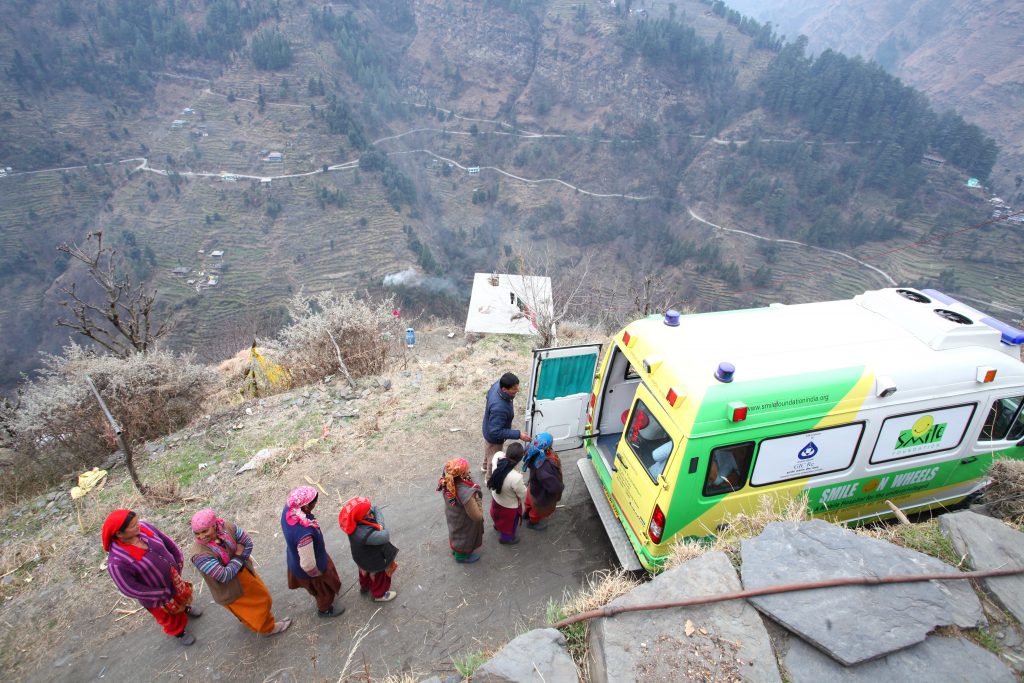
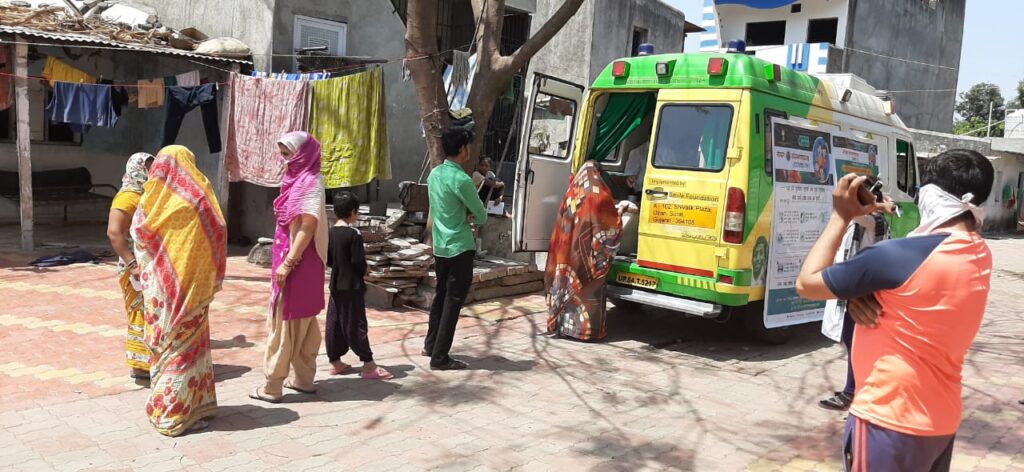
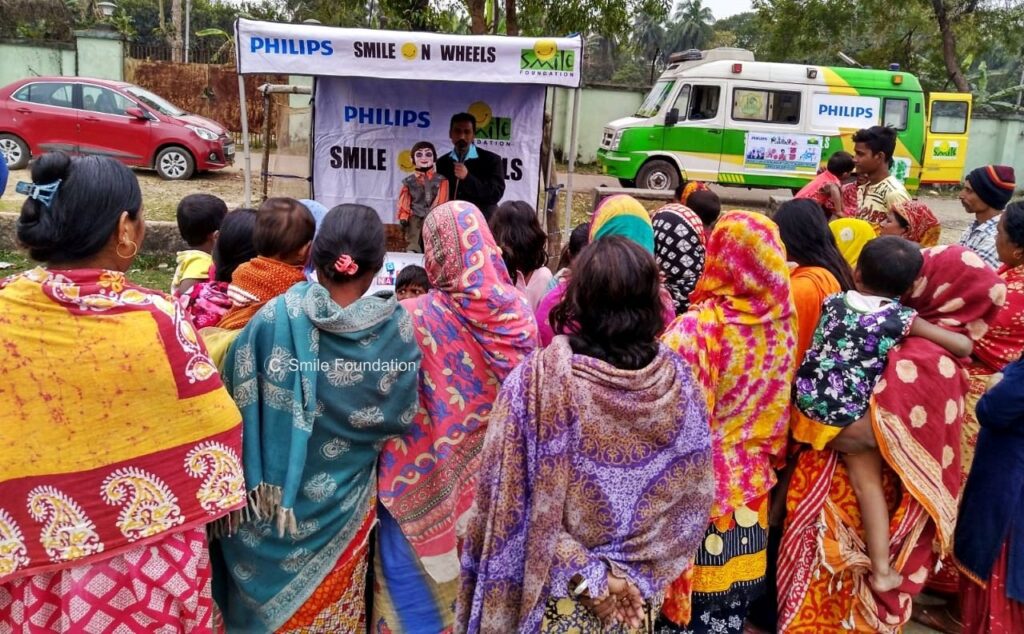
Following the lead of the global health agencies, Smile Foundation’s mobile healthcare units, Smile on Wheels, are traveling from community to community. They provide the lesser privileged with much needed medical care as well as awareness about this disease that has taken the world by storm. With a lot of people hoarding essential medicines as well as antiseptics and sanitizers in this time of need, the SoW heroes are working relentlessly to reach out to people in the most remote areas. These agents bring to them the healthcare and awareness about Covid-19 to equip them with knowledge crucial to thaw the spread of this disease.
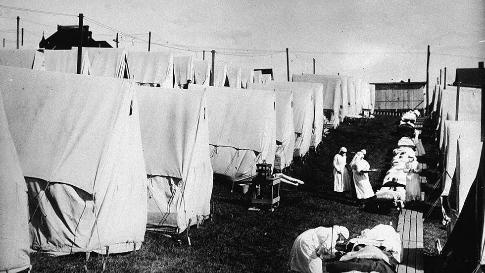
Black Plague in 1347, cholera pandemic in 1816, flu pandemic in 1889, Spanish flu in 1918, HIV/AIDS pandemic since 1920, H1N1 flu in 2009 and now the pandemic, COVID – 19.
Diseases have been inflicting humans since the dawn of civilization, probably even before that. The earliest known epidemic to have affected a vast population was the Plague of Athens (429 – 426 BC). It claimed as many as 100,000 lives in Greece and the cause of the epidemic is still not known.
One of the most devastating pandemics of all time is the Black Plague (1347 – 351). Even though confined majorly to Europe and the Middle East, it wiped out more than half the population of Europe with 200 million deaths. In 1918, Spanish flu (presently H1N1) hit the global population affecting one-third of the population worldwide while killing between 17 – 50 million people at the time.
What made each of these pandemics worse than the last was the fact how much the world kept shrinking and connecting more people with each other. Presently, more than 100,000 flights go around the world making travel from place to another easier both for humans and the virus they might host. If a pandemic like Black Plague were to happen, it will easily spread through the in a matter of few weeks. Precisely what we are facing with the COVID – 19 which as affected over 180,000 people and killed more than 7,000.
It takes just one person!
However, with advancing diseases humans have also managed to become advanced in technology. A disease that would once have passed through humans untreated and/or unrecognized can now be prevented from becoming apocalyptic. Scientists now have knowledge and technology far more superior than they did just 20 years. Reports are there that vaccine for COVID – 19 can be available within the next 18 months. Earlier, if the human trials succeed.
Doctors, scientists, and organizations are working round the clock not only to find a vaccine for COVID -19 but also to find one single vaccine for all the virus strain known to humans. They hunt for such virus strains hosted by birds, pigs, bats, and animals which are known to pass these viruses to humans, to find the disease(s) that can possibly kill thousands of millions of people, before it even enters the human system.
Being prepared for a global pandemic has become important in modern times. It is not a matter of if but when in the case of a viral disease. It’s COVID – 19 which is infectious yet has a low mortality rate. It will be something more severe in the future and to be prepared for it is all each of us can.
The same starts with hygiene. Maintaining proper hygiene is important not only to prevent a pandemic or an epidemic but also to prevent oneself from falling sick of diseases that can turn fatal. Washing hands properly and regularly; not touching one’s mouth, nose, eyes; staying away from public spaces when sick; contacting a doctor timely when sick are a few things that can prepare one at a personal level.
In a world that has 1.2 billion living on less than one dollar a day, adopting these habits is not the priority. Lack of awareness and limited access to healthcare due to inadequate infrastructure makes the poorest of the world the most vulnerable to being victims of fatalities due to a pandemic.
In an effort to prepare the people from underprivileged communities in India, Smile Foundation conducts awareness and counseling sessions across all its project verticals. From teaching children to hand washing techniques to imparting the entire community in urban slums & rural areas with knowledge of maintaining adequate hygiene, Smile undertakes the role to prepare people for a situation that can be prevented; and if not prevented then protected from.
With the outbreak of novel coronavirus, there has been a shakeup across the world. India is at stage 2 and as the ICMR director general has pointed out, we have only 30 days or less to halt the onset of stage 3. While we can still contain the virus and ensure that it is not spread, it is vital to influence our rural population and make them aware of the actions they can take.
Global communications have made it clear that to avoid being infected with the coronavirus, one has to take precautions – particularly washing hands and maintaining hygiene at all times. It also involves avoiding handshakes and touching your eyes, nose and mouth. Though the message is clear, and India is still at a nascent stage of the virus, a major threat looms, particularly with our hinterland population.
66% of India’s population lives in rural areas and has limited access to healthcare services. Their access is limited due to personal negligence and lack of infrastructure. Moreover, recent studies on hand hygiene in rural India indicate that only 26.3% of the rural population washed hands before child feeding, 14.7% before breastfeeding, 16.7% after disposing of child faeces, and 18.4% after cleaning a child’s bottom. These numbers indicate how big a behavioral challenge exists.
On a central level, an evident push towards controlling the coronavirus outbreak is clear. From the prime minister tweeting on steps to be taken to cancelling almost all existing visas to India, some bold moves have been made to contain the coronavirus pandemic. Some state governments have also put a foot forward, by shutting schools, colleges and cinema halls. WHO director general has clearly stated that Covid-19 is a controllable pandemic and urged all countries to take a comprehensive approach tailored to their circumstances – with containment as the central pillar. Given that containment is the way to go, we have to understand that nationally spreading one line of communication may not be the only way to go.
Globally we have about 1.2 billion people who live in extreme poverty with less than a dollar a day to survive on as per WHO. Out of this, 276 million are in India, according to Census 2011. The majority of them live either in urban slums or in remote rural locations where access to hygiene and healthcare are both a matter of grave concern. Due to a large population, lack of awareness, lack of resources and monetary aid, our country is a ticking bomb when it comes to any communicable epidemic. The worst to suffer are the poorest. Not only do they earn less, but they also end up not having enough money or adequate healthcare support to seek immediate help.
Diarrhoea alone kills as many as 10,000 people annually in India, most of whom are children. A disease that can be prevented easily by maintaining adequate hygiene and handwashing is a life threat to the poorest of society. Influenza is not far behind on the list of diseases that are deadly for the underprivileged. This common flu, usually curable by a regular dose of paracetamol and hot water steam, ends up turning into pneumonia because people cannot access the basics.
A person living hand to mouth tends to avoid spending money on medicines and doctors and tends to rely on home remedies. In such cases, if it is a communicable disease, it stands a high chance of spreading through the community and at lightning speed as well. Awareness can play an important role in reducing the extent to which these diseases cause havoc in the lives of the underprivileged. This is the first step towards achieving a safe space where the spread of disease may be contained. To prevent is better than to cure.
Next comes easy access to primary healthcare service at minimal to no cost. There is also a need to setup an integrated MIS system that can be implemented on an individual basis to help track and report back cases. The data sets can be exchanged among organisations working in a set area and can help in collating a comprehensive patient list for local government authorities to track and contain the disease at the nascent stage.
This can also help build confidence in the lower strata of the society once the positive cases are taken care of. It is also hard for people to distinguish between reality and myths – such as bizarre beliefs about home remedies to tackle the virus. With a serious pandemic like Covid-19 myths must be busted and awareness generated. This is crucial for a holistic containment strategy for the nation if and when we reach a higher stage.
Nagpur is the Orange city of the nation & also the summer capital of Maharashtra. It’s a city that I can easily call a sleeping giant. There’s so much development happening there, it’s tough to fathom if you haven’t witnessed it with your own eyes. A city’s development & construction activities are manifested by its pollution level. In Nagpur however, the AQI is a comfortable 58, which implies that despite all the construction, the city has managed to still maintain a pollution free environment. It’s a city that is happy in its state of being, where a Starbucks or a Uniqlo doesn’t play much role in the lives of the natives.
Education, of course, is very important in the lives of an average Nagpur resident and that makes conversations in this city very healthy & exciting. People are not only knowledgeable but also opinionated. The city is bestowed with many educational institutions and coaching centres, which leads me to have more fathom the huge importance on academic. As a representative of Child for Child division of Smile Foundation, I visited a lot of our partner schools, and interacted with the principals. I realised that each school has a very strong culture that gets embedded in the souls of its students. The value system that is imbued plays a very crucial role in the holistic development of each child and therefore it was but natural that they become our partners in philanthropy. Smile Foundation has always enjoyed working with schools that follow the same spirit of empathy & working towards civic driven change.
A hug from them is all one needs
My visit to schools all across Nagpur, from Kamptee to Hingda, from Warda to Sambalpuri gave me the opportunity to soak in the true philanthropic dispositions of the people of Nagpur. The team of CFC in Nagpur has now further spread its wings to Chhattisgarh & Madhya Pradesh. There are people who are travelling extensively to spread Smile in the lives of children studying in schools that are located even in small districts. Such schools have also become our charity partners and we have always helped with them in their times of need.
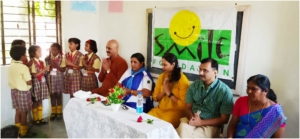
My visit to Nagpur, coincided with the celebration of International Women’s Day. And, what a celebration it was! New Apostolic English High School, Nagpur is one of our very old CFC associations. Smile Foundation has been working with them for close to 8 years now. The relationship of the school with our Child for Child division has moved to a different level, where we now partner with them for upliftment of women whose children are supported by the school via Smile Foundation. Children and teachers under the guidance of their principal & coordinator put up a beautiful act for celebrating International Women’s Day.
Children welcoming the Smile Foundation team with a prayer.
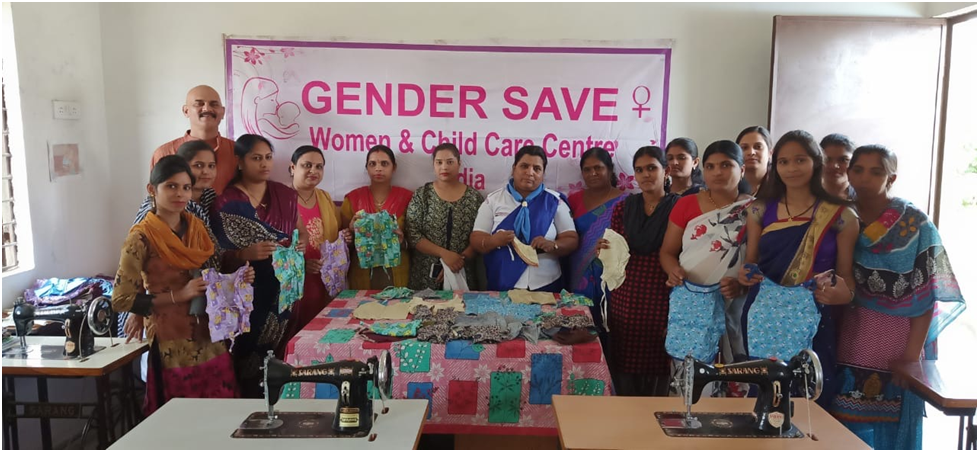
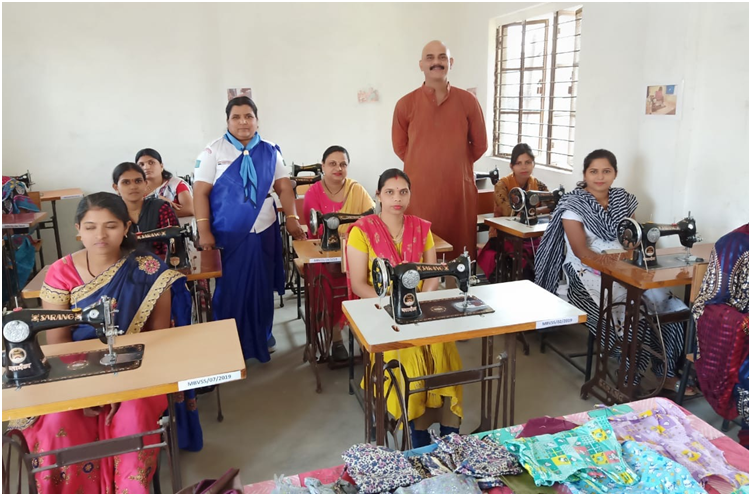
The school has launched a program with Smile Foundation called Gender Save. As a part of this initiative, women who come from the family of children supported by the funds raised via New Apostolic school are provided employability assistance by Smile Foundation. This project was initiated with the help of Smile Foundation, in 2016. We awarded them one sewing machine and since then we have been supporting them by giving one sewing machine every year. Now the project has 27 machines since its foundation and more than 100 women have successfully completed a 3 months certified course of sewing. It has empowered more than 100 homemakers and girls, to earn their livelihood by grooming their sewing skills. These women design and stitch clothes for the new born and these clothes are given to the poorest of the poor infants born in the nearby Government Medical College, Nagpur.
The Sewing Machines that have helped women regain their self-respect & livelihood
The objective of the project is to empower the home makers and the slum dwellers from nearby the school and the said site of the project. Around 20 home makers who had developed their sewing skills through this centre participated in today’s event, along with the students of the school.
As a mark of gratitude the women beneficiaries and their trainer shared their experiences with the Smile Team. They shared stories of how they felt empowered with the help of the earnings that they generate by stitching clothes. The smiles on their faces and the sense of dignity they carry with them truly made our celebration of International Women’s Day memorable.
In these times of anguish & uncertainty when people are in the dark about what Corona virus numbers will greet them the next morning, who is the next person getting adversely affected by it, Smile Foundation is trying to spread smiles & awareness amongst everyone. People these days are looking for a glimmer of hope to cling to, especially now that they are under lockdown. A lot of them are reorganizing their lives as they are letting go of the earlier routines and building new ones. Adults and children alike are adding new words into their vocabulary like Lockdown, super spreader, contact tracing. There is an infodemic that seems to be hitting all like waves. In such times, we have to go back to basics, staying happy with our family members, unshackling ourselves from bondages that guided us earlier, following the very basic routines of hygiene & sanitation. In times like this, we cannot lose faith and have to wait patiently for the situation to turn for the better.
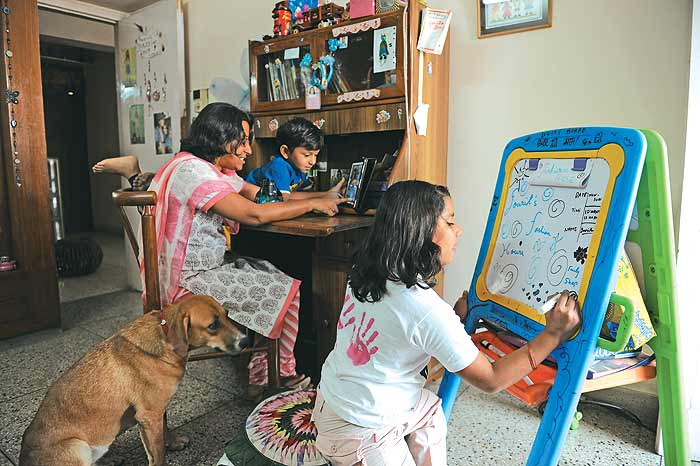
At Child for Child (CFC), we have always believed that children are supposed to be out in the world, channelizing their energy towards sports & education & also towards playing with their friends. But times are such, unfortunately, they are under house restrictions for no fault of theirs. The realization came while the team was discussing the movement restrictions that children are the worst sufferers, and now was when efforts needed to be made to keep them busy & engaged productively & progressively. CFC team members’ conversations started to veer towards helping children unleash their creative talents even during the lockdown. The idea that took shape was to enthuse children with the idea of expressing their feelings, their sentiments & the knowledge acquired about the Corona pandemic in some creative manifestation. And, most importantly also to build in an element of competition so that they do not become lethargic. As the famous saying goes, “All work & no play makes Jack a dull boy!”
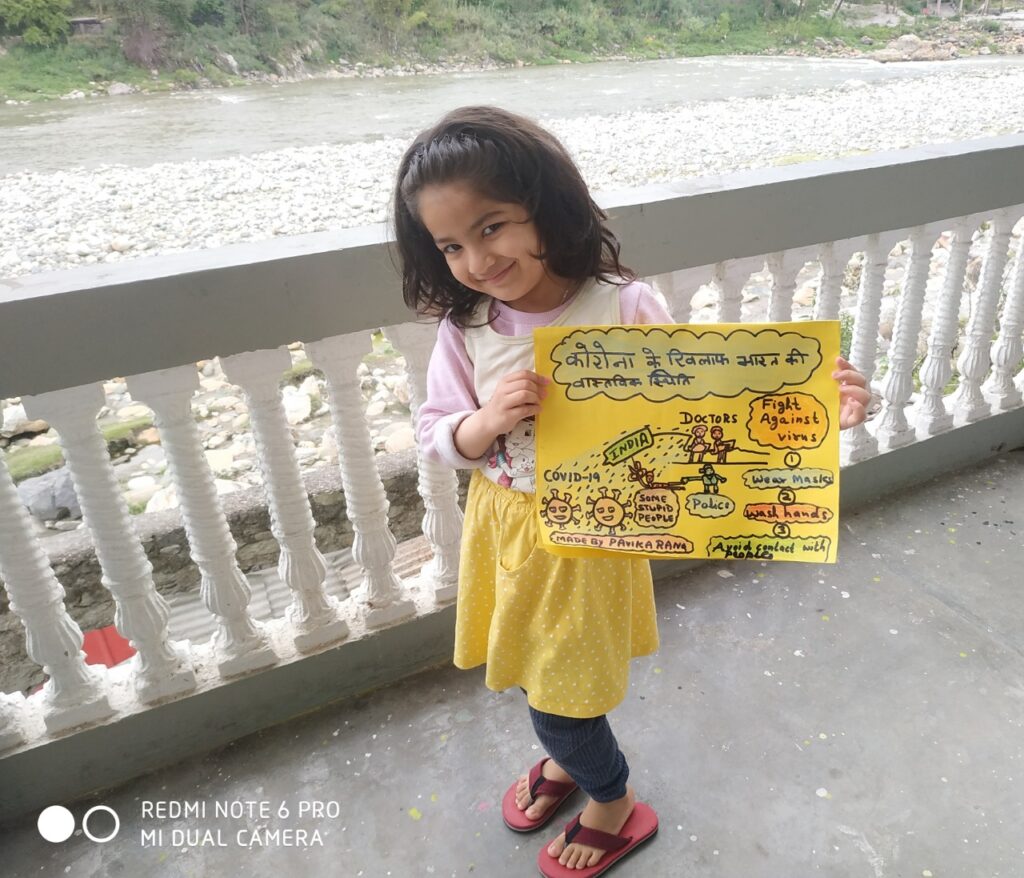
The Child for Child team then put together a campaign, decided upon the categories and themes for the 8-day campaign. It was decided that students can share their ideas on “How to Win the Fight over COVID-19” by way of paintings, sketches, essays, poems, shairi, slogans, song lyrics, prose, satire, & cartoons with a social message. The team then reached out to thousands of their school partners across Delhi NCR, Maharashtra, Punjab, Jammu, Rajasthan, Karnataka, West Bengal, Assam, Tamil Nadu, Jharkhand, Uttar Pradesh, Madhya Pradesh & many more regions. They got an extremely positive response as every school was looking at keeping their students busy & engaged productively. CFC then built in an added element of competing for fun. With the blessings of Smile Foundation’s management, our COO, Mr. Sanjeev Dham & our National Consultant, Ms. Meena Batra, the final campaign was created. And sure enough, it was immediately lapped up by School principals & coordinators, and CFC’s national level campaign; “Students say….Let’s Win the Fight over Corona” took birth. The campaign commenced on the 30th of Mar’20 & will conclude on the 6th of Apr’20. The outreach has been to over 4000 schools & more than 50000 children received information about the campaign & the idea behind it via various mediums, calls, Whatsapp, emails, social media posts, The buzz was created relentlessly while staying locked down in our respective homes. It is in times like these we realize how technology has helped us become one global family!
A digital poster was created for the campaign & a Google form was generated for online registrations. CFC team rolled out the campaign pan India at 3 pm on the 27th of March’20 to seek early registrations. Principals & Coordinators of schools put into use their email groups & Whatsapp groups and circulated details about the campaign. They spoke with parents & guided them to motivate children to participate in the competition and to move away from the screens that seemed to have taken over their lives. For any queries, they were directed to the CFC team.
Within 24 hours there were over 300 registrations and the numbers have crossed 2400 since. The portal opened for entry submissions on the morning of the 30th of March, and there have been thousands of entries. We are halfway into the campaign and have already received close to 2000 paintings on the campaign theme, and close to a thousand entries on essays & poems. All submissions are sent by participants as a pdf, image or scanned copy in the attachment to an email id mentioned in the poster.
The campaign was built to force children to use their mental faculties and come out with their creative best for any of the themes that they would choose. Children across all age groups, 4 years to 18 have participated across different age categories. Results will be declared on Smile Foundation’s Facebook page on the 22nd of April’20. Winners will get 1st, 2nd & 3rd place Medals. All participants will get a Digital Certificate of Participation. Prizes will be given after schools reopen whenever the lockdown is removed.
Due to the overwhelming response of children and the huge number of entries, at CFC we realized that we have hit a spot with Schools, parents & children. We very proudly announce that we have now involved an external jury comprising esteemed people from the creative field, to sift through the mountain of submissions and arrive at the best few entries. Ms. Sangeeta Kumar Murthy, a felicitated artist for the past 25 years and Ms. Shivani Wazir Pasrich, a prominent theatre artist have agreed to be our jury. Keepwatching this space as the campaign comes to a closure.
Some of the parents have sent us emails that reflect their appreciation for the campaign, which has given their children to not only be busy but to also give an outlet to the information that they have been exposed to the ongoing pandemic of Corona. One such message is shared below:
“Dear Team,
It’s a great initiative to make the kids engaged with the activities and to make them aware of COVID 19.
Cheers,
Suneetha Manthri”
As we analyze the registrations, we see one region, Maharashtra, has shown a huge interest in this campaign, maybe because the state has now become the epicenter for the Corona in India. Around 50% of the registrations are from that state. There are some beautiful paintings & write-ups submitted by children. This Corona pandemic has truly left our students affected and they really want to do something, whatever little while staying home. The submissions vary in their concepts, from “Washing Hands”, “Break the Chain”, “Social Distancing”, “Save the Earth”. Children as young as 4 years have sent in their drawings. This clearly shows that students care & they want to be heard. The paintings, the poetry, the song lyrics are all depicting their anguish, their hope & their prayers.
In today’s world we have begun to realise that girl child education is essential. Earlier people thought that girl child education was not necessary. This modern age describes the awakening in the female group in many productive ways. They are way ahead compared to men in many spheres of life. The argument on educating a girl child is still prevalent in our society but considering the fact that women are capable of achieving anything nowadays, we can hold back the views of the oppositions. We can see many women leading the economic and social sector way ahead with successful results. Girls are bringing a silent revolution in the society.
Girl child education can play an important role in the development of our society as well as country and also has several other advantages. Girls are serving the country in many fields ranging from sports, science, literature and all kinds of political affairs. The view of seeing girl only as a housewife has changed and now girls are way ahead scoring positive results with the help of education. Women have even gone to the borders of our country to defend our country from the enemies.
Education has benefitted our female population even in this modern age of economic crisis. They are independent and also bring income in the household. Even after marriage educated girls are able to add to the family income along with the husband and also if their husband expires she has the capacity to fend herself and not be dependent on others.
A home is peaceful and blessed if a girl child is educated. People have become broad minded about girl child education currently. Though there are people who still oppose girl child education but we can’t deny the fact that girls are capable of doing big in life. A man himself is happy to have an educated mother, wife or daughter. The future of the country also depends on the upbringing of the children in the right direction and if a mother is educated it adds to the effort of conclusive results.
Education empowers women to have a better outlook on life making her aware of her rights and responsibilities. An educated woman knows when to stand up for her rights and also fight against the problem of gender-inequality. Education also gives a woman freedom of thought and the ability and confidence to express her feelings in the right manner. Every girl has the right to be aware, pursue knowledge and learn. Education of these girls would have positive impact on both economy and society.
Education of girls from rural and remote parts of India is equally important. These girls get even lesser opportunities for education due to extremely limited resources and access. However, with both the Government (Beti Bachao, Beti Padhao initiative) and civil society organizations focusing on the education and welfare of girls, the situation is getting better every day.
Smile Foundation keeps girl children and women at the core of all its programmes, be it livelihood, education, healthcare or community engagement. We believe that when women are educated and empowered, the whole society benefits – their children go to school, families are healthier, and communities grow more prosperous. To know about our girl child and women empowerment programme, visit: http://www.smilefoundationindia.org/swabhiman.html
Our country’s progress depends on the education of girls. We should all step forward and encourage girl child education. We can make the difference and bring concrete change in the face of our country. All we need is to be united and put an extra effort to ensure that our girl children are educated, aware and empowered.
The situation of primary healthcare in India is a poor one. It is a result of poor sensitisation, lack of education, lack of mobilisation and the nonavailability of resources as and when required.
There are several definitions of primary health care, but most have the following key elements:
Primary healthcare includes preventive, promotive and curative care;
Care is provided within or closer to the communities they serve, almost at the doorstep;
Primary health care is universal in nature, but focuses on the most vulnerable and marginalised;
It provides person- focused and population-focused care rather than disease-focused care.
Because of these features, primary health care helps in promoting health-related behaviour, preventing ill health, and detecting and treating the illnesses early, closer to where families live.
After the eight Millennium Development Goals were adopted in 2000 and have shaped progress in the past 15 years, the new Sustainable Development Agenda ‘Transforming Our World: the 2030 agenda for sustainable development’ was adopted by the UN General Assembly in September 2015.
17 Sustainable Development Goals (SDGs) were adopted by governments, including India, of which SDG3 explicitly relates to health—to “Ensure healthy lives and promote well-being for all at all ages”. This goal is translated into 13 targets: three relate to reproductive and child health; three to communicable diseases, non-communicable diseases, and addiction; two to environmental health; and one to achieving universal health coverage (UHC).
SDG3 places health at the centre of all solutions for change. It recognises that the only way to provide primary health care services is through a comprehensive approach. It focuses on people as whole individuals and recognises that their healthcare needs will change throughout their life and therefore promotes a life-cycle approach to health as a solution for change. For example, rather than addressing antenatal care and child health as medical conditions, a comprehensive approach views women and children as whole human beings with changing needs. It also recognises and emphasises the universality of primary healthcare and focuses on key elements-preventive, promotive and curative as solutions of change.
Global evidence suggests that countries with strong and comprehensive primary health care systems have better health outcomes, lower inequalities in these outcomes, and lower costs of care.
India’s National Health Policy 2016, along with the budgetary announcements made in February 2018, takes a two-pronged approach for strengthening primary healthcare in India:
Improving access and quality of primary healthcare in India through strengthening 150,000 sub-centers (transforming them to health and wellness centers), and
Improving access to secondary and tertiary care through a near-universal health insurance scheme.
The policy recognises the pivotal importance of Sustainable Development Goals and outlines key strategies to achieve these goals. It focuses on Universal health coverage (UHC) as a solution for change- to ensure that all people and communities receive the primary health care in India that they need, without suffering financial hardship.
One of the key challenges facing India in terms of UHC is reaching the un-reached with quality primary health care services. Mobile Health clinics have served as a solution for change, in reaching the vulnerable and marginalised populations living in remote, difficult to reach areas as well as for communities that are cut off from mainstream services on account of hilly terrains, flood-prone areas etc. They have also played a significant role in the delivery of health services to uninsured or under-insured populations.
These clinics represent the critical link between communities and hospital settings and are effective in bridging this gap, thereby leading to social transformation and empowerment, eventually improving health outcomes and making quality primary health care services a demand-driven social norm. The long-term impact of such interventions is that mobile health clinics are able to reduce out of pocket expenditure and produce significant cost savings by reducing hospital visits and length of hospital admissions. Mobile clinics thus represent a cost-effective care delivery model to improve health outcomes in vulnerable groups in communities.
Smile Foundation has been a key player in the provision of primary healthcare in India through its Mobile Health Clinic – Smile on Wheels (SoW) in different parts of the country. The Smile on Wheels is a primary healthcare programme, providing a comprehensive range of health care services to underprivileged communities in remote rural areas and urban slums across the country.
Apart from its SOW programme, Smile Foundation organises customised health camps extensively across the country. These camps offer a range of comprehensive health services – curative, preventive, health promotion and referral services to a large number of people in select intervention areas. The health camps have a multi-disciplinary team comprising of specialist: OBGYNs, paediatricians, ophthalmologist, and surgeons. The uniqueness of the model lies in its comprehensive approach wherein health promotion and prevention are given equal importance alongside curative healthcare services. Smile Foundation has impacted more than 17 lac lives through comprehensive primary healthcare in India, in the last 5 years.
“Every child comes with the message that God is not yet discouraged of man.”- Rabindranath Tagore
A Magic called childhood
The world of children is pure & innocent. It’s a world where they are shielded from the intricate web of lies & deceit. It’s a world where they are their own masters & the universe is their playground. They live a life with friends, books, games, art & culture. They know that it is their day & their age. They feel they can surpass all mountains & climb to the pinnacle of glory. They are full of passion & compassion. They know that it is through sheer hard work they can conquer what they have set out for. At Child for Child, Smile Foundation, we believe that we should allow children to continue to believe in themselves, to continue to carry their magic wand that helps them win.
That magic wand is called perseverance. Children do not give up as easily as adults do. They are more resilient than adults and have a high tolerance for failure. They believe they can fight their demons if they have the right spells. And to get their spells right, they persevere. They aren’t born magicians. They work hard & smart to be one.
We strongly believe that every child has some magical talent, which could be latent & which if nurtured can be the potential that the child was born to achieve. According to India’s population census 2011, India has the world’s largest child population. The Constitution of India guarantees Fundamental Rights to all children in the country. We as adults need to protect these rights for them. We need to nurture their talents, prod them to ask questions, encourage them to be more curious & be prepared to answer their queries.
Child for Child
Smile Foundation’s Child for Child vertical works very closely with schools to foster a sense of self worth & an ability to persevere amongst children. We work with students, teachers & parents to create a world where children are aware, parents are knowledgeable & teachers are sincere. Awareness, Knowledge & sincerity are those qualities that can make the world a better place for the children, for their parents & the teachers. We want a cohesive structure that creates a holistic environment for these three important links to coexist. As in life, so in any structure, there will be those links that can rust, can crack or even break away. Yet, we endeavour to join the links and ensure that the cycle of life continues. We want schools to be a haven for all who attend. We want schools to be the place where children want to go, each day & every day. Hence we work closely with students, parents & teachers such that the heart feels what the brain wants.
At Child for Child we envision to go beyond. We aim to bring in more values into the system which perpetuates a civic driven change. We want people to take responsibility for each other. We want them to be our ambassadors of goodwill and goodness. And yes we believe in working with people right from their childhood. At schools we work on all disciplines that impact the development & well-being of children. We not only conduct workshops for students, but also for their parents and the teachers. Life skills are such that people need to be constantly reminded that they can inculcate more of it all the time, every time.
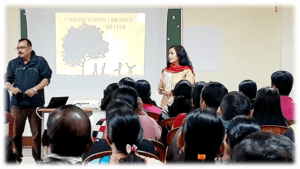
A workshop in progress for Parents in one of our partner schools in Siliguri
We also work on developing higher order of thinking amongst children via the medium of movie screenings. Movies that are high on empathy & moral values, and sits well with children’s sensibilities, foster an amazingly evolved level of conversation & discussion amongst them. Movies have a very high recall value amongst humans due to its visual content and powerful dialogues. After watching a movie we have noticed that children tend to grasp rather quickly the wealth of values and knowledge that the director had tried to convey in the movie. Critiquing a book or a movie pushes children to a higher level of consciousness.
At Child for Child, we also explore few short moments within the school setup, where we share our experiences of working with the underprivileged community. These short moments come by way of Assembly Talks, where, in a crisp and appealing way we share our narrative with children and engage them in acts of empathy. Early morning assemblies in school add a feather to the caps of children. It, in a way sets the tone for the rest of their day. Prayers are said, stories are shared and felicitations are done. Assemblies mobilize children in huge numbers and facilitate our connection with them quite effectively.
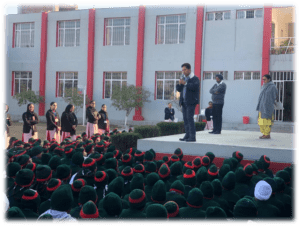
An Assembly talk in progress in our partner school in Jalandhar
As Smile Foundation’s Child for Child vertical increases its outreach to millions of children, we are striving to create a generation of empathetic individuals who while becoming better human beings, spread a wealth of knowledge & happiness around them. We aim to be proactive in our move towards sensitizing our community partners towards various aspects that will make this world a better place for our children.
Wait to hear from us as we share more stories about our journey.
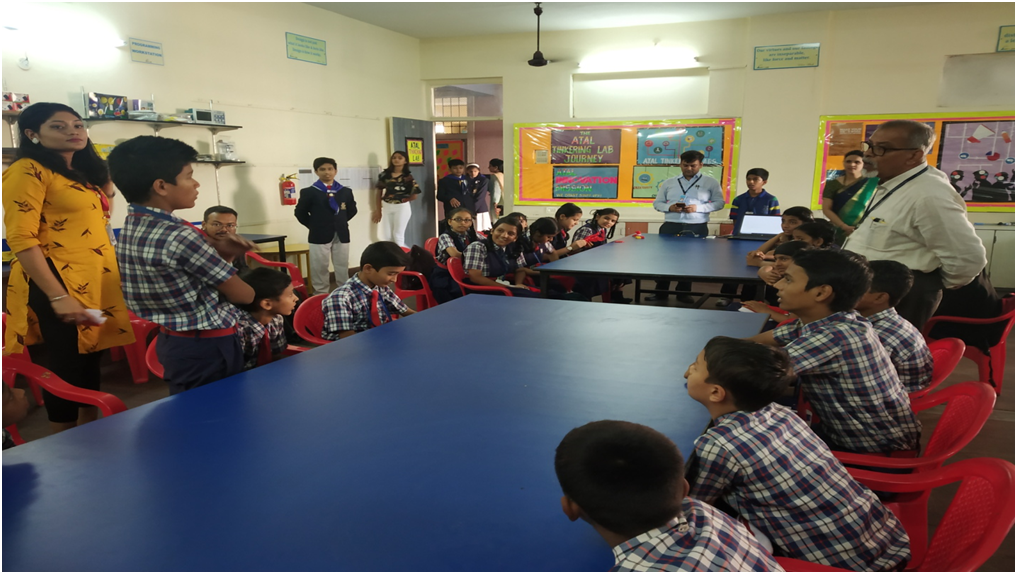
I went on an event for Child for Child on 21st December with a team of 25 students from our ME center Holy Mother English School, located in Malwani (Malad) to Ryan International School. These are underprivileged children and belong to households with poor financial standings and can hardly afford to have such experiences. All of them, after the session came back with an experience of lifetime.
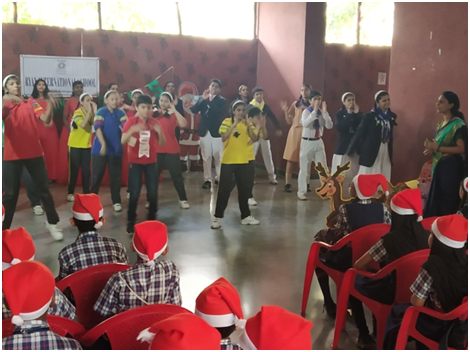
At the venue, our students spent considerable time at the Atal Tinkering Lab. The Lab Instructor shared a brief background on the journey of ‘Atal Tinkering Labs’ and explained the various components that make up the lab (such as drilling workstation, mechanical workstation, printing, etc). Soon after, a student from Ryan presented some of his projects, the concepts behind the project and the scientific principles involved. Inspired by this, our students shared their own experiences and ideas on ‘how can they develop a buzzer with LED blinkers that signal when the water tanker is full, thereby avoiding wastage of water’. Later on, we were taken to the assembly hall where cultural programs, games as well as Christmas gift distribution was organised for the students, all of which they thoroughly enjoyed.
On our way back from Ryan, I took the opportunity to speak with our students, and learn about their overall experiences and takeaways from the event. It was amazing to know that even if they cannot get much facilities these underprivileged children have so many great ideas.
“So, what did you like the most?” I asked the students. About 6 eager hands sprung up in the air, unable to contain their excitement and keen to share their observations with me. “Access to the tinkering lab where students can create and design so many innovative science projects”, said one. “The sprawling campus and the cleanliness all around”, said another.
As I was keenly making mental notes, next came the response “the student councils facilitated the entire event effortlessly. I couldn’t help but notice they needed very little directions from their teachers. They must be well-prepared”. This was very well articulated, I thought to myself. “Didi… the students who performed cultural activities such as choir and group dance were so confident, graceful and looked so happy. Their coordination was perfect.” “These are certainly the qualities I would like to imbibe”, whispered one of the quietest students in the group, almost in agreement with the previous response.
Come to think of it, these are not surface-level observations and certainly not intended to please anyone – these responses came straight from the heart and with a genuine sense of appreciation and admiration! The tinkering lab was a great opportunity for underprivileged children to draw inspiration from their counterparts at Ryan, and identify problems in their daily lives that could be solved by way of possessing a scientific bent of mind, and a bit of thoughtfulness!
In all honestly, I didn’t quite anticipate the profoundness! Sure, I was thrilled about the potential outcome of such exchange programs that enable student-to-student interaction, provide much needed exposure to students from under-resourced schools, while also sensitizing students in elites schools. However, I was fearful that without any orientation, this experience could be a bit overwhelming for some students if not all.
Their eyes light up and their excitement knows no bounds every time the students share their experiences from Ryan, and that to me is an indicator of the success and impact of such programs.



 The Sewing Machines that have helped women regain their self-respect & livelihood