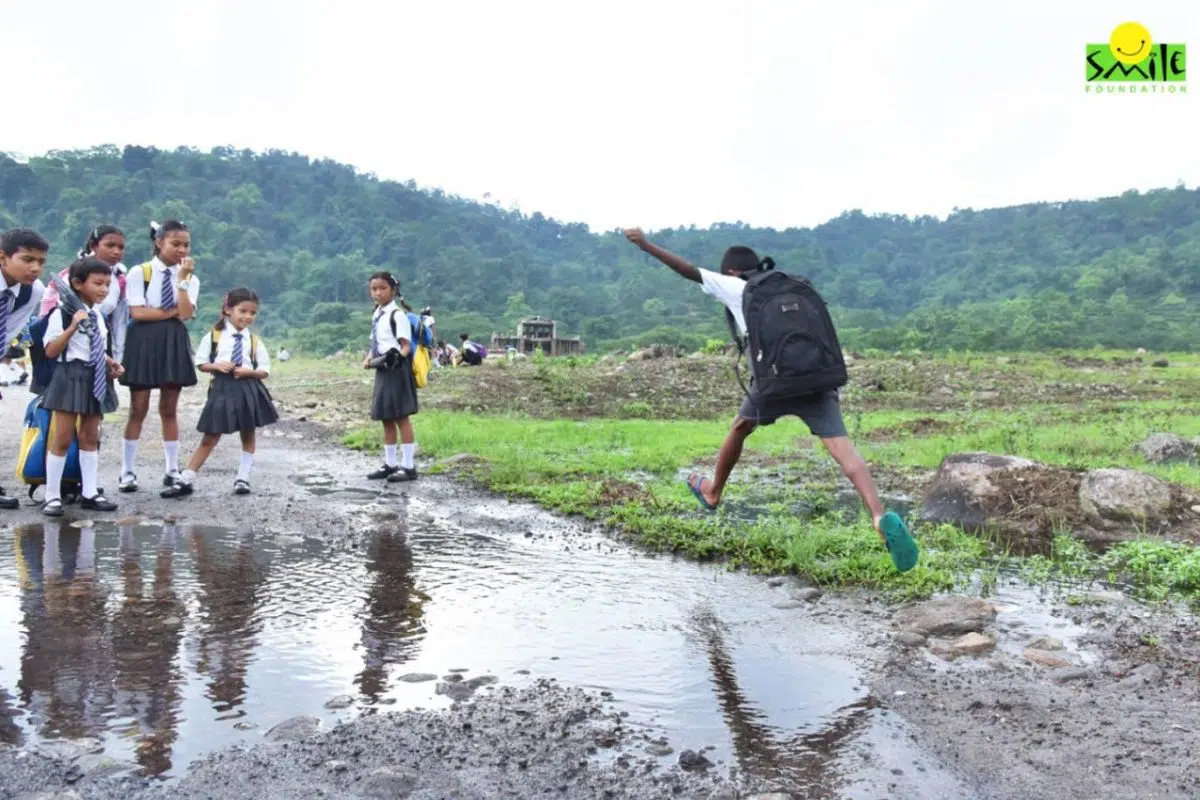
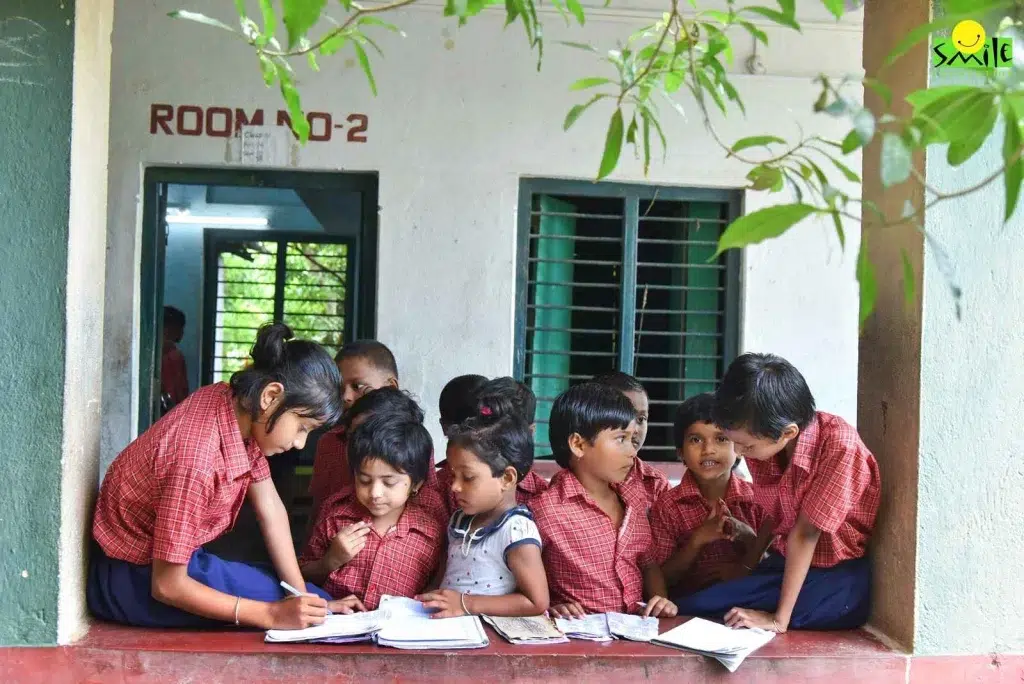
Categories
Gender Women Empowerment

Women in Low Paid Work: Causes, Challenges and Solutions

Women in low paid work reflects a layered system of structural barriers, social norms, policy gaps and labour market failures that together push women toward the lowest-paying, least-secure work available and keep them there.

In India, the picture is stark. According to the ILO, India’s gender pay gap stands at 34%, making it one of the highest among 73 countries studied globally. Women earn, on average, only 66% of what men earn for comparable work. In rural areas, that figure drops further — women earn just 50% of male wages in rural settings and around 60% in urban areas, according to National Statistical Office data. Understanding why this happens, and what can be done about it, is essential for anyone working toward gender equality, economic inclusion and sustainable development.

Overview of Women’s Employment in India

Women in low paid work

India’s female labour market has a complex character. Female labour force participation is rising on paper, but the nature of that participation reveals persistent inequality underneath the headline numbers.

Female Labour Force Participation Rate in India

India’s female labour force participation rate (FLFPR) has shown significant headline growth in recent years. According to the PLFS 2025 Annual Report released by the National Statistical Office, the female LFPR for persons aged 15 and above stood at 40% in 2025, compared to 79.1% for men. While this represents a substantial improvement from 23.3% in 2017-18, economists and labour researchers have flagged an important qualification: much of this growth has been driven by rural women entering the workforce under economic distress, often through unpaid family labour or MGNREGS-linked work rather than formal, waged employment.

More than 80% of rural working women are employed in agriculture, where wages are lowest and conditions most precarious. In urban areas, the female LFPR was around 25.3% in December 2025 — significantly lower than the rural figure, and well below comparable economies in South Asia and East Asia.

Among women who remain outside the workforce entirely, PLFS data offers a revealing breakdown: 44.4% cite childcare and homemaking responsibilities as the primary reason for not working, compared to 69.8% of men who cite continuing education. The labour market is not keeping women out uniformly with a combination of structural barriers and social expectations that makes participation conditional, constrained and often unpaid.

BEYOND THE NUMBERS

The Glass Floor

Rising participation tells one story. The invisible work supporting it tells another.

👩🏽‍💼
👩🏻‍⚕️
👩🏿‍🔬
👩🏽‍🏫
40% Female Labour Force Participation
01

Unpaid Family Labour

Millions of women contribute to family enterprises without formal wages.

02

Care Economy

Childcare, eldercare and household work continue to remain largely invisible.

03

MGNREGS-linked Work

Participation often rises during periods of economic distress.

04

Informal Employment

A large share of women remain outside secure and formal jobs.

Before some women can rise, millions of others quietly hold the system together.

Understanding the Concentration of Women in Low Paid Work

The concentration of women in low paid work is not accidental. It is the cumulative outcome of occupational segregation, education gaps, social norms and a systematic undervaluation of the work that women predominantly do.

Occupational Segregation and Gender Stereotypes

Occupational segregation, the tendency for men and women to work in different sectors and roles, is one of the strongest drivers of the gender pay gap in India. Women are concentrated in what are often called “pink collar” jobs: domestic work, garment manufacturing, teaching, nursing, agriculture and informal trade. These sectors are consistently lower-paid and offer fewer protections than the engineering, finance, management and technology roles where men are overrepresented.

This segregation is not purely a matter of individual preference. It is reinforced by hiring practices that channel women toward certain roles, social norms that associate women with caregiving work and a circular logic that keeps wages low in female-dominated sectors because they are perceived as secondary or supplementary.

In India’s technology sector, for example, women make up around a third of the workforce but earn only 40% of men’s wages. In finance and banking, the figure is 50%. Even in sectors like education and healthcare, where female representation is higher, women earn 70-80% of male wages — still a significant shortfall.

Education Gap and Skill Barriers for Women

Education has a measurable impact on women’s workforce participation in India. PLFS 2023-24 data shows that 39.6% of women with postgraduate education were in the workforce, compared to 23.9% of those educated to higher secondary level. The relationship between education and employment is clear but it is not straightforward.

Women now account for nearly 50% more students in higher education than a decade ago, yet they continue to be significantly underrepresented in engineering and information technology, the fields most closely linked to high-wage employment. Social expectations, infrastructure barriers and a lack of female role models in technical fields all contribute to this gap. Girls who could pursue STEM careers are often steered toward arts and humanities and subsequently into lower-paying sectors, before they are even aware that this redirection has happened.

Causes of the Gender Pay Gap in India

Understanding why the gender pay gap exists requires looking beyond discrimination in individual workplaces, though that is a real and documented factor, toward the broader structural conditions that shape women’s careers over time.

Discrimination, Unpaid Care Work and Career Breaks

Direct wage discrimination remains a significant issue in India. Despite legal protections under the Code on Wages 2019, which replaced the Equal Remuneration Act 1976 and extended equal pay provisions to the LGBTQI+ community, enforcement remains weak and the definition of “work of equal value” remains legally undefined, leaving individual courts to determine comparability case by case.

But discrimination in hiring and pay is only part of the picture. Unpaid care work is the invisible weight that shapes nearly every employment decision women make over their lifetimes. The Economic Survey 2024 estimated that women’s unpaid care work contributes 3.1% to India’s GDP — labour that generates no income, builds no social security and creates no pathway to economic independence.

When women take career breaks for maternity, childcare or elder care, the cumulative earnings loss compounds over time. They return to work at the same or lower seniority, miss promotions and salary reviews, and often shift to lower-paid, more flexible, but less secure roles to manage competing demands. This career penalty is borne almost entirely by women, with minimal structural support from employers or policy systems.

PLFS data for 2023-24 captures this starkly: self-employed men earned roughly three times what self-employed women did. Salaried men earned around 1.2 times more than salaried women. Male casual workers took home approximately 1.5 times women’s casual earnings. The gap exists across every category of work.

Challenges Women Face in the Formal Workforce

Even when women do enter formal employment, they encounter a set of structural barriers that consistently limit their advancement and earnings.

STRUCTURAL BARRIERS

The Broken Ladder

For many women, career advancement is not a straight climb. Structural barriers often break the path long before leadership comes into view.

LEADERSHIP
🚍

Safe Mobility

Limited access to safe transport restricts job opportunities.
👶

Childcare

Affordable childcare remains out of reach for many families.
⚠️

Workplace Safety

Safety concerns affect participation and retention.

💳

Credit Access

Limited access to finance constrains growth and entrepreneurship.

🪟

Glass Ceiling

Women remain underrepresented in senior leadership roles.
ENTRY LEVEL
  • Lack of safe transport and mobility. Limited access to safe public transport restricts the geographic range of jobs women can realistically pursue, particularly in smaller cities and towns.
  • Absence of affordable childcare. Without reliable, affordable childcare, women with young children often have no viable path to sustained formal employment.
  • Workplace safety and harassment. Fear of harassment at the workplace and during the commute remains a significant deterrent, particularly in manufacturing and construction.
  • Limited access to formal credit. Women entrepreneurs face greater difficulty accessing business loans and working capital, channelling many into low-capital, low-return informal activities.
  • Glass ceiling and underrepresentation in leadership. Despite legal frameworks, women remain significantly underrepresented in senior management, board positions and high-paying leadership roles across Indian industry.

India ranked 131st in the Global Gender Gap Index 2025, down from 129th the previous year, with an economic parity score of just 39.8%. These figures underscore that the challenge is systemic, not incidental.

Government Schemes to Improve Women’s Employment

India has a wide range of government schemes aimed at addressing women’s economic participation. Understanding these programmes helps clarify both what is available and where the gaps remain.

  • Skill India Mission and PMKVY. The Pradhan Mantri Kaushal Vikas Yojana offers certified, industry-aligned skill training. For women, targeted tracks exist in areas including beauty and wellness, healthcare and construction, though representation in higher-wage technical trades remains limited.
  • MGNREGS. The Mahatma Gandhi National Rural Employment Guarantee Scheme provides a legal right to 100 days of paid work annually, and has been a significant entry point for rural women — though wages under the scheme are lower than market rates in many states.
  • Pradhan Mantri Mudra Yojana. Provides collateral-free micro-loans to small business owners, including women entrepreneurs, enabling access to credit that was previously unavailable.
  • Stand-Up India. Supports women and SC/ST entrepreneurs with loans of Rs 10 lakh to Rs 1 crore for setting up greenfield enterprises in manufacturing, services or trading.
  • Beti Bachao Beti Padhao. Addresses the upstream causes of women’s workforce disadvantage by promoting girls’ education and gender-equitable social norms from early childhood.

Solutions to Address Low Pay and Inequality for Women

The Silent Workforce: Women Farmers in Rural India

Addressing the structural causes of why women are employed in low paid work requires action at multiple levels simultaneously — from individual skilling to policy reform to social norm change.

Strengthening vocational training in non-traditional livelihoods for women is one practical starting point. Programmes that connect women to higher-paying trades — construction, electronics repair, plumbing, renewable energy installation — have shown measurable income gains, but remain small in scale relative to need.

Pay transparency measures, similar to those introduced in the European Union, would make it significantly harder for wage discrimination to persist invisibly in Indian workplaces. Requiring companies above a certain size to publish disaggregated pay data by gender and seniority would be a concrete step.

Affordable, accessible childcare infrastructure is perhaps the single policy intervention with the greatest potential to increase women’s formal workforce participation. Without it, millions of women continue to make rational choices to exit or reduce their labour market engagement rather than bear prohibitive childcare costs.

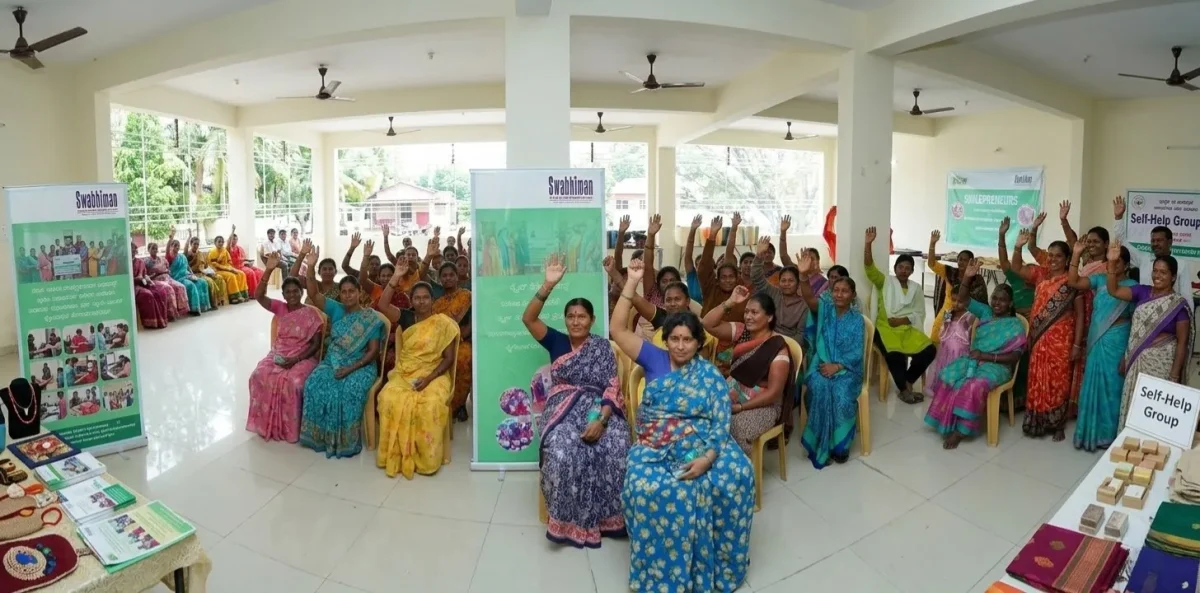
Smile Foundation’s Swabhiman programme directly addresses women’s economic inclusion through livelihood training, entrepreneurship support and skill development for women in underserved communities. Initiatives like LEDP (Livelihood Empowerment Development Programme) and WEDP (Women Empowerment Development Programme) equip women with market-relevant skills and connections to formal employment pathways — the kind of integrated support that government schemes alone cannot fully deliver at the community level.

Ultimately, closing the gender pay gap and reducing women’s concentration in low-paid work requires sustained, coordinated effort. Laws create the framework. Schemes create the opportunity. But genuine change happens when women have the skills, safety, support and social permission to choose work that reflects their full capacity.

FAQs — Women in Low Paid Work in India

Why are women in low paid work in India?

There are many women in low paid work in India due to a combination of occupational segregation, education barriers, unpaid care responsibilities, discrimination and social norms that restrict their access to higher-paying formal employment. Over 90% of employed women work in the informal sector, where wages are lowest and protections weakest.

What is the gender pay gap in India?

According to the ILO, India’s gender pay gap stands at approximately 34%, meaning women earn around 66% of what men earn on average. PLFS 2023-24 data shows that urban men earn around Rs 26,105 per month compared to Rs 19,879 for women, and the gap is even wider in rural areas.

How does unpaid care work affect women’s employment?

Unpaid care work like childcare, elder care and household labour is primarily borne by women and directly reduces the time and energy available for paid employment. The Economic Survey 2024 estimated that women’s unpaid care work contributes 3.1% to India’s GDP but generates no income or social security for the women providing it.

What are the main challenges women face in the workplace?

Key challenges include direct wage discrimination, limited mobility due to safety concerns, lack of affordable childcare, underrepresentation in leadership roles, career penalties from maternity breaks and concentration in informal, low-protection sectors with no social security or legal safeguards.

Why is female labour force participation low in India?

Despite recent growth, India’s female LFPR at 40% in 2025 remains far below men’s 79.1%. The primary reasons cited by women outside the workforce are childcare and homemaking responsibilities — structural barriers that policy systems have not yet adequately addressed.

How does education affect women’s job opportunities?

Higher education levels strongly correlate with workforce participation for women. PLFS 2023-24 data shows 39.6% of postgraduate women are employed, compared to much lower rates for less-educated women. However, women continue to be underrepresented in high-earning technical fields like engineering and IT, limiting education’s full equalising potential.

What government schemes support women’s employment in India?

Key schemes include Skill India and PMKVY for vocational training, MGNREGS for rural employment guarantees, Pradhan Mantri Mudra Yojana for micro-enterprise credit, Stand-Up India for entrepreneurship and Beti Bachao Beti Padhao for addressing gender equity from education upward.

What is occupational segregation and how does it affect women?

Occupational segregation refers to the concentration of men and women in different types of jobs. In India, women are clustered in lower-paying roles in agriculture, domestic work and the care economy, while men dominate higher-paying sectors like technology, finance and management — a pattern that perpetuates the gender pay gap.

How can India bridge the gender pay gap?

Closing the gap requires pay transparency legislation, affordable childcare infrastructure, vocational training in non-traditional livelihoods, stronger enforcement of equal pay laws and concerted efforts to increase women’s representation in higher-paying sectors and leadership positions.

What role do NGOs play in improving women’s employment?

NGOs work directly in underserved communities to provide vocational training, entrepreneurship support and livelihood connections that government programmes cannot always reach. Smile Foundation’s Swabhiman initiative, for example, combines skilling with employment linkages to help women build sustainable economic independence at the community level.

Categories
Insights Smile

Statistics Revolution: The Human Edge in a Data-Driven STEM World

Josh Wills, a former head of data engineering at Slack, said “A data scientist is a person who is better at statistics than any programmer and better at programming than any statistician.”

μ σ β p<0.05 95% CI Variance Regression Inference
Medicine Engineering Climate AI Biology
THE LANGUAGE OF DISCOVERY

THE STATISTICS
REVOLUTION IN STEM

Finding meaning where others see randomness.

Let’s get one thing straight: if you think statistics is just about memorizing formulas or crunching endless rows of numbers and creating graphs, you’re missing the plot. The future of STEM, as we see it, runs on brilliant discoveries or dazzling gadgets. In reality, it runs on data and behind every data story is the quiet, relentless force of statistics. Ignore it, and you’re not getting anywhere.

Statistics as a Career Compass

National Statistics Day 2026: Role of Data, Mathematics and STEM Education in Nation Building

Take a quick look at any modern STEM job board. Data analysts, machine learning engineers, epidemiologists and environmental scientists have one skill in common. A deep reliance on the principles of statistics, making sense of what happened last year or last quarter, and predicting what might happen next, and why.

Let’s be honest: statistics isn’t always the most glamorous subject in school. Yet, it quietly shapes the careers of anyone willing to dive into the numbers. Whether you’re tracking how a new virus spreads or trying to make a solar panel work better, statistical thinking is behind every move you make. Once you’re in a real job, people don’t want fuzzy opinions and vagueness. They want clear insights, odds, and an honest look at the risks. That’s statistics at work, turning raw data into smart decisions.

Why Statistics Matters More Than Ever

We’re living in an era of information overload. Approximately 402.74 million terabytes of data are created each day. Sensors monitor bridges, satellites scan crops, apps track our sleep cycles. But all this data means nothing without the ability to ask the right questions and to trust the answers. 

Statistical methods allow us to find meaning in all the hype. Want to know if a new medication really works? You need randomized trials, control groups, and significance tests. Curious whether a new AI model is better than the old one? You’ll need to compare results using statistical validation, not just gut feeling.

Most importantly, statistical literacy arms professionals with scepticism, helping them challenge assumptions and spot the difference between correlation and causation. In the data age, that’s a superpower.

Data Analytics: The Gateway to STEM Transformation

Anyone who’s had a taste of the modern workplace knows that data analytics is the buzzword. Data analytics is the practical application of statistical methods to real-world problems. It’s the reason why retailers know what you want before you do or how cities plan for traffic jams before they happen.

But, while technical skills like coding, spreadsheet wizardry, and database management get you a foot into the door, it’s your grasp of statistics that lets you ask meaningful questions and interpret the answers. Analytics without statistics is like a car without a steering wheel, i.e. no direction.

The Age of AI

Artificial intelligence is everywhere: in our phones, our cars, even our refrigerators. If you look beyond the futuristic surface, you’ll discover that beyond the neural networks or the deep learning algorithms, it is statistics that drive every prediction, every classification and every enlightening moment.

AI and machine learning systems excel at digging through vast amounts of information, uncovering patterns that might take humans ages to detect. However, it’s human judgment that transforms those patterns into meaningful insights. We need individuals who can pose the right questions, critically evaluate the AI’s findings, and provide the necessary context and expertise.

A model is built using historical data and then applied to forecast outcomes for new, unseen data. This entire process leans heavily on statistical principles. Probability theory plays a crucial role in helping models gauge uncertainty and make informed decisions, especially when the information at hand is lacking. Distributions illustrate how data is dispersed, enabling algorithms to identify what’s typical and what stands out as unusual. Statistical inference allows us to draw conclusions on entire populations based on smaller samples.

That’s where statisticians come in. We’re tasked with understanding how the data are collected and how subgroups are selected so that we can honestly evaluate the findings. It’s natural for things to go wrong, but statistics help us diagnose the why. Was it a sampling error, overfitting or data bias? The answers are buried in statistical reasoning and not in lines of code.

Why Statistical Thinking Matters

The best STEM professionals are the ones who see patterns, question results, and understand uncertainty. Statistics is, thus, a mindset. It teaches us to express uncertainty openly, to evaluate evidence carefully before jumping to conclusions and to recognize when our biases might be influencing our decisions. In a time when misinformation spreads just as quickly as the truth, these skills enhance your abilities as a scientist or engineer. Moreover, they also help you become a more informed and responsible citizen.

The Path Forward: Building a Statistical Future

So, what should we do with this knowledge? If you’re a student, don’t treat statistics as a box to check on the way to your “real” career. Ask tough questions. If you’re a professional, make statistics part of your lifelong learning. The field is evolving, so should you. And if you’re an educator or policymaker, champion statistical literacy. Make it accessible, engaging and relevant. The next generation of STEM leaders will need the wisdom to interpret a messy world through a statistical lens. The world is awash in data, but it’s statistics that give us the compass and the map. Embrace it, and you’ll do more than survive the data revolution. You might just shape it.

STATISTICAL
THINKING

Statistics isn’t just mathematics. It’s judgement.

Patterns

Seeing meaningful signals hidden inside complexity.

Evidence

Testing claims before accepting them.

Uncertainty

Being comfortable with what we don’t yet know.

Bias

Challenging assumptions and hidden influences.

Frequently Asked Questions

1. Why is statistics important in STEM careers?
Statistics helps professionals make sense of data, validate findings and make informed decisions — skills that cut across every STEM field from medicine to engineering to AI.

2. Is statistics relevant to artificial intelligence?
Yes. Every AI model relies on statistical principles — probability, distributions and inference — to make predictions, handle uncertainty and interpret patterns in data.

3. What is the difference between data analytics and statistics?
Statistics provides the theoretical foundation for understanding data, while data analytics is its practical application to real-world problems. One without the other lacks either rigour or direction.

4. Do I need to be good at maths to learn statistics?
A strong grasp of maths helps, but statistical thinking is as much about asking the right questions and interpreting results as it is about calculation. Conceptual understanding matters as much as computation.

5. How can students build statistical skills early?
Start by working with real datasets, focus on understanding what results mean rather than just how to compute them and look for statistics applied in everyday contexts — from news stories to sports to public health data.

Sources

Categories
Insights Smile

How to Donate Online to an NGO in India and Get 50% Tax Exemption Under Section 80G

You can donate online to a registered NGO in India in under five minutes — and if you file taxes under the old regime, you can claim a deduction of up to 50% of your donated amount under Section 80G of the Income Tax Act. All you need is a secure payment method, your PAN number and a Form 10BE certificate from the NGO after you donate.

This guide walks you through exactly how the process works, from choosing a trusted NGO to claiming your tax benefit at the end of the year.

CSR annual reporting: Donate online

Why Online Donation Is the Easiest Way to Give in India

Digital giving has become the default mode of charitable contribution in India, and for good reason.

UPI now accounts for 57% of all payment transactions in India, surpassing even cash at 38%, according to a Finance Ministry commissioned study. NPCI data for February 2026 recorded 20.39 billion UPI transactions in a single month — a 27% year-on-year increase. Charitable giving has followed this shift. Donors today can contribute to a cause in seconds, receive an automated receipt and track how their funds are used — all from a mobile phone.

For NGOs, digital donations are also faster and more cost-efficient to process than offline contributions, meaning more of your money reaches the cause you care about.

The shift is not just about convenience. Online donations leave a clear, traceable record which matters when you need to claim a tax deduction at the end of the financial year.

What Is Section 80G and How Does the 50% Tax Exemption Work?

Section 80G of the Income Tax Act, 1961 allows taxpayers to claim a deduction on donations made to approved charitable institutions and government funds. Depending on the type of organisation you donate to, the deduction can be either 50% or 100% of the donated amount.

For most registered NGOs, including those working in education, health, livelihoods and women’s empowerment, the applicable deduction is 50% of the donation amount, subject to a qualifying limit of 10% of your Adjusted Gross Total Income (AGTI).

Here is what that looks like in practice. If your AGTI is Rs 10 lakh and you donate Rs 20,000 to a qualifying NGO, the eligible deduction is Rs 10,000 (50% of Rs 20,000), provided that amount does not exceed Rs 1 lakh (10% of Rs 10 lakh). Your taxable income is reduced by Rs 10,000 as a result.

Donations to certain government funds, such as the PM National Relief Fund and the National Defence Fund, qualify for a 100% deduction without any upper limit. Always check an NGO’s specific deduction category before donating if the tax benefit is part of your decision.

One important update for FY 2025-26: from Tax Year 2026-27 onwards, Section 80G will be governed by Section 133 of the new Income Tax Act 2025, with the same substantive rules. For filings in the current year, Section 80G continues to apply as before.

Who Can Claim the 80G Deduction?

The deduction is available to a wide range of taxpayers, including:

  • Resident individuals and salaried employees
  • Hindu Undivided Families (HUFs)
  • Companies and partnership firms
  • NRIs holding an Indian passport, provided they have taxable income in India and donate in Indian rupees
80G ELIGIBILITY

Who Can Claim the 80G Deduction?

The deduction is available to a wide range of taxpayers. Select a category to explore eligibility.

👨‍💼

Individuals

Resident individuals and salaried employees.

Eligible
🏠

HUFs

Hindu Undivided Families can claim deductions under Section 80G.

Eligible
🏢

Companies & Firms

Registered companies and partnership firms can claim eligible deductions.

Eligible
🌍

NRIs

NRIs holding an Indian passport with taxable income in India and donations made in INR.

Eligible
⚠️
Important: Section 80G deductions are available only under the Old Tax Regime.

One critical condition applies to all of the above. Section 80G deductions are only available under the old tax regime. If you have opted for the new tax regime under Section 115BAC, which has been the default since AY 2024-25, you cannot claim an 80G deduction, even if you donate to a valid NGO. If claiming this deduction matters to you, make sure to explicitly opt for the old regime when filing your return.

How to Get Your 80G Tax Receipt After Donating

This is where many donors miss a step that can cost them their deduction.

Since FY 2021-22, the Income Tax Department verifies all 80G claims against information filed independently by the NGO. The process works like this:

  • The NGO files Form 10BD (a Statement of Donations) with the Income Tax Department, listing each donor’s name, PAN and amount donated.
  • Based on that filing, the NGO generates and issues Form 10BE — your official donation certificate under Rule 18AB of the Income Tax Rules.
  • When filing your ITR, you enter the donation details in Schedule 80G. The department matches your claim against the NGO’s Form 10BD submission.

If the numbers do not match, or if you do not have Form 10BE, your deduction may be disallowed, even if your donation receipt appears valid. Always ask the NGO for Form 10BE before you file. The due date for NGOs to file Form 10BD for FY 2025-26 is 31 May 2026.

You will also need your PAN registered correctly with the NGO at the time of donating, since Form 10BE is generated against your PAN. A small error here can create a mismatch that delays your claim.

Step-by-Step Guide to Donating Online to an NGO in India

The process is straightforward once you know what to look for.

Choosing a Secure and Trusted NGO

Not every organisation that accepts donations online is legitimate. Before donating, verify the following:

  • Darpan registration — the NGO should have a Unique ID on the NITI Aayog’s NGO Darpan portal at ngodarpan.gov.in
  • 12A registration — confirms the NGO’s income is tax-exempt and used for charitable purposes
  • 80G registration — confirms your donation is eligible for a tax deduction; verify the current validity on the Income Tax Department’s portal at incometaxindia.gov.in
  • Published annual reports — a credible NGO publishes audited financial statements showing how funds are used
BEFORE YOU DONATE

Run a Trust Check

Not every organisation accepting donations online is legitimate. Verify four key credentials before you contribute.

Trust Score
0 %
🆔

Darpan Registration

Verify the NGO has a valid Unique ID on the NGO Darpan portal.

📜

12A Registration

Confirms charitable status and tax-exempt operations.

💰

80G Registration

Ensures donations qualify for tax deductions.

📊

Annual Reports

Audited financial reports showing how funds are used.

Smile Foundation holds valid Darpan, 12A and 80G registration, and works with over 160,000 children across 27 states through programmes in education, healthcare and livelihoods. Reviewing an organisation's programmes and published reports before donating is always time well spent.

Payment Options — UPI, Cards, Net Banking

For your 80G deduction to be valid, the donation must be made through a traceable, non-cash mode. Accepted payment methods include:

  • UPI (Google Pay, PhonePe, Paytm, BHIM)
  • Debit or credit card
  • Net banking (NEFT, RTGS, IMPS)
  • Cheque or demand draft

Cash donations above Rs 2000 are not eligible for an 80G deduction. Keep this in mind if you are donating at an event or in person. For online donations, any digital payment method automatically satisfies this requirement.

When donating, always enter your PAN accurately. This is the identifier the NGO uses when filing Form 10BD and your claim will be cross-checked against it.

How to Check If an Online Donation Is Safe

Digital giving is safe when you follow a few straightforward precautions.

  • Always navigate directly to the NGO's official website rather than clicking links forwarded on WhatsApp or social media
  • Legitimate NGOs never ask for donations through personal UPI IDs, informal bank accounts or phone-based cash transfers
  • Look for HTTPS in the website address and a recognisable, secure payment gateway
  • Check that the organisation's Darpan registration, 80G number and PAN are clearly displayed on the donation page
  • Avoid QR codes shared in forwards or messages; always scan from the official page

If something feels off, check the NGO's registration on the Income Tax portal directly before proceeding.

How to Donate Online to Smile Foundation and Claim Tax Benefits

Smile Foundation is a registered NGO working across education, healthcare and livelihoods in underserved communities across India. Its flagship programmes — Mission Education, Health Cannot Wait and the Smile Twin e-Learning Programme (STeP) — support over 160,000 children and young people across 27 states.

Donating online through Smile Foundation's official website takes under two minutes. You can choose a one-time contribution or set up a monthly recurring donation to support ongoing programmes. Enter your PAN at the time of donating, select your preferred payment method, and save your automated receipt. Form 10BE will be issued by the NGO after it files Form 10BD with the Income Tax Department by 31 May 2027.

DONATION JOURNEY

From Donation to Tax Benefit

See what happens after you make a donation through Smile Foundation.

❤️

Choose Donation

One-time or recurring contribution.

🪪

Add PAN

Required for 80G documentation.

💳

Secure Payment

Complete payment through UPI, cards or net banking.

📩

Receipt Generated

Receive instant confirmation.

🏛️

Form 10BD

Donation details submitted to the Income Tax Department.

📜

Form 10BE

Receive your official donation certificate.

Donations to Smile Foundation qualify for a 50% deduction under Section 80G, subject to the 10% AGTI qualifying limit, for taxpayers filing under the old tax regime.

For CSR teams, Smile Foundation also provides full compliance documentation, including Form 10BE and impact reports, for donations made under Schedule VII of the Companies Act, 2013. Note that the same donation cannot be claimed both as a CSR expense and as an 80G deduction.

Your contribution, however modest, directly funds a child's education, a family's healthcare access or a young person's pathway to employment. Start here.

smil

FAQs — Donate Online and Get 80G Tax Exemption

How do I donate online to an NGO in India?

Visit the NGO's official website, verify its 80G and Darpan registration, choose a payment method such as UPI, net banking or debit card, enter your PAN and complete the transaction and donate online. Save your receipt and request Form 10BE from the NGO before filing your taxes.

What is Section 80G and how does the 50% tax exemption work?

Section 80G allows taxpayers to claim a deduction on donations to approved charitable institutions. Most registered NGOs qualify for a 50% deduction, subject to a limit of 10% of your Adjusted Gross Total Income. This deduction is only available under the old tax regime.

Is it safe to donate online money to an NGO in India?

Yes, provided you donate online through the NGO's official website using a secure, verified payment gateway. Always check the NGO's Darpan and 80G registration beforehand, and avoid clicking on donation links forwarded through messaging apps.

How do I get a tax-deductible receipt after donating online?

After you donate online, the NGO files Form 10BD with the Income Tax Department and then issues you Form 10BE — your official donation certificate. Always share your PAN correctly when donating, as the certificate is generated against this. Without Form 10BE, your 80G deduction claim may be disallowed.

What payment methods can I use to donate to an NGO?

You can donate via UPI, debit card, credit card, net banking, NEFT, RTGS or cheque. Cash donations above Rs 2,000 are not eligible for an 80G deduction, so digital payment is both more convenient and tax-compliant.

Can I set up a monthly recurring donation to an NGO?

Yes, most reputable NGOs including Smile Foundation offer monthly giving options through their donation portals. Recurring donations are eligible for 80G deductions each financial year, provided you collect Form 10BE annually.

How do I know my online donation reached the right cause?

Credible NGOs send automated receipts immediately after payment and share periodic impact reports or newsletters. You can also verify their audited annual reports, which are published on their websites and on the NGO Darpan portal.

What is FCRA and why does it matter when donating online?

FCRA — the Foreign Contribution (Regulation) Act — governs whether an NGO can legally receive donations from outside India. If you are donating from abroad or the NGO receives international funding, confirm it holds valid FCRA registration through the Ministry of Home Affairs portal.

Can NRIs donate online to NGOs in India and claim tax benefits?

Yes. NRIs holding an Indian passport can donate online to FCRA-registered NGOs in India and claim 80G deductions on their Indian taxable income, provided they donate in Indian rupees and file under the old tax regime.

How do I donate to Smile Foundation online and get 80G benefits?

Visit Smile Foundation's official website, select a programme or general donation, enter your PAN and complete the payment digitally. Request Form 10BE from the organisation after the financial year ends, and enter the donation details in Schedule 80G of your ITR while filing under the old tax regime.

Categories
Education

List of Government Schemes for Education in India: Benefits, Objectives and Eligibility

A complete list of government schemes for education in India spans nutrition, scholarships, infrastructure and gender-focused support, each designed to remove a specific barrier standing between a child and a completed education. Together, these schemes form the backbone of India’s effort to make quality education genuinely accessible, not just legally guaranteed.

For 2026-27, the central government has allocated 83,562 crore rupees to school education alone, the highest allocation to date. This guide walks through the major central schemes currently in place, what each one offers, who qualifies, and how to apply.

Enhanced assessment methods can improve the Indian Education

Why Government Schemes for Education Matter in India

India’s Right to Education Act guarantees free and compulsory schooling for children aged 6 to 14. But legal entitlement and actual access are not the same thing. Many families still face real barriers, school fees beyond tuition, transport costs, malnutrition, gender-based dropout risk, that prevent children from attending or completing school.

Government schemes for education exist specifically to close these gaps. Each targets a different barrier, financial hardship through scholarships, hunger through meal programmes, gender inequity through girl-focused initiatives, and geographic isolation through residential schools for remote and tribal communities.

Understanding this full list of government schemes for education in India matters for parents seeking support, for students applying directly, and for organisations working alongside government efforts to strengthen outcomes on the ground.

List of Central Government Schemes for Education

India’s school education schemes operate under the Department of School Education and Literacy, Ministry of Education, often as Centrally Sponsored Schemes implemented jointly with state governments.

Elephant of education towards a brighter future

Samagra Shiksha Abhiyan — Objectives and Benefits

Samagra Shiksha is India’s flagship, integrated school education scheme, combining what were previously three separate programmes: Sarva Shiksha Abhiyan, Rashtriya Madhyamik Shiksha Abhiyan and Teacher Education. It covers schooling from the pre-school stage through to senior secondary level under a single, unified framework.

The scheme receives the largest share of any school education programme in India’s budget, with an allocation of 42,100 crore rupees for 2026-27, accounting for roughly half of the entire Department of School Education and Literacy budget.

Its objectives include improving school infrastructure, providing free textbooks and uniforms, supporting children with disabilities through stipends and accessible facilities, strengthening teacher training, and funding residential schools like Kasturba Gandhi Balika Vidyalayas for out-of-school girls. There is no separate individual application for Samagra Shiksha. It functions as an institutional scheme, with benefits delivered through government and government-aided schools directly.

PM POSHAN (Mid-Day Meal) Scheme

PM POSHAN, formerly known as the Mid-Day Meal Scheme, provides one hot cooked meal every school day to children studying in Classes I to VIII in government and government-aided schools, along with pre-school children in Bal Vatika sections. The scheme currently reaches close to 11.8 crore children across 11.2 lakh schools nationwide.

Its dual objective is straightforward but powerful: address hunger and improve school attendance simultaneously. For many children from low-income families, the daily meal is itself a significant incentive to attend school regularly, while also improving nutritional outcomes during critical growth years.

For 2026-27, PM POSHAN has been allocated 12,750 crore rupees. Eligibility is automatic for all children enrolled in Classes I to VIII at participating government and government-aided schools, with no separate application required.

Beti Bachao Beti Padhao — Education Component

Launched in 2015, Beti Bachao Beti Padhao addresses both gender discrimination and girls’ education through a combination of awareness campaigns, community engagement and policy support. While its scope extends beyond education alone, addressing skewed sex ratios and child protection as well, education remains a central pillar.

The scheme works to create conditions that support girls staying in school, partly through community-level advocacy and partly by linking with other education schemes, like Kasturba Gandhi Balika Vidyalaya and the National Scheme of Incentive to Girls for Secondary Education, to reduce dropout among adolescent girls specifically.

There is no individual scholarship payment under Beti Bachao Beti Padhao itself. Its impact works indirectly, through district-level programming, school infrastructure improvements for girls, and sustained public awareness efforts.

National Means-Cum-Merit Scholarship (NMMS)

The NMMS scheme supports meritorious students from economically weaker families to continue their education from Class 9 through Class 12, specifically targeting the dropout risk that often appears right after Class 8.

Selected students receive 12,000 rupees annually, paid as 1,000 rupees per month, directly to their bank accounts. Eligibility requires the student be promoted from Class 8 to Class 9 in a government, government-aided or local body school, with annual family income not exceeding 3,50,000 rupees from all sources. Students typically need a minimum of 55 to 60 percent marks in their Class 8 examination, with a relaxation for SC and ST candidates.

Selection happens through a state-conducted exam consisting of a Mental Ability Test and a Scholastic Aptitude Test, both administered by the respective State Council of Educational Research and Training. Around 1,00,000 scholarships are awarded nationally each year, applied for through the National Scholarship Portal.

Kasturba Gandhi Balika Vidyalaya Scheme

Kasturba Gandhi Balika Vidyalayas, or KGBVs, are residential upper primary and secondary schools specifically for girls from disadvantaged backgrounds in educationally backward blocks. They primarily serve girls belonging to Scheduled Castes, Scheduled Tribes, Other Backward Classes, minority communities and families below the poverty line.

These schools function as a safe, structured alternative for girls who would otherwise struggle to access secondary education due to distance from school, safety concerns or household responsibilities. Operating under Samagra Shiksha, KGBVs provide boarding, meals, and education together, removing several barriers to girls’ education at once.

Admission is managed at the state and district level, generally prioritising girls from the most educationally disadvantaged communities within each block.

Eklavya Model Residential Schools

Eklavya Model Residential Schools, or EMRS, provide quality residential education specifically for Scheduled Tribe students in remote and tribal-dominated areas, modelled on the standards of Jawahar Navodaya Vidyalayas.

The scheme aims to ensure that tribal students, who often face the greatest geographic isolation from quality schooling, have access to a full residential education from upper primary through senior secondary level, without needing to leave their communities for distant, unfamiliar settings.

EMRS has faced real implementation challenges in recent years, including teacher vacancies and delays in opening sanctioned schools, issues that parliamentary review committees have flagged directly. Even so, the scheme remains a significant structural commitment to tribal education access, with admission managed through state tribal welfare departments and individual EMRS institutions.

State Government Schemes for Education — Overview

Beyond central schemes, individual state governments run their own education initiatives, often layered on top of central programmes to address local needs more specifically.

  • Free bicycle and uniform schemes, common in states like Bihar and Tamil Nadu, aimed at reducing the distance barrier to school attendance, particularly for girls.
  • State-specific scholarship programmes, often targeting Scheduled Caste, Scheduled Tribe or minority students with additional financial support beyond central schemes.
  • Laptop and digital device schemes, run by states like Tamil Nadu and Uttar Pradesh, to support digital learning access for secondary and higher secondary students.
  • State-level girls’ hostel schemes, complementing KGBVs with additional residential capacity at the district level.
  • Mid-day meal supplements, where some states add eggs, milk or additional nutrition beyond the central PM POSHAN framework.

State government schemes for education vary considerably in scope and funding, so checking your specific state education department’s portal is essential to understand what additional support may be available locally.

It is worth noting that state schemes often fill very specific local gaps that central programmes are not designed to address. A state with high rates of seasonal migration, for instance, might run portable scholarship or hostel schemes for migrant workers’ children, while a state with significant tribal populations might supplement EMRS with additional district-level residential capacity. This layered structure, central schemes providing the broad framework and state schemes adding targeted, local depth, is intentional, and understanding both levels gives families the fullest possible picture of what support is actually available to them.

How to Check Eligibility and Apply for Government Schemes for Education

Most central scholarship and benefit schemes in India are now centralised through a single digital platform, which significantly simplifies the application process.

  • Visit the National Scholarship Portal at scholarships.gov.in, the primary gateway for most central scholarship schemes, including NMMS.
  • Check scheme-specific eligibility criteria, which typically include income ceilings, academic performance thresholds, and school type requirements.
  • Gather required documents in advance, including income certificates, caste certificates where applicable, previous mark sheets, and bank account details for direct benefit transfer.
  • Apply within the specified window, as most scholarship schemes have fixed annual application periods, often between June and October.
  • Track application status directly through the portal, which also handles disbursement via Direct Benefit Transfer to avoid delays or leakage.

For institutional schemes like Samagra Shiksha, PM POSHAN or KGBV, there is typically no individual application. Eligibility is automatic based on school enrolment, and benefits are delivered directly through the institution.

A soft but important note here: many eligible families are simply unaware these schemes exist, or find the application process daunting without support. This is exactly where community-level organisations can play a meaningful role, helping families navigate eligibility and paperwork that might otherwise go unclaimed.

Bringing the Picture Together

Why is Quality Education important for Sustainable Development? Government schemes for education

India’s list of government schemes for education spans nutrition, scholarships, infrastructure and gender-focused interventions, each addressing a distinct barrier between enrolment and genuine educational achievement. Samagra Shiksha and PM POSHAN form the structural backbone, while targeted schemes like NMMS, KGBV and EMRS reach specific vulnerable groups that broader programmes might otherwise miss.

These schemes represent significant and growing public investment, but their impact ultimately depends on awareness, accessibility and consistent implementation at the ground level. Budget allocations alone do not guarantee outcomes. Parliamentary reviews of schemes like EMRS have repeatedly highlighted gaps between sanctioned infrastructure and what is actually operational, along with persistent teacher vacancies that affect the quality of education students receive even where schools do exist. Closing this gap between funding and delivery is, in many ways, as important as the funding itself.

For families navigating these systems, and for organisations supporting them, understanding exactly what is available, and how to access it, remains the first and most important step. Civil society organisations working directly in underserved communities often play a quiet but essential role here, helping eligible families identify the right schemes, complete documentation correctly, and follow through on applications that might otherwise be abandoned midway due to confusion or lack of guidance.

FAQs — Government Schemes for Education in India

What are the main government schemes for education in India?

Key schemes include Samagra Shiksha Abhiyan, PM POSHAN, the National Means-Cum-Merit Scholarship, Kasturba Gandhi Balika Vidyalaya, Eklavya Model Residential Schools, and Beti Bachao Beti Padhao, each addressing different barriers to school access and retention.

Who is eligible for education schemes by the central government?

Eligibility varies by scheme. Most target specific groups, economically weaker families, girls from disadvantaged communities, Scheduled Tribe students, or all children enrolled in government schools, depending on the scheme’s specific objective.

What is the Samagra Shiksha Abhiyan and its objectives?

Samagra Shiksha is India’s integrated school education scheme, covering pre-school through senior secondary level. It funds infrastructure, free textbooks and uniforms, teacher training and support for children with disabilities, and receives the largest allocation among school education schemes.

What is the NMMS scholarship and how to apply?

NMMS provides 12,000 rupees annually to meritorious students from Class 9 to 12 whose family income does not exceed 3,50,000 rupees. Students apply through a state-conducted exam after Class 8, with applications submitted via the National Scholarship Portal.

How does the Mid-Day Meal Scheme support education?

PM POSHAN provides a free hot cooked meal to children in Classes I to VIII in government and government-aided schools, improving both nutrition and school attendance for nearly 11.8 crore children nationwide.

What government schemes exist specifically for girl child education?

Kasturba Gandhi Balika Vidyalaya offers residential schooling for disadvantaged girls, while Beti Bachao Beti Padhao addresses broader gender equity and dropout prevention through community awareness and linked education support.

How does Beti Bachao Beti Padhao support girls’ education?

The scheme works primarily through awareness campaigns and community engagement, while linking with infrastructure schemes like KGBV to support girls’ continued enrolment, particularly in educationally backward districts.

What are the Eklavya Model Residential Schools?

EMRS are residential schools specifically for Scheduled Tribe students in remote and tribal-dominated areas, providing quality education from upper primary through senior secondary level without requiring students to leave their communities for distant schools.

How do I apply for central government education schemes?

Most scholarship schemes are applied for through the National Scholarship Portal at scholarships.gov.in, where you can check eligibility, submit documents and track application status. Institutional schemes like Samagra Shiksha require no individual application.

What is the education budget allocation in India for 2026?

The Department of School Education and Literacy received 83,562 crore rupees for 2026-27, with Samagra Shiksha allocated 42,100 crore rupees and PM POSHAN allocated 12,750 crore rupees, marking the highest-ever allocation for school education to date.

Categories
Education In The Spotlight Smile

Importance of Statistics in STEM Education: Skills Students Need for Future Careers

The importance of statistics in STEM education comes down to one simple fact. Almost every scientific discovery, engineering decision and technological breakthrough today depends on someone’s ability to interpret data correctly. Statistics is not a side subject within STEM. It is the thread that runs through all of it.

For students, this matters more now than it ever has. From climate modelling to artificial intelligence, from public health research to product design, statistical thinking has become the common language across science, technology, engineering and mathematics. This blog looks at why that is, what skills students actually need and how India’s education system is responding.

The power of hidden insights: Importance of statistics

Why Statistics is a Core Part of STEM Education

Science, technology, engineering and mathematics are often taught as separate subjects, but they share a common dependency on data. Experiments produce data. Engineering systems generate performance metrics. Technology platforms collect user behaviour. None of this is useful without statistics to make sense of it.

This is why statistics functions less like one subject among many and more like a foundational layer underneath all of STEM. A biology student analysing experimental results, an engineering student testing a prototype’s reliability, and a computer science student training a machine learning model are all, fundamentally, doing statistics.

Importance of Statistics in STEM education

In scientific research, statistics is what separates a genuine finding from a coincidence. Researchers use statistical methods to test hypotheses, measure uncertainty and determine whether an observed pattern is meaningful or simply the result of random variation.

In technology, the role is just as central. Every recommendation engine, fraud detection system and predictive model operates on statistical principles, identifying patterns in data, estimating probabilities and making inferences from incomplete information. As India’s digital economy grows, this technical layer increasingly defines how products and services function.

Engineering relies on statistics differently but just as heavily. Quality control, reliability testing, risk assessment, all of these depend on statistical methods to ensure that what gets built actually works as intended, consistently and safely.

Key Statistical Skills Every STEM Student Needs

Not all statistical skills carry equal weight for STEM students. A few core competencies show up again and again across disciplines and careers.

  • Data interpretation. The ability to read a chart, table or dataset accurately, without over-claiming or misreading what it shows.
  • Probability reasoning. Understanding likelihood, risk and uncertainty, essential in fields ranging from medicine to finance to engineering safety.
  • Hypothesis testing. Knowing how to determine whether a result is statistically meaningful or simply due to chance.
  • Sampling and survey design. Understanding how data is collected shapes whether conclusions drawn from it can be trusted.
  • Statistical software proficiency. Familiarity with tools like Python, R or Excel for actually working with data, not just understanding the theory behind it.

These are not abstract academic skills. They are the daily working vocabulary of nearly every STEM career a student might pursue.

Data Analysis, Probability and Interpretation

Among these, data analysis and probability deserve particular attention, because they underpin almost everything else.

Data analysis is the practical skill of cleaning, organising and drawing conclusions from real datasets, which are rarely as tidy as textbook examples. Students who only learn statistics theoretically, without working hands-on with messy, real-world data, often struggle when they encounter it in research or industry settings.

Probability, meanwhile, is the conceptual backbone behind risk assessment, predictive modelling and decision-making under uncertainty. A student who genuinely understands probability can reason clearly about everything from medical test accuracy to investment risk to machine learning model confidence, skills that translate directly into employability.

How Statistics Prepares Students for Future Careers

Discovering patterns through statistics

The career case for importance of statistics has become considerably stronger over the past few years, driven largely by the explosion of data-driven roles across nearly every industry.

India’s demand for data and AI professionals is significant and growing. Industry estimates suggest the country will need over a million data science and AI professionals, with current shortages already running into the hundreds of thousands across entry-level and specialised roles alike. This demand spans far beyond technology companies, reaching into banking, healthcare, e-commerce, manufacturing and government services.

What is notable is how this demand connects directly back to fundamental statistical literacy. Employers consistently emphasise that strong statistical and analytical thinking, not just tool proficiency, is what distinguishes candidates who can genuinely solve problems from those who can only follow a tutorial.

A soft but important reminder here: building this foundation early, well before university, gives students a meaningful head start, which is exactly why strengthening statistical thinking in school-level STEM education matters so much.

Careers in Data Science, AI and Analytics: Importance of Statistics

Several career paths today depend directly on strong statistical foundations.

  • Data analyst, working with business data to identify trends and inform decisions, often an accessible entry point for STEM graduates.
  • Data scientist, building predictive models and extracting insights from large, complex datasets.
  • Machine learning engineer, designing and deploying systems that learn patterns from data, a role currently in particularly high demand.
  • Biostatistician, applying statistical methods to medical and public health research.
  • Actuary, using probability and statistics to assess and price financial risk.
  • Research scientist, across virtually every scientific discipline, where statistical rigor determines the credibility of findings.

Notably, industry analysis increasingly distinguishes between commoditised data roles and genuinely scarce, specialised ones. Students who build deep statistical reasoning, not just surface familiarity with tools, are far better positioned for the latter, and for long-term career resilience as automation changes routine analytical work.

Importance of Statistics in the Indian STEM Education System

India produces a substantial number of STEM and data-oriented graduates each year, yet the relationship between formal curricula and genuine statistical literacy remains uneven.

Mathematics curricula across Indian schools do include statistics and probability, but often with a heavier emphasis on procedural calculation than on conceptual understanding or applied, hands-on data work. This creates a familiar pattern, students who can compute a standard deviation correctly but struggle to interpret what it actually means in a real dataset.

At the higher education level, India’s investment in STEM has expanded considerably, but structural gaps persist. A meaningful share of graduates from premier technical institutions go on to work in fields unrelated to their core training, suggesting that technical credentialing alone does not guarantee applied capability. Faculty vacancies in public universities, including in mathematics and statistics departments, also remain a persistent challenge, limiting how much hands-on, research-oriented statistical training students actually receive.

The National Education Policy 2020 has pushed toward more applied, project-based learning across STEM subjects, an approach that, if implemented well, could meaningfully strengthen statistical literacy by embedding it in practical problem-solving rather than isolated theory.

Tips to Build Strong Statistics Skills as a Student

Students looking to strengthen their statistical foundation do not need to wait for curriculum reform to start building real capability.

  • Work with real datasets early. Publicly available data from government portals or open data repositories offers genuine, messy practice that textbook problems cannot replicate.
  • Learn a statistical programming tool. Python and R are widely used across both academia and industry, and basic fluency goes a long way.
  • Focus on interpretation, not just calculation. Practice explaining what a statistical result actually means, in plain language, not just how to compute it.
  • Build small, original projects. A simple analysis of a dataset relevant to your interests demonstrates applied skill far better than a certificate alone.
  • Study probability deliberately. It underpins far more of STEM than most students initially realise, from genetics to engineering reliability to AI model behaviour.
  • Seek out applied coursework or internships. Hands-on exposure to how statistics is used in actual research or industry settings accelerates genuine understanding considerably.

Consistency matters more than intensity here. Regular, applied practice over time builds far stronger statistical intuition than concentrated exam preparation alone.

Bringing It Together: Importance of Statistics in STEM Education

The orchestra of data and discovery

The importance of statistics in STEM education is, ultimately, about preparing students for a world where data-driven reasoning is no longer optional. Whether a student goes on to become an engineer, a researcher, a data scientist or a policy analyst, the ability to interpret data accurately and reason under uncertainty will shape how effectively they can do that work.

Building this capability early, through applied, hands-on engagement rather than rote calculation, gives students a genuine advantage as they move from classrooms into careers increasingly defined by data. For India’s STEM education system, strengthening this foundation is not a niche curricular concern. It is central to preparing the next generation for the careers actually being created around them.

FAQs — Importance of Statistics in STEM Education

Why is the importance of statistics in STEM education?

Statistics provides the tools to interpret data, test hypotheses and reason under uncertainty, skills that underpin nearly every scientific, technological and engineering discipline. Without statistical literacy, students struggle to draw valid conclusions from research or real-world data.

What statistical skills do students need for future jobs?

Key skills include data interpretation, probability reasoning, hypothesis testing, sampling methods and proficiency in statistical software like Python or R. Employers increasingly value applied, hands-on statistical thinking over purely theoretical knowledge.

How is statistics used in data science and AI careers?

Data science and AI rely on statistical methods to identify patterns, estimate probabilities and build predictive models from data. Concepts like probability distributions, hypothesis testing and regression form the mathematical foundation of most machine learning techniques.

How does statistics help in scientific research?

Statistics allows researchers to determine whether observed results are meaningful or due to chance, through methods like hypothesis testing and confidence intervals. It is essential for designing valid experiments and interpreting their outcomes accurately.

What is the role of probability in STEM fields?

Probability underpins risk assessment, predictive modelling and decision-making under uncertainty across STEM fields, from engineering reliability testing to medical diagnostics to financial risk analysis.

How can students improve their statistics skills?

Students benefit most from working with real, messy datasets, learning a statistical programming tool like Python, and focusing on interpreting results in plain language rather than only memorising formulas and calculations.

What is the importance of statistics for engineering students in India?

Yes, importance of statistics lies for engineering students, particularly in quality control, reliability testing and risk assessment, where statistical methods determine whether systems and products function safely and consistently.

How does data literacy help in future careers?

Data literacy allows professionals to make informed, evidence-based decisions and communicate findings clearly to others, a skill increasingly valued across industries as organisations rely more heavily on data-driven decision-making.

What STEM careers require knowledge of statistics?

Careers including data scientist, data analyst, machine learning engineer, biostatistician, actuary and research scientist all require strong statistical foundations, alongside many engineering and applied science roles that depend on quality and reliability analysis.

How is statistics taught in Indian schools and colleges?

Statistics is included within mathematics curricula in Indian schools, though often with greater emphasis on calculation than applied interpretation. Higher education institutions are increasingly incorporating applied, project-based statistical learning, though structural gaps in faculty and practical training remain.

Categories
Girl Child Insights

Donate for Girl Child Education in India and Make a Real Difference in 2026

Want to donate for girl child education in India but not sure where to start? You can do it online in under five minutes, and your contribution can directly fund a girl’s school fees, books, transport or learning support. Every rupee you give helps keep a girl in the classroom instead of out of it.

That choice, staying in school or dropping out, is not equal for every child in India. Girls still face steeper barriers than boys at almost every stage of their education. This guide explains why your support matters, what it actually funds and how to give safely and confidently in 2026.

Donate for girl child education

Why Donate for Girl Child Education in India

India has made real progress in getting children into classrooms. But progress in enrolment has not solved the deeper problem of girls staying in school long enough to complete their education.

The gap is most visible as girls grow older. Younger girls now do reasonably well compared to boys. The real risk appears later, around the teenage years, when household duties, safety concerns and early marriage start pulling girls out of education altogether.

Empowering girls through education journey

How Many Girls Are Still Out of School in India?

The numbers are sobering. Around 46 million children aged 6 to 17 remain out of school in India today. Nearly half of all children who dropped out over the past five years, close to 30 lakh, were adolescent girls.

The pattern gets worse with age. According to UDISE+ 2024-25 data from the Ministry of Education, only 77.2 percent of girls aged 16 to 17 are enrolled in school, meaning nearly one in four girls in this age group has already left education altogether.

Encouragingly, girls who do stay enrolled now perform better than boys on several measures. The national secondary dropout rate for girls stands at 9.6 percent, lower than the 11.5 percent average. Girls also transition to higher secondary school at a higher rate than boys, 77.9 percent compared to 75.1 percent nationally. This shows something important: when girls are supported to stay in school, they tend to thrive. The challenge is making sure that support reaches them in the first place.

Why Girls Drop Out — And What Can Be Done

The reasons girls leave school rarely come down to a single cause. They build up together.

  • Financial pressure on families, where school-related costs compete with daily survival needs
  • Household responsibilities, including caring for younger siblings or sick relatives
  • Early marriage, which remains a significant driver of dropout in several states
  • Safety concerns during travel to and from school, especially in rural areas
  • Menstrual hygiene challenges, where lack of facilities quietly pushes girls out of attendance
  • Social norms that prioritise boys’ education when family resources are limited

None of these barriers are unsolvable. Most can be addressed directly, through transport support, hygiene facilities, scholarships and community awareness. This is exactly where targeted donations make a measurable difference.

The Life-Changing Impact of Educating a Girl

Back to School Programme - Smile Foundation

Educating a girl rarely benefits just one person. The effects tend to ripple outward, into her family, her future children and her community.

Educated girls are more likely to delay marriage, make informed health decisions and ensure their own children attend school. Female literacy is one of the strongest known predictors of better maternal health outcomes and improved family planning, even independent of a household’s income level.

There is also a clear economic dimension. A girl who completes her education has dramatically better prospects of stable employment and financial independence later in life, which strengthens not just her own future but her family’s long-term economic security.

This is why education for girls is often described as one of the highest-impact investments in development. It does not just change one life. It changes the trajectory of the next generation too.

How Your Donation Helps a Girl Stay in School

When you donate for girl child education, your contribution does not disappear into abstract overheads. Reputable NGOs allocate funds to specific, tangible needs that keep a girl enrolled and learning.

What Your Monthly Donation Covers

Depending on the programme, a typical monthly or annual donation can fund a combination of:

  • School fees or learning centre costs
  • Textbooks, notebooks and stationery
  • School uniforms and footwear
  • Safe transport to and from school
  • Remedial learning support for girls who have fallen behind
  • Hygiene kits and sanitation facilities that directly reduce dropout risk
  • Mentorship and life skills sessions that build confidence and aspiration

A clear breakdown of where your money goes is a sign of a transparent, well-run programme. Always ask for one before committing to ongoing support.

A journey of support and education

From Dropout Risk to Graduate — Real Stories

Across India, structured intervention programmes have repeatedly shown that girls identified as at risk of dropping out, due to financial strain, safety concerns or family pressure, can be retained in school when given consistent academic, financial and emotional support.

What changes is rarely just attendance. Girls who receive this kind of sustained support often go on to complete secondary school, pursue higher education or vocational training, and become the first in their families to do so. These outcomes depend entirely on continued, reliable funding, which is exactly the gap donor support is designed to fill.

How to Donate for Girl Child Education Online

Getting started is simple, but a little care upfront ensures your donation reaches the right hands.

  • Choose a verified NGO. Confirm valid Darpan, 12A and 80G registration before donating anything.
  • Decide your contribution type. Most organisations offer monthly sponsorship, annual giving, or one-time donations.
  • Use a secure payment method. UPI, net banking, debit or credit card are preferable to informal transfers.
  • Collect your receipt. This confirms your donation and is required for tax purposes.
  • Watch for updates. Credible NGOs share periodic progress reports showing how funds are used.

80G Tax Benefits on Your Donation

Donations made to NGOs with valid 80G registration are eligible for tax deductions under the Income Tax Act, 1961. Depending on the receiving organisation’s specific category, you can claim either 50 percent or 100 percent of your donated amount as a deduction from your taxable income.

A few practical points to keep in mind. Cash donations above 2,000 rupees do not qualify for the deduction, so use a digital payment method instead. You will also need Form 10BE, issued by the NGO, as formal proof when filing your return. This benefit applies only if you file under the old tax regime, so check which regime suits your situation before donating with tax savings in mind.

How Smile Foundation Supports Girl Education Across India

1 Girl and 111 Trees: Caring about Girl Child in India: Government schemes

Smile Foundation works directly with underserved communities to address the layered barriers that keep girls out of school. Through Mission Education, the organisation supports children from low-income families, tribal communities and disaster-affected regions, in alignment with the National Education Policy 2020 and Sustainable Development Goal 4.

Our She Can Fly initiative specifically helps young girls from vulnerable circumstances continue their education despite disruption, recognising that staying enrolled often depends on addressing financial, social and emotional barriers together. Today, Smile Foundation directly supports the education of more than 160,000 children across 27 states in India.

This integrated approach reflects a simple but important reality. Keeping a girl in school is rarely about one intervention. It requires sustained, community-rooted support that adapts to what each girl actually needs to stay enrolled and thrive.

If you are looking for a transparent, accountable way to support girls’ education, you can review Smile Foundation’s Mission Education programme and choose a contribution that works for you.

Donate for Girl Child Education: A Small Step That Changes a Lot

You do not need a large sum or a long-term commitment to make a real difference. A modest, consistent monthly donation can be the exact support that keeps one girl in school through a difficult year, covering the books, the transport or the fees that would otherwise push her out.

Choosing to donate for girl child education today is choosing to be part of a story that extends well beyond one classroom. It shapes families, communities, and generations that follow.

If you are ready to take that step, consider supporting Smile Foundation’s education programmes and see exactly how your contribution translates into a girl staying in school.

Girl's education: a journey of hope

FAQs — Donate for Girl Child Education

Why donate for girl child education important in India?

Girls in India face steeper barriers to staying in school than boys, including early marriage, safety concerns and household responsibilities. Donate for girl child education helps cover the specific costs, fees, transport, hygiene support, that often determine whether a girl stays enrolled or drops out.

How many girls are currently out of school in India?

Around 46 million children aged 6 to 17 are out of school in India, with nearly half of all dropouts over the past five years being adolescent girls. The gap widens significantly in the 16 to 17 age group, where nearly one in four girls is no longer enrolled.

What does my donation for girl education actually fund?

Most donations cover school fees, books, uniforms, transport, hygiene kits and remedial learning support. Reputable NGOs publish a clear breakdown of how contributions are used across these specific needs.

Can I sponsor a girl child’s full education in India?

Yes, many NGOs offer structured sponsorship plans covering a girl’s ongoing educational needs through monthly or annual contributions. The exact scope varies by organisation, so review the programme details before committing.

What tax benefits do I get on donating for girl education?

Donations to NGOs with valid 80G registration qualify for a tax deduction of either 50 percent or 100 percent of the donated amount, depending on the organisation’s category, provided the payment is made through a non-cash mode above 2,000 rupees.

How does Smile Foundation support girl child education?

Smile Foundation supports girls’ education through Mission Education and Shiksha Na Ruke, addressing academic, financial and social barriers together. The organisation currently supports the education of more than 160,000 children across 27 states.

What is the impact of educating one girl on her family?

Educating a girl improves her own health and economic outcomes while also increasing the likelihood that her future children will be educated and healthy, creating effects that extend across generations.

How do I set up a monthly donation for girl education?

Visit a verified NGO’s official website, select their girl education or sponsorship programme, and choose a monthly contribution option using a secure payment method like UPI or net banking.

Is online donation for girl education safe and transparent?

Yes, provided you donate through a verified NGO with valid Darpan, 12A and 80G registration. Always check for a published annual report and a clear breakdown of how funds are used before donating.

How is girl child education different from general education CSR?

Girl child education CSR specifically targets the gender-based barriers, safety, early marriage, household duties, that disproportionately affect girls, whereas general education CSR may not account for these gender-specific risks and interventions.

Categories
Education Insights

Role of Education and Literacy in Building Skills, Awareness and Employment Opportunities

The role of education and literacy in building skills has never been more central to India’s development story than it is today. Education shapes how people think and learn, while literacy gives them the practical tools to act on that knowledge, read a contract, understand a medicine label, apply for a job or simply make an informed decision.

Together, they form the foundation on which skills, awareness and employment are built. Yet in India, the journey from being in school to being genuinely skilled and employable remains incomplete for millions of people.

This blog looks at how education and literacy work together to build real capability and why closing the gap between schooling and skill matters for the country’s future.

Nurturing Climate-Conscious Adults through Education

How Education Builds Practical Skills for Life and Work

Education’s most obvious function is teaching subjects. Its deeper function is teaching people how to think, solve problems and adapt, skills that outlast any specific curriculum.

A well-designed education system builds capabilities far beyond textbook knowledge: critical thinking, communication, collaboration and the confidence to apply ideas in real situations. These are precisely the qualities that distinguish a person who merely holds a degree from one who can genuinely perform in a workplace.

According to India’s Periodic Labour Force Survey 2023-24, the country’s overall literacy rate among persons aged seven and above stands at 80.9 percent. This is a meaningful improvement over previous decades, yet it also means roughly one in five Indians still cannot read or write a basic sentence with understanding, a gap that directly limits their ability to access formal training or stable employment.

Formal Education vs Skill-Based Learning

Formal education, school, college, degree programmes, builds structured knowledge over time. Skill-based learning, vocational training, apprenticeships, on-the-job mentoring, builds the specific, applied capabilities that employers actually need.

Both matter, but they are not interchangeable. A person can complete years of formal schooling without ever practising the communication, digital or problem-solving skills that modern jobs demand. Conversely, skill-based training without a foundation in literacy and basic reasoning often produces narrow competence that struggles to adapt when industries change.

The strongest outcomes happen when the two are combined, formal education providing the cognitive foundation and skill-based learning translating that foundation into employable capability.

Divya Tripura I love going to school and my dream is to become a doctor. 420x280 1

Role of Literacy in Creating Social Awareness

Literacy’s value extends well beyond the classroom or the workplace. It is also one of the most powerful tools for building informed, engaged citizens.

A person who can read understands a vaccination notice, follows news about a government scheme, reads the fine print on a loan agreement or recognises misinformation when it appears online. None of this requires advanced education. It requires functional literacy and the confidence to use it.

This is why literacy is so closely tied to social mobility. It is often the first, smallest step that opens the door to everything that follows, healthcare access, legal awareness, financial inclusion and civic participation.

Health, Rights and Civic Awareness Through Literacy

The connection between literacy and health outcomes is particularly well documented. Adults who can read are better equipped to understand medical instructions, follow public health guidance during disease outbreaks and make informed decisions about nutrition and family planning.

Literacy is also foundational to rights awareness. People who can read are more likely to understand their legal entitlements, whether under labour law, land rights or consumer protection and are better positioned to seek recourse when those rights are violated.

Civic participation follows a similar pattern. Reading local notices, understanding government schemes or following a candidate’s manifesto during elections all depend on basic literacy. Without it, large sections of the population remain dependent on intermediaries to access information that should be directly available to them.

Role of Education as a Gateway to Employment Opportunities

A cycle of growth and empowerment

Education’s economic value lies not in the credential itself but in what that credential signals and increasingly, in what skills sit behind it.

India’s labour market data tells a complicated story here. Enrolment in schools and colleges has expanded significantly over the past two decades, yet employability has not kept pace. Many graduates struggle to translate years of formal education into stable, well-paying jobs, largely because the skills employers need, digital literacy, communication, analytical thinking, are not always built effectively within the formal curriculum.

This mismatch is not a reason to deprioritise education. It is a reason to strengthen the bridge between education and employment, through vocational training, internships, industry partnerships and stronger emphasis on applied learning within schools and colleges themselves.

A soft but important point here: organisations working directly with underserved communities often see this gap most clearly and are well placed to design interventions that combine foundational literacy with practical, job-ready skills.

Government Schemes Linking Education to Employment

India has introduced several schemes specifically aimed at connecting education with employment outcomes.

  • Skill India Mission, launched to provide vocational training at scale, with its flagship Pradhan Mantri Kaushal Vikas Yojana certifying skills aligned with current industry needs.
  • Right to Education Act, 2009, which guarantees free and compulsory elementary education for children aged 6 to 14, building the foundational literacy on which later skill development depends.
  • National Education Policy 2020, which emphasises vocational exposure starting from the school level, rather than treating skill training as something that begins only after formal education ends.
  • Deendayal Antyodaya Yojana, which supports skill training and livelihood generation specifically for rural and urban poor populations.
  • Apprenticeship-linked schemes, including the National Apprenticeship Promotion Scheme, designed to give young people structured, paid, on-the-job experience alongside formal qualifications.

These schemes reflect a growing recognition that education alone does not guarantee employment. The two must be deliberately connected.

How Literacy Empowers Women and Marginalised Communities

Weaving opportunity through education and skills

The impact of literacy is especially pronounced, and especially uneven, when it comes to gender. According to the Periodic Labour Force Survey 2023-24, India’s effective literacy rate stands at 88 percent for men and 81 percent for women, a gap that has narrowed over time but has not closed.

This gap matters enormously, because the effects of women’s literacy extend well beyond the individual. Research has consistently shown that female literacy is one of the strongest predictors of family planning outcomes and contraceptive use, even independent of a woman’s economic status. Children of literate mothers are also more likely to attend school themselves, creating a generational ripple effect that compounds over time.

For marginalised communities, including Scheduled Castes, Scheduled Tribes and economically disadvantaged groups, literacy rates also remain consistently lower than the national average. These gaps are rarely about ability. They reflect structural barriers, distance to schools, household economic pressure, early marriage and social norms that deprioritise girls’ education in particular.

Closing these gaps requires more than building schools. It requires sustained, community-level engagement, remedial learning support and programmes that actively address the specific barriers keeping women and marginalised groups out of classrooms and out of the workforce.

Challenges in Achieving Quality Education and Literacy in India

Despite genuine progress, several structural challenges continue to limit how effectively education translates into real skills and opportunity.

  • Quality gaps in rural schools. Many rural institutions still face shortages of trained teachers, inadequate infrastructure and limited digital access, even where enrolment itself has improved.
  • The learning-employment disconnect. Curricula often emphasise rote learning over applied, practical skills, leaving graduates underprepared for actual workplace demands.
  • Persistent gender and social gaps. Literacy and enrolment gaps for girls and marginalised communities remain significant, particularly in the transition from primary to secondary education.
  • Limited vocational exposure. Vocational and skill-based training is still often treated as a separate track from mainstream education, rather than integrated into it from an early stage.
  • Adult illiteracy. A substantial share of India’s illiterate population is concentrated among older adults, a group that formal schooling initiatives rarely reach, requiring dedicated adult literacy programmes instead.

Addressing these challenges requires coordinated effort, government policy, private sector partnership and the grassroots, community-level work that civil society organisations are often best positioned to deliver.

Bringing It Together: Role of Education

Education Helps Us Live Longer: Role of Education

Education and literacy are not separate goals pursued in parallel. They are deeply interconnected, each strengthening the other’s impact. Literacy makes meaningful education possible. Education, in turn, deepens what literacy can achieve, in skills, in awareness, and ultimately, in employment.

For India to fully realise its demographic potential, the focus must extend beyond enrolment numbers toward genuine learning outcomes, stronger links between classrooms and workplaces, and sustained investment in the communities and individuals who have been left furthest behind. The role of education and literacy in building skills, awareness and employment is, in the end, the role of building a more capable, informed and economically secure population, one person at a time.

FAQs — Role of Education, Literacy, Skills and Employment

What is the role of education help in building skills for employment?

Education builds foundational capabilities like critical thinking, communication and problem-solving, which employers value across nearly every sector. When combined with vocational or applied training, education translates more directly into job-ready, employable skills.

What is the role of literacy in creating social awareness?

Literacy enables people to independently access information, on health, rights, government schemes and civic matters, rather than relying on intermediaries. This directly strengthens informed decision-making and community-level awareness.

What is the role of education reduce unemployment in India?

Education reduces unemployment most effectively when paired with practical, industry-relevant skill development. Schemes like Skill India and apprenticeship programmes aim to close the gap between academic qualification and actual employability.

How does literacy empower women in rural India?

Literate women are better equipped to make informed health and family planning decisions and are more likely to ensure their own children attend school, creating positive effects that extend across generations.

What government schemes link education to skill development?

Key schemes include the Skill India Mission, the National Apprenticeship Promotion Scheme, and provisions within the National Education Policy 2020 that integrate vocational exposure into mainstream schooling from an early stage.

What is the connection between role of education and poverty reduction?

Education improves earning potential and access to stable employment, which directly reduces household poverty over time. It also improves health and decision-making capacity, both of which compound to support long-term economic mobility.

How does functional literacy help in finding jobs?

Even basic functional literacy enables a person to read job postings, complete application forms, follow workplace instructions and communicate effectively, all essential steps in securing and retaining formal employment.

What is the right to education and how does it help?

The Right to Education Act, 2009 guarantees free and compulsory education for children aged 6 to 14 in India. It establishes the foundational literacy and learning base on which later skill development and employment opportunities depend.

How do NGOs support role of education and literacy in India?

NGOs often work in underserved communities where government reach is limited, providing remedial learning support, vocational training and community-based literacy programmes that address specific local barriers to education.

What are the biggest barriers to education and literacy in India?

Key barriers include inadequate rural school infrastructure, gender and social inequities, a disconnect between academic curricula and workplace skills, and limited targeted support for adult illiteracy, particularly among older populations.

Categories
In The Spotlight Smile

PC Mahalanobis: Life, Legacy and Why India Celebrates Statistics Day on His Birthday

Every year on 29 June, India observes National Statistics Day in honour of one man whose ideas reshaped how the country plans, measures and understands itself. Prasanta Chandra Mahalanobis was a physicist by training, a statistician by instinct and the architect of statistical infrastructure that India still relies on today.

His story is not simply about formulas and institutions. It is about a scientist who believed that numbers, gathered carefully and interpreted rigorously, could genuinely improve people’s lives.

Early Life and Education of PC Mahalanobis

Prasanta Chandra Mahalanobis was born on 29 June 1893 in Calcutta, into a family of considerable intellectual standing. His grandfather, Gurucharan, had been a prominent figure in the Brahmo Samaj reform movement and had founded several well-known educational institutions in the city, including the Brahmo Boys’ School, which Mahalanobis himself attended.

The household he grew up in placed enormous value on learning. The poet Rabindranath Tagore, whose father had been a close friend of Mahalanobis’s grandfather, was a significant early influence on him as a young boy, a connection that would later deepen into a lasting personal friendship.

Mahalanobis went on to study at Presidency College, Calcutta, where his teachers included the physicist Jagadish Chandra Bose and the chemist Prafulla Chandra Ray, two of the most celebrated scientific minds in India at the time. He graduated with honours in physics in 1912.

The crossroads of P. C. Mahalanobis

Academic Background and Influence of Physics and Statistics

Ambitious to study further, Mahalanobis travelled to England and enrolled at King’s College, Cambridge, to continue his studies in physics and mathematics. It was during this period that he met the mathematician Srinivasa Ramanujan, an encounter that left a deep impression on him.

Shortly before he left Cambridge in 1915, one of his tutors introduced him to statistics. What began as a passing academic interest soon became a genuine calling. Mahalanobis grew fascinated by the idea that statistical methods could be applied to real, pressing problems, in meteorology, anthropology and eventually economics.

When he returned to India, he took up a teaching position in physics at Presidency College, becoming a full professor there in 1922. Yet his attention was increasingly drawn elsewhere. By the early 1920s, he had set up an informal “statistical laboratory” in his own room at the college, gathering young colleagues who shared his curiosity about data and measurement.

Founding of the Indian Statistical Institute

The statistical laboratory Mahalanobis built at Presidency College gradually grew into something far more ambitious. On 17 December 1931, he called together a small group of colleagues, including the economist Pramatha Nath Banerji and the mathematician Nikhil Ranjan Sen, to formally establish the Indian Statistical Institute, or ISI.

The Institute was registered the following year, on 28 April 1932, as a non-profit learned society. Its beginnings were modest almost to the point of being humble. The Institute initially occupied a small portion of the Physics Department at Presidency College and its entire expenditure in its first year amounted to just 238 rupees.

What it lacked in resources, it made up for in ambition. In 1933, the Institute launched Sankhya, India’s first academic journal dedicated to statistics, a publication that continues to this day and that carried many of Mahalanobis’s own landmark papers.

How ISI Became a Global Centre for Statistics

Over the following decades, ISI expanded well beyond its original premises, eventually moving to a permanent campus in Baranagar, on the outskirts of Kolkata, during the 1950s. By the time of Mahalanobis’s death in 1972, the Institute had grown into a sprawling research centre spanning disciplines as varied as economics, biochemistry, computer science, human genetics and sociology.

The Institute’s influence reached well beyond India’s borders. It trained generations of statisticians, hosted international scholars and became one of the earliest centres in Asia to work with digital computing, a development Mahalanobis personally championed as part of India’s broader scientific modernisation.

Today, ISI is recognised globally as one of the most rigorous statistical and quantitative research institutions in the world, a legacy that traces directly back to a single room at Presidency College and the ambition of one professor of physics.

The Mahalanobis Distance — His Most Famous Contribution

Understanding Mahalanobis Distance in Data

Among Mahalanobis’s many contributions, none is more widely known in modern data science than the statistical measure that bears his name.

The Mahalanobis distance, first proposed in the early 1930s and formally published in 1936, was developed to solve a specific problem. Traditional distance measures, like the familiar Euclidean distance, work well when comparing simple, uncorrelated data points. But real-world data is rarely so tidy. Variables are often correlated with one another, and they exist on different scales entirely.

Mahalanobis’s solution accounts for both the spread and the correlation structure of a dataset, using its covariance matrix to measure how far a particular data point lies from the centre of a distribution, in a way that respects the data’s actual shape rather than treating every direction as equal.

His original motivation was anthropometric, comparing measurements across different population groups in India. But the renowned statistician Ronald Fisher recognised the broader value of the method and gave it the name by which it is known today, the Mahalanobis distance or the Mahalanobis D-squared statistic.

The applications since have been vast. The Mahalanobis distance is now a standard tool in classification problems, outlier and anomaly detection, pattern recognition and multivariate hypothesis testing, techniques that sit at the core of modern statistics and machine learning.

Role in India’s Economic Planning — The Second Five Year Plan

Mahalanobis’s influence was not confined to academic statistics. He played a defining role in shaping independent India’s economic strategy, serving as a member of the country’s first Planning Commission.

His most consequential contribution came through the Second Five Year Plan (1956 to 1961), where he developed what became known as the Mahalanobis model, a strategy that prioritised investment in heavy industry and capital goods as the foundation for long-term industrialisation. The model reflected his conviction that sustainable economic growth required building domestic productive capacity, rather than relying solely on consumer-goods industries.

Long before this, his statistical instincts had already proven useful in matters of public welfare. Following devastating floods in North Bengal in 1922 and in Orissa in 1926, Mahalanobis conducted extensive statistical studies of rainfall and flood patterns spanning roughly sixty years of historical data, work that directly informed flood control measures in the region.

He also pioneered large-scale sample survey techniques in India, an innovation that allowed the government to gather reliable data on agricultural output, employment and living standards without the cost and delay of a full census. This approach laid the groundwork for the National Sample Survey, an institution that continues to shape Indian economic policy today.

One thread, a nation united

Awards, Recognitions and International Legacy

Mahalanobis’s contributions were recognised by some of the most distinguished scientific bodies in the world during his lifetime. He was elected a Fellow of the Royal Society, London, in 1945, and received the Weldon Medal from Oxford University the year before, in 1944.

His later honours included fellowships with the Econometric Society in the United States, the Royal Statistical Society in the United Kingdom, and the Soviet Academy of Sciences. In 1959, King’s College, Cambridge, the very institution where he had first encountered statistics as a young student, made him an Honorary Fellow.

In India, his contributions were formally recognised with the Padma Vibhushan in 1968, one of the country’s highest civilian honours, awarded for his work in science and public service.

Internationally, Mahalanobis also served as chairman of the United Nations Sub-Commission on Sampling between 1947 and 1951, reflecting the global respect his methodological work commanded.

He passed away on 28 June 1972 in Calcutta, just one day before what would have been his seventy-ninth birthday.

Why India Celebrates National Statistics Day on PC Mahalanobis‘s Birthday

In recognition of his foundational role in shaping India’s statistical systems, the Government of India announced in 2006 that 29 June, his birthday, would be observed annually as National Statistics Day. The first official observance took place in 2007.

The choice of date is deliberate and symbolic. It is not simply a tribute to one individual, but a reminder of why rigorous data collection matters for governance. Mahalanobis believed statistics should function as what he called a universal tool of inductive inference, useful not just in academic research but in solving practical problems in agriculture, public health, industry and planning.

National Statistics Day is typically marked with conferences, seminars and public discussions organised by the Ministry of Statistics and Programme Implementation, often centred on a specific theme relevant to that year’s policy priorities. The day serves as an occasion to reflect on the role that accurate, timely data plays in shaping development outcomes across the country.

Relevance of PC Mahalanobis in Modern Data Science

Nearly a century after he first began experimenting with statistics in a small room at Presidency College, Mahalanobis’s ideas remain strikingly relevant to the world of modern data science and artificial intelligence.

The Mahalanobis distance, in particular, continues to be used extensively in machine learning applications, including anomaly detection systems, fraud detection models and clustering algorithms, precisely the kinds of tools now powering everything from financial security systems to recommendation engines.

His broader philosophy also resonates strongly with contemporary thinking. Mahalanobis insisted that statistics was only useful insofar as it served real human needs, whether through better flood control, more efficient industrial planning or more equitable resource allocation. As artificial intelligence and data-driven decision-making increasingly shape governance and business today, his emphasis on rigorous methodology paired with practical purpose feels less like history and more like a guiding principle.

This is, in many ways, the clearest measure of Mahalanobis’s legacy. The institutions he built, the methods he developed and the statistical culture he helped instil in India continue to function exactly as he intended, as tools for understanding the world more clearly, in order to improve it.

FAQs — PC Mahalanobis Life and Legacy

Who is PC Mahalanobis?

PC Mahalanobis was an Indian scientist and statistician, widely regarded as the father of statistics in India. He founded the Indian Statistical Institute and played a central role in shaping the country’s economic planning and statistical systems after independence.

What is PC Mahalanobis famous for in statistics?

He is best known for developing the Mahalanobis distance, a statistical measure used to determine how far a data point lies from a distribution while accounting for correlation between variables. He also pioneered large-scale sample survey methods used widely in India and globally.

When was PC Mahalanobis born and why is his birthday significant?

PC Mahalanobis was born on 29 June 1893 in Calcutta. His birthday is significant because the Government of India designated it as National Statistics Day in 2006, in recognition of his contributions to statistical science and economic planning.

What is the Mahalanobis distance and what problem does it solve?

The Mahalanobis distance measures how far a point is from the centre of a dataset, accounting for the correlation and scale of different variables. Unlike simpler distance measures, it gives an accurate picture of how unusual a data point is within a real, multivariate dataset.

What did PC Mahalanobis contribute to India’s economic planning?

PC Mahalanobis developed the strategic model behind India’s Second Five Year Plan, which emphasised investment in heavy industry as the foundation for long-term economic growth. He also pioneered statistical survey methods that informed agricultural and economic policy.

Why was the Indian Statistical Institute founded?

PC Mahalanobis founded the Indian Statistical Institute in 1931 to create a dedicated centre for statistical research and training in India, building on the informal statistical laboratory he had set up at Presidency College in the 1920s.

What awards did PC Mahalanobis receive?

He received the Weldon Medal from Oxford University, was elected a Fellow of the Royal Society, London, and was awarded the Padma Vibhushan by the Government of India in 1968, among numerous other international fellowships and honours.

How does PC Mahalanobis influence modern data science?

The Mahalanobis distance remains a foundational tool in modern machine learning, used in anomaly detection, classification and clustering algorithms. His broader emphasis on applying rigorous statistics to practical problems also continues to influence data-driven governance and research.

What is the connection between PC Mahalanobis and Rabindranath Tagore?

Rabindranath Tagore was a significant early influence on PC Mahalanobis, a connection rooted in a long-standing friendship between their families, and the two later developed a close personal relationship.

How is National Statistics Day observed in India?

National Statistics Day is marked annually on 29 June with seminars, conferences and public discussions organised by the Ministry of Statistics and Programme Implementation, typically focused on a specific policy theme relevant to that year.

Categories
Education

How to Sponsor a Child for Education in India: A Complete Guide Through Trusted NGOs

If you are wondering how to sponsor a child for education in India, the process is more accessible than most people realise. You choose a registered NGO, select a sponsorship or one-time donation option, and your contribution funds school fees, books, uniforms or learning support for a specific child or community. It typically takes less than ten minutes to start.

But the decision deserves more than ten minutes of thought. Around 46 million children between the ages of 6 and 17 are currently out of school in India, representing close to 17 percent of that age group. Many more are enrolled but at risk of dropping out due to poverty, household responsibilities or lack of support at home.

This guide walks you through what child sponsorship actually means, how to do it safely, what your money covers and how to choose an NGO you can trust.

Importance of Quality in Education: Sponsor a Child for Education in India

Why Child Education Sponsorship Matters in India

Education is one of the strongest predictors of a child’s future income, health and independence. Yet for millions of Indian families, the cost of staying in school, not just tuition, but uniforms, transport, books and the income a child could otherwise earn, remains out of reach.

This is where sponsorship plays a meaningful role. It does not replace government schooling systems. It fills the specific gaps that prevent a child from attending school regularly or staying enrolled long enough to complete their education.

A dreamer's journey of possibilities

Number of Out-of-School Children in India

The scale of the problem is significant. According to UDISE+ 2024-25 data released by the Ministry of Education, approximately 46 million children aged 6 to 17 remain out of school in India. The national secondary-level dropout rate stood at 11.5 percent in 2024-25, and retention at the secondary stage was just 47.2 percent, meaning fewer than half of children who begin school actually complete it through senior secondary level.

The reasons are rarely about a single barrier. Poverty, migration, child labour, household duties, and for many girls, early marriage or safety concerns, all combine to push children out of classrooms. This is precisely the gap that sponsorship programmes are designed to close.

What Does Sponsoring a Child’s Education Mean

Investment in Education, but is it Enough India? 

Child sponsorship is a structured way of supporting a child’s ongoing education through an NGO, rather than donating to a cause in the abstract. Most reputable programmes in India do not connect you directly with an individual child for privacy and safeguarding reasons. Instead, your contribution supports a specific child’s educational journey, or a cohort of children in a particular community, through the NGO’s existing programmes.

This distinction matters. Direct, unmediated contact between donors and individual children raises serious child protection concerns, which is why credible NGOs structure sponsorship through institutional channels, with trained staff managing all communication and fund allocation.

What Your Donation Covers — Fees, Books, Uniforms

Depending on the NGO and the programme, your sponsorship typically funds a combination of the following.

  • School or learning centre fees, where applicable
  • Textbooks, stationery and learning materials
  • School uniforms and footwear
  • Transport to and from school
  • Remedial learning support for children who have fallen behind
  • Nutritional support, since hunger directly affects a child’s ability to learn
  • Teacher salaries and classroom infrastructure in NGO-run learning centres

Most NGOs publish a breakdown of how a fixed monthly or annual contribution translates into these specific costs. Always ask for this breakdown before you commit. A credible organisation will have one ready.

How to Sponsor a Child for Education in India

Sponsoring a child’s education does not require a large financial commitment or a long-term contract in most cases. Many programmes allow you to start small and scale up over time.

The process is broadly the same across most established NGOs in India, with small variations in platform and reporting style.

A ticket to your future

Step-by-Step Process to sponsor a child for education through NGOs

  • Choose a verified NGO. Confirm the organisation holds valid Darpan registration, 12A and 80G certification before donating anything.
  • Select a sponsorship plan. Most NGOs offer monthly, quarterly or annual sponsorship options, alongside one-time donation choices.
  • Decide on individual or programme-based giving. Some NGOs link you to updates on a specific child’s progress, while others provide aggregate impact reports across a learning centre or region.
  • Complete the donation online. Use a secure, traceable payment method, net banking, UPI, debit or credit card, rather than informal transfers.
  • Collect your receipt and 80G certificate. This is essential for both transparency and your tax filing.
  • Track your impact. Reputable NGOs send periodic updates, progress reports or newsletters showing how funds are being used.

A soft but important note here: take a moment to verify an NGO’s registration and financial transparency before donating, the same way you would research any organisation before a financial commitment. This single step protects both your generosity and the children it is meant to reach.

Trusted NGOs for Child Education Sponsorship in India

India has several long-established, well-regulated NGOs working specifically in child education. When evaluating any organisation, look for a clear, multi-year track record, transparent financial reporting and active registration across the relevant legal frameworks.

Smile Foundation runs Mission Education, a flagship programme supporting children from marginalised communities, including those from low-income families, tribal regions and disaster-affected areas, in alignment with the National Education Policy 2020 and Sustainable Development Goal 4. The organisation also runs Shiksha Na Ruke, which helps vulnerable children continue their education despite disruption, and currently supports the education of more than 160,000 children across 27 states.

Other organisations with a recognised presence in this space include CRY (Child Rights and You), which has worked on children’s rights and education access for several decades, and Bal Raksha Bharat (Save the Children India), known for combining education support with child protection work.

FCRA-Registered NGOs You Can Trust

If you plan to donate from outside India, or your NGO of choice receives international funding, FCRA registration matters. As of 2026, only around 16,000 NGOs in India hold active FCRA registration, a meaningfully smaller and more tightly regulated group following stricter compliance rules introduced in 2020. Always confirm an NGO’s current FCRA status directly through the Ministry of Home Affairs portal before making a cross-border donation.

Is Education Free for Girl Children in India?

girl child

Under the Right to Education Act, 2009, all children between the ages of 6 and 14, including girls, are entitled to free and compulsory elementary education in government schools. This is a legal right, not a discretionary benefit.

In practice, however, “free” does not mean cost-free for families. Uniforms, transport, books beyond the basic curriculum, and the opportunity cost of a girl’s time at home or in paid work often remain real barriers, even where tuition itself is free. This is one reason girls’ dropout rates rise sharply after the elementary level, particularly around the transition to secondary school.

Government schemes such as Samagra Shiksha, Kasturba Gandhi Balika Vidyalaya and the National Scheme of Incentive to Girls for Secondary Education aim to reduce these additional costs. NGO sponsorship programmes often work alongside these schemes, covering the specific gaps, transport, materials, mentoring support, that government provisions do not fully address.

Tax Benefits When You Sponsor a Child for Education

Donations to NGOs with valid 80G registration are eligible for tax deductions under the Income Tax Act, 1961. Depending on the specific category of the receiving organisation, you can claim either 50 percent or 100 percent of your donated amount as a deduction from your taxable income, subject in some cases to a ceiling of 10 percent of your adjusted gross total income.

A few practical points worth knowing.

  • Cash donations above ₹2,000 are not eligible for an 80G deduction. Use UPI, net banking, cheque or card payments instead.
  • You will need Form 10BE, issued by the NGO, as formal proof of donation when filing your return.
  • The 80G deduction is only available if you file under the old tax regime, not the new one.
  • NRIs holding an Indian passport can also claim 80G deductions on donations made in Indian rupees.

Always verify an NGO’s current 80G registration status directly on the Income Tax Department’s portal before donating, since registrations can lapse or require periodic renewal.

If your organisation runs a Corporate Social Responsibility programme, child education sponsorship through a registered NGO is also a recognised and impactful way to fulfil CSR obligations under the Companies Act, 2013, while supporting long-term, measurable outcomes in a community.

Making Your Decision

Choosing how to sponsor a child for education in India ultimately comes down to three things: verifying the organisation, understanding exactly what your contribution funds, and selecting a giving structure, monthly, annual or one-time, that fits your own circumstances comfortably.

This is not a decision to rush, but it also need not be complicated. A few minutes of verification, paired with a clear understanding of where your money goes, is usually all it takes to give with confidence.

If you are exploring a long-term way to support a child’s education in India, you can review Smile Foundation’s Mission Education and Shiksha Na Ruke programmes to understand how sponsorship translates into real classroom outcomes for children who need it most.

A journey of possibilities

FAQs — How to Sponsor a Child for Education in India

How can I sponsor a child for education in India?

You can sponsor a child for education by choosing a registered, 80G-certified NGO and selecting a monthly, quarterly or annual sponsorship plan through their official website. Most NGOs link your contribution to a specific child’s progress or a learning centre’s overall outcomes.

What does child education sponsorship include?

Sponsorship typically covers school fees, books, uniforms, transport, remedial learning support and sometimes nutrition. The exact breakdown varies by NGO, so always ask for a clear cost breakdown before donating.

Which NGOs are trustworthy for sponsoring child education in India?

Look for NGOs with a multi-year track record, valid Darpan, 12A and 80G registration, and transparent annual reports. Smile Foundation, CRY and Bal Raksha Bharat are examples of organisations with established, verifiable education programmes in India.

Is education free for girl children in India?

Under the Right to Education Act, elementary education from ages 6 to 14 is legally free and compulsory for all children, including girls. However, indirect costs like uniforms, transport and materials often remain a barrier, which is why many sponsorship programmes target these specific gaps.

How do I donate for a girl child’s education in India?

Choose a verified NGO running girl-focused education programmes, check their 80G and Darpan registration, and select a sponsorship or donation plan through their official website using a traceable payment method.

What is the difference between child sponsorship and a one-time donation?

Sponsorship typically involves a recurring contribution, monthly or annual, tied to an ongoing programme or child’s continued education. A one-time donation funds immediate needs but does not carry the same long-term, structured support.

Do I get tax benefits when I donate for child education?

Yes, donations to NGOs with valid 80G registration qualify for a tax deduction of either 50 percent or 100 percent of the donated amount, depending on the organisation’s specific 80G category, provided the donation is made through a non-cash mode above ₹2000.

How much does it cost to sponsor one child’s education in India?

Costs vary widely by NGO, region and the level of support provided, ranging from a few hundred rupees a month for basic learning support to higher amounts for comprehensive sponsorship including fees, materials and nutrition. Most NGOs publish exact figures on their sponsorship pages.

How do I verify if an NGO is genuine before donating?

Check the NGO’s Darpan Unique ID on the government’s NGO Darpan portal, confirm its 80G and 12A registration on the Income Tax Department’s website, and review its most recent audited annual report for financial transparency.

Can I sponsor a child for education through CSR funds?

Yes, education sponsorship through a registered NGO is a recognised way for companies to fulfil Corporate Social Responsibility obligations under the Companies Act, 2013, provided the NGO meets the eligibility criteria for CSR partnerships.

Categories
Insights Livelihood

Difference Between Disguised and Seasonal Unemployment

Summary

  • Disguised unemployment means more workers than needed, with little added output.
  • It’s common in agriculture and family-run businesses with surplus labour.
  • Seasonal unemployment occurs when work is available only during certain times.
  • It affects sectors like tourism, fisheries, construction and farming.
  • Smile Foundation’s STeP programme builds employability skills to address both.

Unemployment remains one of the most significant economic challenges faced by countries around the world. While unemployment is often understood as a situation where individuals are unable to find work, economists recognise that not all unemployment is visible or straightforward. In many economies, especially those that depend heavily on agriculture and seasonal industries, workers may appear employed while contributing little to national production, or they may find employment only during certain periods of the year. These situations are known as disguised and seasonal unemployment.

Understanding the difference between disguised and seasonal unemployment is important for students, policymakers and citizens alike because both forms of unemployment affect productivity, income, and economic development. Although they share some similarities, their differences arise from different causes and require different solutions.

Disguised and Seasonal Unemployment

Understanding what constitutes unemployment

Unemployment is defined as a condition in which individuals, who are willing and capable of working, are unable to find suitable employment. It is an important indicator of a country’s economic performance and labour market conditions. However, unemployment is not always reflected in people actively searching for jobs. In some cases, individuals may be engaged in work that does not fully utilise their abilities or labour. For these reasons, economists classify unemployment into several forms, including structural, frictional, cyclical, seasonal and disguised unemployment. Among these, disguised and seasonal unemployment are particularly relevant in developing economies where agriculture continues to employ a large share of the workforce.

What is disguised unemployment?

Disguised unemployment is a situation in which more people are engaged in a particular economic activity than the number of people actually required for that work. In such a situation, some workers contribute little or nothing to the total production. If these surplus workers were removed from the activity, overall output would remain largely unchanged.

This form of unemployment is often described as “hidden unemployment” because the individuals involved appear to be employed, but their labour is not being used productively. The unemployment remains hidden because people are technically working, even though their presence does not significantly increase output. This phenomenon is most commonly found in agriculture, family-owned enterprises and informal economic activities where labour is shared among family members. It reflects inefficient utilisation of human resources and often results from limited access to alternative employment opportunities.

Disguised unemployment is commonly observed in rural agricultural communities where entire families depend on small plots of land for their livelihood.

For example, a farm may require only five workers to cultivate crops efficiently. If eight or ten family members work on the same land, the additional workers may not significantly increase agricultural output. Even if some of them stopped working on the farm, production levels would remain nearly the same. These surplus workers represent disguised unemployment.

According to the International Labour Organisation (ILO), underemployment and labour underutilisation remain important challenges in many developing economies, where workers often engage in low-productivity activities due to a lack of better employment opportunities.

Challenging The Skilling Challenge in India

What is seasonal unemployment?

Seasonal unemployment refers to unemployment that occurs when individuals are employed only during specific seasons or periods of the year and remain without work during the off-season. Workers are fully productive when work is available, but opportunities disappear during the off-season. The unemployment is temporary rather than permanent and tends to repeat itself according to predictable seasonal patterns. Unlike disguised unemployment, seasonal unemployment is visible and occurs because certain industries operate only at particular times.

Agriculture provides one of the clearest examples. Agricultural labourers may find abundant work during sowing and harvesting seasons but face unemployment during periods when farming activities are limited. Similarly, workers in tourism, hospitality, fisheries and construction may experience fluctuations in employment depending on weather conditions, tourist demand or seasonal production cycles.

The Organisation for Economic Co-operation and Development (OECD) notes that seasonal employment patterns continue to influence labour markets worldwide, particularly in sectors that depend heavily on climate conditions or cyclical consumer demand.

Difference between disguised and seasonal unemployment

The difference between disguised and seasonal unemployment lies primarily in how labour utilisation is done. In disguised unemployment, individuals appear employed throughout the year, but some workers contribute little or nothing to production. The problem is excess labour relative to the available work. In seasonal unemployment, workers contribute effectively when employed, but employment opportunities are available only during specific seasons.

Another important distinction is visibility. Disguised unemployment is often difficult to identify because workers seem to have jobs. Seasonal unemployment, on the other hand, is easily observed because workers become unemployed during off-season periods. Disguised unemployment is most commonly associated with agricultural and family-based occupations, whereas seasonal unemployment occurs in industries such as agriculture, tourism, fisheries and construction that experience regular fluctuations in demand.

Furthermore, disguised unemployment can persist throughout the year, while seasonal unemployment is temporary and linked to recurring seasonal cycles. In disguised unemployment, removing surplus workers may not affect output. In seasonal unemployment, unemployment occurs because economic activity itself declines during certain periods.

Examples of disguised unemployment

Squeezing the fruit of effort

Disguised unemployment can be observed in many rural settings. Similar to family farming, where multiple family members work on a small piece of land, multiple small family-run shops or businesses may involve several relatives performing tasks that could be handled by one or two individuals. In such situations, labour is spread across too many workers, resulting in low productivity and hidden unemployment.

Another example can be found in villages with limited non-agricultural employment opportunities. When workers have no alternative occupations, they often remain attached to farming activities regardless of whether their labour is actually needed.

Examples of seasonal unemployment

Precarious journey through uncertain seasons

Seasonal unemployment is particularly common in occupations tied to weather conditions or consumer demand. Agricultural labourers often experience periods of unemployment after planting or harvesting seasons have ended. Workers in tourist destinations may find employment during peak holiday periods but struggle to secure work during quieter months.

Construction workers may also face seasonal unemployment when heavy rains, extreme temperatures or adverse weather conditions slow down projects. Similarly, fishing communities often experience temporary unemployment due to weather patterns, breeding seasons or regulatory restrictions on fishing activities.

What causes disguised and seasonal unemployment?

Ashar’s Dream: Livelihood Beneficiary Breaking the Poverty Cycle

Several factors contribute to disguised unemployment. Population growth increases pressure on limited land and employment resources, particularly in rural areas. In many developing countries, agriculture continues to absorb large numbers of workers despite offering limited productivity gains. The lack of industrial development and alternative employment opportunities forces surplus labour to remain in low-productivity occupations.

Educational and skill gaps can further worsen the problem. When workers lack access to training or vocational education, they may find it difficult to transition into sectors that offer more productive employment opportunities. Additionally, disguised unemployment persists due to the lack of market-relevant skills and employment opportunities outside agriculture. Many young people in rural communities lack access to formal training that could help them transition into manufacturing, services or entrepreneurship.

Seasonal unemployment arises because some industries are inherently dependent on seasonal factors. Agricultural production depends on rainfall patterns, climate conditions and crop cycles. Tourism fluctuates according to holiday seasons, weather and travel trends. Construction activity may slow down due to environmental conditions, while fisheries often operate according to seasonal regulations and ecological cycles.

Because these factors are largely predictable, seasonal unemployment tends to recur regularly each year.

Through our livelihood and skilling initiatives, we at Smile Foundation seek to bridge this gap by equipping youth with practical skills that enhance employability and create pathways to sustainable livelihoods. A staggering youth population continues to be underutilised in the job market because of a lack of requisite qualifications and training are upskilled, uplifted and mainstreamed to become a part of the country’s growth story. The livelihood programme aims to complement the government’s vision and efforts under the Skill India mission and aligns with Sustainable Development Goals 4 and 8.

Economic impact of disguised and seasonal unemployment

Both disguised and seasonal unemployment can hinder economic development, although they do so in different ways. Disguised unemployment reduces overall labour productivity because too many workers are engaged in activities that generate limited output. This inefficiency slows economic growth and often contributes to persistent poverty in rural communities.

Seasonal unemployment, meanwhile, creates instability in household incomes. Workers may earn sufficient wages during peak seasons but face financial hardship during periods of unemployment. This uncertainty can reduce savings, increase vulnerability to economic shocks and encourage temporary migration in search of work.

According to the World Bank Employment and Labour Overview, improving labour market opportunities remains essential for reducing poverty and supporting sustainable economic growth, particularly in countries with large rural populations.

Long-term unemployment and underemployment can have consequences that extend far beyond lost income. They often limit access to quality education, healthcare, nutrition and opportunities for upward social mobility, trapping families in cycles of poverty that can persist across generations. This is why addressing unemployment requires more than simply creating jobs; it demands a holistic approach that tackles the interconnected barriers preventing individuals from realising their full potential.

At Smile Foundation, this understanding informs an integrated development model that combines education, healthcare, skilling and livelihood interventions. Through initiatives such as Mission Education, children gain access to quality learning opportunities, while programmes like STeP (Smile Twin e-Learning Programme) equip underserved youth with employability and vocational skills. By addressing these challenges simultaneously, integrated development approaches can help individuals build the skills, health and confidence needed to secure sustainable livelihoods and break the cycle of poverty.

Measures to reduce disguised and seasonal unemployment

Promising Developments for Sustainable Livelihood Programmes in the Next Decade

Understanding the difference between disguised and seasonal unemployment is essential for analysing labour market challenges and economic development. Disguised unemployment occurs when more workers are employed than necessary, resulting in hidden underemployment and low productivity. Seasonal unemployment, by contrast, occurs when employment opportunities are available only during specific times of the year due to seasonal fluctuations in economic activity.

Although disguised and seasonal unemployment arise from different circumstances, both point to a common challenge: the need for more productive, stable and sustainable livelihood opportunities. Addressing these issues requires more than economic growth alone. It calls for investments in skill development, rural industrialisation, economic diversification and stronger pathways to employment, particularly for vulnerable communities. Achieving this also demands collaboration between governments, businesses, educational institutions and civil society organisations.

Through initiatives such as STeP (Smile Twin e-Learning Programme) and its broader focus on education, health and livelihoods, we, at Smile Foundation, work to equip underserved youth with market-relevant skills and opportunities that can lead to meaningful employment. Such efforts recognise that reducing unemployment is not only about creating jobs but also about enabling people to access them. By strengthening employability, expanding economic opportunities, and supporting long-term community development, these interventions help individuals move beyond vulnerable forms of work and contribute more effectively to the economy. Ultimately, tackling both disguised and seasonal unemployment is essential for building a more inclusive economy where growth translates into improved livelihoods and greater social mobility for all.

Frequently Asked Questions (FAQs)

1. What is disguised unemployment?
It’s when more people work than necessary, so removing some wouldn’t reduce output.

2. What is seasonal unemployment?
It’s unemployment that occurs only during certain periods, like off-farming or off-tourist seasons.

3. How are disguised and seasonal unemployment different?
Disguised unemployment hides within jobs; seasonal unemployment is visible and tied to timing.

4. Which sectors face seasonal unemployment the most?
Agriculture, tourism, fisheries and construction are most affected by seasonal work cycles.

5. How does Smile Foundation address these unemployment issues?
Through STeP, it builds employability and vocational skills for underserved youth nationwide.

0%