Summary:
- Preventive healthcare is everything that happens before someone falls seriously ill: check-ups, screenings, vaccinations, antenatal care and awareness of the early signs.
- India’s health spending is still heavily out-of-pocket, and it is everyday outpatient care that brings hardship to families living with limited means.
- An estimated 32 to 39 million Indians are pushed into poverty every year due to healthcare services payments.
Mamtha is in her late sixties. Every morning, she heads to a nearby construction site to break stones under the sun. The wages keep food on the table for herself and her husband, who has lived with paralysis for years. By the end of the day, her own body is in pain. But when putting two meals on the table is uncertain, there is little room left to worry about aches that have become part of everyday life.
It is not that people refuse treatment or fail to understand its importance but survival has its own hierarchy. Food comes first, rent comes next, and medicines, check-ups and tests are postponed until there is no longer any choice.
We often think of healthcare beginning at the hospital door—with an emergency admission, a surgery or a bill that pushes a family into debt. But for households like Mamtha’s, the story starts much earlier. It begins with the blood pressure that is never checked because the clinic is too far away. The persistent cough dismissed because missing a day’s wages costs more than the illness seems to and the diabetes that goes undiagnosed until complications set in.
This is the space where preventive healthcare belongs. It is also the first part of the health system that poverty takes away. By the time families finally reach a hospital, years of missed opportunities to prevent illness have already passed, and what could once have been managed simply has become far harder, and far more expensive, to treat.
What Preventive Healthcare Really Means

Preventive healthcare aims to stop illness before it becomes an illness that is difficult, expensive or even impossible to treat.
It includes the everyday interventions that rarely make headlines — vaccinations, routine health check-ups, blood pressure and blood sugar screenings, antenatal care, childhood immunisation, access to clean water and sanitation, and helping people recognise the early signs that something is wrong. Individually, these measures can seem ordinary. Collectively, they are among the most effective tools modern medicine has.
The evidence is remarkably consistent. Detecting disease early almost always costs less than treating it after complications have set in. It also gives people a far greater chance of living healthier, longer lives. One study from the United States found that every dollar invested in community-based preventive health programmes generated more than five dollars in reduced healthcare costs. The precise figures vary across countries, but the underlying principle does not. Prevention is almost always more effective, and more affordable, than cure.
The real divide, then, is not whether preventive healthcare works. It is who has access to it.
For families living on the economic edge, prevention is often the first thing to disappear. A routine check-up means losing a day’s wages. Travelling to a health centre costs money. An illness that does not yet feel urgent is easy to postpone when there are more immediate demands on a household’s income.
India’s healthcare system reflects this imbalance. Like many systems around the world, it remains heavily oriented towards treatment rather than prevention. Public attention, funding and infrastructure tend to concentrate on hospitals, specialist care and emergency services, while the more important work of keeping people healthy receives far less investment. Hospitals are visible symbols of progress. A blood pressure screening, an immunisation drive or a nutrition counselling session rarely attracts the same attention, even though they may prevent the hospital visit altogether.
Why Those Who Need It Most Receive It Least
Preventive healthcare presents one of public health’s greatest paradoxes. The people who stand to benefit from it the most are often the least able to access it.
This is not because they value health any less but because every decision is shaped by immediate necessity.
For a family living on a daily wage, prevention competes with survival. A routine health check is not just a consultation; it is transport costs, hours spent travelling and waiting and wages that disappear for a day that produces no visible income. When the choice is between earning enough to buy dinner or screening for an illness that may not yet exist, the decision is rarely difficult.
Although India’s healthcare financing has improved over the past decade, households still bear a heavy share of the cost. Around 39% of health expenditure is paid directly out of pocket — almost three times the proportion in countries such as the United Kingdom. Every year, an estimated 90 million Indians incur catastrophic health expenditure, spending more than a tenth of their household consumption on healthcare, while between 32 and 39 million people are pushed into poverty by medical expenses alone.
For low-income households, however, the bill tells only part of the story. Illness also carries an opportunity cost. Every day spent travelling to a clinic, waiting for treatment or recovering from illness is a day without earnings. The poor, in effect, pay twice: once for healthcare, and again for the income they lose while receiving it.
Perhaps surprisingly, it is not medical emergencies that inflict the greatest financial damage.
Research on Indian households shows that outpatient care — the repeated costs of consultations, medicines and diagnostic tests for chronic conditions — drives more catastrophic spending than hospital admissions. Chronic illnesses such as diabetes and hypertension do not usually bankrupt families overnight. Instead, they erode household finances gradually, month after month, until the burden becomes unsustainable.
This is precisely where preventive healthcare matters most. Detecting disease early is not only better for health; it prevents years of avoidable expenditure before it begins.
That distinction has become increasingly important as India’s disease burden has shifted. Infectious diseases remain a challenge, but non-communicable diseases such as diabetes, hypertension and cardiovascular disease now account for a growing share of illness. These conditions often develop silently, with few obvious symptoms until serious complications appear.
The ICMR–INDIAB study, published in The Lancet, estimates that more than 100 million Indians are living with diabetes, while millions more remain undiagnosed. Diabetes is relatively inexpensive to identify through routine screening and manageable when detected early. Left unnoticed, it can progress to kidney disease, vision loss or cardiovascular complications that are far more difficult, and far more expensive, to treat.
For families without access to preventive care, the diagnosis often comes not during a routine health check but after irreversible damage has already occurred.
Even when preventive services are offered free of charge, they are rarely free in practice. A screening camp several kilometres away may require bus fare, hours away from work and the risk of losing a day’s wages. For someone whose next meal depends on today’s earnings, spending an entire day searching for a disease they do not yet feel is an impossible calculation.
The problem is not a lack of awareness or poor judgement. It is a health system that often expects those with the fewest resources to bear the highest costs of accessing care.
Preventive healthcare cannot eliminate poverty. But it can stop one of its most powerful drivers before it gathers momentum. The most effective intervention often happens long before anyone enters a hospital.
What This Looks Like in India Today

India has made important strides towards a more preventive model of healthcare. Over the past decade, the share of health expenditure paid directly by households has fallen from more than 60% to below 40%, reflecting higher public investment in healthcare and expanded financial protection.
The shift is visible on the ground as well. Ayushman Arogya Mandirs, established under the Ayushman Bharat programme, were conceived to move healthcare beyond treating illness. Alongside curative services, they offer routine screening for conditions such as hypertension, diabetes and common cancers, recognising that the most effective treatment often begins long before a patient arrives at a hospital.
The direction is encouraging but access in practice still needs significantly more attention.
A health centre can only prevent disease if people are able to reach it. It must be adequately staffed, consistently supplied and close enough that visiting it does not mean sacrificing a day’s income. For millions of families living in remote villages, informal settlements and underserved communities, those conditions are still far from guaranteed.
For them, the distance between policy and healthcare is measured less in kilometres than in trade-offs. It is the difference between earning today’s wages and attending a routine check-up. Between buying groceries and paying for transport to a clinic. Between surviving the present and protecting the future.
Bringing Prevention to the Doorstep
This is the gap Smile Foundation’s healthcare programmes are designed to bridge.
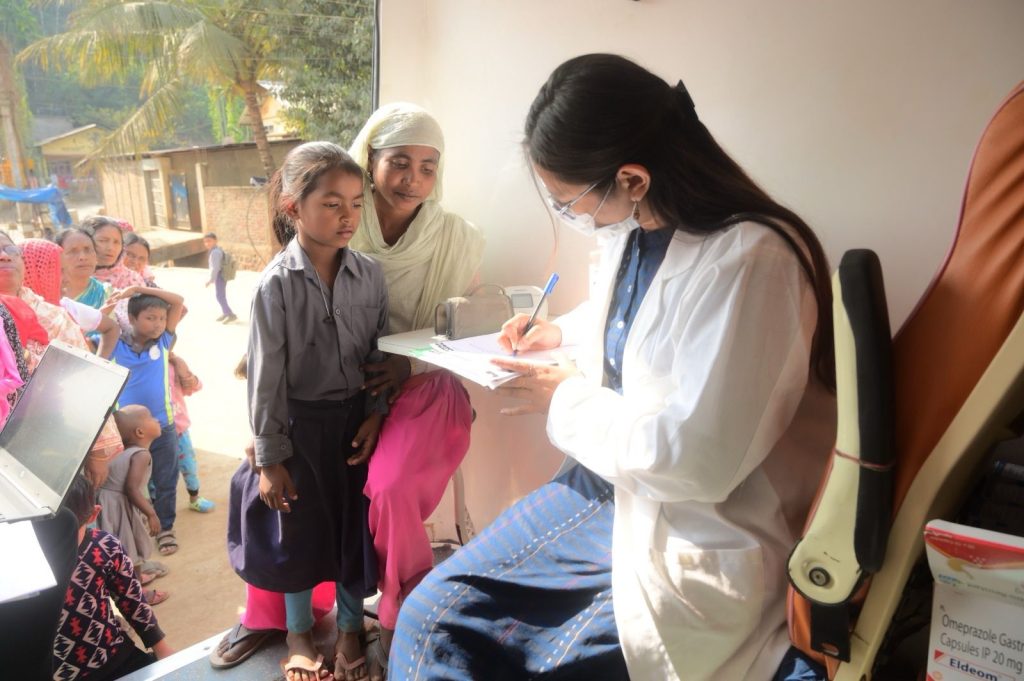
Through Smile on Wheels, the organisation reverses the traditional model of care. Rather than expecting families to travel long distances for routine services, healthcare travels to them. Mobile medical units staffed by doctors, nurses and diagnostic technicians visit underserved communities, providing consultations, essential medicines, basic diagnostic tests and referrals for specialised care, all within walking distance of people’s homes.
Each visit also creates an opportunity for prevention: antenatal check-ups, immunisation counselling, screening for diabetes and hypertension, guidance on nutrition and hygiene and conversations that help families recognise the early signs of illness before they become emergencies.
These interventions are deliberately ordinary. They are designed to prevent crises rather than respond to them.
The Quiet Medicine
Preventive healthcare rarely announces its success.
Its victories are measured in events that never occur: the heart attack prevented because hypertension was detected early; the pregnancy that remained healthy because complications were identified in time; the diabetes diagnosed during a routine screening instead of after irreversible kidney damage.
There are no photographs of crises that never happened.
Yet for families living on the edge of poverty, these unseen outcomes can determine the course of an entire life. They are the difference between weathering a difficult year and being pushed into debt from which recovery may take decades.
No one should have to choose between today’s meal and tomorrow’s health.
Preventive healthcare is, at its core, about ensuring they no longer have to.
Frequently Asked Questions (FAQs)
- What is preventive healthcare?
Preventive healthcare covers everything done before illness becomes serious: vaccinations, regular check-ups, screenings for conditions like blood pressure and diabetes, antenatal care during pregnancy, sanitation and awareness of early symptoms. Its goal is to stop disease from starting, or catch it early enough to treat cheaply and effectively.
- Why is preventive healthcare especially important for the poor?
Poor households have the least financial cushion against illness. With India’s health spending still heavily out-of-pocket, a late detected illness means both high treatment costs and lost daily wages. Prevention is the cheapest point at which to interrupt this, before an illness becomes an emergency and an emergency becomes a debt.
- How many people does healthcare spending push into poverty in India?
Studies estimate that between 32 and 39 million Indians are pushed into poverty every year by out-of-pocket healthcare payments and around 90 million cross the catastrophic threshold of spending more than a tenth of household consumption on health.
- Is hospitalisation the biggest financial risk for poor families?
Surprisingly, no. Research on Indian households found that repeated outpatient expenses, consultations, tests and medicines for ongoing conditions, cause more catastrophic spending and impoverishment than hospitalisation. Chronic illness managed late drains a family steadily for years.
- If check-ups are free, why don’t more poor families use them?
Because a free check-up still costs a daily wage worker their day’s income, travel fare, and sometimes their job security. When today’s food depends on today’s work, families rationally deprioritise a hypothetical illness. The solution is bringing care to the doorstep, not blaming families for the distance.
- What is India doing about preventive healthcare?
Government health spending has risen and out-of-pocket share has fallen from over 60% to under 40% in a decade. Ayushman Arogya Mandir (formerly Ayushman Bharat Health and Wellness Centres) was created to bring screening and primary care closer to communities. Coverage and last mile access remain the main challenges.
- How does Smile Foundation deliver preventive healthcare?
Through Smile on Wheels, a mobile hospital programme that brings doctors, medicines, point of care testing and health screenings directly to underserved villages and urban slums, along with awareness sessions on immunisation, antenatal care, hygiene and chronic disease. It removes the two biggest barriers at once: cost and distance.
Sources:
- National Health Accounts estimates 2021 to 22, Government of India
- Economic Survey 2024 to 25 (out-of-pocket expenditure share)
- Van Doorslaer et al. (2006), Garg and Karan (2009), and Balarajan et al., The Lancet (2011): estimates of 32 to 39 million Indians pushed into poverty annually by health payments
- Systematic review of out-of-pocket expenditure in India, Frontiers in Public Health, 2025 (catastrophic threshold estimates; outpatient versus hospitalisation burden)
- ICMR INDIAB study, The Lancet Diabetes and Endocrinology, 2023 (diabetes prevalence in India)
- Trust for America’s Health, The Value of Prevention (returns on community based prevention investment)
- Ayushman Arogya Mandir (formerly Ayushman Bharat Health and Wellness Centres) programme documentation, Ministry of Health and Family Welfare, Government of India
- Smile Foundation, Stories of Change and healthcare programme reports (Mamtha’s accounts)
- Smile Foundation, Stories of Change (Shashikala’s accounts)
- Smile Foundation, Smile on Wheels OPD cost