
Summary
- There is an interconnection between Adolescent Nutrition and Education in India. Many adolescent girls in India come to class tired. NFHS-5 found that 59% of girls aged 15 to 19 are anaemic, and iron tablets may help them stay alert and do better at school.
- New 2026 research on India’s SABLA scheme found that take-home rations helped more girls stay in school. Their basic reading and maths improved too, most of all in states that ran the scheme well.
- Girls face extra hurdles at home and at school. They often eat last when food is short, and in one Delhi study, 40% stayed home during their periods, missing weeks of school over a year.
- Some girls eat enough but still don’t get the nutrients they need, often because packaged snacks are replacing home-cooked meals.
- School meals and Smile Foundation’s programmes help more girls keep up. A healthy, educated girl is also more likely to raise children who stay in school.
- Schemes for meals, health and schooling still often run separately, and where they are poorly run, girls miss out.

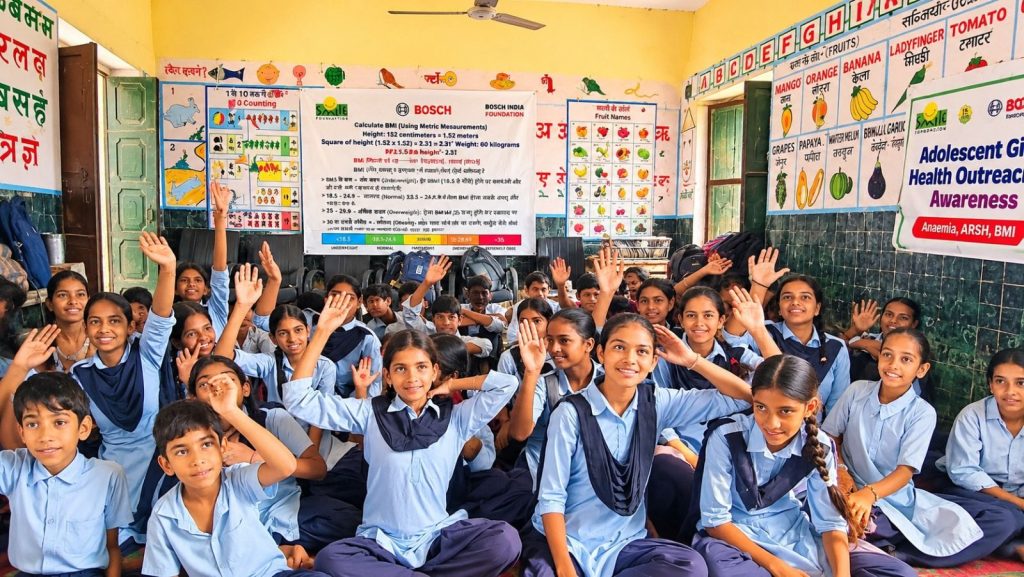
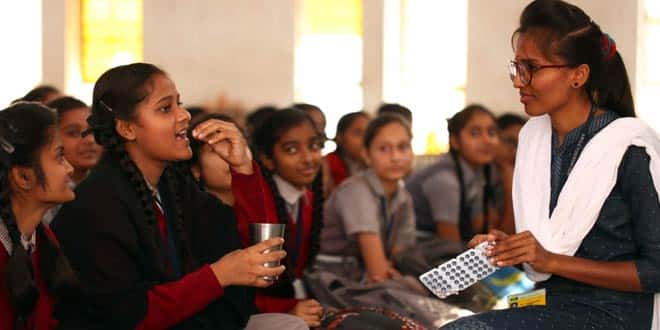
A few years ago, two students at the Nipania School in Bhopal took on a job most teenagers never think about. Once a week, Deepika Mehar and Taniksha Jaat helped their teachers hand out iron and folic acid tablets to their classmates. When school was over, they took what they had learnt about healthy eating home and shared it with their families.
For many girls in their school, that tablet meant a little more energy for the day ahead. According to NFHS-5, 59% of girls aged 15 to 19 in India are anaemic. Many of them come to class tired, and however much they want to learn, it is hard to concentrate when the body is short of iron.
Their school had noticed a problem that is easy to overlook. We often ask whether girls are in school, and less often whether they are well enough to learn once they get there.
When Tiredness Gets in the Way of Learning
Anaemia is easy to miss in a classroom, because a tired girl can look like a bored one. Iron deficiency, its most common cause, can shorten attention span and make it harder to think clearly.
Girls face a greater risk than boys because they lose iron every month, just as their growing bodies need more of it. A girl may like maths and want to keep up, yet find her head resting on the desk by third period. When she cannot focus, she misses parts of the lesson, and over time her confidence starts to slip.
That is why a good breakfast is important, and a South Korean study of more than 75,000 students found that girls did better at school with as few as two breakfasts a week.
What a New Study Tells Us About Adolescent Nutrition and Education in India
A 2026 study in the journal Health Economics, by Narbadeshwar Mishra and Jyoti Prasad Mukhopadhyay, set out to see whether better food could help girls do better in school. To find out, they looked at SABLA, a scheme India launched in 2010 for girls aged 11 to 18. Through local Anganwadi Centres, girls received take-home food rations, health check-ups and life-skills training, whether they were in school or not.
The researchers compared girls with boys in districts with and without the scheme. In SABLA districts, girls’ school enrolment rose by about 2.1 percentage points compared with boys. Girls aged 11 to 16 also got better at recognising letters, reading words and recognising numbers.
There were changes at home too. The girls grew healthier, and their parents began spending more on their schooling. The authors put most of these gains down to the food.
The researchers point out that the gains were modest, and strongest in states that ran the scheme well. Still, for many girls, regular food at home helped them stay in school and improve their reading.
The Extra Weight Girls Carry
Adolescence already asks a lot of a girl’s body. Many girls cope with period pain, monthly blood loss and mood swings from changing hormones, often without saying much about it.
For some, it also means missing school. In a study of 600 schoolgirls in Delhi, 40% stayed home during their periods, and a review of studies from across India puts the figure at about one in four. Their reasons were practical ones, like pain, no private toilet at school, no pads and the worry of staining their clothes.
Think of a Class 9 student who stays home three days every month because the school toilet has no lock. When she returns, the class has moved on to a new chapter, and she quietly tries to catch up while still feeling drained. Over a year, those days add up to weeks. A clean toilet with a lock and a teacher who understands can bring her back to class.
Home can add to the load. When food is short, girls often eat last, after the men and boys have been served. They are also more likely than boys to be kept home for chores or to look after younger siblings. Even government programmes tend to focus on young children and pregnant women, so teenage girls are easily overlooked.
Sometimes the problem is the kind of food on the plate. A girl can eat until she feels full and still miss the iron and zinc her brain needs. According to the Comprehensive National Nutrition Survey, about a quarter of Indian adolescents are too thin for their age, while around 6% are overweight or obese. Experts call this a double burden. Packaged snacks are slowly taking the place of home-cooked meals, especially in cities.
This is why it helps when families know which foods give girls the iron and energy they need, so they can make the most of what they have.
Why a Tablet and a Meal Can Help

For a girl who often feels tired, iron tablets can help. A 2022 review of 50 studies, several from India, found that iron during adolescence may improve school performance, attention and concentration. In one Indian trial, teenagers who ate pearl millet bred to contain more iron were more attentive in tests.
A meal at school helps in another way. For a poor family, it is worth around 10% of household income, which gives parents one more reason to keep their daughters in class. The World Food Programme reports that school meals have raised girls’ enrolment by about 12%.
What’s Already Working in India for Adolescent Nutrition and Education in India
India already has much of what girls need. Under PM POSHAN, children in government schools get a hot cooked meal, and under Anemia Mukt Bharat, schools hand out weekly iron and folic acid tablets.
The SABLA study also found that its take-home rations reached girls who had already left school, and more girls ended up enrolled.
What is often missing is coordination. Meals, iron tablets, health check-ups and schooling are usually run by different schemes, yet for a girl, all of these needs arrive together. Treating adolescent nutrition and education in India as one goal would help each scheme reach girls more fully.
The benefits also last well beyond school. World Bank research suggests nutrition programmes can return up to $35 for every $1 invested. A well-nourished, educated girl is more likely to raise healthy children who stay in school.
Simple Ways You Can Help
Sympathy alone doesn’t help girls much. Consideration and kindness, shown in small, everyday ways, can change their days.
- At home: Make sure daughters get a fair share of food, with greens, pulses and eggs where possible, and a proper breakfast before they leave for school.
- Talk openly: Speak to girls about their changing bodies kindly and without shame, so they know what is normal and feel safe asking for help.
- In school: Teachers can allow toilet breaks, keep pads within reach and gently check in when a girl seems unusually tired.
- In the community: Give your time or support to programmes that bring food, health and learning together for girls.
How Smile Foundation Stands With Girls: Adolescent Nutrition and Education in India
A girl learns best when she comes to class with enough energy for the day. Smile Foundation works towards this by bringing education, nutrition and healthcare together.
- Mission Education: Smile Foundation’s flagship education programme supports children aged 3 to 18 from underserved communities, with nutrition and healthcare built into their learning. In 2024-25, it reached over 1,85,000 children and helped more than 1,500 girls continue to higher education with scholarships.
- She Can Fly: This campaign supports girls through their school years, helping them get quality education, proper nutrition and good health.
- Swabhiman: Smile Foundation’s women empowerment programme works alongside women and adolescent girls on nutrition and healthcare, including by strengthening local Anganwadi centres.
- Smile on Wheels: Mobile medical units bring doctors and healthcare to the doorsteps of families in hard-to-reach communities.
If you would like to help a girl stay healthy and in school, you can support her education through She Can Fly or volunteer your time with Smile Foundation’s programmes.
FAQs
- How does nutrition affect girls’ learning outcomes?
Good nutrition supports brain development, energy and concentration. Iron-deficiency anaemia, which is common among adolescent girls, can cause fatigue and a shorter attention span. Regular, balanced meals are linked to better memory and higher test scores, and school meals also improve attendance.
- Why are adolescent girls in India more likely to be anaemic?
Girls lose iron every month through menstruation, just as their bodies need more nutrients for growth. Many also eat less, or eat last, when food is limited at home, and diets low in iron-rich foods make it worse. NFHS-5 shows that 59% of Indian girls aged 15 to 19 are anaemic.
- What did the Mishra and Mukhopadhyay (2026) study find?
The study, published in Health Economics, found that India’s SABLA scheme raised girls’ school enrolment by about 2.1 percentage points and improved basic reading and number skills. The authors link these gains mainly to better nutrition, and found them strongest where the scheme was well run.
- Do school meals improve girls’ school attendance?
Yes. School meals act like an income support for poor families, worth about 10% of household income. The World Food Programme reports that school meals have raised enrolment by about 12% for girls, and girls who stay in school longer are less likely to marry early.
- What government programmes support adolescent nutrition and education in India?
PM POSHAN provides mid-day meals in government schools, and Anemia Mukt Bharat delivers weekly iron and folic acid tablets to adolescents. SABLA supported adolescent girls through Anganwadi Centres with rations, health check-ups and life skills.
- What foods help adolescent girls concentrate in school?
A regular breakfast and a varied diet help most. Iron-rich foods such as green leafy vegetables, pulses and eggs help prevent anaemia, especially when eaten with vitamin C-rich fruits that help the body absorb iron. Fruit, vegetables and milk are all linked to better grades.
- How can I support girls’ adolescent nutrition and education in India?
You can support organisations that work on adolescent nutrition and education in India. Smile Foundation’s Mission Education combines learning with nutrition and healthcare support, its She Can Fly campaign focuses on girls’ education and health, and Swabhiman works with women and adolescent girls on nutrition. You can donate to She Can Fly or volunteer with Smile Foundation’s programmes.
Sources
- https://pmc.ncbi.nlm.nih.gov/articles/PMC13428623/
- https://pubmed.ncbi.nlm.nih.gov/42237055/
- https://nutritionintl.org/news/all-field-stories/how-nutrition-can-help-children-reach-their-education-potential/
- https://www.globalpartnership.org/blog/5-ways-school-health-and-nutrition-programs-strengthen-girls%E2%80%99-learning
- https://www.cdc.gov/mmwr/preview/mmwrhtml/00042446.htm
- https://www.todaysdietitian.com/better-academic-performance-is-nutrition-the-missing-link/
- https://socialwork.utoronto.ca/wp-content/uploads/2022/10/Policy-Brief-Nutrition_Achievement-Final-Oct19-web.pdf
- https://wfpusa.org/news/effects-child-nutrition-academic-performance-how-school-meals-can-break-cycle-poverty/
- https://www.fao.org/gender/learning-centre/thematic-areas/gender-and-nutrition/en
- https://womendeliver.org/nutrition-education-food-thought/
- https://www.emerald.com/bfj/article-abstract/128/1/87/1277514/From-nutrition-to-education-the-contributions-of
- https://www.prb.org/resource/the-effect-of-girls-education-on-health-outcomes-fact-sheet/
- https://jogh.org/?p=18010
- https://pmc.ncbi.nlm.nih.gov/articles/PMC8746955/
- https://pmc.ncbi.nlm.nih.gov/articles/PMC6130156/
- https://pubmed.ncbi.nlm.nih.gov/26936906/
- https://www.frontiersin.org/articles/10.3389/fpubh.2022.877073/full
- https://worldnutritionjournal.org/wn/article/download/1314/903/5082
- https://www.smilefoundationindia.org/