

Every child learns at a different pace and not every child gets the support they need when they often fall behind in school. A child who struggles to read a simple paragraph or understand basic mathematics may find it increasingly difficult to follow lessons as they move to higher classes. Without timely support, these learning gaps can affect their confidence, classroom participation and academic progress.
Remedial education programs help address this challenge by identifying what children have missed and providing additional, focused learning support. For schools and NGOs, the aim is to help children complete their syllabus and ensure that they develop the foundational skills needed to learn independently and progress with confidence.

Why Children Need Additional Learning Support
For several reasons, children can fall behind in their studies and in their progress in comparison. Some may have missed school because of illness, migration, family responsibilities or financial difficulties and others may have struggled to understand lessons during their early years and continued moving from one grade to another without fully grasping basic concepts.
For instance, the COVID-19 pandemic disrupted classroom learning for millions of children, particularly those without access to smartphones, computers, stable internet connections or additional academic support at home. The ASER 2024 report highlights the continuing need to strengthen foundational learning in India. Although reading and arithmetic levels in rural government schools improved between 2022 and 2024, only 23.4% of Class 3 students in government schools could read a Class 2-level text. The findings underline why children need support in basic skills before learning gaps become harder to address.
A child who cannot comfortably read a paragraph may struggle to understand a science or social science textbook. Similarly, a student who has not understood basic addition and subtraction may find multiplication, division and more advanced mathematical concepts difficult. These difficulties are not necessarily a reflection of a child’s ability or interest in learning. They often indicate that the child needs more time, a different teaching approach or additional remedial education programs.
What are Remedial Education Programs?
Remedial education programs refer to additional teaching and learning support provided to students who have difficulty keeping up with expected academic skills in particular subjects. These interventions focus on identifying specific learning gaps and helping children develop the knowledge and confidence they need to progress.
Unlike regular classroom teaching, which generally follows a grade-wise syllabus, remedial support focuses on what a child has already understood and what they still need to learn.
For example, a Class 5 student may struggle with division because they have not fully understood multiplication. Instead of repeating the entire Class 5 mathematics syllabus, a teacher can first revisit multiplication using simpler examples and practical activities.
Similarly, a child who struggles to read a textbook may need support with letter recognition, familiar words, sentence formation and reading comprehension before moving to more complex passages. The purpose of remedial education programs is not to label children as weak students or make them repeat lessons unnecessarily. It is to identify where they need help and provide the right support at the right time.
How Remedial Education Programs Help Children Catch Up
1. Identify Learning Gaps through Simple Assessments
The first step is understanding what a child can already do and where they need support. Teachers can use short reading exercises, basic mathematics questions, classroom observations and individual interactions to assess learning levels.
For instance, a teacher may discover that a student can recognise letters but struggles to read complete sentences. Another student may be able to add numbers but find subtraction with borrowing difficult. These assessments help teachers understand the specific skills that need attention instead of assuming that every child in the same grade has similar learning needs.
Assessment should be a continuous process rather than a one-time test. As children improve, teachers can adjust lessons and introduce more challenging activities.
2. Focus on Foundational Literacy and Numeracy
Reading, writing and basic mathematics are essential for learning across subjects. Children who struggle with these skills often find it difficult to understand lessons in higher classes.
Remedial classes should therefore begin by strengthening foundational literacy and numeracy (FLN).
Reading activities can include recognising letters and words, reading short stories aloud, understanding sentences and answering simple questions. Mathematics activities can use everyday examples such as counting objects, handling money, measuring quantities and solving basic problems. Schools can use short, regular learning sessions to reinforce these skills. The objective is to help children understand concepts rather than memorise answers for examinations.
3. Use Activity-Based and Individualised Teaching Methods
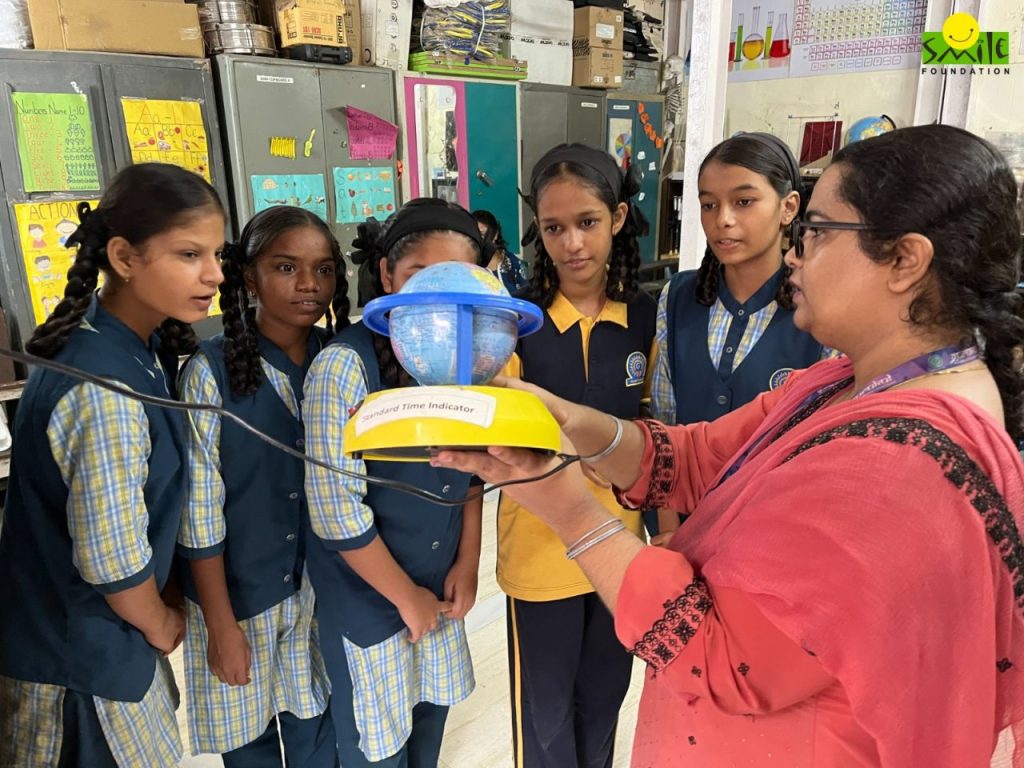
Children may not always understand a concept through textbook explanations alone. Some learn better through pictures, demonstrations, games, storytelling and hands-on activities.
For example, teachers can use building blocks, seeds or everyday objects to explain addition and subtraction. Reading sessions can include picture books, storytelling, word games and group discussions.
Small-group teaching can also help teachers give children more individual attention. Students with similar learning gaps can work together on specific skills, while those who progress faster can move on to more advanced activities. This approach makes learning more engaging and allows children to practise without feeling pressured to match the pace of the entire classroom.
The Teaching at the Right Level approach developed by Pratham offers a useful example. It groups children according to their actual learning levels rather than only their school grades and uses simple activities to strengthen basic reading and arithmetic skills.
4. Build Confidence through Regular Practice
Children who repeatedly struggle with schoolwork may begin to believe that they are not good at studies. This can affect their willingness to participate, ask questions or attempt difficult tasks. Remedial education programmes should therefore create a supportive environment where children feel comfortable making mistakes and trying again.
Teachers can set small, achievable learning goals, appreciate improvements and give children opportunities to practise without fear of being judged. For example, a student who initially struggles to read a few sentences can gradually move towards reading a short story independently. Recognising this progress can motivate the child to continue learning.
Regular practice is equally important. Short reading exercises, mathematics games, worksheets and storytelling sessions can help reinforce what children learn in class.
5. Involve Parents and Caregivers in the Learning Process
A child’s education does not stop when the school day ends. Parents and caregivers can play an important role in supporting learning at home, even if they are unable to provide formal academic assistance.
Schools can encourage families to spend time reading with children, practise basic counting during everyday activities or discuss what children have learnt in class.
However, NGOs and schools must recognise that many parents work long hours or may not have the literacy skills, time or resources to help with schoolwork. Support should not become an additional burden on families. Instead, organisations can share simple activities that require little or no additional expense. Regular parent-teacher meetings can also help caregivers understand a child’s progress and identify areas where additional support may be needed.
How NGOs can Make Remedial Learning Programmes Effective
NGOs can help schools address learning gaps by providing additional teaching support, developing age-appropriate learning materials and training teachers to identify children’s academic needs. They can also organise bridge courses, after-school classes and community-based learning initiatives to help children strengthen their foundational skills.
At Smile Foundation, our work in remedial education focuses on helping children overcome learning gaps through additional academic support and teaching methods suited to their learning levels through remedial education programmes.
Through our Mission Education initiative, we work with schools and communities to improve access to quality education and strengthen children’s learning outcomes. Our 2025 Education Impact Report highlights the use of teaching-learning materials, activity-based lessons and continuous assessments to understand children’s progress and improve classroom learning. The programme reached more than 1.85 lakh children across 17 states through 242 centres and over 1,000 government schools.
Teacher development is another important part of this work. The report records 1,142 teachers participating in 244 training sessions on activity-based and experiential learning, classroom management, lesson planning and the use of technology. This helps teachers recognise where children need support and adapt their teaching methods accordingly.
Smile Foundation also uses technology-enabled learning to make classroom teaching more engaging. In 2025, over 68,000 students benefited from digital learning facilities, including smart TVs, interactive panels and solar-powered digital classrooms. Together, these efforts show how focused academic support, engaging learning resources and trained teachers can help children overcome learning difficulties and make steady progress.
Helping Every Child Move Forward with Confidence

A child’s academic progress should not be measured only by the grade they are enrolled in or the marks they receive in examinations. It is equally important to understand whether they can read independently, solve basic mathematical problems, understand classroom lessons and apply what they learn.
Effective remedial education programs help schools address learning gaps before they become long-term barriers to education. They give children the time, attention and practice they need to strengthen their skills without making them feel left behind.
For NGOs, the responsibility goes beyond organising additional classes. It involves working with teachers, families and schools to identify learning needs, provide suitable resources and monitor progress. When children receive timely support and learn at a pace that works for them, they are more likely to participate in classrooms, develop confidence and continue their education. Ultimately, helping children catch up is not just about improving academic performance. It is about ensuring that every child gets a fair opportunity to learn and move forward.
FAQs: Remedial education programs
1. What are remedial education programs?
Remedial education programs provide additional academic support to children who struggle with specific subjects or foundational skills. They identify individual learning gaps and use focused teaching methods to help students strengthen their understanding and progress in school.
2. Why are remedial education programs important for children?
They help children address learning difficulties before these become larger barriers to academic progress. By strengthening reading, writing and basic mathematics, remedial education improves children’s ability to understand classroom lessons, participate actively and learn independently.
3. How do remedial education programs help children catch up in school?
These programmes use simple assessments to identify learning gaps, followed by targeted lessons, regular practice, activity-based teaching and individual attention. Children can learn at their own pace and gradually develop the skills needed to follow their grade-level curriculum.
4. What subjects and skills are covered in remedial education?
Remedial education generally focuses on foundational literacy and numeracy. This includes letter and word recognition, reading comprehension, sentence formation, basic arithmetic, problem-solving and applying mathematical concepts to everyday situations.
5. What teaching methods are used in remedial education programmes?
Common methods include small-group instruction, storytelling, picture books, learning games, hands-on activities, practical demonstrations and individualised lessons. Teachers also use regular assessments to monitor progress and adapt their teaching approaches.
6. What role can NGOs play in remedial education programs?
NGOs can support schools by providing additional teaching assistance, developing age-appropriate learning materials, organising bridge courses and after-school classes, and training teachers to identify learning gaps. They can also engage parents and communities to create a supportive learning environment.
7. How does Smile Foundation support remedial education in India?
Through its Mission Education initiative, Smile Foundation works with schools and communities to improve access to quality education and strengthen children’s learning outcomes. Its approach includes activity-based learning, teaching-learning materials, continuous assessments, teacher training and technology-enabled classrooms. In 2025, Mission Education reached more than 1.85 lakh children across 17 states through 242 centres and over 1,000 government schools.