
Summary
- When disasters strike, children with disabilities can face barriers that are invisible in conventional emergency planning. A hearing-impaired child may miss an audio-only warning; a child with a visual impairment may struggle with visual evacuation cues; a child with mobility limitations may encounter inaccessible routes or shelters; and a child with an intellectual or developmental disability may require additional time, communication support and familiar routines to respond safely.
- Research shows that these vulnerabilities are shaped not only by disability but by poverty, inaccessible infrastructure, dependence on caregivers, disrupted social networks and the failure of emergency systems to anticipate different needs.
- India already has important legal and policy foundations for disability-inclusive disaster risk reduction. Section 8 of the Rights of Persons with Disabilities Act, 2016, requires equal protection and safety for persons with disabilities during disasters and requires disaster-management authorities to include them in disaster-management activities.
- NDMA issued dedicated Disability Inclusive Disaster Risk Reduction guidelines in 2019, while UNICEF and international frameworks such as the Sendai Framework emphasise accessible communication, inclusive preparedness and participation by people with disabilities.
- The remaining challenge is implementation. Research from Assam has identified a gap between policy and practice, while initiatives such as Bihar’s disability-inclusive preparedness programme demonstrate that accessible training, mock drills, educator preparation and child participation can translate policy into practical readiness.
- The central argument is therefore simple: disability-inclusive disaster preparedness should not be treated as an additional layer of emergency planning. It is a test of whether the emergency system works for everyone.
When a disaster strikes
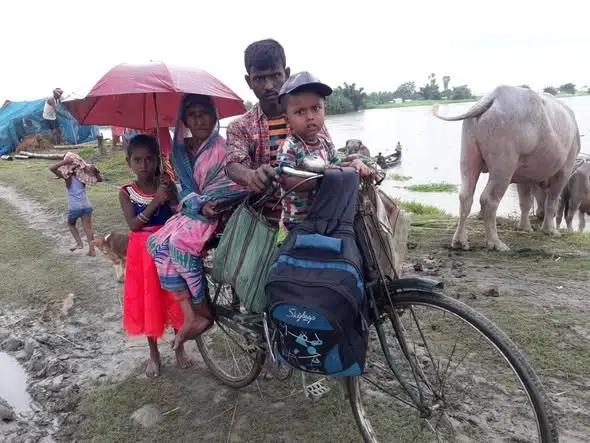
When a disaster strikes, the first instinct is to think about speed: how quickly people can be warned, how quickly they can leave, how quickly emergency teams can arrive and how quickly food, water and medical supplies can reach those who need them. But speed assumes something that emergency systems do not always stop to examine: that everyone receives the warning in the same way, can move through the same spaces, understands the same instructions and can reach the same services without assistance.
For a child with a hearing impairment, an evacuation announcement made over a loudspeaker may never arrive; for a child with a visual impairment, an exit sign may be meaningless without an accessible route or human guidance; for a child using a wheelchair, the staircase that becomes the fastest escape route for everyone else can become an impassable barrier; and for a child with an intellectual or developmental disability, the sudden disappearance of familiar routines, people and sensory cues can itself become part of the emergency.
These are not hypothetical complications to be addressed after the main disaster plan has been written. They are questions that determine whether the plan works at all. UNICEF identifies children with disabilities as among those most at risk during humanitarian emergencies and says that inclusive preparedness requires accessible risk communication, accessible emergency services and the meaningful involvement of children with disabilities and organisations representing people with disabilities in preparedness, response and recovery decisions.
The question, therefore, is not simply whether a community has an evacuation plan, an emergency shelter or an early-warning system; it is whether a child with a disability can actually use any of them when the moment comes.
A disaster does not create every vulnerability; sometimes it exposes the ones already there
The vulnerability of children with disabilities during disasters is often described as though it comes directly from the impairment itself, but decades of research suggest a more complicated picture.
A landmark review by Lori Peek and Laura Stough argued that the risks faced by children with disabilities emerge from the interaction between disability and the social environment around it, including poverty, housing conditions, dependence on caregivers, access to healthcare and education, the availability of social networks and the extent to which emergency systems have anticipated their needs. Their conclusion was significant: the problem is not simply that a child has a disability, but that a disaster can remove or disrupt the systems that normally compensate for barriers in everyday life.
That distinction becomes clearer when thinking about an ordinary school day. A child who uses a wheelchair may be able to move around a school because there is a ramp, a particular classroom, an accessible toilet and a teacher who knows how to assist; a child with a visual impairment may navigate because the school environment is familiar and because someone routinely helps with unfamiliar spaces; a child with an intellectual disability may understand the day’s expectations because the timetable, classroom, teacher and sequence of activities remain consistent. When a flood, earthquake, cyclone or fire suddenly changes that environment, those layers of support can disappear at precisely the moment they are most needed.
The result is that disaster preparedness has to account not only for the hazard but also for the loss of ordinary support systems. If a caregiver is separated from a child, if an assistive device is damaged, if a school is converted into a shelter, if an accessible toilet becomes unusable, if medication is left behind or if communication between a child and emergency personnel breaks down, an existing vulnerability can become an immediate safety risk.
UNICEF’s preparedness checklist consequently asks whether disability-disaggregated data are available, whether disability organisations have been involved in needs assessments, whether assistive devices and inclusive emergency supplies have been planned for, whether children with disabilities participate in drills and whether evacuation centres themselves are accessible.
The warning may arrive — and still fail
One of the most overlooked problems in emergency preparedness is communication. Modern disaster management increasingly depends on SMS alerts, mobile applications, social media, television, radio, public-address systems and digital dashboards, creating the impression that technology has made warnings faster and more universal. But a warning is only useful if the person receiving it can perceive, understand and act on it, and India’s own disability-inclusive disaster guidance explicitly recognises that inaccessible technology can create an additional barrier rather than solving the original one.
Consider an emergency announcement delivered through a school loudspeaker. A hearing-impaired child may see other students moving but not know why; if the instruction is also not displayed visually or communicated through sign language, the child is dependent on someone nearby noticing the problem and translating the information.
A television warning without sign-language interpretation can similarly exclude people who cannot hear it, while a digital warning designed without accessibility features may be unreadable to someone using a screen reader. India’s national disability-inclusive disaster guidance specifically notes these risks and calls for information and communication technologies to be used to overcome, rather than reproduce, traditional accessibility barriers.
Recent international research reinforces the point. A 2025 scoping review examining the experiences of deaf and hard-of-hearing people during emergencies identified three recurring areas affecting participation: warnings and alerts, the response of emergency services, and preparedness itself. In other words, communication failure is not a small inconvenience that occurs at the beginning of a disaster; it can affect the entire emergency chain.
An inclusive warning system therefore has to be deliberately redundant: visual and auditory alerts, text and voice, captions and sign-language interpretation where appropriate, clear symbols, accessible digital content and, where necessary, human communication through teachers, caregivers, community workers or trained volunteers. The principle is simple but easily missed: there should never be only one way to learn that danger is coming.
Evacuation is not the same thing as moving people from A to B
Emergency planning often reduces evacuation to a route on a map: leave the building, follow the marked path and gather at a safe point. But children do not evacuate maps; they evacuate physical environments, and those environments are not equally navigable for everyone.
Research involving children with disabilities in school-based disaster-risk reduction has found precisely these kinds of problems. Children using wheelchairs may struggle to evacuate quickly, while standard instructions such as “drop, cover and hold” may not work in the same way for every child.
Children with autism may find continuous sirens or alarms overwhelming, while some children with intellectual disabilities may need additional prompts, repetition or support from teachers and peers. More recent experimental research involving children with intellectual disabilities found that the timing of the drill announcement, the floor on which children were located and their dependence on teachers affected evacuation behaviour, demonstrating that evacuation is influenced by cognitive, environmental and social factors as well as physical mobility.
This has a practical implication that is easy to miss: a drill can be inaccessible even when everyone technically participates in it. If a child is carried down a staircase by adults every time, the exercise may demonstrate that adults can rescue the child, but it does not necessarily demonstrate that the school has a sustainable evacuation procedure. If a child who becomes distressed by alarms is removed from the drill rather than supported through an adapted version, the school may complete its emergency exercise while leaving the child’s actual needs untested.
Inclusive evacuation planning therefore has to begin before the alarm sounds. It means identifying accessible routes, testing them, keeping them unobstructed, determining how children who need assistance will be supported, planning transportation where necessary, securing mobility and communication devices, ensuring that medication can travel with the child and creating individualised emergency plans where appropriate.
Guidance from CBM’s disability-inclusive disaster-risk reduction work specifically recommends individual support networks, accessible evacuation routes and shelters, inclusive drills and early warnings that combine different communication formats.
What happens when the school becomes the shelter?
There is another complication that receives less attention: the place designed to protect children during a disaster may itself become inaccessible.
Schools are frequently used as temporary shelters after floods, cyclones and other disasters, but the fact that a building can accommodate large numbers of people does not make it accessible. UNICEF notes that disasters can damage schools and other critical infrastructure, while schools may also be repurposed as shelters, disrupting children’s education and other services. For a child with a disability, the consequences can extend well beyond losing classroom time.
A shelter may have a ramp at the entrance but no accessible toilet. It may have electricity but no charging arrangement for an assistive device. It may distribute food but not have a system for reaching children who cannot stand in a long queue. It may provide water but place taps or containers beyond the reach of some children. It may have medical assistance but lack information in accessible formats. A child who depends on a particular communication device, medication schedule, mobility aid or personal-care routine can therefore experience the shelter not as a safe space but as another environment full of barriers.
This is why accessibility cannot be treated as an architectural checklist added to disaster planning at the end. India’s National Disaster Management Authority issued its Guidelines on Disability Inclusive Disaster Risk Reduction in 2019, and the framework calls for universal design, accessibility and reasonable accommodation across the disaster-risk-reduction cycle. The guidelines also recognise that physical inaccessibility can affect access to food, water, medical care, shelter and transportation, and that the loss of mobility or other assistive devices can exclude people from relief and recovery.
The question a shelter manager should therefore be able to answer is not merely, Can a child enter this building? It is, Can this child live here safely and with dignity for the next several days?
For some children, the emergency is also the loss of routine
Physical access is only one part of the story. Disasters can be particularly destabilising for children who depend heavily on predictable routines, familiar environments and established communication patterns.
For a child with an intellectual or developmental disability, the sudden shift from classroom to crowded shelter, from a known teacher to unfamiliar adults, or from a predictable daily sequence to an uncertain environment can produce distress that emergency planners may misinterpret as non-compliance. A siren that is simply a warning to one child may be an overwhelming sensory experience for another; an instruction such as “move outside now” may be understandable to most students but require additional processing time, visual cues or individual prompting for another.
The school-based research on disability-inclusive disaster risk reduction found that children with disabilities were often capable of understanding hazards and identifying safe and unsafe spaces, but their knowledge was not always incorporated into formal planning. In one particularly revealing finding, researchers found that children could map hazards around their schools and identify resources that could help them during an emergency, yet their participation in formal disaster planning remained limited.
This is an important shift in perspective. The child should not be viewed only as someone to be rescued.
The child can also be someone who knows what makes the environment safe.
The child who is usually “helped” may know more than the adults assume
One of the most important findings from research on disability-inclusive disaster preparedness is that children with disabilities are frequently described primarily in terms of vulnerability, while their capacities are overlooked. In the school-based study by Ronoh, Gaillard and Marlowe, children with disabilities demonstrated substantial awareness of hazards, identified dangerous areas in their schools and understood the relationship between hazards and protective actions, yet their knowledge was not consistently incorporated into institutional disaster planning.
This is not merely a matter of good consultation practice. It affects the quality of the plan itself.
A child who uses a wheelchair may know which route is actually passable when a classroom is crowded. A child with a visual impairment may know which parts of the school can be navigated through touch and memory. A deaf child may know which visual signals would be easiest to recognise. A child with autism may be able to identify sensory triggers that adults designing an evacuation drill have overlooked. Their experiences are not simply stories to be collected after an emergency; they are information that can make preparedness more effective.
UNICEF’s guidance explicitly recommends communicating directly with children with disabilities rather than relying exclusively on caregivers and encourages the use of sign-language interpreters, inclusive education or special-education teachers and other communication supports when required. The broader principle is even more important: preparedness should be designed with children with disabilities, not merely for them.
India has a framework. The harder question is implementation.
India is not starting from an absence of policy. Section 8 of the Rights of Persons with Disabilities Act, 2016, provides that persons with disabilities have equal protection and safety in situations of risk, humanitarian emergencies and natural disasters, and requires national and state disaster management authorities to include persons with disabilities in disaster-management activities. It also requires district authorities to maintain information on persons with disabilities and take measures to inform them about situations of risk, while reconstruction is required to take accessibility into account.
The National Disaster Management Authority subsequently issued its Disability Inclusive Disaster Risk Reduction guidelines in 2019, and the national disaster-management framework recognises the heightened vulnerabilities associated with disability, including limited access to information and services and the risk that specific needs will be overlooked during relief. The Government of India has more recently reiterated that the 2019 guidelines are aligned with the Sendai Framework and that people with disabilities should be included in disaster-risk-reduction policymaking and implementation.
Yet policy on paper and preparedness on the ground are not the same thing.
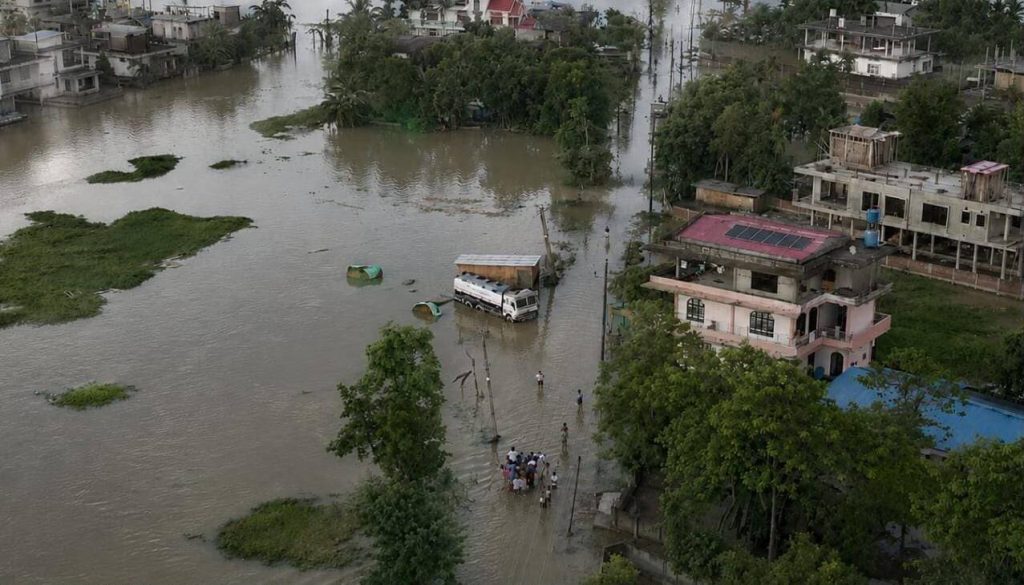
A 2025 study of disability-inclusive disaster risk reduction in Assam, based on policy analysis and interviews with people with disabilities, families, government and NGO officials and disabled people’s organisations, found a significant gap between the existing DRR framework and its implementation. In Majuli, researchers found that formal institutionalised disability-inclusive disaster-risk-reduction measures remained limited and that people with disabilities often had to depend on family members, community knowledge or their own coping strategies when formal systems were inadequate.
That finding is particularly important because it exposes a common weakness in disaster policy: having an inclusive guideline does not guarantee an inclusive response.
The missing link is often local implementation — the school that has never practised an accessible evacuation, the shelter whose toilet has never been assessed for accessibility, the village that has no mechanism for identifying children who may need additional assistance, or the emergency communication system that technically reaches everyone but is not actually understandable to everyone.
Bihar offers a glimpse of what implementation can look like for disability-inclusive disaster preparedness
There are also examples showing that this gap is not impossible to close.
The Bihar State Disaster Management Authority has developed a disability-inclusive disaster-risk-reduction and capacity-building programme specifically focused on people with disabilities, including children with special needs. Its programme includes training for caregivers, educators, trainers and institutional staff, accessible training material including a Braille handbook, mock drills and practical evacuation exercises. By April 2025, the authority reported that 1,352 caregivers, educators, trainers and institutional staff had been trained, while more than 600 children with disabilities in special schools in Patna had participated in structured disaster-safety sessions and practical drills.
The significance of this approach is that it treats preparedness as a skill that can be practised rather than a document that can be filed away.
Children, teachers and caregivers are trained. Emergency responders are involved and drills are conducted.
The process can then move beyond a theoretical statement that children with disabilities should be included to a practical test of whether they can actually evacuate, communicate, reach safety and remain protected once they get there.
That is the difference between having an inclusive disaster plan and being prepared to use one.
Disaster preparedness must also protect learning
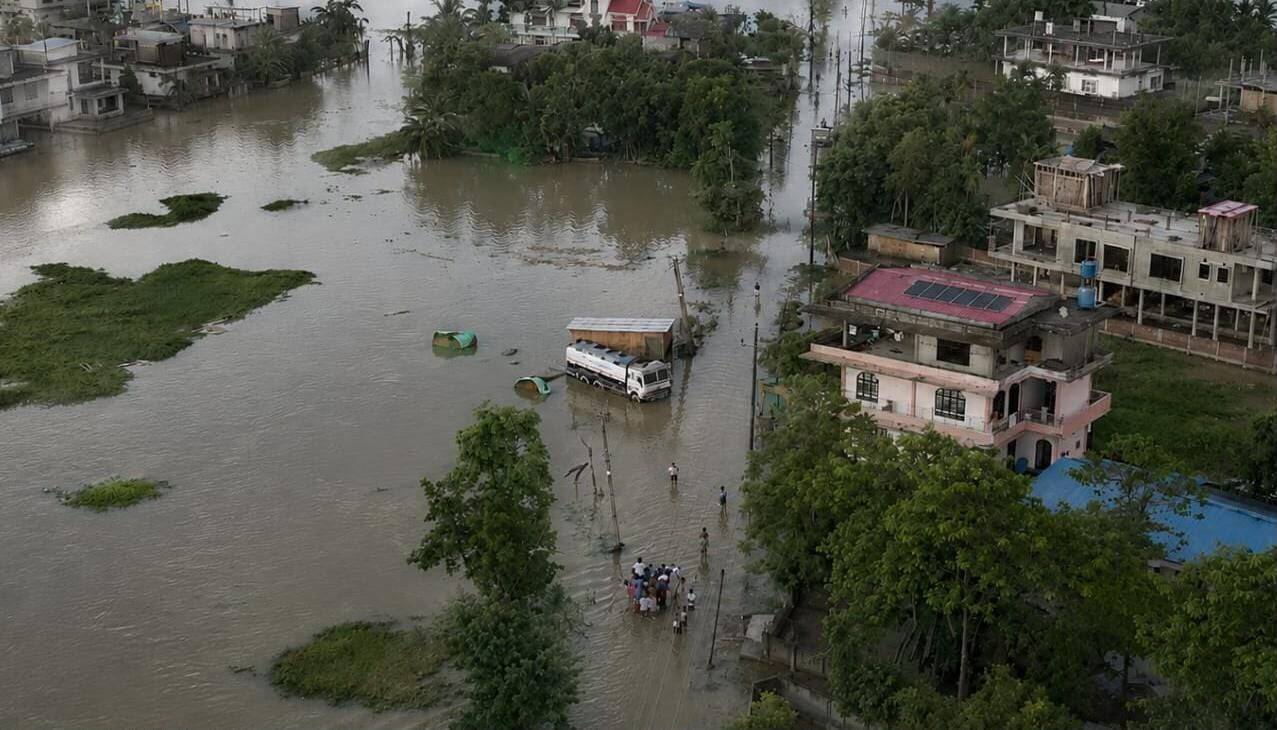
There is another reason this matters for children: a disaster does not end when the floodwater recedes or the earthquake stops shaking.
The interruption to education can stretch for weeks or months, particularly when schools are damaged, used as shelters or unable to reopen safely. UNICEF has highlighted the impact of climate-related shocks on children’s education in India, where floods, heatwaves and other hazards can destroy classrooms, disrupt attendance and interrupt learning. A systematic review of school-based disaster-risk-reduction research in India similarly found that research has increasingly focused on school infrastructure, disaster education, online learning and the effects of disasters on disadvantaged students and their mental health.
For children with disabilities, interrupted education can compound existing exclusion. UNICEF’s India data indicate that children with disabilities are disproportionately represented among children who are out of school, while its more recent work on disability inclusion stresses that barriers in education, healthcare, protection, sanitation and public spaces often intersect rather than appearing separately.
Recovery therefore has to ask more than whether a school building has been repaired. It has to ask whether children with disabilities can return to learning with their assistive devices, accessible transport, teaching support, communication aids, therapy and other services restored.
Otherwise, the disaster may end physically while continuing educationally.
Climate risk makes this question harder to postpone
The urgency is increasing because disasters are no longer occasional interruptions in many children’s lives. UNICEF’s 2026 Children’s Climate Risk Report finds that nearly half of the world’s children — about 1.1 billion — are exposed to at least three overlapping climate hazards, while more than four million face as many as six. The report argues that children’s risk depends not only on exposure to hazards but also on the strength of the social services on which they depend, including education, healthcare, water and sanitation and protection systems.
This matters enormously for disability-inclusive preparedness because disability itself does not exist in isolation from other forms of vulnerability. A child with a disability living in a flood-prone rural area, for example, may face the interaction of disability, poverty, inaccessible transport, disrupted schooling and dependence on a caregiver. A girl with a disability may face additional protection risks during displacement. A child whose family cannot afford to replace a damaged assistive device may remain affected long after the immediate emergency has passed.
The future of disaster preparedness therefore cannot be about designing one more emergency plan and expecting it to work for everyone.
It has to be about designing systems that assume human diversity from the beginning.
Donate to Smile Foundation’s Assam floods disaster response here.
What would truly disability-inclusive disaster preparedness look like?
It would begin with data that tell planners who lives in a community and what kinds of support different children may require, rather than discovering their needs only after an emergency begins. It would mean accessible early-warning systems that combine sound, sight, text, sign language and other communication methods; evacuation plans that have actually been tested by children with different disabilities; schools with accessible routes, toilets and safe assembly points; shelters that can accommodate assistive devices, medication, personal support and communication needs; trained teachers, caregivers and first responders; and clear arrangements for family reunification so that children are not separated from the people on whom they depend.
UNICEF’s preparedness checklist brings many of these elements together, including disability-disaggregated assessment, inclusive drills, accessible evacuation centres, assistive devices, trained staff and accessible communication.
But the most important change may be less technical.
It is a change in who gets to define what “prepared” means.
If disability-inclusive disaster preparedness is designed entirely by adults without disabilities, it can easily become a checklist of ramps, alarms and emergency kits. If children with disabilities, their families, teachers and organisations of persons with disabilities participate in designing and testing the system, preparedness becomes more grounded in the realities of movement, communication, sensory needs, anxiety, dependence, dignity and recovery.
The United Nations Convention on the Rights of Persons with Disabilities makes this principle a matter of rights rather than goodwill: Article 11 requires states to take necessary measures to ensure the protection and safety of persons with disabilities in situations of risk, humanitarian emergencies and natural disasters. The Sendai Framework similarly recognises persons with disabilities as stakeholders in disaster-risk reduction, rather than merely recipients of relief.
A disaster may be unpredictable.
Exclusion is not.
The question we should ask before the next disaster
The quality of a disaster-response system is often judged by how quickly it can move the largest number of people to safety. A more demanding test would be to ask what happens to the child who does not receive the announcement, cannot use the staircase, cannot read the evacuation sign, cannot tolerate the alarm, cannot communicate with a stranger or cannot find the person who usually helps them understand what is happening.
If the answer is that someone will figure it out when the disaster occurs, the community is not yet prepared.
Preparedness means figuring it out beforehand.
It means knowing which children may need additional support, understanding what that support looks like, practising it, funding it, testing it and changing the plan when children say it does not work. It means treating accessible communication as life safety, accessible infrastructure as disaster preparedness, assistive devices as essential emergency equipment and children’s participation as a source of expertise rather than a symbolic gesture.
Most importantly, it means changing the definition of who a disaster plan is designed for.
The goal cannot simply be to save the greatest number of people.
It has to be to ensure that no child becomes invisible when the systems around them begin to fail.
Because when disaster strikes, the children most likely to be left behind are not necessarily those who are least capable of surviving it.
They may simply be the children whose needs were never built into the plan.
FAQs
Why are children with disabilities more vulnerable during disasters?
Children with disabilities may face physical, communication, sensory, cognitive and social barriers during emergencies. Their vulnerability can increase when evacuation routes, warnings, shelters, healthcare, assistive devices or caregiver networks are inaccessible or disrupted. Research emphasises that vulnerability is produced by the interaction between disability and the surrounding social and physical environment, rather than by impairment alone.
How can emergency warnings be made accessible to children with disabilities?
Emergency warnings should use multiple formats rather than relying on a single channel. Depending on the child’s needs, this can include visual alerts, audio announcements, text messages, captions, sign-language interpretation, accessible digital information, clear symbols and direct communication through trained adults. UNICEF specifically recommends accessible risk communication for children with hearing, visual, intellectual and physical impairments.
What problems can children with disabilities face during evacuation?
Children with mobility limitations may encounter stairs, narrow routes or inaccessible transport, while children with hearing impairments may not hear alarms and children with visual impairments may not be able to use visual evacuation signs. Children with intellectual or developmental disabilities may require additional prompts, repetition or support, while some children may experience distress from loud alarms or sudden changes in routine.
Why should children with disabilities participate in disaster planning?
Children with disabilities can provide information about hazards, barriers and solutions that adults may overlook. Research in school settings has found that children with disabilities can identify dangerous and safe areas and understand disaster risks, but are often excluded from formal DRR decision-making. Their participation can therefore improve both inclusion and the quality of preparedness plans.
Does India have disability-inclusive disaster-management guidelines?
Yes. India’s Rights of Persons with Disabilities Act, 2016, provides for equal protection and safety for persons with disabilities during disasters and requires disaster-management authorities to include them in disaster-management activities. The National Disaster Management Authority also issued Guidelines on Disability Inclusive Disaster Risk Reduction in 2019.
What does disability-inclusive disaster risk reduction mean?
Disability-inclusive disaster risk reduction means integrating the needs, rights, capacities and participation of people with disabilities into every stage of disaster management — including risk assessment, prevention, mitigation, preparedness, early warning, evacuation, emergency response, relief, recovery and reconstruction. It is not simply about providing assistance after a disaster.
Why do schools need disability-inclusive disaster preparedness drills?
Schools are central to children’s safety because they are where children spend a significant portion of their time. A standard drill may not reveal whether evacuation routes, alarms, communication systems and shelters work for children with different disabilities. Inclusive drills allow schools to test those systems before an actual emergency and enable children themselves to identify barriers.
What happens to children’s education after a disaster?
Disasters can damage schools, force schools to become shelters, disrupt transportation and interrupt teaching and learning for extended periods. For children with disabilities, disruption can compound existing educational exclusion if assistive devices, specialised support, accessible transport or learning accommodations are not restored quickly. UNICEF has highlighted the continuing impact of climate-related disasters on educational continuity in India.
What is the biggest gap in disability-inclusive disaster preparedness in India?
One of the most important gaps is implementation. India has legal provisions and national guidelines, but research from Assam has found a divide between formal disaster-risk-reduction policy and what happens at community level, including inadequate institutionalised disability-inclusive measures and dependence on families and local communities when formal systems are insufficient.
What can NGOs do to make disability-inclusive disaster preparedness a reality?
NGOs can work with schools, children, families, disability organisations, local authorities and emergency responders to conduct accessibility assessments, develop individual emergency plans, train teachers and caregivers, create accessible preparedness materials, support inclusive drills and ensure that children with disabilities participate in designing preparedness measures. The most effective approach is collaborative: people with disabilities should be treated as experts and participants in disaster-risk reduction rather than only as beneficiaries of relief.