Rural & Marketing (May 2013)
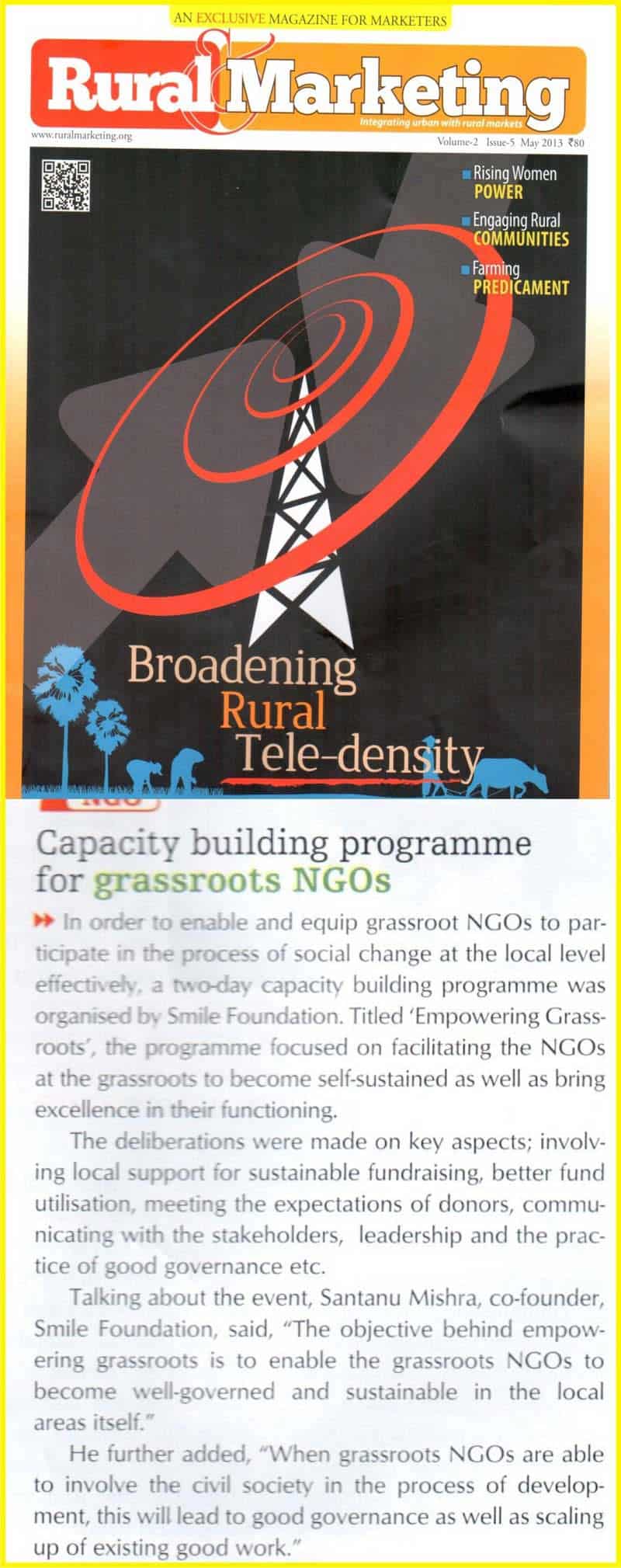



Rural & Marketing (May 2013)
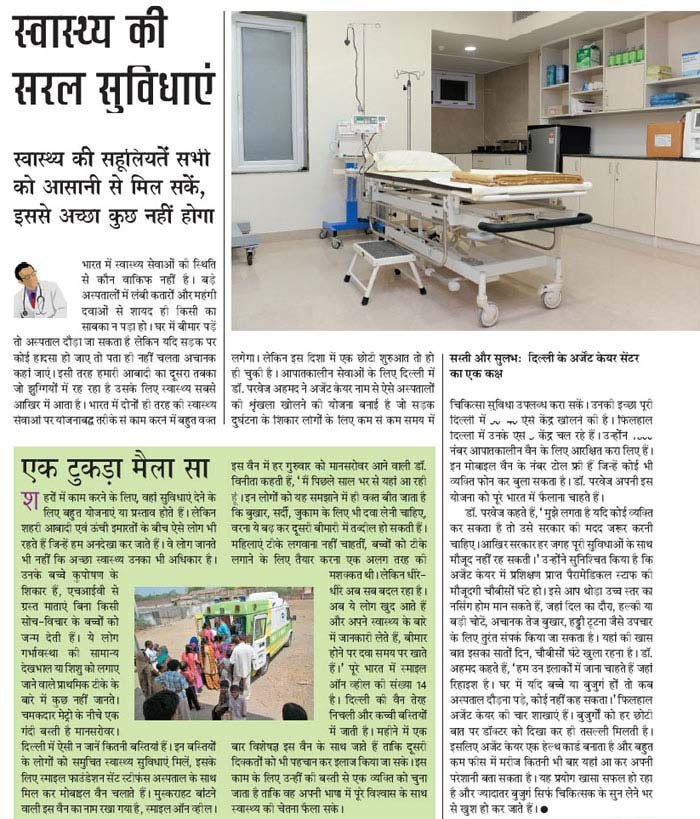
Hindustan Times (8th May 2013)

Social work is a professional and academic discipline which focuses on improving the quality of life of an individual, groups or community as a whole. A social worker can get employment both in the public and private sector. There are many positions such as that of a child development project officer, integrated child development services, in the directorate of social welfare. One can also work in the directorate as a welfare officer. Those enthusiastic about reaching out to others can work as family welfare counsellors and medical social workers in medical colleges and hospitals, etc. Those intrested in the private sector can join the corporate sector as HR managers, industrial relations officers and personnel managers, etc. The civil society employs social work graduates in NGOs, international NGOs, trusts and non-profit companies. One could also work in UNICEF, WHO, and UNDP
Clockwork
9am: Go to office
10am: Go to the field; interact with people
12 noon: Meet outreach workers
1pm: Quick lunch
2pm: Design training programmes
4pm: Prepare and review reports
5.30pm: Work on a new project
6.30pm: Meet the staff, discuss plans for new project in slum areas
7.30pm: Leave for home
The payoff
Entry level: Anywhere between Rs. 15,000 to Rs. 25,000 a month
Middle level: Rs. 25,000 to Rs. 50,000 a month
Senior level: Anything between Rs. 50,000 to Rs. 1 lakh a month
Skills/TRAITS
• Basic knowledge of human behaviour, society and its systems
• You should have good listening, observation and counselling skills Social work needs
• action with involvement and commitment, it’s your zeal that matters
• Resilience and stamina for doing work in adverse conditions
Getting there
A bachelor or masters degree in social work is required to be a professional social worker. Students with a background in economics, political science, sociology, history, psychology and philosophy can also become social workers. A doctorate is an added advantage. In many countries, you need a license to practise social work
Institutes and URLs
• Tata Institute of Social Sciences, Mumbai
www.tiss.edu
• University of Delhi
www.du.ac.in
• Department of Social Work, Jamia Millia Islamia, Delhi
www.jmi.nic.in
• Madras School of Social Work, Chennai
www.mssw.in
Pros and cons
• A highly rewarding career
• Work schedules are erratic; witnessing the deplorable conditions others live in could be frustrating or depressing
• Pay packages are less attractive
There is a lot of scope in this profession for people who want satisfaction with their job — Vikram Singh Verma, chief operating officer, Smile Foundation
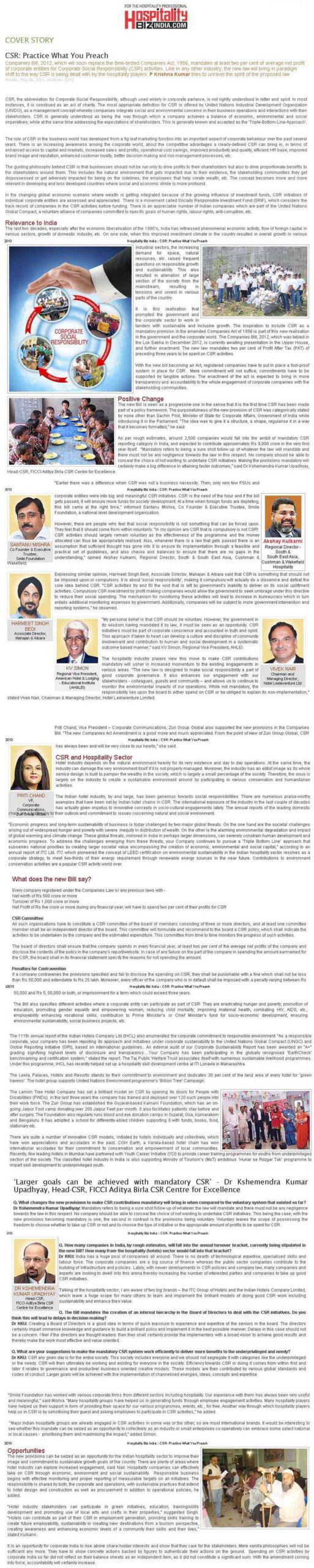
Hospitality Biz (Mayl 07th, 2013)
Halabol (6th May 2013)

With a view to enable the grassroots NGOs to become well governed and sustainable in the local areas, Smile Foundation has so been actively working to empower 500 NGOs. The foundation has played a key role in this context in last two years and aims to reach out to 5000 similar NGOs across India by 2015.
This year Smile Foundation is actively working to cover 500 more grassroots NGOs under the Empowering Grassroots programme, Santanu Mishra, Co Founder & Executive Trustee, Smile Foundation, said.
Smile Foundation has so far built the capacities of 500 grassroots NGOs under Empowering Grassroots programme in last two years. By 2015, the aim is to reach out to 5000 similar NGOs across India, he added.
Talking about the thought behind Empowering Grassroots during an interaction program held in New Delhi during 10-11 April, Mr. Mishra, said, “The objective behind Empowering Grassroots is to enable the grassroots NGOs to become well governed and sustainable in the local areas itself.”
He added, “When grassroots NGOs are able to involve the civil society in the process of development, this will lead to good governance as well as scaling up of existing good work.”
Smile Foundation conducted a two-day capacity building programme during 10-11 April 2013 for grassroots NGOs in order to enable and equip them to participate in the process of social change at the local level effectively.
The programme held at Tivoli Garden, Chattarpur, Mehrauli, New Delhi. Interactive session included 26 selected NGOs from Uttar Pradesh, Madhya Pradesh, Rajasthan Delhi, Chandigarh and Jammu & Kashmir. Selected NGOs working in the area of child education and women empowerment participated and shared their experience. Representative from INDIACSR (www.indiascr.in), Indian Society of Blood Transfusion and Immunohaematology (ISBTI), Jupiter Academy, Nai Disha-Delhi, Inna Raja, Nipun, Ankur Vidyalya, Arohan, Rasta participated in the programme.
The two-day event saw tailor-made sessions on key aspects; involving local support for sustainable fundraising, better fund utilization, meeting the expectations of donors, communicating with the stakeholders, leadership and the practice of good governance etc.
Aptly titled ‘Empowering Grassroots’, the programme focused on facilitating the NGOs at the grassroots to become self-sustained as well as bring excellence in their functioning.
Mr. Vikram Singh Verma, Chief Operating Officer, Smile Foundation said INDIACSR, “Smile Foundation see itself not a Funding Agency, but as a National Development Organization that not only to supports but helps to build capacities at the grassroots so that they eventually become self sustainable.”
Addressing the inaugural session Mr. Verma, said,
“Smile Foundation underscores the fact that helping is not simply a matter of dispersing money; but of making a long-term commitment and casting a hard eye on results. We aim to identify, handhold and build capacities of genuine grassroots NGOs to achieve accountability, sustainability, scalability and leadership. We make an effort to broad base investment in order to maximise its reach and optimize returns by approaching and strengthening a large number of like-minded individuals and organisations globally.”
Ms. Shweta Luthra, CEO-Orange Cup Solutions, gave a presentation on “communication and brand building for sustainability of NGO”, was appreciated by the participants.
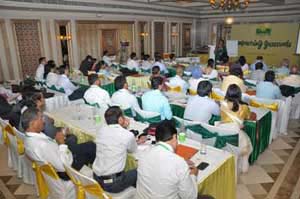
The two-day programme also offered the participating NGOs an opportunity to share their experience and challenges with one another. Many interesting insights were shared during the sessions, starting from various innovative methods of engaging people towards supporting a good cause to the methodology of communicating and showcasing the real work to a wide section of the privileged society.
Smile Foundation is a national level development organization reaching out to more than 200,000 underprivileged children, women and youth through more than 185 welfare projects across 25 states of India on issues of education, healthcare, livelihood, and empowerment of women and girl children.
Source : http://voices.halabol.com/2013/05/07/smile-foundation-empowers-500-grassroots-ngos
The Times of India (30 April, 2013)

OHeraldO (April 30, 2013)

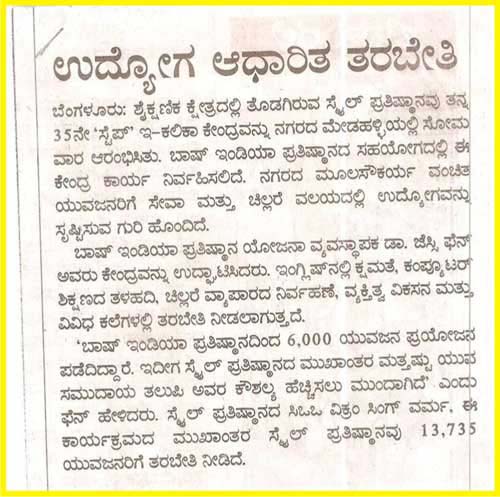
Prajavani (April 24th, 2013)
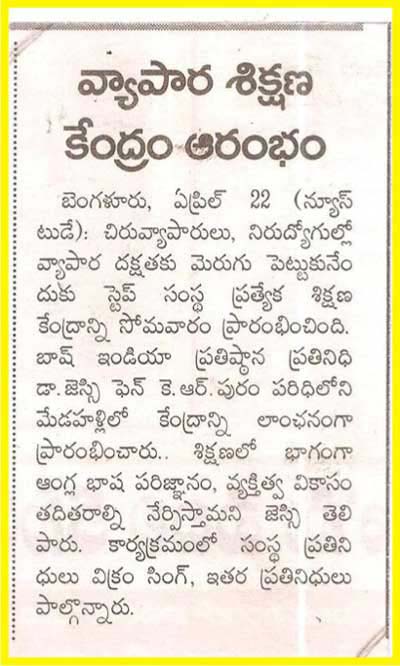
Eenadu (April 24th, 2013)
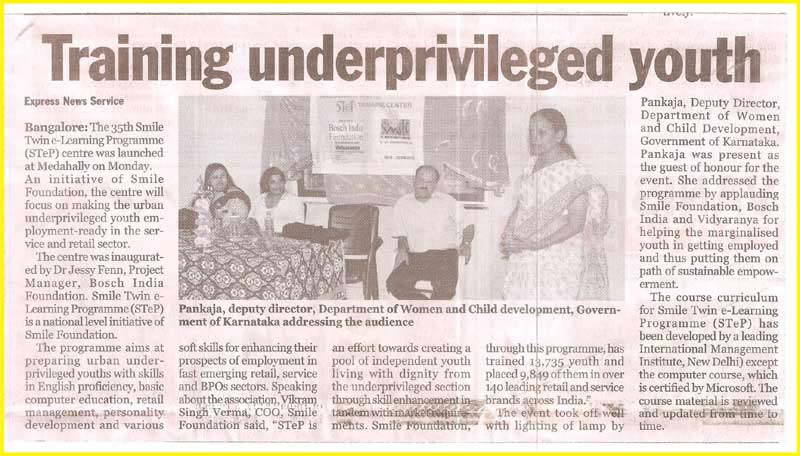
New Indian Express (April 24th, 2013)
Outlook (April 2013)